← What Now? with Trevor Noah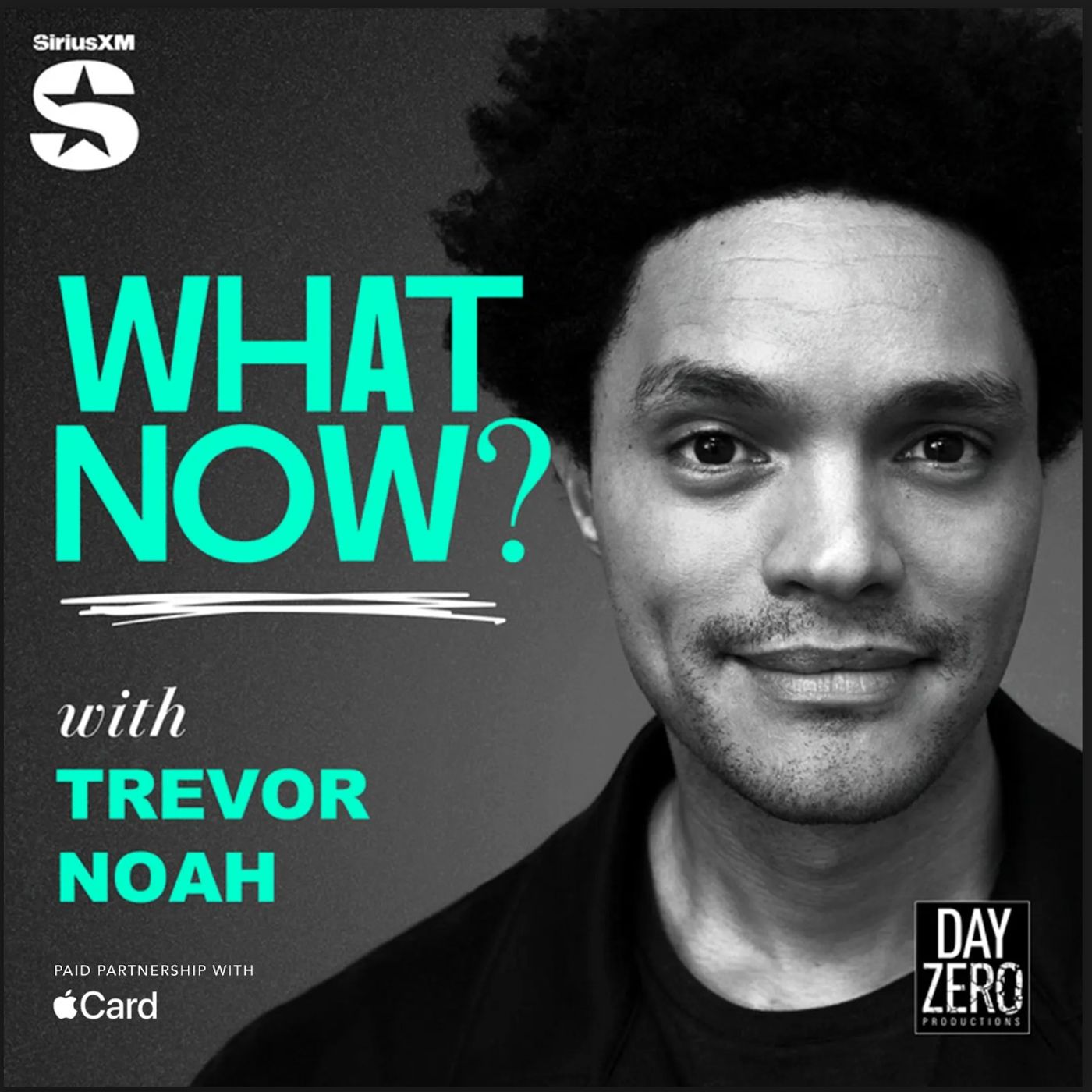
What Now? with Trevor Noah
Meet José Andrés - My Favorite People
01:32:30
Trevor sits down with famed chef and humanitarian José Andrés, who is also one of his favorite people, for a conversation that’s as human as it is hard-earned. Drawing on his experience leading rapid-response teams feeding thousands in disaster and war zones around the world, José shares how he approaches his work and his life with the precision of a field general and the heart of a chef. Along the way, the two explore the deeper meaning of food, not just as nourishment but as dignity, and why even in the darkest moments, it’s still important to slow down and savor life.
Loading summary
Transcript271 lines
- [00:00]
Trevor Noah
This episode is a paid partnership with Apple Card. Did you know Apple Card is the only credit card designed for iPhone? That's right. It lives on your iPhone in the Wallets app. And you get daily cash back on every purchase. And because fees don't help you, Apple Card doesn't have any. So if your credit card isn't Apple Card, maybe it should be subject to credit approval. Apple Card issued by Goldman Sachs Bank USA, Salt Lake City Branch. Variable APRs for Apple Card range from 17.49% to 27.0.74% based on creditworthiness rates as of January 1, 2026. Existing customers can view their variable APR in the wallet app or card.apple.com. You land in the wrong place in a football field in Jamaica. Here are people coming to the helicopter. You don't know their intentions. They don't know your intentions. And you trust that you can get them to sort of join your mission even in the few moments that you've been with them. Where did you learn that? And then. And what do you think we should all be learning about how to trust people that we don't even know?
- [01:09]
José Andrés
It was 2010, Haiti, and I'm cooking there in a couple of places. You know, hundreds of thousands lost their homes. The poor of the poor lost their homes. And so was all these little villages that were being created temporary housing.
- [01:25]
Trevor Noah
This is after the earthquake.
- [01:26]
José Andrés
After the earthquake. And I was cooking and I was. That day was beans, a lot of beans. They were in season. I bought. I would buy every day. This is the early days. I was in the kitchen when was me and two friends, I make these huge pots with the help of local women of beans. And at the end, with the help of the translator, they speak beautiful Creole there. And they come to me and they say, jose, they love that you are feeding them here every day. But they want to tell you that they don't eat the beans the way you prepare them. And I'm like, man, they couldn't tell me before. And then I say, okay, how do you want them? And there you have this twister Michelin chef. And they began singing and we began smashing the beans until it became a puree. It took two more hours or three. But at the end, used to see the joy when the beans were finished. They sang amazing traditional Haitian songs through the process. And they were doing the pocongo and this black bean stew with the rice the way they eat them, which is not a soup, it's not a cream, it's not a sauce, it's something else. But that's the way they eat it.
- [02:35]
Trevor Noah
That is the way they eat the food.
- [02:37]
José Andrés
And this to me, obviously was a big lesson because that's also the dignity we give. Even that's a matter how poor people may be. Everybody has a way to eat.
- [02:49]
Trevor Noah
That's beautiful, man. This is what now with Trevor Noah.
- [03:01]
Ad/Announcer
If you your parent or spouse served in the military, you could join our family. Our members saved an average of $70 a month on auto insurance when they switched. Tap the banner or visit usaa.com join today to check your eligibility restrictions apply. Eczema is unpredictable, but you can flare less with EBGLIS, a once monthly treatment for moderate to severe ecz. After an initial 4 month or longer dosing phase. About 4 in 10 people taking Hempglis achieved itch relief and clear or almost clear skin at 16 weeks. And most of those people maintain skin that's still more clear at one year with monthly dosing.
- [03:35]
Hemglus Lebricizumab LBKZ, a 250mg per 2ml injection, is a prescription medicine used to treat adults and children 12 years of age and older who weigh at least 88 pounds or 40 kilograms with moderate to severe eczema, also called atopic dermatitis, that is not well controlled with prescription therapies used on the skin or topicals or who cannot use topical therapies. Ebglis can be used with or without topical corticost. Don't use if you're allergic to Ebglis. Allergic reactions can occur that can be severe. Eye problems can occur. Tell your doctor if you have new or worsening eye problems. You should not receive a live vaccine when treated with Ebglis. Before starting ebglis, tell your doctor if you have a parasitic infection.
- [04:09]
Ask your doctor about ebglis and visit ebglus.lilly.com or call 1-800-lilyrx or 1-800-545-5979.
- [04:16]
Trevor Noah
This episode is brought to you by Verizon. All right, Eugene, let's play a little game. You know, make something fun. Two Truths and a lie. Here we go. One. I've had to tell a world leader that their fly was undone. 2. When getting dressed, I don't do sock, sock, shoe, shoe. I do sock, shoe, sock, shoe. 3. I've been a Verizon customer for 11 years. What do you think? Very confused. First of all, why would a world
- [04:45]
José Andrés
leader own a fly? Because those things just come uninvited. Secondly, lying to your friends is not cool. There's never been a game.
- [04:53]
Trevor Noah
No, Eugene, fly is for like the zip is what? And then it's not a lie. It's a game where I'm trying. It's like I give you information. Okay, I lied. All three are true, Eugene. And in case you were thinking, you know, Verizon isn't as expensive as you think. In fact, if you bring in your AT&T or T mobile bill, they'll give you a better deal. And the reason I've been with them for this long is just because I travel so much. I need a network that's reliable. That's right, a better deal on the best network with the most ways to save on plans, streaming and phone deals. Take your AT&T or T mobile bill to your local Verizon store today. Get your better deal and start saving for real. Based on root metrics, best overall Mobile Network Performance US Second Half 2025. All rights reserved. You must provide recent consumer mobile bill in the name of the person redeeming the deal. Additional terms, conditions and restrictions apply. So do you understand how two truths. And do you understand it now?
- [05:54]
José Andrés
I understand that you didn't have to lie first before telling me that Verizon is the best.
- [05:58]
Trevor Noah
No, I wasn't lying, Eugene. It's not a lie. I wouldn't lie to you. It's a game. Okay, I'm sorry I lied. Ah, Let's do it. Vamos Andali. Where do I find you coming from?
- [06:22]
José Andrés
I was at Austin, south by Southwest.
- [06:25]
Trevor Noah
Oh, yeah? What were you doing there?
- [06:28]
José Andrés
I went to. Well, was excuse to promote these, quite frankly. I don't know why when I go sometimes, but I was doing something with Delta and Rivian, so.
- [06:40]
Trevor Noah
With Delta and Rivian, you know, I was thinking on my way here,
- [06:46]
José Andrés
you
- [06:48]
Trevor Noah
have one of the most interesting lives in that. I don't know where you've. Like, like, like. Were you ever a fan of Batman growing up?
- [06:55]
José Andrés
Yeah.
- [06:56]
Trevor Noah
You never knew if you were meeting Bruce Wayne or if you were meeting Batman. Cause Bruce Wayne was coming back from, like, a gala dinner with the richest people in the world. And then Batman was coming back from, you know, just having fought the Joker or Penguin in one of the worst parts of Gotham. I feel like that's. That's your life. When I think of Chef Jose Andres, I go, this man could either be coming to my podcast from a disaster somewhere in the world, or he's going there after this podcast, or he's coming from, like, one of the most exciting, luxurious experiences, or he's going there afterwards. Do you ever think about how. How extreme your life is in that regard?
- [07:33]
José Andrés
Yeah, it feels that way at times. And it's not easy at times. It's enjoyable. But I've been going in through the zone of. Like my wife always says, when I come back from any missions, it takes me weeks to put my brain back to normal.
- [07:58]
Trevor Noah
Wow.
- [08:00]
José Andrés
Like I get absent or I'm on the phone all the time.
- [08:04]
Trevor Noah
Yeah. Yeah, I can imagine.
- [08:05]
José Andrés
I keep checking what's going on with the people are left behind and. But that's life itself. Right. That's why. That's why I enjoy every single second a glass of wine of the best wine in the world.
- [08:22]
Trevor Noah
Yeah.
- [08:22]
José Andrés
Or a wine from a small winery that the wine is under $5 and is delicious because has a great people with great pride. But. And I love my, my, my, my cooking. My way to, to. To feel holy is you get in the kitchen, go to the market, chop. Making sure I have all the ingredients I want, and I start cooking all day. And the way for me to give love to people can be very fattening because it's in the. It's in the world in the form of. Of food. But I have. I have a hard time forgetting. At least one part of my brain is always active on that sense.
- [09:04]
Trevor Noah
Yeah.
- [09:04]
José Andrés
Since the days I began, like so many other people around the world. Volunteering in a soup kitchen in Washington
- [09:11]
Trevor Noah
D.C. is that how it all began?
- [09:13]
José Andrés
Very much. 1993. This is Indra Kitchen. A fascinating place. But then. Then cooking is one thing, but then when you go on the shelters or on the streets and you even engage in conversations and even people you get to know. But then I go back to my beautiful house, in my apartment, or in my beautiful new home, and I know it's gonna be people sleeping on the street that day. And sometimes you feel the moment that life is like a lottery that some of us, we bought the winning ticket and other people, other people don't even know there is a lottery.
- [09:51]
Trevor Noah
Damn.
- [09:51]
José Andrés
And life sometimes can be complicated like that because sometimes people are put through moments in their life that maybe. Maybe they made the wrong decision. And sometimes it's not even making the wrong decision.
- [10:03]
Trevor Noah
Yeah, it's not even a decision.
- [10:04]
José Andrés
You didn't even have an opportunity to make a decision. I had a lot of chances to make decisions and people that support me through those decisions. And this was in D.C. in the streets. But right now, you know, I have a hard time use forgetting about what's going on in Ukraine, forgetting what is Going on in Gaza, places I've seen. And your brain sometimes is kind of going through. You cannot suffer like the way those people are suffering, but the part of your brain is almost trying to maybe understand what they're going through. And it's difficult to forget sometimes. And that's why every time it's a moment to enjoy also, I like to enjoy it because life is too short not to enjoy every moment you have the opportunity to do so. Even the people in those areas. In Gaza recently, we reach a million meals a day with more than 80 kitchens, and was like a celebration. Everybody was celebrating. I know some people that were, why are you celebrating? The people of Gaza are going through, like, I'm not celebrating. They are celebrating. People forget that even in those moments of mayhem. People need celebrations because it's the only thing that carries them to live another day thinking that there is light at the end of the tunnel, that there is hope that things may be terrible today, but things can maybe one day go back to where they were before.
- [11:35]
Trevor Noah
Yeah. I think the biggest misconception people have about other people who are struggling is that they don't have the full access to their humanity. Do you know what I mean? Like, people don't think that, like, a homeless person has friends. People don't think that somebody in a disaster zone has emotions. They tell a joke, they laugh with their friends. And you literally see this on the ground. Like, some of the conversations, you know, I've had with you have taken me on the most beautiful, wild, you know, and then sometimes sad rides, because I love the fact that you brought up the lottery tickets. Right? Because we don't even get a chance to buy it. Like, where are you born? Who are you born to? And then a bomb drops on where you live, or a hurricane hits or an earthquake, and all of a sudden your whole world is gone. You know, like. Like, literally your whole world has changed overnight. And now you are the person that you never thought you would be. And you don't have the most basic thing, which is a meal. And that's where like, Jose Andres comes in. I genuinely am always fascinated by your world because of that.
- [12:43]
José Andrés
Well, obviously in the old days, it used to be me because the organization was only one person. But now the organization, I will say, you know, we are tens of thousands, if not hundreds of thousands.
- [12:55]
Trevor Noah
Damn.
- [12:56]
José Andrés
I will say that Wolsey and Dragician is the biggest organization in the history of mankind, is bigger than any government, bigger than any, bigger than the un, bigger than any corporation. And when people ask Me? Well, I think you're overdoing it. And I say, no, I'm not. Because every restaurant and every food truck belongs to Al Central Kitchen. Every horse, boat, helicopter, plane belongs to Wholesentra Kitchen. Every gas station belongs to Wholesentra Kitchen. Every canoe belongs to a World Central Kitchen. Every person that you see is part of World Central Kitchen. What happened, they don't know it yet, but in the way we arrive is like in an emergency, it's like almost you have to take ownership of everything you see and put everything you see at the service of bringing aid to people. And when you think that way, everything is much simpler because you come with the software, with the heart, with the brain, but it's all about software. What can we do with what we have? No waiting for things to come, but what can we do with what we have on hand? And that way you start providing relief. Day one in Gaza, before even we had huge quantities of food, we realized that was fish farms, that they were not working anymore very well and the fish was going to be dying in few days. And we began buying from that fish farms and we were giving grilled tilapia fish to everybody we were trying to help. In Gaza, you see, adapts. The world is always going to be full of issues, of problems, but we have to start changing our mind and see every situation as a way for you to come with a new idea, as a way for you to serve, to be creative enough to don't follow the plan. Because very often life, even if everybody is trying to put us in a jacket and this is the plan and you have to follow the plan of life very often, often life doesn't follow that plan. And because we've all been trained through that plan, what we do, we freeze in adversity. What we need to start doing is embracing the complexities that lives puts in front of us in them like a test of life, and start getting ready and trained to adapt to the circumstances where every chance is an opportunity for you to show the hidden side of yourself you didn't even knew existed. We all have that power. We only need to believe in that power.
- [15:42]
Trevor Noah
So help me understand how you do it on day one. Like, I know there are some places in the world where you've been with World Central Kitchen and you've been feeding people for a very long time because it's an ongoing disaster or a situation, but what's the most recent where something happened acutely, like an earthquake or a hurricane or something like that. And then just, just walk me through like, the cause. I realized I don't. I didn't. I don't know this about your world. I understand that you're there. I understand that you set up kitchens. I understand that you help feed the people. You get locals to cook the food. And I want to talk more about the why around that. But. But what do you. What do you do? Like, from the very first moment that a disaster strikes. So what was the most recent one that you had to. That you had to jump into?
- [16:25]
José Andrés
Well, Jamaica was. Was the latest one.
- [16:31]
Trevor Noah
Yes. Yeah.
- [16:31]
José Andrés
The hurricane hit the western part of the island, the area that probably everybody knows away from Kingston, the capital, which is Montego Bay and Negril Blue Fields. And it's a part I kind of knew well, because a couple of times I went on vacation, invited by friends in the southern part of Jamaica, bluefields. When that happens, it's kind of. I was. I was thinking to escape that hurricane because very much I've been in every single hurricane category three or above in the last 15 years, and it's like, okay, I'm going to take a vacation on this one. Which is great news, because. Means we have great teams that know what to do. Yeah, but kind of my daughter Inez was like, I think I'm going to go. So this time, I didn't go on my own. I kind of was following my daughter.
- [17:26]
Trevor Noah
That's amazing.
- [17:27]
José Andrés
Which, by the way, she stayed there over. She stayed there over a month. So I landed and I joined the teams. By the time I landed in Kingston, we were already feeding, even without having boots on the ground. Because this is the wonderful thing of chefs and restaurants, that you are only a phone call away from knowing somebody that knows every chef and every restaurant anywhere in the planet.
- [17:52]
Trevor Noah
Yeah, but this is what I don't understand. Like, help. Help me out. You see, you said we were feeding. We were already feeding people. But this is what I don't get. We're watching the news. Most of us, we see this terrible news that a hurricane has struck Jamaica. We see that it's ravaging the country. It's destroying, you know, infrastructure.
- [18:09]
José Andrés
And then.
- [18:10]
Trevor Noah
And then the number one thing that starts to happen is people don't have meals. People don't have food. Right. You said by the time you land there, your organization's already feeding the people. What?
- [18:18]
José Andrés
I'm at the smallest scale.
- [18:20]
Trevor Noah
No, but I'm still trying to understand.
- [18:21]
José Andrés
I know they're already doing hundreds, few Thousands of meals, 24 hours.
- [18:26]
Trevor Noah
Okay, but explain that process to me. I. I really want to Understand, on, like a logistical level, where does it even begin? Like, where does the food come from? Who cooks the food? How does the food get to the people?
- [18:37]
José Andrés
In total destruction, obviously is. Is. Is never total destruction. Something that may be functioning. And we always. And now as more and more that people know World Central Kitchen, sometimes even it'll be a restaurant that all of a sudden has the sign of World Central Kitchen. But they are not even part of us.
- [19:00]
Trevor Noah
And that becomes your.
- [19:01]
José Andrés
What kind of almost they are. But this happens in very beautiful ways. It's like, oh, my God, Jose, we are already there. Is somebody you know or why call the teams? Is somebody who is fitting there? Because I already got a tweet that we are fitting there. We don't know who the people is. That's the beauty of it.
- [19:22]
Trevor Noah
That's amazing.
- [19:23]
José Andrés
Everybody has a call to action. They don't need to do it with us. They can do it on their own. But it's so somehow World Central Kitchen is becoming this very unique thing, like becoming an idea. The Batman call. It's an idea that takes over. But typically we are already new and we start moving in. We start moving in. In the case of Jamaica, the roads were very complicated. The traffic pattern makes everything very complicated. Between the trees down and the electric pulls down. Jamaica in that part, fairly complicated to move around very narrow roads. And all of a sudden, everybody between the people are trying to help, the people are trying to leave, the people are trying to check their loved ones is chaos. And if you have to be doing anything, from supporting hospitals to food to water, complicates the whole thing. And especially as you began increasing the number of mills, 1,000, 5,000, 20,000, 100,000. So we need helicopters. Why? Because with the helicopters in a very mountainous kind of area of Jamaica, we are able to land in the middle of the somewhere. And from that helicopter already with locals that we find or cars of ours that they are sent six hours before waiting for the helicopter. You know, if we were waiting all day for the food to be ready, then it takes forever to get to the people. We can go in the middle of the night where it's not so much traffic. We are already waiting in place. The cooks already have time to start early in the morning preparing the tens of thousands of meals. They fill up the helicopters. We already know where the helipads are. The cars are waiting there. The helicopter lands, we fill up the cars, we start going into the communities. For first time is what we call first contact. But there we start meeting the local leaders. Can be a pastor. Can be somebody that becomes the unlikely leader of his community.
- [21:26]
Trevor Noah
Yeah, yeah, yeah.
- [21:27]
José Andrés
And all of a sudden, with this first contact, we tell them, and tomorrow we'll come back. We already get an idea of what are the needs. And sometimes the helicopter takes a medical evacuation because we go back empty. Why not to use it to move people to.
- [21:42]
Trevor Noah
So that you don't have an empty leg going one way. Okay.
- [21:45]
José Andrés
And this begins happening hundreds of times a day before, you know, we understand the real need. We are able to increase the number of meals.
- [21:54]
Trevor Noah
Yeah.
- [21:54]
José Andrés
Accordingly. And we will use every. Every possibility and resource. In Kingston, we were buying from every bakery that was making the Jamaican patties.
- [22:07]
Trevor Noah
Oh, yeah, the little patties.
- [22:08]
José Andrés
Yeah. The patties who are like the best. Became the best way to start delivering food quick and fast. Then we began moving. We saw which one are the restaurants closer to ground zero. The. Your chicken place. The other place that they specialize in, this special rice. Okay. How many can you do? 5,000. Okay. When we see that they do 5,000, well, hey, can you increase to 10,000? And we do the same with many other restaurants. We will open our own kitchens because we like to have also wall central kitchen.
- [22:38]
Trevor Noah
Yeah.
- [22:40]
José Andrés
Give us a lot of power to be able to deliver food 24 7.
- [22:43]
Trevor Noah
Right, right, right.
- [22:44]
José Andrés
But between the local partners, the local restaurants, that is great because we began channeling money through the local economy. Buying locally, not trying to bring food from overseas. But even if the food comes from overseas, because Jamaica imports food, but also they have a lot of farms, we make sure that also the guys that do all the know how of importing distribution, we began ordering from them because we are telling them. I know the country seems is stopping, but actually, we don't need you to stop. We need you to keep doing what you do with this. Helping us put in place all the systems of distribution so things will look like normal, quicker and faster. So in a way, what. We are not only people that cook, but people that. We began the redistribution, the logistics of making sure that things go back to normal faster and quicker. This is the way that through one plate of food, we kind of ignite this kind of willingness of everybody to say, oh, man, we're going to put this country up and running quicker than anybody. And then everybody joins in our very simple mission, which is food to everybody as quick as we can in the present, something magic happens. We began helping the fishermen. We buy them boats, we buy them nets, we buy them whatever they lost the fishermen before, you know, they are fishing quicker and faster. Than if we didn't help them, right. All of a sudden, we are buying fish from them. All of a sudden we are putting that very poor fishing village already up and running in the middle of the emergency. This is very much how Wall Central Kitchen does, you know, when you're speaking,
- [24:18]
Trevor Noah
I was thinking to myself, there's a conversation I had with Rutger Bregman. I don't know if you're familiar with him. He's a Dutch writer, really, really fascinating thinker. And one of the things. He was the guy who went to Davos, and he said in the room, he said to all the billionaires there, why are we talking about solving the world's problems as if not paying taxes is not one of the problems, you know? And he talked to the room about that. And the conversation we had, and it's an organization that he started now, is he said, one of the biggest issues we have in the world is you have some of the greatest thinkers who are being sucked into industries that are really meaningless. You know, he said, you've got great thinkers, and they come out of the best schools, but all they do is go into a world where it's like. It's about making money but not making an impact. And while you were speaking now, I've never noticed this about you, and I've known you for a long time, my friend. I really have. I was like, this man is a general. It's just, thank God you didn't go into, like, war, but you went into, like, the war of feeding people instead of, like, bombing them. Does that make sense? Everything you said to me sounds like a general working, trying to fight a war. But it's like a good war. You go, I need these people on the ground. I need to set up that kitchen there. I need the helicopters coming in and taking the people who are injured out. I need helicopters bringing in supplies. I need to figure out a way to fix the roads. Let's get the locals involved. Let's move. It's amazing.
- [25:38]
José Andrés
Yeah.
- [25:38]
Trevor Noah
Like, where did you. Where did you get that from?
- [25:41]
José Andrés
Well, I. I did service in the military. Well, there you go.
- [25:45]
Trevor Noah
Maybe this is it.
- [25:46]
José Andrés
I served. I was in the Spanish navy. I. For me, this was very important in my life.
- [25:51]
Trevor Noah
Yeah.
- [25:52]
José Andrés
I was cooking for the admiral, and I told him, I'd love to cook for you. It's an honor in his house. But my dream was going on a boat, and not on any boat. I want to go in the Juan Sebastian del Cano, named after the first person that finished the circumnavigation of the Earth after Magellan passed away, was his second in command. So the boat is a foremast tall ship that had 300 crew members and trains the midshipmen of the Spanish navy. He put me on the boat after my request. First time I left Europe. First time I visit Abidjan. Ivory coast. And I had cajunou in the streets of Abidjan. First time I visit Rio Llaneiro. And I remember visiting the favelas and the fascinating world that opened and my first caipirinha and visiting Dominican Republic.
- [26:47]
Trevor Noah
That first caipirinha is something.
- [26:48]
José Andrés
Oh, my gosh.
- [26:49]
Trevor Noah
Let me tell you something.
- [26:50]
José Andrés
Oh, my God. That first caipirinha changes your life forever.
- [26:52]
Trevor Noah
Let me tell you something. I don't think there's a person on this planet who doesn't remember their first caipirinha. The sugar, the lime, the way it hits. There's something in a caipirinha so fresh.
- [27:03]
José Andrés
There's something in that drink. Yeah, you got it. Cachaca.
- [27:07]
Trevor Noah
There's something in a caipirinha.
- [27:09]
José Andrés
Cachaca to rule the world, I'm telling you. So Dominican Repuls. First time I came America, Pensacola. One of the five flags. They celebrate the five flags. One of them, the Spanish American flag, is like, okay, I belong here. New York, Ellis Island, Lady Liberty. That really marked me. But what really had a big effect on me was this way of against currents and winds, 300 people working together. You could go through storms, you could get anywhere you wanted if you kind of follow this common goal of working as one. Wow. So my time in the military service in the Spanish Navy was really, in this way, was life changing in more ways than one. And obviously, my mom was a nurse. My father was a nurse that I always saw. We saw it during the pandemic. But I grew up in watching all these people that to me, were like superheroes, Even doing little things, like reading a little book to a child because his family, their family didn't arrive to the hospital and he was alone. And they will go extra duty on things that is not written. This is your job, but they will do it. And I think I grew up in that environment. You know, Clara Barton, the founder of the missing soldiers that she found what happened to over 2,000 soldiers during the Civil War and then created the American Red Cross. Her house, her apartment just was found 30 meters across my restaurant in downtown D.C. and I got fascinated by this woman that she was a nurse during the Civil War. But then she created these two organizations with her same Knowledge. But she had such an impact. Only putting her skills in more creative ways to help others there. Tells you, man, we can all do that, you know. And then you tell me where I got it. I just got it watching and learning. I went Haiti because I watch Katrina. What happened? Not in all Katrina, not in all New Orleans. Know what happened to the poor people at the low nine. And we saw the images. But forget all New Orleans, only the Superdome. We left over a week, 20,000Americans almost forgotten, with no food and water. And an arena, my friend, is not a place where we go to see a great comedian perform. Or where we go to see our basketball team win a ring. Or where we go to see Taylor Swift. No, an arena, a stadium is a gigantic restaurant that entertains with comedians, musicians and sports. It takes a second to fit everybody. That's why waltz and dragician we use in many occasions in our country, you
- [29:53]
Trevor Noah
try and find central places, a lot
- [29:55]
José Andrés
of big stadiums in earthquakes, obviously you need baseball because nobody wants to sleep in any place. You have a roof. So we will use in earthquakes, baseball stadiums because it's no brainer. It's the best.
- [30:08]
Trevor Noah
It's been designed for a lot of people to come in, a lot of people to go out. There's a lot of spaces for and
- [30:12]
José Andrés
to provide a lot of services that is become food and water. And. And we've done that. And then life, you keep learning, you keep going through the punches. And every situation is a moment that you leave a remission with more experience than before. Obviously for me, you know, in Jamaica, on the second day, because we began moving. It's a lot of moving pieces. And we had the big Chinook, this huge helicopter almost. You have six, seven people running the helicopter. And we had like three, 4,000 mils. And they were picking me up somewhere around the south of Jamaica. They picked me up in the middle of the mountain near Blue Fields. And then from there they were supposed to be taking me to another town. Actually was Montego Bay. But for some reason they sent the wrong coordinates. And we're landing in this look like a football stadium, a football field in the open, surrounded by palm trees. Already was getting dark. We had to drop the food because we had to go back to base. And all of a sudden I don't see any of the cars of World Central Kitchen. They were supposed to be a meeting point. So people will help me download the 4 or 5000 mils and then distribute them. And we land. There is nobody there. And people began coming around this helicopter and the situation got a little bit tense. It's first arrival to Negril, and I don't know, man, I began like, hey, guys, why I need you? I need you all to organize. We're gonna do the food, but please don't, don't come close to the helicopter. This is screaming to the air. And the only way I got everybody kind of work as one is we began singing One love.
- [31:56]
Trevor Noah
No way, one.
- [31:58]
José Andrés
And everybody kind of calmed down.
- [32:01]
Trevor Noah
Let's get together.
- [32:02]
José Andrés
We got like 30, 40 of the strong man. They help us download the.
- [32:07]
Trevor Noah
No way.
- [32:07]
José Andrés
The helicopter. I didn't have to play even. We already made contact for a hotel, but the helicopter didn't want to leave me there. But I couldn't leave all the food there without organizing the delivery of the food, without creating chaos. The helicopter left, I stayed there. And the people, even in a tense situation, some of them hungry. And anyway, when it's eight coming can be dramatic at times. But people were amazing. Some police arrived. Everybody was calm. We keep singing a couple more of times. We deliver all the meals without almost any chaos. You see, in these situations, you kind of try to learn from previous moments. I was in Haiti. I saw one time somebody with very good will that dropped, began giving food without thinking that people will start running. And sometimes you have children and then
- [33:00]
Trevor Noah
things happen, and now there's a stampede,
- [33:02]
José Andrés
and you don't know those things until you are not in the middle of them. Happened in Bahamas, where people were trying to leave Habaku, and even with the military there, sometimes the situation is tense when people live in three, four, five days without knowing food. Yeah, food. And what is happening, and they want to leave. And, and, and in those moments, you. You realize that if you come with food every day, if you come with water every day, people know they can trust you. Everybody becomes calm. Everybody becomes part of, part of the solution. Because when you are desperate. If I was desperate to feed my
- [33:37]
Trevor Noah
children, yeah, yeah, yeah, yeah.
- [33:38]
José Andrés
I will do whatever it takes to feed my children.
- [33:40]
Trevor Noah
Because you don't know if there'll be another opportunity to get that food.
- [33:43]
José Andrés
But when. That's why it's so important to be fast, to be quick, to be there next to the people, because then they know you are with them. And then everything becomes so much easier. Everybody's helping each other, everybody is looking after each other. Nobody's pushing anybody anymore.
- [34:00]
Trevor Noah
Yeah.
- [34:02]
José Andrés
This is the dignity we need to be giving to the people. And that's why, for me, it's always so important that we arrive quick, that we arrive first and that from the first, second, we show that it's somebody there looking after them and that we will not leave until things go back to normal days, weeks or months from now. And this is what World Central Kitchen tries to do. And that's why for us, it's so important to be first now. Because we want to claim we're first.
- [34:28]
Trevor Noah
Yeah, yeah, yeah.
- [34:29]
José Andrés
No, because if we're, if we are early, we understand better than anybody what happens. And then every decision we make is a good decision on behalf of the people.
- [34:40]
Trevor Noah
Don't go anywhere because we got more. What now after this.
- [34:44]
José Andrés
Feeding the fam isn't easy, but we got you. With Denny slamming meal deals starting at 5.99 full meals for everyone, like a Grand Slam burrito for Grandpa and a
- [34:52]
Trevor Noah
Super Slam for Supermom.
- [34:53]
José Andrés
Get your Denny's now. Bella Participating locations for Dinein or Denny's.com limited time offer.
- [34:57]
Trevor Noah
Additional restrictions may apply at some locations.
- [34:59]
Ad/Announcer
Eczema is unpredictable, but you can flare less with ebglis, a once monthly treatment for moderate to severe eczema after an initial four month or longer dosing phase. About 4 in 10 people taking EBGLIS achieved itch relief in clear or almost clear skin at 16 weeks, and most of those people maintain skin that's still more clear at one year with monthly dosing.
- [35:19]
MGLIS Lebricizumab LBKZ, a 250mg 2ml injection, is a prescription medicine used to treat adults and children 12 years of age and older who weigh at least 88 pounds or 40 kilograms with moderate to severe eczema, also called atopic dermatitis that is not well controlled with prescription therapies used on the skin or topicals or who cannot use topical therapies. EPGLIS can be used with or without topical corticosteroids. Don't use if you're allergic to ebglis. Allergic reactions can occur that can be severe Eye problems can occur. Tell your doctor if you have new or worsening eye problems. You should not receive a live vaccine when treated with ebglis. Before starting ebglis. Tell your doctor if you have a parasitic infection.
- [35:53]
Ask your doctor about eglis and visit ebgliss.lilly.com or call 1-800-lilyrx or 1-800-545-5979 with VRBOCARE. Help is always ready before, during and after your stay.
- [36:06]
Trevor Noah
We've planned for the plot twists so support is always available because a great
- [36:11]
Ad/Announcer
trip starts with peace of mind.
- [36:21]
Trevor Noah
I can't help but think people also feel like they matter when somebody shows up early. You know, you look at it in society, one of the worst things that can happen to any community is being over policed and under policed, having police that clamp down on people's civil liberties, but then also not having police show up when they actually need them to show up. And the under policed one is one that a lot of people don't understand because they go like, oh, I mean, is it annoying? It's like, no. It shows people that they don't matter. And it's interesting hearing you say this. When you show up as soon as something has happened, even though you still have to scale up the meals, you still have to go to 100 meals, then a thousand meals, then 100,000 meals, then a million meals. Just you being there as soon as the disaster has happened has showed the people that they matter. But, but, but then I guess the question that comes to my mind is why do you need to exist? Like, I know this is maybe a naive question, but why are governments not able to do this? Right? Because you, you, you as Jose Andres, have created this organization. You have many, many, many, many, many hundreds of thousands of people helping you on different levels. So some are permanently in your organization, others join the organization, you know, on the ground. And then some are auxiliary, like you said the fishermen in Jamaica who now are part of it because you buy them nets, you buy them boats, they sell you fish, but they're part of the operation. But like, from your experience, why can't governments do this?
- [37:58]
José Andrés
The younger Jose I will be much quicker to criticize. But I began realizing the wonderful people that are in those positions in FEMA in the United States, that, you know, they do much more than even people are aware. I will do certain changes that will make FEMA more efficient. And believe me, God knows I've been trying. I've been trying with few administrations now, and I've not been lucky enough. But I can tell you that people care usaid, which I think is one of the worst decisions America has done as a country, because genuinely America is a country that cares and used to wipe out usaid. That is one of the best ways for the United States of America show the power of soft power and being next to the people. I think it's not been a very smart decision. And I don't think President Trump has been well advised about the value of. But the issue is that we all have the government we deserve, but we all have to Work towards to have the best government we can. World central kitchen exists in a way because government agencies is true that sometimes become too big. Sometimes become too big. They then move very slow. In emergencies, you have to move quick and fast. You cannot have all these manuals that by the time you finish the manual it's like, okay, exactly what, what I'm able to do.
- [39:32]
Trevor Noah
Yeah.
- [39:32]
José Andrés
From who orders the water, who pays for the water, who orders the food? Who you know, in food and water, for example, I saw many examples. We, we deliver huge amounts of water to Puerto Rico.
- [39:44]
Trevor Noah
Yeah.
- [39:45]
José Andrés
I even remember doing a tweet thanking President Trump for activating that water. But then we realized it was almost $10 million of water in a tarmac, in an airport, no month later that nobody delivered, nobody had actually delivered the meal that nobody delivered. So things get lost in translation sometimes. I've seen how we do MREs, meals ready to eat. Which Meals ready to eat are a wonderful human invention. Which are these meals that 100 years later the meals will be okay and you can eat them and nothing will happen to you. But they were created for soldiers in the battlefield going in away from any, anywhere where they couldn't cook. And they will have these packs and will be enough food for 1, 2, 3, 4, 5 days. We have this feeling like we bring the emeries and we drop them. And we claim we, we have a million meals, but sometimes we drop them in the fire stations. Well, the, the, the fire, the firemen. The firemen are people to take care of, rescues of stopping fires, of, of helping people in floodings. They're not the people to distribute the food are going to be distributed in the food period and they shouldn't. Why? Because when it's a fire, it's a firefighters. When it's an earthquake, you send search and rescue teams with dogs. When it's food, you should be sending the people that know better the logistics of food from top to bottom. And those are people in the restaurant industry, period. So that's why it was central kitchen. So I come here not so much to show the weaknesses of the system in countries around the world.
- [41:22]
Trevor Noah
Yeah.
- [41:22]
José Andrés
But we come to support those systems because I know that inside the governments is not people thinking about that because it's not people thinking like that. I remember in Bahamas we did almost four and a half million mils. Sixteen islands north of Nassau. We were landing in 16 islands every day. Six helicopters, two hydroplanes. We even, because there was no airports north, we had the boat with two helipads because we had to refuel we brought water filtration systems. But we were there before the hurricane. Nobody invited us. We went because we know the people of Bahamas were going to need us.
- [42:02]
Trevor Noah
Yeah, right.
- [42:03]
José Andrés
And I remember going to with the team. We were there already. We were like 10. And we go to what is the logistics the hurricane emergency of Bahamas. And happens the president was there. Not like he has to know what Wolsey and Dragician is or who Jose Andreas was. But he was coming towards us and then he stopped. Hey, how are you? How are you? And I used to tell him, I'm Jose Andres, this is the team of WOL Sandra Kitchen. And I promise you we're going to feed you people. Don't worry about food and water. He was nice. He shake hands. Thank you. Thank you. He left, you know, I think he left thinking who are those naughty guys with a colorful logo. What was very beautiful that we reached 80,000 meals a day. Fairly quickly we did multiple medical evacuations again. We were landing in 16 islands every single day. The only way was doing it through helicopter because the islands were covered in water. A month later, five weeks later, he happens came to visit the United nations and was a gathering of all the people of Bahamas. And happens is the first time I leave Bamas and I'm here and they invite us to go. And we are there in the back of Rome. I wanted to see what the president how he will talk to his people. You become. You want to become part of the story to what the people are going through, how they see what's happening. And out of the blue he arrives. He's about to say something, but then he begins walking away from the mic and comes to where the world Central kitchen team and myself we were. He came. He puts his hands on my two shoulders and he said, you know, you said that you were going to help feed my people. And I want to thank Wilson Derrichen because you guys did it. And I told him, well, we didn't do it, Mr. President. The people of Bahamas help us feed the people of Bamas. So thank you to you and to all your people. And that's what we do, you see. We go to cover the blind spots of government.
- [44:09]
Trevor Noah
Yeah, I understand that.
- [44:10]
José Andrés
Because sometimes things are overwhelming happened in Acapulco. They were not even letting us go into Acapulco. That happens that we were already in because we had helicopters and we were landing in the golf course and was the military was doing okay job. But the military don't have experience in feeding. But before you knew we were Doing, you know, hundreds and hundreds of thousands of meals a day in a town, a city that got wiped out. And especially on the water, that's what we do. We come to support the local governments, we come to support the countries. And hopefully in the process, one day I think we're gaining enough awareness that we are okay and good at what we do, right. That we will have rewrite what should be the emergency systems. Doesn't matter what it is. Hurricanes or fires on this is like best practices on how be next to the people as quick as fast as we can. That's what we did in Ukraine, that's what we did in Lebanon, in Gaza, that's what we did in Israel.
- [45:15]
Trevor Noah
How do you think you built the trust? It seems effortless, but I'm sure it's lessons that you've learned. When I think of governments trying to help, you know, and I mean trying to help, they're supposed to do it, but they'll often get bogged down. You know, when I think of that $10 million worth of water that was supposed to go to Puerto Rico and then never leave the tarmac, I can't help but think about people who then go, but where's the water going? And how do we know it's going to the right place? And you know, what if people are stealing this water? And what if. And you see this everywhere in the world. Sometimes the argument against helping people is that the help won't necessarily get there or there'll be wastage or somebody will steal or. But you seem to have this trust and a different type of attitude around like the people. Even in the story you're talking about with like the Jamaicans on the ground, you land in the wrong place. In a football field in Jamaica, here are people coming to the helicopter. You don't know their intentions, they don't know your intentions. And you trust that you can get them to sort of join your mission even in the few moments that you've been with them. Where did you learn that? And then. And what do you think we should all be learning about how to trust people that we don't even know.
- [46:30]
José Andrés
It was 2010, Haiti, and I'm cooking there in a couple of places. You know, hundreds of thousands lost their homes. The poor of the poor lost their homes. And so was all these little villages that were being created temporary housing. This is after the earthquake, after the earthquake. And I was cooking that day was beans, a lot of beans. They were in season. I would buy every day. This is the early days. I was in the kitchen, when it was me and two friends, I make these huge pots with the help of local women of beans. And at the end, with the help of the translator, they speak beautiful Creole there. And they come to me and they say, jose, they love that you are feeding them here every day, but they want to tell you that they don't eat the beans the way you could bird them. And I'm like, man, they couldn't tell me before. And then I say, okay, how do you want them? And there you have these two star Michelin chef. And they began singing and we began smashing the beans until it became a puree. It took two more hours or three, but at the end, used to see the joy when the beans were finished. They sang amazing traditional Haitian songs through the process. And they were doing the pocongo and this black bean stew with the rice, the way they eat them, which is not a soup, it's not a cream, it's not a sauce, it's something else. But that's the way they eat it.
- [47:57]
Trevor Noah
That is the way they eat the food.
- [47:58]
José Andrés
And this, to me, obviously, was a big lesson because that's also the dignity we give. No, even that's a matter how poor people may be. Everybody has a way to eat. You see it when I go, yeah, out in the poorest is people that like it more spicy, people less spicy. It's people that, I don't know, peel this rim right to left or left to right. And it's certain things that is just fascinating. Doesn't matter who you are with money or no money, you can be as poor as poor you may be, but that you are poor doesn't mean you don't have the same dignity that anybody else you have.
- [48:37]
Trevor Noah
I used to think that, you know, when I would watch, you know, growing up in South Africa, I would see all these videos of aid coming to Africa, and it would always be, you know, the military dropping giant, like, crates,
- [48:49]
José Andrés
those pallets of random is the parachute mentality.
- [48:52]
Trevor Noah
Yeah, yeah, you drop the pellets and then the people. And I genuinely remember saying this, but I would like say this to my friends when we'd be watching the news or whatever. I'd go, who chose that food? And I didn't mean it in like a. In a disparaging way. I was just like, who chose that food? Because it seemed like they were dropping the same food in every single African country. And I know that people needed it.
- [49:12]
José Andrés
And this is the next phase. No, what Central does is not fighting hunger. We are really pure emergency, okay?
- [49:18]
Trevor Noah
You're going for emergencies.
- [49:19]
José Andrés
Not like hunger is no emergency. But when something gets totally upside down.
- [49:23]
Trevor Noah
Yeah, yeah, yeah. That immediate.
- [49:25]
José Andrés
That's what we come. That's what we are effective World Food Program does can always get better. But there's a. Is organization that does this job for long term hunger also. They do emergencies. But, but, but, but they're good in the long term hunger. And that's what UN created obviously for World Food Program. But take a look now the issues we face today. The military spending average 2025, now 2026 is going to be $2.5 trillion.
- [49:54]
Trevor Noah
Right.
- [49:55]
José Andrés
To take care of total hunger will be roughly 80 billion a year. 80 billion a year.
- [50:05]
Trevor Noah
No, Jose.
- [50:05]
José Andrés
To take care of the few hundred millions that they are going through. Many of them say those numbers again. So it's 2.5 trillion, 2.4 trillion is
- [50:13]
Trevor Noah
going to be spent.
- [50:14]
José Andrés
And we only need 80 billion to take care. And 80 billion of the 2.5 trillion roughly is under 2% of the military spending. That means that if every country in the world will only put no of their total budget 2% in a bank, 2% of their military budgets and we have the right system and organization, we can have the money to take care of the poor people. But then how we do that. I saw it in Haiti perfectly. I was very, very happy of the response of America into Haiti in 2010. But doing good is not enough. Doing good is what my friend Robert Egger, the founder of DC Central Kitchen told me over 30 years ago. That charity seems is about the redemption of the giver. When charity must be about the liberation of the receiver. And here is where it gets complicated. And politics require policy needs to be good so it becomes good politics. If we have so much rice and food for free to Haiti. And really we gave a lot. So I'm proud as an American. Europe, France gave a lot. But we gave so much that nobody was buying from the local farmers in Haiti. We put them out of business.
- [51:34]
Trevor Noah
Wow.
- [51:35]
José Andrés
That's why a few years later some of the Haitians, thousands of them that we saw under a bridge on Texas, which by the way Wilson drugging was there also helping feeding them. These were some of those farmers that left Haiti because they went through hunger times later when they ate a stop and all of the sudden they began arriving to different parts in America and going to place to place. And where they're gonna go to the richest possible place where they why they leave their home because they won't only feed their children. Anybody listens to that. You See that? And we create problems. Instead of giving so much rice for free, we were supposed to do better investment in can we buy the rice from the locations from the. And can we give them maybe new equipment so they can even produce more? And can we help them with better water management? Can we help them with better quality fertilizers? All of a sudden you have entire population of Haitians in the rural areas that with very little investment, we're making them get richer and better. Helping Haiti as a country versus creating mayhem and cows. So in the way we do, international food aid dramatically has to change. I do believe that everybody listening to us, if we will say, my God, with 2, 3% of the military spending we can end total hunger in the world, that then if we do it well, can also help create riches in those countries. It really is versus keep throwing money at the problem versus investing in long term solutions. This is where the international organizations, UN governments, dramatically will have to change the way we take care of the people, including wars. Because obviously the money is going into wars instead of investing in education, in food, in health. And right now I'm very worried that at the end of 2026, 2027, we may have a very big hunger increase, 50%, 40 to 50% of all the fertilizers that the world uses to produce food, they go through the Strait of Hormuz.
- [53:53]
Trevor Noah
Yeah, that's that tiny little strip of water.
- [53:56]
José Andrés
They're a bipolar off the coast of Iran. So we're talking about gas. And when we think gas is what moves our cars and our planes and our industry, but also is what moves, creates the energy that moves the humans, which is the food we eat.
- [54:10]
Trevor Noah
Right.
- [54:10]
José Andrés
I'm very worried that because that lack of fertilizers and not enough investment in fertilizers produce more locally in every part of the world. Right now also we're going to be very dependent from what's going on. And this war is going to be creating two things. Probably a shortage in quantity of food, but also is going to be an increase in the cost of food because also to transport the food is becoming more expensive. And at the end, who is going to suffer? You and I, even if the rice increases and our sushi increases and our beautiful quinoa from Peru and our green tea from Japan increases, okay, we're going to be able to pay it. But the vast majority of the people, starting by America, in many parts of the world, that increase of food that maybe 3, 4, 5, 6% for the people with a lot of money equals Absolutely nothing. It doesn't change much in the earning. But for people that live on dollar in two, three dollars a day at the most, like in Haiti and other parts of the world, that increase in the cost of food is exponential, increases what they spend on food. Therefore, I'm very worried that this war in the Middle east, many people say unnecessary, with nobody clear idea. If Iran really developed that nuclear bomb they say they created, it's going to make the world hungrier and it's going to make a lot of people poorer. That's why wars, wars don't make any sense in any way or form. That's a matter how you want to explain it.
- [55:51]
Trevor Noah
You know, it's interesting when you, when you talk about, in particular, let's say, the story of the Haitians who were traveling over to the US I'll often have this conversation with people who are anti immigration. And I don't even have this conversation flippantly. I don't have it in a mean way. I genuinely try and engage people. But I'll say to them, you're anti immigration. They go, yes, I think there's too many people flocking across. And I go, I agree with you. I think there are too many people who are trying to come into the United States. There are too many people who are trying to go into South Africa. Too many people who are trying to go. But now let's ask ourselves the question, why are there so many people trying to do that? Contrary to popular belief, most people want to live in their homes. Most people don't want to go to another country. Most people don't want to give up everything that has defined them. Their language, their music, their food, their culture. They don't want to let it go, but they're forced to let it go. And then I often say to them, I'm like, so why not invest in keeping everybody where they are? You know, we had Mia Motley on the show on the podcast, and she really laid it out in one of the most beautiful ways possible. Here you have, like the Prime Minister of Barbados, a tiny nation, but her voice has been outsized, where she says,
- [57:15]
José Andrés
she's amazing, she's phenomenal.
- [57:17]
Trevor Noah
And she goes, you think that the small nations do not matter in the world, and yet all the big nations are complaining about the people from the small nations not understanding that they are part of the cause, that the small nations have an exodus in the first place. You know, and, and I see you talking about that when you talk about,
- [57:34]
José Andrés
she has one of the best food policies of any Country.
- [57:36]
Trevor Noah
Yeah, she does.
- [57:37]
José Andrés
It's fascinating.
- [57:37]
Trevor Noah
Yeah. What, what, what about it do you think is fascinating? Like why do you. I'm interested from your.
- [57:43]
José Andrés
Because everything is integral, number one. You know, I always said that presidents of the world need a national food security advisor.
- [57:55]
Trevor Noah
Oh, I like that. National food security advisor.
- [57:58]
José Andrés
And understand that food is much more than agriculture in the United States right now. Big percentage, close to half of the corn is produced. Is produced. But not for food for humans or cattle. Which will be great because yeah, the corn will feed the cattle and then with the meat, but. But this to produce ethanol. So all of a sudden the usda, the Secretary of Agriculture in a way is also Secretary of Energy. But this has a lot of consequences.
- [58:31]
Trevor Noah
Yeah.
- [58:31]
José Andrés
As price of energy goes up, the
- [58:35]
Trevor Noah
price and all goes up.
- [58:36]
José Andrés
The price of corn is going to go up, the price of meat is going to. Is going to go up. But then it's deeper than that. Right. In America we have what they call the food stamps is what is called snaps, more technical, which is a short term help that the government gives to families that fall behind, lose their jobs. So they need extra money to cover the needs in the table. This is okay. But very often I saw it during the pandemic in places like Oklahoma or Baltimore or in the Navajo Nation. That is not money they receive from the government where they live, which is a very poor area.
- [59:15]
Trevor Noah
Yeah.
- [59:16]
José Andrés
In that poor area they don't have a place they can spend that money. They have to go to no way other neighborhood. So the Department of Urban and Housing Development should also have to be working alongside the Department of Agriculture because we need to make sure that every poor neighborhood in America and the richest country in the world is has markets that if the private sector doesn't do it because they feel they lose money.
- [59:42]
Trevor Noah
Yes.
- [59:42]
José Andrés
Okay. Create a partnership with the government. Supports the private business, which everybody will agree. Private business is in the, in the process of making money.
- [59:52]
Trevor Noah
Yeah.
- [59:52]
José Andrés
But if they get the right partnership with the government. Now we make almost mandatory by government standards to have markets in every poor neighborhood all of the time. The people that receive aid from the government, they have places in their own neighborhoods that they can buy fresh fruits and vegetables. But then you hire from people that live in that poor neighborhood too, creating employment and you. And then why you don't let the food stamps be used in the local food trucks and the local diners. Happens that those poor areas don't have restaurants either. So if a mother is working two jobs and it still doesn't make it because she's underpaid. And even with the help of the government to cover the needs of food, if all of the sign, she's coming from work and she can use stamps, the food stamps to buy from the local food truck because she's too tired to go now and do dinner, all of a sudden, you're helping the mother to take care of the children. The mother, you help her be stronger. You need her a full house. Because a mother we know has multiple jobs. When you are a working mother, you have more jobs than any man ever. And all of a sudden, that money stays also in the poor neighborhood, helps a woman to take care of her family and take care of herself. And you are also giving dignity to that neighborhood that all of a sudden has the store that sells fresh fruits and vegetables and has the food truck and maybe a little diner that employs more people. All of the sudden, that poor neighborhood with the same money that the government is throwing at the problem, the government is investing into the solution. You see, every single situation can be explained that way, but it requires very clear mentality, very clear understanding of how food touches everything from the Department of Defense to immigration. And all of a sudden, you make decisions that improves the system. You don't make decisions that make the system worse. If people eat better, they're going to be healthier. If they're healthier, you're going to be saving money from your health cost that we are paying every year to keep Americans on the wall healthier. Well, let's invest in the solution from the beginning. Let's not throw money at the problem at the end. So governments starting by United States, but every other government in the world, they need to start seeing food as something much more important in the functions of a democracy. And we are not taking it seriously enough. That's why in emergencies, food sims is always an afterthought. And that's why then organizations like World Central Kitchen and others, we are the ones trying to solve that lack of thought in the food process.
- [62:27]
Trevor Noah
You know, when you say this, there's a few things that come to my mind. One is it's so much easier to sell fear than it is to sell love.
- [62:35]
José Andrés
Yep.
- [62:37]
Trevor Noah
But one can sustain itself. One can keep growing in a beautiful way, and then the other one degrades what it's. What it's touching. If you tell people we're gonna spend more money on bombs, we're gonna spend more money on missiles to protect our country, they go, I'm in. I get it. I'm in. No one thinks about how much an actual missile costs. They also don't think about how many missiles just miss. They just hit nothing. You know what I mean? They just blow up dirt and nothing but that money.
- [63:06]
José Andrés
But that money is. They hate the school with children in it.
- [63:08]
Trevor Noah
Yes. Yeah. Which you know, you've seen on some of the most harrowing levels. But then I go, why not invest in the defense of your people from the inside? Governments are so willing to spend so much money to protect their people from this outside force. But then I go, why not defend them from an inside force, which is starvation, which is poverty, which is. You know what I mean? And the second thing I found myself thinking of when you were saying that is it feels like when you talk about investing in the community and the mom and the dad and this and that, it feels like you have a belief that those people can create something. And I don't necessarily think that all governments or all people believe that every other community can create something. Does that make sense? Like I think a lot of people who will talk about, let's say immigrants, they do not think that in America, they don't think that like Mexicans can do something, so they need America in that way. They don't think that Haitians can do something. They don't think. But you seem to have this belief that if I can plant the right seeds in the right places, the people who are there will become the nurturers of the garden that it grows.
- [64:24]
José Andrés
Well, obviously we see that the unemployment rate in America is fairly low.
- [64:29]
Trevor Noah
Yeah. Is what we call percent or whatever
- [64:31]
José Andrés
close to, to total employment. Sometimes it's not very good because then they say the rates per hour goes up and then all these economics. Yeah, the economists, we all get lost. But the truth is that it's hard for a lot of industries to find workers. The undocumented, as some people call illegal. Me, I like to use the term undocumented. That can be anywhere between, who knows, 15 to 20 million people, including 1 million dreamers. Dreamers being young children that arrive when they were very much babies and that they've been granted this temporary meaning. They're always on the edge of the limbo and many, many years later. They are doctors, they are nurses, they are professors, they are business people, they are mothers and fathers with already American born children. That they're on the edge of being thrown out of the country. You know, the effort that the country puts into bringing up and educating a million people. America, we are not right now in the situation of you being getting rid of such a good, talented people that they are probably anybody walking across America, you're gonna find dreamers one place or another, even if you are unaware. The 15 million undocumented. Who do you think is working on the farms? We saw it during the pandemic. Who do you think is delivering your food? Who do you think is driving the trucks to get the food to the supermarkets? Who do you think very often is taking care of the elderly in many homes, hundreds of thousands of elderly taken care of by maybe those undocumented immigrants. They're all across us, so offshore. We have to protect the borders. Every country should. It's not true that anybody is against it. I am pro. Let's every country make sure that we understand who comes and who goes. That's good. What cannot be is the big lie that when you have the big harvest or you need a lot of people to take care of the cattle, all of a sudden seems that those immigrants are coming through the border with no problem and people hire them because the business need them. And seems everybody is looking to the other side. But then when you don't want them, it's like, oh, now I don't want them. They're not mine. They're not mine. They only help me temporarily. Listen, Republicans and Democrats going back to President Bush and Reagan, they wanted immigration reform. I think during the times of President Obama, he had a big opportunity to pass immigration reform. It's always a reason why we didn't pass immigration reform form. But this is not a problem for us to solve. It's an opportunity for us to seize. Our golf courses will not work without them. Our wineries and farms will not work without them. Our restaurants and taxis will not work without them. They are the part of the DNA of what America is. Yeah, they're Lady Liberty themselves. It's about time that we stop now making them like the ones that create all the problems we face. Because when leaders don't have really solutions to solve certain problems, they're going to be looking for the pundits. Yeah. And the immigrants are not those 99.99% of the immigrants we may have in this country. They are people that want to work hard, that want to provide for the families that are helping the American economy. That people, believe it or not, that they pay taxes because many of them have W2s and 99s. And this is something like functions very well in America. It functions so well that even undocumented are paying their taxes. We should be celebrating that. But now we want to demonize them. We want to hunt them like it was the planet of the apes. We want to be in front of the schools and waiting for the mother picking up their three American born children. What we are doing is use dehumanizing the human race. And this dramatically has to change. This is not about Republicans or Democrats. The border needs to be protected, yes, but also we need to improve the systems. So when you hire somebody, you know if they are documented or not. Because in that moment we will know how many people really we need.
- [69:07]
Trevor Noah
That's actually true.
- [69:07]
José Andrés
And those undocumented, let me tell you, they are needed. Because right now you ask around is many businesses across America that they all have one thing in common, that they need hands so they can keep moving their business forward. Our politicians need to be responding to that simple call. We need to legalize, once and for all, document those people that they are part of us, that they are part of what America is and where we need to stop doing what we're doing, which is what, quite frankly, not something America 5, 10 years from now will be very proud. When we look at the past, I
- [69:42]
Trevor Noah
also don't think it's smart. You know, like on the one hand it's definitely inhumane, but I think even if you were to strip away all emotion, I don't think it's smart. And I'll tell you why. I think, you know, oftentimes people will talk about borders as if they only exist like a moat around a castle. You know, the moat is what keeps the people out of the castle. And then I look at Europe and I look at the European Union. I've always found it fascinating that once you're in Europe, you're in Europe and then you just move between countries. Now you just move between countries. And they found a way to sort of understand that the mean average means that like everyone won't just end up in one country. Cause if you think about it, the argument most people make about a border is we have to have borders. Then I go, fine, okay, you have to have borders. But I think you can also redefine how a border operates. And Europe has showed me that for how people argue about a border. You would think that once the European Union said there's no borders, technically, like between us, everyone would end up in one country. We're all going to Barcelona. Barcelona, andiamo. You know what I mean? It's like we're all there. Vuhamos. But no, some English people moved to Spain, some Spanish people moved to Italy, some Italians moved, people moved. But you know what happened? It sort of all stayed the same. And one of the most convincing things I've read about, like how people think about the border is in the United States it used to be a lot more acceptable for laborers to move from Mexico to the US, do work and then come back. And there was a more porous system on the border. And it's actually the crackdown of the
- [71:20]
José Andrés
border what creates the bigger problems. It created the bigger problems because we need revolving door visas.
- [71:24]
Trevor Noah
There you go.
- [71:25]
José Andrés
People come, they cover the needs of the cotton farmers, okra farmers, the tomato farmers, or anything else they may do. And then when it's time to, to go back home, they go back home. Yeah, they bring some of the savings that they made in America. They bring the know how that they learn in America. These people who usually are very resolute and very creative, they may open a business that may have something to do of what they learn here in America or in any other country. And all of a sudden they're investing in their maybe poorer community. That in the process is making their community better. And this guy will go back next year to work again. Or maybe he moves from the farm to the city because he wants to do that and he keeps going back and makes that country and his town and his country better. This is the beautiful thing about immigration. When you use it to solve problems, you cover the needs of America in this case, but in the process, you are making the countries around you better and richer. If the countries around you are richer in the process, you are richer too. So should be the notion that every country, I'm sure, should be investing in their own citizens. But if you invest in ways also in the other countries, in the process, you are helping yourself. But you have to have a firm belief on that. And that proves the world has getting much better post World War II. I'm sure we have issues when we open commerce when the nations began sharing ways to trade. Okay, no, everybody can produce wheat. Not everybody can produce corn. Not everybody can produce. Okay. That's, that's what trade achieve and the world, you, we could argue is better today than was 70, 80 years ago. But we need to keep believing in it. It's going to be problems, it's going to be issues. It's going to be certain moments that, hey, this is not too far for me.
- [73:30]
Trevor Noah
Yeah, okay.
- [73:31]
José Andrés
You sit in the table, you talk, you negotiate and you keep moving forward. You don't begin bullying everybody else because you think is your right to bull, to be a bull. No, you do it talking, you do it negotiating. You do it. What is good for me, must be good for you too. Cannot be me, me, me and only me. Well, when we go that way, the world becomes not so safe anymore, right? We need to the only way I'm going to provide the world where my daughters will be okay once I'm no longer here. If I work as hard to provide for others in the same way I work hard to provide for my own. This should be the motto of everybody. If I provide for my daughters is great, but if I provide for others at the same time, I know I'm living a world where my daughters will be better and safer and happier. I have no doubt about that.
- [74:31]
Trevor Noah
Don't press anything. We've got more. What now?
- [74:35]
Ad/Announcer
After this Eczema is unpredictable, but you can flare less with epglis, a once monthly treatment for moderate to severe eczema. After an initial four month or longer dosing phase, about four in 10 people taking Eblis achieved itch relief and clear or almost clear skin at 16 weeks. And most of those people maintain skin that's still more clear at one year with monthly dosing.
- [74:55]
Empclus Lebricizumab LBKZ, a 250mg per 2ml injection, is a prescription medicine used to treat adults and children 12 years of age and older who weigh at least 88 pounds or 40 kilograms with moderate to severe eczema, also called atopic dermatitis, that is not well controlled with prescription therapies used on the skin or topicals, or who cannot use topical therapies. EBGLIS can be used with or without topical corticosteroids. Don't use if you are allergic to ebglis. Allergic reactions can occur that can be severe. Eye problems can occur. Tell your doctor if you have new or worsening eye problems. You should not receive a live vaccine when treated with Eclipse before starting Eglis, tell your doctor if you have a parasitic infection.
- [75:29]
Ask your doctor about ebglis and visit ebgliss.lilly.com or call 1-800-LilyRx or 1-800-545-5979.
- [75:38]
Trevor Noah
The 2026 Chevy Equinox is more than an SUV.
- [75:42]
José Andrés
It's your Sunday tailgate and your parking lot snack bar. Your lucky jersey, your chairs and your
- [75:48]
Trevor Noah
big cooler fit perfectly in your even
- [75:50]
José Andrés
bigger car cargo space. And when it's go time, your 11.3-inch
- [75:54]
Trevor Noah
diagonal touchscreen's got the playbook, the playlist and the tech to stay a step ahead. It's more than an SUV.
- [76:01]
José Andrés
It's your Equinox Chevrolet. Together, let's drive.
- [76:07]
Ad/Announcer
Our HBCUs have a legacy that's straight up golden. And McDonald's is proud to help keep it that way. Since 2021, the Golden Arches has connected with the Thurgood Marshall College fund to provide $1 million in scholarships for students headed to our HBCUs. That kind of cash helps keep bright minds on the yard dreams within reach and the future golden. Learn more about McDonald's Black and Positively Golden Scholarships at mcdblackscholars.com.
- [76:42]
Trevor Noah
How do you maintain your hope? Because it's. I've been lucky to know you for many, many years and every time I see you, it's. It's like a. It's like an emotional whirlwind for me, you know, because, because I one day you, you, you giving me like fresh jamon that I don't know where you got it from. The most delicious like cured ham I've ever had in my life. And you're just like, Trevor, you got. And I'm like, no, I'm not eating that. You're like, today you're gonna eat it and you've just like put it in my face. And then the next day you're telling me about the biggest challenge that you face in a small town, in a small country that is devastated and the logistical things that are. That are stopping you. How do you. How do you maintain your hope? Because you move from disaster to disaster.
- [77:25]
José Andrés
Because I believe it's more goodness than hating the world. What happened? Goodness and goodwill and the common good is very humble and it's very. Doesn't have a big voice. It's very. Keeps doing. Keeps working beautiful acts of kindness happens without nobody very often relies in. But when you see the world, the world functions. Is things we need to do better. But we need more of those people that do goodness and work towards improving what's not good. But then it's other people that don't work to fix what is wrong. But they only thrive use bitching about what's wrong.
- [78:10]
Trevor Noah
Right.
- [78:11]
José Andrés
And began blaming anybody away from what is wrong.
- [78:16]
Trevor Noah
Yeah.
- [78:17]
José Andrés
And the world is almost divided in these two types of people and seems that people of goodness with the soft boys with. With acts of. Of greatness and. And goodness that nobody sees. Maybe those people need to have a bigger voice. Those people need to be louder because the hate is what has a big voice and screams and with very short sentences is able to rally everybody.
- [78:46]
Trevor Noah
That's true.
- [78:46]
José Andrés
You are with me or you are against me. No, I went through this in the Middle east, the first day after Israel was attacked By Hamas On October 7, Wolsey Dragichen was there in all the kibbutz and all the little villages, feeding the people.
- [79:02]
Trevor Noah
Yeah.
- [79:03]
José Andrés
And I had people, why are you there and helping Israel? Because it's the right thing to do and because the people of Israel in this moment needs our help. The day after we were inside Gaza and I had people telling me, and why are you in Gaza? Well, because the people of Gaza need our help too. Not all Palestinians and all Arabs and Muslims were responsible for what happened on October 7th. As I don't make every Israeli or every Jewish or what has happened in Gaza that they cannot understand how President Netanyahu allow to happen. What has happened in Gaza, I wish that was a bad dream, but that has happened. And we destroy the future of almost 2 million people. But then they asked me, but are you pro Israel or are you pro Palestinian? I am pro both. I am pro both of the good people. Because in the same days I will be crying with one person and telling me how much they suffer and how much they suffer, also seeing the suffering of the others. And if I don't tell you who they are, I'll tell you. It's people on both sides. So it's more people of goodness that sometimes they don't speak up enough. And it's the people of hate that they are the ones that have the mic and seems these are the only people that matter and count. I want people that don't make me take sides. I want people that believe, like me, that this is wrong, but this is wrong too. And what we need to be working is what is right. What is right is where people don't fight each other, where people respect each other. You want to live in a place with dignity and freedom, okay. But the other people want to live in a place with dignity and freedom too. So I support your right to live in freedom and dignity and not fear attacks by anybody. Okay, I agree with you. But you have to agree with me that these people too deserve dignity, respect, and don't live on fear of drones and bombs falling over their heads. What is good for you, my friend, must be good for me, cannot be me and fuck the rest has to be with the people. That's why those three words is something we cannot forget. One of the biggest gifts that probably the creation of America gave to the world are those three powerful words. We the people. All the people. All the people. Not the we that we like. We all the people. If we Believe in that, and we fight for that. The world is going to be in a good path, but in the process, we're going to have hiccups or things worse than hiccups. But we should not give up on this simple belief. We the people, that even when the people that wrote that, maybe they thought we the people, us. This has taken this kind of fascinating moment in history, which a lot of people believe in what we the people meant. I still believe it today. And I'm gonna fight to make sure that we the people in the future has a true meaning.
- [82:00]
Trevor Noah
You know, when you speak about this as passionately as you do, I. I can't help but think to myself and wonder, how does Jose Andres the man find his solace and his stillness? Like, you know. Cause I've. I've had the pleasure of meeting your one daughter. I've had the pleasure of meeting your wife. And the one thing I will say,
- [82:22]
José Andrés
one of my three daughters.
- [82:23]
Trevor Noah
Oh, one of your three daughters. Yeah. And one of the things I remember, I picked up was, and you'll correct me if I'm wrong, your. Your wife felt next to you like the most solid, peaceful, you know, celestial object a human can imagine.
- [82:45]
José Andrés
Patricia, yeah, she's it.
- [82:47]
Trevor Noah
Literally. And I remember thinking to myself, I was like, is this the only reason he can do what he does?
- [82:53]
José Andrés
Yeah, she's definitely my son, my rock, my. I'm like this comet that sometimes doesn't know in what direction he's moving. But obviously she's been dad and so much more, right? It's almost 33 years now. We married over 30 years ago, but we've been together 33. And obviously she's an amazing friend, amazing mother, an amazing wife, friend of friends. We all need those people, right? We need to remember that we are only as good as the people we have around us. We all need good people that makes us better, that also tell us, hey, this is not the way. My wife is that person. But then I've been very lucky that I'm surrounded by friends that they always invested in me, probably more that I've ever invested in them. And for that, I'm always thankful. But we are all the product of all the people, even those teachers, we don't remember their names.
- [83:58]
Trevor Noah
Yeah, yeah, yeah.
- [83:59]
José Andrés
That they had an influence on us. And thanks to them, we became who we became. That's why we need to be thankful to those that whatever it is, the interaction we have, everybody is giving us something. And we become who we become thanks to those moments.
- [84:16]
Trevor Noah
And how do you think You've managed to find the balance of being a great contributor to the world, but then still maintaining your family and you being a father and a husband. Cause, you know, that's something you'll often see when you read people's biographies or when you hear from their families. They'll go, my father was a great man to the world, but wasn't the greatest man to me. And then, like, I see your daughter and the way she laughs about you and the way she talks and she teases you and then she follows you. I remember when your daughter was telling me she was gone, going, what country was she going to? Her first place was. I remember going, this is crazy.
- [84:54]
José Andrés
Yeah. She was in Chad, in the border with Sudan, and then she went to Yemen.
- [84:57]
Trevor Noah
Yeah. And I remember being like. Like what life is, the passion that she had in and around this and. And the way your wife dealt with. I'd love to know, like, how as a family, you found this balance and how you as a human being have found the balance. Like, how.
- [85:09]
José Andrés
How.
- [85:09]
Trevor Noah
How are you still able to give to those around you and not only give to the outside world.
- [85:14]
José Andrés
It's not. Obviously, friends, family. Friends are everything. Obviously. I have a day work, which is my restaurants, which.
- [85:24]
Trevor Noah
Yeah, I mean, we didn't.
- [85:25]
José Andrés
You see, if I could. I will. You know, they can run probably without me, but they're better if I am around because everybody, obviously, my teams and my partners want me around. And I have joy running my restaurants, and I'm being the chef. I am. But then sometimes you feel. Gets in the middle of the other passion I have, which is world central kitchen, but then gets in the middle of the other passion I have, which is making policy around food that will improve the world. And then also, you know, I'm at. I try to play golf, but I know I will never become a pro.
- [86:02]
Trevor Noah
Is your golf better than your pickleball?
- [86:05]
José Andrés
No. No.
- [86:05]
Trevor Noah
Your pickleball is good, man.
- [86:06]
José Andrés
Pickleball is okay. Your pickleball is good. Anything that has a kitchen and pickles. I mean. I mean, if I don't perform, obviously, forget about it, but, you know, obviously, I try to enjoy, as I told you at the beginning, every single moment. And it's important. But then you go, moments of. For me, last two years, they've been. The last four years, they've been very hard. I mean, in Ukraine, I saw, you know, kitchens that they were feeding with Bolsondra kitchen or not, and we were being hit by. By drones, and people got injured or worse, and they perish. And there you began seeing the realities of trying to be in the real world. In Gaza, we got seven members of World Central Kitchen in what technically was one of the supposed to be a very safe mission. Even we were working in a very complicated space. Obviously I take on my shoulders the moral responsibility in a way of what happened, because maybe we were not there, nothing would ever happen. But then I think it was my daughter obviously who told me in a moment I was very sad about living. I need to leave Ukraine or we need to leave here. Or it's like, daddy, how are we going to be changing the world without taking some risks? At the end of the day, you can be watching what people are going through through your TV and the comfort of your sofa, or you can say, well, we want to change the world and improve the world. We're not going to do it from the sofa or from New York UN building. We're going to do it with people of the world shows up and is next to the people going through the mayhems of the world and with boots on the ground is the only way you're going to be changing the world. So for me, very often, and one of the reasons I keep going to missions that I don't think if I don't go ever again after I've been 15 years.
- [88:03]
Trevor Noah
Yeah, yeah, yeah, right.
- [88:05]
José Andrés
A big percentage of my life dedicated to it. I don't think anybody will blame anymore. But I don't do it what others will think, or I do it in a very selfish way for myself. Because every time I go to those missions, only by being present there and watching around me, I see that in the worst moments of humanity, the best of humanity always shows up.
- [88:25]
Trevor Noah
Oh, that's good.
- [88:25]
José Andrés
And that gives you hope in moments that everything is mayhem and that you will think everybody is giving up because everybody should run, only take care of themselves. You see that you have people there that they don't only take care of themselves and their loved ones, but that they take their personal responsibility on the shoulders of taking care of entire communities, even when they have absolutely nothing. You see those people, that they are becoming something so powerful, so superhuman like that you only feel like you want to be there watching those people, because I get a lot of energy from those moments.
- [89:04]
Trevor Noah
There's two things I know I'm going to have to let you go soon. Two things that I wanted to talk to you. One is just a question, but can I just say you brought me this. Can I. No. Can I tell you something? I've thought about this for maybe like I want to say 15 years of my life, like, this is a. Not this specific comic, but this is Spider Man. Like multiple Spider man comics. And it's you helping one. Yeah, but it's you helping him.
- [89:31]
José Andrés
Different covers.
- [89:32]
Trevor Noah
Yeah, different covers. But it's you helping him in a mission. And it's, it's. But it's you. And it's a thought that I've had for such a long time. I've gone, why don't we make heroes of the people who are doing the most heroic things? Like, I know we have to go, but just, just help me understand. How did this come to be?
- [89:51]
José Andrés
I don't understand. Well, because the wonderful people of Marvel love food. They love balls in the kitchen. I guess they, they, they've been following us for a long time. It happened also with DC Comics. So in one year, in one year, I've been cooking with Superman and Aquaman and, and Wonder Woman and Flash, feeding lionfish and fishing with Aquaman in a seahorse, catching lionfish to feed the people of the Caribbean. And now Marvel has put me next to Spider man when my restaurant in Hudson Yards, Mercado, little Spain, is under attack by Electro. And all of a sudden Spider man shows up and I'm there alongside the Spider man fighting, fighting Electro. And then at the end.
- [90:43]
Trevor Noah
Were you a comic book fan as a kid?
- [90:44]
José Andrés
Oh, I have a big comic collection.
- [90:46]
Trevor Noah
This must be.
- [90:47]
José Andrés
Oh, this is. And I came by use from south by Southwest in Austin and they just announced that Marvel is putting me in a number in the fall with Avengers. So when I still to the moment, I think they're doing a prank on me and that they're gonna do a very big ad saying, this is the first that thought he could be in a comic with Spider Man. You know, life sometimes is about these little moments and these little dreams. But as you said, this is an homage to all the people that every single day when nobody's watching, they wake up with the very simple idea of helping others. So even, yeah, I'm there with Spider Man. I think what Marvel wanted to do is just to, to, to, to give a big round of applause to the millions around the world that they don't give up and that they are always there next to the people.
- [91:42]
Trevor Noah
Last question. I know you gotta go. I just wanted to know this about food. Food is, is, is such an interesting thing because it's what sustains us. It's one of the first things a child will compliment their parents on. If you say, like, why does mommy or daddy love you? They'd be like, cause they feed me and they give me food, you know? But you, you have interacted with food on a spectrum that I think few of us have. Your restaurants serve some of the most decadent, beautiful, delicious food that people will ever experience. And then you are cooking local food, which is often delicious as well, in places where someone wouldn't. Would assume there is no joy. When you think of food, what does food mean to you?
- [92:28]
José Andrés
Yeah, I mean, you mentioned about our mommy and daddy feeding us, but the first gift we receive in the form of a tangible is when we come to the world and our mom brings us to her body, or our grandma or our father give us baby bottle. But the first gift is in the form of food, Mother's milk. And I think our faith and our relationship with food is sealed on that magical, beautiful moment, even if we were unaware. I mean, I collect cookbooks too, and many of them are centuries old. And one of them is from 1826, and he's a Frenchman. And I don't quote French people in public often, but they're good cooks. After all, we have to recognize. But this guy, Brillat Savaran, in the first edition, he didn't sign the book because he was too afraid of what his friends in Paris would think about him. But this one guy that gave us an amazing, amazing quote. And one of them was, tell me what you eat and I will tell you who you are.
- [93:33]
Trevor Noah
Oh, wow.
- [93:35]
José Andrés
Nothing, nothing gets more powerful than that very simple thought that at the end, the way we love to live life doesn't matter. Only if you eat hog dogs like Peter Parker in the streets of New York. That's great. I love hot dogs and you should be proud of it. Food is something like really tells the story of who we are in powerful ways. And the same philosopher said even a more powerful phrase, that both together very much are like the commandments of food. He said that the future of the nations will depend in how they feed themselves. So from culture to science, to how we will feed people in the moon, to food as art, food as a social gathering, food as thanksgiving, food as history, food as health, food as immigration, food very much touches everything. And you realize that sometimes everything usually starts in a humble plate of food that you may have in a far away place sitting next to a stranger. That's some of the most fascinating moments you can experience in life.
- [94:42]
Trevor Noah
You know, you just made me realize this. This is one of my favorite conversations. You've always been one of my favorite people. The only mistake I made was not having food for our conversation. I apologize.
- [94:52]
José Andrés
I just landed. I came empty, but I have my.
- [94:55]
Trevor Noah
No, no, I apologize.
- [94:56]
José Andrés
My new book has paid my way. I'm.
- [94:58]
Trevor Noah
I'm actually. Are you gonna leave that for me?
- [95:00]
José Andrés
This is for you, but I don't think that's it. No, this is not even the original yet. Because we are waiting. It's arriving by boat.
- [95:06]
Trevor Noah
Okay, I want it.
- [95:07]
José Andrés
But Spain, my way.
- [95:09]
Trevor Noah
I want it. I want it. One day I should go to Spain with you. I just want to go somewhere.
- [95:13]
José Andrés
Every year, you two coming with me
- [95:15]
Trevor Noah
to Spain, just somewhere. You'll invite me, you'll come back again. Jose Andres, muchas gracias, amigo.
- [95:21]
José Andrés
Thank you. It's a pleasure to be in your presence.
- [95:23]
Trevor Noah
Thank you so much, man. Safe journey.
- [95:25]
José Andrés
Thank you.
- [95:29]
Trevor Noah
Apple Card is designed to support your financial well being with unlimited daily cash back on every purchase and the ability to track your spending on your Iph phone. Apple Cart helps you lead a healthier financial life so you can stress less about money and focus more on enjoying life. And you know, that makes me think about something that I learned pretty early on in life, when I first started earning money. And I mean real money. Not just the kind where you're doing like an odd job or hustling. I remember feeling the strange mix of excitement and pressure, right? Because on the one hand you're like, wow, I can finally buy things. And on the other hand, you realize, ooh, I can also mess this up. What do you do? It's your salary, it's your life. And then I remember someone once told me something and it stuck. They said, money is not just about what you earn, it's about what you understand about what you earn. And at the time, I didn't fully get it. Because when you're younger, you think financial success is just more money. But then you start noticing something interesting. You meet people who earn a lot but are constantly stressed. And then you meet people who earn less but seem calm and in control, like they understand where their money is going. And that's when it clicked for me. Financial health isn't just about having money. It's about having clarity. It's knowing what's coming in, what's going out, and not being surprised by your own life. I remember the first time I could make a purchase that actually meant something to me. And it's not just because of what it was, but because I knew I could afford it without worrying about it afterwards. That feeling, that's different. It's not excitement, it's peace. And I think that's what most people are chasing when it comes to money. Not the biggest purchase, not the flashiest thing, just the ability to make a decision and not carry stress with it. Because money stress is sneaky. Doesn't show up when you're broke only. No, it shows up when things are unclear. And once you start removing that uncertainty, that's when everything changes. You think differently, you spend differently, and you live differently. And suddenly money becomes something that supports your life instead of something that sits in the background worrying you. So remember, Apple Card is good for your wallet. It's designed to support your financial well being. It's a no fee credit card that lets you track your spending on your iPhone. Plus you can get unlimited daily cash back on every purchase, stress less about money and focus more on enjoying life. Apply for Apple Card in the Wallet app on your iPhone today. Subject to credit approval. Apple Card issued by Goldman Sachs Bank USA, Salt Lake City Branch. Variable APRs for Apple Card range from 17.49% to 27.74% based on creditworthiness rates as of January 1, 2026. Existing customers can view their variable APR in the wallets app or card.apple.com what now with Trevor Noah is produced by Dayzero Productions in partnership with Sirius. The show is executive produced by Trevor Noah, Sanaz Yamin and Jess Hackle. Rebecca Chain is our producer. Our development researcher is Marcia Robiou. Music mixing and mastering by Hannis Brown Random Other stuff by Ryan Harduth. Thank you so much for listening. Join me next week for another episode of what Now. This year, perfect your morning routine with Nespresso Virtuo Up Now.
- [99:15]
Ad/Announcer
It's easier than ever to brew coffee
- [99:16]
Trevor Noah
with smooth flavor and rich crema over ice or milk.
- [99:19]
José Andrés
It's your coffee your way at the
- [99:21]
Trevor Noah
click of a button.
- [99:22]
Ad/Announcer
Sip for yourself at shopvirtuo up@nespresso.com so
- [99:26]
Trevor Noah
good, so good, so good.
- [99:28]
Ad/Announcer
Spring styles are at Nordstrom Rack stores now and they're up to 60% off. Stock up and save on Rag and Bone, Madewell, Vince, All Saints and more of your favorites.
- [99:38]
How did I not know Rack has Adidas?
- [99:40]
Why do we rack for the hottest deals? Just so many good brands. Join the Nordy Club to unlock exclusive discounts. Shop new arrivals first and more. Plus buy online and pick up at your favorite Rack store for free. Great brands, great prices. That's why you rack.