Podcast
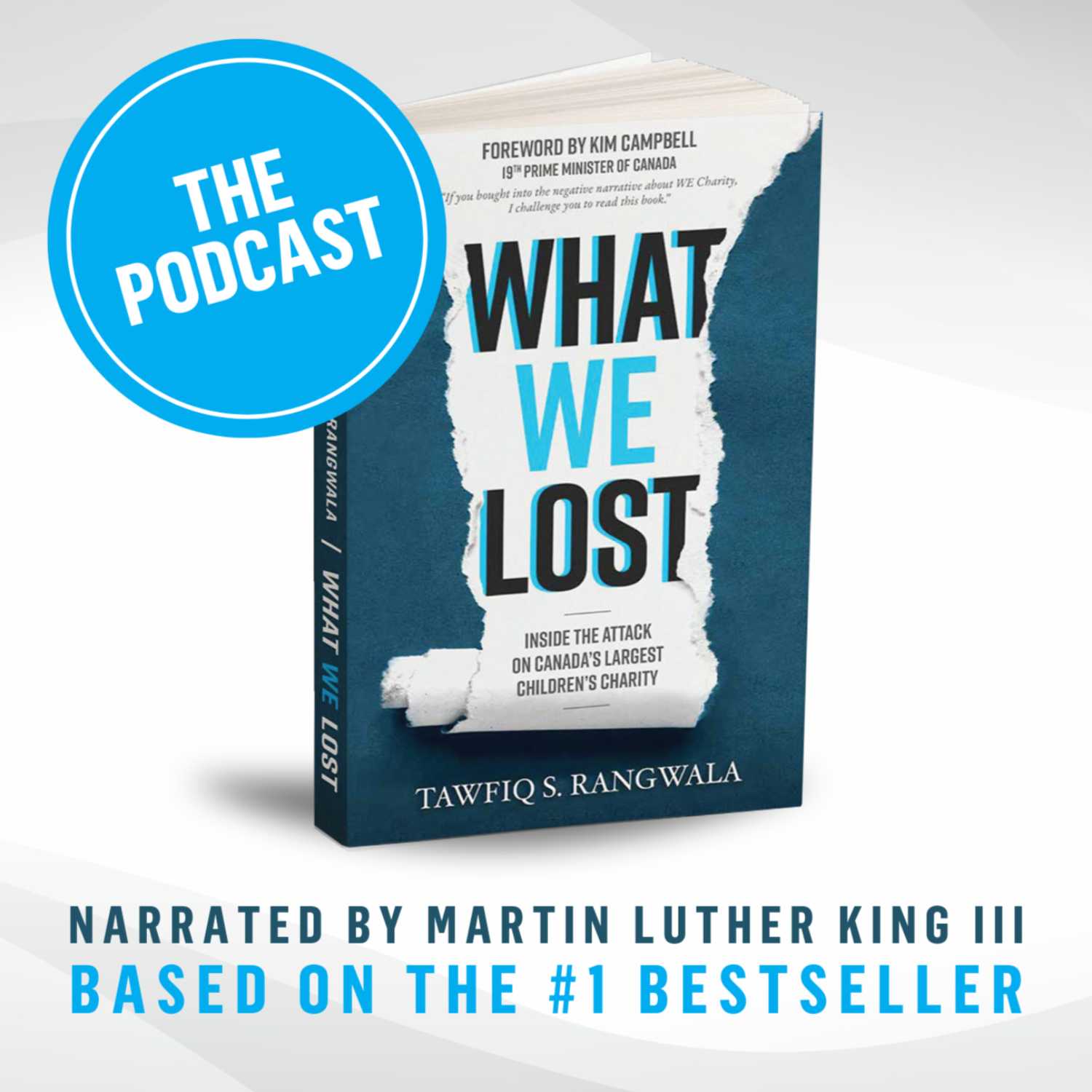
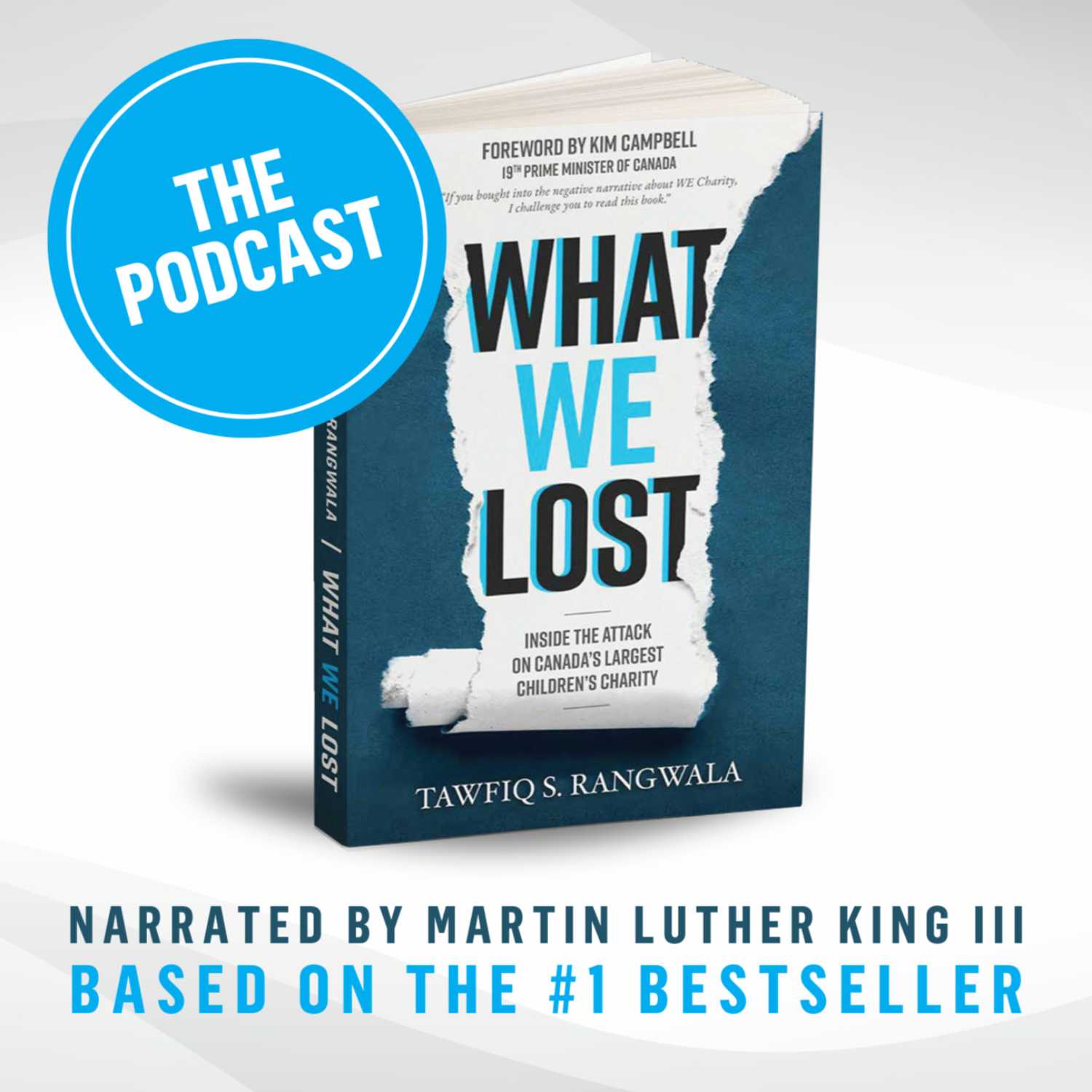
What We Lost: Inside the Attack on Canada's Largest Children's Charity
Hosted by Tawfiq Rangwala · EN
Read by Martin Luther King III, the What WE Lost podcast goes behind the scenes of the so-called ‘WE Charity Scandal’ to share the real story that Canadians never got to hear. It’s a story of a manufactured scandal designed for partisan gain and of a media landscape defined more by clicks and likes than facts and truth. For the first time, Martin Luther King III recounts the real story that was never reported.
10episodes
Episodes
Newest firstAll episodes
The Road Ahead
Sep 14, 202200:40:07Tap to summarizeJustin Trudeau won another election, albeit with another minority government, and Charlie Angus and Pierre Poilievre held onto their seats, with the latter making a bid the Conservative leadership. Jesse Brown was named one of Toronto Life’s Top 50 most influential Torontonians, and a dozen journalists earned accolades for their coverage of the CSSG controversy. Everyone seemed to benefit from the controversy except the millions of youth in Canada who benefited from WE Charity. What does this mean for them? And what’s next for the organization? What does this say about the future of Canada?
Transcribe →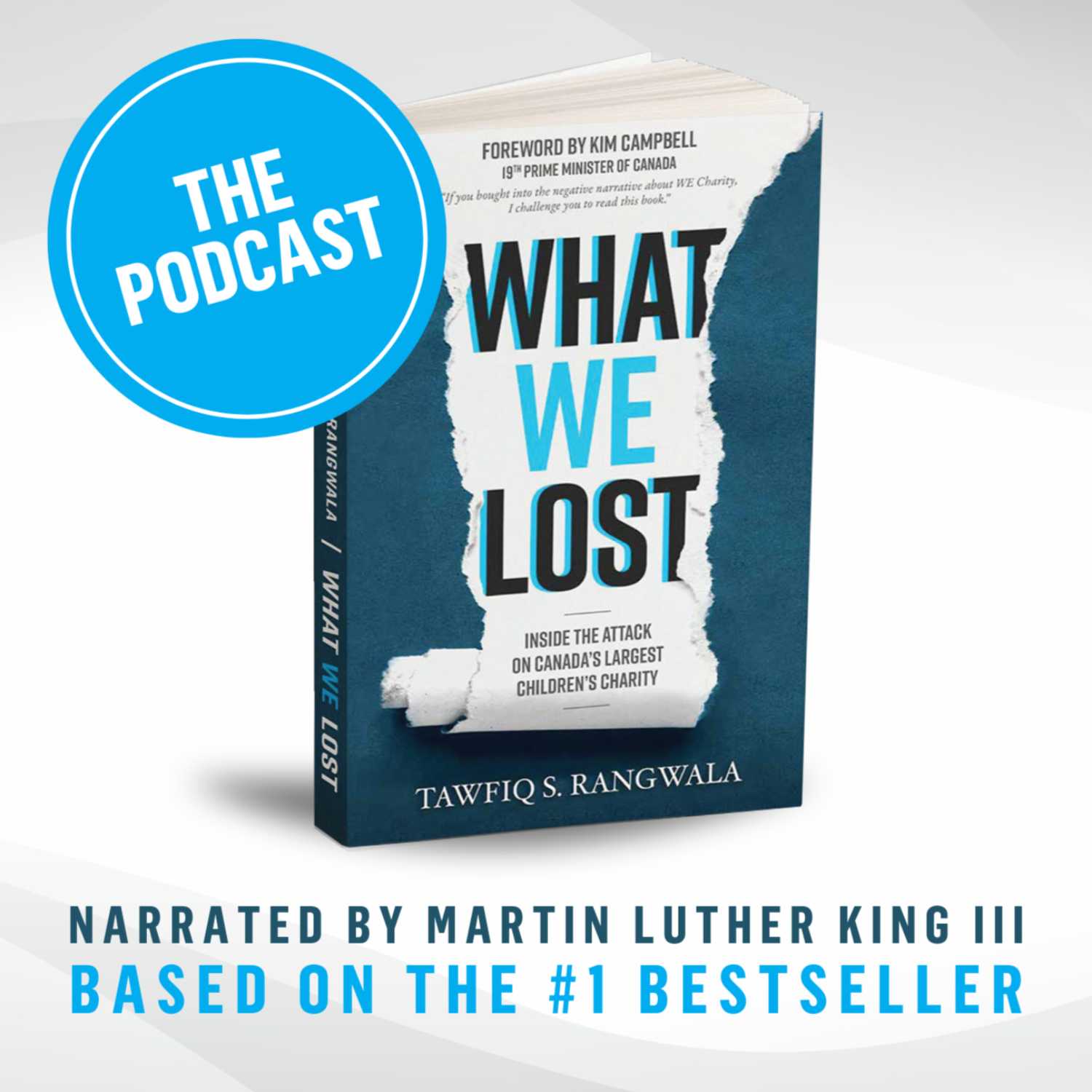
The Fifth Estate
Sep 14, 202202:03:41Tap to summarizeNo media organization was more enthusiastic in its unwarranted crusade against WE Charity than the CBC, specifically Fifth Estate journalists Harvey Cashore and Mark Kelley. Their reporting escalated from recycling well-trodden issues around the CSSG to them soon breaking laws in Kenya, and they ignored any evidence that would prove their hypothesis wrong. They had a story in mind, and they were going to tell it no matter how many donors pointed out the flaws in their research, or youth and employees spoke about their positive experiences or forensic audits were produced.
Transcribe →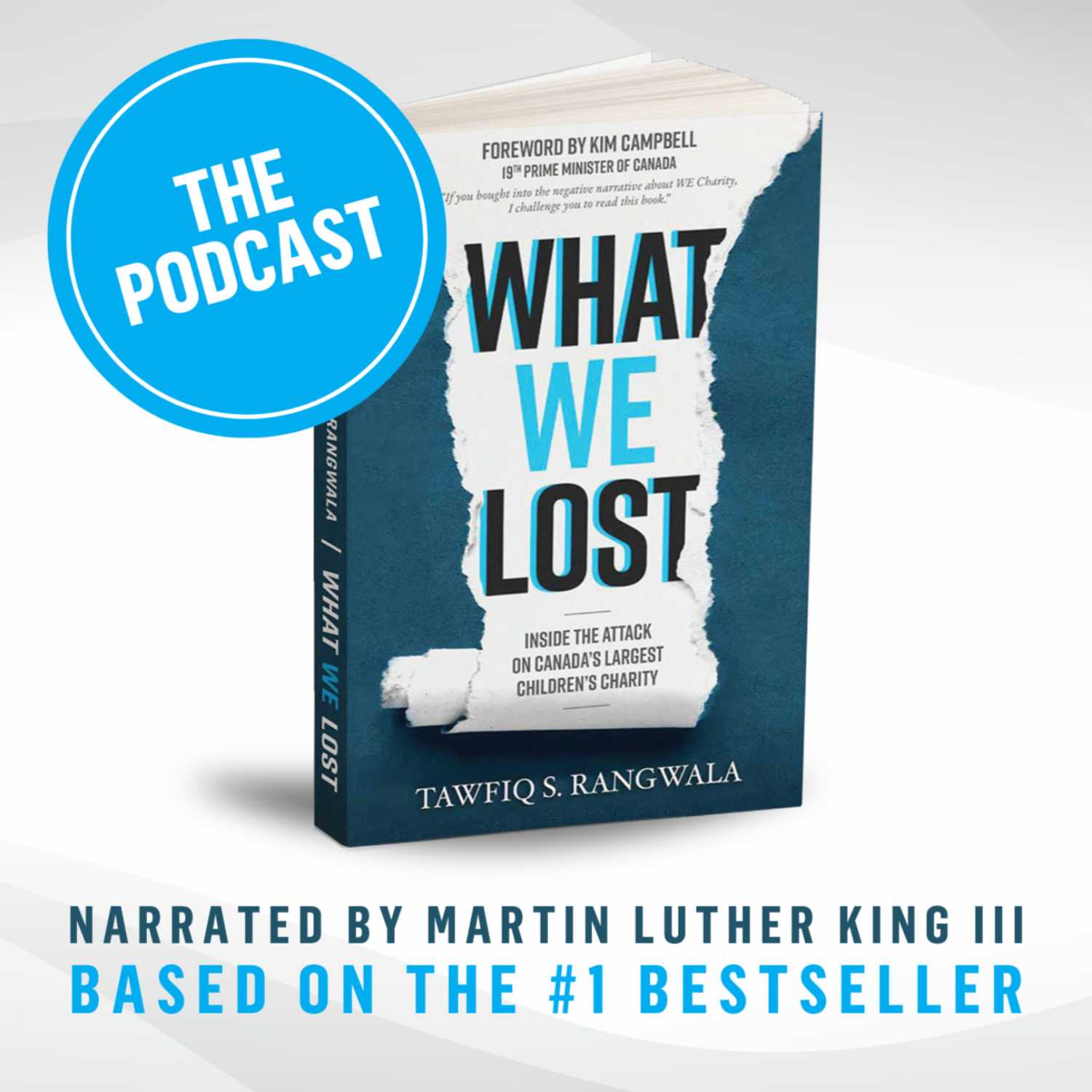
An International Affair
Sep 14, 202201:30:30Tap to summarizeIt wasn’t just politicians and pundits looking to benefit from the CSSG controversy. Reed Cowan, a journalist and former WE Charity donor decided to step into the fray for his 15 seconds of fame. Cowan soon sought to extort the charity for more than $40 million, for his silence. WE Charity was proud of its work in developing countries and had nothing to hide. Beneficiaries of their work and forensic auditors concurred. But those voices were ignored by the media for more salacious headlines. What was the real story before the headlines?
Transcribe →
Manufactured Outrage
Sep 14, 202200:59:15Tap to summarizeWE Charity started to wind down in Canada, but that didn’t mean that politicians and the media were done with trying to tear down its reputation. Politicians like Charlie Angus and Pierre Poilievre were again taking every opportunity to score political points, and they cared little about the collateral damage. Conservatives called on their army of supporters to harass owners of a speaker’s bureau, and Angus bullied a man suffering from a brain aneurysm. And of course, the Kielburgers were called to testify for another unprecedented three hours. Was anything really accomplished from this?
Transcribe →
Closing Doors
Sep 14, 2022Tap to summarizeBill Morneau resigned his role as Finance Minister, and Prime Minister Justin Trudeau prorogued Parliament, leaving WE Charity to twist in the wind. As a result of the partisan politics and often inaccurate media reporting, WE Charity faced a difficult and devastating decision – closing its doors in Canada. Politicians and pundits like Pierre Poilievre and Jesse Brown claimed it was nothing more than a publicity stunt. But what was really behind the board’s decision to close the charity in Canada?
Transcribe →
Political Roadkill
Sep 14, 202200:47:17Tap to summarizeMarc and Craig Kielburger’s lives had become a nightmare. The organization they had built from nothing was clinging to survival, they were working 18-hour days to keep their heads above water, and their families were receiving almost daily death threats. In the midst of all this, they were called to testify before the parliamentary committee looking into the CSSG controversy. Instead of answering lingering questions about the program, they faced four hours of relentless attacks from MPs looking for nothing more than to score political points.
Transcribe →
A Question of Governance
Sep 14, 202201:09:01Tap to summarizeMichelle Douglas had resigned as chair WE Charity’s board of directors in March 2020, a month before the organization was recruited to help deliver the CSSG. She had no knowledge of the program or the details of how it came to be. But her untimely resignation and public statements made her a star witness for partisan politicians, like Charlie Angus and Pierre Poilievre, who were not really interested in hearing the truth. But what is the true story behind her resignation? And how did the charity’s board really operate?
Transcribe →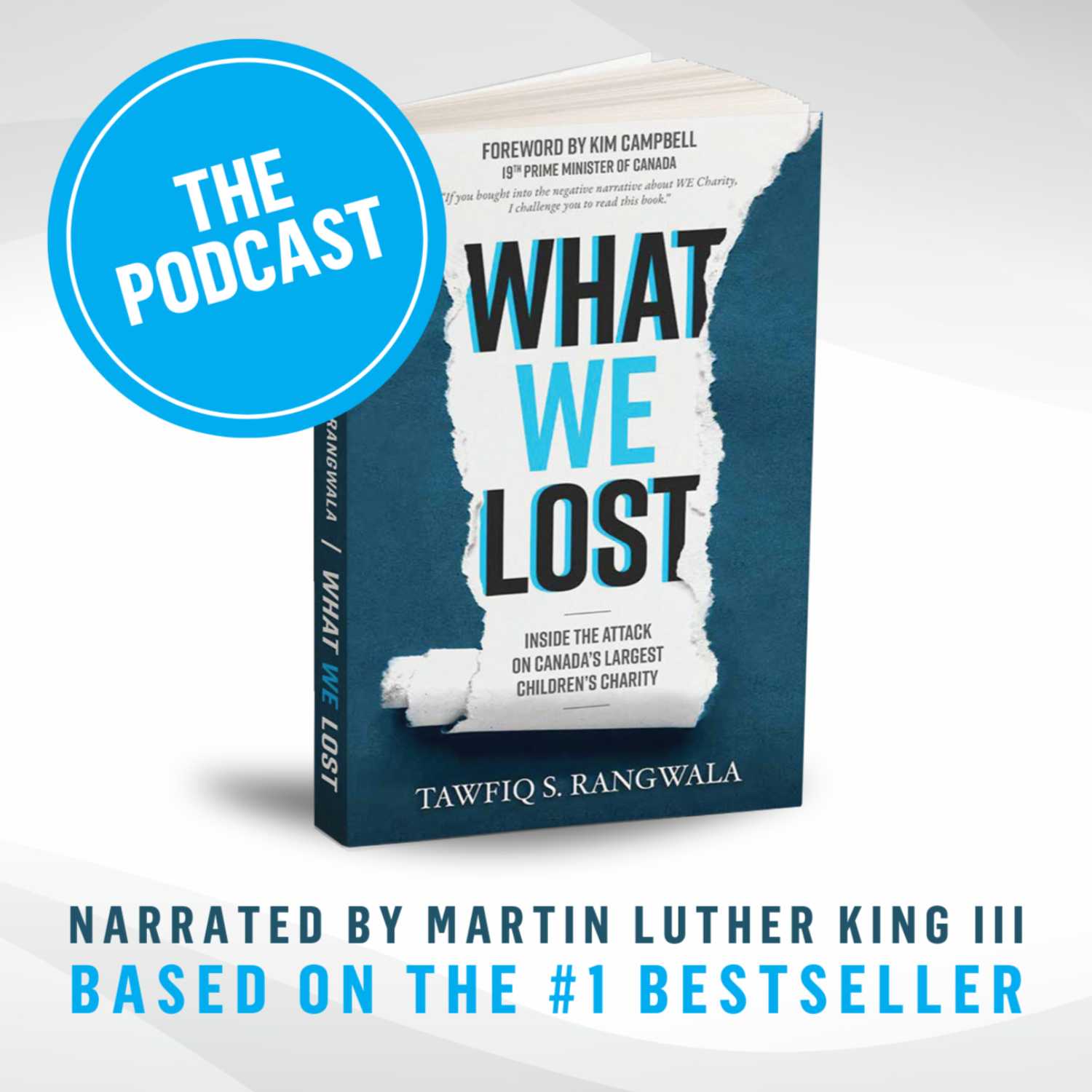
High and Dry
Sep 14, 202200:36:52Tap to summarizeBy mid-July, during testimony before a parliamentary committee, politicians and bureaucrats all confirmed what WE Charity had been saying from the beginning – the CSSG was not initiated by the charity but by the government. There was no scheme to bail out the organization. But what should have been a dignified and sober-minded pursuit of the truth on behalf of the Canadian people quickly devolved into a partisan circus, with politicians like Charlie Angus and Pierre Poilievre taking the lead.
Transcribe →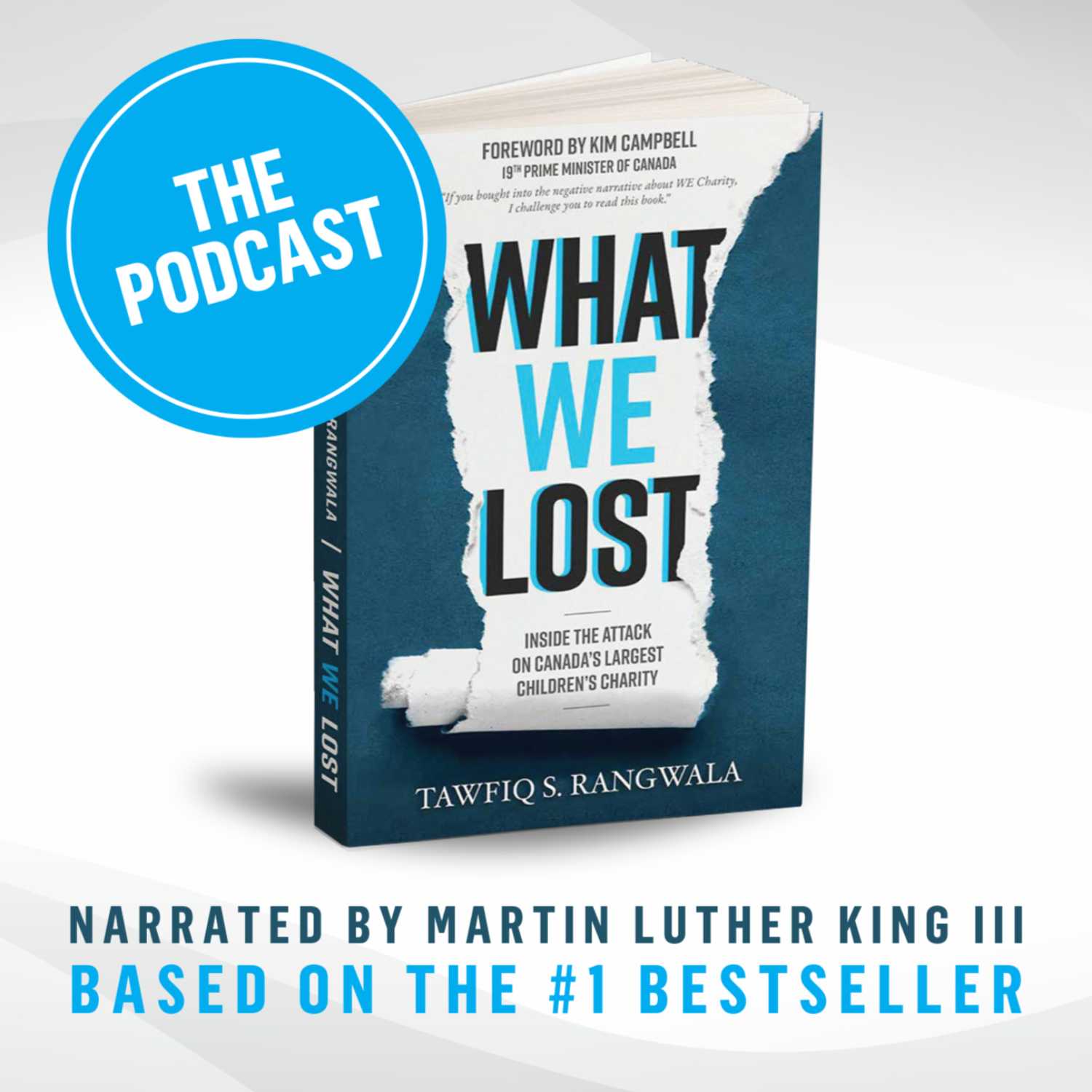
BIPOC Reckoning
Sep 13, 202200:38:31Tap to summarizeCOVID was not the only force causing global upheaval across the spring and summer of 2020. In May 2020, George Floyd was murdered by a white police officer, and ignited Black Lives Matter protests around the world. Like many other organizations around the world, WE Charity was forced to re-examine its own conduct and policies. Tawfiq Rangwala takes you inside the process he helped lead as a former board member.
Transcribe →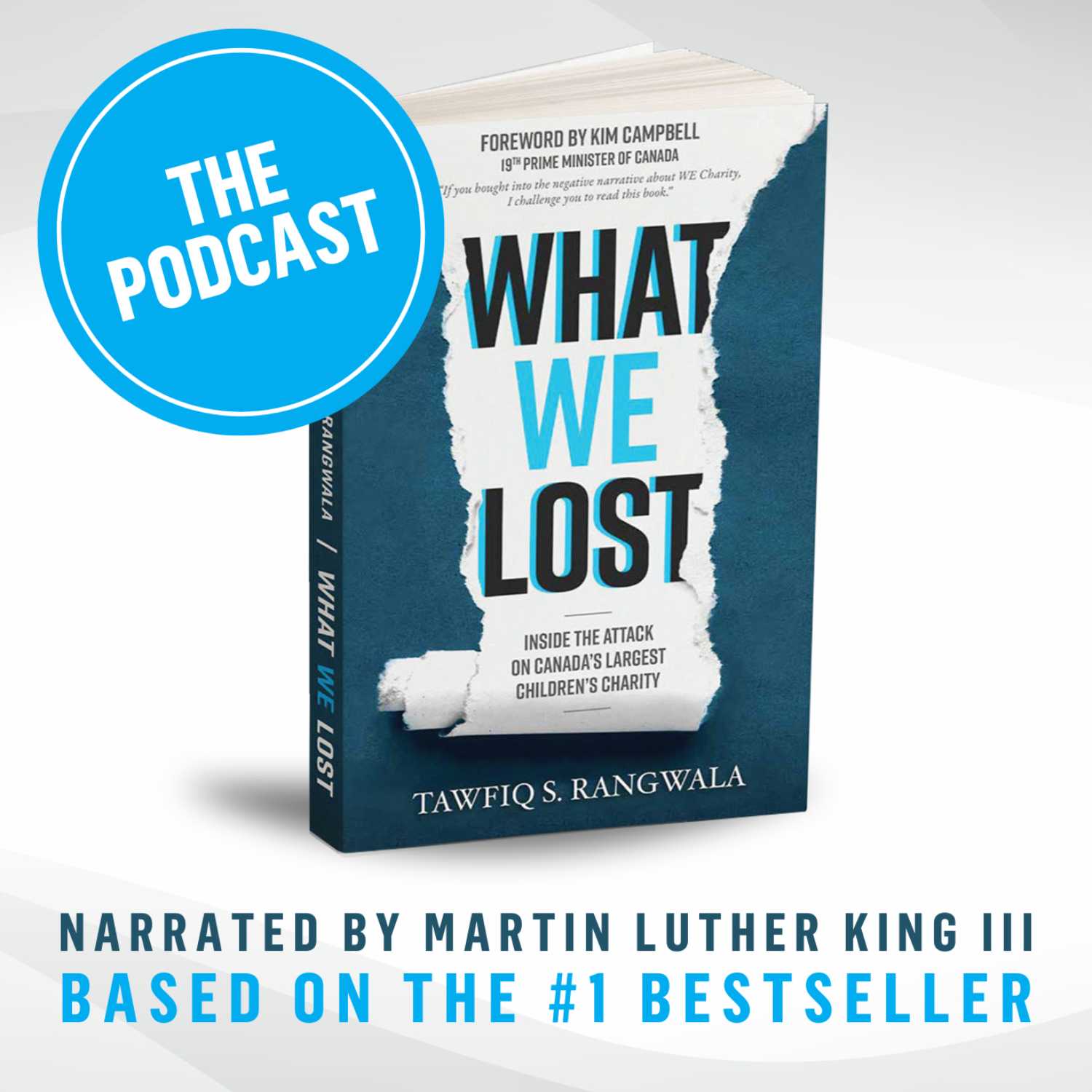
Open Floodgates
Sep 13, 202200:51:57Tap to summarizeAt the height of the CSSG controversy, media eagerly fed on the opinions of politicians like Charlie Angus and Pierre Poilievre or pundits like Kate Bahen and Jesse Brown, while at the same time failing to seek out the perspectives of those with firsthand experience of the organization, like students and teachers. In this episode, we get to the truth about WE’s corporate partnerships and WE Day, and how both benefited millions of youth and educators around the world.
Transcribe →