← What Your Therapist Thinks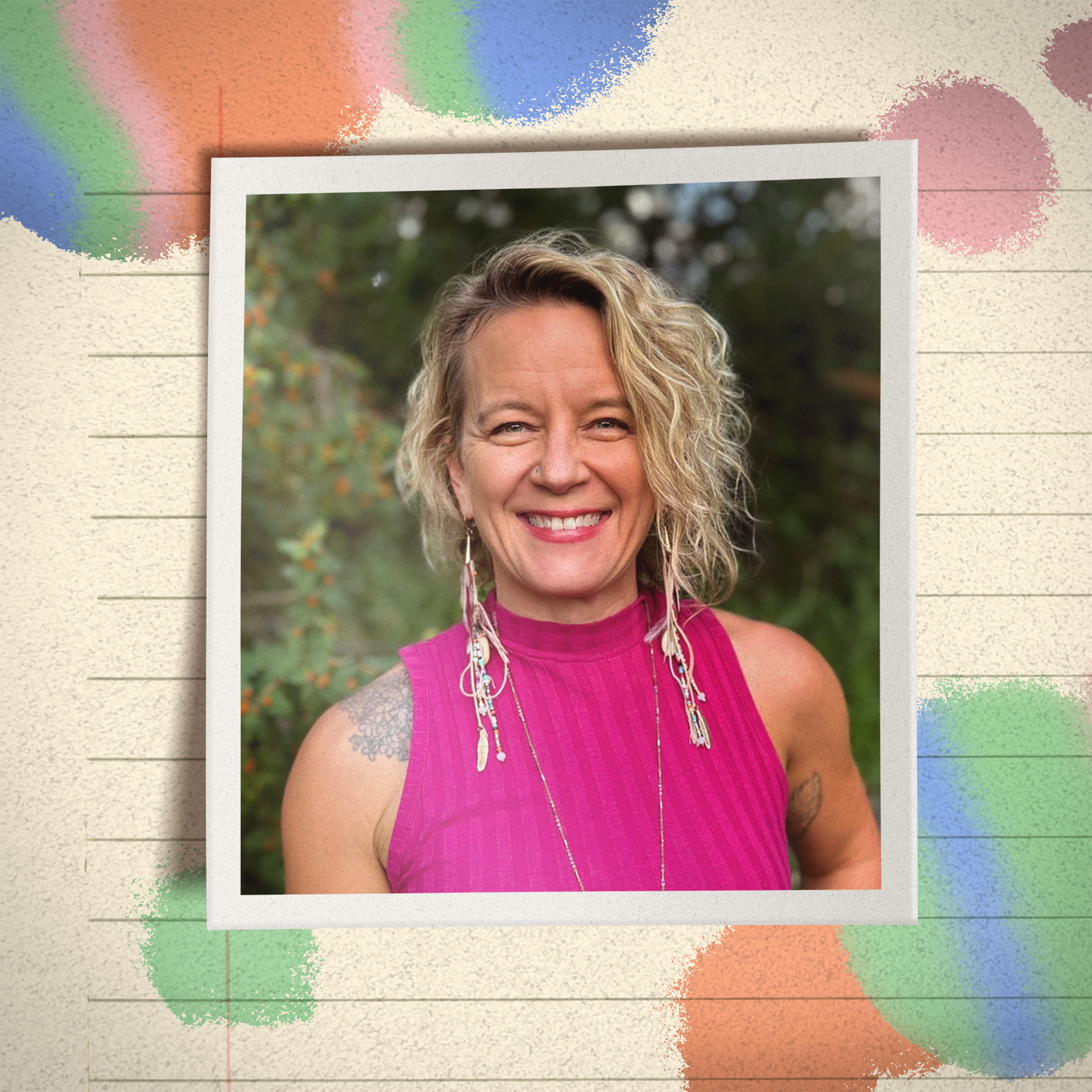
Loading summary
Transcript125 lines
- [00:00]
A
Emdr. It's like when you are remodeling your kitchen. Shit's gonna get messy but at the end you have a nice remodeled brain.
- [00:07]
B
When we keep stuff just on the cognitive level, it's to keep that comfortable
- [00:11]
A
distance EMDR is trying to get at the memories. If we look at ourselves with any degree of honest self reflection, we will find some unprocessed stuff that we don't wanna look at.
- [00:22]
C
We worry that if I address this then I won't be able to keep myself safe anymore. We want you to be able to handle challenges without your nervous system going into panic mode.
- [00:32]
A
That a lot of the way that it is trained are over focused on
- [00:40]
C
if you're new here. Welcome. I'm Felicia Keller Boyle, a licensed somatic therapist and clinical advisor at Best Therapists.
- [00:47]
D
And I'm Christy Plantinga, founder of Best Therapist and Therapy Connoisseur.
- [00:51]
C
This is what your therapist thinks. A mental health show where actual therapists open up about real world stories and the questions people wish they could ask them.
- [00:59]
D
And by real world we mean Reddit posts, incognito, Google searches, and the things you want to bring up in therapy,
- [01:06]
C
but maybe you don't. You'll hear conversations on everything from the best dating advice to adhd, EMDR therapy,
- [01:13]
D
body dysmorphia, and more. Sometimes it will make you feel seen
- [01:17]
C
and sometimes it'll make you laugh out loud.
- [01:20]
B
We're so glad you're here.
- [01:21]
C
Now let's get into the episode.
- [01:23]
B
Today we are joined by Erica Bottom. Erica is passionate about walking folks through the beautiful messy process of turning wounds into W wisdom so that we can all remember our true nature, that we are always and already enough and we
- [01:36]
C
still have work to do.
- [01:38]
B
Her work bridges personal healing with collective transformation and invites us to remember that the world needs us here in our fullest expression. She is a nationally sought out after speaker, licensed professional counselor, certified EMDR clinician, consultant, trainer, bestselling author, and nervous system regulation coach. She's passionate about redefining leadership as a practice of presence, resilience, equity and joy. Erica, welcome to the show.
- [02:03]
A
Thank you so much.
- [02:04]
C
I'm so excited to be here.
- [02:06]
B
Really, you are just like the perfect person to really get into our topic for the show today, which is emdr. We allude to it all the time in the show and I think for those of us who have not done emdr, like I have never had the pleasure, it's very mysterious. I think, you know, it's a little bit like what's going on behind that closed Door. But it's taken the therapy world by storm, is kind of how I perceive it, at least on, on the outside. So for beginners, what is emdr?
- [02:40]
A
EMDR stands for Eye Movement desensitization and Reprocessing. And I think even Francine Shapiro, who is the founder of emdr, kind of later on wished she had called it something different because it just seems very clinical. But after you kind of demystify it a little bit, which hopefully we will do today, you know, it started with eye movements. And a lot of people still use eye movements, whether that's with their fingers back and forth or a lot of people use a light bar. Most people use these paddles that we have that you just hold in your hands and they pulse back and forth in your hands. But what we think happens is that what we call that bilateral stimulation, that right, left, right, left, right, left movement helps to, to get the right and the left brain to communicate with each other. It kind of mimics REM sleep. So in when you're sleeping, your eyes move back and forth rapidly and that actually helps to process and integrate information. I actually think we've been doing, quote, unquote, EMDR since we were in tribal communities, right. If you think about dancing is a bilateral stimulation, uh, drumming is a bilateral stimulation, walking is a bilateral stimulation. But the combination of how we access how the memories are stored currently in the brain, combined with that bilateral stimulation and we are really taxing working memory. That is what helps make this therapy so, so powerful. You know, I was working in community mental health at the time and, and I had the opportunity to get trained in EMDR at a discount. And I was like, oh, this woo woo bullshit. I was very skeptical. But as part of the training, you do experiential, mock, quote unquote, mock sessions. And I had a really, really powerful experience. And so I was kind of hooked from the beginning. You know, it was a really visceral, body level experience. And so I just kind of kept going with it.
- [04:53]
B
So.
- [04:54]
A
And became a consultant and eventually a trainer. I used to do basic trainings and now I just focus on advanced trainings.
- [05:00]
C
So what it sounds like you're saying, Erica, is that one of the key features of EMDR is that the person who is doing EMDR is creating this bilateral stimulation, whether it's through moving their eyes back and forth or through holding something in their hands that's like creating sensation alternately across each hand. Right, left, right, left. Also, sometimes therapists will have their clients use tapping. My old supervisor, she would call this like the butterfly hug.
- [05:27]
A
Right.
- [05:28]
C
So you crossing your arms across your body and then tapping back and forth. So you're saying that combination of bilateral stimulation which helps integrate the brain across its hemispheres and accessing your working memory at the same time. Right. That's what's really unique and special about emdr and maybe also what makes it different from just like the bilateral stimulation that we just might experience in our day to day lives that can be super healing, like dancing or drumming in community. But there's something about using it in a therapeutic way super intentionally. Right. Where we are doing that bilateral stimulation and accessing memories at the same time.
- [06:04]
A
Exactly. Right.
- [06:06]
C
What does the research say about EMDR and how effective it is?
- [06:11]
A
So what we can really see on PET scans is before emdr, there's overactivation in the amygdala, the bottom parts of the brain and the in the limbic system. And then there's also overactivation in the right hemisphere of the brain, the emotional part of the brain.
- [06:27]
C
Why the right hemisphere?
- [06:29]
A
Because trauma is stored in the emotion, it's stored in the feelings and the sensation of it. And so when you have unprocessed trauma, especially over time, the ability to logic your way through it doesn't really work. Even if we know better. Most of us know, most of us have psychoanalyzed ourselves. Right. Most of us have kind of figured ourselves out on a cognitive level. But there are parts and patterns of it that are stored in the deeper levels of the brain, in the deeper levels of the nervous system in the body that really require something like emdr, which we consider to be a bottom up process rather than a top down process. And so after emdr, we see a lot more integration on brain scans between the right and the left hemispheres and integration between the bottom and the top parts of the brain, which is so amazing.
- [07:35]
C
What you're saying is also reminding me of the work of Dan Siegel, who talks a lot about the brain's ability and the mind's ability to distinguish between different things and how important that is to be able to like look at two different things as being two different things. But the importance of being able to integrate and what I'm hearing right now is like so much of the power of EMDR is that integration. Now you mentioned it being a bottom up approach rather than a top down approach. Could you just say a little bit about what that means for folks who maybe have never heard that before?
- [08:05]
A
Sure. So top down is like you are working with the cognitive. Right. So you're working the frontal lobes are our most evolved parts of our brain. We are thinking. So things like cbt, cognitive behavioral therapy, that really works with thoughts, with thinking, and that's really more of a top down approach. And I'm not saying we should throw it out. There's value in both directions. But you're working with thinking first and then you're kind of hoping that the rest of the body catches up. Right. But with bottom up, you're really working with the sensations first itself. So you're going toward the body, you're going toward the pain, you're going toward the thing that CBT might have you talking yourself out of, really. Right. So if your negative belief about yourself, which EMDR works a lot with is I'm unlovable or I'm not enough, or I'm powerless or, you know, I'm not safe, CBT might have you create some anchor thoughts like I am lovable, I am powerful now, I can make different choices now. But actually EMDR is going to go, okay, let's go toward the part of you that holds I'm not enough or I'm bad. Where is the memory? Where's the root source of that? And that actually goes down and in and toward and through the pain to help alchemize and digest it on a deeper level. I almost view it as an infinity sign. It's like we need bottom up or what I would actually call kind of a descending path work. Right. Like the down and dirty, the shadow work, the deeper work. And we need the ascending path work. The things like, let's create more positive thinking and we. I would actually invite a more embodied approach to that. Right. Rather than neurotically repeating like, I am lovable, I am enough, I am whatever. Right. How do we actually embody that? And we're not going to be able to believe that on a deeper level unless we have digested some, some of the things that have caused us to believe the lies and the negative patterns in the first place. You do have to go down and in and toward and through and then you can kind of grow your tree higher, right?
- [10:44]
C
Yeah. So much of trauma is body based, it's somatic. So, you know, if you're listening to this and you've been dealing with the way past traumas are kind of playing out in your life, how they're affecting you day to day. And you've tried talk therapy and you've tried CBT and it's not really getting at it. Then a more somatic based practice, a modality like EMDR could be more effective. So always consult with a medical professional, with a licensed therapist in order to decide what direction you should go. I love that we're talking about this, Erica, because, yeah, I'm a somatic therapist. So I'm a huge fan of like our doorway into the psyche being through the body. Yeah, it's been so powerful for me. Cause I was, I was such a heady person personally. Like, I could, I was what you were describing, I could think about it all day. I did have it figured out in my mind. But my body was having a completely different experience when I started to engage in somatic practices. That's when things really, really began to shift.
- [11:43]
B
I just wanted to say from like outside, you know, non therapist, someone who hasn't done emdr, this sounds brave as hell. It just sounds like the bravest thing to really just like be willing to engage in your body. Because I do think when we keep stuff just on the cognitive level, it's a way to separate ourselves from it and keep that comfortable distance because often it's so painful to actually go back. So anyone who has done EMDR, listening
- [12:13]
A
to this, like, I love that you said that like you can go to therapy for years and years and years and just swim around on the cognitive and swim around in what happened at work that week. And you're probably not gonna get a lot of deeper transformation. So it is hard and it is br. And I promise you, even if you are the most martyry people pleasing over responsibility, yes, saying PTA president on the planet, your shit is going to leak out somewhere. If you do not look at your stuff on a deeper level, the resentment is going to build up. You are going to lash out somewhere. You know, in the trauma triangle, right, we have the victim, martyr, perpetrator parts. And so even if you lean heavy on the martyr, rescuer end of that, you will bounce in to bully, you will lash out at some point or you will dip into like feeling super, super powerless and like nothing is ever going to change. Your therapist is only going to take you as far as they've gone themselves. And so I would say the thing that made me a really effective, I hope you EMDR therapist is doing my own work, is doing my own EMDR and really getting to those deeper layers. So trust your instinct, right? Find somebody that you trust isn't just talking the talk, but is really doing their own stuff.
- [13:46]
C
That makes me think, Erica, that it would be totally reasonable if you are a client who's looking for an EMDR therapist to ask your Therapist if they've also done emdr, if they've been on the receiving side of that kind of therapy. And I also just wanna make plug for asking your therapist questions. One of the things that I would always say to my clients is that, hey, I'm going to be out here like asking you so many questions. Like our relationship is going to be like, a lot of it is me asking you deeply personal questions, which, by the way, you do not have to answer. If I ask you a question and you don't want to answer it, you totally, like have permission to not answer it. Likewise, you can actually ask me anything you want. And I, you know, also get to decide if I want to share that information or not. But, like, this could be a really good question to ask a therapist. If you're on the hunt for an EMDR therapist. Ask them, have you done EMDR therapy? And they don't necessarily have to tell you what it was about. Right, right. But just knowing that they've done that could, yeah, that might be reassuring. That gives you a sense of they know what it's like to be on the receiving end of that. Now, you mentioned something else that I want to clarify for folks. If they've never heard this concept before, you talked about the trauma triangle. Now, not everybody knows what that is. Can you break that down for our listeners?
- [15:01]
A
So if you, I don't know if you all have done an episode on parts work, but I certainly fold in a lot of parts work into EMDR therapy, which I think the combination of those two things is really, really powerful. The trauma triangle can almost be like another way of looking at parts. And so we all have different parts. We have parts of us that hold the pain, parts of us that are more exiled, that maybe are unhealed child parts that hold dependency, victimization, shame.
- [15:32]
C
Right?
- [15:32]
A
And so in the trauma triangle, that might fit under the category of victim. And that's different than recognizing that you have been victimized. That is different than organizing your whole identity around capital V. Victim of like, nothing is gonna change. I'm powerless in all areas. I have no choice points anywhere, right? That's the distinction between those two. And then we have protectors, right? We have manager parts. Because if we stay in victim, if we stay in exiles, we will fricking die. So we have to get some power somewhere. And so we develop parts that are like the day to day, like pip, pip. Now, come on, we gotta get some things done now. We've gotta like move. And so we develop critical parts, fixer parts, doing Parts, people pleasing parts. So managers tend to fall into, mostly they tend to fall into like the rescuer slash martyr. We kind of lump those together. People pleasing. Oh, if I don't do it, nobody else will, right? Oh, are you resting, how nice for you kind of thing. And then we might jump into perpetrator in its most extreme cases, right. It's abuse, it's violence, but it can also just show up as leaked out resentment, right. Or lashing out or slamming doors or maybe that's turned in on ourselves in addiction or self harming behavior. So EMDR is based on what we call the adaptive information processing. And so we try to look at things through how was this adaptive? Right. How did this try to get you a little bit of power or safety or control, even if it was sort of toxic, how did it maintain some kind of belonging or connection to your caregiver or to your main relationship? And so most of our parts, if not all of our parts in most cases, have some kind of adaptive quality to them. And they are stored in deeply ingrained patterns in the nervous system and they almost feel like procedural urges. Right. And so the first step is to become conscious of them. But insight alone is not enough. Most of us are aware of our patterns and it becomes really important to bring in a somatic lens. Where does that part live in your body? Where do you feel that procedural and energetic pattern? What's the root of that? How did you learn that adaptive quality? What was that an adaptation to? What's the wound underneath that? And I would say EMDR is trying to get at the memories that are most related to the deepest wounded parts.
- [18:32]
C
And that's why EMDR is no joke, right? It is no joke.
- [18:36]
A
Yeah.
- [18:36]
C
That's why I think I've said this before on the show, that EMDR may not be for everybody at all times. If you're hearing this, we don't want you to feel, feel that if you've experienced trauma and you don't want to do EMDR, that you're somehow like a bad person, right? Yeah, because it can be so evocative and in some cases, like, it's not appropriate for everyone. So again, work with a professional who can really guide you on that.
- [19:01]
B
And that was one thing I did want to ask you about because obviously EMDR is often associated with treating trauma, but I've heard EMDR therapists also use EMDR to treat anxiety and all these other things. So when is EMDR an appropriate modality and when is it very effective versus maybe that's not A great application of it.
- [19:24]
A
I am not conservative with my use of EMDR because I think it is so powerful. And I actually think a lot of anxiety and depression are related to unprocessed trauma. Even if we don't come from big T trauma backgrounds, even if we don't have abuse, even if we've never seen war or assault or whatever. There's also little T traumas, things that were persistent attachment stuff, right? Like maybe you got the sense that your parent was physically there but never was really able to attune to you or feel emotionally safe or there was major divorce or your physical safety wasn't necessarily in danger, but there was this sense that you had to navigate it alone, that there was still a deep sense of fear and that there was still this sense that the grownups weren't touching it with a 10ft pole. So if you were feeling any kind of way about it, there must be something wrong with you. And although EMDR, I think in its clearest protocol form is probably most powerful for big T tangible things that you can point to that's like this event happened. And EMDR is very clean and clear with those kinds of traumas. And that's where people are like oh yeah, one or two sessions. And it is totally different, right? But with attachment trauma or preverbal trauma or ancestral trauma, which we are just now really scratching the surface of in terms of the medical community. Indigenous communities and black communities have had that understanding of ancestral trauma for a long time. But when you're dealing with pre verbal, ancestral and attachment stuff, it's more like the nothing, right? It's more like death by a thousand paper cuts. And what paper cut do you target with emdr? And that's a little trickier, that's a little bit more of the art of emdr. And I think that's where parts work and attachment work and somatic work are really, really important. And even though EMDR in and of itself is a somatic bottom up practice, I think certain trainings, certain therapists fold in somatic work on various degrees. And I would encourage people to really look for somebody that takes a somatic lens. And you get the sense that they are as embodied as possible and that they really deepen into that work a separate. Especially if there's little T. I don't really know what's going on. I had a lot of people that come to me and it's like I just feel anxious. I really have a whole lot of trauma. And then as we peel back the layers, we start to See the parts and what might be at the root of that. And then we fold EMDR in and it's quite powerful. You know, my sons, their friends come over like, oh, Ms. Johnson gave me a B. And it was totally traumatic. I'm like, okay, now hold on a second here, y'.
- [22:28]
B
All.
- [22:28]
A
Let's not enable fragility. But yes, trauma is subjective. And if it's persistent and it happens over time, and one body might go through an experience and really develop strong PTSD qualities, and this another body might go through a very similar experience, and depending on their ancestral history, depending on their preverbal history, depending on their attachment, might experience that in a totally different way and not develop PTSD at all. So, yeah, I think it's important to use discernment and to not throw trauma around for every terrible thing that, you know, every slightly uncomfortable thing that's happened. And yes, I do think most of us have unhealed stuff, that if we look at ourselves with any degree of honest self reflection, we will find some shadow, some unprocessed stuff that we don't want to look at.
- [23:29]
C
So, Erica, I think you make a really good point about just understanding trauma in our own lives. Ultimately, it is a subjective experience. Like you said, different bodies experience the same situation differently, and one person might have a trauma response to that experience, while another person might have a completely different response. Right. So if you want to hear more about just trauma in general, we have a great episode on that with John Lee from back in season one.
- [23:57]
B
So what I'm hearing is if we take emdr, maybe less in the rigid sense, take different parts of it, then it could be more broadly applied to other things like anxiety, depression. Knowing that all of this obviously coexists a lot of the time anyways.
- [24:13]
A
I think it really depends on the therapist and the client and co creating that together. And really, we kind of say in the MDR world, even if you're not holding paddles, I'm doing EMDR with you because I'm viewing what is going on in the lens of EMDR therapy. And my lens usually holds that whatever is happening in the present moment likely has some root to it. It's not just about brain storming and solving the problem. If there's an activation here that's big, there's likely something underneath it that is undigested. And so even if I'm just talking with you, in my mind, I'm still, quote, unquote, doing EMDR therapy because I'm history taking and I'm preparing because it's an approach to therapy. It's not just the reprocessing. And so actually I think that's really important because we were talking about like, oh, this is really powerful. This is no joke. I'm sure there are lots of stories of people really being harmed by emdr, and I would say that that is likely a result of a lack of nervous system resources and preparation of somatic resources. And so a trained and skilled EMDR therapist is going to do a history taking. Not like what is every terrible thing that has happened to you, but more of like what are you really good at? Likely whatever your strengths are might also be part of the block, right? So like if you have a really good push through attitude, you know, the shadow side of that is that it might be really hard for you to hold compassion for the part of you that has held the pain. What are the parts that are going to show up when you get close to pain that are going to move in to protect you? And what are the resources that are actually going to be able to help you both step into pain and not re traumatize your system as well as step out of pain and put it away at the end of session? Have some healthy containment, not a repress it, we're going to forget it forever box but a I need to take a break and I'm going to come back to you when the time is right. Practice. There's a lot of preparation that goes in. We're not just jumping in to the deep end of your pain with no preparation. That would be obviously really unethical and harmful and not trauma informed.
- [26:59]
D
Felicia, what's your favorite place on earth?
- [27:01]
C
That's a tough one. It's a toss up between a fancy pants hotel or camping in the great outdoors.
- [27:06]
D
Well, my favorite place on earth is bed. That's why I'm thrilled to share more about our sponsor for this episode, Cozy Earth.
- [27:11]
C
Have you tried their sheets yet?
- [27:13]
D
Oh my God, yes. The morning after I put them on the bed, my husband turns to me
- [27:16]
C
wide eyed and goes, these are so soft. Like unreasonably soft.
- [27:20]
D
I'm also obsessed with their classic cuddle blanket. It's plush, also ridiculously soft and weighted.
- [27:26]
C
I love being outside, but I also love my fancy indoor comforts. And the bamboo pajama set is the ultimate sleepwear upgrade. They're so cozy, but they actually sleep cooler than cotton so I don't get too hot at night.
- [27:38]
D
Believe it or not, this is actually our second pair of matching pajama sets. You're actually the One who introduced me.
- [27:43]
A
Aw, I love that for us.
- [27:44]
D
So whether you're looking to give yourself a little extra love and care this
- [27:47]
C
year, season or gift something high quality and indulgent to a loved one, try
- [27:51]
D
Cozy earth with a 100 night sleep trial and a 10 year warranty on
- [27:55]
C
their products, use our promo code WYTT for up to 20% off@cozyearth.com
- [28:02]
B
and this is a perfect transition to actually my first story from Reddit, so I'd love to get into that. Okay, this is in the subreddit EMDR cleared core trauma. Right now it feels worse. First of all, this is something to celebrate. I cleared a CSA childhood sexual assault memory down to a zero. I did not think it was possible. It took nine months of EMDR ifs twice a week, but it's actually gone. When I think of it, it's just a clear white room and I'm sad about it. Like it happened to someone I know really well, but it doesn't flood me. It is possible. Applause Moji at the same time, my whole system is in shock, exhaustion and terror since the EMDR session. The fear levels are so high that any thought look looking at my watch or thinking what's for lunch? Sends me into a catastrophe and despair spiral. I've been crying, having nightmares, spend a whole day doing outdoorsy things with the goal to release this tremendous energy I have in my body. But it's not working. EMDR session had been three days ago. I feel like my whole system was holding a heavy object like a stone in a tote bag, which was giving it shape. And now since the stone is gone, it lost its shape, function and borders. I can feel how the buried architect child part responsible for CSA survival is in panic, other manager parts as well. I'm doing my best with grounding techniques for the dust to settle and this to pass, but it feels like shit. Are those buried emotions surfacing yet more? Is it the system trying to figure out who we are? Since CSA is not in the cards anymore, I would love some support and guidance. How did you feel when you cleared such a big trauma whale?
- [29:41]
A
Well, first I'm just kind of holding that client with love and support. I don't know if that person's gonna probably won't hear this episode, but I'm just sending them good energy because it is really hard and obviously I don't know. I can't know without exploring more and having the nuance of everything more. But a couple just thoughts come into my mind. The first is our whole identities can be organized around traumas, right? And even though I talk about it in the beginning, it always catches people off guard. But I always try to give some informed consent that, you know, the first step of this is psycho education. The second step is resourcing and preparation. The third step is, like, going towards and down and in and through. And the fourth step is like, who the hell am I without this trauma? It's like re identification work. And so maybe part of what is happening is like, her whole system is recalibrating who she is. Like, she kind of said, like, I was carrying this stone and my whole system was shaped around that stone. And then you take it out and you're like, who am I? Right? There's a flailing that can happen. I also just say that sometimes emdr, it's like when you are remodeling your kitchen, shit's gonna get messy, but at the end, you have a nice remodeled brain. And sometimes things do get worse before they get better. But this sounds too. Like there actually might be a feeder memory. Is there a larger attachment component to this that is actually not being addressed? Even though she's doing ifs, there might be this, like, preverbal setup. Like, what was the circumstance? Did people believe her? Was there conversations of, hey, this is what is appropriate touch and what isn't appropriate touch? And, you know, I grew up in the 70s and 80s and I. My mom was actually ahead of the game. She was sort of having those conversations with us. But a lot of parents weren't right. And still a lot of parents aren't of like, hey, this is what safe touches, this is what's not consent, et cetera. Even if her parents are lovely, did the best they could, there might still be an attachment component to this that is a deeper, more widespread wounding that hasn't been addressed. I don't know. But certainly the identification piece, like, who am I? I often joke it's hard to market what I do because it's like, hey, do you want to go towards what you've been avoiding your whole life? And you might find out that your whole personality is a trauma response. Like, that sounds.
- [32:31]
C
I think Gabor Mate says something along those lines. I remember being in a training with him, and please correct me if I'm wrong or if I'm misquoting you, Dr. Mate. But like, personalities are essentially like trauma responses. And that human beings, when we are not disowning or disavowing certain parts, and when we have that healthy integration in our brains and in our bodies and in our psyches, we have a lot of flexibility in the system and personalities tend to be more rigid. The reason why we, like, talk about personalities is because, oh, that person's like this and they're not like that. But when you have more integration, you have more options when you're responding to life. And so your personality even becomes a little less relevant. That's not how you're moving through the world. You're moving through the world, meeting each moment with presence and flexibility and seeing what's called for in that moment. What is the most helpful response to what this moment is requiring from me?
- [33:31]
A
Yep, I love that. And I. I really think that my larger view of healing, of transformation, and what I see at EMDR playing a role in is to help you become more of who you really are. And I always kind of say, like, your true nature is that you are always and already enough lovable, worthy and inextricably connected to all living things on the planet, just as you are. And actually not even lovable. You just are love, you are awareness itself, you are spaciousness itself. You are energy itself. Alongside of that, we all have shadow, we all have humanness, we all have ancestral stuff, we all have work to do. And so it's just this continuous becoming more and more of who you really are. And I'm with Gabor Mate, and our quote unquote personalities become less important really, as we are digesting and just meeting the present moment with clear lenses. And trauma thwarts that, right? Trauma is sort of this like, fucked up ball of yarn around our true nature.
- [34:49]
C
I think of trauma and the habits and responses that we develop to trauma and then get kind of hardened and calcified over time as something that clouds our view. And it's almost like everything starts to fall into that pattern. I remember speaking with a practitioner, not a therapist, who was giving me some feedback. And he said, you know, Felicia, you have this part and it's really good at identifying problems. It's really helpful in this one area of your life. But in this other area of your life, it's causing a lot of problems. And they said, you need to do some parts, work around that. And I was like, okay, but like, this part, it's my protector, right? So, like, what if I, like, begin to heal that part or change that part or release that part and I don't know how to keep myself safe anymore? And he goes, that's not like your protector. That part isn't keeping you safe. If you begin to heal and work on this part, you Won't lose the ability to keep you safe. And I think that's a fear a lot of people have with beginning to heal these different parts of ourselves. Because we worry that if I address this, then I won't be able to keep myself safe anymore. And it is so incredibly encouraging to hear like, no, I can begin to heal this very quick, automatic response I have to certain stimuli. I can begin to create more options for myself and still retain my ability to keep myself safe in the situations where I need to keep myself safe. That just gave me, like, so much freedom, so much relief.
- [36:21]
A
Totally. It gives you more choice. And choice is such a loaded word when we're talking about trauma. Right. Trauma is stored in a way that cannot put together chronological time. So something happens, and it. Pooh. It pings it, and it feels like it's happening right now. And you feel like you're three years old again, and you feel like you have to go through that procedural, protective, you know, neuronal gutterball. Right. And it's just that procedure, procedural thing that happens. I. I love that you said that. I'm a trauma therapist, and so I'm an enneagram 4. I'm an adoptee. I'm, like, real good at looking for what is the problem here? Which actually makes me a very, very good trauma therapist. What I've had to develop is celebration is good enoughness, is what is the positive, what is the identity? And it can definitely show up as some shadow. Right? Nothing is ever good enough. The way people show up aren't good enough. I'm always looking for the problems, and everything is gonna be filtered through that lens. It's like looking for evidence. I'm gonna look for evidence.
- [37:33]
C
A bunch of false positives, essentially, and it begins to make your world smaller. So it's not that if you begin to heal these parts, like, you know, your life is 100% better and nothing bad ever happens again, or anytime that you perceive something as bad, you know, that's evidence that this part is over. Like, that's not true. You will still have the ability to notice things that are happening that you're not okay with and to hopefully be able to say no in ways that are even more effective than they were before. Again, we're, like, trying to create a more adaptive response. And you said this earlier, Erica. Like, the parts that we've developed throughout our lives were an attempt to adapt to that thing that was being thrown at us, right? Like, they all have a really good reason to exist. And at a certain point, of time. They were the best we had. It was, like, the best response we could have come up with. But as we get older and as we're trying to create more options for ourself, we start to look at, okay, how can I develop a lot of compassion and understanding toward that part while beginning to create new adaptive responses and ultimately having a more flexible system which is stronger? You know, when we think about bodies and objects and things in the world, really strong structures are often also really flexible. A certain degree of strength turns into brittleness. Right. It's important for strong structures to have flexibility. Skyscrapers sway in the wind. Bridges move. Trees, trees.
- [39:04]
A
I think it's so important, the point that you made, Felicia, about developing compassion for those parts. Because if we come at these parts, like, ugh, I gotta start setting boundaries. Oh, there's that old pattern again. Like, and you're adding more criticism onto that part. It is not going to shift. The way that they soften. The way that patterns change is through compassion. And I preached this for a long time and I got it to a certain degree, but it's over and over again. I have to learn this. That slow is fast. That criticism is not an effective change agent. Coming alongside with these parts. And that doesn't mean that we don't set boundaries with them, you know, with our critics, with our people pleasers, with our whatever. It's like, hey, I love you, and you have taken me a really long way. You have done a really good job of trying to keep me safe and keep me connected. And I am driving this bus now, and, like, I love you, but you need to sit down. And sometimes we need to be quite stern in our boundaries. Sometimes we need to, like, be like, listen, critic, I love you, and I know you're trying to keep me safe, but sometimes those parts need, like, stern grandma. Like, we're not doing that today.
- [40:28]
B
And there's something.
- [40:29]
C
I mean, obviously everyone has their own relationships, but there's something about a stern grandma that actually helps me feel, like, kind of settled. Yeah. Like, I am such a person who goes into an environment and looks for, like, who's in charge. And if I feel like there's a gap and it's like, I feel like things are kind of chaotic, I'm like, I need to fill that gap. So when I enter a space, Christy is like, me too.
- [40:51]
A
You know, my generation, I think we were under parented and over punished. And so we, a lot of us swung the pendulum in the other way, and we, like, tend towards helicopter parenting and over rescuing and validating every single emotion. Right? And we've sort of enabled fragility. But I think that healthy attachment is actually that stability that you're talking about is that sternness, like, hey, I love you. There is unconditional love here. There is nothing that's gonna change that. And there's boundaries here. There's structure here, and we know what those are. That actually makes us feel safe. If we. I just learned the word milquetoast. Have y' all ever heard milquetoast? It's like the shadow side of gentle parenting.
- [41:34]
C
Like a soft affiliate. Like, soft.
- [41:37]
A
Like, too, too. There's, like, no structure there.
- [41:41]
C
You don't always have skin and muscle and no bones. It's just like.
- [41:45]
A
Exactly. And all like. Yeah, yeah.
- [41:48]
B
Felicia just mimed a blob. So just imagine we're all.
- [41:53]
A
Yeah.
- [41:53]
B
If you're listening, I do want to make sure we get to one more, because I think it's very relevant to what we've been talking about, because maybe if you're listening to this episode and you are feeling the very brave calling to try emdr, I think a lot of hesitation, and I know that I've had this, too. It's like, how do you handle the intensity? And this is exactly what our next poster is inquiring about. So this is also from the subreddit emdr. I knew EMDR was going to be intense, but sheesh, how did you all handle the intensity? Intense is not even the word to do it justice. And it's not even during the actual session, although that can be very difficult to go through. But the processing that happens days and even weeks later, I don't think I realized how much pain was buried inside of me until I started feeling my buried emotions. And the nightmares. Oh, my God, the nightmares. I found myself standing frozen in my living room feeling intense fear and having childhood memories return. I almost saw for a second that maybe I wasn't ready to go deep into my childhood trauma like I thought. I also found a new therapist, as EMDR can help you realize really quickly who can truly help you. You through this journey. But here I am, still going, still fighting to feel, release, and heal decades of trauma. So what advice would you give to OP and I'm sure many other people who maybe start emdr or they're thinking about starting it. And, yeah, just how do you handle that intensity?
- [43:19]
A
I'm not saying that the therapist hasn't done a good amount of resourcing, but I want to make sure that that is happening. So the sort of the classic two resources that EMDR therapists do are a calm, safe place meditation and a container exercise. That's sort of the page one resource preparation things. But I would say that it needs to be much more co created and personalized and there needs to be some sort of somatic preparation and plan for integration. Because integration is actually the most important part and integration is life. Integration is whatever it is that you want to do more of. So can we incorporate some somatic practices? Whether those are polyvagal exercises? And I, I have a free handout with tons of videos of me teaching those. You, you don't have to do all 11 that are on there. You just find one or two that you actually feel something that's like a little subtle shift or just shaking it out or moving or dancing or anything that's going to help move that freeze response where she's just standing in her living room. Let's actually plan for that and practice that in session. So I might have her literally practice like freezing and feeling what that feels like in her body and just noticing the patterns, noticing how that is. And then can she just start rolling out her wrists or rolling out her joints or doing some arm circles, you know, practicing that in session and doing maybe a little bit of titration where you go into the freeze response and you practice that and then you go into the movement. Or you could do an attachment resource where you build a team of mental allies. Right. Where you bring in Maya Angelou and Falkor from the Neverending Story and Elephant and all of these, you know, spiritual resources and nature and whatever else resources you. And you really feel those energies here with you so that you don't feel so alone in that. So there's attachment resources and there's somatic resources, and I would really want to do more of that. That's beyond just calm, safe place and container. If that's happening, we want to plan for that and we want to help integrate that. Felicia, what are your thoughts on that as a somatic person?
- [45:54]
C
Well, before I go there, I just want to say I'm so glad you brought up Falkor. Huge fan. Yeah, I think that's a really like, wise response, Erica, to this person is having a somatic response to the processing that they're doing and like what's happening after they leave a session days later. So, yeah, it makes perfect sense to me that we would want to use somatic resourcing to help them release some of it. So, yeah, I agree completely. You mentioned polyvagal exercises and a Lot of people may not know what that is because, you know, somatic work does have a lot of technical language in many cases. Because we're talking about the body, we're literally talking about your physical body and how it impacts your psyche. And so when we're talking about like your polyvagal system, we're talking about literal part of your nervous system. So, yeah, tell us a little bit about that, Erica.
- [46:46]
A
It's a hot topic right now because there's some new research coming out that is kind of challenging some of the theory, but I'm just going to keep it very high level. Like, the basics are we have a vagus nerve that connects our brainstem to our gut and it is in charge of like 75% of what's happening in terms of nervous system regulation. So where it does not connect to is the frontal lobe. Right. So I kind of have a catchphrase that's like, trauma doesn't give a what you know, Right. So you have to work with the vagus nerve. You have to kind of tone the vagus nerve almost. And as you do that, whether that's through yoga, cross body, like anything that is like right to left, like elbow,
- [47:30]
C
bilateral stimulation that you're talking about and.
- [47:33]
A
Or the butterfly hug, it can even be that twist, sting, helps to tone the vagus nerve. There's a polyvagal reset, literally. You can Google it, or it's on my handout as well. There's all kinds of exercises that are really designed to strengthen and tone and kind of stimulate the vagus nerve. And when we are doing that, we're just slowly growing our capacity and we're growing our ability to stay in the window of tolerance. We're growing our ability to stay in the window of choice, to have more room where we're not in flight or fight, where we're not in hypoarousal freeze or fawning. I've heard it described many times as like, if your nervous system is the size of an espresso cup and a challenge comes in and it's like a tablespoon of salt, it's gonna overwhelm your system. But the more that you're gradually growing your capacity, and hopefully you become the size of a huge freshwater lake or the ocean or the universe or whatever, then that same tablespoon of salt comes in and you're like, salt definitely need to filter that out. We're a freshwater lake.
- [48:47]
C
But that there's an overwhelming capacity.
- [48:50]
A
You have more choice, you have more reserves, you have more resources.
- [48:54]
C
I like how you talk about window of tolerance as also being a window of choice. Because when we talk about going outside of your window of tolerance, what we're saying is your nervous system is no longer regular. You're no longer feeling safe, present, and able to connect with others. And you are going into a response that is, you know, trying to keep yourself safe. So that might be, like you've mentioned, fight, flight, freeze, fawn. All of these indicate that your nervous system is in hyper or hypoarousal, meaning there is too much energy. That would be hyperarousal or too little energy. Hypoarousal, which looks like dissociation. Freezing. Right. And so what we want to do is get you back into your window of tolerance, but we also want to grow your window of tolerance over time. So that's like the metaphor you're talking about of going from that espresso cup to that huge lake. We want you to be able to handle challenges without your nervous system going into panic mode, essentially, because when you go into panic mode, you literally cannot access your frontal cortex. It's just not functioning optimally. And so you're acting from these earlier parts of your brain that are more emotional. They aren't as good at necessarily solving problems flexibly. And we want your brain to get back into a place where all of your brain systems are online. Your body is relaxed and calm and responsive rather than reactive.
- [50:20]
A
Right, exactly. And I think it's really important, the conversation around this, too, though, that is like, there is nuance. It's not like you're either regulated or you're not regulated, or if you're having some sort of emotional response, response to what's happening in the collective right now, for example, or if you're having an emotional response to, you know, shitty behavior, abusive behavior. That does not mean that you are, oh, you're dysregulated and you need more work and what, you know, whatever.
- [50:48]
C
You might be dysregulated, but I think it's like, that's a totally appropriate response. So I think what's important here is for us to say, like, there's not like a value judgment on, like, whether or not you're regulated or not. And it's totally appropriate to become dysregulated. The goal isn't so. So that you grow your window of tolerance so much that you feel nothing. Right. Like, that's not what we're talking about here.
- [51:12]
A
And actually, that wouldn't be a real window of tolerance, I would say.
- [51:16]
C
Right. That would be more of a dissociation Exactly.
- [51:19]
A
That's a false window of tolerance, a false sense of regulation. And so I would say you can still be dysregulated, but also still be in the window of choice. I think you can still have emotional reactions and still have this intention around having your actions and having your response rooted in wisdom and rooted in alignment with who you want to be rather than being it's this procedural reaction where then you have shame afterwards or you
- [51:54]
C
have this like letdown and nervous system dysregulation. Like, has a purpose. Right? Like if you are being threatened physically, your body needs to like, respond quickly to either get you the hell out of there or defend yourself. Like it's a feature. Right. The problem is when that switch doesn't turn off or it's so sensitive that it's having false positives. So we're not here advocating for you not to be able to have these totally appropriate and helpful safety creating responses, but we're looking for ways for you to have fewer false positives. Because if your nervous system gets thrown out of whack so often in response to situations where this response is not appropriate and that response is causing problems in your life, then we have a problem. So again, this kind of comes back to that theme of like, what is adaptive for you? We're not saying that anger, sadness, even fight, freeze, or like flee are bad responses. We're just talking about you getting more options in your nervous system so that you can have more adaptive responses to the life you're living today instead of being having that switch stuck on from something that happened to you in the past.
- [53:09]
A
I love that.
- [53:10]
B
I just love when two somatic trauma therapists are like, and this and this and this and this. It's just, it's really fun to sit in on. It's time, Felicia, for our last segment.
- [53:20]
C
So the question is, what is it that you are really thinking with clients? But maybe like, you don't say when it comes to this topic, like, is there anything that you find yourself thinking? But then you're like, oh, but you know, maybe if I was their friend I would say that. Or maybe if I was their family member, I'd say that. But I can't say that. Like, we're not just hanging out. Like, I'm their therapist.
- [53:42]
A
Like, no, I say most things. Yeah, I find a way to say most things. Things. I think clients are looking for honesty. And it is part of our skill set and our job to be able to deliver honesty, but in a way that still maintains the connection and maintains the safety of the relationship. So if I have something that I would maybe think that the client does not want to hear first, I'm going to try to get consent. Like, hey, I have some thoughts. Some of them might be a little like perspective offering or a shadow side of this. Are you in a place to hear it?
- [54:25]
C
So I think the question that I need to ask you then is what do you really think about emdr?
- [54:31]
A
Well, I love emdr and I think that a lot of the way that it is trained and a lot of individual practitioners are over focused on over pathologizing individuals and not incorporating more systems lenses, not incorporating things like racism, patriarchy, religious abuse, and not folding their understanding of those things in an inappropriate way.
- [54:58]
C
Got it. So like too much emphasis on the individual rather than understanding how like this response that they're having is such a normal response in a really harmful environment and system.
- [55:10]
A
Right? Yeah. Yeah.
- [55:11]
C
Thank you so much for being here today, Erica. We really enjoyed your conversation with you. I especially really enjoyed it. It's so much fun to have another somatic therapist on the show.
- [55:20]
B
I suck it all up like a. A little sponge. So thank you for being here. Just, yeah. Shedding light and I think a little bit of a mysterious topic.
- [55:29]
C
You did a fantastic job of helping folks really understand more about what EMDR is, especially if they're seeking it right now and like how it can be useful to them and the different modalities that might work in conjunction with emdr. Like, I feel like we got into some really nitty gritty stuff here, which as a details person, I love, but I also think it was still super fun. So thank you for being here. And if folks want to learn more about you and your work, how can they find you?
- [55:56]
A
Yeah, so the easiest place to find all things is just the website, which is. Is AVOS a v o s counseling.com we're in Colorado, so we can offer therapy to anyone in Colorado. I also have a book called Always Enough Never Done. You can find that on the website. If you order it from the website, you get a signed copy from me. It's also on Amazon. There's a, you know, there's a robot reading it version because I haven't been able to read it myself.
- [56:24]
C
So it's accessible in lots of ways. Yes.
- [56:26]
A
So and then in addition to the book, I have a free handout I.e. 11 somatic polyvagal resources that actually connects to videos of me teaching those so you can see what I'm doing with my body. And there's also six guided meditations on there as well. So that's just a free resource that I have for people.
- [56:46]
C
That's amazing. Okay, we'll make sure that that is linked in the show notes so everyone can easily find it.
- [56:50]
A
Great.
- [56:51]
C
Well, today has been awesome. Thank you again for being here.
- [56:54]
A
I'm so grateful to both of you. Yeah, thank you.
- [56:57]
C
Thank you so much for listening to this episode.
- [57:00]
D
We're so glad you're here and we
- [57:01]
A
hope you got a lot out of it.
- [57:03]
C
If you're not already following, hit the follow button or subscribe. If you're watching on YouTube, you'll be the first to know when we drop another episode. If you have questions for us, topics you'd like us to talk about, or a comment about what you've heard in this episode, drop a review view in your listening app or comment on YouTube.
- [57:19]
D
You can also find us on socials, yttpodcast for show updates and behind the scenes content.
- [57:25]
C
Our DMs are open and now you
- [57:28]
D
can join our new Substack community for
- [57:30]
C
bonus content like what we really thought
- [57:32]
D
about an episode and monthly posts with the books, music, podcasts and products that Felicia and I are loving. Go to whatyourtherapistthinks.substack.com to subscribe.
- [57:43]
C
What YOUR THERAPIST THINKS is hosted by me, Felicia Keller Boyle and me, Christy Plantinga. What your Therapist Thinks is produced by podvision.
- [57:51]
D
See you next time.