
Podcast
When Diplomacy Fails Podcast
Hosted by Zack Twamley · EN
WDF examines how wars broke out, how they were concluded, and their consequences. Expect juicy diplomacy, sneaky intrigue, fascinating characters, and incredible drama. By Dr Zack Twamley, qualified history nerd.
Current Series: The July Crisis
Patreon Series: The Age of Bismarck
Hosted on Acast. See acast.com/privacy for more information.
19episodes
Episodes
Newest firstAll episodes
#63: 4 August 1914 III - A Mere Scrap of Paper
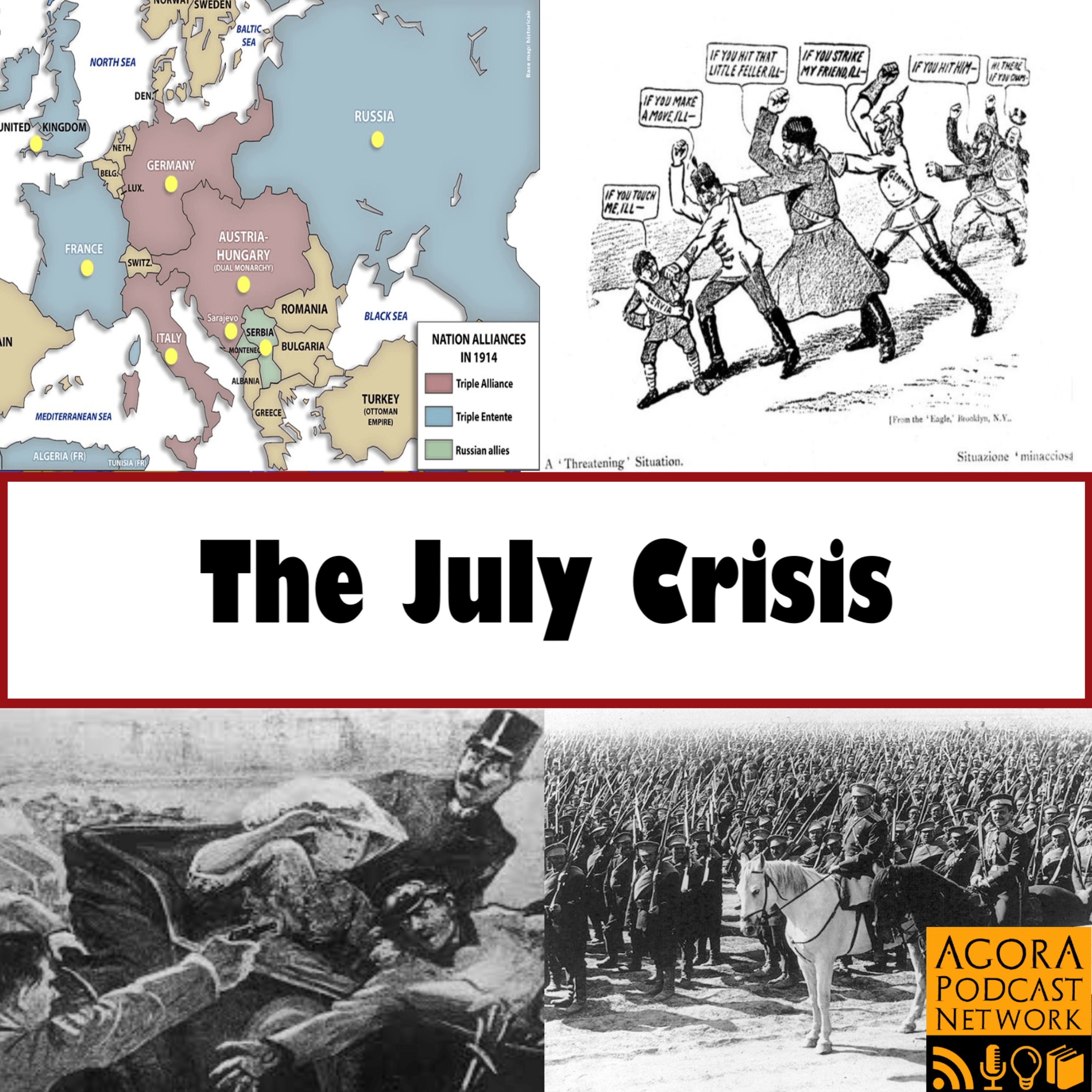
Jun 9, 202500:43:22Tap to summarizeThe 1839 Treaty on Belgian neutrality was a mere scrap of paper - that was the phrase which doomed Bethmann Hollweg, and Germany, to moral condemnation. It was the excuse which conquerors of all shapes and sizes had trotted out, when what they really meant was might makes right. Britain and the allies subsequently made great capital out of this faux pas, but this had led to some important questions - foremost among them being, did the German Chancellor actually say it?In this episode, we journey to Berlin in the final hours of peace, when Edward Goschen, the British ambassador, delivers his master's seismic telegrams, warning of the imminent rupture between the two countries if Belgium was not left alone. It was an impossible request for Germany, then locked into the Schlieffen Plan, but the language used could at least cushion the blow. Unfortunately, Bethmann reverted to the most offensive posture, discounting Belgian sovereignty and effectively challenging Britain to respond. Goschen was on hand to record these interviews, but can his record be trusted, or was he just one of the latest propagandists to emerge from the British side?Support the July Crisis series, join the conversation, and find out more through these links:Do you want ad-free episodes with scripts attached, and bonus content? Support us on Patreon and you can suggest July Crisis episodes!Join our Facebook group as we make our way through this fascinating series!Click here to see our July Crisis workspace in Perlego, you'll find every source you need! Hosted on Acast. See acast.com/privacy for more information.
Transcribe →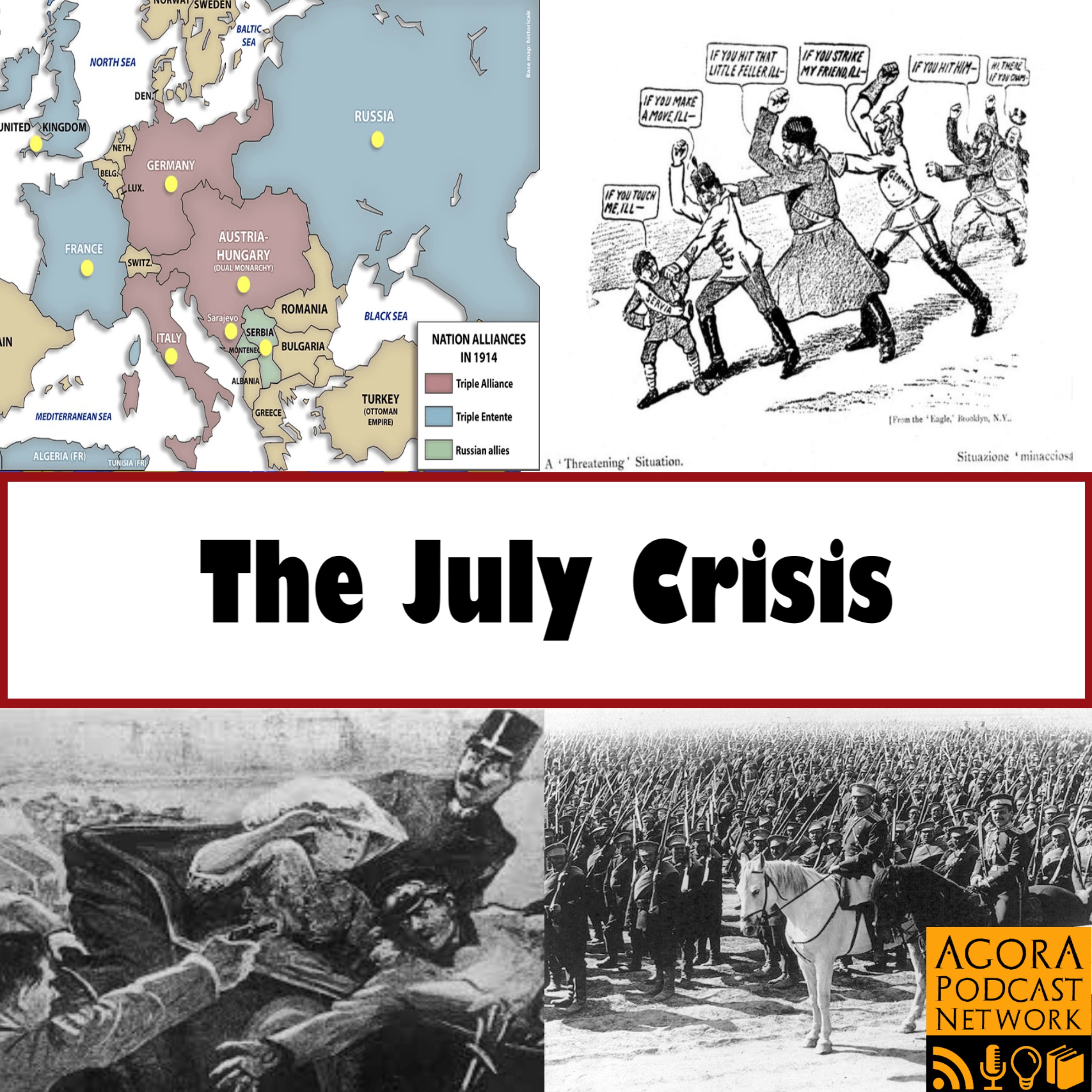
#59: 3 August 1914 III - House on Fire
May 12, 2025Tap to summarizeFinally, Sir Edward Grey was ready to make his case to the House of Commons. Parliament had been starved of news for a week, and the press had done their best to fill in the gaps, but the whole country was desperate for an update. What would the government do if the rumours were true, and Germany had invaded France? Was neutrality on the table? And what of Belgium, who was protected by a treaty? How would Grey rally the House to his side, and did it even matter if he could not, since the Cabinet had already been convinced of the need to act thanks to various pressures?Grey was tasked with answering many of these questions, but there were many that he did not answer, and a surprising amount that he did not say. In this episode we give Grey's speech in the Commons - and the subsequent reactions - their proper attention. In a day suffused with monumental, watershed moments, not limited to Germany's declaration of war on France, Grey's speech represented the public culmination of a struggle which had gone on in private for several weeks. His seventy minute speech set the tone for what was to come, and effectively spelled out that Britain was bound to transform this European war into a world war.Support the July Crisis series, join the conversation, and find out more through these links:Do you want ad-free episodes with scripts attached, and bonus content? Support us on Patreon and you can suggest July Crisis episodes!Join our Facebook group as we make our way through this fascinating series!Click here to see our July Crisis workspace in Perlego, you'll find every source you need! Hosted on Acast. See acast.com/privacy for more information.
Transcribe →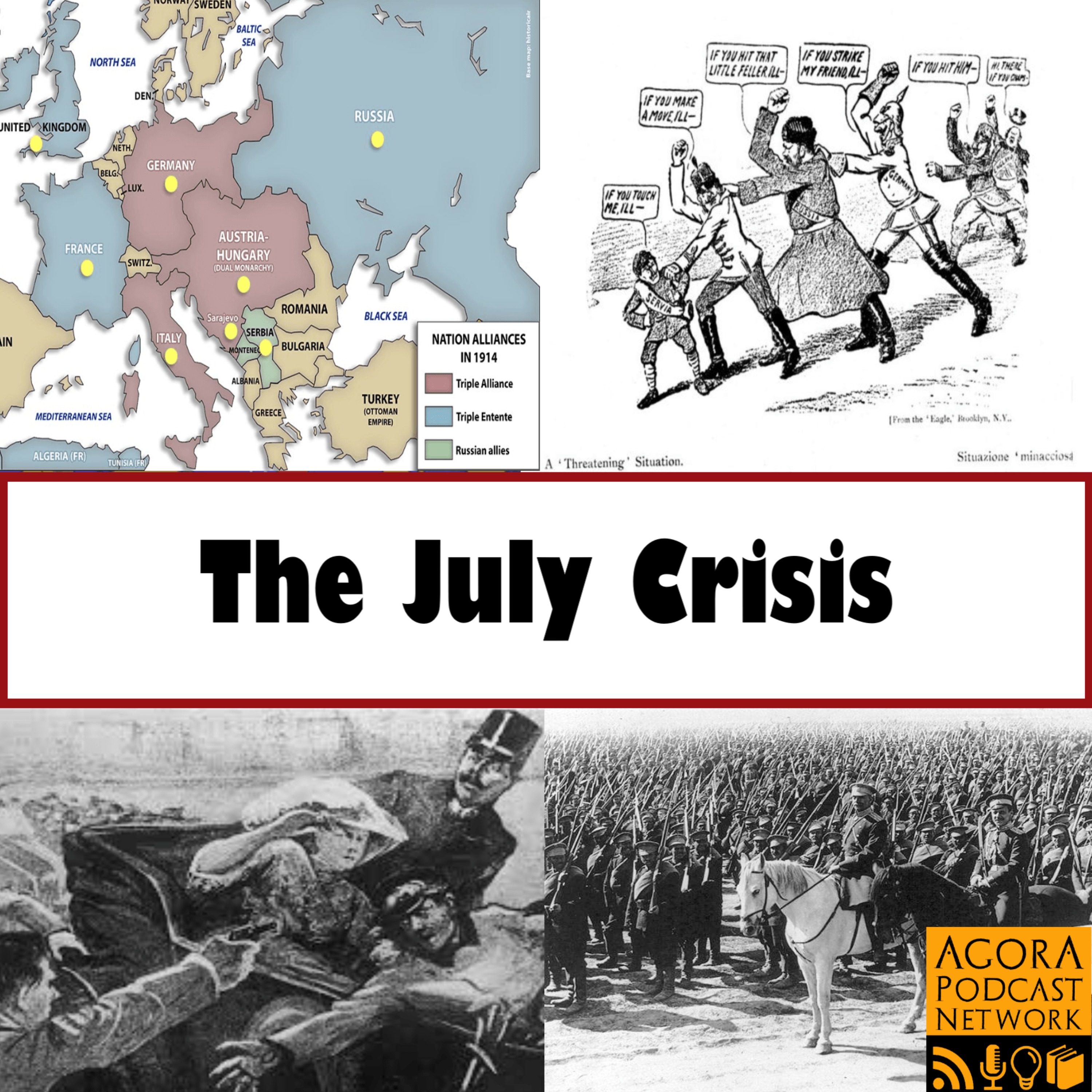
#37: 29 July 1914 III - First Contact, Second Thoughts
Nov 25, 2024Tap to summarizeUse the code WDF24 at checkout and get 50% off a $5 monthly membership on Patreon!Austria's bombardment of Belgrade represented the first shots of the First World War, though contemporaries could not have known this yet - they were more focused on what Russia was doing.As news of Russia's partial mobilisation filtered through Europe, it caused a major crisis in the German Foreign Office. For Jagow, Germany's Foreign Minister and director of its policy towards Austria since the beginning, Russia's preparations meant nothing less than the complete collapse of his entire world view.If Russia would not stand back and permit Austrian justice, then surely that meant war was inevitable?Desperate to avoid the European war he feared, Jagow went to great lengths to work out a solution. He believed he found it in the partnership with Bethmann Hollweg, the Chancellor he had spent several weeks undermining. If these two German statesmen could put their heads together, and wrest concessions or at least some answers out of Vienna, perhaps the ruin of their country could be avoided. Troubling signals suggested it would not be easy, yet having led Germany to this point, neither man had much choice but to try. Hosted on Acast. See acast.com/privacy for more information.
Transcribe →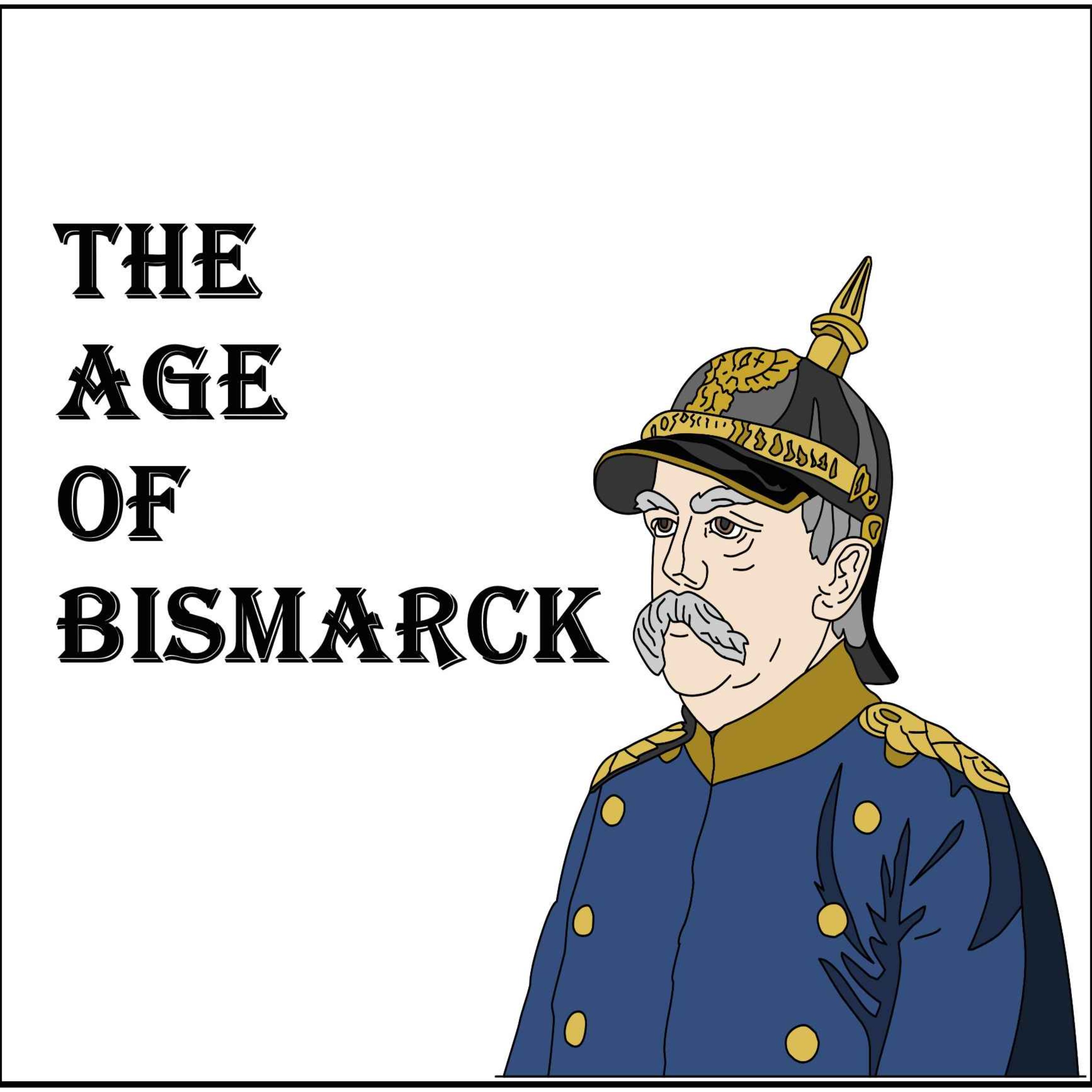
Age of Bismarck - Introduction
Sep 19, 2024Tap to summarizeIt's been a long time coming! The Age of Bismarck is finally here after so many years of planning, teasing, and dreaming. Tune in here to see how we plan to do it, and why you should be excited! Whether you're a long time history friend or just stopping by, Otto von Bismarck's life and times, and the age in which he lived, deserves your attention. The Iron Chancellor would accept nothing less!Sign up on Patreon so you don't miss the first episode next week!Thanksss so much to all of you that made this possible. Hosted on Acast. See acast.com/privacy for more information.
Transcribe →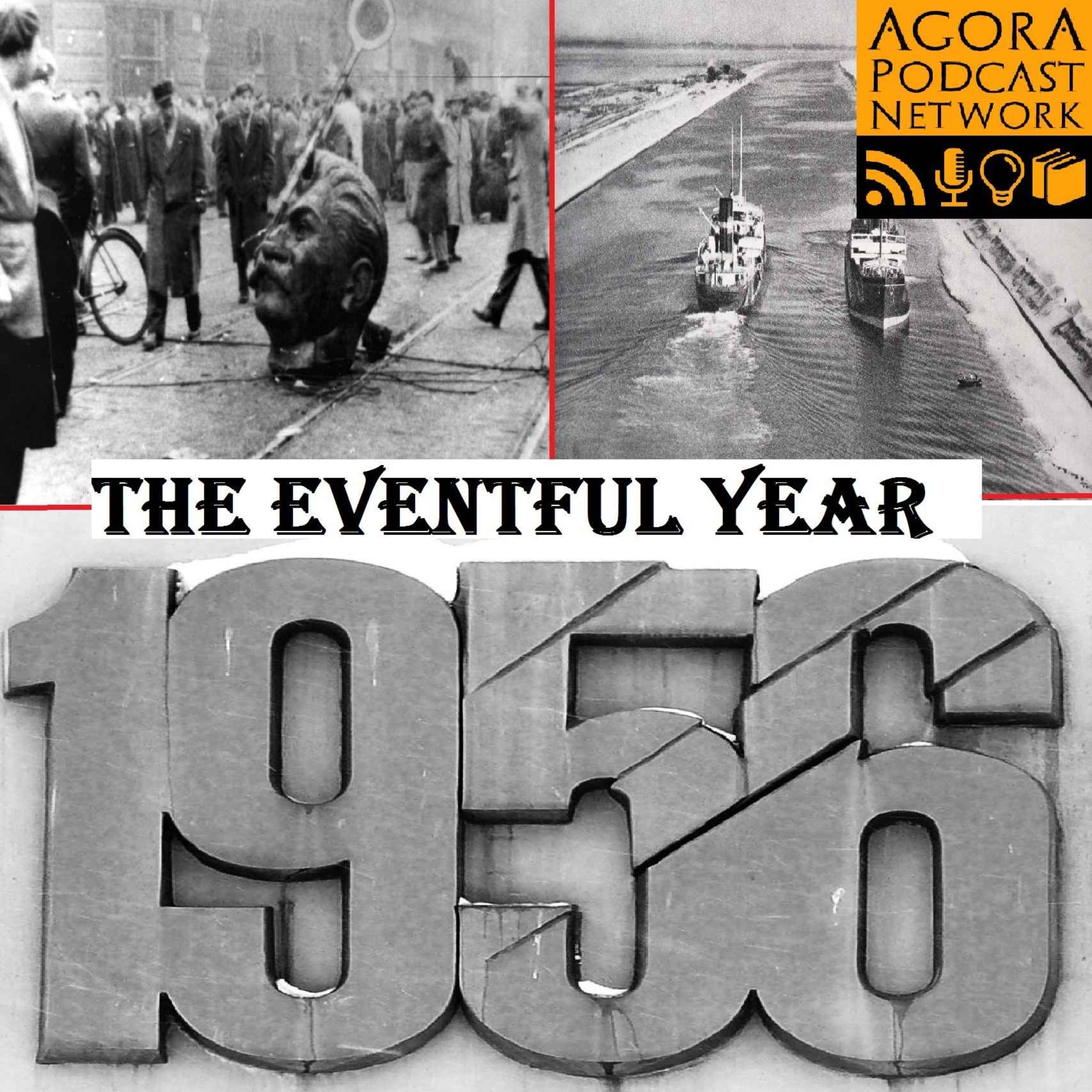
1956 1.9: Desperately Hungary
Feb 8, 2024Tap to summarize1956 Episode 1.9 takes a somewhat depressing journey into post-war Hungary, to present a story and a people which suffered much over the course of the Soviet occupation – also known as the Soviet ‘liberation’. Liberation from what, one may ask? Well how about liberation from national pride, freedom of conscience and that all too valuable commodity in history – freedom from fear. Fear was the key ingredient in the Soviet-Hungarian relationship between 1945-56, and in this episode we detail its key characteristics. Why were some Hungarians so eager to serve the Soviets, who were the most loyal Hungarian servants above all, and what were the consequences of this partnership by the time Khrushchev’s secret speech shattered all notions of Stalin-worship?These are questions we get into in great detail here, so I hope you’ll join us. The story of Hungary is as fascinating and inspiring as it is depressing and tragic, but either way, it is a story worth committing to audio podcast format, because it tells us so much about what life was really like under the Soviet writ, and how the end of the Second World War did not mean the end of foreign rule. The Hungarians had merely swapped one regime, one centre of power, for another, and this one was more determined than ever to hold sway over every aspect of their lives. The Hungarians were desperate for sure, but as 1956 would demonstrate, their spirits and dreams were far, very far, from crushed. Get bonus content on Patreon Hosted on Acast. See acast.com/privacy for more information.
Transcribe →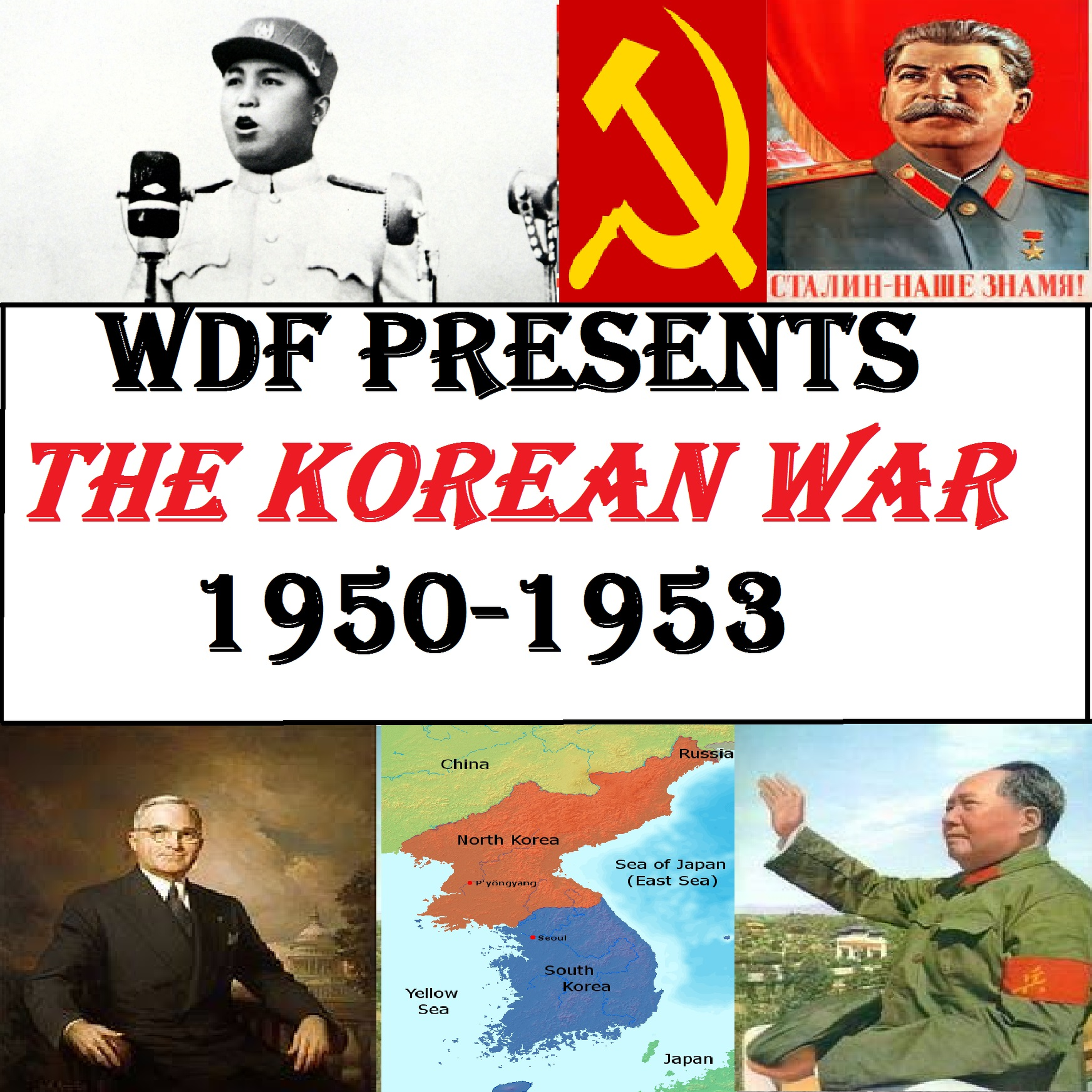
Korean War: Conclusion
Oct 30, 2018Tap to summarizeIt's time to say goodbye to this incredible era, and to end this whopper journey we've been on for the past 11+ months. I really can't believe we're here, but we are, and I figured there was never a better time to end this series, than on my birthday, so happy birthday to me!Our conclusion examines a suitably poignant moment in recent history - the location of a reunion of Korean families, trapped and separated for more than six decades by a war which they never wanted, but which they have been paying for for their entire lives. It is here, I believe, that we should end our story - with a reminder that the greatest losers in the conflict of no winners, was the Korean people themselves.Thankssss as always for joining me history friends, and make sure you prepare yourselves for the Versailles Anniversary Project, coming on 11 November 2018... Hosted on Acast. See acast.com/privacy for more information.
Transcribe →
WDF: Tomi Reichental - Holocaust Survivor Part 3
Mar 16, 2018Tap to summarizeIn the final part of our conversation with Tomi, we talk through the process of telling his story. How hard was it, why did he feel compelled to speak after so many years of silence, and how does he feel about the current state of affairs in Europe today? These and so many other questions are lobbed in his direction, and Tomi was gracious and open enough to answer them. I shouldn't have to tell you how thankful I am to Tomi for giving us his very valuable time here, but I do recommend that if you want to know more about him, look him up, and of course, email me wdfpodcast@hotmail.com where I'll be happy to pass a message on.So that's it. After such an exciting last few weeks, it is amazing to bring this to you guys. I hope you have enjoyed absorbing the words and stories of this incredible man, and that you, like myself, are feeling pretty grateful right now to Tomi for his immense service. I think I can speak for all of us when I say that I hope Tomi NEVER stops speaking. Too many of us still need to hear you story!***************Tomi Reichental would love to hear from you, so be sure to send me any messages you may have for him and I will happily pass them on to him! For further information about the award winning documentaries Tomi has helped direct and taken an active part in, see the links below.Till The Tenth Generation intro: https://vimeo.com/101014541Close To Evil intro: http://www.rte.ie/archives/2014/0827/639627-close-to-evil/Condemned To Remember intro: https://www.youtube.com/watch?v=cCWWVwrK4L0A huge thanksss again must go out to Tomi Reichental himself, who gave up his valuable time and invited me into his lovely home to help this interview take place. It is because of his need to tell his story that we are privileged to host it here. Thank you Tomi, you are a true history friend. Hosted on Acast. See acast.com/privacy for more information.
Transcribe →
WDF: Tomi Reichental - Holocaust Survivor Part 2
Mar 14, 2018Tap to summarizeTomi's story continues, as he talks us through his arrival in Belsen, a place his family members knew nothing of, and expected would be their final destination. Tragically, as we'll see, this was to be true for some of them. Tomi brings us through his harrowing experiences of life in a concentration camp, just as the Nazi system was falling apart. It contains detail which some may find upsetting, so I have marked it as explicit for this reason.Tomi's story is one which brings us through some difficult themes and scenes, but it ends on a note of hope, as he learns for the first time, after staying silent for so long, how important speaking out truly is. Please make sure to join us for the final part on Friday, as we bring this incredible saga to its end.*******************Tomi Reichental would love to hear from you, so be sure to send me any messages you may have for him and I will happily pass them on to him! For further information about the award winning documentaries Tomi has helped direct and taken an active part in, see the links below.Till The Tenth Generation intro: https://vimeo.com/101014541Close To Evil intro: http://www.rte.ie/archives/2014/0827/639627-close-to-evil/Condemned To Remember intro: https://www.youtube.com/watch?v=cCWWVwrK4L0A huge thanksss again must go out to Tomi Reichental himself, who gave up his valuable time and invited me into his lovely home to help this interview take place. It is because of his need to tell his story that we are privileged to host it here. Thank you Tomi, you are a true history friend. Hosted on Acast. See acast.com/privacy for more information.
Transcribe →
WDF: Tomi Reichental - Holocaust Survivor Part 1
Mar 12, 2018Tap to summarizeSKIP TO 12:00 TO BEGIN HEARING THE INTERVIEW IF YOU WANT TO SKIP MY INTRO!Today history friends we have something incredibly special lined up for you. All this week, we'll be letting loose three parts of an interview I did with Holocaust survivor Tomi Reichental. Obviously, I am incredibly excited to bring this to you, but I am also deeply indebted to Tomi for coming onto the show and telling his story, a story which most of my Irish listeners, and some others, may already know, but which deserves absolutely to be heard, and then heard again.In this first part, we talk about Tomi's childhood, and how he went from being an innocent boy in a quaint Slovakian village, where everyone knew everyone, to being shipped off in a cattle cart, separated from his family at 9 years of age, destined for somewhere unknown. It is a harrowing story, but it is also a fundamentally important story for us to hear. Tomi Reichental was a boy in Bergen-Belsen, and lived in that hell from November 1944 until liberation in mid-April 1945.Everyone should hear what Tomi has to say, so make sure to spread the word that WDF is playing host to a Holocaust survivor. Like many of you guys said when I asked what I should ask Mr Reichental, I simply ask him here to tell us his story, and what a story it is.***********Tomi Reichental would love to hear from you, so be sure to send me any messages you may have for him and I will happily pass them on to him! For further information about the award winning documentaries Tomi has helped direct and taken an active part in, see the links below.Till The Tenth Generation intro: https://vimeo.com/101014541Close To Evil intro: http://www.rte.ie/archives/2014/0827/639627-close-to-evil/Condemned To Remember intro: https://www.youtube.com/watch?v=cCWWVwrK4L0A huge thanksss again must go out to Tomi Reichental himself, who gave up his valuable time and invited me into his lovely home to help this interview take place. It is because of his need to tell his story that we are privileged to host it here. Thank you Tomi, you are a true history friend. Hosted on Acast. See acast.com/privacy for more information.
Transcribe →