
Podcast
When Rome Burns
Hosted by Michael Stevens · EN
Fifteen years of making teenagers care about dead people taught Michael Stevens one thing: the best history lessons happen when everything's falling apart. The former high school teacher turned podcaster after realizing his classroom walls were holding him back from the stories that really matter.
When Rome Burns isn't your typical history show. Stevens digs into the moments when civilizations, leaders, and entire ways of life completely imploded. Think the fall of empires, political meltdowns, cultural collapses, and the kind of disasters that reshape everything. But here's the thing: these aren't just stories about the past. Stevens connects each historical catastrophe to what's happening right now, showing how the patterns repeat and why understanding them actually matters.
Every episode feels like getting the real story from that teacher who actually made class interesting. Stevens breaks down complex historical events into the human moments that drove them, the mistakes that made them inevitable, and the lessons we're still ignoring today. No dry textbook recaps or academic jargon, just compelling storytelling about how things go wrong and what we can learn from the wreckage.
Multiple new episodes drop daily, so there's always fresh content. Follow now and discover why history's biggest disasters are the best teachers we have. Multiple new episodes daily—follow now!
133episodes
Episodes
Newest firstAll episodes

The 8-Month Siege That Nearly Broke Christianity's Greatest Army
2w ago00:12:16Tap to summarizeWhat if Christianity's greatest military force nearly collapsed not from enemy swords, but from sheer starvation and desperation? In this episode, Michael Stevens reveals how the Siege of Antioch became the First Crusade's most brutal test, where elite warriors were reduced to eating leather and the fate of an entire holy war hung on one man's betrayal. 🎯 What You'll Learn: • Why Antioch's 4-mile walls and 400 towers made it nearly impossible to conquer • How eight months of stalemate pushed crusaders to cannibalism and mass desertion • The secret Armenian guard who changed history with a single opened gate • Why this siege was the turning point that either saved or doomed the entire crusade 👤 Perfect for: history lovers who want the real story behind Christianity's most famous military campaign, told without the sanitized textbook version. 📍 Chapters: [00:00] Michael Stevens sets up the impossible fortress [02:00] October 1097: The siege begins with confidence [04:30] Winter reality: horses become dinner [07:00] Spring desperation: when holy warriors break [09:30] Firuz the tower guard makes his choice [11:00] June 1098: how betrayal saved the crusade The crusaders arrived at Antioch thinking they were unstoppable. They'd already conquered cities, defeated armies, and marched a thousand miles from Europe. But Antioch wasn't just another city. It was a fortress that had stood for centuries, and it nearly became Christianity's graveyard. Stevens breaks down how geography, politics, and simple human endurance collided in eight months of misery that tested every crusader's faith. You'll understand why this siege mattered more than any battle, and how one Armenian's decision changed the course of European history. 🔔 Never miss an episode: Follow When Rome Burns on your podcast app and turn on notifications. New episodes drop daily, your next favorite historical disaster is one tap away. 🔍 Topics: First Crusade, Siege of Antioch, medieval warfare, Byzantine Empire, crusader states Stream the full show at When Rome Burns ------------ Keywords: military history, strategic bombing, founding fathers, ned kelly, hitler, paper money, history podcast, historical failures Learn more about your ad choices. Visit megaphone.fm/adchoices
Transcribe →
Europe: The First Crusade - Men of Iron
2w ago00:19:01Tap to summarizeOnly 40,000 out of 100,000 crusaders made it to Jerusalem. What happened to the other 60,000? In this episode, Michael Stevens reveals the brutal reality of medieval warfare that history books sanitize. You think you know about knights in shining armor? Think again. The First Crusade wasn't some noble quest - it was eight months of starvation at Antioch, followed by a massacre that left 70,000 dead in Jerusalem's streets. 🎯 What You'll Learn: • Why the 8-month siege of Antioch nearly destroyed the entire crusading army • How crusaders built a 3-story wooden tower on wheels to breach Jerusalem's walls • The shocking casualty rate that turned 100,000 crusaders into 40,000 survivors 👤 Perfect for: history lovers who want the real story behind the legends, not the sanitized textbook version. 📍 Chapters: [00:00] Michael Stevens breaks down the numbers that don't add up [02:15] Eight months of hell: what really happened at Antioch [05:30] Medieval siege warfare: engineering meets brutality [08:00] The Jerusalem massacre that lasted for days [10:45] Why 60% of crusaders never made it home This isn't your high school history class. Stevens connects medieval warfare tactics to modern military strategy, showing how the patterns of conquest and collapse repeat throughout history. When empires clash, ordinary people pay the price. The crusaders thought they were fighting for God. They ended up fighting starvation, disease, and each other. Some victories cost more than defeats. 🔔 Never miss an episode: Follow When Rome Burns on Spotify or Apple Podcasts and turn on notifications. New episodes drop daily, your next favorite insight is one tap away. 🔍 Topics: First Crusade, medieval warfare, siege tactics, Jerusalem, Antioch Stream the full show at When Rome Burns ----- Keywords: paper money, war stories, american revolution, nazi germany, economic collapse Learn more about your ad choices. Visit megaphone.fm/adchoices
Transcribe →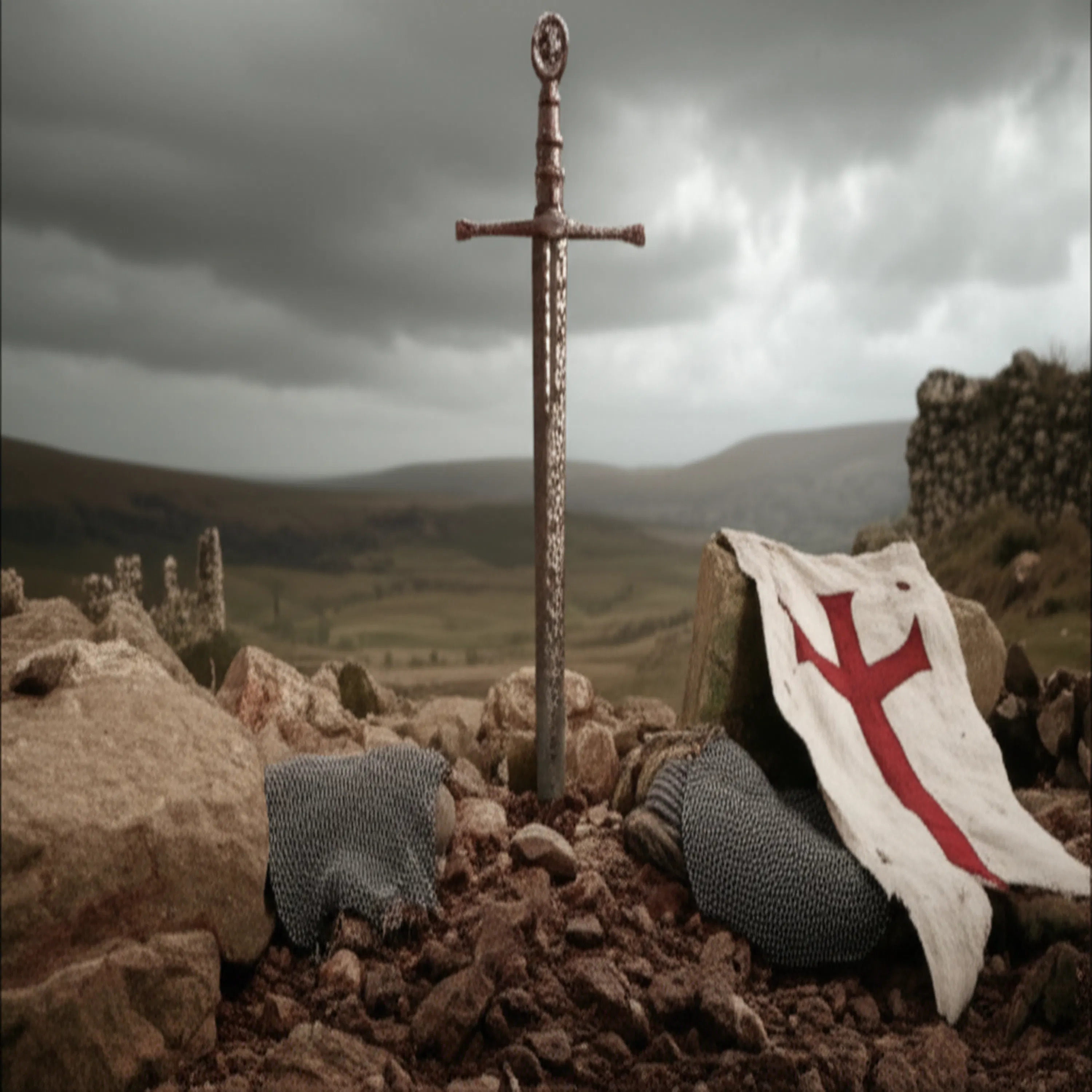
The Iron Secret That Turned Pilgrims Into Medieval War Machines
2w ago00:11:44Tap to summarizeWhat if the Crusades weren't won by faith, but by Facebook-level military tech? Michael Stevens breaks down how a bunch of medieval pilgrims became Europe's deadliest war machine, and it all came down to gear that cost more than most people's houses. Turns out crusader knights were basically medieval tanks. Their equipment ran about the same price as a small farm, and when you're dropping that kind of cash, you better believe it worked. Stevens walks through exactly how European crossbows, heavy cavalry, and siege engines completely outclassed anything the Middle East had seen. 🎯 What You'll Learn: • Why a single knight's gear cost as much as a farm (and made him nearly unstoppable) • How crossbows gave crusaders a 100-yard kill advantage most enemies had never faced • The physics behind cavalry charges that could shatter infantry lines in minutes • Why 300-pound stone projectiles were medieval shock and awe 👤 Perfect for: history lovers who want the real story behind famous victories, minus the usual "God willed it" explanations. 📍 Chapters: [00:00] Michael Stevens introduces the Crusaders' secret weapon [02:00] The farm-priced armor that changed everything [04:30] Crossbow physics vs. traditional archery [07:00] Heavy cavalry: medieval tank warfare [09:30] Siege engines that terrified defenders [11:00] Why technology wins wars, not just courage This isn't your typical Crusades story. Stevens connects medieval military innovation to modern warfare, showing how technological advantages create unstoppable forces. Whether it's crossbows or drones, the pattern stays the same: better gear wins wars. 🔔 Never miss an episode: Follow When Rome Burns and turn on notifications. New episodes drop daily, and next week Stevens covers how the same military advantages completely backfired in later Crusades. 🔍 Topics: First Crusade, medieval warfare, military technology, crossbows, heavy cavalry, siege warfare Stream the full show at When Rome Burns ---- Keywords: naval warfare, hitler, ned kelly, paper money, fall of empires, empire decline Learn more about your ad choices. Visit megaphone.fm/adchoices
Transcribe →
The First Crusade: Why Historians Can't Agree If It Was Actually Good
2w ago00:17:26Tap to summarizeWhat if the most successful Crusade in history was also one of the worst humanitarian disasters? In this episode, Michael Stevens tackles the uncomfortable question historians have wrestled with for centuries: was the First Crusade actually "good"? 🎯 What You'll Learn: • Why Emperor Alexios got 100,000 zealots when he asked for a few thousand mercenaries • How 90% of the Crusader army died before ever reaching the Holy Land (hint: it wasn't from battle) • The brutal math behind Jerusalem's fall: 70,000 civilians killed in three days of "holy" warfare • Why the Crusader states lasted 200 years despite being built on bloodshed 👤 Perfect for: history buffs who want the real story behind the sanitized textbook version. Stevens doesn't shy away from the messy contradictions that make medieval history so fascinating. 📍 Chapters: [00:00] Michael Stevens sets up the impossible moral question [02:15] The disconnect between Byzantine expectations and Western reality [04:30] Disease and starvation: the real killers of the Crusade [07:00] Jerusalem 1099: three days that changed everything [09:30] The unexpected longevity of the Crusader experiment [11:00] Why historians still can't agree on the verdict The First Crusade succeeded militarily but failed morally. It established lasting Christian kingdoms but through methods that horrified even medieval observers. Stevens breaks down how something can be historically significant and strategically successful while being ethically indefensible. This isn't about picking sides in a 900-year-old conflict. It's about understanding how good intentions, religious fervor, and political miscalculation created one of history's most complex moral puzzles. 🔔 Never miss an episode: Follow When Rome Burns on Spotify and Apple Podcasts. New episodes drop daily, and next week Stevens is covering the fall of Constantinople. Your next historical rabbit hole is one tap away. 🔍 Topics: First Crusade, medieval warfare, Byzantine Empire, Jerusalem siege, Crusader states Stream the full show at When Rome Burns -------------- Keywords: hitler, history podcast, strategic bombing Learn more about your ad choices. Visit megaphone.fm/adchoices
Transcribe →
Card King: Dragon Wars - Exploring a Bad Patch
2w ago00:12:59Tap to summarizeA $2.8 million patch destroyed one of gaming's most promising titles in 2019. Michael Stevens breaks down exactly what went wrong with Card King: Dragon Wars and why this catastrophic failure holds crucial lessons for anyone building digital products today. 🎯 What You'll Learn: • Why 73% of software bugs actually come from patches, not original code (and how to avoid this trap) • The real cost of rushing updates: Dragon Wars lost 60% of its player base in 48 hours • How user psychology changes after a bad patch (spoiler: they never fully trust you again) • The "2-week rule" that could have saved Dragon Wars and why most teams ignore it 👤 Perfect for: curious listeners who want to understand how small technical decisions can trigger massive failures, whether you're building apps or just fascinated by modern digital disasters. 📍 Chapters: [00:00] Michael Stevens introduces the Dragon Wars disaster [01:45] What made this patch so catastrophically bad [03:30] The psychology of user expectations vs reality [05:15] Why testing protocols failed so spectacularly [07:00] The $2.8 million mistake breakdown [09:30] Three rules that prevent patch disasters [11:15] What developers wish they knew before shipping From the classroom to your earbuds, Stevens connects this gaming meltdown to bigger patterns about innovation pressure, user trust, and the hidden costs of moving too fast. This isn't just about gaming. It's about what happens when the pressure to ship overtakes the discipline to test. 🔔 Never miss an episode: Follow When Rome Burns on Spotify and Apple Podcasts. New episodes drop daily, and next week we're covering the Theranos marketing machine that fooled everyone. Your next favorite insight is one tap away. 🔍 Topics: software development, game patches, user psychology, digital product failures, tech disasters Stream the full show at When Rome Burns --------- Keywords: military history, history podcast, cultural disasters, historical catastrophes, economic collapse Learn more about your ad choices. Visit megaphone.fm/adchoices
Transcribe →
The $50 Million Trading Card Disaster That Killed Dragon Wars in 6 Months
2w ago00:14:55Tap to summarizeWhat happens when a trading card company burns through $50 million in just six months? Michael Stevens breaks down the spectacular collapse of Card King: Dragon Wars, a game that managed to alienate its entire customer base faster than you can say "mana cost." This isn't just another business failure story. It's a masterclass in how to misread your audience so badly that you kill your own product before it has a chance to breathe. 🎯 What You'll Learn: • Why charging $19.99 for starter decks (double Pokemon's price) was commercial suicide • How releasing 4 expansions in 8 months turned loyal players into former customers • The exact moment 77% of card shops stopped carrying the game 👤 Perfect for: anyone who's curious about how big companies make small mistakes with massive consequences. 📍 Chapters: [00:00] Michael Stevens introduces the $50 million disaster [01:45] The pricing strategy that killed interest before launch [03:30] Four expansions, zero patience from players [05:15] When card shops started refusing shipments [07:00] The tournament budget that proved they didn't understand their own game [09:30] What Magic: The Gathering did right that Dragon Wars got wrong [11:00] Why this pattern keeps repeating in gaming The real kicker? While Dragon Wars was hemorrhaging money, their main competitor was spending 20 times more on tournament prizes alone. Sometimes the numbers tell the whole story. 🔔 Never miss an episode: Follow When Rome Burns on your podcast app and turn on notifications. New episodes drop daily, and next week we're covering how a single tweet destroyed a century-old newspaper. Your next favorite disaster story is one tap away. 🔍 Topics: trading card games, business failures, Card King Dragon Wars, gaming industry, corporate mistakes Stream the full show at When Rome Burns ------- Keywords: empire decline, operation citadel, strategic bombing, history podcast, civilization collapse Learn more about your ad choices. Visit megaphone.fm/adchoices
Transcribe →
Europe: The First Crusade - Peter the Hermit
2w ago00:16:18Tap to summarizeWhat if a simple hermit's religious vision could convince 40,000 people to abandon their homes and march toward almost certain death? In this episode, Michael Stevens reveals how Peter the Hermit became medieval Europe's most dangerous influencer, turning grassroots charisma into a catastrophic crusade that nobody saw coming. 🎯 What You'll Learn: • Why Peter claimed Jesus personally appeared to him at the Church of the Holy Sepulchre • How people literally collected his hair as holy relics during his preaching tour • The shocking amateur mistakes that doomed 60,000 followers before they reached Jerusalem • What this 900-year-old disaster reveals about modern movements and charismatic leadership 👤 Perfect for: anyone who's wondered how regular people get swept up in mass movements and why good intentions can lead to terrible outcomes. 📍 Chapters: [00:00] Michael Stevens introduces the hermit who started a holy war [02:15] Peter's "divine vision" and the birth of religious celebrity [04:30] Building a movement: hair collecting and donkey symbolism [06:45] 40,000 people hit the road with zero planning [09:00] When amateur leadership meets medieval logistics [11:30] The brutal reality check that changed crusading forever Stevens breaks down how Peter the Hermit's story isn't just medieval history. It's a masterclass in how charismatic leaders can mobilize massive groups through emotional appeals, why preparation matters more than passion, and how the gap between inspiration and execution can literally kill people. The parallels to modern political and social movements are impossible to ignore. 🔔 Never miss an episode: Follow When Rome Burns on Apple Podcasts and turn on notifications. New episodes drop daily, your next favorite historical disaster is one tap away. 🔍 Topics: First Crusade, Peter the Hermit, medieval history, religious movements, charismatic leadership Stream the full show at When Rome Burns -------- Keywords: byzantine empire, historical catastrophes, strategic bombing, nazi germany, naval warfare, world war 2, gold standard, ancient rome Learn more about your ad choices. Visit megaphone.fm/adchoices
Transcribe →
Why Peter the Hermit's 40,000 Person Army Never Made It to Jerusalem
2w ago00:15:47Tap to summarizeWhat if 40,000 passionate believers could change history but lacked the one thing that actually mattered? In this episode, Michael Stevens reveals how Peter the Hermit's charismatic preaching sparked the People's Crusade, gathering an army larger than most medieval cities, only to lead them into one of history's most devastating massacres. 🎯 What You'll Learn: • How Peter the Hermit recruited 40,000 followers in just months with zero military experience • Why the People's Crusade turned into a killing spree across the Rhineland, murdering thousands of Jews • The tactical disaster at Civetot that wiped out 25,000 crusaders in a single battle 👤 Perfect for: history lovers who want to understand how good intentions can create absolute catastrophes and why passion without planning leads to disaster. 📍 Chapters: [00:00] Michael Stevens opens with Peter's impossible recruitment numbers [01:45] The preacher who convinced peasants they could conquer Jerusalem [04:20] March 1096: when religious fervor became ethnic cleansing [07:15] Constantinople's emperor watches 40,000 untrained crusaders arrive [09:30] Civetot massacre: how Turkish forces destroyed the People's Crusade [11:45] Why Peter survived when 25,000 of his followers didn't 🔔 Never miss an episode: Follow When Rome Burns on Spotify or Apple Podcasts and turn on notifications. New episodes drop daily, your next favorite historical disaster is one tap away. 🔍 Topics: First Crusade, Peter the Hermit, People's Crusade, medieval history, Civetot massacre Stream the full show at When Rome Burns ---------- Keywords: hitler, american revolution, operation citadel, world war 2 Learn more about your ad choices. Visit megaphone.fm/adchoices
Transcribe →
Europe: The First Crusade - The People's Crusade
2w ago00:17:35Tap to summarizeWhat if I told you that 80,000 ordinary people once decided to walk to Jerusalem and fight professional armies with farming tools? In this episode, Michael Stevens breaks down the People's Crusade of 1096 - one of history's most tragic examples of good intentions meeting brutal reality. 🎯 What You'll Learn: • How Pope Urban II's speech accidentally triggered a peasant army he never intended to create • Why 40,000 desperate Europeans believed they could walk 2,000 miles and conquer the Holy Land • The shocking economics behind selling everything you own for a religious war that hadn't started yet • What happens when untrained civilians face battle-hardened Byzantine and Turkish forces 👤 Perfect for: curious listeners who want to understand how mass movements can spiral completely out of control. 📍 Chapters: [00:00] Michael Stevens introduces the disaster that preceded the "real" crusade [01:45] Pope Urban II's speech backfires spectacularly [04:15] Peter the Hermit builds an army of the desperate [06:30] The fatal math: 40 days to Jerusalem, 40,000 believers [09:00] When peasants meet professional soldiers [11:15] Why only 3,000 made it and what that meant for Europe This isn't just medieval history. Stevens connects the People's Crusade to modern mass movements, showing how desperation plus charismatic leadership creates predictable disasters. You'll recognize the patterns playing out today. 🔔 Never miss an episode: Follow When Rome Burns on Spotify and Apple Podcasts. New episodes drop daily, and next we're covering what happened when the actual knights finally showed up. Your next favorite historical disaster is one tap away. 🔍 Topics: First Crusade, People's Crusade, Peter the Hermit, medieval Europe, religious warfare Stream the full show at When Rome Burns ------------ Keywords: operation citadel, australian history, historical disasters, political meltdowns, catherine the great, gold standard, world war 2 Learn more about your ad choices. Visit megaphone.fm/adchoices
Transcribe →
Theodora: From Circus Performer to Empire's Most Powerful Woman
2w ago00:15:17Tap to summarizeWhat if the most powerful person in the Byzantine Empire wasn't the emperor, but his wife who started life in a circus? Michael Stevens reveals how Theodora went from society's lowest rung to literally saving an empire when everyone else, including her husband, wanted to run. When 30,000 rioters burned half of Constantinople and had Emperor Justinian packing his bags, one woman stood up and delivered a speech that changed history. Her words: "Purple is the noblest shroud." 🎯 What You'll Learn: • Why Theodora's circus background actually prepared her to rule an empire • How six days of riots nearly toppled the Byzantine Empire and killed 30,000 people • The speech that convinced Justinian to stay and fight instead of fleeing • Why removing one legal restriction about actresses changed imperial succession forever 👤 Perfect for: anyone who thinks they know what real leadership looks like under pressure. 📍 Chapters: [00:00] Michael Stevens introduces the empress who refused to run [01:45] From bear trainer's daughter to Byzantine royalty [04:20] The Nika Riots: when half a city burned in six days [07:10] Justinian's escape plan and Theodora's refusal [09:30] The speech that saved the empire [11:40] Why purple really was the noblest shroud This isn't just another story about ancient royalty. It's about what happens when someone with nothing to lose faces the ultimate test of power. Theodora didn't inherit her throne or marry into safety. She earned every ounce of influence through sheer force of will. 🔔 Never miss an episode: Follow When Rome Burns and turn on notifications. New episodes drop daily, and next week we're diving into how Rome's food supply almost destroyed the empire before any barbarian got the chance. 🔍 Topics: Byzantine Empire, Theodora, Justinian, Nika Riots, Constantinople Stream the full show at When Rome Burns --- Keywords: cultural disasters, civilization collapse, political meltdowns, history podcast, founding fathers, naval warfare, ned kelly Learn more about your ad choices. Visit megaphone.fm/adchoices
Transcribe →