← Which Side of History?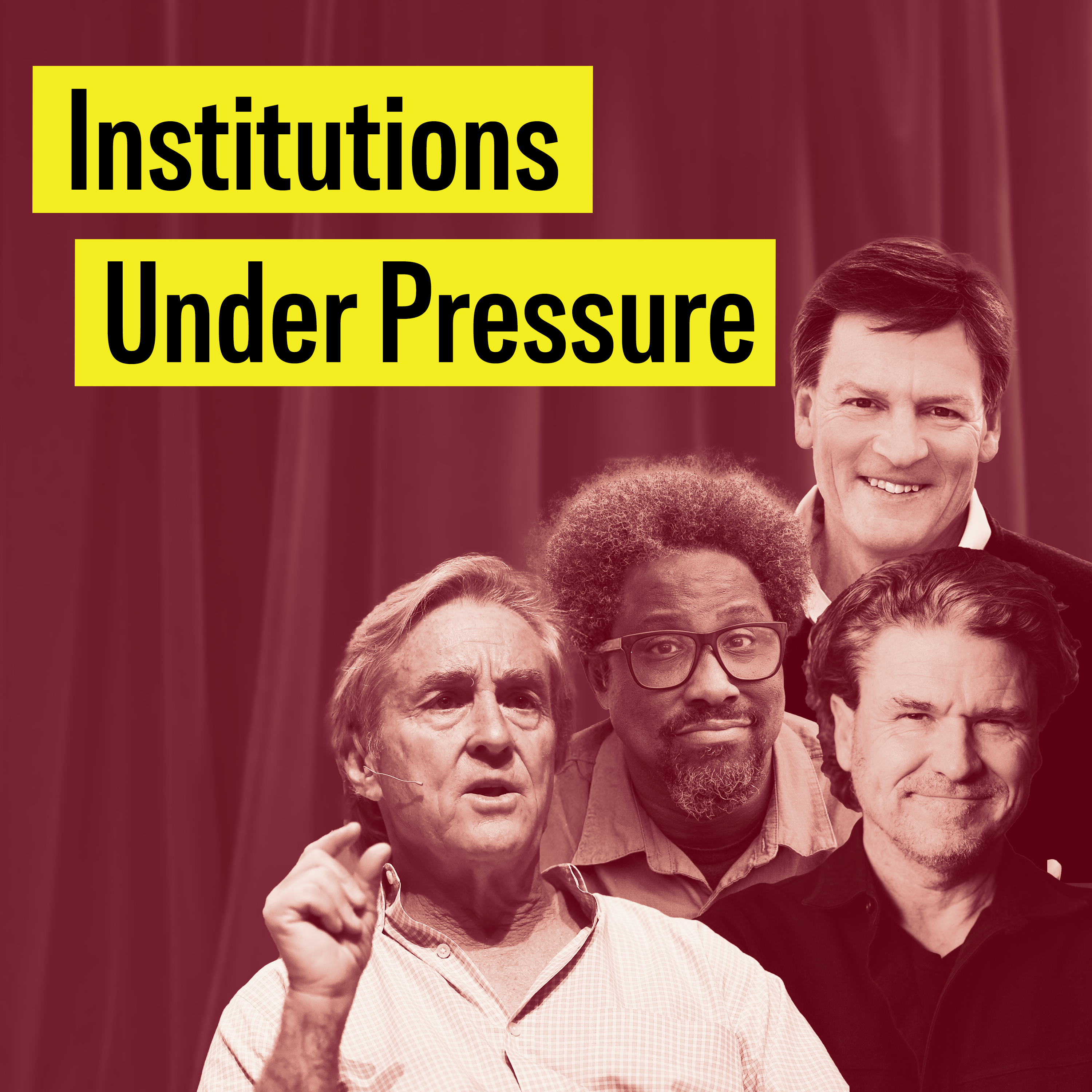
Loading summary
Transcript168 lines
- [00:01]
A
Lets say for some reason Trump is out of office tomorrow. It's just not gonna be easy to go, we're back to normal. Normal wasn't that good for most of the people I know. So I think we have to really think about, if we're talking about getting back to where it was, we're not thinking big enough. We don't understand the problem. A lot of the major countries are going through sort of a right wing turn, but like England's right wing turn is probably never gonna get rid of like nationalized healthcare. Like there's a floor that these places have where they're like, it might, it might get kind of maga y but you're still going to get health care. Whereas we, there's no bottom because we set this up on quicksuit.
- [00:52]
B
Welcome to which side of History? I'm Jim Steyer, the founder of Common Sense Media and a longtime Stanford University professor. Please make sure that you catch every episode of which side of History? So hit that follow button on Apple and Spotify and also please subscribe to my channel on YouTube. Thanks so much for your support. On this episode, we're going to talk about the employees of the federal government who have been under attack, as well as the impact of recent assaults on leading arts and entertainment institutions. My guests are pretty incredible. The best selling author Michael Lewis, and noted comedian and TV host Kamau Bell, and the extraordinary writer and educator Dave Eggers. Let's check in with them and head to the campus of Stanford University. Here's my opening question. So because they all contributed to the book I assigned for you tonight, which is who is the Untold Story of Public Service by number one, New York Times best selling author, Michael Lewis. And the book's premise is that there's a mismatch. I'll just say this simple because Michael's going to get the first question. Between public perception of government as inefficient, bureaucratic, faceless, and actually the work of so many public servants who are skilled, devoted, impactful and incredibly dedicated. And each essay in the book spotlights a person or system or a government initiative working on issues from labor safety to space science to justice to rare diseases, to showcase why government matters. And at a time when government is under assault from the Oval Office, if it's still there, I don't know after the construction. But it's an extremely important point and it's going to lead us into discussions about American institutions, comedy, art and everything. So, Michael, this is sort of a weird book for you to have written before. The Election. How did it come to be?
- [02:43]
C
I'd written a book called Fifth Risk and we'll come back about Sam Bankman.
- [02:47]
B
Fried.
- [02:47]
C
No, about that was called Going Infinite.
- [02:50]
B
Oh, go infinite.
- [02:52]
C
This doesn't count on my time. All right, so I'll start over. I'll start over. So I had written a book about theras, which is about the first Trump. The beginning of the first Trump administration. After it comes out a year later, the government is in shutdown. I need to generate something to fill the back of the paperback, just something new. I realized when I was doing this thing that I sort of downplayed the characters of the people inside the bureaucracy, the civil servants. I described the functions of government without really getting into the people. So I thought, I'm going to for this back of this paperback. And I had been just awed, actually, by the caliber of the person I had met inside the federal government. Nothing like the faceless, lazy bureaucrat you're led to believe is running the government. And so I thought, I'm just going to take one of these people out of a hat and write basically a profile of them. So it wasn't exactly a hat. There's an organization called the Partnership for Public Service, extremely important organization, nonprofit there to sort of like created by a guy named Max Dyer, who's obsessed with making the government work better. Jim Steyer, by the way, got no relation. And they give awards, the Partnership for Public Service, called the SAMI Awards, to civil servants who've done extraordinary things, and they've been doing it for a couple of decades. Anybody can nominate anybody. So there have been thousands and thousands of civil servants nominated for this thing. So I went to Max and I just said, cross reference all the SAMY Award nominees ever with people who've been laid off during the shutdown deemed inessential workers. This is going to be a portrait of an inessential worker that I'm going to write. And he gave me a list, and it was still thousands of people. So I just thought, what am I doing? It was alphabetized. I just picked the first name on the list. His name was Arthur A. Allen. And all it said was, Arthur A. Allen, oceanographer, Coast Guard Search and Rescue Division. So I got a phone number for him. I called him up, whatever he heard. I don't know exactly what he heard, but he said, you can come and I'll explain to you what I do. I was just going to write a description of what he did. Here's what he did. He was the lone oceanographer in the Coast Guard Search and Rescue Division. He'd been in it for 25 years or so, and he had, among other things, created a science. And it was the science of how objects, different objects drift at sea. He created this science because soon after he'd gotten his job in the Coast Guard and he'd been invited to kind of watch the Coast Guard do what it did in one of its stations, he went to Norfolk, Virginia, on a calm day when nothing much was supposed to be going on. It was a summer day, everybody's out on their boats, when all of a sudden a storm comes up from out of nowhere and boats are capsizing all over the Chesapeake. So he watches the Coast Guard go and do the things you see them do on tv, pulling people out of the water, so on and so forth. At the end of the day, they've accounted for everybody except one boat. And that boat has on it two older people and a woman who was Art's wife's age and a little girl, 13 year old girl, I think, who was his daughter's age. And he watches as they can't find them through the night. And even they know, they know where they started, when they started, where they likely were when the storm came up. So where they were and when the boat capsized, but they didn't know how the object drifted after that. And, you know, you throw different things in the ocean. You throw Kamau in the ocean and me in the ocean, we're going to go different ways. And if you throw Kamau with a life preserver, he's going to go a different way. Kamau on a life raft, he's going to go a different way. So Art watches this happen. And they find the boat in the morning and the little girl and her mother are dead. They've died of hypothermia over the night. So I go to. Art is telling me this story, this stranger who has walked into his life in his kitchen in the middle of Connecticut, and he starts to cry as he's telling me this story. And he said, when that happened, I thought that could have been my wife and that could have been my child. And he walks over to his bookshelf and he pulls out this yellowing clip from the Norfolk Daily News that describes the death of these people. And he said, I decided then that was never going to happen again. I was going to figure out how objects drifted and I was going to teach the Coast Guard how to look for this sort of thing. So he spent years tossing, among other things. This is just part of his job. And A lot of it. He's doing it federal bureaucrat on his own time, tossing objects into the Long Island Sound and measuring the way they drift 100 different kinds of objects and reducing it to mathematical formula and Putting it in 2007, he finally gets it into the Coast Guard search and rescue software. A week after he's done this, a 300 pound man goes off the side of a carnival cruise ship 70 miles east of Fort Lauderdale in the middle of the night. They don't find him. He's gone for a couple of hours. But they have cameras on the sides of the ship so they can see where he was when he went off. Normally in the history of humanity, that person is dead. You don't find people at sea, lost at sea. He says. Art said, find a person lost at sea is like finding a soccer ball in the state of Connecticut. But they had, in Art's, one of the objects was fat man at sea and fat man lost at sea now. So fat man at sea has huge advantages. Like it is a huge advantage to be fat in the ocean, that you're like a seal, you know, you're warm, you float like a cork. There was a very high. Likely this guy was going to survive for some time. The next morning, the Coast Guard lands on top of this guy and plucks him out of the ocean. And it's like a miracle. You can go read newspaper articles about it. Nobody mentions, like, they talk about the heroism of the guys coming out of the helicopter. No one mentions how they even know where to look. I found another fat man who went off a boat in the Pacific who was rescued in a similar way eight hours after he went off the side of a boat. And I asked, I couldn't find the original guy, but I found this guy and I asked him, like, do you know why you're alive? And he said, you know, I do know why I'm alive. He said, while I was floating there in the Pacific Ocean off the coast of California, I found Jesus. I accepted Jesus as my Lord and Savior and that is why I got saved. And I said, no, you're alive because Art Allen. Art Allen saved.
- [09:43]
A
Your Lord is Art Allen.
- [09:45]
C
Yes. So inessential Federal. So I find this. So I spent three days with Art Allen getting his story. You can read about it at the back end of the Fifth Risk. First time I've really dived into the life of one of these people. After three days, I'm on my way back to the airport to come home and I'm thinking, it's an incredible story. And my phone rings, and it's Art Allen. And he says to me, he says, hey, you're a writer. And I said, yeah, I just spent three days asking you all kinds of questions. I interviewed your wife, I interviewed your children. We went onto the Long island silent. Yeah, I'm a writer. He says, my son just said he Googled you, and your books become movies. And, like, you're gonna. He says, are you gonna write about this? And I said, yeah. I said, what did you think I was doing? And he said, I just thought you were really interested in how objects drift at that moment. At that moment, this book happened, because at that moment I thought, why didn't I do? The people in the first place, they don't tell their story. They don't imagine themselves as characters. They need to be described, because otherwise we're all susceptible to this sort of, like, stereotype. You need the actual pictures of the people in your head. And so flash forward a couple of years, and I'm on a hiking trail with David Shipley, who is Jeff Bezos, OP Ed Page editor. And I was just talking about this, and we kind of said. He said, michael, you can ask your dream team of writers, and we'll drop them into the federal government and have them find characters, stories, and we'll tell the stories of what these people do. And that's the beginning of. So that's the beginning of this. Who is government. It's like, I wanted to hear more of the stories of these inessential workers because just grabbing one out of a hat had yielded gold.
- [11:38]
B
So, Dave, by the way, that is a great.
- [11:40]
C
Is that five minutes?
- [11:41]
B
No, that was five minutes and a great story.
- [11:44]
A
That was great.
- [11:45]
D
Dave.
- [11:45]
C
Oh, God.
- [11:46]
B
Dave, I know you, and we've all known each other for quite some time. So, Dave, what did you think about when Michael came to you? But also the idea of writing about this guy from NASA, what did that. And what did you learn? Come on, I'm going to ask you the same thing about your goddaughter.
- [12:03]
D
Well, I. Mean, Michael and I talk about this stuff a lot. And he. When I was in journalism school, he was my hero. And so we're not that much different in age, but he was already writing about campaigns for the New Republic in a series that became the book Losers about like that also ran for president. And so I followed all of his work so closely. So it's been. I mean, anything he would ever ask me to do, I would say yes. But this was a great honor. And I thought I'D already been hearing about what other people were sort of were taking on. And I guess I cheated a little bit because I took something that was inherently a little glitzier, which was the Jet Propulsion Lab. I've always been a NASA geek and I know nothing about math or science. I think I was nine the last time I took either one of those subjects or could understand them. So I'm always looking for things and people that can explain it to a guy like me. And so I went to the last space shuttle launch in 2011, and I got to know, got to interview a lot of astronauts then. And a guy that I went to college with ended up on the International Space Station. And so I follow it closely. And so I sort of went on the JPL website and I was looking for anything that I could understand, which has to be just like caveman simple for me. And there was a scientist named Vanessa Bailey who, who was talking about exoplanets
- [13:45]
C
and
- [13:47]
D
a new telescope that they were working on that would go up and search for exoplanets in new ways. And she was so clear and so coherent and vivid and sort of could simplify it for a person like me. And also there was so much beautiful language around it. They talked about something called starlight suppression. So to find a. How many science people are there here? Are there any of you? That's a Stanford. Good lord.
- [14:12]
B
Okay.
- [14:12]
D
So I feel really, you know, I was cramming and I've got my cramming notes here because I was like, I'm at Stanford and I'm going to tell. Talk about NASA. It just seems ridiculous. But they're going to go up with this telescope that will peek behind stars and look for exoplanets that are in that Goldilocks zone, close enough to the. That life would be possible. Just as Earth is close enough to the sun. You need to find exoplanets that are close enough, but because they're so close to the sun, they get enough warmth to support light. They're very hard to see because the brightness of the star hides them. Does that make sense to everybody? So they have to figure out tools to suppress that light. So they created something called starlight suppression. Isn't that really a pretty phrase? So that stuck in my head and Vanessa Bailey stuck in my head. And so I called, I got in touch with JPL and they invited me down. And just like all the humble and hard working people that Michael's been profiling, I went down there and instantly I wasn't allowed just to talk To Vanessa Bailey, I said everybody was deferring and saying it was a team effort and you got to interview this person. And so you do this thing as a journalist, even though you know you're going to talk, write mostly about one person, they make you interview everybody in the building. So I had to interview like this many people at the jpl, even though I knew I was only going to be really writing about Vanessa. But anyway, it far surpassed my expectations. I love NASA so much that there's no more humble group of people than NASA and the jpl. Everybody. Nobody wants to take credit for anything.
- [15:57]
C
And can you explain starlight suppression? You tried to do this on stage at City Arts and lecture with like an umbrella and props and stuff there. But just how they do it is so cool.
- [16:08]
D
Well, there's two ways that they're going to do it. One, there's this telescope. If all goes well, if things don't go to hell and things are really on the knife's edge right now, this telescope will go up in about a year and a half. And the, the mechanics of it are sort of smallish. There's two ways to do starlight suppression. One is using like a special kind of lens that will block out that sun and try to, you know, peek around it. And it's a smaller telescope that you can put on another space on another ship that's sent out there. There's a different one called Starshade. And this is what I demonstrated on stage, which is like the old NASA way, instead of like micro mechanics and electronics, it would be an actual giant flower shaped shade that would be sent into space ahead of the telescope and then it would go tens of thousands of kilometers in the distance and block out that sun or that star. And they would line it up to about, you know, meters, variants on either side. And then it would block out the sun so they could peek behind it with this extra telescope. That technology was not the one that won out very often. They try many different technologies and they'll budgetarily or logistics wise they'll choose one. But I got to see the star shade in this giant warehouse at the jpl right above the Mars Rover sort of sandbox. They've got like a, a giant sandbox about this big that simulates Mars and they still have a sort of a mini Mars rover on it. Like the JPL is the coolest place you'll ever go. Has anyone been there? Oh, okay.
- [17:59]
B
A lot of people.
- [17:59]
D
Yeah.
- [18:01]
B
What's that?
- [18:02]
D
Stanford? There you go. Anyway, does that, is that a general Explanation.
- [18:07]
B
Yeah, I got some interest.
- [18:09]
C
So I will tell you this, that when. So Geraldine. There were four other writers on this, and one of them is Geraldine Brooks. And when she heard that Dave was doing the search for little green men in outer space when the whole government was available, when he was doing that sexy thing, she got so angry, because Dave Eggers can make anything interesting. He does not need the little green men in outer space. And so she rebelled. The reason she wrote a piece of. She said, if he's going to do that, I'm doing the Iraq, because I'm gonna pick the thing everybody hates. So you drove Geraldine.
- [18:40]
D
But it's important to know, like, if this was not done by government agencies like NASA, it would not be done. There is no profit in finding life on another planet. There's no profit motive. It won't be done by other agencies or Elon Musk. Like, there is no way to monetize it. So it really has to be research for its own sake and knowledge for its own sake. And that's what an advanced society should be doing.
- [19:04]
B
Correct. And we're gonna get to that in a second. Kamau.
- [19:07]
C
Yes.
- [19:07]
B
How do you top that? So you tell us about.
- [19:10]
A
Here I go.
- [19:11]
B
There you go.
- [19:13]
A
So I took the lazy way. So I had not met Michael. I'm friends with his wife, Tabitha Soren, and I met him at an exhibit. And this is the kind of guy Michael Lewis is. I'd met him, and within five minutes, he's like, you wanna write this book with me? Yes, I do. New York Times bestselling author.
- [19:31]
B
I do.
- [19:31]
A
I do. And I was told anything in the federal government. And at the same time, my goddaughter, Olivia Reinberg Going had just started in the antitrust division of the Department of Justice. And I was like, is it this easy? I was like, is that the Department of Justice? Is that the federal government? So I Googled it. This was before AI. So I had to Google it. And then I called her just on sort of like a general. We were actually. It was. We were at my house celebrating Kwanzaa, like. Like we all do. And it's a Stanford joke. And I just sort of was poking around as we were at my house, sort of like, she comes over with her family. One of her moms is one of my best friends. I was just asking about the work and about moving to D.C. she'd grown up. She's an adoptee, transracial adoptee. She was born in Florida, adopted by two white lesbians in Maine. They quickly realized that's not a good idea. Then they moved to Oakland. They did some googling to find out where's the place to raise a transracially adopted black girl when you're also members of the LGBTQ community.
- [20:38]
C
Oakland.
- [20:42]
A
And that's where I met them. That's where I met Martha. And so I've been in her life since she was 5 years old. And she's just that kid that you're like, if the world is right, she'll run the world. If the world does the right thing, she'll be in charge of something that is important. She's always been that kid. She always knew. And to see her sort of turn into that kid as she got older. So one of the best things about this project for me was getting to spend a lot of time with my goddaughter with just the two of us in her new place in D.C. and she was working in the antitrust division. And to see she was a kid who's like, I want to make the world a better place. I'm going to be a lawyer. But so when she applied to be an intern, there's the whole thing about the. They have a paralegals in the Department of Justice and you just apply to the program and you sort of rank the programs you want. And she sought civil rights division. I think there was a sentencing division. And she found. And she was like, didn't. I don't think even ranked antitrust. But they put her in antitrust. And she was at first like, I don't know what to do here. And then getting fired up about how making America have less monopolies is actually a way towards justice in this country. And at the time she's there. Alina Khan was there. Alina Khan was like the only bureaucrat who was liked by Bernie Sanders. And who's that weird guy?
- [21:55]
C
Steve Bannon.
- [21:56]
A
Steve Bannon and Matt Gaetz. Remember Matt Gaetz? So he doesn't. But so she.
- [22:04]
C
Gates is interested in antitrust.
- [22:05]
A
He was.
- [22:06]
B
I didn't realize.
- [22:06]
A
All right. And we can. That's all in the conversation. But so she got very fired up about the idea of how creating less monopolies in this capitalistic society is actually a way to create more justice in this country in a way that she didn't understand. It's just usually fired up by it. And so because David knew me as a documentary, like a United Shades documentary filmmaker, we actually made a 20 minute film about it, documentary about it that then they were like, you don't have to. You're not you know, you don't have to write for the book. I was like, no, I want to write in the book, just like these big real writers do. And so then there's also a chapter of the book is the sort of my written version, but the 20 minute film is on YouTube, which I'm also proud of too, because it was done at the Washington Post during the old days.
- [22:48]
B
And we'll give it to the class. We'll give it to the class and we'll post it to the class.
- [22:52]
A
Yeah, yeah.
- [22:52]
C
So the idea was to find people who made anything they touched entertaining. I didn't care if they knew anything about the federal government. It was great. He didn't know if the Justice Department was in the federal government. I was trying to avoid the beat writer who already knew a bunch of stuff and was going to be busy showing the reader how much he knew rather than explain something fresh. And it was amazing how well this turned out. It could have just completely sucked. We dropped seven writers into the federal government and said, find a story. And it's amazing how well it turned out. And it's because it is a target rich environment. There's just a lot of stuff there that if you go pay attention to rewards the attention and the characters. I mean, I don't know about you, but I find when I'm writing about someone, if they have a sense of themselves as a character, like they think they're important or they think they're crazy or whatever, zany, they just lose altitude on the page. You just go, oh, no, I can't write this. It's when they don't.
- [24:01]
A
Are you writing about Trump?
- [24:02]
C
No, no, I'm not writing about Trump. I'm not writing about Trump. In fact, I'm avoiding Trump. But it's, it's kind of partly for that reason. But it's the people who don't know their characters who make the best characters. The federal government's filled with these people.
- [24:17]
A
Well, that's why in my piece I wrote a lot about Max Dyer, who sort of was. You mentioned earlier, because I just found Max to be fascinating. He's this guy who's just fired up about the idea of public service overall. Just like fired up. I described him as the, he doesn't like this, but the Mr. Rogers of public service. Like, he just, he gets all big eyed and bright and gets fired. The idea of young people working to help the government. And so for me, that's him not wanting to be in the piece was why I was like, yeah, you gotta be in it.
- [24:43]
C
Yeah.
- [24:44]
B
The people you wrote about are they still, do they still have their jobs? Because many of these people have had their jobs eliminated. Any idea of your goddaughter, as I
- [24:55]
A
wrote about in the book, how do
- [24:56]
B
you react to that?
- [24:57]
A
Olivia, as a paralegal, knew that her tenure was coming to an end this year anyway, so. But it's, the issue is not that she doesn't have her job. She's, she got into law school. She got into one of her first choices. Her first choice, they gave her a bunch of financial aid and grants. So she's, she's, again, she's doing great. But she saw career public servants around her either get fired or opt out of jobs they've had for years because they didn't want to deal with what was coming. So that's the thing that happened with her, is that she saw people who were like, these people have worked here for a long time, but either they are getting fired or, or they're choosing. It's time to move on. So that's, there's a tremendous loss of, like, of the, of institutional knowledge that has happened with people who got out. And then on top of that, just because I'm Debbie Ma Bell, D.C. being a black city was one of the last cities that had, where black people could have good middle class jobs because the federal government was the company job in town. And those jobs are disappearing.
- [25:54]
B
And don't you think that's a factor right now in what's going on as far?
- [25:58]
A
What do you mean?
- [25:59]
B
Don't you think that that's a, you know, that the Trump administration is very aware.
- [26:03]
A
Are you saying that. I'm aware that Trump is a white supremacist and he's.
- [26:07]
B
Yeah.
- [26:07]
A
Yes. Yes.
- [26:08]
B
I didn't say that. I didn't say that.
- [26:10]
A
I know I said it.
- [26:11]
C
You did.
- [26:11]
B
Correct.
- [26:12]
C
Write it down.
- [26:12]
B
FBI, write it down. Exactly.
- [26:16]
A
That's not an accident. That when Trump says, these are the cities I'm going to attack. It's a bunch, it's all cities with black mayors initially.
- [26:23]
B
That's right.
- [26:23]
A
Not all cities with historically large black populations. That's not a, that's not an accident.
- [26:26]
B
And that he knows exactly, exactly who the federal workforce is.
- [26:29]
A
Yes.
- [26:29]
B
And, and how they've. And he's devastating a whole community in a pretty overtly racist way. That's what I'm saying.
- [26:36]
A
I would just cut pretty. But yes, it's an overtly racist way. Yes.
- [26:40]
B
And Dave, when you see that, and then Michael, when you watch that, when you watch Russell Bot, when You watch all the gutting, by the way. We're not even talking about USAID and the Foreign Service and all the institutions. We're going to get there. But what's your reaction when you see that?
- [26:57]
D
I think these are deeply wounded, nihilistic people. I think that it's coming from a place that has no rational justification. And that kind of language. It's not the Reagan type of model, smaller government, but said it's not the Milton Friedman way. This is a much more aggressive sort of. And I just keep thinking of nihilism like it's just. Like it is just burning everything down, burning all the people down. Like having. No, I mean it's a sociopathic impulse, right? To just sweepingly ruin and upend the lives of tens or hundreds of thousands of people without any concern for the consequences and the waves of societal misery that come with these sweeping layoffs and every family in upheaval, no insurance, like, no health care, all of these things. And just to say it can all be done completely arbitrarily too. I mean, first giving the job to another white supremacist, Elon Musk, but like first giving him the job and his minions to just like arbitrarily lay off
- [28:19]
B
people
- [28:21]
D
at a glance. But you know, and when it comes to the JPL, they have to lay off 10% of the workforce. And that's. And I was trying to confirm that today with my contact there, but all the email, like she's furloughed right now, the PR person for JPL, so I couldn't get any absolute confirmation. But 550 jobs are to be cut this month and that threatens all of these missions, including the Coronagraph telescope that I'm talking about. And so morale is at an all time low. There was a good piece in the LA Times a couple days ago about how nobody knows what's happening. Nobody knows if these missions that they've been working years and sometimes decades on will be fulfilled. Nobody knows if they'll have jobs. This is no way to run a government. It's no way to run any company. It's no way to run a society.
- [29:12]
B
Michael, I have a question because you wrote the Fifth Risk, by the way. I'm sorry, we were at Stanford, so I brought up Sam Bankman Fried, but I.
- [29:20]
C
We can come back to Sam Bankman Fried.
- [29:22]
B
We will, but I want to just ask you a question about the Fifth Risk because that was also a book about the incredible quiet competence of government institutions, among other topics.
- [29:33]
C
It was more about the noisy incompetence of Donald Trump.
- [29:36]
B
Correct. But now, how would you. When you heard. You're from New Orleans.
- [29:42]
C
Yeah.
- [29:43]
B
So you did not grow up in Oakland or even though you live in the East Bay. But here's the question. Do you agree with Kamau, Dave, and obviously me that this is an intentional effort?
- [29:58]
C
My mind is a hairball on this subject, because I think they're a hairball. I think it's coming from the hostility to the government right now is coming from more than one place. Like this. Trump, Doge, Russell vote. Ollie. It's pronounced vote. I don't know why, but you're right, it's spelled. But there are different things going on with the three of them. And so first the question about what's happened to the characters in the book. I think I have a pretty good sense for most of them, and I don't know any of them who've, in fact, not only have they not lost their jobs, at least the two. I added two big pieces, the first piece and the last piece. And my characters are not just still in place, but feeling a little empowered, but around them, there's this blast zone that everybody around them, a lot of people, they need to do their job, have been fired. And I have the sense the book actually protected the people that they didn't want to be seen. Like, I mean, we can get into the stories I wrote, but, like, the guy who saved the lives of thousands of coal miners, like, do you want to really get rid of him? So the actual specific people have not been directly affected yet indirectly affected, because, you know, their organizations are disrupted and they're in a state of chaos, but they still have their jobs. So Russell vote. He's the most. In a way, they're all disturbed. But Trump and Russell vote no, but they're not the three. If you take the three, and there's more than just three here. But Elon Musk, Russell Vote, and Donald Trump, none of them are perfectly aligned like Elon Musk. And I think there's going to come a time where Donald Trump throws Russell Vote under the bus. Donald Trump does not care about the government running well, like, he doesn't care about the government at all. I mean, that was what got me. The fifth risk is how I. My gateway drug to all of this was Donald Trump firing the entire transition team right after he got elected the first time, a day after he got elected. And you have to think about what this means, because what's supposed to happen is there's supposed to be hundreds and hundreds of people on your Transition team who go in the day after you win the presidency and meet with the hundreds and hundreds of people across the administration, which is an incredibly complicated thing, doing mostly nonpartisan stuff, like mostly, here's how we collect labor statistics or here's how we manage the nuclear arsenal or whatever it is. These meetings are really useful for incoming administration and would be especially useful to a president who clearly knew nothing at all about how the federal government worked and kind of got. He didn't even expect to win. So the dog catches the bus. And you would think if the dog catches the bus and then the dog is told he's going to drive the bus, he'd want some education. And then he fired the 500 and something people the day after his first election, his first victory. I thought, wow, like, all right, this is a literary opportunity. It's like I can go get the briefings that they have not bothered to get. And my reader can feel like justifiably, they know more about running how the government runs than the President of the United States. That's fun. And it was, it was a way to kind of come at it as, but made possible. And by the way, the first briefing I got was, was how to run the nuclear arsenal. And the people who gave it to me were like, oh, it's really nice. We really wanted to give this to somebody. And we spent months preparing and no one came and listened, sure, we'll give it to you. And I could have done that for years. I could have gone there, done the whole government, but all made possible because Donald Trump doesn't care. Chris Christie, who ran the transition team, he turned to Chris Christie right after election night and said, we don't need the transition team. You and I can learn everything we need to know about the government in an hour. So you're talking about a person who is. His chief interest is not making the government run. Well, getting rid of inefficient bureaucrats, whatever. His chief interest is turning what is fairly neutral, problem solving, independent civil service into an instrument of his own personal ambition. So turning the 2 million people who work for the federal government into loyalists is what he would like to do. And it's a really interesting thing what happens when you do that. You change the nature of the government. And I don't think we're fully digesting what it means practically to have party hacks in places where what you really need is a technocrat. I mean, if all of a sudden the person who has to figure out how objects drift at sea is just the guy who Donald Trump likes because he gave him a million bucks. We're not going to be able to figure out how objects drift at sea. It's just like that's going to happen over and over and over. So Trump is one thing. Elon Musk. I think this was like a ketamine induced. No, seriously, seriously. I don't know what he was after because you stop me if you want me to go on. But if you think about what he
- [35:30]
B
said, I just want them to comment
- [35:32]
C
on what he said he was doing. Right. Was what bothered him was the debt, the deficits. He was going to go after the deficits. All right, I'm with you. I don't like them either. Let's find some things to cut. But what he did, he starts by ignoring entitlements and defense, which leaves you with such a tiny part of the budget that nothing you do, including cutting at all, is going to really make that much of a dent. And then he proceeds, having confined himself to a place where the problem won't be solved, instead of going in. And I mean, what you and I would do, okay, let's say we have to go disrupt these people's lives and we have to get rid of 10% of the workforce or whatever. We would go in and try to figure out who was good at their job and who was bad at their job. And we, we try to do it based on performance. He didn't do that. Instead, what he did is he came and he fired all the probationary workers. Now, what is he firing when he's firing the probationary workers? These people who've been there for like 18 months or less. It's all the young people, which is exactly what you don't want to do. And it's all the people who've been hired for some currently important task, who's got some expertise that's relevant to the moment and leaving in place. In fact, you can. It is true when you go into any federal agency, there is a broken toy department. There are lots of people. There are people who are working. It's also true in big corporations.
- [36:56]
B
Correct. And Stanford University, there are people who are not performing.
- [37:00]
C
There are people who are not performing. But he didn't even bother to try to find. And so he creates. He creates no solution. He creates a lot of attention for himself. And then he gets all upset and goes off in a tizzy and says, this thing will never be fixed. And so I don't know what that was. I don't know what that was. It felt like he was drunk on the attention. It wasn't rational. Russell Vogt is the scary one because he has a plan.
- [37:27]
A
Yeah.
- [37:27]
C
And the plan, and it does come from some place that I don't. I bet too many of these civil servants, they are not what they are. You don't want them traumatized. It is true the systems are screwed up. It is screwed up that you can't hire and fire people. It's really hard to hire and fire people. It's screwed up that the pay and the performance is not related to performance. It's screwed up that the way people get promoted is seniority rather than doing something great. But there are reasons it is the way it is. But if you want to change it, you need to change the law. You need to go to Congress to change it. And he's decided that, no, you don't need it, he's just going to change it himself. And I just don't know where it ends with him. Except I think if I'm Trump, both these people are useful to me. If I'm Trump, you're creating room for more party loyalists to come in. If you're with Musk, you are disabling. I mean, a lot of. Some of what the federal government does is like refereeing things. You're disabling these independent referees who would check my behavior. All that makes sense for Trump. What doesn't make sense for Trump is pretty soon, I mean, it's already happening in some ways. You know, planes are going to start crashing or, you know, something bad's going to happen and it's going to be like, oh, this doesn't. This is not a smart way to run this thing, and we need it run well. And that's the moment, I think, and I don't know when it happens. When he points to Russell Vote, says he's the guy, he screwed up, get rid of him. I don't think Russell Vote is. I think he's playing a dangerous game for Russell Vogt, for all of us. But I think in the end, we're going to be sitting here with a mess left behind by Elon Musk and Russell Vogt.
- [39:07]
A
And.
- [39:08]
C
And then we'll be asking ourselves the question, do we still trust Donald Trump to run this thing? He'll try to lay it off on other people. But what is going on very broadly is like trying to transform this mechanism that is meant to run one way, that is very irritating to presidents because it is a check in some ways on just presidential whim into this other thing, which we long ago decided we didn't really want this kind of spoil system. And it's hard to know where it ends. But having seen what he does, the disruption in the lives of really good people, the best of them are the best among us. They have a sense of the common good. They have a sense that they're there for something other. They're there for a mission. And that when we treat them the way we treat them, it's a reflection of something has gone wrong in the soul of the country. That we let that happen is not good. And it's not just Donald Trump, it's all of us. Like we've lost touch with something.
- [40:11]
B
Kamau and Dave, let me ask a question. How much do you think that this is that part of the legacy of what we're watching right now, and they're going to watch for another couple of years or however long is going to be a loss of faith in American institutions more broadly. You heard I'm going to do a class with the Stanford president and some other extremely well known university folks. But the basic loss of faith in institutions, a deliberate effort to lose faith. Both of you guys. Dave, you go, but come out too.
- [40:42]
D
Well, I always, you know, I was always offended by that broad brush definition of bureaucrats in D.C. as a swamp and government inherently lazy and corrupt. If you go to D.C. and you meet the interns working at any congressional or senatorial office, it is the most excited, energized, idealistic people you can meet anywhere. Like we were working on a bill with Frederick Wilson from Miami to increase teacher pay. So we were working on a federal law that would set a $60,000 floor for all teachers. Right. And you can imagine how far that went. But we were working on it and getting to know her staff, it was maybe, you know, 15, 20 people. They were like just the hope of the world. You know, they were just, they got you so excited about the future and that they were all interested in giving their time. And a lot of them were, you know, those that weren't interns full time, they could take jobs in the thousand other industries and get paid a lot better and have a much higher graduated salary projections. But they chose to do this because they want to make an impact. So I think that idealism is really hard to keep down for that long. I think it can be suppressed for a time, but it's going to pop up again like you're floating, drifting person. But, but I do think it's really depressing. It reminds me of what they've been doing to public School teachers for decades. They make one of the hardest but most important jobs in the world. Increasingly difficult, increasingly vilified. They put the blame for any number of societal difficulties on the backs of teachers. And then during COVID they made this very difficult job. They were the locus of everybody's animosity about masks and schools and everything. It all came down to teachers. So that's why we have teacher shortages all over the country. People are leaving en masse because they're not appreciated, they're wildly underpaid. This is just another extension. I think that the teachers are first line of the federal workforce. It just reminds me of how they're treated. I don't know why as a society we take some of these most difficult, most essential jobs and we make those people nurses and teachers again and again. We come after them and leave the billionaires alone. It is sick. We are a strange, strange species. And I think that if we can get to, as a country, get to people a little bit earlier and maybe work on civics and work, work on education at a very young level so that people understand what government does and who does it and why, and elevate and celebrate these people as opposed to getting into this endless cycle of blame and vilification for the most mission oriented and idealistic among us.
- [43:58]
C
I feel like we should tell one
- [44:01]
B
of the many reasons we love Dave Eggers. By the way, I was listening to Dave going, how many years have I known Dave not just as this great author, but someone who's doing all of that in addition to writing all of his bestselling books and running eight to six Valencia. It's sort of amazing, Kamau, when you listen to this. Right. First of all, just interested to sort of just listen to your reactions to what Michael said and Dave said. But also, you know, do you think that this is going to lead. The attacks that we're going through right now, led by Russell Vogt, are gonna be a long lasting shift in American culture and perception. I'm gonna ask you guys about arts and comedy too. Cause I don't get people like you up here very often. But we're gonna go there, we're gonna go there. But come out when you see pass out moderate degrees.
- [44:47]
A
Anyway. Yes. So the last week or so I've been seeing all these footage of the east wing of the White House being destroyed.
- [44:58]
B
Yeah.
- [44:59]
A
With journalists going, technically, this is not allowed. Technically, this is actually not a. President's not supposed to be able to do this. And I'm like, man, technically he's doing
- [45:11]
C
a Lot of work there.
- [45:13]
A
And I think that when I think about the history of this country, technically, is why we got here in the first place. We are, you know, when I think about the institutions, I think about what the institutions of this country are supposed to do, like public schools, and then what they actually do, technically, they're supposed to do a better job. And it's not the teacher's fault. It's, you know, I'm on the board of directors of a company of a nonprofit called DonorsChoose, which helps teachers raise money for classroom projects.
- [45:41]
B
And he made him a million dollars
- [45:43]
A
on Celebrity Jeopardy, by the way.
- [45:45]
C
Thank you.
- [45:45]
A
Yes. That's why I wanted to. It was time for me to get some applause. And the guy who founded it, Charles Best, who was a public school teacher, he said, this is supposed to be for the extra things that kids don't get in school. Like, oh, we want to go. We want to take a trip overseas. And the school doesn't cover that. So we want to raise money. But it's for, like, hygiene products and snacks, books and books and pens and pencils. Because the schools, the public schools are funded by property taxes. And if you're in a place where. So the idea being that the institutions were built on quicksand purposefully. I think when you think about the history of this country, I always go, well, you gotta start with the twin war crimes, the genocide of Native Americans and the transatlantic slave trade. Then you throw in the Chinese people. Building the railroads for free, but not being allowed to live in all of this is what these institutions are built on. And so they're not built on sturdy ground. And I think so when we talk about it's easier to tear things down to the building back up as we know it's easier to destroy something than to build it. So I think we are going to be, let's say for some reason Trump is out of office tomorrow. I'm working on a plan. It's just not going to be easy to go. We're back to normal. And then there's the fact that, like, and I lived in Chicago, I lived in Alabama, I've lived in Oakland. Normal wasn't that good for most of the people I know. So I think we have to really think about, if we're talking about, like, what happens next, if we're talking about getting back to where it was, we're not thinking big enough. We don't understand the problem that it's got to be about. Like, how do we actually, like, think about, like, every. A lot of the major countries, a lot of the major countries are going through sort of a right wing turn. But like England's right wing turn is probably never going to get rid of like nationalized health care. Like there's a floor that these places have where they're like it might get kind of maga y but you're still going to get health care. Whereas we, there's no bottom because we set this up on quicksand.
- [47:51]
B
So let me ask, Michael, let me ask a question. But you all take off too because I want to make sure we have time and then the TAs will get to ask some questions. But Michael, when you look at this, your first book was Liars Poker. That was incredibly hilarious and honest book.
- [48:07]
C
Can I tell you anything about Liars Poker? I found a do.
- [48:09]
B
Do. Let me ask, can I ask a question? Because you should tell exactly about it. It was incredible book and you were at. It was after you left Solomon Brothers. My question is when you listen to what they were saying, but tell your Liars Poker story, do you think you're going to see because you are in a. You do write a lot about the economy. You think you're going to see a collapse pretty soon? Well, I had Neil Ferguson, David Kennedy and Margaret Spellings here last week. I do think. Do you think you're going to see a collapse. I don't know of the economy because of this, in addition to the collapse,
- [48:40]
C
like another financial crisis.
- [48:41]
B
Yeah, yeah, yeah, yeah, yeah, yeah, yeah.
- [48:43]
C
I mean there's going to be another financial crisis because there's always another financial crisis. Anybody who tells you they know when it's coming, you should know never to listen to anything they ever say again because it's unpredictable. You just can't predict it. So I don't know when.
- [48:55]
B
But tell your liars.
- [48:56]
C
No, no. About the financial side of this is interesting too. Financial institutions, what he's done to financial institutions. But so no, I found a. So I just re released the big short. I just reread the. I read the audiobook for the first time and we released a new audiobook and did a bunch of episodes of a podcast looking back on the financial crisis. It's coming out now. The first couple episodes. The last, the last episode is the political consequences of the financial crisis. And my, my guests for that are Elizabeth Warren and Steve Bannon, both of whom were basically born out of the financial crisis like their political careers. And Bannon would tell you that he was, you know, that that's where he was radicalized watching what happened.
- [49:41]
B
Ex Goldman Sachs banker.
- [49:42]
C
He was an ex. Well, this was the funny thing I found out from him when I was talking to him, and I had interviewed him before, but he. Before I knew, I did know that he had bought the movie rights to Liars Poker. He went from the Navy to Harvard Business School to Goldman Sachs M and A department to Hollywood, where he made his money. He owns a piece of Seinfeld. That's where the money comes from. And he had a production team, a group, a small group of guys who had a deal at Warner Brothers, and Warner Brothers had bought with these guys. They brought the book to Warner Brothers. Warner Brothers bought the rights for them to make it into a movie. What I found out two weeks ago was that he was so obsessed with the project that when a shitty first script comes in, as it always does, they hired some fancy screenwriter who didn't know anything about Wall street. And she made a whole bunch of money writing a really bad script. And it was threatening and did, in fact, kill the movie. Or, you know, you never know if it's gonna happen. Bannon went into a room, a dark room, for two weeks, and wrote a movie script of Liars Poker, which he still has, and I'm dying to see what this thing.
- [51:01]
A
We should shoot it as is.
- [51:03]
C
Yeah, but Steve Bannon's Liar Poker, is that not wild? It's wild. So Bannon and Elizabeth Warren don't want to admit what they agree upon, but they're both very hostile to Wall street. And anyway, that to one side, the financial crisis, like Trump. When I've been asked, like, what's the next financial crisis? Like, where do you go? Here's a better way to put it. Where do I go to site myself in the place where. Where I think the financial crisis is more or less going to start. And this is why one of the reasons I'm in the US Government right now with a book, I'm working on something now, because I think that if you look back on the way the financial crisis played out in 2008, what saved us was trust in institutions. It sounds weird to say, because the trust was not great, but it was enough. People trusted the Federal Reserve and the full faith and credit of the United States government. So when Wall street did what it did and it all blew up, there were grownups who could come into the room, take all the risk and say, and calm everybody down. Nobody doubted that the US Government would be good for whatever needed to be shelled out. We'd shell it out. And it had a huge effect, calmed everything down. What happens when that, when there isn't a grown up. What happens when you no longer trust the United States government? And that's what Trump is doing. He's undermining trust in institutions. And what's the weird, I mean, we have had presidents who have wanted the Federal Reserve to juice the money supply before elections. That's happened before. We've had presidents who threatened the independence of the Fed. Not to this degree, but that's happened before. We've never had a president who has a personal, a huge, overwhelming personal financial interest in undermining faith in the dollar. The Trump family finances are now really wrapped up in crypto.
- [53:08]
B
Yep.
- [53:08]
C
What makes crypto go up is for the dollar to go down. It's for the dollar to people, not like fiat currency. We now have in the White House someone with a narrow financial incentive to torpedo the dollar. And if he gets control of the Fed, he can do it. Now, I don't know how a financial crisis plays out if nobody trusts the Fed or if our own government finances are like nobody wants to take a Treasury bond, another one. So I don't. So I think that what he's done is partially disabled our ability to respond to whatever happens. Something's going to happen. I don't know what's going to happen. Is it regional banks going down because nobody should have their regional banks because you should have it in JP Morgan, or is it AI, the AI bubble bursting or is it. There are a million things that could happen. That's not the important thing. The important thing is do you have the mechanism to come in and deal with it? And I think he's beginning to pretty seriously disable the mechanism. And I don't know what that looks like, how it stops if you don't have a government people trust. So that's what worries me. And it's just very odd, this crypto stuff. The Trump family crypto empire. I don't know if you saw, but he just pardoned the guy from Binance
- [54:34]
B
who you wrote about.
- [54:35]
C
I mean, this is a dark character. He sat in the middle of North Korean, Iranian, Hamas, Russian oligarch money and he spent six months in jail. But he helped the Trumps launch their crypto coin on his platform and they've made billions of dollars and he got a pardon. So we have a president who's got very weird incentives, anti institutional incentives and he can do a lot of damage to the institutions. He is not. You know, normally the president wants to sort of build trust in the institutions. He needs the institutions.
- [55:12]
B
Correct.
- [55:12]
C
In this case, he needs them to be mistrusted so that, so he can personally profit. And also that he has no. There's no countervailing power. There's nothing else, nothing obstructing him from what he.
- [55:22]
B
Complete collapse of the Republican Party, you know, historic cowardice. Not even, even, even. Not even. Whatever the comment was about. This isn't technically, I mean, so it
- [55:31]
C
happened, that White House, the, the other thing that he's been doing, and it's very subtle, but you listen for this. When the deficit, you know, the deficit gets talked about by the Republican Party and then they don't do anything.
- [55:43]
B
We talked about it last week.
- [55:45]
C
So Elon Musk goes in and supposedly saves us all this money, but in fact, the deficit is worse than it's ever been. He didn't save us anything. Probably cost us quite a bit. Trump, what I was waiting for, the way the narrative will just seem beautiful in retrospect, like, oh, we should have seen this coming. Why did not we see? Why didn't we see this coming? What was Trump really, really good at before he became president? The first bankruptcy, he was really good at. He was really good at.
- [56:15]
B
That's why all New Yorkers like me
- [56:17]
C
know that he was really good at doing bankruptcy. He was stiffing his creditors. He was really good, really good at that. And we hired someone to occupy this office who's got that particular bent. And so I, when the first time I started watching, I started listening for it, and he is like, when is he going to say, all right, who do we owe this money to? The Chinese have a trillion dollars. A trillion dollars. You can hear him. Where do they get that money? They stole it in unfair trade deals. We're not going to pay them back. So that takes a trillion. And you can imagine, I can imagine Trump, what he would love, it would be like a wet dream for him, is if the creditors of the United States government had to come personally to the Oval Office to negotiate their haircuts, to negotiate just how much they're going to get repaid. That's what he would do. Right? So that's where we're navigating. I don't know whether it will happen, but that's sort of where we're navigating towards. And he has said, he has said, like, all these treasury bonds aren't the same. Well, they are the same. But he's starting to think in his mind, like, oh, there's some that are owned by bad people and we just won't pay them. You could already see him Thinking it. So I don't know. I don't know. The markets will freak. So that's what stops him is the stock market tanks. When he starts talking like that. And he cares about the stock market, but I don't know how much he cares. And I don't know what happens if we get to a point where everybody's talking about the deficit and he's going to say, I'm going to fix it. I'm going to fix it by stiffen people and you're going to come to me if you want your money back,
- [57:49]
B
particularly when you see how much they're grifting on the crypto stuff. That's why he let the guy go. From Binance. Agree. You got to read Going Infinite by Michael if you haven't the story of Sam Bankman Fried. But one of the wild story which
- [58:00]
C
starts on this campus, it's like, this is shock. This is Bethlehem of.
- [58:06]
B
And mention Beals, some of my favorite law school professors, by the way, and they're great. Let me. I want to ask. We could go on for a long time, which is really fun. But I want to ask Kamau and Dave something. How much do you think I'm going to. I may show a clip, but how much do you think that authors and comedians now are under pressure and threat to muzzle what they have to say? And I really want to talk about that because we work in different parts of my job. I work with people who now will not say certain things, and I ask them to do something. They're like, they're actually afraid of personal retribution. And both you guys are, I mean, comedian. You're a. Come on, you're comedian, writer, filmmaker, everything. How much do you see among your peers and Dave, same question. A fear of, like, speaking out and saying what they really want because they watch what happened to Jimmy Kimmel or they watch what happened who are like really mainstream, basic comedians, not people out on the edges. What do you. What do you think about that in terms of the impact on art right now? And.
- [59:09]
A
And so I would say some comedians aren't afraid because they've sold themselves to the administration at a very big discount. You know, so this is the first time I've seen comedians run to be aligned with politicians.
- [59:22]
B
Oh, like who? Like who?
- [59:25]
A
Joe Rogan, Theo Vaughn? I'm trying. I mean, those are some big ones, but yeah, but like, yeah, where, where they. I mean, there's the Rogan sphere of podcasts where Trump has appeared on influencers and comedians podcasts with, you know, with no Hard questions. So some comedians, if you like, comedians, went to the. Some comedians went to the inauguration, which, even though I'm from Oakland, I'm not going to a president's inauguration. If Kamala Harrison won, I would be like, good for you. I'll be at my house, you know, So I think that this is the first time I've seen comedians really run towards that. And then we just had a whole bunch of comedians who willingly. Who took checks to go perform for the royal family of Saudi Arabia and checks that weren't as big as I thought they would be, and willingly signed away their freedom of speech rights. So I think we're seeing. It's the first time I've seen the biggest comedians not be the biggest voices for bold and progressive ideas. You know, I mean, sometimes comedians are big and famous and they're not. You know, you can just have a comedian who's just funny. But we haven't had comedians who are, like, famous, but also, like, in the pockets of the presidential administration. So I think that. So I will say this for me, being a person who, before I was a comedian, I was a human, and I was raised, well by my mom. That, like, I have certainly. I know for a fact that I've lost jobs or opportunities because what I say on social media or on substack is radioactive for some people. And. And then I know comedians who've just decided to, like, I'm just gonna. Who. Cause not all comedians are political. So there's not. You don't have to avoid anything for some comedians. But then there's some comedians who've like, yeah, you make choices based on, like, well, I wanna be able to. Like, I wanna have better opportunities. Cause I still wanna feed my family. But if I want to do that, then I'm gonna have to avoid certain. Certain progress.
- [61:28]
B
Words of hope and optimism and any life. Just one word of hope, optimism, life story. You'd say to the young people in the audience, because that's where we've been the last.
- [61:36]
C
But what if it's actually hopeless?
- [61:39]
B
Well, you get the last word.
- [61:40]
C
No, I mean, we don't want to gin up a lot of false hope.
- [61:43]
B
No, no. But I don't believe it is. Okay. I don't believe it's hopeful. I'm gonna ask that.
- [61:46]
C
So you want us to tell you
- [61:47]
B
what you think I'm gonna let you three go.
- [61:50]
C
I'm not gonna say.
- [61:51]
B
I already said more than I should have said tonight, probably. Kamau, we start with you, Dave, and then Michael. But just. But either a Message of hope or
- [62:00]
C
a life lesson or something. Something.
- [62:02]
B
Or something.
- [62:03]
A
Something profound.
- [62:04]
B
Okay.
- [62:04]
A
Oh, I got it. Location. I think the best thing that people of. I'm a proud member of the greatest generation, known as Generation X. Yes. All you young people, you're welcome for your culture. Here's what I'm trying to say. But at this point in my life, the best thing I can do is. Cause I think there's all this talk about young people, how do we motivate them? I find young people to be very motivated, very informed, very plugged in, have big ideas about how things work. The problem is the olds get in your way. And so I find my best hope is to. If I. The young people who are around me, what can I do to put you in a better position to accomplish the things that you want to accomplish without telling you you're doing it wrong because you weren't doing it the way I did it. So for me, the best hope is actually empowering the young people around us. And not all of them. There's some others out there, there's some vaughts, but there are many more young people I find, especially online, who are doing work every day that we're just looking past. And our job, the hope is in amplifying the voices of the young people who understand this is not the country they were told they were being raised in when they were kids. So the best. That's the way hope is, by creating more pathways for those people to say what they need to say and do the work they need to do.
- [63:31]
B
Home.
- [63:35]
D
Mr. Eggert, I already didn't. I already tried to prepare.
- [63:38]
A
Do it again.
- [63:39]
D
I have a couple.
- [63:39]
B
Do it again.
- [63:40]
D
Very specific things. One, I was in Hollister the other day, which is where my family's from, going back, way back. And there's a lot of Trump supporting there. But this is an agricultural town and a lot of family was in cattle and farming. And I will say that the support for Trump is turning quickly there because they're getting hit hard. There's no way to make a profit right now as a. In so many fields. And so it's incredible. I think that we're going to see. I hope I'm always wrong, but I also about political outcomes. But I do see the midterms as being a tidal wave and a real referendum on the pocketbook on how people are actually being hit hard in so many industries and everything is so much more expensive. And I think that if we look at the history of midterms, there's always going to Be a hard pivot. There was last time when he was in office the first time. And I think that we just have to get through this dark corridor right now, and we're going to have a little bit of a slightly easier last two years. You're looking. Michael's looking at me so skeptically.
- [64:47]
C
No, no, no, no, no, no, no.
- [64:49]
D
But I'm always, you know, I'm always optimistic about that, and I'm often wrong. But then I will go back to just like again because I'm around very young people every day. There's still just an obliterating light around them at all times that says, you know what? Even despite so many difficulties that so many of these families are facing, there is an optimism there. I think that we just have to model optimism for them, too, and model action for them every day and say, we're not going to, you know, curl up in a fetal position and give up. We actually have to get out and create change, even on the smallest level, so that they have something to look forward to. And not saying, you'll fix this. You know, we did that with climate. We said, oh, we screwed it up. But you guys, you'll fix it. You know, you'll fix this apocalypse. We can't do that. We have to work shoulder to shoulder with them, model that behavior and get in the fight.
- [65:57]
B
So you get the last word. You had the first word.
- [66:00]
C
I don't have that much to add to that. It was lovely. But we're such a protean country, right? We're so changeable. We're not like other countries. We're not like the Roman Empire. You don't know which way we're going to bounce. And I guess I feel. I guess I don't feel hopeless. If I felt hopeless, I wouldn't be writing books. Like, what would be the point? So, because I don't feel hopeless, I assume it's not hopeless. And I just. I do think we have. Like, our politics is very different from our daily life. Like, somehow these two things have gotten very divorced. The way the tone, even the tone of our politics is so different from. If you walk into a room filled with MAGA people in some town in America, you're gonna basically think they're okay.
- [66:46]
B
Exactly.
- [66:47]
C
You're not gonna be. They're not gonna be like brown shirts. The country is. It's a strange and changeable place. But. So I was gonna add. The only thing I would add is I'm a steal from a Stanford professor. I wrote a book called the Undoing Project. About they were at the time, at one point, two Stanford professors, Danny Kahneman and Amos Tversky.
- [67:09]
B
Correct.
- [67:10]
C
And Amos Tversky once said, Danny Kahneman, his partner, was endlessly. He was eeyore, endlessly pessimistic, like everything was always gonna be worse. And Amos turned to him one day and said, you know, pessimism is stupid, because when you're pessimistic, you live the bad thing twice. Once when you're anticipating it happening, and then when it happens. So the intelligent thing is to be an optimist. So just force yourself to be optimist, even if you're not, because that's the smart way to go through life. So that's my message, is just force.
- [67:45]
B
Okay, that's a good message to end on. I would just like to say. Michael Lewis, Kamau Bell, Dave Eggers, thank you so much. A special thanks to all of you for checking out this episode of which side of History. Please make sure that you subscribe to my YouTube channel like this video, and please feel free to leave a comment. I'm Jim Steyer, and this is which side of History?