← Which Side of History?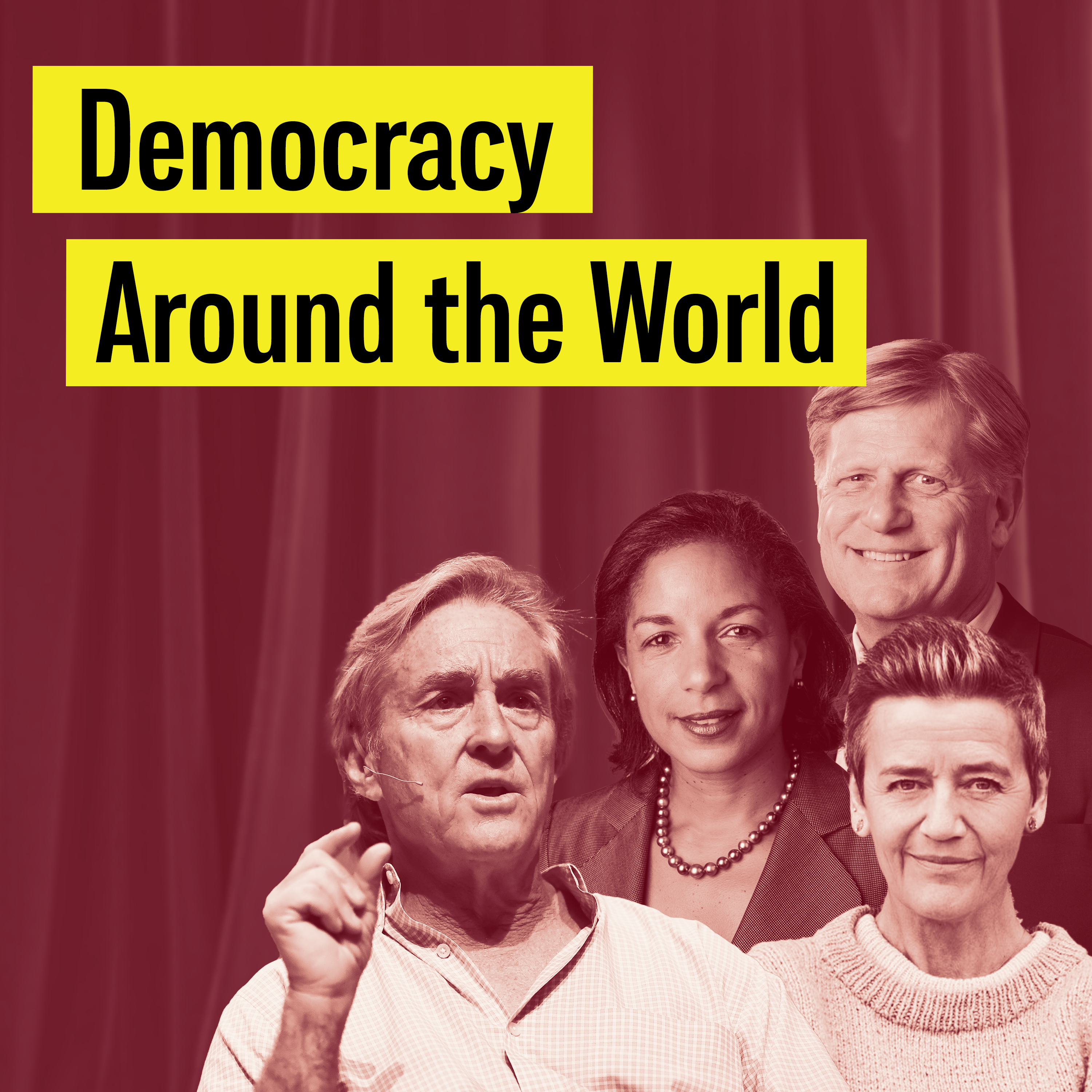
Loading summary
Transcript95 lines
- [00:01]
A
I think this administration doesn't really care that much about what happens elsewhere. And so we are shrinking and we are ceding huge parts of the playing field to our historic and traditional adversaries in Russia and China. Then you add that to what we are doing domestically, which is essentially trying to cleanse the United States of immigrants, trying to ensure that our higher education system and in fact our elementary and secondary education system doesn't remain the envy of the world, all the while completely undermining the rule of law, defying court orders, pulling people out of cars by mass men and disappearing them. Whether they were here legally or not, citizens or not, we are in a very dire place.
- [00:54]
B
Foreign welcome to which side of History? Hi, I'm Jim Steyer, the founder of Common Sense Media and a longtime professor at Stanford University. This is a brand new podcast, so please follow the show on Apple, Spotify and YouTube and please tell your friends on this episode, we're going to tackle a tough topic, democracy around the globe. Should we worry about? Absolutely. My guests today are former national Security advisor to President Obama, Susan Rice, also the famous Stanford professor and former U.S. ambassador to the Russian Federation, Mike McFaul, and the former European Commissioner for Competition and Executive vice president of the eu, Margaret Vesteyer. So let's head now to Stanford University and get their thoughts on this very timely topic. All of you have such extraordinary experience in world affairs, but starting with you, Susan, what do you think of the state of global I mean, Mike's book is about democracy and autocracy, the state of global democracy today. And then we're going to talk about where it's headed. But your sort of quick summary of that. And then Mike and then Marguera, I
- [02:11]
A
would say first of all, Jim, thank you for having me. Hi, Mike and Margaret, it's really good to be with you all and good to be back at Stanford, if only virtually. I would say that the state of global democracy is under extreme duress and facing enormous pressures and backsliding, frankly, led by the United States at this point, but not limited to the United States, throughout Europe, throughout most parts of the developing world, certainly in Latin America and Africa. And the Middle east never really had much of a foothold in democracy. And in parts of Asia, we are seeing a backsliding and a rise of nationalism, authoritarianism, and I think something of a reshuffling of the deck of the Western alliance versus those who would be, as Mike would describe, the autocrats.
- [03:19]
B
Okay, Mike, I agree with Susan. Big backsliding.
- [03:28]
C
Yes. I mean, there are three different dynamics going on. So first of all, the data, if you look at freedom House scores, 19 years of Democratic recession, more autocracies gaining more autocratic ways than Democratic ways. We had a little uptick last year, but I predict with great certainty that curve will go down when we get the data from 2025. Same with the United States, to Susan's point, we had an 11 year democratic decline according to Freedom House, not me. We got a little bit of an uptick in a positive way with 2024 data. And I predict with even greater certainty that when the 2025 data comes in, that curve will go back down. So that's the empirical data and I'm using Freedom House. But all the groups that monitor these things agree. They have different definitions, but the trend lines are clear. And I think there are three big things going on. Susan alluded to them already, but I'll say them again in a slightly different way. One is you have the rise of autocracies. So China is much more powerful today than they were 30 years ago. And they have a different model out there. And it's a popular model, especially in the developing. Russia used to be a democracy, at least in my reading of the case in the 90s. It's now a full blown dictatorship. I think Russia's more autocratic today than even the late Soviet era. And they're out there propagating their own version of illiberal nationalist populist dictatorship. And by the way, what's different about that is they're more focused on the developed world, they're more focused on Europe and the United States and they're achieving successes. You know, the Cold War was a debate between autocrats and democrats between countries. Not to try to summarize my 500 page book in 90 seconds. Come on Monday if you want to hear that. But this is a debate within societies, right? Within Hungary, within France, within the United States of America. And I think in some ways that is much more dangerous than even what China is doing in terms of the rise of autocracies. Two, you have the flips like Russia and Turkey and others that used to be democratic or not. And then third, and I think is the most threatening thing to small D democracy and small l liberalism is what's happening in the United States of America. You know, at times I'm not sure on the divide between autocrats and Democrats what side President Trump is on. I'm very sure what side the American people are on. By the way, that's crystal clear from the data. But the administration, they don't you know, President Trump doesn't frame the world as a battle between autocrats and Democrats. He frames the world as between strong leaders and weak leaders. And sometimes I think it's also leaders that money, I heard that. Leaders that praise him and leaders that don't. But it's not divided between autocrats and Democrats. And therefore, if you're a small d Democrat living in exile from Belarus and Lithuania, you feel abandoned by what used to be the leader of the free world. That's a really challenging moment we're in.
- [06:38]
B
Okay, Margaret, what do you think?
- [06:42]
D
Well, I would agree. So I'll only add to this grim description of the situation, and that is that the UN Is not working. It wasn't working before, but it has become dramatically worse. So, so we come from a situation of sort of stable disorder because for a lot of people, globalization did not work. If you look back five, 10 years, it did not work for them and the UN did not deliver. It's become a maze of organizations and missions and what have you. Now, when they also have these massive, massive funding issues and you see the withdrawal of usaid, you know, there's so little that our global society can do to sustain the situation that we're in. So I think that is a very important thing. The second thing is that we also see the backslide not only in democracy as such, but also when it comes to human rights. You know, when you have basically voices saying that we wouldn't have been in this situation had we not unleashed women. Oh my God, what happened when we started treating them as humans? You know, actually it can be worse because now we have this global disorder which is accelerating and which is unpredictable. So we're in the fog. I think the only silver lining is that this is a call to action, to do something about it and not just blame liberal democracies and say, well, it's your own fault because you didn't deliver to people what they expected. You called upon them the cost of living, crisis, institutions that do not deliver, all of that. This is really a call to revitalize what is the fundamentals of democracy, the respect of the integrity of every individual. That is what it's about. And if there's ever been an important point to get active, this is now.
- [08:41]
B
Let me ask you a follow up question. And then to you, Margaret. But then, Susan, Mike, this is touching on what you just said. Do you agree that even in 2025, because Mike was giving us the data from 2025, he's predicting what it's going to be from Freedom House that there has been a really big change in the US role in the world just in the last 10 months and that that has had a significant impact on what you just described.
- [09:14]
D
I think that it's quite dramatic what has happened because the US have had such soft power in combining with such hard power that has been built up over the last 70, 80 years and sort of just giving that up. I think that the closure of US aid was the most obvious thing to that because it was so important to so many people and it was done from one day to the next. So you had drugs expiring on shelves, your food rotting in storage, you had the risk of offsetting the HIV epidemic again. And that become such a strong symbol of the US withdrawing from using that hard and soft power in combination to achieve something better. And also from the realization that no matter how strong you are, the rule of law is better, is always better. If you have a long term perspective. If you only have a short term perspective, well then you may muscle through. But if you have, and you know, politics is repeated games in long term, if you have that vision, then the rule of law also internationally is always the better outcome. And that's has changed.
- [10:37]
B
Hey, Susan, when you hear what Magrete says, no, be the very frank, incredibly thoughtful person that you are, because I know you will be. Anyway, how do you see that, the change just over the last 10 months and we're going to talk about Russia, Ukraine in a few minutes. But Susan, having been such an important American leader and global leader on this, how do you see that change in the American role and if you will, the abdication of global leadership and whether it's a soft power, hard power, whatever.
- [11:13]
A
Well, I completely agree with what was just said, but I would characterize it this way. I think we are in the process of witnessing superpower suicide. I say that because we are unilaterally disarming from our greatest strengths. Margaret spoke about the overnight implosion of USAID and of course the Voice of America and many of our global instruments that gave us presence and influence and impact through soft power. And when we withdrew, we basically created a vacuum that the Chinese have been more than happy to fill. We've walked out of the United nations, in effect, and refused to pay our bills. We've pulled out of the World Health Organization and the Paris Climate Agreement and anything that effectively out of the G20. And so we have essentially just said it's our way or the highway. And you couple that with the great stress we have put on Our traditional alliances and the very transactional nature of that. The fact that we are threatening Denmark with an invasion and annexation of Greenland. Yes. Threatening Canada with swallowing it up as the 51st state, and Panama. This is not rhetoric. This is, in my opinion, is part of what I believe to be this administration's vision of the world, which is domestically and internationally, to take the United States back to the 19th century, internationally. What was appealing about the 19th century was that they were great powers. We've shrunk from a superpower to a regional great power. And the great powers had their spheres of influence. And so Trump's friends, the strongmen, you know, Putin can have his way in, In Central Asia and in Europe. As far as Trump's concerned, China can have its way in. In East Asia, and the United States will have its way in the Western Hemisphere, including. Defined as. As including Greenland and Canada. And, you know, as long as we can impose our will. And I think that's in part what we're seeing with the buildup of the military in the Caribbean, in the Pacific, and the threats to Venez dominate the Western Hemisphere. I think this administration doesn't really care that much about what happens elsewhere. And so we are shrinking and we are ceding huge parts of the playing field to what should be viewed as our historic and traditional adversaries in Russia and China. Then you add that to what we are doing domestically, which we'll come back to, which is essentially a similar version of taking us back to the 19th century, trying to cleanse the United States of immigrants, trying to ensure that our higher education system and, in fact, our elementary and secondary education system doesn't remain the envy of the world. We are, you know, killing science, we're killing medicine, and all in the service, frankly, of being able to take women and people who were not original Americans, forgetting the fact that the original Americans were, in fact, Native Americans, you know, back to a place that. Where they were, in effect, subservient, and all the while completely undermining the rule of law, defined court orders, disappearing lawful citizens off our streets, pulling people out of cars by masked men and banging their heads on the cement and disappearing them. Whether they were here legally or not, citizens or not, we are in a very dire place. And so this democratic retreat is happening globally. We are seeding the playing field to Russia and China. We are retreating from superpower to great power, and we're undermining the very foundations of our domestic democracy.
- [15:49]
B
I actually want you guys to reflect, looking at the class and everybody online, I want you to reflect on what Susan just said. I think it's a pretty profound moment and I actually agree with almost everything Susan just said. But, Mike, do you and I want to talk about any comment on that because I want to talk and begin to talk about what's going on right now in Russia and Ukraine. Thank you very much for wearing your Ukraine pin too, Margaret. That's pretty.
- [16:14]
C
Well, I could dig deeper. It could get worse. Let's go a little bit worse. And then I'm gonna.
- [16:17]
B
Okay, do, do, do, do.
- [16:20]
A
I don't pretend it couldn't get worse. I didn't give you. I just gave you a diagnosis.
- [16:24]
C
You're just ripping off the top. Yeah. If we. We had another hour. We have another hour.
- [16:28]
B
We do, we do.
- [16:29]
C
Well, let me add a couple more negative trends, but then I want to actually okay some positive things. So in addition to everything that my two colleagues just said, I think another piece of the, you know, the unilateral disarmament is. And especially I just want to. Before I get onto this other stuff, this stuff with allies is really the worst of it all to me. I mean, you know, I don't want to invade your country. I don't think anybody. Does anybody here want to invade Greenland? That's part of what I want us to remember. Just because these guys and they're all guys say that they want to do that. I've been out speaking about my book around America and lots of places. There's lots of Americans who are not with this agenda. We're going to get to that in a moment. There's hope. And this is not as dark as it's been for democracy. It was a lot darker in the 1930s, 1960s and early 70s weren't a great time for democracy around the world as well. And so the fact that we did not go off the cliff and people that believed in liberal democracy back then, people like me, were called Professor McFalls in the 1930s. You're part of the old fashioned, old fuddy duddy types. It was either fascism or communism. Same in the late 60s, early 70s. I see some people here might remember that era. That was how it was. So that gives me hope. And in the long stretch of history, if we go back hundreds of years, the data is still there's more open societies than closed societies. But we're in a dark period. We're definitely in a dark period. And one more piece I would add to it that we're just throwing away unilaterally in addition to usaid, by the way. We did that undemocratically, too. We didn't have a debate about it. There was no congressional hearings. They did that incredibly undemocratically. This guy, he just lives around here. Well, actually lives in Texas now because of taxes. You, you know, they just came in and did that in an incredibly undemocratic way. Same with voa, same with Europe, same with the democracy organizations, by the way, that we're supported by Democrats and Republicans alike. So I want to be clear about this. You know, it was Ronald Reagan who created the National Endowment for Democracy. It wasn't a Democrat who did that. But there's other piece that we've abdicated on, in addition to multilateral international institutions like the United nations that we're pulling out and the Chinese are not. That's very important for people to remember. Just because we leave doesn't mean they're leaving. Just because we shut down usaid, they're not shutting down their Belt and Road initiative. Just because we shut down voa, Russia today is getting more money. Remember that fact. The Trump folks don't say that fact. But the other piece that we got really right after World War II is we had a lot of other regional organizations, multilateral organizations of all sorts of. And now we're just in full withdrawal mode while China is doing exactly the opposite. China not only has one foot in the old system that we created, right? That's the United nations, that's Bretton woods, that's wto, that's the World Bank. That's what we created. But they're now creating their own right. Shanghai Cooperation Organization, brics, all sorts of trading organizations. They have learned from us what we did successfully in the 20th century. And if we pull out, they're going to fill that vacuum eventually. And I think the idea that. I agree diagnostically exactly with, Susan, these folks want to go back to the 19th century, and they think there's something glorious about that, but there's no. The world is smaller. We didn't have ICBMs in the 19th century. We didn't have cyber weapons that can attack us in seconds. There is no way that if we just put our head in the sand and invade Venezuela, everything is going to work out. That is a dream. It didn't work in the 1930s, and it's not going to work today.
- [20:28]
D
I thought you promised to come to Hope.
- [20:30]
A
Oh, Hope.
- [20:30]
C
Oh, thank you for reminding me. I have a lot of hope. I have a lot of hope because nobody voted. I've been looking at this, folks, and if I'M wrong, Send it to me. We have a lot of people here. You can find my email pretty easily. I'm not going to broadcast it, but maybe I'm wrong about this, but I don't remember candidate Trump saying, if you vote for me, we are going to invade Venezuela. Did he say that to the American people? No. He said he's going to bring down the price of eggs.
- [20:59]
A
No, Mike. Yes. But he also said, if you vote for me this time, you'll never have to vote again.
- [21:06]
C
He said that, too. And he's going to be wrong about that. That's where I'm very optimistic. One, there is a backlash against all of this stuff because they do not have an electoral mandate to do a lot of these things. Even on Ukraine, when we get to Ukraine in a minute, the majority of Americans support more assistance to Ukraine. And, and think about this one, folks. How many polls have you seen where 82% of Americans agree on anything? They don't agree on that. On many things, but one thing they do, they think that Putin's a really bad guy. So when we send Witkoff tomorrow to talk about what a great guy Putin is, President Trump and his team are out of step with the American people on that. And that gives me hope that there will be this pulling back. And it's going to be hard. It's not going to be. It's not going to just happen. You know, the arc of the universe, you know, whatever that phrase is, it's in my book, bends towards history. You know that Barack Obama used to
- [22:07]
A
always say, the arc of the moral universe bends towards justice.
- [22:11]
B
Thank you, Susan. Thank you, Susan. Hold on here, Mike.
- [22:15]
C
Just so you know, Susan, this is my third lecture of the day. I want you to know. Susan, in my defense, it's right here, just so you can all see it. The arc of the moral universe is long, but it bends towards justice. That's Martin Luther King. But as many people, including our former boss, President Obama, have said recently, it's not going to bend alone. We got to make it bend. But when I look at the. We're just talking about America now. When I look globally. Whose side would you rather be on? You really think Putin's gonna be. You'd rather be with Putin than Zelensky? Really? You think you're gonna bet on that guy versus Zelensky and the Ukrainian people? You really think that this autocratic ways that these guys are dreaming about is gonna be easy to do in America? I'm just not there. I think there's history shows that we've been in dark places before and recovered. And two, right now I just do not think these folks have the electoral mandate nor the means to do all the crazy things that they are promising to do.
- [23:23]
B
Margretta, do you want comment?
- [23:26]
D
It's on purpose that when I wear the Ukrainian colors, it's with the US and the European flag together. Oh, because I completely agree.
- [23:35]
C
That's clever. I didn't see you have the American flag there.
- [23:37]
D
Yes, I have see that Susan.
- [23:38]
C
She has the American flag.
- [23:39]
D
I have the American flag.
- [23:40]
C
I didn't until now.
- [23:41]
A
A little hard for me to see
- [23:42]
D
from here because I think Nava, I think it's just really important to say that there are so many Americas at the same time.
- [23:49]
C
Yes.
- [23:50]
D
And I think your point should really be underlined. It has been worse before and there is hope, but no improvement will materialize by itself. It's really going to take effort.
- [24:02]
C
Yes.
- [24:02]
D
Because the reason why we're in this mess is a long term strategy. Social media has been used, media has been used, local media has been broken down. So all the things that we could normally relate to directly we don't know about anymore. It's just disappearing. So you know, people know that Kate Perry is dating Justin Trudeau, but do they know where the next farmer's market actually takes place? You know, there's so much that we have lost that allows our democratic agency that we need to rebuild. And that will take a lot of effort and a lot of activism and a lot of disagreements, which is of course the basic of democracy. But that again will be turned against us. And I think that's the thing that we're in, that the democratic basics that we need to redo is also what is being turned against us.
- [25:05]
B
So Susan, let me ask you a question because I'm sure you would think that I would go to the former ambassador to the Russian Federation. But when you look at what I mean, first of all, who is Steve Witkoff? This Witli. No, I'm being. What a joke. I'm sorry. You know, I rarely state my own opinions in this class, as you know, but what a frickin joke that these clowns are do. This is not funny. And the level of personal corruption involved right now is so unbelievable. For all of you people out there who thought this was a great idea to vote for this regime, think again. I'd just like it. Where do you find Steve Witkoff in being our chief negotiator at a moment like this? But Susan, having that unbiased question,
- [25:55]
A
how
- [25:55]
B
do you see this playing out in the next few days. And Mike, obviously you should talk about it as you've been on giving speeches about it today and been on TV and will be on TV later about it. And Margaret, I'm interested. But Susan, how did we what is going on here, honestly? How could they be what is the underlying motivation for Trump, Witkoff and the other clown show that's happening? Right. It's not a funny clown show either, by the way. It has grave implications for people in Ukraine and all over the world. What's going on?
- [26:27]
A
All right. Because this is Stanford audience, I have to tell a funny story. So Steve Witkoff I met only once, actually, Mike. I met him at a conference that we were both at in Colorado in September.
- [26:41]
C
Yes, I was there, too.
- [26:44]
A
He is introduced to me by people who were on his security detail previous currently who were on my security detail formerly when I was UN Ambassador. So that should have given him some clue as to who I was. And he is this is, you know, a couple weeks before the the Gaza agreement. And he's telling me in enormously forthcoming detail about what's in the deal, how the negotiations have gone, what he anticipates. And at some point in the conversation, he said, weren't you in the White House a couple weeks ago? And I said, no, I haven't been in the White House in a very long time. And he said, well, he kind of blows by that and keeps talking and telling me all this inside poop. And I'm realizing he thinks I'm condi. That's so funny. Now, in fairness, he's not the first person to make that mistake, but he's the first senior American official who purports to be a global negotiator who's made that mistake. So, Jim, I'm not going to dispute your premise at all. I think that, you know, that Donald Trump is interested in power and money and his relationships with other strongmen. And I think he could care less about how the Ukraine situation is resolved, but rather that he can claim he fixed it. He that he wants to notch another settlement or alleged settlement because in his six, seven or eight that he's made up, really, maybe one of them are legit. You know, he wants to be able to say I've solved this war that I was supposed to solve on day one, by day 300 and whatever. And he doesn't care what the outlines of the outcome are. He doesn't care about Ukraine's sovereignty. He doesn't care about Ukraine's victimization In this, he surely doesn't care about Europe. He does care about making money for himself and his family and his cronies, and that is a very, very dangerous combination. And, you know, there are many people who have worked closely with Donald Trump who will tell you, including some of his former national security advisors, that he tends to listen to the last person who's been in his ear. And therefore, you know, there's always a race to be the last person who was in his ear, which is why Witkoff, to his, you know, everlasting damnation, you know, committed a horrible act of betrayal of, you know, frankly, of the president, but of the United States, when he had that conversation that was released by Bloomberg in which he advised Putin's close advisor Ushakov, as to how Putin ought to approach Donald Trump and then arranged a phone call so that Putin could be the last person in Trump's ear before Zelensky came to Washington. In, you know, search of the Tomahawks. I mean, it's. It's an incredible. And then Trump, of course, you know, says, you know, all Witkoff was doing is what any negotiator would do. Well, Mike and I could both tell you that when you're representing the United States of America, you're not giving inside tracks to our sworn adversaries. So I think this is not on the level. If the level is how do you advance US national security interests and that of our allies in Europe and that of our partner in Ukraine. And it's a very precarious time for Ukraine as a consequence. And rather than giving Ukraine the military support, the economic support, the frozen assets, the political and diplomatic backing, and the prospect of NATO membership, you know, Trump is basically just throwing the deck of cards up in the air and saying, you know, he doesn't really care. And that's quite dangerous for all concerned, including, if not especially, the United States.
- [30:56]
B
Mike?
- [30:59]
C
Well, I agree with everything Susan said, and that's always a good thing to always say about everything Susan says. I agree with everything, but just to add some more contours to it. So, first of all, I like the fact that the. Susan said, what is in our. And I know not everybody here is from the United States or an American citizen, but for me, what. Evaluating foreign policy actors, that's the first question. What is good for the American people? Does this advance our security, our prosperity, and our values? And I want to come back to that, rather than just making about Trump or not, because that, I think, always needs to the be the focus, irrespective of whether we're talking about Democrats or Republicans. And by the way, I served in the Obama administration with Susan. We made some mistakes. That's my previous book. I talk about some of them, but that's where you should start. So let's talk about Witkoff. He's been in this job now for a while. He's met with Putin probably more times than most presidents have ever met with the guy. He's met with him six times. I think President Bush met with him more than that. But that already puts him ahead of Trump, puts him ahead of Obama, puts him way ahead of Biden. Right. So he's going there a lot. And so what I want to know is, well, what did we get out of it? Are we more secure because of a trip that he made to Moscow, or when we brought Putin here to Alaska or not? Is American prosperity better served? Are our values better served? And when I use that litmus test, I don't see any achievements from the engagement with Putin. And I want to be crystal clear. Of course you have to engage with autocrats and bad guys to advance America's national interests. That's true. It's been true for a long, long time. It's most certainly true. When I worked in Moscow, my portfolio at the nsc, they were all dictatorships, right? Of course that's true. But you have to do so, I would say with two conditions. One, do things that make the American people better off. And two, I would say, and here I'm paraphrasing George Shultz, a Republican, don't check your values at the door. And I think Witkoff has this theory. I've negotiated with Putin. I've been in the room with him. I met him in 1991, by the way, everybody, just so you know, we go way back. We are not Facebook friends, but I've known that guy for a long time. Ushakov is a guy I used to meet with all the time. I know this guy Dmitriev, Stanford graduate, by the way. Their game is clear to me. You got to engage with them, but you have to do so in a way that makes us better off. And in my view, we're better off if Ukraine is a sovereign, independent country. We're better off if Ukraine preserves its democracy against this Russian dictatorship. We're better off defending a former colony of the Russian empire rather than allowing annexation and imperialism to go forward. We're better off defending children of Ukraine and civilians of Ukraine. That's not just because it's the right thing to do. It's Also in the strategic thing for America to do, because if we let Putin win here, that emboldens guys like Xi Jinping in Asia and don't believe me, go to Taiwan. I was just there four months ago. Lots of Ukrainian flags, by the way, in Taiwan. They understand how these things are committed, are interconnected. So that's how we should judge Mr. Witkoff and Mr. Trump's engagement with Putin. And so far, all we've seen, at least maybe there are some secret things I don't know about. Right. But what we've seen in the last two weeks is the Russians just literally dictated all of Putin's maximalist ideas again. And then they sat down this guy, Rustem Umerov in Miami, and they told him, you got to accept all these things. He's the National Security advisor for President Zelenskyy. And it was literally where we were three and a half years ago. Now, thankfully, in my opinion, Secretary of State Rubio got engaged and he met with the Russian, the Ukrainian delegation, and they worked a new plan. But it's striking to me. I don't know how you think about this, Susan. How odd is it that our Secretary of State meets with the Ukrainian national security advisor, but then sends Witkoff to go meet with Putin? And, oh, by the way, on this trip, the son in law of the President's just tagging along for reasons I don't understand, just operationally, that makes no sense. Secretary of State Rubio should be the one leading that delegation. He should be meeting with Putin. And that is not the way they've set it up. Leads people to speculate, as the fantastic reporting in the Wall Street Journal just uncovered a few days ago, that actually this is not about American national interests and most certainly not about Ukraine. It's about other business interests.
- [35:58]
B
And.
- [35:58]
C
And if that is true, I don't know if it's true, but the reporting was very detailed. That should be deeply disturbing to all Americans.
- [36:06]
B
And Mike, can you just add, for the audience that doesn't know the Wall Street Journal reporting what interest they were specifically referring to. It is why I called it a clown show, but much worse.
- [36:18]
C
Well, it's the Russians. So there's this guy, Kirill Dmitriev. Let's back up a little bit. Kirill Dmitriev has a degree, actually, I think his degree is from this business school and Harvard. So they can throw them both under the bus. I knew this guy. I was ambassador. Of course I knew this guy. He's the head of the Russian investment fund. Right. So he's the guy with the big money of the state looking to invest. And you know, I dealt with him all the time when he showed up to the first meeting between Rubio and Lavrov, that first meeting. And again, I want to underscore, I'm not against that, you got to engage with them, but when he was at the table, it was obvious what play they were running. We're going to throw a bunch of money deals at this Trump, folks, because that's what we've learned from other leaders, many autocratic leaders. That's the way you get their attention. And when he was at that meeting, that's what. And then you read the reporting, the reporting is about, we're going to give you this stake here, this stake there. We're going to let you buy Nord Stream 2. If you. Do you remember that pipeline that we, you know, that I should say we don't know who blew it up, but it was blown up. That we're going to give them stakes in that it was all about if we just get this war ended, there'll be all of these multibillion dollar deals available to you and your colleagues here
- [37:35]
B
in Russia, not to the country, to you and your colleagues, Correct?
- [37:41]
D
No.
- [37:41]
B
No. That's so unbelievable. Have we ever seen this in any of our lifetimes? I say that to the youngest undergrads and the oldest people in the audience. Have you ever seen that? It's mind boggling. Mind boggling. And you have two of the greatest experts on foreign policy in the US on this. But Margaret, how do you look at that? Where Europe has been the bulwark behind Ukraine and how do you see this? But also, what is Europe trying to do now, given this betrayal? It is a betrayal of not just American values, but fundamental values. How do you see Europe's role in all this as this has evolved just in the last few weeks.
- [38:29]
D
So now we, I think, have a pretty good account of how this can be seen from a US point of View. Then imagine being European. You know, we have war on our continent, in a neighboring state to the European Union. I think about 4 or 5 million Ukrainians are living in Europe. So women and children who fled war atrocities, huge amounts of money have gone to Ukraine in order to keep their state going so that salaries can be paid, pensions can be paid, hospitals can still be maintained, the work done to maintain their energy system, because it gets really cold in Ukraine, really cold over winter. So, you know, for us, it's the neighbor, it's the next door neighbor and the promise has been made. And this is Now a long war. We will stand with you as long as it takes. Because for us, Russia is not just another next next door neighbor. It's an enemy they're building up. They now have a war economy. They can build up an army that within very few years will have the capacity to invade other European countries. So for us, it's existential what is happening in the next weeks and months. And this is of course why we also very much appreciate that Rubio got involved because all of a sudden it wasn't just, you know, Christmas come early for Mr. Putin, it was the Ukrainians being really involved in how can we enable something. But the thing is that there doesn't seem to be a truce within view. You know, normally if there are good intentions on both sides, you leave the weapons to rest, the drones to reload, but you don't fly them. And this is of course why this is such a difficult situation and that it doesn't come natural for the Trump administration to make sure that the Europeans are around the table as part of the rebuild, as part of the security guarantees, as part of disciplining Russia so that it's a normal country again among other countries. That cannot be understood.
- [40:51]
A
It.
- [40:54]
B
Mike, when you had President Zelensky in class on Zoom, he was here live once, live once and once on, yes,
- [41:04]
C
he's been here twice.
- [41:06]
B
How would you depict, and Susan, I'd love you to comment on this too. How would you depict the situation he's in now, including with some of the challenges he's facing within Ukraine and within his own government? How would you depict the dilemma he faces and even any predictions about how this will play out over the next few weeks?
- [41:29]
C
Well, honestly, I don't know the answer to your question. I talk to Ukrainians every single day. For those of you who don't know, I run the Freeman Smugly Institute and we have there the center on Democracy, Development and Rule of Law. And for over 10 years, 21 years now, we've been bringing activists from around the world, including Ukraine. We have had 250 Ukrainians through our program since 2005. By the way, I mentioned his name. One of the funders of that program, these guys came to me and they said, we want to train young Ukrainian leaders. And I said, as the director of fsi, well, that's really great, but we don't have any money. And they looked around this campus and like, you don't have any money, really, there's no money for us. And one of the guys on that delegation was this guy Rustemo Merov that I just referred to, he's a businessman in Ukraine now with a different job. And I tell you that story because on the day that February 24, 2022, when the Russians were coming in and it felt like they were going to take people in Kyiv, most of them were fleeing Zelensky with some of our alums of this program that worked for him at the time. They were down in the bunker, and I was corresponding with them, and it felt like it was going to be over soon. And there were assassination attempts on Zelenskyy over that period of weeks. And one of those alums, her name's Svetlana Zelashuk, former mp, and she recently became the ambassador to Sweden.
- [43:01]
D
So.
- [43:01]
C
So she's got a new job now. She was leaving with her baby in the 10 hours that it took to move just a few miles to get out of Kyiv. And we're texting back and forth. And she said something that stuck with me as kind of an answer to your question. She said, mike, you know our history. You know that we will fight, and we don't know how it's going to end. But the idea that they're going to take us, take Kyiv and subjugate us all, that will not be the case. But she then added in one of the text messages, I can't believe we have to fight this bastard alone. And from that day, I've been trying to do what I can so that we're not. And I feel very embarrassed sitting next to you. I got to tell you honestly, as an American citizen, that in this day, right now, the United States of America is providing zero economic assistance and zero military assistance to the Ukrainians. Yes, we're allowed to sell our weapons to our allies in Europe. But that's even worse to me. Think about that. We are now, American companies are profiting from the war in Ukraine when we as a country are. Are doing nothing to help them in their fight for freedom. That, to me, is embarrassing. But you asked me about Zelenskyy. I would say two things about him. So the worst, you know, in the. I haven't seen him recently. The worst part of his day is always when he gets the reports of the people that died that he couldn't save. Right? And they're civilians and warriors. They're not just warriors. That's a hard day because he's supposed to protect his people. That's the hardest thing, this notion that is sometimes out there in the debates about this. The Ukrainians want war and warmongers like McFaul are helping them. There's nothing further from the truth. Of course President Zelensky wants to end this barbaric, horrific war. It's Putin that has no interest in it. And I think the big, big mistake. If they care about ending the war, and I'm not sure they do, but if they do, the assumption that the Trump folks have made is that they're going to convince Putin to end the war. The only way he's going to end the war is when he no longer has the capacity to keep fighting. And if you want to limit his capacity, that's more weapons to Ukraine and more sanctions to Russia. Right now, we have all these F16s that are not even armed right now. Folks like, I just talked to a friend of mine on the front line three days ago. She says they're, like, down to, like, I don't want to. I'm going to be careful here. I don't want to quote somebody without their permission. They are desperate for more weapons systems of all sorts, not just the Tomahawks of all sorts, and we're not providing that. But the other thing I would say, and I won't. I've not heard Zelensky say this, but another one of my Ukrainian friends close to him said this. He said, when asked your question, well, what are we going to do? He said, mike, let me quote that great grand strategist, Mike Tyson. And he said, Tyson was once asked, well, aren't you tired? Don't you want to quit when you get to the 12th round or the 13th round? And he said, using even more colorful language than I'm going to be able to do now in front of a bunch of strangers, he said, of course I'm effing tired, but I know the consequences for me of not fighting in the 12th round are gonna be a lot worse than fighting. So there's this notion that somehow they have a choice and they can just quit fighting and Putin will quit fighting. That is just not how it's gonna work, folks. They don't have a choice. They have to keep fighting. And the question for us, are we gonna help them defend themselves or not? That is the only question that President Zelensky faces now. I think you were alluding to the corruption charge that's been going on. I think there's good news and bad news there. Most certainly, President Zelensky politically has been hurt inside his country, especially with the resignation of this guy, Andre Yermak. He's somebody I've worked with. I know him. I Don't know whether the allegations are true or not. Let's, let's let their process run. But has that been a blow to Zelensky? Without question. This is one of his. He's not just his chief of staff, he's very, very close personal friends with Yermak, who just had to resign and now has said, I'm gonna go fight in the front and live with the consequences. That's the bad news. The good news is two different things I think we need to appreciate, especially given our conversation about corruption in America just 10 minutes ago. You know why you know about corruption in Ukraine? Because they have anti corruption bureaucracies and they have a really vibrant civil society. I know all the leaders of all their anti corruption organizations and they have a robust independent media. Ukrainska Pravda, fantastic reporting, but lots of them. That's why, that's what's going on in their country. You're not reading about those stories in Russia because Russia doesn't have those institutions and dare I say we don't have as robust anti corruption institutions as Ukraine does now. So that's the necessary part of having a free society. And the other thing, though, I would say that I think is getting garbled in the news with what we're going to talk about tonight when I'm on the news is because this is happening, I think some people say, well, Zelenskyy's weak now. He has to capitulate. I see it as exactly the opposite. If he was stronger, he might be in a position to do tough deals, but I don't think he can do that now. And the same people that are the militant anti corruption people, these are all people I've known for 20 years in Ukraine. They are also militantly against giving up any concessions to Putin. So we kind of conflate that in our mind, right? We think Trump's numbers are down, so he's weak, so he can't do things right. We kind of over project the way it works in the United States. I don't see it that way. I actually think this makes it harder or maybe it makes Zelensky more resilient in not being able to do these kind of compromises because those, the people, those are two different groups of people. They're the same group of people have two different sets of preferences. Anti corruption, but also anti Putin.
- [49:44]
B
So, Susan, I want to ask you a follow up question. Then Mike said, you know, speaking to Margaret, I'm ashamed of our country. I'm ashamed of our country, he said, embarrassed I'm sorry. He said embarrassed, but also there's an element here.
- [50:01]
C
Thank you, Susan. I did say embarrassed, right. I am also optimistic about the law.
- [50:06]
B
That is true.
- [50:06]
C
Don't forget, don't forget where I'm going
- [50:09]
B
with this because remember, Susan was ambassador to the UN in addition to being national security advisor, in addition to all the other stuff she's done in her career. How much will this, the behavior of the United States right now stain our country going forward? I think everybody here ought to look in the mirror and ask them themselves that question. And I Refer to the 2000 people taking this class online because what do you think will be the long term implications for our betrayal of not just Ukraine, but Europe and our basic fundamental values for decades and decades that we've all lived with? How do you think what will be the long term consequences of that, Susan?
- [50:57]
A
I think it's going to be very serious and very lasting. You know, just to put it in context, you know, after Trump won, Trump, the first Trump administration, Trump, number one, not Trump, won again. You know, he did enormous damage to our alliances and our standing in the world, but nothing like what has happened in the first 11 months of this second Trump term. But, you know, I think after the first Trump administration, there was this hope, this prayer, this illusion that as President Biden said that America is back, that we are there with our European allies, that we will stand up for our values, that we will play a constructive role on the international stage. And, you know, Biden used to tell the story when he went to Europe for his first trip as president and said, america is back. European partners said, for how long? And they were prescient and it turned out not very long. And Trump has come back in and taken the enterprise of is what I called earlier superpower suicide to a whole new level, betrayed our allies, empowered our adversaries, enriched himself and his cronies. And I don't think we recover from this anytime soon. Let's talk about a country we haven't touched on, but a very important one, our neighbor to the north in Canada. How do you think Canadians are thinking about the United States now? They view the United States as more of a threat to their national security and their economy than China. They have turned from being a year ago, our closest friends to among our most bitter, you know, thwarted partners. They are. We will not recover. And Canada is, in the meantime doing all it can to diversify its economy and dramatically reduce its reliance on the United States because it is not sustainable or safe, frankly, for Canadians, their prosperity and their security to have so many of their eggs in the American basket. And to a greater or lesser extent, the same is true about the Europeans, about many of our Asian partners and allies. If you are a self interested nation state that was an American or is on paper still an American ally, you would be foolish, foolish to put your eggs in the American basket. And Europe knows that and many other countries know that. And that is a goddamn shame. And it's all our fault. And it doesn't have to be that way. And I'm not saying that everything Trump does is horrible and everything that any of his predecessors did was better. As Mike said, we all made mistakes. But I can't think of a mistake that we have made in the post World War II era of such consequence for our global standing than the cumulative mess that this administration has made in terms of trust. Trust is something you cannot pay for and you cannot easily reclaim once it's lost. And that's what we have sacrificed.
- [54:40]
C
So I want to be more optimistic.
- [54:42]
B
But okay, and then I'm going to do. But I'm.
- [54:45]
A
Let me just say in my defense, you guys are sitting in Stanford, I'm in Washington.
- [54:51]
B
Okay?
- [54:51]
C
That is true.
- [54:52]
B
Mike, one comment. Because I actually want to. We're going to have the TAs do their normal thing of questions from the audience, but I want my final word and then I actually want to talk about a different topic. I want to get into stuff that Margaret has been a great global leader on. But so do I finish it?
- [55:07]
C
Go first, I'll go second.
- [55:09]
D
Just to this point that, well, can we change back, so to speak. I don't think there is anything coming back. You know, we have turned the light out behind us and we can only hope that there's light at the end of the tunnel as we walk along. Because everybody else is changing as well. You know, Europe is changing dramatically. And of course, it was long overdue that Europe realized its dependencies that were so strong that they could be weaponized against us. The dependency on Russian energy, the dependency on the US for security and for everything digital, the dependency on China for critical raw material, rare earth production capacity, all of that. But this just means that we're changing. So if Europe is, if the US Is coming back, it's coming back to change the world where there are new alliances. As Mike just said, China's reshaping the world in their picture with how they would want international cooperation to look like, with China as the center of that. That is not my vision. But of course we need for Europe to stand much more on its own feet, to have a different approach to the rest of the world. So the world that the US hopefully will re enter will be very different from what it is now. And that means there's also different competences. And if there is homework to do in the US and that may take some time, you know, it will just, it will take a long time before we are in a situation where we can sort of see the contours of a new world order with new players, with new roles and new strengths. And that is just what is so challenging. Because a lot of people, they would want things to change fast. And that is not within view.
- [57:11]
C
Can I add to that?
- [57:12]
B
Yeah.
- [57:13]
C
So I agree with both of my colleagues here on the analytics. Without question, there's no going back. We're in somewhere else. And to Susan's point, it's going to take a long, long time. And that Trump won the second time around, to Susan's point, one time it's like, OK, it was just, just this weird thing, 78,000 votes, Clinton didn't go to Wisconsin, all that kind of stuff. But then when he won a second time, you know, I travel in Europe and Asia quite a bit. There's a sense that the old America is gone. I analytically agree that that's where we're at now. But normatively, I disagree with the hypothesis that I hear, especially in Europe, but also in Asia, that there's no coming back, there's no return. I just disagree with that. So, okay, we're down by 30 and it's, you know, there are eight minutes left in the fourth quarter. But, you know, I'm still taking my third grade basketball team. We're going to win still. And that's my point. The point is partly we got to fight. We got to come back to this, this fatalism that we're just going to be in some new Habeasian dystopia. I don't want to live in that world. I don't want to go back to that world. You know, I know that history. I teach a course on American foreign policy here at Stanford, and I start it with a map of 1,000 years of European history in five minutes. I'll put it up on Twitter later tonight. And it's great because you see what that world's like. You see the Mongol hordes, you see the Turks come, you see Napoleon come, you see the fascists come, you see the Soviets come. And then 45 comes and all of that death and destruction and annexation freezes. I want to Live in the post 45 world, folks, because I think it's better for my people, my citizens, my kids. Hopefully if I get some grandkids, I think that is better than this alternative that Trump is offering and people that think like Trump. So is it going to take a lot of fight? Is it going to have to fight for it? Yes. But the NATO, that we're better off not being in NATO, I'm not willing to give up on that fight right now. I'm not willing to do that, that democracy, democracy is better than autocracy. I'm not willing to give up on that fight. That it's just about strong people versus weak people. I'm not willing to give up on that yet. And I would encourage you to get in the fight, too. It's not going to happen on our own. And just so you know, I wrote this book. I'm glad to be here at Stanford, giving a talk with you all with my book. And I'm especially glad to see you all when I'll be selling books next Monday and I will sign them for the last person. That'll be great. I always love talking here, but you know where I'm going with this book. I was just in Erie, Pennsylvania. I was just in Hudson, Ohio. I was just at the other usc, not our hated usc. University of South Carolina. I've been to Texas four times. Wednesday, I'm going to Pullman, Washington, because I also think that if we're going to win this debate, we got to have this debate with the American people.
- [60:13]
B
I agree.
- [60:14]
C
Putin, that was a slip. Trump, Trump filled the vacuum with a lot of nonsense, a lot of oversimplification. We made mistakes. And I talk about it in the book. We brought the Chinese in too fast in the wto. We made all kinds of mistakes. But the solution to those mistakes is not to blow it all up and pretend we can go back to the 19th century. The solution is to get back, back into this fight. And it will be a fight of decades, not just one electoral turn like Susan talked about. But I think we're better off and we got more resources. Just three quick facts you add up. Military power. If we are allies, the blue team has a lot more military power than the Chinese and Russians combined. Economic power. Nine of the ten of the biggest economies in the world are democracies. Only China's on the that list. Ideational power. It still is true. Despite everything we've been saying for the last hour. It turns out that it's not an American or European value to Want to elect your leaders. That's a universal value, folks. The data is overwhelming. So on the ideational piece, Churchill was right. Horrible system of government, except for all the others. So you add up military, economic and ideational power. If we are to together, the Democrats are in a lot better shape than the autocrats. As long as we get this country, the United States of America, back on the Democratic side.
- [61:43]
B
Hear, hear. I agree. And I will just add, if you think that we would let a handful of smarmy, corrupt, pathetic little men, which is who we're talking about, define America's role in the world long term, then we are a lot smaller country and people than we are. And that is a message to the young people in the audience and people of all ages.
- [62:11]
C
Because I want to be really clear, I want to separate out, as a professor, the analytic part from the prescriptive piece. Right. You just said if that's who we are, then you don't like that. But that may be who we are. I want to be clear. I agree with Susan about that. I don't know that, you know, I go back to the 30s and I say we put our head in the sands. By the way, millions of people abandoned our European allies back then and we recovered. The 60s was not so great time for our, you know, so I look at that as hope that we can come back. But that is a hope that is not. I can't say that with data.
- [62:48]
A
Time out. I did not. Just as I corrected Jim about how he characterized you, Mike, I did not in any way, shape or form say that this was hopeless and we can't come back. Okay. As far as I'm concerned, we haven't started talking about prescriptions.
- [63:05]
B
Then do we agree?
- [63:06]
C
We agree on that.
- [63:07]
B
Then do Susan?
- [63:09]
D
Well, but also in that respect, for me, it's important to see myself and other people as somebody who holds everything. You know, very, very few people are either on the entirely black or the entirely white side of things. Most of us, we're in that colorful everything in the middle kind of situation, and we can turn more gray or more white depending on our own choices. And the people that we're with, the communities that we're in and what we're being exposed to. And that is also what gives me hope, because that means that the polarization that we see right now is not a given thing.
- [63:49]
C
Right.
- [63:50]
D
It's not something that has happened just like that. It's not something that has happened because some are turning evil. It's because of manipulation. It's because of lack of coming together. And I think that is sort of for me, the fundamentals of hope. Yeah, that just as well, because I completely agree. I think the huge majority of people on this planet, they long for agency, they long for that situation where they can themselves vote for their leaders, for the respect of the integrity of every individual. But they long as much for community, for coming together and figuring out how do we exist in that colorful between white and black. And I think that is the real source of hope because then that means that you don't have to get rid of the other, you just have to find a different way of living.
- [64:42]
B
Can I ask you. That's a great point, Margareta. And I want to ask you a follow up question because I first got to know you, as I said in your introduction, as the most important regulator ever in the United States and globally of the big tech companies. And you know that field very well. That's why we are friends and colleagues. How much do you think are you concerned that, and you touched on it briefly earlier about the social media AI, the filter bubbles that people go into their little corners in. How much do you feel that that has been a factor in the evolution of the world situation we're talking about right now as opposed to just misguided behavior of a handful of individuals? How much do you think that the global digital revolution has factored into some of what we're watching now?
- [65:38]
D
Well, I think very few things on this planet have just one cause. So it's not that it's all about social media, but it's a very important part of the explanation as to where we are today. And that is because of greed, because social media could have been such a different place. But a lot of these services, they are set up to make us addicted, to be mind boggling. You know, we just want to be there. And they are also made up to take us down those rabbit holes. You know, you just get more of what you like because it glues you to that screen. And that, of course, that combination of people who really like those mechanisms and that those mechanisms, they really, really work for the profits of those companies, that's a dangerous combination because that gives us the polarization that you get more of what you hear and it gets more and more extreme. And you don't hear the other view. And the other view is not normalized. It's not normal to have a different view from the view that you hold yourself. And those are the fundamentals of democracy. I disagree with you, but I respect that you have a Different view. And now I'm just being dragged over here where things are more and more and more extreme. And in Europe we tried for 10 years or more with codes of best practices, code of conduct, code of I don't know what. Before we took the step to legislate with a very simple aim for the companies to make sure that their services are safe to use. I think that's normal. You know, that's what we expect of feeding bottles and wall paint. And I don't know what should be safe. Same, you know, social media services, social platforms, they should be safe to use for your mental health, for your democracy. That's what we are asking. I think that's normal also because we tried everything else before and the same thing, we have another piece of legislation called the Digital Markets act. So for 10 years I had competition cases, not 1, not 3, 2, not 3, no 4, against Google, Meta, Apple, every one of them. And what we just saw was new illegal behaviors in different areas. So we had all of that before we took the step to legislate. And what we were asking in that legislation was open and competitive markets. That's normal. You know, it's not crazy to ask for an open market where everyone who wants to start a business can get to their customers based on their business idea and their work ethics and the capital and the team. It's normal. And when we got to the AI act, you know, looking at the first big industrial revolution, what is that? 150 years ago, we're still cleaning up after that, now we're in a new one. It will have even more profound effects on our societies, on our relationships and how we see ourselves. If we do not relate politically, democratically to that, we will make the same mistakes that they did 150 years ago. And this is why we are asking. And it's very specific not to regulate technology because who dares to do that, goes so fast. But when it's used to figure out who can go to university, who can get an insurance, who can get a mortgage, that you know what you're doing, I would consider that normal. And of course that the kids are safe. So, you know, that is why I get have become a bit suspicious when people say, oh, is it really needed to regulate? Yeah, we tried everything else beforehand and we have seen the effects and it's not just because of social media, but just imagine what social media could be if it actually was supporting communities and not dividing them.
- [69:48]
B
This has been a phenomenal quarter, but I will say we saved the best for last And I mean that this was fantastic. Thank you, Susan. Mike, great class. Bye, Susan.
- [70:03]
D
Thank you. Susan.
- [70:04]
B
Thank you. Thanks so much for joining us today. Make sure you follow the show on Apple and Spotify. And please visit my YouTube channel for more great content. I'm Jim Steyer. And this has been which side of history.