Loading summary
Transcript369 lines
- [00:00]
A
Welcome everybody to another episode of Wildlife Photo Chat. I'm very excited to have back on the show Trond Westby. Trond, how's it going, man?
- [00:08]
B
Hi. I'm good, I'm good, really good.
- [00:11]
A
Excellent, excellent. Have you been doing much photography lately or is it like a down season? What's been going on lately?
- [00:19]
B
It's been maybe one and a half month since I've like taking any pictures at all.
- [00:27]
A
Really?
- [00:27]
B
Really? Yeah, it's really a down season now because.
- [00:30]
A
Oh man.
- [00:32]
B
Yeah, it is. The reason is we have so less daylight now. Yeah. This time of year. So we have the sun going down around 4:00', clock maybe 4, 4:30. So. And I'm going, I'm getting home from work at like 4:30.
- [01:06]
A
So that doesn't work.
- [01:11]
B
It's all in the weekend. So I had like the possibility to go out though. But yeah, has not been like the greatest weather in the weekend so that gotcha. Like limited to do nothing. So I haven't been photographing since actually I think I haven't been photographing since a end of September.
- [01:32]
A
Wow, man, are you itching to get back out there? Does it, does it bother you? Yeah. Okay.
- [01:38]
B
Yeah, it does bother me. Of course. It's. It's been so much things happening though at work and it's a busy season for me both at work and my family because many of my family is having like birthdays and we going to have like birthday parties and so everything is happening quite fast though.
- [01:59]
A
Yeah.
- [02:00]
B
But definitely I'm itching to go out in the cabin.
- [02:03]
A
Oh, no doubt. See I get to avoid all that family stuff by just permanently living on the road. So I'm never around any family.
- [02:08]
B
Ooh, that sounds good.
- [02:12]
A
I know some people love the family stuff, but I'm fine just being out here.
- [02:17]
B
I got you.
- [02:19]
A
Well, it seems like you've been busy anyway, like sharing stuff. I know you've been putting out some new videos on YouTube lately.
- [02:25]
B
Yeah, yeah. So the thing for me is actually I'm stacking up much videos.
- [02:32]
A
Are you?
- [02:33]
B
Yeah, I am. I have to do that because over the years I've learned that things are getting different in when you come to the winter month though. Especially in the beginning of winter month when you come to like the end of October and the whole November and the whole December is really hard to go out and I know that. So therefore I say to, to my family that when you come to April and until late June, you won't see much of me.
- [03:06]
A
They're never gonna see you. Yeah. So I totally get that. I mean, I guess that's kind of how it has to be when you live in these northern areas. You know, I mean there's just. Yeah, there's not much. I mean there's less stuff around to photograph anyway in the winter. And then besides that, like you said, with the very limited light, what else are you going to do, you know?
- [03:27]
B
Yeah, yeah, yeah. So you have to go work around it. And especially when you're having family and work to do. Like this is just like a, like I'm calling it a part time work.
- [03:41]
A
Yeah.
- [03:41]
B
Beside my, my main work though. So therefore I, I cannot like just go out in the middle of the days in the weekend. So I'm fine with that.
- [03:52]
A
That's good. I guess it sounds like to me from other photographers I've talked to that have that sort of everything's happening in the spring and summer and then it's slower in the winter. You just have to kind of go out non stop in that season. But then I feel like, do you ever have times where you're getting worn out and then it's a challenge to go out when it is the busy season of wildlife photography.
- [04:17]
B
It depends on, it depends on the species that I'm working with. But of course it is a hard time because I'm trying to get some new species. I'm trying to, trying to get everything right. You're trying to get everything right, so you're trying to like capture all in one. So I always said that I want to like divide myself in that time there because you cannot like get everything. Therefore I have to plan and say, okay, this year I have to go after that species and that species. And of course sometimes stuff happens and you can like stomp over a species that it plan.
- [04:58]
A
Yeah.
- [04:58]
B
And then you need to take advantage of that as well.
- [05:00]
A
Yeah, totally. Yeah, man. When I used to.
- [05:03]
B
Yeah.
- [05:04]
A
When I used to live in one area all the time, I struggled with that planning thing. Every year I would tell myself, okay, I'm gonna next, next season I'm gonna really work with season. I'm really going to work with that. And then that season would come around, I'd end up doing like kind of. I feel like I would end up doing the same thing over and over again. Instead of trying those new things. Have you felt like you've been able to try those new things or do you get stuck in kind of the same repeating patterns as well?
- [05:30]
B
I was before stuck in the patterns, but now lately, like maybe the two years before now I have starting More and more to try to like expand my nice like comforts own. If I'm saying it because I want to. It's so easy to like get into that same pattern because that's. That is safe. That is something.
- [05:57]
A
You know it works. Yeah, exactly.
- [05:59]
B
You know it works. And especially if you are content creator, you want to put out videos, you want to. To produce something you like. It's easy to just go in the flow that you know from before instead of trying new stuff because you don't know if you are like spending a month without getting anything right.
- [06:21]
A
Exactly. Yeah, totally.
- [06:24]
B
But I'm taking that risk more and more and especially this year here. I think I have really taken that risk because I spent like I said, I spent almost a month tracking down black rouse and Cap Kelly.
- [06:40]
A
Wow. Yeah. How did that go?
- [06:44]
B
Good and bad. So the problem is that especially in. In that area where my cabin is there is when we bought the cabin we had a lot of black browse in the area. But they have declined extremely in the coming like two, three years.
- [07:04]
A
Wow.
- [07:06]
B
The reason I don't know but I found a couple of of black rouses like eaten by bird of prey and stuff like that. So that could be something. But I'm not. I don't think it's the whole picture though there.
- [07:22]
A
Yeah.
- [07:22]
B
I know there is a lot of habitat like would you say problems that the. The government is using new.
- [07:33]
A
Okay.
- [07:33]
B
Like places to. To expand the roads then cabins.
- [07:38]
A
Loss of habitat.
- [07:39]
B
Yeah, yeah yeah yeah. So that is a big problem in Norway because Norway is a small, small country and we don't have too much like wild areas left anymore. So that's really, really sad though.
- [07:54]
A
That is such a sad thing to see over time.
- [07:56]
B
Isn't is it is so.
- [07:59]
A
Yeah.
- [08:00]
B
Like that is some part of it also that can be a little bit like demotivating when you are out to trying to photograph. I had a moment with the black. What the last weekend I was out trying to photograph it and the weekend before I actually had black rose in the trees. They were coming down to the ground though. But I didn't get any pictures. So that's really weird. The weird behavior of the black rose.
- [08:29]
A
You finally find them and they're stuck in the tree.
- [08:31]
B
Yeah, yeah, yeah. So what are you doing? Yeah, really so. But, but that last weekend I actually had some hope because I found some. Some bird droppings on the ground. Maybe this could be it. And I didn't see a thing. And I felt really felt like. Almost felt like crying though.
- [08:54]
A
Just like giving up on it.
- [08:55]
B
Yeah. It was so hard to like realize that something is changing in the natural world that I'm living in right now. So that was like a down moment though.
- [09:08]
A
Definitely. Yeah. You know, go ahead.
- [09:12]
B
But I managed to find the capercaillie, though.
- [09:15]
A
Oh, sweet.
- [09:15]
B
Was also. That was a target species I haven't photographed before. The black rose I photographed, but not the capercaillie. The problem was that the capercaillie had moved a little bit because of what do you say, like the. The people are logging trees.
- [09:33]
A
Okay.
- [09:33]
B
Yep. Yeah. Limbering or.
- [09:35]
A
Yeah, yeah.
- [09:37]
B
Timbering. Yeah, yeah, yeah. So. And they are really sensitive to that, so.
- [09:44]
A
Oh, are they okay.
- [09:46]
B
And I was lucky to come come across that where they have been. And I was late in the season of the lake. Yeah. But I got managed like one minute with one caper. Kle.
- [09:58]
A
Oh, did you? Nice.
- [09:59]
B
Yeah. So that was nice though. But the thing was I learned that. Okay, now I know where I'm going to go next year though.
- [10:07]
A
Exactly. Yeah, totally. Yeah. Did the light cooperate for you when you did get an encounter with a capper Kelly?
- [10:15]
B
That was really, really nice to like finally get it. But the problem was that there was similar problems that I had encountered. The one was I taking some video of it as well and I lost the footage. I don't know where it went. So I had probably delete the video footage with like accident, so.
- [10:41]
A
Oh, that is a bummer.
- [10:43]
B
Yeah, yeah.
- [10:44]
A
Well, reason to go back, right?
- [10:47]
B
Definitely.
- [10:48]
A
Have you had that kind of thing happen very often, man. I just had a hard drive fail like the fourth time ever, you know, the other day and thankfully I had everything backed up. So I didn't. I lost some original video clips, but I still had all my final stuff. So it was, you know, obviously I rarely go back to those, but thankfully I didn't lose any photos. Have you had much experience with loss of stuff like that or is that rare?
- [11:13]
B
One, one time I had lost of footage where I like, I think it was in. Back in 2018 I was in Finland photographing bears and wolves and wolverines and actually was one of my best time there and oh, geez, I got home and I edit many of the best pictures that I thought was the best. So luckily I like exported them in JPEG though in like 2500 pixels.
- [11:46]
A
You had something.
- [11:47]
B
So I had something before it crashed. But the bad thing, I didn't get the time to back it up. So I lost everything.
- [11:57]
A
That makes you cry.
- [11:59]
B
Yes, it is. I have the hard drive though, and I was thinking about maybe delivering into a company that like, tries to restore the data. But that's really expensive.
- [12:11]
A
I know. Yeah, it very much is. Yeah. Yeah. It's tough, man. It really is tough with that kind of stuff. Yeah. Hey, going back to just kind of starting to take these gambles and, you know, try for new species, I totally get that feeling of, you know, it's easy to go to the comfortable thing and, you know, it's guaranteed, but I feel like we have the advantage of. You've been doing this a long time. I've been doing this a long time. I feel like the longer you do this, the more you start being willing to take those gambles because I don't know if it's the same for you, but I just get tired of shooting the same thing over and over again. So I'm like, I'm okay not getting anything for the chance of maybe something new. Is that how it feels for you?
- [12:53]
B
Yeah, exactly. It's exactly how I feel. And I've especially the later, like two, three years, the loop that I had, it was like getting me. It wasn't getting me excited for photography and I didn't want to get in that loop. So therefore I thought to myself, okay, now I just need to get in the preparation. So actually I'm also using this downtime now in November, December to prepare for next year.
- [13:26]
A
Nice.
- [13:26]
B
So I am much more prepared on where I'm going to be and what I'm going to do and get all the knowledge that I can on. Yeah. Tracking down where I can find the species as well. So. And I think also that with that experience though, that you get over the years, you are like, besides that you are getting bored of the same old stuff, you also get the benefit of having experience where to look for new ones.
- [14:02]
A
Yeah. You get better at finding stuff, right?
- [14:04]
B
Yeah, you do.
- [14:05]
A
Yeah.
- [14:06]
B
So if you're starting out, you are not having the same knowledge about where you can find new stuff. So therefore you are in that loop anyway. But when you like getting more experience, it will be much more easier to. To know where to look.
- [14:27]
A
It's always a better thing. Yeah. And I think also, like, you are able to better tell when an area is going to be good for photography or not, because sometimes you can find the species that you're after and you can just tell, you know what, this area isn't going to work for what I want to do with photography. So I'm not going to waste my time here. Whereas in the beginning you wouldn't know any different. You Would just try and get some shots there and it might not work out and you'd kind of, in a way, maybe even waste your time sometimes, even if the subject's there. You know what I mean?
- [14:55]
B
True. Yeah, totally. Totally.
- [14:57]
A
Yeah.
- [14:58]
B
So I think it's. And also a thing that I have. I've also learned to do that besides going after new species. But I'm also trying in between those short trips to areas to check out new areas just for the walk of it and go and check out new areas and not like spending days in that area walking around, but just like, quick peek. This is something. There is something there. So, yeah, a good example of that was the black throat loon was a bird that I won't photograph actually all my. All my photography life.
- [15:39]
A
Oh, wow.
- [15:40]
B
Yeah, I. I have, like, seen it in a couple of lakes, though, but I don't get close to it or. And also maybe I was a place that I passing by. I'm not like spending time there.
- [15:54]
A
Sure.
- [15:56]
B
But I wanted to photograph it in like, like a forest type of scenery in like a really nice, moody place, though. So I wanted that for years.
- [16:09]
A
Yeah.
- [16:09]
B
And I got a tip from a friend of mine, which is living not that far from a cabin, and he told me that he had seen a black throat loon over the years in a lake, though. And he pinpointed it for me.
- [16:26]
A
Yeah.
- [16:26]
B
Or like, not like showing me on the map, but he told me.
- [16:30]
A
Sure. Yeah.
- [16:31]
B
And I was like trying to figure it out in a map though, and say, oh, nice, nice. I'm going to check that out. So I went there for two years without seeing anything.
- [16:40]
A
Oh, no kidding.
- [16:40]
B
And no, no, no. And then this year here I was talking to him and saying like, I. I tried. I've tried to find it. I have been up there two years now, but I cannot see. Are you sure it's up there in like in the. In the nesting time? Yeah, yeah, it is. I can see it fishing in my lake at home. I back to that area there. I think that's weird.
- [17:07]
A
Yeah.
- [17:08]
B
And I showed him map. This is the lake, right? No, no, it's this lake.
- [17:13]
A
Oh, no. Wrong lake.
- [17:17]
B
Yeah.
- [17:17]
A
Oh, man. Two years on the wrong lake. Did you find anything else in those lakes when you were up there at least, or is it just nothing?
- [17:30]
B
I found a lot of moose tracks.
- [17:32]
A
Oh, okay. That's cool.
- [17:34]
B
I found a snake, though. But not that I. No, no. It was not a good trip though. But of course it was. It's a really nice place and it's the Same. I will walk to the same lake before. I just need to go past that lake there.
- [17:53]
A
Oh, okay.
- [17:54]
B
And then further in. So it's just a longer hike I use. So instead of using a half an hour, I'm using one hour.
- [18:02]
A
Okay.
- [18:03]
B
To walk. Yeah. And the last part is actually quite challenging because I need to climb and since I'm bringing my vlogging camera as well, I actually need to like push my vlogging camera on a shelf and then pull myself up and try to climb as a rock climber to get off to that place there. So it's really hard work. But I was so worth it the first time I saw. I was, I was climbing up there the first time and I come to the lake and I was like from a distance stand there with binoculars. I didn't see anything. And I was. Is, are you kidding me? Again? And then suddenly I saw it middle of the lake and I was getting the teals and I was like my soul was rising. Oh, it was so nice. So. And yeah, it's a whole package though because when you like hiking that far, you need to sleep overnight to get evening light and the morning light as well. Yeah. Because you kind of like just going into the, to the evening and get the evening light. Because then you need to walk home in pitch like black dark.
- [19:20]
A
And climbing the rocks isn't good then.
- [19:23]
B
No, no, no.
- [19:24]
A
Yeah. Well, I guess the nice thing is you're never going to be bothered by a lot of people in a place like that if it's that hard to get to. It sounds like amazing.
- [19:32]
B
Oh, yes, yes. And that's one of the things that I'm more excited about also over the years when I'm getting finding new place, I'm always looking at new places that I know that there is no people.
- [19:46]
A
It's a big deal.
- [19:47]
B
Yeah, yeah, it is. It is.
- [19:49]
A
Yeah. So I'm in a national park here in the US in Utah. And well, staying right near it and this morning and two mornings ago I went into the park and. And it's amazing. It's a very, very popular place. There's, I mean, you know, probably hundreds or thousands of people every day visiting it. But if you go in before sunrise, there's barely anybody there. And if you walk just a little bit off, away from the parking lots, like the main parking lots, I'm just out there. It's like, it feels like I'm by myself and it's crazy. And then by, you know, two hours after sunrise, I'm leaving the park and there's just like a line of cars coming in. And it just still fascinates me sometimes how even when you are in busy places, if you put in a little bit of extra work and start really early, how you can kind of avoid a lot of people sometimes, you know,
- [20:40]
B
and that's the same with Norway as well, because, of course, we don't have like that many people here in Norway that you have. But it's the same thing when you're getting to that, like popular places, though everyone is going there when lightest and at the harshest. Not in the morning, not in the evening. They are avoiding that, like daytime there. So that is perfect if you want to go to places where it is crowded.
- [21:09]
A
Yes. Yeah. And it always fascinates me too. Even when hiking. You know, I do a lot of hiking lately, just like you were talking about, just like a quick visit somewhere, just not even with the camera, and I'll go, you know, just to kind of enjoy it. Right. Just no photography pressure, just to get out in nature and connect with nature. But I still love to hike first thing in the morning or last thing in the evening because just the landscape itself, when you're in a beautiful place, it looks so much more magical. And it surprises me all the time that people don't understand that. And I'm kind of glad because I don't want them to be crowding it up in the morning. Right. But it. It's so funny. Like, I'll walk into these places in the morning and it's like, you know, you get the beautiful colors and the sun comes up and it just starts lighting up the landscape. And then by the time you walk out, it all kind of looks blah. It doesn't look good. The light's harsh, the colors aren't nice, and even though it's still beautiful in a way, it's not the same. It's just not as magical as those. When the light is amazing, it just transforms it, you know?
- [22:11]
B
Yeah, it is. And you're adding some mist to it and.
- [22:15]
A
Right. Yeah.
- [22:17]
B
Yeah. It's really, really nice. So definitely, I don't understand why people are going and thinking that middle of day is a good thing to do,
- [22:26]
A
but probably just easier, you know?
- [22:29]
B
Yeah, of course. Of course. It's not. It's harder to, like, wake up four in the morning.
- [22:35]
A
It is. Yeah, I know. I just did it this morning. I was up, you know, the alarm went off. I was like. And I thought to myself, tronda, I almost just said, you know what? I don't know if I feel like going out. And then I realized I was gonna regret it. Later in the day, I knew I would enjoy going just like, staying in bed and relaxing in the morning. But later in the day, I would tell myself I should have got up, you know? And I also reminded myself that I never regret getting up and getting out there, Even if I'm tired by the time I'm out there and walking around at sunrise and everything, I'm always so happy that I did it. And that was exactly what happened this morning.
- [23:12]
B
Exactly. And I think that is actually one thing that I think, though, it's getting harder over the years when you're getting more experience, because you are almost like you are a grown adult compared to a child. A child is like, it doesn't know better. It's like, oh, you're right, I'm up.
- [23:31]
A
Everything's wonderful, exciting.
- [23:33]
B
Yeah, Totally wonderful. Everything's like, running around happy, and everything is like you expecting anything. But as an adult, you're always thinking through, am I going to find a wildlife? Is it going to be good? Is this going? Is it just this bird? Oh, no.
- [23:50]
A
It works against you.
- [23:53]
B
Everything works against you. So that is the hardest part to, like.
- [23:57]
A
That's a great point, man. I never thought of it that way.
- [24:01]
B
Yeah. Especially for me, though, going after species that I have photographed before, it is not like, it doesn't tempt me to get up four in the morning to go and photograph the great crested creep anymore that I photograph, like, for the five, six, seven years. I'm not tempted to do that because, of course, I could get some amazing images that I haven't got of the species before. And I'm all in for that, like, like grinding a species to get some behavior and some light. And that is what I think is more fun than chasing, like, rare birds. I don't agree.
- [24:45]
A
Yeah.
- [24:45]
B
But it comes to a certain point when you have photographed that for so many years, it's so hard to, like, get up in 4:30 in the morning to photograph that species there. It's so much easier, though, when you are like, know that. Okay. I. Yesterday I saw that bird there. I saw the black throat loon. So getting up tomorrow morning. Yeah, it's like the easiest part. Then I feel like a child again.
- [25:14]
A
You get the excitement back. Yeah, yeah, definitely.
- [25:17]
B
Yeah, yeah, yeah, yeah.
- [25:18]
A
I think. I think that is part of it, Right. When you've done this for a really long time, it's figuring out ways to keep it exciting, you know, because if it just becomes so hard and difficult and not fun. What's the point of doing it anymore? But the nice thing is it seems like there's always a way to find that. And I think everybody finds it differently. Right. Like, you seem to be really leaning in towards just finding new species and working hard to get really good photographs of them and spending a lot of time with them. My version has just been my lifestyle. I live in a van and I get to travel this country and I. I'm seeing new stuff all the time. Right. So for me, it's always kind of like the fresh new thing. That's. That's what's worked for me. But we both have found a way to keep it exciting, which is all that matters in the end.
- [26:03]
B
It is. It is, it is. And of course, it's different from habitat to other for country to country, though.
- [26:09]
A
Sure.
- [26:09]
B
Because we don't. We don't have, like, too much wildlife and birds compared to what you have, of course, like, total amount. So. Yeah. So therefore, it's more limited for, like, to what to photograph.
- [26:23]
A
But damn, you've got some amazing stuff, dude. You can't complain. Norway seems incredible, man. I definitely. It's high on my list to visit, so.
- [26:31]
B
Yeah, you should come. You should come.
- [26:34]
A
Yeah. One day I'll make it happen for sure. Yeah, yeah, yeah.
- [26:38]
B
Now, of course, we. I know we have a lot of cool stuff, and I haven't photographed all the species, definitely. And I still have something like things to wanted to photograph. And I thought about that in. I was visiting the high mountains in. In late May.
- [26:57]
A
Okay.
- [26:58]
B
And I spent maybe a month researching for the dottorelle.
- [27:04]
A
Oh, yeah.
- [27:05]
B
And that is a bird that I want to photograph a long, long time. I photograph it once on migration.
- [27:12]
A
Okay.
- [27:12]
B
That was not the same because they were like, just feeding with. On. On a field.
- [27:19]
A
Okay.
- [27:20]
B
Like a farmer's field.
- [27:22]
A
Yeah.
- [27:23]
B
That's not what I want. I want them in the mountains.
- [27:27]
A
Yes.
- [27:27]
B
When you get that, like, cool, like, textures of the mountains and you can get some mountains in the background or you can get it cool portraits when you get the light in. And that is what I want. I want that. So therefore, I have tried. So many years, I've tried. I'm traveling to a place outside of. And I've been there a couple of times because I know that that that was like a banker's place for them. But every time I was out there, I didn't see anything.
- [28:01]
A
Oh, wow.
- [28:02]
B
They are really hard to find because, like, compared to the golden plover, which is in the same. Almost in the same habitat. Though they are more vocal and more like visible because they're almost following you.
- [28:18]
A
Yeah.
- [28:20]
B
So therefore it's so much more easier to find that. But the dot rell is much like lesser vocal. It's not like that active sitting still all the time. And are they smaller as well? They are a little, yeah.
- [28:35]
A
A little bit. Right?
- [28:36]
B
Yeah, yeah, yeah, yeah they are.
- [28:39]
A
I do love working in that habitat like that though. Up in those areas. It's just the best, man. It's so fun.
- [28:46]
B
Me too. Me too. I love the smell of the mountain as well. It's so, so good. So. But I thought of like Back to dot R.L. because I wanted to photograph it and I spent a month trying to search for the good areas and I was trou tuning around in these different kind of areas. But I only heard a bird once.
- [29:11]
A
Wow.
- [29:12]
B
Like just flying over me and I was trying to pinpoint and try to find it. I met some or ornithologist that was up there to. To mapping the daughterelle and great ring and plovers and they had seen it in an area. But as they said that it was for the that time of the year it was not that many birds. Gotcha from last year though. So that could be because it was a cold period. And I was also having a lot of mixed weather with rain and snow and missed and wind. So it wasn't like the best time. So I'm guessing I was a little bit like early in the season though.
- [29:58]
A
Okay.
- [30:00]
B
So I was quite bummed. After laying in the tent for four days with like wet clothes. I didn't get a place to dry up because everything was so damp. Yeah. And it was so hard. I was thinking I wanted so bad to photograph that Dr. L. There. But as I was walking home, walking back to my car with my, my everything packed down and ready to go home, I was thinking, okay, I need to have a species that I haven't got before. I need to have something to stretch to, something to look forward to next year. I need to have that kind of species.
- [30:43]
A
Yeah.
- [30:44]
B
And I got like that. Yeah.
- [30:46]
A
No, I very much agree those goals. Right. The things to yearn for and to go after.
- [30:52]
B
Absolutely.
- [30:53]
A
Yeah, exactly. That's really nice. So that's, that's high on the list for next year. Is.
- [30:58]
B
Is I'm definitely going back.
- [31:00]
A
Nice.
- [31:01]
B
A little bit later though.
- [31:02]
A
Yeah. I was just gonna say yeah, yeah, I, I did my first time. Well I guess second time. But my first time working in Nome, Alaska last year in the spring, which is kind of the same Similar habitat that you're talking about, you know, and it's. I can't wait to go back again next year and just see what's gonna turn up, you know, because that's the thing. Like those wide open spaces like that. And you know, you, you do. Like you said, I certainly target certain things and try to narrow down habitats and figure things out. But already right at the end of my time there, I spent almost a full month every day out in the tundra up there. And by the end of it I had figured much more out. And now I'm going to get to go back with that knowledge next year and apply it and know where things are a little bit more and, and experience. Of course there's going to be different weather and all that and it's just. Yeah. I'm so excited. I can't wait.
- [31:58]
B
I've seen a couple of social media that you shared. It looks awesome. Really, really awesome. And you speaking of Norway as your target place, but Alaska for me is definitely one of my target places to visit.
- [32:14]
A
Oh, I'm sure. Yeah.
- [32:17]
B
So the American golden plover there is so beautiful.
- [32:21]
A
Yeah. I mean they're very similar to the, the. Well, I get what, what golden plovers do you get in Norway?
- [32:29]
B
Just, I think it's just a Eurasian golden plover.
- [32:33]
A
Okay.
- [32:34]
B
Yeah, yeah. So your Pacific American.
- [32:37]
A
Yeah, yeah.
- [32:39]
B
Yours is a much more. Have a more blacker areas.
- [32:43]
A
Oh, okay. Yeah.
- [32:44]
B
They are more yellow tones in Gotcha. Wing feathers and so on. So they're a little bit, I'm sure, but a little bit more like hard parts in the, in the, the different kind of colors though that I really like. Though ours is of course beautiful if you find the right mal that has like fully black plumage though. But I think the American and the Pacific are really, really nice.
- [33:17]
A
It is funny though. We always like, we always tend to think that the other people's birds look better just because it's not what I see a lot. But I do get what you're saying. Like all of those species, because we also have black bellied plover which also they don't have the golden on the back, but they still have that same kind of col pattern. So there's three different species in the US that have that sort of style and all of them are just very stunning when they get more of that dark, rich black. You know, it just is such a, it's such a striking look. Yeah, they're, they're a lot of fun for sure. Tron, do you travel outside of Norway that often? Do you get a chance to do that very much.
- [34:03]
B
I do of course isn't actually in Norway though. But it's outside the main part of Norway. And it's totally different in mainland though because there is totally different. Like there's no trees in the whole island there as all at all and it's almost looked like you are on the moon.
- [34:23]
A
Yeah.
- [34:24]
B
So it's. It's quite something to be at Swalbarg. And this year here I've. I've been in June, which is like peak time for bird photography though.
- [34:33]
A
Nice.
- [34:34]
B
And I. I got to photograph. I wanted to. I've been there before and I've seen and photographed the king either, but I was more in the coastline and it's so hard to get that good background and a good calm water and that what you want with waterfowl stow. But this time here we were looking for the red and the rednecked pharaoh.
- [34:59]
A
Yes.
- [35:00]
B
In small ponds. Similar. I'm guessing it's similar to what you have up in the under tundra in Alaska.
- [35:09]
A
Absolutely. It is the same. Yeah. Yeah, very much the same. I just watched your video the other day and it was. Yeah, it was so good, man. It just. It made me. It very much took me back to when I was doing the same thing a couple of years ago, laying down in those little ponds with those. Those kings. And it's just crazy to me how friendly they are in those little ponds. I don't understand.
- [35:30]
B
I know right away when. When you come to the coast, it's like they fly off with.
- [35:37]
A
Yeah.
- [35:37]
B
200 meters. Like.
- [35:39]
A
Yeah.
- [35:40]
B
What's up with that?
- [35:41]
A
But here, I don't know.
- [35:43]
B
2, 2 meters actually the one of them walking by me, only one meters from me.
- [35:48]
A
I saw that. Yeah. It's crazy. But I mean I'm glad because it makes it amazing for photography for sure.
- [35:55]
B
Oh yeah. Oh yeah. And the sound of the king eaters. Yeah, really something special.
- [36:03]
A
Yeah. All those species are weird. Are there other eider species up there? Was it. I think you said there was common as well, right?
- [36:11]
B
You have common, but you also have the Stellers.
- [36:15]
A
Oh, nice.
- [36:16]
B
But. But I don't see that in that area there. Then I need to travel to other parts to come to that area there.
- [36:24]
A
I think they're my favorite. They're so bizarre looking but still beautiful.
- [36:28]
B
I know, I know. Really, really beautiful. I haven't seen them live before. I haven't photographed them. So definitely one species that I wanted to photograph. The easiest way for me to photograph that is going up to the northern part of Norway. Especially in the winter time though, in like I think it's the end of February to March. They are in like I call a dock place, which is an industrial place. And that's not what you want though, right? Yeah, no it isn't. But of course they have made it. There is a photographer that made some floating. Like more like a big floating height.
- [37:11]
A
Yes.
- [37:11]
B
Which fits like 10, 15 people or something like that.
- [37:15]
A
I have heard of that. Yeah.
- [37:16]
B
Yeah. And the cool thing is you can get some of the lights of the. The industry to reflect that is color. So you get some really cool like colors and texture.
- [37:29]
A
Yeah.
- [37:30]
B
2D images though. But everything will be the same though. It's like.
- [37:34]
A
I know.
- [37:35]
B
I've seen those pictures.
- [37:37]
A
Yes, exactly. Yeah.
- [37:39]
B
It isn't like tempting that much. It would be so much more cool to get them in like the nesting places in Svalbardo.
- [37:47]
A
Yeah. Or another reason to go to Alaska. You can get them all there too.
- [37:51]
B
Oh yeah, definitely. Alaska is actually. It is so high on my list that I'm trying to figure out when I'm Can. Can go up there. Yeah, it's. Yeah. But I don't know why. Well, like, like the season yet. I wanted to do everything though, like the spring, the autumn, the winter.
- [38:17]
A
Yeah, I know there's a lot.
- [38:20]
B
Yeah, it is.
- [38:21]
A
Yeah. For birds it definitely is like sort of the. The June like beginning of June to towards end of June. There's just like the two different places that you can hit that give you kind of all of the. The sort of northern tundra species, including waterfowl and shorebirds and all that stuff. And. And the muskox like you get as well. Yeah. But outside of that, for the other seasons get really good for the bear and stuff like that, I think, you know. Yeah. But there's never enough time, is there?
- [38:53]
B
No, there isn't. There isn't. That's good thing that I'm. I have many years hopefully to come.
- [39:01]
A
Yes.
- [39:01]
B
That can do something.
- [39:02]
A
Absolutely.
- [39:04]
B
Especially now when the kids are growing older, it's much easier to.
- [39:08]
A
Sure.
- [39:09]
B
To get time off and. And do stuff that. Like not killing my wife though, so. Yeah. Yeah. Always nice that the kids are growing up so you can do stuff like that.
- [39:20]
A
I give you a lot of credit. I give everybody a lot of credit that figures out the time to do everything that you're doing to put out all the content that you do and still do the family thing and the job thing. I mean, I don't know how you do it, man. I Can barely keep up. I don't have any of that stuff. This is my full time job. I have no kids, no pets, no nothing and I still don't have the time. So you are like a machine man. You just keep going. That's impressive.
- [39:46]
B
Thanks. I think just I've worked out a kind of routine and working things out and like I said, I'm. I'm trying to stack as much as possible in the peak season for me though and.
- [40:00]
A
Yep.
- [40:00]
B
And like stack up and I have like trips coming up next year. I'm actually going to Hungarian for the first time.
- [40:10]
A
Oh, what's. What's the goal there? Do you mind sharing?
- [40:13]
B
Oh yeah, no, it's much actually. It's so many cool like species out there. Like the, the beaters. Oh, nice. The hoopoe.
- [40:25]
A
Yeah.
- [40:26]
B
We have the red footed falcon. There's so much cold water species. The black throated reefs. You have the. Yeah, it's. It's a lot though. So there is. I don't know if you have heard of a Hungarian guy called Ben Simate.
- [40:45]
A
Oh yes. Yeah.
- [40:46]
B
One in wildlife. Like the BBC.
- [40:49]
A
Sure. Yeah.
- [40:50]
B
Back in the days. Is really, really a talented guy. It's the same kind of species and same kind of heights that he has though.
- [41:00]
A
Okay.
- [41:01]
B
But a different place.
- [41:03]
A
Gotcha.
- [41:04]
B
It is height photography though.
- [41:06]
A
I was gonna ask. Yeah. So like how when you're going to someone new like this, how do you plan on getting this stuff? So that's one way to make it happen for sure.
- [41:15]
B
Yeah. The thing was actually here that my work is. I'm working in a photo store. So actually I'm working a little bit with my hobby as well.
- [41:27]
A
Okay, nice.
- [41:29]
B
In a different if in a different way though. I'm dealing with customers.
- [41:34]
A
Yeah.
- [41:35]
B
Like stuff like that. But, but that is okay for me. It is a little lesser stressful. Some, many asked me if I, if I would go. Go full time with wildlife photography and, and YouTube and stuff like that without would I want that? And I actually said I, I like for the moment, for the like the time I am in now. I, I don't want that.
- [42:01]
A
I think it's smart.
- [42:03]
B
It's. The reason for that is actually the, the safeness of an like the income. I know that there will be an income that comes there and, and, and
- [42:16]
A
especially with the family.
- [42:18]
B
Yeah, especially with a family. And, and for me I'm not like the best disciplined guy in the world.
- [42:26]
A
Oh, I don't know. I mean you're putting out some stuff like consistently. It's pretty impressive.
- [42:31]
B
Yeah. But I think that that is more like fun for me, you know, I like that.
- [42:36]
A
And it does change when it becomes a job, man.
- [42:39]
B
Absolutely it is. And I like the reason that I started my YouTube channel though was I had one criteria and that was it need to be fun to do this. Otherwise I'm not going to do it because it's a lot of work. There's a lot of like editing part. It's a lot of filming when you are photographing like. Yeah, when. When you are like preparing for going out in like I have two hours now with a good light though and I go out there and photograph the birds like that. I need to put on two more hours back there to photograph B rolls and me walking to the place and maybe spend a night over like and making fires to. Just to tell a story. Because I love to tell a story and that is something that I'm working more and more of and striving more and more to. To achieve though in my videos. I don't want it to be just like the. Like filming me when I'm photographing a certain bird and showing some images and then that's it. I'm. I'm finding it more fun for me though to tell them a story around it to. Nice to show the things around and maybe the preparation and also the relaxing and that me and you are feeling inside of us when we are out there in nature and just. Just take in all the. The like the wind, breeze blowing and you got that nice sunset and mist coming up. I want all of that feeling that we are feeling. Trying to get out as much as possible though in my videos. So people can like get inspired and feel that same excitement though. Yeah. So. Yeah, so that is the fun part.
- [44:41]
A
I think you're very much achieving it too. Especially in that last video I watched. You know, it really had that feeling to it. It was really enjoyable. It definitely had the story aspect to it. So. Yeah, yeah, I think you're heading in the right direction for sure. Man.
- [44:54]
B
That's good.
- [44:55]
A
Yeah. But I totally get it. You know, I almost decided to do a video this morning and. Same thing, right? It's just like all the work that comes with it. And I just decided, you know what, I just want to go out and photograph this morning. I don't feel like doing the whole thing, so. And I just decided to do. And I might. I have a couple more days here, so I might actually go out in the next one of the next two mornings and try and put together something as well. I don't know yet, but yeah, sometimes you just have to decide like, yeah, I'm just gonna skip that and just make it just go enjoy the photography part.
- [45:27]
B
You know, I really must say though, I watch some of your videos where you're filming your screen and also just like POV type of thing though. Yeah, I really like that though because that gives me like an insight on how you working. Yeah.
- [45:48]
A
Which is the goal with those for sure.
- [45:51]
B
Yeah, yeah, yeah, yeah. And I think that's really cool to see, especially when you are in a different habitat with different kind of species and you have a lot more experience that I have especially on working with, with birds with a smaller frame and getting the habitat and using that around. So always nice to see the different workings and workflow of other photographers that had absolutely more experience. And so.
- [46:24]
A
Yeah. Thank you. Even over that, it's just everybody's got a different take on it. Right. Even if it's like even somebody less experienced, it's just fun sometimes to see the way people approach this stuff, you know, because just like we were talking about earlier with trying to find species to keep things fresh, different techniques and ideas and compositions, all that stuff helps keep it exciting, at least for me, you know.
- [46:45]
B
Yeah, yeah, exactly.
- [46:47]
A
Now I saw, I went back a little bit in your feed and I saw you were playing with some auto capture stuff with some wide angle things. So you definitely play around with that stuff occasionally as well, huh?
- [47:00]
B
Yeah, I think that's more fun. And that is also a thing that I'm trying to do more of, especially on the more regular species that I photographed before. So I can like trying to make the clothes part exciting as well because I cannot like travel days every time I'm going to go out because I haven't the possibility of doing that. So therefore I need to also keep the close things exciting. And of course I'm like really digging all the stuff with wide angle and especially when you nail it. And there you are a master of doing that. So totally more into like photographing small in a frame and getting the different kind of like 24 millimeter or maybe 70 millimeter. So everything is getting a different kind of perspective though. Absolutely. And I really like to experiment with that and trying to. Yeah. Getting more of the composition. Right. And it's so much more in your environment that need to be.
- [48:24]
A
I was just gonna say absolutely. It only works in the right place, you know.
- [48:29]
B
Yeah, it is, it is.
- [48:31]
A
Yeah.
- [48:32]
B
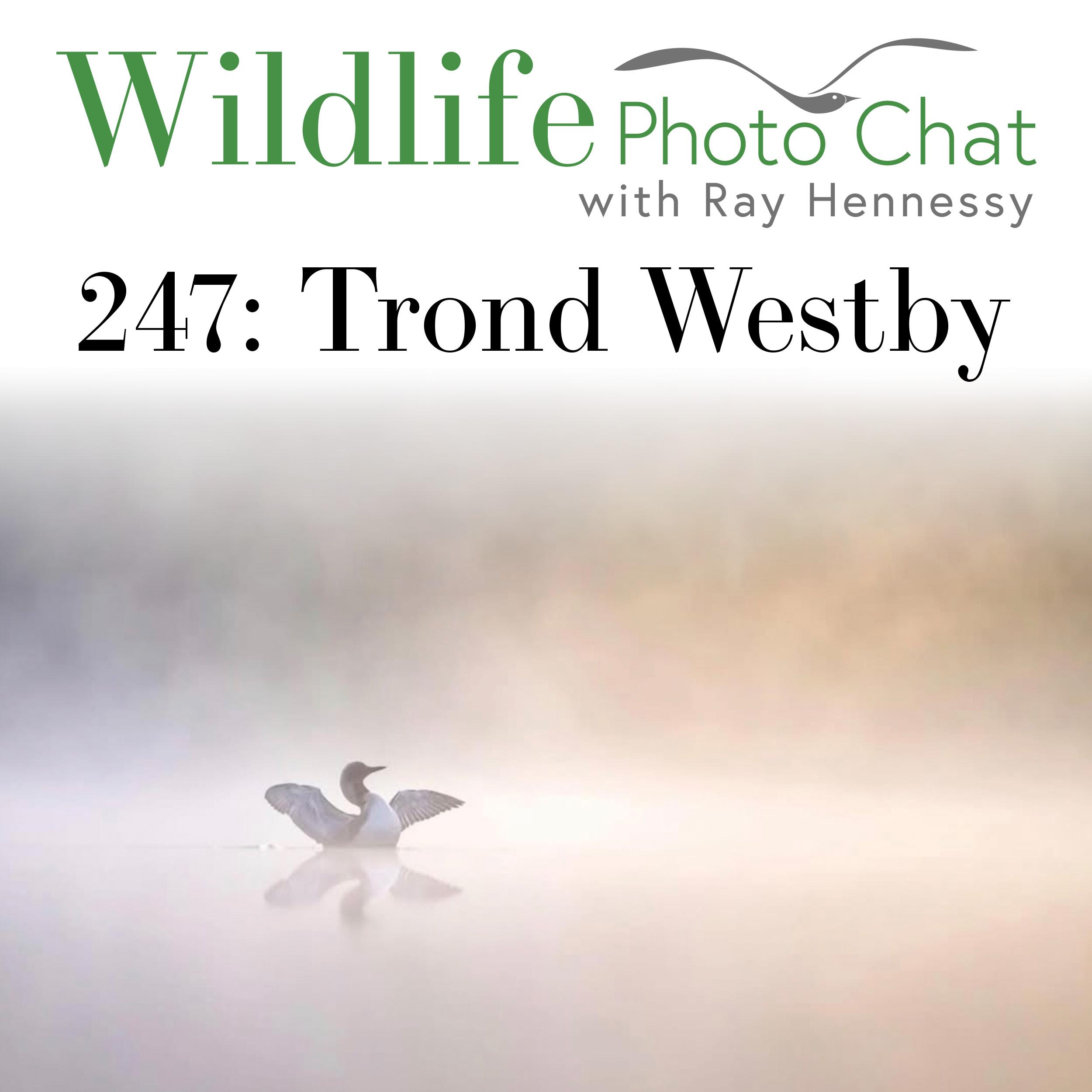
So I was cool. I was working with that, especially on my black throat loon the first time I was whizzing the black throat loon that morning, that evening there, I saw it, but I didn't get to photograph it. And then I got wake up. Like, I think it was like 3:30 in the morning that was in. In June.
- [48:55]
A
Okay.
- [48:56]
B
And it was just the most magical morning I had in years. Everything was misty and it was so moody and you get that like the. The cool sound of the. The loons that you get.
- [49:10]
A
The best sound. Yeah.
- [49:12]
B
Oh, it was so, like wild and raw and everything was perfect. And then I was trying to work with the loon. It's more than frame. So you can get that. You like, like see the trees a little bit in the background.
- [49:27]
A
Yes.
- [49:28]
B
You get the mist and you get. When like the sun was rising, it was backlit. So you got some parts that was warm tones and some parts that were cool tones. You get that orange teal look.
- [49:40]
A
I'm looking at a shot right now. It's incredible, man. Yeah, it's so good.
- [49:45]
B
So that was a fun time working in that type of direction there.
- [49:51]
A
Yeah, absolutely. Right. It's got to be amazing, you know, when you have those moods like that in such a scene like that. Like, our eyes get to see it so much, you know. So I think it is really fun for me to try and capture it. And just like you said, you know, it's with your videos, you're trying to tell a story, right? And you get so many aspects to do that, right. You get movement, motion, composition, light, sound, all of that stuff to try and tell a story. Well, the still photo, you just get that, like that click, you know, it's just that one moment. And it's much harder to tell a story with that, especially when it's just like the tight portrait all the time now. It shows off these birds in an amazing way. Right. But I feel like when we back up, we get to do a little bit more of that story. And I'm looking at that photo right now of like a morning like you were talking about that where you went wider and you can see the glow, the warm on the one side, the cooler tones and the birds flapping and like, it just transports me there. I can just imagine being there on that lake and I know what it looks like and I know the edge is like lined with like those, you know, pine tree, the spruce trees just probably like edging the back of the pond there. Right. And like, you know, sticking up into the sky and it's quiet and cool and it's amazing, man. It's a very well Done shot.
- [51:09]
B
Thanks. Thanks. I was quite happy with that. And actually the whole morning there because I got a different. I think that is probably a time where I'm most happy when I got a variety of shots.
- [51:25]
A
Yes, absolutely.
- [51:27]
B
And if I'm getting like both. Because when you're photographing a new species, you're trying to. Starting to get like the cool portrait with a nice light on, which is showing the bird with. Yes. The. The feather formation that it has and everything. And that beautiful. And. And then you want to like trying to work with it in the environment and getting different kind. And if you're getting a second bird, maybe get the interaction there and. And then you can, if you are really lucky, maybe some flight shots, landing shots.
- [52:08]
A
So just an easy short list. Nice. Yeah.
- [52:12]
B
Yeah.
- [52:13]
A
I want everything. But it does happen sometimes, you know, like. And it's incredible when it does. Absolutely.
- [52:21]
B
This morning was that time of type of thing that. That was the reason I mentioned it. Definitely not everyday thing for me.
- [52:29]
A
Yeah, I mean, listen, man, I get it. I had a morning like that this morning two days ago, I went out to the spot and Trond, it was amazing. So I'm in kind of like a desert habitat here, but it's got all these red rocks, and it's a place called Arches National Park. And they have all these, like, natural arches. Like these big open rock arches that are massive, you know, hundreds of feet tall that you can like walk under and see. So that's the main reason everybody goes there. And so I went to this one spot. I had been there two years ago, and it's rare to have fog in these places. But two years ago when I was there, we drove in, me and Emily, and it was a foggy morning and it looked incredible. Like seeing the fog hanging in all these rocks and these formations and the red color of the stone is incredible. So two days ago, I drive back in again. This is now two years later, and I pull it, and it's foggy again in the same spot. I'm like, this is amazing, you know, And I had. I had done some googling and research, and it's like, very rare to have fog in the area. And so I go to this one spot and I trond. I stood in one spot for about a half hour before sunrise until about. Almost an hour after sunrise. So for over an hour I stood in this one spot because it just looked incredible. And I'm like, give me any bird, I don't care, any bird to fly by, fly in. It would just look amazing. And in between it, I was enjoying the sunrise. I enjoyed just photographing the scenery. But nothing, right? Just nothing. I heard two birds way off in the distance. Never even saw them. It was just quiet. As soon as the sun comes up, it burns the fog off. The mood changes. And then I hear a bird, a canyon wren, start singing right next to me. Me was there the whole time. I just had no clue. Just, you know, just didn't start his day early. So I go back in today because I'm like, now I know where this canyon rent is and I'm gonna get him. And so I went in with two cameras. I had a wider angle lens and I had my 100 or 400 telephoto. And I get in there and of course, no fog. Just completely clear morning, which is still beautiful. But this morning, dude, I had incredible. I shot him from everywhere, from 24 millimeter to 400 millimeter. I have portraits, I. Scenic stuff, showing off all the stuff. But all I can think was this would have looked so much cooler if it had the fog back there.
- [54:46]
B
Yeah. So.
- [54:48]
A
So now the next two mornings, I'm like, I have to go back again. Because he was so cooperative. I know where he's at. I know how to work with him now. And now if I can just get those conditions again. But, you know, the odds are against me for that fog to happen one more time.
- [55:02]
B
Yeah, exactly.
- [55:03]
A
Yeah. But it keeps you.
- [55:06]
B
Yeah. I was about to say, you just like need to come back, though, and you need to have to stretch.
- [55:13]
A
Yeah.
- [55:13]
B
And I think. I think we need that more and more as more experience we get, the more you. We need to have some reason to come back, though.
- [55:23]
A
Yeah.
- [55:23]
B
And speaking of musk oxen, that is a thing that I've traveled every year with my friends up there in the wintertime since 2018. And some of my friends was asking me, like, are you tired of going up there and photograph the mask oxen again? And no, because I haven't got it in the condition that I have talked about since I ever starting to travel up there. Oh, yeah, Don't. And that is when you get the musk oxen, like, totally white in the face because of like blowing snow.
- [56:03]
A
Yeah.
- [56:03]
B
And then you get a small portion of sun in, so you get same like, mood that you get with a fog coming in through, like, with a backlight. Ooh, that.
- [56:15]
A
That's in your head, huh?
- [56:17]
B
You can't get rid of my head.
- [56:18]
A
Yeah.
- [56:19]
B
No. And to travel like 14 hours by car one way.
- [56:24]
A
Oh, man. Yeah.
- [56:26]
B
Speaking of condition, though, I, I, I thought about one thing when you're talking about that misty and situation that I had with the Lune though. But you have, if what I'm thinking, you have quite warm weather in, in like many of your places that you're traveling to, especially when you are in Florida and photograph.
- [56:50]
A
Yeah, absolutely. Yeah.
- [56:51]
B
With shorebirds and, and stuff like that. The, the, like the problem I had when I was up there, not that morning though, because that was a good morning in, in like back in temperature though. But when I came back there almost a month later, we had extremely warm period with over 30 degrees. I'm not sure what that is in Fahrenheit though, but, but it was really, really warm. Yeah. And the problem was that even if I was up early before the sun has risen, it wasn't cold enough. So I constantly got that heat haze between them when they are far away. So I need to have them so close.
- [57:44]
A
Gotcha.
- [57:44]
B
So are you getting that same thing when you are in the warm conditions, when you're trying to get some birds in like the habitat, because you're working in the distance, right?
- [57:54]
A
Yeah. So more often than not, in my experience, Trond, it's not necessarily just if it's warm out, it's the temperature difference between things. Right. So I'm guessing on that morning when it was warm out for you and really hot, I'll bet the water was still cooler. And so right above the water there is that temperature difference which creates the heat haze. The worst heat haze I ever saw in my photos. It was, let's see, it was like negative two Fahrenheit. It was about 18 degrees Celsius. You know, that's the worst I had ever seen. So it was pretty cold when it had happened for me. And so I have experienced it in the cold, I've experienced it in the heat. And it's just sort of like it's the difference in temperature between different areas. So sometimes like out on the beaches, it doesn't get that bad in the morning because the sand's not hot. But if you go in the evening, the sand has been heated up all day and then the air cools off in the evening. And then again you get that sort of really bad heat haze. So there's definitely times where I've dealt with it for sure.
- [59:03]
B
I get it. Especially in the mountains though, when I'm up.
- [59:06]
A
Yes.
- [59:07]
B
Even when I'm photographing it in with a musk oxen, I. When I'm up there in the springtime photographing golden plovers and Stuff like that. I don't even bother to try to photograph the mos. I need that distance there. And it's. Sure it's extremely, like so much heat haze up in that area there. Yeah. It's not like you don't get any sharp pictures at all.
- [59:33]
A
Sure, yeah. You know, I've also thought about. I wonder if there's a way. Have you ever seen, like in a TV show or a movie where they'll show like really long distance down like a shot down like a road, and they're trying to show like the desert heat or something like that, and you can see that shimmer in a video and it creates that kind of, you know, the heat haze that you can see. Right. And it indicates that everything is hot. I've kind of had in my head, I wonder if there's a way to sort of incorporate that creatively into a wildlife photo if it's like extremely hot. Like, maybe if you purposefully threw the subject out of focus just a little bit more as well and then had that heat shimmer in there. Like, I wonder if it would make an artistic effect or if it would just look kind of weird. I don't know. I kind of want to play with it, though.
- [60:25]
B
It's totally a cool idea. I totally get you, though. It's almost like you're using those have. Maybe you have used it. The lenses that you get that like extremely. Pokeballs.
- [60:39]
A
Yes.
- [60:39]
B
What is that lens? It's called.
- [60:40]
A
Yep, I have one.
- [60:41]
B
Yeah, yeah, yeah. So I'm reckon it's like the same thing that you might trying to achieve, though, that you're getting the patterns in.
- [60:52]
A
Yeah. Try and make it look like a painting almost.
- [60:55]
B
Yeah, yeah, exactly.
- [60:57]
A
Yeah. So it's in my head. So if I ever come across a really bad heat haze like that again, I might try it, you know, so maybe you'll get it before me, though, next time you're in the mountains. So, listen, man, this has been a great conversation. I want to wrap it up by asking you. So, you know, I know we talked a lot about keeping things fresh with you, chasing new species and stuff like that for next year, but in addition to that, is there anything photographically that you're hoping to try this coming year to keep things fresh, to keep things more creative? Any new techniques or different approaches or just. Is it going to really be about the species for you?
- [61:41]
B
No. I think you were touching a little bit about using the auto capture. I want to experiment more with the auto capture so I can get that type of pictures that Is really hard to get. Especially though I have. We have much beavers in. In near our cabins though. And it's fun to get the beavers with a telephoto lens and stuff like that. Getting the beaver with a 24 to 70 lens. Yeah, that would be amazing though.
- [62:14]
A
It would.
- [62:16]
B
So getting had in the camera, just placing out in an area and with an auto capture and just like let it be there for some hours and just like sit far behind and with my binoculars to watch. So I don't like get the smell out there anytime. That would be something. So definitely I have. I want to do like more of that.
- [62:40]
A
Yeah. Do you ever think, is it possible to know what tree they're actively chewing on and you could set up a camera near that. That would be an incredible shot with a wider angle, wouldn't it? Like them actively like working on a tree.
- [62:53]
B
Yeah, it would. The problem is that the working on trees are happening more in. In like the early spring and late autumn because they are in the summertime though. It's. They are feeding on herbs, they're feeding on the lilies and waters, stuff like that. So they don't take down trees though.
- [63:22]
A
Okay.
- [63:23]
B
And when they do that early spring and late autumn, they are out when it's dark.
- [63:30]
A
Oh, okay. Yes. You'd have to do the whole flash thing, which would be a mess. Yeah, Gotcha.
- [63:34]
B
Yeah. So. So the only thing that you can know when they are. They are always coming back to the same spot that I was finishing feeding before they went into their. Their beaver hut though.
- [63:50]
A
Okay.
- [63:51]
B
The next morning when they are now the next evening when they're waking up for tonight. Yeah, they will go. The first thing they will go to is where they finish enough on the
- [64:03]
A
morning so you can predict something about it.
- [64:06]
B
Yeah, you can, you can.
- [64:07]
A
Oh, that's pretty cool, man. That sounds exciting. I have to learn auto capture. I just tried it the other day and it failed on me and like I just. Have you. Have you studied it much to really figure out like what settings to use and what works? Because I. I've had some success but I've had some times where it didn't fire and I just. I feel like I need to understand it more so I can like use it better. But it's an incredible feature.
- [64:31]
B
It is, it is. And. But I. I've only like failed a couple of times in. In the start and then I just pulled it over to another different setting and it works every time it. It triggers like It's a happy trigger though that the One settings that I'm using, but I, I'm fine with that though because I want to have more pictures to choose. Both of absolutely. Lesser pictures.
- [64:58]
A
Are you using just the motion capture for it?
- [65:01]
B
Yeah. Only motion?
- [65:02]
A
Yeah, yeah, that's what I used for. I used it. I had it set that way the other day and I had a pika come up on a rock and it didn't, it didn't trigger. I don't know what happened because I saw the tracks in the snow after I had left it for like a couple hours, like they weren't there. Set the camera up and when I came back the tracks were there, but it just didn't trigger and I only had it on motion. So I don't know if I had something else off, you know, besides that, but I definitely have to figure it out because I'm the same as you. I'd rather have way more photos than have it not fire when something goes in the right spot, you know.
- [65:36]
B
But yeah, yeah, yeah. And it's so fun to work with and it is especially. I have tried a couple of times with shorebirds on the beach though. Oh yeah. When you, you, when you get that like the warm colors in the sky almost like when you're taking landscape photography at the coast, right? Yep. And you, you put a bird in that landscape there, it would be awesome. So, yeah, experienced a little bit with that, but I want to do more of that.
- [66:03]
A
Cool, man.
- [66:04]
B
That perfect wide angle shot with a cool shore bird on the beach and then you get like the, the clouds in the horizon and, and some waves there and. Yeah, I think that will be really, really cool.
- [66:17]
A
I'll be waiting to see it, Trond. Yeah. Well, thank you so much for joining me, man. It's been such a wonderful time to catch up with you again. And where's the best place for people to follow you and your photography online,
- [66:34]
B
picture wise? I'm putting out on Instagram and on Facebook page and of course my videos is on YouTube. That is long form content though. I'm putting out some reels now and then though. But okay, it's. I'm, I'm. I don't like to make them.
- [66:53]
A
You want to tell the story?
- [66:55]
B
I want to tell the story. I want to tell the story. But, but sometimes it's. It's nice to maybe have some people that are not on my platform maybe trying to transfer them to the long form content. And then you need to be on the short form, especially with a younger audience though.
- [67:14]
A
Yeah, I know.
- [67:16]
B
You need to be there where they are.
- [67:18]
A
Absolutely, man, absolutely. Well, I appreciate the long form content that you do. I'm glad you're sticking with it when everybody else seems to be going the other direction. So good for you for, you know, sticking with what you really enjoy. And it makes sense, right? Because you said it earlier, it's gotta be fun for you. And if that's where you're finding the fun, that's what you're going to do. Do.
- [67:37]
B
Exactly. Exactly.
- [67:39]
A
All right, man, well, good luck with the coming year. I hope sometime soon you get to get out and do some photography and it doesn't go another whole month.
- [67:48]
B
Oh, I have something in plan though, so hopefully in a couple of weeks now it will be. I will be out.
- [67:54]
A
All right, man, well, I look forward to seeing whatever it is. Thanks again, Trond.
- [67:57]
B
Thanks for having me, man.
- [68:00]
A
Hey, this is Ray Hennessey. Thanks so much for listening. I hope you enjoyed the conversation and got something helpful from it. I also hope you join me for the next episode. Please subscribe on your favorite podcast player and help me spread this podcast around by sharing with your friends and fellow photographers. It would also be a huge help for the podcast if you could give it a five star rating and possibly a review wherever you listen to the podcast. Thanks again and I'll see you on the next episode.