
Podcast
Wired for Connection: A Polyvagal Podcast
Hosted by Polyvagal Institute · EN
Wired for Connection is a podcast devoted to sharing information about Polyvagal Theory and the vagus nerve, in service of our mission to optimize the human experience by creating a safe and connected world.
We highlight guests who share more information on the role the vagus nerve plays in our mental and physical health, alongside stories about their experience with their nervous systems in navigating relatable human experiences.
This podcast is hosted by Polyvagal Institute, an international non-profit organization. Learn more about PVI on our website at www.polyvagalinstitute.org.
11episodes
Episodes
Newest firstAll episodes

Kate Woodsome on Brain Health, Trauma & Civic Resilience
3w ago00:46:04Tap to summarizeKate Woodsome is a Pulitzer Prize–winning journalist and founder and director of the Invisible Threads Impact Lab, building the human and relational capacity democracy depends on. Kate is also the the Royden B. Davis, SJ Visiting Professor at Georgetown University, Dept. of Culture, Communication and Technology.For two decades, Woodsome reported and led global news teams for Voice of America, Al Jazeera English, and The Washington Post, covering upheaval from Cuba to Cambodia, Hong Kong to Washington, DC. Reporting on the January 6 U.S. Capitol attack left her with complex PTSD and a visceral understanding of how trauma is a cause and effect of polarization. After her team won the Pulitzer Prize for Public Service, she left traditional journalism, unwilling to perpetuate a culture that treats trauma as the price of truth. In this episode, we discuss the link between our collective nervous system and democracy. Kate also shares practical insights on fostering civic resilience, and she shares a preview of her talk at the upcoming Polyvagal Institute International Gathering. Kate is one of our keynote presenters at the upcoming conference, in which we'll explore the theme: Navigating Conflict with a Resilient Nervous System. Virtual and in-person tickets are available here.
Transcribe →
Appeasement, Fawning & the Nervous System
Jun 2600:51:13Tap to summarizeIn this episode of Wired for Connection, Travis Goodman, LMFT sits down with trauma therapist, author, podcaster, and trainer Verena König to explore fawning, appeasement, people-pleasing, and the nervous system. Verena is speaking at 2026 PVI International Gathering. Our theme this year is "Navigating Conflict With a Resilient Nervous System. Join us in Spain this September!Verena shares how the fawn response and appeasement response are not signs of weakness, but adaptive trauma survival responses. We explore how early attachment wounds and relational trauma shape adult relationships, and why unhealthy relationship patterns can sometimes feel safer than healthy connection.This conversation explores Polyvagal Theory, complex PTSD, nervous system regulation, and the healing journey of moving from automatic survival responses into more choice, connection, and self-trust.If you have ever wondered why you over-adapt, people-please, avoid conflict, silence your needs, or lose yourself in relationships, this episode will help you understand the deeper trauma and nervous system patterns underneath those responses.Learn more about Verena and her work here. CONNECT WITH Polyvagal Institute: WEB: www.polyvagalinstitute.org Instagram: @polyvagalinstitute LinkedIn: polyvagal-institute Email: community@polyvagal.orgCONNECT WITH Travis Goodman: Web: travisgoodmanlmft.com
Transcribe →
Skin Health, Fascia, and the Nervous System with Dr. Keira Barr
May 2000:41:03Tap to summarizeIn this episode of Wired for Connection, we chat with Dr. Keira Barr about skin health, stress, inflammation, and the nervous system. Dr. Barr is a dermatologist whose work lives at the intersection of psychodermatology, mind-body medicine, Polyvagal Theory, and skin healing. She shares how her own experience with early melanoma, gut issues, hormone issues, and burnout changed the way she understood dermatology and helped her see that the skin is not simply a problem to fix, but a messenger speaking through the body.We explore how the nervous system and skin are in constant communication, including the nervous, immune, cutaneous, and endocrine pathways that shape inflammation, stress responses, and chronic flare cycles. Dr. Barr explains why your skin can generate cortisol, adrenaline, and inflammatory messengers, making it both a target and a source of the stress response. This helps explain why stress can show up as acne, rosacea, eczema, psoriasis, hives, hair loss, and other inflammatory skin conditions.Dr. Barr also unpacks how Polyvagal Theory gives language to what many people with chronic skin issues already feel: “I’m not broken. My body is trying to tell me something.” Dr. Barr also shares practical tips on sleep, food, environment, social media, self-touch, breath, and skincare rituals can become nervous system supports. She explains why the skin is the first site of attachment, how touch communicates safety, and how applying skincare with intention can become a regulation practice instead of another self-improvement chore from the $500 billion beauty-industrial circus.If you struggle with chronic skin flares, acne, eczema, psoriasis, rosacea, hives, stress-related breakouts, or skin shame, this episode offers a compassionate and science-informed way to understand your skin through the lens of safety, inflammation, and nervous system regulation.Dr. Barr will be presenting at the 2026 PVI International Gathering in Sitges, Spain. Both in-person and virtual tickets are available now. CONNECT WITH Polyvagal Institute: WEB: www.polyvagalinstitute.org Instagram: @polyvagalinstitute LinkedIn: polyvagal-institute Email: community@polyvagal.orgCONNECT WITH Travis Goodman: Web: travisgoodmanlmft.com
Transcribe →
How Technology & AI Impact Our Nervous Systems
Apr 2200:54:44Tap to summarizeIn this episode of Wired for Connection, we chat with Stephen Hanmer D'Elia, a therapist and writer, on the topics of technology and artificial intelligence (AI). Stephen shares how phones, social media, and AI induce cognitive overload, impacting our nervous systems and putting us in defensive states. We talk about how technology shapes physiology and captures attention, often mimicking traumatized clients that Stephen sees in his practice.Stephen breaks down three tech-driven nervous system patterns. First, variable reinforcement, where unpredictability keeps the body checking for the next reward. Second, open loops, where notifications, feeds, and interruptions keep the system unfinished and unable to settle. Third, simulated connection without real co-regulation, where technology gives enough signal to engage us but not enough relational feedback to actually co-regulate with us.On AI, Stephen offers a powerful distinction between scaffolding and substitution. AI can help create a boundary or draft a clean response in a tense moment, but it becomes harmful when it starts impacting our tolerance for discomfort and awkwardness. This is an important conversation for anyone wondering whether AI is helping them think more clearly or quietly shrinking their capacity.To learn more about Stephen, head to his website. You can explore his writing here. CONNECT WITH Polyvagal Institute: WEB: www.polyvagalinstitute.org Instagram: @polyvagalinstitute LinkedIn: polyvagal-institute Email: community@polyvagal.orgCONNECT WITH Travis Goodman: Web: travisgoodmanlmft.com
Transcribe →
Dr. Mona Delahooke on Her Traumatic Brain Injury, Coma, and the Power of Co-Regulation in Healing
Mar 2501:04:27Tap to summarizeIn this episode of Wired for Connection, host Travis Goodman speaks with Dr. Mona Delahooke and her husband Scott, for a deeply personal conversation about her traumatic brain injury, coma, and recovery. Mona is a clinical psychologist known for her brain-body approach to behavior, parenting, and neurodiversity, and the author of Beyond Behaviors and Brain-Body Parenting.We explore the role of co-regulation, the power of a familiar voice, how safety and relationships support growth and restoration, and how polyvagal principles shaped the way Scott and their family showed up in the hospital room. This episode brings Polyvagal Theory out of the abstract and into the practical, showcased in the Delahooke family's approach.We also talk about Mona’s work with children, parents, and neurodivergent families, including her brain-body lens on behavior, the importance of relational safety, and what “polyvagal parenting” looks like in everyday life. Dr. Delahooke is a Course Partner with the Polyvagal Institute, offering "A Paradigm Shift in Understanding Children's Behavior," with Dr. Stephen Porges. Learn more about that offering here. CONNECT WITH Polyvagal Institute: WEB: www.polyvagalinstitute.org Instagram: @polyvagalinstitute LinkedIn: polyvagal-institute Email: community@polyvagal.orgCONNECT WITH Travis Goodman: Web: travisgoodmanlmft.com
Transcribe →
Stimulating Breath Work Session with Chauna Bryant
Mar 400:22:14Tap to summarizeChauna is a Breathwork facilitator, and founder of Breath Liberation Society, a radically inclusive training and community dedicated to transformation through the breath. With nearly two decades of experience, she blends movement, meditation, and energy work to help clients reconnect to their bodies, deepen intuition, and step into their personal power.Breathing exercises can help stimulate the vagus nerve. We invite you to try this breathing session if you're looking to increase your energy and improve vagal tone.As this is a stimulating breath work session, please find a sturdy place to sit or lie down before practicing. This practice involves experimentation with an activating breath called the Conscious Connected Breath (CCB) — an open-mouth inhale into the body followed by an effortless exhale, with no pause between the two.Even in short bursts, this breath can stir up emotions and produce psychedelic-like effects, including physical sensations like tightness or tingling. Because of this, do not practice the CCB while driving or doing anything that requires your full attention.If at any point you feel uncomfortable, switch to a slow inhale through the nose and an even slower exhale. Give yourself permission to pause and return to the practice when you feel ready.To learn more about the vagus nerve, head to our website. If you're interested in enrolling in a course on Vagus Nerve Stimulation, click here.CONNECT WITH PVI:@PolyvagalInstitutepolyvagal.orgCONNECT WITH CHAUNA BRYANT: chaunabryant.com
Transcribe →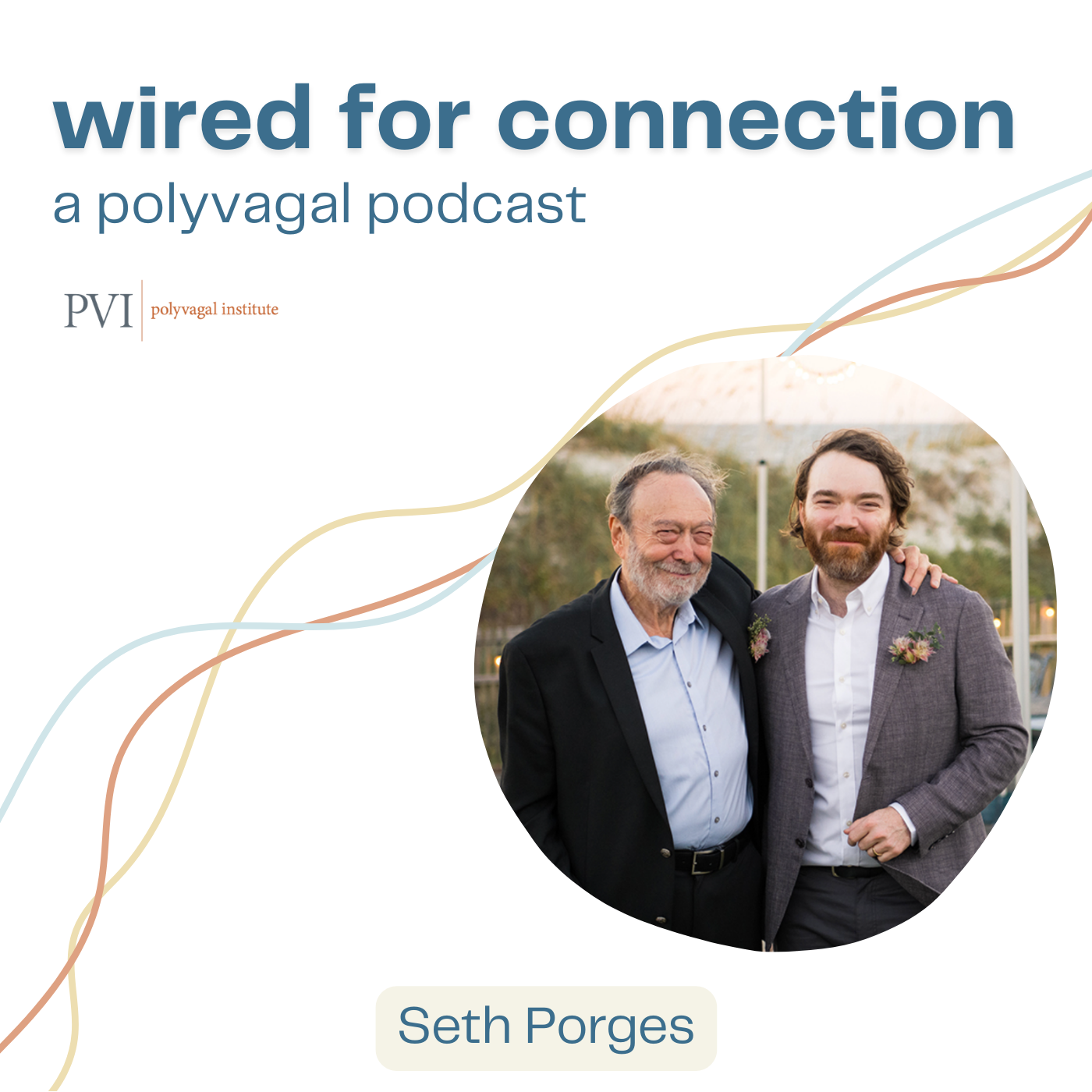
Why Feeling Safe Is The Key To A Good Life with Seth Porges
Feb 1800:46:33Tap to summarizeIn this episode of Wired for Connection, I sit down with Seth Porges, coauthor of “Our Polyvagal World” and documentary filmmaker behind “Class Action Park” (HBO Max) and “How to Rob a Bank” (Netflix). We explore how polyvagal theory is not just a neuroscience model, but a worldview that explains why our nervous systems feel so overloaded in an age of social media, 24/7 news and constant outrage.Seth breaks down what polyvagal theory actually means in simple language: why feeling safe is crucial to a good life, how our nervous system reads cues of safety and threat, and how anger and division are often just dysregulated states, not “bad people.” We talk about the autonomic echo chamber, how algorithms are literally trained on your stress response, and why doomscrolling keeps you stuck in fight or flight.We also go inside his work as a documentary filmmaker. Seth shares how he builds safety and trust on set, how he protects participants from exploitation, and why real emotion on camera is a powerful form of co regulation. We talk about creative work and nervous system health, why fun and play are regulation, and why therapists, coaches and parents must protect their own capacity to feel safe if they want to offer safety to others.If you are a therapist, coach, creative or anyone who feels fried by the modern world, this conversation will help you see your anger, anxiety and exhaustion through a polyvagal lens and give you practical ways to protect your nervous system and the people you care about.You’ll learn about:• Polyvagal theory in plain English• The autonomic echo chamber and media• How social media and news exploit your threat response• Co regulation, safety and empathy in an angry culture• How documentary storytelling can be trauma informed• Why fun, play and connection are regulation, not luxuries• Nervous system self care for therapists, coaches and creativesCONNECT WITH Polyvagal Institute: WEB: www.polyvagalinstitute.org Instagram: @polyvagalinstitute LinkedIn: polyvagal-institute Email: community@polyvagal.orgCONNECT WITH Travis Goodman: Instagram: Travis.Goodman.LMFT
Transcribe →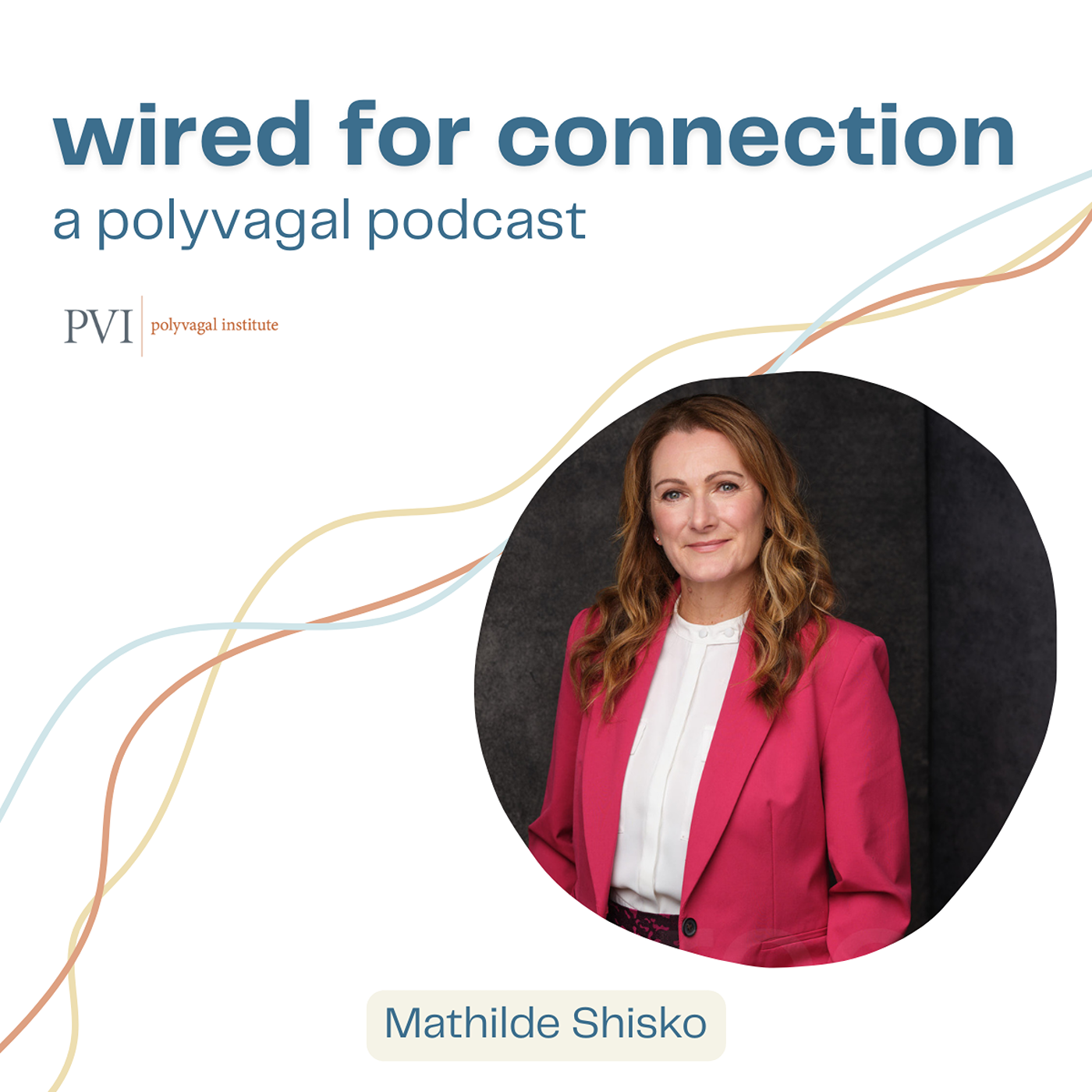
Using Your Voice Effectively: Communication Through a Polyvagal Lens
Feb 400:41:48Tap to summarizeIn this episode of Wired for Connection, we chat with Mattie Shisko on the link between the nervous system and your ability to communicate in an authentic way. Mattie is an internationally recognized voice, performance and public speaking coach with over 30 years of experience. She teaches groups and individuals in the fields of politics, education, healthcare, creativity and business - The Art of Speaking Publicly - and facilitates regular workshops in using the Voice as a Resource and Regulating Tool for Well Being.At the heart of her work is Dr Stephen Porges’s Polyvagal Theory. Combining science, art, mindfulness and play, she helps her clients embody their voices with heart, humour, compassion and integrity. Mattie is a Course Partner with the Polyvagal Institute, and offers her own course called "Aligning Our Voice with Our Intentions: A Polyvagal Course for Communication." The course runs several times a year, and you can learn more here.CONNECT WITH POLYVAGAL INSTITUTE:@PolyvagalInstitute on social mediaVisit us at polyvagal.org
Transcribe →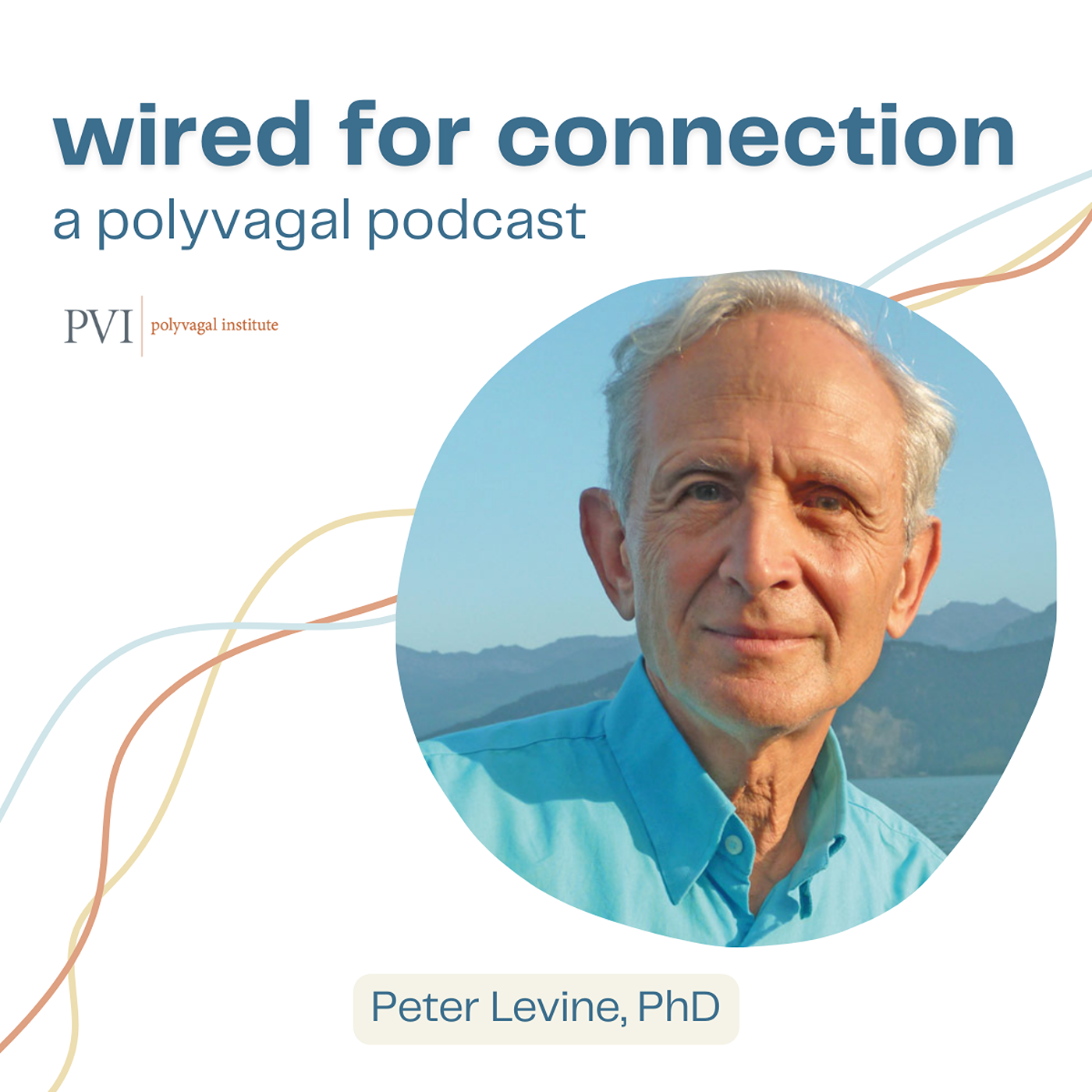
Dr. Peter Levine on Somatic Experiencing, Polyvagal Theory, and Healing Trauma
Jan 1600:53:29Tap to summarizeIn this episode of Wired for Connection, Travis Goodman speaks with Dr Peter Levine, developer of Somatic Experiencing, to explore why trauma manifests as a wound in the body, not just a story in the mind. We talk about how trauma shows up in the nervous system, why the vagus nerve and interoception matter, and how bottom-up, body-based trauma work can complete unfinished fight, flight and freeze responses.Peter explains the roots of Somatic Experiencing, how it converges with Polyvagal Theory, and why true trauma healing depends on felt safety, curiosity and relationship. We walk through practical somatic tools like the Voo sound, slow completion of defensive responses, working with numbness, and titrating between resource and pain so clients are not retraumatized.We also touch on trauma and spirituality, the “wounded healer” archetype, technology and disembodiment, and why trauma resolution often leads to deeper embodiment and meaning. This conversation is for therapists, coaches and survivors who want a clear, embodied roadmap for healing trauma through the nervous system, not just through insight.Peter A Levine, PhD, and Ergos Institute are the leaders in somatic workshops and education. Learn more about Peter’s work, Somatic Experiencing® (SE™) Trainings, Research, Free programs, Books, and more here: https://www.somaticexperiencing.com/Dr. Levine’s books including his latest book, An Autobiography of Trauma: A Healing Journey is available at: Ergos Institute, Barnes & Noble, Amazon, Amazon UK, Inner Traditions, Books A Million, and Bookshop.orgCONNECT WITH Polyvagal Institute: WEB: www.polyvagalinstitute.org Instagram: @polyvagalinstitute LinkedIn: polyvagal-institute Email: community@polyvagal.orgCONNECT WITH Travis Goodman: Instagram: Travis.Goodman.LMFT
Transcribe →
Performance Through a Polyvagal Lens: Part Two
Jan 800:34:48Tap to summarizeIn the second part of our episode on performance with Michael Allison, we discuss performance in an athletic and physical context. Michael touches on some of the great athletes, teams, and coaches and highlights how they were (or were not) able to move in and out of different nervous system states depending on the task at hand. We also discuss how this information can help inform goal-setting and achievement of any kind. By honing your ability to listen to your body, and shift your physiology, using what Michael calls Autonomic Agility, you can achieve the optimal nervous system state for performance. Michael's book on this topic is coming in 2027. You can enroll in Michael's course with the Polyvagal Institute at several times throughout the year. Learn more about this course on our website. CONNECT WITH POLYVAGAL INSTITUTE:polyvagal.org@PolyvagalInstitute on Social MediaMORE ON MICHAEL:https://theplayzone.com/
Transcribe →