← Women & ADHD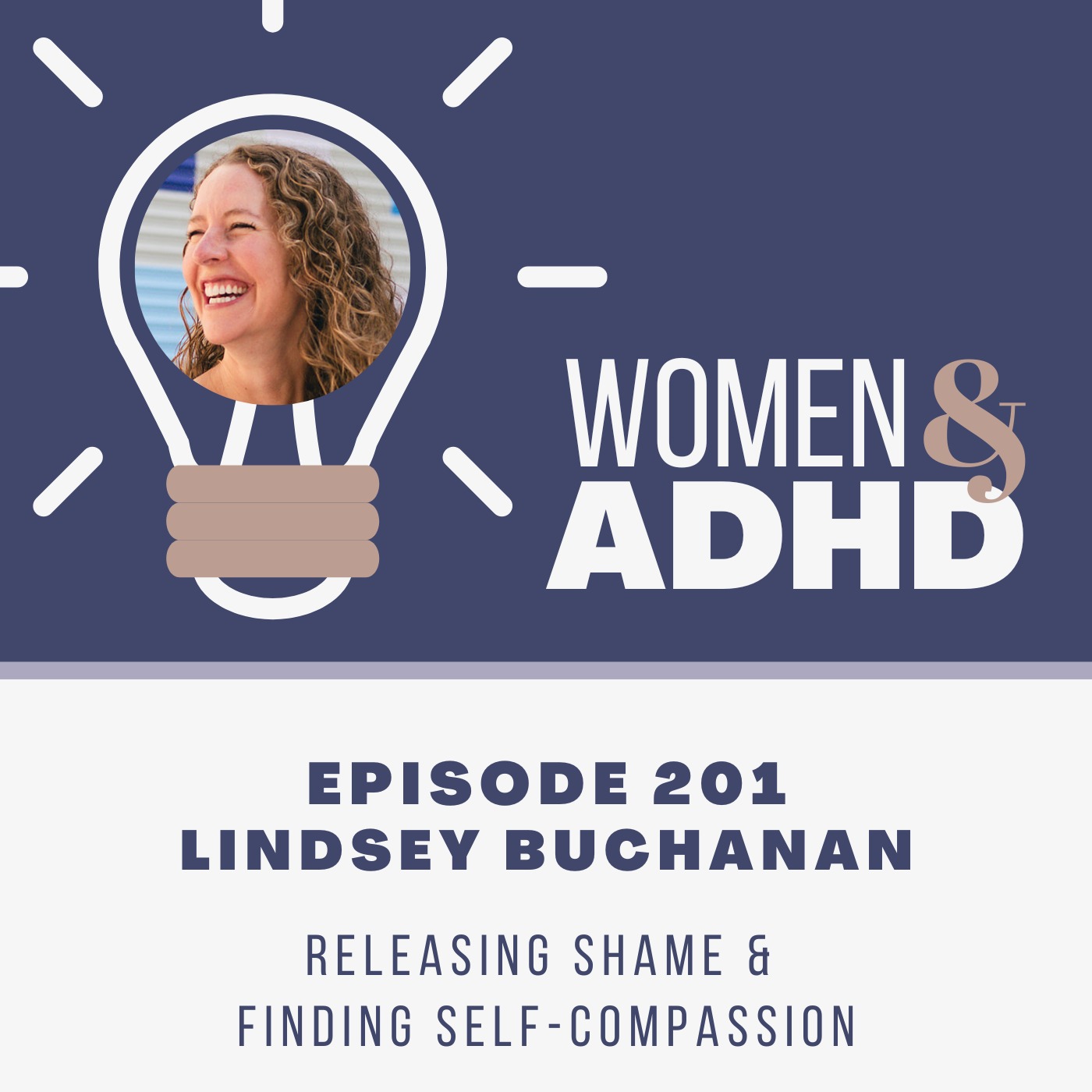
Loading summary
Transcript169 lines
- [00:01]
Lindsay Buchanan
I would forget to pack their snacks, for example, in the diaper bag, and we'd go to the park and they'd be hungry for a snack. And I'm like, oh, I didn't think to bring a snack, you know? And I would notice that other moms were really good at that. Like, they would have their little snack containers everywhere they went. And I'm like, dang, I wish I was better at that. I don't know why that's hard for me. I don't think through that far.
- [00:32]
Host (possibly a narrator or promo voice)
Hello and welcome to the Women and ADHD podcast.
- [00:36]
Katie Weber
I'm your host, Katie Weber. I was diagnosed with ADHD at the
- [00:39]
Host (possibly a narrator or promo voice)
age of 45 and it completely turned my world upside down. I've been looking back at so much of my life, school, jobs, my relationships, all of it with this new lens, and it has been nothing short of overwhelming.
- [00:54]
Katie Weber
I quickly discovered I was not the
- [00:56]
Host (possibly a narrator or promo voice)
only woman to have this experience.
- [00:57]
Podcast Co-host or Guest Introducer
And now I interview other women who,
- [01:00]
Host (possibly a narrator or promo voice)
like me, discovered in adulthood they have ADHD and are finally feeling like they understand who they are and how to best lean into their strengths, both professionally and personally.
- [01:12]
Podcast Co-host or Guest Introducer
Hello and welcome back. It is so great to be returning with a brand new episode after a mini vacation. And before we get started, I'd love to share with you this review from Rachel in New Zealand. It's entitled Practical, plugged in and positive. As a newbie to adhd, this is an incredible resource that isn't overwhelming, but feels very fave. Pair of comfy slippers. The podcast has the perfect tone. Inclusive, accessible, warm, friendly and very authentic. It's hot chocolate with marshmallows for the soul. If you're a woman and struggling on this journey. Validating and positive with lots of useful insights and a good dose of virtual hugs. Thank you so much Katie and guests Arhwa Nui. I hope I pronounced that okay. It means big love in Maori. Rach in New Zealand. Well, this review absolutely made my day.
- [02:05]
Katie Weber
Rach.
- [02:05]
Podcast Co-host or Guest Introducer
Chef's kiss, no notes.
- [02:07]
Katie Weber
Thank you so much and big love
- [02:09]
Podcast Co-host or Guest Introducer
and virtual hugs to you too. By the way, if you have been listening to this podcast and you have also found these interviews to be helpful, the best way to pay it forward is to leave a review so that other women like you can find this podcast at these conversations and know that they are not alone and they are not simply lazy or just depressed or somehow broken. But they have adhd. So please take a moment to head to Apple Podcasts or Audible. Or you could leave feedback on individual episodes on Spotify. And if that feels like, just too much right now. And I totally get it. You can also just quickly hit those five stars. In fact, before you forget, why don't you just pause right now and go do it? I. I promise we will all wait for you. Okay, here we are at episode 201 in which I interview Lindsay Buchanan. Lindsay is an ADHD and executive functioning coach based in Florida, and she's also a member of our women and ADHD coaching team. Lindsay and I talk about the surprising way she got diagnosed. Spoiler alert, her psychiatrist sister broke the news to her. And the relief she felt after finally, finally finding her people. We also talk about how self compassion has been such an important part of her journey, as well as the vital role that exercise plays for ADHD brains. And we talk about how Lindsay has moved past some of her previous shame spirals, as we call them, around lateness and organization, and how she now has made a career out of helping others to unwrap their gifts through ADHD coaching. I also spoke to Lindsay in episode 200 of Women in ADHD where she shares more about her journey to coaching. So if you love this episode and you'd like to hear more from Lindsay, make sure to check out episode 200 as well. And if you would like to work with Lindsay, you can head to womenandadhd.com Lindsay to book a free coaching consult. Again, that's womenand ADHD.com Lindsay L, I n D S E Y. And of course you can find that link in the show notes. Okay, without further ado, here is my conversation with Lindsay Buchanan.
- [04:18]
Katie Weber
Hi Lindsay. Welcome to I know this interview. It feels like it's been a long time coming, so I appreciate your patience. But also I'm super excited to finally, like, sit down and get the whole story because I feel like I've gotten bits and pieces here and there throughout our conversations. So why don't we start at the beginning? Start at your diagnosis and what was happening in your life at the time that you really started to put two and two together and think maybe this is adhd.
- [04:48]
Lindsay Buchanan
Okay. Yes. Thank you for having me. I'm so excited to be here. First, I wanted to say, so I'm very honored to be on the podcast and I love your podcast. So thank you for the work that you do.
- [05:01]
Katie Weber
Thank you.
- [05:02]
Lindsay Buchanan
Yeah, so I was diagnosed about like, I'm guessing five years ago. I don't keep track of, like, exact dates and numbers in my mind super, like, clearly, but I think it was about five or six years ago. And mine was kind of I think a little unique compared to some that I hear where. It wasn't that I was seeking out an ADHD diagnosis for myself. That led me to it. What led me to it was my sister. We live near each other and we spend a lot of time together. And she was looking into ADHD because of she has young children, and one of her children is a boy, and she was just curious about some of his behavior that was really different from what we had experienced growing up. It was just the two of us in our family, two girls. And so his behavior was curious to her, and she kind of looked into it.
- [06:02]
Katie Weber
I feel the same way as a mom of a boy, and I had brothers.
- [06:07]
Lindsay Buchanan
What's happening? Long story short, she ended up realizing through her research that it was adhd, most likely. And she's actually in the field of psychiatry. She is a psychiatrist adult. She sees adults and children, Board certified. But, you know, that was the first time she really dug a lot deeper into adhd, specifically because of her son. And when she was doing that research, she realized, oh, my goodness, it's genetic. And I think that she said to me, she called me and talked to me on the phone. She said, I think I have it. I think our dad has it, and I think you probably have it too, Lindsay. And she explained to me why. And I was like, oh, my gosh, I, I, I never would have thought of that on my own. I don't think. I don't know. I probably would have. It would have come around eventually. But when she pointed that out to me and explained her reasons why, and then I started digging into it myself and doing all my own research, I was just blown away that, yes, I did have a lot of the symptoms, and it helped me understand myself so much better once I figured that out about myself and learned all about ADHD and what it was and got the diagnosis. So I did get the diagnosis. After I researched it for myself and confirmed that I really thought I had it, too.
- [07:31]
Katie Weber
Did she diagnose you, or did you go to somebody else?
- [07:34]
Lindsay Buchanan
Oh, yeah, I have to go to somebody else for, like, medical rules.
- [07:40]
Katie Weber
What was it like when your sister first said that she thought you had it? Because I've often talked about how my therapist suggested I had it over the years, and I was kind of insulted. I was sort of like, do you really think I'm that much of a hot mess? Even though I had been complaining about being a hot mess to my therapist for years, but, like, my misconception was so great that I was, I was A little bit insulted, yeah. What did you think when she said that to you?
- [08:04]
Lindsay Buchanan
You know, I think I was just surprised. I didn't know a lot about it, and so I was just surprised. But I think she probably. She's good about, like, framing stuff.
- [08:17]
Katie Weber
You know,
- [08:20]
Lindsay Buchanan
this isn't the first time. I think the way that she framed it for me, I actually was. I moved pretty quickly from surprised to relieved because I think a lot of the questions I always had about my story and about why certain things were harder for me that I never understood, and I just thought, it's just me, I guess. I don't know. I don't know why these things are hard. And I always kind of felt like I didn't fit in with people. Like, I would explain things and they'd give me this look like, I don't know what you're talking about, you know? And so there was so many parts of my story and my life that kind of. As soon as I started learning about it, all of a sudden I felt like I was introduced to all these people who were similar to me, but I. And I didn't know they were out there, and I didn't know I was in that group. So it moved really quickly into relief for me, I think, because it just quickly was like, oh, my gosh, these are my people. Like, there's a name for this. And it was fascinating for me. And she did steer me to podcasts to listen to and stuff that probably helped. Like, that kind of started with women in ADHD type of information when I started learning about it. So I think that helps.
- [09:42]
Podcast Co-host or Guest Introducer
Yeah.
- [09:43]
Katie Weber
I'm always amazed at how the diagnosis in adulthood brings with it that emotion. I love how you said I was moved from. I moved from surprised to relieved. It always amazes me how lonely it can feel before a diagnosis. Right. Like you said, like, maybe it's just me. Right. But also feeling like a lot of the struggles we're having, everybody struggles with. So you don't think of the struggles as being unique to you or unique to your brain, but you think of the failure as unique to you. Right. And, like, everybody struggles with this, but other people seem to be okay, and I don't. And that part is lonely. And I'm like, no, we've got it switched. We've got to totally switch.
- [10:21]
Lindsay Buchanan
Exactly.
- [10:23]
Katie Weber
But even growing up with your sister, I mean, I imagine you were both very similar. I don't know if you were close growing up, but, like, if you both sort of had a similar approach to thinking or to executive Function or whatever. Like, it must have been harder to even identify it as adhd, because you were sort of like, well, this is how people are. Right. This is how my family is.
- [10:44]
Lindsay Buchanan
It was the water that we swam in, I think. I think, you know, I've heard it explained one time, and it was really helpful for me that ADHD is a thing. I don't know how to call it, where you feel like nothing is abnormal about the way that you're thinking about things. Like, you don't feel that you're. You have something and you need to figure out what it is, necessarily until, like, enough things stack up in your life that make you go seek that out. But it's more like everybody else isn't cooperating with the way that I'm doing everything. You know, it's not that, like, I intuitively feel like I'm doing things differently or I'm thinking about things differently. Yeah, it's interesting.
- [11:30]
Katie Weber
Yeah, good point. True. And I think that's why it's like learning a whole new language after you're diagnosed and learning to just even, like you said, like, understand why you're even thinking differently. Right. Or. Or what it is. Like, there's so many things that I didn't even think of as a struggle until I was diagnosed, and then I had that, like, gut punch of like, oh, yeah. Like, I really, really was struggling, and I don't even think I knew it. Because you're too busy treading for water. Right.
- [12:00]
Lindsay Buchanan
Diving. Yeah.
- [12:01]
Katie Weber
Yeah. Okay, so you got your diagnosis. And what are some of those things that come up for you when you look back over the course of your childhood or over the course of your life? Motherhood. All of that because your children got diagnosed then after you.
- [12:16]
Podcast Co-host or Guest Introducer
Correct.
- [12:17]
Katie Weber
Yeah.
- [12:18]
Lindsay Buchanan
I actually haven't sought. I have sought out the formal diagnosis for my older. My children are still young. They're 11 and 6.
- [12:25]
Katie Weber
Yeah, that's true.
- [12:26]
Lindsay Buchanan
So I'm working on it.
- [12:27]
Katie Weber
Yeah. I like you. It's sort of the opposite. Right. So many women are diagnosed after their kids.
- [12:33]
Lindsay Buchanan
Yeah.
- [12:34]
Katie Weber
And for me, it was mostly. Yeah. It was like, oh, okay, I've been diagnosed. Now I have to look at my kids and really think, what's going on? But looking back over the course of your life, what are some of the things that stand out to you where you say, oh, yeah, the signs were clearly there all along.
- [12:49]
Lindsay Buchanan
Yeah. The thing that stood out that my. I'll just start with the. The big one that my sister pointed out when she first brought it to me was the difficulty to Make a decision that I would have. So I would circle on big questions that I had. For example, like, I. I thought I wanted a change in my career path. And I figured that out, like, right when I started working. So it had been like 15 years that have thought about different possibilities of different careers that I could do. And I would interview people, I would kind of pursue it a little bit, pursue the idea a little bit while working in my current career. And then I would never decide all the way. Like, I would pull back. And so I did that over and over, over the course of 15 years, really. So she kind of pointed that out to me, that, like, that circling and like, the difficulty with actually choosing something and sticking to it. She was kind of explaining to me how she thinks, like, that I have a little more of the inattentive adhd, where I kind of get stuck in my head about things and, like, overthink them and have a hard time actually, like, starting, like, taking this step to
- [14:13]
Katie Weber
start that one small step. Yeah, right.
- [14:15]
Lindsay Buchanan
Yeah. Like making up my mind and deciding. And then, like, I have a little less of the impulsive type. Whereas, like, with us in our relationship that you were pointing out, like, it must have been interesting. It was. You both have it, but you grew up together. But we were also different too, in that she has more of that impulsive side. So she's always been really good at starting things and, like, taking risks and. And putting herself out there. She's better at that. So I think she has a little more of that. That portion of it than I do. And so it's just interesting how we're all so different. You know, it's all slightly different, and it comes out differently for each one of us. But I just thought that was a big one for me. I mean, that's a big decision to think about for that long. And I would struggle with, why is this so hard for me to pick something else? Like, why do. Why can I hear people talk about just changing their career and just quitting the job and starting a different job? Like, why is that so hard for me? So that was one. And then when I learned about ADHD and about, like, wanting to reduce the risk as much as possible to, like, I had some of that where I wanted to know I was going to succeed before I started something different. There's a lot of, like, all those things that I've learned over my whole life to cope that end up kind of. They can hold you back too, because then all of a sudden you're in this pattern of like, you don't want to take too big of a risk because it might not succeed. So there is that, but there's. Oh, my gosh, there's so much stuff as I look back over my life, like, I didn't struggle in school too much. I liked school, so I like learning. Love of learning is, like, one of my strengths, and so I was fortunate in that. So school was okay, but really, it was, like, for me, like, high school, college. College was really hard for me socially. So I think that, like, social, emotional stuff was hard for me with other girls, specifically, like, as soon as girls got mean in, like, middle school, that was so hard for me. I feel like I was, like, that very naive person who believed everybody was nice, everybody wanted to be friends. Like, everybody would tell you the truth, you know, and so it was really hard to, like, navigate all the social relationships of high school, college. And I would always feel like I didn't really fit in, like, with. Especially with groups of girls because of all the small talk and the interest that they would have. I felt different.
- [17:01]
Katie Weber
Well, there's also, like, a lot of relational rules, too, among clicks of girls when you're younger. And, you know, I think probably this is very common with adhd, which is, like, not really understanding the rules. Right. And feeling like there was just. It was just easier to be around boys because the. They weren't, like, thinking about your tone or, you know, expectations. Like, it just felt a lot simpler. And I imagine that's probably pretty common because of just having that difficulty with, like, relational language.
- [17:35]
Lindsay Buchanan
Yeah.
- [17:36]
Katie Weber
But, yeah, I totally relate to that.
- [17:38]
Lindsay Buchanan
Yeah. So I. It took me a long time, I feel like, socially, to figure out who my people are and to find my good friends who I wanted to be friends with. And we had a lot in common, you know. I'm so thankful I finally figured that out. I think I was, like, in my 30s or something when I started figuring that out. Like, oh, I could be. I could be selective about this and not just hang out with everybody who invites me to and try to be friends with everybody. I could be authentic and just find, like, one person who I really enjoy hanging out with and focus on that.
- [18:21]
Katie Weber
Right. Yeah. That was one thing that always would confuse me until. It wasn't until the pandemic that I realized I was actually an introvert. I always thought I was an extrovert because I was very, like, social and gregarious and outgoing and loved having conversations one on one with people. But it was in groups that. That I really, really struggled. And so that idea of, like, the group of friends was never something that I could manage or appealed to me, but I had, like, I loved all of these solo friendships that. No, you know, and they didn't really know each other, and I always felt like I was kind of managing them. And I always felt a lot of FOMO and jealousy of those, you know, groups of females that would, like, go on vacations and stuff or. Yeah, but now I'm like, oh, no. It's really just a lot easier to focus, to have a conversation with one person.
- [19:09]
Lindsay Buchanan
We like to go deeper and, like, just be authentic and let our hair down. The other thing I was gonna say is, like, just with work and just in general, like, the time blindness stuff, like, I would run late to everything, basically, I would always cut it, like, to the why to the minute, you know, And I think that's very common. And. And it also adds, like, a level of excitement to your everyday life when it's mu. To be like, okay, now I have to, like, race the clock to see if I'm gonna make it to my appointment on time. I'm just injecting adrenaline. And throughout my day.
- [19:52]
Katie Weber
I was doing that the other day with the fridge ding. Sometimes I, like, leave the door open on the fridge, and I try to do what I need to do with whatever food and try to get it back in the fridge before it dings. And I was. And I was like, oh, no, the door made the ding sound. I've lost. I was like, I've lost.
- [20:07]
Podcast Co-host or Guest Introducer
What?
- [20:07]
Katie Weber
What am I even doing? I just had to laugh.
- [20:11]
Lindsay Buchanan
Yeah, it's funny once you learn about it, but when you don't know about it, you're like, oh, my gosh. So I would, like, have a lot of shame around running late to stuff because I felt like I would get messaging back of, like, it was a perception thing. Like, the other people on the receiving end of that, like, for example, co workers. I don't even know if it was everybody. Usually it'd be, like, one person would say something, you know, and it would be like a very big moral character failure if you had not realized, you should have planned that better, you know? So that was a big one for me, that when I learned about that and I was able to say, to realize, like, oh, that's how my brain works. And I'm still learning, like, to release the shame when that happens, because it still does happen sometimes. I'm getting better. Like, I have more supports in place now for myself to not cut it so close all the time, but I'll still do it sometimes. And when I do it and there's like a negative consequence, I at least can catch it. Like, I feel the wave of shame coming over me and I feel really upset and really exposed. But then I will be able to talk to myself and say, lindsay, like, you did your best. It's your brain wiring that makes that hard. You know that. And I'm giving myself compassion and like grace around that instead of just totally like becoming overwhelmed in shame for the fact that that happened. I'll do that with appointments too. Sometimes, like I'll forget about an appointment or not put it on my calendar correctly, like a doctor appointment, for example. And sometimes I'll have to pay and I'll say, well, that's the ADHD tax. Because I've heard people explain that that way. And I'm like, that's really good. That's a really good way. I know that's not positive, but at least I'm not saying, like, at least I'm not beating myself up now and saying, geez, why would you do that, Lindsay? You should be more responsible by now.
- [22:22]
Host (possibly a narrator or promo voice)
One thing I hear from guests and listeners all the time is this. Once you learn you have adhd, you
- [22:27]
Katie Weber
start hyper focusing on fixing everything. Everything.
- [22:30]
Host (possibly a narrator or promo voice)
New planners, new timers, new productivity systems, new routines that promise they'll finally fix your focus forever. And sometimes they help, but often they don't stick. Because what we're really missing isn't another productivity hack. It's a deeper understanding of how our ADHD actually works so we can work with it. That's why I've been recommending the app Inflow. Inflow is a self help app designed specifically for adults with adhd, especially those of us who were diagnosed later in life and are still connecting the dots. Think of it a little like Duolingo for adhd. Each day you get a short interactive lesson you can complete in just a few minutes. And these small lessons actually make a big difference. The app walks you through real life topics like time management, improving focus, rejection, sensitive dysphoria, burnout, managing money, relationships, hormones, all the stuff that actually shows up up in everyday life. What I appreciate most is that it's grounded in evidence based research. Inflow was founded by a psychologist who specializes in ADHD and has ADHD himself. And Inflow is an official partner of organizations like ADA and Attitude magazine. If you're curious whether it might be helpful for you, a great place to start is with Inflow's free ADHD Traits quiz. You can find it at womenandadhd.com inflow Again, that's womenandadhd.com/inflow.
- [23:52]
Katie Weber
I think so many of these traits because I struggle with those too still. It's not like I'm magically fixed after my diagnosis or even after years of coaching and educating myself. Like I try, right? But obviously there's going to be things that happen and like you said, you know, just having that compassion with yourself and having that grace with yourself because it is looked at as a character flaw, right? And I think that was one of the things, I think with some. So many of us struggle with being late or for being forgetful. It's like people assume you don't care or that you are careless. And I think for so many of us before a diagnosis, it's like that confusion of like, do I not care? Like, am I careless? Like, I'm really feeling like, gosh, I work so hard to care and to show I care. And I'm actually quite a compassionate, hardworking person. But it never actually looking that way on the outside. And that disconnect, I think is where that shame really dwells. And so like you said, like, I love the fact that you, like, you literally just have to talk to yourself and be like, this is. It's okay to make mistakes. It's like the older we get, the harder we try or the harder we are on ourselves when we continually make these same errors over and over again, not really understanding what they are.
- [25:12]
Lindsay Buchanan
That's so true. And I realized, like I've done a lot of work on myself with my like trying to have self. Better self compassion so that like I've learned some tools that I use when that kind of thing happens now. So I'll like pause and talk. I will talk out loud to myself when I feel. I mean, you can. It's totally physical. This type of thing that I'm talking about. When you miss the bus and it's already left and the person gives you attitude about the fact that you missed it, there's. There's a huge wave of feeling that comes over me. So I can very quickly feel that I feel it still. But then I'll like pause and be and talk to myself and say, you tried really hard. Like I talked to myself. I tried to talk to myself the way I would talk to a friend.
- [26:01]
Katie Weber
I was just gonna say, I sound like it's like reparenting a lot of the way, right? Where I'm like, one of the most important parts of parenting is repair, right? It's you. You're going to yell, you're going to lose your temper, you're going to do things you regret with. In parenting, at least I certainly have done. But like, the most important part is to repair that relationship. Apologize, acknowledge, validate. Right. And so we're just, instead of doing that to our kids, we're doing that for ourselves in these moments. And it's like, yeah, it's going to happen. It's always going to happen. But like, how am I going to respond? I think that is the most important takeaway. Yeah.
- [26:36]
Lindsay Buchanan
Yeah, it's huge. So I'm thankful for that, learning that. And that's what like having the diagnosis has helped me get to. I can't imagine if I didn't have it and I was still just not knowing why I did that. That was the best thing about getting this diagnosis is that then I could understand why that was hard for me. And just understanding and having a name is so important. I feel like to then go forward. And then another thing I thought about with this, with what were those things that I looked back and saw. Oh, okay. Was exercise. I have always loved exercise and movement and I don't like sitting still all day. That was one of the things that was hard about me when I first started in my career was that it was an office. Sit at a computer from 8 to 5 is the standard. So that's very long time to sit still and focus and work. That is part of my adhd that I like to move. I need movement of my body throughout the day. I need it to be able to focus. I need breaks. I need to get up and move around. And I also need to exercise every day. And I used to feel guilty about that, that I felt like I needed it so much.
- [27:55]
Katie Weber
I was going to say, like, guilty toward whom? Your family or just the time you took for yourself or.
- [28:01]
Lindsay Buchanan
This is wild. When I had her and they were baby.
- [28:08]
Katie Weber
Ah, yes.
- [28:10]
Lindsay Buchanan
And I would feel like I had to get my workout. It was like life or death.
- [28:16]
Katie Weber
Yeah.
- [28:18]
Lindsay Buchanan
And if it wasn't happening for some reason and I would, you know, say to my husband, like, I have to work out. Like, it would get kind of dire as the day wore on.
- [28:28]
Katie Weber
Good for you though. Seriously. I mean, that is, that is some serious like new mom self care that I think, you know, like, good for you. Even if it felt compulsive. Like I think so many of us, especially when the babies are little, just have that visceral, like I have to always be there. Like your life is not your own anymore. And I think it's so important to take that time for yourself.
- [28:50]
Lindsay Buchanan
Yeah. So I had those competing messages in my mind of like, I should always be there and I should not feel like I need to leave. Yeah. So when I learned about ADHD and I heard somebody get interviewed who talked about how much they loved exercise and that they would, they loved running and they would do it every day. And like that, they just used that so much as a tool for themselves. I was like, that is what I have been doing all these years. I have used that. And I'm so thankful our parents just so happened to raise us to appreciate exercise like they exercised, which is a miracle in that, you know, when we were growing up that we had that modeled. I did feel like that was a normal part of life, that it was like normal to exercise regularly. And I had that in my routine. So that probably was the thing that one of the things that helped me survive the most up until I got the diagnosis and was able to put more things in place to help myself, that was one that I always had. But I used to feel guilty about it, like I said. And so when I learned about ADHD and I realized, oh, that's really actually healthy, that's a healthy support tool and totally understandable. I have just leaned into it now and I'm like, yep, I don't feel bad now that I want to exercise every day.
- [30:21]
Katie Weber
It's not me. I have no choice. I need it. Yeah.
- [30:26]
Lindsay Buchanan
And I used to feel also bad, like I would want to walk around and do stuff sometimes during the work time. And I used to feel bad about that, like, oh, I should only sit here and work during work time. I had like strict limits on things. And so when I learned about adhd, I was able to realize it's okay to do things differently. That was it. It was like I got permission for myself to do things differently. And I decided it's okay to work for 25 minutes and take a five minute break where you walk around and move your body and then go back to work for another 25 minutes. And I had never had that explained to me before that that's a bottle you can use. And I didn't know about it really, until I got the diagnosis. Yeah.
- [31:19]
Katie Weber
This is a conversation I have a lot with my kids around. ADHD is an explanation, not an excuse. Right. Because sometimes my kids think that I'm too hard on them about certain things where they're like, you should be more understanding. I have adhd. I'm not going to be able to do this And I'm like, whoa, whoa, whoa, whoa, whoa. Having ADHD doesn't mean you can't focus. It doesn't mean you can't do something. Right. It's just, it's what support tools do. You need to get there and understanding that you're going to maybe take a different approach. But it's not, it's not an immediate excuse. I'm trying to think of a better word, but like, it's not an immediate write off where it's like, oh, sorry, I have adhd, so my room's going to be a mess. Right. Like it's going to be, that's just a one, that's a particular sore spot in our home. Right. But again, it's like, you know, sometimes it feels like I get into that argument all the time with my children about like, am I being too hard on them and should I be more accepting of their adhd or is it really about like, let's get to the root of what support you need and what tools and structure you need. And so like you were saying with exercise, like, I think most elite athletes probably have adhd. I think a lot of them do. And you see that when they stop, you know, if they get injured or if they retire, they don't have that outlet anymore. And I think that's where a lot of that anxiety and depression and ennui and malaise and what is my life purpose starts to come into play because it's like, it's so incredibly helpful for an ADHD brain. And I'm guessing like your parents probably threw you into sports or some kind of activities just to get you, to get you to calm down.
- [33:03]
Lindsay Buchanan
I think so too. I think I was a little hyper when I was younger.
- [33:07]
Katie Weber
Yeah, well, but even like one of the things I've thought about with hyperactivity recently because even with, you know, looking at like the difference between girls and boys and why our idea of what ADHD looks like so often is that little boy symptom. And the idea of hyperactivity, it's all about the interpretation of what is hyperactivity. Because I think it can be physical, but it also manifests if you're not moving around, you know, you just start spinning inside. And it manifests as anxious thoughts and inattentiveness. Right. And so it's like I, it was Gilly Kahn's book that's actually coming out very soon, so I'll put a link to it in the show notes. She talks about the emotional elements of ADHD in women and she talks about hyperactivity. Like, it's like this energy that has to be used, and if it's not used up physically, it then manifests and needs to be used up mentally. And you start to have that. Those, like, mental tornadoes. And that's always how I think about it. Now when I'm having, like, anxious, spinning thoughts, my first thought now is, all right, I gotta go. I gotta move. Like, I gotta move this energy out of my body. I guess that way of describing it as. As an energy that needs to be expended, I thought was really helpful.
- [34:21]
Lindsay Buchanan
That's really powerful. I agree with that. And I think Dr. Hallowell has some good talks about that too, for. With women and ADHD and how it can be. It looks different in girls and women, the hyperactivity component. But I like that. The energy idea, how it's like, okay, when I start to feel that, like, ruminating starting to happen or that, like, for me, I'll. I'll start to feel, like, discontent about things like, oh, you know, I need to change this or I need to get out of this. A lot of times that's how I can tell. I'm starting to start to ruminate. And it's one of those mental, like, energy storm type of thing is coming in.
- [35:05]
Katie Weber
Right. And it's like, maybe I don't need deep breathing right now. Maybe I just need to get out and go for a really, like, brisk walk too. Right? Yeah, totally.
- [35:14]
Lindsay Buchanan
That's a big component.
- [35:16]
Katie Weber
Yeah. I wonder how that one fits into. Because it's true.
- [35:20]
Lindsay Buchanan
I don't know what it is, but I've read that too, that it is good for. If you can combine exercise with being outside, it's like magic for your brain.
- [35:31]
Katie Weber
Yeah. Right. When I tore my MCL earlier this year and I was, like, stuck on the couch, I was just. I was, like, fascinated almost from, like, a scientific perspective how quickly my mental health started deteriorating when I wasn't able to, like, get up and move around. And I was like, oh, wow, these are really, really connected.
- [35:52]
Lindsay Buchanan
Yeah, it's a really big, deep connection happening there.
- [35:56]
Katie Weber
But at the same time, at least I wasn't like. I felt like it was very helpful to have that information. Right. Like, to say, like, oh, okay, now I understand what's going on. Whereas another time in my life, I probably would have just. Just felt terrible. Just been like, I don't know, it's just me.
- [36:11]
Lindsay Buchanan
Yeah.
- [36:12]
Katie Weber
Maybe I'm just a terrible wife and mother.
- [36:15]
Lindsay Buchanan
Yeah. You know, a lot of the. The things that have stood out to me that were things that were hard, that I didn't understand about myself until I got the ADHD diagnosis are those types of things that are, like, expected of us as women in the roles that we have. So, like. Like, as I'm thinking through it all, I'm like, there's a huge thread here of, like, the typical, this is what a woman should be able to do. A lot of my symptoms that I didn't understand about myself are related to that, because when I. I remember, like, especially once I had kids, a lot, I would feel that a lot. I would forget to pack their snacks, for example, in the diaper bag, and we'd go to the park, and they'd be hungry for a snack. And I'm like, oh, I didn't think to bring a snack, you know? And I would notice that other moms were really good at that. Like, they would have their little snack containers everywhere they went. And I'm like, dang, I wish I was better at that. I don't know why that's hard for me. I don't think through that far. And then also, like, dinner prep. I have always struggled with dinner prep and that time of the day, and just that I don't want to do it. I'd rather be outside with the kids. I don't want to be in the kitchen cooking, and I don't like cooking that much. Like, it feels stressful to me. And so I would describe that to other mom friends, and that's when I would feel like I would get that look. Like. Like, we don't really get what you're talking about. It's not that hard.
- [37:50]
Katie Weber
Yeah, but this is your purpose in life.
- [37:54]
Lindsay Buchanan
It's not that hard. Yeah.
- [37:56]
Katie Weber
Oh, or the. Yes, it's not that hard. Luck. Yes.
- [37:59]
Podcast Co-host or Guest Introducer
Right.
- [38:00]
Katie Weber
Well, I get that my husband loves to cook because I think for him, it's, like, a way to escape. And so we always had an agreement from when the kids were really little that I was like, I will take the children because I hate cooking, and you do the cooking as a way to, like, provide for us, but also not having to be present with us. And it was, like. Worked really well, because I think for him, it turned into, like, an escape, like a way to unwind at the end of the day, which was really nice for him. But like you said, for me, there was too much chaos. There was too much going on. There were too many instructions to follow, so I always missed one. And then I would screw something up, and then I would forget an ingredient, and then I just you know, it just felt like there was way too much. I still don't really love cooking. I do like, like cooking kits. Those are, I find very helpful. But otherwise I would much rather just. My husband just took that part over, thankfully.
- [38:49]
Lindsay Buchanan
Yeah, luckily.
- [38:51]
Katie Weber
How I, I, if I may, how was your, was your spouse's reaction to all of this? Like, hey, by the way, we all have my sister, my family. Was he on board? Was he sort of like, I don't know what you're talking about.
- [39:06]
Lindsay Buchanan
Yeah, I mean, luckily he's been supportive of it all. Like, that would be really hard. I feel like if he had doubted me or something about that, luckily he was very receptive and, like, trust me, about myself and what I, what I think I have and when I pursued it and all that now he wasn't like, oh, I'm going to dive in and learn all about ADHD with you.
- [39:33]
Katie Weber
I bet it was the same with pregnancy too, right?
- [39:36]
Lindsay Buchanan
Exactly.
- [39:36]
Katie Weber
He's like, okay, I read 100 books while I was pregnant.
- [39:40]
Lindsay Buchanan
I have a whole story I could go into about that, that I dragged him along to, but I won't do that right now. We'll get off topic.
- [39:50]
Katie Weber
Yeah.
- [39:51]
Lindsay Buchanan
So, like, I feel like we have a good yin and yang, or like a good, you know, agreement of that. He's supportive. He was supportive of it and, but I'm, you know, I'm the one who pursued it and researched it and did all the things to, to get the diagnosis and, and I tell him everything that I'm learning, so he gets information from me. He's one of those people that's kind of, like very even keeled and not very, like, big swings emotionally or anything. So I think, though, that it's been helpful to him, too, I'm gonna say, over the years, as I've kind of slowly educated him about it in my own way, I'm hoping that it's helped him to understand me better and to understand things that, like, I'm guessing, would have been confusing to him about our relationship, things I would do that maybe other wives that he sees don't do. Like the cooking example. Like, maybe he wondered why I didn't like to cook. And then when I was able to explain ADHD and like, how this affects my brain, I think it's helped him understand me better. So that's good.
- [41:05]
Katie Weber
Well, I think there's a lot of layers there too, because I think it's like, not only is it complicated in terms of the, the executive functioning side, but then there's the shame side. Right. And so, like, my husband, I think often he was also along for the ride and would hear and still, like, has to listen to me talk about it endlessly and supports it, but would never actually do independent research. But he doesn't need to at this point. But, like, I think it was. He never really understood why I would feel so much shame around things, too. And that's where I think, as a woman, it can be very. So much more complicated because so much of it falls into our roles, like you said, as wives and mothers. And so, like, if the example you gave of going to the playground without food, he did that all the time, but he just didn't feel shame about it. And so I think, like, so much of it is that load that we put on ourselves, which is like, this says so much about what kind of a person I am. Whereas, you know, my husband, I don't know if it's because he's a male and he's, you know, he was socialized to just never feel bad about himself as a white male. But, like, you know, it's that idea of, like, he wouldn't think of that as a character flaw necessarily. He would just be like, yeah, I forgot the food. Oh, well, sucks for them. Good thing they have their mom. But, like. Right. But if the same thing were to happen to me, there's just so much more baggage around a lot of that stuff, too. And I found that really hard to articulate. The beginning, I think, where he was sort of like, there's nothing wrong with you. And I'm like, what are you talking about? Like, this was. You know, there's all these things that I struggle with. And he was like, all right. So I think in some ways, the conversation around ADHD helped me understand that I was actually, like, a really great mom and partner and wasn't paying attention to that, but seeing it through his eyes almost. That confusion has been helpful, I think, in a lot of ways. And I'm lucky, obviously. I think, like you said, not everybody has a supportive partner when it comes to the diagnosis, or at least, you know, a curious one who's sort of like, oh, okay, interesting.
- [43:08]
Lindsay Buchanan
Yeah, yeah. I'm. I'm trying to learn more and more as I've gotten older and as I've been working on, you know, juggling all the things that we do with jobs and caretaking of children and things like that, to ask for help more, basically, from my husband. But I think it doesn't have to be that VR partner if they're not as supportive, like, I see. I watch what other people do, and I see other women managing their ADHD really well when they're delegating a lot to other people, too. Like, just thinking outside the box. And, like, how could I make this easier for myself if I don't have to? I don't need to be doing all of this in this one way, you know, like, there's so many other ways that this could be done. For example, like cooking breakfast for the kids in the morning before school, if that's all stressful feeling. And you're, like, rushing to also go to work, and it's hard, but your spouse can't help you with that. Like, can I use paper plates instead of the glass plates so that I can just throw it all away at the end instead of having to clean dishes or having dishes stacked up in the kitchen that are going to be waiting for later, you know? So I feel like a lot of it's a game of, like, thinking outside the box of how else could we be doing all these things?
- [44:30]
Katie Weber
But also simultaneously challenging a lot of those inner thoughts about, oh, you're being terrible to the environment when you're using paper plates. And, like, always having to weigh the pros and cons in the moment, which I think is also exhausting. Like, I think, like, even this idea of, like, what if I asked for help before I was struggling, I love that. But my immediate reaction to that is, oh, don't be selfish, right? And so it's like that internalized voice that we carry with us about, like,
- [45:00]
Podcast Co-host or Guest Introducer
no, we should be.
- [45:02]
Katie Weber
We should have exhausted all options. That of, like, the moral righteousness, you know, that exists there in terms of asking for help, I think is something that we carry with us a lot. We're like, what?
- [45:13]
Podcast Co-host or Guest Introducer
Why?
- [45:13]
Katie Weber
Why wouldn't I ask for help?
- [45:14]
Podcast Co-host or Guest Introducer
Now?
- [45:14]
Katie Weber
My favorite question is, who can I get to do this for me? Because I don't want to do it.
- [45:19]
Lindsay Buchanan
Once you start figuring out that works, it's like, oh, my gosh, what else can I do this with? Right?
- [45:31]
Katie Weber
I think back to society even a generation or so ago, where women stayed with their parents, right? Or, like, we lived closer to our relatives. And there it was much more of a communal, you know, it takes a village type of scenario. And I think we've moved away from that in the last couple generations. Like, when you were talking, I was reminded of. My husband's aunt was asking me once when my daughter was a baby. So I obviously was not diagnosed at this point, but she was like, so, how's it going? How's mom life? And I was like, it's really hard. It just like tumbled out of me because I probably had had no sleep. She's not the kind of person I should have like been vulnerable around because she was sort of like, huh. I don't remember it being hard. I remember that being like a really easy time. And I was like, ugh. Like just like my heart sank because I felt so invalidated. But also like, you know, they lived in a very close knit community on Long island and they all lived within a block of each other and they had so much help. So it was built into their relationships in a way. Like you said, said if your husband's working or you know, you can't immediately like you don't have to hire somebody. The help is always there before you are having to even ask for it. And I think that that's was, it's. I feel like that's slowly being sapped out of the way in which we live our lives as, as families in this country.
- [46:53]
Lindsay Buchanan
That's so true.
- [46:55]
Katie Weber
That's why I keep telling my kids now I'm like, I am bringing back collectivist culture single handedly, ironically. But I'm like, I am going to live with you and I'm going to help you with your kids and you're going to help me. I'm like, none of this moving to the other side of the country stuff, like, I'm sorry, it just does not work.
- [47:13]
Lindsay Buchanan
I agree, I agree.
- [47:16]
Katie Weber
So I'm like, lay those messages in now before they get older.
- [47:20]
Lindsay Buchanan
Exactly. I'm going to go ahead and train you up for that. I think too, we can do that in other creative ways too, too. Like I have a girlfriend who's really good about living in that communal way, basically like asking for help with something if she needs it. And then it's amazing when, when a friend asks you for help, how that kind of like deepens the friendship because then you feel like, oh, okay, it feels good to be able to help somebody else and then I can ask them for help the next time I need help. It kind of just changes the dynamic. So I'm trying to learn that like it's okay to ask a good friend for something that you think they could help you with and then you. This new system where you're like supporting each other.
- [48:10]
Katie Weber
That's one of the things I always talk about with clients when it comes to like asking for help even with their spouse, right? Where I'm like, you know, husbands, when you have young kids, like husbands feel really Empowered. When you leave them alone with the kids to make their own choices, and you don't give them this whole list of do this and then do that and then do this, and then, like, you think you're being helpful, but what you're actually doing is being controlling, you know? And so with a friend, it's like, it's a gift to allow them to help you. And if we looked at it more like that as opposed to a burden, it. It has that, like, mutually beneficial element to it. But I'm like, no, you need to
- [48:47]
Host (possibly a narrator or promo voice)
just leave the house, turn your cell
- [48:49]
Katie Weber
phone off, and your husband needs to figure it out. He'll feel so good about himself when you come. He'll feel so, like. What's the word? Like, victorious when you come home and he figured out what. Whatever he needed to figure out. But, yeah, that's my advice to my younger self.
- [49:03]
Lindsay Buchanan
That's really good. That took me a long time to learn, too. And I remember coming back and being like, oh, my gosh. Like, they would all be so happy. And I was like, I can't believe I. I thought I couldn't do that, you know?
- [49:19]
Katie Weber
Yeah, but you have to learn. I mean, it's. Yeah, it's. But you think you're. You think you're helping everybody out by doing as much as possible and then giving them kind of the dregs of what you couldn't carry. And really, it's the opposite. It's like, no, no, no. You want to offload as much as possible. It's your gift to the other people.
- [49:38]
Lindsay Buchanan
Everybody better, right?
- [49:41]
Katie Weber
Everybody's. When Mom's happy, everybody's happy.
- [49:43]
Lindsay Buchanan
Yeah, exactly.
- [49:46]
Katie Weber
All right. I can't believe. See, this is what happens so much. I'm like, I haven't even asked you about coaching. Okay, well, if you want to hear more about how Lindsay ended up as an ADHD coach, listen to episode 200, because we talk a lot about that. But what is it? I guess you know that when you did get into ADHD coaching, what are some of those things you love to work on with your clients? You had some really good tips and tricks already that you were just talking about.
- [50:15]
Lindsay Buchanan
Yeah, I think I love helping them figure out, like, that better. A better balance. Like, when there's a certain area that's kind of off balance in life, whether it's, like, taking care of ourselves with our physical fitness or our health or the job, like, having some kind of better boundaries to help the job not be so demanding of our time or of our. Whatever it is, our Psyche like that. We're thinking about it all the time, finding the. The better balance to be able to bring the job back into the right proportion. I love helping with things like that. Like, I'm trying to think of the word for it like that. Integration. That's the word. I love helping people, like, better integrate who they are and, like, all those different areas of life into good balances so that it's all integrated as much as possible. It's never perfect, but it's like, okay, this piece is getting too big. Let's get it back a little more down to the right. The size that you want it to be so that you feel like you're. The whole pie is working well for you. That's. That's one of my favorite things, I think, when that starts to happen and you can see as a client's coming back and they're, like, doing the steps in between the times to do that for themselves, and then they. I can see a lot of times their increase in satisfaction with how their life is going because they're making those changes, and they're getting things into the right positions in their life. Cool.
- [51:56]
Katie Weber
Now, do you use, like, a satisfaction wheel with your clients? Okay. I'm like, you keep doing the wheel. And I'm like, all right. I know I learned about the wheel from, like, integrative nutrition element, but, yeah, it is super helpful. I've never thought about, like, quantifying satisfaction like that. That's so important to check in about that. I love that you do that. I think, in general, with adhd, we don't spend a lot of time looking over our shoulder at how far we've come. We're always looking forward at, like, what still needs to be fixed or tackled. Right. And so I love that idea of, like, intentionally taking a moment and just saying, like, all right, let's. Let's look at our satisfaction levels and then compare them to where we were.
- [52:39]
Lindsay Buchanan
Yeah. And then see if there's just one that you can make, like, one movement in, you know, a small movement toward the direction that you want to go. And it's amazing how just, like, recognizing it and then just one small thing in that direction can just feel so empowering. I feel like. And, like, lead to the momentum to keep everything going in a better direction. So I love that. Another thing I really, really love that was, like, amazing for me to learn when I went through coaching training is values work. Like, learning about what are my values as a person and then being able to use that as a grid to make Decisions that was so enlightening for me to learn for myself. And I think it's because of how hard it is for me to make decisions that I found that tool so helpful. So I really love being able to share that with any clients who also, I can see, like, there's a lot of times, like, underlying stuff, there may not be awareness of what the values are and like, specifically and how they rank against each other. And so a lot of times, like, what I noticed is when I would feel a lot of stress internally about a decision that I made. What I realized after I did the values exercise is that would happen when something was conflicting with one of my top values. And I didn't realize it because I didn't know what my values were. I had never named them.
- [54:13]
Podcast Co-host or Guest Introducer
Right.
- [54:15]
Lindsay Buchanan
I didn't know you could do that. So once I learned them, I was like, oh, that's why I would feel so stressy about this decision. I mean, it was little things, but it would be like constant decisions you're having to make for your. For your family and stuff. And the ones that would stress me out would be the ones a lot of times that were bumping up against my top values. And so once I knew that, I was like, oh, well, is this more important than this top value of mine? And a lot of times it wouldn't be. So I could say no to that thing, but without all that awareness, I didn't know that was what was happening in my life. So I love being able to share that with other people.
- [54:56]
Katie Weber
Yeah, that is a really good, helpful tool. I mean, especially even just like we were talking about with the. The baggage that comes with some of these things as a woman and as a mother and as a wife, where it's like, okay, this is like your values are dictating whether you feel shame about a behavior that somebody else might be like, eh, whatever. And you take that with you like a. Like a brick wherever you go. So, yeah, but even like you said, like, even articulating what your values are is. Is another step that, That I think a lot of people just sort of assume everybody knows. And even if you have figured out your values, you still have to remember what they are in the moment. And so it's like just, you know, sometimes you have to take those self tests over and over and over and over again.
- [55:41]
Lindsay Buchanan
That's true. But yeah, those are probably the top ones. I really just like any. I really like anything that my clients bring to me. Just being able to hold the space for them to feel like they have support to be able to share whatever it is that's on their mind for that day. I just think that's so powerful for us in the ADHD community because a lot of us have. Many of us have been through our whole life without even knowing we had this. And so to be able to come, like, talk to somebody else who understands ADHD and who can listen, well, that in and of itself is really healing that process. So I really love that, just being able to create that space for somebody, one appointment at a time.
- [56:35]
Katie Weber
Yeah. I think I just was thinking of how many women I've met who would come to me either for coaching or group coaching or one of the other scenarios where it was like, okay, I got this diagnosis now, like, let's fix me and figure out, like, how I can be the person I used to be. And it was like, well, there's actually. You don't need to be fixed, so, you know, let's lose that first.
- [57:02]
Lindsay Buchanan
Yeah.
- [57:03]
Katie Weber
But watching that evolution of. Of ADHD going from a disorder that you're diagnosed with to kind of being this essence of your personality that is this wonderful thing of. That you can actually embrace about you, I think is always a wonderful evolution that hope most of us go through. I mean, if we. If you didn't have to go through that, that's awesome. But I think for most of us, there was sort of that reframing over of like, oh, God, this is. Says all the things that are wrong with me. And now I'm like, no, this is also all the things that are right with me. Right.
- [57:37]
Lindsay Buchanan
Yeah. Also what people love about me.
- [57:41]
Katie Weber
Yeah. Is there anything that you would say that you love most about your adhd?
- [57:46]
Podcast Co-host or Guest Introducer
And,
- [57:51]
Lindsay Buchanan
You know, I think what I love most about it is my empathy, I'm going to say, because I have learned that, like, a lot of us with ADHD brain wiring are a lot of times, like, higher on the empathy side. And I do feel like I have really high empathy, and I'm thankful for that because I like listening and getting to know people one on one, especially. I like being able to hear somebody else's story and, like, think about what life is like from their perspective. And I like being able to support people one on one. And so I think that empathy is really a good. I'm thankful for that quality because I feel like it helps me to just have richer relationships in my life and appreciate those relationships a lot. And it helps me in a lot of areas, actually. I think it helps me with all the areas of life and, you know, it's like anything else. It always has an underside. You can go too far. That's what I have to learn, how to rein that in. Not be like, over, over dependent on how everybody else feels, but, like, not absorb everybody's emotions.
- [59:16]
Katie Weber
Yeah.
- [59:18]
Lindsay Buchanan
But I think it has served me very well with just my career and my just relationships, friendships, family, parenting. Like, I love children, period. I think they're so funny to listen to, like, the things that they say. And I love how, like, straightforward they are. Like, there's no trying to figure out what they think about something they tell you point blank. And I think I really love that about them. And empathy helps with kids too, because they can sense, like, if you really care about what they're saying or if you're kind of checked out and just like going through the motions. And so it helps me do that well.
- [60:03]
Katie Weber
And I'm sure it helps you be a fantastic coach. And so, I mean, I think that's also like such a wonderful part of an adult diagnosis too, is that ability, ability to turn around and help others and do this wonderful job that you're now doing instead of sitting at a desk 8 to 5
- [60:22]
Lindsay Buchanan
staring at an Excel file.
- [60:26]
Katie Weber
Not that there's anything wrong with that. Hopefully there are people who enjoy that, but. Yeah. Right. Being able to find a career that is more suited to what lights you up, I think is also so wonderful.
- [60:41]
Lindsay Buchanan
Yeah. Thank you. Thank you for saying that. And I agree. I think that is what makes me enjoy coaching, for sure.
- [60:48]
Katie Weber
Yeah.
- [60:49]
Lindsay Buchanan
Oh, you get to use this strength that you have and put it to good work.
- [60:55]
Katie Weber
Absolutely.
- [60:55]
Lindsay Buchanan
Right.
- [60:56]
Katie Weber
And also, like, it just feels great. I mean, it does everything about it so well. Thank you for sitting down with me and sharing your story. I know we've talked about in episode 200 and also on our website and newsletter. Lindsay's part of the women and ADHD coaching team. So you can find out more about lindsay@womeninadhd.com Lindsay.
- [61:23]
Lindsay Buchanan
Yes. Well, thank you for having me. It is really an honor and a pleasure to get to with you.
- [61:31]
Katie Weber
I've always said my favorite episodes are the ones where listeners give back. Right. And. And are sort of like to have said that they have loved the podcast or learned from the podcast or in some way benefited and then can turn around and. And help others with their story. And I think it's amazing. It's just so it's that communal element.
- [61:49]
Lindsay Buchanan
Right. You're fostering your community.
- [61:55]
Katie Weber
Right. It's this giant virtual Golden Girls that we're creating here.
- [61:59]
Lindsay Buchanan
Exactly. I love it. Sign me up. I'm in.
- [62:14]
Podcast Co-host or Guest Introducer
There you have it.
- [62:14]
Katie Weber
Thank you for listening and I really hope you enjoyed this episode of the
- [62:18]
Host (possibly a narrator or promo voice)
Women and ADHD Podcast. If you'd like to find out more about me and my coaching programs, head
- [62:23]
Podcast Co-host or Guest Introducer
over to womenandadhd.com if you're a woman
- [62:26]
Katie Weber
who was diagnosed with ADHD and you'd like to apply to be a guest
- [62:29]
Host (possibly a narrator or promo voice)
on this podcast, visit womeninadhd.com podcastguest and
- [62:34]
Katie Weber
you can find that link in the episode Show Notes. Also, you know we ADHDers crave feedback and I would really appreciate hearing from you, the listener. Please take a moment to leave me
- [62:43]
Host (possibly a narrator or promo voice)
a review on Apple Podcasts or Audible
- [62:45]
Katie Weber
and if that feels like too much and I totally get it, please just take a few seconds right now to give me a five star rating or share this episode on your own social media media to help reach more women
- [62:56]
Host (possibly a narrator or promo voice)
who maybe have yet to discover and lean into this gift of neurodivergency and
- [63:00]
Katie Weber
they may be struggling and they don't even know why. I'll see you next time when I
- [63:04]
Host (possibly a narrator or promo voice)
interview another amazing woman who discovered she's not lazy or crazy or broken. But she has ADHD and she's now
- [63:11]
Katie Weber
on the path to understanding her neurodivergent
- [63:13]
Host (possibly a narrator or promo voice)
mind and finally using this gift to her advantage.
- [63:16]
Katie Weber
Take care till then.