← Women Designers You Should Know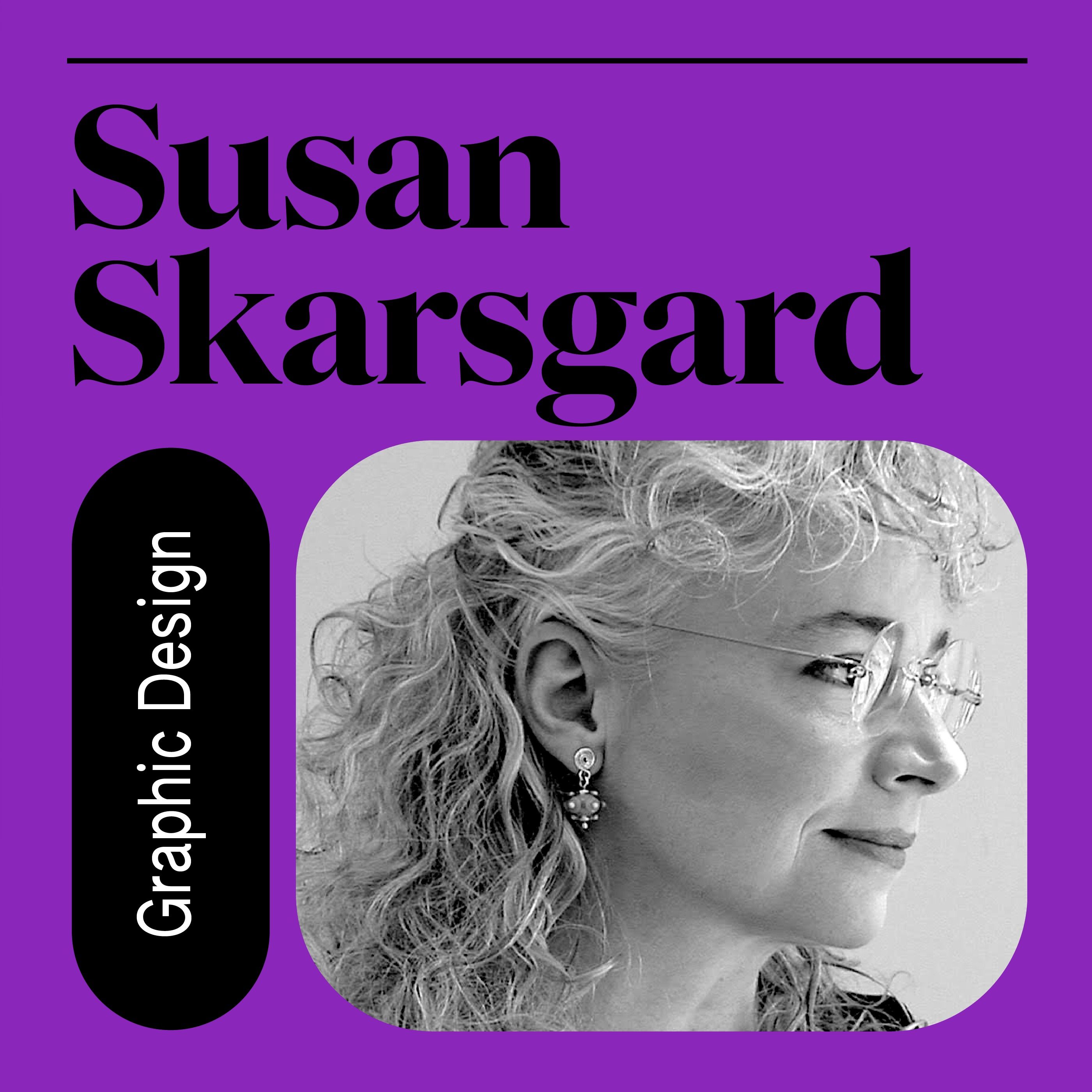
Women Designers You Should Know
021. Susan Skarsgard: On Calligraphy, Cars, and Designing Your Career
00:56:46
Hear how Susan Skarsgard built her career from calligraphy to founding the GM Design Archive, blending art, design, and education to leave her mark on both the art and automotive worlds.
Loading summary
Transcript53 lines
- [00:10]
Host
Welcome back to Women Designers. You Should Know, the podcast where we help you discover the queens of design you didn't know you needed in your life. Today, I'm incredibly excited to introduce someone whose work has truly pushed the boundaries of both fine art and industrial design, Susan Skarsgard. Born in Detroit, Susan's early interest in Renaissance and baroque music led her to the world of calligraphy, which she initially taught herself before studying with renowned calligrapher Friedrich Neugebauer in Austria. Before joining General Motors, Susan worked as an apprentice to the esteemed Jerry Campbell and his studio, which was known for its mastery of typography and visual identity, making him a major figure in Detroit's design scene. She designed logos, lettering and branding for a variety of clients, including including several local ad agencies, giving her the foundation in craftsmanship and design that would shape her future work. Susan's career took a fascinating turn when she joined General Motors in 1995, applying her expertise in letter forms to emblems and nameplates for cars and trucks. During her time at GM, she designed a commemorative book for the 50th anniversary of the GM Technical center, which became the foundation for the GM Design Archive and Special Collections, an archive she not only founded, but also managed until her recent retirement. In addition to her corporate achievements, Susan has an international reputation as a calligrapher and book artist. Her project 26 of 26 redefined the Alphabet as art, stripping it of its conventional meaning and turning letterforms into visually striking compositions. Her work has been exhibited in prestigious institutions from the Grolier Club in New York to the San Francisco Library and can even be found in the rare book collections of the Library of Congress. We are going to dive into her extraordinary journey, how she merged her artistic vision with industrial design and what it was like to be a woman in such a male dominated industry and her legacy at gm. So let's get into it. Welcome Susan to the podcast.
- [02:32]
Susan Skarsgard
Oh, I'm so happy to be here. Thank you so much for inviting me.
- [02:37]
Host
I'm so excited to talk all about your life and I feel like you have so much wisdom to share with all of our listeners. And so I always like to go way back to your early life and really hear more about your creative journey. It spanned multiple industries and art forms. But let's start with your early days. You grew up surrounded by influences that eventually shaped your career, whether through your family environment or personal interests. Can you share what your early life was like and how you first discovered your passion for art and design?
- [03:15]
Susan Skarsgard
I grew up in Detroit I was born in 1954, so I grew up and went through the Detroit public school system in the 60s. I graduated from high school in 1972. I think just like most people, my early influences are my parents. And I can't say that I really had any kind of significant art influences. However, I had very significant influences in terms of craftsmanship and work ethic. And that came mostly from my dad, who was a carpenter. He included me in a lot of his work and always assumed that I was competent. And so learning craft and using your hands is really something that I was brought up with. My mother grew up in a time where there weren't a lot of options for her. I think she could have had a really significant career. But you know, the one thing I've thought about lately that I really think I got from her because my dad's presence was so much more loud, is my mother had a real emotional intelligence. And I feel like I really gained a lot from her in terms of how to navigate environments and to consider your audience. Those two influences, I think were the most important thing. Understanding who it is, what problems you're trying to solve and who are you solving them for. And then also to have a complete reverence for craft and work.
- [04:57]
Host
Yeah, that's beautiful. And I love your home environment right now too. For the listener. You're sitting in this beautiful mid century home too. And is that, do you think any of that, like growing up in that era has influenced you as well?
- [05:16]
Susan Skarsgard
You know, maybe a little bit.
- [05:18]
Host
And then after your childhood and upbringing, you went on to study music at the University of New Mexico and then later became a self taught visual artist. And this non traditional path that began with calligraphy at around age 25 eventually led to various other disciplines within the visual art realm. And then that led you to return to school for your master's in fine art at age 50 at the university of Michigan. What do you think kept pulling you back to visual art?
- [05:55]
Susan Skarsgard
I got interested in calligraphy in the 60s, just like a lot of people in my era. And I got a job at the University of Michigan Hospital as a ward clerk. And that was before computers. And I knew I was going to have to sit at a desk all day long and manage this operation. And I thought to myself, you know, I think what I should do is maybe learn a skill while I'm doing this, because I had to write all day long. And so I bought a how to calligraphy book, probably the cheesiest book you could buy, and bought some pens and ink and I basically taught myself calligraphy while I was working as a ward clerk. And I have to say that the environment I worked in were mostly women nurses. I worked on the kidney transplant ward, and the woman who ran the ward was a nurse in World War II on a Navy warship. So she was really something to deal with. And that's a whole story in and of itself. But basically I started teaching myself calligraphy. And pretty soon I did calligraphy everywhere. It was on the bed tags, it was on the door tags. I made kits for doctors with instructions when someone came in emergently and had all the blood work and stuff they needed to do. Everything was done in calligraphy. And these nurses were so supportive and loved it. And then I started doing retirement certificates. They put me in an empty patient room and they'd take over my desk. And so I just kind of started getting into this and I was like, oh, my God, I could make a living doing this. And so I quit that job. And then in about five minutes later, I realized, yeah, you can't really make a living doing this, you know. So I basically started at that juncture to take jobs. First starting out as a key liner, which lots of people don't even remember what a key liner is. But before computers, the only way to make art reproducible was to do these paste up boards that a printer would use to reproduce from. And so that was a whole discipline in and of its own. And so I took a job as a key liner. And I did this all based on my calligraphy. You know, I basically would take my work in and just say, you could see I can make things straight, you know. And I talked my way into a series of jobs for a key liner. A layout artist, a book designer. Always, though working on lettering. I mean, that was kind of my passion. And I also arranged my first trip to Europe to go study with a man by the name of Friedrich Neugebauer, whose book the Mystic Art of the Written form was a very, very important book for me in terms of learning calligraphy. And I sought him out. He went on a tour in America back in the 70s and I sought him out and met him and talked my way into his workshop. And he later invited me to come and study with him in Austria. So I organized a group of five Americans and one Irish galaxy, and we went over and studied with him. And that was a pretty major influence. And the first time I really kind of learned about the art form from more of a European point of view, because calligraphy definitely has just like any art form national specific genres. And I was always drawn to the German and Austrian lettering genre. That was a really seminal thing for me to do. And it not necessarily so much for learning the actual mechanics and the craft, but more to witness these two people, Friedrich and his wife, to witness two artists that were living a life as artists. Like, it was the first time I ever saw that. And I was like, completely, okay, this is what I need to be doing. You know, she was like. Also worked in several different disciplines, but their house was just super interesting. And they had. He had a whole library with letterpress books. And I mean, I could do a whole thing on him. He was a very interesting man.
- [10:47]
Host
How long were you there for?
- [10:49]
Susan Skarsgard
I was there for like six weeks, not that long. But it was very, very important to me. It was like the very first time I totally got that this is who I want to be. This is how I want my life to be living, to be living an engaged visual life. So when I got home, that was kind of my mission. I really finally got what I was supposed to be doing. And so I bring that up because I've had a series of experiences kind of like that that were just seminal learning experiences that kind of set me off on a path that, you know, defined what I ultimately did. But for my entire career, I have always had a private practice of visual art in various disciplines that was just art for art and keeping engaged with what I find interesting and then also coupled with making a living. And I've sought out people to learn from in all of these applications. So after I came back from Austria and got engaged with really the ad industry in Detroit, because at that time there really was a path for a lettering artist as a commercial artist. And Detroit was very, very important in the history of commercial design in America. Because that's where all of the art studios are or were. Yeah, you know, because the ad agencies might have been in. Primarily in New York. There's a lot of them here too. But the art studios that service the ad agencies, the illustrators, the photographers, the lettering artists, the typographers, we lived here. And so there was like a huge network of opportunity here for that. So coupled with my sort of learning calligraphy and learning how that element of things, I knew that I needed to learn the commercial application of that discipline. And so I ended up taking a class with Dick Isbell, who was a type designer. He designed the typeface Americana, Lots of other faces for itc. And so I took a year long class from him that I took very seriously. And then he was partners with a guy by the name of Jerry Campbell Campbell Isabel Alphabets was their firm together that migrated then to Curly Campbell and Associates. That's who I eventually worked for when. And so here's the path. Dick Isbel left that studio and went on to be the lettering artist at General Motors Design. So he designed the nameplates and cars and trucks for GM and they always had us on staff lettering person there. So when he left, that's when I just happened to meet Jerry Campbell, his former partner. And Jerry was about 68 at that time and I was probably about 33 and he offered me a job. He kind of knew who I was. You're sort of in the same realm. But I had never met him before and heard really wonderful things about him and I obviously was aware of his work. He was a lettering artisan type designer extraordinaire, really incredible human being. The first day I went in to start working there.
- [14:36]
Host
Starting my studio Nice People was a thrilling yet challenging journey. But having a mentor by my side was transformative. I received invaluable advice on how to run my business. And now that I'm seven years into my successful, award winning studio, I'm excited to offer that same support to you. I've now hit 51 on one sessions and I'm here to help empower your creative journey. Join me for personalized mentor calls on Intro co Amber AC and now back to the show.
- [15:05]
Susan Skarsgard
He had, you know, a fairly large art studio, medium sized art studio. There was about 25 people working there and it was kind of a big open area. And he walked me around, introduced me to people. He said, well, you know, you could sit here or you could sit over here, but here's where I'd really like you to sit. And we walked all the way back to his corner office and he has set up a drawing table three inches from his table. He's like, well, this is where I'd like you to sit, but you don't have to sit here if you don't want to. Blah, blah. Well, you know, in my head I was thinking I have no interest in sitting next to this old man. But he set it all up so I felt kind of obligated. And so I sat down and I had about two years of hands on. Like seriously, my mentor was sitting right next to me and we just had the best time in terms of like it couldn't have been a better learning experience because we'd both be sitting there with our optivisors on and I'll Tell you something, I also really learned a lot about the history of advertising in Detroit because we went out for lunch every day with all these old guys that lived it. And so I kind of feel like I lived it too, because I heard all these stories. But I will tell you one thing that happened that I kind of will never forget. And I'm 70 now, so I'm kind of just a couple years older than Jerry was when I first started working with him. So it resonates with me now. And I had gone out to lunch with Jerry and this wonderful illustrator from Skidmore. Jerry got up and went to the bathroom, and I was talking to Jerry Monley, and he said to me, well, how is it, you know, working with Jerry? Is that working out for you? And blah, blah, blah. And I said, well, yes, it's kind of an amazing experience, but I do feel guilty a little bit because I'm kind of being paid to learn and I'm so much slower than him and I just kind of feel bad about it. And he said to me, and this is the part that I kind of get now more is he said to me, you don't get it. Do you have any idea what it might be like to be at the end of your career and have this capable, smart person walk in the door who wants to learn and has the ability to learn everything you have to teach? And he said, that is a gift that you are giving him. So it's a two way street. Wow. And now that I'm at this age, I kind of get it. I think it was kind of a minor miracle. And also the fact that we just got along really well because he was super funny and we just had a great time together. You know, it was an apprenticeship, like, when does that happen? You know? And a true apprenticeship, hands on. And so we worked together mostly doing lettering and logo design and stuff for the ad industry and the car industry. And so we did a lot of stuff for that too. So that kind of started me down that path. And then I'd say it was 10 years later that Dick Isbell retired as the lettering artist at gm. And then they came after me. It was sort of like a logical progression. And I had done a lot of work for them over the years, freelance and stuff like that. And when I worked for Jerry, by the way, I always kept my own practice. And I honestly kept my own practice for years, even into GM. And it wasn't until I was at GM for probably 10 years that I found out about this program, because they would Send groups of us around to colleges and universities to support industrial design programs. And I was on one of these trips and I found out the kinds of things that General Motors does for their employees. And one of them was advance degrees. And so I at the time thought, maybe I'll just do that because I lived in Ann Arbor. But I never finished my bachelor's degree, which was in music. So I went to the University of Michigan graduate school, the Rackham Graduate School, and I taught at Michigan, I mean, occasionally. And so I went to them and just said, you know, it seems like my career could be the equivalent of a bachelor's degree. So how about we do that, you know, and just let me, let me start from there. And they did. So basically, yeah, so I. Basically I went to school for two years and got my master's. And that's really my kind of my training. But in a way, when I applied to Michigan, they had, you know, check boxes for disciplines that you might like print making or whatever. And I decided that I really did not want to do anything I'd done before. So I put little box and I wrote other and I checked the box. So I basically kind of made my own curriculum.
- [20:54]
Host
Wow.
- [20:55]
Susan Skarsgard
But that's kind of what I did. And even with my graduate thesis, I decided I wanted to challenge myself to do something that really didn't involve my hands. A conceptual piece and ultimately a bit of a political thesis. It was a planting of a half mile long line of daffodils that went through the arboretum that's part of the school property. I engaged 500 people to help me do this and it was turned into quite a successful thing for the city of Ann Arbor. I made a really conscious effort to not tell people what my thoughts were on it because it involved so many people. I just really consciously thought, you know, as an artist, I don't really feel a need to like tell you what to think. You can figure it out and make your own decision. What if you're engaged by it or not. And so I really took that as a challenge. But where the idea came from as I was in my garden and very prescient to now where Israel and Palestine were having conflicts. And the Newsweek magazine had an article that I just read where they were building that wall. There was a graphic that kind of was very man made and jagged, that sort of defined the two areas. And I walked out into my garden to pull some weeds and I just was like, really? A wall that's just going to turn into a ruin at one point. And the metaphor for me was, well, what if you just planted a completely man made line of daffodils through a natural area, but made it really man made, like not considering the environment at all. Like just, you know, straight here, turn here, like just completely man made. It would come up and then die away. Just like these borders and fences people think they're going to put up that are going to stop humans from interacting with one another. And so the idea was is that this line would be quite defined the first year and then it would slowly break down and become a ruin. You know, I'll never forget the first year it was blooming and I was walking around and I could overhear people talking about it like it was theirs. And I just thought that was so successful.
- [23:37]
Host
I think that's so cool and sounds like such an impactful project too. And I want to get back to when you were working with Jerry. I mean you have such a layered career and there's all this stuff that I'm learning about you that I never knew. And so you worked for Gerry and then you went to General Motors. Can you explain to our listener what you were doing for General Motors when you arrived there?
- [24:05]
Susan Skarsgard
The first thing I was hired in to be was a lettering artist. So pretty specific, narrow application of my skill set.
- [24:16]
Host
And this was for application on the cars, right?
- [24:20]
Susan Skarsgard
Correct, yeah. And this is at the General Motors Technical center in Warren, Michigan and it's the think tank basically for General Motors. And so I worked in the design building. This is where the cars and trucks are visualized and the campus is quite an operation where there's like the different disciplines of manufacturing and research and development engineering. And they're pretty distinct elements formed around a lake that is very much like a college campus and designed by the mid century architect Eero Saarinen. So a really an amazing facility that is very well kept up to this day and honored for its importance in American mid century architecture. So when I first started there, I was primarily working as a lettering artist. And I had never worked for what I would call like a real sort of place, you know, like that art studios I worked in anyway were pretty crazy. And then I worked for myself. So to begin working at a corporate environment, I just thought, well, I'll give it a try. I didn't stop my freelance career. I worked at night to keep it all going. At first I was like, this doesn't feel right, feels like a hospital. But basically I did the name plates and emblems on cars and trucks in a studio with about. I'd say about eight people that worked in various disciplines, mostly design, to develop the 3D graphics that supported automotive applications.
- [26:14]
Host
You know, so you would follow that through production, making sure, like, the metal application of your lettering was what you intended it to be.
- [26:24]
Susan Skarsgard
Correct. At that point in my career, I was like 40. I really found it interesting to go into the third dimension because car parts are three dimensional and most everything I did up until that point was two dimensional. And so to understand surface in 3D modeling is a whole other realm. That's kind of interesting for somebody that has the flat skills, you know?
- [26:55]
Host
Yeah.
- [26:55]
Susan Skarsgard
So now I can say it's interesting. And then I can also say I don't think you can get any more limiting in terms of like what you can do with that, you know, because technically, and it's primarily injection molded plastic that you're designing for. Chromed injection molded plastic. So there's lots of stuff to learn about the manufacturing process. Just like as a graphic designer, you need to learn the printing process because you're not effective unless you understand all of the backstory of how things come to be. That's so true, you know? Yeah. So basically I took from my experience as a graphic designer and my relationships with printers and kind of applied that thought process to this whole different, you know, manufacturing process. And I learned again with some people in my office that were like, super great, been there forever, and could, you know, take whatever skills that I had and help me understand how to apply them to an object.
- [28:05]
Host
Are there any cars that were created with your lettering that we might know of?
- [28:11]
Susan Skarsgard
Well, you know, now I've been gone for five years, so a lot of it's starting to cycle out. But Saturn was my main brand, although I worked and did alphabets for all the other brands. So the Chevrolet Alphabet for many, many years, until just like a year or two ago, I designed that Alphabet. So all of the Chevy name plates were from me, all of Buick, you know, just like everything else, you age out of the relevance of your impact. You know, I bet there's a lot.
- [28:46]
Host
Of projects that you worked on that never saw the light of day too, right?
- [28:50]
Susan Skarsgard
100%.
- [28:51]
Host
Do you have imagery of that or are you allowed to show any of that stuff?
- [28:56]
Susan Skarsgard
Yes. Yeah. And I give lectures every now and again and have been able to show things like that. You know, I'm very grateful for the opportunity to have worked in industrial design at its highest level. I mean, honestly, it's really a privilege to see how that all comes together and to come into it from such a Back door kind of way offered me a lot of. A certain amount of freedom in that environment. And so here's what I mean by that, is that most of the people that work in automotive industrial design, they went to school in a very almost vocational type situation where they learn to draw specific ways and they're very, very deep in the automotive thing. But they don't go to schools that are like liberal arts schools. It's pretty defined, and there's just a few that really feed them, like Art center, the College for Creative Studies in Detroit. There's just a few, Cleveland Institute of Art. So these folks, they really do invest in. Becoming a car designer is a huge investment. It's. And, you know, you can't design a car on your own freelance. You have to have a big corporation behind you to build these things. So as a result, me coming in there, I just didn't have a whole lot to lose, I guess, you know. And corporations, I really do think are kind of difficult structures for humans to excel in. I mean, it's like the military or something. I really appreciated, like, getting in the midst of this whole arena, but two years in, I was just like, yeah, this isn't really for me. I think I'm going to leave. And so I made an appointment with the executive director over my area. And I went in and just said, you know, I just really want to thank you for this opportunity because it was like, it's fantastic. I mean, it's just an amazing experience. However, I've tried it out, and I just don't think it's for me. And I want to leave in a nice way, but I think it's time for me to check out. And this guy said to me, well, what would make you stay? I realized in that moment that I didn't know what would make me stay. I hadn't even considered it. Like, I didn't know what was making me unhappy. I just knew it was not working out. But I didn't do the work to figure that out. I just was like, time for me to go. I can still make a living doing my other thing, you know. He basically said, well, listen, why don't you give us a week? I'm going to put together a proposal and see if we can work something out. So we did that. A week goes by, I go back in, and he gives me a proposal that was like. I mean, it was. It was kind but not plausible. And it was really almost more like what you would do with a union situation. You know, it was like he kind of was taking away some of my responsibilities as opposed to. And that wasn't the problem at all, you know. And so that's when I said to him, listen, let me go away for a week and let me think this over and think, what do I want? Like, what could I propose to you? You know, and so what I. I thought about it for a week and what I proposed to him was that I work at home every other day. I was the very first person that ever worked at home at General Motors Design.
- [32:55]
Host
And so ahead of your time.
- [32:58]
Susan Skarsgard
That was probably the biggest issue because I. He had to drive, you know, an hour to get there every day.
- [33:04]
Host
Oh, yeah.
- [33:05]
Susan Skarsgard
And so I did the work to figure out what the problem was. And the problem was is I didn't really like working there that much. And I also didn't like the drive. And so if I took that off the table and then I also said, and I will take on more responsibility and here's what I will do for you. That's not being done right now. So I will add to my responsibility and then let me do this for six months and then let's reassess and see if you're getting what you hope for from this, that it's good for both sides. From that point on. I worked at home at least half of the time for the rest of my career, which was well over 20 years. And the moral of the story is you can't just complain. You have to figure it out, you know, you have to do the work.
- [34:00]
Host
And I like that you fought for what you wanted too. And it's interesting that he assumed that you were feeling overwhelmed maybe, and you wanted more off your plate when in reality you were feeling creatively stifled and the environment wasn't working and you wanted to explore more too. And so that's so cool. I really love that story. And I'm curious more about your time there too. You were coming into an industry during that time that was so male dominated. What were the challenges you face as a woman? I'd really love to, like, pick your brain on what that was like. It was in the 90s, right?
- [34:45]
Susan Skarsgard
Yeah, I started, I think in 95 or something like that. Well, I'll tell you a little story that's sort of continuation of this me working at home business.
- [34:54]
Host
Yeah.
- [34:55]
Susan Skarsgard
Because it also speaks to what you just asked is. So for years, years, 20 some years, I was the only person who worked at home. I cannot tell you how many times, and I mean a lot, someone, usually a guy, would make an appointment with Me and come in my office and shut the door and sit down and say. And it was always with a little tinge of. I don't want to say accusation, but there was always a little tinge of like, how did you really strike this deal? Like, how did you get to work at home? You know, like, you know, but there was always a little underlying thing, like, as if I did it by some sort of flirtatious bullshit or something.
- [35:42]
Host
Yeah.
- [35:42]
Susan Skarsgard
Like, slept with the boss, whatever, you know, And I had a totally pat answer because it happened so often to me that I just was like, well. And I would say to them, okay, I'm going to tell you exactly how to do this. Okay? And they'd be like, oh, okay. You know, And I'd go, okay, Number one, you have to figure out something that only you can contribute to this organization that is something they want, and you have to be able to propose it in a way that the powers that be don't have to do anything at all except say yes. Because it's like, here's a problem. Nobody's doing this. I can do it. I'm going to take it on. All you have to do is say yes. Because really, most managers, they want happy people, but they can't get in your head and understand what's going to make you happy, you know, and so that was my first thing. It's like, so, number one, you have to figure out what can only you provide to this organization that's going to be a yes, and that require them to do one thing other than yes. And you're going to make them look good, you know, like all of that. And then here's what you have to do. You have to go up to your leadership and sit down with them and say these words, I will quit unless we figure something out here that's going to be mutually beneficial. And that was always the point in the conversation where I just see the wind go out of their thing.
- [37:34]
Host
You know, I love that it's such a boss move.
- [37:40]
Susan Skarsgard
So in essence. But that came again out of being in a situation where I didn't put in this huge amount of upfront whatever to become an industrial designer. I knew I could make a living doing other things. And also, you know, when I hired in there, and I think this is part of the message too, especially for young people, is that everything's a negotiation, you know, everything. And so when I hired in there, I was teaching. I've always taught. I had a schedule of teaching that went out, like, over a year. And I Taught all over the world. And I basically negotiated that into my contract when I hired in to a huge corporation, you know, everything's negotiable. And then once I got in there, I was like, you know, I want to keep teaching. And so one of the things I also re upped when I went to that guy was I said, I would like to be let go for at least a week, once a year to teach. And it's not that I'm doing anything more than just staying relevant. This is the way I do it, as opposed to going to a conference or something, you know. Yeah, I want to stay connected to my community.
- [39:00]
Host
You worked in the archives and special Collections while you were there too? That was later.
- [39:07]
Susan Skarsgard
So I had these couple years where I was working just kind of on special projects. And then 2008 happened and the whole country went, you know, to hell. And that's, you know, and so that's when we had this series of new CEOs and the corporation downsized and got rid of a ton of people. And here I was kind of a red haired stepchild. I was a manager, but I didn't have any people underneath me because I didn't want to. And so I again, I just made myself relevant and did things that, you know, sort of supported that. But I really, when you looked at me on an org chart, it'd be really easy to go, what? You know, what is she doing? Like, why are we. You know, that moment was when I realized, okay, I need to be in charge of something that I care about. And so right at that time, we got this new CEO and this guy walks in through Design center and I'll never forget, he had like a group, group of sycophants running after him, writing down everything the guy said. And he walks by the library, stops and goes, why do they have a library? And nobody had an answer. All his sycophants are like. And he's like, get rid of it. So the next day they fired the two librarians and left the doors open. I couldn't believe it. And so I walked by and you know, car nuts are really a thing. Like, it's just such a huge part of our culture. And you know, there's all this historical information that's in this library. And so with no authority whatsoever, I called up security and had them come up and lock the doors. And I went straight to the executive director of operations. And I was talking to him and I'm like, what's the plan? You can't leave the door open. People are going to, like, take things, you know, and they're going to be on eBay in five minutes. And basically I said to him, listen, there is stuff stashed all through this building that has something to do with the history of design at General Motors. General Motors has been such a huge influence on design in America. Like, it just felt to me like this is something that needs to be, like, organized and dealt with. Like, at first he was like, oh, well, we have a plan, blah, blah, blah. And I said, well, how about this? Why don't I get a group of people together and we'll do kind of a. An assessment of what kinds of things are stashed throughout this building. And just so you guys absolutely know what you are dealing with and what needs to be secured or not secure enough. And he's like, okay, whatever. So. So I got a group of people together, there was about five of us, and we did the kind of a full scale audit of the building and like, realized two things. Like, there's an amazing amount of stuff of great importance and hardly anything that's supportive of certain areas, you know, because they left the building because there was no archive. The sketches that lead to the design of a vehicle, especially in the late 50s and through the 60s and 70s, 80s, those designers that do those sketches, they might do 10 sketches a day, you know, and they're incredibly beautiful, incredibly interesting. And there was no documentation of it whatsoever. Like, a lot of it, People rolled up their sketches and shoved them up their sleeves and walked out like that, you know, and put them in their basements because no one was holding on to it. We knew that a lot of stuff left the building. So I went back to this guy a month later and I said, okay, well, here's our assessment. You got over a million slides and negatives down in the basement that are very, very vulnerable. And that in and of itself is a huge thing because that documents the history of design completely. And then all these other things. And I basically was like, you kind of have two things you could do. One is you grab all of these materials and you make them safe. So if that means taking them to a place like Iron Mountain or someplace where that's what they do for a living, then that is better than nothing. Or how about we make a department where we use this material, we actually support this historical archeology and actually make this into a department that's supportive of the current designers and the current thinking, so that when a young designer starts on the very next Corvette Stingray, that they can actually Get a really deep understanding of what is the history of that brand and how has it evolved, and how can you know what the next thing is unless you understand what it was? And so that was the beginning of the General Motors design archive and special collections. They agreed to move forward and allow me to begin to organize this group. And so we had several different things that we did to outreach, and one of them was to reach out to former designers and get them in and do interviews just like this, where we document their stories and really understand how design was done back then and stuff like that.
- [45:11]
Host
It's so impressive that you started this department and that you've left such a lasting legacy on General Motors, too. And you probably, more than anyone else, have such a clear perspective on the history at GM and the designers that have come in and out of that place, too. I'd love to know, are there any notable women who have inspired you over the years at GM that we should cover on the podcast?
- [45:43]
Susan Skarsgard
Well, you know, I think you did cover one of them. Jerry Kavanaugh.
- [45:46]
Host
Yeah.
- [45:47]
Susan Skarsgard
Yeah. She was one of the original damsels of design. And that's right, women from the 50s that were hired by the first vice president of design at General Motors, Harley Earl, who made a conscious effort to go out and hire women designers. I mean, it was a new field. You know, industrial design is a very new field. Most of them were from either Cranbrook or Pratt, most of them from Pratt. I interviewed seven of them, and now all of them have passed away, except for Jerry, who I believe is, like, 96 years old now, and I'm very close friends with Jerry. You know, you asked me earlier, what kinds of things did you have to sort of deal with as a woman and interviewing these older ladies and also going into the 60s and 70s, the women that worked during those times, too, I was always struck by. I couldn't really get them to talk about that. You know, like, they just didn't want to talk about it. Did it happen? Yes, it happened. Yeah, it happened. They all just, like, looked above and went on and really want to, like, focus on it. And, you know, now that I'm at this age, I sort of feel the same. Do we really want to give them more space at this juncture? I just feel like we all had to work through a lot of stuff to get to where we were. I can tell you, though, that I am so encouraged and hopeful for women now, in the sense that I do not think that it's anywhere near as problematic as it was in Jerry's generation. And then in mine, I was over at GM about a year ago with some colleagues that had come into town wanting to see the mid century modern masterpiece. And I walked through the building and like randomly, about five different women came up to me, all of whom I knew for years, and just said, it's a completely different environment. And they did that on their own. It was just clearly like, wow, things have changed. I take that as such a good thing. You know, there's not that many women. It's more and more. But industrial design as a whole doesn't really. Not a lot of women go into.
- [48:19]
Host
It, you know, but yeah, I mean, it's so interesting that these women have really paved the way. And the change really is thanks to women like you, who have really stepped in and proven themselves and earned the respect that needed to be earned so that slowly society could change their perspective of women in design. And they can really understand that women do have the skillset to do these things too. And all these hidden stories, like speaking to, preserving history and all the work that you've done there, there's so many hidden stories of women who were actually doing things that men were taking credit for. And I think that that's really part of this whole podcast too, and really trying to understand what was your role in what you were doing. And do we need to shift that credit and do we need to pull out more credit from these women who were quietly working in the background in the 60s?
- [49:21]
Susan Skarsgard
Yeah, I mean, it was a thing. There's no doubt about it. But, you know, it's funny, towards the end of my career, we had this thing happen at work which anybody who works in a corporation can relate to this kind of thing. You know, the auto show in Detroit was always a big deal. Reporters and media were there from all over the world. And there was a woman, this is a few years back, that filed a sexual harassment lawsuit that came out publicly during the auto show. I'm sure it was something planned to bolster her case. She worked at GM Design, and all the women that worked at design got an email that told us we weren't allowed to talk to the press.
- [50:12]
Host
Wow.
- [50:12]
Susan Skarsgard
And that there would be some meeting that we would go to or whatever. And so we go to this meeting, it's down the basement, and it was like pizza for lunch. And it's run by HR and it's all the women designers in the building, which there weren't that many, but, you know, they go through all their corporate blah, blah, and then they break us up into groups Small groups. And these women, younger women, were kind of grappling with what this was about because, you know, there was some kind of platitudes about the organization taking this seriously and stuff like that, and what could they do? And I was, you know, just kind of sitting back, eating my free pizza and listening. And at one point, one of them said to me, well, Susan, you're kind of quiet. What do you think of this? I said to them, my opinion of this is going to be different than yours. Because of my age and everything that I've witnessed and lived through, my opinion is that sexual harassment is a real thing. But it's very, very hard to prove because it's layered and it's slippery and it's emotional and it's problematic. And also, let's not forget that when you take it up the ladder, that the leadership is almost all men. And so you kind of have to, like, take the realities of the situation and look at it logically. And that in my opinion, if I was going to take energy to go talk to leadership, I would take away anything that's gray. No gray areas. So the only thing that I could think of that's not gray, because sexual harassment is so gray. It's so complicated. But money isn't complicated. And if I was going to go put myself in front of the leadership, which you guys are wanting to do, my advice to you is to just go up there and say, what are you guys doing to make sure that women are being paid the same as men? What guardrails do you have up? You know, how do you know that for sure? Because those people all have daughters and wives. They don't want to be discriminatory in that regard. They don't want to, but they may not have the things in place to make sure it doesn't happen. Don't go after stuff that's going to be shoved aside because no one wants to deal with it. Just go for the money. Just, you know, because they're. They're. They can't say no to that. No guy is going to say, oh, yeah, she needs to make less than him. So use your power to have them be accountable. I'm just going to say it's black and white. Either people are paid the same or they're not. We always heard that we were not paid the same, and I'm sure that's true, but there was no mechanism for us to deal with it. I mean, sexual harassment is a real thing. I feel like I have PTSD from it. I think about it more now than I did back then. I really do. It's weird, you know, it's kind of like. I have to tell you, I went to a lecture I gave at the Denver Art Museum a few years back and I ended up sitting next to at dinner to Catherine McCoy, who was the head of Cranbrook. And she's so important to the history of graphic design in America. And turns out, you know, she's a Detroit girl like me. And we spent a fair amount of time at dinner comparing stories about being chased around the desk by various people, you know, so, I mean, that's a real thing. And I don't want to. I don't want to make it less than. But it's just one of those things that's very, very hard to prove. It's very hard. You know, and at the end of the day, the women that bring it forward, they're the ones who are punished for it. So it's. It's like a no win situation. It really. It really becomes that way.
- [54:49]
Host
Yeah. And it's great to hear your perspective on all of that too, especially someone who's been in the thick of it in that era and how different it was than it is today, too. And so I love your perspective and your wisdom on everything. And your story is so inspiring to me because you not only really took charge of your career, but you've also taught future generations of designers and you've preserved design history. I feel like you've done it all and you are such an inspiration to us all. And I really want to thank you for being on the podcast today.
- [55:32]
Susan Skarsgard
Oh, you're so welcome. Thank you. Thanks for giving me the opportunity. I really appreciate it.
- [55:47]
Host
It's been such a privilege to hear from Susan Skarsgard today. Her career is truly a testament to the power of layering different creative disciplines, from fine arts to industrial design, to calligraphy and typography, to archiving and teaching, and how each of these steps builds towards something greater. Susan's wisdom and insights into navigating a male dominated field, all while staying true to her creative voice, offers so much for us to learn and reflect on. Thank you, Susan, for sharing your journey, your challenges, and your triumphs with us today. It's been a joy to explore how you've brought a sense of artistry to every corner of up your career. I know our listeners have taken away some invaluable lessons, as have I. Until next time, let's remember to redesign history by celebrating women.