← Women Designers You Should Know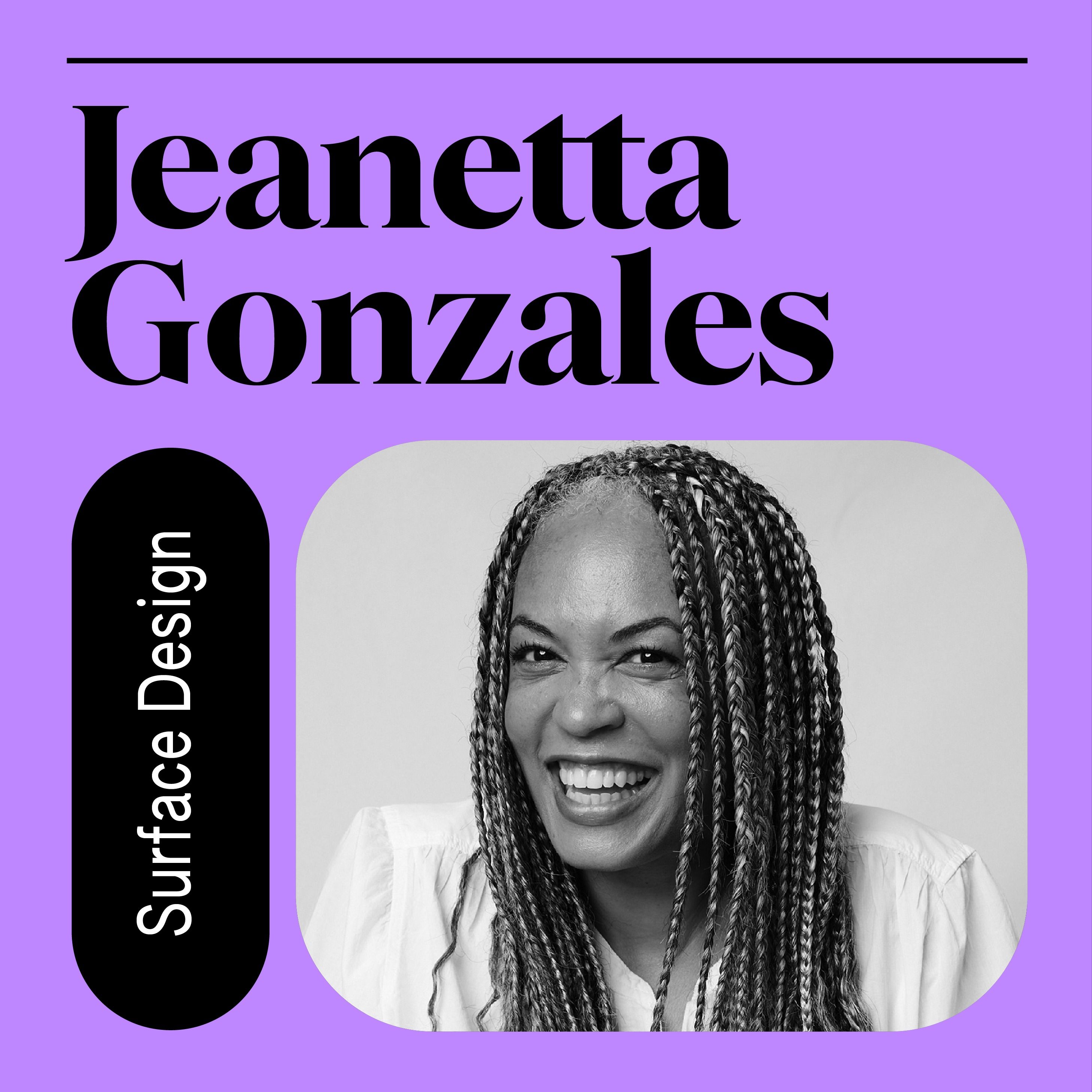
Women Designers You Should Know
035. Jeanetta Gonzales on Mentorship
00:25:45
Mentorship isn’t just about giving advice—it can be a full-circle moment that shapes both the mentor and the mentee. In this episode, Jeanetta Gonzales, a celebrated surface designer, illustrator, and creative coach, shares how mentorship has impacted her career, why representation in design matters, and how guiding others can be just as transformative as being guided.
Loading summary
Transcript67 lines
- [00:03]
A
Welcome to Women Designers yous Should Know, the podcast that highlights the groundbreaking women who have shaped the design world past and present. Today's guest is Jonetta Gonzalez, a surface designer for various products and textiles, an illustrator, and a creative mentor whose work is bursting with color, energy and empowerment. With over 25 years of experience experience, Jannetta has collaborated with brands like Target, Adobe, the New York Times, and Crayola. But beyond her impressive client work, she's also deeply passionate about mentorship, guiding emerging artists through coaching, workshops and community building. In this episode, we dive into the power of mentorship and how having the right guidance can change the course of a creative career each and how Jennetta has embraced the role of mentor after years of carving her own path and.
- [00:58]
B
Having her own mentors.
- [01:00]
A
Whether you're a designer or artist looking for direction or just someone who values the impact of great mentorship, this conversation is for you. But before I get started, I have a quick announcement. Moving forward, Women Designers, you should know, will be shifting from weekly episodes to bi weekly episodes, or in other words, new episodes every two weeks. This podcast has grown into something bigger than I ever imagined and I want to make sure I'm giving it the time and resources it deserves. Producing these episodes, between research, writing, editing and working with a team has truly become a part time job. To keep it going, I want to take this time to explore ways to make the podcast be able to fund itself, whether that means finding a network partner or securing sponsorships. But thank you so much for your continued support. As always, the ratings, the reviews, joining the Patreon, all of that is really so helpful in supporting this podcast.
- [02:02]
B
And also one more quick note before we jump into today's episode. We actually had a lot of audio issues during this recording, like the kind where we probably should have rescheduled, but we pushed through anyway. And my editor and I did our absolute best to make sure this was as listenable as possible. So while it's not perfect, I promise the conversation is worth it. So thanks for sticking with us through the bumps. Think of it as proof that real conversations aren't always polished, but they're still important. And this one, it's an important one because Janetta and I dive into mentorship and how it shapes careers and why representation matters in creative industries, and even how mentorship can be a full, full circle moment for both the mentor and the mentee. I think that was kind of a big aha moment, at least for me during this conversation. And then another thing to keep in mind. I looked this up. Studies show that 67% of women consider mentorship to be crucial for their career success, and yet only 20% have ever had a mentor. The gap is huge, and it's exactly why conversations like this matter. There needs to be more mentorship, and there's such a big need for it, too. So, audio issues aside, I hope you take away something valuable from this discussion. Whether you're looking for a mentor, thinking about becoming one, or just reflecting on the people who have helped you along the way, I think this is so important for women designers to really talk through this, come together, and figure out how we can make mentorship work for everyone.
- [03:43]
A
So, without further ado, let's get into my conversation with Janetta.
- [04:01]
C
Me and her and she. Breaking boundaries, Building better World Day. Design, design, design. As you women designers, you should know.
- [04:32]
B
Welcome to the podcast.
- [04:35]
C
Hi. Thanks for having me.
- [04:37]
B
I am so excited to dive into your journey and especially with this topic of mentorship, which I think is so important for all designers to hear about. And so you have over 25 years of experience in design and illustration. You've built a vibrant career and collaborating with major brands like Target, Adobe, the New York Times, and many more. And along the way, mentorship has likely played a role in shaping your path. So can you share an example of a mentor or piece of advice that was pivotal to. To your growth?
- [05:14]
C
I think it started from the earliest age. My mom and mom and dad were instrumental in encouraging my creativity. I wouldn't be the creative I am now if I didn't have that from the beginning. And I was always making things. I was always coloring, drawing. My mom taught me how to crochet, and I just was always encouraged. It was never like, oh, you can't be a creative. You don't want you to be a creative or get a be an artist or anything. That was never said to me.
- [05:43]
B
So that is so great.
- [05:45]
C
Yeah.
- [05:46]
B
So they were a big part in helping you set up an actual creative career or helping encourage that?
- [05:53]
C
Yeah, I think so. When I was in high school, I was, I mean, even younger than that. I did a mural. Well, not I didn't do the whole mural, but I helped draw the mural in my elementary school. And then as I got into high school, I was entering art contests, local art contests. I had a wonderful art teacher encouraged me to go into kind of creative field at the time. So we're talking early 90s, and I mean, it was hard to find jobs because there was no Internet.
- [06:21]
B
Right.
- [06:21]
C
So through her guidance, she's like, you should go to art school and find your way and, you know, do your thing. And so that really helped me decide to go to art school and take that step.
- [06:32]
B
Yeah, that's incredible. And back in the 90s, like, you are carving your own path. There aren't as many easily seen routes to go. And that's why I love talking to women designers who've been doing this for a while, because it's incredible that you're doing that on your own and pushing yourself past all of the hurdles to get there along the way.
- [06:55]
C
Yeah, there are a lot of hurdles, a lot to learn, and you definitely get scrappy, you get resourceful. I mean, back then, I mean, no, it's a different time. You know, you had to go door to door, knock on people's door. Like it was hard to find careers back then.
- [07:12]
B
Yeah. In fact, you started as a graphic designer and then transitioned into surface pattern design and then into illustration and even coaching. And now your experience spans working with these household name brands, building your own creative business. And through your coaching, you help artists overcome hurdles in their own careers. And so thinking through the own challenges you experienced, what are some challenges that creatives face today and how do you help them navigate these obstacles?
- [07:46]
C
I would say the biggest thing when I coach artists is confidence. It's just a real lack of confidence, especially. And that's natural. It's normal. Right. Anytime you're starting something new, and especially if you're an artist and you're putting your work out into the world, which is basically your heart and your sleeve, and you're expressing yourself and everything creatively to the world, that's a scary position to be in. Right. And so of course you're going to feel vulnerable and just unsure and you're never going to have 100% confidence. You just not. You're just going to have to go out there and do it. Right. So I think my job is to get them to that place where they feel like, okay, I can pull the trigger. Let me just go see what happens.
- [08:26]
B
How did you find your own confidence?
- [08:29]
C
Oh, good question. I think just experience. Just a lot of hard knocks. Just going out there and, you know, just doing it through experience, really, and just finding out the hard way, or sometimes that is maybe not even that hard, you know, but you just got to put yourself out there. Absolutely.
- [08:49]
B
Yeah, I totally agree with that. It's like when you hit certain ages, the confidence just keeps coming because you've been doing it for a while. There's little that you're afraid of personally.
- [09:02]
C
Well, I'm going to tell you, it doesn't end. The. What am I doing? That doesn't end. As long as you're doing something new and keep stretching and growing, you will always hit that. So that confidence piece. And also because you had to lean in, you had to trust yourself over and over again, then it just becomes like a reflex, and it's not as scary.
- [09:24]
B
I would say, what inspired you to step into the role of mentoring? Like, how has that transition or what did that transition look like from being mentored to mentoring others and shaping their creative process?
- [09:39]
C
I would say it started when I started doing trade shows in New York City for surface design and go to Certex. It's this big marketplace, and it's a big investment every time and everything. Right. So I was exhibiting at that time with a group, so it was five of us. And that made it less scary and more affordable and easier to do. So I was able to go to the show for the first time with the group, and when I got there, I'm like, where are the minority artists? Where our. There was one.
- [10:12]
B
Wow.
- [10:12]
C
Maybe two black people the whole show.
- [10:14]
B
When was this?
- [10:15]
C
2013.
- [10:17]
B
Oh, wow.
- [10:18]
C
And the show has been going on for a very long time, but it was very. Felt like it was very gay cute back in the day, you know, it was kind of the thing that you just kind of fall into. It wasn't really on the Internet. Nobody really knew about it. So anyway, I ended up with the show, and I see no one that looks like me and not hundreds of exhibitors. No one except for one other woman.
- [10:38]
B
That's so important, the idea of representation and how much it matters. And you are the one who had to be in that place where literally no one else around you looked like you came from a similar background or culture or anything like that. And now you get to be that person for others and you get to show them that it can work and that there are other people out there and that representation matters. And knowing that they can have an amazing career like you is probably so encouraging for them.
- [11:15]
C
Yeah, I hope it is. I really do. I've been told that many times that, you know, they're happy that I've inspired them, and that's amazing.
- [11:24]
B
Yeah. And you've had the unique opportunity to work on impactful projects, from illustrating children's books to creating for global brands. I saw you did work for World Market recently, too, and it's just so cool, all the stuff that you're doing through these experience, you've built, of course, a wealth of Knowledge to share with others. What are some of the most rewarding lessons you've learned from mentoring others?
- [11:51]
C
I can say when I am mentoring somebody, especially if I'm coaching someone one on one, it shouldn't surprise me anymore, but it still does. It's like we're aligned. The person came to me when they needed me for something, but I also needed them. And so when we're working together, I'm giving them coaching advice, and I'm on my soapbox going on and on about something they need to hear. I need to hear that too. And so I'm. Oh, it's always resonating with me. It's coming out of my, okay, I know you need to hear this, but really, this is a pep talk for me. This is something I need to remember in this moment or just in general. It's also a really good check that you need to. I'm like, wow, this person's going through what I'm going through, you know? And I always feel like the people who do come to me are people I need to work with because of this reason. I think it's definitely reciprocated and just. It's healing. It's everything, you know, it's just I can help them as I'm helping myself too, because I'm going through it at the same time. That's one part I do love about teaching and helping others and kind of facilitating their growth is because it's helping me grow too, right?
- [12:59]
B
Yeah. It's probably helping remind you of your own wisdom and that, like, there's so much stuff, it's in a different folder in your memory or your brain that you've set aside. And then mentoring people brings the opportunity to open those folders again, remember those experiences, remember the wisdom and knowledge you have. And, yeah, like, speak to yourself. And so that's such a beautiful, unique message that I don't think a lot of people talk about with mentoring is that you kind of need each other. It's like. It's like that parent child relationship where it's kind of nice to be needed. And on the flip side, it's really nice to have a mentor to guide you through the process.
- [13:45]
C
Beautifully said. I love that. Yes. It is like a drawer. It is like a folder. Because they are all in my head, and I have to bring them to the front and catalog them back again.
- [13:54]
B
Yeah. Are there any mentors that stick out in your mind that helped you land specific deals? Is there anyone who basically took your name to a brand and said you need to work with Janetta.
- [14:11]
C
I wouldn't say mentors have done that, but I've had colleagues and friends, they have referred me to their clients or their employers. So yes, that has helped a lot. I think being an extrovert and networking and all those scrappy skills that I had to learn back in the day because there was no social media to network thoughts. So you had to meet people, you had to be comfortable walking into a room with an elevator pitch and talking about your art, talking about what you do. So putting myself out there, going to creative conferences and meeting people, going to trade shows and meeting people. All just meeting, meeting people and meeting other artists. Especially because again, we, like you said, we need each other. Right. So it is a community that you I build and the relationships and the friendships I've made too. I think we do look out for each other.
- [14:54]
B
On the flip side, are there any mentees that you work with that you've helped basically guide them to more work or more clients or brand deals or things like that?
- [15:08]
C
Yeah, I've had a few that have gone on art agents. I've gotten deals I've always wanted. So absolutely. And then the confidence part of it too. So. Yes, yes.
- [15:19]
B
Do you work with some creatives for a long period of time?
- [15:24]
C
Yes, so I do one hour. So if you just have a quick question or two or you want me to look at a few pieces of work or just answer your could be a business question or challenges you're having this fall or I work with a package deal which would be usually 42 hour calls or 62 hour calls which is bi weekly so it ends up being about two months or three months and a couple hours every other week. I mean, you know, I'm lied and then I'm very hands on. So I will go into Photoshop and show you how to fix or recolor work something well and then I give a lot of resources so they have a lot of visuals because we're visual people. But if you're learning licensing or building a portfolio or something like that, I need to show them examples. I need to show them. I wouldn't say the industry standards are because there's lots of this to do it but I do give them that graph of it so they can see like oh, I can find my land and figure out what I should be doing to best present myself.
- [16:18]
B
So what kinds of creatives would you say you work with? The best.
- [16:22]
C
I prefer someone who already has working knowledge. So I want creative to see some kind of buy work. But I Want to see what? And. And if you also already got an idiot, you know, a green card out in the market or a deal here or there, that's even better because then I can help move you forward to your next level. And it gets dark. Or they're like, oh, I'm pitching my artwork, and then nothing's happening. It's like, okay, well, how are you pitching and what are you pitching? Because it could be a lot of different things that need to tweak. Here, let's send this, you know, or I. I'll be able to. To see, but I need something a little bit. I'm working knowledge of the programs, too. I'll take you through the more advanced stuff, but if I have to show you how to use Photoshop now, I'm probably not gonna want. Yeah, I will. I really like a use of my time, so I really would rather you. I tend to tell people to go back and take some online classes and come back to me when you have these things done.
- [17:15]
B
Yeah. I'm curious to know how critical is mentorship for creative success?
- [17:22]
C
Oh, I think it's.
- [17:23]
B
It's huge.
- [17:24]
C
Like, I said my art teacher in high school, and then people I've worked with over the years that bosses and other creatives I've worked with that just help me, and I don't think I'd be wearing them without their guidance. And I think working with a coach or mentor can really help propel you faster because you're just kind of spinning your own wills.
- [17:44]
B
Right.
- [17:44]
C
Of like, I don't know what I'm doing. And I just think having somebody else's ear, having somebody's eye seem to guide you and help you get clarity is really important.
- [17:54]
B
So then what advice would you give someone looking to find the right mentor? Like, if that's crucial to success and if that is something that a lot of designers should really think through or think about having to push them forward, then. Yeah. What would you say? Or, like, what kind of advice would you give to help them find that mentor?
- [18:14]
C
Oh, I would say definitely. Referrals is always a good place to start. So if you talk to someone, I've worked with men first. Just because something before you said other people that help them. Now, I can't always say that that's going to be a good fit for you because that's what happened to me. So it's like, oh, no, maybe you're not the right person. So you do have to do your homework and see who they've worked with, see, read their testimonials the artists or love that they've worked with. Are they doing things that you want to be doing as this person that is mentoring you? Are they doing things that you want to be doing? Um, and, you know, do you like their approach? Do you like their personality? Personality's big one. You have to be able to feel comfortable. But I really, really think it's finding the good fit is important.
- [18:56]
B
Yeah, definitely. Like I would say in the past when I've sought out mentors, it was usually someone who I highly looked up to and wanted their career, basically, without saying it, like, how do I get to where you are? Kind of a thing. And I feel like that's applicable for anyone, no matter what stage they are in their career, whether they're like a recent grad or 10 years in or 20 years in. I feel like there's probably always somewhere else you want to go or something else you want to shift to or improve on or whatever it is. And there's always someone else to look to. And I think that, I would say in today's society, I think we tend to get into these places of comparison and imposter syndrome and all of that, but I feel like that element is really what can play into actually finding a mentor. If it's someone that you aspire to be like and you've looked up to them for a while and you feel the imposter syndrome, maybe that is actually someone to reach out to and to say, I'm looking for a mentor and I'd love to chat sometime or get advice from you or things like that, because you never know what that relationship could lead to and what that could do for your career.
- [20:16]
C
Absolutely, yeah.
- [20:18]
B
That's so cool. And honestly, you're in that sweet spot between art and design and finding ways to apply art in design space, too, and making sure that it's objects and things that people can use and make sense while also having that artistic spin on it. And so I imagine one thing that comes up a lot in your own, like, coaching sessions and stuff like that are all of these questions about how to get into art licensing, how to take that transition from art to design. Having someone who can be the brand, brand behind your work and be the one that's going to actually apply that work to things that will be in people's homes and all of that. What, like, advice or, like, especially for anyone who's listening, who really wants to get into art licensing and these brand deals and stuff like that, what kind of advice do you have for them?
- [21:19]
C
I Would say, really hone in on your art style. I think it's so important if you want to stand out, if you want to be seen. What is your voice? What are you trying to say? Are you funny? Are you funny? Oh, it goes really far. If you could get the puns. So if you could write your own, that's fine too. What is it about your art style that is different? What are your techniques? Then you have to add your special sauce on top of that. Okay. It's like, okay, I draw on the iPad and I use procreate. Okay. A lot of people do. So what is it about your procreate art that looks different or that stand out? What are the things that make you you, that no matter what you're painting or drawing on, it will always look like you and it'll always be. And, yeah, you don't have to be so far out, you know, different than everyone else. No, but there. Everybody has something that they do differently. Everybody does whether they know it or not. And I think also it takes time to figure that out, so you might not know right away. And that's also something I hope that, like, I say my art director hat on, and I could look at the work like, oh, this is so cool. We need to stay in this rain for a minute. Let's flush this out and see where it goes. Right? That's the time you need to spend and take that precious time to develop these ideas, to develop this visual point of view or your voice or whatever it is or all the things. Right? Because right now, there's a lot. A lot of people submitting to the same companies. And I often hear that, oh, I submitted. I submitted in writing. And then I'll look at the work, and it'll look kind of generic, to be honest with you. So I'm like, all right. They probably already have two other artists that look like this. So, okay, how do you do cramps and flowers differently than the other person? Like, or how do you do cats and dogs or whatever it is that you draw different than the other person? You just have to stay in your room and do you and do what you do best.
- [23:10]
B
Yeah. That is such good advice. I feel like I'm writing down mental notes right now of, like, keep going. Like, you can do this. Like, you've never. You've never reached the end. There's always somewhere more to, like, morph your work and everything. And especially from someone who has over 25 years of experience, you know the drill. You know that process, and being able to see the beginning of your career and where you are now is probably the best perspective for a mentor to have. And being able to really pull that out of someone is so valuable. And so thank you so much for everything you've shared today. Your advice and your knowledge and your story. It's so incredible and I hope that it touches someone else today. And hopefully you'll find a new mentor or mentees out of this too, because I feel like there's probably so much that you can do for other people. So thank you.
- [24:12]
C
Oh, thank you. Thanks so much for having me.
- [24:15]
A
I hope you enjoyed this conversation with Jeanetta Gonzalez and gained some valuable insights about mentorship in the creative world. If you want to learn more from Janetta, you can follow her on Instagram netdesigns N E T t Designs and there you'll find behind the scenes of her work, creative tips and inspiration. She also has a skillshare class where she teaches artists how to design develop their signature style. So if you're looking to refine your creative voice, definitely check that out. And if you're interested in working with Jeanetta as a mentor, you can reach out to her and explore her coaching services@janettagonzalez.com and then as a reminder moving forward, these episodes are going to shift from weekly to bi weekly, so keep an eye out every other Tuesday for new episode.
- [25:04]
B
I really want to take take a.
- [25:06]
A
Little more time in exploring how to make this podcast sustainable and how to.
- [25:10]
B
Make sure it survives. And then maybe once I do and get my footing, this will go back to weekly episodes.
- [25:17]
A
So thank you so much for your support. Again, please rate and review, share an episode with a friend. All of that matters so much or sharing it on Instagram.
- [25:27]
B
Anything really helps.
- [25:29]
A
Thanks again for listening. I'll see you in two weeks for another episode. And as always, let's redesign history by celebrating women.