Podcast
Worker and Parasite
Hosted by Jerry Brito, Stan Tsirulnikov · EN
Jerry and Stably engage in a fortnightly conversation about a book they have recently read.
15episodes
Episodes
Newest firstAll episodes
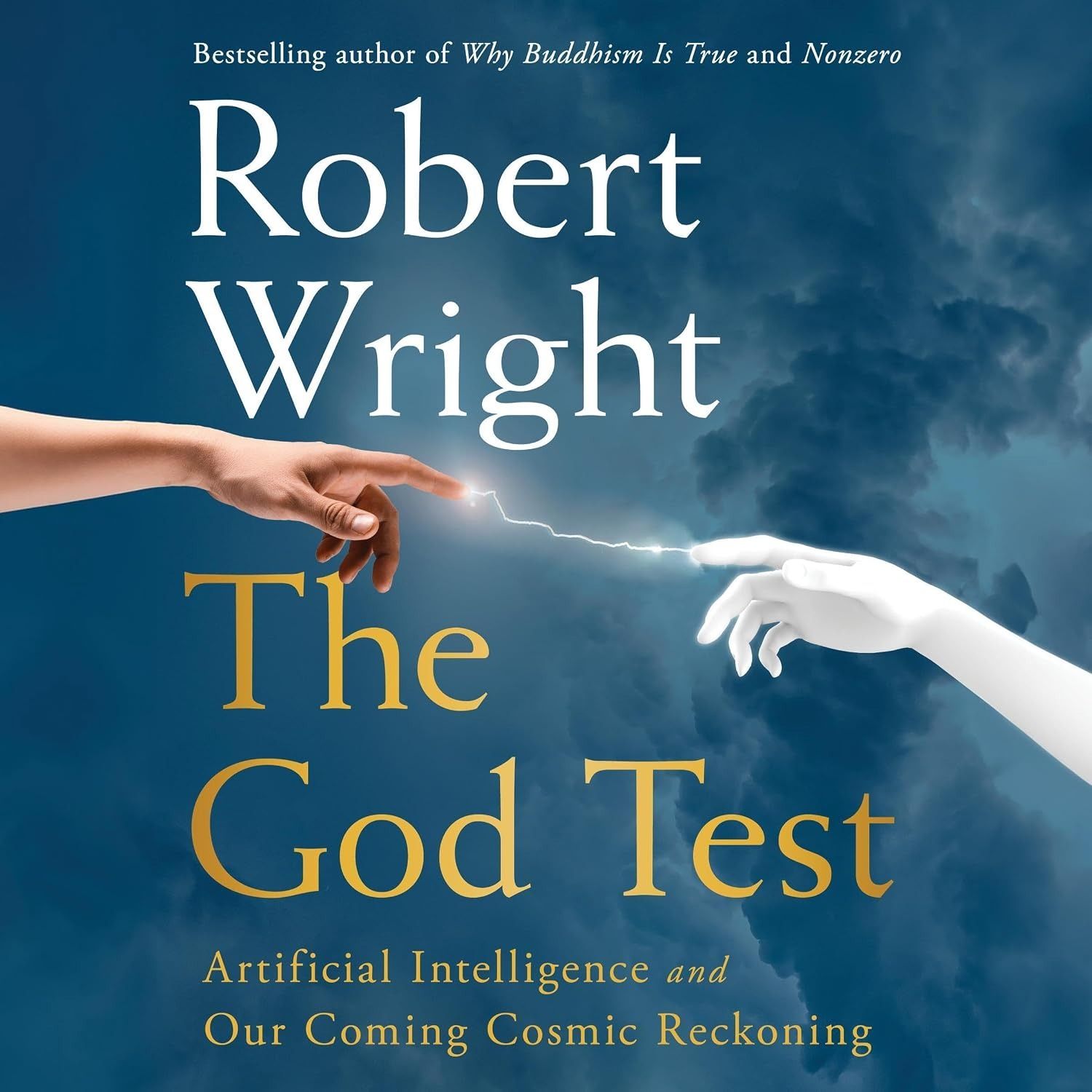
The God Test by Robert Wright
2w ago01:15:42Tap to summarizeIn this episode Jerry and Stably discussed The God Test: Artificial Intelligence and Our Coming Cosmic Reckoning by Robert Wright. The book's first half explains AI's rise and risks; the second argues, via Teilhard de Chardin-style "complexification," that evolution is driving Earth toward a unified planetary consciousness, or "noosphere," with AI as the catalyst. Wright frames this as requiring expanded cognitive empathy and coordinated global governance to avoid catastrophe. Jerry and Stably examined the book's undercurrents of Buddhism, nonzero-sum game theory, and cosmic purpose, questioned whether Wright's proposed top-down steering contradicts his own bottom-up instincts, and debated whether moral progress or natural selection will ultimately determine humanity's fate. They also touched on Thomas Metzinger's theory of consciousness as a useful counterpoint.
Transcribe →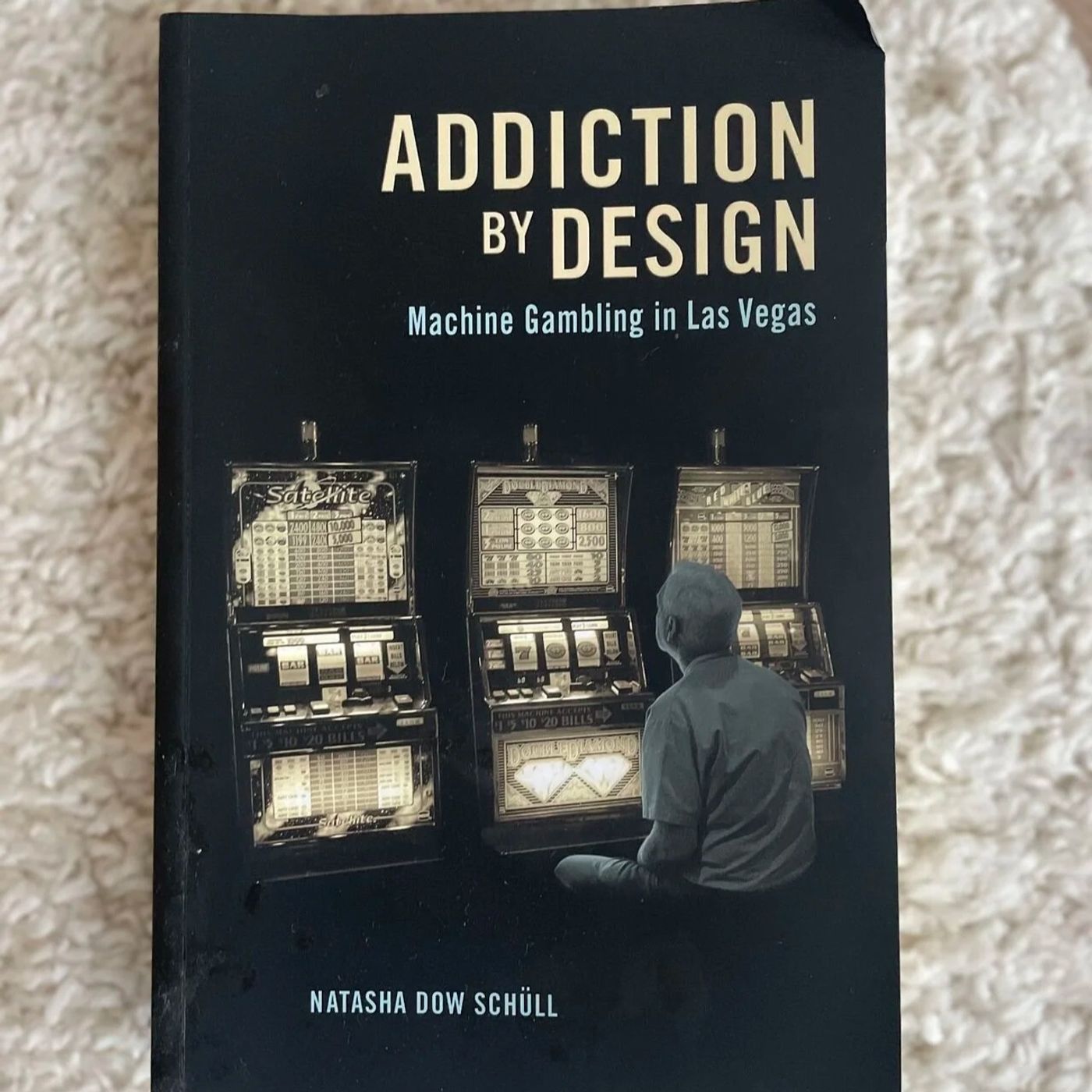
Addiction by Design by Natasha Dow Schull
Jul 201:08:43Tap to summarizeIn this episode Jerry and Stably discussed Addiction by Design: Machine Gambling in Las Vegas by Natasha Dow Schüll. The academic ethnography examines how slot machines—once a marginal casino afterthought—now generate most gambling revenue, driven largely by local repeat players rather than tourists. Schüll interviews designers, executives, and addicted gamblers, showing how machines are engineered to induce a self-erasing "zone" akin to flow states, prioritizing extended play over winning. Jerry and Stably debate her capitalism-focused framing, question whether her extreme case studies represent typical gamblers, and connect the addictive "zone" to evolutionary mismatch theory and Schopenhauer's concept of denying the Will. They also touch on Nevada's pre-1969 ownership rules that once limited corporate casino ownership. Despite its dry, jargon-heavy academic style, both hosts found it compelling and recommend it.
Transcribe →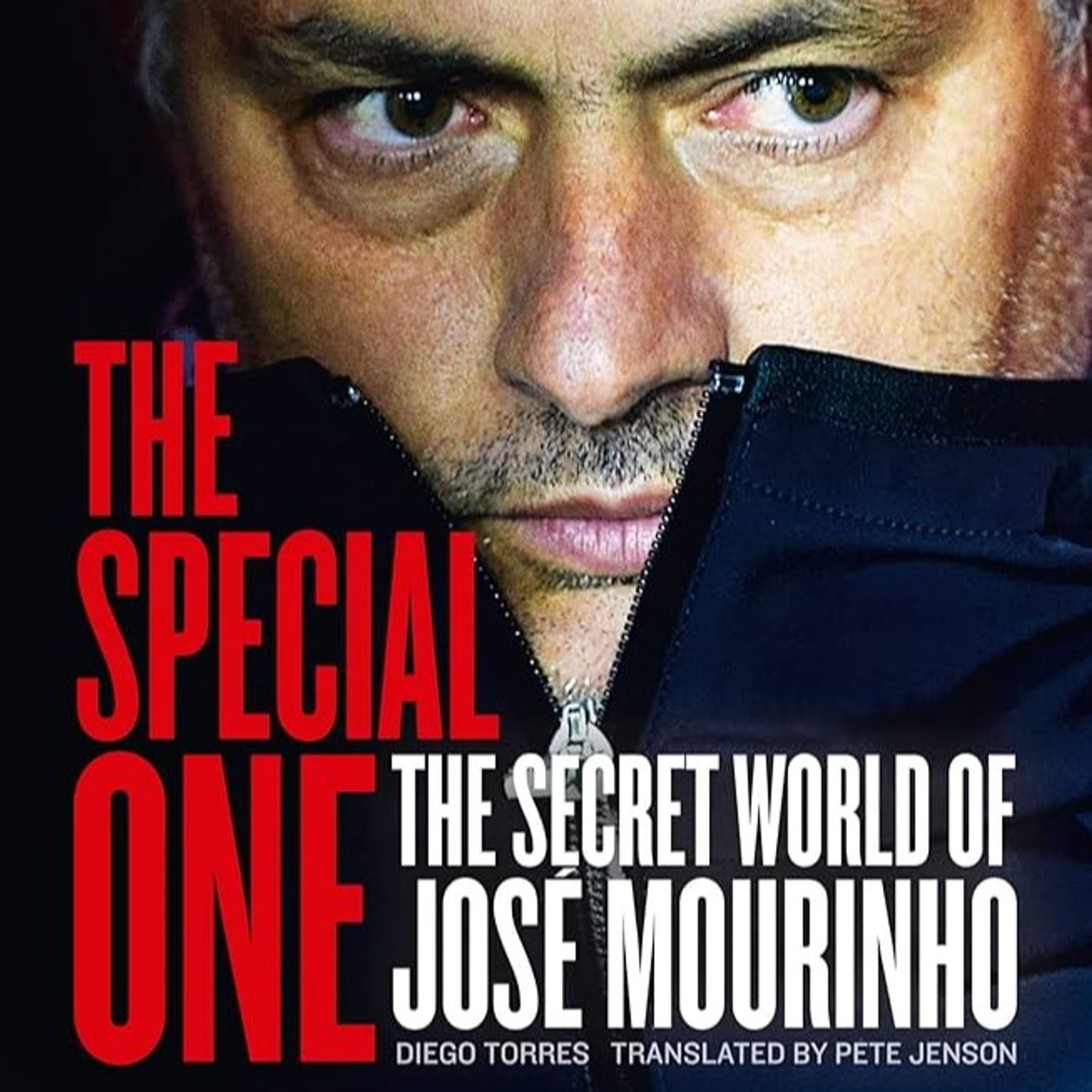
The Special One by Diego Torres
Jun 1601:04:46Tap to summarizeThis episode covers The Special One: The Secret World of Jose Mourinho by Diego Torres, Jerry's pick timed to Mourinho's appointment as Real Madrid manager. Jerry and Stably discuss the book's chronicle of Mourinho's tumultuous 2010-2013 Madrid tenure, focusing on his combative management style: cultivating an atmosphere of fear and favoritism, sidelining players unrepresented by super-agent Jorge Mendes, and blaming referees for losses. They examine his fraught relationship with president Florentino Perez, the locker-room fractures between Portuguese and Spanish players, and his eventual exit following a player revolt. Both note the book's one-sided framing and oddly literal English translation, while drawing comparisons to authoritarian leadership styles. They recommend it for soccer fans despite its insider assumptions.
Transcribe →
Homo Ludens by Johan Huizinga
Jun 201:07:57Tap to summarizeIn this episode Jerry and Stably discussed Homo Ludens: A Study of the Play-Element in Culture by Johan Huizinga. They examined the central thesis that play forms the foundation of human culture and critiqued the author for utilizing vague definitions and romanticizing historical conflict.
Transcribe →
Ride the Tiger by Julius Evola
Apr 2001:05:50Tap to summarizeIn this episode Jerry and Stably discussed Ride the Tiger, a survival manual for the aristocrats of the soul by Julius Evola. The discussion centered on Evola’s core thesis that the modern world is in terminal decline, having fallen from a traditional, hierarchical society where people found inherent meaning through natural aristocracy. The hosts explained that this decline has left people feeling a lack of meaning, which they attempt to fill through materialism, viewing both capitalism and communism as different expressions of the same materialistic impulse. Evola's prescription, the titular "Ride the Tiger," is an acknowledgment that the forces of decadence are overwhelming and cannot be stopped; therefore, the "differentiated man" must embrace the flow of modernity as a path toward transcendence, prepared to jump off and restart the cycle when the world exhausts itself. Jerry noted that the book functions more as a "permission structure" for individuals feeling alienated from the world rather than a literal manual, giving them authorization to be themselves and aim for transcendence. Both hosts acknowledged Evola's background as an actual fascist and Mussolini supporter, but pointed out that the book promotes a stance of apolitia, urging the differentiated man to be detached from all political, moral, and religious identification, as their will is their own morality. While Jerry agreed with the diagnosis of modernity's inability to provide meaning, he criticized Evola's superior, elitist tone and the book's focus on aristocracy, contrasting it with the compassionate ethics of other philosophical traditions. The hosts distinguished the modern issue of lacking meaning from the question of historical happiness, arguing that past societies may have had a clearer sense of meaning despite pervasive physical suffering. The conversation detailed Evola’s philosophical critiques of his contemporaries, particularly Nietzsche and the existentialists. Evola respected Nietzsche but saw his philosophy as ultimately materialist, relying on a faith-based ideal of the Superman that Evola compared to Marxist aspirations for a "new model man". Against the existentialist claim that "existence precedes essence," Evola countered that essence, derived from the metaphysical Will, precedes existence, viewing the individual as an instantiation of this universal force. Evola also analyzed certain modern practices that a differentiated man could use for transcendence—what he called "residues of tradition"—such as asceticism, warrior ethics, and even drugs (if used to awaken the mind rather than as an anesthetic against meaninglessness). However, Jerry strongly disagreed with Evola's specific condemnation of "Negro jazz," arguing that its improvisational nature and capacity to create a trance-like state aligns perfectly with Evola's own goal of "lucid inebriation" as a transcendent experience. The episode concluded with Stan announcing the next book pick, Homo Ludens, a study of the play element in culture by Johan Huizinga.
Transcribe →
Leap of Faith by Michael J. Mazarr
Mar 2401:17:10Tap to summarizeIn this episode Jerry and Stably discussed Leap of Faith by Michael J. Mazarr. Mazarr, a RAND Corporation scholar, draws on every available memoir, declassified document, and interviews with senior administration officials to dissect how the United States stumbled into the Iraq War. His central argument is that there was never really a decision — the invasion happened through a process of drift, assumption, and institutional momentum, with no memo ever formally ordering it. Jerry and Stably walked through Mazarr's typology of the principals — Bush and Wolfowitz as values-driven, Cheney and Rumsfeld as power-oriented unilateralists, and Powell and Rice as multilateralists — and how their clashing psychologies at every turn undermined coherent planning. They discussed how the easy initial victory in Afghanistan gave the administration a dangerously false sense of what a small-footprint war could accomplish, Saddam's catastrophic misreading of American intentions, and the near-total absence of any post-invasion plan. The conversation turned to the eerie parallels with the current situation in Iran, and whether the lessons Mazarr draws — about American missionary zeal and intuitive, values-driven foreign policy judgment — are simply baked in.
Transcribe →
The Digital Reversal by Andrey Mir
Mar 1001:18:45Tap to summarizeIn this episode Jerry and Stably discussed Andrey Mir’s The Digital Reversal, which explores the concept of reversal, arguing that media, when pushed to extremes, reverse their cultural effects due to accelerating technological change. They discussed debated the book's support for technological determinism, which posits that the trajectory of AI and technology is unstoppable and will lead to an inevitable loss of human agency. This surrender of agency is driven by the relentless pursuit of optimization—exemplified by AI making coaching decisions in sports and the shift from structured knowledge to a searchable "goo"—suggesting that most people will voluntarily "plug in" to fully automated, performant systems, with only a few non-maximizing groups remaining.
Transcribe →
On Photography by Susan Sontag
Feb 2501:22:27Tap to summarizeIn this episode Jerry and Stablydiscussed Susan Sontag’s On Photography, with both finding the book overly long, baroque, and pedantic, though both agreed that Sontag's observations were interesting when extracted from the dense, "show-offy" prose. Jerry and Stably critiqued Sontag’s positions on photography as a predatory act, its role in tourism and status, and its potential for desensitization, with Jerry challenging Sontag's political framing and insistence on classifying art. The discussion included Stably suggesting Sontag's critique was politically motivated, while Jerry prioritized free speech regarding photography in public.
Transcribe →
On the Suffering of the World by Arthur Schopenhauer
Jan 2701:26:04Tap to summarizeIn this episode, Jerry and Stably discussed Arthur Schopenhauer's On the Suffering of the World. Jerry praised the book as a great introduction to Schopenhauer's philosophy and its insights, particularly the concept of life as a balance between suffering and boredom, while Stan found the text repetitive and at times impenetrable, disagreeing with the author’s premise. They also explored Schopenhauer’s core ideas, including the "Will" as an eternal, irrational force and the philosopher’s suggested solution of denying the Will through asceticism or art, and they further debated the ethics of procreation and the necessity of preserving consciousness. Stan then selected "On Photography" by Susan Sontag as the next reading material for discussion.
Transcribe →
The Return of the Common Good by Stefan Borg
Dec 3001:14:53Tap to summarizeIn this episode, Jerry and Stably discussed Stefan Borg's book, The Return of the Common Good: The Post-Liberal Project Left and Right, with Stably finding it enjoyable but wanting more and Jerry viewing it as a concise outline confirming prior beliefs, while both criticized its dense, academic style. A major talking point was the assertion that post-liberals offer a "fantastic critique" of liberalism's self-undermining nature but are "incredibly light on prescription," with participants exploring alternative post-liberal approaches like Michael Lind’s and the intellectual genealogy rooted in "radical orthodoxy." The conversation covered various facets of the post-liberal critique, including its US and UK contexts, its distinction from National Conservatism (NatCon), its theoretical core identifying liberalism as an ideology rooted in fear and violence, and its analysis of liberalism's internal contradictions, which erode social trust and necessitate state enforcement of radical individual freedom, alongside a critique of post-liberal feminism.
Transcribe →