← Wretched Radio with Todd Friel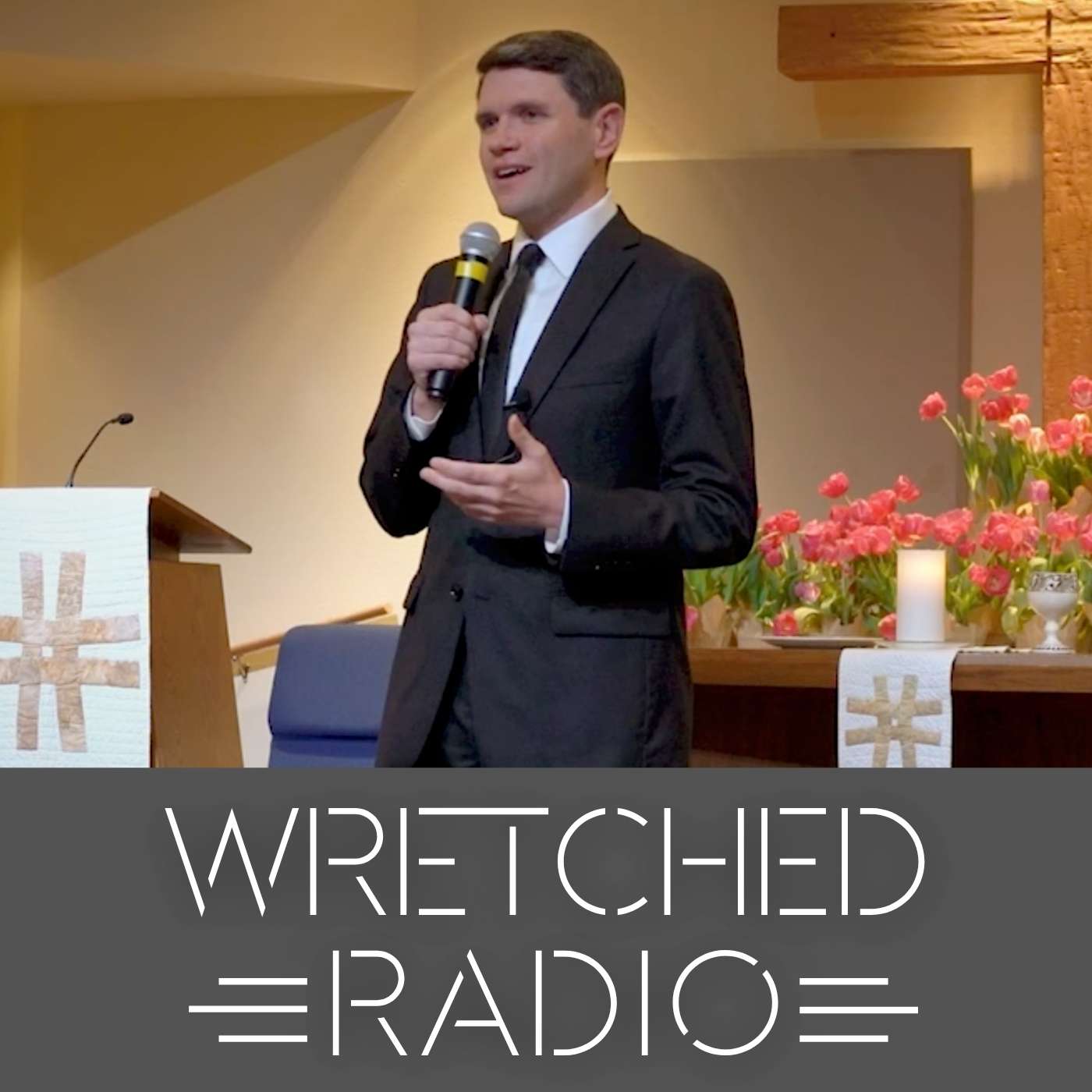
Wretched Radio with Todd Friel
James Talarico “Preaches” HIS Version of Easter
00:54:59
Segment 1 • James Talarico preaches his version of Easter. • Confusion over gender, truth, and identity - it’s not compassion, it’s rebellion. • A “Christian” argument for progressive ideology—what happens when Scripture gets reinterpreted?...
Loading summary
Transcript184 lines
- [00:04]
Todd Friel
Wretched radio begins in 3, 2, 1.
- [00:09]
Jimmy Hicks
So I can be a Chinese woman,
- [00:11]
James Talarico
sure, but I can't be a 6
- [00:12]
Wretched Radio Host
foot 5 Chinese woman.
- [00:13]
James Talarico
Yes, Daddy is a her.
- [00:15]
Wretched Radio Host
Suppose you agree that he can't actually have babies, but that he can have the right to have babies.
- [00:20]
James Talarico
God created male and female in his own image. He is not a God of confusion.
- [00:26]
Wretched Radio Host
All of what we're seeing in our society today is simply hatred for God.
- [00:31]
Todd Friel
It's time for retribution Radio with Tod Friel.
- [00:34]
Wretched Radio Host
Politician James Tallarico is a lot like Bill Clinton, only a whole lot slipperier. This is a wretched radio. James Talarico making a bid for US Senate while attending a Presbyterian seminary. John Knox wouldn't want it called Presbyterian. It is wonky, liberal. The church that he attends, it has a cross with a rainbow draping around it. They're just flashing. We're about reproductive rights. In other words, this politician from Texas, he is liberal and he is smooth and he uses his Bible to justify his absolutely ungodly policies. Preaching at his own church last year, 2025, Easter Sunday. Let's listen to a fellow who doesn't understand. Maybe he understands it, but he doesn't believe the Gospel. Why? I have not heard or seen what we are about to work through. I suspect it's going to be a beating. It's a 20 minute homily, if you can call it that, about Easter. And I suspect you're going to hear everything but penal substitutionary atonement. You're not going to hear about Jesus Christ being brutally beaten, suffering, dying, shedding his blood for the forgiveness of sins. You ain't gonna hear that. I'm quite certain of it. Instead, you're gonna hear one of the different theories that people have about the crucifixion. There's like almost two dozen of them. I'm pretty certain you're not going to hear the biblical version from one James Talarico. Let's give him a hearing. We'll understand his theology and we'll understand his version of what he believes Easter to be. And this is the best part right here. When liberals watch this video and they see this James Talarico preaching in church and infusing politics into it, no doubt they're going to be outraged because they're going to claim that he's a Christian nationalist. Because you're never supposed to talk about faith and politics. Okay, that's not going to happen, is it? Why do they just get upset with conservatives when they preach in churches or when they use the Bible but not their own. I think we all know the answer to that question. Here we go.
- [03:07]
James Talarico
Paul, our earliest Christian writer clearly thinks resurrection is not just something that happened to Jesus. It's something that happens to all of us.
- [03:15]
Wretched Radio Host
Okay, right there. Resurrection happens to all of us. Now, if he's talking about when we die and we are then reunited with
- [03:23]
James Talarico
the Lord, okay, not just something that happened 2,000 years ago, but something that's happening all the time,
- [03:34]
Wretched Radio Host
what does that mean exactly?
- [03:36]
James Talarico
Einstein said there are two ways to live your life.
- [03:39]
Wretched Radio Host
Gotta tell you, when you're quoting Einstein, what's our text here, Future senator? What? Einstein?
- [03:49]
James Talarico
One is as though nothing is a miracle. The other is as though everything is a miracle. Being religious is living your life the
- [04:00]
Wretched Radio Host
second way, as if everything is a miracle. Well, everything isn't a miracle. A miracle, rightly defined as a suspension of natural law. If it doesn't somehow suspend the order of the universe, then it's not a miracle.
- [04:16]
James Talarico
As though everything is a miracle. So what does the miracle of the resurrection mean for us in the here and now?
- [04:26]
Wretched Radio Host
Oh, do tell. Do tell.
- [04:29]
James Talarico
Well, we can't understand resurrection unless we understand crucifixion.
- [04:36]
Wretched Radio Host
Okay, this guy, he's interesting. He's 34, probably 34 years old here. He's calm. He's got that thing that you need to be a politician, which is why we're focusing on him. Because I'm telling you, this guy is slick.
- [04:53]
James Talarico
There is no Easter Sunday without Good Friday. So I got in a little bit of trouble last year when I said that Christian nationalists have taken Trump as their new Christ.
- [05:07]
Wretched Radio Host
What happened? Where'd we go? What? How did. I thought we were going to talk about the crucifixion?
- [05:16]
James Talarico
Because he's everything the first one was not. Jesus was poor. Trump is rich. Jesus was meek. Trump is strong. Jesus.
- [05:28]
Wretched Radio Host
Hold on a second. Meekness doesn't mean you're weak. Meekness means you have strength. But it is under control. Sorry for the correction, Presbyterian seminary student.
- [05:41]
James Talarico
Trump is rich. Jesus was meek. Trump is strong. Jesus lost. And Trump is obsessed with winning.
- [05:52]
Wretched Radio Host
Jesus lost. Hmm. Jesus. This gives us a hint that his understanding of the crucifixion and the Resurrection, it is not about penal substitutionary atonement. I suspect it's going to be some sort of. It could be. Could be Christus, Victor. It could be Ransom theory. It could be model theory, meaning that he was just. He modeled what it looks like to be a really stellar sort of guy. And you do that by losing and showing your life to be sacrificial. But that's not the same as penal substitutionary atonement. That's at least our first hint.
- [06:29]
James Talarico
That last part got people really mad. So many of our fellow Christians couldn't understand why I would say Jesus lost.
- [06:39]
Wretched Radio Host
Right?
- [06:39]
James Talarico
In our scripture reading this morning, Jesus's top student makes the same mistake. Peter, the lead disciple. The rock on which the church is built, misunderstands what Jesus is all about. In the first century, the Jewish people were oppressed by the Roman Empire. Peter had an expectation of what a savior would do, what salvation would look like. He expected a warrior who would violently overthrow their oppressors, a general who would deliver a decisive military victory. A king, like all the other kings. But in Matthew 16, Jesus pulls a bait and switch. Jesus tells Peter and the other disciples that he's going to Jerusalem, not to conquer, but to suffer.
- [07:31]
Wretched Radio Host
Well, suffering okay, but that's why he's not a loser. He did that on purpose, ordaining and ordering all events sovereignly, in control of all things. That's not losing. That's using contemporary lingo to cloud a historical reality. It was a predetermined plan. That's what Peter said in Acts, chapter two. Acts, chapter four. It was God's prearranged plan. This was intentional. Jesus was not a victim. He was a volunteer.
- [08:05]
James Talarico
Not to kill, but to die. Not to win, but to lose.
- [08:10]
Wretched Radio Host
No, he didn't lose. The cross was a victory. It looked like it was a defeat. That's the whole point. It looked like it, but it absolutely wasn't. It was the day on which our sins were atoned.
- [08:26]
James Talarico
And Peter gets angry and rebukes Jesus. This is not how it's supposed to happen. You've got it all wrong. And then Jesus tells Peter the same thing he told the devil out in the wilderness. When the devil tempted Jesus with power, when the devil offered all the kingdoms of the world, Jesus looks at Peter and says, get behind me, Satan. Then he tells his other followers, if you're following me, you've got to pick up a cross. For whoever wants to save their life will lose it. But whoever loses their life will find it.
- [09:02]
Wretched Radio Host
He's not getting there yet with what his understanding of the crucifixion is.
- [09:08]
James Talarico
So much of our pain comes from trying to hold on to things that are impermanent. When I was little, I learned to swim.
- [09:16]
Wretched Radio Host
Okay, we just went somewhere. If you remember, the premise is, without the Crucifixion on Friday, you don't have Easter on Sunday. Now we're going back to swimming in
- [09:27]
James Talarico
his youth at the Wells Branch pool just a few blocks from here. And I remember my swim teacher telling me, don't hold on to the water. Let the water hold you. She was trying to tell me to let go, to trust. That's the faith that Jesus wants us to have.
- [09:48]
Wretched Radio Host
Okay, I'm wondering what this has to do with the crucifixion.
- [09:54]
James Talarico
Once we let go, once we lose our little lives and join the larger life, we become eternal. Losing is fundamental for Jesus.
- [10:14]
Wretched Radio Host
No, no, it's not. He gave up his life. He didn't lose it. He laid it down.
- [10:23]
James Talarico
There is no Easter Sunday without Good Friday.
- [10:27]
Wretched Radio Host
He hasn't told us what Good Friday's about.
- [10:31]
James Talarico
And on Good Friday, Jesus lost his reputation, lost his ministry, lost his friends, lost his life. And then on Sunday morning, we remember the only way to win is to lose.
- [10:43]
Wretched Radio Host
Okay, he lost those things. Did you hear anything about blood being spilled for the forgiveness of sins? The answer is no, of course you didn't. Because I am quite certain this fellow does not believe in penal substitutionary atonement. It is another theory. It seems right now this is the model theory. Jesus was a model of what it really looks like to win. He's what we should be seeking to be like. We should be willing to do the same thing of Jesus because he was our model. But that is not the same as pedal substitutionary atonement. We'll continue listening to this sermon of James Talarico next on Wretched Radio.
- [11:37]
Jimmy Hicks
Conflict. That's not an if in your life. That's a win. You will most definitely disagree with your spouse, your kids, your co workers, your in laws, maybe all of them in the same week. The question is whether those disagreements turn your your home into a war zone for something you can actually resolve. That's what our resource conflict is all about. Todd Friel, who admits he's an expert in conflict mostly because he's caused so much of it, and Dr. John street will both challenge you to respond in ways so radically biblical that even the people you've been fighting with will take notice. They'll walk you through biblical reconciliation step by step, so you can actually heal what's been broken. If you're exactly exhausted from the same arguments on repeat, if your home feels more like a battlefield than a refuge, there is a better way. And it's not another self help technique. It is scripture. Conflict is streaming right now on Fortis for free. Just download the app on your smartphone, on your smart TV or simply go to fortisplus.org.
- [12:37]
Wretched Radio Host
perhaps you've been wondering, is there a Christian university that isn't woke or that hasn't compromised on important biblical doctrines like, you know, the Age of the Earth? There is. It's the Master's University in Southern California. Beautiful campus, all of the athletics and activities that you've come to expect from universities. But it's more than that. The academic programs are most excellent. Preparing students for for the future. The Washington Post just said number six for preparing students for the real world. All that, plus the Master's University isn't woke and it is thoroughly biblical. Would you like to learn more? I encourage you to visit the Master's University at Masters. Edu Wretched Masters. Edu Wretched
- [13:37]
Jimmy Hicks
Here's a question. Do you think like a Christian or do you just believe like one? See, a lot of evangelicals have accidentally split their brain in two. Faith goes in one box. Logic, science, politics, morality. Well, that all goes in another. And then we wonder why Christians sound just like everyone else when we talk about economics, education, or anything outside of Sunday morning. Wretched Worldview endeavors to fix that Todd Friel and Dr. Owen Strand tackle 2022 real world issues through a biblical lens. Capitalism versus socialism. Women in the military, Global warming, eugenics, guns, Stay at home moms. And then they show you what it actually looks like to think Christianly about all of it. And here's the best part. It's not just 22 answers. It's a framework. By the end, you'll have tools to build a biblical worldview on any issue that comes your way. Wretched Worldview it's streaming for free right right now on Fortis plus. Just download the app wherever you download apps on your smartphone, on your smart TV, or just simply go to fortisplus.org.
- [14:41]
Todd Friel
Books of the Bible Amos was a shepherd called to prophesy during a time of prosperity in Israel and Judah. But this prosperity was accompanied by idolatry, extravagance and corruption when you consider the society you live in. Amos declares that God judges societies by his standard of righteousness. He hates all corruption and injustice. This is Wretched Radio with Todd Friel.
- [15:09]
Wretched Radio Host
There's no doubt James Talarico A swing and a miss. But sadly, it's probably not as bad as a lot of church services this Easter. People in staggering percentages do not understand what the gospel is. Now there are some evangelicals that actually do. They just don't articulate it well. But then there are other professing Christians, like Senate candidate James Talarico, who denies the classic understanding of the gospel what the crucifixion was about, what Easter Sunday was about. A lot of evangelicals, they just biff it in all kind of ways, although they kind of understand it. This guy has joined the liberal movement that redefines what Easter is all about. Let's continue listening to this rather placid sermon about Easter Sunday.
- [16:08]
James Talarico
This was unpopular in the first century, and it's still unpopular today. Today, Christian nationalists reject what they call loser theology.
- [16:19]
Wretched Radio Host
Okay, wait, is this about Easter, or is this about us about slamming Republicans? What are we doing here? And where are the liberals rising up in one voice? Hey, politics in church. That's a big no, no.
- [16:37]
James Talarico
Joel Webman, a Christian nationalist pastor up here in Georgetown, said, we cannot afford to be divine losers. We need to win. I want to win. I want to reward my friends and crush my enemies. Sounds a lot like Peter. I mean, aren't we all tempted by power? Don't we all yearn for control? We all want to ride a warhorse, but Jesus rides a donkey.
- [17:06]
Wretched Radio Host
This is such a mess. This is such a mess. Was just reading a critique on a totally different hyper dispensationalism last night. And the conclusion of the author, in making his way through hyper dispensationalism, was that it was just horribly mangled use of scripture, a horrific hermeneutic. No care for context, just, oop, there's. Yep. Okay, grab over here. And what you're hearing right now is not only that, it's relatively incoherent. This is supposed to be Easter Sunday. It's supposed to be about the. He's going to be defining the crucifixion and the Resurrection. Are you hearing it?
- [17:49]
James Talarico
We all want to pick up a sword, but Jesus picks up a cross. We all want to be a lion, but Jesus is a lamb. We want to crush our enemies, but Jesus calls us to love our enemies.
- [18:03]
Wretched Radio Host
Although on the cross, if I'm not mistaken, he crushed his enemy. Pretty certain that's what was going on there.
- [18:12]
James Talarico
That's because we want to win the game. Jesus wants to change the game.
- [18:19]
Wretched Radio Host
No, he died for sinners, that we might be saved. This is the model theory. Pretty certain. This is the model theory. Knowing that he would not find his way to penal substitutionary atonement, I printed up. Now, I spared you some pain because there are between 15 and 20 different atonement theories. These are at least put into some classifications. Not perfect, but you'll get the gist. And that's why when you listen to an Easter Sunday sermon or a Good Friday Sermon. If your church does that, make sure that penal substitutionary atonement is front and center. Because there's the, the victory, the cosmic defeat models. These are Christus, Victor, ransom theories that this is all about the Jesus defeated sin, death and demonic powers. It's more about enslavement, however, than it is about legal guilt. That's what the cross was about. We are legally guilty. The satisfaction was being provided by Jesus on the cross, Christus, Victor, etc. And says no, Jesus was just, he was winning. Interesting. There's the healing model. So this would be the recapitulation theory, theosis, the incarnational theory. Humanity, we're sick, but he restores our human nature. No legal penalty paid. This is just about being broken, not courtroom guilt. Are you hearing anything about that from this fellow? There's the subjective transformational models. So this is the moral influence example, the martyr theory. I suspect that's what James Talarico is. The cross, it changes us, it reveals love, it inspires us to be sacrificial. Dare I say it changes the game. But there's no transaction. There's, there's, there's, it's just about human response, not divine wrath being satisfied. It's about Jesus being a model, which I gotta tell you, is really dopey in my estimation because he modeled being crucified. Is that, I mean, are we supposed, is that what we're supposed to be doing? The question, of course, if he was just modeling it, there was no point to it. So if Jesus were just a model, it was a very gruesome, bad model. But that's not what he was. Was he showing sacrifice? Of course he was. But that wasn't really the main thrust of the cross. It is about forgiveness of sins. All right, a couple more of these categories. Solidarity, participation models. These are, these are people who would say that he represents us, he enters our condition, he fulfills our role. So it's about representation, but it's not about punishment. And you got, you got other models. The scapegoat model. It's completely ridiculous. The cross exposes human violence and injustice. It rejects that God requires or, oh, heaven forbid, inflicted punishment on Jesus. Violence was being perpetrated by people. It was not divine justice. It wasn't God pouring out his wrath on people. These are just individuals that were really, really mad at Jesus. I suspect he fits into that moral category, the example category.
- [21:44]
James Talarico
Think about our modern world. The people at the top, the Elon Musks, the Rupert Murdoch's of the world, work so hard to keep us angry and divided because our unity is a threat to their wealth and power. So their social media algorithms and their cable news networks tear us apart.
- [22:06]
Wretched Radio Host
Easter. Anyway. Oldest Easter.
- [22:08]
James Talarico
Anybody in the world. Divide and conquer.
- [22:13]
Wretched Radio Host
Oh, my. Coming from somebody who espouses critical race theory, which is all about dividing and conquering, I.
- [22:21]
James Talarico
They don't care if we hate them as long as we hate each other. But by refusing to be divided, by staying in relationship with each other.
- [22:32]
Wretched Radio Host
Easter.
- [22:32]
James Talarico
We keep alive the possibility of a different world.
- [22:35]
Wretched Radio Host
Easter. Hello?
- [22:36]
James Talarico
Loving our enemies allows us to listen to each other.
- [22:39]
Wretched Radio Host
Crucifixion, learn resurrection, and ultimately come together
- [22:44]
James Talarico
to take power back for ourselves and our communities.
- [22:48]
Wretched Radio Host
Wait, wait, wait. Whoa, whoa, whoa, whoa, whoa, whoa, whoa. Did I just catch that? Hey. All these powerful people, we need to be unified so that they don't have all this power, so that we can have it. Oh, that smell, that odour. That would be hypocrisy.
- [23:09]
James Talarico
Love has always been a threat to the powers that be. Jesus is not asking us to be passive. Love is not passive. Love is not neutral. Love is not weak. It's true. You can't fight fire with fire, but you also can't fight fire with a dripping faucet.
- [23:29]
Wretched Radio Host
Okay, I thought he was saying earlier that Jesus modeled what it means to be weak and to be a loser or something like that. Now he's basically saying, well, not, like, completely, because we want to be able to have those things ourselves.
- [23:45]
James Talarico
You fight fire with a fire hose. Can I say in church? I just.
- [23:50]
Wretched Radio Host
Real good. No. No, you can't.
- [23:53]
James Talarico
It's better than the alternative, I guess.
- [23:56]
Wretched Radio Host
No.
- [23:57]
James Talarico
Jesus didn't spend his life passively accepting evil. Jesus didn't stay in Nazareth. He went to Jerusalem, the seat of political, social, and economic power. Palm Sunday was not a parade. It was a protest.
- [24:18]
Wretched Radio Host
It was.
- [24:20]
James Talarico
Overturning the tables in the temple was an act of civil disobedience.
- [24:25]
Wretched Radio Host
So wait a second. So are you saying we're supposed to be weak or civilly disobedient? Are you calling for civil disobedience?
- [24:33]
James Talarico
Crucifixion was the punishment for rebels. God didn't invent the cross. Rome did. If you don't think Easter is political, then reread your Bible.
- [24:44]
Wretched Radio Host
I guess I'm going to have to. If you don't think Easter is political, you need to reread your Bible. That's exactly what he does. He rereads his Bible. How does he do that? Well, he has preconceived notions, and then he goes and finds a way to make the Bible say what he already thinks. That's what this fellow is. This guy is a classic liberal. Now this is. We are. Halfway through this little 20 minute pep talk, this little political rally he put on on Easter Sunday. Is the guy smooth? Yeah. Does he know how to speak Bible? Well, yeah, he uses Bible lingo. It's just that all the words have been redefined and he's infused new meanings into them. But this guy, I'm telling you, is dangerous. This guy is dangerous. T R O U B L E A big problem. Why? Because he mangles scripture and he does it so smoothly. Be on the lookout for one James Talarico. This is Wretched Radio.
- [26:01]
Jimmy Hicks
And it's now time for your daily Fortis news break, a production of Fortis Institute. A Biden appointed federal judge in Oregon has blocked the Trump administration's declaration that transgender medical procedures on children are neither safe nor effective. The judge accused the administration of trying to see if it can get away with it, calling it inconsistent with Democratic governance. New York Attorney General Letitia James celebrated, declaring she will always fight for the LGBTQ community. Here's the good news for taxpayers, however. However, the ruling doesn't touch the separate HHS rules barring hospitals performing these procedures on minors from participating in Medicare and Medicaid. So your tax dollars may still be spared from funding what growing numbers of European countries have already abandoned as reckless medicine. Meanwhile, the Trump administration is investigating 13 states suspected of forcing healthcare workers to cover abortion against their conscience. HHS's Office of Civil Rights is targeting California, Colorado, New York, Illinois, and nine other states with mandates that appear to violate the Weldon Amendment, which protects providers from being punished for refusing to pay for abortions. The DOJ has filed suit against Harvard University, accusing the school of fostering a campus climate where antisemitism thrives. The filing alleges Harvard rewarded students who assaulted and harassed their Jewish and Israeli peers while failing to enforce itself own rules against the mobs occupying its buildings. Attorney General Pam Bondi said the administration is demanding better from institutions receiving billions in taxpayer subsidies. Speaking of hostility toward people of faith. A resurfaced interview shows California Governor Gavin Newsom's wife calling evangelical Christians a drag on the country. Jennifer Newsom claimed conservatives are pulling us back as a country to a time and a place we don't deserve to be. She also tried to redefine pro life to mean universal preschool and government healthcare. Essentially everything except the part about not ending a life. And the timing here is worth noting, as Newsom reportedly spends $19 million polishing his image ahead of a possible 2028 presidential run north of the border, Ontario Premier Doug Ford is shutting down the province's remaining supervised drug consumption sites, calling them a a failed experiment. You think all seven remaining sites will close by mid June. Records show Canada's federal government spent over $800 million on its drug strategy from 2017 to 2022, with even the Health department admitting the results were minimal. A drug decriminalization trial in British Columbia actually saw overdose Deaths increase over 3,000 in 15 months. Ontario will be directing funds toward treatment and recovery instead. And that wraps up today's Fortis News break. I'm Jimmy Hicks. If you want more, you can download Fortis or sign up to book them a Fortis Insider for exclusive daily content. Both of those things can be done@fortisinstitute.org, and don't forget, you can subscribe to Fortis News on your favorite podcast app in order to get these updates daily. And until tomorrow, go serve your king.
- [29:03]
Todd Friel
Titles of Christ in the Bible, Jesus is given many titles that teach us about who he is and what he has done. Jesus is called the Apostle of our confession. An apostle is one who is sent. Jesus is the one sent from the Father and empowered by the Holy Spirit to deliver the gospel in which all Christians confess their belief. This is Wretched Radio with Todd.
- [29:31]
James Talarico
If you don't think Easter is political, then reread your Bible.
- [29:36]
Wretched Radio Host
One of us is getting this wrong and I am waiting for all of the liberals to say, hey, wait a second, he's infusing his religion into politics. Cue the crickets. You ain't going to hear it. James Talarico, Easter Sunday last year, supposedly preaching about the crucifixion and the resurrection
- [30:00]
James Talarico
because during Holy Week, we Christians should be asking ourselves what tables still need to be overturned.
- [30:06]
Wretched Radio Host
Wow, he's sounding kind of nationalistic. He's sounding like he's maybe inciting, I don't know, rebellion. Is that what he's coaching?
- [30:19]
James Talarico
The way of Jesus is not fight or flight. It's a third way. The way of non violent resistance.
- [30:27]
Wretched Radio Host
Well, you ain't. You ain't talking like that.
- [30:31]
James Talarico
A way of confronting violence without mirroring it. A way of extinguishing evil with love.
- [30:40]
Wretched Radio Host
Easter.
- [30:40]
James Talarico
Not just for our friends, Easter, but for our enemies too.
- [30:44]
Wretched Radio Host
Resurrection.
- [30:45]
James Talarico
Muhammad said something similar.
- [30:52]
Wretched Radio Host
Now the Presbyterian Seminary student is quoting the Prophet Muhammad, the prophet who married a six year old. That same prophet are we talking about?
- [31:06]
James Talarico
He said, help your brother whether he is oppressed or whether he is an oppressor. The prophet was asked, how do we help him if he's an oppressor? The prophet replied, by stopping him from oppressing.
- [31:21]
Wretched Radio Host
I don't know what surah he's citing, but he's quoting a man whose religion was propagated by the sword. Yeah, and notice, too, is about your brother. If it's a fellow Muslim. But toward the infidels, they're to be slain. Once again, selective choosing of surahs from the Quran at the Presbyterian Easter service.
- [31:50]
James Talarico
Nonviolence takes seriously the belief that we are all sacred.
- [31:56]
Wretched Radio Host
I wonder if he's on record of denouncing all of the violence that has taken place in liberal cities as liberals incited violence and burned cities down. Paging Minneapolis. Did he decry that? Can he cite the violence of conservatives? Waiting, waiting.
- [32:15]
James Talarico
We are all holy, even our enemies.
- [32:19]
Wretched Radio Host
No, unless our enemies are in Christ, they're not holy. Because the only way we can be holy is to be made holy. Which is what Easter is about. But not this sermon. Where are we? Hello?
- [32:32]
James Talarico
Mahatma Gandhi, devout Hindu, great. Summed up non violence by saying, there are many causes I would die for. There is not a single cause I would kill for it.
- [32:41]
Wretched Radio Host
Okay, whatever. The guy's ecumenical, beyond biblical bounds. He's quoting Muhammad and Gandhi. Where's your Bible quote? Can we get to the Bible? Hello? It's Easter. You're in a Presbyterian church.
- [32:55]
James Talarico
Like Jesus, Gandhi feared evil more than he feared death.
- [32:59]
Wretched Radio Host
Like Jesus, Gandhi feared evil. So Jesus feared evil? I don't think so, son.
- [33:07]
James Talarico
That's the choice in front of us during Holy Week, we often say that Jesus died for us.
- [33:15]
Wretched Radio Host
Yeah.
- [33:16]
James Talarico
But what we forget is that right before he died, he turned that back on us. He said, this is my commandment. Love one another as I have loved you.
- [33:26]
Wretched Radio Host
Again, it's like, where are you? It's like, okay, now, this is John 17, I presume, when he was teaching them before the Passion began in the garden. This is just a disjointed dog's breakfast.
- [33:44]
James Talarico
And there is no greater love than to lay down one's life for others. So during Holy Week, we should ask ourselves, who are we willing to die for? Are we willing to die for our friends? Are we willing to die for our neighbors? Are we willing to die for our enemies? Because on Easter, we remember true love goes to the bitter end. It goes to the cross.
- [34:11]
Wretched Radio Host
What is he asking now? Everything he's saying. It's Christianese, you know, you hear the words in there. What is he saying? What is he asking for? Here, what is the point of this? This is supposed to be about resurrection.
- [34:23]
James Talarico
Sunday on April 8, 1945, eight days after Easter, the Nazi regime executed a German pastor because Dietrich Bonhoeffer challenged political power in the name of love.
- [34:41]
Wretched Radio Host
Challenged was more than a challenge. And there was violence involved with an assassination of a leader. Now, I bring that up because he keeps telling us it's not about violence, it's not about mirroring, doing bad things. And yet what is he calling for here? If I were a liberal, you know what I would say? If I were a liberal? He's calling for the assassination of Donald Trump. That's what I would say if I were a liberal, but I'm not. So I wouldn't say that.
- [35:14]
James Talarico
On April 4, 1968, 10 days before Easter, a white supremacist assassinated a Baptist minister at the Lorena Motel in Memphis, Tennessee.
- [35:26]
Wretched Radio Host
What does it being 10 days away from Easter have to do with, you know, Easter?
- [35:32]
James Talarico
Because Martin Luther King Jr. Challenged social power in the name of love. And on March 24, 1980, nine days before Easter, military forces in El Salvador, backed by American corporations, shot and killed a Catholic priest while he was giving Communion. Because Oscar Romero challenged economic power in the name of love.
- [35:59]
Wretched Radio Host
Liberation theology. That must be what he is, also liberation guy. That it's all about oppression and setting people free. Is that his understanding of Easter? Because if you recall, I'm sorry to have to remind you, but this is actually supposed to be an Easter sermon is what this is like.
- [36:15]
James Talarico
Jesus, these Christians spoke love to power and lost. But right before his murder, Father Romero said, as a Christian, I don't believe in death without resurrection. If they kill me, I will rise again in the people of El Salvador.
- [36:35]
Wretched Radio Host
Okay? That has nothing to do with Jesus. Resurrection from the dead. We've now quoted a Roman Catholic priest, Mahatma Gandhi. We've quoted the prophet Muhammad, Bible verse. Do we have any Bible verses?
- [36:49]
James Talarico
Scripture reminds us that a seed spreads when it's crushed.
- [36:54]
Wretched Radio Host
Huh. Jimmy, do you know what verse? That a seed spreads when it's crushed?
- [36:59]
Jimmy Hicks
I can't say that I do.
- [37:01]
James Talarico
I mean, that's the pattern of the universe, is it? Creation out of destruction, life out of death, resurrection out of crucifixion. Reality is shaped like a cross. Violence may win in the short run, but in the end, love always wins.
- [37:23]
Wretched Radio Host
Okay, who's being violent here, sir? Your team. Your team's being violent everywhere. This is what just makes it so galling. It's like you're preaching this sermon against the violence of the right. What what cities have conservatives burned down? What assassination attempts by conservatives have there been? Please.
- [37:48]
James Talarico
Or as Paul said, love never fails.
- [37:52]
Wretched Radio Host
There, we got a Bible verse. There it is. Love never. I thought we were going to get all the way through this thing without a Bible verse. I wonder if some people at this Presbyterian church left after hearing that parenthetical
- [38:05]
James Talarico
Bible verse on Easter. We remember that the last word doesn't belong to suffering. It doesn't even belong to death. The last word belongs to love.
- [38:18]
Wretched Radio Host
Okay, Okay.
- [38:22]
James Talarico
A few weeks ago, I met with the Uvalde families, the parents who lost their children in the massacre at Robb Elementary School. A suffering beyond comprehension.
- [38:37]
Wretched Radio Host
I'm not sure which one this was. Jimmy, was this one of the transgender people that shot up the school shootings?
- [38:45]
Jimmy Hicks
I'm looking, yeah.
- [38:47]
Wretched Radio Host
I can't remember. Was it some. What is it somebody wearing a MAGA hat? I don't think that would know. That's none of them. Not that I'm. You get my point.
- [38:56]
James Talarico
But these families still make the 160 mile drive from Uvalde to the state capitol to advocate for gun safety, to prevent what happened to them from happening to any other family. Out of their despair, a larger love was born. That's the miracle of resurrection.
- [39:19]
Wretched Radio Host
Okay, so it's about love. So Jesus modeled love. All right, why? What was he modeling? What was being accomplished? So you're telling me the best way to model love is a gruesome death that apparently has no point or purpose. That's what love is. Sorry. This illustration, I've used it before, but it still stands. A dude goes running down a pier, jumps into the water screaming, I love you, and drowns. You'd go, what was the point of that? Bingo. What's the point of Jesus crucifixion? Was it an act of love? Of course. But it had a purpose. It had a point. And that point and purpose was penal substitutionary atonement. This fellow, he probably knows that. I suspect if you asked him, do you affirm penal substitutionary atonement, he would say, no. No, I don't. It's some other theory that is obviously sub biblical and thoroughly infused with politics. This is Wretched Radio.
- [40:29]
Jimmy Hicks
Thanks for listening to Wretched Radio today. Seriously, I mean it. Thank you so much for being a part of what we do here at Fortis Institute. Not just with Wretched Radio, but with all of our other content that we're producing on, on a daily basis. Whatever keeps you coming back and showing up, we don't take that lightly. There is a reality about all of this and that's that. Producing daily radio like Wretched takes resources. It takes studio time, equipment, staff, distribution, and it all adds up. And the reason that we are able to continue doing this at the level that we've been doing it is because of our gospel partners. Men and women just like you who have linked arms with us and give to this ministry so that we can stay on the air and reach more people in more places all over the world. And so if our ministry has ever been a source of encouragement for you, would you consider joining us as an ongoing monthly gospel partner? You can get all of the answers to all of the questions that you likely have@fortisinstitute.org right now. Wretched Amazing Grace Amazing Gospel Most men don't make one big decision that takes them off course. No, it happens gradually and eventually. Eventually you look up and you realize, I've been coasting for years. Well, Dr. Adam Tyson has created Walk Like a Man. It's available now on Fortis Plus. Dr. Tyson knows that's the story for way too many guys right now. And so he gets into God's Word and he lays out what it actually looks like to walk with wisdom and live with real conviction. And the way he teaches it, you'll walk away from every episode knowing exactly what to do and why it matters. This is biblical teaching that puts solid ground under your feet and gives you a clear path forward. It's streaming right now, with new episodes dropping every Monday on Fortis for free. Download the Fortis app right now. Wherever you download apps on your smartphone, your smart TV, or just go to fortisplus.org and walk like a man. There's a lot of Christian content out there that sounds deep, but it actually isn't. It's inspirational, it's nice, but it doesn't actually help you when life gets hard. Forda's forums are completely different. We're talking about how to comfort someone who's grieving and what Scripture actually says, not just what sounds nice. We're talking about marriage, when things aren't easy, and mental health and whether the Bible has real answers. Biblical manhood for a generation that's never been really given a model to follow. These are in depth conversations with people like Dr. Jason Lyle Libby Glossin, Dr. Adam Tyson, and Dr. John Kratz, teachers who take the Bible seriously and don't shy away from the hard topics. These Fortis forums are all on Fortis for you to watch right now for free, and they're ready when you are. Just download the app Wherever you download apps on your smartphone, your smart TV, or just simply go to fortisplus.org and see what biblical depth actually looks like.
- [43:31]
Todd Friel
Hermeneutics. Hermeneutics is the art and science of interpreting scripture. One key principle of hermeneutics is the analogy of Scripture. If God is concerned and the Bible is God's word, then the Bible is consistent. We can then use scripture to interpret scripture, understanding less clear verses in light of clear verses. This is Wretched Radio with Todd Friel.
- [43:58]
James Talarico
In the Gospels, the resurrection accounts are stories of mistaken identity. The disciples mistake Jesus for a gardener and a fisherman. They're seeing Christ all over the place.
- [44:10]
Wretched Radio Host
What is going on here?
- [44:13]
James Talarico
Resurrection is when we see Christ in everyone and everything.
- [44:19]
Wretched Radio Host
Well, he's not. He's their creator. But the only ones in whom he dwells are those who have repented and put their trust in him. What is this?
- [44:31]
James Talarico
Do you know people who love Jesus but don't seem to love anyone else? Scripture says, in Christ there is neither Jew nor Greek, slave nor free, male nor female. If you don't love others as your equals, if you don't love your neighbor as yourself, then you are not in Christ. Whoa.
- [44:55]
Wretched Radio Host
That's judgmental.
- [44:57]
James Talarico
Matthew 25 tells us how we will be judged and.
- [45:01]
Wretched Radio Host
Okay, here we go. Great. I. This is just butchery.
- [45:04]
James Talarico
Saved by.
- [45:06]
Wretched Radio Host
No, wait, wait, wait, wait, wait. Did you hear him sneak that in? Hold on. This needs to be. This needs to be heard.
- [45:11]
James Talarico
Matthew 25 tells us how we will be judged and saved.
- [45:15]
Wretched Radio Host
No. No, it doesn't. We will be saved by grace alone, through faith alone, not based on what we do. What we do is an indicator of what we believe and what we have become. But it is not what saves us. Dude, come on, man. You're a Protestant. At least to some degree. You should know the Gospel is not about what we do by feeding the
- [45:41]
James Talarico
hungry, by healing the sick, by welcoming the stranger, by visiting the prisoner. Nothing about being a Christian, nothing about going to church, nothing about reading the Bible.
- [45:54]
Wretched Radio Host
Oh, this is just so agitating.
- [45:58]
James Talarico
Just helping people.
- [45:59]
Wretched Radio Host
That's it. That's how you go to heaven, right there. Just help people. Don't go to church. Just help people. And you get to go to heaven. This was a Presbyterian seminary.
- [46:09]
James Talarico
Just loving. Christ said, what we do for the least of these, we do for him. So where is Christ today? Christ is the immigrant deported without due process. Christ is the senior deprived of their Social Security benefits.
- [46:27]
Wretched Radio Host
No. No, he's not. Who's denying senior Social Security benefits anyway? And aren't People who are in the country illegally actually breaking the law.
- [46:39]
James Talarico
Christ is the protester. Kidnapped in an unmarked vehicle by plainclothes officers. Christ is the student.
- [46:46]
Wretched Radio Host
Wait, wait a second. Protest? Protester? Was it the ICE that arrested somebody? I don't know what he's talking about here. But if they were breaking the law, then they weren't kidnapped.
- [46:58]
James Talarico
They were arrested sitting in an overcrowded classroom in a defunded school.
- [47:05]
Wretched Radio Host
Boy, this is manipulative stuff, and it's totally incoherent.
- [47:11]
James Talarico
Sometimes I wonder, what would Jesus do if he visited the Texas legislature? What would he say to me and my colleagues? I think he would tell us, depart from me, for I was hungry and you cut my food stamps.
- [47:30]
Wretched Radio Host
Oh, I've heard this before.
- [47:31]
James Talarico
And you kicked me off Medicaid.
- [47:33]
Wretched Radio Host
Okay, I'm going to fast forward just because I think we all get the point. And I can't take it no more. I don't know where this is going
- [47:39]
James Talarico
to queue up to affirm our suffering, to affirm the hard parts of life. Father Richard Rohr, one of my favorite writers figures, says there are two ways to meet God. Great love and great suffering.
- [47:56]
Wretched Radio Host
I thought it was through Jesus. I guess maybe they know something outside of the Bible. I don't.
- [48:05]
James Talarico
Because those are the only two things strong enough to break our egos, to free us of our desire for power and control, to force us to finally let go. The Sufi poet Rumi put it, we've
- [48:25]
Wretched Radio Host
quoted more pagans than Paul. And by the way, did you notice? Not that I anticipated that this would happen, but we didn't hear him. All right, everybody, open up your Bible and we're going to study this text. No, this is a political stump speech inside of a church. That's all this is. This is politics with a pastiche of liberal Christianity.
- [48:49]
James Talarico
This way, he said, the wound is the place the light enters you. The wound is the place the light enters you.
- [49:01]
Wretched Radio Host
I can't think of a parallel Bible verse.
- [49:04]
James Talarico
In the Gospel of Luke, Jesus says, blessed are you who weep. I think because sometimes we see the world most clearly through our tears. If your heart is breaking right now, it means you still have a heart.
- [49:19]
Wretched Radio Host
No, Jesus was talking about when you weep over your sins, because that's the posture of the individual who's been confronted with their own sinfulness. They weep over
- [49:34]
James Talarico
means you're still human. Protect that. Trust that that is what will get us out of all this. Blessed are you who weep. It's strange celebrating Easter without Dr. Jim.
- [49:51]
Wretched Radio Host
It's strange that you think you're actually celebrating Easter.
- [49:55]
James Talarico
But as we await the return of our beloved teacher, we continue the work. We fill in and carry on. When you leave this service and you walk outside, you'll see flowers blooming, birds returning in spring. What was once dead is resurrected. Martin Luther said God has written the promise of resurrection not in scripture alone, but in every leaf. In springtime, everything is a miracle. In spring, we celebrate new beginnings. Baptisms, weddings, graduations.
- [50:39]
Wretched Radio Host
Being born again, being raised from spiritual death to spiritual life.
- [50:45]
James Talarico
No, it's also the holiest time of year.
- [50:49]
Wretched Radio Host
Why?
- [50:49]
James Talarico
Millions of people across the globe celebrate Passover Easter in Ramadan.
- [50:59]
Wretched Radio Host
Dude is ecumenically consistent.
- [51:02]
James Talarico
We may use different lyrics, but we are singing the same hymn.
- [51:05]
Wretched Radio Host
No, we're not. That's heresy. That's it. That's heresy. He just said basically, different tune, same song as the Muslim. As a Jewish person who doesn't believe in their Messiah. Okay, I'm sorry. We don't drop this word randomly or casually or slap it down like the Pharisee card. What you just heard is heresy. So this young man is a heretic.
- [51:33]
James Talarico
Out of domination comes liberation. Out of darkness comes light, and out of death comes life. Winter doesn't lasts forever. Spring is finally here and love wins in the end. I invite you now to your own thoughts on these words.
- [52:00]
Wretched Radio Host
There's nothing to contemplate in any coherent fashion. That was pablum from beginning to end. That wasn't an Easter message. Shame. Shame on that church. Shame on him for delivering a political homily that was nothing short of just a liberal screed covered with some badly used Bible verses. And where's the press? Where are all the people who decry those of us who think that somehow the Bible just might inform our thinking about political issues? That we're members of the. We're Nazis or KKK or we're Christian nationalists. The irony. Yeah thick. The agitation. Here's where it lies for me. Those people that are sitting there, they heard nothing. Hopeful, they heard nothing that would be wind underneath their wings. Nothing to lift them up, nothing to exhort, nothing to encourage, nothing to nothing that gives them an actual sure footing on which to stand. That was just all platitudinal pabulum of the political persuasion. There. I did it. That was a good alliteration right there. What can we take from this hash? Let's make sure we do better. Let's make sure that we don't lose sight of the gospel. Let's make sure that when we preach it on Sunday morning that we celebrate penal substitutionary atonement that Jesus died intentionally. He was the victor. He defeated death. He was no loser. This is a glorious day, but it is only magnificent when we recognize what was actually happening on that day that Jesus Christ was paying the penalty for our sin in his life's blood. We have to do better than this fellow at articulating that. Now, most likely at churches on Easter Sunday they're not gonna be quoting Gandhi, but they can lose their way and they can lose sight of it because we so often confuse water down or forget the actual gospel which is this Jesus died for sinners. And so on Easter Sunday we need to preach the right Jesus. Furthermore, we need to preach that he died for sinners that we might be reconciled to God. Let's make sure that our evangelistic confessions, they include penal substitutionary atonement because any other version of crucifixion and resurrection. Sorry, don't want to use it casually. It's heresy. And until tomorrow, go serve your king.