
Podcast
Writers of Silicon Valley
Hosted by Patrick Stafford · EN
UX writing. Content design. Call it whatever you want: words and content are more important to good design and technology than ever. The words, phrases, and sentences you see in a user interface don't just appear there. They are written. Carefully crafted. This podcast is about the people who write those words, who design experiences with words, and who combine the power of language and technology.
12episodes
Episodes
Newest firstAll episodes

BEST OF: How content designers need to change, with Chelsea Larsson
Jun 2400:57:07Tap to summarizeGet 25% off courses, workshops, and bundles at UX Content Collective! Ends May 29. IT'S A "BEST OF" SERIES! We're digging back into the archives and resurfacing some of the best episodes of the Writers of Silicon Valley podcast i the conversations that have held up, and in some cases gotten more relevant since they first aired. This one's with Chelsea Larsson. She currently leads content design at Anthropic, but when this conversation happened she was at Expedia. We got into the future of content design, UX writing, how AI is reshaping the work, and why content designers shouldn't cling to old definitions. And maybe…why content designers should learn Python? Worth a second listen if you caught it the first time, and a good place to start if you didn't. Things we discuss during this episode: Generative artificial intelligence Information Architecture for the Web Open AI, ChatGPT, Gemini Python Chelsea and her stuff: Chelsea on LinkedIn Smallish Book (newsletter)
Transcribe →
Content design's identity crisis (Oleksii Tkachenko)
May 1300:53:33Tap to summarize🎧 Start listening on Apple Podcasts, Spotify, subscribe on YouTube, or wherever you get your podcasts. Get 20% off workshops and courses at UX Content Collective. For content designers who want to upgrade their thinking, check out Advanced UX Content for Product. Oleksii Tkachenko has worked across software engineering, UX, and content design, which makes him unusually well-positioned to talk about what's happening in content design right now. In this episode, we talk about the growing identity crisis inside content design: the pressure to become more technical, the race to automate workflows, and the uncomfortable question sitting underneath all of it...what parts of the craft are actually worth keeping? We explore why so much AI discourse online feels detached from reality, why many companies still don't know what they want from content designers, and why the profession risks redefining itself around tools instead of outcomes. Enjoy! What we talked about: ✅ Why LinkedIn creates a distorted picture of AI adoption ✅ The three different types of companies hiring content designers right now ✅ Why "AI curiosity" means different things at different organizations ✅ The danger of optimizing for output instead of product quality ✅ The tension between craft, speed, and automation ✅ Why content designers are becoming the "context bearers" for AI systems ✅ The risk of redefining content design around tools instead of outcomes ✅ Why some people are quietly mourning the old version of the profession ✅ The similarities between today's AI shift and the rise of UX writing years ago Where to find Adedayo: Website LinkedIn Get 20% off workshops and courses at UX Content Collective. For content designers who want to upgrade their thinking, check out Advanced UX Content for Product.
Transcribe →
The poet inside AI (Adedayo Agarau)
Mar 401:02:16Tap to summarize🎧 Start listening on Apple Podcasts, Spotify, subscribe on YouTube, or wherever you get your podcasts. Get 20% off workshops and courses at UX Content Collective. For content designers who want to upgrade their thinking, check out Advanced UX Content for Product. Adedayo Agarau is a poet, a Stanford Wallace Stegner Fellow, and a content designer who has worked on AI search at Google and on Grok at XAI. He came to content design through web writing, a Nigerian fintech startup, a browser company, and an MFA at Iowa - not the path anyone would have predicted, and exactly the kind of path that produces someone worth listening to. We talk about what it actually means to design for a large language model: how personality gets built, why guide rails are a writing problem, why the distinction between an ideal response and just a response is what separates well-designed AI from the rest...and why content designers are the best ones to do this type of work. What we talked about: ✅ How Adedayo discovered poetry through a Nigerian social app ✅ What it was like contributing to AI-powered Google Search ✅ Designing voice, tone, and personality for Grok ✅ Why the X algorithm amplifies shock value and what that does to content designers ✅ Why AI hype creates both overclaiming and unhealthy skepticism ✅ What engineers actually want from content designers when building AI systems ✅ The case for treating data as content, not just content as data ✅ Why designing an AI agent is fundamentally the same as writing a character Where to find Adedayo: Website LinkedIn Github Get 20% off workshops and courses at UX Content Collective. For content designers who want to upgrade their thinking, check out Advanced UX Content for Product.
Transcribe →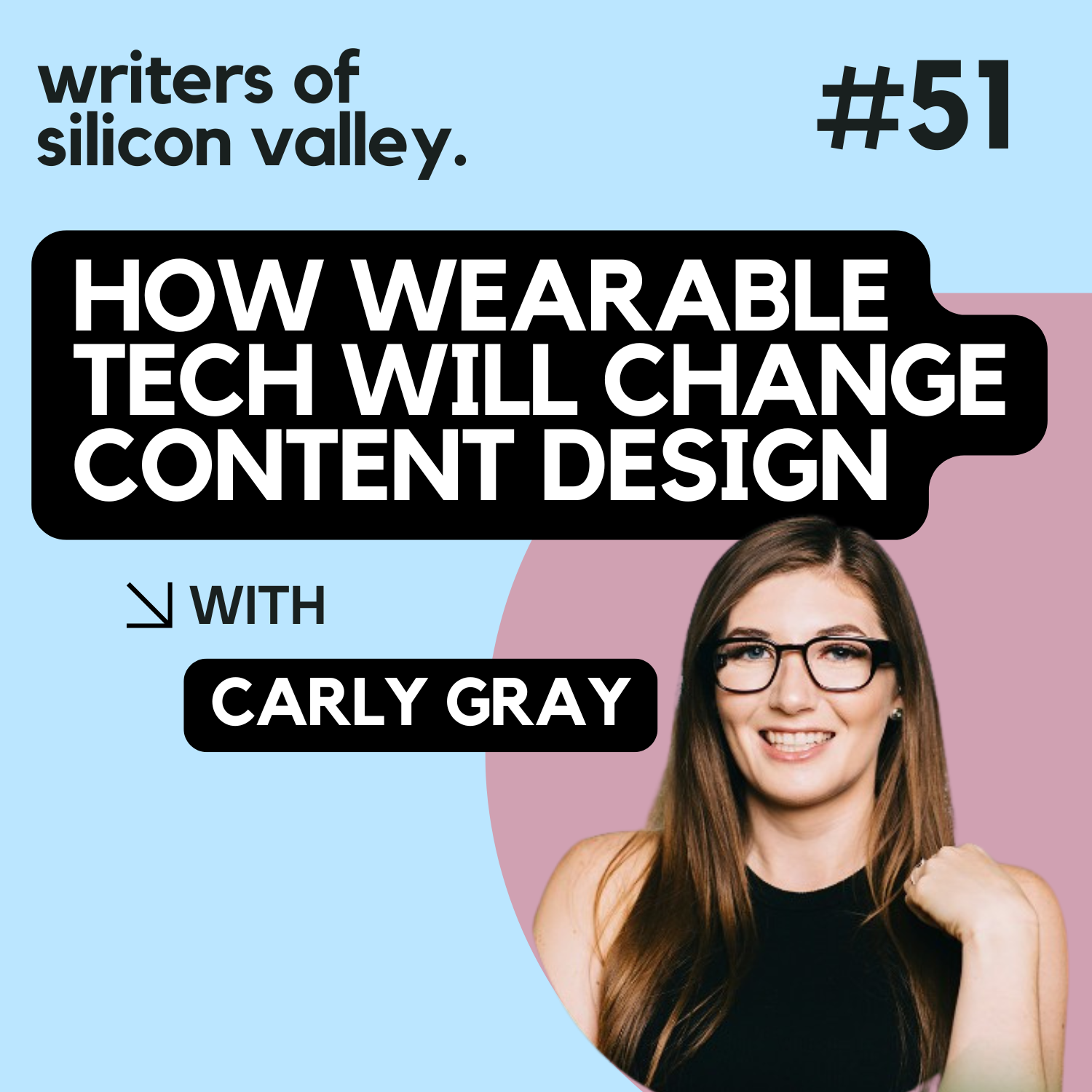
Why wearable tech will change content design (Carly Gray)
Jan 2700:53:15Tap to summarizeWant to learn how to use AI to build with other content designers? Join the Content Design AI Accelerator. Applications open until January 30. Why wearable tech will change content design Smart glasses and wearable devices have been "just around the corner" for years. But quietly, that's starting to change. In this episode, I speak with Carly Gray, a content designer who's spent years working on AR and wearable products, including smart glasses at North and Meta. While much of the industry debates AI and screens, Carly has been designing content for products where there's little or no screen at all. We talk about what changes when content moves off phones and into the physical world, why wearables raise entirely new design and ethical challenges, and what content designers need to start learning now if they want to stay relevant as new platforms emerge. What we talked about: ✅ How Carly moved from technical writing into content design for AR and smart glasses ✅ Why smart glasses are different from VR, and why wearability matters more than novelty ✅ Designing content with extreme space constraints (or no screen at all) ✅ Using sound, voice, and companion apps to communicate when text isn't an option ✅ Why "designing for the bystander" is as important as designing for the user ✅ What wearable tech reveals about the future skill set of content designers ✅ Why conversation design and systems thinking matter more in emerging platforms Where to find Carly: Website: carlygray.ca LinkedIn: Carly Gray Twitter: @carlygray
Transcribe →
EPISODE 50! Content design for AI agents (Christopher Greer)
Jan 800:50:17Tap to summarizeTHANK YOU FOR 50 EPISODES! This is the 50th episode of Writers of Silicon Valley. Thank you for listening all this time - through my bad editing skills, a three year break, and me saying "absolutely" a lot. It means so much that you'd tune in once, let alone 50 times. So thank you :) As an extra 'thank you' I'm offering 35% off Advanced UX Content for Product at UX Content Collective. Use PODCAST35 at checkout :) Here's to 50 more. Content design for AI agents Christopher Greer has been creating cool content design resources for years, but his latest is a real accomplishment: a Claude Skill that hooks into Figma and critiques UX writing. It turns out Chris is quite optimistic about the state of the content design market. We talk about his work at Stripe, what it actually means to design content for AI agents and internal systems - not chatbots for end users, but the infrastructure, context, and governance that sit behind them. Chris shares how content design skills translate directly into agent design, why context management is now a core capability, and how content designers can scale their influence by working closer to engineering and systems. What we talked about: ✅ Why content design skills map closely to designing AI agents and systems ✅ Context management, "context rot," and why structure matters more than prompts ✅ How content designers can scale influence through internal tools and governance ✅ Working as a content designer inside an engineering-led company like Stripe ✅ What Chris learned building and open-sourcing a Claude skill for UX writing critique ✅ Why GitHub and version control are becoming practical skills for content designers ✅ The risks AI poses to junior roles, and the strategic work that won't disappear ✅ Why qualitative judgment, taste, and human evaluation still matter Where to find Chris: LinkedIn Chris's blog Chris's Claude Skill
Transcribe →
Best of 2025: 5 pieces of content design wisdom
Dec 1500:23:56Tap to summarize👉 Get up to 35% off everything at UX Content Collective until December 16! It's the end of the year, which means it's time for a little reflection. I've picked 5 clips from the most popular episodes of the year. Have a wonderful end of the year / holiday season, and I'll see you all in 2026. Any suggestions, interview ideas? Hit me up at patrick@uxcontent.com.
Transcribe →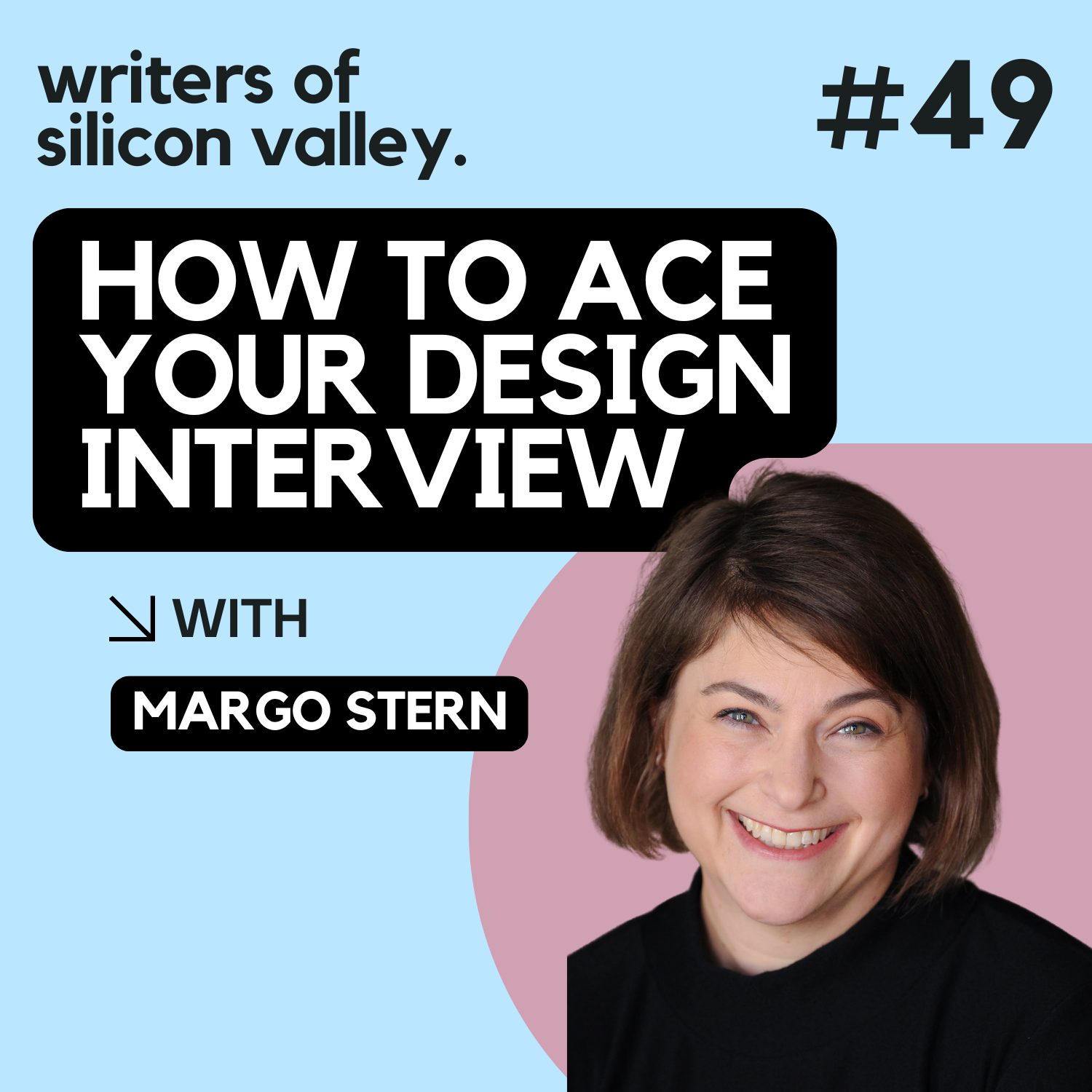
How to ace your design interview (Margo Stern)
Nov 1900:58:50Tap to summarizeDo you enjoy the podcast? Please leave a review! 👉 Buy Margo's book, "Good Job", at her website 👉 Our new course, Advanced UX Content for Product, is out! Use PODCAST20 to get 20% off. 👉 Sign up to our UX writing newsletters How to ace your design interview Interviews are horrible. No one likes them. But does it have to be that way? Margo Stern's new book, Good Job, takes on design interviews - both for candidates and for the people creating the interview process. She goes into great detail about how to actually ace a design interview, and for hiring managers, how to design an interview process that treats people like human beings. We delve into all sorts of great discussions about interviews. How to ace them, what they get wrong, and what companies need to do to make the interview process better for designers. Enjoy! What we talked about: ✅ Why interviewing is a separate skill from doing the job ✅ How candidates can prepare through self‑reflection, rehearsal, and storytelling ✅ Why the STAR method works (and why most people use it badly) ✅ The real reason case studies fall flat and how to make yours a story, not a status report ✅ How to research a company without crossing the line into oversharing ✅ The advantages extroverts have in interviews and how introverts can level the field ✅ How candidates can show genuine interest without being performative ✅ How to read red flags in interview processes (ghosting, unclear expectations, chaotic loops) ✅ The danger of applying to too many jobs and why "less, but better" works for both sides ✅ The key questions both candidates and interviewers should ask Where to find Margo: 📖 Margo's website Do you enjoy the podcast? Please leave a review! 👉 Our new course, Advanced UX Content for Product, is out! Use PODCAST20 to get 20% off.
Transcribe →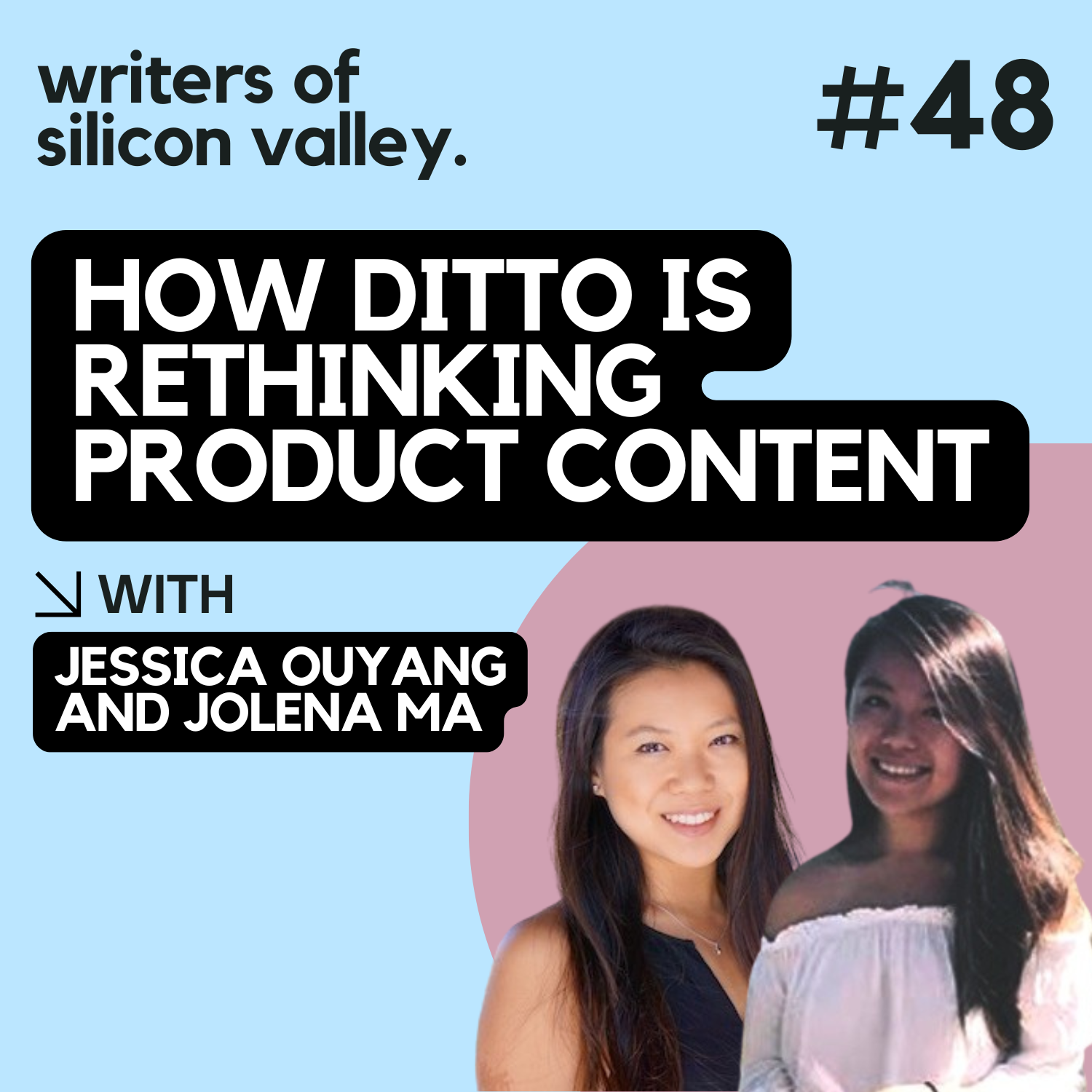
How Ditto is rethinking product content (Jessica Ouyang and Jolena Ma)
Sep 1700:54:54Tap to summarizeDo you enjoy the podcast? Please leave a review! 👉 Our new course, Advanced UX Content for Product, is out! Use PODCAST20 to get 20% off. 👉 Sign up to our UX writing newsletters Ditto 2.0 is here, and wants you to rethink product content Five years ago, Ditto launched as one of the first tools built specifically for managing product copy at scale. Now? It's powering content systems for some of the biggest design teams in tech and it just relaunched with a major update. In this episode, I catch up with co-founders Jess and Jo about what they've learned since founding Ditto, what it's like to rebuild a product from the ground up, and why strong content systems are more essential than ever especially in the age of AI. Learn what these founders are hearing from the heads of design teams about content, why systems thinking is more important than ever, and why they're optimistic about the future of content design. What we talked about: ✅ How Ditto's vision has changed (and stayed the same) ✅ Why rebuilding the product from scratch was the right call ✅ What they've learned from working with dozens of enterprise teams ✅ How to support content systems in companies with messy, legacy infrastructure ✅ What sales has taught them about communicating the value of content ✅ How AI is shaping expectations—and where it actually adds value ✅ Why more content designers should think like founders Where to find Ditto: 📖 Ditto Do you enjoy the podcast? Please leave a review! 👉 Our new course, Advanced UX Content for Product, is out! Use PODCAST20 to get 20% off.
Transcribe →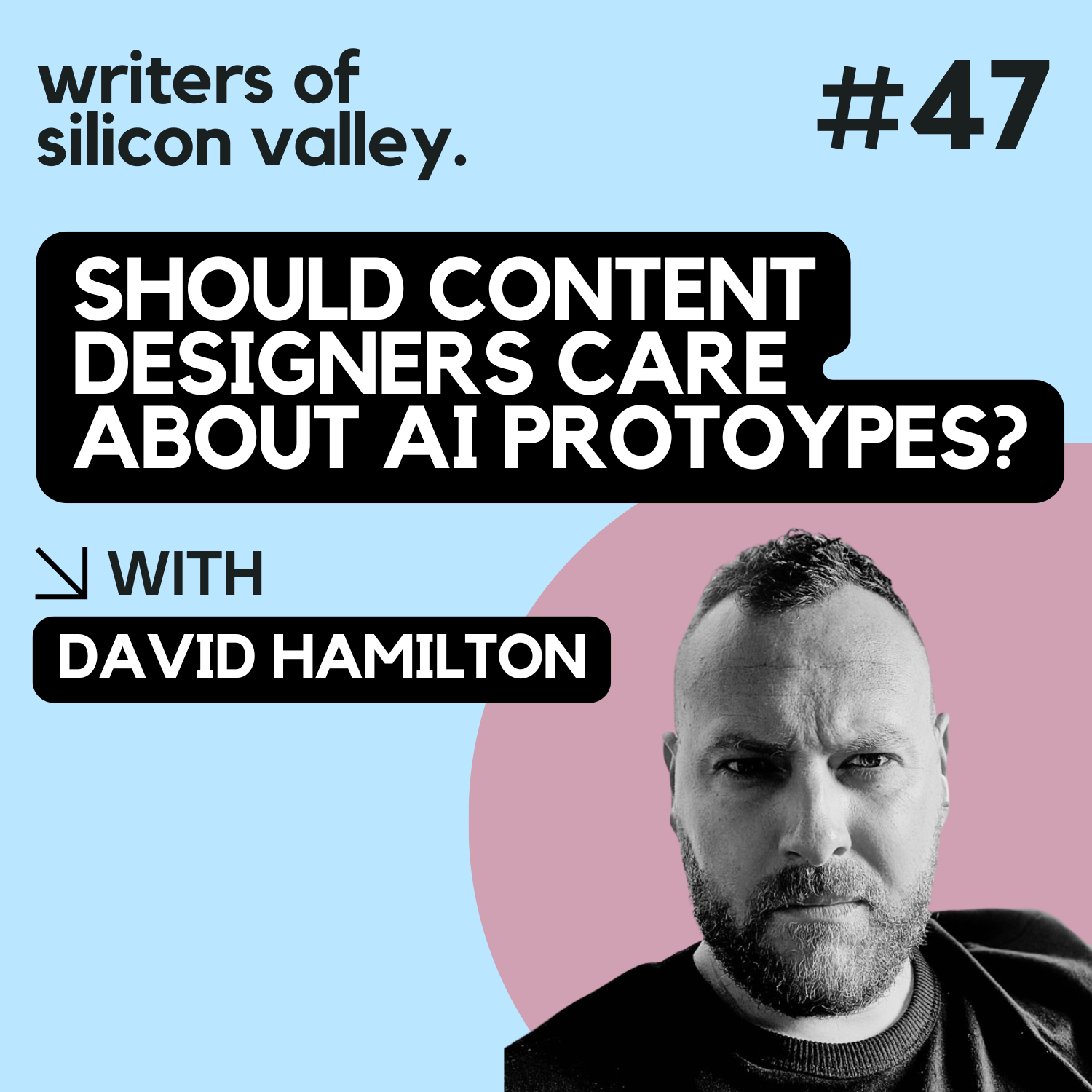
Should content designers care about AI prototypes? (David Hamilton)
Aug 2000:55:07Tap to summarizeDo you enjoy the podcast? Please leave a review! 👉 Our new course, Advanced UX Content for Product, is out! Use PODCAST20 to get 20% off. Should content designers care about "vibe coding"? AI prototyping has taken the design world by storm. Replit, Cursor, Lovable, Figma Make...all of them are certainly very cool. But do they actually change the way we design? And if they do, should we even care? David Hamilton joins me to talk about it. What we talked about: ✅ Designing content for cars across screens, systems, and contexts ✅ The stakes of language in safety-critical interfaces ✅ Why consistency across app and vehicle language really matters ✅ How content designers can shape AI systems ✅ What "vibe coding" is and why content still plays a key role ✅ Why the last 5% of polish is the new differentiator ✅ The importance of taste, trust, and systems thinking Where to find David: 📖 LinkedIn 📖 David's Substack Do you enjoy the podcast? Please leave a review! 👉 Our new course, Advanced UX Content for Product, is out! Use PODCAST20 to get 20% off.
Transcribe →
UX writing for video games (Ben Moran)
Aug 6, 202500:56:20Tap to summarizeDo you enjoy the podcast? Please leave a review! 👉 Our new course, Advanced UX Content for Product, is out! Use PODCAST20 to get 20% off. 👉 Check out the Content Design Salary Survey When words make or break the player experience Most content designers work in apps, websites, and services. But what happens when your product is a massive open-world RPG or a competitive shooter? In this episode, I talk with Ben Moran, a UX writer who's worked on AAA video games, about the unique challenges of designing language for games. From menu systems and HUD elements to skill trees and settings, we explore how content design in games is a constant balancing act between immersion and usability. We also talk about the differences between "content design" in the gaming industry (quests, story content) versus UX writing for UI, and why game studios are missing opportunities when they don't bring dedicated UX writers onto their teams. What we talked about: ✅ How Ben transitioned from product design and copywriting into UX writing for games ✅ The difference between content design for quests and UX writing for UI ✅ Immersion vs. usability: why both matter, and how to find the balance ✅ Deciding when to name things in a game (and when not to) ✅ Making complex systems like skill trees, armor upgrades, and settings feel approachable ✅ Why players will tolerate complexity in gameplay, but not in basic navigation ✅ The missed opportunity when studios don't hire UX writers ✅ Lessons from games that can inspire innovation in digital products Where to find Ben: 📖 LinkedIn 📖 Ben's article on UX writing in video games Do you enjoy the podcast? Please leave a review! 👉 Our new course, Advanced UX Content for Product, is out! Use PODCAST20 to get 20% off. 👉 Check out the Content Design Salary Survey
Transcribe →