← WW2 Pod: We Have Ways of Making You Talk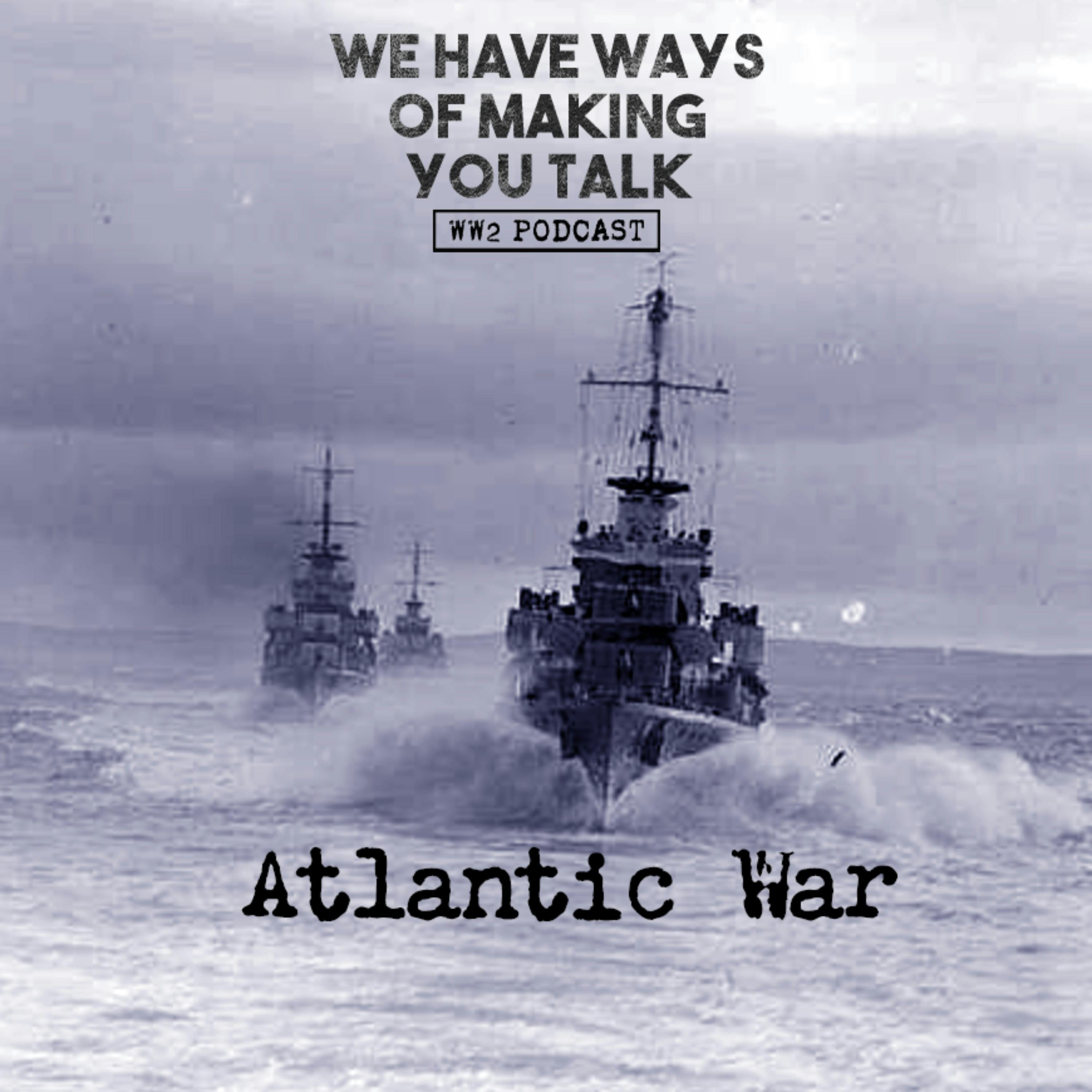
Loading summary
Transcript163 lines
- [00:02]
Host 1 (possibly a historian or narrator)
Thank you for listening to we have ways of making you talk. Sign up to our Patreon to receive bonus content, live streams and our weekly newsletter with money off books and museum visits as well. Plus early access to all live show tickets. That's patreon.com we haveways.
- [00:24]
Sponsor Announcer 1
This episode is brought to you by Ebay Buying a car should feel secure, start to finish. That's why you should buy your next ride on ebay. Whatever you're into, eBay's got it. From classics to SUVs and trucks to imports all in one place, and with secure purchase, the process is streamlined and protected. Secure purchase means no DMV visit. Sellers and titles are verified, all the paperwork is handled, and financing, delivery and insurance options are built right in. Plus, eligible vehicle purchases are backed by up to $100,000 in protection. Looking to sell your ride? Secure purchase makes that easy too. Your buyer and their funds are verified and the title transfer and loan payoff are totally seamless. So skip the hassle. Shop with confidence. Buy your next car on ebay. Ebay Things People Love Secure Purchase is powered by Caramel Dealer Services LLC, an eBay subsidiary.
- [01:16]
Sponsor Announcer 2
This episode is brought to you by 20th Century Studios. Upcoming comedy Ella McKay from Academy Award winning writer director James L. Brooks. Emma Mackey plays Ella McKay, an idealistic young woman who juggles family and work in a story about the people you love and how to survive them. Featuring an all star cast including Jamie Lee Curtis, Jack Loudon, Kumail Nanjani, Iowa Debris Julie Kavner. With Albert Brooks and Woody Harrelson. Ella McKay in theaters December 12th.
- [01:46]
Sponsor Announcer 3
A message from McAfee wondering why the post office is texting you or why you owe thousands of dollars in toll fees because someone's trying to scam you.
- [01:57]
Sponsor Announcer 1
The good news?
- [01:57]
Sponsor Announcer 3
McAfee can help with McAfee's award winning scam detection. It's easy to tell what's real and what's fake over text in your inbox and online.
- [02:06]
Sponsor Announcer 1
If they're fa, you want a free gift.
- [02:08]
Sponsor Announcer 3
Seriously, if they're faking it, they're not making it past us. Get award winning scam detection today. McAfee.com Keep it real.
- [02:26]
Narrator/Reader of historical excerpts
There, quite far from the shore, some dark shapes can be seen with a few flickering lights. Their tankers, auxiliary supply ships of the home fleet, unmistakable with their aft chimney and their solid, grotesque appearance. Suddenly blood rushes to my temples and the arteries beat rapidly, increasingly the pace of my heart. The imposing silhouette of a battleship stands out, precisely revealed by the large chimney, the bridge, the gun turrets and the signal mast in the. It looks like a sleeping giant. And the portholes hermetically sealed without letting in the slightest ray of light give the effect of eyes closed in sleep. I think it's a battleship of the Royal Oak series, I whisper to Endras. But behind it the silhouette of another appears as large and imposing as the first. This time identify it. Without any doubt, it's the Repulse. Seconds turn into hours and minutes, into centuries as we approach to position ourselves for the best possible launch. At every moment we seem to hear the sound of some surveillance boats passing over us. And that's why I activate the operation as much as I can, even at the risk of revealing my presence of my ship. The essential thing is to launch the torpedo safely and then whatever God wills. Attention, tube one. I order fire.
- [03:46]
Host 2 (possibly a co-host or expert commentator)
And that was Capitainen Leutnant Gunther Preen, commander of The U boat U47.
- [03:52]
Host 1 (possibly a historian or narrator)
Alarm. Alarm. Welcome to. We have ways of making talk where Jim and I, we've gone navy.
- [03:56]
Host 2 (possibly a co-host or expert commentator)
We've got navy navy with bells on, haven't we? Let's face it, we're both really into this at the moment. Yeah, this is an amazing story.
- [04:02]
Host 1 (possibly a historian or narrator)
Yeah. And it's the story of course of the Atlantic War, but not the entire thing because it goes on for six years. We're not going to eat all our chips in one go, are we Jim? So welcome to episode one of the Atlantic War.
- [04:13]
Host 2 (possibly a co-host or expert commentator)
We're going to do the decisive first phase up to the end of May 1941. But there is one episode in May 1941 that we're going to leave off, which is obviously that takes place in the last week of that vital decisive month in the war. And that's because that of course is the battle of HMS Hood and the Bismarck and the Prinz Eugen and the King George V and the Norfolk and the Suffolk and the Stringbads in the Atlantic. It is of course the story of the pursuit of the giant German battleship the Bismarck. We were going to tack that on the end of this, but we're not. We're going to have a separate series on it. It's that good a story.
- [04:47]
Host 1 (possibly a historian or narrator)
Yeah. And you could say the sinking of the Bismarck. I think people know how it ends. Right, okay.
- [04:52]
Host 2 (possibly a co-host or expert commentator)
But, but our job is to. Is to. Is to keep up the tension and the jeopardy right to the last minute because that's certainly how I was feel. I was reading up on all this. It's such an amazing story. But so is the war at Stea at the beginning. And I think there's A lot of kind of dnkts in this. This is an acronym that stands for. Did not know that. I mean, obviously there's a large number of people out there who, of course, know their naval history and know their naval history of the Second World War, but I suspect there's quite a few people who don't, not least because we've never really covered it very much, and documentaries and stuff tend to be a little bit superficial and you could be forgiven for being slightly misled by the film Greyhound about the U boats and stuff, and ditto, you know, Das Boot and all the rest of it. But anyway, we're going to go into this in. In some calling it the Atlantic War, because Mark Milner, who's one of the great chroniclers of this and our great friend of the show, Steve Prince, don't really feel it ought to be called the Battle of the Atlantic, because it's not really a battle, it's an ongoing campaign which lasts the duration of the Second World War. It is arguably the most significant and decisive campaign of the entire Second World War, because, of course, all shipping flows through the Atlantic to Britain and to Europe, and without the Atlantic, you're not going to win against the Nazis. So it's incredibly important. And so we're calling it the Atlantic War. And episode one, tentatively titled no Phoney War at Sea and nor was there.
- [06:08]
Host 1 (possibly a historian or narrator)
Well, and of course, this is the point, isn't it, right from the start, right from the moment hostilities are declared, it starts, doesn't it? It gets underway at sea with bells on. Exactly. And the thing is, if there's any way I would probably not want to go, it's in the icy waters of the North Atlantic, clinging onto a life raft, apparently.
- [06:28]
Host 2 (possibly a co-host or expert commentator)
Pain is death, though, so they say.
- [06:29]
Host 1 (possibly a historian or narrator)
Oh, great.
- [06:31]
Host 2 (possibly a co-host or expert commentator)
I think that your final moments as you slip below the waves would be very lonely, wouldn't they? And you'd just be thinking, oh, my God, I'm going to be fish bait. I think that'd be hard to reconcile.
- [06:40]
Host 1 (possibly a historian or narrator)
Yes. So we start with the sinking of the SS Athena. This is an extraordinary story that begins right at commencement of hostilities. 3rd September, 1939. The Athena is steaming from England to Toronto with 1100 passengers on board, including more than 300Americans, large number of Canadians, British people and European refugees. By the evening of third, she's off Hebrides. It's a cold, strong westerly. I mean, plus a change in that part of the world. The ship's pitching, the ship's rolling. And aboard is Jimmy Goodson, who's an 18 year old Canadian who's returning home from study in France. Born in the usa, but to British parents, but brought up in Canada. So it's kind of typical really. And he's just climbed a staircase to the dining room where the ship lurches and he hears a loud crack. Moments later, the lights go out, people start screaming. The Athena comes to a halt and starts listening. Water's pouring in and a huge gap in a wooden staircase. Because he's traveling third class, he helps pull as many women as clear as he possibly can from the. From the chaos, the calamity that's ensuing. He throws off his jacket, kicks off his clothes and dives down to help those unable to swim get out onto the broken companionway. Hoists out children and others. One by one, he asks the crew for help, but they all say, I can't swim, mate. Sorry. He managed to get everyone out of his immediate area and then is asked by the crew to help search in the upper corridors. The ship's now listening badly. He's wading, he's swimming. He finds no one alive.
- [08:00]
Host 2 (possibly a co-host or expert commentator)
Do you remember those sequences in the Titanic film of Leo kind of swimming through the. It's just like this. It's just clearly where they've obviously read Jimmy Goodson's book, Two Mil in the.
- [08:09]
Host 1 (possibly a historian or narrator)
Clouds and all he finds is a dead Scotsman who'd been singing ballads in the lounge earlier.
- [08:16]
Narrator/Reader of historical excerpts
That's poignant, isn't it?
- [08:17]
Host 1 (possibly a historian or narrator)
Yeah. This is the 3rd of September 1939. Put all of your phony war stuff aside, is the thing. It's being fought tooth and nail in the Atlantic from the very beginning.
- [08:26]
Host 2 (possibly a co-host or expert commentator)
There's no phony war at sea.
- [08:28]
Host 1 (possibly a historian or narrator)
Exactly. He's cold, he's soaked. He gets onto the deck, he's about to get into a lifeboat, but it's already full. And then one of the ropes on the davit slips and everyone's tipped screaming.
- [08:37]
Host 2 (possibly a co-host or expert commentator)
Into the water because it's being lowered down. Kind of like.
- [08:40]
Narrator/Reader of historical excerpts
Can you imagine?
- [08:41]
Host 1 (possibly a historian or narrator)
Yeah, I mean, the thing is, this is all absolute fingernail stuff, isn't it? The last boat's being loaded on the other side and he spots another lifeboat 100 yards out to sea. So using one of the ropes, he climbs down into the sea and then swims as hard as he can for the lifeboat. Several passengers try to push him away, banging on his knuckles, but a young woman comes to his rescue and helps.
- [08:59]
Host 2 (possibly a co-host or expert commentator)
So you're on the edge of the edge of the lifeboat and you're trying to clamber board and Someone's knocking your knuckles, I mean, bastards. Yeah, I think there's a little bit of selfish survival instinct kicking in.
- [09:09]
Host 1 (possibly a historian or narrator)
Tiny bit. But he's rescued, he's pulled aboard. They get a blanket around him and he collapses, exhausted. The woman and she's only wearing her underclothes, obviously stripped off and gone swimming or you know, it's the, it is after all, late.
- [09:21]
Host 2 (possibly a co-host or expert commentator)
No, she's dressing for dinner. She's dressing for dinner.
- [09:23]
Host 1 (possibly a historian or narrator)
There we are. Yeah. They row hard, they sing songs. Obviously they need to get away from being sucked down into the sea by the sinking ship. This is extraordinary. They're rescued the following morning at 4:30 on the 4th of September by a Norwegian tanker called the Knut Nelson. Taken to Ireland. Crowds come to greet them. These crowds have obviously, you know, they're rubbernecking a bit, aren't they? Like this shit been sunk. He's asked by a brother and sister who are both aged about 12. They ask him whether they've seen their parents and he's, he's overcome by fury there and then he decides to do something. And this is, I mean this is just a movie, isn't it? Jimmy Goodson there and then decides to do something about it, about what's happened. He goes back to Canada it joins the Royal Canadian Air Force. Then he joins 43 Squadron 416 Squadron and eventually 133 Eagle Squadron later, the bedrock of the mighty 8th's 4th Fighter Group. And he's a leading ace and that could set up his story, couldn't it, that event?
- [10:18]
Host 2 (possibly a co-host or expert commentator)
Well yes and in actual fact in the new year we're going to be doing a series on the four fighter group of which Jimmy Goodson will be playing a very, very large part. So we're going to park his story there. His story is amazing by the way. Very, very cool guy. Chima on the Clouds is one of my favorite all time memoirs of the air war. It's just completely brilliant. Great friend of the and great personal friend Roland White republished it some years ago. Anyway, that's that. So park Jimmy Goodson right now.
- [10:43]
Host 1 (possibly a historian or narrator)
I mean it's interesting, isn't it? Jimmy Goodson's war begins with the, with the war in the Atlantic. And as you said Jim, it runs from the start to the end of the war. The thing has been something like U30 which is already patrolling the Atlantic, already out sniffing about, looking for, looking for targets.
- [10:57]
Host 2 (possibly a co-host or expert commentator)
Yes, of course, because U30 is commanded by Fritz Julius Lemp and he, he's not one of the one who survives. He gets he gets killed in May 1941, that month of months. But we'll be coming on to that later on in this series.
- [11:11]
Host 1 (possibly a historian or narrator)
But the thing is, it's worth looking at the. Looking at the contenders as the Atlantic War begins and the Royal Navy. James, the senior service, the pillar of the British Establishment, treat the Royal Navy with the decorum and respect it deserves.
- [11:25]
Host 2 (possibly a co-host or expert commentator)
Who is the new Head of the Admiralty? Of course, it's Winston Churchill, brought back into the Cabinet on the declaration of war.
- [11:32]
Host 1 (possibly a historian or narrator)
Winston is back.
- [11:34]
Host 2 (possibly a co-host or expert commentator)
He's back. Winston's back that day, that very day, that very Sunday. And he has his first meeting of the Admiralty Board on the evening of 3rd of September in historic rooms in the Admiralty. I mean, this is where the naval defeat of Napoleon is plotted. It's where Churchill and Admiral Fisher quarrelled over the Dardanelle, for example, back in 1915. First Sea Lord is Admiral Sir Dudley Pound, who is a problematic figure, I think it's fair to say. He's not well. He's actually got. I think he's got cancer at this point already, but it's one of those sort of slow, lingering ones. So he's often tired. He's in that position because he's not a kind of an ABC Admiral Cunningham, Admiral Forbes, Admiral Fraser kind of. Or even Admiral Tovey, who we'll be getting onto. He's not one of those sort of dynamic types. He's a solid kind of pen pusher, very experienced, seen as amenable, an enabler, a kind of an operational rather than a tactical chief.
- [12:23]
Host 1 (possibly a historian or narrator)
Well, and also the thing the Navy's come to terms with between the wars is the big battles, the big encounters, the decisive naval encounters are probably not the way things are going to be won. That it's about increments, it's about attrition, it's about chipping away at the other side. It's about.
- [12:39]
Host 2 (possibly a co-host or expert commentator)
And it's about scale.
- [12:40]
Host 1 (possibly a historian or narrator)
It's about scale. And you could only do all. Do all those things with scale. It's about cranking the Germans down to the point where they have no options left and not giant climactic naval battles in the Nelsonian style. So Pound very much represents this sort of the Navy coming to terms with this, you know, new way of war that a lot of the admirals that you've named, they do not like this. They want to have their climactic battle.
- [13:05]
Host 2 (possibly a co-host or expert commentator)
They like the Nelson Sonian touch, they.
- [13:07]
Host 1 (possibly a historian or narrator)
Want their battles of the Nile, they want their Copenhagens, they want their Trafalgar, but they're not going to happen, right. You never get a thing on the Jutland scale again. And everyone, everyone is resigned to the fact that that's over. And a pound represents that, doesn't he, as an appointment. And also represents, you know, the Chamberlain government's mood, which is to back the assets you've got, spend deep on some of it, you know, because after all, capital ships are really, really expensive. And also Chamberlain's a former Chancellor Exchequer. He also understands if you build capital ships, you keep people in work and all this stuff.
- [13:37]
Host 2 (possibly a co-host or expert commentator)
There many, many, many reasons for investing in capital ships between the wars, it has to be said. I think the main thing is, you know, he's lacking the Riz, isn't he? He's not a particularly charismatic person. But the Royal Navy in 1939 is the world's largest by a margin. And you know, we do an awful lot of sort of, you know, very well alone Britain in 1940, you know, David against Goliath and all this kind of stuff. But you know, the Goliath of world navies is the Royal Navy in 1939. And that puts it in a very, very good position to do what it needs to do, which is supply its war effort waters secure and keep its supply lines secure. And the Royal Navy is Britain's senior service and for a reason. And it is, it's a military foundation of the empire but also a large number of extra imperial assets. And you know, mentioned this a couple of times before but you know, it's a very, very famous map of World shipping in 1937 where you can see the ant lines of trade routes all emanating out of London and out of the uk. And one of the strongest ones is going down to South America and to Argentina, which is frankly mostly owned by British companies. You know, nearly all the ports, the railways are, most of the big farms are, etc. Etc. A lot of the shipping is and so on. And so what does the world's largest navy look like? Well, it's 15 battleships. These are beasts. You know, these are 270 meter long vessels. Yeah, we talk about bristling with firepower. It's these, I mean these are absolute beasts. There's seven aircraft carriers, there's no other country that's got seven aircraft carriers. Fifteen heavy cruisers. Now a heavy cruiser is a very well armed battleships, heavy cruisers and battle cruisers, there's not a lot in it. And your battle cruiser, heavy stroke heavy cruiser is basically a battleship which is faster. So it's sacrificing armor for speed. But in terms of Firepower, it's right up there with the battleships.
- [15:22]
Host 1 (possibly a historian or narrator)
Well, a lot of this is the product of the treaties that follow the First World War, where basically weight and armament and so on are the things that diplomats have thrashed out that navies are then fudging. So yeah, it'll be more lightly armed, but that means you can have it quicker or if it's hep. And they're all playing with these, with these restrictions. But the British are still far ahead. There's 49 light cruisers, 192 destroyers, 73 escort vessels, nine patrol vessels, 52 minesweepers. And obviously those who are familiar with the podcast and about how many minesweepers there will be later in the war where the incredible proliferation of all of these assets. But the Royal Navy starts from a very, very strong position. 62 submarines, which is more than the.
- [16:05]
Host 2 (possibly a co-host or expert commentator)
U boat arm in the Kriegsmarine, incidentally. Only the US Navy has anything like this number of warships. And of course it's not in the war, it's neut. So, you know, don't worry about that. And there's plenty more shipping under the way. So under construction in the many shipyards around the country in September 1939 are 19 further cruisers, 52 destroyers, six further battleships, six further aircraft carriers, and 11 further subs. And you know, there has been a huge amount of criticism in the Royal Navy at the start of the war for being aging and stuck in the past and all the rest of it. And it's true that many ships date back to the First World War, but that's not an issue. What one has to understand is that doesn't mean it's old hat. I mean, the U.S. missouri, for example, on which the surrender of the Japanese was signed in September 1945, was used, you know, the first Gulf War in 1992. These are huge investments. So when you're saying, you know, they're built in the First World War, what that means is the hull is laid down, the structure is laid down, but you're constantly refining and adding, you know, changing the guns, changing the radar on it, updating it with its electronics and its, you know, navigation aids and all sorts of stuff, gun laying, radar, blah, blah, blah. So just because it's built in the First World War doesn't mean it's out of date and it hasn't. And what Stanley Baldwin and then Chamberlain as Chancellor Checker and then subsequently as Prime Minister have very sens emphasized is that capital ships are the most expensive and time consuming things to do. So you might as well do these in a time of peace. And of course it provides jobs as well, so you rightly pointed out. So you want to refit your, your warships, your capital ships, and you want to build new ones while you've got the chance. And once you're in a war, then you want to be building smaller stuff for the most part. You know, destroyers, corvettes, sloops, you know, blah, blah, blah, minesweepers.
- [17:37]
Host 1 (possibly a historian or narrator)
I mean, the other thing that springs to mind here is, is very often you say, well, you know, they're from the First World war. Well, the First World War is what, in 1939? It's only 21 years ago. How far away are we from the Second Gulf War now? Well, further. And yet we would expect roughly the same ships and aircraft, tanks having been refit and all that sort of thing. It's very interesting because the First World War sits in people's imaginations as stodgy, stark, the last Victorian War, General Melt shit. Yeah, exactly. And then the Second World War is the beginning of the modern age, so to say old ships from the First World War. Well, naval technology in the First World War was, was cutting edge because after all, the other thing is the Royal Navy is a fundament of technological innovation and spending.
- [18:18]
Host 2 (possibly a co-host or expert commentator)
And of course, as everyone knows out, you know, Chamberlain was just interested in appeasing and he wasn't interested in rearming, despite the fact that the Royal Navy was, you know, shipbuilding and warship building out producing every other country in the planet, including the U.S. including Japan.
- [18:33]
Host 1 (possibly a historian or narrator)
Because all those naval treaties we touched on a moment ago, they all favor the Royal Navy. The Royal Navy comes out on top in all of those treat.
- [18:41]
Host 2 (possibly a co-host or expert commentator)
Yeah, because Britain is a force for good globally, everyone knows that. But it's not just a navy, it's a merchant navy. So it has the largest merchant fleet in the world, 12 and a half thousand merchant vessels. Just imagine what that looks like, you know, so that's around 33% of the world's shipping. And on top of that they have, at various points in the war, they will have access to around 50% of the world's shipping as well. So, you know, Greece, Norway, Holland, other major players, they don't have access to that in 1939 because they're still neutral and independent countries. But once the swastika is fluttering over Amsterdam and Oslo and Copenhagen, those fleets are coming over to Britain and you know, in June 1940, the whole, all those ports in Britain are just awash with foreign merchant vessels and good, they can help the Allied war effort as.
- [19:28]
Host 1 (possibly a historian or narrator)
Unanticipated consequences of defeating countries. They're seizing these countries to get hold of their stuff. You seize Belgium to get hold of the Belgian economy, you seize France and all the shipping then buggers off because they don't get what they want. All these unintended consequences that are built into German conquest. The first one is the merchant fleets of the world sail to Britain.
- [19:48]
Host 2 (possibly a co-host or expert commentator)
Well, we will be getting on into this, into this series, but, but I think. I think one of the things that's really, really interesting about, about the German war effort is they never really understand, crack properly plan for their naval war. They just don't get it. And that's because they're continentalists and landlubbers for the most part, and Hitler's very much so. We've talked over and over again about Germany missing opportunities in the Second World War, and you can argue that one of the greatest areas of missed opportunities is in the naval war. What this means is that strategically, when Churchill takes over as Head of the Admiralty in 3rd of September 1939, he's heritage a pretty comfortable position, frankly. I mean, the Imperial Japanese Navy is quite large, but that's busy with China and Soviet Union at the present. And it's certainly not a threat to Britain in 1939 or even in 1940. The Italian fleet is definitely the most modern part of its own armed services, but it's not yet at war. And it has the most subs of any submarines of anyone in the world, any Navy in the world, 106, but doesn't have any carriers, has only four battleships, it has no radar at all. It's modern in terms of its ships are quite new, but it's not modern in terms of its equipment. And what this means is in 1939 the Royal Navy could quite comfortably do the following. It can keep the Mediterranean fleet and going, can keep presence on the China station and in the Pacific, and it can keep the whole fleet at scupper Flow, which is this bay in the Orkneys north of Scotland, and deploy forces all around the UK and impose an economic blockade against Germany in the North Sea. And you know, there is this other crucial advantage because the Royal Navy is really large and it's about to get larger. But what it means is there's a huge amount of experience and knowledge within its ranks. So this is the failing of having a small army, because suddenly when you need to expand it, where do you get your superstars from? Where do you get that absolute backbone of experience? You've got to. You've got to learn it on the job. And that goes a long way to explaining some of the failings on land in the first part of the war. Whereas in the Navy there's a huge amount of experience. So when you suddenly need to expand again, you've got that really firm foundation and you can augment it by a lot of people who already know about ships and their knots and read the tides and the wind, because we're an island nation. So there's lots of people who know about yachting and sailing and that's a huge advantage, you know, so yachtsmen go to war. It's a well known phrase, you know, they all join the Royal Navy Volunteer Reserve Reserve. And the number of people that are joining the Royal Navy Volunteer Reserve for the duration of the war on short service commissions or in the ranks or whatever, they've already got that kernel of knowledge. So you're not starting from scratch. And that makes a huge, huge difference. So in 1939, do not underestimate the power and clout that our operations at.
- [22:28]
Host 1 (possibly a historian or narrator)
Sea have, but also don't underestimate the Germans ability to strike civilian targets as soon as the war begins. So this is the thing that's shocking about the Athenia. Is she supposed to be exempt from attack under. Under the prize rule, which are conditions of the Hague Convention, which Germany is a signatory to. And you're not meant to sink. Passenger ships and merchant vessels can only be sunk once the crews have safely been rescued according to the rules. You know, the Athena is a direct and flagrant breaking of those rules and of that convention.
- [22:58]
Host 2 (possibly a co-host or expert commentator)
But I thought it was a troopship boss.
- [23:00]
Host 1 (possibly a historian or narrator)
Yeah, of course you'd say that. Who's to tell, actually, through a periscope, bobbing around and so on. And obviously the U boat arm, the German U Boat arm want strike a blow because they want to show that they're relevant and important and they have something to offer and they're in first, best dressed, they're showing willing and all these things. And the Athenia is unfortunately on the receiving end of that enthusiasm.
- [23:23]
Host 2 (possibly a co-host or expert commentator)
Well, we should get onto the German side of things because where are they at with the Kriegsmarine and what are their plans? And you know, it is amazing really, that there's no question that the greatest fear that the British have is from the threat of U boats, which after all in 1917 caused huge amount of alarm in the Atlantic and certainly went some way to crippling Britain's sea lanes and supply lines during the First World War. To me, it is still absolutely Astonishing that you wouldn't from a Nazi point of view that if you're going to build up a naval force, submarines is where it's going to be at, surely. But no. Which is one of the reasons why Fritz Julius Lemp doesn't get his knuckles wrapped at all by Admiral Donuts who is the commander of the bdu, the U Boat Command, because he's absolutely delighted that the U boats have struck first, just as you point out.
- [24:11]
Host 1 (possibly a historian or narrator)
Out. Yeah. Well, yes, because to be honest, you can overemphasize this. It's inter service rivalry. Right.
- [24:17]
Host 2 (possibly a co-host or expert commentator)
And it's into, into service rivalry.
- [24:19]
Host 1 (possibly a historian or narrator)
It's into into service rivalry, which is also a thing the British aren't immune to. You know, the aircraft carrier boys have got a point to prove versus the battleship boys versus the submarine lads. And, and it's the same in Germany. But what's happened in Germany is because conspicuous consumption in defense has been part of the, of the Nazi political program. You buy big battleships, build big battleships to look potent on the world stage and to show that you're poked on the world stage in the way that U boats, they don't have that glamour, do they, politically?
- [24:47]
Host 2 (possibly a co-host or expert commentator)
Well, and we know that Hitler likes big.
- [24:49]
Host 1 (possibly a historian or narrator)
He likes it big, man.
- [24:51]
Host 2 (possibly a co-host or expert commentator)
Yeah. But liking something big and wanting to show the German population that you're going to kick butt is not a good reason to focus on surface vessels and warships. And completely obvious that Britain is utterly dependent on seaboard trade, it being an island. So clearly the role of the Kriegsmarine is to sever those sea lanes. And as we've already pointed out, you know, the days of huge great battles like Jutland and capes of Vincent and Trafalgar are long gone. So Admiral Karl Donitz, who's not even an admiral in summer of 19, it's not until the start of the war that he becomes a rear admiral. I think he's in charge of the, of the U boats. And the fact that he's not an admiral in charge of U boats tells you all you think, all you need to know. And he has been since 1935. Clearly he's a U boat man. So he thinks they held the key to defeating Britain. But I would argue that he's right on this. He might have been a delusional idiot by the second end of the Second World War, but at this point he's absolutely bang on the mud money. And you know, and submarines are much more developed than they were in 1918. The, the Mark VII B is, is a pretty good boat. They can dive much quicker, they're faster on the surface, they've got more sophisticated weaponry and communications equipment. Of course torpedoes that they've developed are now weightless so they're harder to detect. There's improved radio technology means that the U boats can also hunt together in packs should they want to and done it certainly wants them to do that. And also so anti submarine measures have improved. So there's lots of good reasons for backing your U boat arm. But Dunwich, it has to be said, is pretty much a lone voice in this in the Kriegsmarine. Everyone else in the Kriegsmarine is all over surface vessels. And the idea is, there's no question about it, that if you can get a fast cruiser and a couple of destroyers out into the Atlantic you can wreak absolute havoc on merchant vessels. And if you want a kind of a proof of of concept of this, think about the Malta series we did and Force K cause absolute mayhem.
- [26:42]
Host 1 (possibly a historian or narrator)
Yeah.
- [26:42]
Host 2 (possibly a co-host or expert commentator)
The problem is of course is they're much easier, they're easier to detect because they're larger and they've also got to be supplied at sea. And if you haven't got any overseas bases that's problematic because you've then got to have following you around. You've got to have lots of supply ships which are also very vulnerable because what do you do? Do you protect those as well? There's a whole host of problems but Goering of course is now the head of the Four Year Plan and has instigated this is in the late 1930s. From 1938 onwards he's instigated this massive rearmament program. The Luftwaffe is to increase fivefold to nearly 22,000 aircraft for example. But the Kriegsmarine is going to launch what is called the Z Plan. And this is prepared over the summer of 1938 by a team headed by Capitaine Sir Z, Helmut Hayer, who is the head of the operations department at the Naval Wall Staff. And Hayer makes the assumption that if Britain imposes a naval blockade, Germany wouldn't be able to overcome it except on occasional temporary basis of which is absolutely spot on by the way. The only solution is to disrupt Britain's overseas trade. This is the Kriegsmarine's prime objective. But it has to be done beyond the blockade. So disrupting Britain's trade but by escaping through the net of the economic blockade, you know, the naval blockade which is imposed on Germany and of course the start of the war. That's quite easy job for the British to do because you're talking about the narrows of the Baltic Sea and then as it bursts out into the North Sea which is, you know, not a very wide stretch of water. So it's comparatively straightforward. So far so good that that all seems quite reasonable. And obviously U boats are the best way to do this because they're the easiest to dodge a blockade. There's no such thing as an economic blockade if you're a U boat. Yeah, basically. But Haier is a surface vessel Van and he believes that a cruiser war is the way to go. It long range, powerful cruisers and what he calls pocket battleships which are heavily gunned smaller, faster vessels supported by tankers. Yeah, but I mean it's bonkers isn't it?
- [28:39]
Host 1 (possibly a historian or narrator)
Well it certainly is a leap of faith. Right as a strategy and not a particularly realistic one. I mean the thing is that the Royal Navy is amply equipped to deal with the surface threat and what they're not doing here is factoring in air power and the air is going to change everything. In naval encounters battleships are going to be revealed to be incredibly vulnerable to air attack, aren't they?
- [29:02]
Host 2 (possibly a co-host or expert commentator)
They.
- [29:02]
Host 1 (possibly a historian or narrator)
So he's wrong twice over. He's wrong on his, he's wrong on his own terms in terms of what the situation is right now and he's wrong in terms of how things are going to pan out as new technology enters the picture. They're only going to be able to make that work if they've got overseas colonies is the thing. If they're going to have these fleets marauding, they're going to need overseas colonies. And I think it's quite interesting, isn't it that the commander in chief of the fleet, Admiral Rolf Karl says a war against Britain means a war against the Empire, against France, probably also against Russia and a number of countries overseas. In other words against one half or two thirds of the whole world. He's absolutely right. They can see the problem, they've identified the problem and now they're going to solve it by exacerbating the problem.
- [29:46]
Host 2 (possibly a co-host or expert commentator)
So this is amazing, isn't it? So Admiral Karls solution for this is he goes well what we need to.
- [29:51]
Narrator/Reader of historical excerpts
Do is we need to have large.
- [29:52]
Host 2 (possibly a co-host or expert commentator)
Scale overseas conquests and the rapid development of a huge fleet to achieve the dream of global naval domination. But it is mad, okay? Everyone's getting very, very carried away by kind of, you know, scenes from Nuremberg rallies and how mighty they are. There's huge problems of this because huge fleets require vast amounts of steel. They require huge shipyards, they require huge workforce, they cost vast amounts of money and they take a long time to build. None of those things Germany has in its favor. I mean, you know, it just doesn't have it in its legend.
- [30:29]
Host 1 (possibly a historian or narrator)
Could you argue though that this is the navy going? Well, we can have a war. Yes, my Fury, we can have that war you want, but just not yet. And that actually what they're doing is creating an opportunity to stall that they're creating an opportunity to go, you know, yeah, jam tomorrow, you know. Do you know what I mean?
- [30:46]
Host 2 (possibly a co-host or expert commentator)
Yes, I suppose. But that feels spurious to me. The big flaw is that you're going to build this huge great surface fleet which is going to break through the British blockade, which is the largest navy in the world, world. And to support that breakout, you've also got to have tankers breaking out and supply ships with more fuel and food and ammunition and everything, which is also going to break through the blockade. The whole point about the blockade is it stops ships from going through. So how is this going to happen? And you know, the Z Plan, when it's, when it's announced in October 1938, calls for 10 battleships. Wow, aren't we brilliant? But it's still a lot less than the British. Fifteen pocket battleships, whatever they are, five heavy cruisers, 24 light cruisers, 36 small cruisers, eight carriers, and 249 new boats. Well, the last bit. Yeah, okay, that sounds good. Why don't you crack on with those? Because they're the cheapest and easiest because they're the smallest thing to build. The Z Plan is total la la land. I mean, it is absolutely fantasy. It has, you know, realizable at some point in the far off future, maybe BY kind of 1959, assuming that all goes well. Well, but not anytime soon.
- [31:50]
Host 1 (possibly a historian or narrator)
Well, I go back to my proposition that this is the Kriegsmarine finding a way to put everything off. It's a clay pigeon of an idea. Someone's supposed to go, no, don't be so stupid. And they, and they don't. So they've got to see it through. I mean, it's.
- [32:02]
Host 2 (possibly a co-host or expert commentator)
Well, because everyone knows that Hitler wants war, right? You know, he wants to go to war. He's made it absolutely clear. One of the first things he says in 1933 is we are going to go to war. And the economy is going to be turned, is going to be largely turned over to manufactured weapons so that we can go to war.
- [32:15]
Host 1 (possibly a historian or narrator)
But it's always not yet. Eventually, at some point down the line, we'll be ready in, we'll be ready in three Years time. It's always that, isn't it? But this is, it is absolutely batshit crazy.
- [32:26]
Host 2 (possibly a co-host or expert commentator)
It's batshit crazy. And Donuts is there at those meetings around the board table, puts up his hand and goes, can I just put in a plea for more U boats, please? Everyone goes, yeah, yeah, get back in your box, Donitz. And you know, he is continually pressing for more U boats. And in July 1939 he urges Hitler via Admiral Raeder, who is the commander in chief of the, of the Kriegsmart Marina, to authorise a construction of more than 249 U boats of the Z Plan, claiming that he needs at least 300 to make any impact because you need 100 operational at any one time. And just hold that thought, by the way. This is Donitz in the summer of 1939 saying to be successful in the Atlantic, we're going to need 100 operational at any one time. And so it's the rule of thirds, you know, third going to and from the patrol area, a third having refit and training and a third on operations. So that's why 300 gives you, you 100 operating at one time. Donitz doesn't get the reply he wants, of course. Instead, Raeder conveys the Fuhrer's answer and Hitler says he would ensure that in no circumstances would war with Britain come about, for that would mean finis germanier.
- [33:33]
Host 1 (possibly a historian or narrator)
There we go.
- [33:34]
Host 2 (possibly a co-host or expert commentator)
Says that in July 1939. But he is going to have war, isn't he? Because he's about to invade, he's about to invade Poland.
- [33:39]
Host 1 (possibly a historian or narrator)
But he also doesn't expect the British and the French to honor their guaranteed, do they? He thinks, well then they haven't come through so far, so they're not going to now.
- [33:47]
Host 2 (possibly a co-host or expert commentator)
Yeah. And in September 1939 he tears up the Z Plan. That's that going to be no carriers, there's not going to be a fleet of battleships. Rather there's going to be two large battle cruisers, the Scharnhorst and the Gneisenau, and two fully fledged battleships, only the Tirpitz and the Bismarck, and none of them have been completed at this point. So work's going to continue on both, but there won't be any more than that. So the z Plan in September 1939 is absolute torpedo coast. And instead Hitler now orders U boat construction to be the priority. Why haven't you done this beforehand? I mean, thank goodness. But you can see why, why Donitz is feeling frustrated, you know, and, and Donitz points out that it's it's far too little too late. He goes.
- [34:26]
Narrator/Reader of historical excerpts
Seldom indeed has any branch of the armed forces of any country gone to.
- [34:30]
Host 2 (possibly a co-host or expert commentator)
Force so poorly equipped. And he's got a point. So this means that Dernitz has only 18 he can deploy in the, in the Atlantic. Atlantic at this time, you know, at the beginning of September 1939. It's not a lot out of his 57.
- [34:44]
Host 1 (possibly a historian or narrator)
This does raise the question of why Donitz is so loyal to Hitler. Right, right from the start Hitler's making terrible decisions that directly affect Donit's and turn it's area of expertise, his purview and he's still. Well the fear is the man, he knows what he's doing. It's, it's, it's, it's quite interesting, isn't it? He should remain so doggedly loyal given he's been screwed by the guy quite comprehensively.
- [35:07]
Host 2 (possibly a co-host or expert commentator)
Well, you know I'm not a fan.
- [35:10]
Host 1 (possibly a historian or narrator)
Well nor am I, nor am I but it adds another, it adds a further riddle to the sort of the bag of Donitz riddles.
- [35:17]
Host 2 (possibly a co-host or expert commentator)
It really, really does. Anyway, he's got his 18U boats in the Atlantic already which have been deployed in August which is why Fritz Julius Lemp in U30 is there to fire torpedoes at the Athena. To be fair, most of the passengers and the crew are rescued. So 98 of 14, 18 passengers are killed. 19 crew are lost as well. 50 are killed when one of the lifebo hits a propeller of the Knut Nelson. Oh, ouch. And the Fina actually takes 14 hours to sink. Finally goes under the, under the surface at 10:40am on the 4th of September. So you know, that meant that there was time to, to launch the rescue missions and so on. But even so, but it's important to understand that the BDU, the Bethel Saaba de Jubooten is only 3,000 men strong. So what the point we were making about the strength and depth of the Royal Navy, the absolute reverse is the case of the BDU of the U boat armies. Really not a lot. They've got some experienced people at the core but nothing like enough for rapid expansion. And too much is being placed in the hands of a handful of very, very highly competent, highly skilled U boat skippers who frankly in this early stage of the war are going to be papering over a lot of cracks with that skill and experience. Skill and experience cannot be replicated later on in the war anyway. Early September all U boats are then recalled to base because Donitz wants a rapid refit and then to deploy a number in the Atlantic for not a single hunt, but a massed hunt. And traditionally, up until this point, submarines have been operating singly. But he's now devised this new plan of operating them together. He wants to test his theories. And these collected U boats are going to be called a wolf pack because.
- [36:57]
Host 1 (possibly a historian or narrator)
They just can't help themselves, can they? The Germans just can't help themselves. We'll call it a wolf pack. Oh, you will, will you? Okay, all right, fine. I'll tell you what we'll do. While we ponder that, we'll take a quick break and then we will return with Britain's naval system and how that's going to.
- [37:14]
Sponsor Announcer 3
Experience a membership that backs what you're building with American Express Business Platinum. Get 2 times Membership Rewards points per dollar on eligible purchases and key business categories, as well as on each eligible purchase of $5,000 or more on up to $2 million in eligible purchases per calendar year. American Express Business Platinum there's nothing like it terms supply learn more@americanexpress.com Business Platinum.
- [37:44]
Sponsor Announcer 4
This episode is brought to you by State Farm. Listening to this podcast Smart move Being financially savvy Smart move. Another smart move having State Farm help you create a competitive price when you choose to bundle home and auto bundling. Just another way to save with a personal price plan like a good neighbor, State Farm is there. Prices are based on rating plans that vary by state. Coverage options are selected by the customer. Availability, amount of discounts and savings and eligibility vary by state.
- [38:14]
Sponsor Announcer 3
This episode is brought to you by Nespresso Gift Magical mornings with Nespresso Vertuo Pop. Compact and stylish Virtual Pop is made to meet every morning coffee craving. From espresso to coffee, hot or iced at the click of a button. And celebrate the second season with Nespresso's limited edition coffee flavors. Sweet almond and hibiscus, cinnamon and candied tamarind and festive double espresso. Magic in the making shop the holiday gift collection exclusively@nespresso.com.
- [38:48]
Host 1 (possibly a historian or narrator)
Welcome back to we have ways of making you talk. It's just childish calling it a wolf pack. Let's be honest now. It's the thing a 13 year old boy would. Yeah, it's gonna be called like a wolf pack, fatty.
- [38:58]
Host 2 (possibly a co-host or expert commentator)
I want to. I want to call it a wolf pack. Oh yeah.
- [39:02]
Host 1 (possibly a historian or narrator)
This is so.
- [39:03]
Host 2 (possibly a co-host or expert commentator)
All right, my boy.
- [39:04]
Host 1 (possibly a historian or narrator)
All right, my boy.
- [39:05]
Host 2 (possibly a co-host or expert commentator)
That's very good.
- [39:06]
Narrator/Reader of historical excerpts
Well done.
- [39:06]
Host 2 (possibly a co-host or expert commentator)
Pat, Pat, Pat. What is it with wolves?
- [39:09]
Host 1 (possibly a historian or narrator)
I don't know.
- [39:10]
Host 2 (possibly a co-host or expert commentator)
You know, I mean, you know, you keep asking why being eagles isn't enough, why they need to scream. You could pose the same question to the Germans.
- [39:19]
Host 1 (possibly a historian or narrator)
You can see why you'd call an airborne soldier a screaming eagle because he descends from the sky, right? Obviously you're calling him because they're going to hunt in a pack like wolves, but like they're in the water. Call them a shark pack. You know, what is wrong with you?
- [39:30]
Host 2 (possibly a co-host or expert commentator)
It shows the extent of walker pack.
- [39:32]
Host 1 (possibly a historian or narrator)
Exactly. They're landlubbers, right. They can't even think of the right fish.
- [39:39]
Host 2 (possibly a co-host or expert commentator)
Of course they're that bad. They can't think of the right fish.
- [39:42]
Host 1 (possibly a historian or narrator)
Now, the Royal Navy may be enormous, but you can't have a big navy without the gigantic infrastructure that will sit around it. So during the First World War, British have set up a thing called Naval control of shipping NCS as well as all sorts of intelligence systems. In 1918, since the end of the war, the First World War, there've been all these upgrades and improvements and enhancements by the Operational Intelligence center at the Amalti in 1937 so that they're drawing this all together. You've got at the government cipher encoding school at Bletchley park, the Navy's one of their clients. The system is that you have the school that's decoding stuff and then the Navy, the army and the Air Force come to them as clients and ask, what have you got for us? They've also got a radio intercept station assistant system network all over the world and its secure underwater telegraph cables which the Royal Navy think are impossible to cut, but they will discover later on that they are entirely cuttable. And this is an intel exchange system known as the VESKA system. Also there's aerial reconnaissance by RAF Coastal Command and the Fleet Air Arm. The Royal Fleet Air Arm, which is brand new, it's just been wrested out of the hands of the Royal air Force in 1938 when finally the Navy takes control of its air assets again. Because formation of the RAF is the Royal Flying Corps and the Naval Air Service merged together to form the RAF and all their naval flying expertise goes into the raf. And so thing to remember about the Fleet Air Arm is it's brand new when the war starts and has all the issues of something that's brand new. So it's full of people who are terribly enthusiastic, but also people are making up as they go along and has yet to prove its place point approve the reason for its existence. As you said earlier, Jim, in a Royal Navy that's regarded as quite conservative and old fashioned, you'll get to hear all about that. When we talk about stream bags in.
- [41:29]
Host 2 (possibly a co-host or expert commentator)
Other episodes, just to add, actually, I think the only other nation in the world to have a naval air service is the Americans.
- [41:36]
Host 1 (possibly a historian or narrator)
Well, yes, exactly. Well, the Japanese Imperial Navy is running aircraft as well.
- [41:41]
Host 2 (possibly a co-host or expert commentator)
Oh, yes, of course, it's. Yeah, yeah, yeah. But the Germans aren't French, aren't. No one else.
- [41:44]
Host 1 (possibly a historian or narrator)
No, no, no, no, no, no, no, no. No one else has got round because it's very expensive and it's new and it's difficult, it might appear, obviously, with hindsight, but it's absolute frontier. What this means is, in theory, the British know where any ship is at any moment on any given day. This network of information. Information, it's network comms. Which then means, in theory, you can keep them away from danger.
- [42:07]
Host 2 (possibly a co-host or expert commentator)
Yeah, so. So, yeah, the NCS and the OIC are really, really important. The. The naval control of shipping and the Operational Intelligence Center. They are, they are really. No one else has this. So these are huge advantages. It's not just enough, of course, by 1939 to have a large navy, you have to have the means of controlling the shipping and the British have got that. So these are huge advantages. And these are advantages that most people just might not be aware of.
- [42:31]
Host 1 (possibly a historian or narrator)
Yeah. And then, of course, the other great lesson of the First World War and the decision to be made to keep merchant vessels safe is do you reinstitute the convoy system? And it's a thing they've experienced from the last year of the First World War, which is after, of course, prompted by free reigning U boat action on the part of the Germans attacking all sorts of shipping. And the idea is it's a formation of ships escorted by armed warships because that's harder for a U boat to take on than an unescorted ship toddling along by itself.
- [43:01]
Host 2 (possibly a co-host or expert commentator)
However, safety numbers. But there's all sorts of problems with convoys, which is that you've got to form them all up, you've got to plan them, you've got to prepare them, you've got to then get your escort fleet sorted out as well. You've then got. Suddenly you've got a rush on at the port in which you're delivering. So the stevedores, the dockyards work at are all idle for 10 days and then suddenly a convoy comes in and it's, you know, everyone's going absolutely crazy trying to unload everything. So it's not a very efficient way of doing things, but it's a much more efficient way of getting ships safely across the ocean. And safety has to be weighed up with the Inconvenience logistically. And what that does mean is, yes, there are convoys, but there are also a hell of a lot of independent sailings as well. And that continues throughout the war. So the idea that they're all in convoys is not the case. There are lots and lots and lots of independent dependent sailings. So just make that point there.
- [43:48]
Host 1 (possibly a historian or narrator)
There is so much merchant shipping that in a way that the U boat arm in a way can't ever tackle all of it. It's impossible. There's just the sheer scale of merchant shipping. It's a big task for Donitz's guys to actually bring this to a halt. Even though they're desperate to prove that they can and even though that it's the thing they actually need to do, it's going to be really difficult for them. And you've the Ministry of Shipping, which is set up in mid October, which oversees exports and imports, incorporates the Mercantile Marine Department and the Board of Trade. But obviously once convoys get underway in the opening months of the war, you get this, a real distortion in imports. They drop dramatically. The meds close temporarily. Because the thing the Royal Navy could do is basically shut the Mediterranean down. It controls both ends, both entrances could just sort of turn it off at will. And it does so for safety. So I mean, as well as the navy, these are the sort of levers that the British Empire can pull. And I think, I think what this really underlines is how this is a global imperial effort on the part of the British from the off that very well alone, but very well alone globally. The sinews run literally everywhere.
- [44:53]
Host 2 (possibly a co-host or expert commentator)
It's very well placed to fight this global war because it's got the navy, it's got the merchant shippings, it's got the access to ports, it's got the resources, it's got the relationships all around the world to get all the materials that it wants to get. So, you know, it's very well placed and it has the experience, you know, so all these things put it in a very good position. Because the problem is if you get knocked out very quickly, then this is no good. But if you're in a long drawn out war where logistics and supplies are absolutely key, then suddenly Britain is in a much better position to go the distance and say Germany, because it's not a continental power, it's an island nation. And it's got this huge global trading empire. And it's not just the empire, it is, it is this global trading empire which is extra imperial on top of the imperial assets. And that's huge and that puts you in a very, very good, good situation. But I think it's fair to say in the opening months of, of this non phony war it doesn't all get go Britain's way by any stretch of the imagination.
- [45:43]
Host 1 (possibly a historian or narrator)
No, in fact they make some terrible mistakes, some howling errors. There's a degree of overconfidence, isn't there? Because as we said, the British are leading the way in carrier operations and the Royal Navy have been doing all the thinking, but at the same time they have no, like everyone else, they have no actual experience in how to deploy an asset like an aircraft carrier. So on the 17th of September, HMS Courageous, most of these carriers are ships that are, have been turned over to the role. And she's part of a hunter killer group, Courageous with four destroyers looking at, looking for U boats. And they've got two squadrons Fleet Air Arm, squadrons of Swordfish 811 and 8822. And she's struck by three torpedoes at a very close range by U29 commanded by Capitaine Lieutenant Otto Schuhardt. And she goes down in 20 minutes with a 519 crew including the skipper. So yes, you've got these incredible assets at your disposal, but ships sink. And I think one of the, one of the interesting things is when you look at say Pearl Harbor, Pearl harbor is a daring strike. But you, if you attack ships in shallow water in, in a port, you plug the hole, you reef, you pump the water out, you refloat them. If you sink an aircraft, carry in open seas like this, it's gone. There's a very clear lesson here, isn't there? You deploy these things, they, they are instantly vulnerable. You've got to get your anti submarine warfare together. These are moments where the Royal Navy, for all its power and its assets, experience shows it still has plenty to learn. Because Preen, who we met earlier, most amazing story, this.
- [47:14]
Host 2 (possibly a co-host or expert commentator)
Yeah, no, it's really good. So, so this, this is the second big blow. And this is on the Home Fleet when it's at anchor at Scapa Flow. This is, you know, this is the bastion. This is supposed to be untouchable. And in October, Gunther Preen is on, on shore leave and he's ordered to go and see Donitz. And Preen is Donitz's favorite and Donitz asked him to consider undertaking a special mission. I mean it's so like Guy Gibson, isn't it, being summoned, saying just before you go on leave, I want one mission for you. It's the same kind of thing. And, and this is to sneak into scapa flow. And he, and he says, look, you know, I know this is, this is a big thing to ask you and, and it's extremely dangerous, so I'm gonna give you 24 hours to accept or decline the mission. But he accepts on the spot. He goes, yeah, of course we're gonna do it. So he's 31 years old. He's joined the Merchant Navy in 1923, age 15, then joins the Reichsmarine in 1931. He attends U Boat School in 1935. So he's one of the most experienced men in the bdu, the Befell Sharba U Booten and one of Donitz U boat commanders and let's face it, there's not very many of them after all. So he agrees, but he doesn't fancy his chances, to be perfectly honest. He thinks this is, this is quite a big ass, but he's going to go for it. He leaves port in U47 on the morning of 8 October, nears Orkney on the evening of 13 October, and then settles the boat on the seabed at 30 meters. And he calls his entire crew together and he goes.
- [48:36]
Narrator/Reader of historical excerpts
Tomorrow we will enter scapa flow. For now everyone should retire to sleep, except for the reduced depth of watch.
- [48:43]
Host 2 (possibly a co-host or expert commentator)
Which will wake the cook at 2.
- [48:45]
Narrator/Reader of historical excerpts
O' clock so that the meal can be served at four. After that, and as long as the operation is ongoing, there will be no more hot meals and only rations of bread rolls with butter and chocolate will be available in the various compartments. All unnecessary lights will be turned off to conserve battery power and no one will make movements that are not necessary in order to conserve the supply of oxygen. During the operation, no one should speak, not even to repeat the order I give. Understood? Yes, Commander. THEY ALL CHORUS Wow.
- [49:17]
Host 2 (possibly a co-host or expert commentator)
Anyway, so Preen can't sleep at all, you know, he's, he's, he's so on edge. He's so nervous about what he's about to do. I mean, you're absolutely going into the heart of, of the beast lair. Eventually he nods off, but he has nightmares and of course it's a long old day, but, but at 7pm on 13 October, Preen orders the the operation to begin.
- [49:37]
Narrator/Reader of historical excerpts
There's a familiar sound of compressed air being injected into the tanks and slowly they inc off the seabed and climb and the electric motor is humming monotonously and helmsman is only voice they can hear calling out the depth readings.
- [49:53]
Host 2 (possibly a co-host or expert commentator)
And then at 5 meters, Preen raises.
- [49:56]
Narrator/Reader of historical excerpts
The periscope and all is clear. And he orders the tanks to be blown and they surface.
- [50:02]
Host 1 (possibly a historian or narrator)
I mean, what is the Royal Navy doing? How is this going on? This guy's got in, he's surfacing, for heaven's sake. This is completely ridiculous. Then Preen and his officers, they go up into the conning tower. They turn off the electric motors, they start the diesels. They can see the silhouette of the coast very clearly. In they go. There's a brightness in the sky which is the. They realize, is the northern lights.
- [50:26]
Narrator/Reader of historical excerpts
Because it's cloudy.
- [50:27]
Host 2 (possibly a co-host or expert commentator)
It's cloudy, so it's. So all they can see is this sort of pale purple twilight glow.
- [50:32]
Narrator/Reader of historical excerpts
And, you know, of course, it's supposed to be moonless and pitch back. And so. So as he.
- [50:36]
Host 2 (possibly a co-host or expert commentator)
As he notes, you know, pre notes.
- [50:37]
Narrator/Reader of historical excerpts
He goes fatal for us, who have every interest in acting in the thickest.
- [50:42]
Host 2 (possibly a co-host or expert commentator)
Of shadows, you know, so this is not good. And he actually considers whether. Should settle back on the bottom for another 24 hours. But he realizes that, you know, the crew's just gonna go berserk if they do that. You know, everyone's so revved up, so on, so on, on.
- [50:56]
Narrator/Reader of historical excerpts
Yeah, so keyed up, you just can't it. So he thinks, no, sod it, Vival act today. They inch forwards towards Scapa Flow. And, you know, way away, he spots a shadow moving.
- [51:07]
Host 2 (possibly a co-host or expert commentator)
Alarm dive, you know, so down they go. And now they're at periscope depth and.
- [51:12]
Narrator/Reader of historical excerpts
The wind has whipped up and clouds.
- [51:15]
Host 2 (possibly a co-host or expert commentator)
Have gone, revealing the full array of the northern lights. It's like daytime, you know, and everyone wants to see the northern lights, but maybe not when you're trying to do a stealthy attack on the British Home Fleet in the. In the heart of its, you know, home base.
- [51:28]
Narrator/Reader of historical excerpts
A magnificent backdrop to sing the final aria of this dangerous opera.
- [51:33]
Host 2 (possibly a co-host or expert commentator)
His memoir Wasn't Ghost written, was it?
- [51:36]
Host 1 (possibly a historian or narrator)
Yeah, yeah, knock it off, mate. Exactly. I think there's some pulverizing dynamism in this book, Jim. I think that's what we're looking at here. I mean, they inch forward and he keeps raising and dropping the periscope. It feels like the cliffs are loop closer in on either side of the. Then they're into the immense bay at Scapa Flow.
- [51:54]
Host 2 (possibly a co-host or expert commentator)
They come in on the. On the eastern side of Scapa Flow, this little island, and they go through this narrow channel. So they really are kind of, you know, surrounded by these. By these cliffs.
- [52:04]
Host 1 (possibly a historian or narrator)
Yes. And they basically, they feel. They feel their way in. And as he said in the opening description, they see these shapes, they Think it's the Pulse.
- [52:13]
Host 2 (possibly a co-host or expert commentator)
He's absolutely convinced it's the Repulse. I know for a fact it's the Repulse.
- [52:16]
Host 1 (possibly a historian or narrator)
Yes, he says that, doesn't he? Yeah, it isn't, it's. No, it's a seaplane tender. Got that wrong. But, but also, you know, there's lots to choose from in Scapa Flow, right? There's plenty of things to mistake for the Repulse. There's Royal Oak looming behind and they get cracking, don't they? I'm at two minutes to one in the morning. 0058 on the 14th of October. They fire three torpedoes and they count them down. They get to 19 when an explosion shakes the water white column of water on what he reckons is Repulse to the torpedoes. And yeah, this isn't Wanklin level shooting by the way, but one has struck home and at 104. This is all very slow, tense process, isn't it? That ship is not really badly damaged and it severs the anchor chain and most sailors on board, you know, like probably woken up rocked in their hammocks, but that's about the extent of it. But now Royal Oak comes more clearly into line and they fire three torpedoes into Royal Oak which strike at 1:16am and they hit her amidships and again it's this same nerve wracking weight. I mean, go on Jim, because I think you're capturing the essence of Guntaprina. Before, before I go any further, before Jim reads this, I just want everyone to know he's one of the bad guys, okay? This is terribly exciting and.
- [53:34]
Host 2 (possibly a co-host or expert commentator)
He'S a.
- [53:35]
Host 1 (possibly a historian or narrator)
Thrilling episode but he's a baddie. Okay, so, so go on Jim.
- [53:39]
Narrator/Reader of historical excerpts
And suddenly, before my eyes glued to the periscope, an unforgettable spectacle unfolds, forever.
- [53:46]
Host 2 (possibly a co-host or expert commentator)
Etched in my mind.
- [53:48]
Narrator/Reader of historical excerpts
First it's a large curtain of water that completely obscures the view. And then a series of terrifying explosions like those of a colossal fireworks castle unfolding in lights of various colours ranging from bright red to orange yellow passing through intense green. Black shadows fly through the air to.
- [54:07]
Host 2 (possibly a co-host or expert commentator)
Fall into the water again, producing large fountains.
- [54:10]
Narrator/Reader of historical excerpts
We've probably an ammunition magazine. And now chimneys, turrets and pieces of deck are thrown into the sky like a volcanic eruption. It's as if I've been allowed to take a peek through the slightly open door of hell.
- [54:23]
Host 1 (possibly a historian or narrator)
Well, wow. Definitely been someone on this. Yeah, but they've blown a hole in the armored deck. They've destroyed the stoker's boys and Marines messes. They've killed electrical power. Then the magazine ignites and there's a fireball which goes right through this internal strike structure the ship, she turns immediately, lists to 15 degrees, rolls then to 45 degrees and then at 129, 13 minutes after Priena's sent the torpedoes home, she sinks. And the cost is 835 men and boys are killed, including Rear Admiral Henry Blagrove, who's the commander of the 2nd Battle Squadron. 134 of the dead are boy sailors, all under 18. It's the largest loss of boy sailors in any action in British naval history. 386 men are pulled from the water, including Captain William Bember. I mean, this is an extraordinary blow. Obvious the crew on U47, they're delighted, but they've obviously. Preen knows he's got. They've now got to calm down, concentrate, and they've got to get out, they've got to escape. And you know, Scapaflo wakes up, starts to look for them. They carefully take a 180 degree turn. Their depth charges all around them, but they managed, he manages to get away. Prien and his crew managed to escape and the sound of searching British vessels disappears and they lose them all together. It's an extraordinary, audacious story. It also raises the question of what if it were for you boats, doesn't it? If they'd had mass. So many of these great naval raids in history that succeed, you think, well, if you'd applied more force to the affected area, you'd have. Think of what you'd have been able to achieve. You know, they could have struck a real. I mean, the prestige blow is very difficult. Churchill's back at the Admiralty. Of course, he has to go to the Commons and announce the loss on the 17th. It's a massive propaganda coup for the Germans.
- [56:04]
Host 2 (possibly a co-host or expert commentator)
Preen is hailed as a bull of Scapa Flow. And the snorting bull becomes the logo on the conning tower and of the seventh U boat flotilla, of which U 47 is. And the seventh flotilla, by the way, is, you know, that's the daddy. This is where all the kind of the big guns are part of that. And so these are two great blows for the Kriegsmarine. But. But it doesn't make much difference in the big scheme of things. You know, it did show that a single, comparatively inexpensive submarine can sink great warships. But the U boats don't have it all their own way. I mean, you know, three boats are sunk in October and of course that's a big loss of experienced men from a very tiny force. And also of course, in December, the Graf Spee managed to break out of the economic blockade, chase down Atlantic to Argentina and into the mouth of the River Plate. Yes, it has sunk three merchant vessels before being hunted down by a force of two heavy cruisers and two light cruisers. And the captain of the Graf Spee then scuttles the ship rather than surrender. And the British obviously make as much of the battle of the River Plate as the Germans have of the courageous and the Royal Oaks. So much so that post war they even make a film about it. But 1939 ends with the Royal Navy having learned many, many important lessons and the Germans ruining, I think, a number of missed opportunities communities. You know, they just don't have a big enough force. You know, they've backed the wrong horse in surface fleets and they don't have enough U boats is the truth of it.
- [57:19]
Host 1 (possibly a historian or narrator)
But anyway, yeah, but this war is not phony.
- [57:21]
Host 2 (possibly a co-host or expert commentator)
And nor is it boring.
- [57:23]
Host 1 (possibly a historian or narrator)
Nor is it boring. And for all the thumb twiddling going on in the BEF and you know, using turnips for grenades because they haven't got any kit, this is a very real war in the Atlantic. That is this endless pursuit of cutting edge lessons, technological development right on the edge of what the technology of the time and the industry of the time is capable of delivering. And I think that's the really one of the really fascinating things about this. And it is, as you said at the start of the episode, Jim, the most important front in the second World War. And let's see in the next episode how the Germans get on. So if you want to listen to that episode right now without commercials, advertisements or endorsements, then become a patron and catch maybe a live cast or two and other bits and pieces from the we have ways independent comedy community. Thanks very much for listening. Down periscope, Jim. Dive, dive, dive, dive, dive. See you next time.
- [58:11]
Host 2 (possibly a co-host or expert commentator)
Cheerio, Cheerio.
- [58:18]
Sponsor Announcer 5
Hey, Ryan Reynolds here wishing you a very happy half off holiday because right now Mint Mobile is offering you the gift of 50% off unlimited. To be clear, that's half price, not half the service. Mint is still premium unlimited wireless for a great price. So that means half day. Yeah, give it a try@mintmobile.com Switch upfront.
- [58:41]
Sponsor Announcer 2
Payment of $45 for three month plan.
- [58:43]
Host 2 (possibly a co-host or expert commentator)
Equivalent to $15 per month required new customer offer for first three months only.
- [58:45]
Sponsor Announcer 3
Speed slow hacker 35 gigabytes of network spizzy.
- [58:47]
Host 2 (possibly a co-host or expert commentator)
Taxes and fees extra.
- [58:47]
Sponsor Announcer 2
Cmnobile.com.