← WW2 Pod: We Have Ways of Making You Talk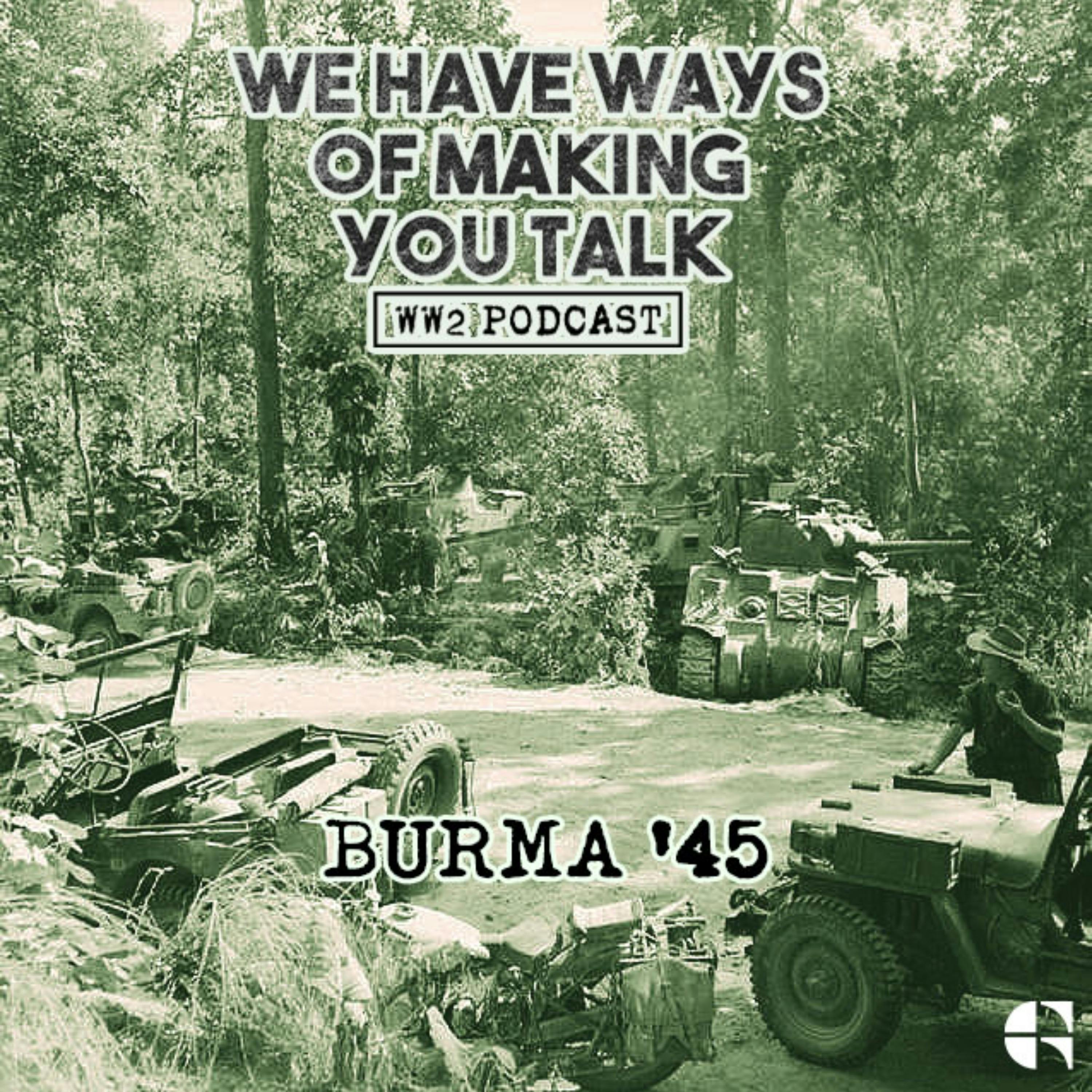
Loading summary
Transcript132 lines
- [00:02]
Al Murray
Thank you for listening to we have ways of making you talk. Sign up to our Patreon to receive bonus content, live streams and our weekly newsletter with money off books and museum visits as well. Plus early access to all live show tickets. That's patreon.com we haveways on WhatsApp no one can see or hear your personal messages.
- [00:29]
James Holland
Whether it's a voice call message or.
- [00:31]
Al Murray
Sending a password to WhatsApp, it's all just this. So whether you're sharing the streaming password in the family chat or trading those late night voice messages that could basically become a podcast, your personal messages stay between you, your friends and your family. No one else, not even us. WhatsApp message privately with everyone. Hey guys, it's Christian McCaffrey, pro running back. I'm partnering with Abercrombie this season to.
- [00:59]
James Holland
Tell you about their viral denim.
- [01:00]
Al Murray
All you need to know is denim.
- [01:02]
James Holland
Should fit like this. Abercrombie's athletic fit is a game changer.
- [01:07]
Al Murray
They're designed for guys with an athlete's.
- [01:09]
James Holland
Build like mine, just enough room and the perfect stretch. When a jean fits that well, I'm wearing it on repeat.
- [01:17]
Al Murray
Shop Abercrombie Denim in the app online.
- [01:20]
James Holland
And in store Snack Wrap Toma to.
- [01:30]
Al Murray
Snack Wrap Snack Wrap Snack Wrap Snack Wrap Snack Wrap for viewers Snack Wrap by mid morning it was clear that the battle was working exactly as Pete had planned. He decided that there was no chance of an enemy counterattack. They had their hands full with the left brigade. He let slip the main attack. The rest of the division plunged straight ahead for Manderley with orders to go hell for leather the leading troops to contain and bypass small enemy pockets, leaving them for the following troops to wipe out. We rumbled down the cattle tracks in the heavy dust, past stands of jungle where the crackle of small arms fire showed that we had caught some Japanese. The tank treads clanked through villages blazing in huge yellow and scarlet conflagrations, palm and bamboo exploding like artillery. Grey green tanks squatting in the paddy round the back, ready to machine gun any Japanese who tried to escape that way before our advancing infantry. We passed the 25 pounder gun house of the artillery bounding and roaring in a score of clearings, hurling their shells far ahead into yet another village. Tanks again, the troop that had cleared the village back there rumbling on 20 Gurkhas clinging to the superstructures, infantry trudging along the sides of the road plastered with dust and sweat. We were not a motorized division and most of the INF where they could not clamber onto tanks and trucks and gun quads, the mules of the mounted artillery, the screw guns pounding down the road, trotting out into the paddy when the road was blocked. Never a change of step and the jingling of the harness and the creak of the leather. Japanese sprawled in the road and under the burning houses, their chests blown in, some by tank shells, some by suicide, for often they died clasping a grenade to their own bodies and rushing out at the assaulting infantry. The light hung sullen and dark overall smoke rose in vast writhing pillars from a dozen burning villages and spread and joined to make a gloomy roof above us. Every vil. Some Japanese, Every Japanese fought to the death, but they were becoming less and less organized. That's John Masters in the road past Mandalay. What a vivid, vivid description.
- [03:32]
James Holland
Isn't it just?
- [03:34]
Al Murray
You're right there, aren't you, with him? Extraordinary.
- [03:36]
James Holland
And it's very interesting and I think you get the sense of suddenly they're unstoppable. The Japanese seem desperate, don't they, you know, rushing out with grenades, clung to their chests and so on, while these tanks and armor and quads and mules and the kind of. The sort of full force of a sort of heavyweight thunders down the road. That's the impression you get. And that's actually A description of 19th Infantry Divisions of both south towards Mandalay, launched on 25 January 1945. By this time, John Masters is a Lieutenant Colonel and GSO1 to Major General Thomas Winford Reese. And Rees is always known as Pete. Pete Reese, who is the General officer Commanding of 19th Infantry Division. And Masters had been in the Gurkhas before the war and then of course, latterly with the Chindits, a second Chinde expedition. And he's one of the survivors of that, obviously. And, you know, they're all in bits at the end of it, of course, you know, this is. It was an incredible enterprise and they're all exhausted and so he's. He's put on leave and sent back to Calcutta and then suddenly told that he's going to be GSO1 to Rhys and his friend at the club in Calcutta says to him, oh, would you want me to keep your room ready for you? A Master says, why? And he says, oh, well, you know, Reece is famous for sacking all his staff officers. You haven't got to hope, you know, see you in a couple of weeks. So he sort of thinks, o God, okay. So he flies off to RAF Kalua, which is, you know, this is one of these new Airstrips has just been built because, of course, Kalua has only just been captured, you know, in December or whenever it was. It's the other side of the Chindwin and a huge sign on the. On the airfield going, it's safer by road. So, again, this sort of humor, but also of a black kind.
- [05:17]
Al Murray
Yeah, Gallows humor there. Yeah.
- [05:19]
James Holland
Reese's Reece has a reputation. He's known as a. As a firebrand. You know, he sacked a number of his G1s before, something of a maverick. And on his way, Masters stops to see General Stopford, who is the commander of 33 Corps. This is Monty Stopford, who tells him that Rhys is an absolute superb general, but not always the best at keeping Corps informed. You know, he says he's a man, he likes to do his own thing. You know, he's a bit of a maverick. So Masters heads off to 19th Division with a slightly heavy heart, but amazingly, he warms to him absolutely immediately. And this becomes an absolute sort of marriage of minds. The two of them just get on really, really well. Masters has got a huge amount of experience and actually so too has Rhys, but less so of fight, fighting in Burma. He's an Indian army man, Rajputana Rifles from before the war. And I think he's really interesting because we know about Mesivi, we know about Punch Cowan and Jeffrey Skoons and Gracie. These are names that, that were forgotten. But we've mentioned a lot in the Burma 44 series we did when we were looking at Imphal and Kahima. But Pete Reese is a new guy and he's absolutely fantastic. You know, he's a superb soldier. Experience from the Indian army before the war from East Africa. He's fought in. He's taken command of 10th Indian Division, is sacked by Got rather the same circumstances in which Mesivi is sacked as commander of 7th Armour Division in the whole debacle, because basically he gets a corps commanders because Gott, I think, is 13 Corps commander, if I remember right. Maybe it's 30 Corps. He was a corps commander before he was made 8th army commander. And he issues Rhys a really bad order that Rhys knows is going to end in disaster, so he disobeys it and gets sacked. The events that follow prove that he was right and that Gott was wrong.
- [06:57]
Al Murray
Before we go any further, though, Jim, we need to say hello. We've got like a bull at a gate at the subject.
- [07:02]
James Holland
Oh, well, I'm just so excited about Pete Reese and John Masters and finally being able to name check the road Past Mandalay, one of the great books to have emerged from Second World War.
- [07:12]
Al Murray
Hello, everybody. Welcome to. We have Ways of Ecu Talk. This is our third part of our Burma series. And as you can see, there's so much story to tell. We're so keen to tell it that we forgot to say hello. How about that?
- [07:23]
James Holland
All right. Hello, everyone. Right, can I go back to Reese now?
- [07:25]
Al Murray
Yes, of course you can. Yeah. Carry on, Jim.
- [07:28]
James Holland
So. So I. So I think he's worth spending a little bit of time on him and because John Masters, after the war wrote this absolutely fantastic book, he's also wrote the Tiger and the Bugles about his time in the northwest frontier in the. In the Indian army in the 1930s, which is also very good. And actually I've got a hardback copy on my bookshelf which Says M Holland, 1960, which is. My dad, obviously. Got it. Yeah. My dad always love all this stuff and reading Douglas Riemann novels and he loved John Masters and C.S. forrester, of course, he's very much of that ilk. So he gets sacked, but comes back. Like a lot of people who get sacked in, in the Middle east, whether they be Auchinlek or Wavell or Mesvi, they then get sent back to India, which is sort of considered the kind of. This is where you take old Indian army officers who haven't quite performed as they should have done in the. In the Mediterranean, but actually could be jolly useful, you know. And Mesafi is an absolute case in point that actually the problem is less their performance in Western desert and more the fact that the higher ups haven't quite come to grips of what they're trying to do in this early stage of war.
- [08:23]
Al Murray
Most of these officers are Indian army people anyway, who've been sent west, aren't and are now coming back to the army that they actually are part of.
- [08:30]
James Holland
Yes, but there's nothing sort of old school and sort of fusty about Rhys. He's clean shaven, he doesn't have the moustache, he doesn't have the swagger stick. He's only 48 years old, always wears the bush hat, always has a bright red scarf around his neck. He's got DSO and an MC from the first war. He's utterly fearless. He's a proper frontline, thrusting spearhead divisional commander. Soft spoken, never swears, doesn't smoke. Warm hearted, but absolutely tough as old boots and will drive his men and is not afraid of making tough, difficult decisions. But, you know, he's very much a calculated risk kind of Guy. And he very much adheres to the kind of early German mantra that I'm the divisional commander in a remote part of the world. I'm best placed to make a decision. And decisions from Corps are sometimes to be questioned and, you know, not always followed around, worked around. Yes, exactly. Which coincidentally is exactly what Slim is doing, but on a larger scale, you know, in relation to Lees and everyone else. But by the time Masters arrives, which is about the 21st or so of January 1945, 19th Division is already across the Irrawaddy. Rees's division have done amazingly well. They've taken the town of Munto, which is their first kind of stepping stone, on the drive south. Because at this point they're coming across the Sweebo Plain, which is this sort of roughly hundred mile yard stretch of broadly flat, dusty plain between the Chindwin and the Irrawaddy, which runs on a kind of sort of northeast to southwest kind of direction. And they've taken Wunfo on the 19th of December and then they travel south. They cover at 200 miles in 20 days, which doesn't sound that much, but is a hell of a lot in this terrain. It really, really is.
- [10:09]
Al Murray
Yeah. You know, we laid it on thick really, about the terrain in the. In the last couple of episodes. 200 miles in 20 days in Italy would be lightning fast, Jim, wouldn't it? 200 miles in 20 days in. This is really quick. Very impressive.
- [10:21]
James Holland
Yeah. So the first attempt to get across The Irrawaddy about 40 miles north of Mandalay is on the 11th of January. But that doesn't. A 62 Brigade, one of the three brigades in 19th Indian Division. So they shift their crossing point and get across safely on the 14th. A bridgehead is then established against pretty light opposition. I mean, the bottom line is, you know, General Kimura might have eight divisions plus the ina, which is sort of one and a third division, but it can't be everywhere. And the bottom line is what is a thousand, you know, is 1300 miles long and a thousand miles of navigable river and, you know, they can't be absolutely everywhere. And even sort of comparatively narrow stretch of several hundred miles around, you know, either of Mandalay, that's still quite a large area to cover, you know, can't do absolutely everything. So they do get across. And also, of course, what the Japanese have to decide is which is just a kind of a feint, which is a kind of a raid, and which is the real main effort. So they get across on the, you know, the third brigade 64 brigade gets across on the 16th and 17th of January. So the 98th brigade has got through on the second night attempt. And there is then kind of, you know, once, once the Japanese do sort of realize that there's a, there's a major crossing, they counterattack with all their might. This comes on the night of the 20th, 21st of January, but 64th Brigade come out on top and the Japanese immediately fall back. And the bottom line is the 19th division in their very narrow bridgehead well to the north of Mandalay, resists everything that's thrown at them, whether it be artillery barrages, suicide squads, infiltrations, jitter raids, you know, you name it. And Rees task here is, you know, just before the Irrawaddy gets really, really wide. And the idea is to sort of is twofold. It's to keep the Japanese occupied in that area, but it's also to kind of make that they're attacking from the north, whilst at the same time they're going to be, you know, the British are also going to be attacking from the west. So what happens is that Irrawaddy comes, runs roughly kind of north, south to Mandalay, then does a kind of 90 degree dogleg to the west. So the other two divisions of Stopford's 33 Corps are going to be going west of Mandalay. This is a 2nd British Infantry Division and the 20th Indian Infantry Division. And the idea with 19th Division is basically to kind of sort of keep the Japanese distracted and make them believe that actually what's going to happen happen is that the main effort from 14th army is going to be a pincer attack on Mandalay, one from the north and one from the west. But what they discover, what Rees realizes that after the kind of 9th attack of the 20th, 21st of January, that the resistance by the Japanese is thinning down and actually there's nothing to stop them doing a march on Mandalay and taking Mandalay, you know, why not?
- [12:58]
Al Murray
Yeah.
- [12:58]
James Holland
So he starts to think about how he might do that. There's a road that runs down southwards into Mandalay, which is a little bit inland because basically they're on a quite a narrow, narrow little corridor because on their right flank as they're looking southwards, they've got the Irrawaddy, of course, but on the right they've then got jungle clad hills. So they've got this kind of sort of 10, 15 mile, 20 mile corridor in between the sort of rectangular corridor running south down to Mandala they can go and there's a road that goes down. It's not asphalted, but it is a road that's the main, that, you know, that's the obvious route to go. Or there's a sort of old mule track, jeep track running parallel with the, very close to the river. And over a night of sort of with a whiskey bottle, John Masters and Pete Reese decide what to do. And Masters is very much in favour of taking the right hand route alongside the river, which he persuades Reece to adopt. But Reese says, yeah, okay, but we're also going to put our brigade side by, you know, two leading brigades side by side and we will also push down the main road, but the actual main thrust will be on the right hand one from the enlarged jeep track and we're going to launch that on the 25th of January. So that's what he's been describing in that opening section that you read.
- [14:05]
Al Murray
I mean, I think it's fascinating, isn't it, that they have the confidence to keep moving like this, turn things around, change plan. I mean it's all, all there, isn't it? But these are winning ways, aren't they? And they're reaping the benefit of doing better. Very, very interesting. And also that a divisional, like I say, a divisional commander is making these kind of decisions, just getting on with it.
- [14:22]
James Holland
You know, Masters goes out with him and you know, within moments they're being, you know, when he's first sort of, you know, within a couple of days of his arrival, almost immediately they get shelled and sniped at because they're kind of beetling around in a jeep. And Masters says to him, look, you know, you're wearing that red scarf. I don't know why you don't just paint the whole jeep red and be done with it. And Reece goes, actually that's not a bad idea. Then all the chaps will know it's me. It's very kind of sort of Nelsonian his approach. But of course, you know, you know what it did for Nelson. Yes, but in a way, you know, everything that, everything that's happened, whether it be Operation Romulus that we were looking at in the last episode, you know, the Arakana campaign, or whether it be here, everything is happening just a teeny bit quicker than Slim and his corps commanders had anticipated. So that is allowing them to have this little bit of flexibility. But it's a balancing act because you want to be gung ho and you want to, you want to be thrusting in the kind of true Reese fashion, but at the same time you've got this logistics problem and the challenges of operating, you know, 800 miles south of your main railhead at Dimapore, and you've got to let things catch up. And, you know, there's also a very big balancing act going on between what 33 Corps are doing and what 4th Corps are doing and how we get to that, that new plan. I think we need to, again, go back a little bit, leave Pete Reese and John Masters and the exploits of 19th Infantry Division and just rewind the clock a little bit and set a bit more scene and planning, because this is all just amazingly interesting stuff. Enough.
- [15:46]
Al Murray
So for those of you who thought we were in 1945 now, I'm afraid we have to go back to 1944 again in our Burma 45 series. But, you know, get over it.
- [15:53]
James Holland
It's for the last time. It's the last time.
- [15:54]
Al Murray
It's for the last time, we promise.
- [15:56]
James Holland
And then we'll kiss the 1944 goodbye.
- [15:58]
Al Murray
Outrunning your, you know, your logistic capability is a proper problem, isn't it? This is why people draw phase lines on maps, after all. And if you're ahead of your phase lines, it's as big a problem as being behind them. Right. I mean, the key to a lot of how they're able to do all this is. Is air power, though, isn't it? Not just in the resupply sense, but tactically as well. So. So they've got, even though this is the back of beyond it' priority theater, really, for the Allies. Nevertheless, they're properly equipped with aircraft now, aren't they? So. And they've defeated the Japanese in the air. The Japanese have no sort of latitude really at all in the sky. By December of 1944, there's 1300 Allied aircraft in theater. 627, RAF, 691 USAF aircraft. And the Japanese have 64.
- [16:40]
James Holland
The Japanese have just 64, you know, so that's obviously total domination. By March 1945, these would increase to 700, 172 and 748, respectively. So that's over, you know, that's over 1500 aircraft. You know, the Allied air forces are benefiting from superior aircraft and technology which has evolved over the course of the war. And of course, you know, first arakan campaign in 1942, 43, you know, the only fighter planes they had was Hurricanes. And they're not up to speed. You know, they're not good enough. They don't have that rate of climb. They're just not good enough. Now there's more Spitfires but There's also mosquitoes, B24s with cruise control and immense range. And. And there's Beaufighters, which, you know, are armed to the teeth and, you know, really, really good in a ground attack role. The Thai Burma Railway, for example, is being absolutely hammered, as is Rangoon, as are supply bases. You know, anything that moves is now being hammered. So this is a kind of repeat of the stuff that we were talking about in Burma. The huge advantage this gives the Allies in, particularly in the movement of supplies, means the Japanese can only operate at night, which means they can't operate by day. The Allies don't have that problem, which then means that they can move faster, of course, which is important, you know, and also the weather's improved and the monsoon over, and of course that means greater flying time and more misery for the enemy. But the original plan, the original strategy that Slim develops in the autumn of 1944 had at the time seemed very clear cut him. You know, he'd meet the enemy, Kimura's forces, in the Shwebo Plain between the Irrawaddy and the Chindwin force a single engagement there and defeat him with his superior firepower and air power. But doesn't play out because although he's got two corps, General Monty Stopford's 33 Corps with 2nd British Infantry, 20th Indian infantry, and 254th Tan Brigade, plus, of course, the 19th Indian Infantry Division, he's also got the 4th Corps, which is now Frank Mesevi, who's been bumped up from seventh Indian Division, which he had in fall, and of course, before that, the admin box scones, has been bumped upstairs into India. He's considered just solid but not aggressive enough. And, you know, again, Messevi is the right kind of sort of spearhead general. So they've got 7th Indian Division and at the time, the 19th Division, but that's kind of then moved across to 33 Corps and a tank brigade as well. But they've made their advance out of the Chindwin in December, and at that time it is 4th Corps, which is in the north, and 33 Corps, which is further to the south. But what they've realized, what Slim's realized is they've got over the Chindwin quicker than he'd anticipated, and that actually the opposition is far lighter than he thought. He was expecting a bit of a fight in the hills to the north of the Chindwin, and he doesn't really get one. It's pretty light. You know, in that first episode we were talking About John Shipster, weren't we, and his battalion, his company, as they were heading south and they were getting hardly any opposition whatsoever. And that's because Kimura has seen this coming.
- [19:32]
Al Murray
His priorities have changed as well, haven't he? It's not the hostile posture that Motokuchi had at all, is it? It's about trying to deny the route into China to the Allies and defense and hanging on rather than, you know, he knows that if the Allies take the Shuebo plane, he sort of had it. So it's about stalling, delaying and in fact, kind of drawing the Allies onto him. Taking a leaf out of Slim's book in a. Trying to create a sort of imphal battle where the Allies come to him and then he attrits them and destroys them.
- [20:01]
James Holland
Yeah, yeah. As his. His lines of supply kind of decrease and the Allies, their lines of supply increase. It's exactly the reverse of. Of imphal. That's what he's trying to do.
- [20:10]
Al Murray
Yes, very interesting. They've. They've learned their lesson, the Japanese, in that. But it's as much to do with, really, that they can't manage anything else. They've blown it, haven't they? It's the truth.
- [20:19]
James Holland
Yes. And it's true he has these eight divisions, plus one of the third division of the ina, but these are understrength divisions, and he doesn't quite know where the Allies are going to attack. And, you know, rapid manoeuvre is not really possible because he doesn't have any mechanization, really not worth talking about. But equally, it's by no stretch of the imagination is Slim's victory certain. I mean, you know, that is also absolutely clear. Yeah, he's got a really, really tough fight on his hand. You know, the Japanese in the defensive role, it's always easier to defend than it is to attack. He's got the Irrawaddy to get across, which is not easy with minimum amount, you know, with homemade R craft, effectively, to kind of get them across. This is no easy option at all. And of course, there are other major troubles brewing, not least because the very simpatico General Gifford has now gone and Lisa's taken over. I mean, you know, the more I think about it, the more bizarre I think that is, because it's not like. Like lease has done particularly well in Italy. Operation Olive, which is the late August assault on the Gothic Line on the adriatic coast, that 8th army do. It's a terrible battle plan, entirely Lee's fault. He puts the wrong cause in the Wrong place. You know, so the motorized cause are in the hills and the non motorized cause are on the road. I mean, what the heck? I mean, it makes no sense whatsoever. And they don't break through before the autumn rains come in. And, and you know, for this total balls up, he gets promoted to Army Group Commander in India. I mean, and it's very clear right from the word go that lease isn't going to get on with either Mountbatten or Slip. He meets Slim for the first time in November and immediately complains that Slim belly aches a lot. And it's clear that he views any kind of view contrary to his own as whinging, regardless of how sensible or better informed be. You know, it's so different from Alexander who instinctively understands that when you become an Army Group commander, it's a different kind of role which requires a different kind of command. You know, Slim just says, you mentioned this line the other day.
- [22:12]
Al Murray
Yeah.
- [22:13]
James Holland
Oh, now we've got to do him in a Bristol axe, his star had a good deal of desert sand in his shoes and was rather inclined to frust eight farmy down our throats. I'm not sure that's right. Are you?
- [22:25]
Al Murray
It is interesting though, that. Why on earth. Whose decision is this? Is this.
- [22:28]
James Holland
It's a terrible decision. Who fought thought this was a good idea?
- [22:32]
Al Murray
Yeah, it's very weird. Unless the idea is you dump the people you don't want in the west in India.
- [22:37]
James Holland
Well, okay, here's, here's an idea. Why not make. Why not. Why not send Kenneth Anderson there, who did a perfectly okay job with 1st army in Tunisia? I mean, not, not brilliant, but would have been absolutely cut from the cloth of Gifford, you know, so it's not like there aren't those people there anyway.
- [22:51]
Al Murray
Yeah, there's a silver lining. There's Nick as Sleem, Scones and Stopford are all knighted by Wavell at infile on the 14th of December. December.
- [22:57]
James Holland
Yeah.
- [22:57]
Al Murray
And this is while Slim's replanning. He's reordering himself and figuring out what to do. And obviously he wants no interference from Lee's, who's a micromanager. So there's a challenge in that in itself, isn't there? Especially if you know what you're doing and you've proven yourself. It must be very, very annoying.
- [23:12]
James Holland
Very difficult.
- [23:14]
Al Murray
Yeah. In December 1944, they put five more bridges across the Chindwin. There's new airfields, there's newly constructed river barges, 500 barges built at Kalewa. I mean, it's absolutely Amazing that the engineering sappering effort is absolutely incredible. Incredible. And then there's another, there's another change that some happened at the top on the American side, isn't there? So, so Vinegar Joe Stillwell has been replaced by General Wademayer. We mentioned this in the last episode. Weidemeyer thinks he's going to be able to get, get along with the Chinese and realize, realizes very, very quickly that he can't. And also Chinese are falling apart at this point because things might be going badly for the Japanese in Burma, but in China they're running rampant, aren't they, with their Ichigo offensive rolling up the Chinese and there's a sort of state of cha panic. And Wermeyer is trying to manage Chiang Kai Shek but really not particularly succeeding.
- [24:04]
James Holland
He's really struggling.
- [24:05]
Al Murray
If Chiang Kai Shek's losing and things aren't working out, he's going to be more difficult to deal with full stop, isn't he? And he'd be blaming the Americans for not having backed him properly. And they are. The Chinese are very much last in the queue for Lend Lease, let's make no mistake. So Wedermaier gets in order 75 Dakotas that are 14th Army's logistics and sends them to China right away. And he knows that 14th army need these, but he's a China first guy, so he essentially eventually pulls rank in that instance.
- [24:33]
James Holland
And Slim, I mean, this is amazing thing, Slim only learns about this on the 10th of December when he's woken up in the morning by aircraft thundering overhead and heading to China. And he sort of gets on the blow and goes, what the hell's going on? And it's like, you know, Mountbatten is also absolutely furious. But losing 75 Dakotas is a big blow because the Irrawaddy is 600 miles from the railhead of Dimapur. And, you know, slimmers now got all told, three quarters of a million men spread over this vast area, plus mules, all of whom need feeding and arming, or certainly the men anyway, and the mules still need feeding. You know, air power is what the Japanese don't have when they invade India. And without air power, you know, Slim really is looking at a kind of reverse in file if he's not careful. And that marriage of air power is key to the whole thing. This is why he thinks he can take the whole of Burma, which everyone else had thought was impossible, but without it, he's got a problem. So immediately Slim deals with this by cutting back planes available to Christisan and by pleading, imploring with Mountbatten that he needs to get these back. And actually, Mountbatten does get two thirds of them back in very quick order.
- [25:38]
Al Murray
That's pretty good.
- [25:39]
James Holland
But, you know, it's a headache just at the wrong moment, just as he's having to confront a completely different battle plan. And, you know, he's got this change at the top, which is troublesome. He's already got a very, very big challenge on his hand, which is to try and reconquer Burma. And he's got. He's slightly having his arm tied behind his back while he's doing it. You know, while all this is going on, he's developing his new plan.
- [26:01]
Al Murray
Yes. And it's people in the Fringes doing this to him. That's the thing. It's not even. That's outside agents, isn't it?
- [26:06]
James Holland
Yeah. And these are. These are people that are supposed to be on his side. Yeah, that's the thing. It's just fascinating. I. I just, you know, I hadn't appreciated just how many challenges were being flung under his feet between the end of the info battle in July and the start of January 1945. It's just one thing after another. I mean, these challenges are enormous from a. Logistical, from supply, from a personnel, you know, competing theater. The monso. You know, you finally just get through one hurdle and then another one sort of flung at you. But anyway, he's come up with his plan. So he has this big conference with his corps commanders, Frank Messervi of 4 Corps and Monty Stopford of 33 Corps on the 18th and 19th December. And here he explains his new plan. The original plan was Operation Capital, which, you know, was aimed to defeat the enemy in central Burma. But he's now got a new one, which is Operation Extended Capital. And this is aimed at the total defeat of the Japanese in Burma. And interestingly, he also tells his corps commanders not to discuss this plan with General Lees under any circumstances. You know, we're a long way from. We're a long way from Calcutta. We'll. We'll just do this ourselves. Thank you very much. Anyway, in a nutshell, the plan is this. 33rd Corps to cross in three places. The first, north of Mandalay, and this, of course, is Pete Reese's 19th Indian Division. And then two west of Mandalay as the River Irrawaddy does that 90 degree dogleg to the west and keep them busy, draw the fighting to the north and then south of the city. But in the meantime. And this is the killer Punch. Fourth Corps, rather than from where it was originally going to attack from the north, goes round behind 34 corps and moves in secret to the south and crosses Irrawaddy, where the Japanese least expect. It then strikes across country, 70 miles or so to the town of Mictila, which lies about 70, 75 miles south east of Mandalay. But the key thing about Miktila is the main road and the railway run from Rangoon up through M, making it a vital nodal point for the Japanese. And basically, without Mictila, Kimura can't hold Mandalay. It's his big base, it's his logistics base, it's his supply line. So basically, the hand won't work if you cut it off at the wrist. That's the point. And by attacking from the north and around Mandalay and from Miktila to the south, the Japanese will be effectively in service. This is classic hammer and anvil stuff. Of course, this is a delicate balancing act, because the most important thing is that the Japanese don't smell a rat, that they don't understand what's going on, that Slim keeps the bulk of Kimura's forces in and around Mandalay. That's the key to the whole thing. And that he never discovers the truth of what he's really planning, which is this round the back right hook with fourth Court, which will go behind the enemy lines to the south.
- [29:03]
Al Murray
This is going to involve covering great distances in order to do it. It's very bold, isn't it? And it's not just going to surprise Kimur, it's going to surprise Oliver Lees as well. It's the truth.
- [29:12]
James Holland
Yes, Y. But of course, it's a route that Slim knows, because this is, you know, he did it in reverse in 1942, in May 1942, when. When he was taking the Birmaghorps back out across Irrawaddy and he went up the Gangor Valley, where 4th Corps are going to go down. But of course, this bit is in the hills still. It's jungly, you know, this is not the Great Plains plan is to use the jungle to kind of hide the movement of 4th Corps south, but also to have lots of deception plans in place. So Slim assigns punch Cowan's 17th Division to 3rd 33rd Corps and 268 Tan Brigade, but only on a temporary basis so any Japanese agents can report the 34 Corps is strengthening for the assault near Mandalay. And he also sets up a fourth Corps headquarters at Tamu, which is far to the north. And there's deliberate indiscreet radio chat that the radio the Japanese can pick up and increase radio traffic in the Shwebo area, which is also to the north. And fake air drops and fake agents to add to the confusion. And elaborate deception exercises called Operation Stop Stencil Cloak. And Lieutenant Colonel Elephant Bill Williams is ordered to head north of a large party of elephants to suggest a large force going across the Chindwin, much further up to the north as well. And RAF planes have to patrol the area to the south the entire time to ensure there are no enemy intruders. Planes that can look down and see this movement of fourth Quarter, you know, in this big sweep to the south. But, you know, it's quite a thing.
- [30:35]
Al Murray
Yeah. Slim's ambition as a army commander is really. I mean, it's something else, isn't it? Last year's plan was ambitious enough to draw the Japanese and destroy them, but this is to deceive, outmanoeuvre and punch the Japanese off balance. It's quite something. And also this is a full combined arms operation, isn't it? So there's tanks. Armour is becoming as much a feature of this fighting, you know, as anything else the British have done. Right?
- [31:01]
James Holland
Yeah, absolutely. It's key to the whole thing. You know, it's this coordination of air power, this all arms concept of motorized artillery, of armor to support the infantry and provide, you know, much heavy, heavier firepower. And of course, it's air power as well, you know, and you can only do something like the fourth Corps trip if you've got supply planes, but also if you've got, you know, armed Beaufighters and Mosquitoes and so on, you know, harrying for any Japanese planes that might kind of invade your airspace and basically protecting 4th Corps as they move south. You know, potential trouble spot is Gangor itself, this little sort of little town which is known to be well defended. So Slim needs to capture it quickly, but he can't use too many troops because if you use too many troops and the Japanese will get wind that this is a major, major incursion ROC than a deception feint. So he brings in 221 group RAF to flatten the place ahead of a small attack on the ground using the Lushai Brigade, which is Slim's own version of the Chindits. Interesting. It's four, it's four kind of infantry battalions worth of local troops. You know, he hopes the Japanese will just think it's a kind of, kind of raid similar to that of the Chindis. And of course the next headache is how you actually transport the fourth Corps through, you know, with their tanks and their vehicles along a jungle track. And the Chief Sapper at 14th army is Major General Bill Halstead, who's given the task and he decides to create a brand brand new road using bit Hess. These are Hess in rolls of 50 yards length in length and one yard wide, which are then treated with bitumen so the strips are overlaid by 8 inches. And so the, the ground is cleared first with dozers and graders, and then you roll the bit Hess on top. And it's designed primarily for airfields, but Halstead says, well, you know, let's try it for the road. I have no idea whether tanks will be able to chew it up or whether it'll be okay. But anyway, Halstead reckons his sappers could build a road at a mile a day. But Slim says, you know, this is way too slow. So Hal. And he never said, he never quite understood where this came from. Plucks 42 days. He goes, okay, well, I'll do it in 42 days. And Slim goes, gotta help you, Bill, if it takes more than 50. And, you know, just no one knows whether this is going to work or not. And Slim pays a visit to 255th Tank Brigade. And Slim goes, how reliable are those Shermans? And the brigade major goes, very, sir, given sufficient fuels from essential spares and some time at night to do maintenance on them. And him just because you better be right.
- [33:16]
Al Murray
You better be right.
- [33:18]
James Holland
You better be right or you better be right, depending on which way you look at it. She's a miracle. You know, teak is chopped. Elephants are brought in. You know, they build those river craft, you know, on the hoof, you know, it is just incredible. And, and you know, we're repeatedly in awe of the logistics and the can do attitude of 14th Army Corps and frankly 15th Corps as well in the Arakan. But this is taking it all to new levels, isn't it?
- [33:42]
Al Murray
Yeah, yeah, it's extraordinary. But the preparations are made. The advance needs to get underway. And after the break, join us as the advance as Slim's incredible sickle cut. We could almost call it that, couldn't we, Jim? Through impassable terrain. I mean, I'm getting, getting a tiny whiff of the Ardenne here. We'll see you after the break. This episode is brought to you by Stay Farm.
- [34:05]
James Holland
Knowing you could be saving money for.
- [34:06]
Al Murray
The things you really want, like that dream house or ride, is a great feeling. That's why the state Farm personal price plan can help you save when you choose to bundle home and auto bundling. Just another way to save with a personal price plan. Prices are based on rating plans that vary by state. Coverage options are selected by the customer.
- [34:24]
James Holland
Availability, amount of discounts and savings and.
- [34:27]
Al Murray
Eligibility vary by state.
- [34:29]
James Holland
Gatorade is the number one proven electrolyte blend designed to hydrate better than water so you can lose more sweat and raise your game. Gatorade is it in you? Ryan Reynolds here from Mint Mobile. With the price of just about everything going up, we thought we'd bring our prices down. So to help us, we brought in a reverse auctioneer, which is apparently a.
- [34:54]
Al Murray
Thing Mint Mobile unlimited premium wireless. 30. 30. Get 30. Better. 20. 20. 20. Get 20. 20, 20. You're gonna get 15. 15, 15, 15. Just 15 bucks a month.
- [35:03]
James Holland
Sold. Give it a try@mintmobile.com Switch.
- [35:06]
Al Murray
Upfront payment of $45 for three month.
- [35:08]
James Holland
Plan equivalent to 15 per month required.
- [35:09]
Al Murray
New customer offer for first three months only. Speed slow after 35 gigabytes of networks busy. Taxes and fees extra.
- [35:13]
James Holland
See mintmobile.com.
- [35:18]
Al Murray
Welcome back to Way of Maze of Baker. You talk with me, Al Murray and James Holland. Part three of Burma 45 and Slim's quite extraordinary and ambitious plan to shatter the Japanese. Defeat the Japanese in Burma is about to spring into action. So We've already discussed 19th Division's advance at the crossing of Irrawaddy, but also 20th and 2nd Divisions in 33 Corps, they're now converging on you and Monywa. As this thing gets underway, Moniwa becomes.
- [35:43]
James Holland
Quite a thorny one because, you know, I said that the Irrawaddy runs south to Mandalay and then does this 90 degree dog leg. And Moniwa is just on the western side of the Chinwin just before it joins the Irrawaddy. So it's kind of almost like a sort of double crossing point for the most part. You know, the advance goes pretty well in this, this central plain, the suibo plain. On 2 January, the second division reaches Y and crosses a much smaller river, Mu. And that's quickly bridged for armor. And 2nd Division and 19th Division have now been racing for Shuibo, this key town in the plain. And advanced patrols of 19th Division are on the outskirts by the 7th of January. And each of these divisions, these three divisions is building airstrips every 50 miles. Yeah, you know, so that's, that's holding up their adv little bit, you know, presumably with strips of bit Hess. But of course, this is, this is partly to supply, you know, to land supplies, but also for evacuation of casualties as well. Loads and loads of bridging going on. I mean, you know, 145 bridges built by 14th army between January and April 1945. I mean, that's a loss, isn't it?
- [36:45]
Al Murray
Yeah, that's a ton of work. Well, it all has to be got there, as we, as we said in the last episode. Which has to be got there from, from India, for heaven's sake. Through. You know. They're not driving up the M6, are they? With Schwabo secure. On 8th of January, 2nd Division, they arrive in the town. The next day, the Japanese start to fight more intensely closer to the Irrawaddy, don't they? So the Royal Berkshires, they have a scrap on the western banks of the Irrawaddy. This story, one Japanese officer jumps out onto a Sherman tank.
- [37:16]
James Holland
He jumps out of the jungle, basically.
- [37:17]
Al Murray
Yeah, yeah, onto a tank from the third Carabineers and beheads the tank commander.
- [37:22]
James Holland
Pushes the body out of the way.
- [37:24]
Al Murray
Climbs into the tank and stabs the gunner to death. The driver manages to shoot him. I mean, absolutely horrible. The second row of Berkshires, they lose 100 men in five days fighting. And they're in 98th Brigade, part of 19th Indian Division. So they're making progress. But the. Where the Japanese resist, they, they make things very difficult, don't they? It's the truth. Not necessarily easy going, but it's definitely forward progress. 20th Indivision, they get bogged down at Moniwa on the western side of the Chinwin river where it joins Irrawaddy. And then here's the air power. 200 Dakotas fly non stop supply missions for the 18th and 20th of January before Monywa is finally taken on the 22nd.
- [38:00]
James Holland
I mean, there you go. This, this is why air power is absolutely part of the whole thing.
- [38:04]
Al Murray
Yeah, and why. Wait a minute, he keeps his hand off those C47s?
- [38:08]
James Holland
Yes.
- [38:08]
Al Murray
Knock it off, mate, you're not helping. And then again, I mean, opposition gets stiffer on the western bank of the Irrawaddy near Mandalay and south of there in the bend in the river. Because as you say, it hooks 90 degrees west, doesn't it? Having plunged south after Mandalay, it turns west and then sort of turns left again, as it were, and head southwest down into where it gets bigger and broader. This is where Kimura has put his strongest outposts.
- [38:35]
James Holland
Yeah, basically around that western bend near Mandalay, you know, for very obvious reasons. And again in that area around Maniwa where The Chindwin joins the Irrawaddy again for very obvious reasons. You know, that's the obvious point. You know, that's where you need to kind of have your strongest defenses, so you can understand why he does that. But equally, you know, while they've got, you know, 19th Division is crossing fairly easily, you know, there are going to be much tougher crossings for the 20th and second divisions. But also, Slim is slowing down the advance as well, deliberately to build up for supplies and river craft. But also, you know, Slim's got this very tricky decision to make because he's got to keep the advance of four corps secret. And so he decides to take his time with 33 corps to keep the attention on the Mandalay sector. So very deliberately, he does multiple crossings and, you know, builds a bridgehead slowly and actually takes a month to get all three divisions. You know, he wants to suggest this pincer movement, but actually, what Slim is seeing from the way the Japanese responding is quite encouraging. So he goes. The Japanese, confused by numerous feints and patrol crossings elsewhere, had not been quickened to decide which were the real crossings. And even then, they took some time to concentrate against them. You know, so it's looking okay, but it's still very, very much in the balance. And I'm conscious that, you know, we haven't talked about the advance of 4th Corps, but I've got some other business to attend to first before we do that, and that is to continue what's going on with the AR. And I'm afraid this Burma45 campaign is the king of meanwhile. Meanwhiles. I mean, it was pretty bad when we were doing the Battle of the Bold, but there's an awful lot going on here as well.
- [40:10]
Al Murray
Ramree island in the. In the Arakan. Our last episode concentrated on the. On the action in the Arakan. This is interesting because Ramree island is actually. Is well south of Mandalay.
- [40:20]
James Holland
Yeah. 70 miles of that camp.
- [40:22]
Al Murray
Yeah. But also to the south of this other main effort that's going on.
- [40:26]
James Holland
Oh, I see what you mean. Yeah. Yeah, absolutely. It is. Yeah. Hundreds of miles away.
- [40:29]
Al Murray
Exactly. But the tentacles of Slim's effort are reaching all the way down along the coast. Even as he's pushing into the Burmese interior. It's as if he's running. If it all works, he'll end up completely scooping round and cutting the Japanese off. And as we said, what's critical in the fighting in Arakan is taking control of places where air bases can be set up.
- [40:52]
James Holland
Yeah. And where coastal shipping can come in from The Bayer Bengal, you know, that's the other thing. Go straight from Calcutta, miss out everything. So there's an important port at Ramree for example. So all this is absolutely vital. There's these three islands, there's Akiab, which we discussed in the last episode. Then there's Ramree, which we're on to now. And then there's Cheduba as well, which is just to the south southeast of Ramri. But anyway, landing is going to be carried out in the very north of the island by the 71st Infantry Group which is part of 26th Indian Division with the 2nd 7th. Farage puts an A Squadron Royal Armour Corps under command of 71st Brigade. A large amount of intelligence has been gathered from an OSS detachment and men of the SBS who are also operating around here and report that ramri held by two battalions of the Japanese 54th Infantry Division. So only about 1800 men, so not a huge amount really. The assault is supported by another naval bombardment. On 21 January, assault craft reach the landing areas at 9:33am and two companies of the first Lincolns lead off and get ashore without much opposition and the Japanese actually withdraw to the south and so fast that actually contact is lots of them by the evening the following day, 71st Infantry Brigade hand over the 4th Infantry Indian Infantry Brigade. They then push on to the towns of Minby and Kyapyauk and both are found to be clear of the enemy by the 23rd of January. So, you know, where are the Japanese and is it going to be another Ak Yab? Well, the answer is not really no.
- [42:18]
Al Murray
I mean the Japanese do then finally put up a fight on the 25th of January, don't they? Because there's a Chaung, a river, a creek really that sort of splits the island in two.
- [42:30]
James Holland
Yeah, it sort of does and it's still pretty distinct even to this day.
- [42:33]
Al Murray
Yeah, I mean again, this is, this is a good one for looking at on Google or Google Earth because you get very much get a sense of this sort of lots and lots of creeks running into the sea, the land all broken up, hills like at Akab that even the slightest inclines actually being really important. High ground might be relative, but it's all the same. And the Japanese are very good at defending, aren't they? Because they're going to stick to their positions.
- [42:55]
James Holland
Yeah, and we should say that this is all happening while, you know, Hill 170 and Kangor is happening, you know, so this is all running concurrently, you know, they just, they don't get very far. So. So, you know, they realize they're going to have to have a little bit of rethink and come up and stronger plan. So more naval forces are brought into bear and two brigades are brought in. So 71st Indian Striking from the Northeast, but 36th Indian Infantry Brigade from the south. So basically coming round the bottom of Ramree island. And, you know, the Japanese might be kind of defending the Yanbalk Chong in the middle of the island, but we'll just downflank it then. And, you know, all these hill features, they're called bear and banana and what have you, these prove to be sticking points. But Lee tanks from the 146th Royal Armor Corps and Infantry of the 1st Lincoln and the 1st 8th Rog Gawalis, with artillery support as well, eventually managed to prize the enemy from first from Banana and then the other hill called 0.233. By 6 February, hampered by mines all the way. But eventually they reach Ramree Village, which is the sort of central southern part of the island, on 8 February, where the Japanese are sort of holding bunkers around the village. But by this time, weight of numbers are against the Japanese because Of course, those 1800 defenders have been attrited all the way. They soon withdraw mines and snipers to contend with. But basically the resistance, resistance at this point starts to collapse. But on the 11th of February, this is just the most amazing story. The Japanese attempt to evacuate the last of the garrison with 40 powered craft from Torngap, which is to the south of the island, on the kind of main bit of the mainland. But 36 are sunk on route to Ramri and the remaining four of them on the way back. So every single one is destroyed by naval forces. So this then leaves a thousand Japanese troops stuck on the island right at the south of the island, with the Allies coming closing in on them. And it actually takes until the end of February to clear the entire thing. And at this point, 900 Japanese troops try to swim for it, and every single one is killed and eaten by crocodiles.
- [44:48]
Al Murray
Jesus Christ.
- [44:50]
James Holland
There is another way, people. You put your hands in the air and you say, I surrender.
- [44:54]
Al Murray
You have a simple choice here. It's not the hardest toss of a coin, is it?
- [44:57]
James Holland
You wouldn't have thought so, would you?
- [44:59]
Al Murray
Crikey, this determination. But let's say the first five go in the water and then eat by crocodiles, Surely the other 895 go, oh, maybe that's a bad idea.
- [45:08]
James Holland
You would have thought so, wouldn't you?
- [45:09]
Al Murray
But in front of you, eaten by the crocodile and thinking, yeah, that's still better than surrendering.
- [45:13]
James Holland
Well, JR says in the sidebar, he goes, they can't eat us all. Yes, they can. You know, that's the truth.
- [45:19]
Al Murray
Exactly.
- [45:20]
James Holland
But meanwhile, meanwhile, the third significant island in this area is also captured, and this is Cheduba Island. And it's cleared and captured very quickly without any difficulty because there aren't really any Japanese troops on there by the 36th Indian Infantry Brigade ahead of their deployment on redeployment on ramri. So on the 30th of January, Sagu Kun island is also captured about opposition. So by the end of February 45, it's kind of job done in Arakan because Akiab, Ramri and Cheduba have all been captured and so too has Kangor. Thousands of Japanese troops have been left dead and effective resistance in Yarrakhan is by this point rapidly crumbling. You know, Hill 170 is fading into the memory of a sort of horrible nightmare. And you know, they've got the Japanese on the run.
- [46:02]
Al Murray
Yeah, amazing. Absolutely incredible. You consider the disasters that went before. So the end comes in Arakan with.
- [46:10]
James Holland
Well, and again, they're slightly ahead of schedule because if you remember, they're originally going to say at Keb on, what was it, the 18th of February.
- [46:15]
Al Murray
Yeah, yeah, yeah, that was the original plan.
- [46:17]
James Holland
You know, they've done that six weeks earlier and you know, they're well ahead of the game. This is all good, but it means that Christison has now got to come up with another plan. You know, what do I do now? And he might as well push on. So it's agreed that the 82nd West Africa Division should keep their kind of pressure from southwards to the villages of Litmalk and on, which are both northeast of ramree and approximately 15 miles inland. And meanwhile, and you know, they're continuing to use Lt. Col. McCrae and his misfit and makeshift inland water transport group to ferry 26th Indian Infantry Division around. They're landed at a little place called Litpan, which is up another wide winding river to the east of Ramree island, you know, and engineers once again waste no time at all in constructing airstrips on Aqab and Ramree, you know, absolutely vital for 14th army for all the reasons that we've already discussed. So 82nd West African Division is due to take on and then press on to take, take Torngoop, which protects a pass through the jungle clad hills. Anvo becomes yet another sticking point because it's A narrow pass through the hills and more jungle and more chongs. And the Japanese make a strong defense around here, so Christensen's anxious to press on. But the monsoon is coming and there's. There's no all weather road, so they've got to do it. Whatever they're going to do in the Arakan has got to really happen with their logistical constraints by middle of March, end of April, really at the end, absolute latest. So he then decides to land. 53rd Indian Infantry Brigade to reinforce the 82nd in West African Division's drive. They land at a place near Ruiwa on the coast, parallel with on. The landings take place at 10.30am on 16 February and unopposed. The Yorks and the Lancs finding landing first and followed very quickly by the 17 fifth Maharatis, who took the key high ground overlooking the town. Ruwa is finally captured on 17 February and a Japanese officer amazingly taken by surprise. Allies is captured. And meanwhile, 82nd West Africa Division are pressing on. And by the 4th of March, you know, Japanese resistance is really very obviously starting to crumble.
- [48:15]
Al Murray
Yeah, they've had it in this part of Burma, haven't they? And it's, you know, it's because actually the Allies have answers to everything.
- [48:22]
James Holland
They've got greater tactical flexibility, haven't they?
- [48:24]
Al Murray
Yeah, yeah. And deeper pockets.
- [48:26]
James Holland
Yeah. And they've got the inland water transport group and they've got air power, you know, so they're not going to be shot up and they haven't got. They've got naval power, so they're not going to be shot up in their kind of, you know, military makeshift little rafts in the way that the Japanese are, which means they can maneuver around, they can outflank, get behind, do feints, cross chongs. They can do all this stuff. Yeah.
- [48:42]
Al Murray
And not one of them wants to be eaten by a crocodile either. That's the other thing. One of the disadvantages to the Japanese of this sort of fight to the last man and everything is what you don't do is withdraw, sort yourself out and stick yourself to somewhere else. You're destroyed where you are. So what the Japanese don't get to do is take stock, reinvest a new place to hold the Allies up again. It's this sort of shit or bust approach and they're going bust as a result. None of it works. It's weighted numbers, superior supplies, but also absolute extraordinary courage. So this is the other thing. It's not just the stuff. It's not just overpowering the enemy. You've still got to fight, you've still got to do it. So, you know, you have a fourth VC for 25th division, which is won by Barn Bagra Gurung on the 4th of March, when third sector Gurkhas secure the Snowden feature, as it's called after sappers have bridged the chong in front of it. I mean, this is the thing, isn't you've still got the hard yards as the Allies as well, even though you're winning. I mean, that's the thing I find always remarkable. And that's also the floor the problem with the argument that we've got more stuff than them. You've still got to get people to risk their lives, haven't you, and fight. And by the 11th of March, the Japanese have basically given up this area to the Allies. Two days later, on 13th March, 4th Indian Brigade had landed at Let Pan, which is to the south of Arn and Ruiya and still further west of Ramree island to block the Japanese retreat. And we have a Lieutenant Claude Raymond with the Royal Engineers. He wins a Victoria Cross with a second seventh Rajputs. Because again, the fighting is vicious.
- [50:06]
James Holland
Yeah. And it's interesting, isn't it, because you, you rightly made the point that there's lots of VCs when things go badly wrong, but actually this is a case where there's lots of VCs and they're actually doing it really well.
- [50:15]
Al Murray
Yeah, but that's because it's still hard and you've still got to fight like this, haven't you?
- [50:20]
James Holland
Well, it's close quarter stuff, isn't it?
- [50:22]
Al Murray
Yeah, yeah, yeah, yeah.
- [50:23]
James Holland
The Japanese asked for no quarter and none was given.
- [50:25]
Al Murray
Yeah. God, a lot of these scenes are essentially unimaginable, aren't they, of this kind of complete.
- [50:30]
James Holland
It's just so remote. This is the point, you know, what the hell are you doing fighting up some jungle clad hill, you know, surrounded by water and chongs infested with man eating crocodiles. I mean, what are you doing? And you know, actually the 26th Indian Infantry Division, which has been in it quite a long time, has been given notice that it's going to be withdrawn. But before it is, the 2nd Green Howards, which is one of the three British infantry battalions in the 26th Indian Infantry Division captures Hill 370, which is just to the north of Tongop, which is the last sort of major key town on a saddle that they need to capture in the Arakan. And this is just to the south of Ramree, is it was from Torngop that the Japanese sent those 40 motorized craft to kind of rescue the people from Ramree. The Japanese put up a fight at Torngop, and this key objective isn't finally taken until the 15th of April. And thereafter throughout the rest of April and into May, 82nd West African Division keep up the pressure on the retreating Japanese, and on 15th of May, reach Gwar. And this is the moment that the Japanese are driven out of the Arakan for good. And I think what's really interesting is that the arakan campaign of 1945 really is usually dismissed in just a few lines. I mean, there's actually no mention of it in Louis Allen's you know, magnum opus on the Burma campaign. Maybe it's because it's so bitty and there's lots of strange names and lots of chongs and lots of small, medium, and then larger engagements, but it's kind of hard to get one's head around it. And of course, it's also so remote, and it is so remote, and it makes it feel remote and sort of therefore somehow less important and less significant. But, you know, you try telling that the people who are fighting there, and not least, you know, the second Green Howards, you know, you know, a sort of local county regiment from North Yorkshire, you know, Lieutenant Jim Allen is one of the company commanders of D company in the second greenhouse. And he spends six days and seven nights on Hill 370, this hill just sort of outside the little town of Tongop. And his men go from 87 strong to 22. Now, the fact that he's got a company commander and he's a lieutenant and he's only got 87 men, tells you that they are not being replaced at the rate that they should be. I mean, you know, that is not full strength by anyone stretch of the imagination. Anyway, during that time, a mortar shell lands at his feet but doesn't explode. A grenade lands 10ft away, injuring two men. But he gets away with it. Nine rounds from an enemy machine gun hit his rifle. He's also charged by a Japanese soldier whom he manages to shoot from the hip just at the moment when his company is being driven from the summit and yet another counter attack. And at one point he finds himself alone. And so he joins a seat company of the 2nd 3rd Front Frontier Force Rifles and helps them to retake the hill. And after the feature is finally taken, he then has to traipse around pulling dog tags from the dead and bloated corpses of his company. And he writes, they had for weeks Been in contact with the enemy, being under great stress, under most unpleasant conditions. Any physical effort in the heat and humidity of the Arakan at this time of year was extremely enervating. And this, added to the loss of sleep and inadequate food, took its cumulative toll. And eventually the men, being human. Human. Cracked. And of course, presumably the fact that you're in this unbelievably hostile, remote part of the world.
- [53:36]
Al Murray
Yeah, these campaigns, I mean, we used the word superhuman, didn't we, in the last episode when we were talking about one of the Victoria Cross actions. That word had been used about the Japanese in 1942. These men, their effort, I think fits that category, doesn't it?
- [53:50]
James Holland
Yeah, it's absolutely. It's extraordinary.
- [53:53]
Al Murray
And these are ordinary battalions of the British army, the Indian army, the Gurkhas, they're not. Well, we've had some commandos, obviously, in some of the amphibious phases, but like you say, it's the Green howards, it's. It's 2nd 3rd Frontier Force rifles. That's who it is, doing this. It's truly amazing.
- [54:09]
James Holland
But meanwhile, meanwhile, meanwhile, we are now. We can now park the Arakan. We've done the Arakan. Yeah. But, you know, events have been going on, of course, in January and particularly in February and into March across Irrawaddy. We will be returning to 33 Corps, Monty Stopford's 33 Corps crossing around Mandalay. And what happens to Pete Reese's and John Master's 19th Indian Infantry Division? We'll be looking at that in the next next episode. And we'll also be looking at that strike southwards, the big right hook through the jungle clad hills, down all the way south towards Miktila by 4th Corps. And when we do that, we'll be particularly looking at a Gurkha regiment and their fortunes. Gurkha regiment from the seventh Indian Division, who we last properly came into contact with when we were talking about the app in box.
- [54:55]
Al Murray
Well, yeah, thanks everyone for listening. I mean, basically, have the Japanese fallen for. That's the big question.
- [55:01]
James Holland
That is a big question. All will be revealed in episode four.
- [55:04]
Al Murray
Are they committing themselves to Mandalay or is it going to turn out? Are they going to smell a rat? Return and join us for our next episode of De Burma 45 to find out what happens next. Thanks everyone for listening. You can subscribe if you go to our Apple Channel Officer class for Less the Price of a Central London pint, or join our patron for a similar princely sum. And we will see you in our next episode. Thanks for listening. Cheerio.
- [55:28]
James Holland
Cheerio, Sam.