← WW2 Pod: We Have Ways of Making You Talk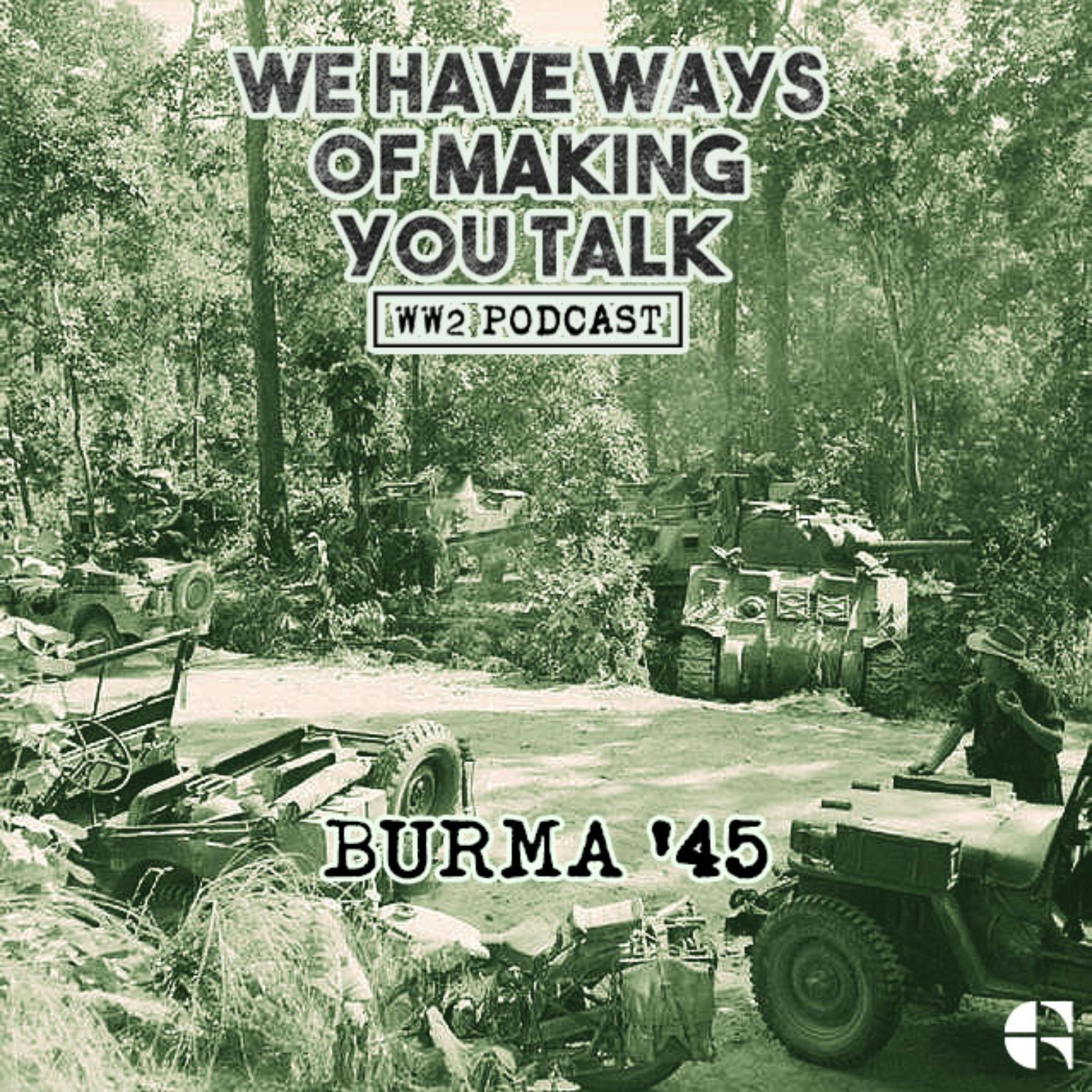
Loading summary
Transcript152 lines
- [00:02]
Al Murray
Thank you for listening to we have ways of making you talk. Sign up to our Patreon to receive bonus content, live streams and our weekly newsletter with money off books and museum visits as well. Plus early access to all live show tickets. That's patreon.com wehaveways.
- [00:25]
James Holland
Summer's here and Nordstrom has everything you need for your best dress season ever. From beach days and weddings to weekends getaways in your everyday wardrobe. Discover stylish options under $100 from tons of your favorite brands like Mango Skims, Princess Polly and Madewell. It's easy too, with free shipping and free returns in store order, pickup and more. Shop today in stores online@nordstrom.com or download the Nordstrom app on WhatsApp. No one can see or hear your personal messages. Whether it's a voice call message or sending a password to WhatsApp, it's all just this. So whether you're sharing the streaming password in the family chat or trading those late night voice messages that could basically become a podcast, your personal messages stay between you, your friends and your family. No one else, not even us. WhatsApp message privately with everyone. This episode is brought to you by Stay Farm. Knowing you could be saving money for the things you really want, like that dream house or ride, is a great feeling. That's why the State Farm Personal Price Plan can help you save when you choose to bundle home and auto bundling. Just another way to save with a personal price plan. Prices are based on rating plans that vary by state. Coverage options are selected by the customer availability, amount of discounts and savings and eligibility vary by state.
- [02:01]
George MacDonald Fraser
I turned to see a Jap racing across in front of the bunker. A sword flourished above his head. He was going like Jesse Owens, screaming his head off right across my front. I just had sense enough to take a split second, traversing my aim with him before I fired. He gave a convulsive leap and I felt a jolt of delight. I'd hit the bastard, and as he fell on all fours, a Highland officer with whom I'd played football dived on him from behind, slashing at his head of a cookery. Someone rounded the bunker, almost barging into me. It was Stanley, shouting, where? Where? In that kind of mad scramble, all that matters is seeing the enemy. He had a Bren magazine in one hand and was trying to change it for the one on the gun. I grabbed the barrel to steady it, burned myself, yelped, and seized the folded legs while he pushed the full magazine home. One of his Putties was Coming loose a yard away. Gale was lying dead with two men bending over him. The whole wood was echoing with shots and explosions and yelling voices. Stanley ran past me dropping the empty magazine and as some Presbyterian devil made me pick it up with I noticed Gale's hat lying in the bunker doorway and the little sergeant was shouting and running towards the second bunker. And that is George MacDonald Fraser describing 60 seconds of the McTeiler battle in his amazing memoir, Quartered Safe Out Here.
- [03:16]
Al Murray
And yes, I would recommend that book to anybody who wants to know what the war was like in, In Burma from the point of view of an incredibly articulate and. And a brilliantly vivid writer who of course then went on to write the Flashman books with a slightly different the British in the Empire and History. Anyway, welcome to. We have ways of making you talk with me, Al Murray and James Holland. And welcome to our fourth episode of Burma 45. Jim what we've done, as ever with these, with these sort of series, is we found that we'd tried to get too much done. But in the episodes we have planned, but that's largely because there are lots of moving parts. This is a hugely complicated scenario. And more importantly, you know, having laid out one plan, that plan then doesn't go according to plan, it goes better than according to plan. So the plan has to be altered for a new plan that replaces the old plan. That isn't the plan that ends up being the plan.
- [04:10]
George MacDonald Fraser
I think that's about right, yeah.
- [04:11]
Al Murray
In case anyone missed the last few episodes, there it is.
- [04:14]
George MacDonald Fraser
The thing with this is that, you know, it is complex and it's also got lots of strange names that we're unfamiliar with and places that we're unfamiliar with. So we don't, you know, when you're sort of talking about Normandy, one has a kind of sort of mental map of Normandy, what it looks like. You sort of, you can sort of imagine where Con is and Sanlo and Bayer and the Cotentin Peninsula or whatever. It's. It's kind of harder to, to picture this, I think, but you have got these sweeping rivers coming down. You've got the Chindwin, the mighty Chindwin on the western side running in a sort of north to south way. And then a sort of 100 miles gap is the mighty Irrawaddy, which runs kind of roughly almost directly north, south, then does a 90 degree dogleg to the west. Mander leg pushes on for another sort of 40 miles or so before sort of then turning again. So it's like a sort of giant S bend, but the other way around, a sort of inverted S sort of heading sort of southwest. And it's there that the Chindwin meets it. And this is that kind of central sort of coral corridor running roughly in a kind of sort of northeast to southwest kind of direction. And either side of that you've got hills and jungle and all the rest of it. But if you think of this sort of corridor running down the absolute spine of. It's like a sort of inverted Apennines, I suppose, of Italy. That's where you're at. And this is where they are at the moment, you know, and it's a very different kind of fighting to what they were experiencing, you know, in the Arakan, for example, or in the Chin Hills as they were crossing over from India into Burma.
- [05:33]
Al Murray
And what it isn't is bamboo. And the enemy emerges 10ft from you in front of point of view. It's quite different, isn't it? That's. I mean, I think that's one of the things to, to remember about Burma is that there's actually different terrain which offers different challenges and, and different solutions. And I think one of the, one of the things that's striking here, isn't it, is that, you know, the test of a general is when things go badly, when things don't go quite go according to plan and how they then respond and how they then turn that into a victory. And we can see that Slim, Slim the, the year before in 1944, where actually the. The Japanese are further into MU, is further into his offensive than Slim, real further around him in the spring, summer.
- [06:12]
George MacDonald Fraser
Of 1944, come through the back door. And it's interesting because I wonder whether the Kahima operation by the Japanese that going further north than Slim thinks, I wonder whether that has inspired him with Operation for Operation Extended Capital, which is when he realizes that he can't meet the. He's not going to be able to have a decisive confrontation with the Japanese in the Shwebo Plain, this, this wide expanse of sort of dusty plain land between the Chindwin and the Irrawaddy. I wonder whether that is one of the things that inspire them to think, well, okay, maybe we should just do a big drop south and get him right behind the Japanese Mandalay and go to Miktila.
- [06:48]
Al Murray
The Japanese have been inspired by the year before's battles anyway, haven't they? That they're.
- [06:52]
George MacDonald Fraser
They're going to. Well, they've been inspired by the Chindits. And maybe this is the true worth of the Chindits is that the Chindits have inspired Mutaguchi. Mutaguchi is Spars slim and as we discover, you know, he's on the cusp of his greatest victory. All. All inspired by Ord Wingate. How about that? Or maybe not.
- [07:10]
Al Murray
No, I'll take that, I'll take that. Standing naked, eating an onion.
- [07:14]
George MacDonald Fraser
Yeah, yeah, yeah, all of that. But what I would say, and we'll get onto this a little bit later, is I don't think the Chindit Expedition, while you can absolutely argue that the Chindits get carried away in the second Chindit Expedition of March 1944, there are definitely lessons learned, values to be had, experience gained, which helps this current decisive battle which is playing out, albeit battles, I should probably say. Anyway, in the last episode we were really focusing on 33rd Corps sector. This is Monty Stop. And this is in the kind of, you know, what they're trying to do is lure the Japanese into thinking this is the main effort. And certainly they've got three divisions rather than the two they've got in fourth Corps attacking around north of Mandalay. We've Got Pete Reese's 19th Indian Infantry Division and crossing over to the north of Mandalay, about 40 miles north of Mandalay and now pressing southwards. You've then got about 40 miles away from Mandalay to the west. After the irrawaddy does its 90 degree dogleg towards the west, you've got 20th Indian Infantry Division which having quite a sticky time getting across. And then you've got closer a little bit later, you've got the second British Division, rather the Indian Division, also crossing as well, but only about kind of 15 miles west of Mandalay. So that's where we were on that one. And I think this time it's time to look at the daring right hook deep to the south, which has been carried out by Frank Messervi's fourth Corps. I thought one of the way to do this would be to look at an American taking part in this. Who is. Is Captain Scott Gilmour, who is second in command of a company of the Four Faith Gurkhas. He's a New Yorker from a successful publishing family and he has volunteered to drive ambulances with the American field service. In 1941, four Americans joined the war who are in North Africa in support of 8th Army. But with the kind of battle of alamein over and 8th army sort of disappearing off into Libya and beyond and heading towards Tunisia, he decides he needs a different challenge. He gets jaundice as well. So he's Hospitalized and then comes out of it and thinks, well, you know, he talks to a guy and I said, well, why don't you join the Indian Army? You know, you don't need any citizenship to join the Indian Army. They're not going to worry about the fact that you're American or anything. So if you thinks, yeah, all right. So he gets posted to Bombay now, Mumbai, goes to officer training school in Belgium and is commissioned in July 1943. And then he's posted to join the Gurkhas. So, you know, obviously, like everyone else, he has to. Any. Any white officer in the Gurkhas, he has to learn Gurkhali. And he then serves at the admin box. I think we touched on him maybe in our Burma 44 series. And then he's in the back end of the Kahima battle. And now the four Faith Gurkhas are part of 89th Brigade in the 7th Golden Arrow Division, which is the division that's defending the admin box and spearheading drive. And they will be spearheading the crossings of the Irrawaddy. Their task now, as they're getting going and trying to do this daring right hook, is to follow the spearhead south and then get across the river, establish a bridgehead, and then once they've done that, Punch Cowan's 7th Indian Infantry Division, who will then follow and then make the, you know, do the drive to Miktida itself. It's quite an adventure, isn't it, for an American vote? But he wrote a very good memoir. It's very engaging and, you know, from someone from a Connecticut Yankee in the 8th Gurkha Rifles. I kind of don't think the title's the best, but, you know, for some, someone who's from a publishing family, he certainly writes very nicely.
- [10:19]
Al Murray
It makes its point, though, that. I mean, it's so bizarre, isn't it? It's absolutely bizarre that he might do this. Did he. Did he go on having a life of adventure or did he return to publishing?
- [10:28]
George MacDonald Fraser
He goes back to publishing and he lives out his life and stuff. He's a tremendous fellow. You know, he's. He comes across very well. It's sort of very genial, very honest about, you know, when he's absolutely bricking it and when he's not. And he just. He obviously, you know, he's that East Coast American kind of well to do and he likes British stuff and he. And he, he likes all the. Kind of the way they conduct themselves and having tiffin and, you know, nightcaps and all. This kind of stuff. And he thinks it's all, you know, moments of terror, but otherwise tremendous fun. I thought it'd be interesting to kind of look at this. This March of 4th Corps through his eyes, really was my thinking. And.
- [11:00]
Al Murray
And the 4th 8th Gurkhas, they've been resting up after. After. Because this is a periodic thing, isn't it, Is that a battalion will be, you know, in action and then held back very often, guarding drop zones and stuff when it's not in forward. Yeah. Retraining, reconstituting, the malarial casualties will be being sor. All that sort of stuff.
- [11:19]
George MacDonald Fraser
Yeah. So they've been up in the north, they've been in the Teak forest and the Chin Hills and everything, and they moved down the Cabor Valley and they're aiming for Pagan, which is the ancient capital of Burma, and a place of, you know, beautiful place of temples and pagodas and, you know, it's just absolutely gorgeous, shimmering out of the plains and all the rest of it on the banks of the Irrawaddy. And, you know, they're told that the absolute key thing is that the Japanese don't discover them. Gilmour hears that only one enemy recce plane has ever seen the dust trail of the column. But Kimura's staff and. And you remember General Kimura is the commander of the Burma Army Group area. Discount the info. I mean, all very kind of France 1940, isn't it? With Gamelin discounting the accounts of Germans in the Ardennes, it's not possible.
- [12:02]
Al Murray
That must have been quite the journey, though, in trucks all the way down. I mean, that's been hard going.
- [12:06]
George MacDonald Fraser
Well, they're not doing it all the way. They Travel the first 125 miles by lorry and then they camp by the Manipur river for a few days. Then the mules catch up and they March the next 42 miles to the village of Cannes. So they're doing this on foot and this takes three days. So it is the Lushai Brigade who we touched on last episode. Slim's own Chindit, sort of irregulars who are drawn from sort of local, who know the land a bit better. So the Lushai Brigade are doing the kind of first foraging, and that is also deliberate because they wanted to look like an irregular force. And this is just sort of reconnaissance and kind of, you know, jitter raids, you know, a bit like the Chindits, really. That's what they're trying to make. You know, if the Japanese come across them, that's what they want it to Appear like. But they're also kind of paving away as well, of course. And then they're being followed by the 28th East African Brigade and the rest of 7th Indian Division then following so ones that can. The four faith Gurkhas are then ordered to carry out a sweep east and then south through the hill country which is 100 mile hook. And the aim is to cut off Japanese troops between Gangor, which is literally due south from Kalua, which we've mentioned a number of times, which is up in the north and the river Irrawaddy. And of course when they set off on this, this huge sort of sweeping operation, it's absolutely not clear at all how many enemy troops there'd be. They're told that comms are strictly by wireless only and very tightly rationed. And of course. But the problem they have is that any radio comms are tricky because of the ranges invol and the atmospherics and the temperamental radio sets and all the rest of it. So basically once they're off on this sweep they're kind of basically on their own. There's this rather lovely news bulletin which they, they publish with a really nice description of this countryside in which they're. They're traveling through. I mean, do you want to do this one?
- [13:42]
Al Murray
The Burma hills in January are cool and fresh. And when in the sunset the hillsides turn to all the greens and browns of an English woodland in autumn their beauty is unsurpassed. Between them lie the valleys of paddy stubble and nearby nestle the villages of picturesque little stilt raised dwell things who can convey on paper the charm of the little pagodas standing in clusters large and small guarded on their hilltops by the chinthis and with their tinkling silver voiced windmills that never stay silent. I mean, I'll buy a timeshare. I don't know about you, Jim.
- [14:11]
George MacDonald Fraser
Yeah, I'm off that. I mean that's absolutely great, doesn't it? I mean really, really love. It's very sort of evocative. And of course they're all. They're desperately trying not to get complacent because every day they're not meeting Japanese and, and they have, they're sort of getting into this people like routine and the sort of the daily rituals of what they do. You know, so they' early cooks busy with fires covered by screening branches. You know, they then move off when it's still dark. They have 10 minutes rest in every hour. And during the rest the mules are also briefly unloaded. Then you know, in addition to 700 riflemen, they also have a platoon of injured sappers for bridge building and track improvement if necessary, and a battery of mountain artillery. And after three hours, they stop for a full half hour. And Gilmour notes in his memoir, he goes, he goes, there would be a few minutes to lie back and enjoy the rustle of the breeze in the swaying bamboo, or a stare into the heights of a lone giant teak tree. I mean, it all sounds rather nice, doesn't it? And you. And you see that he's finding it very agreeable. And by 1:30 to 2:00 clock, you know, they'd have done 12 or 15 miles or so. So at that point they'd have reached an objective which they would have picked out the previous day's O group. And O's group is orders group. You know, this is where you sort of officers get together and go, right, chance, what are we going to do tomorrow? That kind of thing. And they pick out a drop zone. Once they're there, they would put their markers out and then, lo and behold, every single day, without fail, Dakotas would fly over low and slow and shove out Hessian Sachs, which is, you know, know, fodder for the mills, food for themselves, rations, you know, bit of ammunition if they need it. And Gilmour writes, we came to love the sight of those overworked Dakotas laboring and across the hills in the fine weather of the Burmese winner. They always found us.
- [15:43]
Al Murray
And that's the thing they've learned from the Chindits, really, isn't it, is how to get the air supply. Right. Actually, the thing that Ord Wingate's sort of adventures have delivered to 14th army, isn't it?
- [15:54]
George MacDonald Fraser
Yeah. And at this point, they're not in the plains, they are in the hills, in the jungly bit. They're following the courses of rivers. You know, they're trying not to be seen when they're walking. They're not creating huge great dust columns, you know, so it makes it easier to do so. And, you know, every day's the same, you know, the march at dawn, the reaching objective, early afternoon, prep for the airdrop, dig in, repeat, then repeat again. So, commanding the four fake Gurkhas, and I'm pleased about this is Lieutenant Colonel Walter Walker, who is our friend of the show. Annabelle Vennings, a historian herself. Yeah, it's her grandfather.
- [16:25]
Al Murray
Oh, brilliant.
- [16:25]
George MacDonald Fraser
And she wrote a brilliant book called To War with the Walkers, which is all about her grandparents and uncles and all the rest of it and all the amazing Life. Amazing war they went through. They were very much sort of Indian army stock. Anyway, Walter Walker is very experienced. He's imperturbable. He's an absolute stickler for appearance and turnout. You know, shaving every day and. But, but Gilmour really likes him. He says he's first class at his job. Demanding yet efficient, cool yet precise. He never showed fear nor worry, you know, that's the sort of person you want. I mean, you can just imagine exactly what he's like. He's got the mustache, he's got the slit back hair. He's sort of compassionate for the men, but aloof, you know, the right balance, you know.
- [16:58]
Al Murray
Holland, are your mules in order? I do hope so.
- [17:00]
George MacDonald Fraser
I'm way they are. So, yes, I think they're all in frightfully good fettle. Jolly good, jolly good. Carry on and do pop by to my tent later on for a touch of Scotch. Anyway, they move deeper into burma on the 7th day of March, which is the. Of their March, which is the 24th of January. They reach and block the main track from Gangor to Pakoku, which is on the Irrawaddy. Pukoku is. Is the kind of crossing point they've originally kind of aimed for. They're thinking, you know, they're going to make the final decision when they get there, but that's what they're thinking. And this is a few mil of Pagan and it's right on the Irrawaddy. And they reached that two days ahead of schedule. So they're doing really well. And one of the reasons they were so ahead of schedule is because they're not finding any Japanese. And so they then push on to Sinta. And here they stay for a week patrolling far and wide and they find no enemy at all. So it looks like this has worked.
- [17:51]
Al Murray
What a relief that must be, though. Like you're going out in the patrol in the jungle and there's no one there. I mean, that must, you know.
- [17:56]
George MacDonald Fraser
And they've also prepared the airfield. They've the newly constructed airfield at Sinter. So again, this is all part of it. They're sort of going 50 miles creating another airfield so you can bring up more supplies. You know, it's all leapfrogging stuff. And Slim comes down to meet them and he meets just them, you know, he meets the four Fate Gurkhas and no one else. And they're absolutely pleased as punch that their chief is coming around and seeing them face to face. And he talks to all the officers and to all the men and Gilmour is really impressed because Slim just chats amiably to all the Gurkhas in fluent Gokali, you know, quite casually, total pro. And then on the 10th and the 11th overnight, on the 10th and 11th of February they march overnight from Sinta to Majic on the banks of the Irrawaddy. And you know, and obviously it's at night to avoid detection. And then now at last out of the hills and the jungle and into the open undulating plains of the mighty river. Miichi is a tree lined village on the bank so the trees also help camouflage what they're doing and they decide to cross here and not at Pukoku. So although the 28th East African Division has been leading the way with the Lushe brigade, now it is their turn to cross the irrawaddy. And the four fate Gurkhas have traveled 450 miles since first leaving Kahima, half of which they've done on foot. And in that time they've not met a single Japanese soldier.
- [19:16]
Al Murray
That's incredible.
- [19:17]
George MacDonald Fraser
It is absolutely incredible. And from where they are im on the far side Gilmour can see the ancient Burmese capital of Pagan. He says the Irawadi was wide sliding silently past blue and silver in the sun. You know and it's all sort of image of sort of, it all seems very tranquil, doesn't it? And peaceful and calm and you know, it is an incredible feat that they've got to where they, where they've got to and obviously you know, they haven't been held up by that Japanese. But one of the reasons they haven't been held out with the Japanese is because the dupe has, the deception has worked and that's a huge credit to all the higher minds up at core level and army level. But it is also, and it has to be said an incredible feat of engineering and of endurance to get to where they got to. I mean the fact that the Japanese don't realize what's going on is extraordinary. Now it has to be admitted that Japanese intelligence is really, really bad. It is a logistical miracle.
- [20:10]
Al Murray
It's not a thing they'd ever be able to do. So they don't consider it a possibility.
- [20:14]
George MacDonald Fraser
Yeah, yeah.
- [20:15]
Al Murray
Your imagination about what the enemy might be achieved is limited by what you imagine you can achieve.
- [20:20]
George MacDonald Fraser
Yeah, yeah, yeah, exactly, exactly. And I think the Japanese are particularly guilty of looking at things through the prism of their own experience and understanding. You know, I think that's constantly affected them in the same way that it did. You know, we've said this a lot About Hitler. It's one of Hitler's problems. He's always looks at the world through his own narrow worldview, and that is problematic. But of course, they've now got to cross the mighty IR one of them and establish a bridgehead and then get to and capture Mictila. So, you know, there's still a massive challenge. And one of the big problems about going this far south is the further south you go, the wider the Irrawaddy becomes. And, you know, it's vast. On the plus side, it is now the perfect time to cross because, you know, it is before the start of the monsoon, but it's getting on to being, you know, the monsoon's not that far away. So water levels are lower, about 40 foot lower than they. They would be at the height of the monsoon, for example. The flip side again of that is it's so low that there's now lots of sandbars everywhere which have to be negotiated. And it's very, very hard to map because every. Yeah, these sandbars shift, as does the kind of precise course of the Irrawaddy.
- [21:17]
Al Murray
However it may appear now, once the monsoon starts, it would change again anyway. Very. That's an enormous engineering challenge, isn't it? Because whatever you're betting on now, in a couple of months might all be gone.
- [21:27]
George MacDonald Fraser
Yeah, exactly. Meanwhile, 114th Brigade of the 7th Indian Division have been fighting a battle at Pukoku, which is the original part, where they were thinking they were going to cross, hoping to persuade the Japanese that this is just a minor flanking operation where they might cross, but nothing more. It's not. It's not conceived to be for the Japanese to consider a kind of, you know, a major outflanking incursion. But while this is going on, this. This also distracts the Japanese from what else is going on, which is, you know, three different courses of which you know, the fourth Ape, Gurkha is one of the routes. And fourth Corps now plans the operation into four phases. So the first crossing is on the night, is going to be on the night of the 13th, 14th of February, in silence, with landfall near a place called Nyong. And four beaches have been earmarked, and either side of these beaches there are sort of exit points, but there are then really quite high cliffs, you know, 500 foot high cliffs. They're quite substantial on the other side. And what you've got is similar, which is not dissimilar rather to Omaha beach and that. You've got these bluffs, but you've got these drawers you know, the Colville draw, the Verville draw, it's kind of the same sort of thing. So there are these beaches where cliffs suddenly drop off into a kind of little valley running down to the mighty river. And that's where you want to land and work your way up these valleys and then onto the top of the cliff cliffs. That's the idea. So Nyongu is three miles upstream from Pagan and downstream from Fakoku. And then the battalions of the 33rd Brigade and some tanks would be ferried over. They would then make a rapid advance to take Nyongu, which is the largest settlement closest to the river. And then having taken Nyonggu, the rest of 17th Infantry Division would then do a rapid drive to Miktila. That is the plan. So at dawn on 14th February 1945, Scott Gilmour is waiting with the men to a cross and recce. Planes have been, have been limited so as not to arouse suspicion. So they're all a bit unsure of what enemy lie on the other side or what the opposition might be. And obviously this is pretty nerve wracking stuff. You know, you're sitting there waiting to go. And the crossings here are to be the longest river crossing of any troops in any vita at any point in the Second World War, you know, and they're as wide as 2,000ft, well over a mile. And one of the problems, problems is that when you're crossing because of the flow of the river and the flimsiness of the boats, I mean you're not talking going, just going straight across, you're going with the tide. So you're doing a diagonal crossing which of course then makes it even, an even wider. And Gilmour understands that the crossings have started when he hears sudden gunfire and he knows the guns are theirs and that suggests that they're meeting opposition so they will no longer be able to get across unobserved. And that gives you even more of a kind of sickening feeling in your.
- [24:06]
Al Murray
Stomach and particularly after all this time where they haven't fought the Japanese.
- [24:09]
George MacDonald Fraser
No. Right. So you're sort of bit out of practice.
- [24:11]
Al Murray
Yeah, yeah. Your nerves, your nerves may be sort of, there's more anticipation. You're not in the sort of weariness of dealing with it on a daily basis, are you? And that's the, the lead battalion of 2nd South Lanks on 100 of 114th Brigade. And they've been chosen for this job because of. They landed on Madagascar back in May 1942. Quite extraordinary in ironclad Basically being treated as, you know, you, you've done an amphibious landing, here you go and they're gonna, they, they were gon company across under cover of darkness and then land and secure the headland on the cliffs. But of course no plan survives contact with a river. River crossings involve noisy engines. I mean when we were talking about the Rhine crossing went with them, you know, buses, dust bits.
- [24:51]
George MacDonald Fraser
And also don't forget that these boats have all been made, you know, up, up river have to be transported south, you know and they're all kind of made on the hoof so lots of them leak. Hardly surprising is it? Dawn arrives before the south flanks have landed and suddenly they come under mortar fire and rifle and MG fire. Two company commanders are killed in action the, in the process and boats are sinking but some do get through and they're very quickly Followed by the4fifteenth Punjabis and when they cross there's no enemy fire whatsoever. And it later turns out the firing on the South Lancashires came from only a chance Japanese patrol who once they realized what's going on have scarpered and hurried off. So you know, it feels like there's more enemy than there actually were anyway. Gilmour and the rest of the four fate Gurkhas, they crossed that same afternoon, St. Valentine's Day. And of course the boats are drifting diagonally as they make the journey and they reach the cliffs and they get off, they've been crikey, they're pretty hot. But the drawers off the beach are, you know, they do give you quite an easy exit. They're opposed by another chance patrol who and also by GIFs, these, do you remember GIFs from the INA then what the Indian national army are known as and a force of 160 which could be problematic but in fact they promptly surrender and they also say yeah, no, there's hardly any Japanese around here and oh by the way, here's the best route to the top of the cliff. So they're actually quite helpful and they're you know, having properly surrendered.
- [26:06]
Al Murray
It is interesting though, I mean the fact that you know, when the length the south flanks cross the fire is from just a patrol. It just shows you how fragile these sort landings are, how everything's delicate and everything is predicated on luck, people staying cool, good judgment, all those things that, that if a patrol can disrupt this kind of, this kind of landing that's this important, you know, you've got to take it all very, very seriously, haven't you? By the next morning, 4th 8th Gurkhas have moved three miles inland, haven't they?
- [26:33]
George MacDonald Fraser
Yeah, they've made it. Your bottom Line is seventh Indian Division is across. They've got their three miles. They're holding that prominent ridge 500ft high. Their target, their personal target, is to get a monastery with a pago next to it perched on top, you know, which is seen as a sort of crucial landmark and an obvious aiming point when you're getting across the river. And a bit further to the south is one of those sort of gaps in the cliff. So that makes sense. You know, you can expand that trackway for tanks and all the rest of it, you know, Gilmour is ordered to take a company to take the pagoda and hold it and deny it to the enemy. But there are any enemy, he says the summit greeted us with nothing more than lethal gusts of cooling wind coming over the crest from the east. Phew. Thank goodness surprise has been total.
- [27:14]
Al Murray
But it's more than total surprise, isn't it? Because the Japanese don't seem to even know about it.
- [27:19]
George MacDonald Fraser
Well, of which more later on in this episode, because it's just extraordinary. And it means that they can expand the. The bridgehead up to the beautiful ancient Burmese capital of Pagan, which they do in very quick order. And Mesafi knows that speed is of the essence here. You know, he's a thruster. We know this. You know, this is. His whole point is, is to get to McTedo as quickly as possible before the Japanese can react. You know, it is far removed from Guderian's get to the mers in three and cross in four. You know, it's this kind of thing, you know, get there before you, you know, unseat, unsettle the enemy before they have a chance to react. So. So, you know, he just doesn't wait for 7th Indian Division to finish consolidating the bridgehead. He just goes, right, go on. 17th Infantry Division under Punch can get across and get going. So 7th div. 17th division start crossing on the night of the 16th of 17th of February. So it's only like, you know, three days after the start of the crossings.
- [28:12]
Al Murray
Incredible.
- [28:13]
George MacDonald Fraser
And they finally meet some heavy Japanese resistance from. From troops that are dug into extensive tunnels around the town of Nyongu. You remember, that was the kind of, you know, get to Nyongu, take Nyongu, then get to Miktila. So air power is brought in again, underlying the crucial vital importance, and they hammer these positions with rockets, bombs and napalm. But the enemy is not for shifting and instead the sappers brought up charges and they just seal up the enemy bunkers and tunnels. And with the troops in a life crikey ruthless. We haven't got time for this nonsense. If you're not going to surrender, that's what happens.
- [28:50]
Al Murray
Yeah, and then the town surrenders without a fight.
- [28:52]
George MacDonald Fraser
Isn't it Nyangu that, you know, they. They overrun that pretty quickly. Yeah. And Slim is on the scene, you know, he wants to see it himself and he gets to Pagan and he says, says it's 1,200 temples. Madder Red or ghostly white rise some like fantastic pyramids or turreted fairy castle, others in tapering pagoda spires. From the sage green mass of trees against the changing crystal blues, reds and golds of sunrise as a foreground flows the still dark yet living sweep of moving water. There's no question, is it that fourth course sweep? Their big round right hook is getting the descriptive writer to come to the fore. I think in this they're mesmerized by the beauty of this.
- [29:32]
Al Murray
I still think it is adopted Brahmi. It's better. But there we are. I mean that's. People like to say that Shakespeare talk like this as well, don't they? But it'll go. We need.
- [29:42]
George MacDonald Fraser
Exactly rough Wednesday shake the darling buds of mine. To be or not to be. That's the question. All right, where for Ortho. So anyway, on the bike between the 18th and 21st February, the rear guard of 17th Division and the all important 250 55th Tank Brigade are also ferried across the river. Tanks have always been the key part of the plan. And don't forget it was Frank Messevi proving before he took over 7th Indian Division that tanks, you know, medium tanks, 30 ton tanks could operate in Burma. That is why they're using them in such abundance at this stage Anyway, the advance on mactina, which is 80 miles from the bridgehead then begins on the 21st of February. And most of 17th Division are aiming for the twin towns initially of Kamie and Siketein. And so at this point Punch Cowan, commander of 17th Division now splits his division into two. So 63rd Infantry Brigade is given fifth Probin's horse in one column and 48th Brigade and the ninth Royal Deccan horse is given the other. And leading the charge though is a. Is a sort of ad hoc force called Tom Cole which is a sort of rapid recce force with some sort of armored cars and whatnot and carriers etc. Who are tortured to sort of surge forward and recono to roots.
- [31:08]
Al Murray
They're using Stewarts and stuff, aren't they as well?
- [31:10]
George MacDonald Fraser
Yeah, yes, yes, exactly that. Yeah.
- [31:12]
Al Murray
Stewart's prove they're worth in the retreat from burma in. In 42, that actually they do a really, really, really great job.
- [31:17]
George MacDonald Fraser
Yeah, they beetle around. They're quick and maneuverable.
- [31:20]
Al Murray
Yeah. Very well suited to the. The jungle. Less like to get bogged. And then 63rd Brigade, who elite, who in the lead, they. They quickly roll up the Japanese and they speed on towards.
- [31:30]
George MacDonald Fraser
Well, well, they roll up the opposition to Oyin, where they have actually do have quite a tough fight. They kill several hundred Japanese, as you say, then speed on to well on.
- [31:39]
Al Murray
And then they take Tong Tha, which is roughly halfway to make Tila. So that. So, I mean, this is on the 24th of February. I mean, they're making incredible progress.
- [31:48]
George MacDonald Fraser
Yeah, they really are.
- [31:48]
Al Murray
You know, as we just touched on there, that there, there are. There is armor in the. In the treat from Burma in 1942. And then there is an attempt to use armor in the Arakan offensive, but in penny packets. One of the things Slim has learned and knows just you've got to use armor decisively and in and in mass for it to work. There's no point using up tanks in twos and threes as they. As they do so disastrously. There's no owing does in the. In the arakan offensive in 43. Rather, it's that learning Slim grasp the fundamentals of this combined arms warfare and has the imagination to change his plan when his plan doesn't work out the way it ought to. I mean, these are all the ingredients of absolute military genius.
- [32:32]
George MacDonald Fraser
Right? Yeah. Messervi's bought into it. Punch Cowan's bought into it. You know, Pete Reese has brought into it. You know, Gracie of 20th Division has bought into it. You know, they all get this. They understand what they need to do. And it's amazing the speed with which they're operating on this very much, you know, ineffectively a battle group. What we're talking about here is a Kampfgrupper, you know, let's not kid ourselves. You know, this has got artillery, it's got reconnaissance troops, it's got tanks, it's got infantry. It's all motorized, you know, for most part is motorized. You know, they know what they're doing. And so they take Carl Lang on 25 February, and the next day, 26 February, they take the crucial airstrip at Thabat Khan, which is only about 15 miles to the west of Miktila. So they're almost there now. And this means that another part of the plan can get underway, which is flying in 99th Brigade, which is the third brigade of 17th Division. So, you know, the idea was to sort of get across Irrawaddy with two brigades only, rather than three that you would normally have in a division, and then fly in the third one. And this is what they've been doing. They've been waiting in Palau, which is on the infar plane, to be flown in. The moment is captured and it's all just going absolutely according to plan. They arrive on the 26th of February. There's still a bit of small arms fire around, but they add crucial extra strength and weight just when it's needed. Of course, you know, the Japanese are still fighting to the death with plenty of banzai charges whenever they come across them. But what they are noticing, what the. The four core troops are noticing, is that the fighting skills and tactics seem well below par from what they've experienced earlier. And of course, this is exactly as you'd expect, you know, because the training's not as good, it's not complete. You know, they've got less supplies and. And they're being degraded. They're out in the same way the Germans have been, you know, degraded. It's just not the same. Japanese way of dealing with a tank is to send someone out, you know, strapped with a box of explosives attached to their chest and just lie in front of it. Christ, blow themselves up and the tank. And later on the. On the, you know, by. By nightfall on the 26th of February, having, you know, flown in 99th Brigade and having got this airfield at Thabot Khan, they're now eight miles only from McTeelor. 63 Brigade, at that point becomes very deeply ensnared in bitter fighting. But, you know, suddenly it's more like the desert war. It's sort of open plains, it's dusty, it's dry waddies and whatever, but. But here the armor is really, really decisive. You've got Cowan heading for the airstrip. And Mesevi had been leading the rest of the corps into mactila itself. And Slim writes, the Japanese had no.
- [34:55]
Al Murray
Experience of these massed armoured attacks and seemed quite incapable of dealing with them.
- [35:00]
George MacDonald Fraser
But clearly there's no way the Japanese are going to be giving up Miktila without a fight and will be coming back. Back to that in the second half.
- [35:08]
Al Murray
We'll see in a tick.
- [35:10]
George MacDonald Fraser
The McDonald's snack wrap is back. You brought it back. Ranch snack wrap. Spicy snack wrap.
- [35:17]
Al Murray
You broke the Internet for a snack Snack wrap is back.
- [35:25]
George MacDonald Fraser
Hey, it's Ryan Reynolds here for Mint Mobile. Now I was looking for fun ways to tell you that Mints offer of unlimited Premium Wireless for 50, $15 a month is back. So I thought it would be fun if we made $15 bills but it turns out that's very illegal. So there goes my big idea for the commercial. Give it a try@mintmobile.com Switch upfront payment.
- [35:47]
James Holland
Of $45 for a three month plan equivalent to $15 per month. Required new customer offer for first three months only. Speed slow after 35 gigabytes of network's busy. Taxes and fees extra see mintmobile.com she's.
- [35:55]
George MacDonald Fraser
Made up her mind to live pretty smart. Learn to budget responsibly right from the start. She spends a little less and puts more into savings. Keeps the blood pressure low and credit score raises boring money moves. Make kind of lame songs, but they.
- [36:21]
Al Murray
Sound pretty sweet to your wallet.
- [36:22]
George MacDonald Fraser
BNC bank brilliantly boring since 1865.
- [36:31]
Al Murray
Welcome back to we have ways of making you talk with me. I'm Murray and James Holland and we're eight miles from Miktila. Armor is rolling forward. And of course tanks are very, very effective when the other side doesn't have.
- [36:41]
George MacDonald Fraser
An answer to them and when you've got air power supporting you as well.
- [36:45]
Al Murray
Yeah. And, and there's no one getting their top trumps out and going. Well, you know, the arm is inadequate for the. Because they haven't got an answer to it. Right. So now of course, crucial part of Slim's plan is that the Japanese need to, up to this point of being glued in position by 33 Corps to the north. That's what this whole thing relies on. Right, Jim? So what's going, going on there?
- [37:05]
George MacDonald Fraser
Well, you know, it's just a juggling act. You know, he's got to send over enough to keep the bulk of the Japanese 15th army around Mandalay. And that's the key thing. And you know, Miktila, the balance of these two twin operations over the distances and the logistical challenges of getting across the river and all that have to be quite carefully timed. And remember we talked about moniwa and the 20th division attacking there and having this is sort of very close to where the Chindwin joins the Irrawaddy. Having quite, quite a tough fight there. Slim gets there on the 8th of February. And this is a town that he vacated back in May 1940. 42, when he's retreating back across the Irrawaddy. 20th divisions start crossing the river on the 12th of February, but they're going to take three weeks for the whole of the division to establish a firm bridgehead because General Gracie has sent his division across at the very junction of the Japanese 31st and 33 divisions. But this second crossing after 19th Division, Pete Reese's 19th Division, north of Mandalay, prompts a ferocious response. And I should just remind people this is about 40 miles or so due west of Mandalay after the Dogleg and the Irradi. And what he does is he sends both, you know, both divisions. Katamura sends both divisions and remaining Japanese tank regiment in Burma to meet this attack by Gracie's 20th division. And once again, Gracie owes a huge debt to the air forces, which are such a massive force enhancer because number 221 RAF group hammers the Jap armor when they try and counterattack. And Hari bombers knock out 13 tanks in one day. Don't know what it is about knocking 13 tanks out in one day. That's the same number that the Sherwood Rangers knocked out on the Roaring Ridge. But. But obviously this goes into your point. You know, tanks are obviously an easy target in open territory with no cover of their own and with no answer. The key thing about this is it doesn't really matter that 20th Division's crossings are taking such a long time. In fact, actually, it's a good thing because what they're doing is they're drawing troops, not only keeping them away from Miktila, they're also drawing them away from Matt Mandalay. So at one point, two battalions from the Japanese 33rd Division lose 953 men out of 1200 in a suicide assault against the 20th Division's bridgehead. And between the 21st and 26th February, 500 Japanese bodies are buried by bulldozer just in that time alone. So 20th Division are having a sticky time of it, but actually this is perfect for Slim.
- [39:28]
Al Murray
But Jim, what's this reminds me reminding you of? What it's reminding me of is, let's say what we're going to do is draw the Germans in on our left flank around Cole, around a major crossing and an important nodal point. And you're going to draw them in and you're going to get them to get them to stick to you. And then you swing round on your right flank on their left flank and envelop them. Yeah, I mean, we've talked about that so much about Normandy, where the idea is you all the armors up one and all the, all the German heavy metal. The German focus is one end and yes, they're fighting at the other end, but that's the point. They're concentrating on their main effort because they fear, after all, because, you know, it's a, it's a valid fear. In Normandy, if the, if the British break out on the, on the eastern end of the Normandy lodgment, it's curtains for the Germans.
- [40:16]
George MacDonald Fraser
Yeah.
- [40:16]
Al Murray
If Slim gets into Mandalay properly, it's curtains for the Japanese here. So you can completely understand why they might get sucked into fighting this battle. And if it goes slowly and it draws them in longer, great.
- [40:29]
George MacDonald Fraser
Yeah, yeah, exactly that. There are now really clear signs that General Kimura, a reminder he's the total Burma Army Area Commander, Japanese commander, has been totally duped by this. Yeah. What it means is the battle is now raging as Kimura had expected, with, you know, an assault from the north on Mandalay, assault from the west. And, you know, he thinks that's what it's going to be. He also knows that the US led NCAC forces and remember those Northern Combat era Area Command forces, Chinese and American and British of course, as well. 36 Division advancing from Mitkina and Kimura is expecting those to merge with 14th army and then to attack Mandalay together. That's what he's trying to second guess as Allied intentions.
- [41:13]
Al Murray
Well, and he hasn't got enough to deal with everything if and when it.
- [41:17]
George MacDonald Fraser
All happens at once, Right, Yeah, exactly. But what is really interesting is, is that his decision to pull back across Irradia, not have a decisive engagement on the Schwieberg plane, actually dovetails with orders from Imperial General Hexagon quarters that now considered protecting the overland route from Burma into China of secondary strategic importance to that of protecting southern Burma and Rangoon. So clearly it's understandable that he's going to consider the defence of Mandalay critical to fulfill this. And, you know, this goes back to Slim's misreading of it in the back end of 1944, because he's assuming that the Japanese are never going to surrender and all the rest of it, but actually their strategic picture has changed, change dramatically. So the second Division then is the last of Stopford's divisions to cross and they do so on the night of the 24th, 25th of February at Nagazoon. And it's the 7th Worcestert, so you've had Pete Rees's 19th Division crossing at the north, you've had 20th Division crossing 40 miles to the west, and now you've got 2nd Division crossing about 15 miles or so west of Manderley and it's the 7th Worcesters and they have really bad luck because they have 17 boats filling with water or being sunk by enemy, enemy fire. And by midnight they're back on the bank where they started. And it looks like the whole thing might fail completely. But then the Camerons, the Cameron Highlanders, make a small bridgehead and then so too do the Royal Welsh Fusiliers. But, you know, there's a point where Slim's really worried about this. And on the far side, the Japanese are retaliating with fury. But after realizing that the main B head is going to be a flop, Brigadier west of the, of the 5th Brigade of the 2nd British Division orders the Dorsets to shift 5,000 thousand yards and so help the Camerons open a bridgehead. And this opens a chink that can then be exploited and sitting Brigade get across way more easily. And by the 26th of February, the entire division is across, plus tanks, and they're able to move eastwards towards Manderley. So what looks very sticky on the night of the 25th, you know, three days later, two days later, is, is, you know, it's all happened again. And this means, of course, that by the end Of February, all three divisions of 33 Corps have successfully got across the mighty Irrawaddy. And so too, by this stage, of course, have four corps further to the southwest. So these are huge achievements in their own right. Just forget about the enemy. You know, just getting across is difficult. And of course, most of them have been opposed in some way.
- [43:37]
Al Murray
Well, and of course, you're looking at tons of planning, the logistic effort, but also at the same time, the ability to improvise. I mean, this is the other, the other thing, you know, when you say, oh, well, all right, we'll land 5,000 yards in a different direction. That flexibility, I mean, you can't really imagine that happening at Vassal, in varsity, in plunder Varsity, can you? You can't really, really see 21st Army Group being able to go, well, you know, maybe we'll land somewhere else. Can you?
- [44:01]
George MacDonald Fraser
No, no.
- [44:02]
Al Murray
And, and, and Slim, after all, and he makes it, you know, he talks about this after, afterwards, it's all improvised and, you know, you make, you make doing mend and it's, it says it's been done with a couple of bamboos and a boot lace. You know, it's an exaggeration because we have talked about an awful lot of Bailey bridging, which after all is the quite the opposite of that. But I mean, it's truly incredible, isn't it?
- [44:23]
George MacDonald Fraser
Yeah. Really, really, really.
- [44:25]
Al Murray
These, these rivers make European rivers look piddling, don't they?
- [44:28]
George MacDonald Fraser
Literally, like, like a sort of gentle village brook. But, but he's absolutely clear by the beginning of March that Slim's great gamble is, is. Is working. He's 33 across. The Japanese have flung most of their men against these crossings, but of course, in piecemeal fashion, you know, they're retreated and ground down. And it reminds me of the. Just in the same way that as it did you a little bit, how the Panzer divisions arriving in Normandy are being ground down by King, push into a fight in penny packets rather than en masse. And that's why the divisions facing them, whether it be 20th Division or 19th Division or indeed 2nd Division, have been able to defeat them, you know, and see off these attacks. 2nd Division is pushing east towards Mandalay. 20th is sweeping south and then northeast in a big loop, and 19th Division is pushing down from the north. So Mandalay is in danger of being caught if you're Japanese in a massive pincer. And really there's only one thing for Katamura, who is the 15th army commander, to do, and that's pull 15th army back. And very hard, hurriedly too. But, you know, he's completely falling for Sim's ploy and frankly, annihilation beckons. But meanwhile, meanwhile, a tough fight is also playing out at Mick Taylor, of course.
- [45:35]
Al Murray
Yeah. So General Tanaka, who's Khmer as Chief of Staff, holds a staff conference at McTeila on the 23rd of March.
- [45:43]
George MacDonald Fraser
Yeah. Just amazing. You think while this is. All this other stuff is going on, while the Allies are sort of 25 miles away, they are having this staff conference at Mick Taylor, blissfully unaware of any, any issue whatsoever. No idea this is going on.
- [45:55]
Al Murray
But, but they accept the Mandalay is basically blocked on all in, on all sides and under siege, invested. And, and so they, they're going to reinforce 15th army with 18th Division and 17th Independent Mixed Brigade and then launch a counter offensive, I mean, over the.
- [46:12]
George MacDonald Fraser
Irrawaddy back onto the West Bank.
- [46:14]
Al Murray
You got to admire their optimism.
- [46:16]
George MacDonald Fraser
Yeah. You know, and they're going to do this on the 10th of March. I mean, it is absolutely, absolutely bonkers at the time of this. They have no idea about fourth Got.
- [46:26]
Al Murray
How not though. I mean, it's, it's quite extraordinary, isn't it?
- [46:29]
George MacDonald Fraser
Yeah. You know, this is going on. World punch counts, Division is three days away. I mean, and it's amazing because, you know, the, the Oen battle, which I said, you know, was quite a stiff fight taking place on the 22nd of March. You know, how come the Japanese troops weren't signaling this and saying, oh, my God, boss, you know, we've got got quite a lot of enemy to deal with and it's maybe because they just don't have any radios.
- [46:50]
Al Murray
Well, maybe also if you're fighting to the last man, information does not get out of.
- [46:55]
George MacDonald Fraser
Good point. Hadn't thought of that. Yeah, that's a really fair point. Yeah. They're all dead. All dead in a handful, captured. How are you going to do it?
- [47:00]
Al Murray
A recurrent problem. There's no one, there's no one thinking, right, I better jump on a motorbike and get back to let people know what's going on.
- [47:07]
George MacDonald Fraser
Yeah. In fact, actually, it's only three hours after the conference ends, an urgent signal arrives into Mictila which says the enemy at Pikoku has crossed the river and entered to Tangta. The force at Tongta is estimated at 80 men in vehicles led by two tanks. And early the next day, the 24th of March, saying, saying, enemy at Tongfa appears to be moving towards ma lang. Four tanks in front, 20 trunks, about 300 men. But what is really worrying is, is the man who's making the decisions now in Mictila is a Japanese civilian, a Gonzoku, who is a civilian administrator, and he's called Shagemitus Yosichi. And he realized that McTina has very, very few defenses. In fact, actually, he's got two airfield battalions, 36 Field Anti Aircraft Battalion, and about 4,000 combat troops. But of, you know, dubious quality.
- [47:57]
Al Murray
Yeah.
- [47:57]
George MacDonald Fraser
And that's because McTea is a hub. It's stores and supplies and hospital and lines of communication, officers and troops. I mean, it's not a fortress, it's a. It's an administrative area.
- [48:08]
Al Murray
Yeah. I think it's incredible though, when Yosichi talk, speaks to one officer, the reply is, isn't there some mistake? How can the Enem enemy be so close in these back areas?
- [48:17]
George MacDonald Fraser
Well, yeah, and they.
- [48:19]
Al Murray
Even then they still don't believe any of it, do they?
- [48:22]
George MacDonald Fraser
No.
- [48:22]
Al Murray
So 53rd Division have reported a figure of 2, 000 enemy vehicles. But that hasn't got to make Teela. And then Tanaka notes in his diary, that figures too far too high.
- [48:31]
George MacDonald Fraser
Tanaka's chief of staff to Kimura.
- [48:34]
Al Murray
Yeah, but again, it's this thing of you don't believe it because it can't be true because you, you know, how's that possible? Rather than thinking, right. Actually, judging by, I mean, surely judging by the kicking they had the year before, it's this is all possible, right?
- [48:47]
George MacDonald Fraser
Well you'd have also. And what's really interesting is the signal that comes from 53rd Division to Burma Area Command. It takes them a day to process that signal. Yeah, it doesn't say a lot for the staff, does it?
- [48:58]
Al Murray
No, no, the staff work's not up.
- [48:59]
George MacDonald Fraser
To much, old boy but it's enough to make them realise that they do need to reinforce Micteelor and quickly. So Major General Kusaya and I haven't got his first name is commanding the number two Field Transport Regiment is told to take command of the of the town. So it isn't until 27 March that Katamur agrees to throw everything at the defense and. And he then informs Kimura's headquarters of his plans and the reply was enemy and Mictila area. Not to be overestimated. Keep your objective of the battle for the Irrawaddy shore. So Katamura then wires back Miktila situation transformed. Whether this is merely local disturbance or battlefield will in the end be known by facts. Army cannot treat present situation as local disturbance. You know, Kimura could have hurriedly sent the 49th Division which is in reserve, but he doesn't. And there's clear the sort of mutual distrust between Kimura, Katamura. You know there had been flaps before such as when the 1943 Chinda exhibition was was launched.
- [49:55]
Al Murray
But anyway, old Wingate coming to the rescue.
- [49:58]
George MacDonald Fraser
Yeah, there you are. It's all back to Wingate.
- [49:59]
Al Murray
See, it's work.
- [50:00]
George MacDonald Fraser
We need to really to, you know, realign our feelings on him. But anyway, Kimura goes ahead and sends a men main body of of of 15th Army's artillery and an infantry force from 18th Division and one regiment of 33rd and 15th Divisions. Although all these units are by now very badly under strength, the counter attack is going to be is going to begin at McTeelor on 10th March and Amandalay. The troops are then supposed to go on the defensive but clearly this is all massively too little too late.
- [50:31]
Al Murray
And whatever he's doing, he's robbing Pete's to pay Paul.
- [50:34]
George MacDonald Fraser
Exactly.
- [50:35]
Al Murray
That whatever advantage he delivers in one place will disadvantage another.
- [50:38]
George MacDonald Fraser
Yeah, and Casimiro knows that this means that Mandalay's probably lost but he knew that anyway. But he reckons the McTila crisis is the greater threat because it's their main harbor administrative area. But it's also closer to Rangoon and protecting southern Burma is the absolute number one key now.
- [50:54]
Al Murray
Yeah, now McTilla's quite defendable though, right? That's the thing.
- [50:57]
George MacDonald Fraser
Beautiful Town, you know, it's elegant red brick buildings, it's tree lined avenues and villas and, and it's got these two lakes, it's got the northern lake and the southern lake basically cover the whole of the kind of sort of western side of the town. That makes them quite a good place to defend if you're being attacked from the west because you've got the, this waterway through and you've got these lakes. So there's a kind of sort of causeway between the two lakes which is raised, but obviously that's a problem. But if you're attacking because that means you're being canalized, so you know, that's no good. And Slim is absolutely desperate to take Miktida quickly, as is Mesivi. And then with Mandalay we can smash the Japanese there. So Punch Cowan comes up with a plan which is to encircle the town. So 48th Brigade attack from the north while the 255th Tank Brigade plus two infantry battalions sweep in a wide loop to the north and attack from the east from a little kind of village called Torma. And the same time 63rd Brigade are cutting the railway line running west from the town. They managed to do this on the 1st of March and then sweep on south to block the road running from the southwest into the town. And they've achieved this by the 2nd of March. So the town is effectively surrounded by the 1st of March. And Cowan then lays down a kind of very heavy bombardment and artillery barrage before sending in the tanks and the infantry. And Slim again is there to watch the battle. He's kind of everywhere at the moment. However, the R15 refuse to take him in because they think it's an unnecessary foolhardy mission. So he then taps up the the Americans and they're happy to do so and they do. So he is there. And Karan's attack is resisted by, you know, pretty stubborn defense. The Japanese are once again in sort of supporting bunkers and fortified houses. And despite their poor training, their defense is fanatical, as you know, it's ever been. And the snipers concealed everywhere and you know, they're picking off the infantry as they're attacking, you know, the Allied infantry. So progress is pretty slow and it's only by dusk on the 1st of March that troops finally entering the rubble strewn streets at the edge of the.
- [52:49]
Al Murray
Town as the battle continues in the town. Because obviously if the Japanese are going to fight to the last round, you've got to clear them out of every house, every bunker, every position imaginable. Unfortunately, there's armor for that, so you can bunker busting, which is how tanks sort of come to prominence the previous year. So that this methodical house by house clearing of the town. And the Japanese of course have booby trapped everything. Everything's a strong port. Every water channel has a hidden bunker, every ruined building has a sniper. But I mean, will to fight is one thing. A methodical and better armed and better equipped enemy who's also given you the jump is another thing, right.
- [53:28]
George MacDonald Fraser
You're surrounded, so you're stuck. You're going to be running out of ammunition, aren't you? This, it's only, you know, you can only going to hold out for so long and as we know they're under supplied anyway, even though this is a base, you know, even so it's mainly kind of sort of food and supplies rather than bullets and mortar rounds. And you know, at times the Japanese are using their 75 millimeter guns and machine guns to engage tanks and infantry literally at point blank range. But one by one, each of these strong points is methodically and systematically taken out so that by 6pm on 3 March, the fighting for the town ends when the last 50 Japanese troops in the center of the city make a mass suicide charge to the lake and then drown themselves. I mean, God.
- [54:10]
Al Murray
Any crocodiles?
- [54:12]
George MacDonald Fraser
I don't think so, no. No, History doesn't relate, you know, crikey, you know, eaten by crocodile or drowning or something. Myself, I mean, you know, it's still pretty grim, isn't it?
- [54:19]
Al Murray
I mean it's amazing this. Because it's not even a month since they got across the river.
- [54:23]
George MacDonald Fraser
No, it's. It's half a month. Well, it's a bit. Yeah, it's a little over say three weeks, isn't it?
- [54:27]
Al Murray
Yeah, it's just incredible around the town though. I mean, so they take the center of the town and then there's more fighting. But the fighting's essential for Micton is basically over. By the 5th of March, the official body count is 2000 enemy dead and 47 and 47 prisoners for war. But there's actually many more because they're buried in bunkers and they're dead in, in dugouts and all that sort of stuff and tunnels and stuff and in the ruins and obviously the bodies keep popping up in the lake. I mean, Slim himself, this is absolutely amazing. He counts 876japanese dead in a small area of 200 by 100 yards. I mean this is. That's not dissimilar to, you know, Eisenhower at valet is saying you could walk on the dead for hundreds of yards.
- [55:12]
George MacDonald Fraser
Yeah, yeah, yeah. But the interesting thing is, you know, it's a great victory for Slim, but for Mesavi and indeed Punch Cameron. But, of course, the fourth Corps men are now finding themselves besieged as the enemy forces are finally arriving. So, you know, the battle for McTeela is not over yet. And meanwhile, meanwhile, you know, there's a battle for Manderley. So late on the 7th of March, Pete Reese's men are now in power Tong. Remember Pete Reese and the 19th Brigade and branding division, rather, and, you know, and John Masters. So they're only five miles north of the city. And General Katamura, the General Officer Commanding 15th army, gives a simple order to the defense defenders in the city. You know, you've got to defend it to the death. Commanding the defense of Mandalay as it was the Japanese 33rd Division, which is newly commanded by Major General Sayai Yamamoto, who's former chief of staff of 33rd Army. And he's not quite so committed for everyone getting killed as some of his superiors. So he says fighting to the last man is, from the point of view of command, the very worst option. D'oh. I mean, yes, of course. So he replies to Katamura asking what exactly the order means, and ter signal back literally what it says. So Yamamoto sort of thinks, okay, well, I'm gonna have to do it then. So he's. He signals back, all right, leave it to us. Very well. And he's so incensed, he writes a poem in a rather poor translation reads, as for their sovereign, our warriors will fall defending to the end this town of Mandalay. General, the kamikazes going around writing poems, aren't they?
- [56:43]
Al Murray
Yeah, yeah. It's all revolting, isn't it?
- [56:46]
George MacDonald Fraser
Yeah, but. But. But it's clearly. It's an absolutely insane order from Katamura, you know, go the face of what Kimura is saying. Because Kimura, the Burma army area commander, says, strategically, I never considered Mandalay worth any serious defense. The only reason it was held at all was for its prestige value. Like, okay, well, now you're ordering, you know, all the defenders to die. I mean, it's absolutely ridiculous. But, you know, we were looking at Pete Reese's march south in the last episode, you know, which wasn't exactly against orders, but it was very much on his own initiative. And now at this point, you know, he's really commanding with, you know, tremendous verve, but he pushes hard when there's sign of enemy weakness. And he's. And he's more cautious when there's stiff resistance. But he's certainly not afraid to push the men. And John Masters records this extraordinary conversation that rhys has on the 6th of March with one of his brigadiers. Do you want to do Reese and I'll do the brigadier?
- [57:32]
Al Murray
Well done. You are doing marvels. Press on at once. Keep pressing on. Over.
- [57:37]
George MacDonald Fraser
The men are exhausted out on their feet. Half their vehicles need maintenance and repair. We'll push on at first light, sir.
- [57:43]
Al Murray
You've done very well indeed. Keep up the pressure. Over.
- [57:46]
George MacDonald Fraser
But the men are exhausted, sir.
- [57:48]
Al Murray
I said keep up the pressure. Do not harbour or stop at all. Keep advancing all night. Every day we stop to rest and collect ourselves. Now means a week's more fighting later on. Over.
- [57:59]
George MacDonald Fraser
Yes, but, sir, I don't think we can do it. Over.
- [58:02]
Al Murray
You can do it. Who's winning this war? Out.
- [58:06]
George MacDonald Fraser
Yes, you know. And after. After he's put down the kind of, you know, the radio, Rhys turns to John Masters and says, we've all got.
- [58:14]
Al Murray
To be driven sometimes, Jack. He's cursing me and thinks I don't know what it's like out there, but I do. I also know what it'll be like for them tomorrow and the next week and the week after if they do not conquer themselves themselves now.
- [58:25]
George MacDonald Fraser
And you know what this reminds me of? Oberst Herman Balk crossing the River Meuse and getting to that hill. Fail tonight, what will cost. Rivers of blood. Tomorrow. It's the same thing. It's amazing insight, though, isn't it? I'm a bit of a fan of Pete Reese, I've got to say, but when you're going forwards, exploit success.
- [58:41]
Al Murray
Yeah, but that attitude's easier to sort of justify, isn't it?
- [58:44]
George MacDonald Fraser
Yes, I suppose so. And they. They take Medire halfway to Mandalay, then a message arrives from Core ordering all the divisions to hold back one brigade no more than 20 miles from Cuibo in case of a Japanese counterattack. And this is Corps Headquarters. And stop. For not understanding what is actually going on at this point. It's clearly ridiculously cautious. But Rhys knows he can't ignore this. You know, he's already been sacked once in the desert when he's commanding 10th Indian Division for disobeying a bad order. So he hands over command to Jack Masters and flies off to see Stopford. He's away for six hours, but he does persuade Stopford to let him continue. So clearly this is the way to go, rather than just taking unilateral decision. So on the 7th of March, Rhys is confident enough to detach an entire brigade to take Magmyo, which is 30 miles to the east and astride the Japanese held road to Yunnan in China. And initially Martin argues against this. He thinks it's unnecessary and, you know, reminds him about concentration of force, etc. But then he changes his mind because he suddenly thinks based Chindit experience and he thinks, well, actually, you know, if you send 62 Brigade, the commander is also a former Chindit and he suspects that Japanese resistance would be slight. So they do and they send them off to do this. And what he's doing actually is going, if you take Maimyo, that's also distracting the Japanese and stopping them from reinforcing Mandalay. It's also increasing the sense that they're being attacked from all corners, they're in disarray. This is their moment of weakness. Exploit this. So, you know, I can see why they do it, but it's quite bold, isn't it? And that day they cover 26 miles in a drive south and they come up to the edge of the foot of Mandalay Hill, which is boring the north, which is bordering the north of the south city of Mandalay. And they know that if, you know, if they take the hill, the city is going to be theirs at some point. They might still have a fight, but it's all over by the fighting. And this hill rise a thousand feet above the plain and is topped by a multitude of pagodas and it's, it's absolutely stunning. And it's one of these sort of great scenes of, of this sort of exotic Far East. You know, people have written kind of whole books about this and be seduced by this, people who've come to Burma from Europe and seen this incredible scene. But under the temples are cellars and storage rooms and the Japanese hold the entire, entire length of the hill. And there's also other buildings and structures running up the hill to the top where the, where the pagodas and temples are. As Rhys and Masters arrive at the front and they find themselves under constant fire. And the first shell whistles over and lands only 20ft from Rhys and Masters jeep just after they've arrived. And after dusting themselves off, they hurry to a prostrate man, but he's a mangled mess of flesh and blood and clearly dead. So, you know, they're a fighting frontline general and his chief of staff as well. But it's clear that there's no further advance on Manderley until Manderley Head Hill has been taken. And Rhys gives the attack to the 98th Brigade and to the Royal Berkshires. Remember them when they're attacking and they have the guy with the sword jumping onto the tank. But then the commanding Officer of the 4th 4th Gurkhas, Lieutenant Colonel Hamish MacKay, comes forward and he says, no, sir, you can't let the Royal Barchers do it. We must do it. Because he's been in the Burma rifles in the 1930s and knows the place really, really well and he reckons he knows the route up and reckons he can do it with his Gurkhas. And so Rhys goes, splendid, carry on. But again, it's a sign of growing morale, isn't it, that people are volunteering to do what, you know, on paper looks like a pretty horrible job. Yeah.
- [62:01]
Al Murray
That night, they take it. Hamish Mackay with his 4th 4th Gurkhas sees Mandalay Hill. And it means everything laid out before you ain't the palaces of ancient Burmese kings and spacious and beautiful shady trees has obviously been smashed up after three and a half years of war. But there is, it is the prize of Mandalay. Yep, in 14th Army's grasp. Yeah, but the battle isn't over yet. McTila fighting continues. Find out what happens in our next episode as Slim's gambit. Will it pay off finally, ladies and gentlemen? I mean, who knows?
- [62:38]
George MacDonald Fraser
The waiting is almost over.
- [62:41]
Al Murray
Thanks, everyone, for listening. Of course, if you want to get through these without any adverts, then the best way to do that is to go to our Apple podcast channel and become officer class or subscribe to our Patreon. Our perks include live casts every other Monday, pretty much. Now we've decided to put a rocket up ourselves about those and and much, much more. Now, of course, the next episode. Jim, can we offer people a hint or are we going to just leave them completely in the dark?
- [63:06]
George MacDonald Fraser
Going to return to the siege of McTeela. It's going to play out and then we're going to see what happens after that and wrap up the Burma campaign.
- [63:12]
Al Murray
Absolutely.
- [63:13]
George MacDonald Fraser
It's still got some twists and turns. Of course. It just an epic, epic battle.
- [63:17]
Al Murray
I mean, basically like the Japanese. We're going to dine a ditch with this one. We're going to fight to the last man to tell this story.
- [63:24]
George MacDonald Fraser
Cheerio.
- [63:25]
Al Murray
We'll see you soon. Cheerio.