← WW2 Pod: We Have Ways of Making You Talk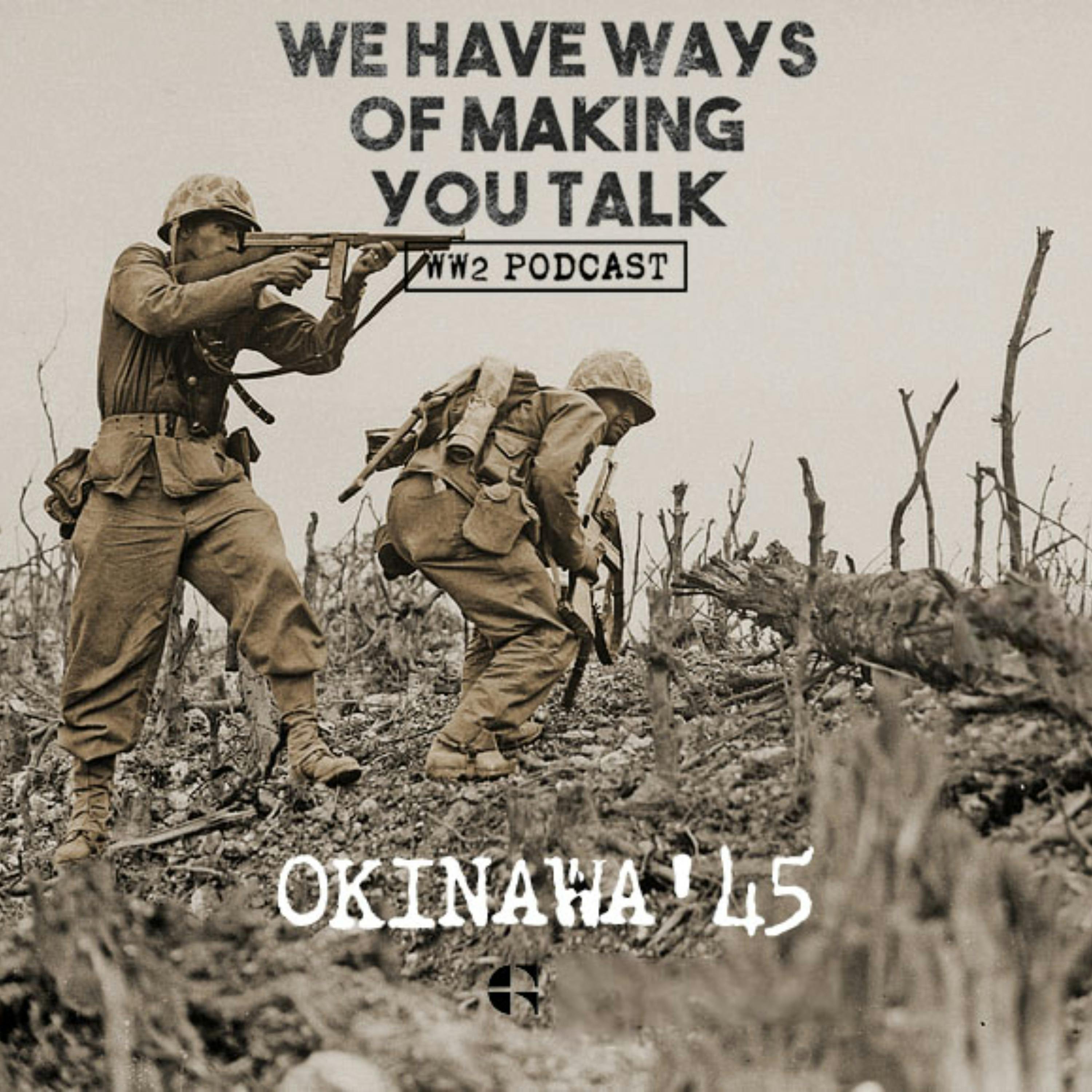
Loading summary
Transcript182 lines
- [00:02]
Al Murray
Thank you for listening to we have ways of making you talk. Sign up to our Patreon to receive bonus content, live streams, and our weekly newsletter with money off books and museum visits as well. Plus early access to all live show tickets. That's patreon.com wehaveways@new balance, we believe if.
- [00:29]
James Holland
You run, you're a runner. You choose to do it because when you're not worried about doing things the right way, you're free to discover your way. And that's what running's all about. Run your way@newbalance.com running.
- [00:54]
Bill Pierce
She'S made up her mind to live pretty smart. Learn to budget responsibly right from the start. She spends a little less in boots Pouring through savings keeps her blood pressure low and credit score raises. She's hurting debt right out of her life. She tracks her cash flow on a spreadsheet at night. Boring money moves make kind of lame songs, but they sound pretty sweet to your wallet. BNC bank brilliantly boring since 1865 this episode is brought to you by Avid Reader Press. Legendary investor Ray Dalio's new book, How Countries Go the Big Cycle, explains the mechanics behind big debt crises. Gary Summer says Dalio's brilliant, iconoclastic approach is an invaluable resource, and Hank Paulson says it provides a solution to what is the biggest and most certain threat to our prosperity. Read it to understand the greatest economic issue of our time. Available now wherever books are sold. I fell down while trying to wash my feet and put on my last pair of socks. Landed in the mud. Jesus. But when you think about this Okinawan campaign, many people have asked me, did you have combat fatigue? My answer was, do you know how it feels when two nights in a row you don't get good sleep? Put 82 days of that back to back. And during that time, you're sleeping in a hole every night because that's the only place you have protection from flat trajectory fire. I slept in a tomb one night and one of my friends had an accidental discharge when his goddamn.45 bounced off the walls and scared the crap out of all of us. But then once I got in there and I got to sleep and it was dry uncomfortable, I then thought, if somebody throws a grenade through the door of this thing, we're all done. And that was the last time I ever took refuge in anything but a foxhole. So for 82 days, I slept in a foxhole every single night. And during that period, anything you did could get you killed, including absolutely nothing. And that was Dick whittaker of the 29th Marine Regiment, 6th Marine Division, who I had the honor of meeting a while ago, it has to be said, at a lunch at the Citadel Military College in Charleston in South Carolina. And I sat down with him and Bill Pierce, and they were telling me all about it. And Dick was. Both of them were just fantastic in just telling it how it was. No sugar coating, no anything. They just absolutely. Straight up. It was just amazing.
- [03:30]
Al Murray
Welcome to. We have ways of making you talk. This is our third episode of Okinawa, the epic and bloody struggle that if one thing explains the American use of the atomic bomb in August of 1945. I think it's this battle. And what we thought we'd do is do things slightly different to talk about Operation Iceberg, because we've done big campaign histories with divisional chess pieces moving on the strategic map. But what we thought we'd do on this occasion is rather than talk about thousands of men, what we do is come in and look at one man's experience of the battle of Okinawa.
- [04:03]
Bill Pierce
Yeah. And tell the story of the land campaign that way. Because we touched on it, haven't we? We talked about the kind of opening of it and the walk in the park and the Japanese not resisting them on the beaches and stuff. And they got off okay. But we haven't really gone into the details of the land campaign. So this is how we're going to do it.
- [04:16]
Al Murray
And it is an enormous campaign. Make no mistake. It's a landing force of around 182,000 troops. So to rival Overlord D Day, we're recording this today on June 6th. So that. That's a thing on our minds, perhaps in terms of manpower. It's a force directly comparable with Overlord. And as you all know, managing moving parts in a narrative is quite a thing. So Bill Pierce is going to be the man through whom we tell this story.
- [04:41]
Bill Pierce
Yeah. So he's 20 years old from New York, and first of April, 1945, Operation Iceberg. This is his first day in combat, you know, since his first time. He's been training up to this point. You know, he's in the 6th Marine Division. I don't think they've been used up until this point. If I remember already out in the blue waters around the island, 1457 ships, landing craft, you know, with half a million men.
- [05:01]
Al Murray
Yeah.
- [05:02]
Bill Pierce
It's just amazing. And this is, of course, Iceberg is a joint U.S. army, a Marine Corps landing force of around 182,000 men, which is obviously bigger than was landed on D Day.
- [05:12]
Al Murray
It's bigger than D Day, incredibly.
- [05:14]
Bill Pierce
Yeah. That in terms of men. Men due to be landed.
- [05:16]
Al Murray
Yeah. And it's a beautiful spring morning.
- [05:18]
Bill Pierce
Yeah, it is.
- [05:19]
Al Murray
Bill is on board the troop ship APA General Clyma, and he's been training for two years in the U.S. so he's from, from having his head shaved on arrival in the U.S. marine Corps. And I imagine they do that. That's what you see in the films, isn't it? It's the, that they, they have the clip they've taken to them and then extensive yelling. And then on Guadalcanal, in fact, for the last 10 months he's been there getting ready. So acclimatized, I suppose, to an extent.
- [05:44]
Bill Pierce
Yeah. Yeah.
- [05:45]
Al Murray
And he feels ready for the task, if a little, you know, he's good his butterflies, isn't he? But he's ready for the task ahead.
- [05:52]
Bill Pierce
Yeah. But he also kind of. There's a sense that he wants to be tested as well. You know, he's done all this training. He's been training for two years. He kind of, you know, he wants to know what it's like, but maybe not what it's going to be like.
- [06:03]
Al Murray
Which is pretty usual, isn't it? That's a thing service personnel often talk about is that, you know, a lot of them say it's a chance to find out if the training would work if I was up to it, which I always think is, particularly in a. In a war where you've been conscripted is always an interesting point of view. But then he's a Marine, so he's, he's had all that stuff poured into him, hasn't he? He's a specialist on a 37 millimeter gun crew, isn't he? One of five weapons company, the 29th Marine Regiment. And they're not in the first wave, are they?
- [06:28]
Bill Pierce
No, but despite that, I mean, you know, and every. Like everyone else, you know, he's up early. Rounds from their bunks by the bugler shortly after six in the morning, then off to the mess hall. Men. Given that good breakfast of steak and eggs, the breakfast of the condemned man kind of thing. He noticed that some were too nervous to eat, but he was all right. He wolfed his down and then went up on deck to attend Mass. So, you know, he was a Catholic boy. He'd always gone to church every Sunday and he felt that praying to God would give him a little bit of comfort. He looks around, he just sees this huge, huge AR armada and sea looks calm. And you know, water's twinkling in the early morning sunlight as he gets his holy Communion. Then he goes, you know, that. Over he goes back down to his bunk, puts on his kit and waits for the call to the landing craft. And it's not long in coming over the speaker, the tannoy, the weapons company's called to get ready, and off they go. And Bill puts on his helmet and his distinct Marines camouflage, heaves his 60 pound pack onto his back and slings his M1 rifle over his shoulder. And he remembered that no one spoke much. You know, jokes and normal banter had dried up. And he. And he said, you know, my, my throat was already dry and all of us looked at each other with wide eyes and, you know. Well, they might.
- [07:35]
Al Murray
Yes. You can only imagine, can't you?
- [07:37]
Bill Pierce
Yeah.
- [07:37]
Al Murray
That tension.
- [07:38]
Bill Pierce
Yeah.
- [07:39]
Al Murray
And all the while, trucks and guns and tanks and jeeps are being pulled up from the lower decks.
- [07:43]
Bill Pierce
Yeah.
- [07:44]
Al Murray
Bill and his crew, the gun crew, and there's five of them. They watch their 37 mil appear from the depths of the ship and then swing over the rail and down into the waiting landing craft below. And then they clamber down the ropes, down the side of the ship, down into the landing craft, and even that on its own. Careful now, both boats moving. You're heavy with kit. You know, you're nervous.
- [08:04]
Bill Pierce
No health and safety executive in those days.
- [08:06]
Al Murray
Well, exactly. No. No one in a hard hat. Well, I mean, he's got a helmet on, but no high vis. But I mean, the whole process does very much feel like you're being served up, doesn't it? The entire sort of ritual of it.
- [08:22]
Bill Pierce
Yeah.
- [08:22]
Al Murray
If you have a dry mouth and if you're.
- [08:25]
Bill Pierce
Your gun's being kind of hoisted over the side and packed into the ship and so are you, I mean.
- [08:29]
Al Murray
Yeah, exactly. And of course, the gun goes first.
- [08:33]
Bill Pierce
Yeah. I thought what was interesting about it was it that for him, he was a seasick, but there was so many fumes from the sort of diesel engines that he's just feeling nauseous. They're sort of circling around. Around because you, you get into the boat and then everyone has to sort of circle around while everyone forms up.
- [08:47]
Al Murray
Yes.
- [08:48]
Bill Pierce
You know, and that can go on for ages.
- [08:49]
Al Murray
Well, that's like in a ferry before they open the front door and everyone's got their engines on and everyone's, everyone's idling.
- [08:55]
Bill Pierce
Yeah.
- [08:56]
Al Murray
And your eyes start stinging and you start feeling sick, isn't it? It's that heavy in the air and all they really want to do is get off the landing craft, get on dry land, and whatever might be weighting them on the beach, in Bill's mind, it's preferable to this sort of waiting, this anticipation, and the sort of smog and fumes, and it's got to be everything jumbled up together. Maybe he's rationalizing the fumes of the thing that's making him nauseous, but, you know, we have his word for it that it's the circumstances, isn't it? And they're last to go inland. So they're a while in this waiting, aren't they? I mean, an anticipation.
- [09:28]
Bill Pierce
Yeah, yeah. It's a long time. You know, you've had a long time to think about it, haven't you? And, you know, all the while, while they're heading towards the coast, you know, naval gun firing, shells screaming over aircraft overhead, all that kind of stuff. I mean, it's quite a thing.
- [09:40]
Al Murray
Yeah. And the shorelines covered in smoke from exploding shells. But they do know that it seems calmer on the beach itself. There aren't burning landing craft and there's no scene of disaster awaiting him is the point of. But beyond that, they don't know. They don't know what to expect. Bill knows that Okinawa is an island, and this is what he's been told in the briefing, is 60 miles long. It's an important staging post because it's near to the Japanese mainland, and for aerial assault on Japan itself, I mean, he doesn't need to know anything beyond that. Let's be honest. It's not like they're not seizing bridges or water obstacles or any of the sort of northwest Europe stuff, are they? It's a lump of land, isn't it, that they need to get their hands on.
- [10:18]
Bill Pierce
You just got to go in and clear it and just do what you're told. I mean, he's bottom of the food chain, isn't he? I mean, that's the truth of it. Yeah, he's just a Marine. Marine. And, you know, this is the thing, isn't it, when people go. Go into these battles, they don't know much. You know, they tell what they need to know and not more than that.
- [10:32]
Al Murray
Yeah, most people don't know much, and that people ought to know a tiny amount is the truth anyway.
- [10:38]
Bill Pierce
You know, he's got a sort of idea of what it's going to be like because obviously there's a number of veterans amongst them and they've told stories, and he's been on Guadalcanal where there's still, I mean, crikey, 80 years on. 80 plus years on. There's still plenty of Detroiters from the battle on Guadalcanal. So of course there was absolutely tons of it, you know, when he's training there. But anyway, yeah. So the landing craft finally comes a halt about 100 yards ashore. Ramp lowers. Ian, the crew heave their gun off the boat, but she drops several feet into water in time honored fashion because they come grounded on a coral bar.
- [11:07]
Al Murray
Yeah.
- [11:08]
Bill Pierce
So they then have to hail a marine alligator. I mean, that's like a ramtrack, isn't it?
- [11:12]
Al Murray
Yeah.
- [11:13]
Bill Pierce
Which comes to the rescue, you know, so they're cursing and toiling and soaked and they have to heave a gun up on the alligators ramp themselves. And when they get to the beaches, there's kind of, you know, it just seems like a completely confused situation. You know, no sign of the enemy, small arms kind of sporadic in the distance somewhere. And then they're just told to kind of dig in for the night, you know, no one's hit, no one's wounded. They don't really know what the hell's going on. And you know, as dust begins to fall, so the sky is, is lit up. They look up with traces firing without let up from the vast naval armada. Yet more shell screaming over, airplanes rumbling through the night air. Just looking at this incredible fireworks display, you know, and that's their day one of Operation Iceberg.
- [11:55]
Al Murray
I mean, I suppose you concentrate on getting your kit dry, don't you, at the end of a day like that. Yeah.
- [11:59]
Bill Pierce
And then you'd have sort of feelings of hope, wouldn't you? Then actually this is going to be a cakewalk after all.
- [12:03]
Al Murray
Yeah. And then fresh anticipation of what's going to happen next. The Japanese, they know that contesting the beaches isn't worth it. They think if they do that they'll sustain terrible casualties defending the beaches. And they're right, you know, in the purest sense. They've got that absolutely right, haven't they? There is no point trying to take on American naval firepower initially.
- [12:23]
Bill Pierce
Yeah. Because they're not trying to, they're not trying to wrest back the island, they're trying to delay. It's not the same thing.
- [12:27]
Al Murray
Exactly. They're not trying to drive them back into the sea again. Which is the sort of thing around D Day. The thing that gets set around D day, it's quite different. It's about extracting as much blood from the Americans as possible. And so you need to keep your people alive to do that. And then draw them into the honeycomb of defenses that they've prepared on Okinawa. I mean, you know, so that's the end of day one, but there's 81.
- [12:47]
Bill Pierce
Days to go, which no one on that first day could have possibly anticipated. Nor could they anticipate, of course, that this is going be the biggest single land, air, sea battle of all time. A campaign of savagery and brutality which surpasses anything that's already been experienced in the Pacific War, which, frankly, is saying something. You know, it's just incredible. Okinawa becomes an absolute bloodbath or unspeakably barbaric savagery.
- [13:17]
Al Murray
Yeah. And as we detailed before, the naval casualties are increasing because. And they're at the highest point they have been in the war because. Because of the kamikaze effort. You know, looking at the kamikaze effort was saying, well, you know, it's not succeeding in itself, but it's doing enough, or it's doing plenty of damage. All sorts of terrible problems for the American Navy and British naval effort, for the task forces around the island. You know, that idea of sacrifice, I suppose, is central to the Japanese effort and make the Americans bleed by any means possible. Because you. What you have is two sides who are locked into essentially complete racist contempt and hatred of each other. You can't make any bones about this. The Japanese are totally locked into a racist idea of the Americans, and the Americans are happy to entertain one of the Japanese, aren't they? They're not uncomfortable with that at all. That's part of the whirlwind that happens here in the barbarism and savagery of the fighting. And, you know, it's a quarter of a million people are killed in this. I mean, it's quite incredible, isn't it? And I think really does point you to why the Americans end up using the atomic bomb. I think there's no two ways about it. Can't remove this battle from the reckoning, can you?
- [14:26]
Bill Pierce
No, absolutely not. Totally, totally agree. So a little bit about how I came on Bill. So I can't remember. I probably wrote to some U.S. marine association or something. Anyway, I got hold of him somehow, and then we had a few phone conversations. I said, look, I was going to come over and. And he said, I'll just come and. Come and stay with me and Marie. And I was. I thought, all right, I will. I flew in and picked up a car and kind of drove over to his place and rung the buzzer, and there it was. I was suddenly staying with kind of two people. I'd never met before in my life, but that was fine. And it was, you know, he was with his. He was 79 years old at the time, so he wasn't, you know, he was still pretty sprightly. And remember him saying, first night he said, jim, I'm going to take you a place you're going to love. It was a pirate ship restaurant, so it was shaped like a pirate. And. And, you know, and. And I remember him saying to me, jim, what are you going to drink? You're going to have a beer or you're going to have some wine? Marie, she just loves Pinot Grigio. So. And it was just great. And ever since then, I remember telling Rachel about the story about the Pinot Grigio. So every time we have Pinot Grigio, we always go Pinot Grigio. Anyway, they could not have been nicer and more welcoming and all the rest of it. And he was always just so incredibly candid about his experiences. I remember him saying to me, you know, I tell you, Jim, we went in with 3500 men and after 82 days of combat, more than 2800 were gone. We had casualties of more than 80%. That's just in his unit, you know, it's just. No. So on Sugarloaf Hill, I remember him telling me that the 29th Marines lost 500 men killed in a week of bitter and bloody fighting. You know, no Marine regiment in the history of the Corps has ever suffered such high casualties in a single battle as a 29th Marines did on Okinawa. He was quite open about it. He said he absolutely hated the Japanese with a vengeance, you know, absolutely. Just thought of them as subhuman. He said they were animals. They'd cut off guys penises and stuff them in their mouths. They're behead people cut off arms. Guy jowls out. Put it this way. Way. We didn't take many prisoners. You know, you know, I was wet behind the ears, kind of 30 something. And you know, you're hearing that, you're just thinking, whoa, holy cow.
- [16:30]
Al Murray
Yeah. Yeah.
- [16:32]
Bill Pierce
So, yeah, you know, every third Wednesday of the month, he, you know, he told me that, you know, I'd come on this specific day because every third Wednesday in a month they have the 6 Marine Division association reunion in Charleston, you know, lunch for members and stuff. And you sit around, chew the card and all the rest of it. So he took me down there and. And that's when I met up with him and Dick Whitaker as well. But.
- [16:51]
Al Murray
Right.
- [16:52]
Bill Pierce
I always kind of think, you know, Whenever I'm interviewing veterans, I always kind of start at the beginning. I just. Oh, you know, tell us about childhood because for the most part people quite happy talking about that and sort of easy, easy introduction and sort of. Yes, you know, looses off but you know, you're not going straight in with the kind of. The hard stuff. Yeah. And you know, his perfectly ordinary life in New York and happy and carefree, loving parents. You know, he was in New York, but he was in Queens and you know, they weren't far from the countryside and played sports and did all that stuff. Love baseball, basketball, football. You know, he's obviously fit and young and active and all the rest of it. And he got on well with his brothers and it just sounded like a perfectly ordinary, decent, well adjusted. And again, I've just been thinking so much recently as we're kind of sort of talking about, you know, the threat from Russia and other potential enemies and needing to rearm and all the rest of it. The things that just keep striking me over and over again and particularly, you know, I've just been in Italy and going to those cemeteries and stuff is these people were just like kind of you and I when we were that age. You know, young people with same kind of fears, worries, anxieties, quick to laugh, quick to get across whatever. You know, you're the same personality. And when you're that age, you just cannot imagine the existence you live in. This sort of sheltered, modern, carefree existence is going to change. You just can't imagine it. And then suddenly you're kind of, you know, you're called up in your training and then you're kind of jumping into the sea with. To fight murderous Japanese.
- [18:18]
Al Murray
I, I mean, and then you're not taking many prisoners. I mean, this is the other thing. This is the other thing that I think really needs talking about is obviously it sounds like Bill was able to sort of digest this and cope with it, but you're looking at the brutalization of an entire generation of people as well, if they're involved in a thing like this. So you can also see why the Americans, when it comes to it, decide if we can avoid doing any more of this. We will. Whereas the other side think that brutalization is sort of part of national vigor and that being able to cope with battle and being callous in battle is some sort of.
- [18:50]
Bill Pierce
Of badge of honor. Yeah.
- [18:52]
Al Murray
And all that sort of thing. But honor and gallantry are sort of ways of massaging that reality, aren't they? And making those things palatable, perhaps, you know, Fighting gallantly can mean killing absolutely everyone who comes at you. To the fighting, to the last round. That's what gallantry can mean, you know, rather than sort of waving cheerio as the enemy turns tail. You know what I mean? These words can mean all sorts of things and are sort of necessary in a way, aren't they, as to shield people from the. Shield us from the reality of water, massage the reality of war. But yeah, you're right, I mean, this is the issue, isn't it? Ordinary people being thrust into this absolutely diabolical situation.
- [19:28]
Bill Pierce
Britain might have had the largest empire and navy and merchant fleet and stuff in 1939, but the most modern country in the world, bar none, is the United States. Yeah, this is a nation of cinemas and refrigerators and automobiles, partly because it's not.
- [19:42]
Al Murray
It's not weighted down by having its imperial commitments and all that sort of stuff that's looking at itself and nowhere else.
- [19:49]
Bill Pierce
So it just seems incomprehensible that this, this existence could somehow be interrupted suddenly. Yet it is. And, you know, suddenly they're at war. And Bill Pierce is of age and he decides he wants to join the Marine rather than the army for all the same sort of reasons why people choose the service they do. Because, you know, he's seen a cousin who turns up one day he's in the Marines and he thinks, well, that looks a good uniform. I'll go for that, please. So, you know, as soon as he's out of school, he goes, goes, goes.
- [20:15]
Al Murray
Off the way lads do all over the world. You know, in times like this, that's completely normal, isn't it? And when he turns 18, he's drafted. He has a letter confirmed that he's. Because he tries to volunteer, doesn't he? And they too young. But then when he turns it 18, he's drafted. He has the letter saying he's tried to volunteer and so he goes to the Marines recruitment office and they go, right, fine, you're in.
- [20:36]
Bill Pierce
Yeah, yeah.
- [20:36]
Al Murray
Although we've. We've signed enough people up for today. Not going to turn you away. You've passed your medical sign on the dotted line, you'll be called up for duty, don't panic. And two weeks later. But I mean, it's all very fast, this, isn't it? He's on a train heading south to Parris island in South Carolina for boot camp and he's inducted into the U.S. marine Corps.
- [20:52]
Bill Pierce
Yeah, And I remember, I remember asking him so saying, well, what about your parents? They must have been absolutely terrified. He said, yeah, they were. They were really worried, but. But, you know, they were also fantastically accepting. And he said the patriotism ran so marvelously high that they accepted their sons had to serve.
- [21:06]
Al Murray
Well, that's what they told him. I mean, again, the other thing is, this is two years before actually how bloody and disgusting the fighting in the American casualty figures go up and up and up and up and up. And at this point, they're not. It's not running at that rate yet, is it? Although they're winning, there's not the bad news that victory constitutes, really, is there? Yet. So maybe patriotism is running high. Yeah, God alone knows. Maybe some other listeners could tell us what it's like when. When one of your children signs up how that feels.
- [21:38]
Bill Pierce
Well, it must be absolutely horrendous. Of course you'd be terrified. I mean, if Ned suddenly turned around and said he was joining the Army. I was going, oh, my God, please, no. Anyway. Anyway, he gets there to Paris island in South Carolina, and one of the Marines yells at him, you'll be sorry. But actually, he loves it. He loves all the parade ground stuff and stripping down and reassembling rifles, a spit and polish route marches, assault courses. You know, he's young and fit and he's up for it. So he enjoys all that. He spends a further seven months in the US on guard duty in a naval ammunition depot before finally being transferred to Fort Leun, a Marine training base, which is his kind of last bit before being shipped overseas. And it's at Lejeune that he's assigned to the 37 millimeter gun crew in the weapons company. And he just said, I didn't care where they put me. I just, you know, I was just happy to be a Marine. I mean, it's just amazing, you know, and he. And he gets it. And so suddenly they're on a. You know, they're on a train going across the United States, and they're arriving into San Francisco, and then they're getting on a ship and out into the Pacific. And, you know, they have no idea where they're going, just not a clue. You know, they're in the Pacific Ocean rather than the Atlantic.
- [22:41]
Al Murray
Yeah. And they've been sent to Saipan, or as far as he can glean, they're being sent to Saipan because it's a battle still going on. They get there, there's no battle, and then they're sent to Guadalcanalta for training and acclimatization. And he says, when we got there, there was nothing, not a Tent up, not a road, nothing. But there is plenty of evidence of the previous fighting. Fighting for two years earlier. Dead bodies all over the place. I was working in a field one time and we thought they were coconuts. And I looked down. Jesus, do you see what walking on these are skulls.
- [23:10]
Bill Pierce
Can you imagine?
- [23:11]
Al Murray
No.
- [23:12]
Bill Pierce
Okay. Right.
- [23:14]
Al Murray
While you were talking to Bill at these. On these visits.
- [23:17]
Bill Pierce
Well, no, we would. I think if I remember right, we. We chatted about his kind of sort of upbringing and training and stuff in. In the morning. And then he was like, right, come on, Jim, we gotta. We gotta get to the Citadel. So off we went to Citadel and. And Dick was his great mate in Charleston and they'd sort of play golf together and hang out and stuff and go have a few beers and whatnot. And so we sat next to him. He said, ah, Jim, you gotta meet Dick. You gotta, you know, he's great. You. You gotta hear Dick's stories. And Dick was great. It was fantastic. So off we went and chatted to Dick and, you know, he was one of the lucky ones who survived the assault on Sugarloaf Hill, which is, you know, I mean, got a bullet through his hand for his trouble. But he was just. Both of them said that they'd always, always talked about it. I remember Bill telling me that when he got home from Okinawa, the first thing he did when he met his mother is he just sat down and told her absolutely everything. Unvarnished. Amazing, the whole details. Then he bought a motor on a road trip.
- [24:08]
Al Murray
Really got it out of his, came.
- [24:10]
Bill Pierce
Back and then he was fine because I've always talked about it. Yeah. And you got this sense, it was just this sort of wildness from his experience that he had to sort of get rid of. And he got rid of it by going on this road trip on his own on his Harley Davidson, being a bit of a bad boy for a bit. And then he got home, gone with his life.
- [24:27]
Al Murray
Yeah. Crikey. Well, should we take a break and then get into his experiences and his descriptions of what it was like fighting on Okinawa? We'll be back in a second. Second. The Disney plus Hulu Max bundle.
- [24:39]
Bill Pierce
It's the ultimate bundle for an unbelievable price plan starting at 16.99amonth. Get it.
- [24:45]
Al Murray
And watch Marvel Television's Iron Heart on Disney plus.
- [24:48]
James Holland
I want to build something iconic.
- [24:50]
Bill Pierce
A new season of the Bear on Hulu. We can make people happy. And the epic A Minecraft movie on Max. Anything you can imagine is possible.
- [24:59]
Al Murray
The Disney Plus Hulu Max bundle plans.
- [25:01]
Bill Pierce
To at $16.99 a month. All these and more streaming soon.
- [25:04]
Al Murray
Terms apply.
- [25:04]
Bill Pierce
Visit disneycoolermaxmobile.com for details. Ryan Reynolds here from Mint Mobile. With the price of just about everything going up, we thought we'd bring our prices down. So to help us, we brought in a reverse auctioneer, which is apparently a thing Mint Mobile unlimited premium wireless 3030.
- [25:21]
Al Murray
Better get 30 get 202020 better get 2020 everybody get 15151515 just 15 bucks.
- [25:25]
Bill Pierce
A month so give it a try.
- [25:27]
Al Murray
Try@mintmobile.com Switch upfront payment of $45 for.
- [25:31]
James Holland
Three month plan equivalent to $15 per month required new customer offer for first three months only. Speed slow after 35 gigabytes of network sizzy taxes and fees extra. See mint mobile.com get unready with me while I talk about my favorite beauty hack, Colgate Optic White Pro Series Toothpaste. This unique formula is powered by hydrogen peroxide, which is the same ingredient dentists use to whiten teeth. It's able to dissolve even those deep set stains below the surface of your teeth. Teeth the best part Twice daily brushing with Colgate Optic White Pro Series toothpaste gives you a visibly whiter smile in just three days. Colgate Optic White find it at all major retailers.
- [26:13]
Al Murray
Welcome back to we have ways of making you talk with me, Al Murray and James Holland. And before we resume with Bill Pearce and his experience, Bill and Dick and their experience of Okinawa, one little reminder, we do a festival, don't we Jim, where you can hear this kind of war waffle for an entire weekend to your heart's content from the 12th to the 14th of September at a place called Black Pit Brewery, which is right next door to Silverstone. We have aircraft coming. We have tanks. We have living historians. We have very agreeable hospitality for some fantastic shops. We have entertainment of every kind, literally every kind imaginable around the subjects of the Second World War. Speakers. We've got our listeners who've been radicalized into becoming historians and speakers. It's the most fantastic weekend with an olive drab theme that you could ever possibly have in your life. And they're really wonderful. Thing about it is everyone there is into the Second World War so they don't glaze over like at Sunday lunch when you start up about the stuff you heard about last week on we have ways of making you talk and we'd love to see you there. It's an amazing weekend. I can't wait. It's the fifth one. We have Ways Festival V for victory. Putting the fun into fun and the website is. We havewaysfest.co.uk, go there, pick up your tickets. There's day tickets, there's entire weekend tickets, there's camping and of course anyone under 16s freeze. It's a perfect family thing. And you can let the kids wander off to a different talk while you're listening to I don't know.
- [27:30]
Bill Pierce
Yep.
- [27:30]
Al Murray
Whatever it is we've got for you. And it's an amazing array of speakers, favorites from before, new people and me and Jim, you can grab us by the elbow and say hello, can I have a selfie? And last year you had to be rude to me if you wanted a selfie because I thought we should make that the gold standard. But there we are, we have waysfest.co.uk we can't wait to see you then.
- [27:49]
Bill Pierce
I'd say to be nice personally but you know.
- [27:51]
Al Murray
Yeah, yeah. But you know, being rude hurries things along. Now Bill pierce is on a 37 millimeter gun. And this is an American weapon that's designed as an anti tank gun and crops up on all sorts of things. Like the Greyhound is equipped with 37 millimeter gun and the turret on a Lee or a Grant comes with a 37 and the honey and it's not really an anti tank weapon. It's like from the two pounder era, perfect against Japanese. And it's an excellent anti personnel weapon. Is actually truth because it's that bigger.
- [28:21]
Bill Pierce
Bang and you can manhandle it quite easily. You don't need a gun, tractor or anything to kind of pull it around. You can just your five man crew can kind of maneuver it and they do. And there's five of them but one extra in case someone gets killed. So you can always keep firing.
- [28:34]
Al Murray
Yeah, so yeah, yeah it's about a ton but man handleable with enough blokes.
- [28:39]
Bill Pierce
No, hold on. £900 is half a ton in it. 450. 50 kilos.
- [28:42]
Al Murray
Yeah. There's too many weight measurements flying around that no one can ever make sense of any of it. And the American insistent use of pounds rather than stones is not helpful. I just want to put that out to our American listeners. But Bill says I never saw a Jap tank once on okinawa but at 500 yards it could put a round through a porthole. It's very accurate. And they would use some he high explosive but canister what basically is a ball bearing shrapnel and canister like Waterloo, you know where you fire from a cannon. Lots of ball bearings into, into infantry and they're like yeah, pea sized, aren't they? Like a small pea.
- [29:17]
Bill Pierce
Heavier than buckshot, but.
- [29:18]
Al Murray
But small, but plenty going at enough of a velocity. So that's his job. And as his first action, Jim, what happens?
- [29:26]
Bill Pierce
Well, they've had the landing, and they come in roughly in the middle of the island on the west coast. And from there the army units had headed south, while the Marines have been sent into the mountains north. So they eventually run into some Japanese dug into the foot of a steep, rocky and wooded slopes. And this is on a series of hills known as Yai Teke, Yai Take, Yai Take on the Motobu Peninsula. And they take a few hits from some sniper fire. And then the Marines sort of spread out across the valley beneath the hills. And, you know, the 37 millimeter guns are spaced out in line and in front, they set up a number of trip flares, and sure enough, that night the flares are triggered, hissing into the night and lighting up the valley with eerie phosphorescence. And he says, you know, we can see about 100 people advancing. So, you know, they asked what they should do, and the answer is just mow him down. So he does. They just let go of the canister. You know, this is sort of airburst effectively. And in the morning, there were 80 women and children lying there and just a few Japanese troops.
- [30:19]
Al Murray
Troops.
- [30:20]
Bill Pierce
So the Japanese had pushed the civilians out in front of them.
- [30:23]
Al Murray
Yeah.
- [30:24]
Bill Pierce
And so they just killed a whole lot of them.
- [30:25]
Al Murray
Yeah. Are they using him as a human shield?
- [30:27]
Bill Pierce
Dick Whitaker had exactly the same thing. He said, do you know the machine gun teams would. Would set up trip wires with telephone cable and attach tin cans to them. And, you know, at night, as soon as you heard the cans tinkle, you'd swing the gun back and forth. You know, the machine gun, you just could spray it. And, you know, because he said you could. You couldn't afford to wait to properly identify what or who it was, because otherwise you could have been dead. Dead. And the next morning you said, you know, you'd have dead pigs, goats, civilians, you know, whatever.
- [30:51]
Al Murray
I mean, it's a million miles from modern talk of rules of engagement, isn't it? Yeah, it's extraordinary. Bill says, you know, it's. It's unfortunate, but this is what's going on. He says that in the south, the island where the Japanese are boxed in, Okinawans would take cover in the caves. And if you had a baby with you and it cried, the army would say, get out of here. Take that baby outside and don't come back because the baby is going to give their position away. I mean, it's ghastly.
- [31:16]
Bill Pierce
You know, they were both quite clear that there wasn't a single day went past where they didn't see a dead civilian. Yeah.
- [31:23]
Al Murray
God.
- [31:24]
Bill Pierce
You know, and there's somewhere between 150 and 200,000 were killed. Yeah. So that's a third of the indigenous population, and it's more like half of the population that were there, which is.
- [31:33]
Al Murray
Twice the number killed in the Tokyo bombings in April.
- [31:37]
Bill Pierce
Double the number of each of the cities, isn't it? Pretty much, yeah.
- [31:40]
Al Murray
Double the number of the atomic bomb. Yeah. The blood that is being spilt in.
- [31:45]
Bill Pierce
This battle and, you know, knocking out is famous for its beauty, for being a sort of, you know, wooded and green. And I remember Bill saying he thought it seemed like Connecticut to him, and. But of course, you know, where the fighting takes place in the south, for the most part, because the Americas clear the north half of the island pretty quickly. You know, they get the airfields, like, they clear out the north, you know, that's all in American hands. And then they have to turn on the south. And of course, as we talked in the early episode, you know, this is where the last stand is going to be made. This is where all the tunnels have been dug into. You know, this is where Sugarloaf is. This is where. Where the castle is and all the rest of it. And it's just become a kind of sort of horrible, desolate kind of landscape with shorn of any kind of vegetation. I mean, when you see pictures of Okinawa, it's always just jagged stumps and debris and, you know, I mean, it just looks exactly what you'd imagine it.
- [32:36]
Al Murray
Looked like, you know, completely shattered. Well, like those landscapes, ships in Ukraine you see now, blasted to pieces. And I think it's very interesting in your notes here, Jim, you suggest to Bill and Dick, they become hardened to seeing so much death and loss of innocent life. And I think what Dick says is really fascinating. He says, oh, absolutely. There's more agony that comes from reflection later than at the moment. Yeah, that's tied up the immediacy of what you're going through and the. And the kill or be killed of what you're going through, I suppose. But then also you get older. When you get old and you've got a family and you can reflect on it more and more, it maybe.
- [33:07]
Bill Pierce
Well, because you're going back to normality, aren't you? And then you sort of think, God, could I really done that? And, you know, and Bill said, said, you know, we could be sitting there eating a sea ration can or a Hershey bar, and right there where Quincy's lying, there's a dead Jap with an arm sticking up or a mangled leg. It didn't mean a thing. We'd become completely immune to it. You become hardened to it immediately. And, you know, and he mentioned a time earlier on the battle when the marines were still clearing the north of the island. And one night Bill's huddled in a foxhole with a buddy of his, Big Ed Graham, him, and they used to kind of, the two of them used to lay telephone wires with cans attached to the other positions and. And suddenly he feels Big Ed's arm move and, and sees him aim his carbine. And he looks down the carbine and there's a, you know, Japanese soldier crawling towards him on his hands and knees. And Big Ed shoots him with one hand, you know. Yeah, my buddy shot him and he dropped, but he was still moaning, so Bill fired his carbine too. He said, you know, he must have fired that thing seven or eight, maybe nine times. Some kind of fear takes over. It was adrenaline racing. The unfortunate Japanese soldiers still moaning. So Big Ed take pistol and shoots him again. He said he won't moan now. And in the morning we saw that half this Jap's head was blown off. Dick Whitaker said, we made no distinctions between civilians and Japanese soldiers because the Jap soldiers made no distinction. They demanded that Okinawan population retreated with them. They had nurses and Korean labor and everybody retreated together. They would use those people for deception. At night they would dress up as civilians, so you never knew who you were shooting, that you got to be killing somebody to win.
- [34:34]
Al Murray
You've got to be killing somebody to win. Is very. Is. This is, as we said towards the start of the episode, this is the sort of savagery that's been uncorked in the fighting on Okinawa. And you, you can't get that cork back in the bottle, can you?
- [34:47]
Bill Pierce
Once this has got going, you've crossed a Rubicon from which there is no return.
- [34:51]
Al Murray
Yeah. So by the end of the third week of April, in 45 operations, the north of the island, they've been wrapped up. Six Marine division, they're left to carrying out, mopping up patrols and pick up a few souvenirs of their 20 day battle, like silk kimonos. You know, you remember a while ago we had, we watched that film actually about a guy who found a flag, a good luck flag that his grandfather had taken in Burma and then Managed to trace the relatives of the guy whose flag it was over in Japan.
- [35:18]
Bill Pierce
Yeah. And Dick Jessa, you remember Dick Jessa, who was on Iwo Jima and he had a flag. And after listening to the podcast, a listener in Japan got in touch and said. Said, that's my great uncle. God, it's a relative. Anyway. Yeah, yeah. And so they're now in touch and stuff. It's amazing because Dick's still going strong.
- [35:36]
Al Murray
Absolutely incredible. But the truth is the south is still, you know, operations of the north gone according to plan, but the south is still an absolute maelstrom, isn't it?
- [35:44]
Bill Pierce
Yeah, completely.
- [35:46]
Al Murray
There's the majority. The hundred thousand strong Japanese 32nd army are dug in along the. These defensive lines we talked about across the south end of the island. Island. It's 60 miles of tunnels and hidden gun and mortar positions and caves. Well, lots and lots of caves and tombs, so that the Americans now have to turn their attention to breaking this. These Japanese lines of defense in order to take final control of the island. But, I mean, this is. The army have been grinding away at this. And now the. On the 4th of May, 6th Marines Division, they're sent in to join in and join up with 27th Army Division on what's now known as the Shuri Line. Line.
- [36:19]
Bill Pierce
Yeah. So this is around Shuri Castle, and this is where General Ushijima has his. His headquarters.
- [36:25]
Al Murray
And it must be very bittersweet for Bill, because they're getting ready to go. They think they're going to Guam. They're leaving. And he says, the next thing we knew, the 27th Division were being pulled out of the line because they performed terribly, and we were put there instead. They passed us on the road and we threw cans and pebbles at them.
- [36:41]
Bill Pierce
What were you saying earlier on about Navy in the army?
- [36:44]
Al Murray
Yeah, exactly. I mean, but this is it. Is it? I mean, perform terribly, but. But an extraordinarily tough nut to crack. So judging their performance is perhaps.
- [36:52]
Bill Pierce
Yeah, there is. There is a. There is a debate, though, about the running of the battle, because the land battle was commanded by General Simon Buckner Jr. And middle name Bolivar. Bolivar. Yeah, yeah, yeah. And he doesn't. He doesn't survive the battle. You know, even while the battle's going on, it's like, well, why don't we just do an outflanking operation around the back, you know, and kind of come in at different angles, because, you know, unlike in Italy, there is plenty of. Of assault craft there, so they could have done that. And certainly you get the impression that Butner was never going to be like very much because he was army and not Marines. And Marines were ferociously kind of proud of, of their own heritage and units and all the rest of it. But, you know, however many years it was 60 years on, you know, Bill was still sort of grumbling to me about Buckner and, and for his, his approach absolutely sucked. And he was saying, you know, the Marine 2nd Marine Division sitting on sideband, fully trained, fully equipped and ready to go. But, but Martin wouldn't call them in, you know, but whenever there's a sort of long drawn out battle, there's always going to be controversy of some of the command decisions. I mean, that's part and parcel of it, isn't it? But Anyway, instead the 6th Marine Division is thrown against Sugarloaf Hill. And I do think there is a touch of kind of sort of General Irwin in, you know, in the Arakan sort of. Yes, it needs slightly cleverer thinking outside the box to kind of undo this because the kind of the traditional way of just blasting things doesn't work when your enemy is tunneled into the ground round.
- [38:12]
Al Murray
Yeah. And also prepared to fight to the last round not caring for their lives, particularly, you know, the command. The Japanese command decisions within their own context are all excellent, aren't they? That's, that's the problem here, is that it's a long, drawn out campaign because the Americans. There is no solution to what the Japanese have decided to do, apart from what you end up having to do really.
- [38:31]
Bill Pierce
Well, I could have landed another division and you, you could have just starved them out. I mean, you know, but everyone's in a hurry, you know, that's the problem.
- [38:38]
Al Murray
Them. Yeah, everyone's in a hurry.
- [38:39]
Bill Pierce
You know, if you surround them, they're not going to get any more ammunition, are they? You know, so you just entomb them there. That's probably what you do. But I think what you don't do is keep sending infantry, even if they're Marines, infantry, relentlessly up against us, because the cost is just going to be too high, you know, and, and you know, the interesting thing about sugar life is it's tiny. You know, it becomes such a sort of infamous focus. But, you know, it's perhaps 300 yards long, 60ft high. You know, it's, it's nothing. You know, as Bill points out, you know, you could run up in no time.
- [39:09]
Al Murray
But that's high ground. High, high ground is relative, isn't it? This is the thing. And of course, there they have the high ground. Yeah. And they're unable to, to bring. The Americans can't bring in their naval and air fire power. They can't bring that advantage. The Japanese have read that very, very ably, haven't they? And it becomes essentially a one dimensional infantry battle of guns, mortars, small arms, carbines, grenades, rifles. Time magazine describes it as the old fashioned, inescapable way, one foot at a time against a savage rat in a whole defense that only the Japanese can off. And the Japanese, Bill thinks they've got a good rapid fire machine gun. The bullet was smaller than ours. They'd be so rapid a guy would get hit two, three, four times and survive. With ours they had a slower rate of fire, but one hit would kill you fine. But this involves engaging. This is pbi, this is poor bloody infantry. Engage the infantry, Root him out, Find, fix, finish the enemy. It's awful.
- [40:01]
Bill Pierce
Yeah, yeah. And I remember he told me this amazing story about his buddy Dominic Spitelli, who shot through the temple by a Japanese machine gun bullet and lived.
- [40:10]
Al Murray
Tell the tale.
- [40:10]
Bill Pierce
It went right through his head, out the other side, no lasting damage at all. He was said that he was in hospital for an entire year and he didn't know what, he didn't know who he was. And suddenly he woke up and went, I know who I am, I'm Dominic Spitali and I'm a Marine, you know. And it suddenly sort of all came back absolutely incredible.
- [40:28]
Al Murray
Oh, man. But mortar fire is the thing that the Japanese are good at. Yeah, the terrain isn't helping either, is the thing. No, Bill says they killed a lot of Marines. The Japanese mortise, if a mortar shell landed beside you, the guy was blown to bits and his body was nothing but a black hulk. His pants would go black instead of green from the scorching he took. And he says he was 10 yards away from Marine. It was blown up by a mortar. But you kept, you look at it, but you keep going. You don't stop because he's dead. But also you don't leave the wounded behind. So the dead, you move on, but the wounded, you don't leave anyone behind. That's the rule.
- [41:00]
Bill Pierce
Yeah, amazing is, isn't it?
- [41:02]
Al Murray
It is really amazing how tough these guys are and how tough circumstances are. And then to add to that, May is the rainy season in Okinawa. And the other thing to point out is this is, this is happening at the same time as the war has ended in Europe, in northwest Europe.
- [41:14]
Bill Pierce
Yeah, this is May. And this is, you know, Okinawa is a complete hellhole and it's Pouring with rain and raining harder than normal, you know, unbelievable amount of shell fire and mortar fire and battlefield gets turned into a quagmire. Jeeps sinking up to the tops of their wheels, you know, I mean you can imagine. And Bill just said, you know, we were wet all the time, you never dried off. He said we landed with what we were wearing one extra set of clothing and if they were wet or worn out, it was just tough shit. You were filthy riddled with lice, fleas, irritants they were powerless to do anything about. I mean, you know, this is kind of sort of worst horrors of trench warfare at Passchendaele, isn't it? In the First World War. Yeah.
- [41:51]
Al Murray
And the knock on of this, of course, you can't light fires not only just because of the rain, but because they're cheap by jowl with the Japanese. You can't give your positions away. So there's no hot water for coffee and you know, coffee for the American army is tea. The British army, there's no coffee, there's no hot food. They're eating sea rations mainly, which is tins of pre cooked food, usually bully beef and C rations with an A at the end he said meant they were from Australia and they were much better than the others. And there were empty cans of sea ration tins with A's on them everywhere.
- [42:19]
Bill Pierce
He said, yeah, it's really, really hard. Well, Dick Whitakers has said he existed just on D bars for about 30 days, he said, which was some hard chocolate bars. He said it was the only thing he could handle. He lost 15 pounds. He said we all had diarrhea, you know, we all had the shits. Dick said if I laid on my back I'd shit my pants. He said if I laid on my stomach I'd throw up. The only thing I could do was get out of my foxhole water tight ass to the nearest corpsman. Jesus. Yeah, he said loads of people shut their pants, you know, Believe me, everyone did. Even if you didn't have diarrhea, fright alone could cause you to shit or piss your pants. I mean.
- [42:50]
Al Murray
Yeah.
- [42:50]
Bill Pierce
So stench is then overpowering. Yeah. J.R. says, Glad I skipped breakfast today, say.
- [42:58]
Al Murray
Well, the Americans survey their troops and ask them how they respond to fear. And they, and they, I think it's. Half of them say that they foul themselves. One of the points that's made is somehow that survey gets people to admit to it. Right. You don't want to admit to that, do you? Half of them admit to it, which probably means it's all of them. Right. It probably means everyone at some point has done that job.
- [43:19]
Bill Pierce
But you can imagine what the knock on effect of all this is because you haven't heard change of drawers. You have to sit in it. You know the stench and the sores from it.
- [43:27]
Al Murray
Yeah.
- [43:28]
Bill Pierce
Bill said the whole island stank. He said the stench of death was everywhere. Stank no matter where you were. It's completely horrible. Bodies left where they'd fallen. Dick found himself having to walk over them as he attacked over the hill yet again. There were millions of flies and maggots feeding on ever mounting numbers of corpses thrown around the battlefield. Eating became hazardous and difficult. Bill said when you ate, you open a can and the flies would be all over in seconds. Seconds. You've had to try and cover up the can.
- [43:52]
Al Murray
Yeah. Well. And those are flies that have been feasting on the dead. So you've got an absolute direct route to you know, infection and carnage. Isn't it?
- [44:01]
Bill Pierce
That's absolutely dreadful.
- [44:03]
Al Murray
As well as that. It's the mental train. They have 26000 casualties attributed to battle fatigue, illness and non battlefield injuries. And the illness, you know when there's lots of battle fatigue, lots of people report sick. They're kind of. They sit together usually in your morale picture. Dick says one of his pals went bonkers after being isolated from the rest of the platoon. I knew him so well. He was a nice guy and I helped him back. He didn't say a word. He walked like an old man bent over. He was just destroyed. I mean Bill said I seen guys sitting there sobbing. Others refused to go up to the line.
- [44:32]
Bill Pierce
Yeah. Dick says the atmosphere becomes. Becomes surrealistic. People start doing strange things. One guy's cutting off Jap ears and putting them on a string. Another guy's picking up Jap teeth. One guy in our company GP Lindsay found a phonograph and cranked it up and began playing a Japanese record. And singular along said Another guy, Jack McCrary was trying to sleep and told him to knock it off. But Lindsay kept right on going. Eventually Jack McCrary gets up, marches over a word, puts a bullet into the machine.
- [44:57]
Al Murray
Well at least it was into the record player and not. And not.
- [44:59]
Bill Pierce
Yeah, yeah, yeah, yeah, yeah.
- [45:02]
Al Murray
Neither Dick nor Bill say that they suffer from combat fatigue themselves but they were absolutely exhausted. Part of the picture of combat fatigue is, is if you're tired it can happen to you out of nowhere. Anyway way.
- [45:13]
Bill Pierce
Yeah. Bill told the story of Mor Cooper. That was the one that affected him more than any others. And all the guys in the weapons company, so. So he's. Mort was older than the most of them and he was, he was married and he's from Georgia, and he was also one of the weapons company truck drivers. He'd bring up their ammunition and he'd drive as close as he could to their gun positions. And the gun crew would then carry the shells up to wherever the gun was dug in. And with a special kind of sack, each man could carry.42,37 millimeter to shells at one time. So, you know, you can soon stack them up anyway. One day towards the end of the battle, Mort's delivering the ammunition as normal, then backs up the truck so he could turn around. But as he did so, he drives over a mine. Bill and his gun crew were only 40 odd yards away when their gun was positioned on the top of a hill. And they heard the explosion, turned to see the truck turning over and over, Mort's body flying into the air. And they run over and Bill was the first person to reach him. And they said he wasn't a scratch on him. He was lying on his back but still moving. And so Bill says to him, you know, you all right? You know, and the corpsman next to him says, he's dead, Bill. That concussion is making his body shake. And they all break down crying, you know, said it all really hit us. We love that guy. We all really broke down over his loss. His gun survives the entire battle. The protective apron is badly dented with shrapnel marks, but it never once receives a dire hit, which is just total fluke, of course, you know, but their technique was to fire a number of rounds. And as soon as the Japanese began to get their range of their mortars, you know, Bill and his crew were then clear out for half an hour or so. And one time a Japanese fired a field gun horizontally against an oncoming tank. And the shell bounced off the armor plating and ricocheted straight towards Bill and his crew. He said they dived into their foxholes as quick as they could and looked up just as it came over and it landed behind and killed two marines. So, you know, but he didn't survive unscathed.
- [47:03]
Al Murray
But this sort of combat is just all about pure luck, isn't it? Purist, really.
- [47:07]
Bill Pierce
Yeah, yeah, yeah. You can clearly do things that sort of give yourself a better chance, but yeah. So Sugarloaf and Shuri Castle has finally been captured, and the Americans are pressing south into the largest of the island's towns, the port of Naha, and a Recce team are going to the waterfront to reconnoiter the island in the middle of the harbor and wanted two 37 millimeter guns to accompany them in case they ran into the Japanese. So the city's been largely destroyed. You know, Bill remembered it as a total, total shambles. And the island in the harbor was still full of Japanese. So the marines take cover in a disused building while direct shellfire into. Onto the island and you know, they just absolutely blasted to pieces. Of course, they suddenly see that they're still in this. This building the following morning when they see Japanese troops trying to sort of get off the island across a badly damaged bridge. So by this point, Bill has a bar, you know, a Browning automatic rifle with him and fires from a window and lets off another a number of rounds. And, you know, the adrenaline's pumping and he says, you know, he should never have done it, and he'd been enough action to know better. But suddenly the bar jams. And as he turns to try to and clear the breach, he feels something smack into his neck as though he's been belt of a baseball bat. And he. And he just dropped to the floor and there was blood. And a couple of guys are sitting there and he said, you know, I'll never forget the look on their faces. They look kind of wild and horrified. Bullets are pinging about all over the place. And a corpsman's trying to reach him. And Bill can still speak. He says, no, stay there. As you know, I'm all right. And, but. But obviously he's not, you know, he's been shot in the neck. So. God, amazing.
- [48:34]
Al Murray
And then he's driven with other wounded to an aid station, eventually ends up in a. In a hospital. And he says it was bad in that hospital. One guy had his back all torn apart. Another guy was holding his helmet. The bullet had gone through it and he had a scar right through the middle of his forehead. He looked dazed, with glazed eyeballs. And Bill's been nicked really by this bullet. It's missed his spinal cord by an inch. And it's. Again, it's luck. As we were saying a moment ago, had he not checked. Has his machine gun not jammed and he had to check it, he would have almost certainly been killed. Killed. So he's got a stiff neck and some pain, but after a couple of days he walked. He simply walks out and goes back to his gun crew. This thing of everything being luck and everything being chance is the reality of a Second World War battlefield really, isn't it? You could Be well trained and you could be experienced, as experienced as he is by this point. And still the luck can. The luck can swing for or against you. Just out of nowhere. Right. It's really something. And he says by the end of June, although the battle's coming to an end, we knew it was over, but guys are still getting killed. Killed.
- [49:32]
Bill Pierce
22Nd Jesus. When officially expert. But it does keep going. And yeah, you're right. I mean, you know, it's just horrendous.
- [49:37]
Al Murray
And the final phase, that there's 7,000 Japanese troops surrender. The rest are killed or hidden in caves. And Bill says that. I mean, he went into one of these caves. That's quite extraordinary, isn't it? You know, he went in there souvenir hunting, too, to sell to the navy boys who've been offshore and not been involved. And he says, he goes to this cave. It was four levels deep. And on the second level we found some dead Japs. They'd killed themselves by lying on grenades. We turned them over. Their lungs sprung out of their chests. Oh, God, it was horrible. He says then further down, they could see small flashes of light in the distance in the caves. It was the remaining Japanese troops killing themselves down there. I mean, it's the carnage. Yeah, absolutely diabolical.
- [50:16]
Bill Pierce
So it's 23rd of June that the American flag is finally raised on the SouthernMost tip. And 10 days after that, so into July 1945, says 9th of the entire island, secure. But obviously, you know, there's no immediate return home. But the war is finally over in August, of course, and the 29th Regiment are posted not to Japan, as they've been expecting, but to Tsingtao in China. Right there they spent six months doing very light duties and gradually recovering their strength. And few go off the rails, Bill's pal, Big Ed Graham, for one. But most found that kind of drink and some time with some Chinese girls was as good a therapy as any.
- [50:53]
Al Murray
Absolutely.
- [50:54]
Bill Pierce
Eventually, they get shipped back to the USA in February 1946, and after a few days at Camp Pendleton, they're then sent to discharge centers and then to home. You know, Bill thought about staying in the service, but his mother, finally relieved to have him back safe and sound, talked him out of it. He was. He was really proud of being a part of the U.S. marines. He was really proud of what he'd survived and what he got through and friends that he'd made during those times. And, you know, they were still friends to the day, people like Dick Whittaker and stuff. And he. And he said you know, you just can't describe the brotherhood of the Marines. You know, you have to not be a Marine to know it. And this is that thing that a lot of combat people say, you know, the camaraderie is something you can't describe. It's just something you have to experience.
- [51:31]
Al Murray
You know, I mean, he then followed up on the GI Bill. He went to college, he settled down, he got married. I think one of the things really interesting about him is he says he told you how he processed it, didn't he? Said he'd been through all these terrible things, but the battles don't come back to haunt him. He said, when I first got home, I'd dream about combat, but it went away. My job became more important, and my family. I mean, he's very fortunate that he found a way to do, because the horrors he's talked about, he talked about. And he said, I've always been open. And it's really, really interesting because as you said earlier on that went home and he talked about it. He was open about it. He says, I've always been open about what I went through. Those guys that bottle it up are the ones who struggle later. That is fascinating and I think possibly out of step with what we think of people from the night, from that time, don't we? That they bottled it up, that they carried it around, you know?
- [52:18]
Bill Pierce
Yeah, yeah, yeah.
- [52:19]
Al Murray
His approach was different. It's like kind of. I'm going to talk.
- [52:22]
Bill Pierce
Yeah, he was definitely at peace. He was. He was at peace with the legacy, peace with what he'd done. You know, he was. He. He was really, really fine. There was no ghost haunting him. Him. You know, he looked lucky, man. Feel sad about things. Yeah, he was very, very lucky. But. But, you know, he. He also was absolutely emphatic that he wasn't a hero. And as he said, the real heroes died on that battlefield of hell called Okinawa.
- [52:43]
Al Murray
Amazing. You got lucky, didn't you, writing to that marina, that Marine Association.
- [52:49]
Bill Pierce
Yeah, he was great. He was just. I can't remember how I got. Maybe he posted something on a website or something. I don't know. I can't remember. But anyway, he was. He was something. You know, we stayed in touch and he. He was amazing. You know, he was just generous.
- [53:01]
Al Murray
Tremendous fellow.
- [53:02]
Bill Pierce
A tremendous fellow, as was Dick. I mean, they were both great, but, you know, they were so tough on that island. Jeepers, you know, really, they were really hard because he had to be. Well, so we're going to be back on this series, aren't we? We're good. We're going to finish off what happened to the naval battle and, and then we're going to have, and we're going to do that with, with J. Mack. We're going to get John McManus back on. He's going to talk about as bad his thoughts thoughts. And that'll be the last of this four part series on knock an hour.
- [53:26]
Al Murray
He'll be sticking up for the army a bit more.
- [53:31]
Bill Pierce
We, we should ask him about, about book now, shouldn't we?
- [53:33]
Al Murray
Thanks everyone for listening. We hope you've enjoyed. I mean enjoyed might be the wrong word actually. You know this is the thing that the richness of the subject is we come to, we come to this and we look at an individual's experience rather than this formation and moving up onto that ridge which you know when you're dealing with a big campaign it can be a bit like that. Whereas what that means is these lads are dragging their anti tank gun, they've re rolled as an anti personnel weapon up a hill. They're looking for the right scrapes, they've got the shits, they're sickened with the civilians that have been killed the night before. One of the guys is losing his marbles, someone else is injured. You know, that's the, that's the picture for the fighting man, I think. I'm glad we've, I'm glad we've zoomed in on that. So thanks very much, Jim. Thanks for sharing your incredible conversations with Bill Pierce and Dick Witt.
- [54:15]
Bill Pierce
It's been lovely actually to, to think again about Bill, but. And also a reminder of just how awful it was. Oh my goodness. As me horrendous. Anyway, thanks for listening everyone.
- [54:25]
Al Murray
We'll see you soon. Cheerio, Cheerio.
- [54:32]
James Holland
Are you a clinical research leader looking to learn more about the topics driving innovation in today's industry? Join us on acro's Good Clinical podcast where we discuss the issues and technologies you need to know about for the year ahead. From AI and machine learning to environmental sustainability and more, the Good Clinical podcast brings together our industry's top minds to share their expertise. Season three is out now. New episodes are available weekly here on Spotify.