← WW2 Pod: We Have Ways of Making You Talk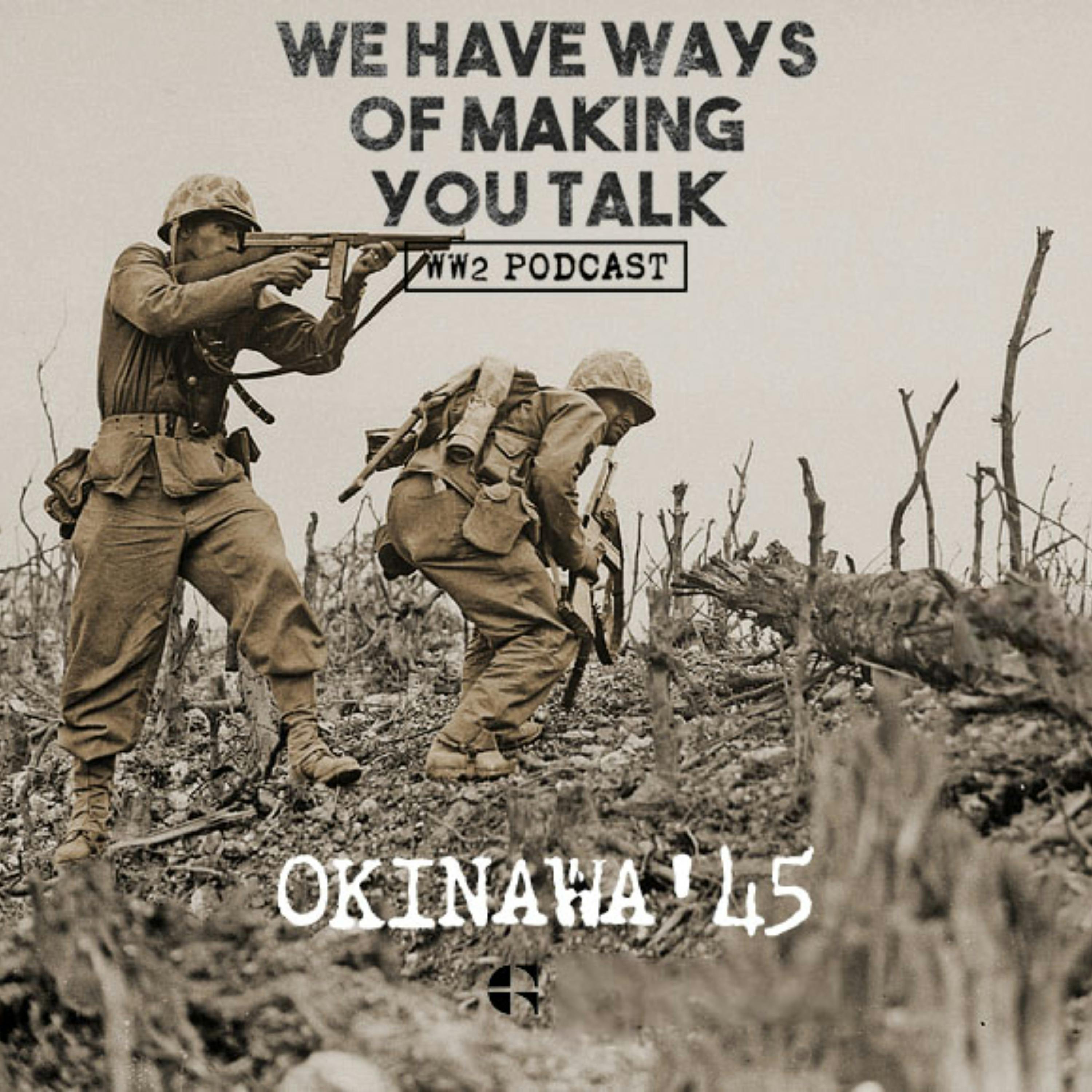
Loading summary
Transcript193 lines
- [00:02]
Al Murray
Thank you for listening to we have ways of making you talk. Sign up to our Patreon to receive bonus content, live streams and our weekly newsletter with money off books and museum visits as well. Plus early access to all live show tickets. That's patreon.com we haveways.
- [00:25]
James Holland
Put us in a box. Go ahead. That just gives us something to break.
- [00:31]
Al Murray
Out of because the next generation 2025.
- [00:35]
James Holland
GMC terrain elevation is raising the standard of what comes standard. As far as expectations go, why meet them when you can shatter them? What we choose to challenge, we challenge completely. We are professional grade.
- [00:52]
John C. McManus
Visit gmc.com to learn more.
- [00:55]
Advertiser
Summer's here and Nordstrom has everything you need for your best dress season ever. From beach days and weddings to weekend getaways in your everyday wardrobe. Discover stylish options under $100 from tons of your favorite brands like Mango Skims, Princess Polly and Madewell. It's easy too, with free shipping and free returns in store. Order pickup and more. Shop today in stores online@nordstrom.com or download the Nordstrom app Summer is coming right to your door with Target Circle360 get all the season go tos at home with same day deliver snacks for the pool party delivered sun lotion and towels for a beach day delivered pillows and lights to deck out the deck that too delivered just when you want them summer your way quick and easy. Join now and get all the summer fun delivered right to your Home with Target Circle360 Membership required Subject to terms and conditions applies to orders over $30.
- [02:04]
James Holland
The battle marked the end of the Imperial Navy as any sort of modern fighting force. The American Wolf's presence at the door of the sacred home soil completed the isolation of the Japanese home islands to the east and the west and facilitated the powerful strategic bombing campaign that had now begun to consume Japan's cities in flames. The battle featured some of the most ferocious naval and ground combat in human history. Ironically and tragically, it brought widespread death and destruction to a land that had mostly known peace, marking a seminal moment in the history of the Okinawan people.
- [02:35]
Al Murray
And that was John C. McManus reading from John C. McManus to the end of the Earth welcome to we have ways of making you Talk USA Special Edition at the end of our Okinawa series that James and I have been doing with me, Al Murray, James Holland, and John C. McManus. John, is it a while since you wrote about Okinawa? When did you write it's the end of the Earth?
- [02:58]
John C. McManus
It's only a couple of years, isn't it?
- [02:59]
James Holland
Yeah, that book came out a couple of years ago, so it was.
- [03:02]
Al Murray
So it's all quite fresh in your mind, the battle. And I mean, because the thing Jim and I have said at the start of each of these episodes is if you want to understand the atomic bomb and its use, look at this battle. And it's. It's pretty much outlined for you why anyone would be thinking we need to do this.
- [03:19]
James Holland
Absolutely, yeah. Because, you know, the ferocity of this battle on every level, air, land and sea, is really kind of off the charts. And so we're seeing at Okinawa over those really almost three horrifying months that, you know, the way the Japanese are going to fight is not going to diminish. It's actually going to go to the opposite as we get closer to the home islands. And I think that's what's maybe a little disquieting. So I think that in tandem with the firebombings is what makes us most understand the atomic bombings.
- [03:48]
Al Murray
Yeah.
- [03:48]
John C. McManus
Well, so for those of you who've listened to the series so far, in the first one we were looking at the kind of background to it, the strategic situation, what the plans were, respectively for the Imperial Japanese and for the. The Americans and their allies. Don't forget the British Pacific Fleet. And then in the second one, we were focusing very heavily on the naval battle and we got up to the kind of, you know, only actually about the sort of middle end of April. And then in the third episode, we were looking at the ground battle through the prism of one man's experience. And that was, I'm afraid to say, John, he was a guy from the U.S. marine Corps, but he was in the 29th Infantry. But, you know, you're here to kind of fight the flag for the Army. But also, I think in this kind of first off, we really do need to finish off what was going on in the naval battle, because this, this just is the biggest airland sea battle of the war, isn't it, really? I mean, I can't think of another one that involves air, land and sea in one battle quite so completely.
- [04:45]
James Holland
Not even Normandy, Guadalcanal maybe on some levels, but it's, you know, smaller forces.
- [04:51]
John C. McManus
You know, earlier on in the campaign, it is of arguably equally strategic points, greater strategic importance. But, you know, in terms of scale and size, this is the biggest sustained single battle that the US Navy fights.
- [05:04]
James Holland
Surely it's the deadliest battle in the history of the U.S. navy in terms of, you know, sailors lost. And, yeah, I think they lost, what, 36 to 38 ships, something like that, which is staggering. Leyte is pretty huge too. In the fall of 1944, the Battle of Leyte Gulf and the aerial operations and obviously the land ops and all that. But, but it's, it's, it's a bit less concentrated than Okinawa, which is, you know, most of the fighting on this, on this one island. There are exceptions of course, Yoshimo or the 77th Division fights there. But yeah, I mean it really is a kind of climactic battle in which whatever's left of the Imperial Navy is involved and then this really quite remarkable Allied fleet. That's what's always struck me guys, is like, I mean just the combined strength of the Royal Navy and the United States Navy coming into this, this particular battle is, I don't know that there's ever been a time in human history when you had a fleet that was so incred, incredibly powerful. And especially in terms of aviation, I mean there's what, 12 fleet carriers involved between the two? Something like that.
- [06:05]
John C. McManus
Yeah, it's absolutely immense, isn't it?
- [06:07]
James Holland
That's kind of mind blowing.
- [06:08]
Al Murray
What's interesting about this expression of American naval power particularly is when people talk about, yes, there's a Germany first policy, but not if you're in the US Navy. The entire thing has been tilted to the Pacific. And of course it would be because the Royal Navy said, well, we'll deal with the Atlantic, we'll cope with that. And at times it's hard pressed and at times needs the assistance of the US Navy. But the US Navy are really completely geared to a Pacific campaign. Right, for the word go, aren't they? King has been tilting things in that direction right from the off. And this is the sort of muscular expression of it because after all, the Navy has to arm and has to catch up and has to expand, doesn't it? But by now they can bring everything to the party, can't they?
- [06:46]
James Holland
Yeah, I mean, I definitely think that the warship side of the Navy has always been oriented toward the Pacific. And I mean, you know, the battleship people, the carrier people, the escort people have had to be more oriented toward the Atlantic because of the, you know, the Battle of the Atlantic and escorting convoys and all that talking destroyers, destroyer escorts, escort carriers, which are this little subset of this larger navy that really, really wants to be looking to the Pacific and really wants a kind of showdown fight with the Imperial Japanese Navy, which to some extent that's what Midway is about on some levels is achieving that equilibrium that'll give us a balance of power later. So Okinawa, it's always struck me as this kind of capstone moment for this warship Navy. And I think the Japanese see it that way too. When you look at which targets they're trying to strike, they're trying to hit the carriers, they're trying to hit the bigger ships when arguably they'd be better off trying to hit the troop ships and the logistical ships and all those unglamorous ships that would really, if you sunk them, that would really stop the invasion cold on some level. So they're still thinking in terms of, of hitting the larger capital ships, which, you know, certainly you can kind of understand because they're in the grip of.
- [07:56]
Al Murray
Their old naval thinking, aren't they, that your Navy square up against one of each other and one knocks the other out. They're thinking in battleship terms too. It's like they haven't learned the lessons of the war so far as they've been presented them. Because, you know, this isn't the first attempt by the Americans to see somewhere amphibiously, is it? They figured out how to defend Okinawa and what to do to bleed the Americans on land, but they haven't figured out how to actually stymie them navally, have they? This is why the, the kamikaze thing is working up to a point. It's the best they could do up to a point. But if they carry on attacking capital ships, they're not going to disrupt invasion.
- [08:29]
John C. McManus
Now this leads us neatly on to kind of where the Japanese think they are, you know, as early as two weeks into the battle, because on the 14th of April, Imperial General Headquarters announces that air attacks has so far sunk or crippled 326 ships, including six carriers, seven battleships, 34 cruisers and 48 destroyers. And a week later, on 21 April, Radio Tokyo reports that the Allies had lost half of its 1400 ships, including 400 sunk, with casualties of 800,000. And you know, they report that these catastrophic losses have driven the Americans, and I quote, into the Black Death depths of confusion and agony. But actually it's some way off that, to put it on, the only people.
- [09:10]
Al Murray
In confusion and agony are the Japanese there, aren't they?
- [09:13]
John C. McManus
Well, yes, and you know, we've talked a lot in the last few months about delusion of the Axis forces in the final months and weeks of the Second World War. And here you've got it again, haven't you? I mean, it's just absolutely bonkers. And it seems that Imperial General Headquarters really does believe that the Kamikazes are winning. But of course they're not. One of the big problems, of course, is kamikazes go off, it's quite hard to report back. Because they're dead.
- [09:38]
James Holland
Yeah, yeah. I mean, you don't know about the damage assessment from someone who's dead. What's funny about this is they, they didn't learn anything because they, they did the exact same thing the previous fall before the invasion of Leyte when they circulated these stories basically about how we had tried to, to launch airstrikes against Formosa, you know, today's Taiwan, and how basically they had sank all of Halsey's fleet and Halsey twe them back with this, this acerbic kind of response about, oh, you know, it's amazing, I've got my ships here, which fleet did you sink? You know, that kind of thing. So there they were, they were deluding themselves and it actually shaped their strategy in how they reacted to the American invasion of Leyte here. I think this time it's a little bit more geared toward the population to say, yeah, you may think the war is going worse and the Americans are getting closer, but actually look at all this damage we just inflicted on them. Don't worry, we can still handle this. And they clearly couldn't.
- [10:36]
John C. McManus
But the reality is quite different because, you know, Radio Tokyo is reporting this on the 21st of April. In actual fact, by the third week of June, the total they've sunk is 13 destroyers, 15 auxiliary vessels and 8 other vessels. You know, not a single battleship, not a single carrier. They've hit plenty carriers, four carriers I think it is by that stage, but they haven't sunk any. So you know, in all it's not, it's not a great return for the loss of 14, 30 aircraft by the, by the end of the battle, which is a huge amount when they haven't got that, you know, when they're really on their last legs. But you can't get away from the fact that the kamikazes are still having considerable effect. I mean, they're causing immense strain, immense anxiety, battle stress, all those kind of things. I mean, and they are, they're causing lots of damage, being an encumbrance, to put it mildly, aren't they?
- [11:21]
Al Murray
Yeah.
- [11:22]
James Holland
Oh yeah.
- [11:22]
Al Murray
It means the way you're operating permanently on your nerves, aren't you?
- [11:26]
John C. McManus
Yeah.
- [11:27]
Al Murray
And every air attack has the possibility.
- [11:29]
John C. McManus
That could be you.
- [11:30]
Al Murray
Well, yeah, exactly. The shit. Again, we've talked about the sort of murderous cynicism at the core of a lot of Japanese decision making by this stage, the war, but as an effects based operation, which is Sort of more modern parlance. It has a tremendous effect, doesn't it? You've got to be on watch. Every, every aircraft could be a kamikaze. Rather than bloat drops, bomb departs. This is the thing, isn't it? Every single one could have your name on it as a terror weapon. It's fantastic, isn't it?
- [11:54]
James Holland
It is.
- [11:55]
John C. McManus
You just think about what happens every time, you know, kamikazes are picked up. You know, that's ear splitting. Alarm buzzers sounding on the ship, smoke generator spewing out, kind of vaulting horrible kind of chemical gray GRE haze, you know, which gets in your lungs and sort of obviously unbelievably toxic and horrible. Five inch guns start booming, cannons pumping. The sound is absolutely immense. The blast concussion clearly is going to take its toll. You know, ammunition supplies appear to be endless because they're all starred at Karamo Rete, which is this anchorage that's so important to the battle and for the Americans. So the gunners are just pounding away with sort of gay abandon. And you should say this since you're the American John, but I mean, you know, this quote from one American sailor is amazing, isn't it?
- [12:38]
James Holland
It he says, I never saw so much fire and tracers coming from one place in my entire life. It just made a big cone up there and the cone would move around, then you'd see a plane light up and the tip of the cone and go down and the cone would just keep moving. It was a spectacular sight. Now he's lucky enough to be topside by the way, because a majority, a lot of these crews are, you know, below decks. So that to me that had to be just so difficult mentally because you don't know what's going on. At any second there could be a kamikaze slamming into your ship and you don't know that's happening. So think of how that would work on you mentally and emotionally. And what struck me about the kamikazes and like the tie in to the 21st century is we still unfortunately never come up with any kind of fail safe solution to the suicide bomber. I mean we're talking about guys on planes in 1945, in the 21st century. You know, you're talking about SV bids and you know, individual suicide bombers with vests and all of this kind of stuff. So how do you really combat that? And I think that's what the Americans in particular, and I'm sure the British are just having a hard time wrapping their mind around how people could do this and how you really? Combat that.
- [13:50]
John C. McManus
Yeah, that's such a good point.
- [13:51]
Al Murray
In a peculiar way, it's not unrelated to drone warfare, is it? The aircraft, the pilot no longer matters. A pilotless aircraft that can attack, say, a strategic bomber in its airfield at the other end of Russia has the same advantage in that you're not risking someone's life to do it. These lives have been written off. They've been risked. They've been. The pilots of these aircraft have been. Are as good as dead, literally. And so if you shoot him down or not, it makes no difference to him, does it? What a conundrum. One of the ironies here is because the fighting's so bloody for the Americans, they're taking terrible casualty rates, but they still do care about their men. You know, you could look at the balance sheet and go, is that worth it? Which is, after all, the question that the Japanese are trying to force onto the American is it worth all these guys lives? But if you. If the other side don't care, what on earth do you do?
- [14:39]
James Holland
And that's what's sobering because every. I guarantee you, every, you know, sailor in that fleet wants to survive and to confront someone who literally doesn't, seemingly, I mean, it's. It's really difficult. Plus it's at a higher, more bloodless level. It's very efficient in its own weird way. In terms of machinery and cost. If I can expend one plane to take down your ship. Ship. Think about what that means. I mean, how efficient that is and how much that costs you to build a ship and train the crew and all that. And I can take it down with one warplane and lose one pilot. Of course, it comes from this kind of cynical presumption of the. The Japanese sort of military cult that's controlling their government that, you know, they'll use the lives of these young men in whatever manner they. They see fit. Now, from the. From the American standpoint, too, though, this is a kind of breach of honor in a way. You know, like the fighter pilots fighting in the skies and all that. We could wrap our mind around that and we could respect that. As one of the. The. This was a guy who was a. I think he was a gun captain on one of the ships. And he said, you know, in a regular attack, it's a sporting chance you've got. And I thought that was a really interesting phrase, the sporting chance of a. Of a fair fight between two worthy adversaries. But he's saying when it's man against man bomb, all that is out the window. And I think that was part of what was wrenching is how the Japanese could do this on top of everything else they'd done in the war. And it all, it leads to that kind of idea that these are just people beyond the pale, that they're weird fanatics and somehow not quite the same sort of human beings on some level, savages.
- [16:11]
Al Murray
I mean, that's how you end up. People thinking like that leads you straight there. And if you're on a slippery slope of racism anyway with the way this theater's being conducted, you're going to end up right there, aren't you? It's not, not gonna take any pushing, is it?
- [16:24]
James Holland
Not at all.
- [16:24]
Al Murray
For ships damaged, what happens to it?
- [16:26]
John C. McManus
It goes to this anchorage, Karamo Reto, which has now been renamed by the Americans as Busted Ship Bay. And this is just an absolute lifesaver. So there's lots and lots of ships that would have been scuttled had it not been for this. But once again, you know, American logistics and operational art is just at full whack here. So, you know, 200 plus US and British naval ships and support vessels are hit by kamikazes or indeed still conventional bombing tacks during this battle. And each one of those which isn't sunk then goes to Karama Reto, where they are either patched up enough to enable them to go to Leafy or and then on to Pearl harbor or wherever or back to San Francisco or they're kind of patched up and put back into the battle again. You know, there are sufficient engineers and stores and supplies and parts that they can do all that. And that to me is just mind boggling that this can happen. And it's such a game changer for the battle because instead of the American US Navy, especially of badly depleted by the end of the battle, it's been knocked about a bit, but it's still intact and still pretty, you know, fully functioning at the end. And that's an amazing thing. Do you know the. I think the leadership in Okinawa, and I'd be interested to see your take on this, John, but it seems to me the leadership of the US Naval leadership is pretty impressive as well. I mean, these guys are pretty, you know, Mitchell Spruance, these guys, you know, they're absolutely wrestling what they're doing. And you know, you just take Spruance for example, you know, fifth Fleet Commander in Chief after being forced off the USS Indianapolis, he then makes a USS New Mexico, his flagship. And David Wilcocks, who is the fifth Fleet Naval Surgeon is on the quarter deck with a number of other officers when he watches a swarm of Japanese planes and there's a lone kamikaze, then heads straight for them and all the officers on the bridge kind of move out of the way and take cover. Except for Spruance, who's watching with his binos trained without flinching at all. I mean, that just takes nerves of steel. And Wilcox actually chastises the admiral for being reckless. And Spruce just says, if you're a good Presbyterian, you'd know that there is no dangerous unless your number's up. In other words, you know, if it's going to hit me, it's going to hit me.
- [18:35]
James Holland
Predestination, right?
- [18:37]
John C. McManus
I mean, just amazing.
- [18:39]
Al Murray
I mean, the US Navy's not dissimilar to the army. Isn't it, John, that it into war. It's small, it has ambitions, there's things it wants to do. It regards Canada as its mortal enemy.
- [18:53]
James Holland
Something's ever changed, right?
- [18:55]
Al Murray
Exactly. But again, it's this thing that everyone knows, everyone, they've all come through together. It's this small cadre of people. And there are those who don't like one another. And so they're all kind of on the same page as one another, even with the disagreements, right?
- [19:12]
James Holland
Oh, yeah. I mean, I've often said in relation to both the army and the Navy, we have enough military professionals, good, dedicated military professionals to fight and win this war. War. But not so many that were racked by careerism, you know, that the services are racked by careerism. And you have a big divide between draftees and the professionals. As you will for a while. During the Vietnam era, for instance. Yeah, yeah. I mean, Al, it's, you know, people like Spruance, Mitcher, I mean, that's the first team. These are first rate naval thinkers. These are people who by 1945 know what they're doing on so many levels. It's. But I think a big part of what has carried us to this point of proficiency is the ability to do the forward logistics. And yes, Bruance is part of that, but there's others, like Rear Admiral Glover or whatever, you know, who don't get a lot of the glory. But, you know, it used to be before the war and this affected diplomacy that you, you felt like you needed bases all over the world for your Navy. That's how you did your forward logistics. Now we really don't need that by 1945 because the fleet has become so adept at that conveyor belt type of logistics. Maybe some anchorages Here and there as you get, you know, place like Ulithy or whatever. But I'm talking about the ability to keep ships, you know, in action, incredible amounts of time and to service them in terms of oil and food and whatever.
- [20:31]
John C. McManus
It is absolutely amazing. But of course, you know, it still requires young men to kind of, to maintain this effort. And the effort is, the strain must have been absolutely immense. I mean, there's time where you're kind of sort of standing offshore and you're watching the poor bloody infantry kind of slogging on land and thinking, God, thank God for that. I'm not in one of those. But this is not one of those moments. You know, it's absolutely horrendous. And you know, destroyer pickets obviously have the worst of it, but there's lots of them are getting absolutely hammered. There's one gunboat captain, he writes. I think you should, should read this out, John.
- [20:59]
James Holland
Yeah. He says the, the strain became almost intolerable. We were gaunt and filthy, red eyed and stinking. The ship was a mess with empty shell casings everywhere. My face was pockmarked with particles of burned gunpowder since one Oerlikon anti aircraft gun fired as close as three yards from my battle station. Wow, that must have been. That'll take the paint off your skin, much less the gun mount. We prayed for bad weather, which was about the only thing that slowed down the stream of Japanese planes. So to them it's just like this conveyor belt. Enemy planes coming in, it doesn't take many. It could be 10 over three days. And that's a lot, you know. So he's talking about the strain. I mean, I think that's, that's a great quote because obviously you get the, the sense of how fatigued you are of course too, but, but just the little thing like the, the, his face with the, the gunpowder particles on it, just horrendous things like that. There was another story about one guy who just had had enough. And this is the, on the combat fatigue side he'd had, he'd been part of, he was on a gun mount, I think, and he had so many kamikaze he's dealing with. And one day he just said to the other guys on the crew, he said, you know, it's just too hot today. And he jumped overboard and died.
- [22:08]
Al Murray
God.
- [22:08]
John C. McManus
Well, we've talked a lot about destroyer pickets, the radar, destroyer pickets. And on May 3rd, 1945, there's two who are operating together. There's the USS Aaron Ward and the USS Little and they're attacked by 50 plus kamikazes. And Aaron Ward is hit by seven kamikazes, badly flooded, fire spreading, nearly sinking. 45 crew killed in action, 49 wounded in action. Eventually it manages to be towed to busted ship bay and survives, which is just amazing actually. Later fights in Korea and very successfully. So the USS Little is targeted by 18 kamikazes, hit by four and sunk in 12 minutes with 30 of her crew. I mean just, you know, that's what these guys are up against. And sometimes there are just so many kamikazes that, you know, you can't avoid that fate. There's so many that enough of them are going to hit you. You know, the most famous, I suppose one of the most infamous attacks during the Okinawa battle because there's those incredible color photographs from it, is the attack on the USS Bunker Hill, which is one of the kind of fleet carriers, which is Admiral Mitsch's flagship, which is targeted on 11 May 1945.
- [23:14]
Al Murray
But it's interesting, a pair of kamikaze, it's the swarms around those pickets and then just a pair come onto the Bunker Hill. It's a low cloud base so the gunners have only a split second to respond. The first drops a 550 pound bomb before crashing onto the flight deck near number three elevator and crashing into 34 hellcats which are all fuelled up, ready to go.
- [23:35]
John C. McManus
Yeah, and there's photographs of those all on fire.
- [23:37]
Al Murray
The bomb goes through three decks before coming out the hull and exploding close underneath the hull. So at least it didn't go off inside the ship. Morsels of small mercy there. And the second plane comes down in basically a near vertical dive straight into the flight deck. Obviously it's the chain reaction because the 34 fuelled up Hellcat's on the deck. That's the American way of doing naval air powers. You've got lots of planes, they' always ready to go. The British would have fewer and they're using the lift and being a bit more, they're not quite so not a sort of a massed battle approach to things. So you've got secondary explosions. Hundreds of men are killed from the blasts or the fires or the results. The fires, asphyxiation. There's smoke a thousand feet right up to that low cloud. The entire rear end of the ship's on fire. And obviously because it's full of aviation fuel, full of Avgas, it's going to burn, isn't it? This is the problem with an aircraft carrier and there's Ammo cooking off, fuel burning off, off. And for an hour there's just an inferno on board the ship.
- [24:31]
John C. McManus
Yeah. And anyone looking at that would go, that's it, it's done. Yeah, yeah, this is going to sink.
- [24:35]
Al Murray
Yeah.
- [24:35]
John C. McManus
And what's amazing about it, it doesn't, it's just amazing.
- [24:40]
James Holland
The testament to the, to the, the fire control mechanisms and the training of the crew. Yeah, I mean that's the only thing that's going to say ships like that.
- [24:48]
Al Murray
Yeah, absolutely incredible.
- [24:50]
John C. McManus
But you know, three officers, 10 enlisted men of Task Force 58, you know, the Star off 3pm Mitcher, plus 60 surviving members of his staff transferred to the USS Enterprise. Anyway, war correspondent Phelps Adams sees Mitcher leave and he goes, he looked tired and old and just plain mad. His deeply lined face was more than weather beaten. It looked like an example of erosion in the dust bowl country. But his eyes flash fire and vengeance.
- [25:17]
James Holland
Yeah, well that's Mitcher.
- [25:18]
John C. McManus
Gotta love that. He's a tough cookie though, isn't he? He's tough as old nails.
- [25:22]
James Holland
I mean on a good day his face looked like a beat up base love. I mean, you know, this guy, you have the wrinkles and he looked like he, he, he'd, you know, spent his whole career as an aviator with an open cockpit with the wind blowing in his face. I mean.
- [25:39]
John C. McManus
Yeah, he looked about 20 years older than he was, didn't he?
- [25:41]
James Holland
Yeah, and they, they just called him the old man. And he did, he looked much older.
- [25:45]
John C. McManus
58 or something at the time.
- [25:47]
James Holland
That's what's sobering now to think of, I know he probably wasn't all that old, but he really did look at and, and seem it of course to many of the young sailors, obviously, but especially at this moment, I mean think about that, having to evacuate with your staff and figure out where you're, where you're gonna go. And having been part of this attack, I mean that's pretty crazy.
- [26:05]
John C. McManus
Yeah, but, but also it says something of the scale of these vessels, the way they're constructed, the kind of, you know, the different bulkheads which sort of contains damage in one, one particular area, the kind of anti flooding devices. The firefighting details that you were talking about earlier on, John. I mean it takes eight hours of firefighting to get the flames under control, you know, by which time obviously Bug Girl's looking, looking terrible. 389 killed in action, 264 wounded in action. You know, the casualties are really high because many of the men below decks, which is exactly what you were talking about earlier on, die from. From smoke inhalation. And the bodies of 22 pilots from VF84, which is a naval air squadron fight squadron, you know, they're discovered in a hatchway where they've been trying to escape. Can you imagine? It must have been horrendous. But the engines of power plant are kind of largely. Okay. So Bunker Hill is still able to steam and sell for Liffey at 20 knots. I mean, can you believe it? It's insane.
- [26:58]
James Holland
That's crazy.
- [26:59]
John C. McManus
It's just incredible. It says so much about the construction of these vessels as well, at the kind of height of war. I mean, I don't comment when the Bunker Hills laid down, but I mean, this is engine naval engineering of the highest caliber, isn't it, that can sustain this much damage and still operate at 20 knots to a Liffey, which is what, 1600 miles away? Something like that.
- [27:16]
James Holland
And you just think of the human cost too, when something like this happens aboard a major vessel. I mean, you lose hundreds of people in the blink of an eye, die. And so. So almost 400 killed. Put this in perspective for you. The invasion of Los Negros in February, March 1944 by the 1st Cavalry Division was a pretty major operation, relatively speaking, for MacArthur. And it went on for weeks and. And whatever. Well, the 1st Cavalry Division suffered 326 killed in action in a bunch of very, very savage, ferocious fights. Well, here in the blink of an eye aboard Bunker Hill, we've lost more than that. Killed. Killed just on that day.
- [27:51]
John C. McManus
To put this in perspective, on Omaha beach on D Day, let his figures are 842 dead, you know.
- [27:57]
James Holland
Yeah, totally.
- [27:58]
John C. McManus
So.
- [27:58]
James Holland
Right, exactly. That's a good point, Jim. So that. So it's about half that.
- [28:01]
Al Murray
Yeah.
- [28:02]
John C. McManus
One of the most notorious bloody episodes of the entire war. So, you know, there you go.
- [28:07]
James Holland
When things go sideways in a naval vessel like that, it's incredibly deadly. And we've seen that at Sabo island too, of course, with the loss over a thousand sailors with four cruisers going down in the beginning of battle, Guadalcanal. So it's. It's this pattern through the whole war.
- [28:21]
Al Murray
Yeah.
- [28:21]
John C. McManus
But the most amazing thing is that three days later, Mitch's new flag, which is the USS Enterprise, also hit by kamikaze. So he has to move ship yet again, this time to the USS Randolph, which I'm pretty sure was not a fleet carrier, so.
- [28:32]
James Holland
No, it wasn't.
- [28:33]
John C. McManus
It's amazing.
- [28:34]
James Holland
Yeah.
- [28:34]
John C. McManus
But then one day after Bunker Hills hit Spruance's flagship, which is the USS New Mexico is also struck. It's five o' clock.
- [28:41]
James Holland
That's a battleship.
- [28:42]
John C. McManus
12Th of May, two lone kamikazes approach them out of the sun. You know, a 5 inch shell blows one of the two out of the sky, but second crashes into starboard side of the shot ship bomb detonates on the gun deck and tears a massive 30 foot hole and ignites the gas storage tanks. I mean can you believe it? And yeah, they're all really worried about Spruns because they can't find him and they kind of feel worse but eventually they find him on the second deck manning a fire hose. I mean, ah, God, what a guy, eh?
- [29:09]
James Holland
That's a leader.
- [29:10]
John C. McManus
He's just the business, isn't he sp, making himself useful.
- [29:13]
Al Murray
That's very strong, isn't it? Yep.
- [29:15]
James Holland
He should have gotten five star rank.
- [29:17]
Al Murray
My opinion, 55 killed, 100 casualties including 55 killed in action. You're right John, these are big bites, aren't they?
- [29:24]
James Holland
They are.
- [29:25]
Al Murray
You know, anyone on a ship, skilled cruiser, skilled and deeply trained and all that sort of stuff and gone in an instant. I mean you think there's all those pilots.
- [29:33]
James Holland
Yeah.
- [29:34]
Al Murray
Gone like that.
- [29:34]
John C. McManus
Yeah. On the Bunker Hill. Yeah.
- [29:36]
Al Murray
And then naval pilots, they've, you know, the next level of skill, you know, to be able to fly for an aircraft carrier. But Spruance writes, I had just started for the bridge when the anti aircraft batteries opened up. So I remained undercover while going Forward on the 2nd and Dick, we were hit before I got very far, which is fortunate for me as the two routes to the bridge led right through the area where the plane and bomb hit. The suicide plane is a very effective weapon which we must not underestimate. I do not believe anyone who has not been around it within its area of operations can realize its potentialities against ships.
- [30:05]
John C. McManus
Well there you go. John goes by the way.
- [30:07]
James Holland
So he's speaking to Washington there. You know, I've always thought that, that he's speaking to Washington there about what's the next step in terms of the invasion of Japan. Because we're going to deal with even more of these in the invasion of Japan possibly. And this is kind of new in the minds of a lot of people as of Okinawa. And yet it had gone on since the battle of Leyte Gulf on some level the previous fall, you know, a little bit at Iwo Jima and of course the invasion of Luzon, the Japanese launched a bunch of kamikazes there that killed 500 sailors, didn't sink any ships. So I think there was a sense for Spruance that maybe some at higher level were slow to realize the threat posed by the kamikazes. And I've always thought that that quote maybe was geared for, as he saw it, for those folks.
- [30:51]
Al Murray
It must be because after all, if you're say you are trying to land on the south island, those aircraft haven't got to fly hundreds of miles to get to you and come to a radar picket. They're just going to be upon you, aren't they? They're going to come low over ground and then straight out over the sea and onto you. And nothing you're going to be able to do about it in terms of radar picketing and all that sort of thing until maybe you've got people ashore with radar, blah, blah, blah. But at that early stage where you're very, very, very.
- [31:16]
John C. McManus
And we're casually talking about events in kind of, you know, the second week of May 1945, which of course coincidentally is VE Day in Europe, but you know, it's, it's not, certainly not VJ Day over in the Pacific. And you know, there's this great line from one of the Marines who kind of hears the news and he goes, well, I didn't change the position of our lions or the texture of the mud, the tin of the sky or the amount of ammunition each of us carried in our poncho.
- [31:38]
Al Murray
I love it.
- [31:39]
John C. McManus
Yeah, great. I'm very happy for you.
- [31:40]
James Holland
But yeah, yeah, it might as well been happening on the moon as far as many of them thought.
- [31:45]
Al Murray
Absolutely.
- [31:45]
John C. McManus
But there is a kind of, you know, as, as sort of May gives way to June. There is a sense that the kamikazes are lessening, that, you know, the heat is dying down a little bit. There's this change of command, isn't there, on the 27th of May? Because there is this rotation that they do and it should have happened a month earlier, but it doesn't because they're in the thick of the battle and because, you know, the fifth Fleet is the A team and the third Fleet is kind of just not quite as much. So, you know, Admiral McCain takes over from Mitscher and you know, Halsey takes over from Spruance and so on, you know, so the normal five month rotation cycle changed to six just for this. But Nimitz and King can afford this changeover at this time because the Americans clearly are winning, albeit at a terrible cost. But they are not going to lose now. And those kamikazes are starting to filter out, aren't they? We should take a break. When we come back in part two, we should talk about concluding remarks on this terrible, terrible battle, what happens in the end on the island, how the naval battle plays out and so on. And your thoughts, John, on Simon Bolivar Bookler and all the rest of it.
- [32:45]
James Holland
Sounds good.
- [32:46]
Al Murray
We'll see you in a moment after the break.
- [32:50]
Advertiser
Savor every last drop of summer with Starbucks.
- [32:53]
John C. McManus
From bold refreshers to rich cold brews, the sunniest season only gets better with.
- [32:58]
Advertiser
A handcrafted ice beverage in your hand. Available for a limited time, your summer favorites are ready at Starbucks. This episode is brought to you by State Farm. Knowing you could be saving money for the things you really want is a great feeling. Talk to a State Farm agent today to learn how you can choose to bundle and save with the personal price plan. Like a good neighbor, State Farm is there. Prices are based on rating plans that vary by state. Coverage options are selected by the customer of the availability, amount of discounts and savings and eligibility vary by state.
- [33:30]
James Holland
Are you still quoting 30 year old movies? Have you said cool beans in the past 90 days? Do you think Discover isn't widely accepted? If this sounds like you, you're stuck in the past. Discover is accepted at 99% of places that take credit cards nationwide and every time you make a purchase with your card, you automatically earn cash back. Welcome to the now it pays to Discover cover. Learn more@discover.com credit card based on the February 2024 Nielsen report.
- [34:06]
Al Murray
Welcome back to we have ways of making you talk before we resume with our sort of wash up of Okinawa. Don't forget we have Waze festival in September the 12th to the 14th of September at Black Pit Brewery just next door to Silverstone racetrack off the M40. Couldn't be easier to get to. It's a whole weekend of exactly this kind of chat. And John, you're joining us again this this year.
- [34:24]
James Holland
Can't wait. Yeah, yeah. Going to have a. We're going to have a great time.
- [34:27]
Al Murray
If you want to find tickets, it's easily done. We have ways fest.co.uk. there's weekend tickets day tickets. You can camp under 16s are free. So bring your surly teens and they can experience the true wonder of Second World War history. We'll see you there. Now we've just been looking at the naval battle really and the effect of the Kamikaze offensive. It characterizes really the sort of desperation because you know, we talked about the Yamato Banzai charge in one of the earlier episodes.
- [34:54]
John C. McManus
Yeah, I really think that's just grotesque. I mean it's all grotesque. All the kamikazes are grotesque. But there's something particularly, even more so, especially awful about the banzai charge of the Yamato force. I just found that just horrible.
- [35:07]
Al Murray
Yeah, yeah. But it characterizes the Japanese defense of Okinawa and the way it's organized and the way it sticks to its strategic objectives and everything is, in a way, a great success, isn't it? They get what they want from the defense of Okinawa in the way they're doing it. They make it very clear how difficult they can make things for The Americans, the U.S. you know, the marines corps and the army expend lots of excellently trained chaps there. And the Japanese really make the. Obviously they lose the island in the end, but they really make them pay for it. They send a great message to their own population of how they will be expected, resist should the moment come after all, and so on. In that respect, their land campaign is a great success. Their air campaign isn't really. And their naval campaign is. Is just an epic in pointlessness. Kind of agree on that.
- [35:51]
James Holland
Yeah, yeah. I mean, their navy is nearly done in terms of being an attack and strike force outside of, of course, the naval aircraft that could be in play there. The aerial side, though, is still very potent, especially the kamikazes, the land side. I mean, in a way, they had just begun to fight within the last year to a year and a half. From an imperial Japanese army perspective, because, I don't know, I think we've talked about this before. The army's perspective tends to be towards China and think of that as their war. And the bulk of the army is basically tied down in China. And it's as the war gets more serious that you see the imperial Japanese army come into play in larger numbers, especially by the Philippines in 1944. And so, you know, they've got what, about 80,000 or so in play at Okinawa? You know, it's good numbers, but it's smallish compared to what could be available in Japan itself. And that's kind of the sobering thing is, land wise, they're just ramping up. So give you an example, example Operation Olympic. Lieutenant General Walter Krueger's 6th army was supposed to to land at Kyushu in November 1945. And that's an enormous army by u. S. Army standards, of about 14 divisions that you're going to have under Krueger. Yeah, they still would have been outnumbered. Okay, so, I mean. So yeah, I mean, what we see at Okinawa, the Japanese are sort of communicating. This is. This is what the intensity of what this is going to be like. We're going to bleed you. And so are the allies willing to do that. I mean, that's what this has come down to now.
- [37:20]
John C. McManus
Horrific.
- [37:21]
James Holland
It is.
- [37:21]
John C. McManus
We mentioned Admiral Yukagi quite a lot, who's in charge of the, of the air fleet that's largely providing the kamikazes from Kyushu. I mean, it's hard to kind of assess rationally these people because they're all bound up in this sort of grand delusion, this sort of, this ridiculous sense of warp, sense of ultra nationalistic honor, et cetera. These, these young men on their final flights. And John, you were saying that you've got a number of last letters of kamikaze policies.
- [37:48]
James Holland
Oh, yeah. So that. Yeah, it's fascinating. Well, one thing, one thing I would say just up front is that the societal pressure on them and their families, of course, was for them to do this. You know, a lot of these guys are willing to do it and they'll say the right things. But from a family pressure side, in the case of many of these guys were killed, the family like publicly had to make it seem like they were thrilled. They were excited about this. Now just think about that a second. You've just lost your son and putting on a face in front of your neighbors. You have to make it seem like you're overjoyed. Even grieving is kind of controlled by this regime. So that people had to grieve privately in a way because it would be viewed as kind of unpatriotic if you were grieving publicly of saying, oh, I'm so sad that my son is dead, or whatever. That to me is so twisted. But that's the mindset that it just shows you. So here's, here's one guy, this is a captain who's 25 and he's writing to his parents. He says, dear, dear father and mother, I finally depart as a KamiKaze pilot at 3pm tomorrow, April 12. So right in the heart of this battle. Yeah, I will leave in high spirits. I am sure that I will be a sincere fighting officer and that I will repay all my obligations to you. I will spend my last night without fear with my young men. These are my final words which I dedicate to you. Goodbye. Wow.
- [39:06]
John C. McManus
Oh, God.
- [39:07]
James Holland
There's another guy was a professional baseball player.
- [39:09]
Al Murray
What?
- [39:10]
James Holland
That really got my attention. Very interesting. So this guy played ball. He sends a note. His last note was, I had eight years where baseball was my life.
- [39:19]
John C. McManus
Life.
- [39:19]
James Holland
I thank baseball for giving me my mental strength. His name is Shizuka Watanabe of the Asahi baseball team. He had that little note and then he had a. He drew a bat and a glove and a ball, and that's. That's the letter that he sent. Let's step back and think a minute. Let's say I'm a crewman aboard one of these ships. I'm thinking these guys are these weird fanatics I can't relate to, but I might be able to relate to that guy, right? So there's the tragedy. This whole thing as I see it, as an historian, you know, coming along happily and lazily 80 years later, later, it's easy for me to say, but I think these guys have a lot more in common than maybe, you know, they've been led to believe at the time. And. And we've thought ever since maybe those.
- [39:59]
Al Murray
Letters aren't that far off from the letter. The last letter you write where you'd say, dear Mum and Dad, hopefully I'll see you again. They're just missing that bit, aren't they? Yeah, the tone is not that dissimilar. The other day I read a letter of a guy who went on Operation Frankton, which is the British paddle boat expedition to attack the French navy in border Bordeaux. They all knew they were basically probably not going to come back. They felt they had a sporting chance. And his letter was. Was like that, except it didn't say, and I definitely won't see you again. You know, if things work out properly, I will see you again. That's what's absent here, isn't it? That, in a way, is the sort of depth that Japanese are prepared to take. Plenty of men on the Allied side go to war knowing they're not coming back. As you said earlier, John, it's about the sporting chance, isn't it? The old aerial battle with the sporting chance.
- [40:43]
James Holland
Yeah. Here's another one. Forgive my selfishness during this short life. At last I am happy to have a friend who knows me My one and only friend. I depart ahead of you I feel so lonely. Goodbye to you I will destroy an aircraft carrier. Let us meet again and go for a walk together. And he's writing just to a buddy.
- [40:59]
John C. McManus
Wow.
- [40:59]
Al Murray
God Almighty.
- [41:01]
James Holland
That's really quite poignant.
- [41:03]
John C. McManus
It's heartbreaking. I remember that the story that Dick Jessa told us, he was in the US Marine Corps on Iwo Jima and, you know, he found this dead Japanese and he was. Was sort of rifling through his body to pick out the good luck flag, which they were all taking as souvenirs and as he did so, he pulled it out and out came a whole load of letters. And, you know, there were photographs of his. This guy, dead guy's mum and dad and stuff. And he suddenly realized, to his absolute horror that these guys were not monsters. They were just the same. Yeah, they were young men who were doing what they had to do and, you know, writing letters to their parents just as he'd been writing his letters to his parents. And he vowed there and then that if he ever got off this island, he'd never get involved in war ever again again. And then dedicated the rest of his life to kind of human sciences and became one of the pioneering professor at Colorado University. But amazing guy, but just, you know, you're absolutely right, John. It's that moment where you. You suddenly realize that these guys aren't these sort of Superman automatons, you know, they're just human beings.
- [41:55]
James Holland
Yep.
- [41:55]
John C. McManus
Yeah.
- [41:56]
James Holland
And in Dick's case, you know, let's think about the subsequent history. There were a lot of. Lot of wars he could have gotten involved in, so he lived that. And I think that's. That's also really no notable because, you know, unfortunately there was a lot of conflict that was going to happen post 1945 that could have involved him. If he decided to, say, in the reserves, for instance, he could have ended up at the. In Korea chosen reservoir or something, whatever.
- [42:18]
John C. McManus
Yeah, right.
- [42:18]
James Holland
Same kind of thing. I mean, wow. The humanization of the enemy. And that's. And it's the opposite. That's necessary for war on some levels.
- [42:26]
John C. McManus
Yep. And a lot less of it, I think, for the most part. I mean, I think Dick was an exception. I mean, you know, we were following the fortunes of two US Marines on Okinawa, but one in particular, Bill Pierce, and then Dick Whittaker to a lesser extent. And both of them were just sort of, you know, while we were there, we hated Japs. We just wanted to kill them. And it was unbelievably brutalized because it was so close. You know, you're seeing, you're seeing the kind of. The fruits of this. This terrible violence right in front of your nose and up your nose, frankly, with the stench and everything. So that leads us sort of neatly onto the kind of the ground battle. So. So our friends in the US Marine Corps were pretty down on General Simon Bolivar Buckner Jr. Not least for the kind of, sort of lack of extra landing, you know, 2nd Marine Division, you know, ready to go and all the rest of it. Never, never brought in, you know, what's your, what's your take on this, John? I mean, do you think he's been a bit unfair, or do you think they could have done something else?
- [43:18]
James Holland
It's, I'll say this right up front. His, his decision not to invade at Mina, you know, the supporting invasion with the 2nd Marine Division, all that. That is not an Army Marine thing. There were plenty of army officers who urged him to have that invasion. And in fact, the one of them was the Commander of the 77th Infantry Division, General A.D. bruce, who I think is one of the finest division commanders of the war. And he had done this exact same thing at Leyte by invading at Ormoc on December 7, 1944. That really plays a part in ending the Battle of leyte sometime without MacArthur's timetable getting too blown up. So he's telling the Buckner, I can do the same thing on the southern coast of Okinawa. So some of the Marines are saying that, some of the soldiers are saying that. So I think that unfortunately there's been perceived as an Army Marine thing. Oh, this dodgy army guy doesn't know what he's doing. The Marines understand amphibious warfare. No, that isn't what's happened here. What's happened is Buckner, in my opinion, is kind of a newbie to amphibious warfare, and I don't think that he quite grasps the capability that's at his finger tips with either the 2nd Marine Division or the 77th Division, whichever you want. I think he, he has a very revealing quote of this whole thing, which he says, I don't want this to turn into another Anzio. Now, Buckner, I think, is a fine professional on some levels, but I think to say a statement like that reveals that he doesn't understand the battle he's fighting. Anzio is against an enemy that controls a continent that has clear lines of communication and resupply and whatever to the battle area and controls a capital at that point, too. In, in Rome, in this case, you're fighting an enemy that's basically cut off on this island. You don't really have to worry about being Anzio'd here. What you have to worry about, if it's anything, is, is to look at maybe what's happened at other times in the Pacific War when you've tried this kind of thing, most notably at Leyte when it actually did work quite well. So I think that's where I'm disappointed in Buckner a little bit, who I think overall is a pretty solid commander in terms of courage. He's off the charts.
- [45:17]
John C. McManus
Yeah, well, that's what kills him, doesn't it?
- [45:19]
James Holland
It does. So I don't think think that he's thinking broadly enough. But I'll tell you, I really investigated this pretty massively when I did the trilogy. I think it's fascinating and looked at everybody's perspective and especially like some of Buckner's staffers because of course they were the ones considering with him and they said really he did think about it very strongly, but he was just very concerned that, you know, whatever unit invaded there would be cut off and they couldn't resupply. Bruce was trying to tell him we can resupply this way. We've done it before and since we control the sea, we're going to be able to do this, don't worry about us.
- [45:52]
John C. McManus
So it's just a lack of experience, isn't it?
- [45:54]
James Holland
I think, I think part of it is the inexperience of being sort of new and not quite understanding the capability yet.
- [46:00]
John C. McManus
Right.
- [46:01]
James Holland
That's only my opinion. I mean, others may look at it differently, but I have formed the view that he probably should have done it, I think with the 77th Division especially, because they were really, really good at this and knew exactly how to go about it. And they were right there. They had just fought at Yeshima. Famously, of course, Ernie Pyle had gotten killed with, you know, while covering them and all that had already gone on. So they're right there in the neighborhood and they've got Bruce who knows exactly how to do this. Would that have made it just somehow an easy battle? I don't think so. But maybe you're talking about a two week shorter battle or. I don't know, I'm just totally speculating.
- [46:36]
John C. McManus
Yeah. And then how many would you have lost shortening it by two weeks rather than extending it by two weeks?
- [46:40]
James Holland
Who knows?
- [46:41]
John C. McManus
Yeah, who knows? I mean, the main thing is he is, he is brave, isn't he?
- [46:44]
James Holland
Very.
- [46:44]
John C. McManus
He's constantly at the front and people are warning him about it, but he still does it. And on the 18th of June, he goes out 300 yards behind lines and you know, there's some famous photograph of him. You can see that these staff officers and Buckner on the, on the ridge. And he's standing there in his coat and he's, he's looking out. And this photograph is taken literally, moments later, a shell whistles over and he gets pelted in the chest by a shell fragment and that's that.
- [47:07]
James Holland
Yeah.
- [47:07]
John C. McManus
Highest ranking general killed in World War II.
- [47:10]
James Holland
By enemy fire.
- [47:10]
Al Murray
Yeah, by enemy fire, yes. Rather than by the U.S. 8th Air Force, of course.
- [47:14]
James Holland
Yeah, exactly. With Leslie McNair.
- [47:18]
Al Murray
Yeah. One thing I wanted to ask you, John, is why not just draw up opposite the Japanese and starve them out? Why this determination to fight them out of Okinawa? The fighting's very, very difficult. The train's intractable. The Japanese are determined to. So why not? Why give them the satisfaction of killing Americans? Is this because, unfortunately, there is culture of dynamic battle that's at the core of the way the army and the Marine Corps are going to prosecute things. It would be, again, ungentlemanly or not, a fair fight or in the spirit of things, to simply sit back, gel them so that their lives are miserable and wait until they're starved out. Why? Why fight?
- [47:56]
John C. McManus
It's a really good point. Because by the time that, you know, the Americans are up on the Shuri Line, it's hardly anything on the island left anyway. I mean, you know, 90% of it or even more is in U.S. hands. Sit back, you know, a thousand, you know, 2,000 yards and just wait.
- [48:09]
James Holland
Yeah, that's the populated part of the island.
- [48:11]
John C. McManus
Mine it so they can't get out, mine the hinterland and just go find.
- [48:14]
James Holland
So, so again, this is just my view. You're talking about the intersection of the culture of three different services that is in itself an extension of our American culture. And what I mean by that, the Navy's culture is to not want their ships hanging around very long at any typical invasion. And that makes total sense because they're more vulnerable and you're using up all the logistics like we were talking about. So they want to, you know, do their thing and get out of there and go on to the next operation and not risk their ships. The Marine Corps culture, which of course as a maritime service comes from the Navy in a way is quick hitting amphibious invasion invasions. Get on with it, I would say, and I think, I think this has often led to a misconception that Marines are reckless. They embrace frontal attacks, that they're stupid in some way. No, I really push back against that. They're smart. They understand they're not going to go forward into the enemy strength, but they are aggressive and they're trained as such and they should be. The Army's culture, of course, is more towards continental littoral warfare. We don't have to worry about ships hanging around in the neighborhood and you're going to use your combined arms. And it is a little bit more deliberate, but it also is aggressive. And we need to be constantly moving forward with the use of all these combined arms to prosecute a battle and completely defeat an enemy. And we've seen this happen, this kind of culture of American. Here's our battle narrative, and here's our battle, and we. We fight it to its conclusion. And now it's over and. And we can have an end point. Standing back and starving them out. That's going to take time. And we don't want this war to. To linger on any longer than it needs to, in part because of what it means back home and, you know, the. The inconvenience of rationing and all that.
- [49:50]
John C. McManus
In other words, it's. It's an extension of a line that you and I, al. Have talked about a lot, which is you want to get on with it, but you don't want to get on with it so fast that you're going to kill lots of extra people, but at the same time, you got to get a shift on, because if you don't, you'll kill lots of extra people. So, you know, it's that whole thing, it's actually an extension of kind of. You're always doing things six months ahead of where you. Where you should be in terms of supplies and stuff. It's. It's the same problem. It's that narrow ridgeline of speed with risk. Risk, but not wanting too much risk and not wanting too much speed, because with speed comes risk.
- [50:18]
Al Murray
And with governments that can be elected out if the public don't like the way things are going.
- [50:22]
James Holland
Yep, yep, that's right.
- [50:24]
Al Murray
In Britain, elections are suspended, but they aren't in America. And, you know, I think that. And obviously we've got a new president at this point. It's on his desk and he might be saying, get on with it, because after all, all the arguments about Normandy, about how it's too slow, whereas in fact, it's going at just the right pace to draw the chairs and destroy. Destroy them.
- [50:41]
John C. McManus
Yeah, yeah.
- [50:42]
Al Murray
Even in the biggest, most important in battle in northwest Europe, everyone's saying, hurry up.
- [50:46]
James Holland
Yeah.
- [50:46]
Al Murray
Yeah.
- [50:47]
John C. McManus
Needless to say that the net result of all this is just horrendous casualties. I mean, needless to say, General Ushijima, who's the commander of the 32nd Japanese army, you know, he performed seppuku on himself.
- [50:58]
James Holland
He did, yes. Ushijima's body was found and buried with full military honors by the Americans.
- [51:03]
Al Murray
Gosh.
- [51:04]
John C. McManus
I mean, in terms of Japanese, you know, 94,136 killed in action, just troops. You know, when you think it was kind of only horrible, you know, 80,000, something like that in the first place. So that also includes sort of militias which are drawn in then at least 150,000, maybe as high as 200,000 Okinawans killed. If you remember, there were 800,000 roughly in the start of the war. In terms of U.S. casualties, well, you know, total U.S. casualties killed in action is 12,500, which is a hell of a lot. You know, a hell of a lot. US battle casualties in total 50,000 US Army 19,929 US total US Navy total 10,007 non battle casualties, as many as 33,000. So you know, it's a hell of a lot. One hundred and nineteen British killed in action, 83 wounded in action. So a total casualties of all kinds. You know, wounded, missing, killed, illness, combat fatigue, all the rest of it. Somewhere between 76,000 and 84,000 on the Allied side. That's a big hit.
- [52:06]
James Holland
It is. That's a big bite.
- [52:08]
John C. McManus
And about 7,000 taken from prisoner Japanese in total, out of all of it. So the big spike, all the rest dead.
- [52:14]
Al Murray
That's a lot relatively speaking though, isn't it?
- [52:16]
James Holland
Exactly. So we had had. We had less than that in captivity from all previous battles in the war. On the cusp of this, that 7401, which was just the military personnel, there's also others who are sort of on the margins, militia, Okinawan militia, civilians, whatever. There's even more than who were taken prisoner too in those fraggle last week or two and into July, and you were seeing a little bit more willingness on the part of some Japanese to sor surrender toward the end. One example of that is Colonel Yahara, who's Ushijima's operations officer. He didn't intend to surrender, but Ushijima had told him, you need to get away and blend in and tell this story and whatnot. And that's one of the reasons why we know a lot about the inner workings of Ushijima and his staff. Now you're getting it from just his point of view, from Yara's point of view, but still it's quite interesting. So you are seeing on the part of some Japanese the willingness to lay down arms and think of something else. And that's one thing that's a little bit different than mostly before.
- [53:10]
John C. McManus
Yeah, well, I hope everyone's found this series interesting. I mean, I found it absolutely fascinating, you know, depressing and upsetting at times. And you know, I hope also that no one is left in any doubt of just how truly awful this battle was. I mean, in a series of totally brutal battles in the Pacific. This stands out as kind of, you know, kind of high point of awfulness does.
- [53:32]
James Holland
Yes.
- [53:32]
Al Murray
No court given, no quarter taken.
- [53:34]
James Holland
Total war and profound consequences, obviously at the time, but for Okinawans to the same day, certainly those who lost their lives then, but everything it means for basically an American military occupation for a generation till 1969, but also an American military presence thereafter. And of course, the controversy of that and the Japanese, whether they will really, you know, like the tension between Tokyo and Okinawa, I mean, oh my God, it goes on to this day is really reverberations from this battle long term. So I think Okinawa is really a cautionary tale for us of what war really means at that point, that level.
- [54:08]
John C. McManus
Yeah, yeah.
- [54:09]
Al Murray
Well, thanks very much for joining us, John. Thanks, Jim, for taking us through those episodes. Thanks everybody for listening. James and I have been talking about victory in Europe an awful lot and that's what's going on in the background. So if anyone, the thing to remember is that the war's going at this intensity in the Pacific and there's no end in sight. So if there are celebrations on the 8th of May, then they're, they're brief and they're bittersweet is the simple truth.
- [54:32]
John C. McManus
And one thing I should say is, of course that we've just, we've covered Iwo Jima this year. We covered Okinawa, but tensions now turned return to Burma.
- [54:40]
Al Murray
Yeah.
- [54:40]
John C. McManus
So we've got a Syria 4 parter on Burma coming up. So do join us for that and thanks for listening.
- [54:46]
Al Murray
Yeah, thanks for listening, everyone. Cheerio.
- [54:47]
John C. McManus
Cheerio.
- [54:48]
James Holland
See ya.