← WW2 Pod: We Have Ways of Making You Talk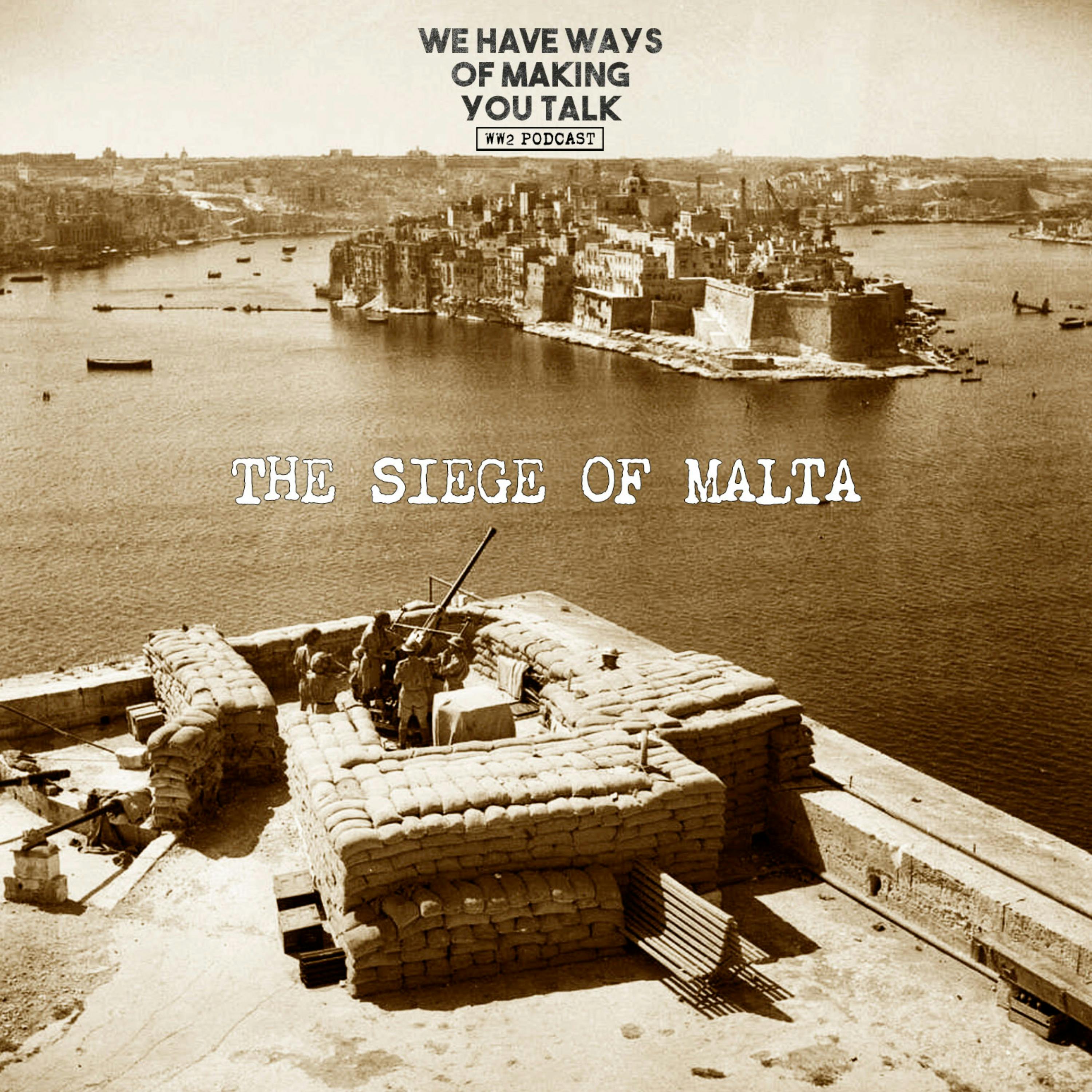
Loading summary
Transcript118 lines
- [00:02]
A
Thank you for listening to we have ways of making you talk. Sign up to our Patreon to receive bonus content, live streams and our weekly newsletter with money off books and museum visits as well. Plus early access to all live show tickets. That's patreon.com we haveways introducing meta Ray Ban Display the world's most advanced AI glasses with a full color display built into the lens of the glasses. It's there when you need it and gone when you don't. Send and receive messages, translate or caption live conversations. Collaborate with Meta AI and more. Be one of the first to try Meta Ray ban display. Visit meta.com metaraybanddisplay to book a demo and find your pair. This episode is brought to you by Jack Daniels Jack Daniels and music are made for each other. They share a rhythm in the craft of making something timeless while being a part of legendary nights. From backyard jams to sold out arenas, there's a song in every toast. Please drink responsibly. Responsibility.org, jack Daniels and Old no. 7 are registered trademarks. Tennessee Whiskey 40% alcohol by volume Jack Daniel Distillery, Lynchburg, Tennessee and Doug, here.
- [01:23]
B
We have the Limu Emu in its natural habitat, helping people customize their car.
- [01:28]
A
Insurance and save hundreds with Liberty Mutual. Fascinating.
- [01:33]
B
It's accompanied by his natural ally, Doug.
- [01:37]
A
Limu is that guy with the binoculars watching us.
- [01:40]
B
Cut the camera. They see us.
- [01:41]
A
Only pay for what you need@libertymutual.com Liberty Liberty Liberty Liberty Savings Ferry Unwritten by Liberty Mutual Insurance Company Affiliates excludes Massachusetts Spitfires over Malta Their first kill Spitfires Engaging these dramatic two words that have chilled the hearts of many German pilots again made history today. They came through the earphones of the RAF fighter controller in the operations room of Malta at 11:03 this morning, for the first time since the war began, Spitfires are in battle over this tiny island fortress in the central Mediterranean, and they met with success in their first engagement. A flight lieutenant had the honour of the first kill. He shot down into the sea an ME109 fighter. The successes of the fighters and the guns during the last 48 hours has been a great tonic to the Maltese people who have suffered cheerfully the intense bombing attack since the Luftwaffe returned to Sicily during the middle of December. The word has gone round for several days that Spitfires, the magic fighters that won the Battle of Britain, had arrived on the island. That was, of course, the Times of Malta from Thursday, 12th March 1942. Welcome to we have ways of making you talk with me Al Murray and James Holland and our third part of our Fortress Malta series. That's stirring stuff, isn't it, Jim? That's what you want to hear.
- [03:01]
B
Oh, it's absolutely splendid. The Malta. These people cheerfully accepting being bombed. Ho ho. More bombs, then. Oh, well.
- [03:08]
A
Ah, thank God we are part of the British Empire.
- [03:13]
B
Yes, exactly. Anyway, I mean, it's all stirring stuff. The Spitfires have arrived at long last. But will it be enough?
- [03:20]
A
Yeah, because in our previous episodes we left on rather well. Well, with. With trouble to come, but with rather a sort of a pleasant autumn with the Royal Navy and the Fleet Air Arm getting out there and bashing up the Regia Marina and the Regia Nortica. And once the Luftwaffe had withdrawn its single scaffold and bolter under its heel, which is the shocking part, really.
- [03:39]
B
42 nil, by the way. Just remind everyone.
- [03:41]
A
Yeah. I mean, as scores go, but always lurking in the background. It's like the Eye of Sauron, isn't it? In the Lord of the Rings, the film, the eye darts around looking for where to direct its attention and then once it's focused on where it thinks the ring is. So Malta, it sends the orcs. And the orcs in this instance are led by Albert Kesselring.
- [04:00]
B
Yeah. Who obviously we're all big fans of Kesselring Nott. Not my favorite person. And we've covered his career, his varied career. I mean, maybe half crops up, isn't it? You know, there he is in Sicily, there he is in the Battle of Britain, there he is in Italy. Now here he is again in Malta. Holy moly. Anyway, he's arrived in December with Le Flotta too. But also half the entire U boat fleet has been sent to the Mediterranean, much to the consternation of Admiral Donitz, who, you know, wants them all in the Atlantic for very obvious and sensible reasons. But no, they've been sent to the Mediterranean. And this just underlines the point that everyone always sort of, you know, the traditional thing is the soft underbelly, yada, yada, yada, all this kind of nonsense. And, you know, British being obsessed with colonial outposts in the Mediterranean. Not a bit of it. It's Hitler who's obsessed with the Mediterranean. Why? Because he doesn't like vulnerable flanks, for obvious reasons. And secondly, because he's really worried about his only single supply of oil, which comes from Romania, which is accessible from. From the eastern Mediterranean. So that is why. And Kesselring, the mission is, is very, very clear. Neutralize Malta and very quickly. So you bomb it, you starve it and then invade it. That basically the. The plan.
- [05:08]
A
Yeah. So as a direct result, we start with the bombing. Bombing gets worse. Kessering's ordered more intense air raids over Malta. And of course now he's actually, he's simply in charge of all German forces in the Mediterranean. He can call shots. And the idea is to destroy British operations defenses on the island. Bomb the island into submission so that he can seize it. And it's interesting, isn't it, because there's actually a direction of travel in theory, there's strategy here rather than bombing it to look like they're taking part in the Second World War like the Italians have done previously, or making sure the British know that the Germans are in town. Because after all you don't if you're only really spending 1 me 109 staffel on Malta, you're not that serious about dealing with it, are you? But this is different. This is of completely different intensity.
- [05:51]
B
Kesselring and the Luftwaffe realise what it takes the Americans until January 1943 to realise that what you need to do is you need to destroy the air forces first and then you're at liberty to do whatever you want. So, you know, this obviously from the American point of view develops into Operation Point Blank signed off in June 1943. But for Malta it's very simple. You know, you attack the three airfields, you absolutely hammer them. Anytime there's any movement at all in the harbours, you hammer that as well. But once you've destroyed the fighter force and the defensive force and any air forces on Malta, you can do basically whatever you want. And so that's one. The big problem for Castle Ring in January is that it's, you know, they're still a warm up operations as Lufte II is arriving. You know, moving an entire air fleet is not, you know, it's not that it's not like you just arrive on the airfield and then off you go. You've also got to bring in supplies and spares and tentage and food and ammunition and fuel crucially. And getting fuel to Sicily isn't easy because, you know, they don't have huge fleets and stuff. So, you know, it's not, it's not, it's just as straightforward as you think. So there's a bit of warming up going on. Also the weather is really bad in January, as I've mentioned many times. Weather wasn't good in the winters of 1940s and that extended to the southern Mediterranean. And so it's, you know, it's not great. And the Problem also for, for the airfields in Malta is that they are, they're dirt, you know. To Carle is basically a dried up lake. So when it rains a lot the lake tends to fill up a bit and so it's very, it's very soggy and not in a good way. So it makes things very, very difficult. Of January is the first successful operation of the Malta Night Fighter unit over Sicily. But it comes on the back of massive losses. Earlier that day, A group of 22 Hurricanes attacked by 12 109s or above. Seven Hurricanes shot down, then an additional one afterwards. Three return early with engine failure and four pilots escape the planes. Two crash land and one is killed. I mean they've same old problems. Can't get into the air quick enough, can't get height enough, aren't as fast as 109s which are now Fs by the way, and even faster and you know, it's hopeless. So one of the guys I got to know when I was, while I was doing my work for Malta was Tommy Thompson who'd been in 249 Squadron. Had a, had a contretemps with, with Bada when he'd been at North Weald. It was very funny but anyway he was, he was great fun. He had come over and joined 249 Squadron and then volunteered to join the Mall Night Fighter Unit. He just thought it'd be a bit cushier actually. He thought, you know, the odd flight overnight, you know, be safer and he could sort of put his feet up during the day. You know, he's always, he was one of these guys who was always sort of looking for the kind of the main charge angle. And on that Sunday 25th January, that's the day that one of their youngest guys, Alex Mackie, was only 21, he took off on a flight test. What you would do is you get your Hurricane ready, then you do a quick kind of circuit and bumps around the island, come back down again and just check everything was okay. He takes off. 6 me 109Fs come in under the radar, scream over, see him taking off, shoot him down, he's killed. Not immediately though actually. And then they just go straight on back to Sicily again. It's kind of job done. And this is kind of part of the sort of jitter raid kind of principle of just coming over and just harrying them, making sure that no one can ever relax. If you can get, get one in the air, then so much the better. Actually. Alex Mackie's crash site is the one surviving crash site of the entire battle, pretty much because he was hit and clobbered and was desperately trying to gain height and couldn't. And circled round the back of. So behind Tikali is. Is the twin hills of Imtarfa, where's the military hospital and Medina and Rabat. He goes in around the back of that into sort of beautiful kind of market garden, kind of little cute fields. And there's a wall on the far side. It used to be an old part of a sort of monastery land. And he just crashed into the side of it and you can see where the wing hit the wall and just sheared off. There's a huge great gap in the wall still. Mackie's Sutton harness was broken in the Force and he was flung about 25 meters forward of the. Of the Hurricane in a pretty bad way. And some locals picked him up on a ladder, used a ladder as a stretch he was taken to him to offer. He died four days later, sadly. So I remember talking to Tommy about that death and he. He just said, well, you know, you didn't become callous exactly, but you took death too heavily, you know, you wouldn't have been able to carry on, so you just sort of park it, you know, Suddenly Malta is becoming a very tough place again. You know, it's sort of. Yeah, it's small and you're surrounded and the enemy, overbearing enemy, are just 60 miles away and there's a lot of sea. You know, when you're flying, there's nothing, you know, what do you do? You bail out into the sea. Well, good luck with that. You know, for all the reasons that the Dowding was desperate for pilots not to be flying over the Channel, you know, times 20 in the Mediterranean, because it's huge and flying over Malta is really difficult because if you want to crash land, there aren't lovely soft fields on the top of chalk downlands, it's craggy and bare and there's just loads and loads of very small fields with dry stone walls all over the place.
- [10:25]
A
But you have to engage the enemy over the sea because you can't engage him over Kent, which is the equivalent in. In the Battle of Britain, isn't it? Before he gets to London, say, there's no equ got to happen over the sea. So, I mean, it's an invidious position for the pilots, isn't it? Essentially, they don't have that luxury of a home advantage that they have in the Battle of Britain.
- [10:44]
B
Yeah, no, exactly. You know, end of January Things are kind of sort of. Everyone knows that the Luftwaffe have arrived. Everyone's sort of slightly braced, Weather's not great. The signs of the superiority of the Germans already, you know, the attack on Alex Mackie is quite significant because they've hurtled in at kind of 350 miles an hour, under the radar, low, you know, just showing off their superiority of their machines against sort of battered, rather tired hurricanes, etc. You know, there's big, big losses in January, you know, 50 hurricanes destroyed or severely damaged on the ground, eight hurricanes shot down. Only 28 of the 340 that have been sent to Malta are able to fly by the end of the month. That's 8%. The requests for more reinforcements keep coming, but no one actually is asking for Spitfires. Well, Lloyd is a Hugh P. Lloyd, who's the aoc, their officer commanding is not asking for Spitfires, you know, and this is just unactioned by the Air Ministry. And then Tedda, who is Air Marshal Tedder, who is the Commander in Chief of RAF Middle east in Egypt, goes, look, come on, what the hell is going on in Malta? And he's not getting the right answers from Lloyd, particularly so he sends over Group Captain Basil Embry, who's one of his staff at Air Headquarters in Cairo and says, look, just get yourself over to Malta and have a look and see what's going on. And Embry is just absolutely appalled by what he discovers.
- [12:00]
A
I mean, really, Embry's history in the Battle of Britain. He knows what he's talking about, which is, I think, really interesting, isn't it? He can point directly at what the issue, issue. You need Spitfires. The previous episodes we've been suggesting that Spitfires be sent to Malta, but now it's actually official, someone is actually going to do something about this. Also, the pilots shouldn't exceed the six month stint on the island. I think one of the things we talked about in the Battle of Britain series is how Fighter Command is very, very careful with its pilots, husbanding its resource of pilots, making sure people don't get worn out. He's coming at it from, you know, the technology needs upgrading, the pilots need taking better care of. And this is the really, really interesting thing. You need experienced and competent operations operations controller on the ground there. Those are the three things you could argue that win, that win the Battle of Britain, aren't they? The right planes at the right time, pilots being taken care of and an integrated control system that is then able to deploy those resources. He says, I'm informed that The German fighter pilots often fly in front of our Hurricanes in order to show off superiority of the 109Fs. Every possible step should be taken to make Spitfire fives and Kitty Hawks available with the least delay. He's put his finger on it, hasn't he, Jim?
- [13:09]
B
Yeah, he absolutely has. And frankly, the kind of, the lack of Spitfires until he specifies this is, I think, absolutely unforgivable and just extraordinary. I mean, it really is, and it's interesting. You know, Tom Neal was very strong on this, and obviously, Tom Neal, great friend of the show, fantastic Battle of Britain fighter pilot, first pilot to land in Normandy in 1944. I mean, you know, absolute ledge. But Anyway, he's with 249 Squadron in Malta for much of the second half of 1941. And he thought, you know, he just said the Hurricanes were absolutely useless by this stage. He said, you know, he was repeatedly asking for Spitfires. Every time they all would. Every time they had any chance to talk to anyone superior, they go, please, can you get some Spitfires? Please can you get us some Spitfires? And he knew, they all knew, that tired, increasingly obsolescent Hurricanes were just letting everybody down. And not least the precious pilots. There's a lot of time and effort goes into creating a pilot. Most of the guys in 249 squadrons were experienced pilots. They know what they're about. They've, you know, a lot of them have been in the Battle of Britain.
- [14:08]
A
You're wasting.
- [14:09]
B
Wasting an unbelievable resource by just giving them completely crap planes. In the end of his tour, which is sort of, you know, he finally left in December 1941, but I think it was like November 1941, Lloyd came down to sort of give him a pep talk and said, if they need anything, and Tom said, yes, we want some Spitfires. Why haven't we got any Spitfires? And Lloyd told him it wasn't the aircraft, it was the man. And I remember Tom saying it was the closest I ever came to punching a senior officer, you know, and as he pointed out, you know, there was Spitfires coming out of people's ears back in England. And you know what? He's absolutely spot on. So between the 1st of November 1940 to the 31st of December 1941, 8,442 Hurricanes were built. 11,797 Spitfires. What are they doing? They're doing completely pointless rhubarbs, you know, just not needed. Just get them over to the Middle East.
- [14:58]
A
But even that, what are they doing with them? All right, because they're not deploying a thousand Spitfires in those rhubarbs a time, are they? You know, what are they doing with all these airframes?
- [15:07]
B
But, I mean, you know, that's more than 3,000 more Spitfires than there are hurricanes. You know, 300 of those sent to Malta would have made all the difference. You know, it is absolutely unbelievable. You know, obviously right at the top is Sholto Douglas, who is the commander in Chief of Fighter Command, and leigh Mallory, who's 11th group commander, then the Air Ministry. Just sort of lack of vision, lack of thought, lack of any kind of imagination whatsoever, sort of stuffiness, stodginess, sort of, oh, no, no, you can't take spitfuz. Undercarriage is too narrow for Malta. What? Why? You know, if you can take off from a grass airfield in Devon, you can take off from a dusty airfield in Malta. You know, there's things called Volks, filters, which they all come equipped with, which sort out the dust and stuff. I mean, it's just absolutely nonsense. You know, Messerschmitt has got a narrow undercarriage and they're functioning from Sicily. Okay, so, I mean, that's an argument that just doesn't cut any mustard whatsoever. Why isn't Lloyd going? What I desperately need more than anything else is Spitfires. You know, only Spitfires can that have the. The rate of climb that we need for this. And why isn't he appealing both to the Air Ministry and to his superior Tedder? Why does it take Tedder to send Embry, who is junior in rank by about two ranks, to come to Malta to point this out? Dobby's not saying it either. In fact, even not nor is even abc. But, I mean, ABC is a naval man. It's not, maybe not his job.
- [16:25]
A
Well, it's because they haven't sent their best people there, have they?
- [16:28]
B
No, because it's so C list, the whole thing.
- [16:30]
A
Well, and if you haven't sent your best person somewhere, even when they do ask for the right thing, you don't listen to them either. What lobbying power they have, and they're getting it wrong. But what lobbying power they have is minimal, isn't it?
- [16:41]
B
But if Churchill is going, Malta is of huge strategic importance. The chiefs of staff are agreeing it's of huge strategic importance and holds the key to the Mediterranean. Why aren't you giving it your very best effort? I mean, it makes no sense. It's so clearly and obviously the key to unlocking success in the Mediterranean. Certainly central Mediterranean, certainly in Libya and Egypt.
- [17:02]
A
Yeah, well, because so much of what's gripped the RAF is their victory last year was the Fighter Command victory. So they know what they're doing. So they know what they're talking about because of the Battle of Britain. And because they know what they're talking about, they won't listen to anyone else. It's to do with that. Absolutely. The victory of the Battle of Britain empowers the people that come out victorious at the end of the Battle of Britain, like Lee, Valerie and Sholto Douglas, doesn't it? Who, as we in a previous episode pointed out, have elbowed the competition aside. Have elbowed aside the people who actually won the Battle of Britain. Britain.
- [17:32]
B
Well, I think it was an absolute disgrace. I think. I think it's a really big black mark on the. On the war strategy and particularly the performance of the raf. Not to supply Maltarelli. It's such an easy win for them and they just don't do it. You know, as Tom pointed out, if you have a bomb dropped on your head or being chased around the sky by an enemy aircraft 100 miles an hour faster than your own, you tend to take a more realistic view of things. I mean, you know. Quite right.
- [17:55]
A
But it's strange that Churchill isn't across this. This is a black mark on Churchill's strategic judgment.
- [17:59]
B
It's a black mark on all the. On all of them. It's a black mark on Ismay. It's a black mark on the Chief Staff. Ismay, by the way, is the senior military advisor to the War Cabinet and to Churchill. It's a black mark on all of them. It's a black mark on Portal. It's a real mistake. It would have completely changed the outcome of all the way the war in the Mediterranean plays out. It would have completely transformed it because if the Axis shipping couldn't get to North Africa, that's it, you know, and there's only so many Luftwaffe you can put on Sicily. And if you put them all on Sicily to try and neutralize Malta, it becomes a bigger battle. But that then means they've got less for elsewhere. So the knock on effect, you know, whichever, however you play it out, bolstering Malta is the key.
- [18:38]
A
Yeah. Because in the end you draw planes away from Barbarossa. That's how shorthanded the Germans are. Yeah, yeah, yeah, yeah, yeah.
- [18:44]
B
The Luftwaffe is not as big as everyone thinks it is and they can't be everywhere.
- [18:47]
A
No. The naval situation is worsening as well. Force K, who are having such a good time in the autumn, run into a minefield. In December, just off the coast near Tripoli, Neptune is lost. The cruiser Neptune. Three other ships turn back from Altar for urgent repairs. So only one of the Force K cruiser remains, which is a real problem because this is when you want to be intercepting Axis supplies, helping delivering supplies to Rommel. So that's a nigh on disastrous. The 18th and 19th of December. The Italians get into Alexandria Harbour and badly damage two battleships, the Valiant and the Queen Elizabeth. And ABC's on the Queen Elizabeth during this attack. So that means as the new year turns abc, Admiral Cunningham does not have a functioning battle fleet to go around causing mayhem anymore.
- [19:33]
B
No. And you know, an 830 fleet air armor, they're still trying to do what they can, but you know, they're just being bombed to hell. It's absolutely incessant. Nat Gold, who we talked about in an earlier episode, you know, he's been there since previous year. This is one time, you know, a bomb drops 20ft away from him and then a 109 starts shooting in his direction. You know, he's unharmed. But there's nighttime bombing, the sleep deprivation, dire living conditions, scarce food and water. You know, bars and places you can go out to, they're depleting because they're running out of booze. You know, it's just. It's just horrendous. He finally leaves on a boat on, on 25 January. But the intelligence picture is improving a little bit. There's a few successes. Upholder sinks merchant vessel on an Italian submarine at the beginning of January. On 23rd of January, Ultra D Crypts now able to detect enemy convoys leading the harbor. 69 Squadron, the recce Squadron. They keep flying over Axis territories regardless, acting as if they haven't already deciphered the code so that they do keep going. Agent Warburton, who we've talked about a fair a bit. Warby. He's been posted from Malta to North Africa as an instructor in Egypt at an operational Training Unit and OTU. But then he's made operational again with number two Photo Reconnaissance. Photographic Reconnaissance Unit. So number two, PIU. He's posted back to Malta in December 1941 to fly over and photograph a Sicilian and southern Italian airfields. One guy he's flying with and recalls how during a flight over Tripoli, their plane was hit, engine failed, armor plate door between himself and Warby flew open and Warby landed the plane safely. Regardless, his navigator says he had his hat on the top of his helmet, cigarette hanging from his lips, one elbow resting on the side of the Cockpit driving the plane with the other hand, his complete lack of fear and nonchalant attitude to the noise from and from the flak was absolutely fantastic. Just amazing, isn't it?
- [21:12]
A
Yeah, yeah, yeah, yeah.
- [21:13]
B
And they've got a bit of tech now on the. On the island as well.
- [21:15]
A
There's a special duty slot. You have a new air to surface radar and this is Wellington's Wimpies with this. Essentially gives them a nighttime detection capability for tracking convoys. Movements in the dark.
- [21:27]
B
Yes, it's called asv, isn't it? Air to Surface Vessel radar.
- [21:30]
A
Yeah. It's not named after a committee. This like asdic as it works, you know, it sends out a signal, the rebound. The quicker the rebound, the closer the object. You all know, you know how this stuff works. It works the same way as the parking sensors on your car. Just. It's tracking convoys which is more exciting. I mean, would be great, wouldn't it? If you're parking the car one day and a convoy came up on it. That would be. That would make things more interesting.
- [21:52]
B
A U boat. Yes. That makes me feel a whole lot better about parking sensors, actually. I don't really like my car bleeping at me. I don't like my car bleeping at me at all. I find it really, really annoying. It's one of the great things about driving an old Citroen is that you don't have any of that nonsense.
- [22:07]
A
What you need though is a big cathode ray tube. As a parking senso, you lean into, look into it with a green glow on your face.
- [22:14]
B
Convoy appearing there. Five troop ships. Anyway, one of the guys that comes into this arrives to join the special duties flight is a CH called Flight Lift. And Peter Rothwell, who's a. He was a splendid fellow, had one of these luxurious mustaches and kept it right through the end of his life. And he was great. And you know, he. He arrives in the middle of a raid. Inevitably, infrastructure is absolutely, you know, the, the building they're in has got a sort of half a ceiling off. They're kind of, you know, it's open to the. And he said, you know, he was absolutely freezing. The boys were all drinking gin with hot water and eating tiny pickled onions to help them to forget the cold. I mean, it's sleeping in caves by March.
- [22:52]
A
Yeah. And there's nine air raids a day at this point. Although he has an early success on 7 February, he leads some fleet air arms squadrons towards a convoy of a tank and a merchant ship, which are both Attacked and sunk. So there's, there's a glimmer of what they can do with the asv. But this new year is when the, the Axis are doing really well, aren't they?
- [23:12]
B
Well, yes they are because they put.
- [23:14]
A
Their focus on things. Rommel's supply lines are running nicely to sustain his campaign. Aircraft are being bombed on the ground. There's not enough crew to do the recce work required. The bad weather is also restricting Malta more than it is the Axis powers. But this is the point. You need Malta. If Rommel's going to succeed, Malta needs neutralizing at worst, seizing at best. And in January he's doing well against the British in Cyrenaica.
- [23:41]
B
Well, he does that little kind of pre movement, doesn't he? This is following Crusader. But you know, the thing about Crusader, you know Operation Crusader In November and December 1941, you know that correlates to the success of Malta. Now Malta's being hammered, so Rommel's getting his more kit over, which means he can then launch, you know, a counter offensive on 21 January, which pushes him back, pushes the allies back across Cyrenaica. And that is the point at which, you know, The British forces 8th army pull up along the Gazala line, you know, 15 miles to the west of of Tobruk. So you can start to see very clearly this pattern. When Malta is doing well, fortunes in North Africa go in the favor of the British. And when Malta is under the Koch, they turn against them. It's just, it's absolutely clear as day, you know, this is why you get the Benghazi stakes and all the rest of it and the toing and froing back across the north of, of Libya. It follows the patterns of what's going on in Malta which as you say, it just underlines the point.
- [24:33]
A
Yeah, well again and again and again we keep coming to this strategic importance. I think we should take a quick break when we're back. Spitfires will arrive, arrive at some point in this second half. Don't worry everyone, they're coming.
- [24:44]
B
Just haven't got there yet.
- [24:45]
A
We'll see you in a tick.
- [24:47]
B
Did you know you can opt out of winter with VRBO? Save up to $1,500 for booking a month long stay with thousands of sunny homes. Why subject yourself to the cold? Just filter your search by monthly stays and save up to 1500 dollars. Book now@vrbo.com.
- [25:04]
A
Well I was down on my last.
- [25:05]
B
Dollar, then I started saving because the.
- [25:07]
A
Bank said fiscal restraint is what you're craving so I put my earnings in a high yield savings compound and the interest mount I'm optimizing cash flow putting debt in check now time is my friend and not a pain in the.
- [25:19]
B
Neck and we've got a little cash to rebuild the old deck. Boring money moves make kind of lame songs but they sound pretty sweet to your wallet. BNC bank brilliantly boring since 1865 at Capella University.
- [25:33]
A
Learning online doesn't mean learning alone. You'll get support from people who care about your success, like your enrollment specialist who gets to know you and the goals you'd like to achieve. You'll also get a designated academic coach who's with you throughout your entire program. Plus, career coaches are available to help you navigate your professional goals. A different future is closer than you think with Capella University. Learn more at capella. Edu welcome back to Weird ways of making you talk where the siege of Malta grinds on. How many air raids are there, Jim, over Malta in December and January at the turn of the year? Because this is a boggling amount.
- [26:16]
B
432. So what's that? That's. And it's more in January than there are in December. So suddenly you're getting up to kind of, you know, what's that, 215amonth. That's a lot a day. I mean, that's, that's getting on to 10 a day, isn't it? Eight or nine a day. That's quite a lot on a little island. But the big problem is, is that, is that, you know, the island is running short suddenly, you know, there hasn't been a convoy since November. Three merchantmen set off from the, from Alexandria on 12 February, but bombed and first forced to turn back. So that failed convoy leads to fresh cuts on the island. Petrol, sugar, fodder for livestock, you know, which again means, you know, you're further restricting people's ability to move on the island. Rationing is now big feature of everyday life for Maltese people. Supply short everywhere. Ireland's less vibrant. Bars are shutting down, down, shops are shutting, infrastructure's destroyed. You know, diminishing spaces for any kind of socialization community or anything like that, which has a massive dent on morale both to the civilian population and to, of course, the people serving there as well. On the other hand, you know, gunners, the gunners are doing a sterling job and about to absolutely take on the burden of defending the island because of the impotence of the fighters. And one of the guys I got to know was a chap called Ken Griff is a lovely. Which actually served with, he'd come on the previous summer and he served with 32 light anti aircraft Regiment. So he was a Bofors gunner. Each gun team of a Bofors gun had six shifts, 24 hours long. Can you imagine? Given earplugs? But the problem is hardly anyone ever used the earplugs because if you did, you couldn't hear what the crew was saying. So you just, you know, you'll go, you'll go deaf, as you can imagine. And one time he's caught in a raid and a piece of shrapnel strikes his thigh. He's taken to hospital. Then the hospital itself is bombed while he's in it and he's taken to a shelter on a stretch stretcher. And what he did note was he told me, he was absolutely insistent on telling me this, the bravery of the nurses who cared for him. He said the nurses were incredible. No one panicked, they just got on with their jobs. One nurse calmly carried on with her job even though she'd been hit in the leg. She must have been in agony, but she never showed any sign of pain or indeed fear. Goes back to Suzanne Parlby, doesn't it?
- [28:23]
A
Yes, we go back to that and.
- [28:24]
B
I think you get this very clear picture of the sort of worsening conditions on the island at this point. You know, it's starting to really go to pot.
- [28:31]
A
Everyone's working really, really long shifts. So RAF ground crew are working extremely long shifts. And obviously you've got all these infantry on the island. You, you got to use them for something they can't, I don't know, permanently either on guard duty or not. So they're, they're being used as labor, building pens around the edges of the airfield, which is supposed to protect them from bomb blast 109s and being strafed. So there's a huge effort that goes into building pens. So that's everyone.
- [28:56]
B
Yeah, the blast pens has, becomes a real feature that, you know, they're absolutely everywhere. They're, they're going, they' up every single day. They're blocks of stone, they're flimsies, you know, four gallon petrol cans filled with sand and dirt, you know, anything they can. And the airfields are just expanding outwards as well. So you further away you can get them from the actual heart of the Runway. The better is basically the idea. Yeah. So 60,000 flimsies needed for a single Wellington.
- [29:24]
A
As we've said, you've got Germans just popping up out of nowhere. So this work in itself is dangerous because Messerschmitts might turn up and brass up the airfield while you're building. So it's this building pen filling craters, grabbing a gun and firing rounds at the enemy as they come over, sheltering from bombs. So this permanent. I mean, everyone living permanently on. On their nerves and on adrenaline.
- [29:44]
B
Yeah. And I think the other thing is, it's worth noting is, is that. That, you know, unlike the Battle of Britain, where you're getting 24 hours a week and 48 hours off every two or three or whatever, and regular leave and you're being rotated, there's none of that here because. And even if you do have time off, there's nothing to do because all the bars are shut and there's no drink and, you know, it's absolutely fricking mis. Miserable, you know, because Malta is a great place to go if you're. If you're going on holiday, but it's absolutely dreadful if you're stuck there and you don't want to be there and there's no fun to be had and you're facing, you know, mortal danger every time. And the problem is, is all the, you know, there's not enough parts, so the. The ground crew having to sort of make do and mend and sort of, you know, take from Peter to kind of feed Paul and all this kind of stuff. And the Hurricanes are just getting. They're getting more and more ineffective for an already ineffective aircraft because they're not being serviced as well as they could be. And. And one of the biggest problems is, is just endless engine failures there. Time. Tommy Thompson, you know, is the night fighter we mentioned, you know, flying over Camiso over Sicily. His engine cuts out five times. Every time he manages to kind of revive it. But I mean, just imagine that. Imagine the nerves of flying over Sicily at night and your engine just keeps cutting out. Another flight. He's with two other hurricanes. They fly into 5109s.
- [30:53]
A
I know, it's interesting this, isn't it? Because in a way, this is what the. The RAF running on fumes, the plucky pilots. An actual amount that you could call a few here, right? It's much more than. This is much more like the imagined Batt of Britain than the Battle of Britain, isn't it? What's going on here? This sort of.
- [31:10]
B
It's the Battle of Britain that never was.
- [31:12]
A
Yeah, exactly, exactly. But he leaves. He leaves Malta for a post in Egypt on 21 February in a Wellington and he writes in his logbook, last View of Malta was the best and I think you can.
- [31:23]
B
Bye. Bye.
- [31:24]
A
Yeah, thank God that's over.
- [31:27]
B
Yes, exactly.
- [31:29]
A
But I mean, it's worth pointing out. I mean, obviously we talked about the, you know, the, the ebb and flow of North African fortunes for Duke forces and for the British at this point of the year goes with the EB flow at Malta. But actually there's global ebb and flow, isn't there? Because we're into the beginning of 1942. And the real difference in the beginning of 1942 globally, is that Japan has entered the war. The British are now fighting their two front war or their two opponent war, that they've done everything they possibly can to avoid coming about and it's happened anyway, and there was nothing, there's nothing they can do about it. Pearl harbor in December. Japanese take Hong Kong on Christmas Day in 1941. Then in February, of course, you've got Malaya, the fall of Singapore poor, which is, we need to say this out loud, the biggest military capitulation in British history. Maybe we'll do an episode on it. Maybe we just can't do it. Maybe we just can't bring ourselves to face it, Jim.
- [32:18]
B
I can't, certainly. I mean, you know, you're very welcome to write the notes for that one, but I'm not. It's too awful, it's too depressing. I mean, writing about Malta's lack of Spitfires is bad enough.
- [32:31]
A
I mean, it's a shocking blow. 80,000 men taken prisoner by a Japanese force of 35,000. And it also means a massive blow to British imperial prestige, which is. Is felt all over the world. And I think in a strange way, had the Americans not been also having such a terrible time of it themselves in the Philippines, actually keeping them on board would have been much, much harder. If the Philippines had gone well for the Americans, they'd have been much more justified in saying, well, this is your own pickle, get yourselves out of it. This does mean, though, that the Americans, American factories are not just online for the British, but they're online for America now and for the Soviet Union, because Lend Lease follows hot on the heels of all these developments. But the Germans have you, by the looks of it, are in Moscow. They're 20 miles outside the city centre. Most of Europe has fallen under fascist control and those governments that aren't conquered by the Germans are all turning their allegiance to them. And the Battle of the Atlantic's going badly. It's 2 million tons sunk in 1942. So it's bad, isn't it? The start of 1942. Which makes the end of 1942 all the more remarkable, let's be honest now.
- [33:32]
B
Yeah, And I'm much more interested in that period, to be perfectly honest. But. But I do think that. I think the period we're getting into is re on Malta is really, really, really interesting and it is without, you know, we're, you know, March, April, May, June, July, 1942 is the most intense period of air fighting for, for RAF fighters at any point in, anywhere in the Second World War, bar none. It just is. There is. There is nothing to compare with it for, for its brutality, for its intensity, for the challenges. And it's all because they're on this tiny little island in the mid of the. Of the Mediterranean, surrounded by Axis forces. I thought it'd be good in, in the next couple of episodes to, to focus on a, you know, see this through the prism of a couple of. Of pilots. And one of them is Raoul Dado Longley, and he is. When I was doing that novel A Pair Of Silver Wings, I used his logbook and his experiences as the basis of the. Of the kind of the main guy in the fictional version of it. And, and I was very, very touched by his experiences and what happened to him, because I had his logbook, I had loads of contemporary letters and character just really, really shone through. So he joins 66 Squadron along with Laddy Lucas and Laddie. Lucas is a little bit older than him and is already a sports journalist. He's very good sportsman, amateur golfer and a sports journalist for the Daily Express. So he's a kind of slight older figure and it's clear that Raul, who's only 19, looks up to him. He's 18 when he joins, looks up to Laddie. They become great friends. It's slightly sort of they're friends, but it's a slightly sort of avuncular kind of relationship as well. They joined 66 Squadron and it's really boring because all they're doing is just sort of doing patrols over the Channel. There's nothing, nothing for them to do. So they both volunteered to go. Instead of going to Burma, they end up being held in Malta instead because suddenly this is post the Embry report. So they get to Malta where they're still there on Hurricanes and to Carle is flooded and all the rest of it. They join 249 Squadron. But you said you wanted action, you wanted some livelihood, liveliness, you know, you were bored in Cornwall. Still. Still sure about that. I mean, you know, arriving there Being picked up by a bus that's got no windows, it's got bullet holes all over it. Taken up to the Shara palace in Medina, which you know was once very now a kind of sort of threadbare, stony, cold, large house in, in Medina overlooking to Carle. It's now a very, very nice chateau and relay hotel kind of, you know, it's. If you want to go and stay there for a weekend and have a half decent room, it's going to cost you 1,300 quid. That's the kind of place it is now, but it certainly wasn't in 1942. But the whole point, one of the reasons they're there is they are there. 249 Squadron is going to be the squadron that takes on and 185 are going to be the ones that take on on the Spitfires when they fight finally come and they have experience of flying Spitfires because they were flying Spitfires with 66 Squadron down in Cornwall. So that is why they're there. But the Spitfires haven't get there because as we know, they don't actually arrive until the 7th of March when they finally, finally touch down. And we go back to, you know that reading from the Tides of Mortal that you read out at the beginning.
- [36:31]
A
Yeah. Where they score their first kill. And this is on March. They arrive on the 7th of March, the Spitfires. I mean that is a story in itself that we haven't got time for because it is absolutely bonkers how they arrive, how they get there. And obviously they can't fly them straight away. They need to synchronize their guns, align the guns. They need to repaint the aircraft from, from their gray and green to desert camouflage.
- [36:56]
B
Big question, why haven't they done this first? Why haven't they thought about this beforehand?
- [37:01]
A
Look, Jim, just be grateful the Spitfires are here, okay? Although personally I'd be thinking is the color scheme really the thing that matters right now? Getting them in the sky is more important, you know, but they're going to divvy up duties, aren't they? So the Hurricanes are going to do the bombers. The Spitfires are going to fly above the Hurricane to attack the 109s on the 9th of March. And this is during RAL's practice flight. Seven Spitfires attack Ju88s and 109s from above. From above, ladies and gentlemen, for the first time, one of them goes into the sea. One of the 109s goes into the sea, as we saw in that newspaper. Extract. But the Germans in February had discovered the submarine base at Manuel Island. So they've been attacking that relentlessly. I should say we're looking at double figure air raids a day. They've struck the barracks, they've killed three men doing that. They've destroyed the Office Officer's Quarter. Four Greek officers are killed in early March. More submarines themselves are damaged. Four submarines are damaged. HMS Talbot is sunk. Shrimp's solution is to have two complete crews for each submarine so the sub can go out, come back in, swap, cruise out, sub goes back out again. That's a pretty smart response to it, isn't it? To keep people fresh. Although it's not like you're on RR when you're on Malta. This is the thing, they're not. How fresh are you? You're hiding from air raids all day.
- [38:14]
B
No. And they're having to, they're having to go to the bottom, bottom of the sea, you know, they're having to go get into their subs and go to the bottom of the sea until night. Just sit at the bottom. Christ.
- [38:22]
A
And David Wanklen and Boris Kinicki agree with this. But one of the other commanders, Lieutenant Tomkinson, refuses and breaks down and says he's not going to share his boat, he'll quit. And Simpson realizes that actually he can't do this because people believe in their boats, they have loyalty to their boat. So they, they ditch this rotation idea. Everyone's on their living, on their nerves, aren't they? So you can see why they. There might be a febrile reaction to that idea because it's pretty sensible, isn't it? Your crew's an important resource. Your boats are too. How best to preserve the two of them. But you can see why someone might say, no, afraid not, life's tough. I'm not doing it.
- [38:55]
B
Tomkinson, Edward Tomkinson and Wanklin are super tight. They're absolutely best of friends and urge is only second to upholder in successes and they are the absolute two champs of the 10th Submarine Flotilla. You know the intensity of patrols where you're under, you know, you're on this very, very tight confines for a long time. You know when you get bathroom patrol, you need to let your hair down and go off and hit the bars and have a few gins and PIMs and what have you, you know. So to get back and then have to sit at the bottom of Marshamshet harbour all day or sit in the shelter underneath the lazaretto, which is sort of half full of oil, you know, it's still got oil everywhere and stinks and, you know, sort of it's just horrible and dark and dank and horrible. That is not what you want. You want fresh air and to be above ground, don't you? You, you want to be out of the water on ground. And so it's just, it's, it's, you know, a lot is being expected of these people. Suddenly going out on patrol is incre. Dangerous, really, really fraught. You know, if you're going out, like four boats are going out on patrol, there's every chance that one of them is at least is not going to come back. And all the crews know this. So to have this situation on Malta when you're off patrol is just, that is really, really tough. Anyway, so Warby's still on the island in March, just about. He's still dating Christina Ratcliffe of the Whiz Bangs, who is doing Whiz Bangs or was doing Whiz Bangs by night. All that, all ENSA shows of stuff that, that's gone being kicked into long grass as you can because there's nowhere to do it. But she is working as a control, you know, in the, as a plotter in the control room in Lascaris, in the tunnels underneath Valletta. And on the 4th of March is one of Warby's last flights to Malta before being posted back to Egypt. He's flying from Palermo in Sicily and Christina is in the control room and she warns him of approaching 109. I mean, can you imagine that? No, she's on the telephones. That's right, yeah. And then the connection with, with Warby's plane is lost and, you know, everyone assumes he's been shot down till the radar station confirms through her headphones that his plane has landed. Did safely. Amazing. I mean, just imagine that listening to that, you know, it's your lover, your boyfriend, the man in your life. And anyway, another night soon after, Christina's woken by air raids. The entire building is shaken, is about to collapse. She rushes out to find a shelter and once the all clear has sounded, she discovers that the corner flat is completely destroyed. Just absolute rubble. So Warby leaves Malta on 19th March and leaves behind an extraordinary reputation. When you think of where he's come from back in 1940. But I mean, think how long he's been out there. Just extraordinary. Extraordinary, isn't it?
- [41:18]
A
The intensity of living there and deploying from there. Living there is intense. The operational life is super intense as well. I mean, how people kept their Nerve. And we go. And again we go all the way back to that. Not showing fear, knowing that you're frightened. Containing it. Anyway. Admiral Cunningham is now planning another convoy to the island from Alexandria because the failed convoy in February and there are critical shortages of food, fuel, ammunition. And the Chiefs of Staff in London seem to have. The penny seems to have dropped on this, our viewers, that Malta is such importance both as an air staging post and as an impediment to the enemy reinforcement routes that the most drastic steps are justifiable to sustain it. Finally.
- [41:57]
B
But I would have put it the other way around, wouldn't you? Such importance as an impediment to enemy reinforcement and as a staging post rather than the other way around.
- [42:03]
A
But anyway, yeah, yeah, but, but still. Finally. Come on, lads. And this involves actually coordinating the three services. Army, navy and air force. The army is to advance in North Africa, you know, good luck with that. And encroach on Axis airfields, distracting aircraft and hopefully leaving the convoy undisturbed. As this happens, the RAF is going to bomb airfields in Crete and Cyrenaica fighters from North Africa going to escort the convoy and be met with more fighters from Malta as the convoy approaches the island. And the navy is to escort the convoy, which is only four ships. But this colossal tri service effort for four ships, it's extraordinary. The Pampas clan, Campbell, Breconshire and Talabot. And the convoy leaves Alexandria on the 20th of March.
- [42:42]
B
This is, this is a big moment in, in the story. It has to be said.
- [42:45]
A
Yeah. And the bombing, it's ramped up aircraft are being continually damaged. The RAF pick up a new word. Spitchered comes from the Maltese Spica, which means of no further use. So a written off aircraft is spitchered.
- [42:58]
B
It's a great word that is. I'd forgotten that one.
- [43:00]
A
Yeah, yeah. We should work that back in. On the 20th of March. So the same day that the convoy leaves Alexandria, it's one of the biggest German raids yet. 63 Ju 88s with their fighter escort. And Kesselring is gradually ramping it up, isn't he's bringing more and more stuff. Stuff to bear to concentrate their power, minimize their losses. And they're striking Takali, which is where the Spitfires in general are based. And they drop. I mean they drop 114 tons of bombs on the airfield.
- [43:25]
B
Yeah. Just on the 20th of March. Yeah. Got a photograph of Tokali after this. It's just. It's unbelievable.
- [43:31]
A
Yeah. The following day the clear up begins. But there's a. There's another raid, an even bigger raid, a 200 aircraft raid with 182 tons of bombs. I mean, this is, this is as sturdy an effort as you see over London in, in the summer of 1940, isn't it, Jim?
- [43:44]
B
Yes, it is, yeah.
- [43:45]
A
It's extraordinary. And night attacks as well, the evening attacks, the singles, bigger attack ever on an Allied airfield. The thousand bombs dropped across the two nights.
- [43:55]
B
Yes, and a lot of. A lot of the Tikali airmen. So the officers tend to be in the. In the Shara palace in Medina, but just outside there's a sort of busy market square and there's the Pont de Vux hotel, which is still there, by the way. And Buck McNair, who's a flight lieutenant from Canada in 20 Squadron, he's there when a stray bomb lands just outside the entrance. He's blown from the ground floor to a higher floor, upstairs, straight upstairs, blasted up into the air. He's fine. But it's complete carnage. There's bodies everywhere. One without a head, one with a massive hole in the stomach, another whose head is split in two halves, walls covered in blood and dollops of flesh and stuff. And bombs also drop on Imtarfa. I mean, the bottom line is this is all, this is what happens with a very small island. Everything's very, very close together. And meanwhile, while all this carnage is going on, on to Kali, you very obviously to kind of neutralise the fighter force. And particularly for Spitfires, the march convoy is heading on its way towards Malta and it gets through the danger zone, gets through between Crete and Cyrenaica unscathed. But then German transport planes spot them on the 21st of March, and a Malta submarine later reports that Italian ships are leaving Taranto and heading towards it. So on the 22nd of March, the next day, the aerial attacks on the convoy begin and Italian cruisers advance but then withdraw off. The convoy starts opening fire at them. That's very much the Italian fleet way. Convoy also fends off junk. 88 attacks, but ammunition is already getting short. You know, by the 22nd of March, 60% of their ammo on these ships is gone. So the Italian naval force, having pulled back, is now heading to cut off the convoy as it approaches Maltun. There's three cruisers, one battleship, eight destroyers. And again, the Italians ultimately withdraw because they can't get through a smoke screen nor cut off the weaving of the convoy. But, you know, it's all looking touch and go. But a miracle of miracles, on the 23rd of March, the Talibut and Pampas arrive in Grand Harbour to, you know, great relief from the island, you know, and everyone on the island knows about this. They've heard about the convoy coming, you know, the, the rumor mill gets out and when they've been sighted, everyone goes, oh, my God. You know, these, these boats arrived. It's great. We've been saved. It's fantastic. You know, two bombs have previously hit the Talibot, but, but don't explode. The Breconshire's been hit very bad. The engine shut down and two destroyers try and then fail to tow it into the harbour. But ultimately she is able to drop her anchor on the shore and, and, and the Clan Campbell's engine room is also hit and is sunk. But the Breconshire does make it and gets towed down to Mastershlock Bay, which is to the south of the island, near Califrana Seaplane basin. So three of the boats have reached Malta. Some more Spitfires arrive on the, on the 21st as well, but again, they're not operational immediately and there's still not enough, and there's just insufficient spare parts for these Spitfires as well. So one of the Spitfires that's come earlier has to be broken down to provide parts for the other planes, work on clearing the rubble and everything. But British aircraft are really, really badly outnumbered and by the end of March, there's only five fighter planes available against 200 Ju 88s, Stukas 109s and Messerschmitt 119s. So clearly they're going to try and sink the convoy before its car goes unloaded.
- [47:02]
A
Yeah, yeah. And the docks have been smashed up too, so is it even possible to unload the convoy? So the Taliban Pampas dock in the Grand Harbour, not in Corradino Heights, where ships have docked before?
- [47:13]
B
Well, the Corradino Heights is where the Illustrious was. You remember, it has these very well.
- [47:16]
A
Protected where it can be tucked away. The cargo's transferred onto barges first, then towed to the quayside and unloaded. It's slow and exposed and vulnerable. Maltese dockers start unloading the barges immediately, even though attacks are continuing.
- [47:30]
B
But they have a stroke of luck. They have a stroke of luck and that is that the weather kicks in. And so there's low cloud over Malta on the 23rd, 24th and 25th of March, and it's not until the 2026th that the weather finally clears. And of course, what do the Luftwaffe do?
- [47:47]
A
Yeah, you can't rely on the weather to defend yourself if you've only got five Spitfires the 26th, the bombing intensifies. Breconshire is hit and sunk. Talibot and Pampas are hit and catch fire. Pampas sinks. Talibot scuttled due to fear of its ammunition exploding. It's a very, very poor harvest. 799 tons of the 7,462 tonnes from the pampas are recovered and a similar percentage of a tenth, roughly a tenth. 972 tonnes of the 8,956 from Talbot. It's not good and nothing for Breconshire.
- [48:21]
B
You know, Breconshire is out at sea and it's difficult to get it because it's anchored in Masterslot, the Pamperson, Talibut. This is one of the worst moments on Malta and I'm afraid to say this is entirely down to the leadership. They have three days and nights in which they can unite, unload this, and they haven't got a plan for it. And unfortunately, once, once both ships are hit and catch fire, a huge plume of black smoke rises up about 10,000ft and everybody on the island can see it and everybody knows what's happening and how on earth could this have happened? Why? Why wasn't the army and ground crew and literally every spare body brought in to unload this as quickly, quickly as possible, you know, and why didn't they? You know, the bottom line is the multi Stevadors knocked off as soon as it got dark. Well, why don't you put the floodlights on? It's dark. This low cloud, it is absolutely unforgivable. And it's really interesting because Wing Commander Pal Shedden, who is at luca, thinks, God, where are my parts? You know, he's desperately waiting for some spare parts. So he goes down with a whole load of guys on the night of the 25th, you know, try and get them himself and go, where the hell's going on? He can't see anybody. So he calls a harbour master, he says, no, no, no, there's no unloading during the night. And Pal Shenan just goes, goes what? Goes down to the harbor himself can sees absolutely no activity at all. You know, all is quiet, all is calm, there's nothing going on. So he then rings up Lloyd. Lloyd just goes, oh, go back to sleep. I don't know what you're talking about. Then rings up the Governor. Governor says exactly the same thing and it turns out there has been no unloading at all on the night of the 23rd, 24th or 25th. And these were two nights where there were no, on the 24th and 24th, no raids at all.
- [50:02]
A
But no plans for unloading either.
- [50:04]
B
No plans for unloading. And where they're moored on the Valletta side of Grand Harbour, you buy the kind of corniche. There's a little sort of roadway, and then there is the rock of Valletta rising up above it. The whole of that front is loaded with old warehouse dug into the rock, which have obviously been expanded to become public shelters where people are living from Valletta. So the moment there's an air raid siren, you take cover. Right, but why aren't they there? Why haven't the army been drafted in? You know, what the heck is going on?
- [50:30]
A
So whose fault is this? Is this. It's not Lloyd's fault he's not in charge. He's in charge of his effort, isn't he?
- [50:35]
B
It's. It's the administrative council's fault. It's the administrative council. So these are the three chiefs. There's Admiral Leave, Vice Admiral leaving. There's General Beak, Major General Beak, who's the army guy. There's Lloyd, AVM Lloyd. Then there is the Lieutenant Governor who's so Edward Jackson. And then there is the Governor himself, Dobby. Those are the five men running Malta's war effort. It is their responsibility for all this huge effort that's gone into creating the March convoy with distracting operations in North Africa, with the huge effort of the remains of the Mediterranean Fleet, with RAF Middle east involved, with RAF Malta involved, for the ships to actually get there and then there to be no plan for their unloading other than just normal Maltese. The doors during the day is an absolute shower of the highest orders. I mean, this is completely unforgivable.
- [51:27]
A
Well, this is the problem with it being the bottom of the pile personnel wise, isn't it? This is the problem with C List appointments, isn't it?
- [51:35]
B
What are they thinking? You'd have thought the first thing is they would say is, right, we. We have to cover off every single eventuality. We need to. We need to have people on hand. We need to kind of use whatever trucks we've got, whatever cranes we've got, we need to have them on hand. We need to work out exactly where they're going to land. We have to have all the men ready. This needs to be unloaded and asap. And I'm afraid this is one of these instances where air raids or not, regardless of rev, we're gonna have to work through the night. We're just gonna have to do it. If there's an air Raid, we'll all take cover, but we've gotta do everything we possibly can. And that just doesn't happen. Lloyd then dumps the blame on Dobby, calls for his dismissal, writes to the pm, writes to Churchill and says it was not the fighting which had brought us to our present past, but sheer ineptitude, lack of resolution and bomb stunned brains, incapable of thought. Correct, you know, on this, he's absolutely right. But he has to take his part of the blame of this because this is a shared collaborative effort. He's part administrative council, he's one of the chiefs, he's got men, he's got manpower. If Powell Shedden is going down and going, what the heck's going on? Why isn't he. Yeah, why hasn't he gone down the first night and said, okay, what's the plan?
- [52:36]
A
Well, he's assumed someone else has taken care of it. The care of it. That's what's going on here, isn't it?
- [52:39]
B
Don't assume anything.
- [52:40]
A
Yeah, yeah, but that's what's going on here, isn't it? And they're right. It's bomb stunned brains. They don't know what to do. They don't know what to do themselves. But the thing is, on the 29th, seven more Spitfires arrive. You know, in the end end, they get 5,200 tons of the 26,000 tons of supplies are rescued. But here we go, there are seven more Spitfires. But April is about to get a whole lot worse and Malta will become the most heavily bombed place on Earth in our next episode.
- [53:09]
B
And there's been no convoy since November 1941.
- [53:12]
A
As you can see, the battle is in the hands of the competent, the focused and the excellent. I mean, it's. Jim, if this is how you feel about the unloading of this convoy, I mean, we've got to do Singapore at some point.
- [53:25]
B
Definitely can't do Singapore, I'm sorry.
- [53:26]
A
We could power the southeast with your righteous rage and fury. My ire boil a billion kettles with it.
- [53:35]
B
But aren't you feeling it? Aren't you feeling the frustration? Don't you feel the pain of this ineptitude?
- [53:41]
A
Up to a point, but it's been very much the pattern and it just feels like, oh, what, not again? Is how I feel about that. Oh, not again. You people are hopeless. This is par for the appalling course anyway. If you're enjoying this series and want to listen to them all in one go, then of course, go to our Apple Channel, become officer class, as we call it. Although not this class of officer. Please. We assume that a we have ways listener would make sure that there were people on hand to unload the convoy when it arrived. That's all. And to work through the night, perhaps. Or join our Patreon where you can experience such joys as the live cast. And of course these podcasts. Same as the Apple channel without adverts. We will see you very soon as Malta really cops it in our next episode. Cheerio.
- [54:20]
B
Cheerio.
- [54:26]
A
You know the words that dominate our news cycle?
- [54:29]
B
Private equity keeps investing capital gains tax on home, America's tip moved by market volatility.
- [54:36]
A
But do you truly understand how they impact your world and your wallet? In a world that skims the what, understand the why. Because context changes everything. Subscribe to Learn more@Bloomberg.com the global benchmark for business news.
- [54:55]
B
Hello history fans. It's Richard Osman and Marina Hyde here from the Rest Is Entertainment Podcast. Now. If your group chats buzzing with celebrity traders, fan theories, Alan Carr gifts and Claudia Winkleman outfit inspiration, then our podcast is the place for you. Every week we've been reacting to new episodes of the biggest show of the year immediately after they air. And this Thursday's final will be no different. Join us for a live Stream debrief at 10:15pm from the ultimate set of Traitors fans us. Just search the Rest Is Entertainment on YouTube or wherever you get your podcasts. Big dogs only.