← WW2 Pod: We Have Ways of Making You Talk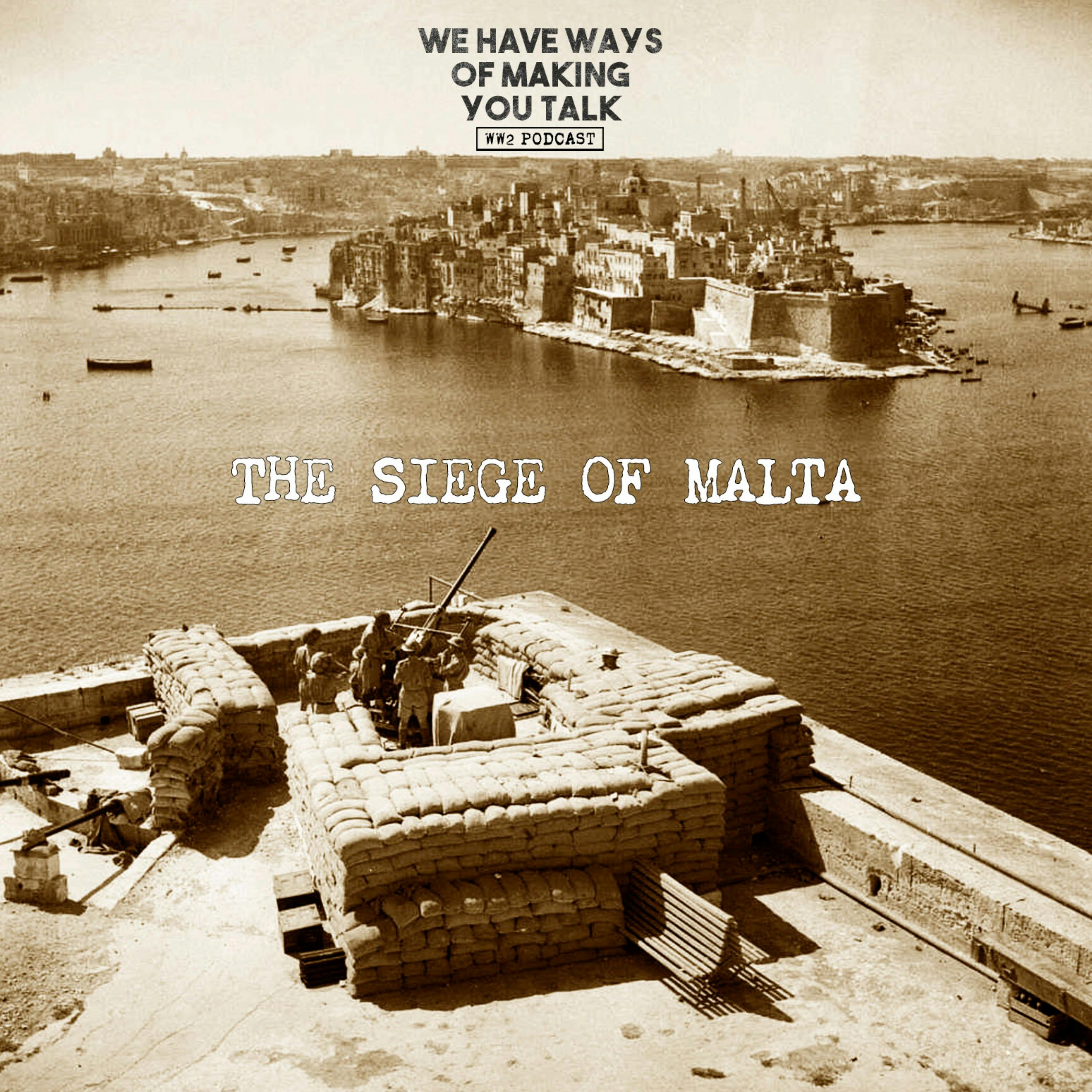
WW2 Pod: We Have Ways of Making You Talk
The Siege Of Malta: The Most Bombed Place On Earth (Part 4)
00:47:44
Loading summary
Transcript136 lines
- [00:02]
Al Murray
Thank you for listening to we have ways of making you talk. Sign up to our Patreon to receive bonus content, live streams and our weekly newsletter with money off books and museum visits as well. Plus early access to all live show tickets. That's patreon.com wehaveways.
- [00:26]
Sponsor/Advertiser Voice
When the holidays start to feel a bit repetitive, reach for a Sprite Winter Spiced Cranberry and put your twist on tradition. A bold cranberry and winter spice flavor Fusion Sprite Winter Spice Cranberry is a refreshing way to shake things up this sipping season, and only for a limited time. Sprite obey your thirst. Where's your playlist taking you? Down the highway to the mountains or just into daydream mode while you're stuck in Traffic? With over 4,000 hotels worldwide, Best Western is there to help you make the most of your getaway wherever that because the only thing better than a great playlist is a great trip. Life's the trip. Make the most of it at Best Western. Book direct and save@bestwestern.com this episode is brought to you by Oops. I've got a box of Cheez It Crackers staring at me and I just wanted that irresistible Cheesy crunch. Sorry, that was a total snackcident. Mmm, what was I supposed to be talking about? So salty, so crunchy. So cheesy. Whoops. Lost my train of thought. I've heard of brain freeze, but brain cheese? I'll just have one more cheese at Cracker and then I'll get back to it.
- [01:58]
James Holland
Number two and three Bolliard Machinery shop demolished Santa Teresa tunnel completely wrecked. Church tunnel partly collapsed and completely blocked. Sewage system and water supplies almost completely out of action. Temporary engineering and electrical departments, drawing offices and many other offices and storehouses have been destroyed. The residences on top of Shear Bastion and buildings on St. Michael's Bastion are completely wrecked. The problem of finding alternative accommodation is acute but will be solved. Numerous large craters in roadways and on wharves and large masses of masonry on roadways which have brought practically all wheeled traffic to a standstill. These are filled in or cleared as soon as possible, but seldom possible to attain clearance before further similar damage is caused by next raid. Joiner shop, ship repair shop chain, Smithery and Smithery sustained considerable damage. Further extensive damage to electrical cables. At present there is practically no light anywhere in the dockyard except in number four and five dock area. Shortage of cables etc for the affecting repairs is acute and supplies of cables are almost exhausted. Very few of the most essential telephones are in operation. Visual Communication employing naval signalmen has been established across French Creek. That is a message from the as Malta to the Admiralty on April 7th, 1942. Paints a pretty grim picture, doesn't it?
- [03:14]
Al Murray
It certainly does. Welcome to. We have ways to make you talk with me, Al Murray and James Holland for our fourth episode of Fortress Malta. And this episode has a title that reflects that opening message from the AS Malta to the Admiralty which is the most bombed place on earth. So strap yourselves in, everybody. In the last episode, of course, we began with the newspaper item that said the Maltese are cheerfully taking it. Well, let's see how cheerful you needed to be to take what's coming. I mean, this is an extremely dramatic month, April. And it doesn't start off brilliantly for fans of the Royal Navy and the Nelsonian Royal Navy because ABC Admiral Cunningham is sent to Washington. I mean, we're not happy with that, are we Jim?
- [03:56]
James Holland
Really, right now? I mean, is this wise? Actually it works out very well because he gets to. He gets to hang out with Hap Arnold and King and all the various naval types and war types and get to know Marshall and all sorts. So it works very well for future collaboration. But you know, he didn't particularly want to go. He's not a desk jockey kind of type. He likes being on the bridge.
- [04:15]
Al Murray
He's a fighting admiral.
- [04:17]
James Holland
He's a fighting admiral.
- [04:18]
Al Murray
He's a fighting admiral who wants to have a climactic battle with the Italians, defeat them in the, in the Nelsonian style. It's all he wants. It's not too much to ask, is it?
- [04:26]
James Holland
No, it's very reasonable. He lowers his flag on 1 April and is taken over by Admiral Sir Henry Harwood, whoever he is. Is he on your list of well known Second World War British admirals?
- [04:38]
Al Murray
He is not, Jim. He's not. But then anyone following ABC would be, you know, a diminished figure perhaps by comparison, let's say. But by the first of April, Malta has suffered 117 days of continuous bombardment, which is twice that suffered by London during the blitz. There are 275 air raids alerts in March alone. That's almost 10 a day, Governor Dobby. I mean, let's be honest now, Jim. At the end of our last episode, James Rather let his feelings out about Governor Dobby and the organization of the island.
- [05:09]
James Holland
Yeah, it's not the most impressive.
- [05:10]
Al Murray
No. You spoke your truth though, Jim, and that's what's very important. You told us how you felt.
- [05:16]
James Holland
I feel better for it, to be honest. I got it off My chest?
- [05:18]
Al Murray
No, no, it's good. It's better out than, isn't it? Let's imagine the poison and all that stuff he'd broadcast to the island. Malta has suffered much and has called upon to endure much. And this ordeal has been going on for a long time.
- [05:29]
James Holland
I mean. Yeah, well done. And your point is what precisely?
- [05:32]
Al Murray
But in the interests of Malta itself, of our empire, and of the most righteous cause for which we are fighting, I call on Malta to endure still further and to continue to show the same courage which has won the admiration of the world. I mean, that's fine, but there's 10 air raids a day, chief. But the March convoy has proved that you can get ships to Malta across the Mediterranean, but that the planning on the island is inadequate, basically. And also the problem is you do one convoy, you try another, the enemy are going to have a better estimation of how to defeat it. Perhaps they've had a go now, maybe they'll decide that they don't even want it to get to Malta in the first place. And Kessaring's plans continue. He wants to neutralize the enemy's fighters. He wants the three airfields to be attacked relentlessly to the point where they're unusable and the aircraft are destroyed. He wants harbour installations and shipping attacked. He wants daylight attacks to be constant and incessant, with powerful fighter protection. Nuisance raids by single aircraft as well. At night, dive bombers to attack any shipping. I mean, this is the kitchen sink, isn't it? Dive bombers to attack any shipping and mines dropped outside harbour entrance. And once the island is neutralized, Zenvers will make a decision. This is what he says in February to Flinkerkorps2. And he's really in favor of invading. He thinks it's a great idea. And General Kurt Student, the Faustin Jaeger supremo, is asked to draw up a plan of attack with paratroopers and an.
- [06:55]
James Holland
Italian seaborne assault operation Hercules.
- [06:57]
Al Murray
Yes, Hercules. And they're getting their ducks in a row for this exact thing. And Kesselring is proceeding as planned, isn't he?
- [07:05]
James Holland
Yeah, but the amazing thing, it's a bit like sort of Battle of Britain not starting till officially till Adler Targ, the main offensive hasn't begun until 2nd April 1942. So everything else is just a kind of sort of the warm up act. So he's got all his ducks in a row. It's a bit like the sort of, you know, the Canal Camp in July.
- [07:20]
Al Murray
Well, yes, yeah. So I mean, but this is the ratcheting up. They don't want to do the full assault until basically they're ready for it to succeed, I think is what you've got there, haven't you?
- [07:28]
James Holland
The administrative council, the governor at all, you know, they want, they want the people of Malta to be ready should the worst arrive. So they issue a pamphlet back in January called what to do in Invasion, which basically says keep cover and get off the road, you know, no way. I mean, who'd have thought it?
- [07:44]
Al Murray
Yeah. And troops are given regular anti invasion training, gunners, ground crew, everybody. And one of the irks, a fellow called Pete Watson, Uzunirka Tokali, says looking back, these were farcical to say the least.
- [07:56]
James Holland
What from this mob? You do surprise me.
- [08:00]
Al Murray
Anyway, 2nd of April, Kesselringet blows a whistle and it starts. 100 aircraft, more than 100 aircraft in a raid on the harbour and airfields. However, because ammunition has been recovered from the March convoy, there's more ammo for the anti aircraft guys. So they're able to put up proper box barrages. They're able to deny the Luftwaffe some of the airspace. Ken Griffiths, who's 32nd Light Anti Aircraft Unit, he and his mates feel vulnerable because the heavy battery next to theirs at Spinola has been hit and there's bits of body parts all over the place. It's the anti aircraft crews who are taking the strain, aren't they, really? Because there aren't enough planes. What, what's in Hugh Puloid's locker, Jim?
- [08:37]
James Holland
He's got eight Spitfires and 19 Hurricanes. It's going to do a lot against 100 plus, isn't it? But anyway, they do shoot down some Stukas on 1 April. Times of Malta claims 27 enemy aircraft shot down. That's probably a bit high, but you know, chief is pilots aren't fooled. They know this is absolutely terrible situation. You know, one of the first of those flying in the beginning of April is our old friend Raoul Dado Longley. He's flying one of nine available fighters. When he, when he does, he attacks and hits a Junkers 88. But then struck in turn in the radiator by the bomber's rear gunner, managed to get the Spitfire back to Tokali but the plane's in a bad way and so that gets hauled off for repair. So that means there's only eight available now and he doesn't fly again for 10 days because, you know, the 60 PL pilots and not enough planes. Actually, middle of April they paint over the squadron markings because they're just being shared yeah, and five days in April, there's just one Spitfire available. And on two days, there's none at all. None at all. But, you know, the pilots aren't, you know, allowed to just dos about so that they're put to work helping build the blast pens as well. On one occasion, Raoul is Raoul dad. Alongle is helping to build a pen. At the far end of Tokali, there's an air raid. And they. They dash for the slit trenches and they huddled, cowering with the others, hoping for the best. You know, the ground shaking, huge clouds of smoke and bits of metal stone fizzing around all over the place above them. And they look up again as the bombers have gone, only to quickly put their heads back down again as fighters hurtle over. And once the bombers and fighters have gone, they emerge and sort of stagger out onto the ground and covered in dust. And they all realize, all the pilots, they all realize they're shaking. You know, they're okay in a plane because they've got something to do, you know, and they're kind of. The adrenaline's going, but when they're just sitting ducks. But the truth is, by the end of, you know, end of the first week of April, Luftwaffe has total mastery, total mastery of the skies. I mean, you know, great. You can get five Spitfires up, I mean, or two Hurricanes or whatever, or seven Hurricanes and one Spitfire. But, I mean, that doesn't. Up to a hill of beans, you know, the Luftwaffe can then do what they like. And, you know, the truth is 7th of April is a pretty bad day, which is the day that that report was written about the docs, by the way. You know, so we've had a week pretty much of the intensification of the bombing effort on Malta. And the 7th of April is a really particularly bad one. Really strikes in the gullet for the Maltese.
- [10:51]
Al Murray
I mean, what's interesting is we get to this point in the battle, how can the Germans blow? This is the question.
- [10:56]
James Holland
Yeah, that's a very good question, which we should be getting onto. They've got it. They've done it, haven't they?
- [11:01]
Al Murray
They've done it. Yeah. The place is at their mercy. They should just press proceed, put a division of Falchion Jager on, and that's that. It's over.
- [11:09]
James Holland
Job done.
- [11:09]
Al Murray
A job done. And all the, you know, all the stuff we were saying previously about how when it's going well in Malta, it's going well for the Allies, when it's going badly, it's going. It's going Badly. In North Africa and elsewhere, this could a decisive blow, taking Malta. Now, how on earth are the Germans going to mess this up? You know, there's a. I mean, it's not a cliffhanger, it's a rhetorical question to leave dangling over this entire thing because the cities have been smashed up. It's theirs. It's theirs, the Germans to lose. Now at this point, Right, you'd have thought so. 42 nil ahead, as it were.
- [11:41]
James Holland
Well, and some, I would say that.
- [11:43]
Al Murray
Description you gave at the start of how smashed up Malta is by this point. You know, the Royal Opera House is now a pile of rubble.
- [11:50]
James Holland
Yeah. It gets hit, hit in the evening. Evening raid on the 7th of April. You know, it's a real shock. You know, this is. It's world famous. It is world famous at Royal Opera House. You know, some of the greatest opera stars and classical musicians and singers have performed there and it was a beautiful, beautiful building and it's still a wreck to this day. Never been repaired.
- [12:12]
Al Murray
Yeah. Been left, as everyone knows, how intense these raids are. So there's a. There's an RAF clerk, Jean A just, who makes it home when the siren rings out and his parents and his brothers are all at home. It's only sisters who works for the Times of Malta with Mabel Strickland is not there.
- [12:28]
James Holland
Yeah, Their house is in Sliemer, I should say, which is just to the north of. Just to the north of Marshamshire Harbour. So north of Valletta. Yeah.
- [12:35]
Al Murray
They hear explosions, they're getting louder and louder. They start to worry. After the all clears sounded, they emerge to find their family home. It's been destroyed as just a hole. This is the ordinary Maltese people's experience. Valletta's absolutely smashed. Smashed to pieces. In the days that follow church, the Sacred Hearts hit. There's a nurse, Mimi Cortes, whose local church, the Sacred Heart, is hit. She loses a cousin in the attack who had had six children, including a six month old baby. On the 9th of April, the church at Mosta is hit. This is the third largest suspended dome in the world. It's another major landmark on the island. During a service at 4:40, where there are 300 people in attendance, a bomb falls through the dome, bounces off the wall, hits the nave and skids to.
- [13:16]
James Holland
A halt and does not explode.
- [13:20]
Al Murray
And this is regarded as a miracle. Of course it is.
- [13:23]
James Holland
Right, well, it is a miracle exactly.
- [13:25]
Al Murray
Not one person hurt. The same day, a shelter at Lucca is hit and 25 people are killed. So it's complete mayhem. Isn't it?
- [13:33]
James Holland
Total mayhem. So the island's electricity supply is now invariably off, as is the water system. The telephone lines are down, so is the rediffusion system, which you may remember is the radio network. Roads are blocked by rubble, food distribution is made very difficult and government is forced to place a notice in the Times of Malta saying when a lorry is sent to take some goods from one place to another, there is no guarantee that it will be able to reach its destination. Well, that's hardly cheering, is it? Phone calls are replaced by dispatch riders on bicycles. One of the main bakeries is hit. And this is right at the far end of Grand Harbour. So there's problems of producing bread and this is one of the very few staples that is still not rationed. You know, they've got quite a lot of stocks of flour. You know, as we mentioned at the beginning, the dockyards are absolutely butchered. Force K has left Malta a while earlier, but not HMS Penelope, which had been undergoing repairs after being attacked during the March convoy. And Penelope is splintered so badly that it's been renamed HMS Pepper Pot. With some poles plugged with wood, it eventually slips out of grand harbor on the night of the 8th of April. But, you know, it is, it is intolerable. It's becoming very intolerable for the 10th Submarine Flotilla over in on Manuel island in Massachusetts Harbour, just to the north of Valletta. And the magic car. But submarine, the Pandora's hit while unloading in Grand Harbor. 25 are killed and then it sinks. The U class submarine P36 is also sunk while berthed at Lazaretto. Yeah, Simpson's getting worried. Upholder has been suffering of an epidemic of flu while they've been on patrol. So they come back, you know, this is all part and parcel, isn't it, if everyone just being run down? You know, you get ill, don't you, when you're overtired, you're not getting enough sleep, you've too much expected from you. So Shrimp knows that Wanklin needs a rest and knows that the whole of Upholder need a. Need a rest. So, very reluctantly, he orders him back to the uk. So Wanklin writes to his wife on his last night on Malta. He goes, well, darling, count the days. But not so many, only 59. And then upholder sails from Malta for the Last time on 6th April 1942 inches out of Marcemarchette Harbour and out into the Mediterranean.
- [15:36]
Al Murray
Well, and on a special job as well, to drop off two agents in the Gulf of Susse. En route, which they do successfully on the 9th to 10th of April. Then on the 15th, uphold is supposed to rendezvous with Urge and Thrasher, but never appears. And the previous day on the 14th, an Italian recce plane had spotted a sub. That afternoon, relayed that information to an Italian destroyer, the Pegasus, who spots a periscope and picks up the sub on sonar, an Urge, which is not far away. He has depth charging, which is almost certainly what hit Upholder. And nothing was ever heard of Upholder or her crew again.
- [16:10]
James Holland
Never been found. Wrecks never been found.
- [16:12]
Al Murray
That underlines the dangers of the Mediterranean. You are, you are spottable because it's shallow, you can be spotted and aircraft are a threat.
- [16:19]
James Holland
Well, and the waters are clear. That's a, that's the thing.
- [16:21]
Al Murray
Yeah, yeah, exactly. Urge is sunk at the end of the month. Lieutenant Commander Edward Tonkinson and Wanklin, as you said before, Jim, were very, very good pals. And Urge, you second only to Uphold her. But she hits a mine, leaving Malta for the last time and is lost with all hands. Yeah.
- [16:35]
James Holland
She was also on her way home. Yeah.
- [16:37]
Al Murray
And she's been found a couple of miles out.
- [16:39]
James Holland
Yep. Wreck was founded in 2021 by great friend of the show Timmy Gambeen and his team. Seen footage of it. It's only about two miles from Grand Harbor. I mean, it's awful.
- [16:49]
Al Murray
The cheerful people of Malta need a lift and they need some good news, don't they?
- [16:53]
James Holland
They're still remaining cheerful, but just a little bit of help is required.
- [16:57]
Al Murray
What's required at this stage of the war is a gesture, isn't it, Jim?
- [16:59]
James Holland
And luckily a fruitless gesture.
- [17:02]
Al Murray
No, no, this isn't fruitless. I'm not saying it's fruitless.
- [17:06]
James Holland
15Th of April, King George VI awards the George Cross to the entire island. This is something that he's brought in and this is the highest award for gallantry. Not in the face of the enemy, you know, you know, when you're not fighting. So it's a kind of, you know, it's for people detonating unexploded bombs or fire service or.
- [17:26]
Al Murray
Yes. Rescuing people from a collapsing building.
- [17:29]
James Holland
To honor her brave people, I award the George Cross to the island fortress of Malta to bear witness to a heroism that will long be famous in history. I think from now on I should always do George VI.
- [17:41]
Al Murray
I think absolutely 100%, you're our go to guy for George VI. I'm surprised we didn't make that decision sooner. He was born to being king. You're born to doing his impression, anyway.
- [17:55]
James Holland
It is still an unprecedented ward because in the past it's only been issued to individuals rather than entire islands. And there's no question about it. I mean, you know, it is a morale boost and it is greatly appreciated, you know, to know that they're being watched by the rest of the free world and all the rest of it. It does become known as the George Cross island, and it still is. And it's still officially, officially Malta gc.
- [18:16]
Al Murray
But you can't eat a George Cross, can you?
- [18:19]
James Holland
That is the problem. That's the problem. You know, the island is absolutely dying and, you know, and everyone is really, really stretched to breaking point. And it's very clear that. And it's. And it's made worse, isn't it, by the fact that this is an island. There's no escape, you're stuck on it, it's very small. You know, even if you did get a day off, what are you going to do? Go sort of swimming in the sea? I mean, you know, it's just not going to happen, is it? So. So it's really bad. And I remember talking to Frank Rickson, who was in the Royal West Kents and doing all the kind of filling in bomb crates. He just said it was just utterly relentless. You know, you spent your entire day carrying a slit trench, occasionally firing a Bren gun at the sky, filling in bomb craters, making blast pens. That's all you did all day, every day. And he said, you know, you didn't get counseling back then for picking up bits and pieces of your mates. No, really grim, you know. So naval operations completely ground to a halt. The two Fleet Air Arm squadrons have merged into one, which becomes a naval air squadron. But you know, they're barely flying at all. Wellingtons have gone. Blenheim's have largely been destroyed on the ground. You know, Malta's offensive capabilities have just ceased. I mean, it can't. Can't do anything. And it's very tantalizing for Dobby because he's been promised a convoy and then cancelled. You know, there's been the title balls up of the March convoy, but he's told there's going to be another one in April, but then that's called off. And then he's promised one for May instead. But on the 15th of April, the same day that they get the George Cross announcement, that is also cancelled. And Dobby is now told that it's just impossible before June. And this is really problematic because in amongst all the bombing, they're also just running out of absolutely everything, as well as their ability to distribute the small bits that they have got. So, you know, he writes to the Chiefs of Staff and he says the decision materially reduces our chances of survival, not because of any failure of morale or fighting efficiency, but because it is impossible to carry on without food and ammunition. It is obvious the very worst must happen if we cannot replenish our vital needs, especially flour and ammunition, and that very soon this out of action mill at the end of Grand Harbour is coming really, really pressing. And he points out there's enough flour until the end of May, if the mill can be restarted and most other food will be finished by the end of June. The heavy anti aircraft gunners will be out of ammunition by the end of June, the light anti aircraft gunners by the end of July. Fuel situations only marginally better because there's now fewer aircraft, so there's fewer to demands on that fuel. By current standards, it's going to run out by mid August. But that's hardly very cheering. And he says, you know, if Malta's to be held, drastic action is needed now. It is a question of survival. And they start talking about a target date, a target date by which, if things don't improve, they will have to surrender because they haven't got anything. That is the stark situation.
- [21:00]
Al Murray
And Churchill now determined that Malta should not fall.
- [21:04]
James Holland
It must be reinforced forth with, yes, Oola.
- [21:07]
Al Murray
And interestingly, so they want to set up. He wants more Magic Carpet service and more Spitfires to claw back the initiative. So he asks FDR for the loan of USS Wasp, which has the capacity to carry 84 Spitfires. Kind of, because after all, Spitfires aren't designed for this sort of thing. Let's gloss over that. It does have the capacity to carry 84 Spitfires and it's in British waters at the beginning of April. So Wasp sails up to The Clyde and 48 Spitfires are loaded onto Wasp from 601 and 603 squadrons and then she set sail for the Mediterranean.
- [21:39]
James Holland
Yeah, and of course, 48 Spitfires is two squadrons. As we all know, they're double the size of what they would ever have in the air.
- [21:45]
Al Murray
Yeah. So what we'll do is we'll take a break there and when we return, the Spitfires sailing for Malta, maybe they'll get there. We'll see you after the break.
- [21:56]
Sponsor/Advertiser Voice
Wayfair's big sale is returning. Get ready for way day. For four days only, score up to 80% off all things Home with free shipping on everything from October 26th through 29th. Score Wayfair's best deals like up to 80% off area rugs, up to 60% off mattresses, up to 60% off bedroom furniture and more exclusive doorbuster deals. So mark your calendar and shop Wayday starting October 26th at Wayfair.com Wayfair Every style, every home Thursday Night Football is.
- [22:28]
James Holland
On, and it's only on Prime Video flips it for the touchdown.
- [22:31]
Al Murray
This week it's an old school rivalry as the Las Vegas Raiders collide with the Denver Broncos.
- [22:37]
Sponsor/Advertiser Voice
This is a matchup everybody wants to see.
- [22:39]
Al Murray
Coverage begins at 7pm Eastern with football's.
- [22:42]
James Holland
Best party, TNF tonight presented by Verizon. Not a Prime member? Not a problem. Simply sign up for a 30 day free trial. It's the Raiders and Broncos Thursday at 7pm Eastern only on Prime Video. Restrictions apply. See Amazon.com amazonprime for details.
- [22:57]
Sponsor/Advertiser Voice
This episode is brought to you by espolontequila. Slow, sticky, snoozy. They call these the dog days of summer, but Espolon, they don't do boring. Welcome to the Mark days. ESPolontequila 100% Blue Weber agave born to shake up your summer, just add lime agave and a little attitude. Visit espolontechiela.com espolontecila 40% alcohol, volume 80 proof Copyright 2025 Campari America New York, NY. Drink responsibly.
- [23:31]
Al Murray
Welcome back to we have ways of making you talk.
- [23:33]
James Holland
The USS Wasp, American flag, American crew, but full of British pilots and Spitfires.
- [23:38]
Al Murray
Yeah, British pilots who are dismayed that there's no gin, basically.
- [23:42]
James Holland
Well, there's no gin, yeah.
- [23:45]
Al Murray
What do you mean, your ship's dry?
- [23:46]
James Holland
Don't worry, Albert, I'll smuggle some in.
- [23:50]
Al Murray
So they set off from the clyde and we've 601 and 603 squadrons. The men doing this are the likes of Dennis Barnum, aren't they? Jim, we A long time ago on the podcast, I read his memoir, One Man's Window, about being a Spitfire fighter pilot on Malta, and it's the most extraordinary book. Every now and again you do get a memoir that's written by someone who's trained as an artist who so who's. Their depictions of things are truly incredible. I would recommend anybody that you read One Man's Window, or as it's also known, Malta Spitfire pilot, which is a bit more prosaic. That's worth having a look at, isn't it? Jim?
- [24:26]
James Holland
100%. Yeah. It's a terrific book. I mentioned earlier on that we were going to Sort of focus on a couple of pilots, Raoul, Duddo, Longley. But the second one is, is Dennis Barnum. And Dennis is one of the 601 Squadron pilots. He's served with 609 Squadron with a chap called John Bisdy. And when Bisd moves to take command of 601 Squadron, he takes Denis with him and Dennis becomes a flight commander. So he's got something like 60 plus sweeps over France to his name and he's a very, very experienced pilot because he'd always, he was slightly spoiled as a, as a child, I think. And you know, his parents bought him a studio because he's an artist. They also let him learn how to fly when he was 16 and stuff. So he's got this, he's got the experience and has been flying for ages. Then he's gone and done his training in Rhodesia as Zimbabwe, then was, and has joined the RAF Volunteer Reserve. By this time he's 22 years old. He's newly married only a couple of months earlier to the lovely Diana, who I got to know very well and was just a lovely, lovely person and she was absolutely gorgeous as well when she was younger. And Dennis wasn't bad looking either. So they have this brief holiday in Scotland before he's posted and he just knows something about the situation in Malta, knows he's going, knows that it's besieged, surrounded by the enemy, facing 500 German Italian aircraft 60 miles away and the odds are stacked against them. So, you know, he's very, very, very not sanguine in any shape or form about, about this upcoming experience. He doesn't want to be separated from his gorgeous new wife. Anyway, you know, they're told that they're going to have to fly off from this aircraft carrier, which is something that none of them have ever done before. They've never flown off an aircraft carrier before and then fly 700 miles to Malta. And, you know, he's keenly aware. He spends a lot of time worrying about his future, worrying about being killed, as you might, and feeling frightened about what he's, what he's got to do. And he has terrible kind of paranoia about his body being crushed and splintered and blown to pieces. And, you know, he thinks this every time he's about to fly and he finds that when he gets in the air and he's concentrating, you know, the fear goes a bit, but it's, he finds it very, very wearing. His mood isn't remotely improved by talking to Squadron Leader Jumbo Gracie, who's, who's a Battle of Britain vet and he's already been out on Malta but has been flown to Gibraltar and then on to, transferred onto WASP to lead the guys, the new squadrons back to Malta. And the whole point is that Gracie, you know, give him a few pointers but he's, he's taciturn and gruff and kind of, you know, hard as nails and Denys sketches him and while he's sketching and picks his brain about what to expect and Gracie says, well, bomber force is being wrecked on the ground and if you're lucky enough to fly then you're generally outnumbered 40 or 50 to 1. So you know, great, you know, it's hardly the confidence boost you need, is it? But anyway, they, they sail into the mouth of, you know, into the mouth of the Mediterranean, past Gibraltar, 700 miles away and now it's the 20th of April 1942.
- [27:21]
Al Murray
Yeah, and the pilots are up at 3:45 in the morning on Wasp. They have a breakfast, final briefing. Dennis gets into his Spitfire at quarter past five in the morning. He's got his painting kit, his contraband with him that he's not supposed to have in the plane with him. He's hoisted on by a lift onto the flight deck and they're told, gun the throttle, get off the deck and hope for the best. And they're carrying a big, a big belly tank, aren't they, to make the range. So the Spitfire's not handling as it might normally. And of course no one has flown, no one has flown off an aircraft carrier. I just find it's all completely amazing. It's a four hour trip. Roughly four hours later he's approaching Malta. He turns to land and he sees a burning ship in a harbour with black smoke rising. But all but one of the 48 Spitfires being sent make it, which is remarkable really. You know, this is blokes navigating with maps in their laps and compasses and stopwatches and the like, isn't it? It's a tricky business. Once he's touched down and reached the end of the Runway, two urks leap out onto his wings and they tell him he's missed the 9am raid. And then with bayonets they open the gun panels on the of the Spitfire's wings to retrieve the cigarettes because then so the plane's lighter so it can fly further and tools as well that Denison has in his wings. And then clapped out bus already full of other pilots arrives to pick him up and off they go, gears grinding, dust of course, dust, dust, dust in Malta. The bus heads back towards the mess, dodging the newly formed craters. And there he is, welcome to look at airfield, and he's shocked by what he sees. There's craters, there's destruction, piles of rubble, crushed glass. There's 109s overhead already.
- [28:59]
James Holland
Yes. Circling like vultures.
- [29:01]
Al Murray
Yeah. He desperately wants to run for cover, but he doesn't because his guide got these new pilots, guide and the commanding officer, the co. They stroll on hurriedly down the dusty road, so he has to try and amble along as well and keep a lid on things. They pass an airman who's hacking away at the ground by a post which has a small red flag on it. That said, he's told it's a uxp, it's an unexploded bomb. Only when the red flag's hoisted, they finally run for it, dashing to the entrance of G shelter at the look of control room, which is carved into the rock below the edge of the airfield. So, I mean, as an introduction to the place, first glance. And there is obviously, of course, there's a raid heading for Tucali.
- [29:39]
James Holland
Just all the time.
- [29:40]
Al Murray
Yeah.
- [29:40]
James Holland
So while he, While Dennis is trying to kind of walk slowly towards G shelter and sort of, you know, and not feel too panicked, Ral Dado Longley is taking off from Tikali with five others from 249 Squadron and flying for the first time in six days. And, you know, they climb as far as they possibly can to 7,17,000ft, and they spot Stukas heading for Alpha. But the 109s then dive on them and Raoul has a. Has a squirt as a stuka, then a Ju 88 and then does actually shoot down a 109. But it's all pretty hectic. You know, the sky is awash with swirling, turning aircraft and, you know, another 109 attacks Ralph. So he turns and attacks in turn and as it passes, Ral clips the German fighter before it dives and falls into the sea. And for a split second he thinks he's going to die too. But despite the huge crash and a large chunk of the end of his wing being taken off, his Spitfire is still flying, but obviously with some difficulty. So clearly he needs to get down and he needs to get down on the ground. Pdq. But the problem is that Tikali is still under attack. So he's got a damaged spitfire, plenty of 109, swirling around, and he wonders how he's ever going to make it. The problem is he's out of. He's running out of ammunition and he's running out of fuel, so he's gonna have to get down somehow. So goes out to sea, comes over the cliffs, looks as, you know, gets as low as he possibly can. Constantly looking up and he can see all these 109s still sort of circling around, ready to pounce, but he just thinks, well, I'm just gonna have to do it. So he looks for the most favourable moment he can to land and does and goes for it. And he looks out over his wing and realizes he's lost about 18 inches of one wing. It's completely squared off at one end and on one side, so you can imag. That's doing to the balance of the aircraft. Anyway, Nearing to Carly, another 109 comes in and shoots him up. So he's now dropping much faster than he wants to. So quickly pulls up the undercarriage and thinks, well, I'm just gonna have to belly land. It gets lower and lower and lower, hits the ground. Everyone's watching, you know, all the rest of the pilots are watching this happening. And he slews across the airfield of screech and grinding of metal and clouds of dust and thinks, oh, my God, you know, Comes to a halt, he's still alive, desperately trying to get rid of the oxygen leads and the. And the radio leads and everything. Jumps out of the cockpit, runs across the open ground as bullets sort of, you know, following him like they do in a movie. And he's made it. And guess what he writes in his logbook? Collided with 109 head on, pranged on landing. 1109 confirmed.
- [32:09]
Al Murray
I mean, I love it.
- [32:11]
James Holland
It's just amazing, isn't it?
- [32:13]
Al Murray
The sang froid is something else. Although, you know, you haven't got room in your logbook for all of that, have you, that full account. That's not what it's for. There's another raid that afternoon and there are two Spitfires still that still haven't been scrambled. So Dennis and another pilot from 601 Squadron volunteered to take them up to protect the other planes as they come into land. The Germans are picking them off, as we've seen with Raoul's experience, that the Germans have got such air superiority, they can pick people off while they're landing, which is when they're really vulnerable and they're told that they're in different blast pens, but they can't find them. They go around the airfield, can't find them. Eventually, Dennis finds a plane with some airmen who tell him to fuck off. Basically, no thanks. Can't have this plane. Don't know who you are. Go away. They do find then another, but there's no starter on hand. And by the time Dennis has gone off to get help, the raid's over. That late in the afternoon, another attack on Takali. 60 bombers. This is. I mean, the relentlessness of it is, how are the Germans ever gonna lose?
- [33:10]
James Holland
Well, I know, and it's amazing because after it goes, after it's gone and all the kind of dust and smoke has settled, all they can see is these little sticks of black smoke going up into the sky, like little sort of vertical threads. And Dennis says, you know, what are those? And a guy turns to him and goes, that's all the new Spitfires burning. They've all been here on the ground. So that evening, Dennis and the rest of the new pilots are taken by that same old knackered old bus up to the Shara Palace. You know, there's no lights, there's no glass. It's got bullet holes all over it and, you know, splinter. It's not quite spitchered, but it almost is. And they're ushered into the Shara palace, into this huge sort of cavernous hallway. And Dennis pauses at the foot of the stairs and sees the shadows of this one hurricane lamp of the pilots passing him diagonally up the staircase. They go up into this long gallery, and then they're ushered into this long room. And he kind of thinks, well, where should I put myself? And he sees that there's a sort of alcove where the windows is, and he thinks that would be the safest. But he's completely paranoid that all they're. They're there and the bomb's gonna come over and go straight through the ceiling and kill them all any minute. I mean, he's really kind of just thinking, this is, you know, what have I come to? This is complete madhouse. Eventually, Hugh Pu. Lloyd comes in and says, you know, I. I fought the hunt in the last war, and I'm fighting him again now. And he's exactly the same. He's bully and. And stupid. Sunny. The siren rings out, and the, you know, bombs. They hear the whistling of bombs. Dennis is just thinking, oh, my God, this is really, really close. Huge crash, dust from the ceiling. Everyone kind of hits the deck. There's another one even closer. And then it seems to have gone past. You know, this is just a nuisance raid, basically. So everyone gets back onto their feet, and Lloyd goes, as I was saying, the Germans are bullies and incredibly foolish. The Manner in which they're conducting their offensive against the island shows us that Dennis is thinking what? I can't think of anything wrong with their offensive. It seems incredibly effective as far as he's concerned. He's concerned. And Lloyd continues, he says Malta is like the famous statue of Achilles in Hyde Park, London. Our bombers, torpedo carrying planes and submarines are striking power like Achilles sword. Our sword has been blunted but we will sharpen it. Until then, Achilles must rely on this shield, that anti aircraft defenses. And you pilots flying your Hurricanes and Spitfires are that shield. Malta relies on you. I mean it's not the most inspiring, is it?
- [35:27]
Al Murray
File under man has to say something in appalling situation. Can't possibly admit to how appalling situation is. Right, that's that, that's that form of inspirational speaking, isn't it? We're going to carry on as though this isn't happening.
- [35:44]
James Holland
Yeah, that's, that is basically it. Anyway, so pilots from Lucca aren't staying at the Shara palace. That is not their mess. They're being taken to another place which is the Palazzo Parisio, which is in Nashar. Nashar involves them getting back into their dilapidated bus by which time is now completely pitched black. There's no lights at all and just a sort of faint light from the moon to guide them. They go down the hill from Medina along a rickety road back up another hill for about, you know, three or four miles and eventually they get to the center of Nashar and there they're told, right, here's your, here's your digs. And the bus just drops them. They all troop out and they're left to their own devices and someone like, you know, they go through the front door. This is, you know, it's completely empty, completely not empty, but it's sort of dark and cavernous and I mean this place is absolutely huge. Someone lights a, lights a match which is a little sort of beacon of light in the kind of darkness and they basically kind of tramp around this. They go upstairs and look for a room, realize there's loads of other pilots and other people sleeping there on camp beds. And eventually Dennis and the other flight commander in 6A1 squadron find a single room with a, with a couple of camp beds in and that's their digs. And he goes to lying on his camp bed with his tin helmet on his head hearing bombs crashing and anti aircraft guns going and crashes and shakes and he just thinks, oh my God, you know, what have I come to? And the amazing thing is that within 48 hours, only seven of the new spits are still serviceable. So 40 have been destroyed, damaged, gone in 48 hours. And you know, you have to say it. This is the lowest ebb.
- [37:18]
Al Murray
There's your bottom line, though. If you're doing your defensive calculations, you need 40 Spitfires a day for the next month.
- [37:25]
James Holland
No, you need a better plan for the arrival of these Spitfires. That's what you need. It's exactly the same as the March convoy. And this time you can't get away from Lloyd.
- [37:37]
Al Murray
He's still saying they're fatally disorganized. That somehow reflects a deep, deep irresponsibility and incompetence at the top. I don't know.
- [37:45]
James Holland
Anyway, well, the next day, Denzes has his first flight. Okay, there's only three Spitfires available at Lucca at the time, at the moment that he's asked to go up on this flight. So he goes up with John Bisley, his squadron commander, and with Jumbo Gracie. The aforementioned Jumbo Gracie. And before they get going, Dennis asked Gracie for advice. So shall I do Dennis and you do Gracie? Yes, sir. What are the best tactics to use?
- [38:08]
Al Murray
You'll learn, but don't go chasing the bastards all the way to Sicily.
- [38:12]
James Holland
Um, if we're separated from you with formations of 109s around, what's the best technique then?
- [38:17]
Al Murray
If you're by yourself, weave around at naught feet all over the island. Or better still, do steep turns in the middle of Tucali Aerodrome inside the ring of Bofors. But don't take any notice of their fighters. It's the big boys we've got to kill.
- [38:29]
James Holland
So, I mean, okay, that's not great, is it? And Gracie says it says something goes, okay, well, our Spitfires are at different places, so I'll take the left hand side of the Runway and come towards you the rest side of the track and you come up on the right. And Dennis is thinking, well, if I'm coming from the other end and I'm coming on the right and you're coming to the left, aren't we going to collide? And so they do. They nearly, very nearly collide. And he gets into a Spitfire. He can't see anything because the moment the propeller goes, there's just dust absolutely everywhere. Suddenly he sees Gracie just hurtling towards them. Bloody hell, you know what's going on? Anyway, they take off. Bizzy gets shot down almost immediately, has to bail out, and he's presumed dead, though he isn't actually. And Dennis managed to hit a ju88 and see smoke and stuff and then he's just shooting it and suddenly right in front of him comes the oil streaked pale belly. Like a fish of a 109 hurtling straight up in front of him. He just looks, oh my God, you know, where did that come from? He looks around, he just sees his pairs of 109s absolutely everywh. There's a sort of complete tangle of aircraft and suddenly he's out oversea and there's the little tiny island of Filflar and they're the dingly cliffs ahead of him. And he thinks, what am I going to do? So he's attacked. So he turns in as he's been told to do, always turn into the attacker, hits a 109 and shoots it down. But then he's attacked again. So he's constantly doing it. Every time he's turning in towards him, of course he's losing height and losing speed and this is the problem because you're effectively corkscrewing down and down and down and down and down. Suddenly he's hit, there's a massive crash and he' and his plane is just spiraling and he just thinks, oh my God, this is it, I'm dead. Actually feels incredibly calm about it. Land and the sea of swapping places over and over and over. He's hurtling downwards and suddenly he feels control and he thinks, oh my God, actually, I might be all right after all. But he thinks, how am I going to get out of this? I've got. I've got to touch back down again. It's a bit like Raoul the Daddy Longley the previous day, you know, all these swirling aircraft. He thinks, well, if I can get low then maybe they'll just ignore me or something, you know, no such luck. So he gets low, sees the cliffs in front of him, thinks, well, I'm just going to have to get up and just try and land some because his plane is in a really, really bad, bad way. And he thinks, well, I'm just gonna have to belly land. But he looks around, all he can see is sort of stone fields and nothing. Eventually he spots how far right the south of the island. So he, he crash lands there. As he lands again, a bit like Ral the previous day. Glides to crashes and screeches, grinding metal to a halt and gets out, but it's forgotten to undo his radio leads and his oxygen leads, so nearly kind of breaks his neck in the process, then rips them off, makes a run for it again, you know. There's 109s up the airfield as he's sort of running for. Running for cover. Eventually gets back to Luca, sees Gracie. Gracie's already reported him dead. He goes, you nearly collided with me on takeoff. Anyway, you're back then, and that's it. I mean, what an introduction.
- [41:20]
Al Murray
But there were, you know, two. There were three Spitfire serviceable that morning. Bisley's been shot down and Dennis's has been trashed.
- [41:28]
James Holland
So, you know, yeah, that's two more goals gone.
- [41:32]
Al Murray
Yes, that's two more gone. There were three that morning. This is not. Not a good ratio, is it? And by the end of April, the fighter force is basically. It's done again. It's on. It's on the end on its knees. Spits are pretty much all gone. The airfields have been smashed up, the wrecks. Dennis is acting a squadron commander because Bisley's in hospital after being wounded on that first flight. He keeps this really fantastic diary. And like I say, get one man's windows or listen to it on the. On our Patreon. In fact, I think it's still up, me reading it. It. And then on the 30th of April, Dennis, diary goes, 30th of April, bombs and bombers screeched all night long. Seemed as though all pillars of air were being flattened violently, one against another, until they crushed our eardrums, left our ears ringing, couldn't sleep. First of May, same again, no sleep at all. Second of May, third night without sleep. The third of May, yet another night without sleep. So the intensity, even even though there are no planes to fly, the intensity of it is really, really something else.
- [42:27]
James Holland
But what's interesting, yeah, the attacks are. They are lessening.
- [42:31]
Al Murray
But this goes back to what we've talked about all this time with the Luftwaffe. They can't be everywhere. They can't do everything.
- [42:37]
James Holland
And what's emerging in April is different plans, because there's two plans. There's the Rommel plan, which is to trash 8th army and get all the way to Egypt and the Suez Canal and then the oil fields of the Middle east, blah, blah, blah, blah, blah. Others invade multiple Malta. And Ron was going, you don't need to. You know, Malta's neutralized. We don't need to. We don't need Malta anymore. We've done it. That job's done. And Cassidy's going, yeah, but I really think we should. You know, we absolutely. Having brought Malta to his knees, we now need to do the coup de grasse and invade it. And of course, Hitler is, you Know, he's listening to the guy he likes the most at the moment, which is Rommel. And he. And he likes the sound of going into Cairo and getting the Suez Canal and getting the oil fields of the meeting. That sounds much more fun. And, you know, hasn't Rommel got a point? I mean, you know, Malta's been neutralized. Why bother invading it? And, oh, and by the way, last time we invaded an island like Crete the previous year, I lost half my parachute force and half my Junkers 52. So, you know, I'm a bit down on airborne operations. On the other hand, a land battle, now that's something I understand. So lo and behold, he goes with Rommel. And of course, he offers the compromise, which he always does. Yeah, you know, which is, don't worry, you know, he says, keep your shirt on, Castle Rich. We'll still do it. He says, you know, we'll just do it a bit later once we've won on in North Africa, then we'll just walk into Malta.
- [43:56]
Al Murray
This is Hitler unable to dot I's and cross T's, isn't it? Strategically, he can't see that. Actually, if we've got Malta, then the land battle for Rommel will proceed far more smoothly. There will be fewer impediments offered to that piece of strategy if we got Malta. So the Luftwaffe moved to Libya rather than Sicily. They do retain a presence on Sicily, but basically they're moving to Libya to help Rommel. So that means that the blitz on Malta is over. Although the defenders on Malta don't know this yet. It's this serendipitous timing, really, that kind of comes to the island's rescue. The Malta's gunners have done well, though. On the 29th of April, they've shot down 99 aircraft that month. And the Times of Malta saying maybe they'll. Maybe they make their sentry for the end of the month. They do this on the 30th of April, they shoot down three more planes. So that's 102. But I mean, how many rounds do you need to fire to shoot down 102 aircraft, Jim?
- [44:53]
James Holland
Well, 160,829, but, you know, but I'll just remind everyone that, you know, if you think about the destruction of Casino Town, that's 196,000 rounds fired in one day, you know, so it is a lot. It's a hell of a lot. But it's not as lot as it might, you know, it could have been more, you know.
- [45:11]
Al Murray
Yeah.
- [45:12]
James Holland
And of course, you know, Kesselring has lost more than 100 planes, you know, and if you think you've only got 500 in the first place, you know that's over a fifth of your force gone. That's a lot. And, and you're stretched because actually, you know, Rommel's about to have a launching offensive so you need to move most of them to North Africa where, where you know, the RAF is building up strength there. And, and you know, this is not straightforward at all and you've got to move all your supplies over and everything else. So that's quite tricky. And you need to keep a presence because you can't kind of take your foot completely off the, off the gas against Malta. But the truth is, in April, 99.2% of all Rommel's men and supplies safely reached Libya. So that is indisputable. And that's not good enough, is it?
- [45:54]
Al Murray
No, no. And I think if you've been listening to this series so far, you know who Jim blames for this. But what we're not going to do is do a five minute hate like at the end of the last episode.
- [46:04]
James Holland
We're going to leave on a slightly positive note. Positive note.
- [46:08]
Al Murray
So there is a faint glimmer of hope and as ever, it's the Germans never quite, I mean, obviously the Brit British are not reading the strategic situation brilliantly here by defending Malta. So sort of in such a sort of slap dash manner. But the fact that the Germans can't read the strategic runes.
- [46:24]
James Holland
No, you know, it's, it's the halt order, isn't it? It's the halter at Dunkirk. It's a turning on London away from the airfields in September 1940. It's, it's just, you know, they just time and time again because they don't. Because Hitler particularly doesn't have that clear strategic vision. He doesn't, doesn't really understand what's going on. Opportunities are repeatedly missed. They don't make the most of what they've got. And it's a big mistake with Malta.
- [46:50]
Al Murray
It's not to say Malta's been offered on a plate, but it's as near as damn it really, isn't it? By Allied negligence, really. Yeah. Anyway, if you want to find out what happens next immediately, then you need to join our officer class Apple podcast channel for the price of probably not even an entire point now, the way things are going, you can get these episodes without out adverts and listening to them all in one wholesome lump. And what I love about this the story of the siege of Malta is this is, you know, no screenwriter would dare write this. You know, Malta's done for, Jim.
- [47:17]
James Holland
It's on its knees. But can it be kicked down onto its face? That's the thing. Or can it get back onto its two feet?
- [47:23]
Al Murray
And if you want to know this right now, then of course join the Apple channel or go to our Patreon livecasts. The other thing we do where you can watch Jim and I waffle about this sort of thing on usually on a Monday night night. Anyway, join us for our next episode when the siege of Malta continues. Can the Allies turn the corner? Find out in our next episode.
- [47:42]
James Holland
Cheerio, cheerio. Hello history fans. It's Richard Osman and Marina Hyde here from the Rest Is Entertainment Podcast.
- [47:55]
Sponsor/Advertiser Voice
Now, if your group chat's buzzing with celebrity traders, fan theories, Alan Carr gifts and Claudia Winkleman outfit inspiration, then our podcast is the place for you.
- [48:04]
James Holland
Every week we've been reacting to new episodes of the biggest show of the year immediately after they air.
- [48:09]
Sponsor/Advertiser Voice
And this Thursday's final will be no different. Join us for a live stream debrief at 10:15pm from the ultimate set of traitors fans us just search the Rest is Entertainment on YouTube or wherever you get your podcasts.
- [48:22]
James Holland
Big dogs only. Hello, I'm David Ulushogger.
- [48:27]
Sponsor/Advertiser Voice
And I'm Sarah Churchwell.
- [48:28]
James Holland
This week on Journey Through Time, we are exploring the story of the Gunpowder plot plot of 1605. The story of how a small group of Catholics engaged in what would have been the most devastating terrorist attack in all of British history.
- [48:41]
Sponsor/Advertiser Voice
The plan was ruthless. Blow up Parliament, King James I and most of his family, all in a single blow.
- [48:48]
James Holland
The series will tell the story of treason and traitors of a group of men led by the charismatic Robert Catesby, who believed that the only option left to them to win their rights as Catholic was the violent destruction of the Stuart state.
- [49:02]
Sponsor/Advertiser Voice
We look at the story of Guy Fawkes, the nation's most famous traitor, from his recruitment to becoming the plot's fall guy and ultimately being tortured and killed.
- [49:11]
James Holland
Finally, we find out why this plot is still remembered now 400 years later. Listen to Journey Through Time wherever you get your podcasts.
- [49:27]
Sponsor/Advertiser Voice
George Orwell was one of the most impactful voices of the 20th century century. But do you know what? His life story is just as interesting as the things he wrote.
- [49:36]
Al Murray
I'm William Dalrymple.
- [49:37]
Sponsor/Advertiser Voice
And I'm Anita Anand. And we are the hosts of Empire, a goal hanger show about world history. And on Empire, we're currently in the middle of a gripping four part series about the life of George Orwell.
- [49:47]
Al Murray
Orwell's early life was wrapped up in the British Empire. He was born in India to an opium trading father and in his 20s he served as a colonial colonial police officer in Burma.
- [49:58]
Sponsor/Advertiser Voice
His later life crystallized his hatred of totalitarianism as an idealistic writer. He traveled to fight with the Republicans against Franco's fascists in the Spanish Civil War and he witnessed the horrors of the Blitz.
- [50:10]
Al Murray
These experiences led him to write his most famous novels, animal farm and 1984, giving us enduring phrases like Big Brother is watching you.
- [50:18]
Sponsor/Advertiser Voice
To listen to our miniseries now, subscribe to Empire. Wherever you get your podcasts.