← You're The Voice | by Efrat Fenigson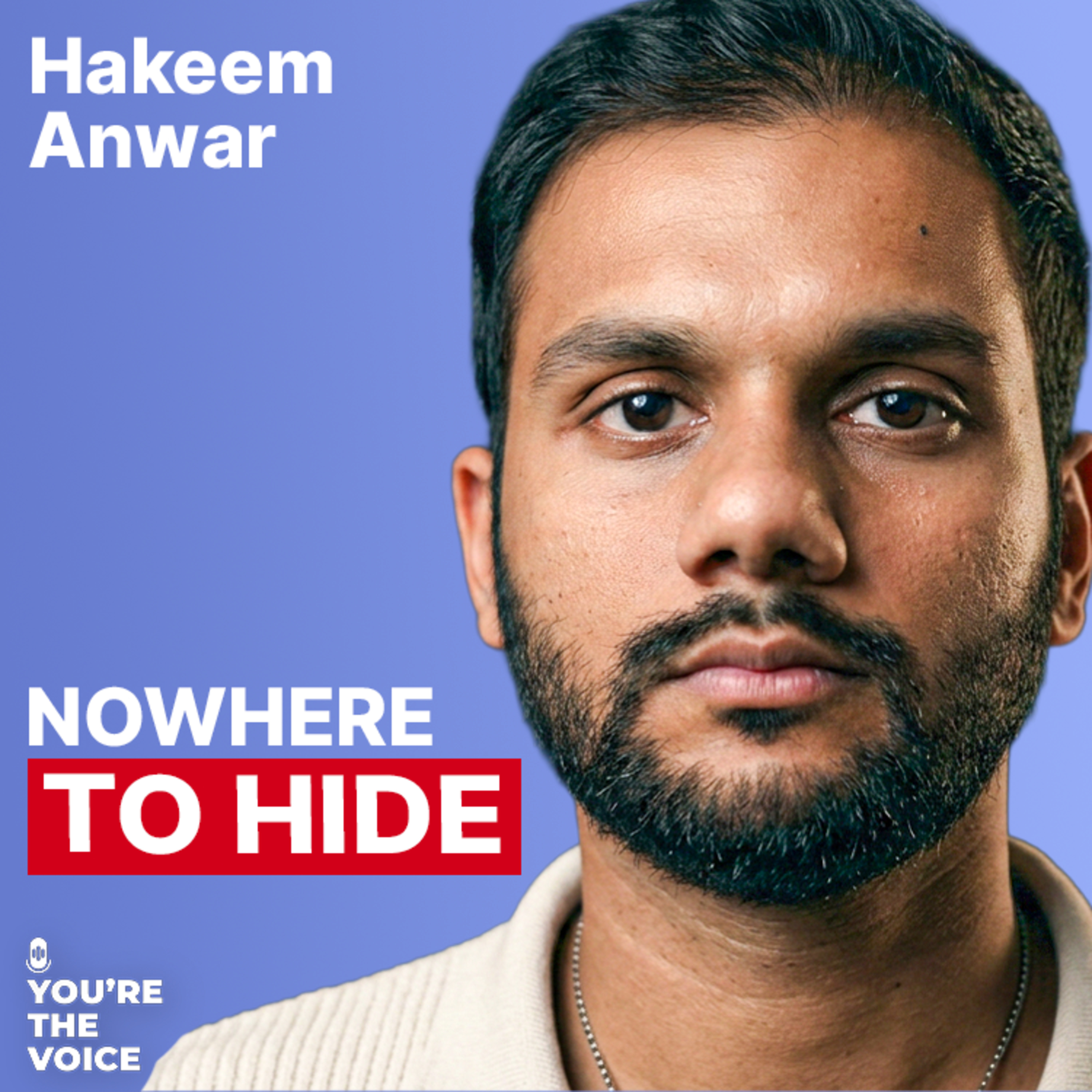
You're The Voice | by Efrat Fenigson
How To Opt Out of the Digital Prison - Hakeem Anwar | Ep. 137
01:18:32
Loading summary
Transcript134 lines
- [00:00]
Hakeem Anwar
It's a total reset. It's a total reset of your entire digital life. Once that foundational identity is in place, it's interoperable. If your face shows up on a CCTV camera, that's your legal identity. Now we know that person is present. You can see what countries like Russia are doing where they have a draft. It's random. It's a lottery. If you get chosen for the lottery, you can be seen on the CCTV cameras and they will come get you.
- [00:29]
Efrat
I was not aware of that. That is radical. Wow.
- [00:34]
Hakeem Anwar
It's one thing to lose your Social Security number or your registration number or whatever. It's another thing to lose your biometric identity. I don't know how you get that back. If you saw a privacy app was getting funded by the US Government, would that make you trust it? More or less?
- [00:50]
Efrat
The west is bringing you 1984 in all of its galore.
- [00:57]
Hakeem Anwar
What's the point of communicating end to end, encrypted if your keyboard is logging everything you do? Now is the time to do your phone in your laptop so you can continue to use Bitcoin before they start verifying your age for that.
- [01:24]
Efrat
Hello, and welcome to another episode of youf're the Voice. So good you've joined me. I have the honor and pleasure of being here today with Hakeem Anwar. Am I saying it correctly, Hakeem?
- [01:36]
Hakeem Anwar
Yes. It's good to be with you, Efrat.
- [01:39]
Efrat
It's so good to be with you. Even though it's. It's. It's digitally and virtually. But we did meet in person. It was just a lifetime ago, I think about three years ago, which feels like 30 in today's pace. And I think it was in the UK in Bath. We were both at a conference called the Better Way Conference. Actually, you know what I have here? Look what I bought from you guys at the time. I bought a case.
- [02:05]
Hakeem Anwar
Whoa. She's got one of the original cases
- [02:10]
Efrat
with a little zipper, which I use. It's such a cool case. I love it. I carry it all around the world with me.
- [02:17]
Hakeem Anwar
I hope you realize there's only. There's literally only like, five of those in the entire world.
- [02:23]
Efrat
Is this an OG product?
- [02:25]
Hakeem Anwar
It's an OG case with, like, the little triangles on the inside. That's for the. For the viewers. That's our EMF case that we wanted to use. Yeah. So that's great. I'm really glad you hung on.
- [02:37]
Efrat
Yes, of course. And since my iPhone is too big to fit in there, I have other gadgets. In there to protect them, which are as important, if not more. But I also am super humbled and grateful to now have the new Above Phone. So I am stoked for that. This is new for me and I'm in my transition period, but it's awesome. Thank you guys for making sure I get this when I get to the US So I'm yeah, we'll talk about the Above Phone today and we'll talk about some other stuff, but if you allow me, let me start with a quick intro for my audience that may not know you and then we'll dive to the questions. Is that okay?
- [03:17]
Hakeem Anwar
Yeah, let's do it.
- [03:18]
Efrat
All right. So Katim, you're the CEO and founder of do you say above or Above Phone? How do you call the company?
- [03:26]
Hakeem Anwar
We call it above, but people know us as Above Phone. Either is fine.
- [03:30]
Efrat
Right. So let's call you Above. A conscious technology company building open source phones, laptops and software services that replace reliance on big tech. We don't like to rely on big tech. A professional software engineer who walked away from corporate life, Hakim has worked with social movements like the Freedom Cell Network and the People's reset and in 2021 founded above to give people real, practical alternatives to surveillance based technology. Let's go. He also runs Take Back Our Tech, a weekly show covering the biggest stories in tech, always with solutions. I love that. Can you share a little bit more about your backstory? What led you to do doing this today?
- [04:16]
Hakeem Anwar
Yeah, so I started my journey in the industry building web and mobile apps for big companies. And I was awake for a long time before that. So I knew I wasn't contributing to something that really made a difference. And I wanted a change. And that change for me came during COVID 1984, where I think a lot of people's lives changed. So mine did too, because I did not want to build a prison around myself. I didn't want to be tasked with that. So luckily, you know my friend Derek Bros, who was working on the Freedom Cell Network at the time, and I started working with him in 2019, right before that happened. And we built the site, then the lockdowns happened, and then we had a community of 30,000 people around us and. And so I finally had people to serve. And one thing I realized right away is although people were taking their money out of the banks and putting it into Bitcoin, into alternatives, that they were using big tech to do it. So they were building their businesses on Google Drive or using Mac computers and all these things. And I Got to really see when there are alternative movements, how big tech will stifle them. And it's a threat to their bottom line, but it's also a threat to their power in that how many devices they control and how many lives they have visibility over. So I got to see that firsthand as Freedom Cell was blocked in different places. So I decided to dedicate my time to helping people move to free and open source technology. That's why I started Take Back Our Tech. Wrote many, many guides on switching over to Linux and there was enough demand for it, people wanted it to be even easier. So we built above phone, which we do phones, we do laptops, we do many different things.
- [06:03]
Efrat
Right. I also have background in the tech industry. I'd worked around tech and in tech for 20 plus years and I started as a developer. Yeah, it's just incredible to see how, you know, tech can be so good and it can be so bad. It really is a tool in the hands of whoever is navigating it. And thank God there are people like you and you know, many of the builders in the Bitcoin community that I know that are building Freedom Tech because without that there would be nothing to balance the digital prison that is being built around us that on the most part I actually think is already built around us. Right.
- [06:44]
Hakeem Anwar
You've, you've done a lot of work on CBDCs and talked about them. So I mean, so you know, like the, these things, these things are here, you know, even if we're not using them dayto day, the fundamentals are there and if we don't get to a point where we are actually using this alternative, then we're going to be in trouble. Because if our friends and family use CBDCs, they use digital ID, then you know, you're kind of obligated you won't even be able to exchange with them. And that's a scary thought.
- [07:16]
Efrat
So yeah, yeah, absolutely. That's why I try to orange pill the people I love so that I can continue transacting with them. All right, so let's start actually with something that relates to what we're talking about, that digital prison. You guys have put together a really good report that I liked life under Digital id actually. Let me see if I can share my screen and just show people what it looks like and then we'll give them a link as well. So this is the link to download the Lifeander Digital ID report. There's an executive summary of five pages and the full version is 30 pages. And you can leave your details here and get the report. I love what you've done with this because I think it really gives a good overview about what's happening around the world, the race to implement and roll out the digital ID in different places. So we'll put a link to this in the show notes, but let's go back for a sec and let me ask you some things about that. So your report says that 90% of countries already have operational digital IDs or will have it operational within the next three years. So the funny thing is that some countries that are starting to roll it out are calling it voluntary, places like India, Australia and the eu. And if there's one thing we've learned from COVID is that nothing is voluntary. It may start as innocent, and then very quickly everyone will discover that it's coercion in a, you know, wolf in sheep's clothing. How does something voluntary become effectively mandatory? And why is that framing so dangerous? Let's start with that.
- [09:07]
Hakeem Anwar
Yeah. Like, as you, as you pointed out, there are these countries, mostly Western countries, that have it in their law, have it in their legislation, that digital ID will never become mandatory. It's voluntary. Right. And so they may start out by presenting it that way and to make it feel like a good thing that people, they'll listen to people's consent. However, in practice, it never works out that way. And, and so in this report, we looked at India's Aadhaar system, which is their form of digital id, and it was ruled about a year or two into people using Aadhar, that discrimination was illegal. So if you didn't have the digital id, you shouldn't be, you should be able to do anything that anyone can do. So renting a home or opening a bank account or getting cell service. However, even after the Supreme Court ruled that it's not like anyone changed anything, it didn't stop banks or corporations or mobile carriers or even normal people from demanding digital ID from each other. So it's like if you don't have a digital ID in India, you can't even rent a home, which is absolutely ridiculous. So it's this starting off voluntary, but once enough people are using the system, it becomes mandatory by proxy. And as the EU and Australia get ready to open up their digital IDs to all businesses, and that part is not mandatory. Your business must accept digital ID as a form of identification. That part's not mandatory. Right. They're effectively creating this network so that everyone uses it.
- [10:50]
Efrat
You remember how during COVID they had this legislation that Director I think it was in Australia, directors are obliged to, to take the jab. And so they use like directors of companies. Then they used a similar tactic now with the digital ID in the uk where they, they put together legislation that directors of companies have to have digital id. So they always look for that layer in the demographic that they can coerce this on. And if they are coerced into it, then it trickles down and then, you know, the companies essentially have to have it in place and it's just like a slow mechanism to introduce it, normalizing it.
- [11:34]
Hakeem Anwar
And I think there, I wasn't aware of the, the directors of companies in the uk, so that's cool. I need to do an update on that. But like, I think it's telling that they focus on the important people where, like, you know, I'm a director of a company. I don't know if you probably are the director of your company. Right. So it's like literally all the people that are working and building to make sure they can target them so they show up on digital id. But luckily I think people are pushing back a lot. I know Kira Starmer originally said you're going to need digital ID to work and then everyone was super pissed off. They walked that back a lot. But, you know, the whole reason I did this report, because I had this morbid curiosity is like, is there anywhere I can go that doesn't have digital id? And, and it's everywhere. It doesn't really matter where you go. And that's the very puzzling thing is how does everyone have the same idea at the same time?
- [12:29]
Efrat
That is key, what you just said, because so many people ask me, so where do I go? What do I do? Okay, I'm gonna leave my country. It's really difficult. I mean, I'm not saying don't leave your country. If your country is becoming super totalitarian, authoritarian and it's becoming unbearable and you know, they spray your skies and whatever. It's like really, really tough. Sure. Leave to another place. But just make sure that you understand there is a checklist and you're going to have a lot of factors on that checklist. And it's never going to be all ticked. It's never going to be perfect. You're going to have, you know, disadvantages everywhere. You just have to find the best combination for you, somewhere where you can thrive, preferably with a community around you that can support you at tough times times. Because nowhere is perfect. And the more you are willing to accept compromises in your quality of life and you know, the modern lifestyle that you're, that we're used to in the west and you can go to third world countries and stuff. Yeah, you can thrive in places like that, but you have to, you have to accept change, you have to accept radical changes. And it's possible, but it's never perfect. I totally agree with you.
- [13:42]
Hakeem Anwar
Well said. It's a mindset shift and, you know, I think the next few years are all about drawing your line in the sand. Where, where is it? How far does it have to go for you to say, I'm not going to comply with this, I can't comply with this. It's, it's against my morals, you know. So I think the next few years are all about finding that. And I just want to share. I'm sure your viewers are quite aware of the dangers of digital id, but like to tell people where it goes. It's presented as this thing. For instance, In Denmark, where 90% of people use digital ID, it's presented as convenience. It's a way to get the, the basic income they have there, as if you're unemployed. It's how you get your unemployment benefits. Right. Wow, that sounds so nice. You even get a personal email as a citizen and the government will email you directly. Oh my gosh. Wow, how great. You can reply and chat, chat with them. So it's presented as a way to make your life convenient and faster. After all, who hates standing in lines at government offices? None of that anymore. But what they don't tell you is that once that foundational identity is in place, it's interoperable. So now if you, your face shows up on a CCTV camera, that's, that's your legal identity. Now we know that person is present and if you take it far enough along, then you can see what countries like Russia are doing where they have a draft for the war going on in Ukraine. It's random. It's a lottery. So if you get chosen for the lottery, you can be seen on the CCTV cameras and they will come get you. So it starts.
- [15:20]
Efrat
Aware of that. That is radical.
- [15:23]
Hakeem Anwar
Wow, it's, it's pretty crazy. And it's been going on for a while, so I just, you know, it's important to understand like at the very first, it just starts with just a digital ID to start, you know, to, to pay for this or to get. But that's where inevitably it ends up going.
- [15:40]
Efrat
You know that in Israel, where I come from, the digital ID has been in place for so long from the, I think it's close to 15, 20 years now. So I've had it before I even, you know, woke up to all the bullshit. And so, yes, the same thing as you're explaining about Denmark. It exists also in Israel. There are a lot of governments, services and subsidies that are now mandatory to be fulfilled through that mechanism. And you have your gov ID portal where you log in and you see everything about yourself. So imagine this is only the stuff that they show you that they know about you, but there's so much more that they know about you that they don't show you. Yeah, so it's already in place. I agree. One more thing that I saw in the report are two standards that you were referring to, W3C, the verifiable credentials and ISO 180135, which are quietly becoming the global infrastructure layer. Most people have never heard of them. I didn't hear of them before I read your report. What do they actually enable and why do convergence on these standards matter?
- [16:52]
Hakeem Anwar
Yeah, absolutely. So it's important to just know about these at a surface level because we say, all right, digital, Digital id, like what actually is it? Well, it's just a set of rules that software has to follow in order to create a. This, this shared credential. And the way, the really easy way to think of it, it's a claim that you can make about someone that can be verifiable. So I say, I say a frat, oh, you have brown hair. And I'm going to certify that you could put that on a digital identity. It could literally be part of a digital identity and say, hey, Hakeem has said this. And now if someone looks at that, they can veri that I said that about another subject. So that's all it is. It's about claiming details. And what VC verifiable credentials are is probably the most thought out and expanded and widely accepted protocol. And this is in used by all of the EU member states. IDAs 2.0 is the legislation that's used in the UK. It's used in Thailand, it's used in Japan. Can. And so it's, it's a way for. So people need to understand that these credentials, it's not just an app on your phone, they can be about anything. So maybe the first things we're going to make claims about is our personal identity. Hey, I'm Hakeem and this is my legal identity. And people will check that, okay, I'm a US citizen. So they'll say, all right, is that verified by the US Government. It is great. But this is just the beginning. If you look at what the industry is saying, eventually this will be used for pretty much everything. I'm Hakeem and I have this car and then so on. This is Bob and he's adopted this. A daughter or a son and then there's more claims about them and so on. So it's essentially a way to model any piece of any piece of information about anything. So that, that is kind of where we're headed. And the scary part is, is that so there's a system built, but there isn't any way to enforce privacy safeguards or once you give away your digital identity now, that can be used by whoever. So this is already something. This is already things that people are talking about. If you use your digital identity as a coffee shop, they actually have that digital identity. Now. The safeguards and privacy protections for this haven't really been developed yet. And we have to ask ourselves, can we really trust that these are built. It's one thing to lose your Social Security number or your registration number or whatever. It's another thing to lose your biometric identity. I don't know how you get that back.
- [19:37]
Podcast Host/Announcer
Ever find yourself needing cash but refusing to sell your Bitcoin? That's real life for many bitcoiners. Because most Bitcoin sells aren't financial decisions, they're liquidity decisions. And that's exactly what LEDN solves. LEDN is the global leader in Bitcoin backed lending. They've issued over $10 billion in loans since 2018, with a perfect track record for protecting client assets. Here's what makes LEDN different. With their custodied loans, your Bitcoin collateral is not lent out to generate interest. No credit checks, no monthly payments and no penalties for early repayments. You apply in minutes and you repay whenever you want. LEDN also publishes proof of reserves reports every six months with full transparency. So if your capital is in Bitcoin but your expenses are not, you still have options. LEDN lets you unlock liquidity without selling your Bitcoin. Learn more at Leden IO Efrat. That's LEDN IO Efrat. You're the Voice is brought to you by Trezor, the original Bitcoin hardware wallet company pioneering the development of self custody for crypto assets since 2013. Empowering individuals with an open source device enabling beginners and experts to easily and securely hold their coins. I find my Trezor super easy to use and recommend it to my friends and family. Enjoy my 5% discount on Trezor products by clicking the link in the show notes and using the code flat.
- [21:15]
Efrat
Yeah, me neither. And I think one of the key things that as you speak I'm thinking about is the fact that all those different countries and regions are implementing on the same standards, basically on the same protocol that creates interoperability. So the same kind of strategy or tactics they're using to verify who you are and to exchange information about you inside their systems can also be done with other countries with other systems. Right. That creates the interoperability. So the fact that you are providing all this information to your state does not end there. Now it. Since we're living in a global, Internet connected world, that information travels with you wherever you go. And that's why you are seeing in airports and border crossings all the implementations of biometric checks and digital passport checks, etc. And this cannot be stopped. This is like that train is already gone and this is going to be happening all around the world and they're going to be using the same kind of standards to verify you wherever you go.
- [22:37]
Hakeem Anwar
So I, I couldn't have said it better myself. Like, yeah, like that's a really important point, is that every country is developing their own standard and well, they're using their own solution which is based on these standards. So it's in a rock.
- [22:54]
Efrat
Exactly. Yeah.
- [22:55]
Hakeem Anwar
It, it does follow you around and eventually will get to a point where it's like, okay, you know how you, you travel a lot? So you get this, you go to a country and they ask you when you leave, hey, would you buy anything for. What do they call it? Like the tax, the tax relief or the tax you get back after shopping in that country?
- [23:16]
Efrat
Vat.
- [23:17]
Hakeem Anwar
Vat. Thank you.
- [23:18]
Efrat
Yeah, yeah.
- [23:18]
Hakeem Anwar
So like eventually you won't, you won't even need to, to do that. You won't even need to tell them what you bought or register because it'll be part of it. So I think that people should just realize this is, this is happening everywhere. And what they can do is really focus on avoiding connecting their legal identity to their biometrics. Easier said than done. But my personal opinion is once those two things are connected together, your digital identity is created. Like the ID is there, it's already in their cloud. You may not be using the app yet, but it's already been created for you. So that's a danger because it could be used without you even knowing about it.
- [24:01]
Efrat
Yeah, it's hard for me to say and for my audience to hear, but yeah, we're late on this game and it's very hard to not play it. I think one of the conclusions that I always get to, and I think you are too, from reading some of the things you, you wrote there, is that you can't really beat them inside that system. You can only try and opt out and work outside of that system. In other Rails. What, what is your conclusion of after writing this report?
- [24:38]
Hakeem Anwar
I think that we have a little bit of time and I think that also I'll just share my, my experiences traveling in Europe and whatnot. There is a little bit of time before these things are regislated, they're actually implemented. For instance, biometric identification for all non EU travelers was supposed to be at the beginning of April, but there are still places in the EU you could probably go and they haven't set up these automated border controls yet. So there's going to be a short window, I would say, until 2027 where you have more freedom and flexibility. And if you're working with a business, you know that business may not be obligated to use digital. And so I think the most important thing people could do right now is build that local community, which is what you were saying at the beginning. Think about the hundred most important things you might need in your life. Find the people in 100 square kilometers or square miles that can provide these things. And with that contact book you have people that you can reach out to for, for everything. And I know that's, I know that's a lot because that implies you won't be able to shop online and that kind of thing which you not jump jump to that. I don't know how long it would take to have an Internet ban or for big companies to start implementing this or enforcing it on people. But it's just important to be ready locally if that does happen. That's personally. That's my line in the sand. I do not want, I don't want my why my biometrics enrolled and in control by anyone else.
- [26:21]
Efrat
Well, may I add to what you're saying that I think many people in the west are living in la la land because they think that what you're talking about, that Internet ban is some theoretical scenario that may happen. But let me tell you, I've experienced it firsthand. I was locked out of many Internet services over the past couple of years, including telegram, including substack places that you think are, you know, free speech kind of Internet services, and they're not. I've been, you know, banned out of stripe, which is a payment mechanism There are many things that, oh yeah, I've experienced a lot of censorship over the last few years. But the thing is, this is me, just a small little Western person. Let's think about countries that are experiencing not just Internet bans, but electricity bans for now coming up to, I don't know, more than 50 days. Iran, you have tens of millions of people under complete blackout. Not just Internet blackout, but electricity blackout because the regime doesn't want them to have access to Internet at all to be able to communicate with the outside world. So insane what's going on there. When you had riots in Indonesia, they, it's a, it's a normal practice that they turn off the Internet. A lot of countries in East Asia, they're turning off the Internet when they, when the people are starting to revolt because they don't want them to be able to communicate with each other. That's why tools freedom, tools like bitchat have been created. Right. Bitchat is a mesh Bluetooth messaging app that Jack Dorsey created where people can connect to each other without an Internet connection. So, and that became super viral in some of those countries that have those demonstrations and revolts because they had no Internet and they just found a way to communicate with each other through their phones without Internet. Anyway, I'm just. It's a, it's a side note, but the, an Internet ban is a very real thing. And you know what it looks like in the West? Age verification. How simple. Let's verify your age. And if you don't participate in this process, in this game that we cannot verify you. You guess what? You're not going to have access to, to a service or to the Internet. That's how they bring it in.
- [28:47]
Hakeem Anwar
You're not wrong. A lot of countries have, have had the world, you know, the Internet blackouts for, for whichever reason they use it usually happens when they're in conflict or war. But you can name any country and they would be doing something like this. And so solutions like Bitch at are important. And I think it's also important for people to understand if you're using a big tech phone, you must ask yourself whether your phone's actually going to allow you to use Bitch at or it's going to allow you to use an alternative app. There's, there's already, you know, developer requirements that developers have to hand over their IDs and also the signing keys for their applications, which basically means they have to give Google and Apple complete control over their applications in order for it to be on those app stores. Right. So if you're. If you're using a big tech phone and you know, you're hoping you're like, okay, it's all right. I've got Bitchat. I've got these. They could literally be taken off your phone. Like, this is. This is the degree where people don't actually own their phones. So I'm really glad when activists and speakers like yourself start to shift, it's like we really need to take back control over technology.
- [30:02]
Efrat
Yeah, 100%, which is a great segue to. Let's talk about how we can actually navigate around these systems. So we, all of us are holding. Most probably 99% of us are holding an iPhone or an Android phone. And we're. We're using that on a daily basis, actually on an hourly or even minute basis. We are addicted to our phones. We are constantly using them either as work tools or social tools or both. And there is really nothing in our lives, I mean, very little in our lives that stays private as we are living our lives on these devices. So I want to talk a little bit about the device that you guys have created, the above phone. Let's start really simple with what it is. What does it actually do differently? And why should people who care about privacy be paying attention to it? And this is the above phone for you guys to see. I think you're gonna. I mean, this is one model. You have several models in your store. I got one of them. Pretty sexy one. It's a graphene os, Right.
- [31:17]
Hakeem Anwar
I can see. I can see your notifications. Someone's using.
- [31:22]
Efrat
I'm using Molly.
- [31:24]
Hakeem Anwar
She's on Molly. So. Yeah. Okay. Yeah, I love it. I'm. I'm really happy. I've been trying to get. I forgot to use an above phone for a while. So it's. It's just. I. I'm so. I'm super happy that she's using it. And like, she's going. She's going super deep with it. I know that she's going to figure a lot of things out. Maybe she'll even start teaching you guys about what apps you can use on the above phone. But just. Just to give you a super high level of what the phone is, it's a phone where all of the. All of the code, all of the software is visible and transparent to you. So it's using a de Googled operating system. This is a. It's like the core of your phone. You know, there's two options. You can use Apple's or Android. Well, Android is. At least it has an open source foundation. And so developers took that, they built additional security on top of it, and then they stripped out all of Google because Google was infected in every little thing. And there's been independent studies showing that Google is getting logs for things that you wouldn't normally expect, like your clock or your alarm or your contacts. Right. So there's all these different ways Google can put information off your phone. So finally, this is a phone and an operating system that does not make any connections to big tech whatsoever.
- [32:47]
Efrat
So don't be alarmed when you see on the box that it says Google. Right. Because yes, the device may be a Google device, but you're using a totally different version. It's for, for our bitcoiner audience, we have forked. Right? It's a fork, basically.
- [33:04]
Hakeem Anwar
Yeah, yeah, no, thank you for, thank you for bringing that up. Yeah. So, so the devices are. They, they are, it's, it's Google hardware, but it's a software that's, that's really important here. Right. So it is, it's. It's its own operating system that is a fork of Android. And so it's got all these features which make it a safe phone to use if you're, if you're holding Bitcoin like it's, it's honestly safer than any other phone. And we can actually bring it on screen and, and show people. Show people what it looks like. If you can see my screen there. Yeah. So this is, this is a buff phone. If you've used an Android, you. You see how it's kind of similar. You swipe down for your notifications, up for your apps, and then there are differences in the apps you use, but it has everything a normal phone has already. So for instance, instead of paying for YouTube to watch ads, I can just, Yes, I can just download any of F. Rat's videos just directly to my phone. So I can download her videos or her podcasts and save them to my phone and without ads, without anything. And yeah, so you could watch anyone on YouTube privately is that. This app is called New Pipe.
- [34:30]
Efrat
New Pipe. And it, it, it does. It's already on the phone. YouTube.
- [34:35]
Hakeem Anwar
Yes. Yes. So it's a, it's a private way to stream videos from. From YouTube.
- [34:41]
Efrat
Got it. Right.
- [34:42]
Hakeem Anwar
Without ads, without anything. And so you can do that. You can also watch podcasts. Anything you can do on a normal phone you can do on a buff. The app store called Aurora Store. So this will let you download apps from the Google Play Store, but it does it anonymously. How? Well, it uses a pool of shared Google accounts that you only use temporarily to download your app. Now, let me show you why this is so cool. Let's talk about, let's, let's suggest that you want a PDF reader so you can look up Adobe Acrobat. You're like, okay, let's use this. But then if you scroll down, you actually get the nutrition facts for your app. So we can see that this PDF reader, which shouldn't even need to connect to the Internet, has nine other companies inside of it tracking what you're doing. Facebook, Branch, Google, OpenTelemetry. And so like, and this is a good exercise because I know, I know you know, you do a lot of stuff with software too. So, like, just to audit, to audit yourself and what you're using, you could totally, you could totally use this app to see. And you're like, then you realize, like, okay, I looked at the nutrition facts. This is complete junk food. Let me find something that is open and transparent on the F Droid app store. So there's different things you can get like the PDF reader here, which is already on the phone. Here we go. Librera reader, which is already on the phone. Okay, so, so yeah, to sum it up, the phone is essentially a completely transparent operating system with great security and privacy, which we can talk more about that. And also a set of apps that can do everything your normal apps could but don't spy on you. So it's not just one thing, it's a whole, a bunch of different layers of the operating system, the apps, and even the software services you use to protect you.
- [36:37]
Efrat
I'm using you said before, Molly, which is an instance of Signal, for example, that is super private. So, you know, I'm keeping my privacy on my messaging and I'm trying to transition as many of my contacts into signal as possible. We were talking before we went online on White Noise and some other alternatives to private messaging. And I think private messaging is becoming so critical. When you see the EU legislation about, you know, chat control and you see all those platforms vouching for encrypted messaging, I don't trust them. So let's talk a bit, a bit about that, about encryption and messaging.
- [37:26]
Hakeem Anwar
Yeah, sure, absolutely. I know that signal is a very popular choice, especially in, in the bitcoin community, and I'm going to ask you a question, is if you saw a privacy app was getting funded by the US Government, would that make you trust it more or less?
- [37:44]
Efrat
Less. Way less. And that's why I am waiting for White Noise, which is open source and based on Noster, which is an open source Bitcoin protocol. So for sure less. And that's why for me everything is temporary until I found the thing, find the things that I trust the most, like Bitcoin, like Nostr, et cetera.
- [38:04]
Hakeem Anwar
So yeah, there's a test of time, right? There's a, there's absolutely a test of time. And I'm not taking anything away from, from like Signal. I was, I was basically alluding to, alluding to the connections Signal has had with, with the US government and that it's, it's directly funded by them, sorry, indirectly funded through, through grants and non profits and it's a step in the right direction. Hey, at least you're not using WhatsApp. But you know, more journalists are speaking up about how there are ways to even penetrate Signal, especially if you're using a big tech phone, right? It's like, what's the point of communicating end to end encrypted if your keyboard is logging everything you do? So this is like the whole holistic approach we have to keep in mind. But like you said, there's, there's levels to this so you're kind of like moving your stuff onto progressively better platforms. So I think White Noise would be a really great choice to use on a buff phone. And then here is something that I recommend and I feel very safe with, partially because it's been around for over 20 years, believe it or not, able to do everything that Telegram and WhatsApp can do. And so this is called XMPP. I'm sharing it on my screen here. So this is essentially a way, it's, it's a decentralized and federated messaging protocols, completely open source as well. And you sign up for something that looks like an email and then with that you can contact anyone on the XMPP network. So it's, it's your viewers probably know how federation works and all that kind of stuff. So yeah, you create a server, you know, and you can join on it. Now the really cool thing about this, and I know you're gonna, I know you're really gonna like this is you can actually start texting people so you can connect. You can see something here that looks like a phone number. Please don't text that number. But this is, it's a way to bridge your messages from XMPP to the phone network. And this is you don't have to give any personal information. You get a U.S. phone number, you can do international calling and texting and it's only $5 a month in Bitcoin so you can actually save on your phone bill. So you don't need a SIM card for this. It works off of WI fi. That's one solution that is on the phone already.
- [40:38]
Podcast Host/Announcer
I want to introduce you to Abundant Mines because they take a very different approach to bitcoin mining. Most people buy bitcoin, but the smart ones mine it straight into self custody. With Abundant Minds, you can do it without giving up your privacy. Abundant Minds was founded by Bo and Christine Marie Turner, a couple who lost more than half a million dollars to providers making empty promises instead of walking away. They built a company that raises the industry standard and puts client first. And that's why I like them. With Abundant Minds, you own your machines, they never touch your bitcoin, never skim a revenue share, and you choose your own mining pool. Their customer care is unusual. Clients speak to a real person for self custody, education, privacy consulting, and even visiting their site. They serve clients from around the world. But US investors specifically enjoy a big tax benefit and 100% bonus depreciation. This is more than just mining Bitcoin mine. It's about freedom, privacy and purpose. You can book a free strategy call, see how it works, and mine some of your first bitcoin for free with a special offer for my audience. Learn more on abundantminds.com effort.
- [41:57]
Efrat
I love it. And that's one of the things, Hakeem, that many people forget about the Internet that was set up in the 70s. We have a lot of protocols that are running that we are underutilizing, like, you know, RSS feeds and what's it called? Pgp. Am I butchering it? Pgp, right?
- [42:19]
Hakeem Anwar
Yeah, pgp, yeah.
- [42:21]
Efrat
For encrypted messaging as well. Encrypted emails, right?
- [42:27]
Hakeem Anwar
Yeah, that's how things like ProtonMail works and RSS feeds. So yeah, there's like this decentralized tech is out there. Most of the time you don't even know you're using it because someone's. Someone's in the way. And so I think we're in the process of going back to. To nature.
- [42:44]
Efrat
Absolutely. And I think the best example for this is what has happened in the last couple of decades with podcasting using RSS feeds. So podcasting is like. It's very hard to stop podcasts these days on the open Internet. I mean, they can try to narrow down our traffic and access only to big tech companies. But it doesn't have to be that way. If we are decentralized enough and you use RSS feeds To, to express your, your content on your podcast. And you sign up through any podcast app. It doesn't have to be a big tech app. You can still access that content, you can still access that information. They can't stop it. It's very hard. So the Internet has a really good infrastructure, a good architecture, I would say, and we just need to go back to the basics and find those decentralized ways of communicating and exchanging, et cetera, right?
- [43:41]
Hakeem Anwar
Yeah, 100%. I really like that parallel you use with RSS feeds and them being pretty unstoppable. I mean, I didn't know about all those things that you mentioned about being censored from these different places. But yes, like, your podcast is doing great. So it's just a, another example, right?
- [43:59]
Efrat
Like, yeah, they help me, but I'll find a way.
- [44:05]
Hakeem Anwar
You know, so, so, you know, that's always been part, part of our principles too is, is using the protocols, using the, under underlying protocols. And so like everything we're doing with the phone, every software service that you can use on the phone, this, this text messaging that I'm showing you, the mail that you can use, it's all. You can use this on any device. We're not like Apple or Google where we'll lock you into our walled garden. Like, if you want to use Gmail or Apple Mail or any of their features or cloud storage, you have to be on one of those devices. That's, that's the era of that is over. So anything you can do on our software services, you can do on any device. Now. This becomes really, really cool when you realize you can start texting from your computer. So let me just share with you, this is, I'm loading up the above book here and people are texting me here. But like, I was just showing you how to text from the phone, but you could literally have the same text from your computer. You can see I'm contacting phone numbers here. So, like, we really do have the technology. The technology is out there that it exists. It can replace big tech completely. And you can do it on a device that is private insecure too.
- [45:23]
Efrat
I love it. You know, this is what Bitcoin taught me. Every time I got a hit in the face from one of those companies that censored me or blocked me out, I was like, I know there's a way around this. Bitcoin showed me that when you live on open source protocols and protocols, not platforms or apps, but a protocol, everything can be built on just another in another way. So you're not going to stop me. I'm just going to find another way. When Stripe kicked me out because I was not in compliance with their KYC policy, and they told me, okay, you can go and open a new bank account in the US or in Europe, and then we will accept you back. I'm like, I'm not going to continue playing your game inside your system. I have Bitcoin, so I'm going to use a different service. In that instance, I used Zaprite to open my Bitcoin and fiat payment system where people can just come and pay me through another way. And I don't have to go through subscription stacks provider, which is Stripe. I'll go through another. There's an option. There's always a way, but you have to study. You have to work harder to find it and implement it and let people know. But it's possible. And you know that, that, that's what I try to do with people on this podcast and on my work, in my work.
- [46:43]
Hakeem Anwar
Yeah. And it's, it's the essence of, of the times we. We live in where you, where you get to choose convenience. But being a slave or building things yourself and, and putting the work in and being free and freedom. Freedom is not. No one said freedom was going to be easy. It's not. But it's fulfilling. It's fulfilling, and it's also the uncharted territory. We don't know what freedom is leading to. We know, like, what, what it feels like inside our heart. But there's literally so much potential there to create without middlemen and institutions trying to govern each individual. We. Where the convenience is going. We do know where the convenience is going. And so, you know, I applaud your. Your efforts to stand up for yourself and be like, no, I'm not going to be treated like that. Boom. Here's the alternative. That's. That's what it's all about.
- [47:32]
Efrat
Yep. And it may take me longer, it may make my life temporarily less convenient, but it's worth it. Definitely. I'm with you. It's so satisfying to know that I haven't given out or, or given up or sold my freedom for some of those conveniences and more surveillance and more loss of privacy. So I'm totally with you. Okay. So. And when we talk about the digital ID and where it's going and the fact that it's going to run on big tech to enable it, I think hardware and software, that's a direct link between digital ID and device sovereignty. So with the above, you're Basically, with the above phone, you're basically creating a different way to, to address that choke point, right?
- [48:27]
Hakeem Anwar
Yeah, absolutely. The device level, it's a total reset. It's a total reset of your entire digital life. Every mistake that you, maybe you feel you've made online. Like, for instance, giving your profile photos to Mark Zuckerberg, who kind of laughs about it, you know, and, and now is using that data to train Meta's AI. Sorry, suckers. Hey, you gave me, you gave me the data, right? Every mistake. We can't go back and change the past, but we can change the future. And so this is, this is a fresh start. This is a fresh start. And with Above Phone or Above Book, wherever you decide, like, like Efrat was saying that it can be a bit of a journey, but that's what our company is all about, to make that journey as quick and as seamless as possible. A lot of things are figured out for you here. The, the apps that you're going to use and you're going to need, they're already on the phone. The training, that's all right here. We have videos, we have guides for every single little thing. And then the most important part is we have real people that can help you with your questions, not AI.
- [49:36]
Efrat
That's true. I had a, an onboarding session with a real person, not with a bot. And, and he answered a lot of my questions and that was really great because there were some things that were specific for me that I wanted to make sure that I can do also in transferring some of my stuff from, you know, but in a, in the right way. And, and he answered a lot of my, my questions. I don't want to disclose everything here, but that was a great session. So I highly recommend another thing for my audience who is using Lightning Wallets for Bitcoin and, you know, payments on the phone. We can download all those wallets to the above phone and be even more. I mean, Lightning gives us a better privacy than just obviously using on chain, the blockchain of Bitcoin. So if we use Lightning for payments, it's already better because we're part of bigger liquid pools. It's not as private as Monero, but it is, is still Bitcoin. So, so we can use our sats and we can, we can use that. And if we use Lightning on the above phone, we double the privacy. So I think that's even better, right?
- [50:49]
Hakeem Anwar
Yeah, absolutely. If, if it's. It's the privacy side where, hey, now I'm not. Now I'm not divulging all of my transaction data potentially to Google or to Apple. So you're, you're cutting that aspect out. And the second part too is also like the security. We mentioned earlier on that that this phone is running graphene OS and this is a security obsessed operating system. This means that even if you're like crossing the border and a customs agent like literally takes your phone, as long as they don't have the pin, they can't get the data out. They literally cannot break into it. There are companies, the reason I'm saying that so confidently is because there are companies that specialize in this and they sell software to law enforcement and they compare, they talk about the phones they can break into. Right. Because they want to sell their software. Well, guess what? These phones are, are not on the list. So. Yeah, so like, you know, as you're, as you're stacking your sats, imagine that. Imagine, you know, having your phone taken out of your hands and not even worrying about it because you're, you know, for sure no one's going to be able to break into it.
- [51:59]
Efrat
Oh, that's so good.
- [52:00]
Hakeem Anwar
Remember to set a six digit PIN and you'll be fine.
- [52:04]
Efrat
Yes. Awesome. I love it. Is there anything else that people should know about the phone and why they should get it? I mean we, we had several episodes about privacy in the last few months. So my audience is the ones that are following closely. They know that this topic is super important. And I think two or three episodes ago I had one with John Burnett who has the digital privacy sessions free course that you can take and there's a community that you can join as well. So we talked a lot about the above phone and the graphene OS in that in his community. Is there anything else that you think my community should know?
- [52:48]
Hakeem Anwar
Absolutely. I was just looking up the John. I will definitely get connected.
- [52:52]
Efrat
Yeah, it's an awesome episode. I highly recommend you watch that one. And also John, by the way, I asked him before our conversation if he's got a question for you and he gave me a question. So I'm saving that one to the end. But I first want to see if you, if you want to add anything else about the.
- [53:10]
Hakeem Anwar
Okay, cool. Yeah, absolutely. So there's a few features that are advanced that I just want to show off to the viewers.
- [53:17]
Efrat
Let's do it.
- [53:19]
Hakeem Anwar
The first thing is the ability to control every permission on the phone, even permissions you would not normally expect. For instance, one of these is being able to choose your photos and videos. So on a Normal phone you would give access to, you would give WhatsApp access to all of your photos on the entire device. And once you've done that, you have no idea what they're actually accessing on above phone, you can literally choose which folders on the phone are going to be shared. So, okay, I'm only going to give it access to pictures, Right? So you start to take back control. Even if you wanted to use WhatsApp or Telegram or Facebook Messenger, I'm telling you that you could do that and still have a semblance of privacy. You just need to, you know, you need to work with them and, and lock them in their own box. And another way you can do that, on top of what I just showed, is you can actually create separate profiles entirely. So this is like having a phone within your phone that is encrypted with a different hardware key. It's encrypted with a different PIN code. None of the data on this part of the phone is accessible from the first part and vice versa. So that's where you can have your junk food. This is where you go late at night, you sneak down in the fridge and you get your cookies and you can, you can have it too, here in the junk food profile.
- [54:55]
Efrat
So have your Facebook smokers board here.
- [54:59]
Hakeem Anwar
Exactly, exactly. So you can see kind of things that are down here. Like, one important thing to mention is by default, this doesn't have any Google services. Like I was saying, the phone does not connect to Google. And so normally people use Google Drive or they might use Gmail. It's not going to work just out of the box, but you can actually install a version of Google Services that is a lot safer. And what I recommend is to keep it on the secondary profile so you have it when you need it, and then when you're done with it, you just switch back to the main. And then that way Google and anything you're using on that second profile has no idea about your personal life and vice versa, you keep it separate. So, yeah, this is a really, really good feature for people to use. And I think it might be helpful to anyone who kind of has that business and social and work or personal separation in their life.
- [55:52]
Efrat
What's the name of that thing that we did in the onboard session to enable access to my Gmail server without using the Google apps? Is it the K9? What is it?
- [56:07]
Hakeem Anwar
Yes. Cool. So, yeah, I'm glad you brought that up because I don't want people to
- [56:12]
Efrat
leave this conversation thinking, oh, damn, like I'm using Gmail, and I don't want to move to another provider now. But there is a way that you can access it without compromising your privacy, right?
- [56:26]
Hakeem Anwar
Yes. So let me chat about that and then let me also suggest an email that they can use. So this is, this is canine mail. This is a, this is a mail client. It's kind of like. How do I describe this? It's just an app that can connect to many different mail services. Yeah, like, like a wrapper or a client. So it can connect to Gmail, it can connect to Yahoo, it can connect to anything that does normal mail protocol. Zymap as an smtp. So we run our own mail service called above im. But if you wanted to add Gmail, you could do that here. And as I've found that there's a few hoops you have to jump through probably to do that. They don't, they don't make it easy. They say it's for your own security, but really what I think is they're threatened. They're threatened that you wouldn't use Gmail.
- [57:23]
Efrat
It's always for our safety.
- [57:25]
Hakeem Anwar
Right, Absolutely. And if I could just mention. So if you do want to switch completely off of Gmail, this is our suite of privacy services. We've been running these for years. And what we've done is we're using open source software, we're running it on our own data center in the United States and we've also configured it to be as private as possible. So whether it's the encrypted messaging, email, the vpn, email and calendar, file sharing and video conferencing and a search engine, it's all private and it's, and it's accessible on your phone or laptop. So you can get this, all these different services for 15amonth or a hundred dollars a year, which is a really, really good deal. Normally when you get a vpn, it's a hundred dollars a year on its own. So yeah, you, you, you have access to all these services too. And, and you know, I, I hope, I hope, hope they're useful to you.
- [58:18]
Efrat
Absolutely. I'm just starting out, but I definitely signed up and I have access to all of them. Okay. And then I want to kind of give a good surprise to my, my followers and my community that we are giving you $50 off if you want to purchase any of the above phones. So you can use my code, my normal code, a flat. And we will put a link in the show notes so that you can claim this offer if you want to purchase one for yourself. And I highly recommend. And I have saved the John's question for last. So Graphinos, he, he wanted to talk to you about that. Just announced a partnership with Motorola at Mobile World Congress. I don't know if I'm sure you've heard about it, but I'm not sure my audience have heard about it. And basically a mainstream hardware manufacturer, Motorola formally backing a privacy hardened operating system. What's your read on that deal and what does it tell us about the broader cat and mouse dynamic between the privacy community and the forces pushing forward surveillance compatible device ecosystem?
- [59:33]
Hakeem Anwar
I think it's a testament to how much the privacy movement has grown and is gaining, is gaining acceptance from major OEMs like Motorola. It's definitely a good thing, although I think that, so finally after 10 years we're going to have an alternative to Google Pixel devices.
- [59:54]
Efrat
Right.
- [59:55]
Hakeem Anwar
Which is, which is great. Right. More choices is better for everyone. And they're also helping Motorola improve the privacy of their phone and even their applications. They're doing some really basic stuff now but, but generally I think this speaks to Google having challengers in the space and I think they know that, which is why they're tightening down the ecosystem. So like these, these Motorola phones, they're not going to be shipped with graphene os, but I think people could expect something by sometime in 2027. It takes a really long time to build a phone like this though. So I would say that there's a lot of legislation coming down the pipeline for age verification which we didn't get to talk about too much. But you know, this is, this is a good, it's a good time to start with your first privacy device, whether it's a phone or a laptop. So you're not, you're not, you're not ever having to worry about those, those laws.
- [60:54]
Efrat
Actually I would say it's the best time now to do it because the more companies rolling out age verification, the more locked in you're gonna be.
- [61:05]
Hakeem Anwar
Yeah.
- [61:06]
Efrat
You wanna, you wanna expand a little bit about that, about age verification and where it's going?
- [61:10]
Hakeem Anwar
Sure, yeah. So I had, I had a little bit of stuff prepared because I know you were interested in it. So I mean there's, there's a number of bills currently that, that we're looking at in the United States. So there's the federal level bill that just happened, this has happened last week. So it's super, super new. Not many people have had a chance to respond to it. Then there's also California's law which was passed a month or two ago. And then there's Colorado's bill. So these are the three areas in the US So what they're saying is that, hey, anytime you open up a computer for the very first time, you have to give your age. Right? Now, if you look at the tax of the laws, this is just self report. So this could literally. It's like what you see when you go on a porn site or something like that. It's like, are you over 18? Like that's literally what they're asking for. Which is so, so dumb.
- [62:02]
Efrat
Yeah.
- [62:03]
Hakeem Anwar
Because why wouldn't someone younger just say lie about that? It's like, it doesn't make any sense. But like, this is how it's starting off. And so if this becomes law, Microsoft and macOS 100%, you're going to see this by 2027, maybe even before. Before where you're going to have to verify your identity, hopefully. It's literally typing in your age and just being like, just trust me, bro. Here, here's my age.
- [62:31]
Efrat
Right? What are the odds that it's going to stay like that?
- [62:34]
Hakeem Anwar
Very low. Especially since the, the federal bill, they say, hey, ftc, go ahead and create more fleshed out rules for this. And I think what they're going to see, what they're going to see is like, all right, we did it. Hey, everyone lied about their age. Now let's actually.
- [62:50]
Efrat
Exactly, exactly.
- [62:52]
Hakeem Anwar
So, yeah, yeah. And so, so this law becomes active in California in 2027. I estimate that the federal bill, like reach out to your local congress person if you're in a number of states, like it's worth just telling them about this. This needs to be shut down. It threatens every company under the sun. It threatens my company. It threatens many companies making Linux laptops. It threatens every operating system provider because if they don't give apps a way to pull your age from the operating system, then they're in violation, then they could be fined. So this is like almost, this is like a really big nail in the coffin. Now I can say that I would rather shut down this, my company, than make people give, give our ages, make people give their ages to us. Like that's something that's just not. It's not even in the question. So we're, we're gonna come up with a solution and I think other people are too. And, but still, still that timing is important. 2027, like you would rather address this before that date.
- [64:00]
Efrat
So no people, seriously, prepare yourself. This is coming everywhere.
- [64:05]
Hakeem Anwar
It's getting real.
- [64:06]
Efrat
You, you are Quoting three different states in the United States that are rolling this out. But this is happening in so many places around the world. This happening in Australia, Canada, the UK, Europe, like the west is bringing you 1984 in all of its galore. So, you know, you got to take care of yourself in that sense. And you're referring to age verification on the operating system level. We've been seeing a lot of age verification on the app level or the tech level. So now when it becomes the operating system level, just like when it's the App Store level, it's a lot more encompassing, it's much bigger. It's going to impact a lot more than a specific service or a specific platform. And that's where it's going. It's going to be in every layer, right. Of the, of our existence. Go on. Digital existence. Existence.
- [65:10]
Hakeem Anwar
And this is just the first step. Like everything we were talking about today is all tied into each other because what they're going to find, right. We talked about how digital ID is just making a claim about yourself. So what's going to happen is this, maybe God forbid it gets passed, we're starting to do it. And then someone's going to be like, hey, why don't we just put a digital ID to verify the age? Wouldn't that be simpler? And they'd be like, oh, yeah, just do that. And it'll already be in place. People will already have been using it. It'll be very easy for Microsoft and Apple to say, hey, sign in with your digital ID. So 100% we're going to see that in the next few years. You have a small window of time to start getting the technical literacy to use. Bitcoin has been educating people for a really long time. Now is the time to do your phone in your laptop so you can continue to use Bitcoin before they start verifying your age for that. Because, I mean, you can just be buying tons of candy, right? I don't know.
- [66:11]
Podcast Host/Announcer
Yes.
- [66:12]
Efrat
It's insane. I don't remember exactly the detail, but I have it in my head that I saw that a developer in, obviously the open source Bitcoin community has suggested integrating age verification into the code. And the community just went, oh, are you crazy? Like, are you insane? And the thing is, there are some woke, I will call it out, developers out there that are very much influenced by the narratives of the media, which is the weapon of the state, or, you know, the big tech, the cabal, whatever you want to call it. And they are thinking that those things, you know, are just for our safety. We're just going to protect the kids, we're going to protect grandma, we're going to protect whatever earth in all of these crazy shenanigans. So obviously resist it on any level, wherever you are, in any community, whether it's a Bitcoin community or any other community in your life. And I just want to show one other example that I've seen. Have you seen this? It's coming for AI as well. Do you see my screen?
- [67:23]
Hakeem Anwar
Oh no, I haven't seen that.
- [67:25]
Efrat
Huh? Yeah, this is from five days ago. first I thought it was fake, but then I saw, you know, it's on MSN so it's not anthropic. Rolls out KYC for Claude AI users. Here's what you need to know. So Claude is proud to announce that they are going to implement kyc and you know, it's again the verification process, it's all got to do with digital IDs and age verification, data protection, all that crap. And so you're using AI now in a relatively free way. It's not gonna, it's not far the day that you're going to be verified for your identity on those things. And this is what always those kind of examples always bring me back to, to Nostr. Now can you see my screen now? Primal here Primal is a client of Nostr. Nostr is an open source, decentralized protocol for sharing content information. And this is where I have putting a lot of my time and energy. Instead of being on Telegram when I was kicked out, I've put my energy
- [68:39]
Hakeem Anwar
here so that I can way better than X. This is great.
- [68:43]
Efrat
Oh this is, this is now this is one way to implement social network outside of the big tech. So a lot of companies, including Primal or just developers have created their own apps on top of the net. The, the Noster protocol and the brilliant thing is is that profile page. So you can see I have 10,000 followers on Noster. The brilliant thing is if Primal for any reason gets closed down or I don't know, the app doesn't work anymore, I can take my 10,000 followers, which is called my social graph and go to any other Noster based app and sign in with my private key. That's my digital identity, right? I own it, not the state. I sign it with my private key and I start off from the same place. So my follower base goes with me, my social graph goes with me. Me. All this content that you see here, I'm not going to lose it. This is a censorship Resistant platform protocol. Right. So all of this stuff that you see here, I'm not going to lose it. I'm going to take it with me. If they censor me, if, if the relay is down, if Primal is down, if I want to change apps and I can sign in with my keys on any Noster based protocol application or, or platform that is being developed, whether it's for social media purposes or for any other purposes. And I also have, guess what, you know, a, a lightning wallet attached to this and people can just zap each other. By the way, for creators, this is also awesome. So if I decide the content that I see is great, you see those things here? They are zaps, they're money, they're bitcoin lightning zaps. And I can just zap people. I didn't connect the world.
- [70:36]
Hakeem Anwar
This is, this is super, super cool. It's, it's come such a long way. I've been, I've been watching it but just with everything I've been doing, I've had time to get on to Nostr, but I, but I really think now things are really shifting. It's like we're being pushed, we're being pushed there. We don't have any other option. Yeah.
- [70:57]
Efrat
Just like it's time for me to finally do my transition to about phone and privacy tech. This is time for you to be more in depth into Noster and any other freedom protocols based on top of Bitcoin. You know, open source, decentralized.
- [71:15]
Hakeem Anwar
I think that's, I think amazing.
- [71:17]
Efrat
Like the time we're living in, huh?
- [71:19]
Hakeem Anwar
I think that's a worthy trade. So yes, if you're, if you're switching to your privacy phone, I will switch to private social media and I will
- [71:28]
Efrat
see you on Noster, see your profile there and following you on Noster, we'll give you a proper welcome. When you're there, send me your, the link to your profile.
- [71:36]
Hakeem Anwar
Okay, I will. Absolutely.
- [71:39]
Efrat
Excellent. Primal is a good place to start, by the way. Not, I don't have any affiliations with them, but that's a very good platform, a very good app that you can download to your phone. I wonder if we can use it on the above phone. I will give it a try after this and if not, just use their web based access.
- [71:56]
Hakeem Anwar
It would be. Yeah, it'd be really cool to have a follow up or just we could, maybe we could talk about it. There's all the different things you can do on Nostra. It's, I've been meaning to make video about it so yeah, this is, this is cool. You've given me stuff to look into and yeah, I look forward to the future where instead of people are getting millions of views on X, it's starting to actually grow. It's actually starting to grow on Noster. It's, it's that time.
- [72:25]
Efrat
I know, I know. And by the way, you have Edward Snowden, Julian Assange, obviously Jack Dorsey, who is a huge fan of Nostr and he's donating a lot of money for Nostr development. You have all of them on the platform, on the protocol. So they're, they're there. Edward Snowden is, is there. He's got a profile on Noster. Julian Assange, I know from interviewing his brother who is lurking on the platform, watching it, seeing what people are doing. He's not active himself, but he's, he's watching. And so, you know, we have a lot of privacy leaders understanding the value of this freedom text. So it's definitely something that I encourage my, my followers and my audience to open your account account. It's basically your profile with your private and public key. Just like Bitcoin works, works. It's a similar type of architecture. And when you own your private key, you're the master, you're the sovereign, and you choose where to put your private key. And with that private key you can also identify yourself. And that is a real. By the way, just to finish off maybe on that note, that is a real antidote to the digital ID by the state because when you own your digital identity with your private key, then you can verify your identity. You can verify who you are online digitally, but in a safe, private, sovereign way.
- [73:56]
Hakeem Anwar
You own your identity. It's a self sovereign identity. They alluded to this when they were talking about digital ID in the early days. And yeah, you really have to take your own responsibility. You're totally right in that. Yeah, maybe the future will be completely exchanging and communicating off of platforms like this. It's just wild to see that.
- [74:20]
Efrat
Yep. Yeah, let's go, let's go. Hakeem, that has been fantastic. I want to just reiterate for my community to definitely go check out above phone website, check the link. I'm going to leave in the show notes to claim your discount. If you want to purchase one the of the phones and feel free to reach out to me if you have any question and to the above team, if you want to ask them something a little bit more discreet or private, you can contact them on the website. Right. If I'm not mistaken.
- [74:59]
Hakeem Anwar
Yeah, there's a, there's a little button there if you go to abovephone.com to chat with us. And we're on every weekday 9 to 5 so ask us any questions you might have or set up a call with us. And just a reminder if you know you're not really good with technology, our support is always free, the email and chat support. And then you also get a free call with us for 45 minutes where we're live on call. We're walking and coaching you through it. So definitely check it out. Whether it's the phone or the laptop, we would, we would love to support you and be part of your journey.
- [75:35]
Efrat
Yes, there's a laptop as well. Just keep that in mind. And that is super helpful because a lot of my audience is very vigilant in their research before they start something new. So it's good to know that they have support that they can talk to and that these technologies exist. This is perfect. I'm so happy that we brought it into their attention and thank you so much for sharing your time and knowledge and information.
- [76:00]
Hakeem Anwar
My pleasure. Thank you for having me on frat and it's been, it's been a pleasure. Thank you for also opening my eyes to the world of bitcoin as it's expanded and nostr. I haven't been paying enough attention even though I've been using Bitcoin since 2012. So yeah, thank you for, for promoting the message and I look forward to going deep on these subjects and more.
- [76:23]
Efrat
That's awesome, Akim. Because really one of the things that really breaks my heart when I see a lot of the freedom movement people really looking for solutions and I yell out guys, nostr is there. It can really give us a solution for a lot of the problems. And obviously bitcoin and they resisted because of the bitcoin is hijacked bullshit narratives and all that stuff. It's not hijacked if you know how to take self custody of your bitcoin and how to use it properly, how to buy it, how to save it, you know, safeguard it, protect your privacy, all that stuff. If you know how to do things, you, it's very hard to hijack you. So yeah, thank you so much for being on the show and where can people follow you?
- [77:10]
Hakeem Anwar
Yes, you can go to tbot.substack.com on all of our socials. We are @takebackertech. I think I will be take back on tech on NOSTR too. Look out for that. Maybe by the time this is published
- [77:27]
Efrat
and yes, by the time this is published, I'm gonna have your, your nostr account. I'm going to put your public key there. It's called the npub so people can take this and follow you on whatever platform there are. Great.
- [77:40]
Hakeem Anwar
Boom. Sweet. Thank you for that, that, that. Welcome. So you can find me there and then yeah. If you're interested in anything we talked about Today, the Digital ID report, you can sign up for that abovephone.com digital and sign up to our email list. We don't email a lot and yeah, thank you. Thank you for watching and thanks again for having me on.
- [78:01]
Efrat
Pleasure. It was great having you. Thank you everyone.
- [78:04]
Podcast Host/Announcer
Thanks for being with us. Please take a minute to give this episode a like a comment and subscribe or follow and please share it with your friends so they can also get value and choose to take some positive action in their lives. Till next time.