← Zero to Well-Read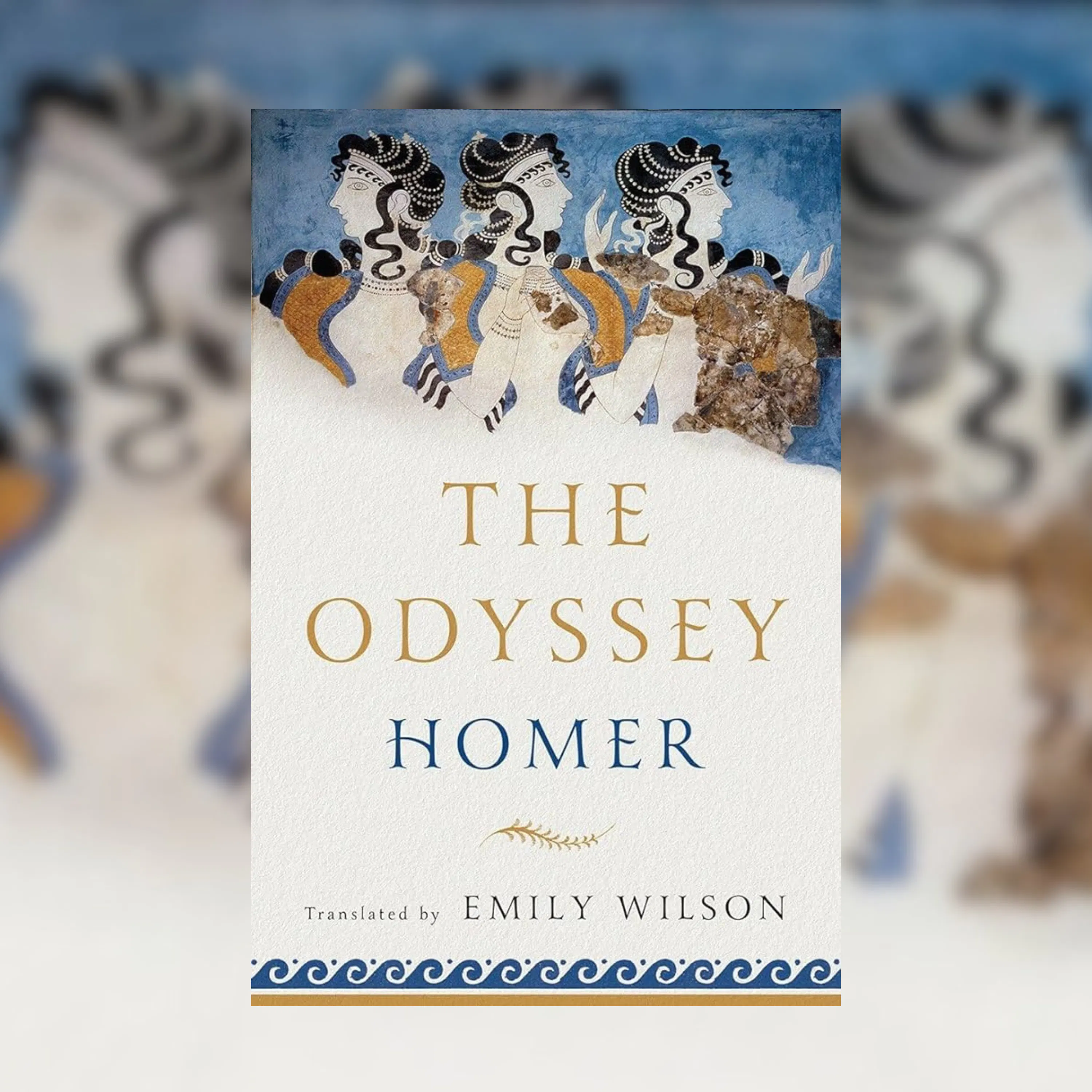
Zero to Well-Read
The Odyssey by Homer
01:31:18
Hot Greek Summer has arrived! Jeff and Rebecca set sail on the wine-dark sea to discover how and why The Odyssey became one of the most enduring stories of all time.
Loading summary
Transcript214 lines
- [00:00]
A
This episode of Zero to well Read is sponsored by ThriftBooks.com it's the Odyssey today. It's hot. Greek summer is here. The Christopher Nolan adaptation is imminent in theaters. And Rebecca and I were thrilled to get a chance to have a cultural excuse to dive into the Odyssey of Homer. And there are a lot of additions you can pick. You're going to hear us talk about some of the translations we like. The Emily Wilson, which we had her on the show, who's terrific. The Lattimore, the fables we talk on the show about. Find the translation that you're going to read. They all have their strengths and weaknesses, their decisions that they've made. I'm going to suggest this as well. Find the reading edition that you would like. You could do that digitally, however, but then do find like a Norton Critical edition and you can find those on thriftbooks.com, something that's got some history. It's got a glossary that's got some maps, a really full featured one. In that particular case, the longer the page count, the the better. So go scroll. You can pick it out. And with free shipping on orders over $15 in the US super easy to get the Odyssey to you. Take you way shorter than 20 years. Thanks to Thriftbooks.com for sponsoring this episode of Zero to well Read. Welcome to Zero to well Read, a podcast about everything you need to know about the books you wish you read. I'm Jeff o'. Neill.
- [01:20]
B
And I'm Rebecca Schinsky. Jeff, Hot Greek Summer is here. It's finally happening.
- [01:25]
A
I'm so excited. We're on the wine Dark Sea, Rebecca. And so too will be a lot of people because I assume you spent $1,000 on your IMAX ticket. Was that your budget for your ticket to the opening night of Odyssey and IMAX? $1,000.
- [01:39]
B
I got super lucky and got opening night tickets directly through my local theater. The day that things went on sale, I avoided the multi hour long wa. Uh, I'm not gonna sell them for $1,000. My tushy is gonna be in that seat on that Thursday night, ready to sail the wine dark seas. We're recording earlier than usual, so Rosy Fingered dawn is here with us.
- [02:04]
A
Yes, it is. Very much so.
- [02:07]
B
Friends, we're talking about the Odyssey by Homer today. And this is our first Zero to well Read guided read along title. So folks who've been participating in that on our Patreon, we've had an exclusive chat for Patreon members and we've also dropped a mini episode a couple of weeks ago that to those Patreon folks that gives you additional info. If you are picking up the Odyssey to read on your own going into this experience, the good news for you is that all that content is still available. So if you had not joined the Patreon yet, but now that we're getting close, or maybe you're hearing this after you have gone to see the Odyssey and you've decided you're going to read the book for yourself, you can join up@patreon.com 02 well read. You'll get access to all of that read along material and our entire back catalog of bonus content.
- [02:54]
A
Quick reminder too to rate and review the show wherever you're listening. Apple Podcasts, Spotify if you're new, wonderful. If you've been listening for a while, great. You can always email us at 02 well read@bookriot.com with your odyssey thoughts. Adaptation thoughts. Those ratings and reviewings keeps keeps our sales furled to sail towards wherever podcast home we're trying to sell to. Hopefully it takes us shorter than 10 years to get to where we're going. But you never know. Things happen out there on the wine dark sea Rebecca. It really everything everything can all kinds of things.
- [03:25]
B
All kinds of things happen out there.
- [03:27]
A
So all right, I was thinking about this last night. Of the books we've done, probably more people have at least a thumbnail of a sense of what the Odyssey is than anything else we've talked about so far. Question mark.
- [03:41]
B
I think probably a thumbnail of like most folks could say like oh, there's the Cyclops. Or that's the thing with the sirens. Like you could picture or think of one of the really iconic moments of the book. A lot of the titles we've done, I think people have a vibe like kind of what Gatsby is gonna feel like or what Little Women is going to feel like. Even if you have not read those books. The Odyssey, I think the space between the vibe we imagine and the vibe that we encounter is pretty significant. And that was a really fun part of this reading experience.
- [04:14]
A
All right, so Queen Fighter as Athena is called Queen Synopsizer Rebecca, what is the plot of the Odyssey?
- [04:24]
B
Oh, I love this as my Homeric epithet. It feels ridiculous to try to sum up the Odyssey quickly, but I'm gonna try here. So when the book begins or when the poem begins. Cause this is an epic poem, more than 12,000 lines long. It has been 20 years since Odysseus, the clever and studly king of Ithaca Went away. Yeah, he went away to fight the Trojan War. And the folks back home are getting restless. There's his wife Penelope, who is fighting off dozens, maybe more than a hundred young suitors who have been camped out outside the palace. They're eating her food, they're drinking her wine, and they are waiting for her to pick one of them to be her next husband because they're convinced that Odysseus is either dead or not coming back. It's been 20 years. Their son Telemachus, who was a baby when Odysseus left, is struggling to come into his own. He's 20ish, but still very much in that in between zone. He's caught between childhood and adult life and his future is hinging on his father's long awaited return. Meanwhile, odysseus spent the first decade of this 20 year absence fighting the Trojan War and he has been trying to get home ever since. For the last 10 years there's a series of setbacks which is putting it mildly, like really mildly, and the deaths of all of the men who survived the war with him, he's the only one left standing. He's been trapped on Calypso's island now for seven years before he's finally allowed to head home. And that final journey home is also quite fraught. But as Odysseus makes the final leg of his journey home, the goddess Athena sends Telemachus, Odysseus and Penelope's son out on a journey in search of news about his father. She's hoping it's going to force him to grow up. So we've got Telemachus and Odysseus stories running on parallel tracks until they return to Ithaca separately, are secretly reunited. They plot to kill the suitors and reclaim their kingdom and reunite Penelope with her man.
- [06:26]
A
And so we pick up in the middle in media res from the very beginning, something I think you and I both like as readers to get stuck in the middle and figure it out. The reason it happens here is so that largely Telemachus, Penelope and Odysseus are operating at the same time, like the action, they're all proceeding at the sort of relatively same pace back towards Ithaca. So if you picked up, say right at the end of the Trojan War, you know, wrapping up the horse, getting on the ships, the you're going to do a lot of Odysseus, a lot, a lot, a lot, all by himself as like Telemachus is like 4 years old and growing up. So we get dropped in at the most interesting moment where the Olympian forces. The gods are interested now in getting Odysseus home. Penelope's situation is coming to a crisis point. She's been weaving for years and pulling it out at night like she's done everything she can do. Rebecca the suitors and they honestly don't know if Odysseus is ever going to come back. So for the state of Ithaca, something needs to change. We have reached a breaking point at home. So that is our story begins.
- [07:29]
B
This podcast is supported by Quince the best pieces you'll wear this summer are the ones that you'll want to wear on repeat. They're comfortable, versatile and they're right for almost every occasion. That's what I go to Quince for. They make elevated essentials using premium materials like European linen, organic cotton and washable silk without the traditional retail markup. My favorite Quince piece this summer is actually a set. Actually it's two sets. I have their European linen long sleeves, sleeve shirt and matching shorts in two different colors. I live in them. You can wear the pieces together for an easy put together travel look or split them up and wear them as separates. The shirt works over a tank on cooler evenings. The shorts go with just about everything and together they are the perfect mix and match items when you're packing. Quince's 100% European linen pants, dresses and tops are lightweight, they're effortless to style and they start at just $32. Their denim is soft and comfortable, their organic cotton sweaters are perf for layering when the evenings cool down, and their beautiful 14 karat gold jewelry adds that subtle finishing touch that makes even a simple outfit like these linen sets that I love feel really intentional. Everything at Quint is priced 50 to 80% less than similar brands because they work directly with ethical factories to cut out the middlemen. So you're paying for exceptional quality, not the brand markups. And it's not just apparel. You can also find elevated essentials for your home, including bedding, bath, kitchen and furniture at Quint's. Make your summer wardrobe feel easier when you go to quince.comwellred for free shipping on your order and 365 day returns. It's now available for our friends in Canada too. That's Q U I-N-C-E.com Wellred for free shipping and 365 day returns Quince.com Wellred. This podcast is supported by Bull and Branch. When your life demands your full attention, or maybe your hormones have other plans for your sleep, you need every advantage you can get Bolen branches, organic cotton sheets, breathable blankets, and temperature regulating comforters. Let me say it again, temperature regulating comforters are built to actually support rest, not just look good on your bed. I'm at a point where I can't afford a bad night's sleep before a big day and my old bedding was not helping me. It ran hot and it never felt like it was on my side. Switching to bowl and Branch made a real difference. The sheets are noticeably softer, they regulate temperature so much better and I added the comforter so the whole bed feels like it's working for me instead of against me. It's the kind of upgrade you wish you'd made so much sooner. Sleep cooler this summer with bowl and Branch during their annual summer event. For a limited time, you can get 20% off site wide at bowlandbranch.com wellred with the code wellred that's bowl and branch B O L L a n d branch.com well read code well read to take 20 off bolandbranch.com well read code well read Some exclusions apply,
- [10:40]
A
of course that is not where it ends, especially in the Western tradition, which is one of the most significant works. I mean, this is sort of putting it mildly. It and the Iliad are the two headwaters from which almost everything we think of the Western literary canon flows. There's some ancient texts that lead to the Bible, which we'll get to someday down the road for sure. But this is where the ancient Greeks that we know of the Hellenistic periods of the 5th century BCE and then the Romans into the classical world all the way up until today. Interesting portent. I was doing the New York Times crossword this morning. I noticed that too. You noticed that too? Where one of the clues was siren Odysseus obstacle crossed with nicely for me, home of the world's largest bookstore, which is Portland, Oregon, which is where I live. Also up at the top of the puzzle, which is seasick, which I feel very obscene by for thinking about the Odyssey because I am famously a very bad marine traveler here. This was originally composed. We're going to talk about Homer here in a second, but we're going to talk about the poem first composed. There's no air quotes I can do on the podcast.
- [11:47]
B
Came together. It feels like it just arrived fully formed from the head of Zeus.
- [11:51]
A
Yeah, it's 7th to 8th century BCE and then a hundred years later it really starts to be canonized. Then a hundred years later after that. That's the high period of Greece in which these Stories become part of their cultural, religious, historical imagination, understanding, but then also material to improvise on, to do versions of, to take pieces of and incorporate into their own work. How did this thing come to be? We don't really know. There's a bunch of different ideas about this. I'm going to do kind of a very slight pressy on them with a little bit of my understanding and take of what I kind of feel like is happening. We don't really know. But the world of which these stories that then become the Odyssey come to us probably are performed by oral poets over many, many years before. Who knows where the original stories come from? That's beyond the scope of anyone's ability to understand them now. And then over time, they start to solidify a little bit. And then at some point, someone decides to attribute them to Homer, who may or may not have existed. Hold that thought for a second. But the point being, this thing really emerges out of the mists of pre historical record in the Greek and Western world. And eventually many, many centuries later, does it start to get written down from when it sort of would have begun. So it really is at the transition point between the written record and the unwritten record. And I think that actually, for me, makes it very exciting because it has this religious, mythic. This could be something that was written by one person. It could be the representation of hundreds of years of sort of collaborative poetic and cultural imagining. We wrote it down. This is what we have probably performed in sections. Like you said, 12,000 lines probably couldn't be done by itself. I think you probably could if you really wanted to. There's some studies of oral traditions in Somalia and Yugoslavia, of oral poets doing extended recitations of it. But I just think about, like, say, how many Beatles lyrics I know, and I don't even really try, you know, like, look at Eminem. Like, how many lyrics are coming out, like, I kind of wonder if someone really put their mind to it, if you could do it. But having said that, the timing more than the ability, which is, you're sitting around the fire, you know, out on the sea someday you're roasting some oxen, probably. You got your tripod and your cauldron going and you want to hear. Can you tell me about Eumaeus, the noble swineherd? My guy, Eumaeus, the noble swineherd. We'll come back to him a little bit later. And then it becomes written and then solidifies over time. The first complete English translation wasn't until 1615. Very important to know that a lot of the people that referenced the Odyssey, knew the Odyssey over time, didn't have a translation they could read in the language they spoke.
- [14:46]
B
Yes.
- [14:46]
A
Which is very strange.
- [14:47]
B
And there are references to these great Greek works in Shakespeare. Who is composing his plays before we get the first English translation of the Odyssey. So he's. It's just in the air. People are talking about this. Maybe scholars are writing about the things that they have heard that have been passed down. Or folks who can read Greek and Latin at the time are telling the people who speak and read English what's going on in these stories. But really amazing that we don't get that first English translation until 1615. And in the last 400 years, there have been countless translations. You can go just down a million rabbit holes. There are some signal ones that we'll go into more detail about in that mini episode for the Patreon folks about how to pick a translation. And Emily Wilson talked about that with us as well.
- [15:37]
A
You have a note here that in 2018, the BBC did a list of the stories that shaped the world. And this came in at number one here. Where do we get some, you know, what else is important about, like the Odyssey? We get it. The first conception of the afterlife in the west appears here. A very strange version of it. We'll spend some talking about it. This is where Virgil gets most of his conception from. And then Dante sort of enlists, artistically, enlist Virgil to walk him through the afterlife in the Inferno, which, where we get most of the modern versions of hell and heaven and everything else come from, really begins here. And you meet some of the same characters. Right. You meet Achilles in these versions of the afterlife. All along the way you see some
- [16:18]
B
of the folks, oh, at one point, Odysseus goes to Hades and he meets Tantalus, who features largely in the Inferno as well. We were always talking about how the great books speak to each other and are connected. Almost all of them point back in some way to stuff that that's going on here in the Odyssey. But Tantalus is thirsty and he's trapped with water just out of reach. That's where we get the term tantalizing. That story, I think, grew out of mythology, but Dante builds on that irony in the way that he shapes out sort of a lot of the punishments for people that are happening in his version of hell, which are funnier and stranger than Judeo Christian conceptions are. And there's a lot of that in the Odyssey as well. Like, this is just stranger. The like weirder and unruly, er, and the like sort of da dum, da dum, da dum, da dum, like rhythmic presentation of the poem. Can, I think, hide that a little bit, where then all of a sudden you realize, like, whoa, this is actually quite weird what's going on here, that you can just go on a long walk and enter Hades and start talking to people who recently died and hearing their stories. But all of this stuff is sort of in the mix as folks are first translating it. And it comes out of a time when Greece was illiterate. This 12th to 8th centuries BCE were the dark Ages in Greece. And so they only had the options to tell each other stories and to try to. For the rhapsodes to remember as many of them as they could and carry them around and do story time with people. But it carries forward into shaping just. It's impossible, really, to capture how much this has shaped modern literature, really the history of Western literature. There's an entire Wikipedia page about things that were inspired by or spun off from the Odyssey. And it is long and incredibly varied.
- [18:14]
A
Yeah. And it's interesting because it is where the literary tradition in the west, as we understand it, begins because of when and where it happened, which is this transitional document, as you say, from an oral culture to a written one. Homer maybe knew how to write, if Homer existed. Again, I'm going to put a double pin in that. But any earlier and we have no Homer, because there's just not enough writing to sort of capture specific humans names any later. And we know much more about provenance, biography, textual history, et cetera. For example, we did Sophocles, Oedipus Rex. That's two or three hundred years later, depending on how we're doubting things. And we just know a lot more. There's just a lot more written record. You know, there's dramatic competitions which are well documented, and we really start to enter it. The world comes into more focus, I guess is one way to put it, because we've captured a lot of at the same time. So it's first and first mover advantage is real. And it turns out it helps. I think it's so interesting to think about the Odyssey 2 as a story of transition of war to peacetime, and then from the mythic world to the human one. So a lot of this stuff is happening. There's layers within layers that gets the literature thinker in me really revved up. So you're going to hear me talk about that a little bit more. I also Want to say here that the Homeric poems precedes this idea of genre that we have.
- [19:28]
B
Oh, totally.
- [19:29]
A
There is no genre here. I mean, it's an epic poem, but they didn't know. This is just stories they told. There's no such thing as history. Well, let me put it this way. This is history. It is religious, like a religious text, like the Bible or the Bhagavad Gita or something. It is ethics, how you should be in the world. It's anthropology. How are humans, what's out there? Sociology. How are societies put together? It's metaphysics, like what's beyond the pale of our understanding? And I think first and last, it's also entertainment. It's also like going to the movies. It's also, tell me what he's. These long descriptions of being at sea and being shipwrecked or being buffered around. That's kind of their version of a car chase. That's exciting. That's interesting. What's going to happen. So I think it's helpful to think about it's all of these things wrapped up into one, and to try to separate it as a modern reader is going to be frustrating, fruitless, and I think beside the point. So it's an invitation to think differently about it at the same time. Homer. I refer to the Odyssey of Homer because I think that different prepositional phrase helps me a little bit.
- [20:31]
B
I'm really glad that you're saying that because as I have been, like, writing the show notes and putting things in plans, typing out the Odyssey by Homer,
- [20:38]
A
I know I can't do it.
- [20:39]
B
It felt really strange. I think in conversation, I tend to refer to it just as the Odyssey or Homer's Odyssey, which somehow works, but doesn't make it sound like one guy sat down and just wrote all of this or created it. I think that's really what we're getting at, that these stories in, like, the mythology of ancient Greece predated the existence of Homer or any collection of people that might have been thought of as Homer. Everyone knew about Athena and about Zeus and about Poseidon and about some of, like, what happened in the Trojan War. Of course, in this book, they don't call it the Trojan Horse. It's the Wooden Horse.
- [21:15]
A
The Wooden Horse.
- [21:16]
B
And I was like, oh, yeah. Because they would not have known that it was gonna be mythologized for thousands of years at the time and attached to that and. But that. It's like you're coming into it. You have to remember that the folks hearing these Stories would have come in with this back knowledge. And the repetition of the details and the reciting of the history is part of how they are invited to remember their people's history and their society's history. So at the moments where, like, my eyes wanted to glaze over because it's like an Odysseus arrived, But then there's 16 lines of, like, backstory about what had happened to him and who those people were all related to and when they had invited each other to parties. Like, that was really important because it wasn't just storytelling. This is not just entertainment. This is working on, as you were saying, so many levels and serving multiple functions for people who were hearing the poem.
- [22:07]
A
Yeah. And the people hearing them, maybe they traced their ancestors to one of the people in the list of people that someone killed or that killed a bunch of people became important to them. You know, kind of like the Begat sections of the Bible, where exactly at the moment of time, it was interesting, but now it's more of an indication of what the work of the text was than interesting to a modern reader, too. We basically don't know who Homer is. At almost every point of what you might say about humor, you can find a serious someone who thinks about this stuff that that's probably wrong. The earliest references to Homer are from the 7th century BCE, about 100 years after people thought he maybe lived. And 100 years at this time is a long time of cultural, intellectual, and historical change. So, again, it's just. It's on the outer reaches of what we could understand at this moment. The earliest fragment we have of the Odyssey is from the third century BCE. So already we're 500 years after the supposed time of homework life, which, again, is a long time even now. But the difference in the social record is very difficult to explain. And I don't even understand myself because I am not a primary document holder. But in reading about it over time, I've come to understand the gap is huge. 500 years ago is Shakespeare to us. And that feels a long time ago. We were already writing it like United
- [23:25]
B
States as it is now. Like, we don't have United States history from this version of the country that even goes back that far. We're half that old. Like, it's just wild to think about that and to know that the Homeric question, the mystery of who authored this or who wrote it down at least, is so significant that the scholars refer to it as the Homeric question. Capital H, capital Q. This is a thing no one knows. And the Source, like the sources of debate are myriad and they've been going on for centuries and will continue like we're not going to know. And the not knowing, I think, is part of the fun here.
- [24:02]
A
And we actually had to develop scholarship hundreds of years later for people who didn't think, huh, I wonder, wait a minute, Homer was real. Like, you know, like, for a long time, people didn't question at all because they didn't think to question or there was no reason to question it at the same time. Yeah. As you said, much debated whether Homer was one person or several oracles, oral poets who are then transcribed. Or was this the most famous of the poets of this day? So a lot of it got attributed to him. We really don't know. I am relatively convinced that there was a poet called Homer who was meaningfully important in the creative force behind the document we know as the Odyssey. Now, that sounds like a lot of caveats, and it is, but you could have more caveats about that, but that's kind of my sense. Is that what you get? Like, what is your sense of the authorship situation here?
- [24:48]
B
That's seems right to me. The reading experience of it is pretty cohesive. And granted, like any English translation, the cohesion is also dependent on the translator. I read the Emily Wilson translation. I think you read the Fagl's translation because we wanted to present a couple different perspectives. But in the experience of it, at least, it felt like it hangs together enough that it can believably be the work of one person who had certain stylistic tics and tendencies and preferences and ways that they liked to describe things. I mean, having read the Bible growing up, like, those stories and the ways that they are told seem much more disjointed. And I'm much more inclined to believe that that kind of text was the composition of a bunch of different people working and iterating on each other's work over time. Where I can believe that there was one guy named Homer who was maybe the first one to set this down in writing or led the project of doing it. Maybe he was the, you know, like project editor and a bunch of people were working on it together. But Homer created the style guide as much as it could be. But I can believe that it was one person.
- [25:55]
A
Yeah, yeah. I think about there's an analog that happens after the time of writing is introduced to the Greek world, where Herodotus makes a name for himself by writing the histories. We'll get to the Herodotus at some point, but the father of history as People might not know who goes around Greece orally reciting sections of his work. And that's how people knew him. And I could imagine something similar happening with someone called Homer going around Greece telling these stories, getting a bunch of people in the marketplace or the town center or whatever. And that is the last great poet. The first people writing these things down could remember, like, maybe they had seen them or their grandfather had. And then we get writing. Oh, we should. We're gonna write that stuff. Oh, that story's by Homer. So that's kind of how I feel like, I think a real person who gets a lot more credit for the origin of these stories rather than the specific language. But the specific language is probably more traceable to an individual than the specific myths, like the Tantalus and Siren of Trojan will all predate whoever this Homer person would have been by centuries, in
- [26:55]
B
all likelihood, just trying to ground ourselves in. These were real people. Because the stories in the book are so strange and so far outside any of our experiences. I love this image of the rhapsodes, like, traveling from city to city or town to town, and that maybe Homer is the one that, like, you hear he's coming, and you're like, bro, yeah, we gotta get our kids who are coming to town. Yeah, we gotta go see Homer on Wednesday night. You have not heard. Heard him do the story of Eumaeus, the noble swineherd. It's like he does it better than anybody else. We gotta get in there. Wait till you hear when he does this part and that sort of, like, legend around who this person was who's already engaging with these legendary stories. That helps me to, like, get excited about something like this. The reading experience itself is wild and can't. I found it to be really fun. But remembering what was the world like? Or trying to imagine what the world was like when people would encounter these stories as told to them by these poets, some of whom are living in their town. Some of them are traveling in and out. Like, it would be exciting for the best storyteller to roll up. Like, we've all been at a party where the one person who tells the best stories, it just takes center stage. And everybody's like, jeff's gonna tell the story about those raccoons on fire coming down the fireplace again, which is a real one. And we'll have to tell you someday. But you get excited when that happens. And it's fun to think about that being the origin of Homer here too.
- [28:22]
A
And we'll talk about this a little bit too but the excitement and the power of the story and the scene of storytelling is important in the text itself. Like this. You know, it's. Well, we'll get to the quotes. I'll save that. So the Homeric question is like the Shakespeare question on steroids. Like, what any individual expert or reader or Greek or thinks to be true about the idea of humor is but one of many and likely says more about them than the reality, because we just really don't have that much. I like to dwell on the maybes and what ifs and wouldn't that be interesting? Like, I kind of like to hold in my head the possibility that there was a one Homer. Homer that, you know, maybe we don't have the direct sort of hand to paper, to translation, to whatever, or also, I like the idea that there was a whole bunch of storytellers and it sort of coalesced around this name of Homer. I think both of them are evocative and interesting and that I get to have both readings and switch between them or hold them side by side and, you know, to both have them race my chariot against the sun, with apologies to Apollo, is really interesting there, too. I will say it's taken me a while to get to the appreciation I have for the Odyssey. Rebecca, what was your first exposure to the Odyssey?
- [29:32]
B
I read this my freshman year in college in that I've talked about this class before, this sort of multidisciplinary honors seminar that crossed history, philosophy, theology and literature. And of course, the Odyssey does all of those things. And I think this was the first book that first semester we did Antiquity to the Middle Ages. And I'm pretty sure that the Odyssey is the very first thing we read in that seminar. It was.
- [29:57]
A
Yeah. How did you find it?
- [29:58]
B
I was so scared. I think we read the FAGL's translation. I remember just being intimidated by the halo around the Odyssey and being intimidated by these professors who really knew their stuff and by the reputation that this class had for being really challenging. The test was they gave you a blue book and would give you a quote. It was five quotes, I think, from different parts of the Odyssey. And you had to say which book of the Odyssey that quote fell in and what was happening there. And like, that knowing that going into the reading just scared the crap out of me. Like, how am I going to remember all this stuff? But I do remember being really gratified by it and just kind of having my mind blown open by how fun and strange the book was. I had a wonderful teacher. That makes all the difference all the difference. This was the first time that I went back to it and on the revisiting I was like, oh, I can totally see how they arrived at that method of doing the test because it wasn't about tricking you. They would pick lines that were obviously anchored to key moments. But there are really just like a handful of key things that happen in this story and the rest is fun storytelling, adventure stuff. And maybe to know that going in is helpful. I remember the Fagles language being a little elevated and that. That was intimidating to me as well. I'll say. The Wilson is very direct and I really loved that it read like a house on fire this time. Yeah. Okay, tell me more about it. Taking you a while to get.
- [31:30]
A
Well, I had a mind numbingly dull high school class. I think it was called the Epic Tradition. I read a prose version of the Iliad and the Odyssey, which is. Was tough. And then I had a mind numbingly dull college survey course where we had like, it was a big lecture and you broke out into individual discussion sections and it wasn't enlivened. I had the occasion to teach it later in a course not unlike the one you took. A survey course, really a year long survey course that began in antiquity. We did both the Odyssey and the Iliad. We did the Iliad first. And I was, I was most. I wasn't afraid of teaching it. I just wasn't looking forward to it because it wasn't one of mine, you know, it wasn't one of my guys or gals and I have many. But then it became my favorite thing. It was my most favorite thing to teach because of where it falls, what we do and don't know and the possibility, the reading possibilities, the interpretive possibilities and how it sets the stage for what we do and don't know about what happened in the course of Western literature. Therefore, I think it's very freeing to know at this moment that there's a lot we don't know and that there's no correct. The translators, the experts are all competing is not quite the right word. But the conversation goes on about what these things are, how to understand them, ways that they're important and why they still matter. And I just really love teaching them. And I think it is a way of. They say this in medical school, right? You see one do one teach one. And in trying to find something to say to 18 year olds that wouldn't bore them to tears, I found having to find something exciting for me to talk about and what's better than that to engage with the text at the same time. As you say, depending on your translation, like older translations, 19th, 18th century. They can be pretty dense and difficult to parse. The fables that I did, I've also read the Lattimore. I've read the Wilson. They all, as you say here, are easier to read than Shakespeare. Wilson is very, very approachable. I've spent the most time with the Fagle, so that's what Helmer sounds like to me. But also, it's not hard. It's just not. You understand all the words. It's not hard. It's not hard to get there.
- [33:44]
B
Yeah, I'll read just the intro to the Wilson. And maybe do you have your fables at hand?
- [33:48]
A
And I'll break mine out here and
- [33:50]
B
we can read that as well. So tell me about a complicated man, Muse. Tell me how he wandered and was lost when he had wrecked the holy town of Troy. And where he went and who he met, the pain he suffered on the sea. And how he worked to save his life and bring his men back home. He failed. And for their own mistakes, they died. They ate the sun God's cattle and the God kept them from home. Now, goddess child of Zeus, tell the old story for our modern times. Find the beginning.
- [34:20]
A
Sing to me of the man, mused the man of twists and turns, Driven time and again off course. Once he had plundered the hallowed heights of Troy. Many cities of men he saw and learned their minds. Many pains he suffered, Heartsick on the open sea, fighting to save his life and bring his comrades home. But he could not save them from disaster. Hard as he strove, the recklessness of their own ways destroyed them all. The blind fools they devoured the cattle of the sun God. And the sun God wiped from sight the day of their return. Launch out his story, Muse, daughter of Zeus. Start from where you will sing for our time too. You know, it really comes down to me, Rebecca, that the tell versus sing as the verb. And I cannot adjudicate right is wrong. Emily Wilson is probably as right or writer. But I love the sing verb. I just do in this. And this idea of the rhapsode and how it was performed, like it just feels epic. It feels like we're in a special place. So that's where I am. That's where I am.
- [35:17]
B
The faggles, I think, does feel epic in that way. And there's some similar stuff happening in the word order in the sentences and the fables that happens in Shakespeare. Where they're trying to make the meter Happen. So you get a different adjective or you get the words coming in a different order than you expect. That didn't happen as much in the Wilson. She does the whole thing in iamic pentameter. The Odyssey is originally in the Greek. It's composed in dactylic hexameter, which is not a specific rhythm but is about a certain number of syllables and how they're captured. And it can flow a few different ways and you can see each of those writers or you can hear them trying to make their word choice happen. Some of that goes on in the. I think it's most illustrative in the repetitive descriptions of things. So like the dawn is rosy fingered, but sometimes dawn reach her rosy fingers. Or sometimes like the rosy fingers of dawn appear. And it's always the same idea, but the number of words and the order in which they're arranged moves around based on what works for the poetry of the moment. But I think from having heard both of those intros, like you understand what's happening in that first chunk of text that we're hearing a story of this man who is complicated or he's been on many adventures and the rest of his men died. He couldn't stop them. They did a thing that they were not supposed to do. They ate the cattle of the sun God. And now here we go, he's on his journey home. If you've picked up some Shakespeare randomly without a guide and tried to just get into that language, it's a lot more difficult. So I really just want to like put in neon flashing lights. If you have been intimidated about picking up the Odyssey, it will be easier than you think and it will be easier than Shakespeare.
- [37:04]
A
Yeah, I mean even the two. We've decided if you want to pick one up, like you can get on an ebook on your phone a sample of both and read a couple of. Maybe you want something that feels. Maybe you like the Wilson's vibe, maybe you like the Fagl's vibe. Maybe there's something else for you so you can kind of pick your own filter for your how to get the same time. Let's see what else would like to read this. Let's do a little bit more. What's the feeling of reading it before? What it's all about is 24 books of various lengths. Some of them are longer and shorter. It is not broken up. It is not as much of the water stuff as people think. There's a lot. The Telemachy, which is the beginning is. I don't think Odysseus has a line until book five, if I remember correctly,
- [37:47]
B
the first four books we don't hear from him at all.
- [37:49]
A
Telemachus specifically and Penelope. We're getting a sense of what's going on Ithaca. Then we go up to Olympus and the gods are like, ah, we need to get, we need to get Odysseus moving. Then we do a bunch of books in the middle of Odysseus getting moving, telling stories, moving around. And then the end of the book is his return and then how they clean up the household and what happens there. I'll save the hot take for later. But there's a lot less. There's a lot. But there's a lot less of Odysseus going from this place to this place to this place to this place and seeing weird stuff. Weird stuff, Weird stuff than you think. For example, the lotus eater story. Not only is only books 9 and 10 really the major things that we know from that the lotus eater thing is like nine lines long. It's like there's the lotus eaters, they're eating stuff. Forget I gotta get outta here. You're gone. Like, it's very, very brave. It's very surprising.
- [38:34]
B
Almost all of the things that we think of as the big set pieces for the Odyssey, the lotus eaters, the encounter with the psych Cyclops, the Sirens. They go to see Circe, he fights the Lystrygonians, the Scylla and Charybdis whirlpool situation out at sea, the trip to Hades. That's all in books nine and 10 out of 20. So two books out of the 24 books. Or you can think of each book as like a long chapter. My Wilson copy is like 500 and some odd pages. A hundred of that is introductory material. So the story itself is about 400 pages and the. That breaks up into 20 to 25 ish page books. So you can really parse this out for yourself to make it quite a manageable reading experience however you want to. But that, like, I was surprised to remember that, like. Oh yeah. Most of the things that you picture when you picture the Odyssey are those big cinematic moments. They happen in a really concentrated space in the book. A good chunk of it. Like the full second half of the book is what is Odysseus gonna do when he gets home? How are they gonna get rid of these suitors? Can Telemachus grow the hell up and like become a man already? And what does Penelope know? That's a great mystery that runs through this because Odysseus Arrives home. He hasn't been there in 20 years. He's dressed in rags. He looks like a beggar. He is acting like a beggar, sort of posing as one. But then he's back around the palace in this role. And it's very ambiguous in a way so delightful of like, does Penelope recognize him and does she know what's going on? I think it's fun to believe that she does and that she's in on the game. She is testing him in the ways that he is testing her and that they're. They're playing these games with each other. These people like to play games. This is not a book about people who said, like, I don't want any drama in my relationships.
- [40:31]
A
As you say. Yeah, and then when you get back together and we have to figure out how to clean this mess up, it's like action packed, exciting. There's intrigue. What's going to happen? At the same time, I think it's helpful to remember that this, whatever this thing is, it was not meant to be read all in one sitting by yourself, silently. That's not the scene of the performance, that's not the scene of the story. That's not the scene of the art. So if you break it up, that makes a lot of sense. Also, they're poetical lines, so they're short. So Even if it's 450 pages, it's not the same as reading 450 pages of prose. Like, your eye goes down quickly, quickly, there is a temptation to speed up, and again, you can go back and read. I kind of suggest slowing down a little bit, like putting it down to the side. Think about what you just read, you know, give yourself a little bit of a breather between. Because again, I think it kind of helps. Take the whole thing at once. Because as you say here, you can't. Your eyes can go through in the rhythm and the meter and the stories and the moving around. There's so much movement between that it has a momentum from one scene to the next and one book to the next. That's pretty interesting. Here you're going to get repetitions of stuff that's, as you say, a feature bug. Some of that is if they were distinct units, you could tell in different places. You needed certain pieces to be portable. But also helps the oral poet remember. Right? You remember certain lines. You have basically units of performance that you can drop in as you go. And it makes the little thing a little bit easier to perform and understand and retain.
- [42:01]
B
It's not like if we're reading a novel today and you're like, oh my God. Every time he talks about the dawn, he says it's rosy fingered. Come up with a new way to say it, man. Like it is. It's a feature of this writing and it serves that purpose. But I actually found that repetition to be quite lovely because there are so many. At least in the Wilson, there are variations on it. So you can have like your favorite version of how the dawn is described with her rosy fingers. And that was fun to me to see. Like, how can a translator be creative within the constitution of that repetition?
- [42:34]
A
We've done plot and character and scene and history. We haven't yet talked about the ideas that are being thought about, represented, contested here. What are some of the ideas that the text itself seems conserved with as
- [42:49]
B
we love on this show? This is a story about fathers and sons, man.
- [42:53]
A
Yes, it is like.
- [42:54]
B
It's a story about a man trying to get back to his family. It's about. About desire for power and desire for permanence. Odysseus, the first time that we see him in the book is sitting at the edge of the coast and weeping. He's been on Calypso's island and he wants to go home. And we, I think, should be careful not to project our like, modern Western understandings of romance on what's happening here. But he does miss his home, he misses his wife. He wants to be back among his people and he wants to resume his place as the king of Ithaca. He wants to have that power and to have it in a kind of permanent way. So we're really about that. When Emily Wilson was on with us last month, she talked about the idea of nostos. This is a story of homecoming, this trying to get back. Nostos is the word from which we get nostalgia. And it is also deeply concerned with hospitality, the term xenia, from which we get xenophobic and other ideas. But of how you welcome strangers, what do you. Spoiler alert for the big ideas. Art. The big questions. Art asks what do you owe your neighbor? What do you owe a stranger? What is expected of welcoming someone into your home? And this concept of guest friendship is the way that Wilson translates it where part of what was going on in the ancient world because like they don't have a way to warn people when they're coming to visit. So you go somewhere, you just show up.
- [44:25]
A
It's all pop names in the ancient world. Rebecca.
- [44:27]
B
It's all popsins 100% on like with no notice. And they're expected to welcome you to give you food and drink and tell you stories and entertain you and to do all of those things before they even ask who you are. And that once that happens, your families are bonded and that bond carries into future generations so that then if they come to visit you, you do the same thing. Or if their children come to visit your children, it's like, well, our parents, our fathers were guest friends. That connection and hospitality is really central and, and obedience to the gods and to these concepts is really central and will determine your fate. You can be a good person and do a lot of good things and not have a good life. If you have gone against what the gods have told you and these gods are self interested. This is not the Judeo Christian God who's just in it to make you happy as long as you try to please him. These gods have their own agendas and they're like there's rivalries with each other. They have different agendas that they're trying to use humans to execute. Cute. And it's just, it's unruly. There's all this stuff going on.
- [45:36]
A
The gods are so fickle. Like there's. You can't just do the right thing and good things are going to happen because their own agendas can change. Like the fascians like really get it from Poseidon. They think they do everything well being good hosts. And then later Poseidon just goes for pissed off because they helped Odysseus a little bit too much and he puts a mountain around their island. Tough break for them. But that gives you a sense of the chaotic world in which they understood. But the people the humans represented in these terms stories just take that as read. Like they don't. They're not frustrated with the gods. That's just how things are. That's, you know, it's in the, in the middle. I want to go back to the idea of Nostos too because we, my understanding is that we think there were probably other epics told of the other people returning from Troy. The Nostoi, they're generally referred to as the series of returns. We get mini versions of Agamemnons here. That doesn't go great. Spoiler alert. But then we also get Nestors, which is the first person person that you know really Telemachus go sees. And that turned out fine. Like that's kind of the ideal homecoming. He's there with all of his sons, his wife was loyal, the house is in order. And then the question there is what's a dissy? What's Ithacuna going to be like. But I like to give an example. I used to give my students this thought of, like, think of how we use the. The world of World War II as a storytelling generator, right? Where there's so many stories. There was such a thing engulfed the whole, whole world. And we could tell stories, and we'll tell stories for the next hundred years about World War II and its aftermath. That's what the Trojan War was for the ancient world. And the Trojan War itself. We're not getting the specifics of it, but we'll get it to do the Iliad someday. They've been there for a long time. It was a cataclysmic event in the imagination of these people. And Achilles versus Odysseus, looking for glory versus looking for home. Death comes here too. Achilles starts to talk to him about man. I'd rather be a slave on Earth than be glorified in the afterlife. They're thinking about these things. They're thinking about their own mortality. Think about how history is going to happen, what happens to them after they're gone, and this idea of their return and what's going to find you there. Because you don't know. Because there was no email. There was not teletype. You couldn't send a note to somebody across the sea to find out. Like, people had no idea what was going for years on end. And that is what hard to get your space, your mental space into. So much of this story is they encounter each other as Rebecca, as you said, like, who are you? Where are you from? But they want to know what you know. I knew this guy. What happened to him? Or I heard there was this thing about this thing. What was your sense of this? Because that's all they had.
- [48:08]
B
What did you hear about the wooden horse?
- [48:10]
A
What did you hear about the wooden horse? So they're in these city states and moving around. There is no Greece as we know it, but there's these individual cities, states. They each have variations on the same kind of setup in terms of our understanding of how the world was put together. But then one thing this story is doing is taking you outside the pale of the known to the Cyclops or the load. There are these. There's a sense that there's other ways of being in the world that aren't like us. And we have to coexist with them or avoid them or conquer them or do something else at the same time. Let's see. Yeah. Questions of women's role and value. You know, Penelope is an Interesting figure here for a lot of different reasons. She's cunning, but she has bounds to her ability to wield power. Right. I think there's a modern. I don't know, a modern desire to, like, why can't Penelope be queen? I'm here with you. Go read the Margaret Atwood. Penelope, that's great, but that's not the world we live in. Rebecca. Like, so how can she keep her household ready? But also, she doesn't have authority to sort of do this indefinitely.
- [49:14]
B
Yeah. And like, for the men to maintain some of their power, especially if they've made women who they inherited land by, you know, virtue of that marriage, fidelity matters a lot. And we see different versions of this. As you were saying, like, Nestor comes back, his wife was faithful. They're all good. But you get Agamemnon and Clytemnestra had left him and gone with somebody else. Helen of Troy has been kidnapped and has gone off to live with another guy. There's all of, like, these variations on what the women are doing because the women's fidelity is deeply connected to the power that the men can maintain or cannot maintain. And so the women's worth largely hinges on their fidelity. Like Odysseus seems like he's having a pretty good time with the ladies on this journey back. He's on Calypso's island for seven years and she wants him to stay forever. And there aren't details about what Odysseus was getting up to, but he's been gone a while. I think his boots have been under a couple different beds. But he's really concerned about, has Penelope remained faithful to him? And glad to hear that she is not allowed any of the other suitors into the palace because if she had, it calls all of his power into question. If she's taken a new man, that new man is the new king. And Odysseus comes back and it's too late. So gender stuff is really interesting here. Slavery is a given part of this world. It's set up and presented in a different way than like American chattel slavery was. And. And the royals, Odysseus and those folks seem to have a different kind of relationship with the people that they have enslaved. Also, though, we get to see moments where the slaves have great power, that they know all the secrets, they know what everybody's up to. You don't wanna cross them because they know everything that's going on, but also because folks seem to carry this awareness in the world that the oppressed people, if they were to get angry could rise up and become more powerful than you are. So how Odysseus and the people in his sort of social tier of power navigate and interact with their slaves. And Wilson refers to them directly as slaves. I know some of the other translations kind of allied that relationship.
- [51:35]
A
That's one of the weaknesses of the fables of I would say for sure.
- [51:38]
B
Yeah. So that's just a thing to know about that world. And as a Western reader, especially as an American reader, trying to expand how I understood what, what a slave was doing in this place. Not that that's a great existence for anyone certainly, but it carries a. Just not a better or worse aura, but a different aura.
- [52:00]
A
It's different. Yeah, yeah. And, and that's the point you make there about who knows what. And those. The lowlier in the household sometimes are overlooked. But also they're mucking out the toilets and taking. Getting the food to places like it's hard to hide in the comings and goings of a big household. Who, what's really the score is they have all these intel and so knowledge and who knows what and how you know it is also at the core of this. Remember the thing that the sirens say are sing to Odysseus as he's lashed himself to the mast because this is Odysseus's move, right? He. He is told stop your ears up with wax so that you're not enchanted by the sirens and you could just blow by them. But he's like I want to hear what they're doing. So all you, all the, all the ship, all the crew, you stop up here as well. But I'm going to keep mine unpleasant plugged. But lash me to the mask so I can hear. And what is their tantalizing thing? It's that they know everything and they can tell him everything. It's knowledge. Right? That's the genie in the bottle for Odysseus. But I think the wider world of the Odyssey is if you could but know. Because information is a commodity and it's useful and it's powerful and dangerous if someone has it and you don't. And that's something you're going to see at the same time you're getting discussions thinking about free will. So the gods are powerful, powerful, but humans don't make it easier on themselves. Is like literally in the text a couple different places. We are somewhere between being subject to the divine, the natural, the non human and our own volition. That sounds like that feels like quite modern. Like isn't that Kind of what we think, like we have some control. But there's also, we call it structural whatever. At this point they would call it Poseidon. I think it's interesting to note too that Odysseus is the most heroic of the truly mortals because remember, a king, Achilles, Hercules, these are demigods. Odysseus isn't. He's just a dude. I think of, I used to say think of him as Batman to Achilles, Superman.
- [53:44]
B
Odysseus is just a dude.
- [53:46]
A
Just a guy. Just a dude. The questions of happy households versus unhappy ones. Nestor's household is the paragon of what this looks like. Sun's all rounds. Happy couple. You've got the meats on the spit. Agamemnon, tough. And Odysseus says, where am I going to fall on this continuing of things that await for me when I come back home? Story, story, stories. At one point, so we haven't talked about this. The setup is that the rhapsode, the poet, the performer would invoke the muse, right? This is not my story. I'm just a vessel for this thing, this sleight of hand, song of dance. But at one point you have a scene of the muse telling us of what Odysseus was telling someone else, of what a shade in the underworld was telling him that someone told him.
- [54:27]
B
It's like seventh hand.
- [54:29]
A
That is a nutty level of metatextuality and the structural, the like, that is what this is about. This is about story and how knowledge is imported and those multiple layers and those transmissions from one to the next. In this scene of storytelling, it's also about the double edged sword of curiosity and exploration, right? Odysseus wants to know. Curiosity almost kills this particular cat, but he wants to know. But the other thing about curiosity is you go find things, you go discovery, right? That is what happens in the unknown. And sometimes you find people that want to kill, kill you. Sometimes you find the golden fleece. And that's just the deal.
- [55:07]
B
And going away from home and to have an adventure is how you grow up. Or at least that's how we see Telemachus grow up. When, when it opens, Athena is sending Telemachus out like he's, he's got to grow up and figure some stuff out. And she's like, okay, go on a journey, go to see Nestor, go see Menelaus, find out if there's news of your father. And it's about both the news and the going away and what's gonna happen to Telemachus as he takes that journey. Like, one of my best friend's kids just had to read this in their freshman year of high school. And we were talking about it, driving around, and I was like, what are they? Like, what's your paper assignment? And they were asked to write their paper on does Telemachus exhibit personal growth? And if he does, what does that look like? And if he doesn't, why not? And, like, what are the stops and starts of it? And I think that's interesting to think about in this framework of curiosity and exploration, but it also connects to the gender role stuff. Early on, before Telemachus goes out on this adventure to get news of his father. The suitors are causing a lot of trouble. And Penelope comes down to try to talk to them. And Telemachus tries to show that he's a big man and, like, put his mother in her place in front of all the other bros. And, like, who has not seen a teenage boy try to do that? Try to look cool in front of his friends by being a jerk to his mom. Doesn't go well for Telemachus. Penelope is not intimidated, but that's part of Athena being like, okay, dude, you. You have some growing up to do.
- [56:36]
A
You gotta go. You gotta get out of the house and see the world, right?
- [56:39]
B
You gotta go. Cause you're either gonna come back and have to get rid of these suitors and figure out how there can be a new king, or maybe your dad's gonna get back and the two of you can be powerful together and that tension. And then when Telemachus and Odysseus return about the same time, and they're on those parallel tracks, they're gonna run into each other, they're going to find each other, then they're gonna make this plan to get rid of the suitors. It starts to get genuinely really exc. Exciting.
- [57:06]
A
And there's a tension in the ancient Greek world, and I think it's one that still reigns in our own hearts and minds, is Nostos versus Kleis. Nostos is being the return, the going back to the known or staying in the known and the kleos, meaning glory. Going out to find the new, to make a name for yourself, to go into the world. And I've got to say that honing in on that for a freshman in college is a very useful way of approaching this book or someone in transition moment. Like, a lot of us have this kind of choice to make in many moments. Am I going to do what's known, safe, comfortable, or am I going to hazard my well, being life, fortune out there on the open sea, metaphorically, figuratively, and find something new, make a name for myself, discover something outside of myself. But that is a trade off. Like, that's a trade off that exists in many different ways, ways that we try to go through our lives. And it's here at the very beginning of our understanding of the making of a person, a making of identity, and how also humans exist in the world. Because there's a lot of. This is about the disenchantment of the world, right. That the world is changing here from the worlds of heroes and gods to a more mortal coil. I think it's interesting to think of the text as manifestly being one of moving from the time of legend, Troy going back to the apple of discord. And we're not going to get all the whole backstory story there to the mortal concerns of who is going to marry whom and get this house straightened out. Like, that is the. That is the move here. And then also we're getting a sense that the people of the world, and probably the listeners of them, feel themselves lesser to the historical world they understand to be true. There's this quote, few sons are the equals of their fathers. Most fall short, all too few surpass them. If that is true, then in aggregate, the world is getting worse.
- [58:53]
B
Worse.
- [58:53]
A
It's getting less heroic, it's getting less mystic. It's becoming, I don't know, more fallen in some kind of way. And that's happening in the text as well.
- [59:01]
B
Yeah. And it continues to happen through the rest of history. Right. Like there's not a generation in recorded history where people were not concerned that it was worse than it used to be.
- [59:09]
A
Yep, that's right.
- [59:10]
B
And like we have not had an original thought ever. People have been feeling this way for as long as people have been peopling anything else on, like, the vibes, what it's like to read this.
- [59:22]
A
I just want to say here. I just. I think also that there is a sense of Penelope and Odysseus being a good match for each other, even outside of the gender roles. At one point, someone says, no finer, greater grift in the world than that when a man and woman possess their home, two minds, two hearts that work as one, despair to their enemies, joy to all their friends, their own best claim to glory. So there's a sense of inequality within the relationship, if not the civilizations in what they work, which is there. I think that's important to say this is there at the beginning, this idea that there's ideas of a match and equality, even with. Even if they don't have the same opportunity outside of the relationship. But this within the relationship. They are of two minds and they work as one, which is a lot different than head of the household and stuff we get a lot later. That's really helpful, thanks.
- [60:06]
B
Yeah. They have just. They exist in just very different realms. Like the fellas. Like Penelope is able to fool these suitors for so long because the fellas don't understand how weaving works.
- [60:16]
A
Yes. And they don't think of her as an equal. That's a wonderful point. They don't think of her as someone
- [60:20]
B
to be chronically underestimated her. And so she tells them, I'll pick a new husband when I'm done weaving this burial shroud for Laertes, for Odysseus father. And so she weaves by day and then at night she unweaves. And the next day she reweaves the same section. And she does this for like more than a decade.
- [60:40]
A
They're so dumb. I mean. And she gets ratted out by one of the women in the house. So the dudes don't even figure it out. They have to be told told about it eventually.
- [60:47]
B
So they are living in completely just separate realms. The flip side of that is that Telemachus, when he goes on his journey that Athena's ordered him to go on, tells one of the servants, don't wait 12 days before you tell my mom that I'm gone. So it's completely conceivable that they could go 12 days of not bumping into each other. That she could go almost two weeks without noticing that her son has left the island. They live in the same palace, but they exist in computer completely different realms. And I do appreciate that idea of Odysseus and Penelope as being like the biblical language would be equally yoked that they are or Shakespeare. It's a marriage of true minds.
- [61:31]
A
The merry war. The merry War, Yes.
- [61:33]
B
They can hang with each other. And that she seems as crafty as he is in her own ways, I do think is really important.
- [61:41]
A
You did a wonderful work here and gave us an incomplete list of the Homeric epithets of Odysseus. The epithet being the stakes. Standard descriptions of a place, figure, God or whatever. Do you want to run through them real quick?
- [61:52]
B
Yes. We've got Odysseus, the mastermind, Godlike Odysseus, wily Odysseus, the lord of lies, the man who can adapt to anything. Clever rascal Odysseus, the city sacker. Odysseus, great strategist. Crafty. Odysseus, the master of deception. Devious. Odysseus, Inscrutable. Odysseus, the man who thought of everything and unwavering. Odysseus. Odysseus.
- [62:16]
A
Amazing.
- [62:16]
B
And I know I didn't capture all of them.
- [62:19]
A
Amazing. All right, time for stray thoughts. Our own personal observations, wondering musings as we got through the text. There's a lot of them here. We cannot get them all. Rebecca, where would you like to begin?
- [62:29]
B
Is Odysseus the OG unreliable narrator?
- [62:34]
A
Is there a reliable narrator in the whole thing?
- [62:36]
B
That's a great question. Yeah, because he's relaying a lot of the stuff. He especially is the one relaying all those big set pieces of like, and this is how we killed the cyclops, and this is how I escaped the big whirlpool, and here's how we did this. And Odysseus makes himself sound pretty dang good. Like, it is the poet who's describing him with all of those epithets. But it's the kind of thing that if the guy is telling you all these stories, you might believe one of them if he tells you these stories at the bar, but when he's got 15 of them, it's a little like, okay, dude, we get it. You think you're hot shit.
- [63:12]
A
I love this point because. Because it's fun to think about the idea that Odysseus plays the role of the Bard many times and he's the last person standing we meet from his crew coming back from Troy, so he could say, whatever. Isn't it useful? Wouldn't it be useful for him to come to someone's household needing help to tell them a really good entrancing story, to gain sympathy and affection with them? Boy, it's awfully convenient that he has all these amazing stories to tell when the thing that he could best bring without any material goods as a story. It's very convenient, Rebecca.
- [63:44]
B
And that he's the hero of all of them.
- [63:46]
A
And he's the hero of all of them. Let's. Well, why don't you run through yours and then I'll go through mine.
- [63:50]
B
Yeah, I mean, I found some of the other gender stuff to be really interesting. Like, it is weird to see how much modern culture equates Greek masculinity with stoicism and toughness and violence. Because these dudes cry a lot, all the time. There's so much weeping and there's so much yearning. And I found it kind of refreshing to Be like, yeah, you just came back from war. A lot lot has gone on. All of your friends have died. Also, you had to kill a cyclops and escape a whirlpool and be lashed to the mast of a thing so the sirens wouldn't get you. Your dudes didn't listen to you. They ate the cattle of the sun God. Now everybody's dead. Like, you'd have some feelings about that or. Wilson even refers to it as like. Conceive of him as having a version of ptsd. Think about the human experience of it.
- [64:37]
A
But the body keeps the score, Rebecca. We know this. The body keeps the score.
- [64:40]
B
I mean, and Odysseus, what a body. We are given to believe.
- [64:43]
A
I mean, all right, so you have this. He is a swordsman. We're given to understand.
- [64:49]
B
Yeah. How good is Odysseus in the sack? Apparently quite.
- [64:53]
A
Calypso for a year, Circe for seven.
- [64:58]
B
Other way around.
- [64:59]
A
Oh, sorry, I get them confused all the time. Yeah, other way around. And also, when he gets home to Penelope, they do not Terry in going back to their tree bed.
- [65:10]
B
Yes. I love the sauciness of her being. Like, if this man is really my husband, he's going to know some things. And the thing that he knows is that the bed is carved like, carved in and around this olive tree and it's kind of immovable.
- [65:26]
A
Well, he is the man of many tricks. I think she knows his moves. I think it's not just the bed that's the telling sign of whether or not this is disus. Right. You know, he's got moves. He's the man of many tricks. Apparently clitoris is a Greek word, so there you go. Also, notoriously hard to know where the origin of Clitoris comes from, ironically.
- [65:46]
B
Anyway, that is an after dark thought. It is 10am, sir.
- [65:52]
A
Let's just say that he knew the little hill to find Penelope on there. Let's see, I've got the. I think this is the first instance it has to be of the dog knows the real. So he gets home and his dog Argos is just sort of waiting around. Is like he's in his beggar's Athena thing and dog is old dogs.
- [66:10]
B
20 years is an old dog.
- [66:12]
A
And sorry, spoiler alert. The dog just sort of happily passes away after realizing that. Also, I think this might be the first Easter egg in the history of Western tradition, because the Argonauts and Jason the Argonauts would have been the earlier idea of going out in a sea voyage. And so that Odysseus would Name his dog Argos just because it'd be sort of like naming your dog Obi Wan or something like it's referring to this other story that other people would get at the same time.
- [66:35]
B
It's really fun. There's like some of the just ancient long running social dynamics. When Odysseus won't stay with Calypso, she does a version of like, well what does Penelope have that I don't? And she's basically like, I know I'm hotter than her. Like I know this as like she refers to her body parts and it's like, I know I'm better looking than her, I'm a godd, I've gotta be better in the sack than she is. And Odysseus is like, yeah, you're right, you're prettier, but that's my home and I wanna go back. Yeah, but that so relatable. We see this still. What does she have that I don't?
- [67:13]
A
Yep, something to keep in your back pocket. At one point Helen gets some like special medicine from someone she knows from Ethiopia. So just in case you wanna have Helen's connection to Africa in your back pocket for reasons you know, it's certainly closer than say Boston, Massachusetts to the world of Greece that a non sequoia. But if you know, you're no Odysseus pulls the same move several times. He dresses up a beggar as a beggar to survey Troy, dresses a beggar as he does in Ithaca. And then notably the Trojan horse was his idea. So this example of always letting something into your house that you assume you understand to your peril, which is why you know, circumspect Penelope, which is the epithet I always have in my mind of like she's going to hold an advance or judgment. She's like, she's not gonna think she knows the deal until she really knows the deal. She's gonna keep her cards close to the vest, but also not commit herself. And then those who too readily believe they know the deal are often swindled. So if you live with Odysseus, you trust but verify like a boss is my thought.
- [68:18]
B
There, there is so much disguising and then so much testing of other people to see if they are who they say they are and if they recognize you for who you really are. And that, that's just part of it. Being a, being able to go in disguise is not like deception doesn't carry the same sort of moral valence in this world that we might apply to it. Odysseus isn't doing something wrong or weird in his world. When he appears as a beggar in front of his father to see if his father recognizes him. Like, that's just kind of part of what they're doing and that. It all goes back to those, the epithets for him. He is the trickster. He is the one who can pull off all of these things. He's the master of deception. And that's laudatory, if anything, as a description for him.
- [69:00]
A
And then in, like, performances of magic, they call it the prestige when you sort of reveal. I also think, don't underestimate the joy. And all these the gods themselves find in the reveal of I'm actually this, or it was actually this all along. Like, that's part of the fun. At the same time, too, Homer never misses a chance to mention how great listening to great stories is. Here's one passage. There's nothing better than when deep joy holds sway throughout the realm. And banqueters and up and down the palace sit in the ranks enthralled to hear the bard. And before them all the table seeped with bread and meats and drawing wine from a mixing bowl. The steward makes his rounds and keeps the wine cups flowing. So this is the scene of happiness. Sitting around a lot of food, hearing a good story. Let's see, telling war stories, not wanting to talk about the war is here from the beginning. People want to talk about it. They won't talk about it. The same thing. Time. There's this one great point where Homer kind of realizes that his metatextual Russian nesting dolls of stories have kind of gotten away from him because Odysseus is saying, well, oh. Or so I heard from the lovely nymph Calypso, who I think heard it herself, she said, from Hermes. So, like, I could be making this up. You can just say you heard it from a God. People have to believe you. But it does even get away from Homer a little bit. One question I have is how distant from the time of these stories did the intended hearer understand them to be right? So if you're like, let's say there was a homer in the 8th century telling you the story of Odysseus and the lotus eaters? Is that itself way back in time? Was it a couple generations away? Nobody knows. But this is something with the customs and practices felt familiar. I just don't understand this. You can't get into their mind. But this is one of my great questions. What's their own relationship to these stories? Is something I'd Love to know. And one of the great questions I would love to have the to answer, but I never can.
- [70:47]
B
Yeah, that's a great one. A lot of notable quotes from the Odysseus.
- [70:51]
A
Yes, let's go on to quotes. We will not do too many because the translation gets a. You know, that plays a part here. What does Goodreads say?
- [70:58]
B
Rebecca? The Goodreads favorite quote is of all creatures that breathe and move upon the earth, nothing is bred that is weaker than man. Which is the first chunk of a longer paragraph that goes in that like this is not actually the whole idea of that, but count on Goodreads to decontextualize something.
- [71:16]
A
Yes.
- [71:18]
B
Couple of my favorites. Soon dawn was born, her fingers bright with roses. That was a variation on Rosy fingered Dawn that I really liked. The forest on Calypso's island is described as being. It was full of wings. And then there's a list of the different birds that are there. And like having been in beautiful places that are filled with birds, to think of them as it was full of wings. Like what a lovely way to present that weapons themselves can tempt a man to fight.
- [71:47]
A
Seems the problem with the standing army is you want to use it, as you probably heard us talk about in a previous show.
- [71:54]
B
And he held his love, his faithful wife, and wept as welcome as the land to swimmers. When Poseidon wrecks their ship at sea and breaks it with great waves and driving winds, a few escape the sea and reach the shore, their skin all caked with brine. Grateful to be alive, they crawl to land, so glad she was to see her own dear husband, and her white arms would not let go his neck. It does get elevated at times. And when it does, it's really beautiful.
- [72:20]
A
I'll just do a couple moments. So this is talking about as Odysseus is leaving the underworld, he sees that the shades are talking to themselves. So they traded stories. The two ghosts standing there in the house of death, far in the hidden depths below the earth. So this idea that afterlife is just sort of telling the same stories over and over again, that's the end of life, is that you have no new stories stories to tell in that particular moment.
- [72:44]
B
You get that in what was the RF Kuang book last year?
- [72:49]
A
Oh, Katabasis.
- [72:50]
B
Yeah, In Katabasis they go to hell and they meet these shades. And all the shades can do is tell you about the time they. How they died.
- [72:56]
A
Yeah, I really like at the end of that first that intro in mine. The idea is you're invoking the muse saying, start from where you will start wherever you want. But sing for our time too. Like, make it relevant, I think, make it modern. Modern. Like, tell us this. That relates to our own particular lives. That's what always gets me thinking about what is there understood? Is there some version the music could tell? Like, we don't know what the hell. That seems like, weird. I have no idea what that is. Also, if you can slow down there, you get weird descriptions, metaphors and similes. So this is just like pebbles stuck in the suckers of some octopus dragged from its lair. So strips of skin torn from his clawing hands stuck to the rock face. Like, really specific and evocative. It can shock you at moments into like, whoa, that is an artist at work. Like, that's a specific thing. That's not something that would just emerge out of sort of consensus.
- [73:44]
B
At the same time, sometimes you are reminded that it really is poetry.
- [73:47]
A
Yeah, yeah. And I also like when Odysseus or all the. Any of the heroes just say, I am Odysseus, son of Laertes, known to the world for every kind of craft. My fame has reached the skies. I mean, come on, let's go.
- [73:57]
B
Yeah, I gotta work on how I introduce myself.
- [73:59]
A
I think so too. Yeah, let's see. What if it's for you, Rebecca?
- [74:04]
B
I mean, if you want to get one of the foundational works of the Western canon, maybe the foundational work of the Western canon under your belt. And I think this is a great book for busting readerly imposter syndrome. Like, it is not that hard, especially with a straightforward translation. Most of the modern translations have notes. Like the Wilson edition even has at the back summaries of each book. So if you finished a chapter and you were like, wait, what happened? You can flip and get the summary of what happened there. I found myself as I was reading, I would read one book and then I would go back to the front page of that book and put my own quick synopsis of what had happened there. But you can check the summaries and put these pieces together for yourself. The Wilson edition also has a glossary. So if you're like, what is that word? And how do I pronounce all these names? If that stuff gets you hung up, There are references, but picking up a book like this, finding that actually you can encounter it, you can understand what's happening, is so good for reader self confidence. And as that accrues, you'll be able to pick up more and more difficult books. And even if you're not leveling up their difficulty, you will be less intimidated by them, which is so satisfying. So I think a great reason to pick this up.
- [75:20]
A
And also, if you're the kind of person that likes to say that's not how it happened in the book, you're entering one of the great moments of all time for that. So get it under your belt, as you say here. Maybe not. The ancient Greeks were not good about interiority. They're saying what they're feeling and thinking. You don't get a lot. Here's what I felt about that. Or here's the internal dialogue. This is not something that really happens. And you have to wait 500 years for that to get soliloquies in Shakespeare, really, The immortal questions that aren't asked. Which of these are primary? Here am I just on the hook for the Odyssey? But it's all of them, right? What is the good life? What do I owe my neighbor? How do I know what I know? Is this all their ears? How to deal with the certainty of death? What else might there be? What's the deal with good and evil? Free will, real or no? Who am I? Who am I? Like, literally all of them. Rebecca?
- [76:06]
B
Well, yeah, there's a little less who am I? Like, there's not a lot of introspection. There's.
- [76:10]
A
Telemachus is like. Is even my dad. I don't even know who this is.
- [76:14]
B
Okay, good point about Telemachus. So much about what do I owe my neighbor? And who is my neighbor? And if you really sit with that, you can draw parallels to ideas of colonization, to ideas of immigration. Like, there are ways to hang some of our modern hooks or to hang this book on some of our modern hooks. But how do I know what I know? A great question. Is this all there is?
- [76:39]
A
No.
- [76:39]
B
You can journey down to Hades and talk about what's going on down there.
- [76:42]
A
Around the corner, there could be a whole different civilization with whole different rules and ways of being in the world that may want to eat you. Who knows?
- [76:49]
B
Yeah, free will, real or no. Plus, like, the cost of exercising free will in a world where the gods have agendas for you. This is one of the greats, so of course it does all of the questions.
- [77:03]
A
It's one of the greats. Are we sure it isn't also about art and writing?
- [77:08]
B
Well, I'll just quote Emily Wilson here. The Odyssey suggests that poets have a particularly honorable place in society. It's certainly about storytelling.
- [77:16]
A
Absolutely. If they had writing, it would be about writing.
- [77:19]
B
Yes, but it's definitely about art and stories and how. Yeah. Then there's a lot of music and food. Like, if you expand your idea of art, there's a lot of that happening here.
- [77:30]
A
Could you get the most of the gist from watching the Signal adaptation which we're about to get?
- [77:34]
B
Boy, I hope so. I think you're right.
- [77:36]
A
Where are you at on this right now? Are you feeling good about the Nolan Odyssey? Having read this right now, what's your confidence? This is going to be an interesting generally representative of what the Odyssey is trying to do.
- [77:47]
B
I'm pretty stoked. Zack Baron just had a big profile in GQ of Matt Damon, Tom Holland and. And somebody else. And they were talking about the Experience. Oh. And they interviewed Nolan for it as well. But the experience of making the movie and where they went and how hard it was and all the locations. And I have. If anybody can do this. Well, I think it's Christopher Nolan. I'm curious mostly about those big set pieces from books 9 and 10. Cause those are the kinds of things that, if you went for cgi, could be really weird. But Nolan doesn't do a lot of cgi. So are we just going to hear about the Whirlpool Charybdis and it won't be personified in the way that it's personified? I'm pretty stoked and I have a lot of. I feel really curious about it. Maybe.
- [78:38]
A
Curious, yes.
- [78:39]
B
How do you capture these things? But I think maybe it could be great. It could be great. And I will say there was a good film a couple years ago called the Return with Ralph Fiennes and Juliette Binoche as Odysseus and Penelope. That is just the last half of the book as Odysseus returns home and then has to get rid of the suitors. And that is. It's exciting and compelling and sexy and done really well. Kind of a cheat because you get to do that without doing all of the weird sort of supernatural stuff. But I think that, like, when they get home and they're cooking up the plan and they're trying to get rid of these fellas, and you gotta shoot an arrow through the heads of 12 axes. Like, that's exciting stuff.
- [79:20]
A
Yeah, the stuff with Hathaway and Pattinson and Holland and Daemon in the room together, like, at the end is going to be pretty cool. I think that's going to work very well. Movie, musical, TV series or Muppets. The Muppets would be unbelievable. Unbelievable.
- [79:35]
B
High chaos potential for the Muppets.
- [79:37]
A
Unbelievable.
- [79:38]
B
And I think I would Go Telemachus as the only human.
- [79:41]
A
Oh, I love it.
- [79:42]
B
And let Odysseus be like Kermit and Piggy as Penelope.
- [79:47]
A
Gonzo as Odysseus would be hilarious too. At the same time, I love that idea of Telemachus. Miscellaneous trivia adaptation rumors, misattributed quotes and whatever. What have you got? What?
- [79:56]
B
Lord, there is. There's so much. But a couple fun ones. Faulkner took the title for As I Lay dying from book 11 of the Odyssey. When they're in Hades and Agamemnon is telling Odysseus his story of As I Lay Dying, these things happen. It's also not Homer, but Christopher Marlowe who first describes Helen as being so beautiful that her face launched a thousand ships.
- [80:19]
A
Is that the best destroyer description of all time of someone? Like, if you're. If you got to draft how you would be memorialized? The face that launched a thousand ships is pretty good.
- [80:30]
B
Pretty good stuff there. There's a reference early in the book to the suitors while they're just like wasting time getting drunk on the lawn playing checkers. So I went Googling to find out about that. And there are variations of the game of checkers evident in ancient Greece as far back as 1400 BCE. So, yeah, there's that. What'd you find?
- [80:50]
A
Apparently the Roman emperor Hadrian had his own head cannon that Homer was the son of Telemachus. There's even stories that Homer was the son of Apollo or the Muses. Just. I'm just. You see what I'm saying? We just don't know.
- [81:01]
B
You can mythologize it forever.
- [81:03]
A
We don't think that the Odyssey was necessarily written, composed, whatever. After the Iliad, these stories existed contemporaneously. That's not a sequel necessarily. Some of the events of the Iliad, but not specific ones, are like, you could have a different version of the Trojan War and the Odyssey would still hold up in a lot of different ways. We cannot really map anything from the Odyssey onto actual geography. People have tried. Doesn't hold up. Again, mythic, legendary world. That's where we are. We have fragments of a quote unquote sequel called the Telegony, which is about a son of Circe and Odysseus. And by fragments, I mean, we have two lines. All their concepts are from later second secondary sources.
- [81:42]
B
Yeah, okay.
- [81:43]
A
The Great Library of Alexandria was supposed to have several different editions of the Odyssey. But yeah, for those of you who don't know, it burned down and took most of antiquity with it. Who knows?
- [81:53]
B
I found it so humbling in a really lovely way to be reminded of, like, scholars in the library of Alexandra Alexandria arguing over, like, who was Homer arguing over the different versions of the Odyssey. That this story has been, like, intellectually fascinating and troubling for that long. Then we're in good company trying to figure it out.
- [82:13]
A
You need to blast off a couple of hot takes.
- [82:14]
B
Rebecca, would a guy who is really always best at every kind of trick get delayed by a decade getting home?
- [82:25]
A
Yeah. That's a real story you got to tell about what was four hours for you to pick up cigarettes?
- [82:31]
B
Right. Also, like, I'm so here for the hospitality, but I do think a few boundaries about guests would have done these people good. Like, they will let you crash a wedding without even introducing yourself, and then you can just overstay your welcome. Like, hospitality extends so far that the suitors are just hanging out eating. Like, literally eating them out of house and home. But it would be bad form to just tell them all to go home, so they have to come up with tricks to get rid of them instead. Like, a little boundary would be good.
- [83:01]
A
Yeah. This whole thing gets kicked off before the Trojan War with the Apple of Discord because someone didn't get invited to a wedding. Like, this etiquette stuff is here from the very beginning. It's hilarious.
- [83:11]
B
Yeah. I mean, I have to say, I think I would have just stayed on Calypso's Island.
- [83:15]
A
Sounds amazing.
- [83:15]
B
It sounds pretty sweet. And my final hot take is that this is really a story about doing right by the people who work for you because they can screw you over when they know all your secrets.
- [83:26]
A
Yeah. And doing right by them really helps you when you need them, which goes into mine. The noble swineherd is. Is the mvp. The most. The most valuable peasant. Like, he helps him get in. He gives them food and clothes. Like, he gives them the literal and figurative lay of the land. Also, a really long book focusing on Eumaeus. Like, it's really long. Like, we get a lot of run screen time. I was kind of wondering if there's an element to that of, like, the common people wanting to see themselves represented in these stories. Like, you two have a role to play in the functioning of state. I don't know. Just a thought there. I would have done poorly in this story. Bad with seasickness. I get queasy if I haven't eaten for a while. Bad vision. Not good at arms. I'm not a good liar. It's just a very tough beat for me. Poseidon blows Athena Forever. I think that's. We can take that as red. Waking up the shades by feeding them blood so you can talk to them for a few minutes is terrifying. Like, generally horrifying stuff.
- [84:21]
B
Yes.
- [84:22]
A
This should be called the Ithaca the Sead. It's a story of Ithaca, not of the Return. The Odyssey is part of it, but it's mostly about Ithaca. And my hottest take is regular readers don't really need to care about translation questions.
- [84:35]
B
100% agree.
- [84:36]
A
Read it. Kind of know that you're not necessarily ever going to get the real story, but pick one that speaks to you and then run with it.
- [84:42]
B
Yeah. And like Emily Wilson said that when she was here, the right translation is the one that you will actually read. So check out a few of them. I think in that episode we also talked about the fact that Claire Danes narrates the audio edition of The Wilson Ian McKell Helen narrates the Fagles audio edition. Like, you got some great voices to choose from. If you want to hear it read to you in that sort of oral performance style as well.
- [85:05]
A
Rita likes Rebecca. Oh, brother, Where Art Thou? Is a sneaky. I don't think people know this Is a version of the Odyssey. Like, the song is the man of Constant Sorrow, which sounds like it's probably a translation of an epithet that someone applied to Odysseus. It's fun. It's a ton of fun. I think. Clooney score soundtrack by Team Bone Burnett. It's really wonderful to throw on.
- [85:26]
B
Yeah. I already shouted out the Return. Of course you can read the Iliad. You can read Inferno. Other books inspired by this one. Ulysses by James Joyce. Ulysses is the Roman name for Odysseus. The Penelope Ad by Margaret Atwood, which you shouted out. Circe by Madeline Miller and Jesmyn Ward's Sing Unburied. Sing is a modern sort of inspired by. It's a family on a road trip, but they are on a journey similar to the Odyssey and it hits some
- [85:53]
A
of the same beats in the Greek world, if you were unburied, you were troubled. So you would often be calling out to be avenged or, you know, given the proper funerary rights, things like that. Which other zero to well read titles does it connect to? I mean, obviously Oedipus, because it's in the ancient Greek tradition. But I think it's a meaningful jump. Like, I think it's interesting to think about the difference. There I put Their eyes were watching God. Janie comes back. She's telling these stories on the porch of these things that's happened to her and a lot of people have been lost. She comes back with thinking about the good life and sitting on the porch and talking to her friend and telling her the stories. That's the good life. Not unlike the bards and the meats and the wines. Like, I had that in mind.
- [86:28]
B
I love that as well.
- [86:29]
A
Yeah.
- [86:30]
B
The Secret History by Donna Tartt. Those kids are in a big Greek seminar and they're obsessed with ancient history, for better and mostly for worse. And then I know why. The Caged Bird Sings by Maya Angelou. She talks about reading these. This and the Iliad when she was quite young. Young and becoming really excited by the story.
- [86:50]
A
It's amazing. All right, cocktail party, crib sheet. People are going to be talking about the Odyssey. What are you going to pull out over your mead when you're in your cups, which is the phrase that's in my edition, drinking your wine out of an amphora or your honeyed mead? What do you want to say to people?
- [87:05]
B
I mean, just that most of the things you're picturing when you think of the odyssey happen in two of the 24 books. So there's so much more going on here than you remember, probably. And also, it's just more weird and also more straightforward than you think it's going to be. He's trying to get home. Telemachus has gone to get news of him. They arrive home about the same time. They have their stories to tell. They have to get rid of the suitors. What does Penelope know? Is she going to stay faithful to him? Not hard to wrap any of our modern heads around.
- [87:38]
A
No, I've got to. This idea that we can only barely glimpse Homer through the mists of mythic time. Like, the idea that someone's going to say they can't be this depicted in this way because of X is ludicrous beyond all reckoning, to my opinion. But this is very much a transitional document. It's on the border between the known and the unknown, both in the text and outside of the text. And then this is the primordial swamp of Western literature. Things are just sort of strolling to crawl out and become birds and reptiles and slugs and snails and monkeys. Like, it's all soupy in together here. And I love this. I love this mix. It's like this fifth state of matter that happened right after the Big Bang, before the world started to cool and differentiate itself from one another. And then you can see where things go from there. So that's one that I like to talk to people about when they ask about the Odyssey, which they do sometimes in Homer. Have you read that final beat Are zero to well read score. Each one gets a score of 10, with 10 being highest. The easiest 10 in the history of all the things we've done here is historical importance. Gets a 10. So the readability. This is a translation dependent. I think in both of our cases we think it's pretty high. The Wilson probably is the most readable of them all.
- [88:50]
B
I think so.
- [88:51]
A
But even the fagals, I. It's not hard. You just aren't going to have a hard time reading it. I don't know what to do. Nine.
- [88:56]
B
I would go seven, eight, nine. Somewhere in there.
- [88:59]
A
Let's do eight.
- [88:59]
B
Eight and a half.
- [89:00]
A
Yeah, eight and a half. Sure.
- [89:01]
B
Okay.
- [89:02]
A
Well, current relevance is central. Questions like the specifics of questions course we don't jibe with. But sometimes it's easier even in a book that's written 50 years ago than to drill down to the things underneath. The things like we can so readily dismiss as being relevant to us. Like specific like modes of transportation or how they used phones. Or like specific like historical events or ways of being that you can see the bigger things somewhat clearly. I think one of the reasons these things stick around is because they're thinking about things and they're wondering about fundamental human conundrums, questions and situations. So I don't know what to do with that. Eight and a half sex.
- [89:40]
B
Eight and a half.
- [89:41]
A
I could do whatever.
- [89:41]
B
Yeah. I'm picturing the moment from the trailer that's out now where we see Tom Holland as Telemachus going like, my dad's coming home.
- [89:48]
A
He's coming home. Yeah.
- [89:50]
B
And there's nothing more relatable than you've been separated from your family and you miss them and you want to get back to the people you love.
- [89:57]
A
Book nerd read cred is an interesting one because it's high. But if you haven't read it for class, I think it's a 10.
- [90:04]
B
It's a 10. Yeah.
- [90:05]
A
Yeah. Oh, damn factor. I have to give it a 10. It just has to be a 10.
- [90:10]
B
It has to be a 10. Totally right.
- [90:12]
A
That it exists is a miracle.
- [90:14]
B
It is.
- [90:16]
A
It's a human miracle.
- [90:17]
B
It exists and it's just a wonderful ride.
- [90:20]
A
It's a wonder. It's a cabinet of curiosities in a treasure trove of wonder. That's really hard to. For me to wrap my head around what it means for why we do this show. If you care about stories, if you care about art. The historical questions, what we do and don't know are just so endlessly fascinating that I don't feel like I'm ever going to get my head around it. Every time I re engage with it, I am re enlivened by the questions that it poses, the world it represents, and sort of the wonder of the human imagination that human imagining happened before. Science and writing and history is an important thing to remember and this is really brings it home to me.
- [91:01]
B
Yeah, it's such a wonderful read and it made me want to set myself a reminder to maybe every five years just reread the Odyssey. Come back.
- [91:09]
A
Just do it. Just do it. Go to the well. Like get well on the well. Return, if you will, to the Odyssey once again. You can go to patreon.com gilderwellred for guided read alongs and members. You can go check out the special episode we did. We're going to record here in a few minutes. Weirdly, to get people ready to read. You can follow us on the socials zero to well read podcast, so just email zero to well read bookriot.com we love your stories of reading, your read alikes. Your takes. We like Homer are in of and out of time. You can always email us about wherever you are. We just had someone email us about 1984 read alikes and I read it with gusto today. Thanks so much to Thriftbooks for sponsoring this this season of Zero to well Read and Zero to well Read is a proud member of the Airwave Podcast Network. A joy and a thrill.
- [91:57]
B
Rebecca always this, but this was extra fun.