← 1001 Radio Crime Solvers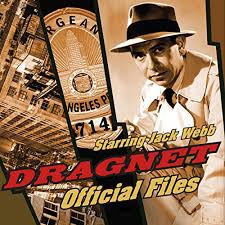
1001 Radio Crime Solvers
THE BIG JUVENILE DIVISION and THE BIG ALMOST NO SHOW DRAGNET
00:59:11
Dragnet, the brainchild of Jack Webb, may very well be the most well-remembered, and the best, radio police drama series. From September, 1949 through February 1957, Dragnet's 30 minute shows, broadcast on NBC, brought to radio true police stories in...
Loading summary
Transcript541 lines
- [00:00]
A
Morning, Zoe.
- [00:01]
B
Got donuts.
- [00:02]
C
Jeff Bridges, why are you still living above our garage?
- [00:05]
B
Well, I dig the mattress and I want to be in a T mobile commercial like you teach me. So Dana.
- [00:12]
C
Oh no, I'm not really prepared. I couldn't possibly at t mobile get the new iPhone 17 Pro on them. It's designed to be the most powerful iPhone yet and has the ultimate pro camera system.
- [00:24]
B
Wow, impressive. Let me try. T mobile is the best place to get iPhone 17 Pro because they've got the best network. Nice.
- [00:32]
C
Je free.
- [00:32]
A
You heard them. T mobile is the best place to.
- [00:35]
B
Get the new iPhone 17 Pro on us with eligible traded in any condition. So what are we having for lunch?
- [00:42]
C
Dude, my work here is done.
- [00:44]
B
The 24 month bill credit on experience beyond for well qualified customers plus tax and 35 device connection charge. Credit send and balance due. If you pay off earlier, Cancel Finance agreement. IPhone 17 Pro 256 gigs 1099.99 A new line minimum 100 plus a month plan with auto pay plus taxes and fees required. Best mobile network in the US based on analysis by Oklahoma Speed Test Intelligence Data 182025 Visit t mobile.com.
- [01:09]
D
The story.
- [01:09]
A
You are about to hear is true. The names have been changed to protect the innocent. Fatima cigarettes. Best of all, King size cigarettes brings you Dragnet on both radio and television. You're a detective sergeant assigned a homicide special detail. There are rumors of an impending war between juvenile gangs in your city. Reportedly members of both gangs are well supplied with homemade weapons. You don't know when the fighting will break out. You don't know where your job. Stop it. Fatima. America's first largest selling blended cigarette. Now king size. See the difference? Taste the difference. Smoke the difference. And in Fatima, the difference is quality. See the difference? Fatima's are 21% longer. Taste the difference. Enjoy Fatima's extra mildness. Much different. Much better flavor and aroma. Smoke the difference. Get all the advantages of extra length plus Fatima quality which no other king size cigarette has. Yes, in Fatima, the difference is quality.
- [02:29]
C
Definitely the best quality in its class. But the same price as the cigarette you're now smoking.
- [02:35]
A
So why wait? Switch to Fatima today. Each king size Fatima gives you a long, extra mild and soothing smoke with the added protection of Fatima quality. Buy Fatima Dragnet. The documented drama of an actual crime. For the next 30 minutes in cooperation with the Los Angeles Police Department, you will travel step by step on the side of the law through an actual case transcribed from official police files. From beginning to end, from crime to punishment. Dragnet is the story of your police force in action.
- [03:20]
B
It was Tuesday, October 14th. It was cloudy in Los Angeles. We were working a special detail on a homicide division. My partner's Ed Jacobs. The boss is Captain Warman. My name's Friday. It was 1:18pm when I got to 2015 East 1st street, the 2nd Floor, Hollenbeck Juvenile Division.
- [03:36]
A
Joe.
- [03:37]
C
Hi.
- [03:37]
B
What'd you find out?
- [03:38]
A
Nothing yet. Gardner had to go next door. He'll be back in a minute. Give us a rundown on the thing Friday. Ed.
- [03:44]
D
Hi, Gardner. Hi.
- [03:45]
B
How you doing?
- [03:46]
D
Good to see you. How are things going downtown?
- [03:48]
B
Oh, not bad. A little slow. Hear you got problems.
- [03:50]
D
Lots of them. Captain brief you on any of it?
- [03:52]
B
No, he told us to check with you, you'd fill us in. Said maybe you could use some help.
- [03:56]
D
All we can get. We're sitting on top of a bomb out here. We don't know when it's going to go off.
- [04:00]
A
What's the pitch, Gardner?
- [04:01]
D
Juvenile gangs. Five of them this time. The way we get it, they're ready for trouble.
- [04:04]
B
All of them?
- [04:05]
D
High school kids? Most of them. Some of them are in junior high.
- [04:08]
B
Well, how come five gangs? What are they planning, a free for all?
- [04:10]
D
It's a long story. They've been building up to this thing for months. All east side kids with. We hear it's supposed to be an open war.
- [04:15]
B
Mm.
- [04:17]
D
Here's a list of the different gangs involved. Thanks. You can see there. Same crowds we've been riding herd on for the last couple of years.
- [04:26]
B
You got the Purple Heart Gang, the Blue Devils, the Apaches, Happy Valley, Rose Hill.
- [04:32]
D
Here's the breakdown on each one of them. Hard to get exact figures, but we think it's fairly accurate. Purple Heart Gang, 26 members. Leader Harold Fry, age 17. Blue Devils, 18 members. Leaders Jack Holland, age 17, and Bertram Willis, 16. The Apaches, 22 members. Leader Robert Lawson, 17. They're supposed to be the strongest bunch.
- [04:51]
B
Wow.
- [04:51]
D
Happy Valley Gang, 20 members. Leaders Roy Martin, 16, and Joseph Piln, 16. Rose Hill Gang, 16 members. Leader Thomas Resnick, 18.
- [04:59]
B
Yeah. Well, what's behind it, Gardner? I mean, the gang war that they're supposed to be planning.
- [05:03]
D
A lot of factors enter into it. I guess it's my own idea. The Apache Gang saying most of the promoting.
- [05:07]
A
What's the object, anyway?
- [05:08]
D
The usual big shot idea some high school kids get the Apaches, figure they're gonna run the whole east side. They've already scared the Happy Valley Gang and the Blue Devils into joining up with them.
- [05:17]
B
Well, how'd they manage that?
- [05:18]
D
I'd like to find out myself.
- [05:20]
B
Well, how about the other two crowds there? Rose Hill and the Purple Heart bunch.
- [05:24]
D
The story I get is they won't come in with the Apaches. That's supposed to be the reason for the war. Either they join up with the Apaches or they fight them. That's a warning.
- [05:32]
A
They got pretty playing it big time, huh?
- [05:34]
D
All the way. 16, 17 year olds. They got gang lieutenants, they got their own cars, their own hideouts. Some of them even had their girlfriends running with them. The same age, none of them over 17.
- [05:45]
B
Where'd you get your information, Bill?
- [05:47]
D
Half a dozen kids. Most of them from the Blue Devils and the Happy Valley gang. They were mixed up in a couple of after school fights in Hollenbeck Park. The stories they gave us are enough to curl your hair. Yeah, I mean about the big war they're gonna have. One of the girls we picked up gave us most of it. 15 year old. Says her boyfriend's one of the big shots with the Blue Devil.
- [06:05]
B
What she had to say?
- [06:06]
D
Talked about it like it was some kind of a game they were playing. Said the Rose Hill and the Purple Heart gangs were teaming up so they could stand up against the other three. They've been getting ready for the war for six weeks. They're really organized. I don't get it.
- [06:18]
A
Who's doing the organizing? Who's promoting it?
- [06:20]
D
I got an idea about that. Get to it in a minute. Take a look at these over here.
- [06:26]
B
Yeah.
- [06:29]
D
Samples of the different weapons the gangs are getting together for the big fight.
- [06:33]
B
Crazy kids.
- [06:35]
D
Brass knuckles, homemade saps. All kinds.
- [06:40]
B
What's this here, Gardner?
- [06:41]
D
Have a look. Homemade stiletto. Good six inch blade. Kids are supposed to have dozens of them. Another one here. Look at this.
- [06:52]
A
Ice pick.
- [06:53]
D
Anything you can think of. You name it, we got it.
- [06:55]
A
It's gonna be wholesale murder if we can't find a way to stop it.
- [06:58]
B
You've been able to figure what the real trouble is, Bill?
- [07:00]
D
I got an idea. Yeah, you asked about the gang's teaming up a minute ago. Yeah, we figure we got a young Hitler on our hands. Kid by the name of Robert Lawson. He's supposed to be the ringleader of the Apache gang. Moved in about a year ago from the Middle West.
- [07:13]
A
How much you know about him?
- [07:15]
D
Wrote a letter to the city he originally came from. Nothing but trouble back there. Bad juvenile record. We've talked to the boy a couple of times. His parents, too. Didn't do much good. Never had enough to file a petition on him and bring him to the Attention of a juvenile court. We know he's responsible for a lot of the trouble we got. But he always has some other kid.
- [07:34]
A
Do it for him.
- [07:34]
D
Never does it himself.
- [07:35]
B
You think he's responsible for working up the gang? More ideas, eh?
- [07:38]
D
We figure he's our biggest problem. We've tried everything to reach the Lawson kid and settle him down. Check for the teachers at his school, the principal, vice principal. They can't handle him. They figure on expelling him if he doesn't straighten out.
- [07:51]
B
How about the other youngsters in these gangs? I mean, besides this Lawson boy here.
- [07:54]
D
We've got notifications out for them and their parents. They're supposed to be in here tomorrow night, 7:30. Maybe we can break Lawson's hold on these kids. Sure.
- [08:02]
A
Got me. What's the matter with this Lawson boy's parents? Don't they know what's going on? Can't they control them?
- [08:07]
D
We tried to talk to the parents. They think we're wrong. They're proud of the kid. He's got a high iq. They think he's a natural born leader. Oh, sure, yeah. The mother says people just don't understand the boy.
- [08:19]
B
Or maybe you should have told him, huh? San Quentin's full of people we don't understand. The following night, Wednesday, October 15, the members and ringleaders of the various juvenile gangs, along with their parents, showed up at Hollenbeck Juvenile Division as requested. In questioning each of the youngsters, we definitely confirmed the reports we had of the impending gang war. The interviews also revealed that if and when the fighting did start, it would be more serious than we at first figured. For one thing, there were more youngsters involved than we thought. The gangs had been recruiting new members by the dozen in preparation for the street fights. For another thing, we found out the teenagers weren't carrying around 8 inch knives and brass knuckles just for show. If fighting started, they were ready and willing to use them. We weren't sure how much we could count on it. But after interviewing the parents and advising them how serious the situation was, they promised their full cooperation. Most of them agreed they'd maintain strict check on their youngsters and keep them out of all neighborhood gang activities. Some of the parents took a resentful attitude. They insisted the gangs were harmless. They accused us of picking on the youngsters. A few of the parents didn't even show up at the among. These were the parents of 17 year old Robert Lawson, the boy who seemed to be promoting most of the trouble. The following morning, my partner Ed Jacobs and I drove out to his home and we talked with his mother. She was friendly, but not too cooperative.
- [09:46]
C
I don't know why you say that, Sergeant. I appreciate you worrying about my boy, but I'm sure it's not as bad as you think.
- [09:50]
A
I don't mean to contradict you, Mrs. Lawson, but I'm afraid it is a lot worse than you think.
- [09:54]
C
It's what the other officer said too. But you really don't have any proof, do you? I mean, a few idle rumors. You certainly can't accuse Robert on that basis.
- [10:01]
B
We're not accusing Robert of anything, ma'. Am. That's not the point. What we're trying to do is to head off the trouble before it starts.
- [10:06]
A
You were living in the Middle west before you came to Los Angeles, is that right, ma'?
- [10:09]
C
Am? Yes, that's right. Nebraska.
- [10:10]
A
Well, wasn't your boy in some kind of trouble back there?
- [10:13]
C
Yes, but it didn't amount to anything. Could have been avoided so easily. They just didn't understand Robert. That was the whole trouble.
- [10:19]
B
Is he an only child, ma'?
- [10:20]
C
Am? Yes, just Robert. But he's not spoiled. I know it's a with an only child, but we didn't spoil him. Robert just isn't like that.
- [10:28]
A
Uh huh. You allow him quite a bit of freedom, do you, ma'?
- [10:30]
B
Am?
- [10:30]
A
I mean, does he go out at night very often?
- [10:33]
C
Well, he is 17 years old going on 18. Yes, my husband and I allow him to go out as often as he likes. As long as he keeps up with his studies. Robert's always done very well. Always tops in his class.
- [10:44]
B
Do you know where he spends his time when he goes out at night?
- [10:47]
C
He's usually down at the gym or at the library.
- [10:49]
B
You know that for a fact, do you?
- [10:52]
C
I trust Robert, if that's what you mean. He tells me that's where he's going, I believe him. The mother can't believe her own son. Who can she believe?
- [11:00]
A
How about the company your boy keeps? You know any of his friends, Mrs. Lawson?
- [11:04]
C
Few, yes. There's the Miller boy and Jack Holland. They seem to be fine boys.
- [11:09]
A
Miller and Holland?
- [11:10]
C
Yes. There doesn't seem to be anything wrong with them.
- [11:13]
B
Well, there is, ma'.
- [11:14]
C
Am. What?
- [11:15]
B
Both of them have juvenile records. Both of them belong to your son's gang.
- [11:20]
C
Really, Sergeant, how can you say that? It isn't fair. Wouldn't it be better to try and understand these boys instead of picking on them, persecuting them?
- [11:30]
B
I don't know how we're gonna make you understand, Mrs. Lawson. We're not picking on them. We're not persecuting them. We know there's a gang problem. We know your boy's one of those. At the bottom of it. If something isn't done, there's gonna be trouble. If we're gonna stop it before it begins, we're gonna have to have your help.
- [11:44]
C
I'm perfectly willing to cooperate. You know, that must be Robert now. Excuse me, Robert. Bob, is that you? Yeah. Would you come in here a minute, Bob? We're in the living room.
- [11:57]
A
Yeah.
- [11:58]
D
What do you want?
- [12:00]
C
These are police officers. Bobby, this is sergeant Friday. Sergeant Jacobs, is that right?
- [12:06]
A
Yes, ma'.
- [12:06]
C
Am.
- [12:07]
B
How are you?
- [12:07]
D
How do you do? How about something to eat, MG Anything?
- [12:10]
B
Ready?
- [12:11]
C
I wasn't expecting you, Bob. Won't take me a minute, though. You sit down there. I'll go out and get a snack together for you. Can I fix you a sandwich, Officer, or a cup of coffee?
- [12:20]
B
No, thank you. Thanks very much.
- [12:22]
C
Won't be a minute, Bob. We were just talking about you when you came in.
- [12:26]
B
What's it about, Sergeant? You want to see me?
- [12:27]
D
Or do you just want to talk to my mother?
- [12:29]
B
As long as you're here, we'd like.
- [12:30]
D
To talk to both of you. Bob, I got to take off pretty fast. Just came home and get something to eat. What's it about?
- [12:36]
B
It's about Geronimo. That's the gang's code word for the war you're setting up, isn't it?
- [12:40]
D
I don't know what you're talking about.
- [12:41]
A
Your gang, Bob.
- [12:42]
B
The Apaches.
- [12:43]
A
We talked to half a dozen of them last night down at the Juvenile division.
- [12:46]
D
Is that right?
- [12:46]
B
Now, look, son. We've got the names of everybody in your gang. We know the whole setup. You go ahead with your idea and you're gonna buy a lot of trouble.
- [12:52]
D
A couple of cops were here last week. I said the same thing. I don't know any more about it now than I did then, honest. What's the pitch, anyway?
- [12:59]
A
You know what the pitch is, youngster.
- [13:00]
D
I don't, honest. You're trying to say I'm in a gang, is that it?
- [13:03]
B
You're in it up to your neck, son. Now, why don't you come off and we bet you pegged. And everybody that runs with you. That includes the girlfriends you got in the gang. You're not fooling anybody.
- [13:11]
D
You must be a little crazy. I'm not in any gang. I never even heard of one around here.
- [13:16]
B
Now you listen to me, boy. You can take this as a warning or a piece of advice. Either way, you and your friends keep on playing punk gangsters and we're gonna lean on you. You understand? What is this?
- [13:26]
D
Trying to scare me?
- [13:27]
B
If it'll make you change your mind, yeah. If this street war comes off, there's gonna be big trouble. What do you think's gonna happen when 200 kids tangle in a fight with knives and brass knuckles? Now use your head.
- [13:37]
C
Here we are, Bob. I smelled nice old hot soup. Bacon and tomato sandwiches.
- [13:44]
D
You always make the soup too hot.
- [13:47]
C
Oh, I didn't mean to. Let it cool off for a minute, then Bob has to eat. And hurry along, officers. Is there anything else you wanted to talk to him about?
- [13:55]
B
No. I think you've heard everything we have to say. I wish you'd think it over, Mrs. Lawson.
- [14:00]
D
You too, Bob. Nothing to think over. They're trying to say I'm in a gang. They think I'm the leader.
- [14:06]
C
You told them, didn't you, son?
- [14:07]
D
Sure. They don't believe me.
- [14:10]
C
I wish I could make you understand, Sargent. He's not a gang leader. Robert's telling the truth.
- [14:16]
A
Afraid he isn't, ma'.
- [14:17]
C
Am. Well, he is. I know he is. I mean, after all, he's my son. I'm in a position to know him better than you do.
- [14:23]
B
Yes, ma'.
- [14:24]
C
Am. If he was lying, I'd know it. I wish I could make you understand. Mother is the only one who really knows her boy. I know. Robert's telling the truth. Aren't you, Robert? Robert? That's so, isn't it? You're telling the truth, aren't you?
- [14:46]
D
Sure. How about some more soup?
- [14:52]
B
Before we left the house, we tried again to talk to Robert Lawson and his mother. But it was no use. She believed every word he said. And he apparently refused to believe the possible consequences of the war he was planning for his gang of juveniles. We drove downtown and had an interview with the boy's father. At his work he was even less cooperative. He took on a belligerent attitude, accused us of persecuting his son and ordered us out of the office along with Sergeant Bill Gardner and Frank Kerber. We spent the rest of the afternoon and most of the following day checking with parents of youngsters who had been recently recruited into one of the various east side gangs. Most of them were cooperative. Late that afternoon, Bill Gardner, Ed and myself met with Captain Stein back at Hollenbeck Juvenile. Strict curfew all over the area.
- [15:37]
D
We can start tonight.
- [15:38]
B
What do you figure? Just on the weekends?
- [15:40]
D
Every night, Sunday to Sunday. I'll get some more men in to help out Every youngster out in the street after 10 o' clock gets stopped. Every one of them caught with knives, saps, brass knuckles or anything like them, they're going to be pulled in and filed on, no exceptions. Be a lot safer in custody than mixing it in the gang fight.
- [15:55]
B
Yeah, a lot of hell might teach some of the parents a lesson anyway.
- [15:58]
A
Yeah.
- [15:58]
D
Excuse me. Juvenile Division. Stein, where was that? When?
- [16:06]
B
Yeah, right away.
- [16:08]
D
Let's hustle at Evergreen Avenue, out near the cemetery.
- [16:10]
B
Yeah. What is it? Curfew is a good idea.
- [16:12]
D
We got it.
- [16:12]
A
Too late, huh?
- [16:13]
D
Gang war.
- [16:13]
B
It's already started. Before we left the office, we had communications notify all J cars on the special detail to proceed at once to the scene of the major 415 call. Ten cars were ordered to cruise the area surrounding the actual scene of the fight and to pick up any and all members of the juvenile gangs who showed any evidence of having been in the fight or had in their possession any deadly weapon. Captain Stein, Bill Gardner, Ed and myself left the office on a Code 3 and drove out to the scene of the gang fight. When we got there, all the JJ cars and three radio crews had the area blocked off. An ambulance crew was treating more than a dozen youngsters who had been injured during the fight. One of the youngsters had a lacerated eye. He'd been blinded. Most of the other victims would carry scars for the rest of their lives. The juveniles who'd taken part in the battle and who'd been lucky enough to escape without serious injury were being loaded into the J cars and the radio cars. They were to be removed to juvenile headquarters at 1335 Georgia street for further investigation. Together with Bill Gardner and Frank Kerber, Ed and I began covering the area, collecting dozens of homemade weapons used in the gang fight. They'd be turned over to Pete Brown, Holland Beck Juvenile to be booked as evidence.
- [17:29]
A
Joe. Yeah?
- [17:31]
B
Come here a minute.
- [17:31]
A
Over here.
- [17:35]
B
Yeah, Have a look.
- [17:38]
A
Piece of chain, bloodstreams on it.
- [17:39]
B
Lousy. How precious can it get? Come on.
- [17:45]
A
All right.
- [17:47]
B
Across the street there. The car on the driveway.
- [17:49]
A
Yeah.
- [17:52]
B
Help him.
- [17:53]
C
He's hurt. Somebody help him. Bobby.
- [17:55]
A
What's the trouble, Bobby?
- [17:56]
C
He was in the fight with another gang. They stabbed him. He's in the car.
- [17:59]
B
Come on.
- [18:02]
A
What is it, Joe?
- [18:04]
B
Take a look.
- [18:05]
A
The Lawson boy, huh?
- [18:06]
B
Yeah. Knife in his chest.
- [18:08]
A
Want me to get the doctor?
- [18:09]
B
Yeah. Call the coroner, too.
- [18:21]
A
You are listening to Dragnet Authentic stories of your police force in action. Fatima. America's first largest selling blended cigarette. Now king size. See the difference, taste the difference, Smoke the difference. And in Fatima, the difference is quality. Yes, you get all the advantages of extra length plus Fatima quality which no other king size cigarette has. That's why week in, week out, year after year, more smokers are switching to Fatimas. 1950 Fatima sales higher than ever before in Fatima history. 1951, another record year. Fatima sales up and up. Why? In one month alone, Fatima sales up 110%. Coast to coast friends, in the first months of 1952, to show our confidence in Fatima, we are making a special money back guarantee to every king size cigarette smoker. Buy a pack of Fatimas, Enjoy Fatima quality, extra mildness and superbly blended tobaccos. If you're not convinced Fatima is better than the king size cigarette you are now smoking, just return the pack and the unsmoked Fatimas before April 1st and we'll give you your money back. Plus postage. Fatima Boxed 37, New York 1. Remember, each king size Fatima gives you a long, extra mild and soothing smoke with the added protection of Fatima quality. Buy Fatima best of all king size cigarettes.
- [20:04]
B
Thursday, October 16, 5, 35pm after the discovery of Robert Lawson's body in the car parked in the driveway adjoining the cemetery grounds, ed brought the doctor over from the ambulance. The 17 year old Lawson boy was pronounced dead. The doctor made out the prescribed form and marked it DOA. While we waited for the crime lab crew and the coroner to get there, Ed and I questioned the girl who'd led us to the body. She identified herself as Ann Porter, age 16. She told us she was Bob Lawson's girlfriend. She readily admitted accompanying him to the scene of the gang fight that afternoon.
- [20:40]
C
I knew what it was gonna be like. I knew right then. I came closer. Bob told the kids to get ready. They were a little ways from us when they stopped the other gang with purple hearts.
- [20:49]
D
Yeah, go ahead.
- [20:50]
C
There's a kid by the name of Jumpy. He's the leader. Stepped out in front of them and called to Bob. Called him a bad name, said bad things.
- [20:57]
A
This boy you called Jumpy, he knows real, real name, man.
- [21:00]
C
No, Jumpy's only his nickname. I know him when I see him though. I can point him out.
- [21:03]
B
Well, what happened after he called Bob?
- [21:05]
C
I don't know.
- [21:06]
A
What?
- [21:06]
C
I don't know. I'm not sure. Everything seemed to happen at once. Bob swore at me, pushed me back, Told me to get out of the way. Then he walked up to this kid, Jumpy, right in front of their whole gang. I screamed at Bob. I screamed at him not to.
- [21:18]
A
Why'd you scream? What'd he do?
- [21:19]
C
He had a chain under his coat. It was kind of a short whip like. Bob had it doubled up. When he went up to Jumpy. Bob had a cigarette in his mouth. He told Jumpy to light it for him. It's supposed to mean he's chicken if he does it. Jumpy laughed at him. Bob took out the chain, hit him across the face with it. Hit him with all his might. It knocked Jumpy down. Laying on the sidewalk. His face was cut bad. Bob had the chain, Kept hitting him with it. And somebody gave a yell. And both the gang started fighting.
- [21:48]
B
Were you close to Bob Lawson most of the time?
- [21:51]
C
No, not first. There was a lot of yelling and kicking and fighting going on. I ran around and was looking for him. Finally saw Bob. Not sure. It happened so fast.
- [22:00]
A
What happened then?
- [22:01]
C
I'm not sure. I thought I saw Jumpy pull a knife on Bob. Long and thin. Maybe an ice pick.
- [22:07]
D
Yeah.
- [22:08]
C
Bobby was still hitting with a chain. It looked like Jumpy hit Bob in the chest with something. Right over the heart. Bobby stopped. Jumpy did it again. Bobby got white. He looked sick. He turned around and started to run.
- [22:22]
B
Well, what happened then?
- [22:24]
C
Bobby kept running. I knew he was hurt. I went after him. I saw him fall. But he got up. He kept running. Then one of the other gang grabbed me. They hit me.
- [22:33]
A
It's all right. We understand.
- [22:36]
C
I didn't find Bob until the fight was over. Heard the cops, cars coming, sirens coming around from everywhere. I felt sick. I finally found Bob, though. He was laying in the backseat of the car. Just laying there.
- [22:47]
B
That's when you called out?
- [22:49]
C
Yes. I guess I knew it soon as I looked at him. Dead. White as a sheet at ain't he? See, not when you find somebody dead. Not somebody you love.
- [23:02]
D
All right, youngster.
- [23:02]
B
It'll be all right.
- [23:03]
D
It'll be all right. You're lying.
- [23:04]
C
You know, dad. It won't be all right.
- [23:06]
A
Take it easy, Anne.
- [23:07]
C
I love Bob. Didn't you know that when he graduated, the first thing. We were gonna get married. As soon as he got out of school, we'd be married. We'd be married.
- [23:19]
A
Pam.
- [23:21]
B
Ham?
- [23:21]
C
Yeah.
- [23:23]
B
How old are you?
- [23:24]
C
I'm 16. Why?
- [23:26]
B
Nothing. It happens to practically everybody.
- [23:29]
C
What?
- [23:30]
B
People seem to make a lot of mistakes when they're 16. 6:30pm the crime lab crew arrived, took pictures of the entire scene along with all physical evidence and dusted the murder weapon, an eight inch knife for fingerprints. The coroner arrived and after we'd completed our investigation, he removed the body to the county Morgue along with a police woman. We took Robert Lawson's girlfriend, 16 year old Ann Porter down to Georgia Street Juvenile Division to the assembly room. There a special show up was held of all the boys involved in the afternoon's fight. The Porter girl identified a 17 year old by the name of Warren Stone, nicknamed Jumpy, as the boy who'd stabbed Robert Lawson to death. At least a dozen other subjects in the case identified the boy by his nickname Jumpy. Three members of either gang involved in the fight declared in sworn statements that Warren Stone was the boy who'd attacked the Lawson boy with a homemade name. Ninth statements were taken from all concerned and the ringleaders of the gangs were detained. The other subjects were released to their parents custody after being notified that they would be filed on and a hearing held in juvenile court. Ann Porter was returned home by a policewoman. 7:55pm Ed Jacobs and I took the subject Warren Stone to the Captain's office where we tried to question him about the murder. He refused to say anything. I told you the truth. I told you the whole story. I don't have to tell you again. We're pretty sure you didn't tell us the truth, Warren. We know you tangled with Bob Lawson in that fight this afternoon. No, I didn't.
- [25:01]
A
We've got statements from a dozen kids, son. They say Lawson had a piece of chain. He kept slugging you with it. They say you pulled a knife and stabbed him.
- [25:08]
B
How do they know? A lot of kids there had knives. Anybody could have stabbed him. Why are you picking on me? It was your knife. It was your knife that killed him. Your initials on it. I lost the knife in the fight. Somebody could have picked it up, used it. No, that won't do, youngster. The handle of the knife's been processed. Your fingerprints are all over it.
- [25:24]
A
How about it, son?
- [25:30]
B
Warren, Come on now. What do you got to say? Nothing. I killed him. 8:40pm Warren Stone was booked in at Georgia Street Jail on suspicion of 187pc murder. Ed and I got in the car and drove out to the home of the murder victim to notify his parents, Mr. And Mrs. Robert Lawson. Mr. Lawson wasn't home from work yet. We broke the news of her son's death to Mrs. Lawson as gently as we could. She became hysterical and we called the family doctor who gave her sedatives. Later, when she recovered herself a bit, she asked for the full story. We told her.
- [26:09]
C
How could it happen, Bobby? How can it happen?
- [26:14]
A
Sorry, ma', am, there's not much we can say we tried everything we could to stop it.
- [26:17]
C
But you didn't stop it. You let them kill Bobby. You let them kill him.
- [26:22]
B
No, ma'.
- [26:23]
C
Am.
- [26:24]
B
We tried to warn him. We tried to warn all of them. We're sorry.
- [26:28]
C
You're not sorry. You didn't try. Bob's dead. Everything I had. He's 17 years old and he's dead. I can thank you for that. My only baby.
- [26:43]
B
We're sorry you feel that way, Mrs. Lawson.
- [26:45]
C
Why shouldn't I feel that way? You call yourselves policemen? That boy who killed Bobby, you should have had him in jail in the first place. Young killer running around lose you as.
- [26:59]
B
Guilty as he is.
- [26:59]
A
I'm not defending him, ma', am, but he wasn't a young killer. Didn't even have a juvenile record.
- [27:03]
C
I don't care anything about records. He's a killer. He took a knife and he killed Bob. And you let him do it. You let him.
- [27:10]
B
I think we better be going in.
- [27:11]
D
Yeah.
- [27:14]
B
You or your husband will have to identify the body. When? Tomorrow morning will be all right. The county morgue.
- [27:20]
D
Dear God.
- [27:21]
B
You'll have to be at the coroner's inquest, too. You'll be notified about the time and the date.
- [27:26]
C
I hope you have to live with this. I hope you live with it like I have to live with it. I hope it drives you crazy.
- [27:33]
A
I. I know how you feel, ma', am, but you're wrong. I think you'll realize that.
- [27:37]
C
They murdered Bob. You let them kill him. I'll always remember that.
- [27:41]
B
All right. Then you remember something else. Last time we came here to your house, we tried to make you understand.
- [27:49]
C
You didn't know Bobby. You didn't understand him. I was the only one. I always knew what he was thinking, what he wanted, what he was going to do. I was the only one.
- [27:58]
B
No, ma', am, there was somebody else.
- [28:00]
C
What?
- [28:00]
B
The boy who killed him.
- [28:09]
A
The story you have just heard was true. The names were changed to protect the innocent. On November 7, the hearing was held in Juvenile Court Department 38, City and County of Los Angeles, State of California. In a moment, the results of that hearing. And now, here is our star, Jack Webb.
- [28:25]
B
Thank you. George Feniman. Friends, just as a hobby, I've been collecting early jazz records. Blues and two beat music like Leon Bix Beiderbeck used to play. And of course, just about everything Benny Goodman has done. I've always tried to build my collection on quality. Now, in my opinion, that's the only rule to follow in choosing a king size cigarette.
- [28:45]
D
Choose for quality.
- [28:47]
B
Believe me, I know that's what you'll find in Fatima. I know because I smoked them. If you haven't. Here's what I'd like you to do. Get a pack tomorrow and compare them. When you see the difference, taste the difference and then smoke that difference, I'm convinced that you'll switch to Fatima. Because in Fatima the difference is quality. Each king size Fatima gives you a long extra mild and soothing smoke with the added protection of Fatima quality. Next time buy Fatima. Best of all king size cigarette.
- [29:26]
A
17 year old Warren Ernest Stone was filed on alleging violation of 187 PC murder. The rest of the juvenile gang ringleaders were filed on alleging 242pc battery. They were all made wards of the juvenile court and placed in detention homes under the supervision of the state Youth authority. They are still confined in state institutions for juveniles. You have just heard Dragnet a series of authentic cases from official files. Technical advice comes from the office of Chief of Police W.H. parker, Los Angeles Police Department. Heard tonight were Bonnie Phillips, Charles Smith and Eddie Firestone. Script by Jim Moser. Music by Walter Schumann. Hal Gibney speaking. Fatima Cigarettes Best of all King size cigarettes has brought you Dragnet. Transcribed from Los Angeles.
- [30:32]
B
Next it's David Harding Encounter Spy on NBC.
- [30:36]
D
You.
- [30:41]
B
Today we'll attempt a feat once thought impossible. Overcoming high interest credit card debt. It requires merely one thing. A SoFi personal loan.
- [30:53]
C
With it you could save big on.
- [30:55]
A
Interest charges by consolidating into one low.
- [30:57]
B
Fixed rate monthly payment. Defy high interest debt with a SOFI personal personal loan. Visit sofi.com stunt to learn more. Loans originated by Sofi Bank NA member FDIC terms and conditions apply NMLS 696891.
- [31:21]
A
The story you are about to hear is true. The names have been changed to protect the innocent. Fatima cigarettes Best of all King size cigarettes brings you Dragnet on both radio and television. You're a detective sergeant. You're assigned a homicide detail. A woman reports the disappearance of her 30 year old brother. He's been missing for only two days. But the manner of his disappearance was sudden, out of the ordinary. Your job, investigate Fatima. America's first largest selling blended cigarette. Fatima. Now best of all king size cigarettes. Prove it yourself. Today, compare Fatima with the king size cigarette you are now smoking. 1. Fatima's length filters the smoke 85 millimeters for your protection. 2. Fatima's length cools the smoke for your protection. 3. Fatima's length gives you those extra puffs 21% longer than standard cigarette size. And in Fatima you Get an extra mild and soothing smoke. Plus the added protection of Fatima Quality.
- [32:40]
C
Definitely the best quality in its class. But the same price as the cigarette you are now smoking.
- [32:45]
A
Buy Fatima in the bright sunny yellow pack. Best of all, king size cigarettes. Dragnet, the documented drama of an actual crime. For the next 30 minutes, in cooperation with the Los Angeles Police Department, you will travel step by step on the side of the law through an actual case transcribed from official police files. From beginning to end, from crime to punish punishment. Dragnet is the story of your police force in action.
- [33:23]
B
It was Wednesday, November 14th. It was overcast in Los Angeles. We were working the day watch out of homicide detail. My partner's Ed Jacobs. The boss is Captain Mormon. My name's Friday. We were on the way out from the office and it was 8:56am when we got to the S&H Paper Company on Fourth Street. The rear entrance.
- [33:41]
A
Where do we find her, Joe? Upstairs?
- [33:43]
B
No, main floor. She told me we'd find her in the timekeeper's office. She said it was near the back door entrance. We couldn't miss it.
- [33:48]
A
Let's give a look down the corridor, huh? Maybe one of the workers can tell us.
- [33:51]
B
Yeah, right. Looks like some kind of an office there, doesn't it? Just be on the time clock.
- [33:59]
A
Let's see. Paymaster, head timekeeper. Yeah, that's it.
- [34:04]
B
The door is locked. Ed, you want to wrap on the page window?
- [34:06]
A
Yeah.
- [34:10]
C
You there.
- [34:11]
A
Police officers, ma'.
- [34:12]
B
Am.
- [34:12]
A
We have an appointment with Ms. Edith Tabor.
- [34:14]
C
Oh, yes, Officers, I'm Edith Tabor. Just a moment, please. I'll ring the buzzer. Just push on the door.
- [34:20]
B
All right. Thank you, ma'.
- [34:20]
C
Am.
- [34:23]
B
Go ahead.
- [34:24]
D
Right.
- [34:26]
C
Are you the one I talked to on the phone, Sergeant Friday?
- [34:28]
B
Yes, ma', am, that's right. This is my partner, Sergeant Jacobs.
- [34:31]
A
I do.
- [34:32]
B
This is about your brother, Ms. Tabor. Ralph Tabor, is that right?
- [34:35]
C
Yes, that's right. I know there must be something wrong. Ralph's been gone since Sunday. No one's seen him. No one's heard from him. I'm worried sick about it.
- [34:43]
A
Last time you saw him was on Sunday?
- [34:44]
C
No, I didn't actually see him. I talked to him on the phone. We made a date for dinner. Ralph and I always have dinner together Sunday nights. It's about the only time in the week we do get to see each other.
- [34:54]
B
I see. I believe you told me on the phone you already checked with most of his friends of places he'd most likely be.
- [34:59]
C
Is that I've called everyone I can think of. No One.
- [35:02]
A
Your brother's never done anything like this before, miss. Going off without telling anyone?
- [35:05]
C
No, never. I'm very worried, Sergeant.
- [35:07]
A
Can you think of any reason at all why he'd want to disappear of his own free will, I mean?
- [35:10]
C
No. No reason in the world for it. He seemed perfectly all right when I talked to him on the phone. Sunday, everything was fine. We made a date for the movies Tuesday night. That was for last night. Picture downtown we wanted to see. He made a special point of it. I just know something must have happened.
- [35:27]
B
I gather you know most of your brother's friends. You've kept in fairly close touch with him, have you?
- [35:31]
C
Yes, we get together at least once a week. As I say, I'm four years older than Ralph. I've looked after him since we were kids. We've always been together, last five or six years. Especially ever since Mama died.
- [35:42]
A
Your brother in a pretty stable mental condition, was he? No financial worries? Nothing of that kind?
- [35:46]
C
No, sir. Nothing I know about.
- [35:48]
B
I'd like to double check this information that you gave me on the phone, Ms. Tabor. Her name and address and his description, sir?
- [35:55]
C
Yes, sir.
- [35:57]
B
The full name. Ralph Lawrence Tabor. 14316 Almaden Street. Male, white American. Occupation, interior decorator. Is that it?
- [36:04]
C
Yes, that's right.
- [36:06]
B
Height, 5 foot 1155 pounds. Dark blonde hair, gray eyes, fair complexion. Birthmark on left side and neck.
- [36:13]
C
Yes, that's all correct.
- [36:14]
A
Your brother in the habit of carrying large sums of money around with him, do you know?
- [36:17]
C
No, not that I know of yet. Has a good job. He's not getting rich at it, though. I don't think I've ever seen Ralph with more than 20, $30 on him at a time.
- [36:27]
B
Who was the last person to see him, miss? You any idea?
- [36:30]
C
Well, I talked to Ralph's landlady. She told me she saw Ralph and this friend of his, Andy Howard, going into Ralph's apartment. That was about 6:00 clock Sunday night. Ralph was supposed to meet me at 7:30. Never showed up.
- [36:42]
B
Now, this friend of your brother's, Ms. Tabor, this Andy Howard, are you acquainted with him?
- [36:46]
C
Yes, but I don't know him too well. I only met him two or three times. He lives in the apartment house next door to Ralph's. So the two of them were friends in the Navy together during the war. Good friends.
- [36:55]
A
You tried to get in touch with us, Andy Howard?
- [36:57]
C
Yes. I called Ralph's apartment when he didn't show up for our dinner date Sunday night, there wasn't any answer. So I looked up Andy's number in the phone book and called him.
- [37:05]
B
Was he at home?
- [37:06]
C
Yes. Tried to talk to him, but it didn't do much good. String.
- [37:12]
B
How's that?
- [37:12]
C
He pretended he didn't even know me.
- [37:18]
B
After we finished our interview with Edith Tabor, Ed Jacobs and I started out to double check with all the known friends and associates of her brother. We talked to his employer and the people he worked with. None of them had seen him subsequent to 6 o' clock Sunday night. None of them could think of any good reason why he suddenly would want to pick up and leave his job and friends. The people he knew outside of his work told us to the same thing. Nobody could explain it. Along the way, we inquired about Ralph Tabor's friend, Andy Howard. Most of the people we talked to knew him as a close friend of Tabor's. We checked at Howard's place of employment, but they told us he hadn't shown up for work since the previous Friday. We drove to Howard's apartment, checked with a manager, and he said that Howard had moved without notice. Late Sunday night we crossed over to the apartment house next door where Tabor and talked to the landlady and Mrs. Higbee. She corroborated the story we'd gotten from Tabor's sister that Andy Howard was last seen entering Tabor's apartment at about 6 o' clock Sunday night. Tabor was with him. Mrs. Higbee was sure of that. She showed us up to the third floor to Ralph Tabor's apartment. The two rooms and the adjoining kitchenette were immaculate. There wasn't a thing out of place.
- [38:24]
A
Neat as a pin, Joe. Not a thing out of order.
- [38:26]
B
Yeah, it's the same in the bedroom. Same as Higby.
- [38:30]
C
Yes, Sergeant?
- [38:31]
B
Do you provide maid service with the apartments here?
- [38:33]
C
No, we don't. We've been thinking about it, though. Haven't quite made up our minds. Such a task, getting good, competent health these days.
- [38:41]
A
And the tenants are responsible for the entire upkeep?
- [38:44]
C
Yes. Everything but painting, wallpapering, things like that. Doesn't Mr. Tabor keep things spotless, just spotless?
- [38:53]
B
Yes, ma'.
- [38:53]
C
Am.
- [38:53]
B
There's just one thing I wanted to ask you about. It's over here by the window.
- [38:57]
C
Yes.
- [38:58]
B
Now, this wire here, apparently an aerial connection for a television set. Looks like this.
- [39:04]
C
Yes, Mr. Tabor does have a television. Why?
- [39:08]
B
Well, I don't notice a set anywhere in the apartment. Would you have any recall if he sent it out for repairs, anything like that?
- [39:13]
C
No, not that I know of. Besides, this doesn't seem like Mr. Tabor at all.
- [39:19]
A
How do you mean, Ms. Higby?
- [39:20]
C
He's always so neat. Fastidious end of that wire there. Looks like it was torn off the connection, doesn't it? Along the window sill, too. Isn't that terrible? Fasteners for the wire rip right out of the woodwork. That certainly doesn't seem like Mr. Tabor.
- [39:37]
B
Mm. Anyone else besides him have access to this apartment, ma'?
- [39:41]
C
Am? No one that I know of. No one besides myself. I mean, I have duplicate keys to all the apartments. Well, I just happened to think.
- [39:49]
A
Yes, ma'.
- [39:50]
C
Am, If a repairman did move to set out, it's possible my houseboy might know about it. Sam, that's my houseboy.
- [39:58]
A
How would he know about it?
- [39:59]
C
Well, it's a rule of the house. All furniture, heavy things like that, they have to be taken down in the freight elevator. It opens right onto the alley in back of the building. It's very handy.
- [40:08]
B
Yes, ma'.
- [40:09]
C
Am. Sam's the only one who operates that elevator. That's why I say it's possible he might know about it. Would you like to have me ask him?
- [40:16]
B
I wonder if you would, please.
- [40:17]
C
Surely. It won't take but a minute, and I'll be right back.
- [40:20]
B
Thank you, Ms. Higgins.
- [40:22]
A
Joe, you want to have a look over here?
- [40:24]
B
Yeah. What do you got?
- [40:26]
A
This wall bed here. I tried to pull it down.
- [40:28]
B
It's stuck. Mm.
- [40:30]
A
Stand right here.
- [40:31]
B
Over here.
- [40:33]
A
See if you notice anything.
- [40:35]
B
Yeah, I do. You wanna give me a hand, see if we can't get the bed down?
- [40:38]
A
Yeah.
- [40:40]
B
Push in on your side, then.
- [40:41]
C
Okay.
- [40:41]
D
That's it.
- [40:42]
B
Okay, it's coming down now.
- [40:48]
A
Good Lord.
- [40:49]
B
Yeah.
- [40:50]
A
Tabor, you think?
- [40:52]
D
Oh.
- [40:53]
B
Description seems to fit. Beaten to death, Looks like, doesn't it?
- [40:56]
A
Something's sticking out under the bed covers there.
- [41:00]
B
Yeah, it's a claw hammer. Stains all over it.
- [41:03]
D
Vicious.
- [41:04]
A
Guess the killer wanted to make sure.
- [41:06]
B
It's one of the worst I've seen. Feel sorry for the sister.
- [41:10]
A
She was pretty close to him. It's gonna be tough on her.
- [41:12]
B
No tougher than it was for him. 2:38pm we phoned the office, told them what we'd found, and then we put in a call for Lt. Lee Jones and the crime lab crew. While we were waiting, we questioned the landlady again, Mrs. Higbee. She said her houseman, Sam, told her he knew nothing about a television set being moved out of Ralph Tabor's apartment. However, it was possible somebody could have taken the set down in the main elevator late at night without being seen. Mrs. Higbee also told us that Tabor had a car. We checked the apartment garage, but it was gone. All Mrs. Higbee could tell us was that it was a late model car and the Tabor often loaned it to his friend, Andy Howard. Sergeants Al Shambra and Joe lamonica from Homicide arrived, and together the four of us interviewed the employees and the tenants in the apartment building. Building? They gave us little or nothing at all. A few minutes before 3pm the crime lab crew showed up and started their preliminary investigation. We put in a call for the coroner. From the obvious lack of fingerprints in usual places around the apartment, it was apparent that the murderer had taken great precautions to cover his tracks. 3:35pm the deputy coroner arrived, and after the preliminary investigation was finished, the body was removed to the county morgue. Ed and I went back to the office, checked our DMV, and got out on all points on Tabor's car and also on the friend he was last seen with, Andy Howard. R and I turned up a single entry for Howard's criminal record. A drunk driving charge. 5:20pm we met with Edith Tabor and broke the news of her brother's death. When she recovered from the shock, we interviewed her briefly.
- [42:46]
C
It was Andy Howard. I know it was him. It had to be.
- [42:49]
A
Why do you say that, Ms. Tabor? There's something about this man Howard you haven't told us.
- [42:52]
C
He's no good, Sergeant. He's no good at all. That's what I've been afraid of. I've been afraid of it right along.
- [42:58]
B
Well, just how do you mean, ma'?
- [42:59]
A
Am?
- [42:59]
B
He's no good?
- [42:59]
C
He's a tramp. A bum. Won't get a job. He's been living off my brother. He isn't normal. There's something wrong with him.
- [43:06]
B
Well, how is it your brother put up with him?
- [43:07]
C
I told you, he and Ralph were friends in the Navy. He did a big favor for Ralph once. He's been living off it ever since. Taking his clothes, borrowing his car money, never paying it back.
- [43:17]
A
Why do you think you killed your brother, miss?
- [43:19]
C
I just know it, that's all. He did it.
- [43:22]
B
He ever fight with your brother? Would you happen to know? Did he ever threaten him?
- [43:25]
C
They had a big fight one night about two weeks ago, I think. Andy kept sponging until Ralph got good and sick of it. Told Andy to go out and get a job. That's when the fight started.
- [43:35]
B
You saw it, did you?
- [43:36]
C
Ralph told me about it. Fist fight in the alley back of the apartment. Ralph knocked Andy down, and he said he'd never forget it. He'd pay Ralph back. A couple of days after that, my brother said the two of them made up. Everything was all right. Ralph should have known better. He should have known better.
- [43:54]
B
Mm.
- [43:55]
A
Just a few more questions, Ms. Tabor. Can you tell us anything about Andy Howard's background? Where he's from, whose friends are, places he usually goes?
- [44:02]
C
No, I didn't know much about him. He's from the South, I think. Alabama. Ralph's friends can tell you more about him than I can. All right.
- [44:12]
B
Had you heard anything lately about Howard planning to move out of his apartment?
- [44:15]
C
Nothing. When I heard that he did move and Ralph was missing, I knew something was wrong. That's why I called you. I'd only known before. Poor Ralph. If I only knew.
- [44:29]
B
Well, try to take it easy, ma'. Am. We'll arrange for a car to drive you home. All right.
- [44:33]
C
It's so hard to understand the heart. For anyone to kill Ralph like that. Horrible. He was so good. He was my brother.
- [44:44]
A
Yes, ma'.
- [44:44]
B
Am.
- [44:45]
C
What do you say to a man who kills your brother? How do you understand him? What do you tell him?
- [44:51]
B
Why even try? What? Let the jury tell him? Before we had the victim's sister, Edith Tabor, driven to her home. We asked her about the time television set in her brother's apartment, but she was unable to explain its absence. Burglary detail had already been notified about the case, and the pawn shop detail alerted. An APB had been gotten out containing a complete description of the TV set along with the serial numbers. A few minutes after we got back from dinner that night, we had an answer on it. A pawn shop operator on West 7th street called in with the information that he'd taken in a television set with identical description and serial numbers as that of Tabors. Ed and I drove out to the pawn shop and checked the operator's buy book. The set had been pawned the day after the murder. The serial numbers and description matched in every detail. The description and signature of the man who pawned it matched perfectly with that of Ralph Tabor's friend, Andy Howard. The set was impounded, and just on a chance, we had Dean Bergman dusted for latent fingerprints.
- [45:50]
A
Dean. Oh, hi, Ed. Friday.
- [45:52]
B
How you making out? Any luck?
- [45:53]
A
It's not bad. Have a look here.
- [45:55]
D
Yeah.
- [45:56]
A
Picked up four sets of prints off it. All told, these here are the dead man's.
- [45:59]
B
Yeah, he's here.
- [46:00]
A
They belong to the pawn shop operator. These belong to his son. Helps him in the shop. Guess this is the one you're looking for. Two clean index prints.
- [46:09]
B
Did you classify them?
- [46:10]
A
Check them against prints from Andrew Howard's package?
- [46:12]
B
Yeah, they match. When we checked in for work the following morning, we got the coroner's report on Ralph Taber. Cause of death was listed as cerebral hemorrhage and multiple fractures of the skull caused by blows from a heavy, blunt object. The other reports from the crime lab didn't give us much help. The better part of the next three days, Ed and I, along with Al Shambra and Joe lamonica, held detailed interviews with the known friends and associates of the murder victim, Ralph Tabor, and the number one suspect, Andy Howard. The information we picked up was incorporated in a supplementary all points bulletin and gotten out immediately. We found out that Andy Howard had a sailor's uniform in his possession, and though unauthorized, he wore it frequently. It bore the insignia of a quartermaster first class on the sleeve. We also found out Howard had identical tattoos on each forearm. The picture of an unfurled American flag with the name Betty D Below it. We had the city covered for the suspect. Four days passed, no trace of him. Saturday, November 24th, we got an urgent call from Homicide Commander Lieutenant Mort Gear in San Diego on the highway.
- [47:17]
A
Uh huh. When was that, Mark? I see. Hey, Joe, you got a pencil there?
- [47:23]
B
Yeah. Here you go.
- [47:24]
A
Thanks.
- [47:25]
D
Hey, Mark.
- [47:25]
A
He's pretty sure, huh?
- [47:27]
B
Huh?
- [47:28]
A
Well, yeah, he seems to tie in all right. How's that? Well, I don't know for sure. We'll check with Captain Lohrman right now, let you know.
- [47:36]
B
Yeah.
- [47:36]
A
Thanks, Mark. Goodbye. Good break.
- [47:40]
B
What do you have to say?
- [47:41]
A
One of their traffic men down there, a fellow by the name of Jack Ladd, stopped a car on the highway going out of town, speeding. That says a man Answers Andy Howard's description perfectly, right down to the tattoo on the forearm. No doubt about the car the guy was driving. Was Tabor's description and license number. Even used Tabor's identification.
- [47:56]
B
When did all this happen?
- [47:57]
A
Day after the murder. They'd have held a man, but I didn't have the information at the time.
- [48:01]
B
That's a bum break. Which way was Howard going, they tell you?
- [48:04]
A
Yeah, into town. They figure he's still there someplace.
- [48:06]
B
How do you mean?
- [48:07]
A
Found the car an hour ago, abandoned.
- [48:11]
B
Ten minutes after the phone call from San Diego. Captain Larman checked back in at the office and Ed and I met with him. We told him about the information San Diego had phoned in and he gave Ed and I an immediate okay for the trip. South. We went down to the garage, picked up a car, and six hours later, we checked in with Sergeant Russ Ormsby, San Diego Homicide.
- [48:28]
D
What's this, Another fishing trip, or are we doing business this time?
- [48:31]
A
Afraid it's all business, Russ. The Andy Howard thing. More gear around?
- [48:34]
B
No, it won't be back till later.
- [48:36]
D
I can brief you on it, though. McGuire and I have been working it on this end.
- [48:39]
B
Well, how about Tabor's car? You still got it staked out? Yeah, no nibbles yet.
- [48:43]
D
What do you figure if nothing happens.
- [48:45]
B
Pull it in tomorrow, process it for prints.
- [48:46]
D
Yeah, we've had something warmer than that since Mordgier called you.
- [48:50]
B
Looks pretty good. Yeah. What do you got?
- [48:51]
D
Only came up with it a couple of hours ago. Field interrogation card made out last night, west end of town.
- [48:57]
B
Beat officer by the name of Driscoll.
- [48:59]
D
Questioned a man and a girl parked in a car out that way last night. Here's a description on the man.
- [49:04]
B
Thanks, Ross. Yeah.
- [49:06]
C
Mm.
- [49:07]
B
Fitz Howard all the way.
- [49:08]
A
Ed here couldn't get much closer.
- [49:10]
B
They checked out.
- [49:11]
D
The car they were in belongs to the girl.
- [49:14]
B
Look here, Eddie. Still using Tabor's identification? Yeah. All right. Where's it go from here, Russ? You got this? Andy Howard spotted no beatman. Driscoll. He didn't know the guy from Adam. Where's that leave us?
- [49:26]
D
The girl Howard was with, Driscoll knew her.
- [49:30]
B
We contacted the beat officer, Driscoll. The girl who'd been spotted sitting in a parked car the night before with murder suspect Andy Howard, was identified as Helen McClung, a waitress in a downtown cocktail bar. A stakeout was placed in her apartment, and she was brought in for interrogation.
- [49:45]
C
He's not a good friend of mine. I don't know where he lives, don't know what he does. I hardly even know him.
- [49:49]
B
Sergeant, you were out for a drive.
- [49:50]
A
With him the night before last night, right?
- [49:51]
C
Sure. I don't deny that. We went out for a ride. That's all there is to it.
- [49:54]
D
You sure you don't know where this man lives, Helen?
- [49:56]
C
Not exactly, no. He's staying at a hotel downtown, I think. We went for a ride and I dropped him off at the bus line. That's all there was to it.
- [50:02]
B
Do you expect to see him again? You have any dates with him in the next couple of days?
- [50:05]
C
No. To tell you the truth, I thought I had a date. Didn't work out. Nothing ever works out. Phone this morning. Called it off. Tell you why I gave some lame excuse. I found out the real reason Though.
- [50:15]
B
What's that?
- [50:16]
D
Do you mind telling us?
- [50:17]
C
No, I don't mind. Got a date with my girlfriend instead. Claire Peterson. Brin me up a little, but I don't mind.
- [50:22]
B
Where's your girlfriend?
- [50:23]
A
Liv?
- [50:23]
B
Helen.
- [50:24]
C
You mean Claire? Out on Rose Avenue, 1500 block. I'm not sure, though.
- [50:27]
B
Is he going to pick her up there?
- [50:29]
C
I guess so. Why?
- [50:30]
B
When's the date for it? You know.
- [50:31]
C
Yeah, I'm on. I.
- [50:42]
A
You are listening to Dragnet Authentic stories of your police force in action. Compare Fatima with your present king size cigarette. Yes, compare Fatima with the king size cigarette you are now smoking. One, Fatima's length filters the smoke 85 millimeters for your protection. Two, Fatima's length cools the smoke for your protection. Three, Fatima's length gives you those extra puffs 21% longer than standard cigarette size. And in Fatima, you get an extra mild and soothing smoke. Plus the added protection of Fatima quality. Friends, to show our confidence in Fatima, to convince you quickly, dramatically, that Fatima is the best of all king size cigarettes, we make this money back guarantee. Buy a pack of Fatimas. Enjoy Fatima quality, extra mildness and superbly blended tobaccos. If you're not convinced Fatima is better than the king size cigarette you're now smoking, just return the pack and the unsmoked Fatimas before April 1st and we'll give you your money back, plus postage. Fatima, box 37, New York 1.
- [51:50]
C
Remember, each king size Fatima gives you an extra mild and soothing smoke. Plus the added protection of Fatima quality.
- [51:58]
A
Switch to Fatima today. Best of all king size cigarettes.
- [52:10]
B
Monday, November 26, 10:00am after checking her name through San Diego R and I, we find finally located the address of the girl, Claire Peterson, who was supposed to have a date with our murder suspect Andy Howard that night. She lived in a small apartment house in the southeast end of town. The manager told us that she'd already left for work. We ran it down. The Peterson girl was employed as a cutter in a shirt factory down in the industrial district. We questioned her at her work. A tall, attractive girl, blonde, blue eyes, a small scar on her chin. She kept working while we talked to her.
- [52:41]
C
Yeah? I have a date with Ralph Tabor tonight. Something the matter?
- [52:44]
A
Afraid so, Ms. Peterson. The first place. His name isn't Ralph Tabor?
- [52:47]
D
No.
- [52:47]
C
I'm sorry, you must be wrong, officer. I was out with him just last Monday. I know. That's. His name's on everything. He has his car, his wallet, all his business papers. Guess you must have made a mistake.
- [52:57]
B
No, it's no mistake, man. We checked it out pretty thoroughly. We'd like to talk to you about him if we could, please.
- [53:00]
C
Well, there's not too much to tell. I just met him Monday night. He was with my girlfriend. Helen wanted to go out with me, so I made a date. I didn't think there was anything wrong.
- [53:08]
A
He said he's to meet you at your apartment, Ms. Peterson. Did he give any specific time when he'd be there?
- [53:12]
C
Eight or 8:30, he said. Hey, what's wrong? Do you know there's something wrong with the man? I ought to know, don't you think?
- [53:18]
B
We want him for questioning, ma'.
- [53:20]
D
Am.
- [53:20]
B
You any idea where he lives?
- [53:21]
C
No, I haven't. One of the hotels downtown, I think. Fifth street or Sixth Street? I wouldn't know for sure. Why do you want him? Can't you tell me, please?
- [53:30]
A
We believe he's committed a murder, miss. Be matter of fact, we're sure of it.
- [53:34]
C
What do you want me to do?
- [53:35]
A
If he calls up before your date tonight, don't do anything to discourage him. Tell him to meet you. If he wants to postpone the date, try and make him come tonight. If you can't do that, try and find out where he's staying. And don't let him know we talk to you.
- [53:45]
C
Well, all right, I can try. You'll be there when he comes to my apartment, I mean?
- [53:50]
B
Yes, madam, we'll be there. You'll be protected all the way.
- [53:53]
C
What do you do, ma'?
- [53:54]
A
Am?
- [53:54]
C
What do you do? You say he's a murderer. He must be desperate.
- [53:58]
B
What do you do?
- [53:59]
C
How do you arrest him?
- [54:00]
B
It's his choice, ma'. Am. Any way he wants it. As soon as we left the plant where the Peterson girl worked, we called Sergeant Tony McGuire at San Diego Homicide Detail and he made arrangements for an immediate stakeout at the girl's apartment. At 7pm Ed and I, along with Russ Ormsby and Tony McGuire, drove out to supplement the men on stakeout at the girl's apartment. 8 o', clock. 9, 9, 30, 10pm still no sign of the suspect. At midnight, our relief team showed up and we headed back for the office. When we got there, there was a bulletin from the Highway Patrol reporting that earlier that night a man partially identified as Andy Howard had been seen heading north from San Diego on U.S. highway 101 toward Los Angeles. We got Captain Lorman on the phone, briefed him on the latest developments and told him that photographs of the suspect had been distributed to all officers. The next 10 hours failed to turn up anything new. San Diego officers Continued to cover their end. 11:15pm the next day, we drove back to Los Angeles and reported in at Homicide. There was a note in the book from Lorman asking us to check in early the following morning. So Ed and I signed out and went home to get some sleep. The next morning, 1:45am Hello? Friday talking. Sorry to wake you up, Friday.
- [55:18]
A
This is Hawkins down the business office.
- [55:20]
B
Oh, yeah, Hawkins. What do you got?
- [55:21]
D
Beat officer out in Wilshire called in two or three minutes ago. He figures he has your murder suspect for you. Andy Howard. Bringing him in now.
- [55:28]
B
Well, what about identification? He checked that over.
- [55:30]
D
Oh, no identification. He's wearing a sailor's uniform.
- [55:32]
B
What about insignia? His rating? Bordermaster first class. After I hung up, I phoned Ed, got him out of bed, and the two of us drove down to the office, where we picked up the suspect and took him to the interrogation room. During the interrogation, we found a wallet concealed on his person. It contained a driver's license, credit card, half a dozen other means of identification. All of them were made out to Ralph Taber. After an hour of questioning, he'd still admit nothing. He sat hunched over in his chair, tearing an old envelope into small pieces and dropping them on the floor in front of him.
- [56:06]
D
This will make the 10th time I told you, I don't know what happened to Ralph. I didn't take his car or his television set. I didn't leave the city. I wasn't in San Diego last week. Now, if you don't believe me, you'll prove I'm lying.
- [56:19]
B
We didn't put you in on the guess, Andy.
- [56:20]
A
We'll prove it.
- [56:21]
D
Do you mind telling me how?
- [56:22]
B
We got three people on their way in here right now. Ralph Tabor's sister, his landlady, a man by the name of Sims, pawn shop dealer. Mean anything to you?
- [56:30]
D
My word against theirs.
- [56:31]
A
Three to one, Mister, I got the odds in our favor.
- [56:34]
D
Look, why don't we straighten this out.
- [56:35]
A
Once and for all?
- [56:36]
D
You think I killed my friend Ralph. Why Explain it to me. Why should I kill him?
- [56:41]
B
Look, I wouldn't know, Andy. Maybe you'd like to tell us. His sister says he was pretty good to you.
- [56:45]
D
She was good to me. I guess she didn't tell you what I did for him overseas when we were in the Navy together.
- [56:51]
B
No, she didn't tell us.
- [56:53]
D
She wouldn't. Stupid women. I haven't found one of them worth anything. Frustrated? She needs a husband. That's her trouble.
- [56:59]
B
She claims her brother was paying the bills for you, Andy. He gave you clothes Money, his car. She says you were living off of him.
- [57:06]
D
Lousy woman. That's all the thanks I get for all I did for Ralph. I borrowed a few dollars, you know, that's all. Kept throwing it up to me, him and his sister. After all I did for him.
- [57:17]
B
What are you trying to say? Andy?
- [57:19]
D
Could have been different. Ralph and me. What do you want me to say?
- [57:25]
B
Did you kill him? Did you kill him, Andy?
- [57:28]
D
You can't explain it that way. It's not as simple as that.
- [57:31]
A
It isn't?
- [57:33]
D
No. It's all mixed up together. It's complicated. It's not simple at all. I mean, with your best friend especially. It's more of a mistake. I mean, morally. I didn't mean to kill him. I just did. It's a mistake. Terrible mistake.
- [57:52]
A
You want to give us a statement, Howard? Stenographer will take it down.
- [57:55]
D
Oh, yeah, all right, In a minute. Just want to make sure you understand. I mean, about Ralph and all I did for him.
- [58:04]
B
Yeah.
- [58:06]
D
No gratitude.
- [58:07]
B
No gratitude at all.
- [58:09]
D
You blame me? I mean, after all I did for him, you blame me.
- [58:12]
B
Well, you should have remembered, Andy, about gratitude.
- [58:14]
D
Yeah.
- [58:15]
B
Doesn't mean much when you have to ask for it.
- [58:25]
A
The story you have just heard was true. The names were changed to protect the innocent. On February 4, trial was held in Superior Court Department 89, City and County of Los Angeles, State of California. In a moment, the results of that trial. And now, here is our star, Jack Webb.
- [58:40]
B
Thank you, George Feniman. Friends, you've been listening to Dragnet for the past 28 minutes. Now, it'll take you less than 28 seconds to prove that Fatima is the best of all king's cigarettes. Just compare Fatima with a King size cigarette you're now smoking. Fatima filters the smoke through a long distance of 85 millimeters. Fatima's length cools the smoke for your protection. Fatima's length gives you Those extra puffs 21% longer than standard cigarette size. And in Fatima, you get an extra mild and soothing smoke. Plus the added protection of Fatima quality. Prove it today. Buy Fatima.
- [59:25]
A
Andrew Thomas Howard was tried and convicted of murder in the second degree. He is now serving his term in the State penitentiary, San Quentin, California. Second degree murder is punishable by imprisonment from five years to life. Ladies and gentlemen, right now, inflation is America's number one menace on the home front. It's the one enemy that can lick America. We can help prevent this by working harder, working better. The fight against inflation will succeed only if all of us get behind it. You have just heard Dragnet a series of authentic cases from official files. Technical advice comes from the office of Chief of Police W.H. parker, Los Angeles Police Department. Heard tonight were Barney Phillips, Joyce McClusky and Virginia Greg. Script by Jim Moser Music by Walter Schumann. Hal Gibney speaking. Fatima Cigarettes. Best of all, King size cigarettes has brought you Dragnet. Transcribed from Los Angeles.
- [60:37]
B
Next, it's David Harding. Encounters by on NBC Morning, Zoe. Got donuts.
- [60:43]
C
Jeff Bridges, why are you still living above our garage?
- [60:46]
B
Well, I dig the mattress and I want to be in a T mobile commercial like you teach me. So Dana.
- [60:53]
C
Oh no, I'm not really prepared. I couldn't possibly at t mobile get the new iPhone 17 Pro on them. It's designed to be the most powerful iPhone yet and has the ultimate pro camera system.
- [61:05]
B
Wow, impressive. Let me try. T Mobile is the best place to get iPhone 17 Pro because they've got the best network. Nice.
- [61:13]
C
Jeffrey, you heard them.
- [61:14]
A
T Mobile is the best place to.
- [61:16]
B
Get the new iPhone 17 Pro on us with eligible trade in in any condition. So what are we having for launch?
- [61:23]
C
Dude, my work here is done.
- [61:26]
B
Credit on experience beyond for well qualified customers plus tax and $35 device connection charge credit send and balance due if you pay off earlier. Cancel Finance agreement. IPhone 17 Pro 256 gigs $1099.99 and new line minimum $100 plus a month plan with auto pay plus taxes and fees required. Best mobile network in the US based on analysis by Ooklove Speed Test Intelligence data 1H2025 visit t mobile.com Marketing is hard, but I'll tell you a little secret. It doesn't have to be. Let me point something out. You're listening to a podcast right now and it's great. You love the host. You seek it out and download it. You listen to it while driving, working out, cooking, even going to the bathroom. Podcasts are a pretty close companion. And this is a podcast ad. Did I get your attention? You can reach great listeners like yourself with podcast advertising from Libsyn Ads. Choose from hundreds of top podcasts offering host endorsements or run a pre produced ad like this one across thousands of shows. To reach your target audience in their favorite podcasts with Libsyn ads, go to Libsyn ads.com that's L, I B S Y N ads.com today.