← 1001 Radio Crime Solvers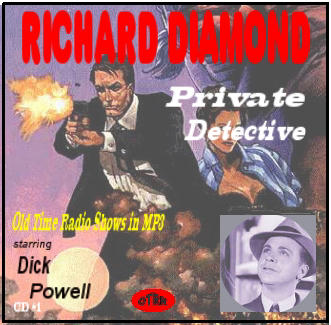
1001 Radio Crime Solvers
THE BLIND MAN AND THE COP KILLER and LOUIS SPENCE CASE RICHARD DIAMOND PI
00:59:05
n 1945, Dick Powell portrayed Phillip Marlowe in the movie "Murder My Sweet" based on Raymond Chandler's novel "Farewell My Lovely". This was a radical departure in character for Mr. Powell from a Hollywood song and dance man to a hard-boiled...
Loading summary
Transcript868 lines
- [00:00]
Richard Diamond
This episode is brought to you by Progressive Insurance. Do you ever think about switching insurance companies to see if you could save some cash? Progressive makes it easy to see if you could save when you bundle your home and auto policies. Try it@progressive.com Progressive Casualty Insurance Company and affiliates. Potential savings will vary. Not available in all states, from unsolved mysteries to unexplained phenomena. From comedy gold to relationship fails. Amazon Music's got the most ad free top podcasts included with Prime.
- [00:31]
Podcast Host / Narrator
Because the only thing that should interrupt.
- [00:32]
Richard Diamond
Your listening is, well, nothing.
- [00:36]
Podcast Host / Narrator
Download the Amazon music app.
- [00:37]
Richard Diamond
Today.
- [01:05]
Narrator / Announcer
The National Broadcasting Company presents Dick Powell as Richard diamond, private detective.
- [01:18]
Richard Diamond
Before I was a private detective, I was a cop. Homicide. Waking out of the fifth Precinct. Homicide means murder. And there are a lot more murders committed in the big city than you think. More than make the headlines in the newspapers and for everyone. There's the same impersonal routine, the same hard work, the same check and double check with every cop in or out of uniform doing his best to put the case in the closed file. But there's one kind of murder that will really tear the department to pieces. And that's when a cop is killed in line of duty.
- [01:52]
Narrator / Announcer
Here's another exciting half hour with Richard diamond, private detective, starring Dick Powell.
- [02:09]
Richard Diamond
Diamond Detective Agency. If your husband's dead and you pull the trigger, diamond will help. But the fee is bigger. Hello?
- [02:16]
Helen
Oh, Rick, what can I say?
- [02:18]
Lieutenant Walt Levinson
Hello?
- [02:19]
Helen
Hello?
- [02:20]
Richard Diamond
That's nice. Now try. Hello, Rick?
- [02:22]
Helen
Hello, Rick?
- [02:23]
Richard Diamond
Oh, dandy. Call back tomorrow, we'll start on. Hello, Rick, this is Helen, you idiot. Hi, baby.
- [02:28]
Helen
Hi.
- [02:28]
Richard Diamond
What's doing?
- [02:29]
Helen
Oh, I was just a little lonesome. Wanted to know if you were coming by tonight.
- [02:32]
Richard Diamond
Oh, you know, it should be there around 8.
- [02:35]
Lieutenant Walt Levinson
How about a little.
- [02:35]
Helen
What's that? Siren. Is there a fire?
- [02:38]
Richard Diamond
Could be. Sounds like it's pulling right up here in front of my building. Wait a minute, I'll open the window.
- [02:44]
Helen
I reckon there's a fire. You get right out of there.
- [02:47]
Richard Diamond
Honey, if this building caught on fire, I'd be Mr. Undine of 1950.
- [02:51]
Helen
Well, what is it?
- [02:53]
Richard Diamond
Ambulance.
- [02:53]
Helen
Oh.
- [02:54]
Richard Diamond
Oh, and here comes a prowl car. Must be a traffic accident or something.
- [02:59]
Helen
Well, thank goodness.
- [03:02]
Richard Diamond
Well, somebody probably playing in the traffic.
- [03:04]
Helen
Oh, Rick.
- [03:05]
Richard Diamond
Okay, okay. Some guy forgot to step down getting into his new Hudson. You know, I make remarks like that. I'm not trying to be. I. Oh, wait a minute. No combination, friend. Just turn the little old knob and push.
- [03:17]
Helen
Who is it?
- [03:17]
Richard Diamond
Somebody at the door. Well, Pop.
- [03:20]
Helen
What?
- [03:21]
Richard Diamond
Pop Scolds.
- [03:22]
Helen
Oh, the nice old blind man who sells pencils on the corner.
- [03:24]
Pop Scolds
Yeah, Hello, Pop, please, Mr. Diamond, I've got to talk to you. I ain't got much time.
- [03:28]
Helen
What does he want, Rick?
- [03:29]
Richard Diamond
Oh, to talk to me. I'll call you back, dear. Bye.
- [03:32]
Helen
Bye.
- [03:32]
Pop Scolds
I'm sorry to have bothered you, Mr. Diamond.
- [03:34]
Richard Diamond
Not at all, Pop, not at all. What can I do for you?
- [03:36]
Pop Scolds
I can't stay long. I have to hurry. But I was wondering if you'd come to my place later on. It's pretty important.
- [03:41]
Richard Diamond
How important?
- [03:42]
Pop Scolds
Pop, I can't explain now. G', day, but I got a big trouble. I sure could use some help. For old times sake.
- [03:48]
Richard Diamond
Sure. For old times sake. Where do you live, Pop?
- [03:50]
Pop Scolds
Little shack on the waterfront. End of River Street. 6:22 and a half.
- [03:54]
Richard Diamond
When do you want me to come down?
- [03:55]
Pop Scolds
About an hour. I gotta be going now.
- [03:57]
Richard Diamond
Okay. Wait a minute, Pop. Yeah? Let me give you a hand.
- [04:03]
Pop Scolds
Thanks. I could make it with this stick, but it takes time. I ain't got a lot of that.
- [04:08]
Richard Diamond
There you are, Pop. See you in an hour.
- [04:10]
Pop Scolds
Thanks, Mr. Diamond.
- [04:12]
Richard Diamond
Name's Rick.
- [04:12]
Pop Scolds
Okay. See you in an hour, Rig.
- [04:30]
Lieutenant Walt Levinson
Miss Ashel's residence.
- [04:31]
Richard Diamond
Oh, hello, Francis. Mr. Diamond.
- [04:33]
Lieutenant Walt Levinson
Oh, yes, sir. I'll call Miss Asher right away.
- [04:35]
Richard Diamond
Thank you. Rig. What?
- [04:41]
Lieutenant Walt Levinson
Mind if I sit down?
- [04:42]
Richard Diamond
No. What the world are you doing down here?
- [04:44]
Helen
Hello, Rick.
- [04:45]
Richard Diamond
Hold the phone, honey.
- [04:46]
Lieutenant Walt Levinson
Came down on a homicide.
- [04:47]
Richard Diamond
Homicide? Oh, that squad car right in front of the.
- [04:50]
Lieutenant Walt Levinson
Right in front of your building? Yes. Shooting.
- [04:52]
Richard Diamond
Well, what are you doing up here?
- [04:53]
Lieutenant Walt Levinson
I've done all I could down there, Rick.
- [04:55]
Richard Diamond
Just a minute, baby.
- [04:56]
Lieutenant Walt Levinson
Thought you might want to hear about it. Bill Walton. What? Friend of yours, wasn't he?
- [05:00]
Richard Diamond
Yeah, a darn good one.
- [05:02]
Helen
Hello, Rich.
- [05:02]
Lieutenant Walt Levinson
Somebody put three slugs in him.
- [05:04]
Helen
Rick, I can hear somebody talking. What's going on?
- [05:06]
Richard Diamond
Oh, I'll call you back, baby.
- [05:07]
Helen
What?
- [05:08]
Lieutenant Walt Levinson
Helen?
- [05:09]
Richard Diamond
Yeah. You know, I worked with Bill on Robbery for three years. Got any idea who did it?
- [05:14]
Lieutenant Walt Levinson
He left the robbery detail two years ago. Been with the Narcotics Division. Haven't checked with them yet, but he might have been working on something. Might give us a lead. You want to go down the station with me?
- [05:23]
Richard Diamond
Yeah, I'd like to.
- [05:24]
Lieutenant Walt Levinson
Okay. I've got some witnesses to the shooting. They'll be down there for statements.
- [05:29]
Richard Diamond
Bill's got a wife and three kids. Yeah.
- [05:32]
Lieutenant Walt Levinson
Aren't you going to lock the office?
- [05:34]
Richard Diamond
For what? Even the termites. Gag on the furniture. Let's go. Well, that's a way a quiet day could work. Work itself into a lot of trouble. And like always, if trouble's around. Yours truly is bound to get a chunk of it. Walt and I went downstairs, climbed into the prow car, and 10 minutes later we were walking into the squad room of the Fifth Precinct police station. The first thing I saw was the zoo's best argument for not taking in boarders.
- [06:00]
Lieutenant Walt Levinson
Uh, Lieutenant, I got statements from all the witnesses. You want to talk to him?
- [06:04]
Richard Diamond
No. He thought he'd read their palm, Sergeant.
- [06:07]
Lieutenant Walt Levinson
Oh, Lieutenant, what did you have to bring the shamus along for? Just relax, Otis. And, Rick, you lay off here.
- [06:13]
Richard Diamond
Well, I wouldn't need him if he'd just stop that terrible habit.
- [06:17]
Lieutenant Walt Levinson
What habit?
- [06:18]
Richard Diamond
Living.
- [06:19]
Lieutenant Walt Levinson
Oh, come on, Rick.
- [06:20]
Richard Diamond
Oh, look at that, Walt. Four heads and they all need haircuts.
- [06:23]
Lieutenant Walt Levinson
Come on, Rick. Come on, this is a swell time to make jokes.
- [06:26]
Richard Diamond
Can you think of a better time?
- [06:27]
Lieutenant Walt Levinson
Okay, okay, okay. Otis, yaddle 10. Send in the first one. Then check with narcotics and see what Bill Walton was working on. Right. Boy, I hate things like this.
- [06:38]
Richard Diamond
What about his family?
- [06:40]
Lieutenant Walt Levinson
I know all of them. I guess I'll have to go over and tell him. First one. Lieutenant Arthur Phillips. Go on in. Come in, Mr. Phillips. Oh, have a chair.
- [06:50]
Pop Scolds
Yes.
- [06:50]
Lieutenant Walt Levinson
Okay. Look, I don't know much about this thing. I was. Mr. Diamond. Mr. Phillips.
- [06:55]
Richard Diamond
How are you?
- [06:55]
Lieutenant Walt Levinson
How do you do? As I was saying. You saw the killing, Mr. Phillips?
- [06:58]
Louis Spence
Yes, yes, I saw it.
- [06:59]
Lieutenant Walt Levinson
It all happened so fast that I don't think I can really be.
- [07:02]
Richard Diamond
What were you doing when you saw the killing, Mr. Phillips?
- [07:04]
Lieutenant Walt Levinson
Walking. But I did. Walking where, Mr. Phillips?
- [07:07]
Louis Spence
Up the street to my office.
- [07:09]
Lieutenant Walt Levinson
Oh, look, I gave your sergeant my statement. You'll find it all in the.
- [07:11]
Richard Diamond
What's your business, Mr. Phillips?
- [07:13]
Louis Spence
Insurance. Liberty Insurance Company, 41st and Broadway.
- [07:16]
Lieutenant Walt Levinson
You saw Officer Walton killed? I saw a man. His name?
- [07:19]
Louis Spence
I didn't know he was killed.
- [07:20]
Richard Diamond
You heard the shots?
- [07:21]
Lieutenant Walt Levinson
Well, yes, but it was all so fast. Just what did you see?
- [07:25]
Louis Spence
Well, like I said, I was walking down the street to work.
- [07:28]
Lieutenant Walt Levinson
Yes, Liberty Insurance, we've got that.
- [07:30]
Richard Diamond
Oh, yes, you were walking.
- [07:31]
Louis Spence
Yes, and I heard this noise.
- [07:33]
Lieutenant Walt Levinson
The shots? Yes, but I didn't know it at the time. It was just a loud noise, but it made me jump and I looked. You just jumped, Mr. Phillips?
- [07:40]
Louis Spence
Yes. Well, then I saw this guy grab his stomach and fall flat on his face. And then I saw the guy with the gun.
- [07:45]
Richard Diamond
What did the guy with the gun look like, Mr. Phillips?
- [07:47]
Louis Spence
Well, it all happened so fast.
- [07:49]
Lieutenant Walt Levinson
Sergeant Otis showed you our rogues gallery. Did you see anybody who looked like him?
- [07:52]
Louis Spence
No, no, no, I didn't see anybody.
- [07:54]
Lieutenant Walt Levinson
That looked like Him?
- [07:54]
Louis Spence
I didn't get a good look at his face.
- [07:56]
Richard Diamond
How tall was he?
- [07:58]
Lieutenant Walt Levinson
Tall, like six feet?
- [07:59]
Richard Diamond
Yes.
- [07:59]
Louis Spence
Or close.
- [08:00]
Lieutenant Walt Levinson
What was he wearing, Mr. Phillips?
- [08:01]
Louis Spence
Brown suit and hat.
- [08:03]
Lieutenant Walt Levinson
Brown hat?
- [08:04]
Richard Diamond
Stocky, well built?
- [08:05]
Louis Spence
Yes.
- [08:06]
Lieutenant Walt Levinson
Anything else, Mr. Phillips? No. Thank you. Mr. Phillips, we may want to talk to you again. Don't leave town on a business trip or anything.
- [08:12]
Louis Spence
Oh, I can go.
- [08:13]
Lieutenant Walt Levinson
Good day, Mr. Phillips. Thank you again.
- [08:15]
Louis Spence
Anytime. Oh, if you ever need any insurance, Lieutenant.
- [08:20]
Lieutenant Walt Levinson
Liberty Insurance Company, I'll remember.
- [08:23]
Louis Spence
So long.
- [08:25]
Richard Diamond
Cigarette?
- [08:26]
Lieutenant Walt Levinson
Thanks. We still work pretty well together, Rick. Why don't you come back on the force, Lieutenant?
- [08:33]
Richard Diamond
There's your answer, Walt.
- [08:34]
Lieutenant Walt Levinson
What is it, Hammerhead? Well, I. I went over and talked to Fisher. He told me Bill Walton was working on a narcotics case, but he had no leads. Stuff's been flooding the city.
- [08:44]
Richard Diamond
Bill must have picked up a lead and got shot for it.
- [08:46]
Lieutenant Walt Levinson
That's all. Otis Fisher doesn't know anything else. Walton just started on the job. You got some more witnesses? Yeah. Lady. Mrs. Margaret Walker. Okay, you can come in.
- [08:57]
Helen
Thank you.
- [08:57]
Lieutenant Walt Levinson
Come in, Mrs. Walker. Take a chair.
- [08:59]
Helen
Thank you.
- [09:00]
Lieutenant Walt Levinson
Anything else? No. This Mr. Diamond, Mrs. Walker.
- [09:04]
Helen
How do you do?
- [09:05]
Richard Diamond
How do you do, Mrs. Walker?
- [09:06]
Lieutenant Walt Levinson
Do you work, Mrs. Walker?
- [09:07]
Helen
All the time? I'm a housewife.
- [09:09]
Richard Diamond
You saw the officer killed?
- [09:11]
Helen
Oh, yes. But I didn't know it was an officer. He wasn't in uniform, you know.
- [09:14]
Lieutenant Walt Levinson
Do you mind telling us just exactly what you saw?
- [09:16]
Helen
Well, it all happened so far. I was standing on the corner and just.
- [09:21]
Lieutenant Walt Levinson
What corner, Mrs. Walker?
- [09:23]
Helen
Why, the corner where the poor man got shot, of course. 51st and Broadway.
- [09:26]
Richard Diamond
Just standing, Mrs. Walker.
- [09:28]
Helen
Young man. The traffic was very heavy. I was waiting for the signal.
- [09:31]
Richard Diamond
Sorry.
- [09:32]
Helen
I just want you to understand. I don't usually just stand around on street corners.
- [09:37]
Lieutenant Walt Levinson
Go ahead, Mrs. Walker.
- [09:39]
Helen
Well, I was standing there and I noticed an old man selling pencils.
- [09:44]
Richard Diamond
No man.
- [09:45]
Helen
Yes, he was blind.
- [09:47]
Lieutenant Walt Levinson
Hey, Pop. Scoles did time about 15 years ago for peddling junk.
- [09:50]
Richard Diamond
Yeah, that's right. He did.
- [09:53]
Helen
I don't know what all this talk is about, but if you don't want to hear my story.
- [09:57]
Lieutenant Walt Levinson
I'm sorry, Mrs. Walker. Of course we want to hear your story. Please, go ahead.
- [10:00]
Richard Diamond
Look, Walt, I just remembered something. I was supposed to see a client in an hour and the hour's just about up.
- [10:06]
Lieutenant Walt Levinson
What?
- [10:06]
Richard Diamond
I'm sorry, Walt, but this is business. Now, you wait a minute. Talk to you later.
- [10:12]
Helen
Well, I never.
- [10:14]
Lieutenant Walt Levinson
That's only because you don't have any friends named diamond. All right, Mrs. Walker. Go on with your story.
- [10:24]
Richard Diamond
I went out of that station Like Noah in a stretch. The minute the little old lady had mentioned a blind beggar, I remembered Pop skulls in my office. And I grew the biggest hunch of my career. Something had really been bothering Pop and a cop killing could have been it. I grabbed a cab and 20 minutes later I was standing in front of an old weather beaten shack at the end of River Street.
- [10:49]
Pop Scolds
Who is it?
- [10:50]
Richard Diamond
Diamond.
- [10:51]
Pop Scolds
Oh, wait a second.
- [10:54]
Richard Diamond
Am I late?
- [10:56]
Pop Scolds
Look, Mr. Diamond.
- [10:57]
Richard Diamond
Rick.
- [10:58]
Pop Scolds
Yeah. Look, Rick, I'm sorry you came all the way down here, but, well, I.
- [11:03]
Richard Diamond
You wanted some help, didn't you?
- [11:05]
Pop Scolds
Well, yeah, I did.
- [11:07]
Richard Diamond
You did? You could at least ask me in.
- [11:09]
Pop Scolds
Oh, sure, sure. I'm sorry. But you see, I don't need no help now.
- [11:15]
Richard Diamond
No? Well, you seemed pretty worried about something when you came up to my office an hour ago.
- [11:19]
Pop Scolds
I was, but it's all straightened out now.
- [11:22]
Richard Diamond
That right? Hey, I didn't know you smoked cigars, Pop.
- [11:29]
Pop Scolds
What?
- [11:29]
Richard Diamond
One in your ashtray here. Pretty expensive for you, Pop.
- [11:33]
Pop Scolds
Oh, well, you see, I kind of splurge now and then.
- [11:38]
Richard Diamond
Come on, Pop. Somebody been here and changed your mind about talking to me.
- [11:41]
Pop Scolds
No, that's my cigar. What makes you say a thing like that?
- [11:44]
Richard Diamond
There was a cop kill right in front of you today, Pop. A good friend of mine.
- [11:47]
Pop Scolds
What's that got to do with me? I'm going straight.
- [11:49]
Richard Diamond
It was after somebody who's been peddling junk.
- [11:51]
Pop Scolds
I don't touch this stuff anymore. I don't go near it.
- [11:53]
Richard Diamond
Don't you, Pop?
- [11:54]
Pop Scolds
No. I put it down 15 years ago.
- [11:55]
Richard Diamond
I did time for it too.
- [11:56]
Pop Scolds
Sure, and lost my eyes in stir. You think I want to go back to that? You think I'm a f. There's your car pulling up out in front.
- [12:03]
Richard Diamond
That should be the law.
- [12:04]
Pop Scolds
I didn't do nothing. I swear I didn't.
- [12:06]
Richard Diamond
Better tell me quick. Who's throwing his weight around?
- [12:08]
Pop Scolds
Pop, I had nothing to do with that cop killing. I'm clean. You can't prove a thing. Come on, open up.
- [12:14]
Lieutenant Walt Levinson
It's the police.
- [12:14]
Richard Diamond
You're sure you don't want to tell me anything?
- [12:16]
Pop Scolds
No, I got nothing to tell.
- [12:18]
Lieutenant Walt Levinson
Busted in, Pop.
- [12:18]
Pop Scolds
Come on in, it's open.
- [12:21]
Lieutenant Walt Levinson
Okay, Pop, you're coming. I might have known it. Why didn't you wait for me, Rick?
- [12:25]
Richard Diamond
Believe me, Walt, I had an appointment with Pop.
- [12:27]
Pop Scolds
That's right, Lieutenant, he did.
- [12:29]
Lieutenant Walt Levinson
Oh, sure. Talk over old times, huh? Otis, take Pop out to the car. Come on, Pop.
- [12:34]
Pop Scolds
Sorry I got you in trouble, Rick.
- [12:35]
Richard Diamond
Forget it.
- [12:37]
Lieutenant Walt Levinson
Just what have you two been stewing up? What did he tell you he was.
- [12:40]
Richard Diamond
Showing me how to throw darts in the dark.
- [12:42]
Lieutenant Walt Levinson
That's a pretty bad one.
- [12:43]
Richard Diamond
Yeah. What did Mrs. Walker tell you about Pop?
- [12:46]
Lieutenant Walt Levinson
I don't know why I should tell you.
- [12:48]
Richard Diamond
Well, don't be so grouchy. I've just been trying to find the guy who killed Bill. Pop's had it pretty tough already. I thought maybe I could make it easier than having you third degree him all over the office.
- [12:58]
Lieutenant Walt Levinson
You sound like I'm going to use.
- [12:59]
Richard Diamond
A hose on him. The way you're burning up, you'll probably hit him with Sergeant Otis. No, I'm going home.
- [13:04]
Lieutenant Walt Levinson
Now, wait a minute. What for?
- [13:06]
Richard Diamond
To watch you blow up like Old Faithful?
- [13:08]
Lieutenant Walt Levinson
Mrs. Walker told me she saw some guy walk up to Pop like he was going to buy some pencils. Then another man busted through the crowd. That was Bill. Grabbed this guy with Pop. Guy pulled a gun and shot Bill. And then he beat it.
- [13:19]
Richard Diamond
Did Mrs. Walker give you a description of the killer?
- [13:21]
Lieutenant Walt Levinson
Sure. Short, dark. Just the opposite of the one the insurance man gave us. The only thing that fits. They both said the killer wore a hat.
- [13:28]
Richard Diamond
Oh, dandy.
- [13:29]
Lieutenant Walt Levinson
Where you going?
- [13:30]
Richard Diamond
Back to my office. Pop knows something, Walt. Don't work on him too hard. Okay, now. Been over to Bill's Family Inn right.
- [13:38]
Lieutenant Walt Levinson
After I get through with Pop.
- [13:39]
Richard Diamond
I'm sorry I got sore so.
- [13:41]
Lieutenant Walt Levinson
We all get sore. So what? I'll give you a call.
- [13:48]
Richard Diamond
I got back in my cab and headed for the. On the way over, I kept trying to reason it out. Somehow Pop was mixed up in this thing and he was scared stiff of something or somebody. I paid the cabbie off in front of the building and took the elevator up to my floor. I headed down the hall to my office, still thinking, still trying to put two and two together. That was a mistake. I never could add. When I walked in, I was too busy to notice much. All I got was a whiff of cigar smoke.
- [14:28]
Lieutenant Walt Levinson
You fall easy, Shammas. Now let's see how you bruise. So long, Shamus. I left a note for you.
- [14:58]
Richard Diamond
Read it. When you wake up, everything about a beating like that is so unpleasant. The first SWAT isn't so bad. It's hitting that cold floor and fighting to stay awake. When you start getting kicked around, that's the time to face facts and give it up. But you don't. You keep on working until your senses get kicked loose and the world comes down around your ears. You fight it because you think maybe you're not ever gonna wake up again. And when you finally do, you wish you never had anyway, like I said it's so unpleasant. Oh, okay. Okay. Oh, well, that lamp was pretty silly anyway.
- [15:47]
Lieutenant Walt Levinson
All right, all right.
- [15:52]
Richard Diamond
Don'T jump. But you're talking to a ghost, Rick. At the sound of the groan.
- [15:56]
Lieutenant Walt Levinson
What's the matter with you?
- [15:57]
Richard Diamond
Now, that's a pretty good question. I don't know how to answer it without a head.
- [16:01]
Lieutenant Walt Levinson
What happened?
- [16:02]
Richard Diamond
Somebody worked me over. Oh, and how they worked me over.
- [16:05]
Lieutenant Walt Levinson
You want me to send an ambulance?
- [16:06]
Richard Diamond
No, just a shovel. Hmm. What's this?
- [16:10]
Lieutenant Walt Levinson
What's what?
- [16:11]
Richard Diamond
Something in the typewriter here. A note. Well, I put my eyes in straight.
- [16:16]
Lieutenant Walt Levinson
Rick, if you're hurt badly.
- [16:17]
Richard Diamond
Oh, I'm not hurt that bad, Walt.
- [16:18]
Lieutenant Walt Levinson
Well, what about this note?
- [16:22]
Richard Diamond
Says, lay off the cop killing. That's all. Oh, and. Yeah? Look at this.
- [16:28]
Lieutenant Walt Levinson
Find something else?
- [16:29]
Richard Diamond
A souvenir butt of a cigar in my ashtray. There was one just like it in Pop's place.
- [16:34]
Lieutenant Walt Levinson
Well, hang on to it.
- [16:35]
Richard Diamond
All right? Sure. What about Pop?
- [16:37]
Lieutenant Walt Levinson
Won't tell us a thing.
- [16:38]
Richard Diamond
Well, I'm getting sick and tired of this. Now, I got an idea. Wait 10 minutes and then take Pop back to his house.
- [16:45]
Lieutenant Walt Levinson
Look, Rick, if somebody knows you're working on this thing, they must have found out when you went to see Pop. Probably spotted you going in. They certainly must know that we picked up Pop. And if they think he told us anything, they'll sure try to get him.
- [16:55]
Richard Diamond
I know it. I know it. I know it. Now, you drive Pop home, pretend to leave, but don't.
- [16:59]
Lieutenant Walt Levinson
And what'll you be doing?
- [17:00]
Richard Diamond
I'll be inside when he walks through the door.
- [17:02]
Lieutenant Walt Levinson
Okay, but I hope you know what you're doing.
- [17:04]
Richard Diamond
So do I. Ten minutes, Walt.
- [17:23]
Lieutenant Walt Levinson
Okay, Pop.
- [17:24]
Richard Diamond
Here you are.
- [17:24]
Pop Scolds
Thanks for driving me home, Lieutenant.
- [17:26]
Lieutenant Walt Levinson
That's okay. Good night, cop. Good night, Lieutenant.
- [17:42]
Pop Scolds
Who's in here? Who is it, Chick? I know you, hear? I can smell your cigar smoke. Chick, please. I didn't tell the law a thing. Chick, say something. Honest, I didn't crack. Look, look, if you want to get rid of me, okay, but not the girl. Please. I swear I didn't say anything to anybody. I'm an old guy. Go ahead, knock me off, but don't do anything to the girl. Please. Chick, I'll petty your stuff for the rest of my life if you leave the girl alone.
- [18:17]
Helen
Chick.
- [18:18]
Richard Diamond
Relax, Pop.
- [18:19]
Pop Scolds
What? You're not.
- [18:21]
Richard Diamond
No, Pop. Diamond didn't like to do it this way, Pop.
- [18:25]
Pop Scolds
But that cigar.
- [18:26]
Richard Diamond
The guy who saw you earlier came up to see me. Left me a cigar, too, along with a few bruises.
- [18:31]
Pop Scolds
Well, you just about know everything.
- [18:34]
Richard Diamond
Who's the girl you're protecting?
- [18:35]
Pop Scolds
I can't tell you that.
- [18:36]
Richard Diamond
Who's Chick?
- [18:37]
Pop Scolds
I can't tell you anything.
- [18:38]
Richard Diamond
Look, Pop, a cop's been killed. A great guy with a wife and kids. Now tell me whose Chick?
- [18:43]
Pop Scolds
I ain't gonna say anything.
- [18:45]
Richard Diamond
If the girl has a reason you won't talk, Pop, I'll find her. And if it's the last thing I ever do, I'll make you both sweat. I'm on my way.
- [18:52]
Pop Scolds
Wait a minute, Rick.
- [18:54]
Richard Diamond
All right, go on.
- [18:56]
Pop Scolds
Okay, if you'll give me a word. You won't say nothing about what I'm going to tell you.
- [19:01]
Richard Diamond
I give you my word about nothing yet, Pop. Now tell me. And if I think it should be kept quiet, that's the way it'll be.
- [19:07]
Pop Scolds
I got a daughter, Rick.
- [19:09]
Lieutenant Walt Levinson
What?
- [19:09]
Richard Diamond
That's right.
- [19:11]
Pop Scolds
Right after I went to stir, my wife had a baby. Wife died and the kid went to live with relatives, rich relatives. He's getting a good home and good schools.
- [19:19]
Richard Diamond
She doesn't know about you panhandling?
- [19:21]
Pop Scolds
No, she don't know about me, and.
- [19:23]
Richard Diamond
She ain't going to go on.
- [19:26]
Pop Scolds
Only one guy knew about her. My ex partner, Chick Russo. He got away when they picked me up. And after 15 years, he comes back operating again.
- [19:33]
Richard Diamond
The guy with a cigar, huh?
- [19:34]
Pop Scolds
Yeah.
- [19:35]
Richard Diamond
How did you figure?
- [19:36]
Pop Scolds
The stuff was in the pencils he delivered to me, and I'd pass it.
- [19:39]
Richard Diamond
Why would you pass it?
- [19:40]
Pop Scolds
Chick had me over a barrel. He told me if I didn't play along with him, he'd tell my daughter who her father was. I'd do anything to keep from ruining her life.
- [19:47]
Richard Diamond
Now, what about Bill Walton?
- [19:48]
Pop Scolds
Well, he. He was going to grab Chick, but Chick shot him. That's why I came to see you. I didn't want no part of a cop killing. But I couldn't say anything then because I had this stuff on me and I wanted to dump it. I didn't want to go back to your stir.
- [19:59]
Richard Diamond
Then Chick came to see you here, huh? Threatened you, Told you to keep your mouth shut?
- [20:02]
Louis Spence
Yes.
- [20:02]
Pop Scolds
Told me in plain words that if I cracked, he'd kill my little girl and me. That's why I froze on you. You gonna say anything about your daughter?
- [20:10]
Richard Diamond
No, Pop.
- [20:12]
Pop Scolds
Thanks, Rick. Now I don't care what happens.
- [20:14]
Richard Diamond
Well, I do. This guy's still loose and he's done a killing. I want him.
- [20:18]
Pop Scolds
I don't know where you can find him. He never said.
- [20:20]
Richard Diamond
Well, maybe I can find him. Take off your clothes, Pop.
- [20:23]
Pop Scolds
Take off my clothes?
- [20:24]
Richard Diamond
Yep. You're Gonna get yourself a new suit. I'm going out and see Lieutenant Levinson. I'll be right back.
- [20:29]
Pop Scolds
You sure you know what you're doing?
- [20:31]
Richard Diamond
No, but why spoil a good surprise? Rick, where are you, Walt?
- [20:38]
Lieutenant Walt Levinson
Over here by the pier.
- [20:39]
Richard Diamond
What's that with you?
- [20:40]
Lieutenant Walt Levinson
That's Otis.
- [20:41]
Richard Diamond
Tell him to hide his tail. Some guy from Oklahoma's allowed to shoot him.
- [20:45]
Lieutenant Walt Levinson
Oh, that's very funny. Shut up, Otis. Okay.
- [20:48]
Richard Diamond
You seen anything, Walt?
- [20:50]
Lieutenant Walt Levinson
Very quiet.
- [20:51]
Richard Diamond
Now, look, here's the idea. I'm going down to 51st and Broadway and stand with Pop's clothes and dark glasses on.
- [20:57]
Lieutenant Walt Levinson
Your what?
- [20:57]
Richard Diamond
From what Pop told me, Chick Russo will certainly try and get him.
- [21:00]
Lieutenant Walt Levinson
Chick Russo? Are you crazy? He's been out of circulation for 15 years.
- [21:04]
Richard Diamond
Well, I got a big flash for you. He's back.
- [21:06]
Lieutenant Walt Levinson
But at 51st and Broadway. I can't give you any protection. Russo could step out of the crowd, and that's the end of it.
- [21:12]
Richard Diamond
Well, I'm counting on one thing. That he thinks I'm Pop. He knows Pop's blind, so he'll get in close to do it. Maybe even with a knife.
- [21:19]
Lieutenant Walt Levinson
You're crazy.
- [21:20]
Richard Diamond
Walled. Walled. Not in front of Otis.
- [21:22]
Lieutenant Walt Levinson
Oh, that's all right, Diamond.
- [21:24]
Richard Diamond
Now, I'm going down to change clothes, and then you, Walt, drive me to the corner. Let me off, then beat it. I left Walt then and went back to Pop's shack. We did a quick switch, and finally the dapper Richard diamond stepped out, complete with torn trousers, sweatshirt and sneakers. I carried his cane with a white tip and kept his old hat pulled down over the dark glasses.
- [21:50]
Lieutenant Walt Levinson
Well, I'll be darned. Yeah, he looks just like the old man.
- [21:54]
Richard Diamond
Let's go, Walt. Otis, you stay here with Pop. Just in case our pigeon doesn't go for the bait.
- [21:58]
Lieutenant Walt Levinson
Oh, Lieutenant, can iis okay?
- [22:02]
Richard Diamond
Don't look so unhappy, Otis. Who knows? Maybe I'll get shot.
- [22:05]
Lieutenant Walt Levinson
Oh, I gotta miss everything.
- [22:07]
Richard Diamond
Isn't he a dream? Okay.
- [22:27]
Lieutenant Walt Levinson
Here you are, Rick.
- [22:28]
Richard Diamond
Thanks, Wal. Say good night, Pop. Real loud.
- [22:30]
Lieutenant Walt Levinson
Okay. Good night, Pop. Sorry if we caused you any trouble.
- [22:34]
Richard Diamond
Oh, that's all right, Lieutenant. Thanks for the lift.
- [22:51]
Helen
Here you are, my good man.
- [22:52]
Louis Spence
Bless you.
- [22:54]
Richard Diamond
Hi, Kirk. Well, I stood there for two hours getting a few dimes and selling a couple of pencils, but nothing happened. Now and then, I'd pull my arm down against my side and feel a nice little.38 in the shoulder holster. I kept moving from one foot to another to keep my legs from going to sleep. I was getting a firsthand example of the tougher old puff. Poor Old Pop had to hold. By 10:30, I was ready to give it up. Then I spotted the cigar. Bless you.
- [23:26]
Lieutenant Walt Levinson
For what, Pop? Cops driving you to work now, huh? That's enough. I'll take your arm and you start walking. I'll lead you.
- [23:34]
Richard Diamond
Chick? Chick, is that you?
- [23:36]
Lieutenant Walt Levinson
Shut up. Walk. All right. We're going in the building, down in the basement for a little talk.
- [23:51]
Richard Diamond
And that's just what we did. Chick held onto my arm and led me into my own building and down into the basement. I could have taken him right there, but I kept remembering Bill Walton. So I let it go until just the right time.
- [24:08]
Lieutenant Walt Levinson
Okay, Pop, you know what's coming?
- [24:11]
Richard Diamond
Yeah, Chick, I know what's coming.
- [24:14]
Lieutenant Walt Levinson
Don't act much scared. I guess it ain't so tough for a blind man. You can't see it coming.
- [24:20]
Richard Diamond
You'd be surprised what I can see. What did I tell you?
- [24:24]
Lieutenant Walt Levinson
Busted in my arm. You hit me with that cane.
- [24:26]
Louis Spence
Like you could see.
- [24:27]
Pop Scolds
You hit me.
- [24:27]
Richard Diamond
You go for that gun, I'll break your fat skull. You ain't Pop no buster. I'm the fellow you gave the bruises to. Just returning the favor. Don't do it, Papa.
- [24:37]
Lieutenant Walt Levinson
Spank my shoulder.
- [24:39]
Richard Diamond
All right, now let's go back up where we can find a cop.
- [24:41]
Lieutenant Walt Levinson
Oh, no, you're not going to take me.
- [24:43]
Richard Diamond
Come back youo stop, Russo.
- [24:46]
Pop Scolds
I've got a gun nuts to use. Shamus.
- [24:50]
Richard Diamond
Skeptic.
- [25:11]
Helen
Yes? Oh, hello, Walt.
- [25:13]
Richard Diamond
Oh, no.
- [25:14]
Helen
Yes. He's right here. Rick, It's Walt.
- [25:16]
Richard Diamond
Oh, did she Fu Wong, Mr. Diamond? Fairly dead.
- [25:21]
Lieutenant Walt Levinson
Now, you stop that. I just had a long talk with Pop.
- [25:24]
Richard Diamond
Oh, is that right? Yeah.
- [25:25]
Lieutenant Walt Levinson
He said absolutely nothing. I still don't know where he figures in this thing. Would you mind telling me?
- [25:30]
Richard Diamond
Walt, anything Pop did was under duress.
- [25:33]
Lieutenant Walt Levinson
If it was illegal, I want to know about it.
- [25:34]
Richard Diamond
Yeah, and if it was illegal, Pop would stand a good chance going back to prison.
- [25:37]
Lieutenant Walt Levinson
He might. You better let the law decide that.
- [25:40]
Richard Diamond
You haven't got any proof.
- [25:41]
Lieutenant Walt Levinson
How could I? Everybody's dead except you and Pop.
- [25:43]
Richard Diamond
Pop won't say anything.
- [25:44]
Lieutenant Walt Levinson
Not yet, he won't. Walt. Yeah?
- [25:47]
Richard Diamond
Die.
- [25:48]
Lieutenant Walt Levinson
Now you wait.
- [25:49]
Helen
What in the world was that all about?
- [25:50]
Richard Diamond
Oh, that Walt. When he dies, he'll have the penal code written on his headstone. But he's a good cop. And there he is again.
- [25:59]
Helen
I can't stand to let a phone ring.
- [26:01]
Richard Diamond
Oh, you get tired, Rick?
- [26:03]
Helen
I'll go crazy.
- [26:04]
Richard Diamond
I'll drown it out.
- [26:05]
Helen
Well, do something.
- [26:08]
Richard Diamond
I've got a lovely bunch of coke stopped. Oh, good.
- [26:11]
Helen
Well, don't you stop. That was pretty.
- [26:13]
Richard Diamond
Well, all right. Oh, I've got the lovely bunch of kilts. There they are standing in a row. Big one, small one, some as big as your red.
- [26:29]
Louis Spence
Give em a twist, a flick of.
- [26:30]
Richard Diamond
The wrist that's what the showman said. Oh, I've got a loverly bunch of coconuts. Every ball you throw will make me rich. There stands me wife, the idol of me life. Sing and roll a bowl, a ball, a penny, a pitch Sing and roll a bowl, a ball, a penny, a pitch Sing and roll a ball, a penny, a pitch Roll a bowl, a ball Roll a bowl, a ball Sing and roll a bowl, a ball, a penny, a pitch.
- [27:01]
Lieutenant Walt Levinson
Hey, there you are, my lad.
- [27:02]
Richard Diamond
Step right up here. I got a lovely bunch of quarter nuts. There they are all up standing up there in a great big roll. I got big ones and small ones. Some of them as big as your blasted head.
- [27:13]
Pop Scolds
Yeah, you give them a twist and a flick of the rest.
- [27:15]
Richard Diamond
Oh, what lovely fun. I got a lovely bunch of coconuts. Every ball you throw will make me rich. There stands me wife, the idol of me life. Sing and roll a bowl, a bowl, a penny a pitch Sing and roll a bowl, a bowl, a penny a pitch Sing and roll a bowl a ball, a penny, a pitch Roll a bowl, a ball Roll a bowl a ball Sing a roll a bowl, a bowl, a penny a of piece. Oh, my dear. How was that, honey?
- [27:49]
Helen
Oh, wonderful. Oh, darn. Yes, Walt.
- [27:55]
Lieutenant Walt Levinson
Helen, you put diamond on the line.
- [27:57]
Helen
It's Walt, dear.
- [27:58]
Richard Diamond
Oh, never mind him. Come here, honey.
- [28:00]
Lieutenant Walt Levinson
Oh, hello? Hello? Helen, did you hang up? Helen, put Rick on this phone.
- [28:10]
Helen
This is Fu Wong, Missy Diamond. Not so validate. Bye.
- [28:35]
Narrator / Announcer
You have just heard Richard Diamond, Private Detective starring Dick Powell. Ed Begley played Lieutenant Walt Levinson. Also in the cast were Wilms, Herbert Francis Robinson, Larry Dobkin, Anne Morrison and Charles Seal. Music was under the direction of Frank Wirth. Tonight's show was written by Blake Edwards and directed by Russell Hughes. Dick Powell currently may be seen in the motion picture version of the best selling novel Mrs. Mike. This is Eddie King inviting you to be with us next Sunday at this same time when we will again bring you Dick Powell as Richard Diamond, Private detective. Later today on most of these NBC stations you'll want to hear two great stars, Kirk Douglas and Walter Houston in the Theater Guild on the air presentation of Heaven Can Wait. This is the comedy fantasy which you may have seen as the motion picture. Here comes Mr. Jordan. It's a great comedy, yours for the listening today on Theater Guild on the air. And for another fine mystery program today on NBC, listen later to the adventures of Sam Spade as Sam slams his way through another of his amusing and mystifying capers. Hear the lovely duet from Madame Butterfly on Harvest of Stars next on NBC.
- [30:12]
Richard Diamond
Let's map out this week's amazing destinations and travel tips.
- [30:16]
Will
Honestly, Will, I didn't plan any trips, but I did switch to T Mobile with their new Family Freedom offer.
- [30:23]
Richard Diamond
That's not the itinerary we're following.
- [30:26]
Will
Well, I'm departing from AT&T and embarking on a new journey with T Mobile. They paid off my family's four phones up to $3200 and gave us four new phones on the house.
- [30:39]
Richard Diamond
Bon voyage.
- [30:41]
Podcast Host / Narrator
Introducing Family Freedom. Our lowest cost will switch our biggest family savings all on America's largest 5G network. Visit your local T Mobile location or learn more@t mobile.com FamilyFreedom up to $800 per line via virtual prepaid card typically takes 15 days. Free phones via 24 monthly bill credits with finance agreement, eg Apple iPhone 16, 128 gigabyte $829.99 Eligible trade in eg IPH for well qualified credits end and balance due. If you pay off early or cancel contact T Mobile.
- [31:07]
Will
From the Cascades to PDX to your kitchen. We recycle like we live here. That's why governments, brands and recycling companies are all joining together to bring change to make recycling better. As in trusting that your recyclables end up in the right places to be made into new things and having brands help fund the costs of recycling. You can find the latest updates at recycleon.org/oregon. From Mount Hood to the bin under your desk. Together we can do this.
- [32:03]
Narrator / Announcer
The National Broadcasting Company presents Dick Powell as Richard diamond, private detective.
- [32:18]
Louis Spence
Mr. Diamond, the reason you're here is because I want someone to talk to. I don't know whether it was explained to you or not, but unless His Honor is done away with himself by noon, a lot of people are going.
- [32:29]
Richard Diamond
To get hurt, including yourself.
- [32:31]
Louis Spence
Oh, that doesn't really matter. You see, in making my escape, a guard attempted to stop me. I had to kill him.
- [32:42]
Narrator / Announcer
Here's another exciting half hour with Richard Diamond, Private Detective, starring Dick Powell.
- [33:00]
Richard Diamond
Diamond Detective Agency. There's no corpse like an old corpse.
- [33:03]
Helen
Oh, Rick, that's awful.
- [33:05]
Richard Diamond
Yeah, but what am I gonna do? I can't be witty and handsome at the same time.
- [33:08]
Helen
Well, don't be greedy. Just concentrate on one of them.
- [33:11]
Richard Diamond
Oh, you're pretty. Nothing today.
- [33:13]
Helen
Why don't you come on over and we'll both try and improve.
- [33:16]
Richard Diamond
Shame on you. You know I've got to work.
- [33:17]
Helen
Oh, have you got a client?
- [33:18]
Richard Diamond
Well, not yet, but I've set bear traps all the way down the hall.
- [33:21]
Helen
Well, now, that's silly. How can you be sure you'll catch a client?
- [33:24]
Richard Diamond
Well, I can't be, but, oh, I get so lonesome up here with no one to talk to. It's fun setting broken legs.
- [33:30]
Lieutenant Walt Levinson
You're impossible, Diamond.
- [33:33]
Richard Diamond
Oh, my gosh.
- [33:34]
Helen
What's wrong?
- [33:35]
Richard Diamond
Those traps. I think I've caught something terrible.
- [33:37]
Lieutenant Walt Levinson
Diamond, I gotta talk to you.
- [33:39]
Helen
Who is it, Ray?
- [33:39]
Richard Diamond
Sergeant Otis says he's got to talk to me, but I'll be darned if I'll teach him how.
- [33:43]
Helen
Oh, say hello for me.
- [33:44]
Richard Diamond
Helen says hello. Otis.
- [33:45]
Lieutenant Walt Levinson
Tell her hello, then get off the phone. This is serious.
- [33:47]
Richard Diamond
Hey, what's with you? Somebody steal your catnip?
- [33:50]
Lieutenant Walt Levinson
Can't just stop being funny, shamus. I mean it. This is serious.
- [33:53]
Richard Diamond
Helen, I'll call you back.
- [33:54]
Helen
Why? Something wrong?
- [33:55]
Richard Diamond
Well, Otis looks worried and he's making sense for the first time in 11 years.
- [33:58]
Helen
Oh, well, call me later and tell me about it. Bye.
- [34:00]
Richard Diamond
Bye. Now, size it. What's on your pretty?
- [34:03]
Lieutenant Walt Levinson
I want you to come down at the station with me in a hurry.
- [34:05]
Richard Diamond
Of course, you'll think this is a silly question, but why?
- [34:08]
Lieutenant Walt Levinson
You remember Louis Spence?
- [34:09]
Richard Diamond
Louis Spence?
- [34:10]
Lieutenant Walt Levinson
About four years ago, caught him running around sticking dynamite under the homes of some of our city officials.
- [34:15]
Richard Diamond
Oh, yeah, yeah. Socialistic nut put him away, didn't they?
- [34:18]
Lieutenant Walt Levinson
Yeah, crazy as they come. Well, he's out.
- [34:21]
Richard Diamond
What do you mean he's out? If they cured his head, he'd still face a lot of years up the river.
- [34:26]
Pop Scolds
Oh, he ain't cured.
- [34:27]
Lieutenant Walt Levinson
Not a bit. He ain't cured.
- [34:28]
Richard Diamond
You mean he busted out yesterday.
- [34:30]
Lieutenant Walt Levinson
Now do me a favor and come on down to the station.
- [34:32]
Richard Diamond
Oh, wait a minute. Wait a minute and take it easy. What's going down to the station got to do with Louis Spence?
- [34:36]
Lieutenant Walt Levinson
He's down there with the Lieutenant.
- [34:38]
Richard Diamond
Well, great. Put them both in fancy jackets and send them home.
- [34:41]
Lieutenant Walt Levinson
We can't. He walked in 20 minutes ago and asked to see the Lieutenant. I didn't recognize him, so I let him in. Now we can't get him out.
- [34:49]
Richard Diamond
Why the devil can't you?
- [34:50]
Pop Scolds
He won't let us in and he.
- [34:52]
Lieutenant Walt Levinson
Won'T let the Lieutenant out.
- [34:53]
Pop Scolds
He's sitting there holding a big bomb.
- [34:55]
Lieutenant Walt Levinson
And it's ready to go off.
- [35:13]
Richard Diamond
It looks like a convention.
- [35:14]
Lieutenant Walt Levinson
Everyone's trying to think of Something to do.
- [35:16]
Richard Diamond
Why is Spence doing this? What's he gonna do, just sit in there?
- [35:19]
Lieutenant Walt Levinson
You'll really get a boot out of this shamus. If the mayor don't jump off the top of the City hall by noon, Spence blows up the whole fifth Precinct.
- [35:28]
Richard Diamond
What?
- [35:29]
Lieutenant Walt Levinson
That's right.
- [35:29]
Richard Diamond
Hey, Otis, get Diamond in there if you. 11 o'.
- [35:31]
Lieutenant Walt Levinson
Clock.
- [35:32]
Richard Diamond
Hello, Charlie. Hello, Rick. What do you mean, get me in there? The new telemotors.
- [35:35]
Lieutenant Walt Levinson
No, I ain't had time.
- [35:36]
Richard Diamond
Well, come on. Come on. Why me? What do you want me in there for? Spence wants someone Levinson can give direction to. He says no, cop. Levinson. Buzz down. Told us to get hold of you. Okay.
- [35:46]
Lieutenant Walt Levinson
Wait a minute. Talk to Lieutenant on the intercom. Spence won't know who's walking through the door. And maybe blow the whole joint up.
- [35:52]
Richard Diamond
Otis, you amaze me.
- [35:54]
Lieutenant Walt Levinson
I ain't so smart about Spencer's idea. Come on. Here, go ahead, walk. Rick?
- [36:05]
Richard Diamond
Yeah?
- [36:06]
Lieutenant Walt Levinson
Wait a minute. Diamond's outside now.
- [36:09]
Louis Spence
Okay, tell him to come in. But just him. Anyone else?
- [36:13]
Lieutenant Walt Levinson
Okay. Okay, Rick, come on in. But no one else.
- [36:17]
Richard Diamond
Right. Otis, stick right here. I may want to talk to you.
- [36:20]
Lieutenant Walt Levinson
Sure. A Diamond?
- [36:26]
Richard Diamond
Yeah.
- [36:27]
Lieutenant Walt Levinson
Nothing.
- [36:28]
Richard Diamond
You're so right.
- [36:31]
Lieutenant Walt Levinson
Hello, Rick. Walt, this is Mr. Lou Spence. Rick.
- [36:35]
Richard Diamond
Mm.
- [36:36]
Louis Spence
How are you, Mr. Diamond?
- [36:37]
Richard Diamond
What's the matter, Spence? You want an early Fourth of July?
- [36:40]
Lieutenant Walt Levinson
Rick.
- [36:40]
Louis Spence
You think I'm kidding, Mr. Diamond? You think I'm not serious about this thing?
- [36:44]
Richard Diamond
Is that the bomb?
- [36:45]
Louis Spence
Right here in my lap.
- [36:46]
Lieutenant Walt Levinson
He's got it rigged so it goes off the minute he relaxes his hand.
- [36:50]
Louis Spence
You see, I thought maybe the police would want to take it away from me. If you shoot me, try to knock me out, well, it goes off.
- [36:57]
Richard Diamond
Then you won't mind if I take a look, huh? Rick, please stay right where you are.
- [37:01]
Louis Spence
And I'll stay over here.
- [37:02]
Richard Diamond
Well, just. Just as you say, Mr. Spence.
- [37:06]
Louis Spence
Mr. Diamond, the reason you're here is because I want someone to talk to the mayor. I don't know whether it was explained to you or not, but unless His Honor is done away with himself by noon, a lot of people are going.
- [37:16]
Richard Diamond
To get hurt, including yourself.
- [37:18]
Louis Spence
Oh, that doesn't really matter. You see, in making my escape, a guard attempted to stop me.
- [37:23]
Richard Diamond
I had to kill him.
- [37:24]
Lieutenant Walt Levinson
He split his head open with a crowbar. That's right.
- [37:27]
Richard Diamond
Oh. Mind if I sit down?
- [37:29]
Louis Spence
Not at all. But it's four minutes after 11. I hope you don't plan on staying too long.
- [37:35]
Richard Diamond
Cigarette?
- [37:36]
Louis Spence
No, thank you.
- [37:39]
Richard Diamond
You look like a pretty reasonable guy, Spence.
- [37:41]
Louis Spence
Thank you.
- [37:42]
Richard Diamond
You.
- [37:43]
Louis Spence
It's too bad Lt. Levinson didn't think so when they arrested me. Now I'm going to have to show him I'm not as insane as he thought I was.
- [37:49]
Richard Diamond
Oh, well, you'll have to excuse that, Spence. Walt thinks everybody's a little. Well, you know, even me.
- [37:56]
Louis Spence
That's very interesting.
- [37:57]
Richard Diamond
Oh, and with good reason. Ever take a look at his sergeant, Mr. Diamond?
- [38:01]
Louis Spence
When the Lieutenant arrested me, I was putting an explosive under the Mayor's house. He stopped me in my first attempt to rid the community of a political Judas. But now, as you see, I have a second chance.
- [38:11]
Richard Diamond
You really think the Mayor's going to jump off the City Hall? He better.
- [38:15]
Louis Spence
And by 12 o'.
- [38:16]
Lieutenant Walt Levinson
Clock.
- [38:17]
Louis Spence
By the way, you have 55 minutes.
- [38:20]
Richard Diamond
Now look, Spencer.
- [38:22]
Louis Spence
Forget it, Mr. Diamond. I know just what you're thinking. How to get me without the bomb going off. You'll never make it. It's too well thought out. I've planned this for four years.
- [38:31]
Lieutenant Walt Levinson
In case you're wondering how much dynamite he's got. Rick.
- [38:34]
Louis Spence
Oh, Mr. Diamond needs to convincing. Well, under this overcoat, Mr. Diamond, are some 100 sticks.
- [38:42]
Richard Diamond
Does the Mayor know about it yet? Yeah. Oh, you want me to talk to him, huh?
- [38:47]
Louis Spence
I don't care whether you talk to him or not. I just want you to be there when he jumps.
- [38:51]
Richard Diamond
Swell.
- [38:52]
Louis Spence
And just because you come back and tell me he's jumped, that isn't enough. I want his body in this room.
- [38:58]
Richard Diamond
Walt, I. I don't know what to say.
- [39:00]
Lieutenant Walt Levinson
Don't say anything, Rick. Just get out of here. I'm sorry I dragged you over, but I needed time.
- [39:05]
Louis Spence
You still do. It's 54 minutes to 12.
- [39:09]
Lieutenant Walt Levinson
Clear the building, Rick.
- [39:10]
Louis Spence
Yes, do that, Mr. Diamond. I think the Lieutenant is going to make a hero of himself.
- [39:14]
Richard Diamond
Look, Spence, I've. I've got till 12 o', clock, Hamley.
- [39:17]
Louis Spence
Unless someone tries to get me.
- [39:19]
Richard Diamond
Oh, good. Well then sit tight, Walt, and give me till 12.
- [39:23]
Lieutenant Walt Levinson
Okay, Rick.
- [39:24]
Louis Spence
I hope you spend the time wisely. I'm sure you'd rather see the Mayor die than your best friend.
- [39:29]
Richard Diamond
Oh, Spencer, if you forget about this, they'll probably just put you back.
- [39:33]
Louis Spence
Goodbye, Mr. Diamond.
- [39:34]
Lieutenant Walt Levinson
53 minutes.
- [39:36]
Richard Diamond
Okay, Walt.
- [39:38]
Lieutenant Walt Levinson
Go ahead, Rick. Like you said, 53 minutes.
- [39:44]
Louis Spence
Goodbye, Mr. Diamond. Come back soon.
- [39:49]
Richard Diamond
Orders?
- [39:50]
Lieutenant Walt Levinson
Yeah. What's going to happen?
- [39:52]
Richard Diamond
Clear the building. Well, what about it, Rick? Lieutenant wants the building cleared. Okay. Come on, you guys. Levinson says clear the building, so we're clear the building. Good luck, Rick. Thanks, Charlie.
- [40:04]
Lieutenant Walt Levinson
Okay, what do we do?
- [40:05]
Richard Diamond
I don't know.
- [40:06]
Lieutenant Walt Levinson
What do you mean? You don't know it's 10 minutes after 11. In another 50 minutes, this whole building is going to get blown higher than a kite.
- [40:13]
Richard Diamond
Okay, do something. Well, go ahead. Well, I. You see, Otis, you're in just as tough a spot as I am.
- [40:20]
Lieutenant Walt Levinson
Yeah, but you're smarter than I am. You can usually come up on what's up.
- [40:24]
Richard Diamond
Well, usually my problems are a puzzle. Otis Spencer's a problem and a puzzle. I don't know about guys like him.
- [40:29]
Lieutenant Walt Levinson
Well, for Pete's sake, who does?
- [40:32]
Richard Diamond
Now, that's an idea, huh? Stay here and keep close to the intercom. Don't let the lieutenant get any crazy ideas.
- [40:38]
Lieutenant Walt Levinson
Hey, wait a minute. Where you going? You're acting screwy.
- [40:41]
Richard Diamond
Well, Otis, I'm going to go see someone who takes care of people who act screwy sometimes. Well, that's the story, George. You're a psychiatrist. What do I do now?
- [41:03]
Dr. George Thacker
Well, we solved your problem with that little blonde dancer in Flatbush. Maybe we can do something about this. Of course, she didn't have a hundred sticks of dynamite.
- [41:12]
Richard Diamond
Oh, she didn't, huh? What do you think I talked about for six weeks on that couch over there? Look, George, this isn't anything like that. This is a real mess.
- [41:19]
Dr. George Thacker
Now, Rick, take it easy. It's only a mess because you're used to working with something that has a pattern. Maybe not at first, but you know there's one there and you set out and find it. But with Spence, you feel there's no pattern.
- [41:30]
Richard Diamond
Oh, there's a pattern, George. Just wait for 38 minutes, then duck.
- [41:34]
Dr. George Thacker
There's no possible way to get the bomb away from him without it going off.
- [41:38]
Richard Diamond
Neither way he tells it, he only has to relax his hand.
- [41:41]
Dr. George Thacker
That's the way he tells us.
- [41:42]
Richard Diamond
Well, I'm not going to take the chance and call him a liar. If I only knew for sure just how that bomb worked, I could reason with him.
- [41:48]
Dr. George Thacker
Well, before you can reason with him, you've got to know something about him. And what do you know about Louis Spence?
- [41:54]
Richard Diamond
Arrested a couple of years ago for planning dynamite under the homes of some of our more prominent city officials. Found insane, sent to the state asylum, killed a guard, broke out, turned himself into a human bomb and took a seat in the 5th Precinct police station.
- [42:07]
Lieutenant Walt Levinson
That's all.
- [42:08]
Richard Diamond
Isn't that enough?
- [42:09]
Dr. George Thacker
Well, I'll tell you what, rick. I know Dr. Carroll at the state asylum. Suppose we give him a call and see what we can find out.
- [42:15]
Richard Diamond
You think it'll help?
- [42:16]
Dr. George Thacker
I don't know.
- [42:17]
Louis Spence
It might.
- [42:24]
Dr. George Thacker
Operator, this is an emergency. This is Dr. George Thacker and I want to speak to Dr. Robert Carroll at the state asylum immediately.
- [42:31]
Helen
What was the name again?
- [42:32]
Dr. George Thacker
Dr. Robert Carroll.
- [42:33]
Helen
One moment, please.
- [42:34]
Dr. George Thacker
It'll be a minute. Rick, what time is it?
- [42:35]
Richard Diamond
Oh, 25 after. You got another phone here, George?
- [42:38]
Dr. George Thacker
Yes, I've got several lines in the other office.
- [42:40]
Richard Diamond
Good. I'll make a call. Let me know when you get Dr. Carol on the line.
- [42:42]
Dr. George Thacker
Operator, would you please?
- [42:43]
Narrator / Announcer
Harry, I hate the use of the.
- [42:45]
Dr. George Thacker
Expression, but this is a matter of life and death. You're on my line, Rick. Use the other phone.
- [43:03]
Richard Diamond
Yeah. Otis? Yeah.
- [43:05]
Lieutenant Walt Levinson
Where the devil are you? It's almost 11:30.
- [43:07]
Richard Diamond
You talked to the lieutenant since I left?
- [43:08]
Lieutenant Walt Levinson
Yeah, once. He wanted me to get out of the building.
- [43:11]
Richard Diamond
Now, you just stay put until I get there. I don't want Walt to try anything stupid.
- [43:14]
Lieutenant Walt Levinson
Yeah, well, I want to know what you're doing.
- [43:16]
Richard Diamond
I'm trying to get an idea, Otis. Just one little idea.
- [43:19]
Lieutenant Walt Levinson
Trying to get an idea. I suppose you've been spending the last 20 minutes sitting in Central park waiting for. For one to come to you.
- [43:26]
Richard Diamond
Rick, come in here and pick up the other phone.
- [43:28]
Dr. George Thacker
I've got Dr. Carroll on the line.
- [43:29]
Richard Diamond
Bye, Otis.
- [43:30]
Dr. George Thacker
I've explained the situation to him. I won't interrupt unless I think it's necessary.
- [43:34]
Richard Diamond
Fine. Hello, Dr. Carol?
- [43:36]
Lieutenant Walt Levinson
Mr. Diamond?
- [43:37]
Richard Diamond
That's right. Now, Doctor, I. I really don't know what good this is going to do, but tell me everything you know about Louis Spence, and as fast as possible.
- [43:46]
Lieutenant Walt Levinson
Well, first of all, he's an aggressive paranoic with homicidal tendencies. He feels persecuted by society, or rather by those who help to govern society.
- [43:55]
Richard Diamond
Why does he feel this way?
- [43:56]
Lieutenant Walt Levinson
He believes in a great many things, all of which he thinks himself capable of achieving. Paranoiacs are frustrated to a point where they perhaps imagine themselves as capable artists or great scholars, such as in the case of Louis Spence, society being his judoscope.
- [44:13]
Dr. George Thacker
Pardon me for interrupting, Bob, but don't you think Spence is capable of doing the sort of thing.
- [44:17]
Lieutenant Walt Levinson
Oh, absolutely, George. You see, he's doing this whole thing purely because he enjoys the agony of it, but he's nonetheless ashamed.
- [44:25]
Richard Diamond
But what about the mayor jumping off the City hall? Doctor, just to be ridiculous for the moment, what if His Honor did jump? Would Spence then give up the bomb?
- [44:34]
Lieutenant Walt Levinson
I doubt it. If the mayor jumped, it would give Spence a certain amount of satisfaction. But I still think he'd set the bomb off as a climax to his own cleverness and persecution.
- [44:44]
Dr. George Thacker
Pardon again, Bob. Any usual therapy that you used on Spence?
- [44:47]
Lieutenant Walt Levinson
Yes, as a Matter of fact, Spence, as I've said, imagined himself a great talent. And he seemed to lean particularly toward the more artistic accomplishments, such as painting and music. In his quieter moments, we saw that he had a radio.
- [45:02]
Dr. George Thacker
How does this music affect him, Bob?
- [45:05]
Lieutenant Walt Levinson
He allows it to lull him into a sense of security. Sometimes even believes he's written it. You see, Mr. Diamond, he believes that his environment is against him. That it is trying to debase, degrade and persecute him. He fights off any acts of moral turpitude by becoming the thing he imagined.
- [45:23]
Richard Diamond
Oh, I hate to break it up, boys, but it's 25 minutes to 12. I've got to leave. Thank you, Doctor.
- [45:28]
Lieutenant Walt Levinson
I hope I've been some help.
- [45:29]
Richard Diamond
Well, you've given me an idea anyway. Goodbye. I miss.
- [45:43]
Helen
Just a minute. Just one minute. I'll be right with you.
- [45:46]
Richard Diamond
Oh, look, I'm in a hurry, so.
- [45:47]
Helen
You're in a hurry. So is everybody else. You'll have to wait until I'm through with this gentleman.
- [45:52]
Richard Diamond
Sweetheart.
- [45:53]
Helen
Now, look.
- [45:53]
Richard Diamond
You look.
- [45:55]
Helen
Oh, a badge.
- [45:56]
Richard Diamond
Yeah. Now, this is police business. Got to be in a hurry. Is that clock right?
- [45:59]
Helen
Yeah, it's a quarter to 12.
- [46:01]
Richard Diamond
16 minutes to.
- [46:02]
Helen
All right, 16. You want a split head?
- [46:05]
Richard Diamond
No, I want a portable phonograph. In, quick.
- [46:07]
Helen
Okay, okay, here's one right here on the counter. Three speeds interchanging.
- [46:12]
Richard Diamond
I'll take it.
- [46:13]
Helen
Okay. I'll go back to the storeroom and get you a new one.
- [46:15]
Richard Diamond
Forget it. I'll take this one.
- [46:16]
Helen
Look, mister, we got a policy here. I can't sell you nothing off in the counter. Supposing it don't work?
- [46:22]
Richard Diamond
When you get it home, you'll hear about it.
- [46:24]
Helen
You see, that's just what I mean.
- [46:26]
Richard Diamond
Does it play now?
- [46:27]
Helen
Certainly. Like everything. Listen. Oh, boy. That's Pete Rugalo's new arrangement. He's crazy.
- [46:35]
Richard Diamond
Okay, okay.
- [46:37]
Helen
Don't dig it, huh?
- [46:39]
Richard Diamond
Give me a record by a Debussy or a Vel.
- [46:42]
Helen
Oh, no wonder. Well, let's see. We. We got the engulfed cathedral by the booth.
- [46:48]
Richard Diamond
No, no. Something with a little more excitement.
- [46:50]
Helen
All right, all right. I'll read him off the boost of your Ravel. Ravel la. Whoops. I guess we got Bolero.
- [46:59]
Richard Diamond
I'll take it.
- [47:00]
Helen
Which one?
- [47:00]
Richard Diamond
The Bolero.
- [47:01]
Helen
Okay, I'll have to play it for you.
- [47:03]
Richard Diamond
I've heard it.
- [47:04]
Helen
So what? It's another policy of the store. There might be an imperfection.
- [47:08]
Richard Diamond
Give me the record.
- [47:09]
Helen
Hey, don't get so grabby.
- [47:11]
Richard Diamond
Now, look, dear, you want me to have you locked up for Obstructing justice, huh? Well, unless you give me that record and this machine, this one right here, I'm gonna snap the cuffs on you and haul you down to headquarters. Oh, you want me to do that?
- [47:21]
Helen
Oh, you can't.
- [47:22]
Richard Diamond
All right, what's your name?
- [47:24]
Helen
Take the machine and the record.
- [47:26]
Richard Diamond
Thanks. Charge it to Lieutenant Walter Levinson, Fifth Precinct, Homicide Division. If it works, you get paid. If it doesn't, don't even bother sending over a repairman.
- [47:45]
Lieutenant Walt Levinson
Diamond. Oh, my gosh. Do you know what time it is?
- [47:48]
Richard Diamond
What? Exactly?
- [47:49]
Lieutenant Walt Levinson
Exactly. Six minutes, too. What the devil you got there?
- [47:52]
Richard Diamond
That phonograph.
- [47:53]
Lieutenant Walt Levinson
A phonograph?
- [47:54]
Richard Diamond
You talked to Walt since I left?
- [47:56]
Lieutenant Walt Levinson
No. Now, what's the idea with a phonograph?
- [47:59]
Richard Diamond
Hunch, Otis? Maybe we can save this whole mess.
- [48:02]
Lieutenant Walt Levinson
Well, for Pete's sake. Can I help?
- [48:04]
Richard Diamond
Sure you can, Otis. Now, take this machine in the other room and play this record. You know how it works.
- [48:08]
Lieutenant Walt Levinson
Well, I can find out.
- [48:09]
Richard Diamond
You got less than five minutes to find out, so make it good. I don't want to hear anything until you're ready to let it play all the way through.
- [48:15]
Lieutenant Walt Levinson
Okay, Diamond.
- [48:17]
Richard Diamond
Yeah, yeah, go on, go on.
- [48:18]
Lieutenant Walt Levinson
Whatever you're gonna do. If I louse it up, I louse up everything, huh?
- [48:22]
Richard Diamond
You won't louse it up, Otis.
- [48:24]
Lieutenant Walt Levinson
Oh, I'm so stupid. But I'll try.
- [48:26]
Richard Diamond
Otis.
- [48:27]
Lieutenant Walt Levinson
Yeah?
- [48:28]
Richard Diamond
You don't have to wind it, just plug it in.
- [48:31]
Lieutenant Walt Levinson
Oh, yeah, yeah, I heard about them kind.
- [48:33]
Richard Diamond
All right, then, get going.
- [48:34]
Lieutenant Walt Levinson
Okay.
- [48:38]
Richard Diamond
Yeah. Walt, it's a Diamond.
- [48:40]
Lieutenant Walt Levinson
What's up, Captain?
- [48:41]
Louis Spence
Lieutenant.
- [48:42]
Lieutenant Walt Levinson
Oh, I'm getting sick of this, Walt.
- [48:44]
Richard Diamond
Yeah, Relax. I want to come in.
- [48:47]
Lieutenant Walt Levinson
How about it, Spence?
- [48:48]
Louis Spence
By all means, have Mr. Diamond come in.
- [48:51]
Lieutenant Walt Levinson
All right, Rick.
- [49:00]
Louis Spence
You have some news for me, Mr. Diamond?
- [49:02]
Richard Diamond
Well, in a way, yes. Mind if I sit down? Not at all. How do you feel, Walt?
- [49:09]
Lieutenant Walt Levinson
Dandy.
- [49:09]
Louis Spence
I'm afraid the Lieutenant is growing uncomfortable. It is getting late, isn't it, Lieutenant?
- [49:14]
Lieutenant Walt Levinson
Rick, I want you out of this building. This crackpot is.
- [49:16]
Richard Diamond
Wait a minute.
- [49:17]
Pop Scolds
Now what did you do?
- [49:17]
Lieutenant Walt Levinson
Wait a minute. Now, look, I've taken enough.
- [49:19]
Louis Spence
Does it make now at 12 o'?
- [49:20]
Richard Diamond
Clock? Well, sure it does.
- [49:21]
Helen
Why?
- [49:22]
Richard Diamond
Because the mayor may jump.
- [49:25]
Lieutenant Walt Levinson
What? Yes.
- [49:26]
Richard Diamond
He's locked himself in his office. They can't get him out. He just may jump.
- [49:32]
Louis Spence
Really, Mr. Diamond?
- [49:34]
Richard Diamond
Well, what's the matter?
- [49:35]
Louis Spence
I know the mayor won't jump. No matter how many people die when I release this trigger. I just want him to have to face it the rest of his life. I want everyone like me that his kind won't Let fulfill their potential talents to realize what a Judas he really is. What all men like him really are.
- [49:50]
Richard Diamond
Well, you know, that makes sense.
- [49:51]
Louis Spence
Don't try to get on the good side of me, Mr. Diamond. I know what you think about me. I know what you all think. It doesn't make good sense to you or anyone else. How could it? You don't understand those of us who have a truly great talents.
- [50:02]
Lieutenant Walt Levinson
Well, I'll buy that. I don't understand it.
- [50:04]
Louis Spence
Of course not.
- [50:05]
Richard Diamond
Well, maybe he doesn't, Spence. But how do you know? Maybe I do.
- [50:08]
Louis Spence
Stop playing, Mr. Diamond. Look at the time. Five minutes. Five minutes and I become a martyr. We'll all get blown to kingdom come.
- [50:17]
Lieutenant Walt Levinson
Rick, get out of here.
- [50:18]
Richard Diamond
All right, Spence, I. I'm going to prove you're wrong.
- [50:20]
Lieutenant Walt Levinson
Rick, for the love.
- [50:21]
Richard Diamond
Shut up, Walt.
- [50:23]
Louis Spence
All right, go ahead, Mr. Diamond.
- [50:26]
Lieutenant Walt Levinson
What are you going to.
- [50:28]
Richard Diamond
I'm going to prove that I know more about you than you think.
- [50:31]
Louis Spence
Of course, you know a lot about me. Criminals have records.
- [50:33]
Richard Diamond
Oh, I don't mean that. I mean more about yourself. What you think, your. Your talents.
- [50:38]
Louis Spence
What do I think, Mr. Diamond?
- [50:41]
Lieutenant Walt Levinson
You fool.
- [50:43]
Louis Spence
How could you know what I think?
- [50:45]
Richard Diamond
Because a talent like yours is easy to spot.
- [50:49]
Louis Spence
Four minutes, Mr. Diamond.
- [50:50]
Richard Diamond
It's not hard to tell about people like you.
- [50:53]
Pop Scolds
People like me? What about people like me?
- [50:55]
Richard Diamond
Well, I. Spence, I meant that. Well, there are not many of them there. They're few and far between. They're gifted. What? Certainly, there's something you have that very few are lucky enough to be gifted with.
- [51:09]
Lieutenant Walt Levinson
Rick, please.
- [51:10]
Louis Spence
Nearly 12, Mr. Diamond.
- [51:12]
Richard Diamond
I can tell that you were an artist, Spence.
- [51:17]
Louis Spence
An artist?
- [51:17]
Richard Diamond
Yes. And a very good one.
- [51:20]
Louis Spence
How do you know this?
- [51:21]
Richard Diamond
Very few people spot it. Do they, Spence?
- [51:25]
Louis Spence
Very few. You surprise me, Mr. Diamond.
- [51:28]
Lieutenant Walt Levinson
He surprises me, too, Walt.
- [51:30]
Richard Diamond
Keep quiet.
- [51:31]
Louis Spence
Yes, Walt. Keep quiet. It's two minutes to 12, Mr. Diamond. You can leave. Because maybe you have been honest with me. Perhaps you do recognize something that.
- [51:46]
Richard Diamond
What's the matter, Spence?
- [51:48]
Lieutenant Walt Levinson
Music.
- [51:50]
Richard Diamond
Music. I don't hear anything.
- [51:52]
Louis Spence
Music. Beautiful music.
- [51:55]
Richard Diamond
I don't hear a thing, Spence. Do you, Walt? No.
- [51:59]
Louis Spence
Oh, you must hear it. It's beautiful. Won't you hear that wonderful rhythm?
- [52:03]
Richard Diamond
Now, you see, Spence, we're not as lucky as you are. No. No.
- [52:07]
Louis Spence
No one is. This is my music.
- [52:09]
Narrator / Announcer
This is what I would write if.
- [52:10]
Louis Spence
It wasn't for the people who won't let.
- [52:12]
Richard Diamond
What does the music sound like?
- [52:13]
Helen
Oh.
- [52:15]
Louis Spence
Poet's words. The power and strength of death.
- [52:19]
Richard Diamond
It makes you imagine things, doesn't it? Yes.
- [52:21]
Pop Scolds
Yes.
- [52:22]
Richard Diamond
Oh, yes. You hear the music and you become powerful. Like making that bomb. Not just anybody could think of that. It takes genius.
- [52:33]
Louis Spence
You understand? You do understand.
- [52:36]
Lieutenant Walt Levinson
Well, of course I do.
- [52:37]
Richard Diamond
But I am still amazed. There you sit with the power of life and death in your hands and no one can do a thing. It must be wonderful. It is.
- [52:46]
Louis Spence
Like the music. It's wonderful. In seconds, we'll all be torn from our earthly bonds. Taken away from this dirty, filthy world to a place of clean, wonderful things. Like that music.
- [52:56]
Richard Diamond
But you, you're an artist. How could you ever take a thing like that bomb and put it together?
- [53:01]
Louis Spence
I sing like this bomb. Oh, this is a masterpiece.
- [53:06]
Richard Diamond
Just looks like a small box to me.
- [53:08]
Louis Spence
Oh, it took me weeks. Just a small box?
- [53:12]
Richard Diamond
Oh, no.
- [53:12]
Louis Spence
You see if my finger relaxes.
- [53:14]
Richard Diamond
Yeah, I know about that.
- [53:15]
Louis Spence
But this took genius. It's not just relaxing my finger. It's how I put it together so as to get the required result. It's like the hammer action on a gun, but it's reversed.
- [53:26]
Richard Diamond
Well, I'll be darned. You mean when you release your fingers finger that makes the hammer fall?
- [53:30]
Louis Spence
I can see you appreciate things of genius. I wish you could hear the music too, Mr. Diamond. You'd really appreciate that it's so wonderful.
- [53:40]
Richard Diamond
Well, tell me more about the bomb. When you release your finger and the hammer falls, what does it hit?
- [53:45]
Louis Spence
Well, that's a simple part. I'm surprised at you.
- [53:48]
Richard Diamond
I just wanted to hear you tell me. After all, you invented it. Yes. It strikes a cap.
- [53:53]
Louis Spence
It's that simple. Simplicity can be beautiful. Don't you agree?
- [53:58]
Richard Diamond
Ah, absolutely.
- [54:00]
Louis Spence
Listen to that music. It builds and builds.
- [54:03]
Richard Diamond
Tell me, Spence, what would happen if something got in the way of the hammer? I mean, between the hammer and the can.
- [54:08]
Louis Spence
Nothing can. There's nothing big enough in the box if the hammer wouldn't tear right through. Simplicity, Mr. Diamond.
- [54:13]
Richard Diamond
I'd sure like to take a look at it.
- [54:15]
Louis Spence
Of course, there's nothing you can do, so by all means, look.
- [54:20]
Richard Diamond
You've got glass over the end of the box.
- [54:21]
Louis Spence
That's right. See my finger on the trigger? If I release it, that hammer falls and strikes that cap.
- [54:26]
Richard Diamond
Why the glass?
- [54:27]
Louis Spence
So I could look in when I said it and see that everything was all right.
- [54:30]
Richard Diamond
Oh, that's very clever.
- [54:32]
Pop Scolds
That music is getting so big, I. I can't think.
- [54:38]
Richard Diamond
What time is it? Plenty of time, Spence.
- [54:40]
Helen
Yes, yes.
- [54:41]
Louis Spence
When the music finishes.
- [54:43]
Richard Diamond
It's nearly done. Now what? I thought you said you couldn't hear it. It's a phonograph from the other room, Spence. What? Tell me, Spence. What happens if I jam my hand through that glass between the hammer and the cap? What?
- [54:56]
Pop Scolds
That music.
- [54:57]
Richard Diamond
That music got him off.
- [55:00]
Pop Scolds
Got him. Let him go. Let him go. You don't understand.
- [55:03]
Richard Diamond
You cheated.
- [55:04]
Pop Scolds
You did lie. You did lie. Let him go. Let him go.
- [55:10]
Lieutenant Walt Levinson
Well, that does it. Otis, take him away.
- [55:14]
Pop Scolds
With pleasure.
- [55:15]
Richard Diamond
And you, Rick. Yeah?
- [55:16]
Lieutenant Walt Levinson
How'd you know that music at work? How'd you know you could stop that hammer?
- [55:19]
Richard Diamond
How'd you know you wouldn't?
- [55:20]
Helen
Wouldn't.
- [55:21]
Lieutenant Walt Levinson
Oh, did you hurt your hand?
- [55:24]
Richard Diamond
Well, of all the.
- [55:25]
Lieutenant Walt Levinson
Well, did you? No. Well, all right.
- [55:28]
Richard Diamond
You just bet it is.
- [55:29]
Pop Scolds
Goodbye.
- [55:45]
Lieutenant Walt Levinson
Hi, Rick.
- [55:47]
Helen
What are you doing here?
- [55:48]
Richard Diamond
Well, now, that's nice. Stop by my place some afternoon and see what kind of a welcome you get.
- [55:52]
Helen
Oh, I didn't mean that. I meant, what are you doing here so early?
- [55:55]
Richard Diamond
Well, things were getting boring. I thought I might come over and beat you up or something.
- [56:00]
Helen
Oh, now, isn't that sweet? Oh, Rick, what in the world have you.
- [56:05]
Lieutenant Walt Levinson
Oh.
- [56:05]
Richard Diamond
Oh, the hand. Oh, it's nothing.
- [56:07]
Helen
I know. Red heart. But what did you do to it?
- [56:10]
Richard Diamond
Well, I. I kind of heard it.
- [56:11]
Helen
Yes, I can see that. But how?
- [56:13]
Richard Diamond
Playing the piano.
- [56:14]
Lieutenant Walt Levinson
Oh.
- [56:15]
Helen
How could you hurt your hand playing the piano?
- [56:17]
Richard Diamond
Well, you know how I live my songs.
- [56:19]
Helen
Mm.
- [56:20]
Richard Diamond
Well, truthfully, I was. I was singing the Brother of the Wild Goose, and I got to that part about a wandering foot or a heart at rest. And while I was trying to make up my mind, my heart was resting. But my foot wandered up on the keyboard. And stepped on your head.
- [56:32]
Helen
And stepped on your head.
- [56:33]
Richard Diamond
That's exactly what happened.
- [56:35]
Helen
I think you've got that bandage on just so you won't have to sing anything.
- [56:38]
Richard Diamond
Honey, have you ever seen me not want to sing?
- [56:41]
Helen
Well, sometimes it's a struggle.
- [56:43]
Richard Diamond
I don't even know whether I can play or not.
- [56:46]
Helen
Why don't you find out?
- [56:47]
Richard Diamond
After lunch.
- [56:48]
Helen
Before lunch.
- [56:50]
Richard Diamond
Before lunch. Well, maybe I don't need that singer. Go on. Love is a flower that blooms so tender each kiss a dew drop of sweet surrender. Love is a moment of life.
- [57:20]
Louis Spence
Enchanting.
- [57:23]
Richard Diamond
Let's take that moment that tonight is. Granting there's no tomorrow when love is new. Now is forever when love is true. So kiss me and hold me tight. There's no tomorrow, there's just tonight.
- [58:12]
Lieutenant Walt Levinson
You like that?
- [58:14]
Helen
So pretty.
- [58:15]
Richard Diamond
Thank you.
- [58:16]
Helen
Oh, that reminds me, we're having spaghetti for lunch.
- [58:19]
Richard Diamond
Oh, good. So kiss me and hold me tight. There's no tomorrow. Oh, there's just.
- [58:50]
Lieutenant Walt Levinson
Tonight.
- [58:57]
Helen
That was nice. Now, tell me, how did you hurt your hand?
- [59:01]
Richard Diamond
Simple. Simple. I was grabbing.
- [59:03]
Helen
Grabbing? Mm.
- [59:04]
Richard Diamond
Like this. Come here.
- [59:06]
Helen
Oh, Rick.
- [59:09]
Lieutenant Walt Levinson
Oh.
- [59:09]
Richard Diamond
Of all times.
- [59:11]
Lieutenant Walt Levinson
Hello? Hello, Walt. Yeah, I just thought I'd call and.
- [59:15]
Richard Diamond
Oh, you did, did you? You sure picked a nifty time to do it.
- [59:19]
Lieutenant Walt Levinson
Did I bust up something?
- [59:20]
Richard Diamond
Yes, you did bust up something.
- [59:22]
Lieutenant Walt Levinson
Well, you don't have to get sore.
- [59:23]
Richard Diamond
Well, who's sore? I am.
- [59:25]
Lieutenant Walt Levinson
That's the last time I let you do me any favor, okay?
- [59:28]
Pop Scolds
Okay.
- [59:28]
Richard Diamond
If that's the way you feel about it. Goodbye.
- [59:30]
Lieutenant Walt Levinson
Goodbye.
- [59:31]
Helen
Well, what in the world was all that about?
- [59:33]
Richard Diamond
Oh, well, honey, you see, it's like there's. Walt got in some trouble and I. Well, I helped him out of it. No, you see, I don't want him to feel obligated, but. Well, that's not actually it.
- [59:43]
Lieutenant Walt Levinson
He.
- [59:43]
Richard Diamond
He doesn't want me to know how he really feels. I.
- [59:46]
Lieutenant Walt Levinson
It.
- [59:48]
Richard Diamond
What am I trying to explain it for? I don't understand it myself.
- [60:08]
Narrator / Announcer
You have just heard Richard diamond, private detective, starring Dick Powell. Ed Begley played Lieutenant Walt Levinson. Also in the cast were Wilms Herbert Francis Robinson, Stanley Waxman, Cynthia Corley and Paul Duboff. Music was under the direction of Frank Worth. Today's show was written by Blake Edwards and directed by Russell Hughes. Dick Powell currently may be seen in the motion picture version of the best selling novel Mrs. Mike. This is Eddie King inviting you to be with us next Sunday at the same time when we will again bring you Dick Powell as Richard diamond, private detective. There's more great listening in store for you today on NBC. You'll hear the hilarious Phil Harris and Alice Fay show. And this evening on Theatre Guild on the air, gerTrude Lawrence and McDonald Cary will star in lady in the Dark. Next hear guest star Deborah Alden on the Harvest of Stars on NBC.
- [61:13]
Podcast Host / Narrator
Marketing is hard, but I'll tell you a little secret. It doesn't have to be. Let me point something out. You're listening to a podcast right now and it's great. You love the host. You seek it out and download it. You listen to it while driving, working out, cooking, even going to the bathroom. Podcasts are a pretty close companion. And this is a podcast ad. Did I get your attention? You can reach great listeners like yourself with podcast advertising from Libsyn Ads. Choose from hundreds of top podcasts offering host endorsements or run a pre produced ad like this one across thousands of shows. To reach your target audience in their favorite podcasts with Libsyn Ads, go to Libsyn ads.com that's L, I B S Y N ads.com today.