
Podcast
3 Takeaways™
Hosted by Lynn Thoman · EN
3 Takeaways™ features insights from the world’s best thinkers, business leaders, writers, politicians, scientists and other newsmakers. Each episode ends with 3 key takeaways to help you understand the world in new ways that can benefit your life and career. Hosted by Lynn Thoman. A global top 1% podcast.
101episodes
Episodes
Newest firstAll episodes

The Genetic Revolution Has Begun - George Church on What Comes Next (#274)
Nov 400:15:32Summary readyWe’ve entered a new age. Where nature once took a million years to make a few genetic changes, scientists can now make billions in an afternoon — and even imagine adapting humans for life beyond Earth.George Church, a Harvard geneticist, pioneer of the Human Genome Project, and founder of more than 50 biotech companies, helped lay the foundation for CRISPR, personal genomics, and even de-extinction.In this episode, he explains how biotechnology, AI, and materials science are converging to transform life itself - from reversing aging and curing disease to resurrecting lost species like the woolly mammoth, and one day, helping humanity thrive among the stars.
Summary
Your Brain, For Sale: The Hidden Ways AI Can Manipulate You with Cass Sunstein (#273)
Oct 2800:23:56Summary readyAI doesn’t just predict our behavior — it can shape it.Cass Sunstein, Harvard professor and co-author of Nudge, reveals how artificial intelligence uses classic tools of manipulation — from scarcity and social proof to fear and pleasure — to steer what we buy, believe, and even feel.Its influence is so seamless, we may not even notice it.The battle for the future isn’t for our data — it’s for our minds.In a world this personalized, how do we keep control of our own minds?
Summary
What Putin Really Wants — with Former U.S. Ambassador to Russia Michael McFaul (#272)
Oct 2100:19:30Summary readyWhen Vladimir Putin first rose to power, few expected him to become the world’s most confrontational autocrat. Former U.S. Ambassador to Russia Michael McFaul, who has studied and worked with Putin for decades, explains what changed — and why. From paranoia about democracy to the drive to rebuild Russia’s sphere of influence, McFaul shows how personal power and national destiny became one and the same. His insights reveal not just who Putin is, but what he wants next.
Summary
Our Dollar, Your Problem: How U.S. Power Shapes — and Shakes — the World (#271)
Oct 1400:20:12Summary readyFor decades, the dollar has been one of America’s most powerful weapons — and a major source of global influence, in ways few fully realize. It doesn’t just shape trade and finance; it also gives the U.S. a unique window into the world’s financial flows. But what if that power is beginning to slip? Harvard’s Ken Rogoff examines the mounting pressures that could threaten the dollar’s supremacy — and reveals how a cornerstone of U.S. power could also become its Achilles’ heel.
Summary
The Surprising Truth About Grief, Loss and Resilience (#270)
Oct 700:15:07Summary readyGrief and trauma are part of being human, yet most of us have little idea what to expect. We picture them as overwhelming, endless, and all-consuming. But what if that story is wrong? Columbia professor George Bonanno reveals a surprising truth about how people actually cope — and it may change the way you think about loss.
Summary
AI Will Transform the World—But Who Decides How? (#269)
Sep 3000:14:08Summary readyArtificial intelligence isn’t just another invention — it may be humanity’s first non-biological species. Craig Mundie, former Microsoft Chief Research and Strategy Officer and co-author of Genesis with Henry Kissinger and Eric Schmidt, explores what happens as AI begins to make decisions once made by humans.Who decides what AI should do? Who makes it obey? And what if it doesn’t?The stakes? Nothing less than the future of human civilization.
Summary
Why 199 of 200 Projects Fail: The Iron Law That Dooms Even the Smartest Ideas (#268)
Sep 2300:18:09Summary readyWhat do kitchen renovations, Olympic Games, and nuclear power plants have in common? Most of them fail — spectacularly. World-renowned expert Bent Flyvbjerg explains why 199 out of 200 big projects go over budget, over time, and under expectations — and what the rare successful ones do differently. From Pixar films to the Empire State Building, learn the principles that separate disasters from triumphs.
Summary
David Brooks: Why America’s Decline Story Is 75% Bonkers (#267)
Sep 1600:21:09Summary readyPopulists on the right and left say globalization gutted America’s middle class. David Brooks says that story is “75% bonkers.” In this episode, he reveals what’s myth, what’s true, and the deeper crisis shaping our politics today.
Summary
3 Habits That Separate Great Communicators from Everyone Else (#266)
Sep 900:19:47Summary readyWhy do some people seem to effortlessly connect — while the rest of us stumble through awkward small talk or tense conversations? The secret isn’t charisma or confidence — it’s a few learnable habits that anyone can practice. Pulitzer Prize–winning journalist Charles Duhigg explains what separates great communicators from everyone else — and how to start practicing those skills today.
Summary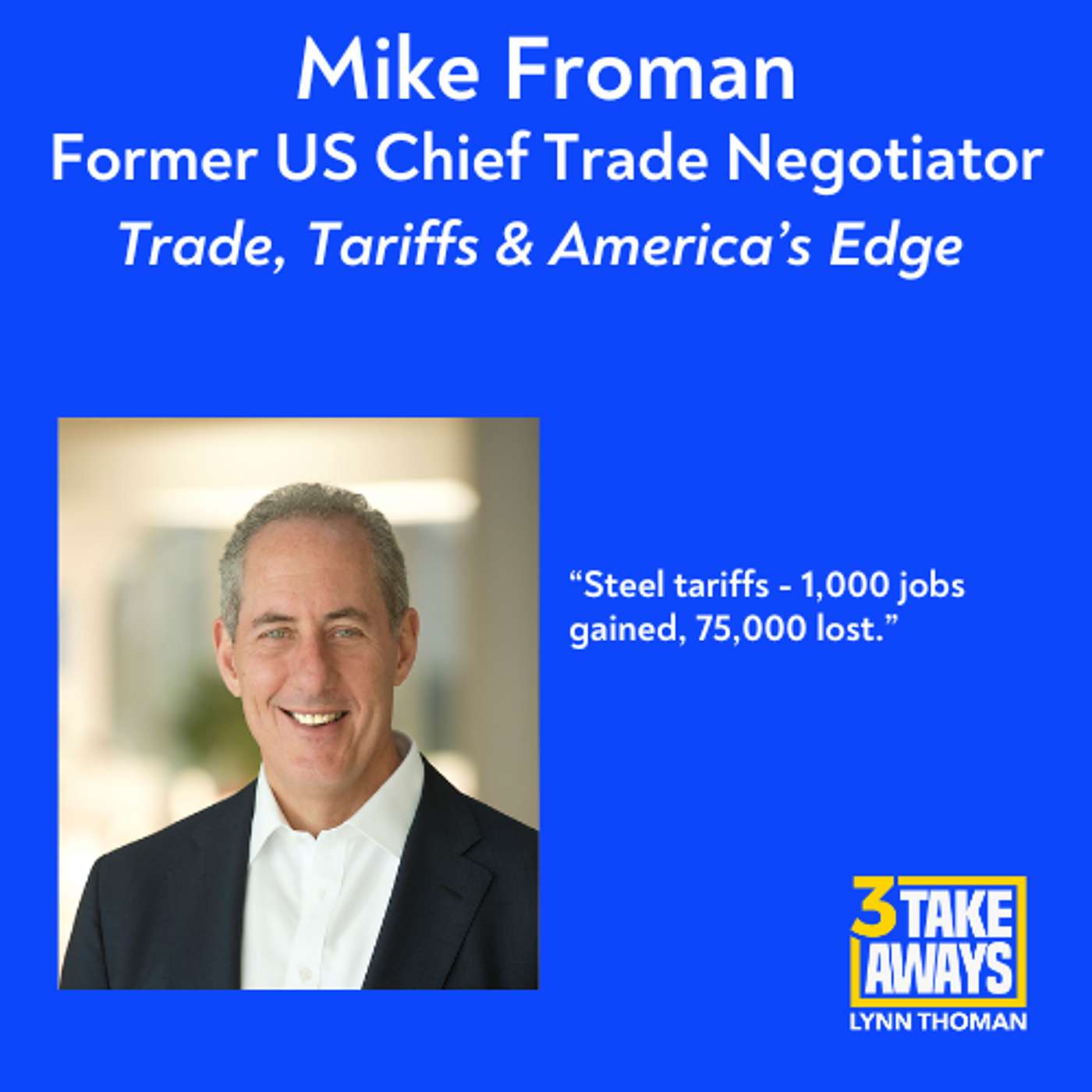
America’s Edge: More Barriers or More Innovation? (#265)
Sep 200:20:18Summary readyEvery country wants strong industries and good jobs. But do tariffs actually deliver? Few people have been closer to the frontlines of global trade, tariffs, and innovation than America’s former chief trade negotiator Mike Froman. He takes us inside the myths, the hidden costs, and the bigger choices ahead. The question: what will truly define America’s edge in the global economy?
Summary