Podcast
AI + a16z
Hosted by a16z · EN
Artificial intelligence is changing everything from art to enterprise IT, and a16z is watching all of it with a close eye. This podcast features discussions with leading AI engineers, founders, and experts, as well as our general partners, about where the technology and industry are heading.
59episodes
Episodes
Newest firstAll episodes
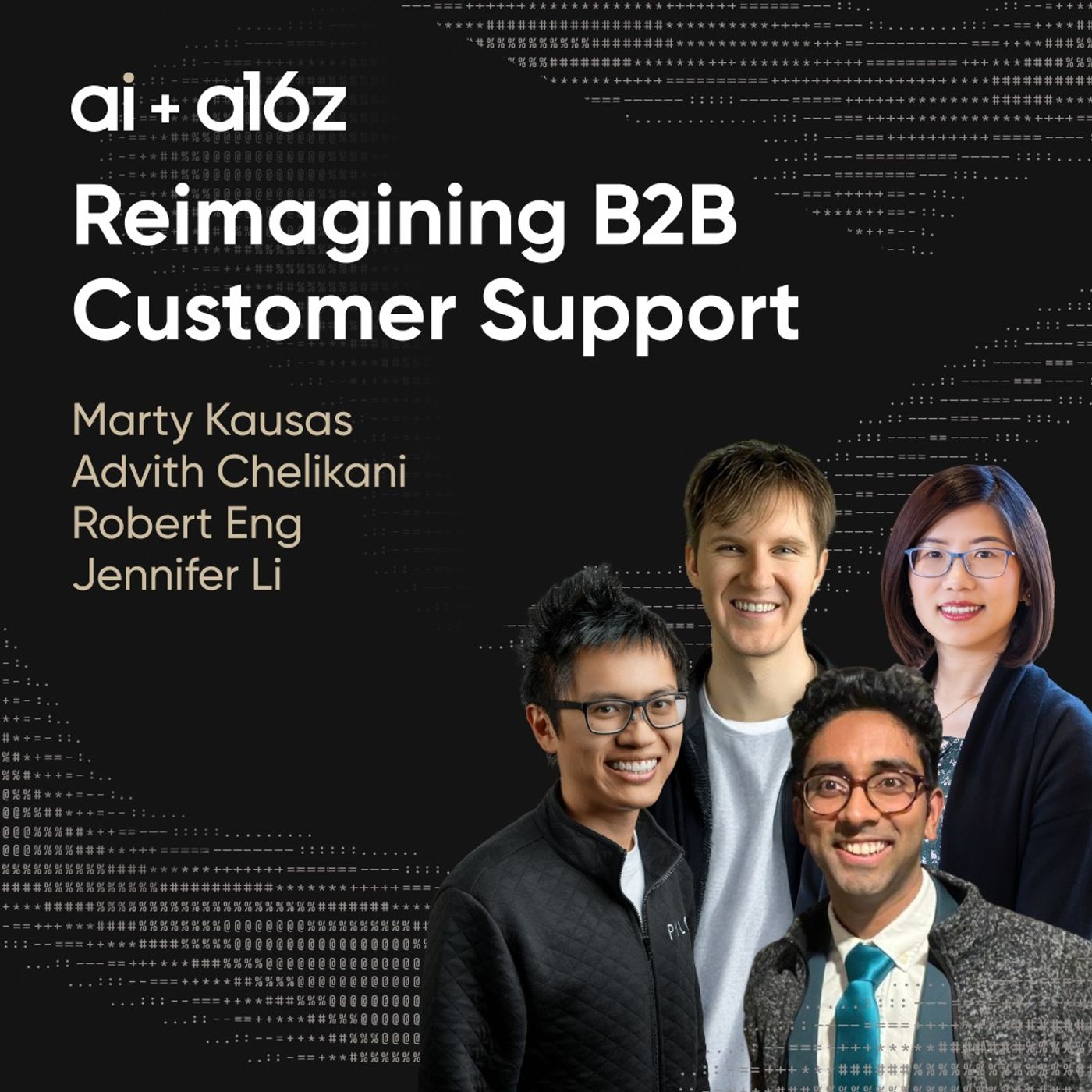
Pylon: Reimagining B2B Customer Support
Oct 3100:47:31Summary readyCustomer support platforms lacked adequate solutions for B2B companies - until Pylon entered the scene.We sat down with Pylon cofounders Marty Kausas, Advith Chelikani, and Robert Eng to discuss why they went into B2B, how they plan to beat huge competitors, and why they still live together in a windowless apartment and work 9-9-6 hours despite having raised tens of millions.Follow Pylon on X: https://x.com/usepylonFollow Marty on X: https://x.com/marty_kausasFollow Advith on X: https://x.com/advith_cFollow Robert on X: https://x.com/rengrenghelloFollow Jennifer on X: https://x.com/JenniferHli Check out everything a16z is doing with artificial intelligence here, including articles, projects, and more podcasts. Hosted by Simplecast, an AdsWizz company. See pcm.adswizz.com for information about our collection and use of personal data for advertising.
Summary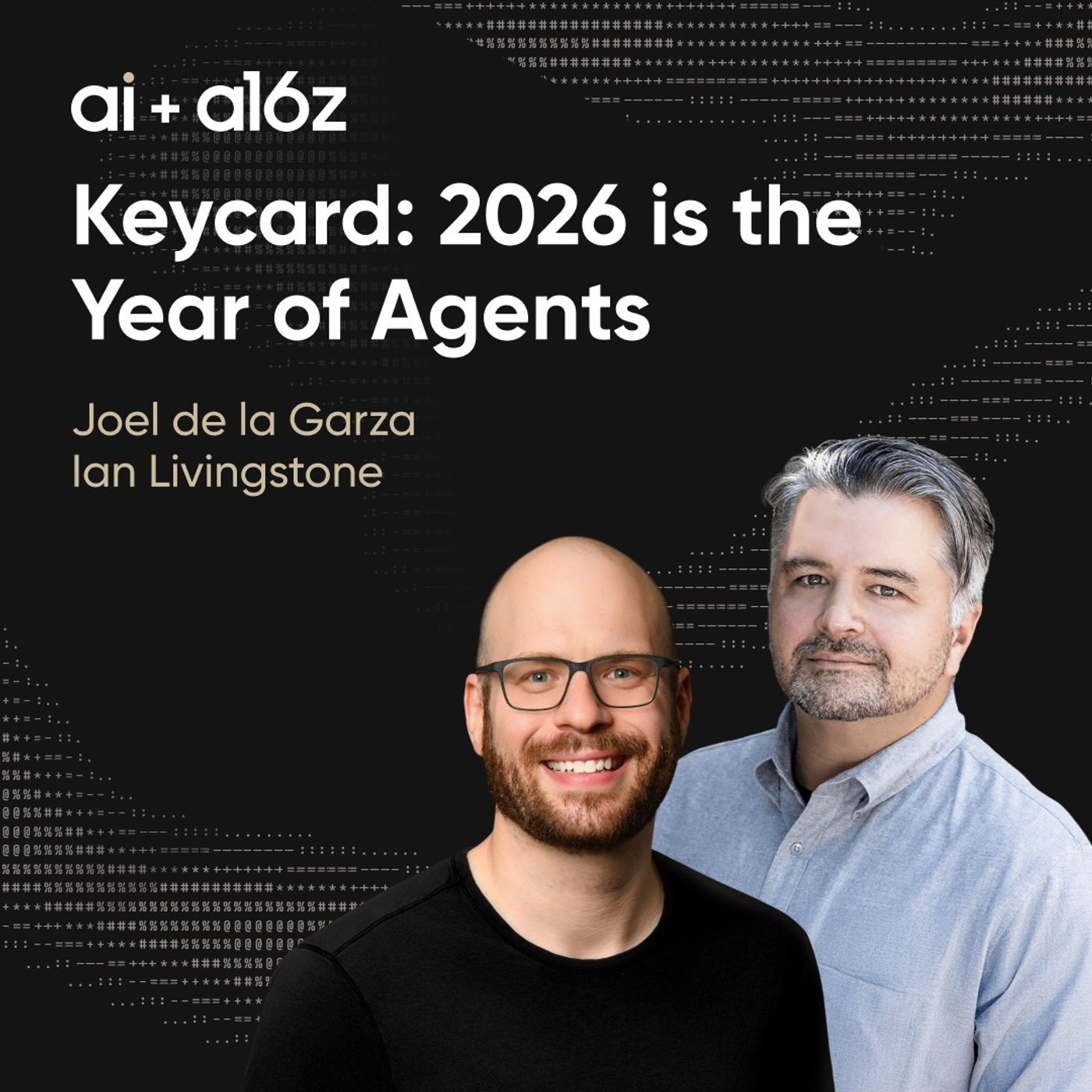
Keycard: 2026 is the Year of Agents
Oct 2200:32:41Summary readyIn 2025, we saw the first glimpses of true AI agents. In 2026, every company will be rushing to get them into production, and they’ll need companies like Keycard to manage fleets of agents.In this conversation, a16z Partner Joel de la Garza sits down with Keycard Cofounder and CEO Ian Livingstone to discuss the continuum from copilots to agents, the security realities of tool-calling, why enterprises will adopt before consumers, and how to control your agents. Follow Joel on LinkedIn: https://www.linkedin.com/in/3448827723723234/Follow Ian on X: https://x.com/ianlivingstoneFollow Keycard on X: https://x.com/keycardlabsLearn more about Keycard: https://www.keycard.sh/ Check out everything a16z is doing with artificial intelligence here, including articles, projects, and more podcasts. Hosted by Simplecast, an AdsWizz company. See pcm.adswizz.com for information about our collection and use of personal data for advertising.
Summary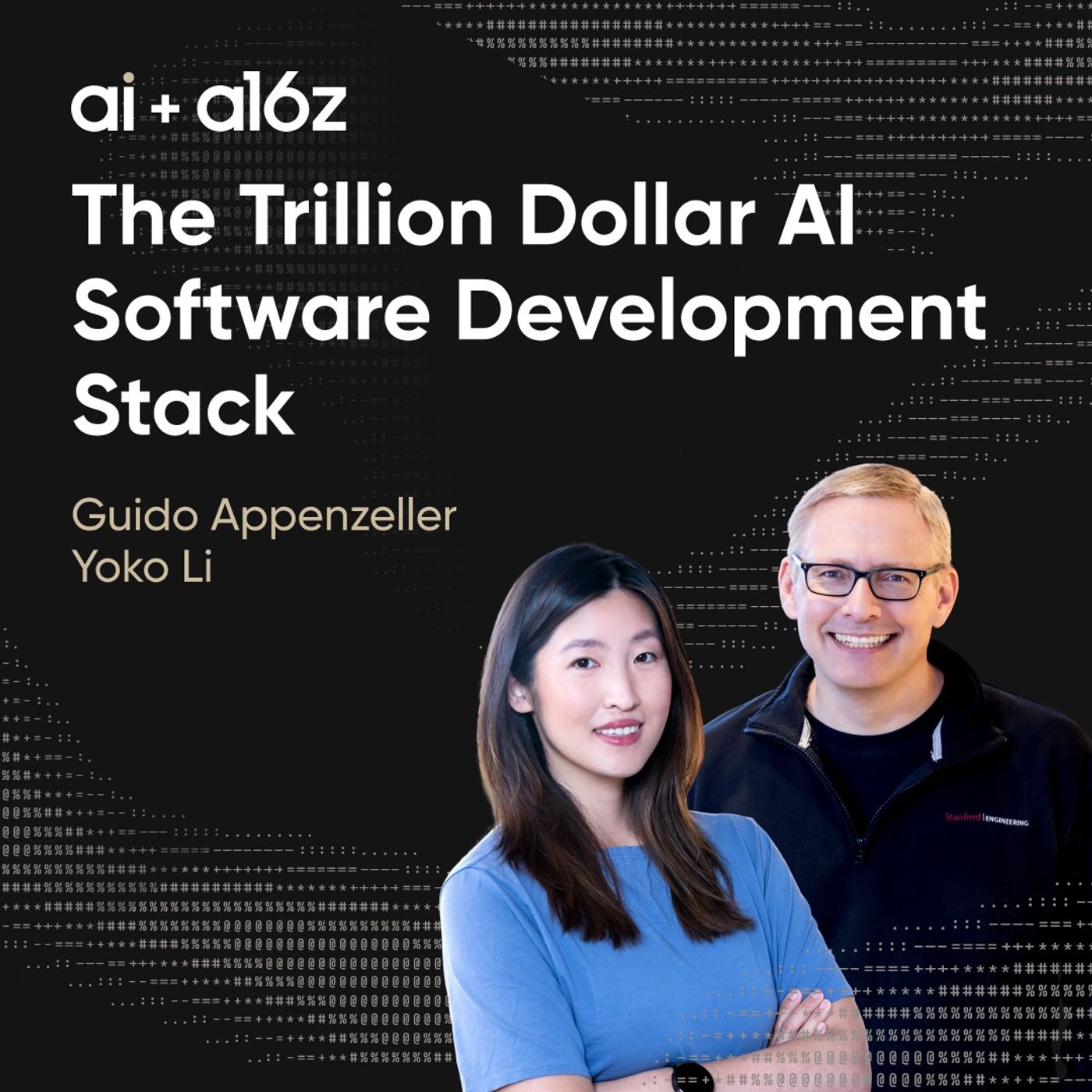
The Trillion Dollar AI Software Development Stack
Oct 1000:38:06Summary readyAI coding has emerged as a major market for AI: one that’s already rewriting how software gets built.a16z Infra Partners Yoko Li and Guido Appenzeller break down how “agents with environments” are changing the dev loop; why repos and PRs may need new abstractions; and where ROI is showing up first (like legacy code migration). We also cover token economics for engineering teams, the emerging agent toolbox (sandboxes, code search/parsing, agent-optimized docs, orchestration), and founder opportunities when you treat agents as users, not just tools.Read the blog post here.Find Yoko here: https://x.com/stuffyokodrawsFind Guido here: https://x.com/appenz Check out everything a16z is doing with artificial intelligence here, including articles, projects, and more podcasts. Please note that the content here is for informational purposes only; should NOT be taken as legal, business, tax, or investment advice or be used to evaluate any investment or security; and is not directed at any investors or potential investors in any a16z fund. a16z and its affiliates may maintain investments in the companies discussed. For more details please see a16z.com/disclosures. Hosted by Simplecast, an AdsWizz company. See pcm.adswizz.com for information about our collection and use of personal data for advertising.
Summary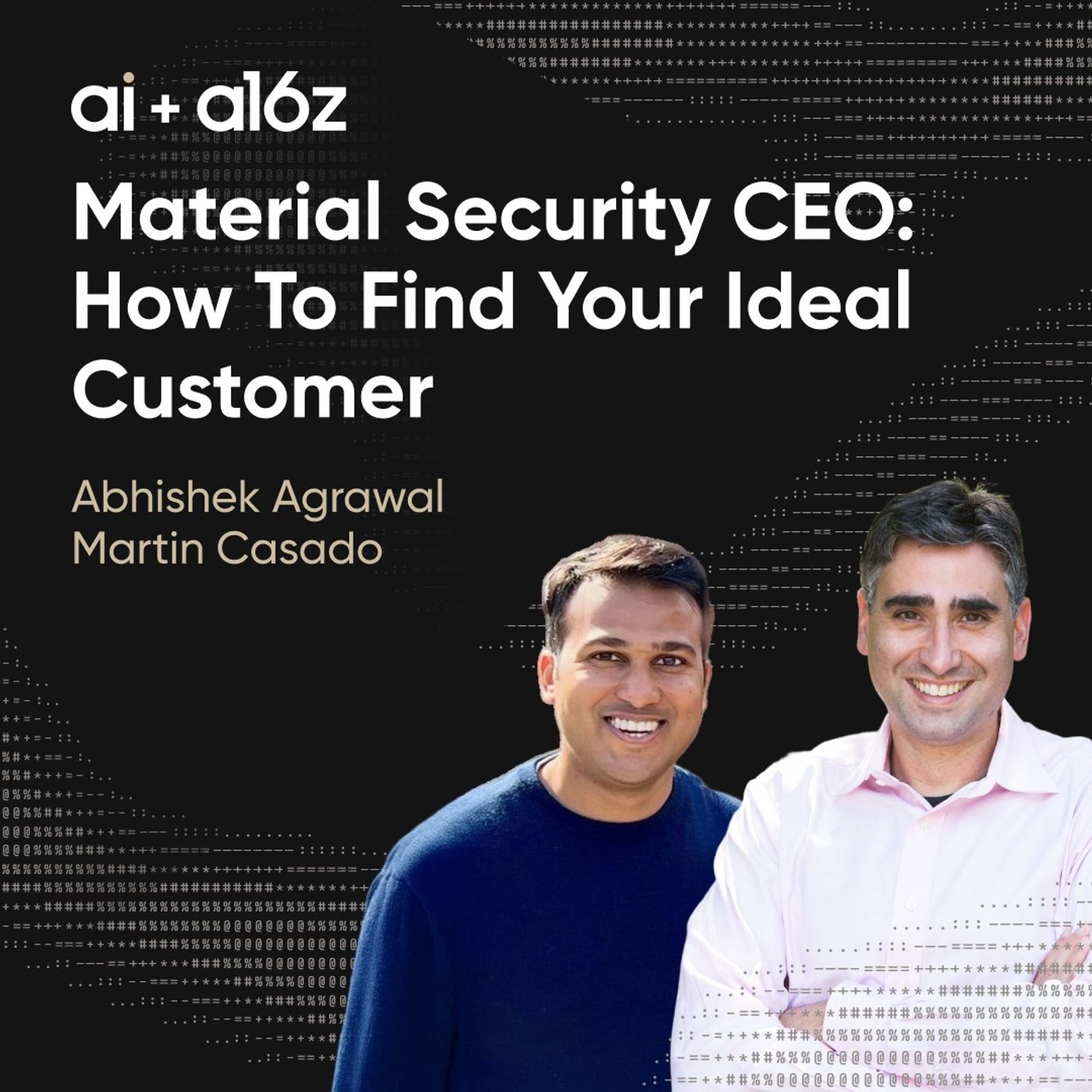
Material Security CEO: How To Find Your Ideal Customer
Oct 600:34:26Summary readyWhat if the hardest part of building a company isn’t the product, but knowing exactly who it’s for?In this episode, a16z General Partner Martin Casado sits down with Abhishek Agrawal, Cofounder and CEO of Material Security, to discuss how an ideal customer profile is discovered, how to manage any kind of customer, and how frothy markets can distort real signal.Follow Martin on X: https://x.com/martin_casadoFollow Material Security on X: https://x.com/material_secFollow Abhishek on LinkedIn: https://www.linkedin.com/in/abhishek--agrawal/ Check out everything a16z is doing with artificial intelligence here, including articles, projects, and more podcasts. Hosted by Simplecast, an AdsWizz company. See pcm.adswizz.com for information about our collection and use of personal data for advertising.
Summary
The AI Infrastructure Stack with Jennifer Li
Jul 11, 2025Tap to summarizeIn this episode, which originally aired on the Complex Systems Podcast, a16z General Partner Jennifer Li discusses how AI is reshaping every layer of the software stack, creating demand for new types of middleware. Jennifer talks about emerging infrastructure categories and why the next wave of valuable companies might be the unsexy infrastructure providers powering tomorrow's intelligent applications.Subscribe to Complex Systems:SpotifyApple Check out everything a16z is doing with artificial intelligence here, including articles, projects, and more podcasts. Please note that the content here is for informational purposes only; should NOT be taken as legal, business, tax, or investment advice or be used to evaluate any investment or security; and is not directed at any investors or potential investors in any a16z fund. a16z and its affiliates may maintain investments in the companies discussed. For more details please see a16z.com/disclosures. Hosted by Simplecast, an AdsWizz company. See pcm.adswizz.com for information about our collection and use of personal data for advertising.
Transcribe →
AI, Data Engineering, and the Modern Data Stack
Jun 20, 202500:35:07Summary readyIn this episode of AI + a16z, dbt Labs co-founder and CEO Tristan Handy sits down with a16z's Jennifer Li and Matt Bornstein to explore the next chapter of data engineering — from the rise (and plateau) of the modern data stack to the growing role of AI in analytics and data engineering. As they sum up the impact of AI on data workflows: The interesting question here is human-in-the-loop versus human-not-in-the-loop. AI isn’t about replacing analysts — it’s about enabling self-service across the company. But without a human to verify the result, that’s a very scary thing.Among other specific topics, they also discuss how automation and tooling like SQL compilers are reshaping how engineers work with data; dbt's new Fusion Engine and what it means for developer workflows; and what to make of the spate of recent data-industry acquisitions and ambitious product launches.Follow everyone on X:Tristan HandyJennifer LiMatt Bornstein Check out everything a16z is doing with artificial intelligence here, including articles, projects, and more podcasts.
Summary
Enabling Agents and Battling Bots on an AI-Centric Web
Jun 13, 202500:26:02Summary readyArcjet CEO David Mytton sits down with a16z partner Joel de la Garza to discuss the increasing complexity of managing who can access websites, and other web apps, and what they can do there. A primary challenge is determining whether automated traffic is coming from bad actors and troublesome bots, or perhaps AI agents trying to buy a product on behalf of a real customer.Joel and David dive into the challenge of analyzing every request without adding latency, and how faster inference at the edge opens up new possibilities for fraud prevention, content filtering, and even ad tech.Topics include:Why traditional threat analysis won’t work for the AI-powered webThe need for full-context security checksHow to perform sub-second, cost-effective inferenceThe wide range of potential actors and actions behind any given visitAs David puts it, lower inference costs are key to letting apps act on the full context window — everything you know about the user, the session, and your application.Follow everyone on social media:David MyttonJoel de la Garza Check out everything a16z is doing with artificial intelligence here, including articles, projects, and more podcasts.
Summary
Giving New Life to Unstructured Data with LLMs and Agents
Jun 6, 202500:35:49Summary readyInstabase founder and CEO Anant Bhardwaj joins a16z Infra partner Guido Appenzeller to discuss the revolutionary impact of LLMs on analyzing unstructured data and documents (like letting banks verify identity and approve loans via WhatsApp) and shares his vision for how AI agents could take things even further (by automating actions based on those documents). In more detail, they discuss:Why legacy robotic process automation (RPA) struggles with unstructured inputs.How Instabase developed layout-aware models to extract insights from PDFs and complex documents.Why predictability, not perfection, is the key metric for generative AI in the enterprise.The growing role of AI agents at compile time (not runtime).A vision for decentralized, federated AI systems that scale automation across complex workflows.Follow everyone on X:Anant BhardwajGuido Appenzeller Check out everything a16z is doing with artificial intelligence here, including articles, projects, and more podcasts.
Summary
Beyond Leaderboards: LMArena’s Mission to Make AI Reliable
May 30, 202501:41:43Summary readyLMArena cofounders Anastasios N. Angelopoulos, Wei-Lin Chiang, and Ion Stoica sit down with a16z general partner Anjney Midha to talk about the future of AI evaluation. As benchmarks struggle to keep up with the pace of real-world deployment, LMArena is reframing the problem: what if the best way to test AI models is to put them in front of millions of users and let them vote? The team discusses how Arena evolved from a research side project into a key part of the AI stack, why fresh and subjective data is crucial for reliability, and what it means to build a CI/CD pipeline for large models.They also explore:Why expert-only benchmarks are no longer enough.How user preferences reveal model capabilities — and their limits.What it takes to build personalized leaderboards and evaluation SDKs.Why real-time testing is foundational for mission-critical AI.Follow everyone on X:Anastasios N. AngelopoulosWei-Lin ChiangIon StoicaAnjney MidhaTimestamps0:04 - LLM evaluation: From consumer chatbots to mission-critical systems6:04 - Style and substance: Crowdsourcing expertise18:51 - Building immunity to overfitting and gaming the system29:49 - The roots of LMArena41:29 - Proving the value of academic AI research48:28 - Scaling LMArena and starting a company59:59 - Benchmarks, evaluations, and the value of ranking LLMs1:12:13 - The challenges of measuring AI reliability1:17:57 - Expanding beyond binary rankings as models evolve1:28:07 - A leaderboard for each prompt1:31:28 - The LMArena roadmap1:34:29 - The importance of open source and openness1:43:10 - Adapting to agents (and other AI evolutions) Check out everything a16z is doing with artificial intelligence here, including articles, projects, and more podcasts.
Summary
Building AI Systems You Can Trust
May 23, 202500:47:40Summary readyIn this episode of AI + a16z, Distributional cofounder and CEO Scott Clark, and a16z partner Matt Bornstein, explore why building trust in AI systems matters more than just optimizing performance metrics. From understanding the hidden complexities of generative AI behavior to addressing the challenges of reliability and consistency, they discuss how to confidently deploy AI in production. Why is trust becoming a critical factor in enterprise AI adoption? How do traditional performance metrics fail to capture crucial behavioral nuances in generative AI systems? Scott and Matt dive into these questions, examining non-deterministic outcomes, shifting model behaviors, and the growing importance of robust testing frameworks. Among other topics, they cover: The limitations of conventional AI evaluation methods and the need for behavioral testing. How centralized AI platforms help enterprises manage complexity and ensure responsible AI use. The rise of "shadow AI" and its implications for security and compliance. Practical strategies for scaling AI confidently from prototypes to real-world applications.Follow everyone:Scott ClarkDistributionalMatt BornsteinDerrick Harris Check out everything a16z is doing with artificial intelligence here, including articles, projects, and more podcasts. Please note that the content here is for informational purposes only; should NOT be taken as legal, business, tax, or investment advice or be used to evaluate any investment or security; and is not directed at any investors or potential investors in any a16z fund. a16z and its affiliates may maintain investments in the companies discussed. For more details please see a16z.com/disclosures. Hosted by Simplecast, an AdsWizz company. See pcm.adswizz.com for information about our collection and use of personal data for advertising.
Summary