Podcast
AI + a16z
Hosted by a16z · EN
Artificial intelligence is changing everything from art to enterprise IT, and a16z is watching all of it with a close eye. This podcast features discussions with leading AI engineers, founders, and experts, as well as our general partners, about where the technology and industry are heading.
59episodes
Episodes
Newest firstAll episodes
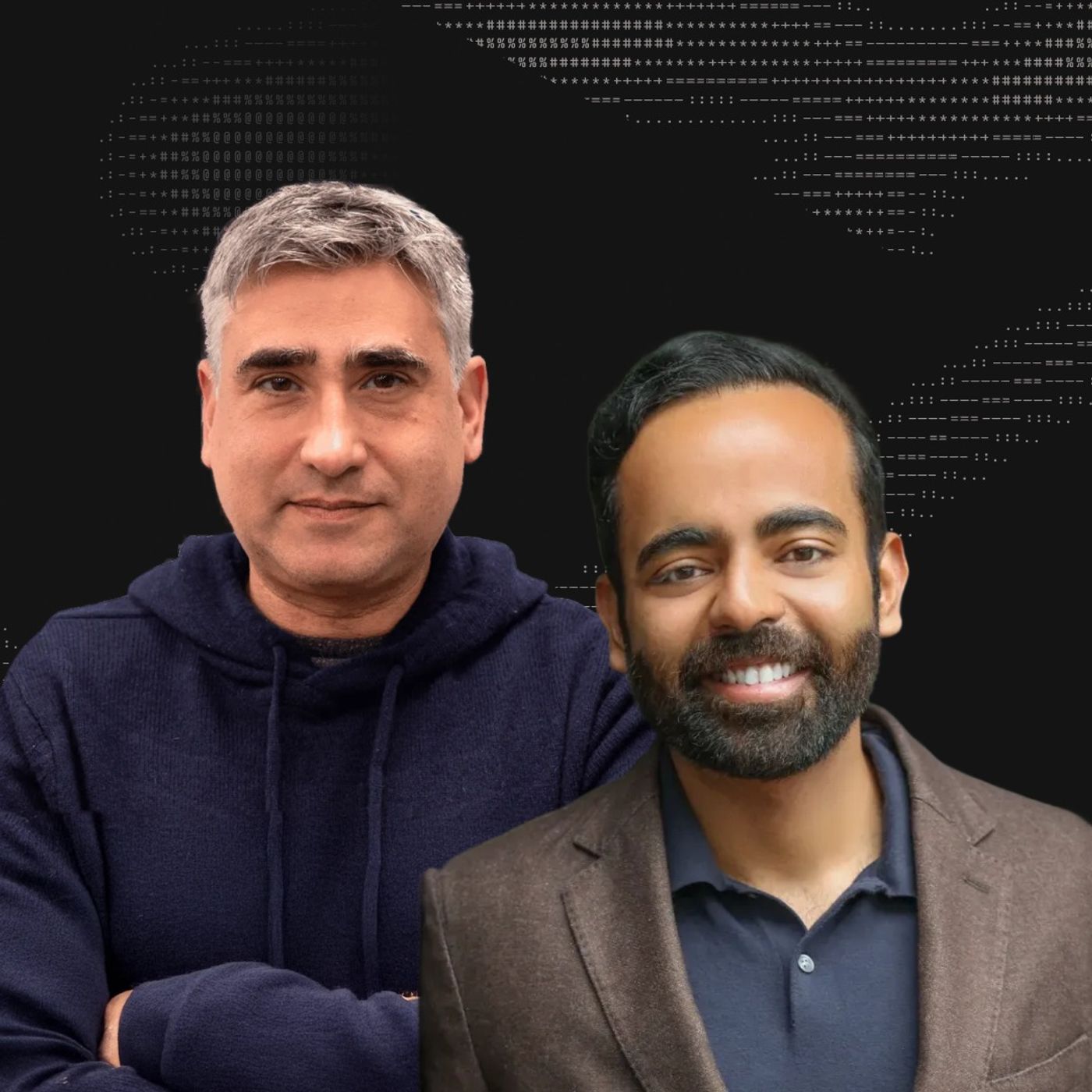
Building the “See Something, Say Something” AI for Every Camera
Dec 1600:39:25Summary readya16z's Martin Casado sits down with Shikhar Shrestha, CEO and cofounder of Ambient, the company bringing agentic AI to physical security.Shikhar shares how a traumatic armed robbery at age 12—and a security camera that no one was watching—sparked his mission to make every camera intelligent.They discuss how Ambient's AI monitors camera feeds in real-time to detect threats and prevent incidents before they happen, navigating COVID as a physical security company, building their own reasoning VLM called Pulsar, and why the future of security is AI not just detecting threats but automatically responding to them.If you enjoyed this episode, please be sure to like, subscribe, and share with your friends.Follow Shikhar on X: https://x.com/shikharshresthaFollow Martin on X: x.com/martin_casado Check out everything a16z is doing with artificial intelligence here, including articles, projects, and more podcasts. Please note that the content here is for informational purposes only; should NOT be taken as legal, business, tax, or investment advice or be used to evaluate any investment or security; and is not directed at any investors or potential investors in any a16z fund. a16z and its affiliates may maintain investments in the companies discussed. For more details please see a16z.com/disclosures. Hosted by Simplecast, an AdsWizz company. See pcm.adswizz.com for information about our collection and use of personal data for advertising.
Summary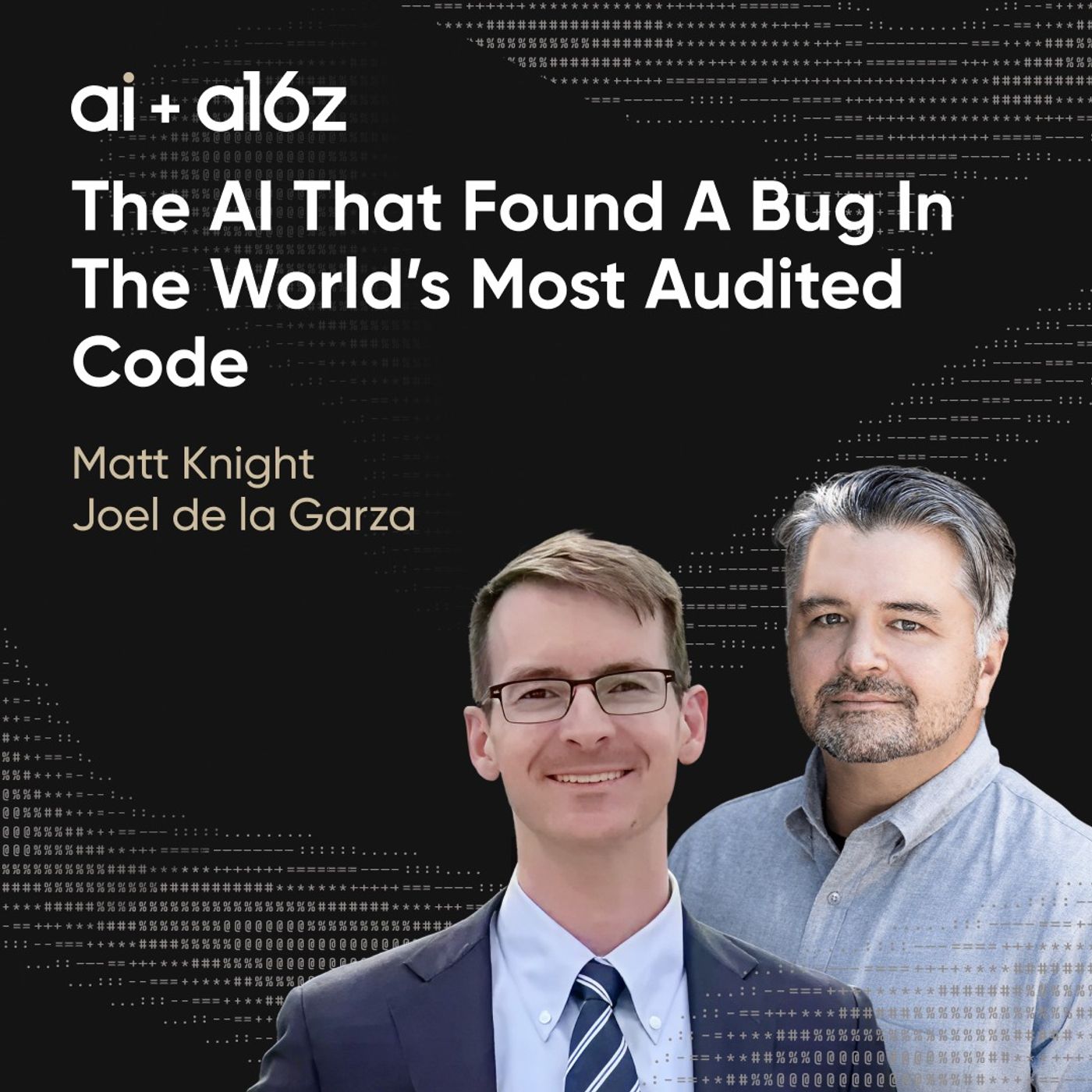
The AI That Found A Bug In The World’s Most Audited Code
Dec 1000:39:12Summary readyMatt Knight spent five years as OpenAI’s CISO. Now he runs what colleagues call “the most interesting job at the company”: leading Aardvark, an AI agent that finds security vulnerabilities the way a human researcher would—by reading code, writing tests, and proposing patches. It recently found a memory corruption bug in OpenSSH, one of the most heavily audited codebases in existence.In this conversation with a16z’s Joel de la Garza, Matt traces the evolution from GPT-3 (which couldn’t analyze security logs at all) to GPT-4 (which could parse Russian cybercriminal chat logs written in slang) to today’s models that discover bugs humans have missed for decades. They also discussed the XZ Utils backdoor that nearly compromised half the internet and why 3.5 million unfilled security jobs might finally get some relief, and how Aardvark could give open source maintainers a fighting chance against nation-state attackers.If you enjoyed this episode, please be sure to like, subscribe, and share with your friends.Follow Matt Knight on X: https://x.com/embeddedsecFollow Joel de la Garza on LinkedIn: https://www.linkedin.com/in/3448827723723234/ Check out everything a16z is doing with artificial intelligence here, including articles, projects, and more podcasts. Please note that the content here is for informational purposes only; should NOT be taken as legal, business, tax, or investment advice or be used to evaluate any investment or security; and is not directed at any investors or potential investors in any a16z fund. a16z and its affiliates may maintain investments in the companies discussed. For more details please see a16z.com/disclosures. Hosted by Simplecast, an AdsWizz company. See pcm.adswizz.com for information about our collection and use of personal data for advertising.
Summary
The Death of Data Gatekeeping: AI Makes Everyone An Analyst | Hex Cofounder
Dec 501:22:53Summary readyMost companies still rely on dashboards to understand their data, even though AI now offers new ways to ask questions and explore information. Barry McCardel, CEO of Hex and former engineer at Palantir, joins a16z General Partner Sarah Wang to discuss how agent workflows, conversational interfaces, and context-aware models are reshaping analysis. Barry also explains how Hex aims to make everyone a data person by unifying analysis and AI in one workflow, and he reflects on his post about getting rid of their AI product team and the process behind Hex’s funny launch videos.Timecodes: 0:00 – The problem with dashboards1:20 – The evolution of data teams and AI’s role2:05 – Democratizing data: challenges and opportunities3:45 – The rise of agentive workflows9:48 – Threads and the changing UI of data analysis13:16 – Building AI agents: lessons from the notebook agent16:12 – Model capabilities and the future of AI in data19:10 – The importance of context and trust in data analysis24:34 – Semantic models and context engineering29:27 – Data team roles in the age of AI31:52 – Accuracy, trust, and evaluating AI systems37:43 – Building Hex: embracing AI as core, not an add-on48:48 – Pricing, value capture, and the future of SaaS55:55 – The modern data stack and industry consolidation1:04:26 – Acquisitions and owning the data insight layer1:06:46 – Lessons from Palantir: forward-deployed engineering1:13:11 – Commitment engineering and customer collaboration1:17:25 – Brand, launch videos, and having fun in SaaSResources:Follow Barry McCardel on X: https://x.com/barraldFollow Sarah Wang on X: https://x.com/sarahdingwang Stay Updated:If you enjoyed this episode, be sure to like, subscribe, and share with your friends!Find a16z on X: https://x.com/a16zFind a16z on LinkedIn:https://www.linkedin.com/company/a16zListen to the a16z Podcast on Spotify: https://open.spotify.com/show/5bC65RDvs3oxnLyqqvkUYXListen to the a16z Podcast on Apple Podcasts: https://podcasts.apple.com/us/podcast/a16z-podcast/id842818711Follow our host: https://x.com/eriktorenbergPlease note that the content here is for informational purposes only; should NOT be taken as legal, business, tax, or investment advice or be used to evaluate any investment or security; and is not directed at any investors or potential investors in any a16z fund. a16z and its affiliates may maintain investments in the companies discussed. For more details, please see http://a16z.com/disclosures. Check out everything a16z is doing with artificial intelligence here, including articles, projects, and more podcasts. Please note that the content here is for informational purposes only; should NOT be taken as legal, business, tax, or investment advice or be used to evaluate any investment or security; and is not directed at any investors or potential investors in any a16z fund. a16z and its affiliates may maintain investments in the companies discussed. For more details please see a16z.com/disclosures. Hosted by Simplecast, an AdsWizz company. See pcm.adswizz.com for information about our collection and use of personal data for advertising.
Summary
Why Social Engineering Now Works on Machines
Dec 200:25:14Summary readyIan Webster built PromptFoo after watching 200 million Discord users systematically dismantle his AI agent—now Fortune 10 companies pay him to break theirs before customers do. The "lethal trifecta" sounds academic until you realize it's already happening: untrusted input plus sensitive data plus an exfiltration channel equals the security incident that just cost a SaaS company its multi-tenancy guarantees. Webster's red-teaming agents don't use signatures—they have 30,000 conversations with your system, socially engineering their way past guardrails the same way a teenager with emojis convinced ChatGPT to leak data, except his tools find the vulnerability before your users become the pen testers.Follow Ian Webster on X: https://x.com/iwebstFollow Joel on LinkedIn: https://www.linkedin.com/in/3448827723723234/ Check out everything a16z is doing with artificial intelligence here, including articles, projects, and more podcasts. Please note that the content here is for informational purposes only; should NOT be taken as legal, business, tax, or investment advice or be used to evaluate any investment or security; and is not directed at any investors or potential investors in any a16z fund. a16z and its affiliates may maintain investments in the companies discussed. For more details please see a16z.com/disclosures. Hosted by Simplecast, an AdsWizz company. See pcm.adswizz.com for information about our collection and use of personal data for advertising.
Summary
“Anyone Can Code Now” - Netlify CEO Talks AI Agents
Nov 2800:57:59Summary readyNetlify's CEO, Matt Biilmann, reveals a seismic shift nobody saw coming: 16,000 daily signups—five times last year's rate—and 96% aren't coming from AI coding tools. They're everyday people accidentally building React apps through ChatGPT, then discovering they need somewhere to deploy them. The addressable market for developer tools just exploded from 17 million JavaScript developers to 3 billion spreadsheet users, but only if your product speaks fluent AI—which is why Netlify's founder now submits pull requests he built entirely through prompting, never touching code himself, and why 25% of users immediately copy error messages to LLMs instead of debugging manually. The web isn't dying to agents; it's being reborn by them, with CEOs coding again and non-developers shipping production apps while the entire economics of software—from perpetual licenses to subscriptions to pure usage—gets rewritten in real-time.Follow Matt Biilmann on X: https://x.com/biilmannFollow Martin Casado on X: https://x.com/martin_casadoFollow Erik Torenberg on X: https://x.com/eriktorenberg Check out everything a16z is doing with artificial intelligence here, including articles, projects, and more podcasts. Please note that the content here is for informational purposes only; should NOT be taken as legal, business, tax, or investment advice or be used to evaluate any investment or security; and is not directed at any investors or potential investors in any a16z fund. a16z and its affiliates may maintain investments in the companies discussed. For more details please see a16z.com/disclosures. Hosted by Simplecast, an AdsWizz company. See pcm.adswizz.com for information about our collection and use of personal data for advertising.
Summary
From Code Search to AI Agents: Inside Sourcegraph's Transformation with CTO Beyang Liu
Nov 2500:46:35Summary readySourcegraph's CTO just revealed why 90% of his code now comes from agents—and why the Chinese models powering America's AI future should terrify Washington. While Silicon Valley obsesses over AGI apocalypse scenarios, Beyang Liu's team discovered something darker: every competitive open-source coding model they tested traces back to Chinese labs, and US companies have gone silent after releasing Llama 3. The regulatory fear that killed American open-source development isn't hypothetical anymore—it's already handed the infrastructure layer of the AI revolution to Beijing, one fine-tuned model at a time. Resources:Follow Beyang Liu on X: https://x.com/beyangFollow Martin Casado on X: https://x.com/martin_casadoFollow Guido Appenzeller on X: https://x.com/appenz Stay Updated:If you enjoyed this episode, be sure to like, subscribe, and share with your friends!Find a16z on X: https://x.com/a16zFind a16z on LinkedIn: https://www.linkedin.com/company/a16zListen to the a16z Podcast on Spotify: https://open.spotify.com/show/5bC65RDvs3oxnLyqqvkUYXListen to the a16z Podcast on Apple Podcasts: https://podcasts.apple.com/us/podcast/a16z-podcast/id842818711Follow our host: https://x.com/eriktorenbergPlease note that the content here is for informational purposes only; should NOT be taken as legal, business, tax, or investment advice or be used to evaluate any investment or security; and is not directed at any investors or potential investors in any a16z fund. a16z and its affiliates may maintain investments in the companies discussed. For more details please see http://a16z.com/disclosures. Check out everything a16z is doing with artificial intelligence here, including articles, projects, and more podcasts. Please note that the content here is for informational purposes only; should NOT be taken as legal, business, tax, or investment advice or be used to evaluate any investment or security; and is not directed at any investors or potential investors in any a16z fund. a16z and its affiliates may maintain investments in the companies discussed. For more details please see a16z.com/disclosures. Hosted by Simplecast, an AdsWizz company. See pcm.adswizz.com for information about our collection and use of personal data for advertising.
Summary
Ryo Lu (Cursor): AI Turns Designers to Developers
Nov 2100:52:01Summary readyRyo Lu spent years watching his designs die in meetings. Then he discovered the tool that lets designers ship code at the speed of thought: Cursor, the company where Ryo is now Head of Design. In this episode, we discuss why "taste" is the wrong framework for understanding the future, why purposeful apps are "selfish," how System 7 holds secrets about AI interfaces, and the radical bet that one codebase can serve everyone if you design the concepts right instead of the buttons.Follow Ryo Lu on X: https://x.com/ryolu_Check Out Ryo’s Website: https://os.ryo.lu/Follow Jennifer Li on X: https://x.com/JenniferHliFollow Erik Torenberg on X: https://x.com/eriktorenberg Check out everything a16z is doing with artificial intelligence here, including articles, projects, and more podcasts. Please note that the content here is for informational purposes only; should NOT be taken as legal, business, tax, or investment advice or be used to evaluate any investment or security; and is not directed at any investors or potential investors in any a16z fund. a16z and its affiliates may maintain investments in the companies discussed. For more details please see a16z.com/disclosures. Hosted by Simplecast, an AdsWizz company. See pcm.adswizz.com for information about our collection and use of personal data for advertising.
Summary
How Foundation Models Evolved: A PhD Journey Through AI's Breakthrough Era
Nov 1800:57:06Summary readyThe Stanford PhD who built DSPy thought he was just creating better prompts—until he realized he'd accidentally invented a new paradigm that makes LLMs actually programmable. While everyone obsesses over whether LLMs will get us to AGI, Omar Khattab is solving a more urgent problem: the gap between what you want AI to do and your ability to tell it, the absence of a real programming language for intent. He argues the entire field has been approaching this backwards, treating natural language prompts as the interface when we actually need something between imperative code and pure English, and the implications could determine whether AI systems remain unpredictable black boxes or become the reliable infrastructure layer everyone's betting on.Follow Omar Khattab on X: https://x.com/lateinteractionFollow Martin Casado on X: https://x.com/martin_casado Check out everything a16z is doing with artificial intelligence here, including articles, projects, and more podcasts. Please note that the content here is for informational purposes only; should NOT be taken as legal, business, tax, or investment advice or be used to evaluate any investment or security; and is not directed at any investors or potential investors in any a16z fund. a16z and its affiliates may maintain investments in the companies discussed. For more details please see a16z.com/disclosures. Hosted by Simplecast, an AdsWizz company. See pcm.adswizz.com for information about our collection and use of personal data for advertising.
Summary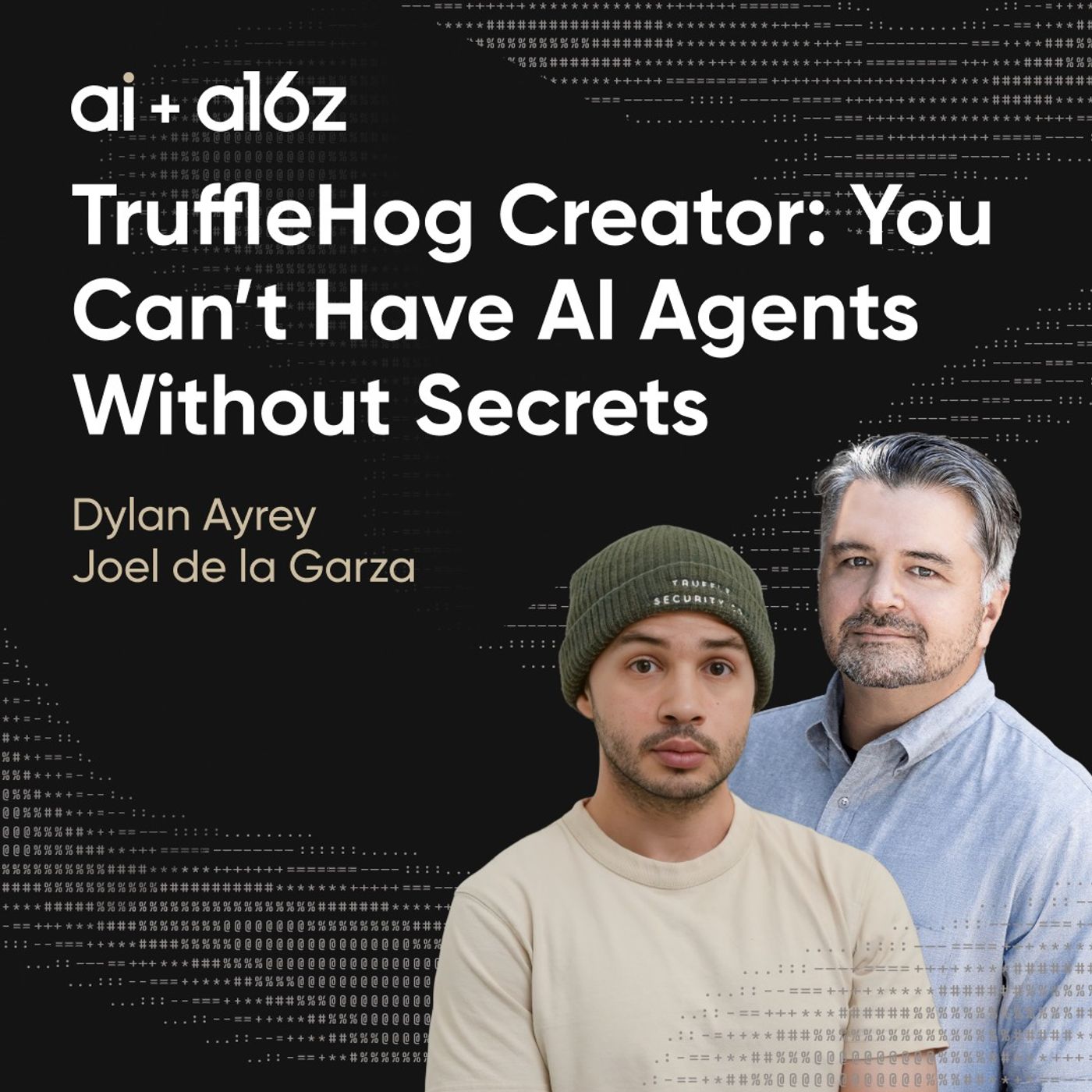
TruffleHog Creator: You Can’t Have AI Agents Without Secrets
Nov 1100:28:37Summary readyIf you can’t robustly protect your secrets, you can’t have reliable AI agents.In this episode, Truffle Security cofounder and CEO Dylan Ayrey joins a16z partner Joel de la Garza to discuss the emergent security stack for AI agents, why leaks are actually getting worse, and how Truffle evolved from an open-source side project to a major VC-backed startup. Follow Dylan here: https://x.com/InsecureNatureFollow Joel here: https://www.linkedin.com/in/3448827723723234/ Check out everything a16z is doing with artificial intelligence here, including articles, projects, and more podcasts. Please note that the content here is for informational purposes only; should NOT be taken as legal, business, tax, or investment advice or be used to evaluate any investment or security; and is not directed at any investors or potential investors in any a16z fund. a16z and its affiliates may maintain investments in the companies discussed. For more details please see a16z.com/disclosures. Hosted by Simplecast, an AdsWizz company. See pcm.adswizz.com for information about our collection and use of personal data for advertising.
Summary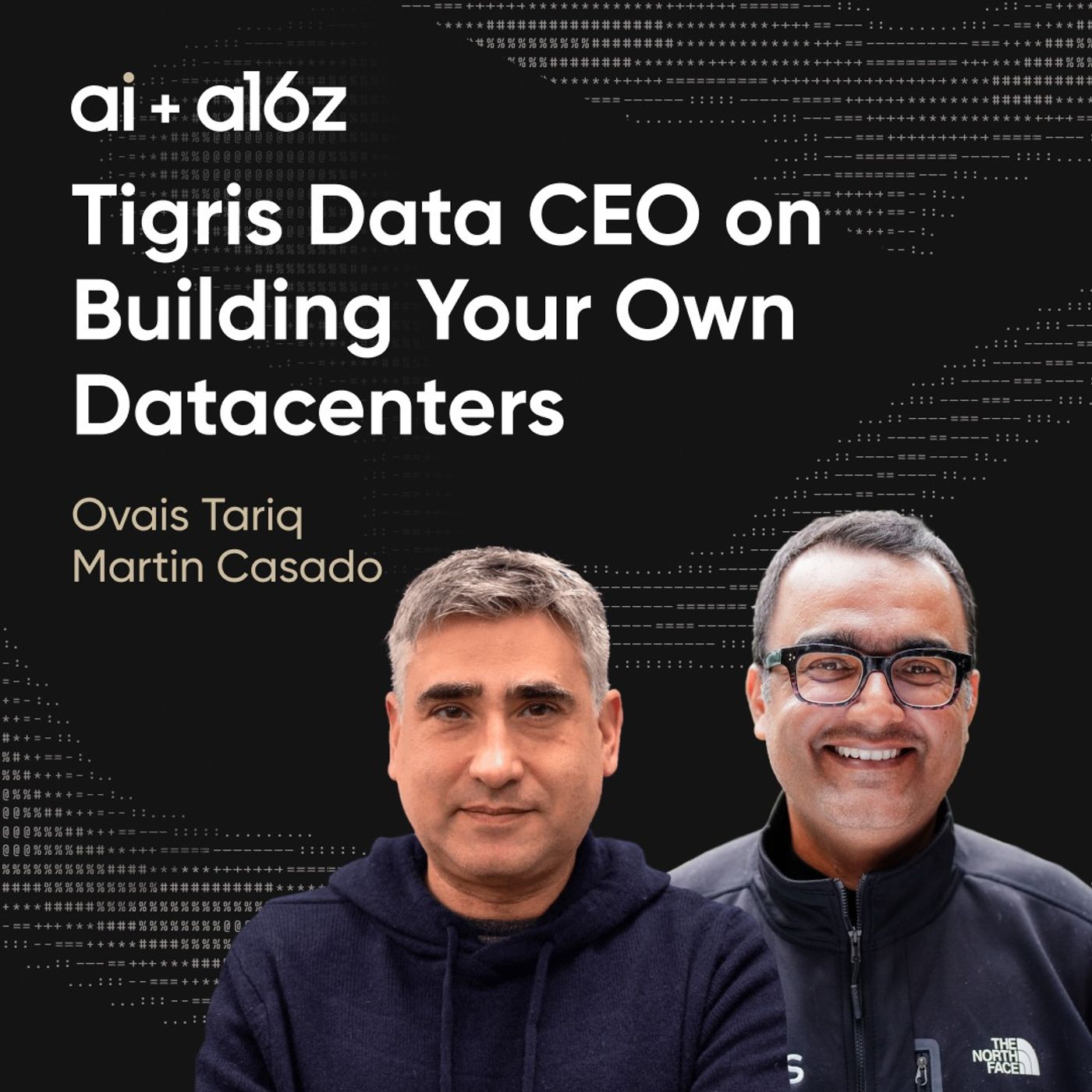
Tigris Data CEO on Building Your Own Datacenters
Nov 700:38:43Summary readyIn this episode, a16z General Partner Martin Casado sits down with Ovais Tariq, Cofounder and CEO of Tigris Data, to discuss why independent storage is so hard, what operating your own datacenters is like, and what’s in store for the future of cloud.ResourcesFollow Ovais on X: https://x.com/ovaistariqFollow Tigris Data on X: https://x.com/tigrisdataFollow Martin on X: https://x.com/martin_casado Check out everything a16z is doing with artificial intelligence here, including articles, projects, and more podcasts. Please note that the content here is for informational purposes only; should NOT be taken as legal, business, tax, or investment advice or be used to evaluate any investment or security; and is not directed at any investors or potential investors in any a16z fund. a16z and its affiliates may maintain investments in the companies discussed. For more details please see a16z.com/disclosures. Hosted by Simplecast, an AdsWizz company. See pcm.adswizz.com for information about our collection and use of personal data for advertising.
Summary