Loading summary
Transcript5 lines
- [00:00]
Pedro Hofmeister
For a small business owner, every day is full of surprises. Some great, some not so great, like when a client cancels their order at the last minute. But here's a surprise you will like. Progressive provides small business owners with 30 customizable coverage options to help keep their business going strong. So go ahead, surprise yourself. Get a quote in as little as 8 minutes@progressivecommercial.com Progressive Casualty Insurance Company and affiliates and third party insurers. Coverage is not available in all states or for all vehicles and coverage selections.
- [00:31]
Progressive Insurance Announcer
You're listening to this podcast, so I know you've got a curious mind. Here's a helpful fact you might not know yet. Drivers who switch and save with Progressive save over $900 on average. Pop over to progressive.com, answer some questions, and you'll get a quick quote with discounts that are easy to come by. In fact, 99% of their auto customers earn at least one discount. Visit progressive.com and see if you can enjoy a little cash back. Progressive Casualty Insurance Company and affiliates national average 12 month savings of $946 by new customers surveyed who saved with Progressive between June 2024 and May 2025. Potential savings will vary
- [01:11]
Pedro Hofmeister
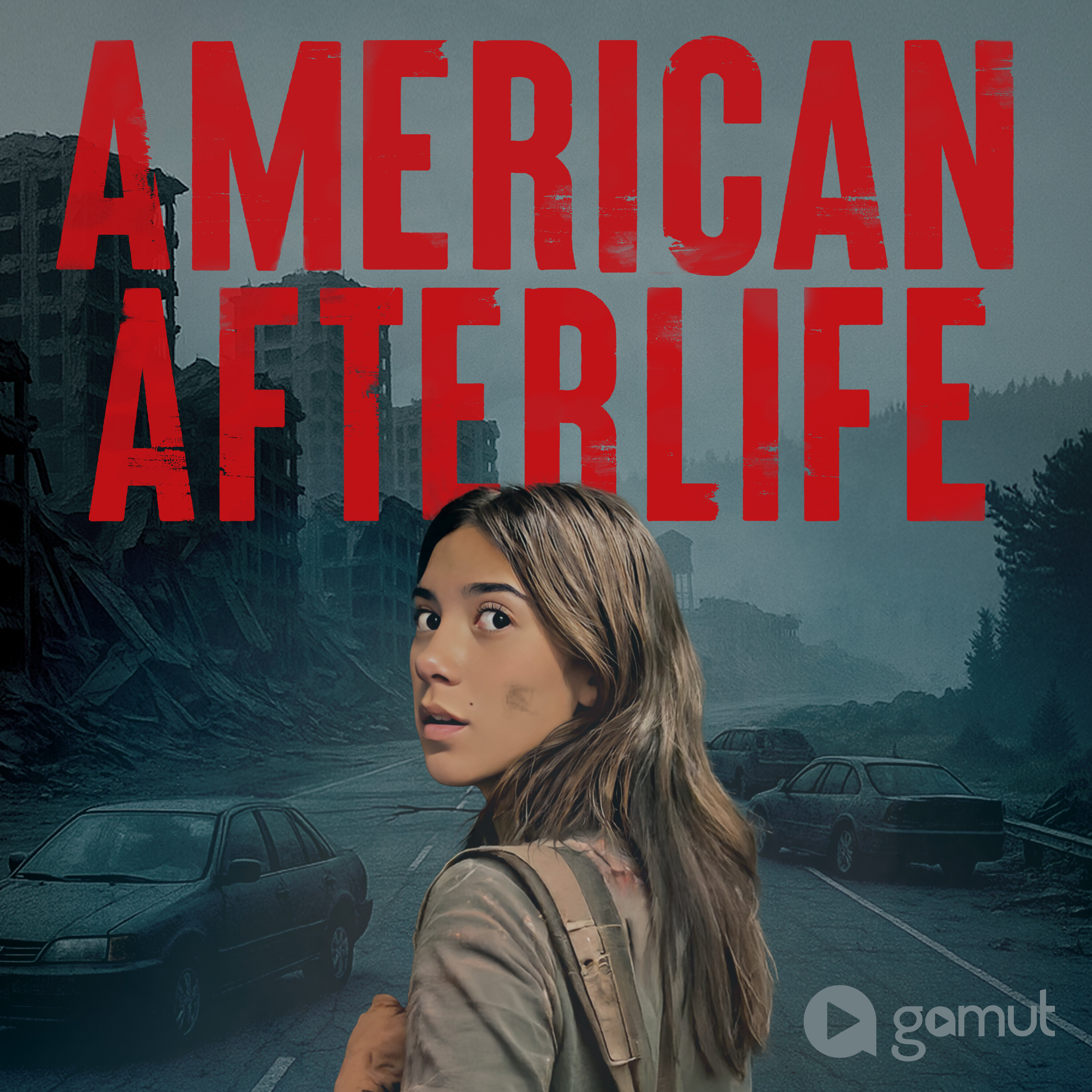
Hi there. My name is Pedro Hofmeister and I've been thinking a lot about why I wrote American Afterlife. And it really comes back to my daughter, Rue Tortuga, my turtle. She was the inspiration for Cielo. Not literally, but emotionally. Her curiosity, the way she asks big questions, the way she feels things deeply and doesn't shy away from them. I wanted that type of character moving through this destroyed city after the earthquake. I wanted to see what that would look like. So it kind of started with being inspired by my daughter in the way she thinks and then thinking about this massive earthquake destroying our city and then thinking like, okay, Torte, but what would she do if she was here and what would she think and how would she react to different scenarios? And she's really curious and adaptable, but also can like switch emotions quickly and so she's capable of, like, reacting with a big, strong emotion to something. And I was like, what if Cielo, the main character, had those characteristics? And then hearing Scarlet's voice, it sounds perfect. I was thinking about the way that my daughter survived middle school and early high school, and that's such a difficult time in a human's life, but in a character, it's an epic time of change. And Rue was as likely to shoplift pizza as she was to get an A in an art class. You know, so she was a little capable survivor at all times. And I was like, that would make such an interesting character, the kind of person that basically just does whatever helps her to survive the best in any moment. And she wasn't incredibly popular, but she and her best friend Xochielena were just inseparable. And so Cielo and her friend in the book had that kind of inseparable bond where it was like, them against the world. And then because she practiced that in middle school with Xochilena, she was ready when everything went wrong. She was ready to adapt and survive in the future. I went to college as an athlete. I was a wrestler at the University of Oregon. I was recruited for wrestling. So I thought of myself as an athlete. And then I needed a class that fit my very busy athletic schedule. And I ended up saying, well, I've always loved to read, and I've always, like, written a little bit, as you do as a kid, if you're interested in stories or poems. And so I took an intro to poetry class, but I didn't know how to write poems at all. I was a terrible poet. I would just make these attempts, but they ended up all pretty much being narrative and nonfiction. And my family had a lot of mental illness, just like there's mental illness in Cielo's mom in the story, in her mother character. So my family had mental illness, and there was a lot of dysfunction and addiction. And just like in the novel, the mother character is hyper religious to a kind of cult level. My family was very religious. My siblings and I have some religious drama from that time period, but my parents have changed and become very different people. And they're wonderful. They were really fearful and extremely religious when I was young. So I based that whole religious cult element on my family. My brother and I kind of reacted to all of that extremism in our family by going the other direction. And we were teen criminals. This is well known. I had all these true stories kind of of my bro and I committing crimes. And I ended up writing poems about my brother and I committing crimes. When we were teenagers in this Intro to poetry class, my poetry professor, Chin, called me up at the end of class one day, and I didn't know him at all, you know, so I thought I was in trouble. And he called me up, and he let everybody else ask their questions and leave the room. And then he was like, I think we need to hang out. And he said, what are you doing on Friday? Do you have a wrestling tournament Saturday? And I said, no, I don't and he's like, okay, meet me at Lucky's bar. And so he took me out to this bar and we played pool and we told stories. And it turned out that he had grown up in a Korean gang in Washington D.C. and he had a knife scar under his left eye. And he was like, your poems about your brother and you committing crimes really resonated with me because it sounded like my teenage years. And he was like. And I knew right away they were true stories. And I was like, yeah. So we started telling these true stories. He was incredible. And he encouraged me to keep writing. And I was a terrorist. I was a really, really bad poet in his class. But he didn't care. He was like, these are amazing stories. You gotta keep writing stories. And at the end of the term, he recommended me for this advanced writing workshop and put me in with this well known creative writing professor. And she was amazing. And there were only 12 of us in the room and every week we would have to read aloud our work. And my writing was always the worst writing in the room. And that's not me being humble. It's true. And in that room, four of us ended up being published authors, like having books. He was an amazing profess. And I just struggled and I improved slowly. And then she sort of adopted me. Like she and her husband were both published poets. And they would have me over to their house and they would just smoke cigarettes and talk about writing with me and we would eat dinner together. And they just adopted me as this 20 year old kid that they didn't even know. And so I was encouraged over and over to become a writer. And she kept telling me I needed to quit wrestling. She was like, stop being an athlete. Stop being an athlete. You need to be a writer. You need to be a writer. And she was just on me for two years. Then my senior year, she supported me doing a fiction thesis in the honors program. And I was not like an honor student type person, so I thought that was crazy. Like, I can't get into the honors program. And she's like, I'll recommend you. So my senior year, I was in the honors program in these tiny classes and I got to write a fiction thesis. And I realized while I was a terrible poet, I was an okay storyteller. And so I just started writing fiction and nonfiction. And Chin encouraged me and she encouraged me. Dorian locks. And I just kept writing from there. And then I decided I was going to write every single morning until I was finally good enough to write something publishable. And it Took years, but I did become slowly, slowly better at writing fiction has to be the best of nonfiction, plus, whatever you can add, or at least in my mind, I can only write what I really know well and then add anything that my imagination can put in there. Because I write books that editors and reviewers call atmospheric, I'm always trying to create that atmosphere of emotional turmoil in the main character so that the reader remains a little unsettled, and hopefully, with the podcast, the listener will remain a little unsettled. So I'm trying to create that atmospheric emotional instability, and that's always sort of my goal. So I'm drawing on multiple events or multiple characters from real life and combining them and juxtaposing them to create that. As an author, you're always hoping that your work will be adapted well, and you never know. I'm so grateful that it's not only being adapted, but adapted so well and that every single detail is being taken seriously. Like, even in the trailer, you can hear that the sound design is epic and excellent. And that's so cool as an author to have that kind of adaptation of your work. And you can see, like, oh, this podcast is going to be amazing, and there might be a season two, and there might be some other kind of adaptation. And you can see that this whole process could be something bigger because it's so well done. I wanted the character's power and creativity and instinctive intelligence to be evident. And I feel like the writers that adapted what I wrote did such a good job of making that evident in an audio character, and I have no idea how to do that. They really did a good job. And then that, like, instinctive intelligence in Cielo, the main character, I can actually hear it in Scarlett Estevez's resinous voice. And so it's just, like, such an amazing, amazing thing to have something that I wrote alone be adapted into this project that now other people can hear. And Scarlet is the perfect person to play the main character. And I couldn't be happier with her as an actress adapting what I wrote. I just feel incredibly grateful. The moment when she goes across the street and finds the French professor in the house half crushed, I felt like, okay, this could possibly be a powerful scene, and that's based on a partially true story, because at one point, when I was a kid, I lived across the street from a French professor who was always yelling at the kids in the neighborhood, just like Cielo's neighbor. And he was always speaking in French and English back and forth the way he does with her. And he wasn't a fan of all of us. And I thought it would be interesting for her to stumble upon a character like that who needs help now, now that he's never been kind to her. I liked writing that story and having that conflict in her head. I felt powerless. So many times as a teenager, I was thinking about adults and what they choose to do and how you feel powerless to change events started by adults when you're a teenager. So many times I was in reform school outside of a small town called Seymour, outside of Knoxville. We were troubled kids, and there were cement floors and metal doors, and we got locked in at night. And it was that whole thing for troubled teens. And so many times I was with unhealthy, scary adults. And so I drew emotionally on that experience as a teenager in my life. And so when Cielo feels powerless to change the events, the choices of adults, I wanted to really convey that emotion. And so she feels trapped in that moment. I think, for me, I struggled to consider the ending. So I write about 3/4 of the story, not knowing what's going to happen at the end. And then I'll usually spend two or three weeks sitting out in the backyard and thinking through the possibilities, just with my journal and writing down different ideas. And with every story structure, you know, you have so many potential endings. Sometimes the idea that you have first might seem like a great idea, but then later you're like, oh, actually, I know something even better, and it's very different. So what I do is I write about 3/4 of the book, and then I spend a fair amount of time outside. Being outside is really important to me. And I'll just let my mind wander, and I'll listen to the birds, and I'll look up at the trees and the wind, and maybe I'll be in my backyard, or maybe I'll be at the river. And I'll just sit there and think through possibility after possibility until I have three or four or five really good possibilities. And then I'll spend another week or two just trying to decide between them. And then once I pick an ending, I'll then go back and revise the book four or five times based on that ending and give little small pieces of, like, hints. And so I always try to find that line between, like, too subtle and too obvious. And I tend to aim more towards too subtle because I'd rather that the reader is curious and wondering rather than certain and then correct. And it helps that I don't know when I'm writing the book that I Don't know the ending, because then I can always be subtle because it doesn't point at anything at all. And then I try to think in each scene. How do I make this scene the most engaging scene I can possibly make it? And I just write scene by scene. I write out a time order. I've never really thought about time linearly. And then also, I had an accident, and I have a brain injury, so I have a really hard time distinguishing time. And that actually works great for my writing because then I can write any scene in any time period, and it doesn't matter because my brain doesn't care about linear time anyway. I'm an outdoors person, and I've been a teacher and a writer in my community for about 25 years. I ran an outdoor program for 19 years, and in that outdoor program, I taught wilderness survival as part of the curriculum. And people always think of wilderness survival in hard skills. For example, they think, well, can you make primitive fire? Can you make a bow drill fire? Can you forge or nap flint? You know, can you nap stone tools? Can you make arrows? Can you build a debris survival shelter? Those kinds of things. But actually, the most important survival skill is being adaptable. And so I always think about that in every area of my life. Whether I'm rock climbing or I'm writing a novel, or I'm in a friendship that's evolving, or I'm at a community event. I always think, like, how can I adapt and be the best version of myself for this community in whatever way that appears? So. Thinking of Cielo as the main character now, Scarlet playing her, it's so cool that Scarlett adapted what I thought of as an adaptation story. And I wanted Cielo to be an incredibly adaptive character. And that was really important to me, that she had that ability, no matter what, to adapt. I was excited to see, like, where the story would go as I was creating it in my head. In that way, my experience writing novel was similar to what the main character is going through in this destroyed city, in that she doesn't know what the future is going to bring. And neither did I as a storyteller. So I always try to keep all options open in all areas of my life, all possibilities. Whether I'm on a difficult rock climb or I'm teaching a new group of students or I'm writing a novel. I want to say, like, what are the myriad of possibilities? And I have a vast pool of ignorance, just like we all do. If you think about it, like, I speak three languages, but that means I don't speak 5,000, you know? So I have this vast pool of ignorance, and in every field that I learn, I realize how much I don't know. And I feel like Cielo comes to this story in the same way, in that she doesn't know that there is the cold in the destroyed neighborhood with her. She doesn't know if her mom is there or not. She knows she stays behind to find her mother and that they have a really complicated relationship. But I wanted Cielo to always be adapting and always trying to figure out, like, what's the best decision next, and what do I need to do and what do I need to think, and how do I change my behaviors and my thoughts and my emotions in that cognitive triangle, you know? So my experience writing was very similar to what I wanted the character to go through. I'm inspired by so many things. I don't always stick with wilderness and survival as a theme in either what I'm reading or what I'm watching. I always look for emotional truth, and that's the most important thing for me. I've been reading Alejandra Pizarnik's poemas, like all her life's work in Spanish lately, and she's really emotionally vulnerable. There's this incredible honesty in her work that she wrote in Argentina and in Paris. And so I've been reading all that in Spanish just for, like, honestly trying to become a better poet, but also just admiring her amazing ability to tell the truth. So I'll look for emotional honesty, and it doesn't matter if there are any survival themes or any nature at all. I'm just looking for that honesty. And I see that in Carys Davies work. She's really amazing, too. I also admire the nonfiction writer Pam Houston for her emotional honesty, and she has more outdoors and wilderness themes in a lot of her nonfiction. But she also writes incredibly about childhood, and I was rereading that as I was writing about Cielo and her mother's dynamic and that unhealthy emotional relationship. I also really Love Station 11, the book and the show, and I just read every single novel that that author wrote that was super cool to read to start with Station 11, and then read everything she wrote before and after. As far as an inspiring show, it's kind of old, but it was new to me because I had never watched it. I have a friend who teaches the Wire, the old HBO show. She teaches it as a human geography class. As I was writing American Afterlife, I was watching the Wire and thinking how cool it is that that TV show is structured all in Baltimore, but each season has a different focus group. And so with the trilogy, I decided to do the same thing. In book one, it's really Cielo focused. And then in book two, it's really focused on this young man who has a brain injury, and he's navigating that brain injury while the earthquake and the cult and the collection of redeemed souls and all the violence in the city is happening. So I've got that as book two, and then book three, just like in the Wire, now comes to a new character, also in the same river valley, also dealing with the same earthquake, you know, so the Wire was really inspiring for me. And then I reread the Border trilogy by Cormac McCarthy, which also had that structure. As a writer, you always want to read, like, the best versions version of whatever you're trying to do. And that's, like, the best version of what I could ever write in novels that. Especially the Crossing, book two in that series. The Wire is probably the most inspiring TV show. My daughters and I watched Euphoria, and that was some really, really interesting and jarring writing and thematic, like, atmospheric things. And the sound design in Euphoria is amazing. And. And I think the best shows have that really good sound design too. Really create an atmosphere with what you're hearing as well, beyond the narrative voices, beyond the dialogues, all that kind of stuff. I love getting way outside of the genres that I write. Something funny or a kids show. I absolutely love Phineas and Ferb and Rue. My daughter, who Cielo is based on, she and I will watch that together, like, regularly. And that's kind of like a comfort show. And then New Girl is a great show, right? And Zooey Deschanel, she selected one of my novels as, like, the book of the month in her magazine one time, and I was like, okay, I can die happy. Because Zooey Deschanel of New Girl actually chose one of my books. It's crazy even imagining her holding that book in her hand. Cause I love that show so much, and it's so funny. One of my best friends always jokes that every single reviewer of every single thing I've ever written uses the word gritty. It's like gritty and atmospheric gritty, you know? But I love reading and watching things that aren't gritty. So I love gorgeous female singer voices. I was just listening to Phoebe Bridgers. I also love SZA. SZA's voice is just phenomenal. I'm a huge Rihanna fan, but I even listened to, like, Pop Girl singers. Like, I was driving to this climbing trip, and I was, like, listening to Olivia Rodrigo's whole second album and just singing along in the car with my dog, you know, So I don't know. There's just so many amazing artists out there, and we're so lucky to be able to, like, access them through the Internet and streaming. We're really lucky to live in this time where we have so much art we can see all the time. I wrote this book because I was trying to understand how we live with loss, memory, love, and how those things shape the people we become, especially the people who come after us. So seeing this story become a podcast feels incredibly meaningful. It's like the story is growing up a little. It's like it's finding a new voice. And hearing Scarlett Estevez bring Cielo to life has been extraordinary. Scarlett captures that mix of strength and vulnerability that inspired the character from the very beginning. It feels honest. It feels alive. I'm so excited to be a part of this adaptation, and I'm so grateful to share this story in a new way. American Afterlife started as a very personal act. Me alone in a room, writing at a computer, watching it connect with others. Now that's the greatest gift to listeners. Thank you so much for streaming this podcast. I know that there are so many things you could be listening to, and I'm so grateful that you gave a little bit of your time to this story. And secondarily, if the podcast resonates with you at all, I'd love it if you checked out the book American Afterlife and read that text and kind of saw how things stayed the same and how things changed and what it looks like for a novel of full length to be adapted into a episodic, atmospheric show. You know, it's so cool that I got to write the source material, and I would love it if anybody wants to read American Afterlife, the book, the novel in the future, next year or the year after, whenever it comes out. If people check out the Infinite Universe, the second book in this series. I'm really excited for the Infinite Universe to come out and for readers to have something else. And I've been slow to produce it. So I apologize to you if you're one of those wonderful people that's written me emails online or gone to my website and written me a note like, hey, you need to make the second book come out. I've got it written now. It's ready to go. So I'd love it if you checked out books one or two, and eventually book three. Thank you so much.
- [23:52]
Podcast Narrator
You've been listening to American Afterlife an audio drama by Benstown McVeigh Podcast Network production in association with Aurora Productions and in partnership with Gamut Podcast Network Based on the best selling book by Pedro Hofmeister Presented by Pair of Thieves Produced by Dave chachi Dennis, Mike McVeigh and William Stewart Directed by William Stewart Podcast adaptation written by River Donahay and Alison Dwyer Based on the best selling book series American Afterlife by Pedro Hofmeister Published by Crooked Lane Books Featuring Scarlett Estevez as Cielo, Joshua Messnick as Lucas and Ted Evans as Charles. Additional voices be by Estefania Padilla, Phil Levitt, Jacob Urbanek, Angeline Santana Narration by Sean Andre Sound design by Jacob Urbanek Studio engineers Darren Silva and Megan Vasquez Production manager and marketing Susan Aksu Magarian Additional marketing Robbie Gessel if you enjoyed American Athletes Afterlife, please consider leaving a review on Apple Podcasts and following us on Spotify.
- [25:18]
Progressive Insurance Announcer
You're listening to this podcast, so I know you've got a curious mind. Here's a helpful fact you might not know yet. Drivers who switch and save with Progressive save over $900 on average. Pop over to progressive.com, answer some questions and you'll get a quick quote with discounts that are easy to come by. In fact, 99% of their auto customers earn at least one discount. Visit progressive.com and see if you can enjoy a little cash back. Progressive Casualty Insurance Company and national average 12 month savings of $946 by new customers surveyed who saved with Progressive between June 2024 and May 2025. Potential savings will vary. Ever notice how life's best stories don't happen in your living room. They happen on the open road, out on the water or parked under the stars. At Progressive, they get that you want to experience, not worry about the what ifs. That's why they offer quality insurance designed for your ride, whether That's a boat, RV or motorcycle. Adventure with confidence. Visit progressive.com and see how easy it is to protect your favorite way to get away. Progressive Casualty Insurance Company and affiliates not available in D.C. prices vary based on how you buy.