Loading summary
Transcript550 lines
- [00:21]
Narrator
Charlie Lawson had a lot of things to be grateful for. During the holiday season of 1929, despite America just entering the throes of the Great Depression, the Lawsons had a good life. Two years earlier, Charlie had bought a tobacco farm near Germanton, North Carolina. He was a simple man with simple needs. He was a husband, father and tobacco farmer. He worked hard, kept his family fed, made sure his debts were paid. And he kept a roof over their head. For Charlie Lawson, everything seemed right in the world. But as they say, looks can often be deceiving. Charlie knew that people in town were talking about him. They envied his business, his farms, his fields. They spoke about his family, his children and his pretty wife. He knew they were talking about him because the voices told him so. The voices? At first, they were just whispers, but soon the voices became so loud that they couldn't be ignored. Charlie answered the voices quietly under his breath. At first, his wife, Fanny, thought he was praying to himself, or perhaps reciting Bible verses while he worked the fields each day. But then he started talking to himself at home, too. Something she thought was not right with her husband. He'd had some nervous troubles for the past year, but things were stranger now. The quiet, unassuming man had become more outgoing, especially with the children. He laughed and told jokes, which he never done before. She might have been happy with those changes in her husband if they hadn't been so abrupt and if Charlie hadn't been spending an inordinate amount of time with their 17 year old daughter, Marie. Something terrible was going to happen and it would ruin Christmas in a way that only murders and tragedy can do.
- [02:19]
Welcome to American Hauntings, the podcast dedicated to the history hauntings and the dark side of American history. And welcome to the final episode of the season, woods and Fields Dark and Wicked, which is hosted and produced by Cody Beck and written and performed by Troy Taylor. That's me. It's been a weird season. We all know it. Witches, hexes, curses, spirits and a lot of sins from America's past. Things got darker as we neared the end and started to soak ourselves in the blood of the murders that stained our country's forests, farms and fields. But I think I've managed to save the most tragic tale for last. This is episode 23, a story of murder, insanity and mystery. And one fitting for the end of the season as the holidays begin. But listen, this is not a Christmas story to warm your heart. In fact, it's likely going to do the opposite. So keep that in mind, because this is not an episode suitable for all listeners. And it may not be one for the kids. You should keep listening, though. But don't say we didn't warn you.
- [03:31]
Charles Davis Lawson was born on May 10, 1886, in Stokes County, North Carolina. He grew up on a tobacco farm. His father worked the land, and as a boy, Charlie, along with his younger brothers, worked it too. In 1911, Charlie married Fannie Manring, and as was common then, they started having children right away. Their daughter Marie was born in 1912. She was quickly followed by James Arthur, who would grow into the nickname of Buck in 1913, followed by William in 1914. Another daughter, Carrie, arrived in 1917. Charlie's brothers Marian and Elijah decided to start their own farms and settle near Germanton. In 1918, Charlie packed up his family and followed them. He found a farm to work as a sharecropper, but his dream was to own his own land. He was determined to make that dream come true. More children follow. Although Charlie and Fannie lost their son William to pneumonia in November 1920. Mabelle was born in May 1922, James in April 1925, and Raymond in February 1927. After years of scrimping and saving every penny, Charlie bought a house at a barn on brook Cove Road, 128 acres that went with it. He bought it just two months after Raymond was born. He borrowed $3,200 from the bank for the purchase, making a deal that set his mortgage payments at $500 a year. The farm was just outside Germanton and close to the Lawson and Man ring families. It was important to Charlie and Fanny to be near their family so their children could grow up with cousins and other children. That sentiment became even more important in 1929 when another daughter, Mary Lou, was born.
- [05:19]
The family began to make their sturdy cabin into a comfortable home. And soon Charlie's tobacco crop was doing well enough. He started thinking about replacing the cabin with a modern home. He was well respected by his neighbors. They all described him as a hard working, sober and honest man. Behind closed doors, though, he was strict with his wife and children, often to the point of brutality. Because Charlie had a bad temper, he punished the children and Fanny with a sweet switch, an open hand or his fists. Neighbors saw the violence, as did families and friends. But in the 1920s, such behavior was rarely seen as abuse. It was far too common and either ignored or just never talked about. Most believed it was no one's business what a man did in his own home. In the summer of 1928, an incident occurred that likely affected the rest of Charlie's life and probably led to the start of the whispers that turned to voices in his head. He was digging a trench to drain water out of his tobacco pack house's basement and using a mattock to do it. A mattock is a wood handled digging tool with a large flat blade on one side of the head and a spiked one on the other. Tom Manring, Charlie's brother in law, later recalled that Charlie marked off an area to be dug which was next to a wire fence. He was concentrating on where he needed to dig and forgot about the fence. The mattock stuck on a strand of wire and sprang back, swinging up and hitting Charlie in the head. Well, the injury left Charlie with a nasty cut on his scalp and two spectacular black eyes. He didn't seem severely injured at the time, but several weeks later he started seeing the local doctor for what he called the misery in his head. He began having blinding headaches and trouble sleeping. Fannie often found him sitting in bed, rubbing his hands together and muttering. He would sometimes be sitting calmly and then suddenly jump up and ran around the house to be sure that his guns were loaded. The Lawson's family doctor, Chester Helsabek, later confirmed that Charlie suffered from some sort of nervous trouble. The exact definition of what he considered nervous trouble will never be known. Local doctors in the small towns of North Carolina in the 1920s were not exactly known for their psychiatric expertise. Well, soon Fanny wasn't the only one that noticed his odd behavior. Friends, neighbors and relatives saw him walk away in the middle of a conversation or wander around the house at night. One night, Fanny woke up to find the bed next to her empty. She went outside and found Charlie kneeling alone in the middle of a harvested cornfield, where he seemed to be alternating between fervent prayer and periods of uncontrollable weeping. It was only after she convinced him to stand up and come back into the house that she realized he'd brought a shotgun with him. Charlie had always had a bad temper, but his fits of rage grew worse after his injury. Buck was the only one of the boys old enough to help with the heavy work on the farm. But Charlie often found fault with the job that he did and would beat him with a wooden sword switch. Buck endured this until May 1929. By then he was 16 years old, strong, and an inch taller than his father. Charlie confronted him, told him to stand still for a beating, and Buck refused. You'll never be man enough to whip me again, he told his father. Took the switch from his hands and snapped it in two. Charlie just looked at him and backed away. Buck was now determined that Charlie would never beat him or any other family member again. He started sleeping in his clothes, ready to offend the rest of the family. If Charlie had one of his violent fits in the middle of the night, he was strong enough to control Charlie, who had no choice but to accept that his son was bigger and stronger than he was. Buck had become the family's protector, a responsibility that wore on him and haunted his sleep.
- [09:28]
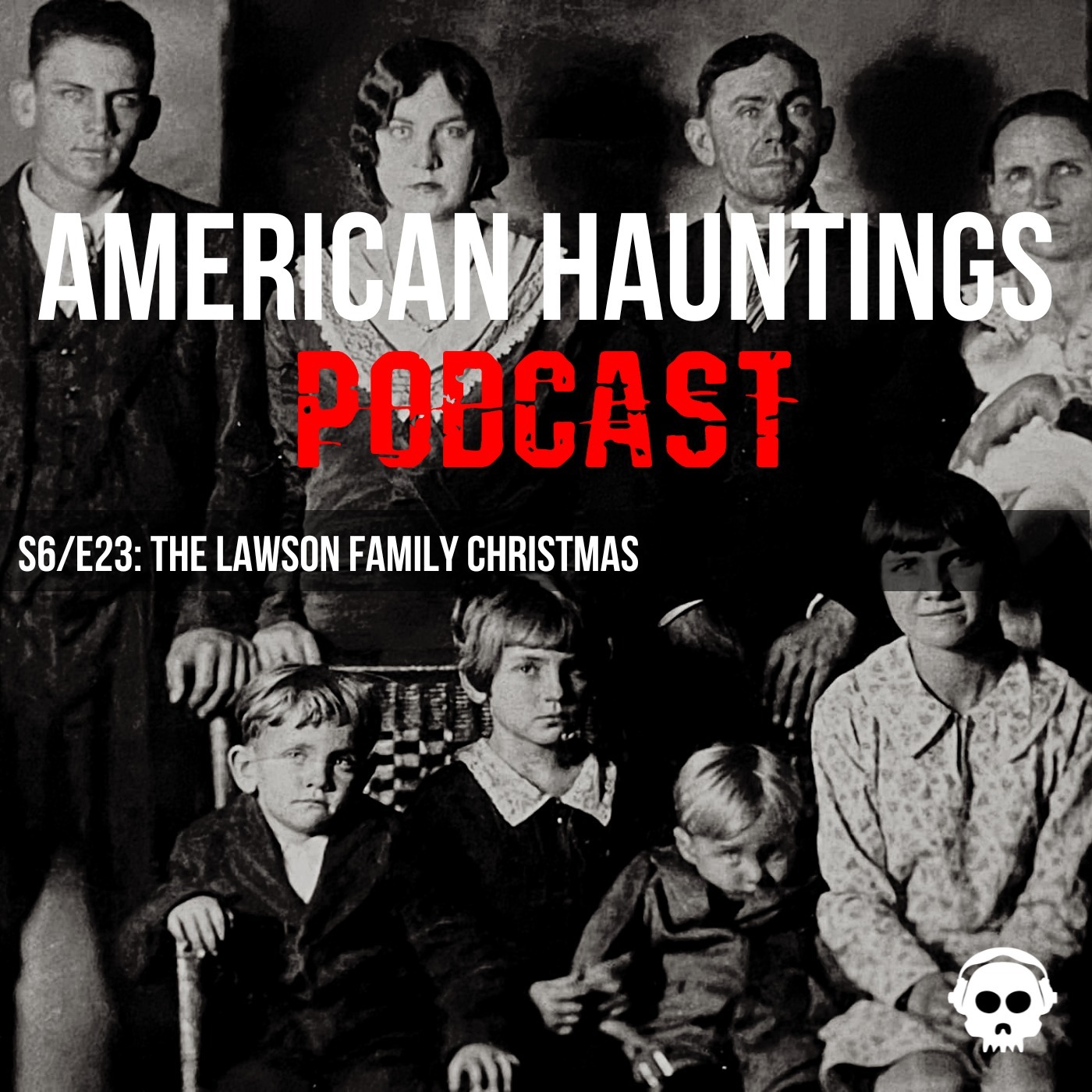
The summer of 1929 passed into fall. Aside from Charlie's occasional outbursts of temper, now calmed by the watchful eye of Buck, the Lawson family went on with their lives as they always had. They tended the fields, worked the garden and cared for their livestock. The older children attended school, cared for the little ones, and overall, their lives were happy ones. Autumn came and went with relative calm. Buck stayed vigilant, and Charlie managed to hold his temper. Winter arrived and the days got colder. The farm chores changed, and the children spent more time indoors. Then, a little less than two weeks before Christmas, Charlie announced he had a surprise for the family. But he had to take them into town for it. He was happy, almost giddy, around the children, which was completely unlike him. Fanny saw it and she was worried. Any trip to town was exciting for farm children, but with the promise of a surprise, the littlest ones could hardly contain themselves. They piled into the truck and rode into Germantown, where Charlie sent them on a shopping trip. He told them to pick out new sets of Sunday clothes, whatever they wanted, no matter the cost. Many of the children had never had new clothes before. Hand me downs were common with so many children in the family, each outgrowing clothing that could be passed on to the next. So this was a special event. After they'd picked out new clothes and changed into them, Charlie revealed the rest of his surprise. They were going to visit the town's photographer for their first family photograph. They excitedly lined up for the portrait and then waited patiently for the photo to be taken and for the plates to develop. It must have been a happy occasion. Yet the existing photograph shows a family that seems haunted by the world's cares. Buck, a boy of only 16, yet looking like a powerful young man in his 20s, seems already worn down by the weight of protecting his family. None of the children, save for a slight smile on Carrie's face, seem glad to be posing for the portrait. The eyes of Fanny, who's holding Mary Lou, the baby at just four months old, are filled with suspicion. While Marie, a beautiful Young woman who had a boyfriend and was likely planning to move away from her family's home soon just seems stunned. If some versions of the Lawson family story are to be believed, Marie may have been hiding a secret from her family, a secret that some say led to her death. But it's the eyes of Charlie Lawson that are the most captivating in this family portrait. He's looking at something just off to the right of the camera. Was it the photographer or someone else in the room? Perhaps someone who was talking to him in a voice that no one else could hear? Well, we'll never know, of course, but in hindsight, there is one thing that we can say about Charlie Lawson's eyes. They're the eyes of a madman. As Christmas approached, the children grew more excited. They knew they couldn't expect many presents, especially since they'd already received new clothes. But Christmas Day was always special. There would be lots of food and Christmas was traditionally a time for special dishes enjoyed only once a year. Family and friends would spend the day visiting back and forth and Christmas supper would be shared with the man, rings, Fannie's parents and family. As often happens in much of the country, but not usually in North Carolina, it snowed on Christmas Eve. By Christmas morning, there was a six inch blanket of snow outside. The day started with a hearty breakfast shared by Charlie's nephew Sanders, who had stayed the night. At the same time, another Lawson family was also having breakfast a few miles away. It would be one they would never forget. John, one of Charlie's brothers, had a premonition that something terrible was about to happen. He was not a superstitious man, but he just knew something was wrong. The feeling was so strong that he started to cry and had to leave the table. He tried to convince himself he was being foolish, but he couldn't shake the dread that had overcome him. He would soon receive news that proved his premonition was correct. After breakfast at Charlie's farm, Charlie, Buck and Sanders joined a group of other farmers for a friendly shooting competition. They set up bottles and cans to bang away at all the while pointing out the fresh rabbit tracks that could be seen in the snow. Several men mentioned trying to bag one for the stew pot. Later on in the morning. Inside the house, Fannie and Marie, listening to the sounds of the shots ringing out in the woods, prepared for the family's festive evening meal. Marie made a cake for the occasion, coating it with white frosting and dotting the entire surface with raisins as decoration. She placed it in the center of the table, hopefully out of reach of her little brother's fingers, and then turned her thoughts to the date she had that evening. She and her boyfriend, Charlie Hampton, planned to attend the Christmas play at Palmyra Church in Germanton. Murray wanted to look her best. She put out a bowl of water to wash her hair and placed her curlers in front of the fire to warm them up. Fanny kept busy, dividing her time between the stove and the needs of little Mary Lou playing in her crib. She darted back and forth, wooden spoon in hand, stirring and preparing. Outside, Charlie Buck and the others continued the shooting match, joshing and teasing each other after every hit or miss. Charlie was still in good spirits, almost manic, it would seem later to the other men. Cooking smells began drifting out of their house around 11:30, which started everyone thinking about lunch. One by one, the men drifted off toward their own farms. Their own meals awaited them at home. Soon only Charlie, Buck and Sanders remained. Charley reminded the two boys about his plans to go rabbit hunting in the afternoon and and suggested they walk into town to buy more shells. It was doubtful that any of the local stores would be opened, but Charlie assured them they would find someone who would open up long enough for them to buy a box of shells. He really had a taste for rabbit. He grinned at them. But he needed more shells if they planned to shoot some. Well, Buck and Sanders readily agreed. It was a nice walk into town, following the railroad tracks. They could go and be back and play. Plenty of time to eat. With a wave, they started off toward town. Charlie watched them go. His shotgun was resting on his shoulder and his hand was buried in the deep pocket of his winter coat. It was loaded with shotgun shells. They rattled together as they moved through his fingers. He had lied to his son. He had plenty of shells in his pocket, more than enough for what he planned to do next. Well, for what the voices told him he needed to do next.
- [16:22]
About an hour after Buck and Sanders left, Fannie glanced at the clock on the mantle and saw that it was almost 1pm she'd arranged for Carrie and Maybelle to visit their Uncle Elijah's family for Christmas lunch. So she called the girls over, buttoned them into their winter coats, and sent them out the door. It was a short walk to Elijah's house. Marie was still busy with her hair. James and Raymond happily played on the floor in front of the fireplace, and Mary Lou was content in her crib. Fanny finally relaxed for the first time that day. The cooking and dishes were done and the house was in order. She could Rest a bit before she had to get things ready for supper. Carrie and Mabelle's trip to their uncle's house took them along the old stagecoach road that ran ran the length of the Lawson's farm. Trudging through the snow, they passed the family's wood pile and the tobacco pack house that Charlie had been draining when he was struck in the skull by the mattock. The girls followed the curve of the road toward the first of Charlie's two barns. The barn stood only 100 yards from the house and like all the other farm's big buildings, it faced directly toward the stage road. As they rounded the road sharp curve. The girls could see the barn looming ahead of them. They had no idea that their father was waiting for them there. With the shrill voices echoing in his head, Charlie was standing out of sight behind the northwest corner of the barn with a 12 gauge double barreled shotgun and a 25x20 rifle. Hearing his daughter's excited laughter as they approached, he pressed himself against the barn's wooden wall, ensuring he could not be seen. He gripped the shotgun tightly in his hands and waited for the girls to pass by. As soon as they had, he carefully aimed at Carrie's back and pulled the trigger. As she started to fall, he fired the second barrel at Mabelle. A cloud of red mist spread over the snow as she fell to the ground. Charlie snatched up the rifle and walked over to the girls. Maybelle was perfectly still, but he could see that Kerry was still breathing. He fought, fired a single rifle bullet into her head. Then he took a piece of scrap wood from outside the barn and bludgeoned the two little girls heads until they were nothing more than bloody, unrecognizable masses. He stood there for a moment, the board dripping bright red onto the white snow, and looked down at his daughters. The voices shouted at him. Then he tossed the plank aside and picked up each girl in turn, carried them into the barn and laid them on the floor side by side. He put a stone under each of their heads as a pillow, crossed their arms on their chests and drew their eyelids closed. He looked lovingly back at the two dead girls as he latched the barn door shut and started walking toward the house. As he walked, he loaded two more shells into the shotgun. When he approached the cabin, he saw Fanny outside. She'd gone out into the yard to gather more firewood for the stove. She turned toward Charlie as she started back to the house and he raised the shotgun and fired directly into Fanny's chest. The wood in her arms flew into the air. She was dead before she hit the ground. Charlie dragged her to the house and dropped her on the front porch. Her skull knocked hollowly when her head struck the boards in the house. Marie heard the shotgun roar and looked out to see her father dragging her mother toward the house. Fanny was covered in blood. Marie began to scream. The front door banged open and Charlie fired the second barrel. The load slammed into her chest. Pellets pierced her heart and shattered the mantle clock behind her. Both died at the same time. The two youngest boys, James and Raymond, had been quietly playing on the floor while when Charlie burst through the door, the sudden deafening noises of the shotgun blasts and the bodies hitting the floor made the boy scream. They both ran to hide, but not before Charlie saw them. He went after James first. The little boy ran to his bed and crawled underneath, getting as close to the far wall as he could. But Charlie reached under the bed, pulled James out, and slammed the butt of the shotgun into his head until his skull was shattered. While James screams were filling the house, Raymond had frantically scrambled behind behind the stove, trying to wedge himself into the corner. Charlie first tried to pry him out with a shotgun, using the barrel to try and lever the stove far enough from the wall to get at the boy. As the left barrel began to bend out of shape, Charlie gave up and began clawing for him. Ignoring the heat from the stove, which singed his shirt. He snagged Raymond's shirt and jerked the boy from his hiding place. As Raymond tumbled onto the floor, he slammed the butt of the ruined shot shotgun into his face, fracturing his skull, just as he'd done to James. Only one child remained alive in the house. Baby Mary Lou. She was lying in her crib, screaming at the sounds of terror around her. Thankfully, she was too young to understand what was going to happen to her. Charlie raised the shotgun and crushed her tiny skull with the butt of the weapon. He slammed it down on her head again and again. She was now reunited with her mother, brothers and sisters in death.
- [21:42]
Frantic and soaked with blood, Charlie went to work preparing the bodies to be found. The voices warned him that family members would start arriving at any time for a Christmas visit. He had no time to spare. He dragged Fanny inside and closed the door behind him. He laid Fanny out on the floor and placed Mary Lou in her arms. He then laid Marie, James, and Raymond alongside their mother. Charlie climbed the narrow staircase to the house's attic room where the children had slept. He collected four pillows and brought them downstairs with him and gently placed one beneath each of Their heads just as he had with Carrie and Mabel. He closed their eyes and crossed their arms on their chests in a position of quiet repose. Charlie sat down for a moment on the bed that he had shared with Fanny in the house's main room and looked at what he'd done. He believed at that moment that he had saved the souls of his family. He truly believed that his wife and children, lying on the floor and spreading pools of blood, would rest in peace.
- [22:45]
Almost done, he sighed to the voices. Almost done.
- [22:55]
One of Charlie's brothers, Elijah, and his two sons, Claude and Carol, had spent their Christmas morning hunting rabbits south of the Lawson farm. Claude had killed a rabbit which now hung proudly from his bell. By 2pm all their ammunition was gone and they started for home. Since their route across the railroad tracks would take them close to Charlie and Fanny's house, Elijah suggested they stopped there and wished the family a merry Christmas. When they got within sight of the house, Claude ran excitedly ahead and bounded onto the porch, ready to greet everyone in great holiday cheer. He threw open the door with the greeting on his lips, but the words froze before he could speak. What he saw inside the house was more than his young mind could comprehend. Years later, he would remember nothing in that room except for one thing. Blood. He stepped back from the door with no recollection of leaving it open or slamming it to try and make it all go away. Elijah's view of the carnage was through the front window. He saw the blood, and now he noticed the drag marks on the porch. Something was terribly wrong at Charlie's house. It was obvious that everyone was dead, and they had not been dead for long. The blood that was pooled on the floor was still wet and it was dripping between between the floorboards. Elijah's first thought was that an intruder had entered the cabin and for some unknown reason had murdered the family. But where was Charlie? Realizing they had walked into something horrible and with no ammunition to defend themselves if the killer was still around, Elijah and the boys ran for their lives. Thrashing through the snow, they reached the top of the hill overlooking the Miller farm, which was closest to Charlie's house. Elijah yelled down to Mr. Miller, telling him to call the sheriff and alert the neighbors. Someone had killed Charlie's whole family, he shouted. Word spread in person and along the telephone lines, and soon farmers from all around the neighborhood were grabbing their shotguns and heading for the Lawson farm. They wanted to see what had happened and wanted to see what they could do to help. Dr. Helsabeck was summoned from town And Sheriff John Taylor followed him. The first arrivals saw the blood stained snow outside, outside the house. Someone had obviously been shot there. But it was the bodies they found inside that stunned the men. One eyewitness later recalled. There was blood all over the place. I mean, blood everywhere. I haven't forgotten a bit of it. As the news of the murder spread through the county, more and more people arrived. Worried men left home with instructions for their wives and children to prop chairs under the doorknobs. Few people in the area had locks on their doors and to let no one inside until they returned home. There was, they believed, a deranged killer on the loose. At this point, Charlie, Buck, Carrie and Maybelle were still missing. Sheriff Taylor began organizing men into a search party to find them. Well, a neighbor named Stephen Hampton found the bodies of Carrie and Mabel in the barn. He first discovered blood and drag marks in the snow and followed the trail into the building. As the men looked around the barn, they found a trampled spot spot in the snow where their killer had waited in ambush for the two girls. Along with a discarded plank of wood with one end soaked in fresh blood. A little blue hat that had belonged to Carrie, now crushed and blood soaked, was found near her body on the floor of the barn. Word now finally reached the farm that Buck was in town with his cousin, which meant that only Charlie was missing. It was assumed he'd been guilt too. At first anyway. But some of the men had started to change their mind. What if Charlie had been the killer, not a victim? Someone in the search party spotted tracks in the snow leading away from the tobacco barn where Carrie and Mabelle had been found. They veered off into the trees and to the creek beyond. The footprints were those of a full grown man. For the length of his stride, he had apparently been running cautiously. The men followed the tracks into the first thicket of trees, across an open field and into the woods again. It was there, at just after 4pm that they found Charlie Lawson's body. He was slumped against a tree a few hundred yards away from the house and barn. The scene around him was a strange one. Charlie had evidently been in the woods for some time, walking around and around a single tree. He'd circled the tree so many times the snow had melted in the path he'd walked. He eventually sat down on the ground at the tree's base, put his single barreled shotgun to his chest and pulled the trigger. He had a gaping wound in his body and the gun had fallen on the ground beside him. Four men picked up Charlie's body each taking a limb and hauled him back to the farm. His suicide confirmed what the lawmen and Charlie's neighbors had been starting to suspect. They that Charlie had finally snapped and murdered his entire family. A coroner's jury convened by Dr. Helzebeck agreed. Sheriff Taylor searched the dead man's pockets and found several bills of sale recently struck with tobacco buyers in the area. Two of them had Charlie's penciled handwriting on the back. One note cryptically read, trouble will cause. The other began, blame no one. But.
- [28:11]
Everyone assumed the missing word was me. But no one could say for sure he never finished writing. A few believed that Charlie had started to explain his actions that day and then decided against it. Perhaps in the end, he decided to leave it a mystery. No one will ever know what was going on in Charlie's head when he decided to slaughter his family. When his body was found, he had $58 in his pocket, and the tobacco paperwork showed that his business business was doing quite well. Whatever problems had led to Charlie's breakdown, poverty was not among them. Why did Charlie spare Buck from the murder spree, intentionally sending him away that day? Was it because he loved him more? Or did he want his son to suffer as the family's only surviving member, this seems to be the most likely scenario. A bit of petty revenge against the boy who'd stood up to him. He knew that Buck would have to live with his failure to protect his family for the rest of his life. Buck would have died to protect his mother, brother and sisters, and Charlie knew it. He was the only obstacle in Charlie's twisted plan. He sent Buck off to town, and the boy went willingly, never realizing he would never see his family alive again. Charlie Hampton, Marie's boyfriend, found Buck on the snowy streets of Germanton after he learned of the the murders. He had to break the news that Buck's entire family had been killed. Buck was brought straight back to the farm, where his uncles and their families tried to comfort him as best they could. I don't know why he did it. Buck wept to one of the reporters on the scene. I guess it's just like they say. He must have suddenly gone crazy.
- [29:51]
There were no formal arrangements to deal with crime scenes, and in those days. So it was left to Charlie's relatives and neighbors to help Sheriff Taylor deal with the aftermath of the massacre. Women from nearby farms brought their own bed sheets to give the bodies a decent covering. Volunteers dug the Lawson grave at Browder Cemetery, excavating a trench that would hold eight caskets Mary Lou would be buried in her mother's arms. The snow of the past few days had made the steep road leading up to the Lawson house impassable for most cars, so all the bodies had to be carried down to the waiting hearses by hand. Bully Tuttle, a local hardware store owner, took Mary Lou's battered little body in his arms and carried her gently down the hill. Years later, he would recall, it was just awful. I barely made it to the hearse. The bodies were taken to Madison, about 13 miles to the east, where an embalming firm run by T. Butler Knight and Yelton's Funeral Parlor were waiting to care for them. Dr. Helsabeck was waiting there, too. He worked through the night to complete his formal examination of the corpses. Sheriff Taylor's brother, a newly qualified pathologist at John Hopkins Hospital in Baltimore, was visiting his family for Christmas. By a remarkable stroke of luck, Dr. James Taylor volunteered to assist Dr. Helsbeck with the autopsy. These, combined with what the doctor had seen at the farm, allowed the two men to determine the causes of death in each case and to piece together each step of the massacre. They never knew, of course, about the voices in Charlie's head. Only Fannie knew they existed, and she only told a few people. But it was clear to everyone that Charlie Lawson had gone insane. On the morning after the murderous massacre at the Lawson farm made front page news. And in at least 19 different states, wire services like the Associated Press sent the story out from New York to California. Radio broadcasts and local gossip spread the story even further. By December 27, newspapers were illustrating their stories with a copy of that family portrait that Charlie had so thoughtfully provided a few days before. Things went terribly wrong. On the same front page, they also carried a crime scene photograph that showed the family's living room painted with blood. The newspaper and radio coverage brought scores of the morbid curious to the scene. Everyone wanted a piece of history. There was so much blood in the house that one of the volunteers who helped clean up the crime scene had to scoop it up with a coal shovel. He dumped it into an old tin washtub, and a neighbor helped him carry it outside. They dug a shallow grave out of decency and poured the blood into the ground before covering it. While they were doing it, he later recalled, a visitor was busy funneling Fanny's blood from the house's porch into a little souvenir jar. The visitors looted the cabin. Even the tree that Charlie leaned against as he took his own life was stripped bare within a few hours of the discovery of his body. The crowds wanted something to take with them, something to say they'd been at the scene of the trip tragedy. They took Charlie's guns, the bricks from the house that was later demolished, and even the raisins from the cake Marie had baked a few hours before her death. The crowds also turned the funeral into a nightmare. There would be no formal church service. There were just to be a few words at Browder Cemetery and burial in the mass grave that had been dug there by neighbors. The ceremony was scheduled to start at noon on December. December 27th. Six hearses were loaded with bodies at Yelton's in Madison that morning. The funeral parlor had been hard pressed to handle so many bodies at once. So even though the family had wanted white coffins for everyone, a gray one had to be substituted in Charlie's case. Someone scrounged up a piano stool and a small table to supplement Yelton's five coffin stands for viewing at the cemetery. Lacking enough hearses, they transported little Raymond's casket in a private car. Rows of men with a few women in the crowd lined the sidewalks to watch the hearses pull away. Hundreds of tourists were waiting at the cemetery to watch them arrive. Automobiles had crowded the highway coming into town and were parked several miles up the road. People walked through mud, water and wet grass to be close to the show. They soon filled the surrounding woods, too. Reporters circulated through the crowd and found onlookers who had traveled more than 100 miles just to view the funeral. The newspapers agreed that at least 5,000 people turned up at Browders that day. Some watched its silence and some came and went, taking the opportunity to visit the Lawson house while in the area. The quarter mile dirt road leading from the highway to the cemetery was too wet for cars, and soon the highway was also impassable. It had not been designed for so much traffic, and the melting snow had soaked the ground. Dozens of cars became stuck and had to be pushed out. The traffic and muddy conditions caused the hearses from Madison to arrive more than an hour late. The vehicles got as close to the cemetery as they could, and then the pallbearers, friends of Charlie's from better days, had to shoulder the caskets the rest of the way. Sheriff Taylor, who had already recruited some men to keep an area next to the grave grave free of spectators, pushed open a path through the crowd for the pallbearers to use. The coffins were laid out in a line, startling with Charlie's full size casket and tapering down to Raymond's tiny one at the other End of the row. Charlie had been a member of the Primitive Baptist Church, whose elders, Watt Tuttle and Boss Brown, conducted the service at the graveside. Why this thing has occurred, brown said, I do not know. The coffins were then opened so anyone who wished to do so could say one last goodbye. Seeing the battered faces of the family was too much for Buck. He collapsed in grief and had to be helped to recover so the viewing could continue. His distress was made worse by what would haunt him for the rest of his life. If he hadn't fallen for Charlie's ruse and sending him into town, he might have been able to stop his father before the killer killing ever started. As friends consoled the heartbroken boy, a line formed on each side of the coffins and people started slowly filing past. It took more than three hours for everyone present to get a look. As the afternoon light faded, the coffins were sealed once more and lowered into their shared grave. For the mourners and the ghouls gathered at the graveside, it was time to go home.
- [36:34]
Buck, his uncles, cousins and relatives were not the only ones haunted by the murders. The entire community was confused, angry and saddened and stunned by the tragedy. The mystery of why Charlie had done it hung over them like a dark, angry cloud. It was a topic of conversation at every dinner table, over coffee at the local diner, and across every neighborhood fence. People wanted to know, they needed to know why Charlie had committed such a horrible act. Rumor spread, stories were concocted. Everyone had an idea, but no one had any real answers. Most believed that Charlie's head injury was at the root of the murders. He'd been driven insane by the blow to his head. Others thought that since the murders coincided with the start of the Great Depression, some leap to the conclusion that Charlie's farm had gone bust. But that wasn't true. The craziest theories were, of course, the ones people talked about the most. Namely, that Charlie hadn't actually killed anyone and his suicide was staged to make him look guilty. They couldn't believe that someone they'd known all their lives could go crazy and kill his whole family. Others theorized that Charlie might have witnessed some sort of organized crime activity, perhaps a mob murder. He and his family must have been killed in retaliation, they claimed. But since Stokes county wasn't exactly a hotbed for gangsters, this theory didn't hold much water either. The discussion about Charlie's motives went on for years. Then, six decades after the massacre, the rumors turned even more sinister. Stella Bowles, born in 1915, was Marion Lawson daughter. And she'd had a front row seat for everything that went on in the family before and after the murders. She confirmed some dark Stokes county rumors by telling the story of a meeting of Lawson women that took place in late December 1929, when she was just 14 years old. Ida and Nina Lawson, who had each married one of Charlie's brothers, were among the group. Years later, Stella questioned her aunt Nina about what was said that day. Nina told her that Fannie had discovered that Marie, Charlie's daughter, was pregnant. And to make matters worse, Charlie himself was the father of the baby. Charlie had warned his daughter that if she told her mother or anyone else about the baby, there would be some killing done. Fanny had discovered the incest in her family just before Christmas. Christmas and had confided in Ida and Nina. She agonized over what she should do. Even years after the fact. Nina insisted that Stella keep the information to herself. So Stella did not reveal the secret until 1990. A few years later, Stella's story was confirmed by Ella Mae Johnson, who had been Marie's best friend. Ella Mae said that Marie had slept over at the Johnsons house a week, week or two before Christmas 1929, and had confided that she was pregnant by her own father. Soon, others grudgingly admitted they'd also heard the rumor. It's certainly possible that the shame over such a horrible misdeed could have helped to spark Charlie's killing spree. And I'm also sure that a family of that era would have guarded such a secret very closely. Hill Hampton, Charlie's closest friend and neighbor, later admitted that he knew of serious problems going on within the family. He knew the nature of the problem, but it was personal and not his place to reveal it, he said. Hill had been as shocked as anyone would be to learn such a thing then or now. He likely felt it hard to believe that someone with Charlie's religious convictions would do such a thing. But he didn't know that Charlie was no longer himself by that time. The voices had started long before he raped his daughter. They likely told him to do it. And Charlie may not have been in control of his actions by then. What if the voices told Charlie that his only way out was to destroy all the evidence and the witnesses to his misdeed? And Charlie did it. The unending voices in his head wouldn't stop until he was finished. In the end, the only thing that we really know about what was going on in the mind of Charlie Lawson is that we'll never know what was Going on in his mind. It was then and remains an unsolvable mystery. With the funeral behind him, Charlie's brother Marion started to worry about financial matters. Buck was next in line to inherit the farm, but that was a mixed blessing since that also put him in line to inherit Charlie's mortgage payments. Buck was only 16, so he couldn't hardly be expected to run the place. So this meant another source of income needed to be found. Marion remembered the huge crowds that had come to town to watch the funeral. There were still at least 90 carloads of strangers showing up at the Lawson house every single day to look around. There was no indication that interest in the murders would fade away anytime soon. Most of the family's property was still in the house just as they'd left it. The relatives tried to watch the pace closely. Many things, things had already been stolen. They had their own farms to operate and couldn't be on hand all the time. The neighbors weren't much help. Most of them took exception to the ghouls. And several fights had started when sightseers were run off the property. The most serious involved the man who needed three stitches in his arm after being slashed by a neighbor's knife one night. He'd been peering into the window of the Lawson house. Well, clearly a long term solution was needed. After consulting with some friends, Marion came up with the idea. Along with his sons and a few other relatives, they went out one morning and started planting posts in a circle around the house. In the tobacco barn, they strung a heavy chicken wire between the posts, effectively fencing off the murder scene. Some neighbors believe that Marion was trying to keep the curiosity seekers away. But he had a much different idea. With all the interest in the killings, he decided to charge visitors $0.25 each to take a guided tour of the property. The cash raise would go to Buck and help him make ends meet, make the mortgage payments and hopefully ensure the farm stayed in the Lawson family. Buck agreed to the scheme, even though Fannie's family was appalled by the idea, as were Charlie's other brothers. They tried to talk Marion out of it, but he refused to listen. Well, the new attraction was opened on January 15, 1930, and the steep admission price failed to deter visitors. Sometimes as many as 100 people showed up every day. Marion recruited friends and family to staff the cabin tours. He supplemented income from admissions by offering refreshments and a pack of five souvenir photographs that visitors could buy before they left. Locals, especially people in town. Town complained, as did members of Fannie's family. The tours were Shameful, they said, and Marion was embarrassing them all. A committee approached him and asked him to stop. Marion refused. Interest in the murders dropped a little after the first few months, but remained steady for a surprisingly long time. By then, several murder ballads had been written that told the story of the Lawson massacre, which helped to keep the tourists coming to the door. The site had become a legitimate attraction to the people who came to see it, like an alligator farm or an amusement park. They paid their admission, could walk right in and see the blood stains on the floor and walls without having to sneak in after dark. So they kept coming for a long time. Well, after several months, the locals stopped complaining. There hadn't been any real trouble. And while they still considered the attraction and bad taste, the tourists who showed up stopped in town to buy gas, eat in the diner, shop in the stores and stay at the new hotel. Soon Germanton was thriving during a time when most of America was suffering from the Depression. All thanks to Charlie Lawson. Well, in time, though, interest in the Lawson farm started to fall off. But the 1930s saw a rise in popularity and travel carnivals and sideshows. So the Lawson murders were taken on the road. Parts of the murder scene were sold off to a sideshow promoter who took the artifacts on tour. Whatever the family couldn't sell, he simply duplicated and passed them off as the real thing. Like Charlie's guns and Marie's raisin cake. The Lawson family sideshow toured the country for years, appearing alongside Bob and Clyde's blood spattered and bullet ridden death car, a mummy that purported to be the real John Wilkes Booth and other morbid attractions. Years passed and sideshows vanished along with their attractions. And no one really knows what happened to the artifacts from the Lawson house. They disappeared. Many years ago, the Lawson farm attraction closed and the sideshow disappeared to likely gather dust in a barn site somewhere. But the stories of the Lawsons lived on. The subjects of the tales now, though, turned from murder to ghosts. People started claiming that some family members did not rest in peace. Rumors spread of eerie happenings that were occurring in the Lawson house after dark, long after the tour guides had gone home and the doors had been locked behind them. Articles appeared in newspapers that freely stated the house house was haunted. A new batch of curiosity seekers began parking on the road at night, watching the house, unsure of what they might see. Would it be the mysterious lights people spoke of dancing about in the darkness? Or would they hear the reported moans and cries that other people had reported, echoing in the stillness of the night? The local Chapter of a fraternal order that Charlie once belonged to, the Junior Order of United American American Mechanics, began using their most infamous member as part of their initiation ceremony. After the stories of the haunting began to circulate, New members were told to go out to Browder cemetery and take a rock from the Lawson grave. After that, he had to go to the abandoned Lawson house and walk around the property with only a lantern to light his way. If the prospective member was brave enough to pass the initiation, he was considered worthy of becoming a junior. Decades passed, and the house fell into decay. Children and adults wandered the property, exploring and sometimes looking for ghosts. Many who ventured onto Charlie's old farm claimed to leave the place with a feeling of deep sadness. Many inexplicably burst into tears. Photographs taken there were often found to be blank when developed. Batteries failed in the flashlights that were used for knocking Turtle Explorations. By 1980, the Lawson House was gone. Some of the wood was salvaged for a small bridge that was built a few miles away. But aside from that, it had vanished. The site of the house and the tobacco barn was plowed under. There's nothing left to see today. But even so, it said, the ghosts remain. Owners of the land next door have told chilling tales recently about the spirits of a little boy and girl who began showing up on their doorstep soon after moving into their home. Over the next few weeks, the children kept coming back. After seeing them several more times, the woman who owned the farm started investigating and spoke with a local historian, which is how she first heard about the Lawson murders on the neighboring farm. During the discussions, the owner was shown the Lawson family portrait taken shortly before the family was killed. She immediately recognized her two visitors in the photograph, Maybelle and James Lawson. There was no doubt about it, she told the historian. That's who it was. The mystery was solved, but the sightings continued. In fact, they still go on today. According to locals, the Lawson children had often crossed the field where the neighboring house now stands so they could play with the neighbor children. They continue to make this journey today. Even after death, their lives violently ended.
- [48:37]
Cody Beck
But perhaps.
- [48:37]
Narrator
Perhaps they finally found some peace. But the old Lawson farm was not the only thing haunted by the past. Buck, the massacre's only survivor, eventually married and started a family of his own. He and his wife Nita, had a son and three daughters. His son Arthur was his namesake, and he named two of the girls for his murdered sisters. Buck tried to have a good life, and. And while he had many happy times, he was terribly damaged by the events of Christmas Day 1929. He drank to forget, and when things got especially bad, usually around the holidays, he locked himself in a room with a bottle and played one record over and over again. It was a recording of a popular bluegrass group called the Carolina Buddies performing a song called the Lawson Family Family Murders Bucket escaped death in 1929, but he wasn't destined to grow old. On May 10, 1945, he and another man were riding in a work truck that became stuck in a deep crevice that had been cut in a road for repairs. Witnesses said they had not seen the warning signs and had accidentally driven into the construction zone. The passenger in the truck was seriously injured. Buck, though, was killed instantly, and even in his death he was haunted by his father. The first three paragraphs of his obituary were a description of the murders in 1929. Buck's life and death were not even mentioned until the fourth paragraph. Arthur Buck Lawson was laid to rest in Browder Cemetery alongside the family he lost years before. In his lifetime. Buck never stopped believing that he'd failed his mother and his siblings, so we can only hope that he found some comfort with them on the other side.
- [50:35]
And that's the end of Season six of the American Hauntings Podcast. We'll be back in just a few weeks with a brand new season of American history, hauntings and horrors. Thanks for listening and keep sharing the show with your friends and help us make the premiere of season seven the biggest one yet.
- [51:19]
Sponsor/Ad Voice
Okay, listen, it is time. If you are looking for a sign, this is it. 2026 is the year you launch your business. The year you transform into an entrepreneur. A founder, a boss.
- [51:33]
Cody Beck
One powerful move.
- [51:35]
Sponsor/Ad Voice
Put your future firmly in your hands. Starting a business with Shopify. Maybe you've got an idea you can't shake. A craft that everyone tells you to sell. A store you've already designed in your head. With Shopify, 2026 is when you finally make it happen. Millions of entrepreneurs have already made this leap from household names to first time business owners just getting started. Shopify has been my go to for selling ghost shirts, pizza merch and numerous other past present project. And there's a good reason Shopify gives you all the tools to easily build your dream store. Choose from hundreds of beautiful templates that you can customize to match your brand setup is fast with Shopify's built in AI tools that write product descriptions and headlines and help you edit product photos. Marketing is built in too.
- [52:24]
Cody Beck
Create email and social campaigns that reach.
- [52:27]
Sponsor/Ad Voice
Customers wherever they scroll as you grow and Shopify grows with you, handle more orders, expand to new markets and do it all from the Same dashboard in 2026. Stop waiting and start selling with Shopify.
- [52:43]
Sign up for your $1 per month trial and start selling today at shopify.com hauntings. Go to shopify.com hauntings that's shopify.com.
- [52:57]
Hear your first this new year with Shopify by your side.
- [53:04]
Are you stressed? Have restless nights? Racing thoughts? We've all been there. Imagine having a natural way to feel calmer, sleep better and bring more balance into your day. That's exactly what CBD can do. And when it comes to CBD, nobody does it better than CBDFX. CBDFX has been around since 2014 and they're one of the most trusted CBD companies out there. Every product is made right here in the USA with organic hemp, no GMOs, no pesticides and no harmful chemicals. Plus everything is backed by third party lab reports so you know it's pure, safe and effective. They've got something for everyone from sleep gummies and tinctures to CBD capsules, topicals and and even CBD treats for your pets. So it's easy to find the perfect fit for you. Their products have become part of my daily routine and honestly, they just help calm my nerves. Improving sleep has led to so many other benefits. I can think more clearly, I have more energy. The podcast is better, probably.
- [54:05]
Cody Beck
Maybe. I think. I think it is.
- [54:07]
Sponsor/Ad Voice
You tell me. I've spoken before about my personal favorite, the CBD and CBN night capsules for sleep, which help you fall asleep quickly and sleep soundly through the night. They contain CBN oil, commonly known as the ultimate relaxation, cannabinoid and other natural sleep aids. They're vegan, gluten free and made with organic hemp. So whether you want calm, focus, better sleep or just an overall wellness boost, CBD FX has something for you. And right now our listeners can get 40% off of your first order with code hauntings@cbdfx.com that's cbdfx.com use promo code hauntings and get 40% off today. Feel the difference with cbfx.
- [55:25]
Cody Beck
All right, well, are you ready?
- [55:28]
Troy Taylor
Sure.
- [55:29]
Cody Beck
For the season grim finale?
- [55:31]
Troy Taylor
Yeah, I'm good. So yeah, this is a grim season finale.
- [55:35]
Cody Beck
It's a doozy. All right. Thanks for tuning into the American Hauntings podcast, the show where we discuss history, hauntings, legends, lore in the very, very dark side of American history. We are now in season six of the podcast, woods and Fields Dark and.
- [55:50]
Troy Taylor
Wicked and woods and Fields Dark and wicked. This is the season finale.
- [55:55]
Cody Beck
The season finale.
- [55:56]
Narrator
Yes.
- [55:56]
Cody Beck
I'm your co host, Cody Beck. With me is my co host, author, historian, crime buff, the founder of American Hauntings, Troy Taylor.
- [56:03]
Troy Taylor
And actually my voice just kind of sounds like that right now. Yeah, it's been like that all week. Just.
- [56:09]
Cody Beck
You probably.
- [56:10]
Troy Taylor
It was grim. I had two events this past weekend and I. It got progressively worse during the first one and then the second one, I had a river road tour and it started out bad, got better in the middle, and then got bad again. So, you know, it's this sinus stuff that's going around. Man, it's grim.
- [56:29]
Cody Beck
Well, on the. On the river road tours, though, you have opted to not use like a bullhorn or anything, right? You just.
- [56:35]
Troy Taylor
I use a microphone.
- [56:36]
Cody Beck
Oh, you do?
- [56:37]
Troy Taylor
On the bus. Oh, yeah, yeah, yeah. The bus is too big for that, so.
- [56:40]
Cody Beck
Okay, okay. I was gonna say if you're straining.
- [56:42]
Troy Taylor
Yourself, I. I have one time when the mic broke, I end up shouting.
- [56:46]
Cody Beck
Okay, so. So that's what it was. So the one time the microphone went out, that's when you decided to shout. Yes. Yeah, yeah, Go that way.
- [56:53]
Troy Taylor
That's. Do that. Yeah. No, I've had. Not had good luck with microphones lately. Anyway, I don't think I told you this. Did I tell you about that?
- [56:59]
Cody Beck
No, I was just talking about right now. But.
- [57:01]
Troy Taylor
Yeah.
- [57:01]
Cody Beck
What else happened?
- [57:01]
Troy Taylor
Yeah, well, that either. But St. Louis exorcism evening I had on Friday, didn't have any, you know, weird things happen. But a couple weeks ago, I guess. I guess almost a month ago now this fall is just blurred back. Earlier in October, one night I was doing the St. Louis exorcism presentation and my microphone caught on fire.
- [57:23]
Cody Beck
Yes.
- [57:23]
Troy Taylor
I'm using a wireless mic and it just started getting hotter and hotter in my hand and I'm like, what is going on? And then it just starts smoking and catches on fire. And I'm now using a wired mic. No more. No more cordless mic.
- [57:40]
Cody Beck
You look down and there's a crucible on the microphone and you're.
- [57:43]
Troy Taylor
No, no, thank God. But you know, it wasn't anything like that, but it was. It was on fire. So, Yeah, I. Yeah, I'm sticking with the ones with the wire now.
- [57:55]
Cody Beck
Maybe it got like sprayed with holy water or something.
- [57:57]
Troy Taylor
Yeah, something. And I was holding it and it caught on fire. Yeah, that makes sense.
- [58:02]
Cody Beck
Well, what do you. So, yeah, if you go to a Troy Taylor event, you might get to see some demonics.
- [58:07]
Troy Taylor
Hey, you never know. Yeah, you never know what happened.
- [58:09]
Cody Beck
But what, what do you have? Do you have anything to round out the end of the year and if not, what's coming up right after the holiday?
- [58:16]
Troy Taylor
Yeah, yeah. I, well, I wanted to say before we went any further, I want to say thanks to everybody who came out this past weekend for the book signing we had at the mineral spring in Alton. It's always fun to see people. You know, we had one back in August for the new Haunted Alton book and people came and got that one again. But people were coming for the new Midwinter Night book, the one I did for Christmas and.
- [58:39]
Have a, have had a good response for that, which, I mean, you know, it's kind of a niche book. I mean it's a Christmas book.
- [58:47]
Cody Beck
So sure.
- [58:48]
Troy Taylor
I mean I'm going to sell this thing for like a month and then that's going to be it until next year. So. Yeah, I appreciated people and I appreciate the response that we've got from it. But coming up shortly after the first of the year, of course will be dead of winter. That's February 11th. We have very limited spots for the VIP packages for that. That's the, you know, the reserve seating with all the extras and after our events too are starting to fill up. So if you are going to take part or want to take part in any of that stuff, you got got to get signed up for it because it's, it's really going to be filled up fast. But do remember that the daytime event is free as long as you bring a donation of a canned good or a non perishable item for the food banks. I mean that's the main drive behind it. We're just, we offered this VIP stuff because that was something that people have been asking for. So we kind of added that in so people can find out about that@AmericanHauntings.net and then of course January 9th before that, tickets are going to go on sale for the 2023 Haunted America Conference. So that will be January 9th. But this Friday is coming Friday after the show comes out, December 9, the vendor booths are going to go on sale. So they go on sale a month before the conference. So anybody who's interested in a table, even though we've got a much bigger space this year, I've had a lot of people asking me when they're going to go on sale. So if you are hoping that you're, you know, could get one if you've got, you know, books or T shirts or jewelry or antiques or a haunted location or whatever the hell you've got. And it pertains to this crowd. This is the perfect crowd for you because these are not just browsers. You know, people come and they get excited about this stuff. So if you want a vendor table or you just want to start planning for the conference, go to ghost conference.net and that will be available starting on Friday. So in the next week, of course, will be our year end horror film episode on December 13th. So that is our last show of the year and we're done. Starts in January. That's right.
- [60:52]
Cody Beck
So we get a little bit of a quote unquote break, I guess.
- [60:56]
Troy Taylor
Short break. Yeah, short break.
- [60:57]
Cody Beck
As if we won't be busy as hell during that anyway.
- [61:00]
Troy Taylor
But I know. But you know, still.
- [61:03]
Cody Beck
Yeah. All right, cool. Well, let's move on to. We have a listener review on itunes. So again, thank you so much. This really helps people find the show and it helps boost our egos and all that sort of thing. This review is titled Excellent in All Ways. And it's from maybe Ermin Iver. Erminiver. I don't know. It's just all lowercase letters, so I apologize if I don't get it. But it says, I love this podcast because it presents fairly difficult content in an intelligent way. No silliness, as detailed as possible. But I would like to say I've made a vow since I think it was maybe season three, to cut out the no silliness and be as completely straight laced as we can with this.
- [61:45]
Troy Taylor
Sorry.
- [61:45]
Cody Beck
And I'm glad.
- [61:46]
Sponsor/Ad Voice
I'm glad.
- [61:47]
Narrator
Laughing.
- [61:48]
Troy Taylor
But I'm coughing because I've got a sinus.
- [61:51]
Cody Beck
I'm glad that people have realized the no nonsense we have taken.
- [61:55]
Troy Taylor
That's why sometimes I think these reviews are for the wrong podcast.
- [61:58]
Cody Beck
I know, I know. It's like we meant to go to Astonishing legends. No, I feel like if they think there's no silliness, then I have failed at my half.
- [62:07]
Narrator
Yeah.
- [62:08]
Cody Beck
Because I. I want to be silly, but no, thank you so much. And I get what you're saying, you know, we. We don't. We don't try to. We're not. We're not trying to sell tools.
- [62:18]
Narrator
Yeah.
- [62:18]
Troy Taylor
We're not trying to sensationalize and have some fun with it. You know?
- [62:23]
Cody Beck
Exactly.
- [62:23]
Troy Taylor
I mean, because when you can have fun with it because you can't always.
- [62:27]
Cody Beck
Right.
- [62:27]
Troy Taylor
And I mean, it's especially so.
- [62:30]
Cody Beck
Well, because we're talking about stuff like we're talking about today. And it's like you, you can do it one of two ways. You can go straight History and just be like, this is what happened. Or you can say like, how do you have a conversation about this stuff and not try to lighten the load?
- [62:42]
Troy Taylor
I know, because I mean, gallows humor. I mean, you can't help it, right?
- [62:46]
Cody Beck
Right? Yes.
- [62:47]
Sponsor/Ad Voice
Yeah.
- [62:47]
Troy Taylor
You gotta laugh or you're gonna cry. One of the.
- [62:49]
Cody Beck
Yeah. I always say the, the shortest route to not killing yourself is what I always choose, because this is, this is tough stuff. So let's, let's go ahead and, and dive in.
- [63:01]
Long story short, there was a man.
- [63:03]
Troy Taylor
God.
- [63:03]
Narrator
Yeah.
- [63:04]
Cody Beck
That had a farm in Germantown. Germanton. Germantown.
- [63:09]
Troy Taylor
Yeah.
- [63:09]
Cody Beck
Okay. Town.
- [63:09]
Troy Taylor
I mean, you could pronounce it any way you want.
- [63:11]
Cody Beck
I'll pronounce it German spelled, because English is perfect. North Carolina. Charles David Davis Lawson. And he hears voices and he's paranoid. The voices grow louder, eventually they take hold and he ends up slaughtering his entire family. But he's. He's born on May 10, 1886, grows up on a tobacco farm, decides that's kind of what he wants to do. Marries a woman named Fanny. Man ring. They have 1, 2, 3, 4, 5, 6, 7, 8.
- [63:40]
Troy Taylor
Lots of kids. Yeah.
- [63:42]
Cody Beck
Eight children as. As farmers are. Wants to do.
- [63:45]
Troy Taylor
Yeah.
- [63:46]
Cody Beck
And he's got a few brothers on farms nearby. And he's a. He's a hard working, sober man on the outside, as neighbors describe him, but strict and violent with his family. And you said, of course, this type of behavior was pretty much ignored.
- [63:59]
Troy Taylor
Yeah, I mean, you know, to us we describe it as being this like, horribly violent, you know, traumatic household to live in. But to them, that was just pretty standard, I think.
- [64:10]
Cody Beck
Right.
- [64:10]
Troy Taylor
I mean, I think that's how most houses ran back in those days.
- [64:13]
Cody Beck
Yeah.
- [64:14]
Troy Taylor
You know, everybody getting whipped with a board and all kinds of crap. You know, it's this different era.
- [64:19]
Cody Beck
Yeah.
- [64:20]
Troy Taylor
People minded their own. But we've talked about this many times before. Before on the podcast.
- [64:23]
Cody Beck
Of course.
- [64:24]
Troy Taylor
It's not funny. They get people.
- [64:26]
Cody Beck
No.
- [64:26]
Troy Taylor
You know, beating the crap out of their kid, their wife and kids, but that's unfortunately happened a lot back then.
- [64:32]
Cody Beck
Right.
- [64:32]
Troy Taylor
And you know, people did that kind of stuff and everybody just thought, well, that's. It's none of my business.
- [64:38]
Cody Beck
Yeah, just look the other way.
- [64:39]
Troy Taylor
Yeah, exactly. I'm not gonna get involved.
- [64:42]
Cody Beck
You ever see that, that Bill Burr skit where he's talking about Sean Connery, how he had a, an interview in Playboy back in like 70s or 80s or whatever, and he's talking about women. He's like, you know, every now and then you gotta Give him a little schlap.
- [64:55]
Troy Taylor
Yeah, exactly.
- [64:56]
Cody Beck
He's like, I'm not condoning it. I'm just saying it was a different time.
- [65:00]
Troy Taylor
It was a different time.
- [65:01]
Cody Beck
And yeah, it doesn't make it right.
- [65:03]
Troy Taylor
Right.
- [65:05]
Cody Beck
That was what was accepted back then. And I'm, you know, we, as much as I make jokes about the way we have not progressed, I'm glad that this, if you.
- [65:13]
Troy Taylor
Yeah.
- [65:13]
Cody Beck
At least their family in public, we do something about it.
- [65:17]
Narrator
Good God.
- [65:17]
Cody Beck
Let's talk about this head injury. And I think you get, you get this a lot usually with serial killers, especially when they're children and think and things like that and they, they talk about. I can't remember what that trifecta is. That has been kind of debunked since then.
- [65:34]
Troy Taylor
Animals and. Yeah, yeah.
- [65:37]
Cody Beck
But. But a lot of them, you know, I think there's still something to that. And a lot of it tended to be a head injury.
- [65:42]
Troy Taylor
Yeah, it does it. I hear that a lot too.
- [65:45]
Cody Beck
And you know, you get whacked in the head and your brain's not working right. That could lead to some, some terrible things. So he gets hit with. In the head with a matic, which I was, of course I was going to ask what it was. But you explained it and. Yeah.
- [65:58]
Troy Taylor
Tried to explain it. If it's just a digging tool and I'm wondering, you can Google it and you could find one if you're still don't know from what the way I described it.
- [66:07]
Cody Beck
But. Right.
- [66:07]
Troy Taylor
I mean, I had to google it because I didn't know what the it was. Yeah, I googled it, then tried to.
- [66:12]
Cody Beck
Describe it and I think it makes sense too for like their tools probably had to be very like versatile back then, I guess flip it over and use the other side for one thing.
- [66:21]
Troy Taylor
Well, I think, you know, and the dirt, you know, if you're digging in hard dirt, I'm sure it was pretty handy, you know, to have that kind of spike on one side. So, I mean, I guess he's lucky it didn't bounce up and hit him. Went to spike.
- [66:33]
Cody Beck
Yeah.
- [66:33]
Troy Taylor
Yeah. His family, not so lucky exactly.
- [66:36]
Cody Beck
But that saved them a lot of heartbeat.
- [66:38]
Troy Taylor
Yeah, no kidding, right?
- [66:40]
Cody Beck
He starts seeing a doctor for when he says, quote, the misery in his head. And I've, I've talked about this before to like therapists and groups and stuff.
- [66:48]
Sponsor/Ad Voice
Stuff.
- [66:48]
Cody Beck
But if I get very, very anxious, I have what I call the noise in my head, which is just a cacophony of crazy stuff going on. And Lexapro has really helped.
- [66:58]
Troy Taylor
Okay. I don't remember you mentioning this to me before.
- [67:01]
Cody Beck
Oh, yeah.
- [67:01]
Sponsor/Ad Voice
Okay.
- [67:02]
Cody Beck
So. Yeah, it's. It's loud.
- [67:04]
Troy Taylor
Does it talk to you? Do. I mean.
- [67:06]
Cody Beck
No. No, no, no, no. Doesn't tell.
- [67:08]
Troy Taylor
A little nervous here.
- [67:09]
Cody Beck
Doesn't tell me to do anything.
- [67:10]
Troy Taylor
I'm just kidding.
- [67:11]
Cody Beck
Luckily, I don't have a family, but. But. No but. But I. I understand. At least a little bit of. A little is me diving into the.
- [67:20]
Troy Taylor
Yeah, I get it. Yeah.
- [67:22]
Cody Beck
So he clearly has some sort of brain injury. They called it back then, nervous trouble. People are noticing him walking around talking to himself, just generally being weird. Fanny ends up finding him in. In the. In the field, kneeling, praying, crying with the shotgun, which is.
- [67:37]
Troy Taylor
Yeah, but again. But again. What are you gonna do about it?
- [67:40]
Cody Beck
Yeah.
- [67:42]
Troy Taylor
Yeah, he's got a shotgun. And. And, you know, I mean, you don't. You're not going to criticize guy knock you out, you know? So, you know, you just kind of have to let it go and hope for the best.
- [67:51]
Cody Beck
Yes. This is probably a terrible time to bring this up. Did you know I recently got my first shotgun?
- [67:57]
Troy Taylor
Oh, God, it's. No, I didn't.
- [67:59]
Cody Beck
It's awesome.
- [68:00]
Troy Taylor
Sorry to hear it, but I'm so excited.
- [68:02]
Cody Beck
I. I don't want it, but I'd rather have it and not need it anyway. He gets more violent.
- [68:07]
Sponsor/Ad Voice
Why?
- [68:08]
Troy Taylor
What could you possibly need it for? Well, I'm gonna move rampaging raccoons.
- [68:12]
Cody Beck
I'm gonna.
- [68:12]
Troy Taylor
I'm gonna move Missouri.
- [68:14]
Cody Beck
I'm moving.
- [68:15]
Troy Taylor
Are you gonna move to Alden? Oh, so you can fire it off on New Year's night.
- [68:18]
Cody Beck
Oh, New Year's Eve.
- [68:19]
Troy Taylor
That's what they do in Alton, of course. Fire guns into the air.
- [68:23]
Cody Beck
Yeah. I love all those jokes.
- [68:24]
Troy Taylor
Truth. Anyone who's listening to this, if that.
- [68:27]
Cody Beck
Is true, I love the jokes. The jokes about, oh, is it fireworks or gunshots? It's like.
- [68:32]
Troy Taylor
Well, if you're. It's kind of both. Yeah. Well, it's more likely. Yeah, more like. I had to tell a friend of.
- [68:38]
Narrator
Mine the other day.
- [68:38]
Troy Taylor
They. It was like early in the morning on a Saturday, and they're like, did you hear all that noise down by the river? I'm like, yeah, those are people shooting at ducks at 8 o' clock in the morning, which is. It sounds like a war going on down along the river.
- [68:52]
Cody Beck
Yeah.
- [68:53]
Troy Taylor
Again, where are we living? But whatever.
- [68:55]
Cody Beck
Anyway, good old Daytown. He gets more and more violent, and one day his son Buck decides he's going to stand up to his beatings. And Buck essentially became the family's protector and it starts weighing on him. And, you know, you see the. The famous picture and Buck is.
- [69:11]
Narrator
Yeah.
- [69:12]
Troy Taylor
I was gonna ask if you look that up, if you look to the picture, we need to put it up on the website. Yeah, easy. Put it linked with the show notes or something so people can find it really easily because it's one of those things. I spend a show, a page of the script describing the picture, and people. People got to see it because when you see Buck standing back there, he's kind of scary looking, to be honest.
- [69:35]
Cody Beck
Yeah.
- [69:35]
Troy Taylor
I mean, this dude, old farms like 16, man. And he's like a big old farm boy. And he looks like he's going to kill somebody.
- [69:42]
Cody Beck
Yeah.
- [69:42]
Troy Taylor
I mean, not. Not like crazy like Charlie does. Just looks like he could kill somebody.
- [69:46]
Cody Beck
Right.
- [69:46]
Troy Taylor
Look like he could snap you in half.
- [69:48]
Cody Beck
And I'm sure he could. And I'm sure that. To do with what. What happens later.
- [69:52]
Troy Taylor
Yeah, exactly.
- [69:54]
Cody Beck
One time I was about 16 years old and I beat my dad in arm wrestling for the first time. And he. After that, he was like, okay, let's like, wrestle a little bit. Which my dad and I did not do. And he asserted his dominance over me very quickly. And I was thinking about this, and I was like, oh, imagine if my dad was crazy. Okay. And now I see kind of maybe a little bit about this story.
- [70:17]
Troy Taylor
Yeah.
- [70:18]
Cody Beck
Yes. Let's talk about this family portrait. So the Lawsons, they go about their lives in the fall, two weeks before Christmas. Charlie's really giddy since he wants to take the family into town for a surprise.
- [70:29]
Troy Taylor
That's a manic episode.
- [70:30]
Sponsor/Ad Voice
Of course.
- [70:31]
Troy Taylor
Of course. That's. He's just back and forth. Yeah.
- [70:34]
Cody Beck
Classic manic episode. Tells him to pick out your new Sunday clothes no matter the cost. Which was a, you know, very different for them. Yeah, yeah. Red flag and a red banner.
- [70:45]
Troy Taylor
Yeah.
- [70:46]
Cody Beck
You look at the picture, Buck appears kind of worn down. No one in the family looks really happy. Charlie seems to be looking off to the side of the camera. Maybe it's because the pictures took 400 years to take. I don't know.
- [70:57]
Troy Taylor
But. But you know much by then.
- [71:00]
Cody Beck
Oh, yeah.
- [71:00]
Troy Taylor
It wasn't quite as bad by then. I mean, we were talking 1929.
- [71:04]
Cody Beck
I still make jokes.
- [71:05]
Troy Taylor
I don't know. I know. But it's still not as bad as, like, in the 1800s. So.
- [71:08]
Cody Beck
So.
- [71:09]
Narrator
Yeah.
- [71:09]
Cody Beck
So.
- [71:10]
Troy Taylor
Yeah.
- [71:10]
Cody Beck
Yeah.
- [71:11]
Sponsor/Ad Voice
So.
- [71:11]
Cody Beck
So I wonder. Yeah. Was he thinking about something else? And do you know where his. I guess we wouldn't know, but I didn't know if you read anything like were his. Was his psychosis, were his hallucinations, Were they only auditory? Do you know?
- [71:24]
Troy Taylor
Nobody knows. Nobody knows. The only person ever mentioned all this weird stuff was Fanny to her sisters. I mean, nobody else ever knew about it. Well, the doctor did, but I don't know that the doctor knew about the voices. That was something that Fanny told her sisters. Otherwise, no one knew about it because, I mean, she wasn't going to take a chance on embarrassing him. I mean, you're not going to tell the neighbors, you know what I mean? Because if she found out, you know, that'd be like, you know, just, you.
- [71:49]
Cody Beck
Know, I'd take the chance of my family getting murdered rather than embarrass my husband.
- [71:53]
Troy Taylor
Right, Exactly.
- [71:55]
Cody Beck
So let's talk about what I call violent. Night. Holy night.
- [72:01]
Narrator
It's.
- [72:01]
Sponsor/Ad Voice
It's.
- [72:02]
Cody Beck
I know. I'm sorry.
- [72:02]
Sponsor/Ad Voice
I'm terrible.
- [72:03]
Cody Beck
It snows on Christmas Eve. John, Charlie's brother, in the morning, starts crying and has a premonition at breakfast saying something terrible is gonna happen. What. What do you make of that? Do you think that's true?
- [72:13]
Troy Taylor
And if it is, I don't know. It sounds like something, I. I don't know, sensational. It sounds like something that was cooked up to promote the attraction later on.
- [72:23]
Cody Beck
Okay.
- [72:24]
Troy Taylor
I mean, I have no idea. I mean, it's easy to say something like that happens after the fact.
- [72:28]
Cody Beck
Right.
- [72:29]
Troy Taylor
Like, you know, like in the 60s when Kennedy was assassinated, and suddenly Gene Dixon comes forward and says, oh, I predicted this.
- [72:37]
Cody Beck
I had a bad feeling.
- [72:38]
Narrator
Yeah.
- [72:39]
Troy Taylor
I mean, everybody can say that afterward, you know?
- [72:41]
Sponsor/Ad Voice
Right.
- [72:42]
Troy Taylor
I don't know. It's hard to say.
- [72:43]
Cody Beck
It makes for a good story, though.
- [72:45]
Troy Taylor
It does make for a good story, and it made a worthwhile addition to our story here.
- [72:49]
Cody Beck
Yes. So Charlie, Buck and Sanders went for a shooting competition. While the women cooked, Marie prepared for her date with her boyfriend. Later, Charlie Hampton men eventually go back to their own farms to eat. And then Charlie convinced the boys to walk to town to buy more shells so they could shoot some rabbits. And he's like, no, the stores will be open or you'll find shells on Christmas Day. Yeah. And I don't know how it worked back then, but probably not.
- [73:15]
Troy Taylor
And you might have been able to find some shopkeeper who lived above his store.
- [73:19]
Cody Beck
Right.
- [73:19]
Troy Taylor
Or, you know, live next door or something. And if you, you know, knows the kids and all. Right, let me get you a box, you know? But yes, still, whatever. They fell for it. That's all that mattered.
- [73:30]
Cody Beck
Exactly. They fell for it. Hook, line, Sinker and Fanny sends Carrie and Mabel off to visit their Uncle Elijah's family for lunch. Unbeknownst to them, their father's waiting for them in the barn, along with the voices in his head. He has a 12 gauge double barreled shotgun and his 2520 rifle. And I look, I looked these up and the one, I mean, the pictures I saw now that were nice, nice guns at 2520 rifle. As far as being old back then, I'm sure his wasn't that great, but enough to do.
- [74:00]
Troy Taylor
Well, that's probably something that, that people in that day and age and where they were because I'm sure that they counted on what they could shoot a lot to supplement their food.
- [74:10]
Cody Beck
Yeah.
- [74:11]
Troy Taylor
They probably were willing to spend the money on guns. Okay, my guess, sure.
- [74:16]
Cody Beck
Oh, no, no, that makes sense. And so he aims the shotgun, it carries back and pulls the trigger. Then it, Mabel, you know, real, real.
- [74:26]
Apex predator shooting a child in the back with a shotgun.
- [74:30]
Troy Taylor
I know.
- [74:31]
Cody Beck
Walks over, fires a rifle shot into Carrie's head because she's not done. Because, you know, why waste the whole shotgun shell? And she's not moving. Then he takes a piece of wood and bludgeons the two little girls heads in.
- [74:42]
Troy Taylor
Yeah.
- [74:43]
Cody Beck
Jesus Christ. He picks him up, lays them in the barn with stones under their heads and folds their arms across their chest. This is like a symbolic thing that we'll kind of see putting something under their heads, folding the arms, closing the eyes. Can we talk a little bit more? I don't know if I skipped over it a little bit or, or what, but more about the, what the voices were telling him or what the issue was. We wanted to send them straight to God, who knows?
- [75:09]
Troy Taylor
I mean, the theory is that he believed that he was saving his family for some reason. That, that's, that's what's been deduced from the way that he laid the bodies out in repose like that. Because I mean, they were obviously put on display at peace.
- [75:28]
Cody Beck
Right.
- [75:28]
Troy Taylor
You know, so it wasn't like he was doing it. I mean, he thought he was doing it for a right reason, apparently.
- [75:35]
Cody Beck
Otherwise he would have just left them in there.
- [75:37]
Troy Taylor
Right. That's what's stopped by the way that he behaved. Right. So after they were dead, not before.
- [75:43]
Cody Beck
Yeah, yeah. That seems to say a lot. I just don't exactly know what it.
- [75:47]
Troy Taylor
Says, but it seems. Yeah, I know.
- [75:49]
Cody Beck
Right. He goes in, he goes to the house, fires directly into Fanny's chest, drug her out to the front porch.
- [75:55]
Troy Taylor
I, I, he was outside getting wood. Yeah. Away from the house. And he shot her, drug her up, dumped her on the porch.
- [76:03]
Cody Beck
Yeah. And that, that interests me too. At first I was wondering, I was like, oh, is he gonna save her for last or what? It just kind of seems like opportunity.
- [76:12]
Troy Taylor
Yeah. All just kind of random in whatever order it fell in, really.
- [76:16]
Cody Beck
Opens the door, shoots Marie in the chest. Then James. The worst. Some of the worst. It's downhill from here if it hasn't already. James 4, hides under his bed. Charlie drag. Drags him out, just bashes his head in with the butt of a gun. Charlie, a 2 year old, knows enough to run.
- [76:32]
Troy Taylor
Oh, Raymond.
- [76:33]
Cody Beck
Yeah. Yes, I'm sorry.
- [76:35]
Troy Taylor
Yeah.
- [76:35]
Cody Beck
Charlie pulls James.
- [76:36]
Troy Taylor
Yeah, yeah.
- [76:37]
Cody Beck
Out from behind the stove, bashes his head in with shotgun. It's after he takes a little bit to get him. Apparently wasn't even phased by the singeing with the, with the stove and stuff. Does the same to the baby, which, I mean, that's the worst. I know. I, that and is it, is it weird to me that like even that speaks volumes, like there was no limit.
- [76:59]
Troy Taylor
Or no, and absolutely no hesitation, no remorse, no anything. And yeah, he didn't even slow down. He just kept going.
- [77:07]
Cody Beck
Did we, when we talked about Villiska or Axphen and stuff, were there many infants that we talked about?
- [77:15]
Troy Taylor
There were a couple, but not many.
- [77:17]
Narrator
Yeah.
- [77:18]
Troy Taylor
And, and not obviously not an infant that belonged to the killer.
- [77:23]
Cody Beck
Right.
- [77:23]
Sponsor/Ad Voice
Yeah.
- [77:23]
Troy Taylor
You know, I mean, I think that's what makes this so much more horrendous. And these are his kids?
- [77:28]
Cody Beck
Yeah.
- [77:29]
Troy Taylor
I mean, God, yeah.
- [77:31]
Cody Beck
I wonder, is it, is it, is it like the fake Amityville thing where he sees people as demons or whatever? Or did he know exactly what he's doing?
- [77:42]
Troy Taylor
I, I don't know. I, I.
- [77:43]
Cody Beck
How much can we get into the mind of a psycho?
- [77:45]
Troy Taylor
Yeah, I know. Yeah. I mean, it's just, it's so long ago and, you know, I mean, all this, the only stuff that we can kind of guess on is the, the.
- [77:53]
Narrator
Stuff that he does.
- [77:53]
Troy Taylor
You can kind of try to guess his motivations, but we'll never know. We'll never really know why he would do such horrible things.
- [78:01]
Cody Beck
It is, I know, and this is like probably my.
- [78:06]
I don't know, my little downfalls. Every time trying to put myself in, oh, I know someone who, I know I can't even see their feet kind of thing, you know, but what is really impressive to me though is I will say is the, and I'm not going where you think I'm going, but the, the, the forensic examiners being able to put all this together once because Bias moved and stuff.
- [78:27]
Troy Taylor
Yeah, they did. Yeah. Especially again for 1929. They. In the country, in a rural area, they. They were able to just kind of walk their way through.
- [78:36]
Cody Beck
Yeah.
- [78:37]
Troy Taylor
You know, what had happened in kind of what order it happened in.
- [78:40]
Cody Beck
Yeah.
- [78:41]
Troy Taylor
You know, which, you know. Impressive. I agree.
- [78:43]
Cody Beck
It is. Yes. It's impressive police work. The aftermath. So Charlie's brother Elijah, and I would even call it the aftermath, but the beginning of the aftermath. Charlie's brother Elijah and two sons, Claude and Carol, stop by, like, hey, we're going to wish, you know, their family Merry Christmas.
- [78:58]
Troy Taylor
Merry Christmas.
- [78:59]
Cody Beck
Claude runs up, sees it first, and I'm guessing immediately shatters his young mind.
- [79:07]
I can't imagine that he was ever the same after that. And Elijah's like, you know, sees this carnage, and then it's like, I have no ammunition. We got to get out of here. Run to a hill close enough to the Miller farm, yell out, call the sheriff, call the neighbors, get the posse going. And something that you mentioned and kept noticing, people kept commenting. There was like, there's so much blood. They just commenting on that.
- [79:34]
Troy Taylor
It's just everywhere.
- [79:35]
Cody Beck
And at that point, Charlie, Buck, Carrie and Mabel are still missing. At first I was wondering, I said, you know, why not bring the girls from the barn to the house? But I guess he already kind of arranged them.
- [79:46]
Troy Taylor
Right.
- [79:47]
Cody Beck
One of them.
- [79:48]
Troy Taylor
And so just.
- [79:49]
Cody Beck
Just left them there. They find the other bodies, and then they hear back that Buck is safe and sound. So now Charlie's the only one missing. And I'm guessing someone was like, who's going to be the first to say it? You know, is he dead or did he do this? They eventually find his body around 4pm he'd been circling a tree like a crazy person a ton. Finally sits down, puts the shotgun to his own chest. And this is something we've talked about before, too, is I've always wondered, like, I mean, a shotgun, it's not short.
- [80:18]
Troy Taylor
Right.
- [80:19]
Cody Beck
Chest seems a lot harder than your head.
- [80:21]
Narrator
It does.
- [80:22]
Troy Taylor
It does.
- [80:23]
Cody Beck
And that meant, really all I have to say.
- [80:26]
Narrator
Yeah.
- [80:26]
Troy Taylor
He's not going to take his shoes off and do it with his toes, so. Must have had fairly long arms. Yeah, I know. That's all I could figure, too.
- [80:33]
Cody Beck
Yeah. And just. I don't know. I've. Since. It's always curious to me about the way people choose to do these things, but they. They find a few notes in his pocket, scribbles of, you know, not potential confessions, but. But some scrollings Of a madman, I guess. But his business is doing well, you know, especially for this time.
- [80:50]
Troy Taylor
Right, right.
- [80:51]
Cody Beck
And he's got $58 in his pocket, which is equivalent to what, like 280, 000 or something?
- [80:56]
Troy Taylor
No, no, no, no. But still decent amount of money.
- [80:59]
Cody Beck
It's a good amount of money. And this is something that you mentioned. So of course he would send Buck away as the one person they couldn't physically overpower.
- [81:09]
Troy Taylor
Right.
- [81:09]
Cody Beck
However, if it was twofold and he just did it as revenge, like that's the most brutal punishment. And it.
- [81:17]
Troy Taylor
I mean, and you know, that's just a. That's just a maybe an idea, but it kind of makes sense because Buck is the one who humiliated him as far as he was concerned. He's the one who stood up to him. He's the one who, you know, put him in his place. And maybe this is a way to get back at him.
- [81:35]
Cody Beck
And I was thinking about this. Obviously, you know, can't really put myself in that position, but I think this is a lot about Buck. I think it says a lot about me too, because I think this would have worked with me because I think one, I would have had a psychotic break or two, I might have taken my own life. Like this is a. Like a. Oh, as far as really.
- [81:57]
Troy Taylor
Messed up a pity stuff.
- [81:59]
Cody Beck
And just like this, this had to have been just life shattering for this.
- [82:04]
Troy Taylor
And it was.
- [82:06]
Cody Beck
Yes.
- [82:08]
And he turns to the bottle because.
- [82:10]
Troy Taylor
Of course, of course.
- [82:12]
Cody Beck
Why wouldn't you. Yeah, we'll. We'll get to that in a second.
- [82:15]
Troy Taylor
Talk about ruining Christmas.
- [82:17]
Cody Beck
You know, it put.
- [82:19]
Troy Taylor
Never gonna have a good Christmas.
- [82:21]
Cody Beck
Yes. It put a. I don't want to say black mark, but a red mark all over Christmas.
- [82:25]
Troy Taylor
Yeah, definitely.
- [82:26]
Cody Beck
Yes. Yeah, it's like, no.
- [82:28]
Troy Taylor
Why isn't anyone to get you Is ever gonna make up for.
- [82:31]
Cody Beck
No, no. You know, unless there's a new family in that box, I'm not interested.
- [82:35]
Troy Taylor
Yeah, right, right, right. Yeah. The Necronomicon is in that box to bring your family back in line.
- [82:42]
Cody Beck
This section I titled Putting the fun in funeral. So they. They dig graves for eight caskets and they buried little Mary Lou in her mother's arms, which is so symbolic and upsetting. And just the maskers made. Made front page news in at least 19 different states. And then the morbid curious. Our fans don't do this, but they make everything way worse. And like people are like cleaning up sort of, but then also taking some blood and.
- [83:10]
Troy Taylor
Yeah. Different strip in the tree where they found Charlie's body. Yeah, I mean. I mean, we've seen this time and time again with different.
- [83:19]
Cody Beck
Yeah.
- [83:20]
Troy Taylor
You know, with all of these. You know, we've talked about so many of these.
- [83:23]
Cody Beck
Don't get me wrong. The first thing I googled was, like, loss and family artifacts. And I was like, are any of these around? Yeah, and I'm sure they'd be fake, but visitors. Yeah, they loot the cabin, turn the scene and the funeral into a nightmare. At least 5,000 people attended. This is something that really surprised me, though. So eventually they do open the caskets.
- [83:42]
Troy Taylor
Yeah, I thought that was weird. Why really weird? I don't know. I guess just so. I don't know, people could take one last look. But the thing was that.
- [83:52]
Cody Beck
Why would you want to look at that?
- [83:53]
Troy Taylor
Bashed in the heads of most of them. Not all of them, but most of them.
- [83:57]
Cody Beck
Yeah.
- [83:58]
Troy Taylor
You know, I mean, sure, you could cover up somebody that got shot in the chest, but those little girls that he beat their heads in with the board, and the little boys, he bashed the heads in with the butt of the guns. I mean, who wants to see that?
- [84:09]
Cody Beck
I know.
- [84:09]
Troy Taylor
I mean, these are friends and relatives here. Yeah, I couldn't figure that one out, but whatever. Different time, I guess.
- [84:17]
Cody Beck
Different times.
- [84:20]
Okay. Rumor mills and revelations is what I call this. So most believe that Charlie's head injury had a lot to do with it. I would agree with lots of dumb conspiracies. Don't really add up. Don't need to talk about that.
- [84:30]
Troy Taylor
Six gangsters and all that stuff.
- [84:32]
Cody Beck
Yeah.
- [84:33]
Troy Taylor
Something about melodramatic.
- [84:35]
Cody Beck
Yeah, right. Six decades later, Stella Bowles, Marion Lawson's daughter, says that she had witnessed a meeting that had taken place, and it was said that Marie was pregnant with Charlie's baby. He threatened her life or murder, you know, if she told. Fanny decides to eventually tell, and her story is later confirmed by Ella Ma Johnson, who's Marie's best friend. You set this up in the beginning of the episode, so there's some.
- [84:59]
Troy Taylor
That's amazing. It's a maybe none of this has been confirmed.
- [85:03]
Cody Beck
Okay. We don't know.
- [85:03]
Troy Taylor
They dug her up and did DNA tests or anything. It wasn't. It's nothing like that, sir. These are the stories that they tell, you know, all these years later in the 90s about what they believed happened and that this is what they said. Well, she was pregnant. You know, Fanny told us, you know, don't tell anybody. It's just a family secret. We don't want anybody to know. And then, of course, they tell anyway. So. But, you know. So I don't know. I can't guarantee this is the truth, but it, you know, it kind of makes sense, unfortunately. I mean, this guy was off his rocker, so.
- [85:39]
Cody Beck
Well, sure.
- [85:39]
Troy Taylor
Yeah.
- [85:40]
Cody Beck
Yeah, of course. So Marion knows the family needs money, and there's people all around. And I know people find this in bad taste. Then I say I like this idea because, well, look, people are gonna.
- [85:54]
Troy Taylor
He was doing it for a good cause.
- [85:55]
Cody Beck
Exactly. Yeah.
- [85:56]
Troy Taylor
He really was. Yeah, yeah.
- [85:59]
Cody Beck
Yes. So he. He ropes off the area, starts charging admissions like, you know what people are gonna become here, coming here.
- [86:05]
Troy Taylor
Well, might as well make them pay something, because they will. And Buck needs the money.
- [86:09]
Cody Beck
He needs the money. And so people are pissed at first, but it pays the bills and becomes a tourist.
- [86:13]
Narrator
Yeah. And then.
- [86:14]
Troy Taylor
Well, then they kind of warm up to it, too, because it's like the only town around that's making money during the Depression because all these tourists are coming there and spending money and buying food and drinks and staying in the hotel.
- [86:25]
Cody Beck
Yes.
- [86:26]
Troy Taylor
And so then suddenly. Oh, well, we don't approve, but. But we're not gonna turn away.
- [86:31]
Cody Beck
We're not gonna look a gift horse in the mouth.
- [86:34]
Troy Taylor
Yeah, exactly.
- [86:35]
Cody Beck
Yeah. So then eventually, the Lawson family murders are taken on the road via artifacts and fake things.
- [86:40]
Troy Taylor
Those were the days, man. That has been days of the sideshow.
- [86:44]
Cody Beck
That would be. Yeah, that would be amazing.
- [86:46]
Troy Taylor
It was to be so cool, dude.
- [86:48]
Cody Beck
We would go to those things. I would. I would go like you all the time.
- [86:52]
Troy Taylor
I mean, I went when I was a kid. I went often as I could. There weren't as many. I mean, none of it. Nothing that good. Yeah, there were still some around, but, you know, now there's. There's not. Yeah, but, man, I would love. You know, I would love to have been alive to see some of that.
- [87:09]
Cody Beck
I want to see.
- [87:10]
Troy Taylor
Even though it was fake, I still want to see it.
- [87:12]
Cody Beck
No, I want to see.
- [87:13]
Troy Taylor
No, I want to be running it. That's the thing.
- [87:15]
Cody Beck
That is true. Yes. And I would. I'd bring to you and be like, troy, I have a monkey sewed to a fish can.
- [87:21]
Troy Taylor
Exactly. But we're gonna make a fortune. Yeah.
- [87:24]
Cody Beck
There's nothing left to see of the. The crime scene or anything today. But neighbors next door do tell stories of spirits of a little boy and girl who began showing up on their doorstep and kept coming back. And one showed a photograph. She was like, oh, that's Mabel and James Lawson. And the sightings, they still go on today. Buck eventually starts his own family, and he often Drinks alone or drank alone. Listen to Carolina Buddies performing the Lawson family murder.
- [87:50]
Troy Taylor
There are actually a bunch of. You should look that up if you get a chance. So I listen up any of them.
- [87:56]
Cody Beck
I did.
- [87:56]
Troy Taylor
And there's a bunch of murder ballads on the law.
- [88:00]
Cody Beck
Some of these are so old. As long as I can get the copyright stuff figured out.
- [88:04]
Troy Taylor
Yeah, they're.
- [88:05]
Cody Beck
I'm gonna play one at the end of the episode. I'm gonna end the episode.
- [88:08]
Troy Taylor
Yeah, there should be. They should be public domain now.
- [88:11]
Cody Beck
Okay, that's what I thought.
- [88:12]
Troy Taylor
And they're all folk, just folk songs. And they're like be able to put one on there.
- [88:17]
Cody Beck
They're the most like cliche sounding folks ever.
- [88:21]
Troy Taylor
And there's a zillion of them. I mean, every. If we, you know, we should have thought about it because a lot of the stuff that we did this season had folk songs, had murder ballads connected. And I wish we thought about it. This was just one that is really, really had a bunch of them. Yeah, it had a bunch of them.
- [88:42]
Cody Beck
And I.
- [88:43]
Troy Taylor
Well, I was also the most popular one was the Carolina Buddies.
- [88:46]
Cody Beck
So what you're gonna hear, sometimes I.
- [88:48]
Troy Taylor
Want to start a band called the. The Illinois Buddies.
- [88:52]
Cody Beck
I. Yeah, I have every instrument you'd ever need. I actually recorded some Buddies. I recorded some guitar stuff last night, dude, just to see what it sounded like. We can do it.
- [89:00]
Troy Taylor
We. I have you. Feel free. I'll. I'll be your manager.
- [89:04]
Cody Beck
Okay. I'll call Paki.
- [89:06]
Troy Taylor
I just wanted the Buddies thing.
- [89:08]
Cody Beck
He just wanted to be one of the Buddies.
- [89:10]
Troy Taylor
Yeah, be a buddy.
- [89:12]
Cody Beck
And a lot of the comments I saw on this video that they said Battington sent me here. And I was like, what is that? And I looked up and there's this YouTube channel called B. Battington. And there's a video called My Two Front Teeth. And it's this guy.
- [89:27]
Troy Taylor
He.
- [89:27]
Cody Beck
A guy? I'm guessing it's a guy, but he does these. They do this weird animation of like horror story stuff. It's. It's like half a million followers. And it's bizarre, but at one point there's this like the animation of a little girl and she's like, mom. And she's like, you're not my mom. And then she's like, dad. And the dad comes in and this Carolina buddy's song starts playing. And people apparently searched for it and they were like, it's a very subtle thing, but they made the connection. And it's some creepy. It's weird. It's really acid trippy, crazy Horror stuff. But wow. If you're looking.
- [90:03]
Troy Taylor
If you check that out, put a link up to that too.
- [90:07]
Sponsor/Ad Voice
I will.
- [90:07]
Cody Beck
Just because I can't. I don't know how to make heads or tales of it, but it's.
- [90:11]
Troy Taylor
It was bizarre when you said two front teeth. I thought it was like Christmas song or something.
- [90:16]
Cody Beck
I think that's part of what it is. I think that's like a play on that kind of concept.
- [90:20]
Troy Taylor
Okay.
- [90:22]
Cody Beck
But anyway, the ghost. So of course the house is haunted at night. Back when it was around, the local chapter of the Junior Order of United American Mechanics used the lost engraved as a part of their initiation ceremony. And I love this kind of. Because I would have. I would have been scared and I would have done it. I would have totally done it.
- [90:39]
Troy Taylor
Yeah. Yeah, that. That was interesting.
- [90:41]
Cody Beck
Yeah. Buck, like I said, drinks himself almost to death and then he's in a car accident and killed instantly. And that's what a.
- [90:51]
Troy Taylor
What a bummer of a lot. I know.
- [90:53]
Cody Beck
What a miserable.
- [90:54]
Troy Taylor
He wasn't even that old. I mean, he was young. I mean it just. God, I mean, you know, look at his 30s and. Well, you know, we probably felt like he lived on borrowed time.
- [91:05]
Cody Beck
Well, sure.
- [91:06]
Troy Taylor
You know what I mean? I bet he did.
- [91:08]
Cody Beck
Of course.
- [91:09]
Troy Taylor
So.
- [91:09]
Cody Beck
And yeah, I mean, like I said, what kind of life would that. At least for me. What kind of life would that have been leaving, living with that?
- [91:18]
Oh, well.
- [91:21]
I know we ended on a happy note, but that's all I got for that.
- [91:24]
Troy Taylor
Yeah. There is no happy note in this.
- [91:25]
Cody Beck
This is one of the trailer.
- [91:26]
Narrator
This is.
- [91:27]
Cody Beck
I mean this hurt.
- [91:28]
Troy Taylor
I told you I was the worst for last.
- [91:31]
Cody Beck
So this hurt me more than anything else. I think we've done maybe in Parker, but this one was.
- [91:36]
Troy Taylor
Yeah. Yeah. This is really grim. I mean the. The step by step. I mean even I've written it and I've written this. I've written this story before and I rewrote the script. And when I was. Even when I was reading it, I'm like. When I'm getting through that, like killing those kids step by step. Even I was like, oh my God. Yeah, this is awful. I don't normally read this aloud. You know, it's really awful.
- [91:59]
Cody Beck
Yeah. I think I text you. I was like, I'm. I'm two murders deep. And you're.
- [92:03]
Troy Taylor
I know. And I'm like, yeah, it gets worse. Sorry.
- [92:05]
Cody Beck
Yeah, we. We delivered.
- [92:11]
Oh boy. Okay. Well, if you're still listening.
- [92:16]
Troy Taylor
Turned us off. Yeah.
- [92:17]
Cody Beck
Some shout outs to our latest subscribers on Patreon. So thank you so much for supporting the show. To subscribe, Sarah, Charlie, Brockus, who you might know. And.
- [92:27]
Ein E, Andrew, Tulpa, April, Casey, Jody, Jamie, Robin, Mary, and Ivonne. So thank you so much for supporting the show on Patreon and getting you. You get ad free bonus episodes. You can get some T shirts, depending on what, what tier you sign up for. You can get access to our Facebook group. You can get discounts, early access to tickets and things like that. There's a lot of cool stuff that you can check out@patreon.com American Haunting. So thank you so much for supporting the show. We really appreciate it. And as we say, we couldn't and wouldn't do it without you.
- [93:02]
Troy Taylor
Yeah. And we're. Excuse me.
- [93:05]
Cody Beck
You're good.
- [93:05]
Troy Taylor
We're up to episode four in our new Patreon only podcast too. So we are up to number four.
- [93:14]
Cody Beck
Yeah. Yeah, it's been a lot of fun.
- [93:16]
Troy Taylor
Starting to get.
- [93:18]
Gruesome. Yeah, starting to get pretty gruesome.
- [93:21]
Cody Beck
Charlie actually text me the other day and he goes, if I don't hear cows sometime soon, and then he's like, okay, there they are.
- [93:27]
Narrator
There they are.
- [93:27]
Troy Taylor
Yeah. Yeah, I made sure I put cows in.
- [93:30]
Cody Beck
Yeah. Oh, something funny? I took out my. My AirPods the other day and I'm always like bouncing back and forth between my laptop and my phone and Bluetooth speakers and all that. And sometimes when I take out my AirPods, my iTunes will automatically pop up on my laptop. And one of the things that happened when I popped that up is my itunes started playing and it played the last thing that I imported and it was just a woman crying, so. Oh, yeah, my computer just started having this woman, like, crying hysterically out of nowhere.
- [94:01]
Troy Taylor
Yeah, you freaked me out.
- [94:02]
Narrator
Yeah.
- [94:03]
Troy Taylor
We should mention, if you haven't heard that podcast, it has sound effects. Our Patreon podcast does sound effects. And Troy using different accents.
- [94:13]
Narrator
Yes.
- [94:13]
Troy Taylor
So I'm perfecting my Norwegian accent.
- [94:16]
Cody Beck
Yeah. I'm glad that we have stuck to mostly the white countries with your accent.
- [94:22]
Narrator
Yes, I have to.
- [94:23]
Troy Taylor
Yes, I. Yeah, it's not problematic yet. I'm not gonna do any, you know, Hispanic themed ones or anything.
- [94:28]
Narrator
Thank you.
- [94:29]
Cody Beck
Thank you so much.
- [94:30]
Troy Taylor
I'm sticking to Norwegian.
- [94:32]
Cody Beck
Saves me such an awkward conversation.
- [94:34]
Troy Taylor
Yeah, no kidding, right? I would even bother.
- [94:37]
Cody Beck
So it is now time for our Ghostwriter segment. If you have a question or comment about World of Macabre, or if you have a question that you want to pose for the Dead of Winter conference, you can email us@americanhawningspodcastmail.com this comes to us from Aaron and the subject is new season idea. Aaron says for the season of the 30th anniversary of American Hauntings, could you do a season highlighting how it all started in Decatur?
- [95:03]
Troy Taylor
Oh, sorry, I thought 30th season. What? The only season seven. How far down the road?
- [95:09]
Cody Beck
But how it all. He's getting ahead of himself. No.
- [95:11]
Troy Taylor
How he means a 30th anniversary.
- [95:14]
Cody Beck
Yes.
- [95:14]
Troy Taylor
2023. But we're not doing that for Decatur.
- [95:18]
Cody Beck
Springfield, other central Illinois. I live in Decatur. Would love to hear some stories from my hometown. I wanted to mention, Aaron, you're in luck. We're not doing that as a season. But Troy has haunted Decatur book that had a 25th anniversary.
- [95:30]
Troy Taylor
Yeah. He knows this already.
- [95:32]
Cody Beck
Okay.
- [95:32]
Troy Taylor
He expects me to do the podcast.
- [95:34]
Cody Beck
Okay. He's hearing me about it before Aaron. Troy said it's okay.
- [95:38]
Troy Taylor
No, it's. I think I jokingly told him, over my dead body. But Aaron, we. At some point we maybe will do something special.
- [95:47]
Cody Beck
Yeah.
- [95:48]
Narrator
Anniversary.
- [95:49]
Troy Taylor
We could do a side podcast if that would make Aaron feel better.
- [95:53]
Sponsor/Ad Voice
Yeah.
- [95:53]
Cody Beck
Okay. Aaron.
- [95:54]
Troy Taylor
It's all about you, listeners. It's all about you.
- [95:57]
Cody Beck
Yeah. So call your local congressman.
- [96:00]
Narrator
Yeah.
- [96:00]
Cody Beck
Vote.
- [96:02]
Narrator
Yeah.
- [96:02]
Troy Taylor
Let them know. Let them know if we get you.
- [96:05]
Cody Beck
To send your congressman details about our podcast. We will.
- [96:09]
Troy Taylor
No, we. We don't want to do that. We want to stay under the radar.
- [96:12]
Cody Beck
Oh, that's true.
- [96:13]
Troy Taylor
Any attention. We don't need to.
- [96:15]
Cody Beck
That's true. Never mind. Aaron, Sorry. I don't know, you know what's up in the air, bro.
- [96:19]
Troy Taylor
No, but it's not a bad idea.
- [96:21]
Cody Beck
That's not a bad idea, Troy. That's all I got, man. For this to end it for, you know, essentially for season.
- [96:29]
Troy Taylor
Yeah.
- [96:29]
Cody Beck
Six.
- [96:30]
Troy Taylor
Season six, man. This was it.
- [96:31]
Cody Beck
It.
- [96:32]
Troy Taylor
But in our seasons are an entire year. I know realize that. Right.
- [96:36]
Cody Beck
I mean, I was talking to.
- [96:38]
Narrator
I already.
- [96:38]
Troy Taylor
I have season seven all ready to go and planned out that I'm going to give you next week.
- [96:43]
Cody Beck
I'm excited.
- [96:44]
Troy Taylor
It's all ready to go and it ends in December.
- [96:48]
Cody Beck
Damn it.
- [96:48]
Troy Taylor
So it'll be just like.
- [96:49]
Cody Beck
Yeah, well, I was talking. I was talking to a third party service the other day about something we might partner with and they were like, okay, so yeah, we want to do something with you for season six. How long do you think it'll go? And I said. Or they said, when do you think it'll end? And I said, let's see.
- [97:03]
Troy Taylor
We'll probably.
- [97:04]
Cody Beck
We'll start in January, I'm guessing We'll end in December. They're like, oh, oh. So we have time.
- [97:09]
Troy Taylor
Yes.
- [97:09]
Cody Beck
Yes, we have.
- [97:11]
Troy Taylor
That is our. Our season. Because I. I have 23 episodes planned for next time.
- [97:16]
Cody Beck
Oh, perfect.
- [97:17]
Troy Taylor
All ready to roll.
- [97:18]
Cody Beck
So perfect. I'm excited. And this is all about trolls and gnomes out of Scandinavia. Yes.
- [97:25]
Troy Taylor
Garden gnomes. Yeah. We're gonna do the life of a garden gnome. I'll probably do an episode on the Smurfs Gnome.
- [97:33]
Cody Beck
Puberty.
- [97:35]
Troy Taylor
Some of that kind of stuff mixed in.
- [97:37]
Cody Beck
Yeah.
- [97:38]
Troy Taylor
Trolls, goblins, you know.
- [97:40]
Cody Beck
Yes.
- [97:40]
Troy Taylor
All that kind of stuff.
- [97:41]
Cody Beck
Yeah. The exploitation.
- [97:43]
Troy Taylor
I'm sure they're gonna love it.
- [97:44]
Cody Beck
Yeah, it's a. It's a hot button issue. We're gonna tackle all of it.
- [97:47]
Troy Taylor
Yeah, we are. We are.
- [97:49]
Cody Beck
I'm excited.
- [97:49]
Troy Taylor
It's controversial, but we're brave enough. We're brave enough.
- [97:54]
Cody Beck
So, Troy, you want to take us out? That's all I got, man.
- [97:57]
Troy Taylor
Yep, that's it. Sounds good to me. So let's be done here. So, guys, thanks so much for listening to season six. I just cooked this idea up last year to put together a weird, and it was a little weird. But thank you for listening all the way through. We're going to be back in January. January 10th will be our. I'm not calling it a trailer because it's going to be a little longer than that. I'm going to call it our introductory to the season episode on January 10th. It just kind of wet your whistle for what's coming up in the next 22 episodes after that. That's kind of where it's going to go. So January 10th, we'll be back. But if you're thinking, geez, I can't wait that long, well, you don't have to sign up for Patreon. You can listen to those podcasts because we'll have another one of those going up next week. So we'll have. And our horror film podcast will be going up, too. So we'll have two things next week that'll be interesting.
- [98:54]
Cody Beck
And when you sign up to Patreon, too, you do get access to the whole back catalog, too.
- [98:58]
Troy Taylor
You get the last season, too.
- [98:59]
Cody Beck
30 something episodes, I think, on there.
- [99:01]
Troy Taylor
Yeah, there's a lot of back stuff on there. No ads episodes. No ads. And then we. I mean, we have like our Orson Welles episode.
- [99:10]
Cody Beck
No.
- [99:10]
Troy Taylor
From the Hollywood season, which everyone loves.
- [99:13]
Cody Beck
A low point.
- [99:13]
Troy Taylor
So that one is on there. And then we also will have our last entire season of the moonlight murder and then come prepared to stay forever. We're up to episode Four now be going up this week. So. Yeah. And yeah, there's lots of extra stuff to listen to.
- [99:29]
Cody Beck
Yeah. For people who don't know, it's usually Troy doing like a single monologue about a story, but we have stuff on there. I've done some like early horror movie reviews or I've interviewed some people in the film industry about horror movies and stuff. Like we have like a mix of some fun stuff.
- [99:43]
Troy Taylor
Yeah. Because you've been doing episodes where you interview people that like speakers for our events and stuff too. Yeah, those on there also. So it's not just stories, but this podcast season is something we're doing that's extra. But yeah, there's a lot of other stuff on there. Yeah. It's all over thinking how you don't know how you're going to make it for the next month without a podcast. You can't have them.
- [100:04]
Narrator
So.
- [100:05]
Cody Beck
Yeah. And of all this, fellas, just go back to the first season. Just start at episodes, start over.
- [100:09]
Troy Taylor
Go to halfway through season two and start listening for start when we realized that the device we had had not been recording through the microphone.
- [100:18]
Cody Beck
We don't talk. We don't talk about that. I. I like to say start when we got out of the recording studio and started doing it ourselves. So you can note.
- [100:24]
Troy Taylor
Yeah. But then that's when we didn't know that the microphones were picking. Yeah, that too for about half the season.
- [100:30]
Cody Beck
Oh boy. We are professionals. This episode podcast was written by Troy Taylor and is produced and edited by me, Cody Beck. Music for this season is performing performed by Paki Lundholm and you can find more about his music and upcoming shows on Twitter, Instagram, Bandcamp, Soundcloud and Facebook. If you don't follow him anywhere, I really suggest because it's hilarious. He's really fun. He does a lot of cool stuff.
- [100:49]
Troy Taylor
Yeah.
- [100:49]
Cody Beck
Online and he just is a very talented guy. He was playing some crazy not xylophone vibraphones I think today like posting about it.
- [101:00]
Troy Taylor
Anything. I'm telling you.
- [101:01]
Cody Beck
Yeah, yeah. It's just a renaissance man of the man musical, Billy. So you can find us on most of those places too. Plus you can subscribe to the show on itunes, Spotify, Stitcher, Pandora sp. Anywhere you listen to stuff.
- [101:13]
Troy Taylor
Red Circle. Somebody was to I listen right on Red Circle because it's faster.
- [101:16]
Cody Beck
There you go. There you go. Yeah. Red Circle, our hosting. If you have a Red Circle podcast too, and you want to do some kind of show swap thing with us, hit me up. You can do it right through Red Circle. We'll figure something out. Find the website@AmericanHomesPodcast.com and find more info about the show, notes, photos, links and more. Thanks for listening. We couldn't and probably wouldn't do it without you. So, until next season, I guess, aside from our main, you know, our horror movie episode. But until next season. Goodbye.
- [101:43]
Troy Taylor
So long.
- [101:44]
Cody Beck
See you later.
- [101:45]
Troy Taylor
Oh.
- [101:45]
Cody Beck
Merry Christmas and a happy New Year, Violet.