← American History Hotline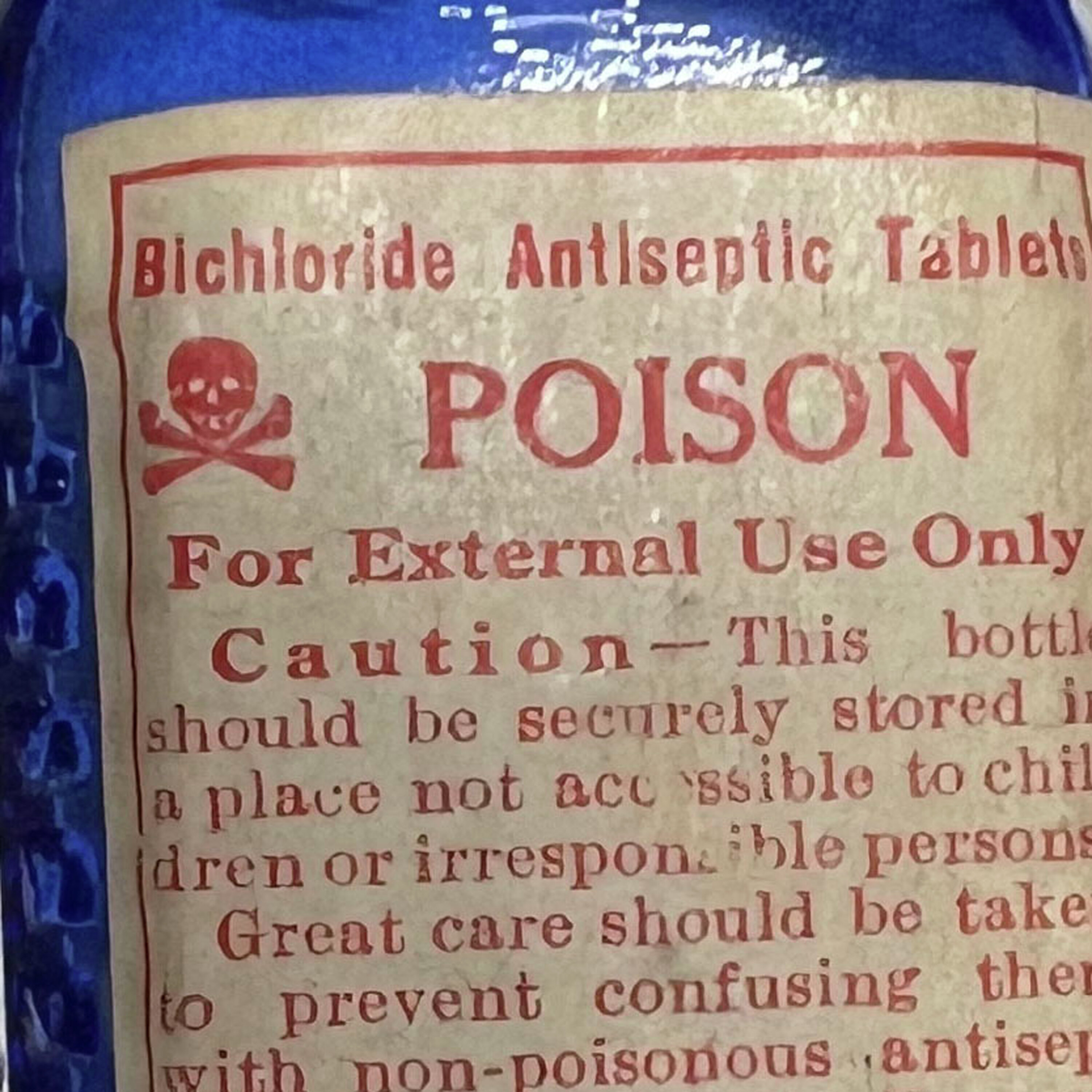
American History Hotline
Arsenic and Cyanide: The Dark Side of Victorian Womanhood in America
00:29:12
Loading summary
Transcript74 lines
- [00:00]
GoDaddy Advertiser
Running a business online. Look legit and own your own brand with professional tools from GoDaddy. Instantly build trust with your customers and boost your credibility with an email that matches your domain so people know you mean business. There's never been a better time. Just go to GoDaddy.com GDnow and choose from a wide variety of popular domains. To find one that's right for you, pair that with a professional email that works for all your business needs, from daily communications to email marketing and everything in between. That's a little practice for a lot of credibility. For a limited time, get a domain and matching professional email for just 99 cents a month for one year. Go to GoDaddy.comGdNow and look legit with GoDaddy. That's GoDaddy.comGdNow again. GoDaddy.comGdNow there's never been a better time to choose the domain and email that's right for you. New customer purchases only Products Auto renew separately. See terms on site godaddy.com gdnow.
- [01:02]
Lisa Perrin
You.
- [01:03]
Bob Crawford
Can make a difference in someone's life, including your own, with a job in home care. These jobs offer flexible schedules, health care, retirement options and free training. They also provide paid time off and opportunities for overtime. Visit oregonhomecarejobs.com to learn more and apply. That's oregonhomecarejobs.com Oregon.
- [01:31]
Vortex Advertiser
Fall is here, and no matter which tags you have in your pocket, Vortex has you covered. Vortex Viper HD Rifle scopes are purpose built for hunters who demand clarity, durability and performance. Multiple magnification options make the Viper HD rifle scope perfect for close quarters or long shots. Hunt your way and trust that your gear is up to the test when it matters most. Every Vortex product is covered by our VIP warranty. No red tape, no receipt, no hassle. Covered for life. No matter what, make sure that you're ready for fall and come. Grab your Viper HD rifle scope and everything else you need@shields.com.
- [02:05]
Bob Crawford
Save big during Labor Day at Lowe's. Get up to 40% off. Select major appliances plus buy more to get up to an additional 20% off shop. Even more savings with three stay green 1 cubic foot vegetable and flower garden soil bags for $10 this Labor Day. Take care of your home for less at Lowe's, we help you Save ballot through 93 soil offer excludes Alaska and Hawaii. Selection varies by location. Select locations only while supplies last. See lowe's.com for more details. You've reached American History Hotline. You ask the questions we get the answers. Leave a message. Welcome back, American History Hotliners. Bob Crawford here. Thrilled to be joining you again for another episode of American History Hotline, the show where you ask the question and I find the answer. The best way to get us a question, of course, is to record a video or a voice memo on your phone and email it to americanhistoryhotlinemail.com by now, you know that email address, americanhistoryhotlinemail.Com and remember, we are American History Hotlines. So please, no questions about Caesar, unless they're about the salad, which I am told was invented in Tijuana. So who knows, maybe we need to do an episode about that. I am digressing as usual. Let's get to today's question. It's about poison. Here to help me answer this question is Lisa Perrin. She's author and illustrator of the book the League of Lady Poisoners. Such a beautiful work of art. If you look this. I mean, I encourage each of you to look this book up and just. It is gorgeous. So, Lisa, thank you for joining me today.
- [03:55]
Lisa Perrin
Aw, shucks. Ah, jeez, thank you so much. I'm tickled to be here.
- [03:59]
Bob Crawford
Okay, Lisa, here's our listener's question.
- [04:01]
Lisa Perrin
Hi, this is Leanne from St. Joseph, Michigan. And I was wondering why so many women in the 1800s poisoned their husbands.
- [04:10]
Bob Crawford
This is a great question. So first off, Lisa, Yes. There were a lot of women apparently poisoning their husbands in the 1800s in America.
- [04:21]
Lisa Perrin
Yes.
- [04:22]
Bob Crawford
Like, were there? I mean, I had never heard of this.
- [04:25]
Lisa Perrin
This is such a fabulous question from your listener. And it's actually the exact question I wanted to answer and one of the impetuses for me writing this book. I had heard the expression, perhaps you've heard it too, Bob, that poison is a woman's weapon. Um, and I was very curious to know, is that true? And then if it's true, how. How did that become so. And then if it isn't true, why has that sort of persisted? And one of the early articles I encountered when I was researching for this book, which is the League of Lady Poisoners Illustrated True Stories of Dangerous Women, was this amazing article by brilliant writer and authority on all things poison related, Deborah Blum. It's an article that she wrote for Wired in 2013 called the Imperfect Myth of the Female Poisoner. And she actually clarifies in it that this is actually a cultural stereotype. It's actually a misconception. The poison is a much more likely to be a gender neutral weapon. And if you actually look at the statistics A greater proportion of poisoners are men, and that is because most murderers are men. Like 90% of all murders are committed by men, and therefore they use every tool, including poison or more than women. However, women are more likely to be serial poisoners, and that has to do with stereotypes about who commits murder and who gets investigated for murder. And that allows them to go on committing their crimes a lot longer. So there's a lot of interesting misconceptions at play here that kind of led to us believing that this is true. However, in the cases where it does happen, they got so sensationalized in the media and in the press, and people got obsessed with this idea of the specter of the poisoning wife, sort of under undermining society, every element of society, and just taking an incredible amount of power and danger in this singular act. So, okay, that's some context before we get to the. The heart of the question is why were there so many poisoning murders committed by women, specifically against men, in the 18, in the 19th century, in the 1800s, what we consider to be the Victorian era. And there's a number of reasons for that, and I know this is specifically American history, so I'll definitely try to focus there, but it was true in the UK as well. In the Victorian era, poison, specifically arsenic, what we call the king of poisons, sometimes cheekily called inheritance powder, was so ubiquitous, was so prevalent, that the joke was you could buy arsenic as easily as a loaf of bread. It was available in every grocery store, every druggist shop for pennies. It was the cheapest poison. It almost made it democratic. And the reason it was so available was it was used as a rat poison. So in all the kitchens, in all of the homes and the restaurants and the businesses, everyone's going to have a healthy supply of arsenic on hand. And that created a really dangerous situation where arsenic was available. And then you had a time period where women did not have a lot of agency and they. It almost created this perfect storm of giving these often oppressed people access to a really dangerous material. And that is kind of the heart of how this was able to get started and keep going. And then more about arsenic just being difficult to detect and prove in terms of toxicology until science advanced much later.
- [07:48]
Bob Crawford
Arsenic, the people's poison.
- [07:50]
Lisa Perrin
That's right.
- [07:52]
Bob Crawford
So what is a famous serial poisoner case from that time period in America and what happened? Take. Take us into a deep dive into, into one of those instances.
- [08:04]
Lisa Perrin
Yeah, and there's definitely a lot. And I would encourage you to check out the book to look at some of more of these phenomenal stories or fascinating stories. I think one that jumped into my head when I was thinking about the episode for today was a woman named Amy Archer Gilligan. And she again, in the 1800s, she opens this retirement home in Connecticut. And she realized, and again, this is very early in the beginning, the retirement home senior living facilities are not really a thing. She's almost sort of a pioneer in this field.
- [08:38]
Bob Crawford
I love it. A pioneer in the field of serial poisoning.
- [08:42]
Lisa Perrin
She realized that the only way to get new inmates, and that's what they called them at the time, not residents, but inmates, into her residence was when somebody died. And so she realized she had a financial sort of impetus to get rid of some people to make new rooms available because that was the only way she could make more money. And so she essentially started poisoning her various residents at the senior living facility. And it wasn't until a writer for the local newspaper noticed that her facility, even though it was much smaller than other similar facilities, was having like four times the amount of deaths that they started to investigate. And she was eventually found guilty of the murders of all of a great number of folks who lived in her care. Which I think is part of what's so complicated about women killers in general is that they often will use weapons or they'll use murder to harm those closest to them or people in their care. And sometimes you'll hear of nurses and other folks in these sort of positions is called angels of mercy. And they're saying they're doing it sort of as a. As a merciful act for someone who. To put someone out of their misery. But in her case, it was purely financial.
- [09:57]
Bob Crawford
I think about newspapers back in this time period, I love. And there are newspaperarchive.com or.org I mean, yeah, incredible. Like, when I do my research, I love going back 1840s, 1850s, reading the papers of the times. And they're gossipy by nature, they're sensationalistic by nature. Oh, yeah, we talk about biased media today. Each paper was biased in one way or another. Many owned by. By certain political parties or factions or politicians. So with all that in mind, were these stories of these women poisoners, were they popular in, in the, in the day?
- [10:42]
Lisa Perrin
Were they popular? This was catnip. Are you kidding? The readers loved this. And so much of what I learned while researching this was that the stories really took this incredible turn when they got to the media. And it wasn't so much that the crime was on trial as the woman, her character and her appearance. And women who were more traditionally feminine and sort of more demure were more likely to get off by the often male jurors. But women who were. You would see these really insane articles where they were just commenting on specifically Amy Archer, the woman we were just talking about, Amy Archer Gilligan, comments that even though she was in her 30s, she looked much older. She looked very matronly. And just the way they write about her is, is very cruel and very harsh just based on her appearance, let alone her. Her actions, which, for the record, were abominable. Just there' really judged in the court of public opinion. And I do love reading these Victorian era articles because they're so sort of snarky and sassy in a way we don't expect. I think we think of very sort of erudite and florid language being Victorian. And they will just make these cutting remarks where you're like, oh, that's a terrible burn. That was really mean.
- [11:56]
Bob Crawford
Yeah, they, they had a way of slicing and dicing people. What we call that, like dissing people.
- [12:04]
Lisa Perrin
Yes.
- [12:04]
Bob Crawford
Or sick burns.
- [12:05]
Vortex Advertiser
Yeah.
- [12:06]
Bob Crawford
Say these days, no one did it better than in the 19th century. Like, we could learn, like any rapper could learn a thing or two from reading newspapers in the, in the 19th century. And, you know, same as it ever was. Right. Like true crime. I mean, it is, it is catnip today, just like it was hundreds of years ago.
- [12:29]
Lisa Perrin
Yeah. And I thought about that a lot. Like, why, why am I. Why are so many of us so fascinated by true crime? Why is this something that I listen to, like episodes of Dateline, old episodes of Dateline all the time? And I was trying to think about, well, why do I. Why am I so drawn to this? Why are so many people so drawn to this? And I think it's because it's brilliant examples of storytelling, it's great narrative. You have all of these fascinating characters, you have this terrifying climax, and in the end, ultimately, hopefully you get some kind of resolution and justice. And I think we're just fascinated by the darker side of things. And it's a safe way to kind of get close to and approach you. The things we're most afraid of is by listening to true crime podcasts and reading true crime books and TV and movies and all kinds of media.
- [13:14]
Bob Crawford
So it's funny, you talked, you brought up Dateline. And when I, when I, when I saw your book and began to research your work, I thought immediately of Dateline 2020 and 48 hours.
- [13:26]
Lisa Perrin
Thank you. I'm honored.
- [13:28]
Bob Crawford
Yes. Well, there Was one I saw last. Well, there's a famous one my wife and I joke about, the Black Widow. They're like, that's a famous 20th, like late 20th century situation like this where the woman, I think, poisoned multiple husbands.
- [13:42]
Lisa Perrin
Yes.
- [13:43]
Bob Crawford
And then there's one from. I believe I saw it yet last year. It could have been a repeat. And I don't remember which brand it was. 48 Hours, 2020 or Dateline. But the woman poisons her children with antifreeze.
- [13:59]
Lisa Perrin
Antifreeze. Yeah, I know which one you're talking about. That one was heartbreaking.
- [14:02]
Bob Crawford
And it's. They're right, they're heartbreaking, they're chilling. You don't understand how this could, someone could do this. But from your book, it's not uncommon. So, so let me ask you this. You talked about arsenic being like the go to poison of people. Were there any other, like plants, animals, chemicals that were used back in the 19th century to, to get the job done?
- [14:31]
Lisa Perrin
Yes, absolutely. And it is so fascinating, specifically the antifreeze example, because it has some of the qualities that arsenic has. So it's almost so interesting to see that parallel. So just to go back to arsenic at the time, it's. It's colorless, it's odorless, it's tasteless. If anything, it tastes a little bit sweet. And antifreeze, unfortunately, also tastes a little bit sweet. So it's very easy. And again, for the record, all, none of this is a how to. Please do, please do not get any ideas from this. This is. These are cautionary tales. I'm not giving advice or instruction.
- [15:04]
Bob Crawford
You know, it's terrible we have to say this, but please do not murder any, anyone with, with any kind of a chemical or.
- [15:14]
Lisa Perrin
And again, the toxicology today, they. It's not like in the Victorian era, they can prove these poisoning cases and, and people will get caught. But again, we have the prevalence of arsenic for sure in the Victorian era. There are poisonous plants. You don't see them as much in the Victorian era. You'll see them in a lot of the earlier crimes. But some of my favorites are deadly nightshade or what we call belladonna. Poison hemlock, foxglove. And I love some of the alternate names for these, like foxglove is also called witch's gloves or dead man's bells, as we know. Opium poppies can be very dangerous as well. Wolfsbane, also called monkshood, delvil's helmet, women's bane, or the queen of poisons. And strychnine, of course, is a terrible poison. As well, which is it comes from the gray disc shaped seeds of a tree native to India and southern Asia. And it is one of the most violent poisons on record in terms of other sort of poisonous elements and chemicals you might come across which will relate more to crimes that you'll see in the 19th century. I would say mercury lead. Occasionally you'll see thallium and cyanide.
- [16:33]
Bob Crawford
Talk about mercury. That came up in a recent episode we did about Civil War soldiers.
- [16:40]
Lisa Perrin
Oh my goodness.
- [16:41]
Bob Crawford
Yeah, yeah, yeah. So talk about being poisoned by mercury. What is that? What does that do to a person?
- [16:48]
Lisa Perrin
Oh goodness, it's a terrible question. So mercury is a naturally occurring metallic element found in the earth's crust. It can take a few different kinds of forms, including metallic mercury, which you might still find in glass thermometers and old dental fillings. Symptoms of mercury poisoning can include a lot of they're specifically very nasty mouth centric system symptoms such as excessive salivation, inflamed lips and gums, tooth loss, foul breath, damage to the kidneys, and excessive exposure can lead to things like mood swings, paranoia and mental instability. And you might have heard the expression mad as a hatter or be thinking of the famous character from Alice in Wonderland. And that is because many hatters were exposed to mercury in the hat making process and so they experienced mercury poisoning at alarming rates. And that's where that expression unfortunately comes from.
- [17:48]
GoDaddy Advertiser
Running a business online. Look legit and own your own brand with professional tools from GoDaddy. Instantly build trust with your customers and boost your credibility with an easy email that matches your domain so people know you mean business. There's never been a better time. Just go to GoDaddy.com GDnow and choose from a wide variety of popular domains. To find one that's right for you. Pair that with a professional email that works for all your business needs, from daily communications to email marketing and everything in between. That's a little price for a lot of credibility. For a limited time, get a domain and matching professional email for just 99 cents a month for one year. Go to GoDaddy.comGdNow and look legit with GoDaddy. That's GoDaddy.comGdNow again. GoDaddy.comGdNow there's never been a better time to choose the domain and email that's right for you. New customer purchases only products auto renew separately. See terms on site godaddy.com gdnow.
- [18:50]
Lisa Perrin
You.
- [18:50]
Various Advertisers
Can make a difference in someone's life, including your own with a job in home care. These jobs offer flexible schedules, health care, retirement options and free training. They also provide paid time off and opportunities for overtime. Visit oregonhomecarejobs.com to learn more and apply. That's oregonhomecarejobs.com com.
- [19:19]
Vortex Advertiser
Fall is here and no matter which tags you have in your pocket, Vortex has you covered. Vortex Viper HD Rifle Scopes are purpose built for hunters who demand clarity, durability and performance. Multiple magnification options make the Viper HD Rifle scope perfect for close quarters or long shots. Hunt your way and trust that your gear is up to the test when it matters most. Every Vortex product is covered by our VIP warranty. No red tape, no receipt, no hassle. Covered for life. No matter what, make sure that you're ready for fall and come grab your Viper HD Rifle scope and everything else you need@shields.com this Labor Day.
- [19:53]
Various Advertisers
Say goodbye to spills, stains and overpriced furniture with washablesofas.com featuring Annabe, the only machine washable sofa inside and out where designer quality meets budget friendly pricing. Sofas start at just $6.99, making it the perfect time to upgrade your space. Anibase Pet Friendly, stain resistant and interchangeable slipcovers are made with high performance fabric built for real life. You'll love the cloud like comfort of hypoallergenic high resilience foam that never needs fluffing and a durable steel frame that stands the test of time with modular pieces you can rearrange anytime. It's a sofa that adapts to your life now through Labor Day. Get up to 60% off site wide at Washable Sofas. Every order comes with a 30 day satisfaction guarantee. If you're not in love, send it back for a full refund. No return shipping, no restocking fees. Every penny back. Shop now@washablesofas.com Offers are subject to change and certain restrictions may apply.
- [20:56]
Bob Crawford
This is American History Hotline. I'm your host Bob Crawford. Today my guest is Lisa Perrin, author and illustrator of the book the League of Lady Poisoners. It's such a cool book. We'll put a link in the show. Notes we're talking about women poisoners of Victorian era America. Remember? Send us your burning questions. Burning not poisonous questions. Your burning questions about American history. Record yourself using the voice memo app on your phone and email it to American History hotlinemail.com that's Americanhistory hotlinemail.com Now back to the show. So we talked a little bit about Mercury and what that's like. To be poisoned by mercury. What Talk about, like. Because when you think about poisoning, right, you know, you talk about how it can taste like arsenic or an antifreeze, have a sweet taste to it, you know? You know, what is, like, the process, you know, how long does it take for someone to succumb to being poisoned? What does it actually look like?
- [22:04]
Lisa Perrin
Yeah, another really good question. I think we all have this misconception from, like, the movies or, like, films based on Agatha Christie's books where, like, someone takes a swig out of a golden goblet and they suddenly grab their stomach or their throat and they fall to the floor convulsing. And it's a really powerful image, but. But it's not totally accurate. I think what I've learned is that most poisons can actually take a very long time to work or go into an effect, and it depends on the way the poison was distributed to the individual. So there are two main kinds of poisoning, one being acute and the other being chronic. And acute is what it sounds like. You are given a mega dose of poison all at once, like something outrageous that could, you know, take out, like, 100 men. They give to, like, one person. And that's when you have that grabbing the throat, grabbing the stomach, falling to the ground. Most poisoners that I research, specifically women poisoners, did not do that because that attracts a lot of attention. And people are much more likely to investigate that. They were much more likely to participate in a sort of chronic approach to their poisoning, by which they're giving small amounts of the poisoning of the poison. Excuse me, in doses over time, which is much more likely to mimic a lot of common diseases of the era like cholera or tuberculosis. The person might actually get a little better and then get a little bit sicker. And it's much. It looks much more natural. And that's one of the reasons that the chronic poisoners are much more likely to get away with their crimes. Especially in times before there were great advances in toxicology to determine what was the means of death, if it was indeed chemical.
- [23:42]
Bob Crawford
Well, let me ask you this, if I can. And I'm gonna break. I'm gonna break my own rule. Okay, we're gonna leave America for just a moment.
- [23:51]
Lisa Perrin
Where are we going?
- [23:52]
Bob Crawford
Ancient Egypt. Like, aren't there, like, you know, occurrences in the ancient world where people were poisoned by actually by animals, like spiders and things like that? Talk about that for a second.
- [24:05]
Lisa Perrin
Oh, for sure. And I. I appreciate the. The little diversion from our. The regular route. Thank you. Yes. I mean, the most famous story I can think of is Cleopatra, who is famously. The stories that she committed suicide by taking a poisonous asp snake and letting this. Bringing the snake to her chest and letting it strike her and bite her, and then she dies from the venom. There's now a lot of scholarship that says that that is likely not true. If she did die by poison, it was likely that she would have drank it. There's no way to know that the poisonous, that the venomous asp would like kill her in a single bite. It was too much to leave up to. Up to chance. But yeah, there's actually a number of venomous or toxic animals that you might come across in some of these stories. The black widow spider being one, the cobras being another.
- [24:59]
Bob Crawford
How would someone use a cobra to poison?
- [25:02]
Lisa Perrin
So this I. This is one of the reasons why I think that it's. It's not terribly likely. It's very hard to get like toads to do your bidding or like send out your spiders and get them to do what you want. I think it's much more likely to be an accident. I think if you're gonna get experience of poisoning by this method. But you will read some of these sort of stories from the ancient world where they, they claim that they used a poisonous snake or a poisonous spider to. That they sent them to sort of bite or infect this person with the poison to sort of. And again, a lot of these stories have to do with figures who are in power. You'll often have like, especially you mentioned Caesar Salad and like ancient Rome. But there's a long litany of stories of deposing emperors and a lot of scheming behind the scenes to get the air they want in line for power and using poison or different methods of doing that.
- [25:58]
Bob Crawford
I saw this quote that called poison quote the great equalizer for women in the 19th century. I see a time period when women, they're powerless. There's no mental health care. Poison is everywhere, as you already explained. And there aren't really any tests to detect it. So was this like a perfect storm moment for poisoning? Like, did poisoning have its moment?
- [26:23]
Lisa Perrin
It totally did. And that's actually, I think the exact same phrase that I use. It's. It's a perfect storm. You have a lot of individuals, women who do not have the same kind of rights as men when they marry, they lose inheritance rights, they lose autonomy. There are not a lot of rules to protect women from domestic abuse at the hands of their husbands. Essentially, he has the right to do that to her. And there's very little protection. There's also very little mechanisms for to leave an abusive relationship. Divorce is very rare. It is socially frowned upon. It is often very expensive and difficult to procure. So you end up with people trapped potentially in dangerous and abusive situations and they have access to poison and it creates, like you said, this sort of perfect storm where if they are able to, there's this chance that they could get away with it. Right. If they pass it off to look natural. And again, during the Victorian era, you have such a high mortality rate from diseases, it, unfortunately, it's not unusual for a relatively healthy adult to get sick and pass away suddenly. And as long as they do it subtly and they don't draw too much attention to themselves and some of them can't help it and they do. You have these situations sometimes where you get serial poisonings. And again, and this is what is so complicated about it, there is this nuance of women who are doing this to absolutely avoid or escape abuse. And then the ones who are doing it purely for evil machinations, who just want to get more life insurance policies are just pure evilness, want to get rid of a person. And there's some nuance in there because they're not the same. But then do we treat them the same? And I, I, that's one of the reasons I wanted to write this book, was because I think so many of these women in the League of Lady Poisoners get put into one camp. And I think knowing the context gives you so much more nuance to think about the stories in a different way. Again, not condoning the actions ever, but I can think about it with a little bit more compassion if I understand that there was, there was an abusive situation and this was perceived as the only way out.
- [28:34]
Bob Crawford
Give us an example about getting caught. Like how, how did they get caught? Like when they, when they did get caught, I mean, because we only know about it because they got caught or they confessed in some way. Right. Historically speaking. So when, when a woman did get caught poisoning her husband or her children, how, you know, how did that happen?
- [28:55]
Lisa Perrin
Yes, and usually what happens is you finally get an astute neighbor or someone who notices there's been too much going on here and they go to the police. A lot of this will depend on the timing. In the 1830s, they developed. James Marsh, a British or Scottish chemist, developed a new test for arsenic to detect arsenic in the tissues of a corpse, called the Marsh Test. And prior to that, there was really no generally effective test to prove the Presence of arsenic. You also have to remember the Victorian era. Arsenic's in everything. It's. They used it in cosmetics, they used it in dyes and fabrics and garments that they wore in the wallpapers in their homes. Arsenic was just such a ubiquitous part of the culture that everybody was going to have arsenic in them. If you tested them, it was even part of the embalming process. So how do we prove that someone was killed deliberately in a homicidal way via arsenic? And the Marsh test was really revolutionary because it was able to detect very minute amounts of arsenic in the tissues. And again, this is after 1836. So again, Prior to that, there almost is this a little bit of a blank check. And you'll hear these sort of anecdotes of, well, in, like, the medieval times, they would throw what the person ate in the fire, and if it smelled like garlic, it was arsenic or. Or poison. Or they might. And this one's very sad because I'm an animal lover. They might give that meal to a dog or an animal to eat. And if the. The animal passed away, then that was our. But with that is that would not hold up in court, you know, so having, like, a real test, like the March test that could hold up in court was really a game changer. And it became the chief terror of poisoners now that they could be detected. But again, it was up to the someone to report it for a coroner's investigation, for someone to investigate and find out if there were arsenic presence present in the body. And then, you know, are there witnesses? Does someone find. Oh, the other thing was, eventually in the 19th century, they created poison registers at the druggist shops. So they passed laws that said if you sell poison, you have to write down to whom you sold it and when. And again, prior to this, it was very difficult to prove. But once they had this, this also helped aid in proving some of these crimes and putting some of these individuals away.
- [31:19]
Bob Crawford
So we talked about, like, the registry for purchasing poison. We talked about the Marsh test, some of these ways of detecting poisoning. How and when did the heyday of the women poisoners finally come to an end? If it. If it did, if it has.
- [31:38]
Lisa Perrin
So that's a really good question. I will say the Victorian era is called the golden age of poisoning. And I do want to say yes, for women, but also men, too. Men were doing just as many, if not more, poisonings for the same reasons women were able to do it, because poison was so accessible and difficult to detect. I do think that you see a big drop off of these cases as we enter the 20th century and later. But that being said, they do still happen. And I'm always now, because I'm the poison lady, I get emails every time someone sees an article about a woman poisoner in the modern context. And one of the things I know that again, we're focusing on American history here, but this is global like the this is not a unique phenomena to any particular country or any particular gender. It's definitely something that is, that has spread and it, it does still happen and it's very sobering to see that it's a lot of the same themes and reasons and it has to do with often abuse and lack of agency. That and money. Money is the other big one, which I think can also be tied to sort of societal confinements of women not always being able to earn for themselves and have sort of financial power or autonomy either. But yeah, I think once we get these big advancements in toxicology that start to occur in the Victorian era and then into the early 20th century and it could be proved much more easily and successfully in a court of law, you do see a drop off in poisoning cases. Also, frankly, guns are just so much more popular and I imagine easier in some ways. So you definitely see poison is no longer a popular weapon. I think the guns are by far of all of the different means to commit homicide, guns are the winner.
- [33:28]
Bob Crawford
Guns win.
- [33:29]
Lisa Perrin
Yeah.
- [33:30]
Bob Crawford
Why bring arsenic to a gunfight?
- [33:32]
Lisa Perrin
Yeah, it's true. What are you going to do? Blow the powder in their faces?
- [33:35]
Bob Crawford
Like I've been talking with Lisa Perrin, author and illustrator of the book the League of Lady Poisoners. It's such a cool book. We'll put a link in the show notes. Lisa, thanks for joining us on the American History Hotline today.
- [33:50]
Lisa Perrin
Thank you so much. This was so much fun.
- [33:56]
Bob Crawford
You've been listening to American History Hotline, a production of Iheart Podcasts and Scratch Track Productions. The show's executive producer is James Morrison. Our executive producers from iHeart are Jordan Runtal and Jason In English original music composed by me, Bob Crawford. Please keep in touch. Our email is americanhistoryhotlinemail.com if you like the show, please tell your friends and leave us a review in Apple Podcasts. I'm your host, Bob Crawford. Feel free to hit me up on social media to ask a history question or to let me know what you think of the show. You can find me at bobcrawford Bass. Thanks so much for listening. See you next week.
- [34:49]
Vortex Advertiser
Fall is here and no matter which tags you have in your pocket. Vortex has you covered. Vortex Viper HD Rifle Scopes are purpose built for hunters who demand clarity, durability and performance. Multiple magnification options make the Viper HD Rifle scope perfect. Perfect for close quarters or long shots. Hunt your way and trust that your gear is up to the test when it matters most. Every Vortex product is covered by our VIP warranty. No red tape, no receipt, no hassle. Covered for life. No matter what, make sure that you're ready for fall and come. Grab your Viper HD Rifle scope and everything else you need@scheels.com Does Friendly have a taste?
- [35:23]
Various Advertisers
If it does, it's probably like hello's.
- [35:26]
Lisa Perrin
Peppermint flavored anti plaque and Whitening toothpaste. Brush away plaque, show tartar who's boss and remove surface stains to naturally whiten. Hello's thoughtful and flavor forward products make brushing your teeth feel like a confetti.
- [35:39]
Various Advertisers
Filled bathroom dance party. So say hello to hello with the.
- [35:42]
Lisa Perrin
Always cruelty free never tested on animals toothpaste that's made to spread smiles.
- [35:47]
Various Advertisers
Visit helloproducts.com and let hello add some everyday yay into your life.
- [35:55]
Lisa Perrin
Every day has a to do list, but adding Enjoy Belvita to yours can help you knock out the rest of it. Belvita Breakfast Biscuits are a tasty and convenient breakfast option when paired with low fat yogurt and fruit that provide steady energy all morning while Belvita Energy Snack Bites give you the perfect mid morning refuel. Best part? They both taste great, so make the most out of your morning with a bite of Belvita. Pick up a pack of Belvita at your local store today.
- [36:25]
Various Advertisers
Every business has an ambition. PayPal open is the platform designed to help you grow into yours with business loans so you can expand and access to hundreds of millions of PayPal customers worldwide. And your customers can pay all the ways they want with PayPal, Venmo, pay later and all major cards so you can focus on scaling up when it's time to get growing. There's one platform for all business PayPal open grow today at paypalopen.com loans subject to approval in available locations.