Loading summary
Transcript118 lines
- [00:00]
Alexis Koh
It's black. It's completely black. You know, you have trouble even seeing the ocean and its reflection from the moon. And this has happened to be a moonless night. I can't emphasize enough that it is pitch black. And that has this, like, disorienting effect on it.
- [00:19]
Bob Crawford
Seems very ominous, doesn't it? Yes.
- [00:22]
Alexis Koh
And you're at war, so that adds to this.
- [00:29]
Bob Crawford
You've reached American History Hotline. You ask the questions, we get the answers. Leave a message. Hey there, American History Hotliners. Your host, Bob Crawford here. Happy to be joining you again for another episode of American History Hotline. You're the ones with the questions. I'm a guy trying to get you some answers and keep those questions coming. The best way to get us a question is to record a video or voice memo on your phone or, and email it to american history hotlinemail.com that's americanhistory hotlinemail.com and remember, we're American History Hotline. I love the Ottoman Empire as much as the next guy, but there's plenty to talk about on this continent. And today's question is about JFK and his service in World War II. Now, there have been several presidents who have served in the military. They've served their country in a military uniform. Of course, George Washington. I think of George H.W. bush and famously John Fitzgerald Kennedy. And we could talk about Monroe and Andrew Jackson and, you know, there's, you know, some good, bad and the ugly in there. But today we're talking about John Fitzgerald Kennedy. And I can't think of anyone better to answer this particular question than Alexis Koh. She is a New York Times bestselling presidential historian. Her books include you Never Forget yout A Biography of George Washington. And her forthcoming book is entitled Young A Biography of John F. Kennedy, 1917-1957. Alexis, thank you for joining us today.
- [02:25]
Alexis Koh
I'm so happy to be here.
- [02:27]
Bob Crawford
Okay, our question today comes from Linda in Spokane, Washington. I heard that JFK saved someone's life during World War II. Is that true or is it something to make him sound good? Alexis, before you answer this question, can you tell us what JFK was doing during the during World War II and where was he stationed?
- [02:52]
Alexis Koh
I love this question because over time, in our collective memory, I feel like JFK has become a president who we remember as a really good looking guy from a rich family with an even better looking wife who was so stylish and never took a bad picture. And we have somewhat dismissed or forgotten the more substantive parts of his biography. And this is one of these stories where it is amazing every single time I revisit it. He definitely saved one person's life and he saved far more than them. And I think we need to start at the very beginning by saying that JFK should have never been in the army at a time when people were claiming shin splints and all kinds of excuses and drafting the dots. He was working to get into the war. He tried and was rejected because he had all kinds of illnesses, he was plagued from a young age and he was in relatively good shape for him by this point in his life. He had graduated from college, he had published a best selling book, he had dabbled a little in Stanford, in business school. He was kind of like figuring out what he wanted to do. And of course that's a part of being young. But also the country is on the brink of war, Europe has been at war. And he finds someone who will let him in. There's a doctor who just sort of glazes over everything. But at first he is stationed in dc, much to his chagrin, except he does have a really great love affair, of course. But he's stationed and, you know, let's forget, let's remember he is a young, good looking rich man who has not had to say more than hello to a woman since he was about 15 to have a great love affair. So he is in D.C. and he is doing intelligence work and he's very, very good at it. But things happen. The woman he is with once took a picture with Hitler that didn't go over well. He is transferred and he ends up going to the Solomon Islands.
- [05:14]
Bob Crawford
I've got to ask you and briefly interrupt you like, why this is a man, a wealthy man, like you say, a good looking, handsome wealthy man. He didn't have to go to war.
- [05:26]
Alexis Koh
He did not.
- [05:27]
Bob Crawford
Why? Why did he want to fight so badly?
- [05:30]
Alexis Koh
Well, I think we also have to invoke this Kennedy curse. And this is a great opportunity to say that I don't think it's a curse. I think you just pointed out why it seems like it's a curse. There's no reason for it. He did not have to go. He did not have to lie in order to go or I guess be complicit in lies about his health history to go. But he was determined one because it was, you know, he's a young man, all his friends are going, it's a little weird not to. You seem like a coward. It's not a good look. And he also, of course, does have aspirations for higher office. It's the thing everyone's doing. They bomb Pearl Harbor. You know, this is the first time America has been attacked since the British burned down the White House. It's a big deal.
- [06:17]
Bob Crawford
Here he is, he's in D.C. he falls in love, maybe he has a fling. And she is kind of linked to Hitler, or at least she met Hitler. You know, how does he make that transition to where he eventually winds up?
- [06:34]
Alexis Koh
He is very much removed from the situation. A part of it is that his dad had just been the ambassador to the Court of St James and he had been the first.
- [06:41]
Bob Crawford
And this is Joe Kennedy.
- [06:42]
Alexis Koh
Joe Sr. A controversial figure. And certainly that was an ambassadorial disaster because he was someone who said, you know, let's listen to what Hitler has to say. This is obviously, at this point, people know Hitler's not so great. Fascism is problematic. But Joe Kennedy, a lot like our current president, was sort of a stone cold business guy and he was all about the numbers, not moved by moral or other obligations. And he's also, though, very tied in, even though he has to give up that post because he undermines FDR at every turn. So he's been recalled. And jfk, though, has already had these different feelings about the war. And he had, as the son of an ambassador, been exposed to so much and really taken advantage of it. That's how his thesis became so it did become significant at the time. It quickly got aged. But he talked about, like, why Europe was so slow to react to what was clearly an invasion, because Hitler had gone against the Treaty of Versailles. So from World War I, he had invaded several countries by that point. And he talked about, like, why that happened and why Europe was so ill prepared for this. And that was really. So that was informing him. He was really interested in this stuff. So he was really good at intelligence. The love affair. Poor Inga. She literally took a picture because she was a journalist and she was very pretty and went to the Olympics. And Hitler was like, I like pretty blonde girls. Come sit next to me. And then that kind of really ruined her life. I do believe he loved her. I really do. And she's often also dismissed as some sort of weird European tutor of sex. But by that point, as I've already said, he had no issue with that. He was. He was well versed in it. But he did read really love her. And that's what's interesting about that relationship. And I've discovered all sorts of interesting things about that because it is so, so easily dismissed, usually. So he's removed from that situation. That's not to say they break up, they solve some rendezvous, and it's. It's a real. Like, I'm 22, you know, we're both in our 20s, and what are we gonna do? Are we gonna get married and have babies? Are we never gonna speak again? It's like a lot of the transcripts are familiar to anyone. We have transcripts because, you know, J. Edgar Hoover was listening, so that's fine.
- [09:12]
Bob Crawford
So. And he's listening because this is the son of, at this point, former ambassador and a very important American businessman who.
- [09:22]
Alexis Koh
Who.
- [09:22]
Bob Crawford
Who may be maybe partial to Hitler in some ways.
- [09:27]
Alexis Koh
Sure. But they're also listening because they're trying to figure out, is she a spy? What is going on here? She's not. She's certainly got a messy life, aside from Kennedy, in terms of a lot of details to work out, which they quite enjoy listening to. But it's not. It is not what it's made to be. So they're separated. Kennedy is still struggling with various health issues. He has several bouts in the hospital during this time. But he's at least.
- [09:59]
Bob Crawford
Let's talk about these health issues, because these seem to be a factor throughout even his presidency.
- [10:05]
Alexis Koh
Yes.
- [10:05]
Bob Crawford
His whole life. So what. What are they. What are these health issues?
- [10:10]
Alexis Koh
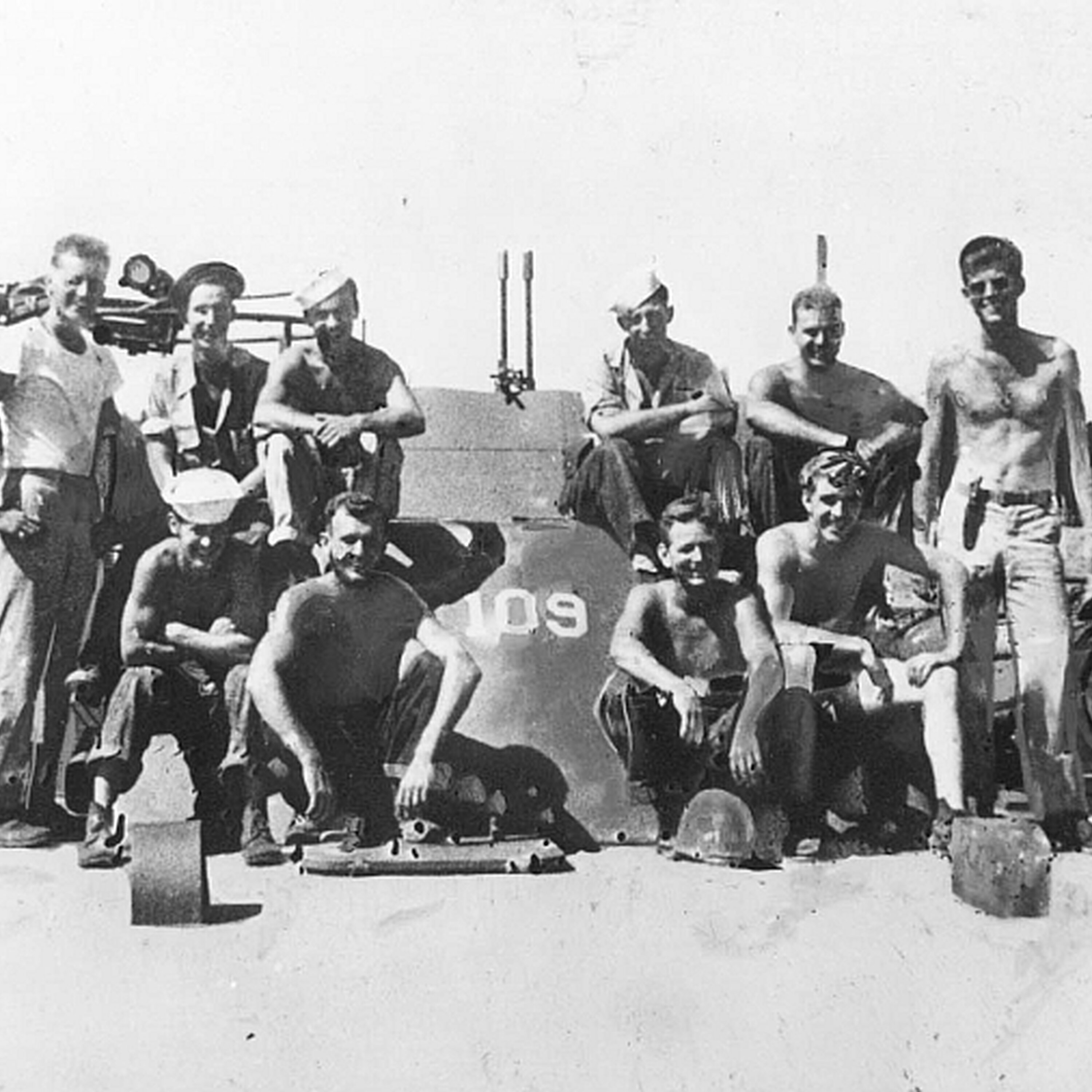
They start when he is about 2 years old, and the. There's a. There was a joke in the Kennedy family where, you know, if a mosquito bit Kennedy, the mosquito got sick. Well, you think that's actually true. But basically, he was susceptible to everything. He. But at the same time, he, you know, he was allergic to dogs. He loved dogs. He still was around dogs. He would be in hospital for months at a time. Never had to redo a year in school, but came pretty close to it. And he adopted a amazing attitude that, you know, you wish, in retrospect, maybe you had in different situations. And certainly as a gift that was innate, he realized that the best way to do it was to be charming, was to be sarcastic and to live every day like he might die, because he might later. There are specific diseases that emerge, but at this point, you know, we have to go with what he knew at the time. And what he knew at the time was he had back issues. He had this issue that he couldn't play various sports in college. He really loved to play football. He. He loved his swimming, helped his back quite a lot, but he really just has one of these constitutions where he could be felled by anything, which is what makes the following story even more impressive. But it would be on its own. So he is in the Navy. This is not a coincidence. He's in the Navy because someone who had worked with his father had been the person who knew the doctor who would give him the clean bill of health. But also because the Kennedys famously love to sail. Right. And it's another thing we kind of dismiss is like a rich person, you know, activity, hobby. But he was really good at it. He often won major, you know, contests and championships, and he enjoyed it quite a bit. When he was a young boy, when he was about 10, he rescued someone with his little brother. And at the time, actually, his grandfather, Honey Fitzgerald, who was the first Irish mayor of Boston and was in Congress, was. His political career was also. It was undone by a woman who went by Toodles. But that's for another day. And he. He. At the time, though, it was like, you know, Honey Fitz's grandsons make amazing rescue. So it's not his first rescue. With the story we're about to tell, he is put in charge of this boat, which is called PT109. And the PT is the 109 is the name of his specific boat. But there are boats, you know, with PT dash other numbers.
- [13:10]
Bob Crawford
So where are they in the Pacific,
- [13:13]
Alexis Koh
So in the Solomon Islands, and so that's in the Blackett Strait. And so remember that World War II, we often think about it, oh, this is Germany. It's not. We're also fighting, of course, we've been bombed.
- [13:28]
Bob Crawford
Two fronts.
- [13:29]
Alexis Koh
Right, right. And even possibly more, you know, if you really think about it. So. And what. What they're doing is they're patrolling, and they're also looking out for what's known as the Tokyo Express. Now, that's a Japanese navy. And there are about three huge destroyers that are acting as sort of guides or transports. They're escorting, you know, important war materials back and forth. Kennedy is out there. It is. It's in August. The year is 1943. And he's in this small. What we call a small craft. I've learned a lot about boats, and this is a small craft. And so. So I'm saying that I'm emphasizing it because, you know, if you have everyone on the deck, you have. There were probably 12 men, and, you know, some. Some rifles, obviously, more than that. You know, different guns, things. But we're not talking about something that compete with a major vessel. And he is around the Solomon Islands. It's the middle of the night. It's the first night in August, particularly in the middle of Oceans. It's black, it's completely black. You know, you have trouble even seeing the ocean and its reflection from the moon. And this has happened to be a moonless night. So it is, you know, I can't emphasize enough that it is pitch black and that has this like disorienting effect
- [15:09]
Bob Crawford
on, seems very ominous and doesn't it? Yes.
- [15:13]
Alexis Koh
And you're at war, so that, that adds to this. And so PT109 is one of many PT boats and, and PT stands for, you know, patrol torpedo boats that is there on a mission which is to, you know, engage with Japanese, with, you know, the enemy and hopefully do some damage on this Tokyo Express. And he has a small crew, they're men of about the same age. He has a little bit of a higher rank and he had, he had a higher rank than his brother going in who had already been in the army for a while because he had no health problems. He was like the golden child.
- [15:59]
Bob Crawford
It is a dark, hot, humid night in the Pacific Ocean near the Solomon Islands in August of 1943. It's pitch dark, you can't see your hand in front of your face. About 12 men, young men, 20 to 30 year old American Navy sailors are on this ship. And what is about to happen August
- [16:24]
Alexis Koh
1, 1943, and it's about 2 in the morning and there are just a few PT boats left in this area because they have not been successful at getting at this Tokyo Express, this, you know, all these Japanese navy vessels. And PT109, Kennedy's boat is one of these. So he is rendezvousing with these other boats. There are I believe, two other ones and they are, you know, spread out. So they're not like right next to each other. They're in this strait and as they get, you know, it's 2:00am, it's 2:15, it's 2:30. They're taking shifts. It's not like everyone's sleeping at the same time. And they start to see there is something. They can, they can hear something and they can see something, but they can't make out what it is or how big it is. And so Kennedy, who's there and you know, his, his crew who's now like all fully awake, they think, oh, it's, it's surely just like another PT boat. Maybe it's PT162, maybe it's PT169. These are friends. And then it was very clear it was not, as it got closer, it was a Japanese destroyer.
- [17:46]
Bob Crawford
So this is a much larger ship.
- [17:47]
Alexis Koh
This is a Much larger ship. And it is not a ship that they can maneuver out of the way very quickly. And so Kennedy is not even the torpedoes that these, you know, PT109, so torpedo vessels. He is trying to, you know, to steer the boat so that they can turn the starboard where the tapeters are facing, that they can face this destroyer. But there is not enough time. And so the destroyer, which is called the Amagiri, it is basically at the starboard when it just rips through it and it impacts the boat and it tossed. You know, Kennedy is there trying to direct his crew. He's now like rocking around in the cockpit. But most of his crew is now out of the boat because they have been knocked into the water. And there are men below deck and somehow some of them escape. But the problem is one of them, Matrick Mahone, who is this engineer, he has been badly burned. Because what happens when you have an impact with a giant ship, you. There's fuel that explodes. There are, aside from, obviously there's a lot of ammunition, but there are other elements on a ship that can, you know, cause your death. And so fuel explodes. So this man is badly burned. I want to also emphasize, we've talked about how dark it is. We've talked about how there's nothing around, how the closest thing are islands. These are also shark infested waters.
- [19:29]
Bob Crawford
I was just going to ask you about sharks.
- [19:32]
Alexis Koh
So the crew is now. And they know this, they've seen the sharks. It's been kind of fun to see them. As long as you're inside your boat, they are in shark infested waters. And so Kennedy has to think really quickly because remember, he's in charge. He is in his early 20s. He has never commanded any sort of sizable army. But I do want to point out that when George Washington led the Continental army, he had barely, he had just commanded the Virginia Militia. So, you know, this is, this is how we roll in America.
- [20:05]
Bob Crawford
That is how we. And apparently it is how we roll.
- [20:07]
Alexis Koh
Yes, yes. And maybe it inspires great things. Maybe, maybe. But, you know, he was an experienced, you know, sailor. Washington was an experience in many other ways. I'm not saying they're just like, oh, today I think I'll wake up and I'll lead a whole military unit. That's not what's happening. So can I also think quickly? And he basically says, okay, let's get back in whatever's left of this boat. Even though clearly there's like all this fuel burning in the wake as well. Because when, when the destroyer you know is, is moving past them. It is, there's just oil everywhere. So everywhere you go, even if you like move the boat, you're still in danger. Even if you can put out the fire on the boat. But they don't like, what do you do? Obviously they're trying to communicate. They're not going through.
- [20:54]
Bob Crawford
Are there lifeboats are, is this, is this boat so small they don't have life rafts, lifeboats.
- [21:00]
Alexis Koh
They have, you know, life vests which they have at this point put on, but it's, it's not looking good. And so they get back in the boat but then it's clear that, that it's just not a good place for them. And so they need to swim. They need to swim. And so you have a bunch of people, you have, you know, four different people, six different people that they're identify. There's eight. We've got some injuries. Kennedy sees this engineer, McMahon and he puts, he gives him the life vest strap that he's wearing. So you know, you tighten the vest and he gives it to him and then he, he decides, oh, that's not really going to work. So he puts it on, he puts the life vest on McMahon and he then puts life, the strap in his
- [21:50]
Bob Crawford
teeth and begins keeping him. He's only afloat through his teeth.
- [21:57]
Alexis Koh
Yes. And so remember, you know, and he's, he's, you know, they're switching vests, they're doing all sorts of things. So at times he does have one, at times he doesn't. But this is how he is dragging someone who is injured. He is swimming through these shark infested waters the middle of the night with no idea if another, you know, because obviously they know they hit a boat, the Japanese know they hit a boat. And so he has no idea if more people are coming. But he is, he is swimming with this man and they decide, okay, they're heavy fumes, they've all like swallowed gasoline. So some people, you know, people are falling left and right. It's, it's just not a good scene. They have to abort and so they've got to seek land. They got to get out of this situation. So Kennedy, who, he was at the swim team, you know, he was on the swim team when he was, you know, feeling good enough. But he was decent. He always swam a good deal. They had, if you know anything about the Kennedys, you know, they're associated with Cape Cod and also Florida. He's a good swimmer, there's no question about that. So he, and also imagine the Adrenaline. Adrenaline at this point.
- [23:01]
Bob Crawford
Right.
- [23:01]
Alexis Koh
And for Kennedy, these other guys, sure, the people married before they went off to World War II, even if they were about 19, everyone was just sort of figuring they had recovered from World War I, but they grew up in the long shadow of that war, so they were aware that it was most likely they were going to die. And of course, this is a different time. So also, if you just wanted to have sex, you. You probably had to get married. And so they all did. They're all married. So they. Some of them had families already. You know, they could be 20, 24, and they only had one to two kids back home. And so they. Everyone's sort of fighting for different reasons for their survival. And so they swim. Some of the other men are, as you know, very good swimmers, but Kennedy is very, very good. Except for two men who. And this, you know, during wartime, exceptions are made. We already know that Kennedy should not have been there. Two men literally couldn't swim.
- [23:54]
Bob Crawford
And they're in the navy.
- [23:56]
Alexis Koh
They're in the navy. They're on. They're on a boat. That is where they're assigned, and they cannot swim. And so they were also. They were like, sort of, you know, tied to. This is. I mean, like, they did all this stuff. They were tied to, like a plank. So imagine the Titanic. There was room for another person.
- [24:13]
Bob Crawford
That's right.
- [24:14]
Alexis Koh
They did not have to die. And so they. They do this. And the. The seven, you know, the. The surviving crew members, in addition to McMahon and to. To Kennedy, there are other men. So everyone's kind of doing these. These acts of heroicism. But of course, we're focused on Kennedy, who is, with this. With this strap in his teeth, swimming towards the island. So he gets to the first island, which is adorably named Plum Pudding. Very cute.
- [24:41]
Bob Crawford
But who named that island?
- [24:43]
Alexis Koh
I think that's the official name. I don't know, but it sounds delicious.
- [24:49]
Bob Crawford
The menu sounds like an English explorer.
- [24:51]
Alexis Koh
Right.
- [24:52]
Bob Crawford
British explorer.
- [24:53]
Alexis Koh
Yes. Which probably suggests it didn't go well from the very beginning.
- [24:57]
Bob Crawford
Exactly.
- [24:58]
Alexis Koh
They renamed it as any. I guess, as white men do, and because they called it Bird island because it was covered in bird poop.
- [25:09]
Bob Crawford
Is that guano?
- [25:10]
Alexis Koh
Yes, okay.
- [25:11]
Bob Crawford
Yes.
- [25:11]
Alexis Koh
Yes, exactly. It's not offering them anything. So of course Kennedy would like to just take a little risk, have a. He liked. He liked a fruity daiquiri. He didn't really drink, but he. When he did, he liked a daiquiri, maybe some ice cream. None of that is available to him, so he just. He kind of Waits for the rest of crew because he beats them. And it turns out, of course, that he can't rest for a second because what happens at that moment? Oh, just a Japanese boat goes by.
- [25:50]
Robert Smigel
And Doug, there's nowhere I wouldn't go
- [25:52]
Alexis Koh
to help someone customize and save on car insurance with Liberty Mutual. Even if it means sitting front row at a comedy show.
- [25:59]
Bob Crawford
Hey, everyone, check out this guy and his bird. What is this, your first date?
- [26:03]
Jonas Brothers
Oh, no. We help people customize and save on
- [26:05]
Alexis Koh
car insurance with Liberty Mutual together. We're married.
- [26:08]
Jonas Brothers
Me to a human, him to a bird.
- [26:10]
Alexis Koh
Yeah, the bird looks out of your league.
- [26:11]
Jonas Brothers
Anyways, get a quote@libertymutual.com or with your local agent.
- [26:14]
Bob Crawford
Liberty. Liberty. Liberty. Liberty.
- [26:18]
Jonas Brothers
Hey, it's us, the Jonas Brothers. And guess what? We have some big news. What's the news, man? Huge news. We created our own podcast called hey Jonas. We invented a podcast podcast. Well, we didn't invent it.
- [26:29]
Alexis Koh
We.
- [26:29]
Jonas Brothers
We just contributed to First People to do Podcasts. Pretty. Yeah, pretty wide range of podcasts, but this one's extra special. So how did we. How do we actually come up with the name hey Jonas? Guys, I honestly don't remember.
- [26:41]
Bob Crawford
I think it was on a call
- [26:42]
Jonas Brothers
about what we should call it and, well, we were thinking. I'm originally calling it one of the early names of our band before Jonas Brothers. This is how you guys remember it going down? Yes, I have a very different memory of this. We were talking about a thing a bit for the podcast. People could call in and say, hey Jonas. And then I wrote down on my little notepad, hey Jonas and offered it up as a potential title for the podcast. But thanks for remembering that. Guys, listen to hey Jonas on the iHeartRadio app, Apple Podcasts or wherever you get your podcast. Just listen. We don't care where you hear it.
- [27:17]
Robert Smigel
Another podcast from some SNL late night comedy guy. Not quite on Humor Me with Robert Smigel and Friends. Me and Hilar. Various guests from Bob Odenkirk to David Letterman help make you funnier. This week. My guests SNL's Mikey Day and head writer Streeter Seidel help an acapella band with their between songs Banter.
- [27:36]
Jonas Brothers
Where does your group perform?
- [27:37]
Bob Crawford
We do some retirement homes.
- [27:39]
Robert Smigel
Those people are starving for banter. Listen to Humor Me with Robert Smigel and friends on the iHeartRadio app, Apple Podcasts or wherever you get your podcasts.
- [27:48]
Alexis Koh
Premier protein. It's for getting after life, not just Fitness. With 30 grams of protein, 160 calories and no Sugar added. Helping people fuel their joyful lives. With Premier Protein, you can say yes to more. Whether it's crushing a big presentation at work, building an epic fort with the kids, or hitting the hiking trail with friends, Premier Protein offers delicious flavors like cafe latte, chocolate, caramel, vanilla, strawberry and cake batter, to name a few. Find your favorite flavor@premierprotein.com.
- [28:22]
Bob Crawford
This is American History Hotline. I'm your host, Bob Crawford. Today my guest is Alexis Koh, a New York Times best selling presidential historian. Her books include you Never Forget yout First, A Biography of George Washington and her forthcoming book, Young A Biography of John F. Kennedy, 1917-1957. We're talking about JFK saving someone's life during World War II. Remember, send us your burning questions about American history. Record yourself using your voice memo app on your phone and email it to AmericanHistoryHotlinemail.com that's AmericanHistoryHotlinemail.com now back to the show. Before we took a break, JFK and the crew of the PT109 just got shipwrecked and they were stranded on an island. A Japanese boat comes by. What happened next?
- [29:20]
Alexis Koh
Well, he's hiding. He's hiding in the bushes. It won't be the first time over the next few days that that is happening. They get lucky once in a while. They find, you know, this is not the only wrecked ship. This is a region that is seen war. And so they happen upon a Japanese wreckage and they get some candy. But more importantly, after they, you know, raid all these different things that they find, which is not as if they're just stumbling upon wreckage after wreckage, they're very hungry and very thirsty, but they finally get something and they see that there are men, obviously islanders, who are also doing the same thing that they are doing. And this is a really scary situation because these islanders, it's a little bit like, you know, indigenous people in America. You don't know whose side they're on. They, they really shouldn't be on either side. No one is doing them any favors. But he manages to basically, well, he gets a canoe, he keeps going to the islands, but he finds two men who had made contact with also the rest of the crew. And they, he gives them this coconut that he has that they have all like written. You know, he writes Kennedy because that is going to make a difference. But I mean, the army is going to go save people no matter if your name is Kennedy or Non, it's possible. And so he gives them the, the coconuts, but they have no idea if these men are going to give that coconut to a Japanese destroyer to the enemy or, or if the men are going to be like, okay, whatever, and then just toss it and keep it moving. They have no obligation to do so and they're hoping to get rescued. And finally they are, they are rescued. So remember, this all started on August 1st. They are rescued on the 7th.
- [31:09]
Bob Crawford
So that's not bad.
- [31:11]
Alexis Koh
Not bad, not great. I mean, we're glad it happened. But like for me, a quick pickup would have been better.
- [31:17]
Bob Crawford
Yeah.
- [31:18]
Alexis Koh
If I was in this situation.
- [31:20]
Bob Crawford
Six days being lost, you know, comparatively, that seems pretty good. Back in those days, not bad.
- [31:27]
Alexis Koh
So by the time they actually, you know, they're rescued, but they're, and they're obviously given some food and water, but they don't really get to a base until August 8, early in the morning. And he, you know, Kennedy is recovering and that's when he is given the Purple Heart. Other people are promoted as well. Leonard Tom, who unfortunately would later die. He's a young man who had a young family who Kennedy sits close with. He is promoted and he also received the Navy and the Marine Corps Medal, which is incredibly prestigious. We just don't know about it in the same way as the Purple Heart. But there were these consequences of it that were, that were far reaching. All these people wrote about it, including, you know, I mentioned that it was Kennedy's, the woman he had loved, the only woman he had loved before who married someone else, a very well known journalist at the time named John Hershey. He wrote about it in the New Yorker and Reader's Digest picked it up. And so it was, it very quickly became a foundational, you know, it was one of the plot points that everyone knew about Kennedy and It was significant.
- [32:39]
Bob Crawford
JFK's aide David Powers has written, Without PT109, there never would have been a President John F. Kennedy. What role did the sinking of PT109 have on JFK's later political career?
- [32:58]
Alexis Koh
I mean, imagine a war hero running for office. He immediately comes back and that's what he does. But we're not just talking about a war hero. He's rich, he's had a best selling book, and he's a legitimate intellectual in, in no small part because he is got that sort of like unyielding intellectual curiosity that you can really, only you can't fake. He one question after another. Intellectual men thought he was intellectual. So he comes back from war, he's this war hero, he's being celebrated. There are books about him. He runs for office and he puts. His grandfather, again, is like this big luminary in Boston. He's already registered to vote in Boston before he left. So they live kind of all over the place at this point. They don't really have a home base. The Kennedy is. And he's been, you know, at war, so he really doesn't. But he could have chosen Florida. He could have chosen Massachusetts, where they had a house. Instead, he chooses Boston, and that's because he's a legacy there. But this man campaigns like it's his literal job. And of course he doesn't need to have a job. So that's good news. And he wins. And he really doesn't get enough credit for how tireless it is. But also he's got, at this point, seven. Well, he's so his elder, his eldest brother, the. Who was also in the army, who was a pilot, died.
- [34:39]
Bob Crawford
Did he die before the PT109 incident or after?
- [34:44]
Alexis Koh
After. And this again, I have to invoke the Kennedy curse here because the Kennedy curse I do not believe exists. But I do think that they put themselves in these extreme positions a lot because they're a competitive family and because they are in extreme positions. Right. So if you've got all that thing, all that stuff going on, you're going to be in extreme positions. And this is a perfect example because Joe, Joe Jr. Was, was supposed to come home and he volunteered for a mission he never should have volunteered for because he knew about his brother and how he was being lauded and how he was recuperating, but he was coming home and he knew that his brother had designs on office, too.
- [35:33]
Bob Crawford
So was sibling rivalry a little bit.
- [35:35]
Alexis Koh
He was. And it had been for some time. There's this story that, like, after Joe Jr. Died, that's when Kennedy was like, promoted by their father. And that is not true because, and I'll quickly go into this, and I go into it in my book, Kennedy, while he did not do as well in high school and he was quite sick, so he couldn't be the captain of the football team. As soon as you get to college, all differences in that between them almost completely disappear. But Kennedy at choate, where Joe Jr also graduated from, Kennedy was the one who was voted most likely to succeed. And then when they get to Harvard, it is JFK who gets into a finals club. And that is like an exclusive club that Joe Sr. Who had been to Harvard too, and Joe Jr. Did not get into. And they claimed, oh, it's because we're Irish. Well, JFK was as well.
- [36:35]
Bob Crawford
Was it generational? Was it generational as far as being Irish and then. And being Catholic, which we see when he runs for president, you know, that's an issue. Did Kennedy kind of. Was he the breakout? He seems like the breakout. I don't say breakout star of the family, but in a way he was. It sounds like he was. And is that because he was of a younger generation than even Joe.
- [36:59]
Alexis Koh
Joe Jr. No, Joe Jr. And. And Joe. And J. And Kennedy are at the same. Or at Harvard at the same time. And they even live in the same house at one point. So this is really about Kennedy. And then they both write these honors thesis. They both benefit from their father being the ambassador and also having a ton of money. So they write it with this purpose, and their father tries really hard to get the elder son's thesis published, and nobody wants it. Kennedy has some trouble too, at first, but then. But then he gets it published because he rewrites his charisma.
- [37:34]
Bob Crawford
Is it charisma?
- [37:36]
Alexis Koh
Some of it, sure. But he's also just, you know, a part. I believe this is for another day of. I. I'm at New America. I'm a senior fellow there. It's a bipartisan think tank in D.C. and I have spent a couple years now wondering in a. In a really abstract way, how should a president be? And there's a lot of talk about empathy and these things that. But we don't really see that in our leaders and the ones that are selected. So there are these disconnected ideals and these actual pragmatic, you know, solutions to our alleged problems in government or whatever is left of it. And so we have these competing ideas. But one of the things that I have that even I think I resisted a little bit at first is we have really undervalued and underestimated this idea of authenticity. And someone who is genuinely themselves really is going to win against someone who's trying really hard to be perfect in. In some way that they think that they are. And Kennedy was earnest. It's not like he walked in, was like, I'm going to be a bestseller. Like, he worried about it being good enough. He asked people for their opinions. He constantly asked his old professors at Harvard for their opinions. He would latch onto these people and they would be happy about it. And so he is. He is, yes, charismatic. These things you cannot. You cannot be unless you are. Naturally, you can try really, really hard, but, you know, you just can't be. And so he is always, to me, from the point that they are Basically, when he is a senior at Choate and his brother's already at Harvard to The day Joe Jr dies, Kennedy has already exceeded him. And I think it would have been very sad for Joe senior or Joe Jr. After the war had he lived, because he would have just watched his brother run over him.
- [39:37]
Bob Crawford
Briefly, before we wrap here, when Kennedy is president, how do we see. And even during the campaign, how is the PT109 experience A, used for political benefit? B, how is that the Kennedy who put the, the life preserver in his mouth, you know, and, and swam ferociously to shore on that dark, dangerous night, sharks in the water, Japanese boat coming back after him. How did, how did that man, how did that event kind of like play out during his presidency?
- [40:17]
Alexis Koh
That's a really good question.
- [40:18]
Bob Crawford
And tenacity.
- [40:20]
Alexis Koh
It's significant, right, because he's, he at the time was our youngest president as well. And I just want to also add that on top of all this, the Purple Heart, the money, the looks, the pretty young wife, the great looking family, the storied past, he's got a Pulitzer. He's got two bestselling books and a Pulitzer. So, you know, he's accomplished a lot more than most of us by that age. It is clearly being talked about all the time. And Kennedy is someone who, and, but we also have to understand that the country, we have generations who have lived through two wars, world wars, we haven't had a third for a reason.
- [41:07]
Bob Crawford
Yeah.
- [41:08]
Alexis Koh
Here of Shima, we have had these really significant events. And so Kennedy is not a warmonger. And he's also thinks, you know, you talked about H.W. bush and H.W. bush sort of famously said that he thought about the men he had fought with and who died every day of his life. And Kennedy did too. Yeah, he, he really did. And in my book, I have all these different things that I've discovered that have not been published before in ways that he interacted with their families. And it was very clearly close to him. And so he wasn't, he wasn't willing to make it cheap. And he talked about war in a very serious way. This is, this is not necessary. We need to avoid this. But he was also hilarious. He was really funny from a young age. And so when people would ask him, like, you know, how does it feel to be a hero? You know, how does it feel to have a Purple Heart? How do you look at the military? You know, all of these things. And he, and he would be self deprecating about it, but he would have anyway, even because Again, this is authentic. It's authenticity that is one of his really undervalued attributes. He would say, like, it wasn't a part of my plan. It was involuntary. They sank my boat.
- [42:26]
Bob Crawford
Right.
- [42:26]
Alexis Koh
But of course, that's not entirely how he became a war hero. So it is one of, you know, it's icing on the cake. But there's, it's. That cake is thick with icing.
- [42:38]
Bob Crawford
I've been talking with Alexis Koh, a New York Times bestselling presidential historian. Her books include you, Never Forget yout First, a Biography of George Washington, and an upcoming book, young A Biography of John F. Kennedy, 1917-1957. Alexis, thanks for joining us today on American History Hotline.
- [43:01]
Alexis Koh
Thank you.
- [43:04]
Bob Crawford
You've been listening to American History Hotline, a production of iHeart podcasts and Scratch Track Productions. The show's executive producer is James Morrison. Our executive producers from iHeart are Jordan Runtal and Jason English. Original music composed by me, Bob Crawford. Please keep in touch. Our email is americanhistoryhotlinemail.com if you like the show, please tell your friends and leave us a review in Apple Podcasts. I'm your host, Bob Crawford. Feel free to hit me up on social media to ask a history question or to let me know what you think of the show. You can find me at bobcrawford Bass. Thanks so much for listening. See you next week.
- [43:58]
Jonas Brothers
Hey guys, it's us, the Jonas Brothers.
- [44:00]
Alexis Koh
I'm Joe.
- [44:00]
Jonas Brothers
I'm Kevin. And I'm Nick. And guess what? We created our own podcast called hey Jonas. We invented a podcast. Well, we didn't invent it. We, we just contributed to it. First people to do podcasts. We get to ask other people questions because we're sick and tired of being asked questions. Well, sick and tired is a strong way to put it, but you know, tired and sick. Tired and sick. Listen to hey Jonas on the iHeartRadio radio app, Apple Podcasts or wherever you get your podcasts. Just listen. We don't care where you hear it.
- [44:27]
Robert Smigel
Another podcast from some SNL late night comedy guy not quite on Humor Me with Robert Smigel and friends. Me and hilarious guests from Bob Odenkirk to David Letterman help make you funnier. This week, my guests, SNL's Mikey Day and head writer Streeter Seidel help an acapella band with their between songs banter.
- [44:46]
Jonas Brothers
Where does your group perform?
- [44:47]
Bob Crawford
We do some retirement homes.
- [44:48]
Robert Smigel
Those people are starving for banter. Listen to Humor Me with Robert Smigel and friends on the iHeartRadio app, Apple Podcasts or wherever you get your podcasts.
- [44:57]
Jonas Brothers
I'm Joey Dardano and on my new podcast Ho From a Hypocrite, I'll be changing lives, helping people in need with thoughtful solutions.
- [45:05]
Alexis Koh
Psych.
- [45:06]
Jonas Brothers
I'm a comedian. I'm not qualified to give good advice. Join me and my comedian friends as we riff, rant and recommend some of the the most legally dubious advice known to man. This is Help from a Hypocrite. The worst advice from the dumbest people you know. Listen to Help from a Hypocrite Wednesdays on the iHeartRadio app, Apple Podcasts or wherever you get your podcasts.
- [45:28]
Alexis Koh
Why are we all so obsessed with romance on the Radio 831 podcast? Join us Sanjanah Bhasker and Tyler McCall as we unpack all the trending tropes, buzzy adaptations, booktok drama and celebrity love stories with hot takes and sharp guests. Each episode digs into what these stories reveal about desire, fantasy, identity and how we love. Now Listen to the Radio 831 podcast on the iHeartRadio app, Apple Podcasts or wherever you get your podcasts. This is an iHeart podcast. Guaranteed Human.