← American History Hotline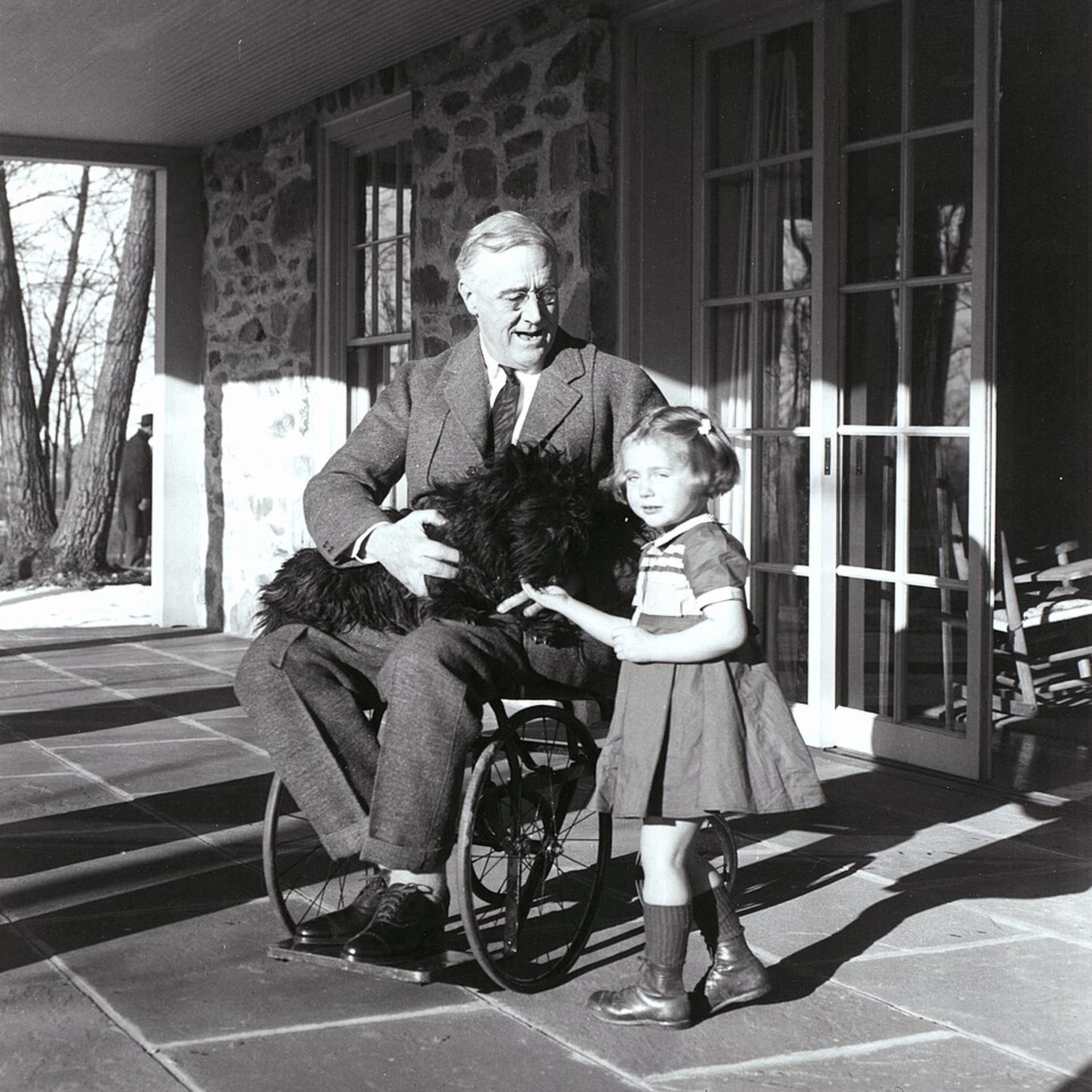
Loading summary
Transcript78 lines
- [00:00]
Bob Crawford
We're currently living through a period of the healthiest president ever in the history of mankind.
- [00:08]
Barbara A. Perry
Healthiest human, maybe.
- [00:10]
Bob Crawford
Healthiest human ever. We have reached. We have found a superhuman being. You've reached American History Hotline. You ask the questions, we get the answers. Leave a message. Hey there, American History Hotliners. Bob Crawford here. Thrilled to be joining you again for another episode of American History Hotline, the show where you ask the questions. And the best way to get us a question is to our website. That's americanhistoryhotline.com americanhistoryhotline.com okay, today's question comes from Sarah. Here's what she sent.
- [00:51]
Sarah (Caller)
Hello, American History Hotline. I have enjoyed listening to so many of your episodes. Many. My question, which I've had trouble figuring out how to put into words, is basically, there's so much interest right now in the news and social media about the health of President Trump. And I'm curious how much right. Do the American people have to know about the health of their president and what has been done in the past with us other presidents, such like Reagan and FDR and Joe Biden. Thanks so much for all you do, and I hope to hear this one at some point.
- [01:37]
Bob Crawford
Bye, Sarah. Thank you for sending that question and thanks for the video. I love seeing you all and this is just really great. We're really excited about this. Okay, great question. And just want everybody to know we're posting all our newer episodes on YouTube. So check out our American History Hotline YouTube channel. Sarah, to get to your question, I have the perfect guest, Barbara A. Perry. She's professor of Presidential Studies at the University of Virginia's Miller center. And she's written numerous books on the presidents and first ladies. She's got a new book coming out in September titled Reconcilable the Unlikely Political alliance of John F. Kennedy and Eleanor Roosevelt. Really interested in reading that one, Barbara. We need to have you back on to talk about that one. But Barbara, today. Let's talk about today and today's question. Thank you for joining us today.
- [02:36]
Barbara A. Perry
Happy to be with you. And as a professor, I must commend Sarah on her really great question. And thank you for taking it up, Bob.
- [02:44]
Bob Crawford
It's our pleasure. We love it. We love the questions. Okay. You have deep presidential expertise. Doesn't go all the way back to the founders. So we're gonna stick to the modern presidents for our conversation today, including our current president. But let's start with the big questions. The big question, do the American people deserve to know about a president's health.
- [03:08]
Barbara A. Perry
Yes, they do. It is my view that we should know everything there is to know about a president's health, physical and men, because they are still in the modern era, certainly Since World War II, leader of the free world and obviously leader of our executive branch in the United States. And they need to be up to the task, both physically and mentally. So I'm afraid that they need to give up their privacy that we all have as private citizens. And that comes from the so called HIPAA rules that you know, when you go into a doctor's office, you sign that you want your materials to be kept private. And that's a federal law to prot your medical privacy. Obviously things that you want your doctor to know to treat you, you say that's okay for the doctor to know, but otherwise we as private citizens have that medical privacy. My view is that presidents have to give that up when they run for president and when they are president.
- [04:07]
Bob Crawford
I'm really excited that you are not just an expert on presidents, but first ladies.
- [04:13]
Sarah (Caller)
First ladies.
- [04:13]
Bob Crawford
Because the first president I want to talk about, legend has it, or historians have it, that his first lady picked up the slack. Woodrow Wilson, we believe he caught the Spanish flu during World War I in the late teens, 19 teens. Did the American public know that he was sick and the follow up is going to be, did the first lady help cover it up and maybe even do his job?
- [04:47]
Barbara A. Perry
The answer to the first is no. The American people did not know that the President had caught the flu that at that time was called the Spanish Flu, a worldwide pandemic that was brought about by all the worldwide travel during World War I. And the fact that you had a lot of young people, particularly young men, but some women as well, who were being shipped abroad and in close quarters and had not had at that time, flu shots, weren't available to protect them. And moreover, they didn't have natural immunity because there hadn't been this strain of the flu that was circulating. And what made it worse was that Wilson caught it at the Paris Peace Conference that was putting together the Treaty of Versailles. And he was awakened at night by terrible coughing spasms. He was very weak. So we think as historians and in my case, political scientists, that he really missed a lot of opportunities to fashion that treaty that would have worked better than it obviously did then. When he came home, though, he did support the treaty and he wanted the United States to move forward with one specific aspect particularly, and that was the founding of the League of Nations and that the US Would join that. But they had to get the Senate to ratify the treaty. So he recovered from the flu and then took this nationwide tour on train and would then go from city to city and try to press the people to tell their senators to vote yes on the treaty ratification. And he was in open cars and shaking hands with people and seemed to be okay. But, again, that sort of took him down a bad road. We think that he was suffering from strokes, and even prior to the White House and when he got back to Washington, he suffered a literal crippling stroke that paralyzed one side of him. It was very difficult for him to walk or speak. And the answer then to your second question is yes. The first lady, Edith Bolingault Wilson, some people say, became our first woman president. That goes a little too far, I think, in exaggeration. But she prevented members of Congress from seeing him.
- [06:58]
Public Service Announcer
She.
- [06:58]
Barbara A. Perry
She prevented the vice president and members of his cabinet from seeing him. And there's a great photo of her holding a paper while he's attempting to sign his name. So it is the case that she was hiding that from the American people and other government officials.
- [07:15]
Bob Crawford
Who was his vice president?
- [07:19]
Barbara A. Perry
Yeah, I want to say it was Marshall. I will admit that while I like to study presidents and first ladies, I'm not an expert on vice presidents. What I do remember is I think he was the president who said, my only job. You know, we always say president is heartbeat away from the presidency, but I think it was his vice president who said, my one job is to knock on the front door of the White House every morning and say, is the president still alive?
- [07:46]
Bob Crawford
Insane. So how did the press cover this?
- [07:50]
Barbara A. Perry
Well, going back to the flu situation and in the midst of World War I and then following it, the White House, much like the Trump White House when Covid began, didn't want bad news to go out about the pandemic. In the case of Wilson there, I think there was a slightly better reason than the first Trump term in which Trump didn't want it to make him look bad that people in the United States were contracting. Covid, in the case of Woodrow Wilson, it was wartime, and he didn't want to lower the morale of the American people by saying, run for your lives. You know, young people are dropping like flies, and there's no cure for this, and there's no immunization for this. So I give him a bit of a pass given that it was a world war situation. So the first point was that the press didn't cover the flu situation in the Woodrow Wilson era or his contracting of the flu at the Paris Peace Conference. And second, the White House and his personal physician were not letting out information about his struggles after this stroke. And he. And he was in his second term, by the way, so he was not gonna run for a third term. He could have. This was before the amendment to the Constitution limiting a president to two terms. But the tradition going back to Washington, I do know a few things about founding presidents. And the tradition starting with George Washington was two terms and then you move on. So he wasn't going to attempt a run another time. And he took that debilitating stroke set of symptoms with him and side effects with him into the post presidency and only lived a few years beyond that. But no, the American people did not know. And let's remember as well that, you know, there really are very few newsreels at the time. They are just preventing the president from being seen in public.
- [09:47]
Bob Crawford
To think about 1824, election. Treasury Secretary William H. Crawford was one of the four men standing for the presidency in that election. And he suffered a stroke during the campaign, but still came very close to the presidency.
- [10:05]
Barbara A. Perry
Well, and again, 1824, even fewer opportunities to show no photography, for example, to be able to show presidents or presidential candidates. I would also add, though, and this is your area of expertise and your timeframe. But at that time, we don't have what started really with Teddy Ro Roosevelt and Woodrow Wilson, which we now call the personal president or presidency, where they go way beyond what the founders anticipated and directly meeting with the people. And so if you then become a very ill president in that 20th century, up into this current time, and you're not out and about with the people or people can see that you're declining, that does not work well for presidents typically, as we saw with Joe Biden.
- [10:51]
Bob Crawford
So let's. Let's move on to fdr. He was a polio survivor. He also served four terms. Talk about the questions about his health going into the presidency and during the presidency.
- [11:08]
Barbara A. Perry
He was a very robust character up until he contracted polio in the early 1920s. He loved horseback riding and golfing and swimming and sailing. And he was a very vigorous individual. So to be felled by and almost taken from this earth by a bout of polio that he contracted, they think, from visiting a Boy Scout camp in New York, where he was born and raised, but out in the countryside and very poor sanitation, polio was rampant at the time. And then he went on to his summer place at Campobello up in Canada and contracted it there and almost died. And most people Know then that the long lasting effects were that he was paralyzed from the waist down. But he was overall then in good health once, once he came back from that you're mentioning of the four terms that was then violating the tradition set by George Washington. But he ran for a third time in 1940, still in good health. He hid as much as he could the fact that he was paralyzed from the waist down. Most people knew that he had suffered from polio and were very. If they supported him or thought he was very heroic to overcome it. He did not want himself to be viewed or photographed or videoed in a wheelchair. Did not want himself to be viewed or filmed being carried as he had to be carried upstairs and downstairs and into cars, et cetera. He had sort of an interesting way of quote, walking whereby he'd grab onto a strong man, one of his sons or a military figure, and then would have a cane in the other hand. And he would swing his hips from side to side with stiff braces on his legs to keep him upright. But if he would be let go or suddenly like have to let go of the cane, he would literally fall over. So he could not have that out and about in photographs or in videos. So he decides to run for an unprecedented third term in 1940 because World War II is on the horizon for us. It's already started in Europe and he wins again and then he Wins again in 1944. So he doesn't serve out that term. He dies in April of 45, just a few months after his fourth inauguration. By that I would say by certainly by the end of the third term. One could see from videos and photography his face was very drawn. He did not look robust, he did not look well. And in fact, his doctors knew he was suffering from congestive heart failure and was probably fatally afflicted with it. They couldn't predict exactly when he would die, but he attempted to look vibrant by doing a campaign tour up in New York city in the 1940s reelection campaign. Late in the fall, and there was a cold driving rain. But he insisted on going through New York City in an open car. And they had to stop halfway through, take him into a building, change his all all wet clothes, then drive him into old Ebbett's Field where the Brooklyn Dodgers played. Drive him up a ramp again. You'll notice if you watch this on YouTube. The video stops. They carry him out of the car, get him to the podium and he waves his famous fedora hat, people. But he looks at death's door and he Was,
- [14:37]
Bob Crawford
how'd the press handle that?
- [14:39]
Barbara A. Perry
They followed his requests not to ever show him in a wheelchair, not to ever show him being carried. Now, I'm telling you that there were photographs and there were videos of him so the people, the American people, people around the world, could see the toll that his own health was taking on him. But also, as you can imagine, five years of World War II and a person who had already come through a terrible bout of polio. I will add, though having now studied Eleanor Roosevelt quite a bit, that she was speaking at the Cosmos Club in Washington, and it was a luncheon, and she got a call that she needed to return to the White House immediately. The President was in Warm Springs, Georgia, which he had reinvigorated as a resort and a spa for polio victims because the spring, like water, would buoy him and others who had this affliction, and he loved it there. And he'd gone there to take a rest. And so she had spoken to him a day or two before, and he sounded good, she thought. But as soon as she got this call, come back to the White House, immediately, she said, her heart sank. She knew it was bad news, and yet she wrote in her autobiography, I still couldn't believe that he was gone, because he had always come back from even death's door through polio. So even she, who saw him on a daily basis, couldn't believe he was gone. And so for young Americans, for 12 years had only ever had Franklin Roosevelt as president. They didn't know any other presidents. And it was a real shock. And again, for the two thirds of the American people who tended to vote for him, it was a horror to think at the midst of war he would be struck down as he was. But he was very irresponsible in that sense about not letting people know, not letting the press in on the terrible secret. Maybe he couldn't have admitted to himself
- [16:37]
Bob Crawford
this is a theme, the irresponsibility of the man in office about revealing his own limitations physically. Okay, so let's talk about Kennedy and Nixon. They both had health issues in the 1960 campaign. Did this play? They did, yeah. Did this play a factor in the race?
- [17:00]
Barbara A. Perry
It did. And in Kennedy's case, he had lifelong ill health from the time he was a child. He was not a robust character or little boy. He would have scarlet fever as a two or three year old. He had just all sorts of stomach problems. And they thought when he was in college he had leukemia, as it turned out, he knew nearly died in the 1950s while traveling in England. And at that time, he was then finally diagnosed with Addison's disease, which is an insufficiency of the adrenal glands that can cause death. It can easily cause infection that leads to death. So Also in the 1950s, he was having back surgeries. He had injured his back in football at Harvard and in World War II when his PT boat was cut in two by a Japanese destroyer. Also, he had some just probably inborn back issues and spinal issues. And they were treating him with all sorts of medications for his stomach problems that may have caused deterioration of his spine. So when he would have these difficult surgeries, he'd almost die from infections of that. Johnson. Lyndon Johnson, who would become his vice president and then president, was his adversary in the 1960 campaign for the nomination. And he had found out about this. It circulated as a rumor. And Eleanor Roosevelt knew about it and was one of the many reasons she didn't support Kennedy at first in 1960. But by the time he was running in 60, and from about the late 50s onward, the discovery had been made in medical science that cortisone could treat Addison's disease, and they could make it synthetically. So he would take injections of cortisone, I think, on a daily basis. And it also caused him to be able to gain weight, to look healthier, to look less drawn. If you see pictures of him in the 50s, he looks at death's door. He's very drawn and also had kind of an orangish or brownish skin tone, which is common among Addisonians. So he looked healthier. He would always make sure he got tan before appearing on television. Even in black and white, it would look better than not, or being pale. So he'd either use sun lamps or go to his family's beach homes, either in New England or Palm Beach. So in the first debate, the famous first debate of 1960, the first televised presidential debate, he comes off looking like the picture of health and Richard Nixon, who was not an unhealthy person, but he had hit his leg on a car door and the wound became infected, and he was hospitalized for three weeks and then got out and got the flu. So he looked terrible. He looked pale, he was sweating profusely, had a five o' clock shadow, and didn't understand TV in infancy, really, at that point, for presidents and candidates, and he turned down makeup, and that was a big mistake. So some people think that Nixon never recovered from that devastating appearance on television in that first debate.
- [20:17]
Ad Voice 1
This is an iHeart podcast, guaranteed human
- [20:23]
Ad Voice 2
Reese Witherspoon here checking into my favorite hotel in Paris.
- [20:27]
Barbara A. Perry
Bonjour. Bonjour.
- [20:28]
Ad Voice 2
I'm traveling with my Wells Fargo Autograph Journey card so I earn rewards wherever I book travel five times points with hotels, four times with airlines, three times on restaurants and other travel and one point on other purchases.
- [20:42]
Ad Voice 1
Phew.
- [20:42]
Ad Voice 2
That was a lot. I need to lie down. Is the room ready?
- [20:46]
Ad Voice 3
Visit Wells Fargo.com autographjourney Terms apply
- [20:52]
Ad Voice 4
when
- [20:52]
Ad Voice 5
Kohler, global design leader and luxurious kitchen and bath products, asked me to be their ambassador for timeless, elegant, durable cast iron, I said, I'm in. Soon after I was in their Kohler Wisconsin foundry watching molten iron, poured enamel applied by hand and the beautiful finished pieces ready to ship. Since 1883, Kohler cast iron has been crafted by incredible artisans and seeing it firsthand gave me a whole new appreciation for their craftsmanship. Now I'm proud to lend my stamp of approval to my favorite Kohler cast iron products for their durability, beauty and enduring style. Shop my curated pics@kohler.com as the Kohler Cast Iron Ambassador, I say long live cast iron.
- [21:45]
Ad Voice 4
I love days like these at the pool, but my moderate to severe plaque psoriasis can sometimes take me out of the moment. I'm ready to make a splash with clearer skin thanks to Skyrizi risankizumab RZA Skyrizi is a prescription only injection for adult who are candidates for systemic or phototherapy. At four months, most people saw 90% clearer skin when measured from head to toe and many were even 100% plaque free. People also saw significant improvement in psoriasis, symptoms of pain, redness, itching and burning.
- [22:14]
Ad Voice 2
Don't use if allergic to Skyrizi. Serious allergic reactions, increased infections or lower ability to fight them may occur before treatment. Get checked for infections and tuberculosis. Tell your doctor about any flu like symptoms or vaccines.
- [22:26]
Ad Voice 4
Now there's nothing on my skin thanks to Skyrizi and that means everything. Ask your doctor about Skyrizi, the number one dermatologist, prescribed biologic and psoriasis. Visit skyrizi.com or call 1-866-Skyrizi to learn more.
- [22:43]
Ad Voice 6
Do you want to find a stress free way to buy your next car? Start at CarMax and shop your way. If you want to browse with confidence, get pre qualified online with no impact on your credit score and shop cars within your budget. From luxury cars to family rides, CarMax has options for almost every price range, including more than 25,000 cars priced under $25,000. So hey, want to get started? Just head to CarMax.com for details and get pre qualified today. Want to drive? CarMax?
- [23:17]
Bob Crawford
This is American History Hotline. I'm your host, Bob Crawford. Today my guest is Barbara A. Perry. She's a professor of presidential studies at the University of Virginia's Miller Center. She's got a new book coming out in September titled Reconcilable the Unlikely Political alliance of John F. Kennedy and Eleanor Roosevelt. We're talking about presidential health. Is it any of our business? I'd say yes. That's just me. Remember to send us your burning questions about American history. You can do that on our website, americanhistoryhotline.com that's americanhistoryhotline.com now back to the show. Barbara. We all know about Joe Biden's debate performance. Jake Tapper and Alex Thompson wrote a book, original Sin, President Biden's Decline, Its cover up and his disastrous Choice to run. Again, this cover up hurt the president. It hurt his party. Would it have been better for the public to be let in on his health issues?
- [24:22]
Barbara A. Perry
Yes, and I will say that I saw the president briefly and spoke to him briefly. This is President Biden in person in November of 2022. And this was at a dinner, a dinner for members of the White House Historical association, which I'm a member of. And I stood at a line, actually, I had seen him briefly in a November dinner, 2022. This was the day or two after he and his party had done pretty well in the midterms. And he looked quite jovial as he was shaking hands with people and quite lively. And then just a month later went back for one of these Christmas receptions or holiday receptions and stood at a rope line in the entryway, the north entryway to the White House, awaiting him and the first lady, Dr. Biden. And then after they did some toast, he came down and went through the rope line. And at first I thought when he was speaking, so this would have just been one month after I'd seen him looking lively and jovial. I thought he looked a little tired. But also remember, they have to do this every night for all of December and dress up and make sure their makeup is nice and there are 600 people in their house. But anyway, I thought, oh, gosh, he does look a little bit tired. And when he got up, he was just talking to everybody. And when he got up to me, as he was talking to everybody else got up to me, it was almost like a switch had gone on as he started talking one to one to people. And I thought, gosh, he does look tired anymore. You know, 10 minutes earlier, he'd look kind of tired, not ill, but tired. And I told a colleague, I said, I'm write a column. And I did. I wrote a column called I have discovered Joe Biden's Fountain of youth and it is mixing with the people. So I didn't worry so much as we got into 2023. But then I began, like a lot of people, to notice his skin tone looking different, the gait, the difference in his gait, his inability speak fluently. But my sense was, gosh, I would hope he would know, and I hope those around him would know if it was time to move on, that he would need to drop out. Here's the problem for a president. One is, like fdr, presidents don't want to admit perhaps to themselves that they're ill. They don't want to admit to the American people that they're ill because they don't want to lose their power and authority. They like to run, typically for reelection. And when would he have said this? Okay, now my thought would have been, perhaps, given his advancing age, whether he felt ill or was genuinely ill, it probably would have been best for him one year before to say, I'm going to step aside and let my party choose in the normal process. Since he didn't make that decision, it would have had to come within that year. But we could still say once he and those around him saw him declining physically and mentally, maybe it would have been six months before the debate and it still would have given the party, party time to have primaries and caucuses. So as you described it, it turned out to be a mistake for him. It will follow him into history. It will follow his legacy into history. And it also perhaps cost the Democratic Party the White House.
- [27:46]
Bob Crawford
I gotta say, point of personal privilege and with hindsight as my guide, that night that he met with you in the wake of the incredible showing of the Democratic Party in the midterm elections, which you know are historically poisonous for the party in power, if he spoke to all you historians and said, I'm going to make a historic statement tonight and say, I promised I'd be a bridge to the future. The Democratic Party is strong and I will pass the torch and not run for reelection, that would have been the Democrats best option and it would have preserved his legacy and elevated him rather than have the shadow and Paul cast upon him that we are experiencing at this moment. He may be redeemed by the future. Who knows? As you know, when they look back 50 years ago or 50 years from now they may have a different take.
- [28:47]
Barbara A. Perry
Right. And Bob, I certainly agree with you that that would have been better, as you say, in hindsight, which is always 2020. I would have put it maybe just a little bit after that because the one thing we have to keep in mind, in addition to just the personal having to admit one is ill or incapable, he would have immediately become a lame duck.
- [29:06]
Bob Crawford
That's right. That's right.
- [29:08]
Barbara A. Perry
And then that takes away power and some authority.
- [29:11]
Bob Crawford
It's very true, Very true. Okay, so. So let's talk just briefly because you can't talk about Biden stepping down or removing himself from the election without thinking for a second of President Johnson. So that March 31st, I know that date in my brain because it's my birthday, he gives a speech March 31, 1968, maybe it was that he would not be a candidate for reelection just for a moment because he dies shortly after he leaves office. Right.
- [29:47]
Barbara A. Perry
Well, he has end up by another four or five years and he dies of a severe cardiac arrest which he had experienced as a heart attack in the mid-1950s. Most of these men, particularly Eisenhower. By the way, I just saw that new movie Pressure about Eisenhower and making the decision on D day. And in the movie it is very realistic because he constantly has a cigarette in his hand. Brendan Fraser playing the role of Ike. But Eisenhower was a four pack a day smoker and probably the same for Lyndon Johnson. So also Lyndon Johnson knew that males in his family died very young. So he was really walking on the knife's edge. His wife Lady Bird tried to get him to stop smoking and drinking and he might have cut down a little bit, but that's somebody we should have known more about in terms of the severe heart attack he had had in the mid-1950s with his being selected as Vice president for a President John F. Kennedy who was already ill himself, but seemingly. Okay, yeah, we should have known that about Johnson. And if he would have stayed in the race and won, and we don't know that he would have in 68, but he would have just barely made it through a second term. Or you could argue instead of his going back to the ranch in Tex and relaxing to the extent he could, he was not much of a relaxer, but he might have been taken while president because of the pressures of being the chief executive. And I should contrast this, by the way, we should point out Eisenhower is the exception that proves the rule on this. He suffered a massive heart attack in 1955, was in Denver with his wife visiting his in Laws he was so ill they could not bring him back to Washington for seven weeks. Weeks. But he told his press secretary and his doctor, go out every day and tell the American people the status of my health.
- [31:45]
Bob Crawford
So he benefited from the openness.
- [31:50]
Barbara A. Perry
I think he did. And by the way, even before then, his reelection in 56 by another landslide over Adlai Stevenson, he had severe abdominal surgery for what they called iliitis in those days. It probably would be Crohn's disease now. But he had yet another medical emergency before the 56 election, and yet one handily, because, first of all, people liked Ike, and second, he was honest with the people. And he also told his attorney general, Herbert Brownell, you need to be looking into possibility of a constitutional amendment. What if I wasn't ever able to get back to D.C. what if I had just become so ill I didn't die, but I was completely incapacitated? And that led to the 1967amendment that we have now in place, a constitutional structure to replace a disabled president.
- [32:42]
Bob Crawford
So, you know, our time is quickly slipping through our fingers here. And I want to talk about the current president, you know, but I want to hit a couple points as quickly as we can. Reagan's second term, he goes through Iran Contra. There are some questions bubbling up about. About his mental acuity at this point. And then, of course, shortly after leaving office, he's diagnosed with. A couple years after leaving office, he's diagnosed with Alzheimer. So talk about him just briefly. Let's touch on him.
- [33:18]
Barbara A. Perry
Right, Right. Well, he suffers as, you know, a near assassination in 81 2, three months into his presidency in which he almost bled out to death. And the American people were not told how close to death he came. His personal physic says that that did not affect him. I find that hard to believe. He had to come back from that. He was in his 70s at that time, our oldest president ever to serve. And it was clear this hearing was going. And I think you can see towards the end of his presidency, particularly in Iran Contra, where he says he doesn't remember certain things that happened in that scandal. And I think that's the case. Now. I'm not arguing that he had indeed Alzheimer's while president, but he would have left. January 20, 1989, George H.W. bush is elected. And then in November of 94, the sad note from him handwritten to the American people, that he's entered the sunshine, or rather the sunset of his life, because he has been diagnosed with Alzheimer's.
- [34:23]
Bob Crawford
Before we talk about the current guy, when did it become accepted that we learn this information?
- [34:33]
Barbara A. Perry
I don't think it has become accepted.
- [34:36]
Bob Crawford
Well, it hasn't now, but there was a time where they revealed their records.
- [34:41]
Barbara A. Perry
I get. Well, I give Eisenhower great credit for that. And yes, I think from that point on, with the exception of. So it doesn't carry through person by person. So it doesn't carry through with Kennedy, it doesn't carry through with Johnson. Nixon was afflicted with phlebitis and almost died from that. In the immediate post presidency, I would say probably starting with maybe Carter. And Carter, particularly after Watergate, the openness that he wanted, the fact he said to the American people, I will never lie to you. And so he had a collapse while running and there were pictures of that and he was pretty open about that. George H.W. bush was open about his affliction that both he and Mrs. Bush suffered from. That was a thyroid insufficiency graves disease. And he almost collapsed from running at Camp David. So I would say in that post Watergate period, it became, along with releasing tax returns from Nixon onward, I think the American people are demanding more transparency from that point on.
- [35:57]
Bob Crawford
Well, we're currently living through a period of the healthiest president ever in the history of mankind. Healthiest human, maybe healthiest human ever. We have reached, we have found a superhuman being and luckily for the country, we are saved because he is our president. So I mean, this is what we are being told. Looking at the picture to look, it seems otherwise. So can you just tell us for a minute what do we know about the real health of the current president and what should we know about?
- [36:39]
Barbara A. Perry
We didn't know the truth about this presidential candidate's health in 2015-16. We didn't know, for example, the extent of his Covid situation in his first presidency where he was whisked off to Walter Reed Hospital. As it turns out, we now hear that his oxygen level had dropped down to in the 60s when it's supposed to be in the 90s, that he insisted on not being carried out on a stretcher. So he insisted on walking and he was able to do that to the helicopter to get him to Walter Reed. But his then White House and personal physician, Ronny Jackson was not honest about that, nor was the President, nor was he honest about it in running for this term in 2024. And his doctors refused to release a transparent, honest, accurate description of his health. So we know, for example, he's gone back three times to be hospitalized for tests. Sometimes they say what the tests are, but they don't really give accurate information. They just keep saying everything is fine. When we can see the bruises on his hand, we can see his swollen ankles. We do know that he doesn't eat well and he doesn't believe in exercise as a healthy lifestyle. He does play golf, but that involves riding around in a golf cart and hitting a golf ball occasionally. So I think given just the fact that many people as they become octogenarians often will have some health issues. Not everyone, but often he just does not look like a healthy, the healthful specimen of an almost 80 year old man.
- [38:25]
Bob Crawford
Yes, to say the least. Which. But because he's so, because he's not forthcoming or because what we're being told isn't really believe, it defies what our eyes, the evidence of our eyes and our ears. Right. And so that leaves room or creates a space for conspiracy theories or for speculation on social media. Like you have all these so called experts, people who are from physical therapists to cardiovascular surgeons are speculating about what he's really going through. So I mean, how can we as the American public get a sense of the true health of the President? Is there, you know, should we be listening to these people, these so called experts?
- [39:16]
Barbara A. Perry
Not if we believe that they are not telling the truth about the President, that is his current staff of physicians. I would say just straight out, I am not a conspiracy theorist and so I don't follow conspiracy theories about things related to for example, the assassination attempts against this President that some people have. And as we know, these conspiracy theories can grow on the left and the right of the political spectrum.
- [39:45]
Bob Crawford
Absolutely.
- [39:46]
Barbara A. Perry
As a fact political scientist, my question would be what can we know about the President, when can we know it and is it accurate? And right now we're not knowing very much and what we are knowing doesn't seem to be accurate. And as you say, it belies what we can see with our own eyes and maybe hear with our own ears. If we believe that the President is having some mental acuity issues.
- [40:12]
Bob Crawford
His most recent examination had made no mention of Propecia. Right. Which is a, I guess a hair loss supplement or medication that he currently was notated that he was taking. Is there anything we can, I mean, can a patient, a presidential patient, just order things to be taken off of his record for the American people or, or did he stop taking it? I mean like is it, you know,
- [40:44]
Barbara A. Perry
we just don't know. We just don't know. Now I did read the factual articles about that as a medication and what they said was it can cause depression in some people. So, you know, perhaps he was feeling depressed. And either he said, I've read up on Propecia and I would like to go off of it if he's most people in my view, should be aggressive in their own medical care and ask get knowledge and ask proper questions.
- [41:10]
Bob Crawford
Be your own advocate. You gotta be your own advocate.
- [41:13]
Barbara A. Perry
Exactly. And take an advocate with you to take down notes and that kind of thing, especially if you have a serious medical situation. But we don't know the answer to why that has been removed from the medications he's taking. We should add that we found out last summer that he did have a circulatory issue that is not uncommon among older people and that that could have caused and does cause the swelling of the ankles, but that can also be a symptom of congestive heart failure. And so we don't why he has continued to go back more than once a year when most presidents up until Trump would tell us every year when they'd go for a physical and they were much younger men, typically Obama and Carter and Clinton and George H.W. bush and George W. Bush. But they would tell us what they were finding and their doctors would tell us the accurate description of what was happening to them. And moreover, when they would go for colonoscopies and then know they were going to be under general anesthetic, they would invoke the amendment to say they would be disabled for a certain period of time and they would hand over the reins to the vice president. So they even went that far and think how maybe that's difficult for a president to think, oh, this is pretty serious stuff. And anytime you're under general anesthetic, something could go wrong. But they let us know that that's what they did.
- [42:39]
Bob Crawford
Barbara, this has been a joy. Thank you so much for joining us on American History Hotline, Barbara A. Perry. She's a professor of presidential studies at the University of Virginia's Miller Center. She's got a new book coming out in September titled Reconcilable the Unlikely Political alliance of John F. Kennedy and Eleanor Roosevelt. We'll put a link in our episode description to that so people can pre order that. And we can't wait to have you back on to talk about this. Barbara, thank you for joining us today on American History Holiday.
- [43:15]
Barbara A. Perry
Well, thank you, Bob. It was my pleasure and a really important subject. So thank you for all you do to let the American people know history and what is happening currently.
- [43:24]
Bob Crawford
It is our joy to have this conversation with you and always talk about history. We love it here. Thank you.
- [43:33]
Narrator/Producer
You've been listening to American History Hotline, a production of I Heart Podcast, podcasts and Scratch Track Productions. The show's executive producer is James Morrison. Our executive producers from iHeart are Jordan Runtal and Jason English. Original music composed by me, Bob Crawford. Please keep in touch. Our email is americanhistoryhotlinemail.com if you like the show, please tell your friends, tell and leave us a review in Apple Podcasts. I'm your host, Bob Crawford. Feel free to hit me up on social media to ask a history question
- [44:11]
Bob Crawford
or to let me know what you think of the show. You can find me at bobcrawford Bass. Thanks so much for listening.
- [44:19]
Narrator/Producer
See you next week.
- [44:28]
Ad Voice 1
Maintenance Fee Overdraft Fee Minimum Balance Fee Fee Maximum Balance Fee Banking fees are just a part of modern life.
- [44:36]
Barbara A. Perry
Or are they?
- [44:37]
Ad Voice 1
They're not at Ally Bank At Ally bank there are no tricks, no hidden fine print or jumping through hoops for better rates. They just want to help you save automatically while you spend with spending accounts and savings tools with great rates. No tricks, no hidden fees. Banking built for life today. Learn more@ally.com Ally bank member FDIC Honestly,
- [45:00]
Public Service Announcer
honestly, honestly, no one wants to think about HIV, but there are things that everyone can do to help prevent it. Things like prep. Prep stands for Pre Exposure Prophylaxis and it means routinely taking prescription medicine before you're exposed to HIV to help reduce your chances of getting it. Prep can be about 99% effective when taken as prescribed. It doesn't protect against other STIs though, so be sure to use condoms and other healthy sepsis best practices. Ask a healthcare provider about all your prevention Options and visit findoutaboutprep.com to learn more. Sponsored by Gilead it's called soccer.
- [45:32]
Ad Voice 3
It's called football, Soccer, Football. Domino's Best deal ever Lets you get any pizza, including stuffed crust with any toppings for 9.99. Okay, we can agree on that. Yeah, fully. So pineapple? Don't ruin it. Get any pizza including stuffed crust with any toppings for 9.99. Finally, something everyone can get behind and if the rest disagree, that's between them and Domino's. Which means the only thing left to fight over is who's ordering price is higher for some locations. Excludes XL and specialty pizzas. Select this offer from 6:15 to 7:26 online only. Size availability varies by crust tank max 7 toppings 6 for pan and New New York style crust. Minimum purchase required for delivery prices, participation, delivery area and charges may vary.
- [46:18]
L
When you're a maintenance engineer in a beverage manufacturing plant, you keep production lines moving and quality on track because there is no room for slowdowns. With Grainger's vast selection of high quality motors, sensors, belts and hard to find parts, you can get what you need fast and all in one place so nothing gets in the way of getting the chunk job done. Call 1-800-granger click ranger.com or just stop by Granger for the ones who get it done.
- [46:48]
Ad Voice 1
This is an iHeart podcast. Guaranteed Human.