Loading summary
Transcript133 lines
- [00:00]
Susan Campbell Bartoletti
And I find it interesting because when people read my book, they're sort of on Mary's side. Until she makes people sick in a maternity hospital.
- [00:11]
Bob Crawford
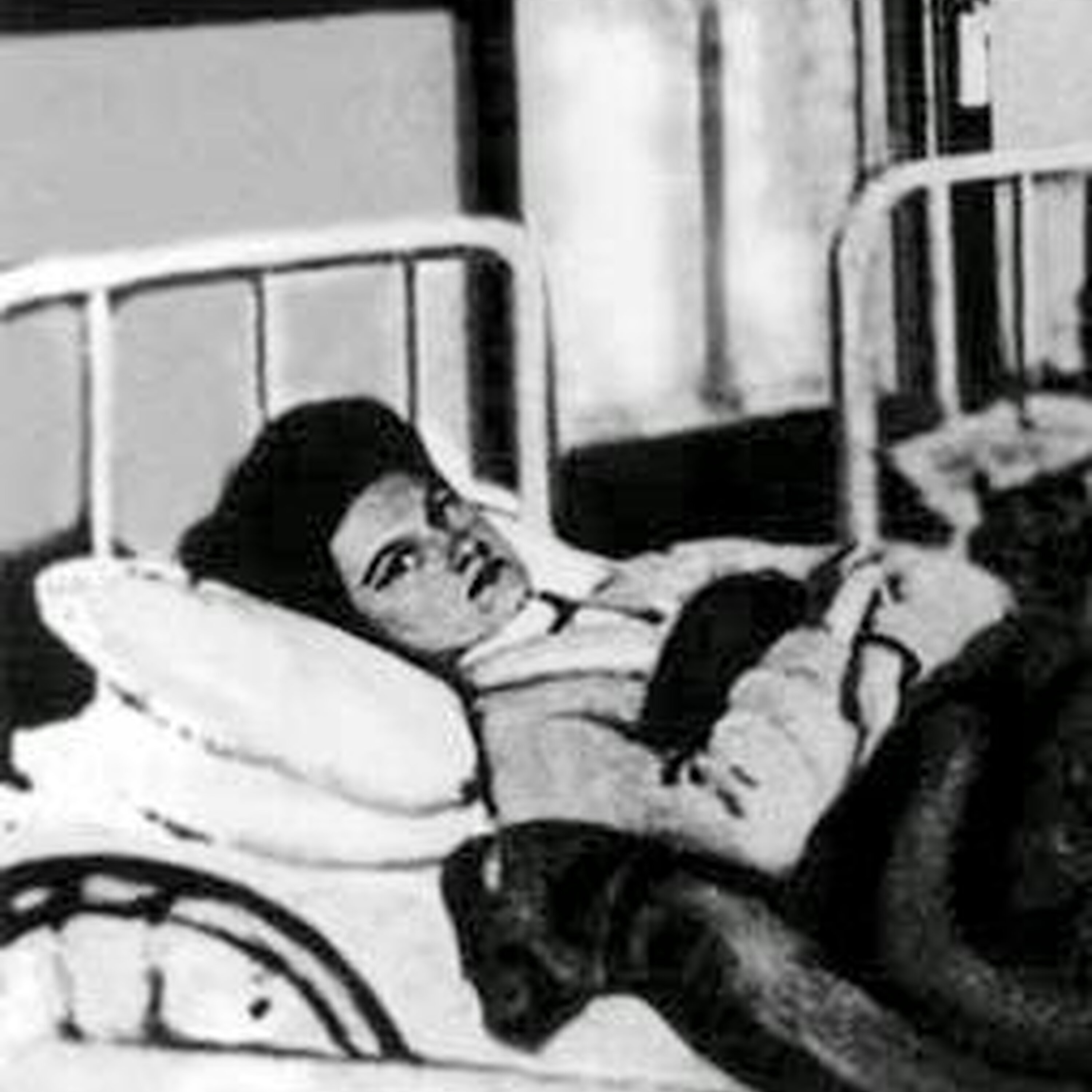
Right? Yeah. You've reached American History Hotline. You ask the questions, we get the answers. Leave a message. Hey there, American History Hotliners. Bob Crawford here. Thrilled to be joining you again for another episode of American History Hotline. This is the show where you ask the questions. And the best way to get us a question is to record a video or voice memo on your phone and email it to AmericanHistoryHotlinemail.com that's AmericanHistoryHotlinemail.com okay, here's today's question. It comes from Ellen in Austin. She says, I just watched the show the Nick, which is about the early days of surgery and medicine. It takes place in New York City in 1900, and Typhoid Mary is a small storyline. I'm curious, who was Typhoid Mary and why is she so infamous? Ellen, we have a great guest here to answer this question. It's Susan Campbell Bartoletti. She's author of the book Terrible Typhoid Mary, A True Story of the Deadliest Cook in. In America. Susan, thank you for joining us today.
- [01:29]
Susan Campbell Bartoletti
My pleasure.
- [01:31]
Bob Crawford
Susan, let's start with a mystery. There's an outbreak of typhoid in the New York area in the early 1900s. Where exactly is this happening and who is it affecting?
- [01:43]
Susan Campbell Bartoletti
Well, in Oyster Bay, Long Island, a very wealthy family, a banker family. But the family of Charles Warren had rented a house during the summer of 1906, and they had a few children and they had several servants and their cook quit on them. Now, you think about this. In 1906, you're a wealthy family. You have a lot of tea parties, a lot of social events. You really need a cook. And so Mrs. Warren quickly called the, the, the service where she could find a cook. And they said, oh, we have an excellent woman for you. She's about 38 years old. She has cooked for many prominent families. Her name is Mary Mallon. And so right away, Mrs. Warren hired Mary Mallon. And so when Mary Mallon got to this house, we know several things about Mary. We know that she had emigrated from Ireland at the age of about 14 or 15. She had lived with her aunt and uncle who had both passed away. So she's on her own in a big city. And she was hired by various families as various types of domestic labor. And so she probably started out as a maid and worked her way up and, and became a very prominent cook. Making good money. At that time, it was the highest paid domestic service. And so when she arrived at the Warrens house, she got busy right away cooking some of her famous dishes. One of her most famous desserts was ice cream. And she bought some fresh peaches, which were in season at the time. And one of the fruit growers was so proud of his peaches in Oyster Bay, he had even sold them to President Theodore Roosevelt, who was also vacationing there at the time. So Mary Mallon made this dessert. And a couple of days later, one of the Warren children, Margaret, who was 11 years old, developed a high fever. Then she got the telltale spots on her chest and her abdomen. And then, you know, a terrible gastrointestinal disease. She had bouts of diarrhea. And then it was figured out that this was typhoid fever.
- [04:17]
Bob Crawford
Okay, so let's pause here for a minute. And what exactly is typhoid? You mentioned some of the symptoms. Yes, but what is typhoid fever?
- [04:27]
Susan Campbell Bartoletti
Well, in 1906, it was a very deadly bacterial fever caused by bacteria, and it would infect the intestinal tract. And a lot of people died from it because there was no vaccine at the time. A vaccine wasn't developed until 1911. There was no antibiotic at the time. That wasn't developed until 1942, and there wasn't a specific antibiotic for typhoid fever until 1949. So if you got this disease, either your immune system won and you lived, or your immune system lost and you died.
- [05:11]
Bob Crawford
Sounds like yellow fever. Like, we had a guest on talking about yellow fever in New Orleans in the 19th century, and that was the whole thing. Like, once you. Is it the kind of thing, like once you have it and live, you don't get it again and you are kind of immune?
- [05:28]
Susan Campbell Bartoletti
Well, you should be. In most cases, once you get the fevers, like, you know, chickenpox, measles, once you get it, you are basically immune. But in about 3% of the cases, the bacteria still lived on for several months. And then in 1% of the cases, the bacterial infection never went away. And then you became what is known as a healthy carrier, where you could still shed this disease, but you didn't know you even had it.
- [06:03]
Podcast Advertiser 1
Wow.
- [06:04]
Bob Crawford
So this is the early 1900s. What is the state of medicine at this time? What sorts of treatments, if any, were there for typhoid?
- [06:14]
Susan Campbell Bartoletti
Well, there was, you know, basically there was no treatment for it because we just had to wait and see what happened as a result of the disease. But at the time, germ theory Was widely accepted by the medical community, by many people still, you know, there were people who would try some pharmaceutical remedies that you. They were convinced might help cure the disease, even though they had no bearing on it. And there were some people who just didn't understand or refused to accept the fact that these tiny germs that you. That were naked to the eye were so prevalent and could cause such disease.
- [06:59]
Bob Crawford
So germ theory is important here because. And again, drawing on our experience at American History Hotline, talking about James Garfield and when the bullet sits in his body and it's what he actually dies from, you know, is. Is a side illness of maybe the doctor sticking his hand and yes, his body and germs. And germ theory at that point is not fully accepted. Correct. Not 1880s, like around the 1880s, 1870s.
- [07:31]
Susan Campbell Bartoletti
Right. It became in the mid, in the mid 19th century. We were already aware of germ theory, but there were, there were doctors who still didn't believe that such a thing.
- [07:44]
Bob Crawford
Right. And ways to antiseptic, you know, ways to, to kind of clean.
- [07:49]
Susan Campbell Bartoletti
Simply wash your hands.
- [07:50]
Bob Crawford
Wash your hands. Wash your hands.
- [07:52]
Susan Campbell Bartoletti
Yes. Although I want to make a point that Mary Mallon, who is, that's the real name of Typhoid Mary, Mary Mallon was a very clean cook, all right. Her hands were in and out of hot water all day long. She washed her hands. What she didn't realize is that germs could, she could still be shedding the germs. She didn't even know she ever had typhoid fever, which tells us that she either had it so young and survived that she didn't remember or that she had such a mild case of it that it was just passed off as something else.
- [08:32]
Bob Crawford
So here's this mysterious spread of typhoid among the affluent families of New York City. What do people suspect is, do they know immediately what it is?
- [08:43]
Susan Campbell Bartoletti
Well, once you get typhoid fever, you know what it is. What many people didn't know was how it was being passed. Some people thought that it was a disease of impoverished families only. Other people blamed their servants, thinking that, you know, they weren't clean enough. Other people thought that they still believed in believing that miasma, this foul smelling air, you know, you breathe that in that that could be responsible for passing diseases.
- [09:20]
Bob Crawford
So I always, the. What I always thought about Typhoid Mary, right, was that this was a slur against immigrants.
- [09:30]
Susan Campbell Bartoletti
Well, it was in some cases, you know, by 1906, that whole idea of no Irish need apply was not as prevalent as it shows up in some stories. Now, again, there were a lot of biases when hiring servants. You know, there were some people who wanted Protestant only servants. There were some people who perhaps wanted Catholic only servants. There were some people who didn't want Irish servants, and there were others who couldn't say enough good about their Irish servants. So, I mean, there were many people who did hold on to some, you know, bias, some discriminatory ideas.
- [10:20]
Bob Crawford
Tell us more about Mary Mallon as a person. You told us, like she's 38 and, you know, she's cook and you know, she has this typhoid. She's a carrier, we believe. Talk about. What more do we know about her in her life?
- [10:37]
Susan Campbell Bartoletti
Well, we don't know too much about her because she was very quiet. She kept to herself. We know that she never lost her Irish accent, which was really the only thing that was very open about her. If she spoke with a little bit of a lilt. However, it seems that her fellow domestic employees liked her a great deal. They seemed to protect her and even were, you know, they wouldn't reveal too much about her either. There were some who said she did have a temper, as we find out, but, you know, she did her job. She did her job well or she wouldn't have earned the kind of money she was earning at one point, you know, $20 a month, which was considered a great deal of money at that time, you know. And like as I said, she was hired by some of the most prominent families, but she never stayed very long for each of these families. And not because she was fired, but because she chose to leave.
- [11:54]
Podcast Advertiser 2
This is an iHeart podcast. Guaranteed Human. Your favorite artists in your library, your favorite songs in your playlist.
- [12:03]
Susan Campbell Bartoletti
But your favorite morning show or your
- [12:06]
Podcast Advertiser 2
favorite team in action.
- [12:07]
Susan Campbell Bartoletti
Oh, my goodness, he got it.
- [12:08]
Podcast Advertiser 1
Or your live local news, traffic and
- [12:10]
Bob Crawford
weather implications from coast to coast.
- [12:13]
Podcast Advertiser 2
Yep, there's an app for all that, too.
- [12:15]
Susan Campbell Bartoletti
Iheartradio.
- [12:16]
Podcast Advertiser 2
We're not just streaming music. We're streaming moments.
- [12:19]
Bob Crawford
Everyone wants to be here.
- [12:21]
Podcast Advertiser 2
Add us to your entertainment lineup now and download the the number one app
- [12:25]
Podcast Advertiser 1
for radio, the free iHeartradio app.
- [12:27]
Bob Crawford
IHeartradio.
- [12:30]
Podcast Advertiser 1
Eczema's unrelenting itch and rash.
- [12:34]
Bob Crawford
If you know the feeling, you should know the facts.
- [12:36]
Podcast Advertiser 1
The eczema medication you're taking may not be right for you. Visit myrawtruth.com and talk to your dermatologist about your symptoms and treatment options. Shake it up with vital proteins, collagen and protein shake. It's a high quality, ready to drink shake with 30 grams of protein and 10 grams of collagen to support healthy hair, skin, nails, bones and joints. With 0 grams of added sugar, no artificial sweeteners, and absolutely no carrageenan. It's a clean, delicious way to fuel your day so you don't just age gracefully. You age powerfully. Vital proteins stay vital. Learn more@vitalproteins.com I'm Brian.
- [13:19]
Bob Crawford
I work at UDOT Healthcare.
- [13:21]
Podcast Advertiser 2
So, Brian, why do you care?
- [13:23]
Susan Campbell Bartoletti
I care because I don't want to leave anybody behind. I oversee one of the biggest resource centers in UnitedHealthcare. I see people walking in my office every day just like my parents. They have no idea about the healthcare. I feel like they are my uncles, aunties. I treated people like family. I'm Brian, and I'm committed to care.
- [13:47]
Podcast Advertiser 2
At cvs, it matters that we're not just in your community, but that we're part of it. It matters that we're here for you when you need, day or night, and we want everyone to feel welcomed and rewarded. It matters that CVS is here to fill your prescriptions and here to fill your craving for a tasty and, yeah, healthy snack. At cvs, we're proud to serve your community because we believe where you get your medicine matters. So Visit us@cvs.com or just come by our store. We can't wait to meet you. Store hours vary by location.
- [14:22]
Bob Crawford
The authorities ultimately catch up with Mary Mallon. So what happens when they do?
- [14:29]
Susan Campbell Bartoletti
Well, I'll tell you a little bit about how they catch up, okay? Because the house that the Warrens rented belonged to the Thompson family, and it had been a wedding gift to Mrs. Thompson. And when she found out that a typhoid fever case had broken out into the house at the house, she got very alarmed because what if she couldn't rent the house again? Or, God forbid, what if the house had to be burned down? Because that's what happens sometimes if you couldn't eliminate the problem. So she hired inspectors to come in and check the water and check the septic tanks outside, check the outdoor privies that the servants would have used, and everything turned up okay. There was no typhoid bacteria present at those places. So then from there, she was at a party, and someone introduced her to a Dr. George Soper, who was a sanitary engineer who considered himself an epidemic fighter. And he had had a lot of success in taking care of places where typhoid had broken out. And he even was proud of the fact that he had to have a house burned down. When they couldn't find the source of the problem. So he decided to check this out. And he retraced everything that the earlier inspectors had done, and he even checked the food supplies because they thought, well, maybe it came from the milk. But no other family in Oyster Bay had become sick. Maybe came from the soft shelled clams that were very popular food during the summer. But again, nobody else had gotten sick. So then he said to himself, well, what is different? And he learned that there had been a new cook and that she had left after the typhoid had broken out. And he said, aha. And he got very excited because in Europe they had already discovered their first healthy carrier. And he thought, she must be this person, must be a healthy carrier, and I will get credit for discovering the first healthy carrier in the United States. So he then began searching. He got a record of every place where Mary Mallon had worked. And he found out that in almost every place where Mary Mallon had worked, someone had broken out with fever. And it's for a total of 24 people. And one of those people had died.
- [17:19]
Bob Crawford
So just pausing here for a minute, she, she had to have known, right? I mean, did she leave before the people got sick? It seems you, you say that she never stayed anywhere too long.
- [17:34]
Susan Campbell Bartoletti
Yeah, I, we have a couple of theories about that. In one case, we know that not only did she stay and help take care of these sick people, but the employer was so happy that he gave her a fifty dollar bonus.
- [17:49]
Bob Crawford
Right.
- [17:50]
Susan Campbell Bartoletti
And so why did she leave? Well, one, she may have been afraid of contracting the disease herself. She may have thought it was just terribly unlucky that this happened. I don't have never seen any evidence that she ever thought she was responsible for causing the disease.
- [18:15]
Bob Crawford
So when they come to arrest her, what happens? Paint a picture for us.
- [18:21]
Susan Campbell Bartoletti
So George Soper shows up at the bound house where he feels where she is working in the kitchen. And he thinks, you know what, let's work this out logically. If I can just get Mary to agree to give me samples of her feces, blood, urine, she'll understand when we see the germs there. And yeah, this was a very personal request in 1906. And she becomes outraged and she grabs a carving fork, oh my gosh. And lunges at him and he escapes. So then he feels that, well, maybe I can just go where she lives. And he heard that she was visiting a man by the name of Robert Breihoff. And so he thought, well, maybe if I can just meet her where she's visiting this friend. I can convince her. So he takes another man with him. And they convince Robert Breihoff to let them know when Mary will be coming and when they wait for her at the top in the apartment. Now, George Soper is just disgusted by this apartment, for one thing. There's a very large, mangy dog. August Breihoff is a former policeman who spends a lot of time in the pub. And he decides to make some assumptions about Mary, which I have not been able to prove. Like we don't know for a fact that she lived there. But she did care for him, this August Breihoff. And she brought him food, probably leftovers from the kitchen where she was working. And when he waits at the top of the stairs, he can hear her coming. I always think of him as like this gumshoe, you know, kind of like tailing her as she's walking the 30 some blocks from the bound house down to this flat. And she sees him at the top of the stairs, and again she is furious. She swears at him. And he and this friend that he brought with him leave. Now, Mary clearly does not fit the ideal of womanhood that George Soper would have in mind. You know, he talks about, first of all, he says, she's very strong. She walks more like a man than a woman. And her language. And he is not a large man. She probably is bigger than, taller than he is. Maybe she weighs more than he does.
- [21:21]
Bob Crawford
So he's intimidated by it.
- [21:23]
Susan Campbell Bartoletti
He's intimidated, right. He's intimidated. So they go back to the city health officials and they convince A female doctor, Dr. S. Josephine Baker, say, hey, we gotta. We have an idea for you. Maybe you can convince Mary to let us test her. But they don't tell Dr. Baker that Mary has a tendency for violence, for lunging at people with the fork. And so when Dr. Baker gets there and she explains to Mary that she would like some samples, will you come with us? Mary again lunges past them and they're knocked to the ground. By the time they get to their feet, they're searching the house. Where did Mary go? And then they go outside and they see footprints that lead to a chair that's propped up to a fence. And they realize, huh, she jumped the fence. All right, so she's around someplace. So the Dr. Baker has four policemen with her, and they're searching. They can't. And then they notice a little piece of a blue calico dress sticking out from beneath, probably what, where maybe fuel or coal would have been stored. But there are trash bins in front of the door. And Dr. Baker likes that because she says this is an example of class solidarity. The other servants helped Mary Hyde. So of course they drag Mary out. It takes the four policemen to get her into the waiting horse drawn ambulance. Dr. Mary is, you know, fighting, cursing the entire way. Dr. Baker sits on top of Mary as the ambulance gallops down the street to the hospital.
- [23:29]
Bob Crawford
So here you are trying to get really intimate samples from someone who does not want to give them. Do they restrain her? Does she eventually acquiesce?
- [23:43]
Susan Campbell Bartoletti
No.
- [23:44]
Bob Crawford
Wow.
- [23:46]
Susan Campbell Bartoletti
George Soper then goes to visit Mary at the hospital. And Mary has been locked in a room. Everything is white. White furniture, white bed. She's dressed in a white, you know, robe. There's a white toilet in a closet. There's a white sink. And he says, look, Mary. And he accused, he has accused her of not washing her hands, which is insulting to Mary. She prided herself on her work. But what we do know about these germs, at that time, that water would have had to have been 150 degrees in order to kill the bacteria.
- [24:25]
Bob Crawford
Right.
- [24:25]
Susan Campbell Bartoletti
She would have had to scald herself.
- [24:28]
Bob Crawford
Right.
- [24:28]
Susan Campbell Bartoletti
And I want to just revisit that ice cream for a minute that she made for the Warren family that started this all. When Mary made the ice cream, you can think of how that would have had to been made back then. It would have been, you know, the cream and the sugar are poured into a hand cranked machine. There would have been ice, there would have been rock salt to melt the ice, and she would have cranked it. And then she got some of those beautiful peaches that that farmer had been so proud of. And if she peeled the peaches, she cut it up. And think of how close fingers have to be in contact with that fruit. And then the ice cream was frozen. Well, okay, that would have just frozen the bacteria. But the minute that the Warren family and the gardener also ate the ice cream, it would have slid down, you know, the esophagus. It would have gone into the intestines, the stomach, and then the intestines and warmed up, which would have activated the typhoid bacteria. And that's how the disease struck that home.
- [25:45]
Bob Crawford
It's absolutely insane for us to kind of, even in this day and age where we understand so much more about how diseases spread, must have been, well, must have struck fear in the community, which is exactly what it did back then.
- [26:05]
Podcast Advertiser 2
Your favorite artists in your library, your favorite songs in your playlist, but your favorite morning show or your favorite team in action oh my goodness, he got it.
- [26:14]
Podcast Advertiser 1
Or your live local news, traffic and
- [26:16]
Bob Crawford
weather implications from coast to coast.
- [26:19]
Podcast Advertiser 2
Yep, there's an app for all that too.
- [26:21]
Susan Campbell Bartoletti
Iheartradio.
- [26:22]
Podcast Advertiser 2
We're not just streaming music, we're streaming moments.
- [26:25]
Bob Crawford
Everyone wants to be here.
- [26:27]
Podcast Advertiser 2
Add us to your entertainment lineup now and download.
- [26:30]
Susan Campbell Bartoletti
Download the number one app for radio,
- [26:31]
Podcast Advertiser 1
the free iHeartradio app.
- [26:33]
Bob Crawford
IHeartradio.
- [26:36]
Podcast Advertiser 1
Support for the show comes from Public, the investing platform for those who take it seriously. On Public, you can build a multi asset portfolio of stocks, bonds, options, crypto and now generated assets which allow you to turn any idea into an investable index with AI. It all starts with your prompt. From renewable energy companies with high free cash flow to semiconductor supply growing revenue over 20% year over year, you can literally type any prompt and put the AI to work. It screens thousands of stocks, builds a one of a kind index and lets you back test it against the S&P 500. Then you can invest in a few clicks. Generated assets are like ETFs with infinite possibilities, completely customizable and based on your thesis, not someone else's. Go to public.com podcast and earn an uncapped 1% bonus when you transfer your portfolio. That's public.com podcast paid for by Public Investing Brokerage Services by Open to the Public Investing Inc. Member FINRA and SIPC Advisory Services by Public Advisors llc. SEC Registered Advisor. Generated Assets is an interactive analysis tool. Output is for informational purposes only and is not an investment recommendation or advice. Complete disclosures available at public.com disclosures.
- [27:40]
Bob Crawford
Every small business owner has that one moment that could have broken them. But remarkably, it didn't. Hi, I'm Ben Walter, CEO of Chase for Business and on season three of the Unshakeables, my co host Kathleen Griffith and I are bringing you more incredible stories of overcoming the impossible. Listen to the Unshakeables wherever you get your podcasts and learn more@chase.com podcast JPMorgan Chase bank and a member FDIC Copyright 20 and 26 JP Morgan Chase Co. I'm Spencer and I work at UnitedHealthcare.
- [28:19]
Podcast Advertiser 2
So Spencer, why do you care?
- [28:21]
Bob Crawford
I care because my daughter Adalynn has special needs. I am motivated by Adalynn, who inspires me every day. I am driven to help families like mine navigate the healthcare system. I'm so blessed to lead an amazing team at UnitedHealthcare, focusing on the member experience and making that better. I'm Spencer and I'm committed to care.
- [28:44]
Podcast Advertiser 3
On this episode of Plant Killers, we'll explore one nation's most notorious fruit and vegetable killer, bad dirt. What makes bad dirt so bad? The answer, the ingredients. But fear not, true crime enthusiasts, this story has a happy ending. Miracle Gro organic raised bed in garden soil. It's made with quality organic ingredients from upcycled green waste like compost and aged bark. Unlike the other guys who can't say the same. Looks like bad dirt's murdering days are over, thanks to Miracle Grow. Join us next time on Plant Killers.
- [29:15]
Bob Crawford
Talk about what happens to Mary. Like, is she charged with a crime? What?
- [29:20]
Susan Campbell Bartoletti
Well, okay, so she's in the hospital, and George Soper meets her there, and he says, mary, like, all we have to do is remove your gallbladder because that's where the germs would house. All right? And it is true that they would have worked their way, you know, from the large intestine, small intestine, into the gallbladder. He says, mary, you could live without a gallbladder.
- [29:54]
Bob Crawford
And of course, so taking out someone's gallbladder who is a carrier will remove the disease from their body.
- [30:01]
Susan Campbell Bartoletti
Well, maybe not 100%. And so he says, mary, you know, just, you know, agree to this. I want to write a book on the subject, and I will let you profit from the money made from that book. So basically, he's offering her a book deal.
- [30:23]
Bob Crawford
And what is her response?
- [30:25]
Susan Campbell Bartoletti
Mary doesn't say a word. She gets up. I imagine she probably tightened her robe around her, went into the closet where the toilet was and didn't come out
- [30:36]
Bob Crawford
and stayed in there and stayed there.
- [30:38]
Susan Campbell Bartoletti
But of course, that is how the employees at the hospital, how the staff got hold of the specimens that they needed.
- [30:48]
Bob Crawford
So they physically took them from her?
- [30:50]
Susan Campbell Bartoletti
Yes, well, yes, they. From the toilet?
- [30:53]
Bob Crawford
Yes, from the toilet. Okay, so what ultimately, like, where does the name Typhoid Mary, like, how does that stick?
- [31:02]
Susan Campbell Bartoletti
Okay, so now she. The health department quarantines her on North Brother Island. Now, you think about this. The Fourth Amendment, which protects us against, you know, protects our rights against searches. All right? Also the Fifth Amendment, which gives us due process. Okay? The. And so she is quarantined without a judge, a jury, a trial. And they tell her she is there for about three years. She's not giving in. They tried different medicines. It turned out she was hiding some of the pills.
- [31:48]
Bob Crawford
So there was no attorney who stood up for her? No, there was no. She had no way to. To mount a defense.
- [31:56]
Susan Campbell Bartoletti
Yeah, not yet. Okay. And her identity has been hidden up till now. And so she's there for, like, over two years, almost Three years. And all of a sudden she was a big reader. Like she loved to read the newspaper. You know, some, there are some people who had said that she was illiterate. She wasn't, she wasn't. She loved, she didn't miss the New York Times. All right. She loved to read the New York newspapers. And one day she opens up the newspaper, the William Hearst newspaper, and there is a two page spread all about her and Hearst.
- [32:35]
Bob Crawford
We know this is like, I guess yellow journalism is what they would call it. Like it was the, what we would think of today, right. The tabloids.
- [32:43]
Susan Campbell Bartoletti
Right, right. It always shocks me when the tabloids are right, when they get a story, right. You're standing in the grocery line and it's like, oh, that can't be true. And then you find out, oh boy, it was true. So, yeah, there. And so, you know, Hearst was sort of known as an underdog, as a champion for the underdog.
- [33:07]
Bob Crawford
Sure, sure.
- [33:08]
Susan Campbell Bartoletti
And so, but she was appalled because Mary said, you know, while she's there on the island, she became a peep show for everyone. And, and so now her, her story is public and that is when an attorney offers to represent her. George o'. Neill. Now, Hearst said the newspapers claimed that people got together and paid for the attorney. But other people say, no, no, no, it was William Randolph Hearst who paid for it because of his, you know, and even today we would consider that unethical.
- [33:45]
Bob Crawford
Would we?
- [33:46]
Susan Campbell Bartoletti
Yeah, well, there was a time.
- [33:49]
Bob Crawford
Ask me again in six months, right?
- [33:51]
Susan Campbell Bartoletti
Oh, gosh, yes. So she does get her day in court. And now we suddenly see a flattering, more flattering picture of Mary because there's a lovely engraving of her that was probably made from a photograph and it shows, you know, previous images of her depicted her as a witch. You know, they showed that she was cracking typhoid eggs into a frying pan and it was going out with skulls and, you know, they were calling her names. That completely dehumanized her. She was a typhoid machine. So, you know, they create this public image of this woman and then you have this flattering image of her, more sympathetic. And so she has her day in court and she loses.
- [34:49]
Bob Crawford
On what grounds?
- [34:51]
Susan Campbell Bartoletti
Well, she's sent back. Well, for one thing, she won't agree to their demands. You know, at one point she's offered her freedom if she will say, I'm going to go live with my sister in Connecticut. She has no sister in Connecticut. She refuses to lie. And that's interesting to me because of other choices that she then makes.
- [35:13]
Bob Crawford
Well, so would this have been different if she was a man?
- [35:18]
Susan Campbell Bartoletti
I believe so, yeah. I believe what we know and what we have seen is that it is much harder for women to recover from such. From a bad reputation, what someone calls or terms a bad reputation. We saw this in the Middle Ages and here in the States, well, in the colonial America in the late 1600s, where call a woman a witch, how could she recover?
- [35:49]
Bob Crawford
Right.
- [35:50]
Susan Campbell Bartoletti
And so the minute they even term Mary as being a witch, how do you recover that? And we know for a fact that there were men who were also infecting people with typhoid fever in New York. We don't remember their names.
- [36:12]
Bob Crawford
Yeah. So eventually, Mary is released.
- [36:18]
Susan Campbell Bartoletti
She is released. She has promised never to cook again and to report sort of like a probation to the health authorities once a month.
- [36:31]
Bob Crawford
And what do they do when she reports there?
- [36:33]
Susan Campbell Bartoletti
I mean, I think they, you know, they must have just checked off a box Mary came in today. And then we know she tried for a little while to be a laundress. And by now she's in her early 40s. Life expectancies for somebody born in 1869, you know, it would be on. It would. Life expectancy, the average was late 40s. And so I can imagine being a laundress, those heavy pails of water, making your own soap. It was hard work. And nobody notices that one day she fails to show up for probation. And then months go by and she has failed to show up. I'm going to backtrack a minute.
- [37:25]
Bob Crawford
Sure.
- [37:25]
Susan Campbell Bartoletti
Of course, she was so angry at George Soper and Dr. Baker while she was on, while she was quarantined that she threatened to kill them. She would send them threatening letter after letter after letter. So now she doesn't show up. Nobody notices. We do know she didn't kill George Soper or Josephine Baker, but no one knows where she is. And some time goes by and then typhoid cases break out at a maternity hospital. And now the story depends upon who's telling it. George Soper says, I got a call to try to figure out where this is coming from. You know, Dr. Baker says she got a call. They both claim credit. And it turns out that 24 people in this hospital have been affected with some of the nursing staff, the doctor staff, some patients. One dies, and they now figure out that it was Mary Mallon. How did she get hired there with such a name? Well, it turns out she was hired under different names. She became Mary Brown. You know, she became. She just chose different names. And I find that interesting because she refused to lie about the fact that she had no sister in Connecticut. And now we have somebody who is desperate for work. There are, though, safety systems. There's no unemployment, you know, there's no Medicare, there's no Medicaid. There's. There really aren't any safety systems in place for someone like Mary. So she goes back to what she knows. And I find it interesting because when people read my book, they support Mary, they're sort of on Mary's side until she makes people sick in a maternity hospital.
- [39:38]
Bob Crawford
Right? Yeah. So here she changed her name, she works at this maternity hospital. All these people get sick. What ultimately becomes of Mary Mallon?
- [39:52]
Susan Campbell Bartoletti
Well, she is tracked to a house where she has been staying and she is arrested. By now we know that her friend August Breihoff had also passed. And so she lost that support system, which is also probably something that led to her decision to start cooking again, to take that particular job. So she is now sent back to North Brother island where she lives out the rest of her life. But there she makes her. She makes friends. She makes friends with some of the staff. She makes some friends with some of the other people. She is given a job in the laboratory working with one of the doctors, and she enjoys that work. The one resident's intern said that she. She wasn't particularly bright, but she was very good and she was never late for her job. She was then given passes that she could leave the island as long as she came back. And she did. She'd take the ferry out. She'd go visit a friend. And the daughter of that friend said that, you know, she always ate with them for dinner. But after Barry went back, they always boiled the dishes on the island. She helped take care of some of the other patients. The children, they said, particularly loved her. And one day when she didn't show up for work, the intern went looking for her and they. She found Mary on the floor. She had taken a stroke. While she lived for a few weeks after that, she wrote, had her will written. And she then died from pneumonia. And from her will, I love how she says, considering the uncertainty of life. And then she designated. She left $4,000 to, you know, one family. She left $200 to the priest who visited her, $200 and some dollars to Catholic Social Services. She paid for her own funeral. And, I mean, I think from that will we learn a lot about Mary.
- [42:20]
Bob Crawford
Right.
- [42:20]
Susan Campbell Bartoletti
She always believed she was kidnapped and used as a medical experiment, but she came to terms.
- [42:28]
Bob Crawford
I tell you, this is a tough story. Because Mary is, you know, reportedly reckless, causing death and illness. But at the same time, is it fair to lock someone up forever, even if it's like being, you know, literally and figuratively locking someone up forever because they're an asymptomatic carrier of disease? How do you think Mary's story helps us think about that balance between personal liberties and public safety?
- [42:55]
Susan Campbell Bartoletti
Yeah, it's, you know, we. Oh, it's something that a lot of people struggle with today.
- [43:02]
Bob Crawford
Oh, yes.
- [43:03]
Susan Campbell Bartoletti
As we have measle outbreaks in Texas and South Carolina, and I think North Carolina and North Carolina, where we are now no longer considered measle free.
- [43:17]
Bob Crawford
Right. We're about to lose that designation, that status.
- [43:20]
Susan Campbell Bartoletti
Yeah. Yeah. We expect to have individual liberties, and yet at the same time, we expect our government to protect us. And now it might seem such a. We don't. Maybe we don't understand as much today why a woman like Mary in 1906 would refuse to give such special specimens. Because to us today, it's like, okay, what's so private about that?
- [43:55]
Bob Crawford
Right. Right. Yes. It's what we do. If you get a yearly physical, it's not too far off the mark there.
- [44:01]
Susan Campbell Bartoletti
Right.
- [44:01]
Bob Crawford
Well, Susan, this has been incredible. Thank you so much for answering our question today. I've been talking to Susan Campbell Bartoletti. She's author of the book Terrible Typhoid Mary, A True Story of the Deadliest Cook in America. Susan, thank you for joining us today on American History Hotline.
- [44:22]
Susan Campbell Bartoletti
My pleasure.
- [44:24]
Bob Crawford
Stay healthy.
- [44:25]
Susan Campbell Bartoletti
You, too.
- [44:28]
Bob Crawford
You've been listening to American History Hotline, a production of Iheart podcasts and Scratch Track Productions. The show's executive producer is James Morrison. Our executive producers from iHeart are Jordan Runtal and Jason English. Original music composed by me, Bob Crawford. Please keep in touch. Our email is americanhistoryhotlinemail.com if you like the show, please tell your friends and leave us a review in Apple Podcasts. I'm your host, Bob Crawford. Feel free to hit me up on social media to ask a history question or to let me know what you think of the show. You can find me at bobcrawd Bass. Thanks so much for listening. See you next week.
- [45:22]
Podcast Advertiser 2
At cvs. It matters that we're not just in your community, but that we're part of it. It matters that we're here for you when you need us, day or night. And we want everyone to feel welcomed and rewarded. It matters that CVS is here to fill your prescriptions and here to fill your craving for a tasty and, yeah, healthy snack. At CVS we're proud to serve your community because we believe where you get your medicine matters. So Visit us@cvs.com or just come by our store. We can't wait to meet you. Store hours vary by location. Small businesses are the pulse of every community. They bring people together, create opportunities and drive growth. That's why Chase for Business helps small business owners like you by offering personalized guidance and digital tools that can help your business grow. With our guidance and your determination, you can take your business farther and help build a brighter future for your community. Learn more@chase.com business chase for business Make More of what's yours the Chase Mobile app is available for select mobile devices. Message and data rates may apply JP Morgan Chase Bank NA Member FDIC Copyright 2026 JP Morgan Chase Co. Struggling to see up close? Make it visible with Viz. Viz is a once daily prescription eye drop to treat blurring near vision for up to 10 hours. The most common side effects that may be experienced while using biz include eye irritation, temporary dim or dark vision, headaches and eye redness. Talk to an eye doctor to learn if biz is right for you. Learn more@viz.com on this episode of Plant
- [46:47]
Podcast Advertiser 3
Killers, we'll explore one nation's most notorious fruit and vegetable killer. Bad Dirt. What makes bad dirt so bad? The answer? The ingredients. But fear not, true crime enthusiasts, this story has a happy ending. Miracle Gro Organic raised bed in garden soil. It's made with quality organic ingredients from upcycled green waste like compost and aged bark. Unlike the other guys who can't say the same, looks like bad dirt's murdering days are over thanks to Miracle Gro. Join us next time on Plant Killers.
- [47:16]
Podcast Advertiser 2
When you manage procurement for multiple facilities, every order matters. But when it's for a hospital system, they matter even more. Grainger gets it and knows there's no time for managing multiple suppliers and no room for shipping delays. That's why Grainger offers millions of products in fast, dependable delivery so you can keep your facility stocked, safe and running smoothly. Call 1-800-GRAINGER Click grainger.com or just stop by Grainger for the ones who get it done. This is an iHeart podcast. Guaranteed Human.