← American History Hotline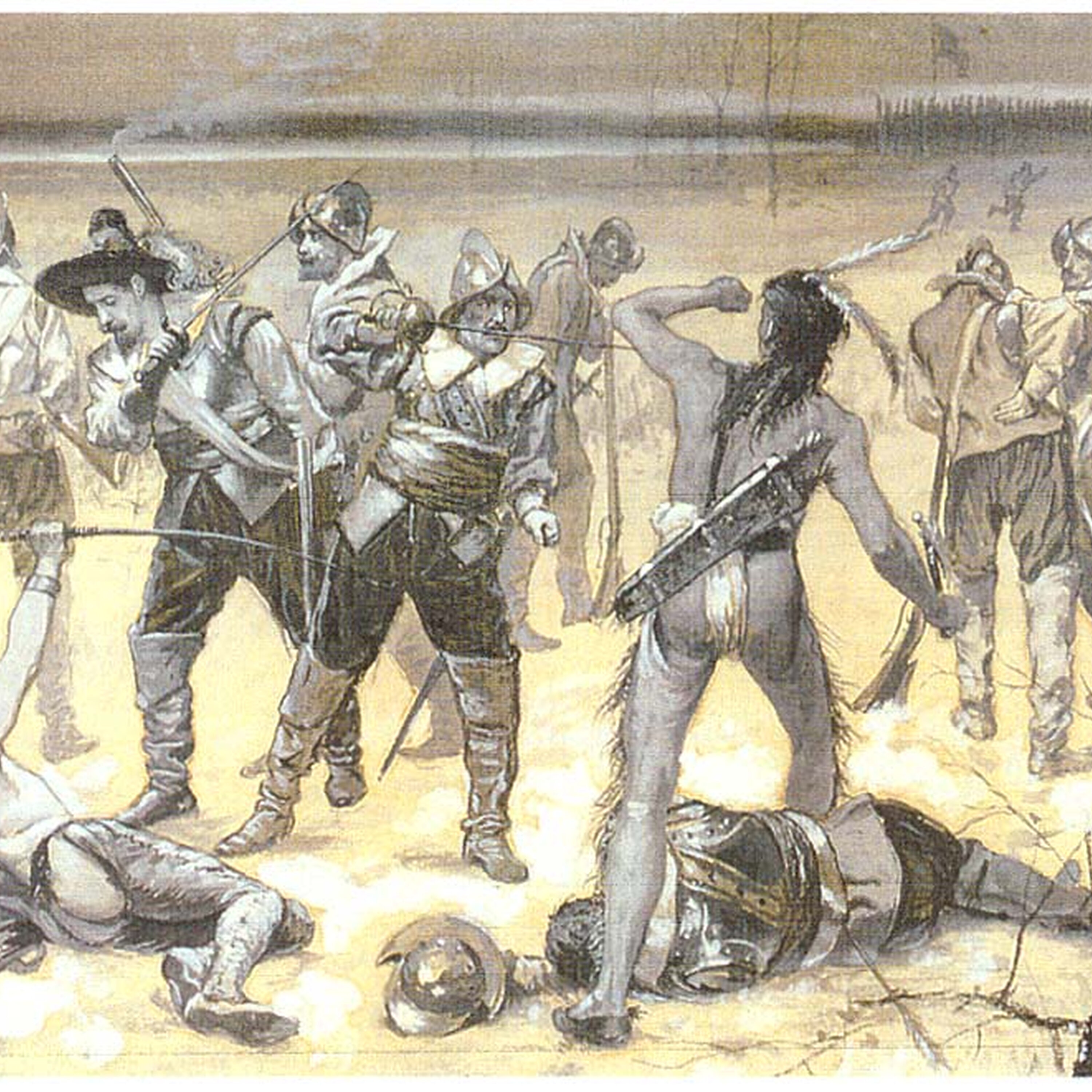
Loading summary
Transcript84 lines
- [00:00]
A
It starts as this basically regional trade war, right between Pequots on one side and Narragansetts and the Mohicans.
- [00:06]
B
Wait, wait, Kathleen. Are you telling me that trade can lead to wars?
- [00:12]
A
What do you know?
- [00:13]
B
Trade disputes can lead to wars. My God.
- [00:16]
A
Follow the money.
- [00:17]
B
Learn something new every day. You've reached American History Hotline. You ask the questions, we get the answers. Leave a message. Hey there, American History Hotliners. Bob Crawford here. Welcome back to the show. You know the email by now. It's americanhistoryhotlinemail.com Send us your questions about American history. I don't care if it's weird, like what Harry Potter house would Thomas Jefferson have belonged to? We can make a show out of it. We can find an expert and we could dig into it. So I'm here for it. The email is americanhistoryhotlinemail.com okay, so on to today's question, and it is a great one. It comes from Tim, my immigrant ancestor from England, came over with the Puritans to Boston and then New haven, Connecticut in 1638. Lore has it he fought in the Pequot War, which is a fascinating story of settlers, competing, Native American tribes shifting allegiances, religious zealots, land, and tragically, the total genocide of the Pequots. Can you explain the complex politics that led to these alliances and treachery? Great question, Tim. And we've got the perfect expert to help us answer it. She is my dream guest for this episode, Kathleen Duvall, author of the award winning book, by the way. She's a Pulitzer winner Native A Millennium in North America. She's also a professor of Early American history at the University of North Carolina in Chapel Hill. Kathleen, it's great to talk to you again.
- [02:11]
A
Thank you, Bob. I'm excited to be here and excited to talk about this important question.
- [02:15]
B
Oh, it is. It's very important. I think people are going to find it very fascinating. I love this question from Tim because the early days of European contact get glossed over, as you well know from your amazing book, Native nations or they're misunderstood. So let's start with the two sides of this war before we get to the war itself.
- [02:39]
A
Okay, great.
- [02:39]
B
Who are the Pequot?
- [02:42]
A
Yeah. So I think the most important thing to know about the Pequot War's beginning is that it begins as a native war. The English will get involved as we previewed there, but it's a Native war and it happens in large part because the Pequots are quite powerful. By the 1630s or so, the Pequots are a people who got maybe, you know, 30, 40, maybe 50 towns in and around what's now Connecticut, the Lower Connecticut River Valley. And by the 1630s, they have basically a monopoly on the production of wampum. Okay, so we now have to step back.
- [03:18]
B
What is wampum?
- [03:19]
A
What is wampum? Will be your next question. Wampum is, are, I guess, beads made out of seashells. And like many people around the world, the native people of what's now New England used these kinds of beads made out of seashells. Seashells as a kind of currency. And so they're really important to use in trade. They're used like money. But they also are believed to have spiritual value, in part because, as native people of the era believed that when you exchanged goods, you also created a relationship, a sacred relationship with you and the people you were trading with. So. So you can. You can think of wampum as money made out of shell, but it's also essential in diplomacy and all kinds of things that. That are more. More abstract than just trade. Okay. So the Pequots have a monopoly over the production of these seashell beads. They're. They're made to be quarrelled, quite uniform, and people are pretty exacting in what they want to look like. It's not because the Pequots make all of them. It's because they've actually used some violence and threats over some of the other native people in the region to persuade them, if you will, to sell their wampum to the Pequots. And then the Pequots act as middlemen, then selling on that wampum to all kinds of buyers, to European buyers in New Netherlands and New England, and also native buyers all around the region, from the Mohawks to the native people around New England.
- [04:53]
B
So who were the colonists, the colonial powers involved at that time?
- [04:58]
A
The main colonial powers who get involved are the English who are in New England. And they aren't completely unified, but they are in different colonies, including Massachusetts, and those who are starting to want to settle around the region of the Pequots.
- [05:16]
B
Yeah, so it's. We're talking about 1630.
- [05:19]
A
Right, right, right.
- [05:20]
B
So can you kind of set the scene for us? What is life like in this area in 1630?
- [05:27]
A
Yeah. So, you know, the English and the Dutch who are in New Netherland, they haven't been there very long. Right. The first English settlers come in 1620. Right. This is only the 1630s. The English settlements are pretty small. There aren't that many of them. Nonetheless, they tend to argue with one another because they're Puritans and they all think they are right about everything. Most people who live in the region are Native, and there are many, many, many more Native towns than there are European towns in the region. There has been a pretty serious. There is a pretty serious smallpox epidemic that breaks out in Native towns and even spreads as far away as the Mohawks in what's now upstate New York in the early 17. Sorry, in the early 1630s. And so the Native population is probably a little bit smaller than it was before. The English see this as a sign that God is on their side. John Winthrop says God is making room for us by clearing out some of the Native people. But as you said, Bob, about, you know, not getting some things wrong about this early part of colonization, that balance of power hasn't changed yet. Native people have almost all of the population and almost all the power in the region, but they're not united as we can see in the war.
- [06:50]
B
And so we have Pequots, but like you said, they're not the only Native Americans are not a monolith, as we would say in political science these days.
- [06:59]
A
That's right.
- [07:01]
B
And you say there are. The landscape is dotted with these towns, and most of them are Native American towns.
- [07:08]
A
Right.
- [07:08]
B
So what is it like with the Native nations, if you will, of this time in this region? Are there, you know, you talk about the Pequots maybe bullying some other, you know, tribes into letting them be the purveyors of the wampum. Right. The treasurer, the treasury, if you want, if you will. So talk about these factions and how they are vying for dominance.
- [07:35]
A
Yeah. So each town sees itself as part of what we could call a nation or a confederacy or a people. So these Pequot towns that have established this monopoly, and then the people who will go to war against the Pequots, the primary people are the Narragansetts and the Mohegans. So those are Algonquin speaking peoples. They all speak similar. They all speak languages within the same large language family. But that does not mean they're all the same as each other or that they have the same of foreign policies or objectives. So the Narragansets and the Mohicans will be the main people on the other side of this war from the Pequots.
- [08:13]
B
And they're using these different Native Nations. Native tribes are using the colonial powers. Right?
- [08:22]
A
That's right. That's right. Sometimes when we push too fast and we move too fast through these eras, people Confuse the Pequot War with King Philip's War. King Philip's War. The English really will be the one on top of. They'll be directing a lot of what happens to. In that war. That is not the case in the Pequot War. This is still. Yeah, this is a native war. And the Narragansets and the Mohegans pull in their English allies onto their side and persuade them, even though it's not really an English interest at first, at least, to fight against the Pequots.
- [08:49]
B
So discussing this with producer James, James Morrison, he's talking about the Hulu series Shogun, and I remember Shogun, the miniseries with Richard Chamberlain when I was the one. I thought, too, a very young boy in the 1970s. But is this. Can we draw a parallel to what was happening in Japan as far as the. The. As far as native populations trying to manipulate the foreign power against their enemy for their benefit?
- [09:20]
A
That's right, exactly. So the English, as I said, don't have the population that the native people have. They don't have the local power or knowledge that the native people have. But they do have some new weapons. Right. They have guns, gunpowder, musket balls. Guns are not particularly accurate at this point. They are useful, though. They are, you know, one in a number of tools that you might want to have on your side if you're going to war, and then having armed people on your side as well would be useful. And that's what the Narragansets and the Mohicans think.
- [09:54]
B
All right, so we've. I think we've worked our way up to the war. So. So talk about the war. What leads to this war between the colonists and the Pequots?
- [10:02]
A
Yeah, so it really. It starts as this basically regional trade war, Right, Between Pequots on one side and Narragansetts and the Mohicans.
- [10:11]
B
Wait, wait, Kathleen, are you telling me that trade can lead to wars?
- [10:17]
A
What do you know?
- [10:18]
B
Trade disputes can lead to wars.
- [10:20]
A
My God, Follow the money.
- [10:22]
B
Learn something new every day.
- [10:26]
A
Yes, that's right. So, you know, and the English really don't have a dog in that fight. Right? The trade part of it, what the English do want is more land. The English settlements are expanding. They're growing. And as I said, these Puritans, they think God is on their side. They think God has intended this place for them. And so they come to the war kind sort of against their will, but it fits. The war fits with a larger expansionist colonial project that they are developing to move ultimately into the Connecticut River Valley and take those lands from the Pequots. Although I don't think it's quite fair to say that's the English motivation at the beginning. It will become that.
- [11:18]
B
In his question, Tim also mentions religious zealots.
- [11:23]
A
Yeah.
- [11:24]
B
Did religion play a role in this war or the lead up to the war?
- [11:27]
A
It really does. I mean, the English are. The English Puritans are religious zealots. Most English people think they are crazy. And so the English, all Europeans at the time, all native people at the time, are religious people. They see the world through their own religion. But the Puritans have come to New England in order to prove everybody else in England wrong, to show England the way, and then ideally, they want to be invited back and to change everything in England. So this is really a great sort of experiment, a city upon the hill that they imagine will give, you know, an example to the rest of the world, to the European world particularly. And so they read everything that happens in terms of that is God showing them that indeed they are on the right path, that they're right about God being on their side. They're right about God making room for them in this new place. And so they. The deceit, the smallpox epidemic, they read as God's will in killing off native people. And they come to see the war in similar terms, that the. That many, many Pequots will die in this war. And that is because God intends this place, including the Pequot's homeland, to belong to the English. This is an iHeart podcast. Guaranteed Human.
- [13:01]
C
Hey, guys, it's us, the Jonas Brothers. I'm Joe. I'm Kevin. And I'm Nick. And guess what? We created our own podcast called hey Jonas. We invented a podcast. Well, we didn't invent it. We. We just contributed to it.
- [13:12]
B
People to do podcasts.
- [13:14]
C
We get to ask other people questions because we're sick and tired of being asked questions. Well, sick and tired is a strong way to put it, but, you know, tired and sick. Tired and sick.
- [13:22]
D
Listen to hey Jonas on the iHeartRadio
- [13:24]
B
app, Apple Podcasts, or wherever you get your podcasts. Just listen.
- [13:28]
C
We don't care where you hear it. Every family has its secrets. But what happens when you discover that your dad has been living a double life?
- [13:38]
E
That is not the look of an innocent man.
- [13:41]
A
Is everyone lying to me about who they are?
- [13:45]
B
I felt such desperation. I felt it was what I had to do.
- [13:50]
C
Listen to Deep Cover the Family man on the iHeartRadio app, Apple Podcasts or wherever you get your Podcasts
- [14:00]
F
why are we all so obsessed with romance? On the Radio 831 podcast join us, Sanjanah Bhasker and Tyler McCall as we unpack all the trending tropes, buzzy adaptations, booktok drama and celebrity love stories with hot takes and sharp guests. Each episode digs into what these stories reveal about desire, fantasy identity and how we love. Now Listen to the Radio 831 podcast on the iHeartRadio app, Apple Podcasts or wherever you get your podcasts this week
- [14:30]
D
at Safeway and Albertsons. Six to 16 ounce selected varieties of strawberries, raspberries or blackberries are $1.99 each limit three member price with coupon and extra meaty pork back ribs or St. Louis style spare ribs bone in previously frozen are $2.99 per pound limit four member price with coupon plus medium avocados, colored bell peppers or English cucumbers sold by the each or tomatoes on the vine or sweet onions sold by the pound are $0.99 member price. Visit safewayoralbertsons.com for more deals and ways to save.
- [15:05]
B
This is American History Hotline. I'm your host Bob Crawford. Today I'm talking with Kathleen Duvall, author of the Pulitzer Prize winning book Native A Millennium in North America. We're talking about the Pequot war from the 1630s. Remember to send us your burning questions about American history. Record yourself using the voice memo app on your phone and email it to AmericanHistoryHotlinemail.com that's AmericanHistoryHotlinemail.com now back to our show. Kathleen, can you walk me through some of the early battles of the war? Once it starts, how does it unfold? Is it like tit for tat raids on villages and towns?
- [15:50]
A
That's right, yeah. So native warfare is usually in the era and in that region, native warfare tends to prefer harsh, strong hits that may take things, may take people, may take captives, may take lives. But then there's a high priority put on retreating quickly like before. Your own people can suffer many casualties of your own. Right. And so it's not that it can't be brutal. Sometimes warfare can be very brutal, brutal. But if the tide starts to turn, retreats are completely honorable and very common. And so I think, you know, from the outset we would sort of describe it as a kind of raid warfare. And it is, it's very back and forth in the early period of the war.
- [16:40]
B
Yeah, you mentioned the, the, the implements of war like that, the that the colonists had guns, they had gunpowder, you know What. What did the Native nations, the Pequots, what did. What did they use to fight? So how were they able to get around that or kind of combat that.
- [17:01]
A
Yeah, so Native people are mostly using bows and arrows at this point. They. They have some guns that they've gotten through trade. And, you know, for the kind of rating that they're doing, bows and arrows work just fine. You know, moving in with the hatchet after the first round is very effective. And so it's not. I think they see guns as really important, and they want guns as part of their arsenal, if you will. But they don't completely weigh things on the side of the English. The English don't automatically win because of guns.
- [17:41]
B
So do any of the Pequots, Native American enemies maybe, join the side of the colonists?
- [17:50]
A
They. Yes, they do. So the Mohawks are the biggest player in the whole region. They're part of the Haudenosaunee, or Iroquois League, and both sides want the Mohawks on their side. And at various points in the war, both the Pequots and the Narragansett send diplomats to the Mohawks and say, will you join on our side? And the Mohawks basically choose the Narragansett side. What. You know, what becomes the English side as well. And so it turns out that as the war goes along, the Pequots are kind of fighting pretty much alone on one side with a lot of. Of other people on the other side on what becomes the English side.
- [18:32]
B
And so how does the war end? I mean, it sounds like they don't stand a chance.
- [18:36]
A
Yeah. So it does not go well for the Pequots. The Pequots lose the war. They're outnumbered. There's so many people fighting on the other side. But also, one of the things that develops over the course of the war is a clear understanding that the English have different tactics in warfare and that there. So the most extreme case happens at a Pequot town called Mystic. And it's a town where there are about maybe 400 people are there. Most of the warriors are not there. They're off on a raid of their own as part of the war. And so it's mostly women and children, older people. And the Narragansets and Mohegans and their English allies attack the town. The Narragansetts and the Mohicans think they'll do what they usually do, which is get as. Many. Capture as many people as possible. So capturing people and either adopting them or trading them back or selling them onto somebody else, this is all Part of native warfare. Native warfare is not warfare. It is. But the English instead, set the town on fire and shooting people as they run out of the town to escape the flames. And so a huge number of people are killed. It really is, you know, war. War terminology is in the eye of the beholder. Right. But I think, you know, as. As outside observers, we could say this crosses the line into massacre rather than battle. And the Narragansets and the Mohegans who were there are just shocked at this. They. They're shocked at the loss of life. And they're also, you know, because they want captives, and captives are part of their sort of warfare economy. They're shocked by. The English would just shoot people when you're supposed to capture them, especially children, because children, they think can be adopted into a new society, and the English just kill them. And it's shocking to us today, and I think it's shocking to the Narragansets and Mohicans who are there, say it's
- [20:34]
B
shocking at the time what happens to the Pequot. I mean, are they completely. Is it genocide, or are they kind of merged into another.
- [20:44]
A
Yeah, it's much more complicated than genocide. So the English intend genocide. Captain John Mason, who's the Puritan commander there at that. That town, he writes, God was above them, who laughed his enemies and the enemies of his people to scorn, making them as a fiery oven and filling the place with dead bodies. He sees this is, you know, the death and destruction that's there is because God wanted it. God is on the side of the English. The English declare the Pequots exterminated. Right. Their intent is genocide. They forbid the Pequots from returning to their lands. They forbid any who survive from speaking their language, from using the name Pequot. They take over those lands so the English do so that they can enforce those rules. Of the Pequots, maybe half of them died over the course of the war, and the rest either become refugees or are sold into slavery. So kind of the lucky ones are the ones who take refuge with the Narragansetts and the Mohicans, and those are their enemies. Right. So that's not a good thing. Right. But those are the ones who probably have the best likelihood of surviving and for their children to continue to survive. Some Pequots are enslaved in the households of New Englanders, and then hundreds of them are shipped by New England merchants on New England ships to be slaves in Bermuda, in islands of the West Indies. Yeah. No, it's amazing. And So, I mean, amazing in a bad way, obviously. Yeah. And so there are, you know, there's certainly descendants of the Pequots among all these different populations. And there are some people who manage to see stay in the region in the Connecticut Valley. So there's a federally recognized Pequot tribe today. There are a few Connecticut state recognized tribes. And they're also, some of them move into the mission towns, the praying towns of New England. And so there are people who know they are Pequots, Pequot descendants in some of the mission communities. Still.
- [22:59]
B
What does this war help us to understand about the politics of the 1600s in America and the, the competition between Native nations and colonial powers all vying for dominance?
- [23:15]
A
Yeah, it is just, it's a terrific example of that and a really good way for understanding the 1600s particularly. That's right. That there are places like this that. Okay, all of North America is a native place with complicated histories and languages and politics and wars and diplomacy. And at various places in various times, including New England in the 1600s, Europeans move in and at first they are small players. And over time, whether quickly or in some cases very slowly, they grow in population. They sometimes use military tactics that are what we would think of as out of bounds. And in New England, they become the dominant people in a fairly short amount of time. But if we could just add one more thing, Native people still survive as best they can and, and continue into the, into the present day and the future, despite all of this, this tragic history.
- [24:23]
B
If you want to. If I'm talking to you listeners, if you want to really understand the history of the North American continent, not only the history of this country, I highly recommend you read Native A Millennium in North America. Our guest today, Kathleen Duvall, is the wonderful author of that book and she won the Pulitzer for it and she deserved it, and so great to call her a friend. Thank you, Kathleen, for joining us today on American History Hotline. Thank you.
- [24:58]
A
Oh, my great pleasure, Bob. Thank you for having me.
- [25:05]
B
You've been listening to American History Hotline, a production of iHeart podcasts and Scratch Track Productions. The show's executive producer is James Morrison. Our executive producers from iHeart are Jordan Runtal and Jason English. Original music composed by me, Bob Crawford. Please keep in touch. Our email is americanhistoryhotlinemail.com if you like the show, please tell your friends and leave us a review in Apple Podcasts. I'm your host, Bob Crawford. Feel free to hit me up on social media to ask a history question or to let me know what you think of the show. You can find me at bobcrawford Bass. Thanks so much for listening. See you next week.
- [25:57]
A
Number one hits, millions of records sold awards, sold out tours. You think the Jonas Brothers are satisfied? Nope. It's podcast time.
- [26:05]
D
We get to ask other people questions
- [26:07]
C
because we're sick and tired of being asked questions.
- [26:08]
A
A Jonas is available now and their first guest is a big one, Paul Rudd.
- [26:12]
B
You know, Steve Carell is a great singer, let me tell you, not to
- [26:15]
C
audition the office or something.
- [26:17]
B
I told him, whoa, we were filming Anchorman. Clearly I was the idiot. Thank God he didn't listen to me right?
- [26:23]
A
Listen to hey Jonas on the iHeartRadio app, Apple Podcasts or wherever you get your podcasts.
- [26:29]
C
Every family has its secrets. But what happens when you discover that your dad has been living a double life?
- [26:37]
E
That is not the look of an innocent man.
- [26:40]
A
Is everyone lying to me about who they are?
- [26:44]
B
I felt such desperation. I felt it was what I had to do.
- [26:49]
C
Listen to Deep Cover the Family man on the iHeartRadio app, Apple Podcasts or wherever you get your podcasts.
- [26:59]
F
Why are we all so obsessed with romance? On the Radio 831 podcast? Join us Sanjanah Bhaskar and Tyler McCall as we unpack all the trending tropes, fuzzy adaptations, booktok drama and celebrity love stories with hot takes and sharp guests. Each episode digs into what these stories reveal about desire, fantasy, identity and how we love. Now Listen to the Radio 831 podcast on the iHeartRadio app, Apple Podcasts or wherever you get your podcasts.
- [27:29]
E
Most people out here think that taking care of one another is important and most people would step up for a neighbor going through a tough one time. Most people around here help out friends and family when they need it. But the funny thing is, most of us won't look for help when we need it. Talk to someone if you're struggling with mental health because most people out here really care. Find more information@loveyourmindtoday.org that's loveyourmindtoday.org brought to you by the Huntsman Mental Health Institute and the Ad Council.
- [27:59]
A
This is an I Heart podcast. Guaranteed human.