Loading summary
Transcript78 lines
- [00:00]
Dr. Nicole Burt
I thought it was really interesting because they made one of the dogs bad. None of the dogs are bad. All the dogs are good.
- [00:06]
Bob Crawford
Gotta have a villain. You gotta have a villain. You've reached American History Hotline. You ask the questions, we get the answers. Leave a message. Hey, there, American History Hotliners. Bob Crawford here. Thrilled to be joining you again for another episode of of American History Hotline. It's the show where you ask the questions. And the best way to get us a question is to record a video or a voice memo on your phone and email it to AmericanHistoryHotlinemail.com that's AmericanHistoryHotlinemail.com. okay, today's question may satisfy your inner child. Here to help me answer this question is Dr. Nicole Burt. She's curator of human health and evolutionary medicine at the Cleveland Museum of Natural History. She's also the interim chief curator there. It's a great museum, by the way. Nicole, thanks for joining me today.
- [01:10]
Dr. Nicole Burt
Thank you. It's great to be here.
- [01:12]
Bob Crawford
Nicole, here's the question we were hoping you could help us answer today.
- [01:17]
Dr. Nicole Burt
Hi, American History Hotline. My name is Kelly and I'm from Pennsylvania. My question is about the Disney movie Balto. I loved it when I was a kid, and I'd like to know if it's really based on a true story or not. Thank you.
- [01:32]
Bob Crawford
Nicole. Let's jump right in. Yes or no, Is the Balto movie based on a true story?
- [01:40]
Dr. Nicole Burt
Okay, so this maybe gets into what being based on a true story means. Balto is a real dog. There is an actual serum run, and diphtheria was a real problem for people in the 1920s. However, the depiction of the movie is pretty creative. So the actual details. The actual details are a bit rough. But Balto is a real dog, and he really did save a bunch of children from an epidemic.
- [02:11]
Bob Crawford
Okay, so we're gonna dig into this. Okay. Okay, so first of all, you're a natural history museum there in Cleveland.
- [02:19]
Dr. Nicole Burt
Yes.
- [02:19]
Bob Crawford
Do you actually have the real Balto on display?
- [02:23]
Dr. Nicole Burt
We do have the real Balto. Cleveland is very proud of Balto. He's one of our icons. So he is in our visitor hall. There are members that come and visit Balto multiple times a week. We love Balto in Cleveland.
- [02:38]
Bob Crawford
So how big is he?
- [02:40]
Dr. Nicole Burt
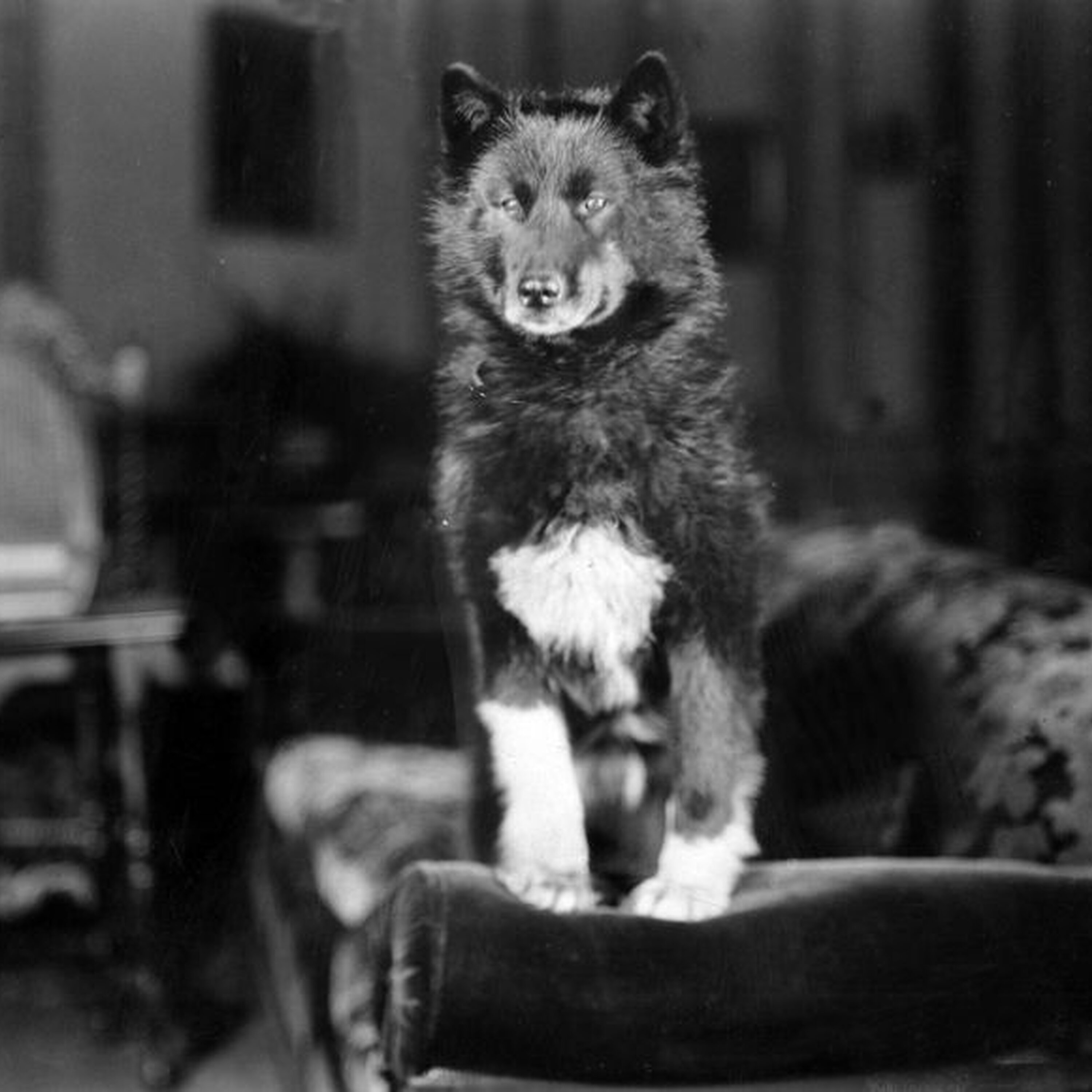
So he is. So everybody's. Hopefully everybody. Everybody's seen a dog. He is actually a fairly small dog. So he. For. For a working dog. Right. If you've seen a husky, he's not as big as most standard huskies nowadays. He's Much shorter and squatter. He is. He has very thick fur. It is darker, like a. Like a nice chocolatey brown. He actually just got a full spa treatment when we redid his exhibit. So in the last two years, his fur has been fluffed. His. His little socks re. Whitened because he has white socks. And. Yeah, he's a very cute small dog.
- [03:21]
Bob Crawford
Is it his still his actual. All of his actual fur, or do you add fur?
- [03:27]
Dr. Nicole Burt
That's a really good question. It is still his fur. Like, when you do spa days, they do actually repaint them because the. The fur itself will lose some of its color over time. But he is still. His skin and hair is part of that. And so he's a really well done taxidermy mount. So taxidermy is what we call the process of preserving those skins. You may have seen them in other. Most people. I'm from the Midwest, so most people have maybe seen like a mounted deer. Deer specimen or something like that. That's also taxidermy.
- [04:07]
Bob Crawford
So let's get to why he's at a museum in Cleveland when he became famous for pulling sleds in Alaska.
- [04:15]
Dr. Nicole Burt
Yeah. So I think it gets into kind of a full scope of the story. Right. So the serum run was super famous.
- [04:24]
Bob Crawford
Okay, let's set the time period.
- [04:28]
Dr. Nicole Burt
Yes.
- [04:29]
Bob Crawford
This is 1925, Nome, Alaska.
- [04:31]
Dr. Nicole Burt
Yeah. So 1925, Nome, Alaska, is going to be the serum run. There's an epidemic outbreak happening in Nome. It hits the papers. It's all over the news. This is big news in January of 1925. And so even in Cleveland, we're aware of that story, and we follow it. My grandparents were alive and they were little kids. They remember this story as well. So Dr. Welch was in Nome, Alaska. They actually have two indigenous children of the anipiac people have passed. Diphtheria is very dangerous. Epidemics are known. So epidemics have all the time. So he knows how serious this is. So he immediately gets on his telegraph because they're completely cut off for seven months of the year in Alaska. So they're already in the winter, and they know no one can get to them. But dog sled, so the trains can't go. We have trains, we have airplanes. They're not getting in in the dead of winter. It's January, and so they need help. So they're going to telegraph out. And even though people. Again, it's normal for Nome to be cut off, not normal for them to be cut off and have an epidemic. So that's pretty scary. And so they needed to think of a way to get it there. It usually takes a month to get things to. To Nome, so they know how dire this is. So this is. This is big news. And I think that's one of the things like it. We. It feels exciting now, but it was also exciting then in terms of the media coverage. There's amazing national media coverage of the epidemic in Nome because the rest of the country, not Alaskans, are enamored with this idea of the dog sleds being the only way to get. To get the materials. So it really kind of highlights this, like, local knowledge and what you're used to and like a national experience of a crisis.
- [06:36]
Bob Crawford
Well, yeah. Well, just. If I could. If I just could interrupt respectfully, for a second. It is this idea of when, you know, Covid happened, you know, we were all in the. On a grander scale, probably a more universal international scale. This idea of operation warp speed and trying to get a vaccine delivered. Right? Delivered, Created. Delivered. How do we collapse the amount of time it will take to do this? And this is kind of a version of that.
- [07:18]
Dr. Nicole Burt
Yeah, you hit on it. This is exactly why this is important for me as a health curator to talk about, which is diphtheria was a epidemic. They were having multiple epidemics around the country, not just in Alaska. With diphtheria. Through the 1920s, 13 to 15,000 children and elderly would die per year from diphtheria. So this is a real threat, like, when people know, they're afraid. And the idea that they could do something to prevent it was exciting. So the idea that we could take a trip that normally takes a month and do it in five days to save kids is exactly that. Like, what can human. When humans put their mind to doing a big task, we can do it. And so in that time, that was the moral of this story, is like, humans can do big, difficult things when they want to, and that's still why it's so exciting now. I think that's the story.
- [08:17]
Bob Crawford
Okay. So they realized the only way to get the. Get this. The serum to the kids who need it is via a dog sled.
- [08:24]
Dr. Nicole Burt
Yes. And so now they need volunteers. Right. So people don't run that route for charity. Right. So, like, Balto is actually part of a freight sled. So they did freight runs through that area. And some of the other famous mushers, like Togo has a. A movie as well. He's another one of the teams with Leonard Shepla, who actually was a. The predominant racer. So he was Famous for winning dog sled races, which are also happening at this time. So his team was faster. And so if you look at Togo, he looks like more like what you would expect. Like we asked what dot what Balta looked like. Togo looks a little bit more like what you expect a sled dog to look like because he's a racer. So he's fast. Right. Like you want a fast dog, but Balto, the much more bulky, reliable dog.
- [09:18]
Bob Crawford
So we have Togo's team, which is probably faster.
- [09:21]
Dr. Nicole Burt
Yeah.
- [09:21]
Bob Crawford
And then you have Balto's team. You know, how was it determined which team would take on this task?
- [09:29]
Dr. Nicole Burt
That's the initial idea. When they start, when they have the serum in, like January 27th is when they're really starting out. So January 20th, epidemic breaks out. January 27th, they're like, okay, it's got to be dog sleds. We found the serum, we gotta get it. This antitoxin is very fragile, so you do have to be a little bit careful with it. And we have to get it there as quickly as possible. So they're gonna run kind of as long as the dogs can handle it to do it. So the original idea is fewer teams, longer stretches of the over 600 mile trip. So that's what Leonard Shepla thinks is happening when he sets out. As they start, they realize they're getting good press. So there's more teams signing up. There's going to be in the end, over 20 dog sled teams that take part in this relay that if they keep it to each group doing about 30 miles, they'll be able to actually make better time by doing it relay style. And so this also starts from Nana. They're coming the other way. Right. So they're coming up. So they're coming at each other. The teams take, I believe it's Wild Bill is the first. They have great names because it's, you know, the twenties. Wild Bill Shannon takes the first leg with his team, does 30 miles. They're going to hand off overnight. So this makes it. They can go all day, all night. The weather is dropping, it's getting worse. So it's already going to be impassable. It's minus 50 by the time they're going across. So day in and day out, they're going through. So it's starting on around January 27th, the 28th to 29th, I believe there's, let's see, nine teams that do 30ish mile stints to get them along. There's then going to be like a little break then by the January 30, we have more teams taking those miles. They're not very famous teams, so these are just guys with teams. So they're freighters, they're racers, they're people who do jobs. These are just people who know the need. Like I said, it's very well publicized and are committed to preventing children from dying because diphtheria. I don't think I said this. Diphtheria when untreated. So if you don't have that antitoxin, about 50% of children who have it will die. It's. It's very serious if untreated. And so they really know they have a window. By the time they get through switching teams, they can't get a hold of Shplo because he is just, like, booking it out. So he is booking it out. They're trying to tell him he can wait and they'll hit him eventually. Around January 31, he's supposed to make a handoff, but he doesn't know that.
- [12:40]
Ad Voice 1
This is Matt Rogers from Las Culturistas with Matt Rogers and Bowen Yang. This is Bowen Yang from Las Culturistas with Matt Rogers and Bowen Yang. Hey, so what if you could boost the WI fi to one of your devices when you need it? Xfinity WI fi can. And what if your WI fi could fix itself before there's even really a problem? Xfinity is so reliable. It does that too. What if your WI fi had parental instincts? Xfinity WI fi is part nanny, part ninja, protecting your kids while they're online. And finally, what if your WI fi was, like, the smartest WI fi? Yeah, it's WI fi that is so smart, it makes everything work better together. Bottom line, Xfinity is smart and reliable. You deserve the peace of mind of having WI fi that's got your back. Xfinity.
- [13:23]
Bob Crawford
Imagine that.
- [13:24]
Ad Voice 2
This is Danielle Robay from Bookmarked by Reese's Book Club. The autograph journey credit card from Wells Fargo is built for travel. You can earn rewards wherever you book your favorite hotel site your go to airline, and more. You get five times points with hotels, four times with airlines, three times on restaurants and other travel, and one point on other purchases. Whether it's a big vacation or a quick getaway. From booking your stay to that first meal when you arrive, you you're turning your trips into rewards with the autograph Journey card from Wells Fargo. Learn more@wells fargo.com autographjourney Terms apply.
- [14:01]
Dr. Nicole Burt
Hey, this is US Olympic gold medalist Tara Davis Woodhull and I'm US Paralympic gold medalist Hunter Woodhull. As athletes, our lives are about having a clear path and a team that
- [14:10]
Bob Crawford
you can absolutely trust.
- [14:11]
Dr. Nicole Burt
So when it came to getting the best mortgage, we chose PennyMac. PennyMac is proud to be the official mortgage mortgage provider of Team USA.
- [14:18]
Ad Voice 1
And you learn more at pennymac.com PennyMac
- [14:21]
Bob Crawford
Loan Services, LLC equal housing lender and MLS ID 35953 licensed by the Department
- [14:26]
Dr. Nicole Burt
of Financial Protection and Innovation under the
- [14:27]
Ad Voice 1
California Residential Mortgage Lending Act. Conditions and restrictions may apply. Busted appliance. This is your sign to upgrade shop at Lowe's to get up to 35% off and next day delivery on hundreds of major appliances. Lowe's we help you Save. Valid through 318 while supplies last selection varies by location. Order by 4pm Available Monday through Saturday. Subject to availability, fees, exclusions and restrictions apply. See Lowes.com appliancedelivery for more details. Visit your nearby Lowes on Colorado street in Kennewick.
- [15:05]
Bob Crawford
This is American History Hotline. I'm your host, Bob Crawford. Today My guest is Dr. Nicole Burt. She's curator of human health and evolutionary Medicine. Listen. At the Cleveland Museum of Natural History. She's also the interim chief curator there. We're talking about dog sledding and the Disney movie Balto. Remember to send us your burning questions about American history. Record yourself using the voice memo app on your phone and email it to American History Hotline gmail.com. that's americanhistoryhotlinemail.com now back to the show. Okay. When we left off, Nicole, we were visualizing this relay and what was happening. So take us to this moment. Take us back to this moment.
- [15:56]
Dr. Nicole Burt
Yeah. So the weather is terrible. They're going day and night. They're trying to speed up a trip that usually takes a month, and they want to do it absolutely as fast as possible because every lost day is a potential for a child to not make it. So they are. They're feeling the crunch, but the weather is really not with them. It's getting worse and worse. There's snowstorms. The visibility is very poor. That is very tiring for both the men, but also the dogs. Right. So in dog sleds, the lead dog actually has to, like, pick the path. So if he can't see and do it, they're going to get lost. But it's very important that they don't lose time, which is, again, why you want the best teams you can doing the hardest legs, because they're less likely to get slowed down by that.
- [16:50]
Bob Crawford
Okay. So I Gotta interrupt you here. So the best teams we know, Togo, he. We know his team's the best, the fastest. We know Balto isn't the muscular, fast dog that you would imagine by looking at him. How does Balto wind up in the middle, like, in this. In this position?
- [17:12]
Dr. Nicole Burt
So they, they. They need teams. They need teams that are used to running the route. And so Balto is relatively inexperienced, but Gunner Kaesen, who is his musher,
- [17:26]
Ad Voice 2
is
- [17:27]
Dr. Nicole Burt
gung ho about doing this. They're also in the right place, right? So they're actually positioned closer to Gnome, where they can do that. That final handoff and pull it through. So they don't want to, again, trying to do handoffs so that no one's doing the whole trip, but they're catching whatever mushers are in locations to try to, like, stack it to go faster, relay style, as opposed to like a marathon foot race for one person. And so really, they're taking whoever they can get. They need people who will do it and are willing to risk their own life and the lives of their dogs, right? Like, this is dangerous. Like, people are getting frostbite, people are getting injured. Dogs are getting injured. So you are actually risking it. And like I said, these are economic. So they obviously, they care for their dogs. We know that. But they're also part of their economic livelihood, right? Much like farmers and ranchers, where, like, if the dogs are injured, they can't. That they're what powers their sleds, right? They're. They're economically not going to be able to succeed. Balto's team, though, is actually owned by Shepla, who is very devoted to this cause. So even though he has his preferred team with Togo, one of his other. Other teams, which is led by Balto, is also in the midst, led by another musher, Gunner. So Shepla actually ends up meeting up with Hevery Ivanov and doing an. A trade of the serum, right before having to make a short cross again across Norton Sound, which I'm not an expert in dog sleds. I'm really not. I'm an expert in medical access. And the general story of. Of. Of why we need to do this type of work. But everybody agrees it's crazy. The fact that they found each other is insane. And then the fact that he took that shortcut through the sound is also crazy. The fact that they were able to get through that, and that is a crucial point. He takes the longest leg. Shoshepola and Togo take the longest leg with a shortcut which shaves off really necessary time. And so that's one of those points. And I bring it up because I believe Balto is a hero, but all the dogs are heroes, right?
- [20:04]
Bob Crawford
And if I'm writing the screenplay for Disney, I'm looking at the facts and saying, wow, this thing writes itself. But there were liberties taken. So what were some of those liberties that were taken with the film?
- [20:19]
Dr. Nicole Burt
So I actually, recently. This is gonna. All the fans are gonna be so mad. So I was too old for the movie in 1995, so I did not see it as a child. So I literally watched it because I finally watched it because of the question. The Question Asker inspired me. I watched it and I thought it was really interesting because they made one of the dogs bad. None of the dogs are bad. All the dogs are good. They're not showboats.
- [20:49]
Bob Crawford
You gotta have a villain.
- [20:50]
Dr. Nicole Burt
You have to have a villain. But, like, it's not the dog. There are no bad dogs. All the dogs in this story are great.
- [20:56]
Bob Crawford
All dogs go to heaven.
- [20:58]
Dr. Nicole Burt
See? But, yeah, so that was one of the biggest things, right? Everybody really is working towards a shared goal. This is a. This is a group project. It's a group hero situation. Balto, as the final team, is going to get a lot of the publicity, and rightly so. That's still great. Like, that's the final one. They got it there. They also overcame really hard odds. They took a long. They took a double shift as well, 61 miles. So they went overnight through a storm. They're not sure if they just, like, missed the stop or why they pushed through, but Balta pushed through with. With Gunner, and they're the ones that actually got it to the team on time at the hospital to deliver it. And so there were. There was media there, right? There's a film crew who filmed it, and they reenacted it live. And so it gets into, like, why certain people, like, what gets captured for posterity and, like, pushed up, right? So because all the other parts Disney had to make up because it's essentially, we have the names, we have the distances, we have color commentary after the fact. But they didn't have cameras with them. No one was with them. They weren't journaling while they were going through. And so, like, you just have to, like, know what's happening. Whereas once you get to nomenclature, with Balto and Gunnar Kaysen, we have video, like, we have film reel of that happening. And so that really catches the imagination. And so I understand why they focused on Balto and that aspect of the story. To me, the villain is medical access. Right. The villain is there's this isolated place with one doctor and they don't have enough medicine to treat children. That's the villain. But that's not very exciting for a child.
- [23:03]
Bob Crawford
Right. We need to personify the villainy.
- [23:07]
Dr. Nicole Burt
Maybe if diphtheria, they should have animated the bacteria. So maybe if it was like drawing a bacteria with, like, a monocle, that would be.
- [23:16]
Bob Crawford
And this was before inside out.
- [23:19]
Dr. Nicole Burt
Yes, exactly. No one had thought about that.
- [23:20]
Bob Crawford
We weren't there yet.
- [23:22]
Dr. Nicole Burt
All the money you can make.
- [23:25]
Bob Crawford
So Balto's part of this historic dog sledding team that accomplishes this incredible humanitarian act. But then what happens to Balto? Because you were telling me that he winds up in the circus. How does this happen?
- [23:46]
Dr. Nicole Burt
So he's famous. Much like now, people want to capitalize on fame. The. The twenties aren't that different. So Shepla remembering, Balto is owned by Shelpa, but it's not his, like, primary team. He doesn't. This is now the famous dog. But he wasn't like, a great dog. He was just like a fine freight dog. Right. He wasn't special to him in terms of, like, his racing career. So he essentially, like, sold him to an agent so that he could go on tour. He was very like, the country loves him. Balto, like, the film reels went out, the newsreels went out of reenacting delivery.
- [24:25]
Bob Crawford
Nicole, if I could just ask you, like, Balto's part of a team?
- [24:28]
Dr. Nicole Burt
Yep.
- [24:29]
Bob Crawford
He's part of the final team that delivers the serum. Why did he, in particular get singled out?
- [24:36]
Dr. Nicole Burt
So they sent the whole team. So we. Cleveland, actually say Balto and his teammates that were still surviving. So it would have been the whole group. So they did go as a team. They were actually doing. I'm sure people are more familiar, like, with, like, the Wild west shows type of tours where you had, like, cowboys pretending on. Pretending to still be cowboys. Right. Like, the 20s is a crazy time in terms of, like, what's happening.
- [25:01]
Bob Crawford
Right? Yeah.
- [25:03]
Dr. Nicole Burt
Concurrent cultural norms. They were actually doing the same thing with the dog sleds. So Balto, they had a dog sled. They hired an actor to pretend to be an indigenous woman to drive the sled they had. So they were, like, reenacting it essentially as part of the tour, as well as, you know, letting people see really good dogs. People want to see good dogs even in 1925. And so they actually toured for about two years before they ended up in LA. And they would have been, I believe they went through at least two owners. So there was an original agent and then a second agent, which is how they ended up in la when George Kimball actually found them kind of becoming obscure. Right? Like, so he still remembered how famous they were, but they were kind of like over the pitch of. Of their fame. They were on the down. The down slope of their fame at that point. Gunner Cason was no longer with them. He had, you know, the money dried up for. Because he was originally on tour with them. Um, so he had left as well. And so they were at kind of, you know, they're, they're. They were turning into has beens. I guess that is when George Kimball found them and remembering the story and being very personally touched by it, decided to save them.
- [26:32]
Bob Crawford
Dr. Burke, this has been a great conversation. I think my last question for you is, do you recommend people see the Disney film?
- [26:40]
Dr. Nicole Burt
Oh, man, that's hard.
- [26:42]
Bob Crawford
But, well, look at that. Like, like you're. The pause kind of tells a story.
- [26:47]
Dr. Nicole Burt
I mean, I'm probably too serious about Balto. It's probably totally fine to see the movie. I would say there's some great books. I know the Togo movie is also an option, which has a little bit more of an accurate story. There's so much good information at Balto. I think you can. I think you can do better. That's so judgy. You can do better.
- [27:08]
Bob Crawford
Spoken like a true museum curator. I've been talking with Dr. Nicole Burt. She's curator of human health and Evolutionary medicine at the Cleveland Museum of Natural History. She's also the interim chief curator there. Nicole, thank you for joining us today on American History Hotline.
- [27:28]
Dr. Nicole Burt
Thank you.
- [27:33]
Bob Crawford
You've been listening to American History Hotline, a production of Iheart podcasts and Scratch Track Productions. The show's executive producer is James Morrison. Our executive producers from Iheart are Jordan Runtal and Jason English. Original music composed by me, Bob Crawford. Please keep in touch. Our email is americanhistoryhotlinemail.com if you like the show, please tell your friends and leave us a review in Apple Podcasts. I'm your host, Bob Crawford. Feel free to hit me up on social media to ask a history question or to let me know what you think of the show. You can find me at bobcrawford Bass. Thanks so much for listening. See you next week.
- [28:26]
Ad Voice 2
At cvs. It matters that we're not just in your community, but that we're part of it. It matters that we're here for you when you need us, day or night. And we want everyone to feel welcomed and rewarded. It matters that CVS is here to fill your prescriptions and here to fill your craving for a tasty and yeah, healthy snack. At cvs, we're proud to serve your community because we believe where you get your medicine matters. So Visit us@cvs.com or just come by our store. We can't wait to meet you. Store hours vary by location.
- [29:01]
Ad Voice 1
The Emmy winning comedy Scrubs is back. The beloved original cast, including Zach Braff, Donald Faison, Sarah Chalk, Judy Reyes and John C. McKinley scrub back in at Sacred Heart Hospital for all new hilarious and heartfelt stories. There's a healthy injection of colorful new characters as well, including a fresh group of newbie interns and coworkers, nemeses Vanessa Baer and Joel Kim Booster. The new season of Scrubs premieres tonight at 8, 7 Central on ABC and stream on Hulu.
- [29:31]
Ad Voice 2
Breaking news everybody. Not everything is terrible. I repeat, not everything is terrible. The Ripple Effect with Jenna Kim Jones is proof that the Internet it hasn't ruined humanity entirely. Author and member of the church Dave Butler looked at what had happened and realized that there were other victims in this tragedy and did something completely unexpected. He set up a fundraiser for the family of the shooter who had left behind a wife and a child.
- [30:00]
Ad Voice 1
I think what people recognized is that the 10 year old son of the shooter is also a victim. The widow was also a victim. So it is 9,500 people and a lot of them are giving five. $5, $10, $20.
- [30:15]
Ad Voice 2
It's like magic you guys. So put down your doom scroller and pick up your faith in humanity and join me, Jenna for the Ripple Effect. It's a reminder that you can start a ripple that changes everything. You really can. Listen to the Ripple Effect with Jenna Kim Jones on the iHeartRadio app, Apple Podcasts or wherever you get your pod.
- [30:37]
Ad Voice 1
Are you a fraud paying American? 1 in 4 tax paying Americans has been a victim of identity fraud With Lifelock. If your identity is stolen, they fix it guaranteed or your money back. Last year billions in refunds were stolen. Could be from your salary, overtime or second job gone. But this year you don't need to stay a victim because this tax season fraud paying American is something no American should have to claim. Save up to 40% your first year. Visit lifelock.com iheart Terms apply.