Loading summary
Transcript66 lines
- [00:00]
Bob Crawford
It sounds like they were freelance. What we would today, we would call them freelancers.
- [00:04]
Vincent D. Girolamo
Well, I might call them gig workers or.
- [00:08]
Bob Crawford
Yes.
- [00:08]
Vincent D. Girolamo
I mean, that's the latest thing where you don't, you're not a, you're, you're not an employee, you don't have health coverage, you don't have any kind of salary. And so that they were, they were the predominant form of, of gig work.
- [00:24]
Bob Crawford
You've reached American History Hotline. You ask the questions, we get the answers.
- [00:29]
Vincent D. Girolamo
Leave a message.
- [00:32]
Bob Crawford
Hey there, American History Hotliners, Bob Crawford here. Thrilled to be joining you again for another episode of American History Hotline, the show where you ask the questions. And the best way to get us a question is to email us@americanhistoryhotlinemail.com that's americanhistoryhotlinemail. Okay. Today's question is from Nicole in Utah. She writes, my daughter's school is rehearsing Newsies the Musical. And I'm wondering what really happened with newspaper boys and the working children in New York. Did they actually go on strike? And if so, what were the lasting effects of the strike for New York City and the whole country? Nicole, this is a great question and. Well, I've got news for you. I think we found the perfect expert to help us answer your question. Joining me now is Vincent D. Gerolimo. He's the author of the book Crying the A History of America's Newsboys. Vincent, thanks for joining me today.
- [01:41]
Vincent D. Girolamo
Thank you for the invitation.
- [01:44]
Bob Crawford
We are so glad to have you. Okay, I want to start by talking about the musical and then we can get into the real story. Can you give me a quick synopsis of the musical, what it's all about?
- [01:59]
Vincent D. Girolamo
Well, Newsies is a first of all, it started as a movie and then it became a musical.
- [02:06]
Bob Crawford
I remember the movie very well from my childhood.
- [02:10]
Vincent D. Girolamo
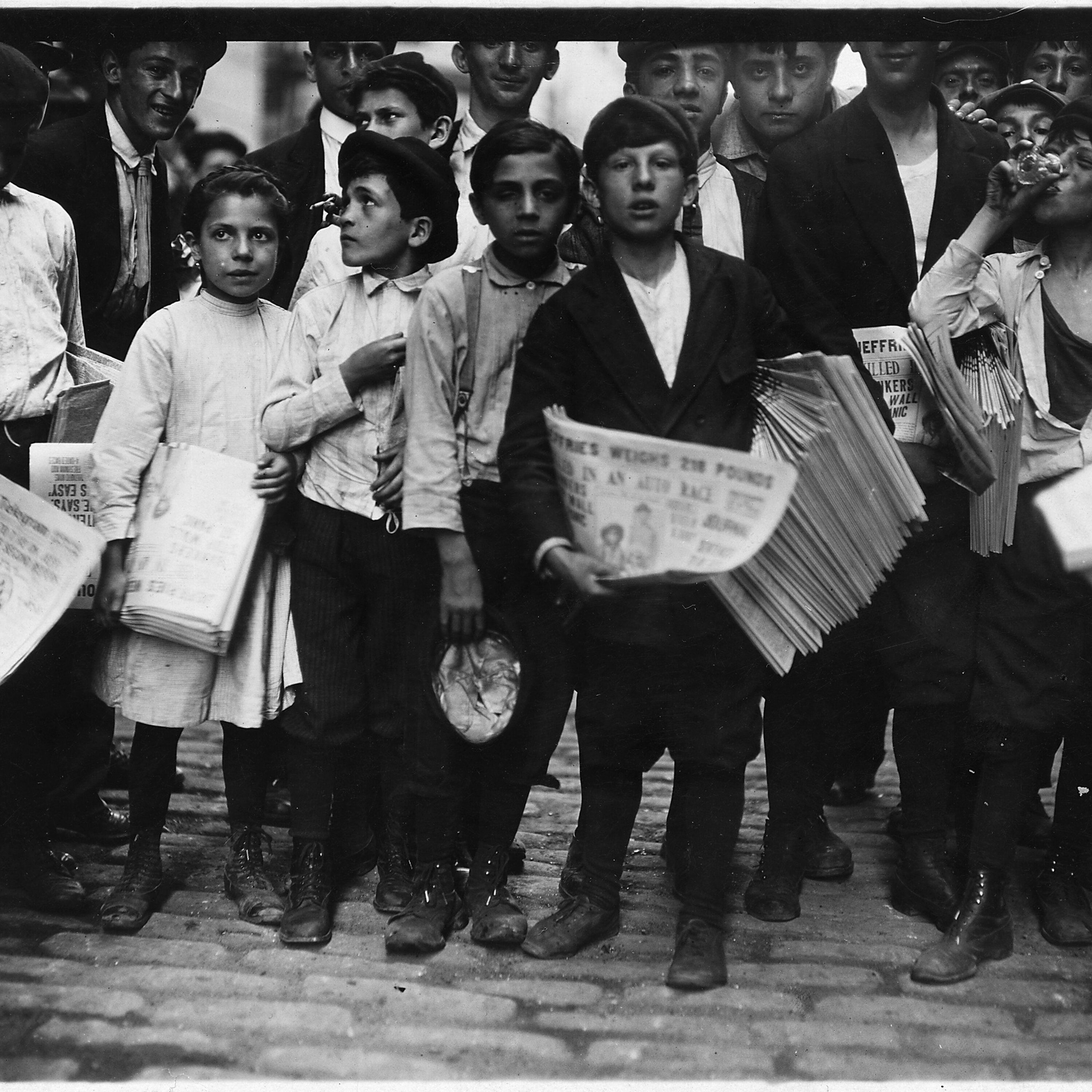
Right. It was kind of a box office flop at the beginning, but it became a really a cult favorite among young people. And it was all based really on the original discovery of this strike by David Nassau in his book Children of the City. And they put together a dramatization of the strike, which was a real event, happened for about two weeks in New York City late July to early August. And the movie really sort of captures the, I guess the cohort of young people who were on the streets during that period, 1890s, you know, 1880s, 90s, a huge flood of immigration, a very, very young population and poor. And so they needed to work. And so this was actually a subculture, a strong occupational, and they were quite Militant. And so the movie sort of captures this one of many, I should add, flare up between the newsboys and the publishers. And so the movie profiles a few of the leaders and sort of neglecting or ignoring sort of other participants that were part of the strike. But there's a romance as well. Kind of a little, kind of a not little sappy romance between I think one of the reporters and one of newsboys. Teddy Roosevelt makes a cameo appearance. Hurst and Pulitzer. Hurst disappears from the story and Pulitzer becomes the, the main sort of nemesis and the, the heavy trying to exploit these boys. And so the kids, the kids in the movie and in the play and in the real life, the precipitating event was the raising of the, of the prices, the wholesale prices for, for to the newsboys. So they were getting, they were getting two papers for a penny half price. And then the, the newspaper said okay, you know, you'll get, you'll get instead of five for 10 cents, you'll get four for 10 cents. And so that they were trying to recoup sort of losses that they incurred during world, during the Spanish American War. And so that price hike to the newsboys and, and there was a triggering incident as well. They found out that one of the, one of the suppliers was, was short stacking them, right? Giving them, giving them fewer papers than what they had bought. And so that started it.
- [04:51]
Bob Crawford
What was the role like, like you're talking about, like they would get so many papers for so much money. And tell me like walk me through, like what was the role for these newsboys?
- [05:03]
Vincent D. Girolamo
Okay, so, so the newsboys, they were very different kinds of newsboys. I call it tears of the trade. So at the lower level there were just hawkers and they would buy their papers and, and sell them. They weren't employees, they weren't on a salary. They would just, they would just invest in what, however many papers they think they could sell and, and, and sell them through the day or in the rush hour or whatever it was. So those were, those were the newsboys that went on strike. There were more. There were carriers. There were boys who had regular routes. There were boys who worked for and would help distribute to subscribers around the newsstand or they would go hawk up and down the streets where the newsstands were. There were like 5,000 newsstands in New York during this period. And then they each, you know, had from 2 to 10 kids working for them. So there were all different kinds, but these ones that went on strike were really, the free agents were working on their own Hook and just buying and selling.
- [06:03]
Bob Crawford
So you talked about this, this period of, of immigration that, that's, that's happening at the same time as this. What, what were the nationalities of these boys? Like, were they Irish immigrants, Italian immigrants, Eastern European, like at this time?
- [06:19]
Vincent D. Girolamo
Well, in New York and in cities throughout the United States, the, the ethnic profile of the news sellers reflected the ethnic profile of the, of the working class. And so in New York and in other cities, people commented and there was a transition from the Irish had dominated the trades earlier on. Germans, Scandinavians, English as well, British immigrants. So, but in this period, the Southern European, Eastern European Jews and Italians started to really dominate the ranks. And the Irish are disappearing like snow in the spring sun, according to one newspaper. And there were all kinds of sort of ethnic stereotyping, if you will. The Irish were tough, they could fight and they, they dominated the trade. But you know, the Jews were smart and they, and they worked hard. But, but the Italians, they were, they were not as tough as the Irish, not as smart as the Jews, but they, but they worked harder and longer. And so they, so those sorts of explanations in the press about why certain groups dominated, but it was really a sheer number. The other thing about the Italians and Jews, they came, the immigrants came with, I don't know, an average of $8 in their pocket, the equivalent of $8 in their pockets where the earlier immigrants had 24, $30 in their pockets. And so they were more needy. Also, I think it's interesting during this period laws were passed that if you as an immigrant family went on the public dole, you could be sent back. And so there was all that incentive to send their kids out, keep, help them, keep, keep off the poverty rolls.
- [07:55]
Bob Crawford
All right, so you talked about like what kind of precipitated this strike. It was the raising of the cost of the papers for the newsboys. They weren't going to get as much of a profit. And you mentioned a few of these famous publishers, Hearst and Pulitzer. So in the real newsies newsboys strike, who was the culprit? Who was the head? Was it all the different publishers? Was it one in particular that, that impacted this strike?
- [08:29]
Vincent D. Girolamo
Well, this was a strike against the, the New York World, which is the Pulitzer paper, and the New York Journal, which was the Hearst paper. And they were the biggest circulation newspapers. Their dailies and their Sundays. They're, you know, I think Pulitzer had a hundred page Sunday paper on the anniversary of his, of his newspapers starting. And, and so they, they, they dominated you know, graphically as well in terms of their content, the most sensational. They had the cartoons and comic strips, children's pages, women's pages. So they were, they, they really led the field in terms of innovation and of course, you know, new technology as well, line of type machines, what have you. Paper was getting cheaper because of the use of wood pulp. And so they really were able to, to produce in some cases like a million copies a day. You know, that's such a lot of newspapers kids today talk about. Oh, they didn't have social media back there. Well, it was pretty, it was pretty social and it was pretty amazing. So all kinds of extras, all kinds of additions, and they were the targets. Interestingly, they were part of a newspaper publishers group in New York City. And this strike broke up the group. Hearst and Pulitzer went off and sort of collaborated, colluded, set their own prices and their own policies after the strike because they felt that the other newspapers, which were a bit resentful, like think of the Hurst and Pulitzer success, they really did the utmost to publicize the strike. They loved it that their competitor was undergoing this sniping and nipping at the ankles from these newsboys. And so sometimes they would help them rent a hall, sometimes they would help them print up their posters, they would give it a great coverage in the newspapers. And they had cartoons in their newspapers about the newsboys, you know, throwing horseshoes and, and engaging in struggles with the strike breakers. So Hearst and Pulitzer both resisted the strike. Both did everything they could to stop it. They tried to buy off the leaders, which in some ways they did. At the end. They tried to hire homeless men to just, you know, $2 a day to sell the paper.
- [10:48]
Bob Crawford
Scabs. Scabs.
- [10:49]
Vincent D. Girolamo
Scab. Exactly. And the news boys were interesting because they were grown. They were part of this working class world. They, you know, there was a big strike, a streetcar strike, there was a homestead strike in, in the, in the 90s, the Pullman strike. And so, and so they had the language, they had the sort of the sensibilities of standing up for their own. And one, one kid said, well, you know, Hurst, Pulitzer tried this in the early 90s and he saw a few kids with new shoes and he said, the heck, they're getting too good of a deal. We've got to raise to these kids. So they had the idea that things weren't so even in the world and they needed this money more than Hearst and Pulitzer.
- [11:28]
Commercial/Advertisement Voice
This is an Iheart podcast, guaranteed human
- [11:34]
Vincent D. Girolamo
spring into deals with stay green premium 2 cubic foot mulch, 5 bags for $10 plus stay fresh with with up to 35% off. Select major appliances and save an additional $100 on select laundry pairs. Our best lineup is here at Lowe's. Lowe's we help you save valid through 56 mulch offer excludes Alaska and Hawaii. See lowe's.com for more details.
- [11:57]
Commercial/Advertisement Voice
Visit your nearby Lowes Picture this Me, Reese Witherspoon in London, ordering fish and chips so often they might start wrapping me in paper. I'm traveling with my Wells Fargo Autograph Journey card, so I earn rewards wherever I book travel 5 times points with hotels, 4 times with airlines, 3 times on restaurants and other travel and 1 point on other purchases. Imagine getting rewarded for eating a toad in the hole. Wait, what is a toad in the hole?
- [12:27]
Vincent D. Girolamo
Visit Wells Fargo.com autographjourney Terms apply.
- [12:32]
Commercial/Advertisement Voice
Your social media feed delivers plenty of advice, but it doesn't know you. It doesn't ask questions. It doesn't give physical exams or order tests. Doctors do at the American Medical association, we believe the best care starts with a real conversation, with someone who understands the science and your unique health. So stay curious, ask questions, but when it's time to make decisions, make them with a doctor. Learn more at amahealth versus hype.org that's amahealthvshipe.org find home wherever you roam at Sinesta? Es and simply Suites, where longer stays feel comfortable, flexible and easy. Stretch out and enjoy spacious accommodations and homelike amenities designed to help you settle in and stay productive or relaxed for however long you need. And when you're a Sonesta TravelPass member, staying at Sinesta? Es and simply Suites means earning points towards free nights, upgrades and more with every eligible stay. Go to sonessa.com to book your stay and unlock the best rates with Sonessa Travel Pass here today, Rome tomorrow. Join now@sonesta.com Terms and conditions apply.
- [13:44]
Bob Crawford
Were there specific leaders who were like the leaders of the strike?
- [13:48]
Vincent D. Girolamo
Well, the leaders of the strike, the main leader who's not really profiled in the movie, is a guy named Kid Blink. He had. He had one eye. He had a bum eye. He was Italian American. I found his real name was Louis, Louis Baletti. And he was, I think he was about 18, he was a little older and he had a great speaking skills, a great orator and, and a lot of personality. And he was quoted in the newspapers the most of anybody. But there were also some boxers that were famous among the newsboy class because of their, because of their sort of notoriety as, as pugilists and so Kid Link was Italian and the. Who is the other guy? Morris Cohn was one he actually met with, with Pulitzer, Hearst rather and Dave Simons. Dave Simons was the boxer. So he was, he was.
- [14:49]
Bob Crawford
How old were these guys? Like age range?
- [14:53]
Vincent D. Girolamo
Age range I would say from maybe 11 to 18. Cornelius Grin Boyle, he was like the military leader. He was, he was 13, 11 year old. Boots Mackel didn't see. We know that because a few of them were arrested. And so, and so their ages are part of the newspaper reportage. So we got an 11 year old, we got a 13 year old in Brooklyn. Spot Conlon was 14 years old. He was famous for his pink suspension offenders. So, so we get this kind of detail with the, with the great sort of coverage and, and, and we get their accents, we get this sort of the, the, the slang, the newsboy slang. It's all part of the portrayal of these kids. So they were young, 13, 14, 16, the average. And they represented all the ethnicities, including African Americans. William Rees was, was, was one guy in, in, in Manhattan and there's another noted, noted speaker in, in Brooklyn and also New Jersey. So the interesting thing, I don't share the movie or the play gets this, but it really did strike. David Nassau says it sparked what might be called a children's general strike. And I thought that was a little exaggerated. But when you really read it, not only does this strike spread from New York City and the five boroughs, Staten island, but you know, up, up upstate, it goes to Connecticut, it goes to various towns in New Jersey. And then people are reading about it. And so we have, we have newsboys and boot black striking in Lexington, Kentucky and other places. And so they are kind of inspired by this, by this militancy.
- [16:42]
Bob Crawford
Okay, so the newsboys went on strike. We talked about the like homeless people being recruited to sell papers. How did they keep other boys from, from selling papers? How did they keep the strike together?
- [16:58]
Vincent D. Girolamo
Well, the newsboys who were part of the strike needed to keep others from selling papers. And so they made their arguments left and right, left and right. That's how it's described in the newspaper. So it was a militant, they were, they would, they would steal their papers, throw them down, beat them up, run them off. And they would do this to adults as well as they. Sometimes they even did this to a older news woman who didn't like these kids were taking her business anyway. And so she was selling papers from under her apron. And, and so they were gonna, they were going to terrorize her, but they said no, we got to back off. We can't, we can't soak a woman. But they would. And the, the scabs, the strike breakers would also use violence to, to keep them from, you know, to ensure their ability to sell. And so there were guns. Kid, Kid Blink had a, had a, had a revolver put down his throat and the, and the boys would, would arm themselves with barrel, what do you call barrel staves and, and spokes of, of wooden wheels, brass knuckles. They had all kinds of, of weapons. So they were, they were really in a, in a, in a, in a war to protect their live. And you know, violence was sort of part of their culture in some ways. And so, and so they would, they would militantly try to enforce the strike.
- [18:20]
Bob Crawford
So you listed a number of strikes that had been going on in that era, the Pullman strike, and earlier you named a bunch of them. Is this a part of that, Is this like just this time period of, of, of, of, of unionization and, and, and strikes and, and striking out against the, the current labor laws? Like, like what? You know, are the newsboys part of this larger movement?
- [18:48]
Vincent D. Girolamo
Absolutely. The newsboys are part of the labor movement, which is one of the biggest social movements of the era. And they are infused with this spirit. And so we see them adopting the language, we see them supporting the strikes of printers and other newspaper workers. And they're also doing something which, you know, nobody really realized until I discovered it was they're joining the Knights of Labor. They have the Kids night, the Junior Nights of Labor.
- [19:18]
Bob Crawford
So they actually unionize?
- [19:19]
Vincent D. Girolamo
Yes, they form unions. Most of these were short lived independents, but sometimes they join a local labor guild, a municipal labor league. But they would affiliate with the Knights of Labor. They would affiliate with the American Federation of Labor. Gomper said they'll never wipe out the labor movement, not as long as these kids are with us. It just shows how, how necessary we are. So they're Terence Powderly, the founder of the Knights of Labor. They call Powder lease partisans up in, up in New England. There was a strike there because the carriers were getting privileged treatment and getting their, getting their papers earlier and getting bicycles and things like that. So they joined the Knights of Labor also in the West. They joined the iww, the Industrial Workers of the World and some of those towns in Utah. Your questionnaire was from Utah, Colorado. There would, everybody in town would be part of the Knights, the Industrial Workers of the World. And there again they were quite militant. So they're caught up in this movement in this spirit. They have A kind of class consciousness. As workers, they have a kind of age consciousness. As young people, they have a kind of occupational consciousness. As newsboys, members of the newsboys class, we have to stick together. And so they're using this language and they are infused by this spirit.
- [20:45]
Bob Crawford
So what did people do during the strike? Did they go without news?
- [20:50]
Vincent D. Girolamo
Well, during the strike, the Hearst and Pulitzer, Hertz and Hearst and Pulitzer lost a measurable amount of revenue. So there's sales, there are letters between, I think Don Seitz, which is Pulitzer's business manager. Pulitzer is up in Maine. He's kind of suffering from headaches and what have you. And so these letters go back and forth. He says, oh, we, we lost, you know, 20%, 10%, 15% of our, of our sales advertisers. They don't want to pay the, the, the, nor the going rate because we're reaching fewer readers. So in that, in that breach the other newspapers are selling more, are selling more newspapers. And so that's why they have a little vested interest in, in supporting the strike.
- [21:36]
Bob Crawford
Did, did the public support the strike?
- [21:39]
Vincent D. Girolamo
The public supported the strike. I think to some degree they did. I mean, because of you, because you actually took risks by buying these boycotted newspapers. Maybe some people didn't, didn't necessarily support the strike, but I think, I think it's hard, it's hard to measure, but there are other options. And so Hertz and Pulitzer also had their enemies for other reasons, for, for their political positions. And so they had the most glorious newspapers on the market. So people wanted those papers. But I think by and large you had the support. In fact, one measure of that is that they have this big meeting in Irving hall which is represented in the movie. And you have local aldermen speaking and saying, okay, you boys, cut down the violence and you'll prevail. You have a local priest, Newark I think it is. And he's saying, he's saying, you know, avoid dynamite. And, and we're with you. And so these, these local politicians and, and are, are sort of going on record supporting the strike.
- [22:47]
Commercial/Advertisement Voice
Craving bold, authentic taste without kitchen chaos. True nature meets Japanese Teriyaki style. Delivers tender beef glazed with sweet savory umami. Pre cooked perfection. Inspired by Japanese chefs. Eat in two minutes. Slice over salads or plates. Complaints turn to second helpings. Real meat, real flavor. Go to trunature meats.com code free meat for 20% off plus free New York strip Texas smoked brisket and Mediterranean chicken with code free meat@trunaturemeats.com Sonesta Travel Pass is the most rewarding way to travel, designed to help you get more out of every stay. Sign up@sonesta.com to enjoy instant savings, bonus points and valuable perks like early check in, late checkout, room upgrades and free stays. Over time with Sonessa TravelPass, every stay brings you closer to your next reward. Choose from more than 1100 hotels across 13 distinctive brands and unlock the best available rates when you book direct with Sonesta Travel Pass Here today, Rome tomorrow. Join now@sonesta.com Terms and conditions apply. Garnier is proudly partnering with the National park foundation, the official nonprofit partner of the National Park Service. Garnier's support of the National Park Foundation Service Corps program is enabling young adults and veterans to help care for and enhance the national parks that we all love. The National park foundation and Garnier are proud to support these individuals as they explore future careers, gain practical field skills, develop confidence as leaders, and help address priority projects across our national parks. Together, Garnier and the National park foundation are committed to a shared vision of preserving and protecting our most treasured places for future generations. Want to lend a hand? Explore Garnier's partnership with the National park foundation and learn how you can help support our national parks@garnierusa.com NPF you're a
- [24:40]
Vincent D. Girolamo
pro at running your life. At committing to your workout, at showing up every day. At Bombas, we're pros too. Pros at making socks. Our sport assortment has specialized socks for whatever sport you're committed to running, hiking, golf, Pilates, and so much more. Made with sweat, wicking yarns, blister fighting details and targeted arch support. Bombus Sport is pro level socks. From the Pros of Socks. For another pro, you go to bombas.com audio and use code audio for 20% off your first purchase. That's bombus.com and use code audio.
- [25:11]
Bob Crawford
So how does the strike end?
- [25:13]
Vincent D. Girolamo
Ultimately, how does the strike end? That is the question here we get into a bit of fiction because as I say in that in that essay, I make a couple of points in that in that essay, Newsies and academe mainly that this, that this, that this strike was not the A1 off, that there were dozens of strikes in Boston, Omaha, Denver, Cripple Creek, Colorado, Chicago, spokane throughout the 1890s.
- [25:40]
Bob Crawford
It caught fire.
- [25:42]
Vincent D. Girolamo
This was before this was so the
- [25:45]
Bob Crawford
newsies were part of something that had.
- [25:48]
Vincent D. Girolamo
Okay, that's what I'm trying to explain in terms of their affiliation with the Knights of Labor, the American Federation of Labor, the IWW they were known to be, the newspaper industry was known as a, as a, as a, as a conflict industry. And printers had skill, Printers could, could, could really get their way. And so newsboys were part of that. And, and they were, they learned, they learned a lot. Sometimes they learned to read and write from, from the printers, but also they learned their, they acquired their politics. So these strikes are, are preceding the 1899 strike and they're all over the country. So that's an important point. Most of them are losers, most of them are short lived and they're over a whole range of issues. Not just wage hikes, but, but you know, orders that you have to, you know, have, have a clean face or, or somebody, a favorite supplier got, got fired. They would, they would strike for a whole variety of reasons. In the 1890s you have another technological innovation, this, the silent newsboy, the mechanical newsboy, better known as the newspaper rack, right, the, the vending machine. And so they're striking over that, they're trashing these machines. So this is part of the militancy. The 1899 strike ended ambiguously in the sense that the coverage trails off. And so the script writers actually called me early on and said, how did it end? How did it end? And it seems to be that there was a deal made between some of the leaders and it looked like some of them were selling out. And so they did not get there. They did not go back to the old wartime prices, the pre war prices, but they got a concession of returns that they could return the unsold papers. Not, not one to one necessarily. Sometimes you can return five and you can get three new papers. And so that was the one concession. The other thing I find in, in this strike and other strikes is that parents are saying, okay, great, great. You know, you're fighting for your, for your, you know, justice, your economic justice as you determine it. But we need the money. Go back to work. Quit fooling around. So there's parental pressure as well to, to get those kids back to earning. So two weeks is kind of a maximum, I think, for, for these, for these strikes. And so the, the, the strike just sort of fizzled and it, you know, took longer in other places. It, it dragged on a little, little, little longer. But it didn't get the newspaper coverage, although it did, it did lead. There was a sort of an adult run or adult organized union did, did, uh, take shape afterwards.
- [28:33]
Bob Crawford
What were child labor laws before the strike, before these strikes? And did the child labor laws change after these strikes or as a result of these strikes?
- [28:45]
Vincent D. Girolamo
Well, I think that's a, that's a good question, because I make this point in the book. Maybe it's coincidental, but these street trading ordinances where you have to get a license, you have to show you're of a certain age, you have to get off the streets by, by 9 o', clock, 10 o', clock, those sort of municipal regulations, sometimes they were in a state law, often they were city laws. They often followed these newsboy strikes. And so these, these, these labor laws were a way, and let's face it, mandatory school attendance laws is our labor laws as well. So these, these rows, 1899 strike, 1903, we get the, we get the first New York law where kids have to be lice and regulated. So I see that, I saw that pattern in cities across the country. The other interesting thing about these street traders is that they're not regular employees. Right. So as you get the child labor laws in the late 19th century, factory work, textile mines, these kids are exempt because they're not employed. You know, the newspaper publishers will say, listen, you know, they come here, they buy papers, and we don't, we don't employ them. They're not our workers. And so as a result, they are exempt from most labor laws. Yeah, indeed.
- [30:11]
Bob Crawford
It sounds like they were freelance. What we would today we would call them freelancers.
- [30:15]
Vincent D. Girolamo
Well, I might call them gig workers or. Yes, I mean, that's the latest thing where you don't, you're not, you're not an employee, you don't have health coverage, you don't have any kind of salary. And so that they were, they were the predominant form of, of gig work. And.
- [30:35]
Bob Crawford
Yeah, so what was the broader impact, getting back to, to Nicole's question, what was the broader impact of these strikes on the country?
- [30:45]
Vincent D. Girolamo
The, the newsboy strikes? Well, it's interesting to think that, that we forgot about this or how much impact could it have if, if we all forgot about it until David Nassau discovered it and the, you know, movie makers sort of popularized it 100 years later, 80 years later, I guess the impact of the strike, you could measure it on the impact on unions, on the labor movement, and then on the industry as well. So the labor movement does realize that these kids are valuable. They have their ideas, they support us. And so we see the afl, American Federation of Labor, are sanctioning newsboy unions. The biggest one is in Boston. And they are able to, they want respectability. And so, and so we have the Boston newsboys unions, and they're supported also somewhat by Reformers who think this is a good way to kind of, you know, regulate the industry and, and make sure that they're self regulating in some ways keep the younger kids off the street. So that phase happens. It also something. These good newsboy republics are come out of this as well. These are, these are like boys clubs and they teach kids how to, how to elect. Elect officers and to vote. And so it's kind of a civic lessons.
- [32:06]
Bob Crawford
Yeah, it's great.
- [32:08]
Vincent D. Girolamo
And this happens in Boston and Milwaukee and various places. Newsboy republics also. This is the start of the progressive era in some ways during this period. And so we see the settlement houses, Women's Christian Temperance Union. There's. They see newsboys as, as a result of. Of you know, drinking fathers or, or impoverished parents. And so they get involved in newsboy work and try to regulate them and to, or in some cases to abolish them. They're not able to abolish these. The trade but to, but to regulate becomes the compromise. So we see the reformers as well getting involved in this, in this problem. We see girls, news girls are being regulated for the first time in a big way that they become kind of the wedge in which reformers say well nobody cares about the boys but, but let's. We don't want girls out in the streets selling, you know, approaching strangers for commercial purposes at night. And so there's the, the, the, the news crying the news girl problem. And, and so they become much more prominent in public consciousness. We have Jacob Reese as well with his photographs. But newsboys are also at this time glamorized. They are, they're. They're the Nisbe. The newsboy. The yellow kid was, he was a newsboy. We have newsboy statues going up across the country. Newsboy tobacco, newsboy cigars. So as much as they're, as much as reformers are trying to regulate the trade and stifle it, the publishers are celebrating them as well as being. This is how kids learn the work ethic. This is how kids pull themselves up by their bootstraps. Leave them alone. They're better off selling papers for us.
- [33:49]
Bob Crawford
How did you get onto this topic?
- [33:53]
Vincent D. Girolamo
I got onto this topic as a labor journalist working for the Longshoreman's union newspaper wanting to look at child labor, but not just child labor and which is often is about the reform movements but about, about the kids and the culture that they developed and how did they organize, how did they, how did they discipline themselves? What did they think? What was in their minds? So I wanted. And I Thought the, the, this, these newsboys were actually kind of an interesting group. They really hadn't been done. I read Nassau's book and I thought, oh, I'm scooped, I did it. And I said, wait a minute, wait a minute, let's go back and forward. Let's see, let's see how it really influenced their family economics, their, their, their. How did it actually influence the news, the newspaper industry itself, how did it influence the country? And so I'm looking at not just sort of a history of newsboys, but a sor. A newsboys history of the United States and looking at it across time from 1830s to the 1930s. And it just seemed like the street as a workplace. What could be more interesting than working on the streets? And the newspapers are often, you know, journalism history is often about these great publishers and the public opinion that they shape. But they are employers. It's one of the biggest non smokestack industries in the, in the country. So let's look at them as employers. All that coupled with the fact that my father, my uncles are all depression era newsboys in Boston. And so I grew up with the stories of them hustling on the streets and it just seemed like that kind of influenced their own kind of style and entrepreneurial sort of tendencies as well.
- [35:30]
Bob Crawford
So those are an incredible topic to look back on and think about in this moment where the newspapers are literally, they're dying off like that, like print media is dying off. And so it is really incredible to, to take a look back. I've enjoyed our time together today. I've been talking to Vincent G. Dural Girolamo, Vincent D. Girolamo. And I made this difficult because it's just a name. Vincent D. Girolamo, author of the book Crying the News A History of America's Newsboys. He also has a new essay out called Newsboys in Academe. It's Sorry. He also has a new essay out called Newsboys in Academe. It's in a new collection titled Newsies. Newsies. Read all about it. Essays on the film and Broadway productions. Vincent, thank you for joining us on American History Hotline today.
- [36:30]
Vincent D. Girolamo
Thank you. Thank you.
- [36:36]
Bob Crawford
You've been listening to American History Hotline, a production of Iheart podcasts and scratch track productions. The show's executive producer is James Morrison. Our executive producers from Iheart are Jordan Runtal and Jason English. Original music composed by me, Bob Crawford. Please keep in touch. Our email is americanhistoryhotlinemail.com if you like the show, please tell your friends and leave us a review in Apple Podcasts. I'm your host, Bob Crawford. Feel free to hit me up on social media to ask a history question or to let me know what you think of the show. You can find me at bobcrawford Bass. Thanks so much for listening. See you next week.
- [37:30]
Vincent D. Girolamo
I'm U.S. transportation Secretary Sean Duffy. We all get distracted when we drive,
- [37:35]
Bob Crawford
whether it's from our phones or kids
- [37:39]
Vincent D. Girolamo
in the backseat bickering. But how we handle these distractions can be a matter of life or death. Before you get on the road for your for your next road trip, please put your phones on silent and take a mental note to focus on driving. Paid for by NHTSA
- [37:59]
Commercial/Advertisement Voice
when you manage procurement for multiple facilities, every order matters. But when it's for a hospital system, they matter even more. Grainger gets it and knows there's no time for managing multiple suppliers and no room for shipping delays. That's why Grainger offers millions of of products and fast, dependable delivery so you can keep your facility stocked, safe, and running smoothly. Call 1-800-GRAINGER Click grainger.com or just stop by Grainger for the ones who get it done. Hear that? That's the sound of your skin silently crying out for hydration. Luckily, Dr. Teals has just the thing to get you glowing in no time. Meet Dr. Teals Skin renewal Deep Hydration, made with a proprietary triple magnesium complex, plus skincare actives for 50% improved skin hydration. After just one bath, the words dry and dehydrated are about to be wiped from your vocabulary. Find Dr. Teals all dressed in blue in your local bath aisle. Dr. Teals. Yep, you needed that. Me Reese Witherspoon in London ordering fish and chips so often they might start wrapping me in paper. I'm traveling with my Wells Fargo Autograph Journey card, so I earn rewards wherever I book travel 5 times points with hotels, 4 times with airlines, 3 times on restaurants and other travel, and 1 point on other purchases. Imagine getting rewarded for eating a toad in the hole. Wait, what is a toad in a hole?
- [39:25]
Vincent D. Girolamo
Visit wells fargo.com autographjourney Terms apply.
- [39:30]
Commercial/Advertisement Voice
This is an iHeart podcast. Guaranteed Human.