← Ask Lisa: The Psychology of Raising Tweens & Teens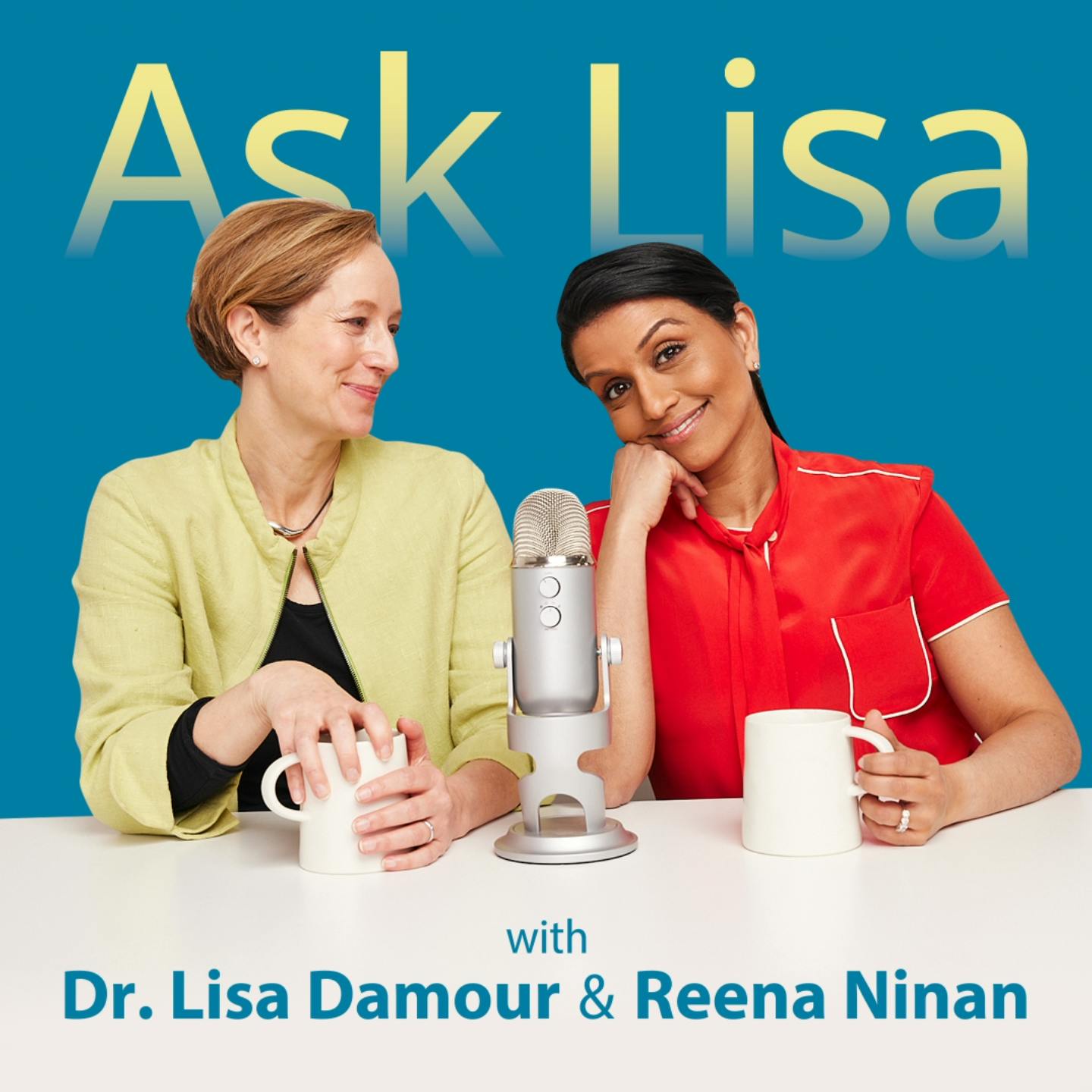
Ask Lisa: The Psychology of Raising Tweens & Teens
268: Should I Let My Teen Take Supplements?
00:25:45
Loading summary
Transcript45 lines
- [00:02]
A
Tell me a parenting issue everyone struggles with with tweens and teens, but no one talks about Rena.
- [00:07]
B
I think a lot of people feel like they just don't know how to connect to their kid anymore.
- [00:13]
A
I'm Rena Neinen and welcome to Ask Lisa the Psychology of Raising Tweens and teens.
- [00:18]
B
And I'm Dr. Lisa Damore. We bring you science backed strategies for managing anxiety, discipline, intense emotions and more.
- [00:25]
A
We decode tough parenting issues with tips you can use right now. So subscribe to Ask Lisa the Psychology of Raising Tweens and Teens and join our YouTube community. Today just Google Ask Lisa podcast.
- [00:38]
B
We're here to help you untangle family life.
- [00:43]
A
Episode 268 Should I let my teen take supplements? You know, I'm taking all sorts of supplements. Vitamin C, multivitamin, I like my Omega 3. I don't think about and I'm taking creatine. I feel like it's, it's made a difference for me, but I don't think about the impact it has as my teens are seeing me take all of this and is this actually good for them? I have thought about that.
- [01:15]
B
Lisa. This is a whole new world, right? Like this is a big part of a lot of families life. A lot of adults are taking supplements. I'm with you on a lot of these things. And yet it's a little bit different when suddenly our kids are like, I want it too.
- [01:32]
A
Yep, I want to jump right into this letter. Dear Dr. Lisa and Rena, I'm writing with a question that came up recently in our house. My son is 16 and plays baseball and lately he's been asking if he can start taking creatine. He says that, quote, basically everyone on the team is using it and that it's just part of training now and not a big deal. To his credit, he's done his homework. He's shown me articles and studies suggesting that creatine is safe, especially compared to other supplements. And he insists he's only interested in improving his performance, not bulking up or doing anything extreme. He is a responsible kid. He works hard and generally makes good grades and good choices. Still, I'm uneasy. I don't love the idea of my teenager taking a supplement, even one that's widely used by adults. I also worry about the pressure that he feels to keep up with his teammates and, and whether this opens the door to other substances down the line. So I'm torn. Am I being overly cautious or is this a place where it makes sense to hold the line? What should parents think about creatine for teens, especially athletes who are serious about their sport. Thank you for your guidance. So, Lisa, are you hearing about this in teens more and more, or is this kind of a one off?
- [02:46]
B
No, a hundred percent. And I will tell you honestly, Rena, creatine is like the least of it what I am hearing, which is not to say it's not nothing like we got to figure out an answer to this question. But like, what I am hearing, and it's got me super uncomfortable is it's a lot of boys who are, you know, online getting just absolutely flooded with content about muscle, muscle building, supplements, ads for supplements. I mean, it is really, really common. There's a lot of versions of it. Some of it in the like, questionable category, which I think are things like creatine. And, you know, we want to think that through. Also in the questionable category I'm hearing a lot about is like pre workout is what kids are calling it, which are basically like, like Red Bull, you know, like stuff like that, like super caffeinated stuff with like God knows what else in it that kids feel they need to be taking before they go work out. Like. But again, all of this, you know, sort of mediated through influencers online. So there's that stuff and then there's like way more worrisome stuff that is also being vended and pushed at kids. So the answer, short answer, which I made not short at all, is like, oh my gosh, yes. Am I hearing about this and hearing about kids getting into it. And I would say a lot of kids not asking their parents, right? I mean, this kid's asking, but a lot of kids are just doing it.
- [04:22]
A
Yeah. So, you know, this boy says in the letter, look, I'm not interested in bulking up and being big. You know, he just wants a sort of, maybe there's a little bit of an athletic advantage here. Is this about body image or what are you hearing?
- [04:37]
B
So it's interesting, right? Like, that does feel like the question of like he's saying, no, it's just for athletic performance. Right. But like, who knows, right? Whether it also sort of crosses over into. And I actually like the idea of being more muscular. And you know, all the guys on my team are doing this and I'm watching their bodies change, right. Like, it's not the line between. I would say, especially for teenagers, you know, it's a performance issue, it's athletics. And it's because I want my body to look a certain way. Like that is a very blurry line. Right. And I think what it says to me is, proceed with caution. Right? Do not just be like, okay, performance. You got it, Right. I think there's a lot of ways we want to slow this down and ask a lot of questions.
- [05:37]
A
Ultimately, do you think the mom should say yes to creatine?
- [05:42]
B
Here's what I think. If the family has the time and the resources, I actually think they should run this through a physician, go to their pediatrician, go to a pediatrician and ask the pediatrician's advice. And sometimes you want a physician to weigh in both because, like, I don't know, right? Like, this is a medical question. And as much as the science feels very clear and very, very supportive of adult creatine use, I don't know how many of those studies are run on teenagers. Right? They're probably not running those studies on teenagers. Developing bodies are developing bodies. And so if I were the family in this, I would be like, let's ask your doctor what your doctor has to say, and if your doctor's okay with it, we can have that conversation. But if your doctor's not, it's not happening. Right? And so I think there's a double reason to involve a physician here or someone in the medical field. One is like, yeah, I think you actually do need a medical answer on this, right? Like, this is people putting stuff in their bodies, right? Like, I think we want to take that seriously. And it's probably not been tested on teens. The other is, again, you want to stay out of a power struggle with your kid about, like, body stuff, because teenagers and their bodies, like, they like to be in charge of their bodies. And so involving a neutral third party who's got nothing but the kids physical best interest at heart is a great idea. When these things get kind of when the stakes go up. When the stakes go up, the more neutral parties involved, the better friends. I have always been a huge fan of Common Sense Media and have shared their resources in so many ways over the years, including my wonderful conversation that I recently had a live Ask Lisa podcast episode with Dr. Nadine Burke Harris, which we had this conversation out at the Common Sense Media Media Summit on kids and families. Be sure to listen to that episode. It was a great conversation. In addition to all of the incredible resources from Common Sense Media, you know, thousands of movie reviews, TV and book titles that they review, they also have been digging into the new AI tools and grading them by risk levels. Now, what's important is that these are independent third party evaluations of AI safety, effectiveness and appropriateness. To find these evaluations and a host of other resources for parents and caregivers. Check out their app. The feed updates each week and there's so much good parenting content there for you to explore. So visit the Apple App Store or Google Play Store and search for Common Sense Media to download their app today. I've been using my Mill food recycler for several months now. And I gotta tell you, it's gone from being something that I thought would be kind of nice to have to being something that I don't know how we lived without it. Mill is the odorless, effortless, fully automated food recycler. I take food that's gone bad, food that's past its expiration date, food we're not going to eat, and even scraps from my own cooking. And I put it in mill. And while we sleep, Mill quietly transforms our food scraps into nutrient rich, shelf stable grounds. I personally have put my grounds into my herb garden and the fact that I can take food that we would have wasted and use it to nutrify my herbs is like the most amazing thing. Not only is it good for the planet, it's also good for our palate. We're eating really beautiful foods thanks to Mil. Try Mil risk free for 90 days and get $75 off at mil.comasklisa and use code asklisa. That's $75 off at mil.com asklisa and use code ask.
- [09:25]
A
You know, there's some natural things that happen in team sports. Like, you know, suddenly everyone's using a certain trainer and so people all want to do that thing and go with the trainer. Or you know, when you're talking about the pressure, other teammates are doing it. What's your advice to parents when that comes up?
- [09:41]
B
So, right. We're sort of in this weird world now where there's such a, like, I don't want, I want to call it professionalization of kids sports. But like it's like faux professionalization, right? Like it's like this, this really, really souped up, ambitious. Let's all try to be on our way to college athletics, which is such a narrow door that very few kids find their way through. It's not great, it's not ideal. It can drive performance. I think there can be benefits in terms of helping kids work harder and take their sport more seriously. But, but I also, I'm like, sports are for fun, right? And so if it stops being fun, I think that's something that we need to take very seriously. You know, for most kids, it's for fun. Very few kids are gonna have it be a professional pursuit. And even for them, I'd want it to be fun. Right? And what we know is like, kids do better professionally when sports are still fun. I think, Rene, we wanna just put it under that bigger umbrella of like achievement pressures and like, what's really necessary for kids and try to pull back the lens a little bit. And I think there may be a conversation to be had here about, like, why do you need to keep up with all of these kids? Like by, you know, maybe putting something in your body that you wouldn't otherwise, like, really, like, it'll frustrate the teenager. But I think there's valuable conversations to be had about, like, wait, what's the goal here? Like, do you think you could make all state for baseball if you do this and that? This, this is going to be the thing that decides it. Like, walk me through what the end game is here that you feel you're trying to achieve by taking a supplement.
- [11:31]
A
The parent writes about concern. If I say yes to creatine, what about other supplements and other things, substances that the kid might think, well, you know, they said yes to creatine, so this other stuff must be okay too. Do you worry about that?
- [11:46]
B
Yeah, I do, I do. I think it's, it's a very worthwhile place to put some friction, right. Because I'm only saying this because I'm just seeing kids just get flooded by social media telling them they need all these things, right? And, and some even very worrisome stuff of kids getting into like GLP1s that they're getting from God knows where to cut weight even though they're perfectly fit kids who don't need it. Right? Like, so like the, the this can go to a, a place that is actually pretty worrisome. And again, like, do kids do worse stuff? Oh my gosh, 100% the most worrisome stuff, right? So then there's like proteins, right? And protein powders. And again, like, I'm not a physician. Check with your physician. Some of it may be safer than other things, you know, in creatine, like even that. I mean, again, I'm not a physician, but it's just to help with muscle strength and capacity while working out. It's not necessarily something that's going to transform an athlete from the bench to the first string. We have to be realistic. The scariest version of this, if we stay in this category, is kids getting into steroid stuff and anabolic steroids as a way to, to transform Their bodies. And so I think as a parent in this, probably the place to be is we'll talk to your pediatrician about creatine and see if that's okay. What is it you're hoping it's going to do for you? And is there another way to get there?
- [13:24]
A
Right.
- [13:24]
B
Are you being realistic about what could actually happen here with it? And then I think the parent could be like, and whatever else, even if your pediatrician says yes to creatine, like, that's it. Do not ask me for anything else like this. Like, my worry is that this is the beginning of something. And I need you to know that scares me. And I want you to know that that is off the table, that there's more behind this. Like, I would really draw a bright line around that. And again, only with the doctor's authorization for the creatine.
- [13:55]
A
That's great that you flag that early on and have that in parallel that conversation in parallel with the creatine. Because I think it's just so hard for so many parents because there's all sorts of protein powders there, there's pre performance enhancing supplements. There's so many things that, as you mentioned, you're bombarded with. So where should parents draw the line?
- [14:18]
B
I think. I think it's interesting because different families will have different overall approaches to this. And part of what's so interesting is a lot of adults are taking this too. Right. And we have sponsors for this podcast, right?
- [14:32]
A
Oh, yeah.
- [14:32]
B
And I love that. Right. And they're great products.
- [14:35]
A
They are great.
- [14:36]
B
Right. And so one place to start is if the parent themselves does not use any of these things, that gives parents a place to be. Like, that's just not how we do. Right. And in the same way, the families might be like, we're a vegetarian family, or we're a family who keeps kosher or whatever. Like, so long as you're living with us, we just don't do these things. If the parent themselves is taking them, then I think, like, you are. And I take some. I use protein powders because I really like them, and I use collagen because I really like it. Then I think it actually becomes a more complicated conversation because we might be like, I will do this, but you cannot. And then we need to justify that. And again, it may be a place where we check in with a pediatrician for a little bit of guidance about how appropriate this is for a growing developing body. I know exactly what the pediatrician is going to say on the protein stuff, and it's what Dr. Reshma Shah said when we had her, which is, you should be getting it from your food. Right. You should be getting it from your food. And I think there's a lot to be said for helping kids learn while we're at home with us, how to build a diet of real and whole foods that meets all of their growing needs. And not using, not making, you know, supplements central when they should be actually just that, like supplements as needed, you know, with pediatrician's blessing.
- [16:05]
A
Yeah, it is, it is hard because I find, you know, today we're taping this podcast and you know what, I'm going to have a chocolate protein shake right after this because I'm on the go and it's just easy and I love the taste of it. It makes me feel good, you know, and. And they see the powders.
- [16:20]
B
Yeah, no, I will probably have some protein powder today. I will. You know, I put them in my smoothies because it's faster and easier for me. Absolutely.
- [16:29]
A
That's right. Let's face it, our undergarments can have a huge impact in daily life. And I know for sure. I noticed the difference once I started using Honey Love shapewear and bras. What I absolutely love is that it doesn't suck you in in the way that you feel like you're sausage casing. They're comfortable, the bra stays in place. Place. I just feel like I'm getting a little bit more support. Honeylove is also an independent female founded brand. All honeylove products are intelligently designed by women who actually wear them. Imagine that. And with summer just around the corner, the Honey Love bras are supportive wire free thanks to this bonding technology that lifts without the underwire so you don't get that uncomfortable feel. So treat yourself to the most advanced bras and shapewear on the market. Use our exclusive, exclusive code to save 20 off at Honeylove. That's honeylove.comaskalisa honeylove.comasklisa and when you check out, tell them the Ask Lisa podcast sent you to show your support for our show. Experience the new standard in comfort and support with Honey Love.
- [17:36]
B
All right, friends. I am increasingly obsessed with Jones Road makeup. I feel like it's funny that it's called Jones Road because I'm like, once you go down this road, you don't go back. I start every day with their just enough tinted moisturizer. So light and such a nice finish. I just love it. It's effortless, it's natural. I can't say enough about it. Okay. And then on top of all that, they have given us something new. It is their lip recharge. It's a lip treatment that refreshes and smooths and hydrates on contact and it will keep nourishing your lips over time. So modern day makeup that's clean, strategic and multifunctional for effortless routines. For a limited time, our listeners are getting a free shimmer face oil on their first purchase. When they use code ASKLISA at checkout, just head to Jonesroadbeauty.com and use code ASKLISA at checkout. After you purchase, they'll ask you where you heard about them. Please support our show and tell them that our show sent you.
- [18:40]
A
So I worry about the example we're setting for our kids because my mother, who is like a very clean eater, says, stop eating all these things, the powders and everything. You just need to eat regular food. But I just think it's one for those of us who are on the go. It has made a transformational difference in my diet and getting the protein intake as a pescatarian. But I do worry that our kids are so much more susceptible to all the marketing online about creatine and getting your muscles to grow and even growth gummies. You know, at one point my son had said, oh, these are. These are proven to and had bought all the marketing and no necessary real scientific research behind any of us.
- [19:18]
B
It's true and it's interesting, Rena, as you lay it out, I'm like, this is a pretty good moment to sort of step back and wonder for ourselves and our kids how we got so busy that shakes are replacing meals, right? And I'm not saying, believe me, I'm going to continue with my shakes. Probably not, you know, not. Not for every meal, but, like, they will still be part of my life. Like, I'm not gonna say people need to get rid of these, but I guess it really does actually open up a really cool conversation with your kid. When your kid's like, I need this, I need this then to say, like, well, what if we got you all that protein through meat? Or what if we got you all that protein through non meat sources? And the kid's like, I don't have time. Then there's a question about, like, well, let's talk about your time, right? Like, what's going on with your time? I think it's kind of neat if we actually walk into this question from the what is it you're trying to achieve in your life? And is creatine the Thing that's standing between you and that thing? Probably not. What is it that you feel your body needs? And are these highly processed products necessary? And are you so busy that you can't have whole foods? Like, let's, like, sort of spin it out into a broader question of, like, wait, how are we living? What are we doing?
- [20:46]
A
It's a good point.
- [20:46]
B
I think you could do that around stuff like this.
- [20:49]
A
Yeah, totally. That's a really good point. You know, I'll tell you. Recently, I was just so overwhelmed with work and getting good, healthy meals for my kids who play sports and are burning lots of calories and all. Ultimately, my mother had come for a week, and my husband said, you know what she does? It's just a simple protein, like a grilled chicken or barbecue chicken or meatballs, a green vegetable and some sort of a carb. Like some sort of a carb. And I feel like on Sundays, I'm looking for all these fancy recipes and these new things that take three hours that I don't have. And I think having that. What I'm learning from you and hearing about from this episode is having the conversation with the kids and letting them know your concerns, but also acknowledging where they're coming from of why they think this could be a great enhancement for their performance.
- [21:38]
B
Yeah, no, it's an interesting thing when a question about one thing, like whether or not a kid should take creatine does open up all of these other really interesting big conversations about athletic achievement, pressure, and having time to cook and eat in a reasonable way that actually easily satisfies the demands that we put on our bodies. One of the things I've done actually, in talking with my kids because, like, you know, sometimes they'll want some random thing, and we eat pretty well, you know, so I'm like, just. The fewer chemicals you're putting in your body, the better. Right? Like, so, like, the occasional soda. Like, fine. But, like, these are functionally chemicals. And, like, our bodies weren't really designed for chemicals. So. So talking about it in that way, I think can also sort of help. Just be kind of. I hope it's kind of neutral. Just like, yeah, chemicals. Like, the fewer the better.
- [22:34]
A
Yeah, yeah. If you could give parents one guiding principle on navigating the gym culture, the supplements, all of the marketing that's being thrown at them, what would you tell them?
- [22:47]
B
Keep an eye on your kids. And I would say, on this stuff, especially your boys, they're getting flooded, Rena, with this stuff. And I would try to get out in front of It a little bit. I would definitely be like, look, I know there is a ton out there online, and I am here to think with you about it. And I know that they're telling you a lot of things. Let's talk about it. Let's be in conversation. Because those people don't care about you. Those people are here to sell something. Like, I would push on that quite a bit. A bit. Because of how much I am hearing, how much I am hearing in this department.
- [23:25]
A
All right. Well, it's a lot to take in. And then when your kids are very adamant about it and feel like it can make all the difference in the world in their performance, it's hard to say no. But you've given us some good steps to sort of walk through to validate where to go next.
- [23:40]
B
This is not always easy. No, absolutely not always easy.
- [23:43]
A
It's not easy. It's true. So what do you have for us for parenting to go?
- [23:47]
B
So one of the things I think about as a clinician is, like, when to worry and when to be really worried, right? Like, when to be like, okay, we're keeping an eye on this, and when to be like, okay, wait, this is, you know, needs an intervention. Kids supplements. You know, we've had a whole episode just now about, like, keeping an eye, right? Keeping a conversation going, getting physicians involved to sort of check things out. Of all the things that kids do, it's certainly not the most dangerous things I've seen kids do. The thing that scares me, and I've heard a few of these, is kids who actually quit sports to get into body building. As long as a kid's on a team, most of the time, a coach, however unethical they may be in any other way, they will flag stuff that starts to interfere with performance. And so where it gets really scary is when kids do not have any adult watching how they are handling their body at all. Kids who play on teams, if they have decent coaches, the coach will notice. If the kid's not eating enough, the coach will notice if the kid is, you know, using chemicals in ways that undermine that kid's performance. Like, the coach cares about performance if they care about nothing else. When kids are like, I am divorcing myself from adults and gonna go hit the gym and try to build my body to look like something I saw online. That is when I'm like, okay, that is on fire. Like, that, to me, is very worrisome. I'm not saying every kid who's doing that is, like, in a dangerous neighborhood, but if you want to know who's in a dangerous neighborhood. Those kids are definitely ones to keep a very close eye on.
- [25:37]
A
Great advice, Lisa, and thank you so much for walking us through this because I think it's hard when they're pushed all this stuff and they're led to believe that we parents are standing in the way of them getting to that next level. And it's not always usually the case. Yeah. And next week we are talking hygiene. Why is it such a battle with some of our tweens? Lisa will explain. I'll see you next week.
- [26:00]
B
I'll see you next week.
- [26:03]
A
Thanks for joining us. Be sure to subscribe to the Ask Lisa podcast so you get the episodes just as soon as they drop. And send us your questions to ask Lisa@drlisademore.com and now a word from our lawyers. The advice provided on this podcast does not constitute or serve as a substitute for professional psychological treatment, therapy or other types of professional advice or intervention. If you have concerns about your child's well being, consult a physician or mental health professional. If you're looking for additional resources, check out Lisa's website@drlisademoore.com.