Podcast
Cancer Covered
Hosted by Green Bay Oncology · EN
The practice of cancer medicine is complex and demanding. And like anything that takes practice, we’ll spend our whole lives trying to get it right. In each episode, the white coats come off as the dedicated men and women who take on cancer every day unpack the complexities of their work and share stories of how it’s done—and why they keep at it.
31episodes
Episodes
Newest firstAll episodes
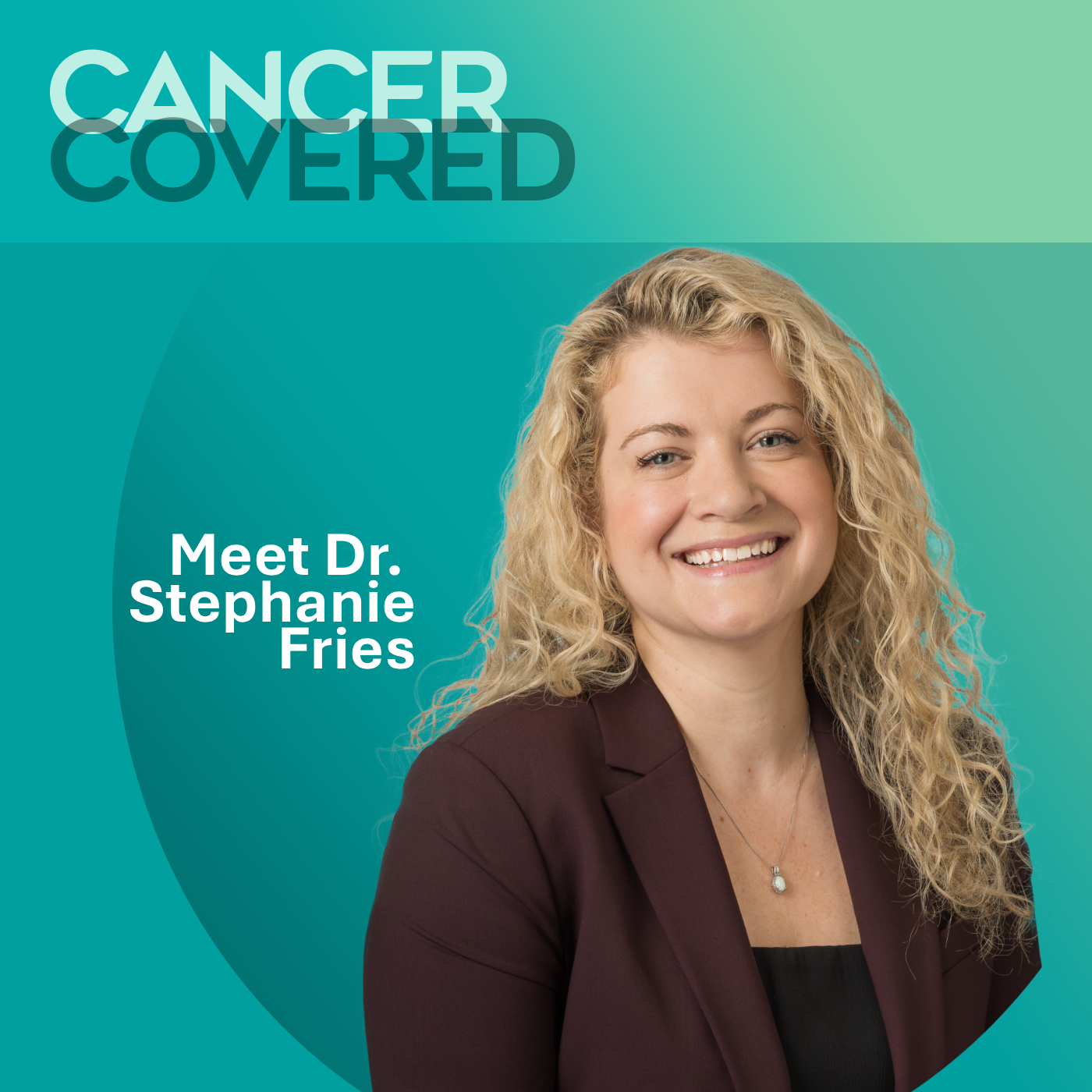
Meet Dr. Stephanie Fries
1w ago00:19:50Tap to summarizeEvery patient is like a puzzle box. And, just when you think you have things figured out, a new piece of the puzzle can emerge. In this episode of Cancer Covered, host Steve Slocum gets to know Dr. Stephanie Fries, a medical oncologist who joined Green Bay Oncology in the fall of 2025. Dr. Fries shares her journey into medicine, her “quarterback” approach to cancer care, and why treating patients in a tight-knit community setting offers a uniquely meaningful experience. She discusses how her team aligns treatment plans directly with each patient’s personal goals, how she balances honesty with hope when delivering difficult news, and why she encourages every patient to come to their appointments curious and ready to ask questions. Along the way, she also gives a glimpse into her life outside the clinic, including her love for cooking, her background in classical civilizations and her family’s pet tortoises. “Every single patient is different and their story is different. Your goals are my goals.” — Dr. Stephanie Fries On this episode of Cancer Covered, you’ll learn: How a medical oncologist acts as the “quarterback” of a patient’s care team to coordinate treatment and align with their personal goals. Why Dr. Fries treats every case as a unique puzzle requiring tailored care rather than a one-size-fits-all approach. How honesty about a diagnosis can actually create space for meaningful hope and quality of life. The benefits of receiving cancer care within a close-knit community setting. What patients can expect during their first visit and why asking questions is essential to feeling confident in a care plan. A peek into Dr. Fries’s background, from studying ancient Greek and Roman literature to her favorite ways to recharge at home. We’ve Got Cancer…Covered. Thanks for tuning into this week’s Cancer Covered with Green Bay Oncology episode. If you enjoyed this episode, please subscribe and leave a review wherever you get your podcasts. Apple Podcasts | Pandora | Spotify | iHeart | TuneIn | Podcast Index Be sure to share your favorite episodes on social media to help us reach more oncology professionals, cancer patients, and their families. Join us on Facebook, Twitter, Instagram, and LinkedIn. For more exclusive content and information, visit our website. Join Our Free Monthly Support GroupNo one should carry the burden of cancer alone. A cancer diagnosis can make you and your loved ones feel isolated and alone – just when you need support the most.Our social workers at Green Bay Oncology know that meaningful connection brings strength and healing. Sharing the experience in a safe space with others on a similar path is often powerful and therapeutic.That’s why we offer a free monthly virtual and in-person cancer support group facilitated for you and your loved ones. Wherever you are on your cancer journey – you are always welcome. To join us, visit: https://gboncology.com/events/
Transcribe →
The APP Role in Cancer Care: Medical Oncology and Hematology
3w ago00:34:21Tap to summarizeIf you’ve been diagnosed with cancer or a blood disorder, you’ll likely meet more than one provider throughout your care. In this episode of Cancer Covered, medical oncologist and hematologist Dr. Brian Burnette and nurse practitioner Megan Grimm, DNP, FNP-BC, AOCNP explain how physicians, advanced practice providers and the rest of the care team work together to deliver personalized, compassionate treatment. They discuss the difference between medical oncology and hematology, why nurse practitioners and physician assistants have become essential members of modern cancer care and how collaboration allows patients to receive timely, high-quality treatment close to home. Along the way, they also share how treatment plans evolve, why second opinions are welcomed and the questions they wish more patients felt comfortable asking. “I always remember Dr. Burnette, saying, ‘There’s a science to oncology, but there’s also an art to oncology,’ and I truly believe that because it isn’t one-size-fits-all.” — Megan Grimm, DNP, FNP-BC, AOCNP On this episode of Cancer Covered, you’ll learn: The difference between medical oncology and hematology, and why they’re often practiced together. How physicians and nurse practitioners collaborate throughout diagnosis, treatment and survivorship. Why advanced practice providers help improve access to cancer care while enhancing the patient experience. Why treatment plans can be adjusted to fit each patient’s goals, needs and quality of life. The value of asking questions, including when it’s appropriate to seek a second opinion. How an entire multidisciplinary team works behind the scenes to support patients and families throughout their cancer journey. We’ve Got Cancer…Covered. Thanks for tuning into this week’s Cancer Covered with Green Bay Oncology episode. If you enjoyed this episode, please subscribe and leave a review wherever you get your podcasts. Apple Podcasts | Pandora | Spotify | iHeart | TuneIn | Podcast Index Be sure to share your favorite episodes on social media to help us reach more oncology professionals, cancer patients, and their families. Join us on Facebook, Twitter, Instagram, and LinkedIn. For more exclusive content and information, visit our website. Join Our Free Monthly Support GroupNo one should carry the burden of cancer alone. A cancer diagnosis can make you and your loved ones feel isolated and alone – just when you need support the most.Our social workers at Green Bay Oncology know that meaningful connection brings strength and healing. Sharing the experience in a safe space with others on a similar path is often powerful and therapeutic.That’s why we offer a free monthly virtual and in-person cancer support group facilitated for you and your loved ones. Wherever you are on your cancer journey – you are always welcome. To join us, visit: https://gboncology.com/events/
Transcribe →
What Palliative Care for Cancer Really Means
Jul 1200:28:25Tap to summarizeWhen people hear the words palliative care, they often assume it means treatment has ended or that hospice is the next step. In this episode, Dr. David Groteluschen, Dr. Tony Jaslowski, and Dr. Alex Coffman explain what palliative care really means, why it can begin at any stage of cancer treatment and how managing symptoms like pain, fatigue, nausea and anxiety helps patients live better throughout their cancer journey. Together, they discuss how palliative care supports both patients and families, improves quality of life and remains an essential part of modern cancer care — not a sign of giving up. “If anything I give you is going to hurt you more than help you, it’s not giving up. Our goal has changed to: what am I doing for my quality of life?” — Dr. David Groteluschen On this episode of Cancer Covered, you’ll learn: What palliative care is and how it is different from hospice Why palliative care can begin at any stage of cancer treatment How symptom management improves quality of life during treatment How medical, radiation, surgical and supportive care teams work together to care for patients Why honest conversations about symptoms lead to better outcomes How palliative care helps patients and families focus on living well throughout cancer treatment We’ve Got Cancer…Covered. Thanks for tuning into this week’s Cancer Covered with Green Bay Oncology episode. If you enjoyed this episode, please subscribe and leave a review wherever you get your podcasts. Apple Podcasts | Pandora | Spotify | iHeart | TuneIn | Podcast Index Be sure to share your favorite episodes on social media to help us reach more oncology professionals, cancer patients, and their families. Join us on Facebook, Twitter, Instagram, and LinkedIn. For more exclusive content and information, visit our website. Join Our Free Monthly Support GroupNo one should carry the burden of cancer alone. A cancer diagnosis can make you and your loved ones feel isolated and alone – just when you need support the most.Our social workers at Green Bay Oncology know that meaningful connection brings strength and healing. Sharing the experience in a safe space with others on a similar path is often powerful and therapeutic.That’s why we offer a free monthly virtual and in-person cancer support group facilitated for you and your loved ones. Wherever you are on your cancer journey – you are always welcome. To join us, visit: https://gboncology.com/events/
Transcribe →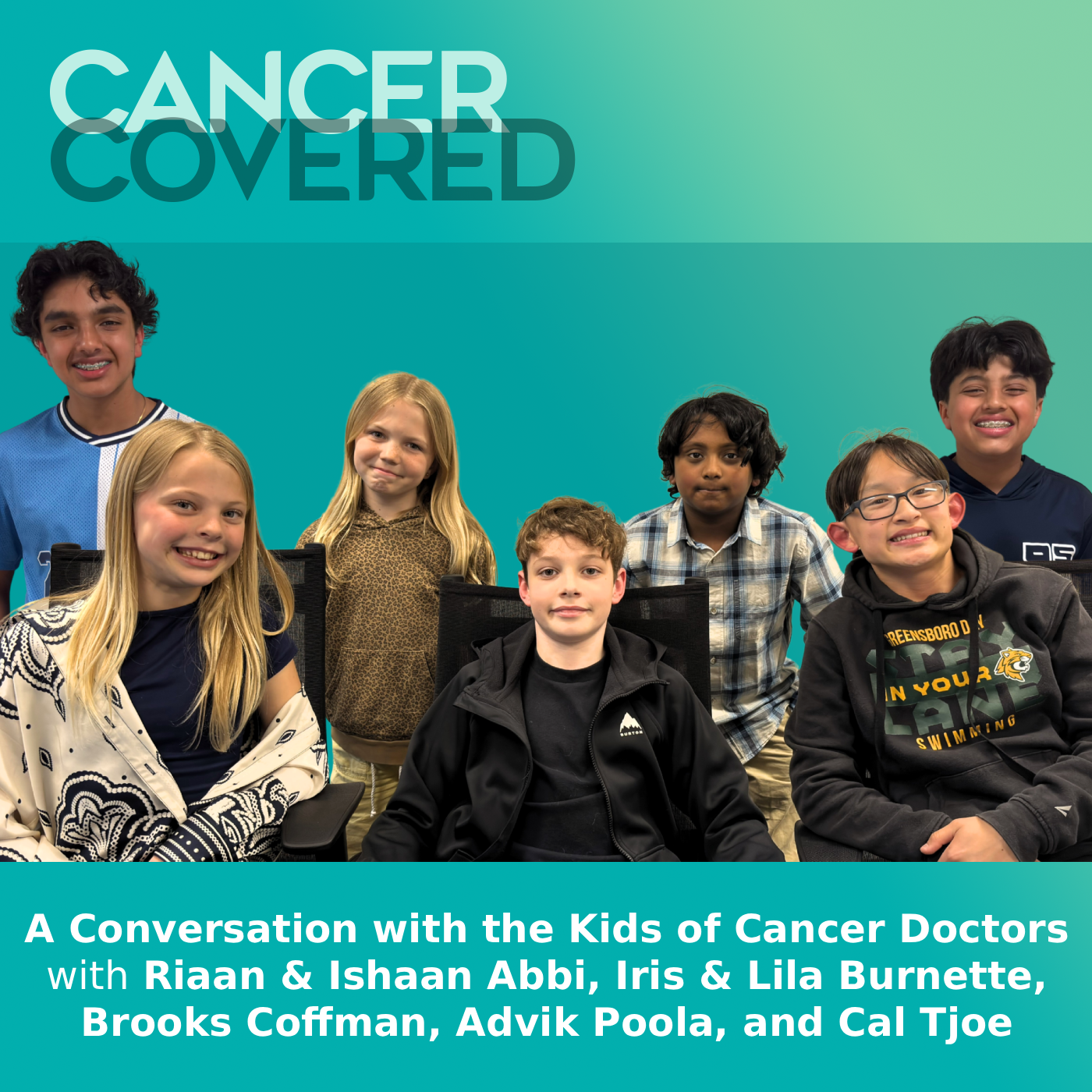
A Conversation with the Kids of Cancer Doctors
Jun 2900:32:44Tap to summarizeCancer doctors spend their days caring for patients, but at home they’re also parents, teachers, mentors, and sometimes even karaoke singers. On this episode we sit down with a very special group, the children of several Green Bay Oncology physicians, to hear what it’s like growing up with a cancer doctor as a mom or dad. From favorite family traditions and funny quirks to lessons about perseverance, empathy and showing up for the people you love, these kids offer an honest and heartwarming look at the people behind the white coats. And, they share what makes their parents special, what they’ve learned from watching them care for others and why being a doctor never really stops when the workday ends. “ He truly does care about his patients, and he will make sure, no matter what, that they’re comfortable. But he always makes sure to spend time with us and to nurture us, and it doesn’t interfere with our family.” — Ishaan and Riaan Abbi, on their father, Dr. Kamal Abbi On this episode of Cancer Covered, you’ll learn: What children notice most about their parents’ work caring for patients with cancer How physicians balance demanding careers with being present for their families The surprising hobbies, habits and personalities patients may not see in the clinic What lessons these kids have learned about kindness, perseverance and caring for others Why empathy and support matter both inside and outside the exam room We’ve Got Cancer…Covered. Thanks for tuning into this week’s Cancer Covered with Green Bay Oncology episode. If you enjoyed this episode, please subscribe and leave a review wherever you get your podcasts. Apple Podcasts | Pandora | Spotify | iHeart | TuneIn | Podcast Index Be sure to share your favorite episodes on social media to help us reach more oncology professionals, cancer patients, and their families. Join us on Facebook, Twitter, Instagram, and LinkedIn. For more exclusive content and information, visit our website. Join Our Free Monthly Support GroupNo one should carry the burden of cancer alone. A cancer diagnosis can make you and your loved ones feel isolated and alone – just when you need support the most.Our social workers at Green Bay Oncology know that meaningful connection brings strength and healing. Sharing the experience in a safe space with others on a similar path is often powerful and therapeutic.That’s why we offer a free monthly virtual and in-person cancer support group facilitated for you and your loved ones. Wherever you are on your cancer journey – you are always welcome. To join us, visit: https://gboncology.com/events/
Transcribe →
How Care Lives On: One Family’s Story of Legacy, Loss and Possibility
Jun 1500:36:32Tap to summarizeA cancer diagnosis affects more than just the patient. It impacts families, shapes relationships and can leave a lasting legacy for future generations. On this episode, Josh and Maggie Frank and medical oncologist Dr. Brian Burnette share the story of Josh’s mother, Patricia, and the choices she made throughout her breast cancer journey. They discuss the importance of patient autonomy, the role hospice played in helping Patricia spend her final weeks surrounded by family and how those experiences continue to influence Maggie as she prepares for a future career in medicine. “It’s the hardest thing I’ve ever done and the best thing I’ve ever done, and I wouldn’t change anything about it. It was a gift.”— Josh Frank On this episode of Cancer Covered, you’ll learn: Why honoring a patient’s wishes is an important part of cancer care How hospice can improve quality of life for patients and families What it was like for one family to care for a loved one at home during her final weeks How clinical trials help advance cancer treatment for future generations Why personal experiences with cancer often inspire careers in healthcare We’ve Got Cancer…Covered. Thanks for tuning into this week’s Cancer Covered with Green Bay Oncology episode. If you enjoyed this episode, please subscribe and leave a review wherever you get your podcasts. Apple Podcasts | Pandora | Spotify | iHeart | TuneIn | Podcast Index Be sure to share your favorite episodes on social media to help us reach more oncology professionals, cancer patients, and their families. Join us on Facebook, Twitter, Instagram, and LinkedIn. For more exclusive content and information, visit our website. Join Our Free Monthly Support GroupNo one should carry the burden of cancer alone. A cancer diagnosis can make you and your loved ones feel isolated and alone – just when you need support the most.Our social workers at Green Bay Oncology know that meaningful connection brings strength and healing. Sharing the experience in a safe space with others on a similar path is often powerful and therapeutic.That’s why we offer a free monthly virtual and in-person cancer support group facilitated for you and your loved ones. Wherever you are on your cancer journey – you are always welcome. To join us, visit: https://gboncology.com/events/
Transcribe →
The APP Role in Cancer Care: Radiation Oncology
May 3100:20:07Tap to summarizeRadiation treatment for cancer requires a team of people who are ready to help patients navigate side effects, recover fully, administer follow-up care and answer all the questions that come along the way. On this episode Taylor Stoffel, PA-C, MPAS and radiation oncologist Dr. Michael Guiou talk about how the radiation oncology team works together to support patients before, during and after treatment. They share the close communication that happens behind the scenes between physicians, physician assistants, nurses, radiation therapists and the broader care team to make sure patients never fall through the cracks, while also exploring how side effects are managed, why long-term follow-up matters and how the team helps patients regain the best quality of life possible after treatment. “We understand that it’s a really tough journey for you, and we respect that, and we want to be there to support you.”— Dr. Michael Guiou On this episode of Cancer Covered, you’ll learn: How radiation oncologists and physician assistants work together during treatment and recovery What kinds of side effects radiation teams monitor most closely Why follow-up appointments remain important years after treatment How care teams help patients navigate difficult or uncomfortable questions What happens behind the scenes to coordinate safe and personalized care We’ve Got Cancer…Covered. Thanks for tuning into this week’s Cancer Covered with Green Bay Oncology episode. If you enjoyed this episode, please subscribe and leave a review wherever you get your podcasts. Apple Podcasts | Pandora | Spotify | iHeart | TuneIn | Podcast Index Be sure to share your favorite episodes on social media to help us reach more oncology professionals, cancer patients, and their families. Join us on Facebook, Twitter, Instagram, and LinkedIn. For more exclusive content and information, visit our website. Join Our Free Monthly Support GroupNo one should carry the burden of cancer alone. A cancer diagnosis can make you and your loved ones feel isolated and alone – just when you need support the most.Our social workers at Green Bay Oncology know that meaningful connection brings strength and healing. Sharing the experience in a safe space with others on a similar path is often powerful and therapeutic.That’s why we offer a free monthly virtual and in-person cancer support group facilitated for you and your loved ones. Wherever you are on your cancer journey – you are always welcome. To join us, visit: https://gboncology.com/events/
Transcribe →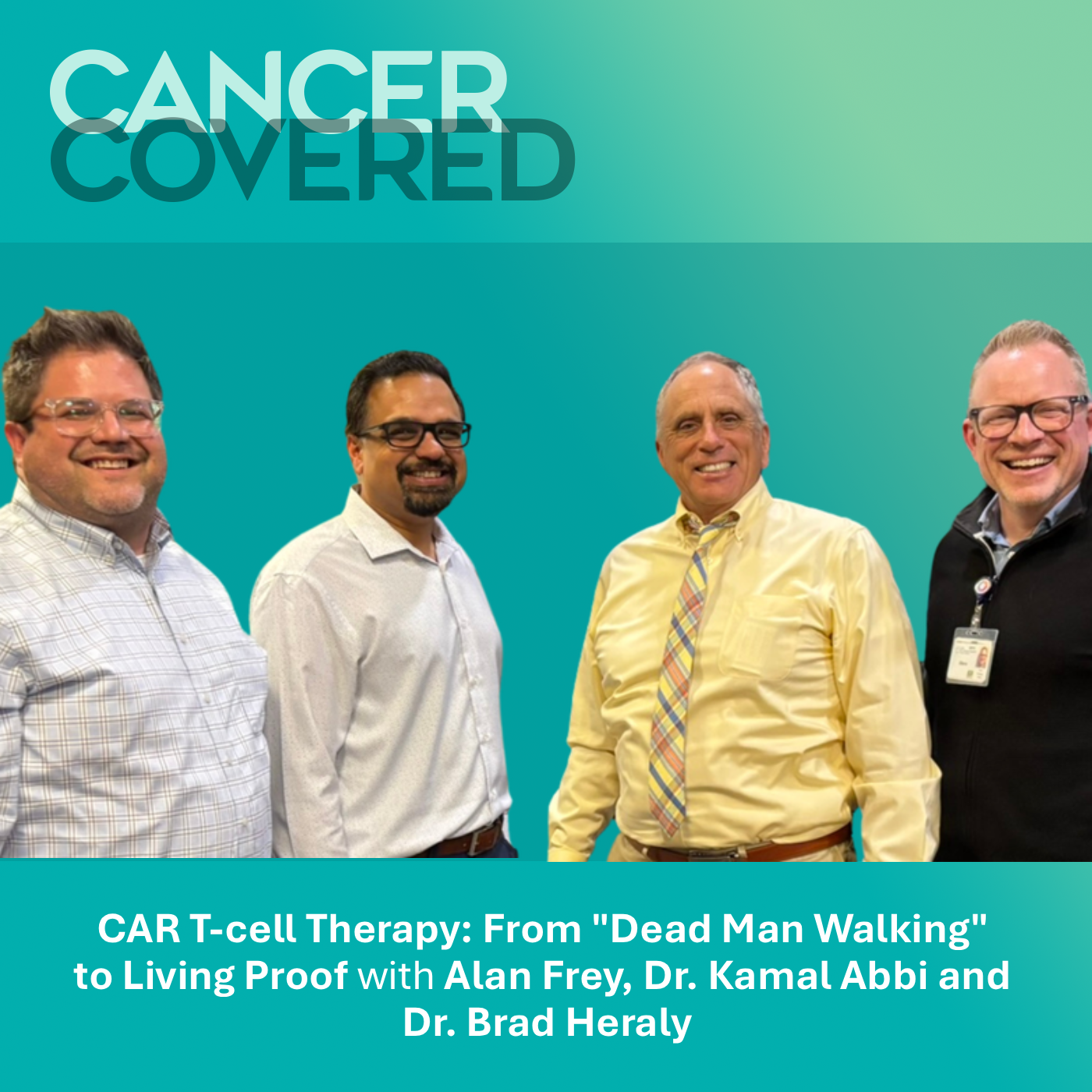
CAR T-cell Therapy: From “Dead Man Walking” to Living Proof
May 1700:55:45Tap to summarizeIn this episode hematologist-oncologists Dr. Kamal Abbi and Dr. Brad Heraly invite Alan Frey to the studio to discuss how CAR T-cell therapy is changing the future of blood cancer treatment. Alan shares his deeply personal journey battling chronic lymphocytic leukemia, including the moment he realized traditional therapies were no longer working and how CAR T therapy ultimately gave him another chance at life. “Without CAR T, I wouldn’t be here. It gave me another chance.”— Alan Frey On this episode of Cancer Covered, you’ll learn:• What CAR T-cell therapy is and how it uses the body’s immune system to fight cancer• How CAR T differs from traditional chemotherapy and radiation treatments• Why CAR T therapy is becoming an important option for blood cancer patients• What patients can expect during the CAR T treatment and recovery process• How side effects like cytokine release syndrome and neurotoxicity are monitored and managed• Why movement, hydration and nutrition play a major role during recovery• How perseverance and mindset can help patients through intensive treatment• Why physicians believe CAR T therapies may continue moving earlier into treatment plans in the future We’ve Got Cancer…Covered. Thanks for tuning into this week’s Cancer Covered with Green Bay Oncology episode. If you enjoyed this episode, please subscribe and leave a review wherever you get your podcasts. Apple Podcasts | Pandora | Spotify | iHeart | TuneIn | Podcast Index Be sure to share your favorite episodes on social media to help us reach more oncology professionals, cancer patients, and their families. Join us on Facebook, Twitter, Instagram, and LinkedIn. For more exclusive content and information, visit our website. Join Our Free Monthly Support GroupNo one should carry the burden of cancer alone. A cancer diagnosis can make you and your loved ones feel isolated and alone – just when you need support the most.Our social workers at Green Bay Oncology know that meaningful connection brings strength and healing. Sharing the experience in a safe space with others on a similar path is often powerful and therapeutic.That’s why we offer a free monthly virtual and in-person cancer support group facilitated for you and your loved ones. Wherever you are on your cancer journey – you are always welcome. To join us, visit: https://gboncology.com/events/
Transcribe →
What to Expect During Breast Cancer Surgery & Recovery: Your Care Team Every Step of the Way
May 300:25:01Tap to summarizeIn this episode of Cancer Covered, breast surgical oncologist Dr. Judy Tjoe and nurse practitioner Mikayla Petzke continue their conversation about what patients can expect after surgery and how team-based care helps patients feel supported every step of the way. They explain how preparation before surgery improves recovery afterward, how simple tools like support garments and heart-shaped pillows make a real difference and why ongoing follow-up care remains essential long after treatment ends. “All patients that come through our doors are always going to be taken care of. We don’t believe in abandonment. I promise that I will be with you every step of the way.”— Mikayla Petzke, NP On this episode of Cancer Covered, you’ll learn: What patients can expect in the first hours and days after breast cancer surgery How surgical teams help manage postoperative discomfort at home Why axillary support pillows can significantly reduce underarm pain after lymph node procedures How emotional support continues after surgery, even when treatment milestones are complete What the advanced practice provider role looks like before, during and after surgery How team-based care improves communication, efficiency and patient confidence Why survivorship care continues long after surgery is finished How ongoing access to your surgical team helps patients feel supported through recovery and beyond We’ve Got Cancer…Covered. Thanks for tuning into this week’s Cancer Covered with Green Bay Oncology episode. If you enjoyed this episode, please subscribe and leave a review wherever you get your podcasts. Apple Podcasts | Pandora | Spotify | iHeart | TuneIn | Podcast Index Be sure to share your favorite episodes on social media to help us reach more oncology professionals, cancer patients, and their families. Join us on Facebook, Twitter, Instagram, and LinkedIn. For more exclusive content and information, visit our website. Join Our Free Monthly Support GroupNo one should carry the burden of cancer alone. A cancer diagnosis can make you and your loved ones feel isolated and alone – just when you need support the most.Our social workers at Green Bay Oncology know that meaningful connection brings strength and healing. Sharing the experience in a safe space with others on a similar path is often powerful and therapeutic.That’s why we offer a free monthly virtual and in-person cancer support group facilitated for you and your loved ones. Wherever you are on your cancer journey – you are always welcome. To join us, visit: https://gboncology.com/events/
Transcribe →
What to Expect After a Breast Cancer Diagnosis: Your Surgical Team & First Decisions
Apr 1900:19:07Tap to summarizeAdvanced practice providers play an essential role in helping patients move from diagnosis to treatment with clarity and support. In this episode of Cancer Covered, breast surgical oncologist Dr. Judy Tjoe and nurse practitioner Mikayla Petzke of Green Bay Oncology explain how they work together to guide patients through the early stages of a breast cancer diagnosis and surgical decision-making, helping patients understand their options, process complex information and feel supported from the first phone call through survivorship care. “Our goal is to minimize the amount of time that the patient feels alone to navigate this new cancer diagnosis.”— Dr. Judy Tjoe On this episode of Cancer Covered, you’ll learn: How a breast surgical oncologist and nurse practitioner partner to support patients from diagnosis through surgery and follow-up care Why early outreach after diagnosis helps patients feel more confident and prepared for their first consultation How informed shared decision making helps patients choose between surgical options that are medically equivalent What role support people play during consultations and why they’re included from the very beginning How advanced practice providers can help patients process information and questions after the surgeon leaves the room Mikayla and Dr. Tjoe bring up the illustrations that Dr. Tjoe does with patients to help explain their cancer diagnosis and what it means for their treatment options. Here are some real examples of what those illustrations look like: If you liked learning about how Dr. Tjoe and Mikayla work together in caring for breast cancer patients, you may also like: Patient story: “A 15 Out of 10”: Judy’s Breast Cancer Journey with Dr. Judy Tjoe Podcast: Dr. Judy Tjoe on Breast Cancer Treatment Innovations and Patient Care We’ve Got Cancer…Covered. Thanks for tuning into this week’s Cancer Covered with Green Bay Oncology episode. If you enjoyed this episode, please subscribe and leave a review wherever you get your podcasts. Apple Podcasts | Pandora | Spotify | iHeart | TuneIn | Podcast Index Be sure to share your favorite episodes on social media to help us reach more oncology professionals, cancer patients, and their families. Join us on Facebook, Twitter, Instagram, and LinkedIn. For more exclusive content and information, visit our website. Join Our Free Monthly Support GroupNo one should carry the burden of cancer alone. A cancer diagnosis can make you and your loved ones feel isolated and alone – just when you need support the most.Our social workers at Green Bay Oncology know that meaningful connection brings strength and healing. Sharing the experience in a safe space with others on a similar path is often powerful and therapeutic.That’s why we offer a free monthly virtual and in-person cancer support group facilitated for you and your loved ones. Wherever you are on your cancer journey – you are always welcome. To join us, visit: https://gboncology.com/events/
Transcribe →
Is Chemo Worse than Cancer?
Apr 600:25:19Tap to summarizeChemotherapy is one of the most recognized and most feared cancer treatments. In this episode of Cancer Covered, Dr. Edgard Badine, Dr. Kamal Abbi, and Dr. Matthew Ryan of Green Bay Oncology unpack one of the most common concerns patients share after a diagnosis: is chemotherapy worse than the cancer itself? Together, they explain how modern chemotherapy has changed, why supportive care has dramatically improved the patient experience, and how treatment decisions today are highly personalized to balance effectiveness with quality of life. “With appropriate use of treatment and supportive care, the quality of life is actually better on treatment than just letting an advanced cancer grow unchecked.”— Dr. Matthew Ryan On this episode of Cancer Covered, you’ll learn: Why fears about chemotherapy are often shaped by outdated experiences from decades ago How modern anti-nausea medications, dosing strategies, and supportive care have transformed treatment The difference between chemotherapy, immunotherapy, and targeted therapies and why patients sometimes group them together How oncologists personalize treatment plans based on cancer type, genetics, and patient priorities Why saying no to chemotherapy can sometimes be the right medical decision and how doctors help patients weigh that choice thoughtfully We’ve Got Cancer…Covered. Thanks for tuning into this week’s Cancer Covered with Green Bay Oncology episode. If you enjoyed this episode, please subscribe and leave a review wherever you get your podcasts. Apple Podcasts | Pandora | Spotify | iHeart | TuneIn | Podcast Index Be sure to share your favorite episodes on social media to help us reach more oncology professionals, cancer patients, and their families. Join us on Facebook, Twitter, Instagram, and LinkedIn. For more exclusive content and information, visit our website. Join Our Free Monthly Support GroupNo one should carry the burden of cancer alone. A cancer diagnosis can make you and your loved ones feel isolated and alone – just when you need support the most.Our social workers at Green Bay Oncology know that meaningful connection brings strength and healing. Sharing the experience in a safe space with others on a similar path is often powerful and therapeutic.That’s why we offer a free monthly virtual and in-person cancer support group facilitated for you and your loved ones. Wherever you are on your cancer journey – you are always welcome. To join us, visit: https://gboncology.com/events/
Transcribe →