← Classical Stuff You Should Know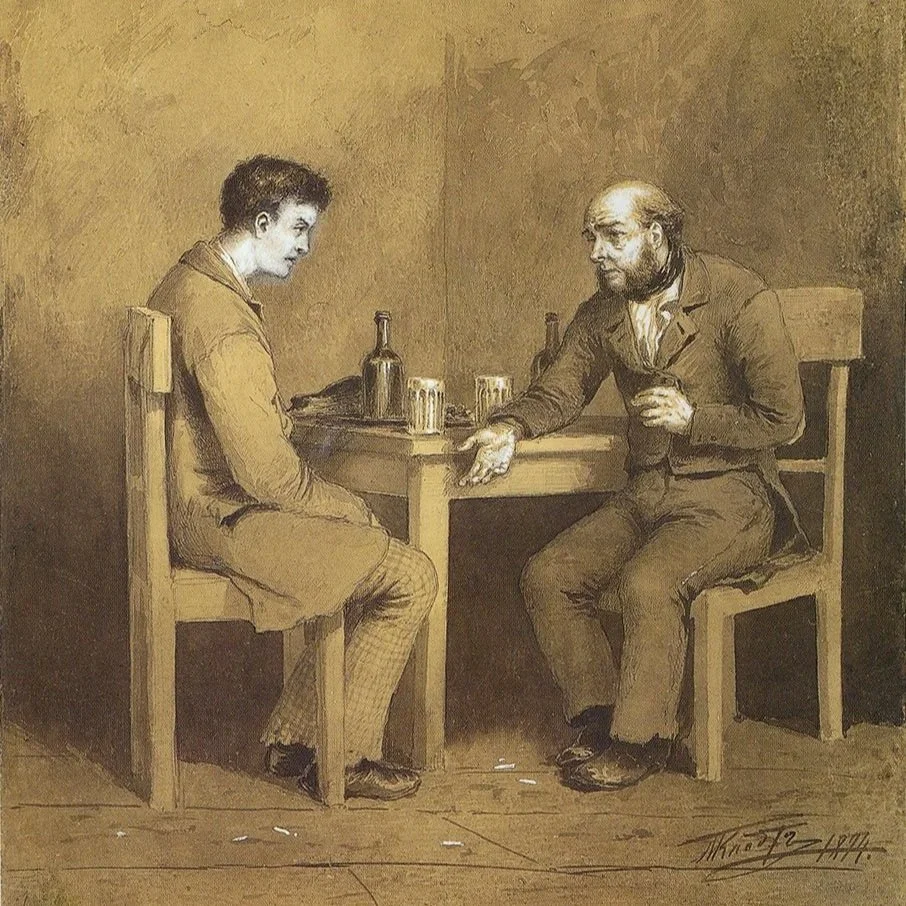
Classical Stuff You Should Know
299: Crime and Punishment: Raskolnikov the Edgelord
01:04:32
Normies can't ang with my INTELLECT
Loading summary
Transcript185 lines
- [00:09]
A
We didn't discuss who's doing the intro.
- [00:10]
B
We did not.
- [00:11]
A
So here we are. So we are just kind of talking and starting our episode. It's been a couple weeks.
- [00:15]
B
It's not you.
- [00:16]
A
It's. Well, are you. Are you doing it?
- [00:18]
C
I'm pointing to me, and I'm the one that's doing the episode.
- [00:19]
A
So Graham can't introduce his own episode.
- [00:21]
B
That's true.
- [00:22]
A
Hello and welcome to Classical Stuff. You should know. A very professional podcast about three very professional people talking about topics that they have deeply studied. Academics, PhDs, respectable, eminent in their fields. None of that is true. My name is Thomas Magbe. I am joined, as always, by Mr. A.J. hanenberg.
- [00:41]
B
Oh, that's me.
- [00:42]
A
Oh, my goodness. And Mr. Graham Donaldson. We also have brief fits of amnesia that are completely unexpected.
- [00:48]
B
So all of this is coming from some. We got some criticism on one of our episodes.
- [00:51]
A
You don't have to. No, that's fine.
- [00:54]
B
No, I just wanted the retort. That was so good calling us Classical Stuff. You should vaguely know.
- [00:58]
A
I didn't say that, though. I didn't bring it up.
- [00:59]
B
No, you didn't. But that's just kind of funny.
- [01:01]
A
All right, so we are. I jumped in for the intro and Graham, you were leading today's episode.
- [01:07]
C
So I realized we've talked about Dostoevsky before and we've talked about crime punishment before, but we've only ever looked at, like, topics in the book. We've looked at his great man theory. We've talked a little bit about some of the scenes. And I've. In Crime Punishment to talk about sort of bigger topics. But I realized we haven't really done a whole book kind of like run through synopsis style like we've done with the j. With the Jane Austen books and with a lot of the books that we've done. So that's what I want to do today.
- [01:38]
A
Awesome.
- [01:39]
C
I want to talk about the sort of, like the book this is. So this is. Would be a perfect primer if you are having to read Crime and Punishment for School or if you were doing. If you were just an hour long, where I'm trying to sort of hit some of the big major themes of the book as like a complement to the actual reading of the thing that was.
- [01:59]
A
That was the plan for someone who's like, cram studying for their test the next day.
- [02:02]
C
Yeah, I don't want to advocate for that, but I know you're out there.
- [02:05]
A
Yeah. They comment.
- [02:06]
B
Someone happened to be one of Graham's students and wanted to get some Extra.
- [02:09]
C
Well, that's also true too. Yes. The other thing is I think that Crime Punishment could eminently be recasted in the modern world. Like, I think the characters in here are very much people that we see every day.
- [02:23]
B
Oh, I thought you meant like you had actors in mind.
- [02:24]
A
No, no, no.
- [02:25]
C
I meant like awesome. Like it's a story of like a college dropout who wants to be a gangster, but like his parent, his mom loves him too much. And a girl who's driven to. Because of financial hardships, she's driven to like prostitution and selling herself for money to save her, like dying like in law. Not even like her step family and just questions about greatness versus goodness. Anyway, I just think that it's such a book that like very much sits in our modern times as well that I think it's worth talking about in full.
- [03:03]
B
But I'm going to cast it in my head.
- [03:04]
C
Yeah, you totally can.
- [03:05]
B
Already have. I already have some. He's such a good.
- [03:10]
C
He's not a good Paul. Trading. But.
- [03:12]
B
No. Yeah, but really I thought it was a good Paul.
- [03:14]
C
Maybe. Have you seen the. Have you seen the. The meme where the Donald Trump sandworm?
- [03:20]
A
No.
- [03:20]
C
Hello, people of Arrakis. It is I, Kai Hel Shalud. No, you've never seen it. It's so funny. It's really funny. Anyway, so, okay, so that's incredible. Crime and Punish. And he like makes fun. He's like Pesky Paul. Pesky Paul Atreides. Muadib, they call him Muadib.
- [03:39]
A
That's a pretty good impression.
- [03:39]
C
Thank you.
- [03:40]
A
I thought that was pretty good.
- [03:41]
C
Yeah, he's hanging out with the Bene Gesseritz. Nasty women. Nasty women. Oh, it's really funny.
- [03:47]
A
I could do another hour.
- [03:49]
B
My trump is used to that.
- [03:51]
C
Terrible Trump. Okay, so Crime and Punishment. The book starts with. There is this man and he's walking through the streets of St. Petersburg, it's the 19th century. And we find out that he is a college dropout and he's a smart kid. He comes from a small town. So he's like grew up in this sort of small town farming community. His father died when he was young. His mom sent him to college and all of the family hopes are on him to go and be a lawyer. Or he's studying political science and he's gone to school and he's dropped out of school and he hasn't told mom yet. And his. And. But mom and sister back home have kind of realized that money stopped coming in. They haven't really got any Letters. Rumors are coming that his name is Rodion, that Radhya is getting a little moody, he's acting a little weird. Basically, small town kid goes off to big city college and gets like a giant chip on his shoulder. Tale as old as time. So he is now in college and he's dropped out. And the book starts with him walking down the streets of St. Petersburg and he is just chewing on an idea. He's just got something turning around in his head and he's thinking about it and it turns out that he's playing. He's doing a little trial. He is walking, but he's going to a place because he has his vision in mind. But as he's walking, he's sort of wearing kind of crappy disheveled clothes and he's trying to blend into the crowd. And as he's walking, somebody makes fun of his hat. It's like, hey, your hat's stupid. And then he says to himself, like, holy crap, I knew it. I knew that. I stand out. It's just stupid hat. He's like, these are the mistakes that get you caught is what he says. So he, he gets rid of his, like, you know, his inconspicuous hat and he's like, I got a gray man, this thing. I got to blend in to the normies. Anyway, as he goes, he's supposed to
- [05:55]
B
be pretty good looking, right?
- [05:56]
C
He's a good, he's a handsome kid, but he's super broody.
- [05:59]
B
And he's really run down and he's sick.
- [06:01]
C
He is run down. He's malnourished. He's kind of feverish. He's jittery. He's, you know, he's, he's in a. He's in a sort of a bad spot. He's not making the best, like, nutritional decisions.
- [06:14]
B
He's like the kid that you would see in the corner of the coffee shop who's like really working on a selection of poetry.
- [06:19]
C
That's right. And he's just like in his head, super intellectual, but like, it's kind of looks like he's about to snap anyway.
- [06:28]
A
And we're to understand he wasn't always this way.
- [06:30]
C
I get. He wasn't always this way. We get sort of hints from mom later on that he was kind of a sweet boy and was actually. He grew up going to church, but he like kind of believed it, kind of didn't. But he grew up going to church pious. Mom. He's got a really virtuous good sister. She's just sort of A hard worker and she's beautiful and she's just sort of like does the right thing kind of sister younger than him. Anyway, so he is walking down the streets and he goes to a pawn broker because he needs some money. But he's also, as you as the reader are realizing, he's scoping this place out. And it's not long before you realize that he is contemplating doing something. He's probably going to rob the pawn broker or whatever he's got. He's got. He's got. He's scoping this plate out. Place out. He's memorized the amount of steps it takes to walk to her house. And this pawn broker is an old lady. She's kind of crusty. She's very spiteful. She's un. She's mistrusting and. Which makes sense because she's like a pawn broker to the down and outs in St. Petersburg. And so then Raskolnov is going to this house and. And he's sort of scoping out this joint. And you can tell that he's plotting something to do with this pawnbroker. He pawns. But while he's in there, he's like taking stock of the room. He's looking around, he's asking questions about when she's going to be home. You know, he's. It's pretty obvious that he's planning some kind of like, heist, all right? But he's also disgusted with himself as he leaves. And he's like, he now has some cash that he just pawned, I think his dad's watch or something. He's pawned something. And he goes to a bar and as he goes to a bar, he's sitting there and he's drinking his beer and he's. And he's like. And he has like a sandwich and. And he drinks a beer and he's like, you know what? I feel way better now that I've had a sandwich and I've had some beer and I can relate to that. There's been times that I've been cranky. And then all of a sudden you have a good sandwich and a cold glass of beer and you're like, life's beautiful.
- [08:26]
A
I like this.
- [08:27]
C
This. Why.
- [08:27]
B
Why Things are looking up.
- [08:28]
C
Things are looking up. Anyway, he's there and there is a man at the bar, drunk as a skunk, wearing the clothes of like an official bureaucratic somebody that works in the government. And he's there with all the other day drinker down and outs. And this bureaucrat is super Drunk. And he is boisterous, and he is. Some people, when they. When they drink, they just want to be left alone and they brood in the bar. Some people, when they drink, they want to, like, chat and they want to talk to the person next to them. And they're just, like, looking for an inn to tell their life story. And this guy is looking for an end to tell his life story. And so he goes to Raskolnikov. His name is Marmaladev. And he's like, hey, you look like somebody that's cool and wants to talk to me. And Raskolnikov's like. But then Marmaladev starts talking to him and he tells this horribly pathetic story. He was. He's been married. He's been married twice before or once before his old wife died and he had a daughter, and she's now 16 or 17. He's married again to a woman named Katerina, Katerina Ivanovna. And they got married. She used to be not a noble woman, but, like, almost like upper middle class maybe. She got invited to, like, the Governor's mansion for her debutante ball, but. But like, so she was sort of, you know, a fancy lady, but not like, not gold toilets fancy, but like, like upper middle class fancy. And he. And she was married to somebody from Passion. She's, like, fell in love and had this big romantic affair and ran off with him. And then that thing fell apart. He either died or left her. I can't remember. I think he died. And so she married Marmalade off, and she thought that, hey, he's not. He's not big and fancy, but dude's stable. He works for the government. He's got a good job. But turns out Marmalade off, massive drinker. And Marmalade off is telling this terrible story about, like, he just can't stop himself from drinking. He is selling all of the family possessions. He goes off drinking and he's this big fool, larger than life kind of character. Very, like, ceremonial. He's like, my good sir. My good sir. He's like one of those guys, right? Banging the table and drinking. He's like, look at me. A worm among men. He's like, I am the terrible creature and I have destroyed my. My family. Do not laugh at me, good sir. Like, he's one of these drunks. And so he. And Ras Kov is just listening to the story. He tells this really big, pathetic story about he had a job and his wife was so proud of him, and then he, like, drank it all away. And he came home and she was so mad at him, she smacked him around and she's so angry that she like slaps him and he's like, I deserved it. I desired to be slapped because I am a chief sinner. And Russ Kov's like, bruh, you are crazy. And then, as the story goes on, Marmalade off can't get himself out of drink to the point where they have no money. And Katarina Ivanovna essentially, like brow beats her stepdaughter. So Marmaladeo's daughter from the first marriage, she essentially says, you either need to move out because you're expensive or you need to go earn some money. And Sonia is her name doesn't. She's not very good at stuff. She's tried to, like, sew and make money from as a seamstress, but she's not really good at it. She's tried to like, do, maybe like, read. She can't barely read. She's not very educated. And Katarina's like, well, you got one thing that you can sell. And Sonia's like, oh, please don't make it come to that. And Katarina's like, well, I guess we're all gonna starve to death. And then Sonia decides one day she goes off and she well, let's see, I'll read a little passage. So Marmalade off is in the bar and he is. And he's recounting this. And what Katerina Ivanovna answered mockingly, this is what Marmalade off is recounting. What's there to save? Some treasure Speaking to Sonia. But do not blame her. Don't blame her, my dear sir, do not blame her. She said this not in her right mind, but in an emotional agitation and sickness and with the children crying from hunger. And said it besides, more for the sake of the insult than in any strict sense, for such as Katarina Ivanovna's character. When the children get to crying, even if it's from hunger, she starts beating them at once. So then sometime after 5, I see Sineschka Sonia get up, put on her kerchief, put on her wrap and go out and come home. After eight she came in, went straight to Katerina Ivanovna, and silently laid 30 rubles on the table in front of her. Not a word with it, not even a glance. She just took our big green flannel shawl, covered her head and face with it completely, and lay down on the bed, face to the wall. Only her little shoulders and her whole body kept twitching. And I was lying there in the same aspect as previously, sir, in other words, half drunk on the couch. And then I saw a young man. After that, I saw Katerina Ivanovna go over to Sheka's bed almost without saying a word. And for the whole evening she stayed kneeling at her feet, kissing her feet, and would not get up. And then they both fell asleep together. So he's got this, like, horrible story of his daughter going off and selling herself into prostitution. He's drunk as a skunk on the couch. Katarina, who is sort of a passionate lady who had sort of said this out of more spite than anything, realizes what that says has done. And so she's crying and holding this poor girl. And he's telling this story because he's now taken that money and he's gone on another bender. And he's. Now he's on, like, day five of this bender. And everyone in the bar is like, you, sir, are a terrible person. And he's like, I know it. I am a terrible person. And he says, but God, you know, God will welcome the sinners. And he says that God will forgive my Sonja because she is a terrible sinner for being a prostitute. And God will forgive me because I am a terrible sinner for being a drunk. And he will say, you know, he has this big speech where he's like, God will kind of welcome me back and because I've lived such a miserable life and I've suffered. And so Raskolnov's like, okay. He goes home with marmalade off. And when he gets there, Katarina is like, finally, look who came home. Smacks marmalade off around. Super pathetic scene. The kids are crying, Katarina's mad. Marmalade off is being dragged by the hair. And he's like, I deserve it. I deserve it. And rest. Colin the cough in kind of like this fit of basically sympathy and charity, takes out the money that he got from the pawn broker, puts it on the nightstand or puts it on the windowsill and leaves. And as he's leaving, he was like, that was stupid. Why did I do that? I need them. Who do I care about? These stupid people, their stupid lives? Why did I. I should just go back and get it. But that's kind of awkward. I'm not going to do that. So he's kind of mad at himself for having paid charity to this family anyway.
- [15:39]
A
But he does a good thing.
- [15:40]
C
He does a good thing.
- [15:41]
A
Good for him.
- [15:42]
C
Now he. He goes home. He. He lives in a crappy little, like, studio apartment. He Hates his landlady. He's scared of her, but he's not like, she's not as scary. She's kind of like this. Just this diminutive little. You know, she's actually even kind of shy. But he's, like, scared of her because she's the authority over his life. And he's like, you know, he's like, rip the system. And he like, do you want my rent? Yeah, exactly. It's like, capitalist. You want my money? So he hates his landlord, and she's just like, I. I need you to,
- [16:19]
B
like, can you please pay me now?
- [16:21]
C
We need the heat. And so he's like, oh, you're part of the city. You're part of the machine, all right? So he's upset with her. He comes home, he gets a letter from his mom, and he finds out there's a letter from Mom. And mom says, hey, Raskolnikov, how's it going, man? Haven't heard from you in a while. Crazy story. He tells a story about how his sister had to go off and work at a fancy person's house because they don't have any money. And in the letter, mom is sending Ras Kolnikov all of her pension that she got that year or most of her pension. And Raskolnikov's like, mom, oh, you don't have to give me money. Like, I'm a big boy. And. But she has heard nothing from her son. She's sending money, and she's telling the story. She's like, hey, your sister went to go work in this house. Her boss was kind of a skis bag, and her skis bag boss, like, kept putting the moves on her, and she kept, like, turning him down. And then the skis bag boss boss's wife, who's actually the real boss, she found out about this and thought that your sister was, like, having an affair with her husband. And so she basically, like, Facebook messaged everybody in the village about this. And Sonia's reputation was ruined, and she had to quit, and she has no money. But then Spider Gaylov, the skis bag husband, actually went to his wife and says, no, it was just me. I hit on her, and I was making moves on her, and I wrote her love letters, and she wouldn't submit. And the wife, Marfa Petrovna, she's like, oh, that's just like, men, you know, they're always gonna hit on the help. But I. I love him, so he's. He's my little bad boy husband. And so she forgives her Husband. And then she goes back and she writes a Facebook comment underneath all her Facebook posts saying, like, just kidding. Dunya's the greatest. That's the sister. Dunya's actually super great. She didn't sleep with my husband. It's my husband. But, you know, boys.
- [18:24]
A
And.
- [18:25]
C
And so Dunia's reputation was restored. So much so that a prominent lawyer in town who also works in St. Petersburg heard about this virtuous and beautiful woman and proposed to Dunya and wants to marry her because he heard that she is so good and she is so virtuous, and she. She beautiful, she cute. Bingo. And there's. There's. There's Yahtzee. There's classical stuff. Bingo. When we say she's cute, you know, so she's beautiful and he wants to marry her. But the way that mom is sort of talking about it in the letter, you read between the lines that, like, this guy kind of wants to marry Dunya because he kind of wants to marry somebody poor because it's kind of like virtue signaling. He kind of wants to. Virtue signal that he's a good person because he married a poor girl. And she'll be grateful, and she'll be grateful, and she'll be submissive, and she'll. He, like, wants to come in and save her. He's like, I. Of course I want to save this worthy creature who obviously, like, is a virtuous girl. And I'm gonna come in and she's shown herself worthy of being in my sphere.
- [19:41]
B
And then we'll, like, give me foot rubs every night. Because I. I, like, saved her and have all.
- [19:45]
C
That's trash. And so Raskolenkov's like, this. This loser's not marrying my sister, and his name is losing the guy who's gonna marry my sister. He's like, this guy's not gonna be my sister over my dead body. And he's like. Dunia is essentially selling herself. Like, Sonia says. Rascal. Like, she's like a prostitute, too, by marrying this man for money. And it's never gonna happen. And so he's upset.
- [20:11]
B
I'm still imagining Timothee Chalamet with that voice.
- [20:13]
C
Yeah. Like, well, this is exactly so Rascal. He's a passionate guy.
- [20:16]
B
He was.
- [20:17]
A
This would be a good movie. I'm sold on this.
- [20:18]
C
It would.
- [20:19]
B
Yeah.
- [20:20]
C
So Raskolnikov.
- [20:21]
B
Hold on.
- [20:21]
C
Who would.
- [20:22]
B
Who would Marmaladeov be? Who'd you cast him like the big,
- [20:25]
C
boisterous drunk Gerard Depardieu. But I don't think he acts anymore
- [20:30]
B
oh, he would be so good.
- [20:31]
C
Yeah, I like it.
- [20:32]
B
That's a great choice.
- [20:33]
C
Thank you.
- [20:34]
A
You've thought this through. You have the full listen.
- [20:36]
C
In my mind, I think he's the
- [20:38]
B
guy I'm thinking of. He has, like, an accent, right? Like a Spanish accent, kind of.
- [20:41]
C
No. Gerard Debardu. He's French.
- [20:42]
A
French.
- [20:42]
B
He's French. Oh, is he French?
- [20:43]
C
Yeah, he plays Cyrano de Bergerac in the movie. Anyway, so Raskolnagov is completely agitated by this letter. And it seemed. And, like, it's clear that mom in the letter is kind of saying, like, hey, we're kind of dying over here. We're kind of falling apart. Your sister is now getting married, and she's dressing it up, like, as a good thing, but it's also a little bit of a. Like, how's it going, Rascal? Maybe. Maybe you can work for him.
- [21:10]
B
And Javier Bardem.
- [21:12]
C
Oh, yeah, I think would be another good choice. So Mom's like, maybe you could work for Luz, and he's a big fancy lawyer. Maybe you can get a job working for him. Raskolenkoff's like, I will never do that. And mom is trying to, like, understand Raskolenkov. It's like he. He reads some of those, like, modern political books that you read, honey. And he. Maybe you and him can talk about this. So Mom's doing a good effort to, like, understand. He's like. He plays video games, too. Raskolnovka, she's just trying to talk to her son, and she seems like such a sweet lady. She's such a sweet old lady. And Raskolnikov's like, ugh, mom, leave me alone.
- [21:46]
B
Anyway, and it's, like, weird for him to be reminded that he needs to send money to his family, and they, like, depend on him.
- [21:51]
C
And it's like, I don't know, they're depending on him. He. And he just, you know, this sort of. For whatever reason, the family dependence rubs him the wrong way.
- [22:01]
B
Okay. They don't know that he's out of school yet, do they?
- [22:04]
C
They do not know that he has. That he's dropped out of school. Yeah, Rascaling. You know, there's other things where he, like, goes for a walk and he sees the modern depravity of St. Petersburg. There's, like, this drunk girl and there's this, like, skeezy guy that looks like he's going to try to put the moves on her. And Raskolnikov stops it and then calls the cops, and then it's kind of Disgusted with himself. He's like, why do I keep intervening in the lives of normies, these lame people? Like, what do I care if he is costs this girl anyway? He's just. He's just a messed up kid. Anyway, he goes home, he passes out, he has a terrible dream, which is considered to be one of the most horrific passages in all of Russian literature. Fun fact, I don't know if this is true. I've just heard it on a podcast. But you can't trust. No way. This dream is the famous dream of where Raskolnikov dreams of a man beating a horse to death. Dostoevsky himself actually witnessed a man beating a horse to death when he was in the army. And it had a profound effect on him. Rumor has it. Or the historical, the history goes, is that when Nietzsche read this passage from Crime and Punishment, it was the final straw that actually drove him to madness. Yeah. And he like, awesome. He was already riddled with syphilis and crazy at this point. But when he read this, he was just like, I don't know, it just put him over the edge. And he never recovered from reading this passage.
- [23:27]
A
Yeah.
- [23:28]
C
So I'm not going to read it in case any of you are driven to madness. But it's a passage where maybe I'll
- [23:32]
A
read a little bit of these horrific things. Like what's.
- [23:34]
C
What's happening he sees. So this, this is a. Raskolnikov remembers a scene from his childhood where his dad and him are walking home in the village, little, small town village, and a bunch of guys are getting. Guys and gals are getting out of the pub, getting out of the bar, and they are like whooping and hollering. It's fun times in the middle of the day. Drunk gang. And they're all piling into this cart and there's this old, old mare trying to pull this cart full of drunk people. And Mikulka, whose card it is, is like, climb aboard, everybody. I'll take you home. And everyone's like, yeah, Makoka, you are dope. And they all climb into this cart and the horse can't pull it. And everybody starts laughing and like, you know, got a beater of a car or making fun of his cart. His horse is lame and can't pull us. And Makoka's like, I will make this horse pull us. And he takes out the whip and he starts whipping this horse as hard as he can. And the horse is straining and pulling and everybody's clapping and laughing and being like, she sucks this horse is stupid. And they're all drunk and they're trying to whip this horse. And Makolka is getting angrier and angry and angrier. And he's like, eventually gets out of the. Of the cart, puts down his whip, takes out an iron bar, starts hitting the back of the horse with this iron bar, eventually starts bludgeoning the. Hitting the horse against her eyes, her nose, her head. The horse goes down on her haunches. And he keeps saying, like, I can do with this as I please. This is my property. This is my property. And. And the mood changes from everybody laughing, everybody being like, geez, Mikolkov, stop. Like, stop hitting this horse. And he eventually kills the horse. And little Raskolnikov goes to his dad and says, like, dad, dad, they're hurting that animal. Stop it. And Raskolnikov runs to the dying horse, wraps his arms around it. The horse is breathing and struggling, and Mokulka stomping around, being like, I'll show you, you stupid horse. And this is my horse. And he's clearly like, I don't know the. The emotions of McCulk, of being, like, embarrassed of. Of being poor in front of his friends, and he's beating this horse to death. And. And then the dad just says to Ross Kolinkov, like, come on, man. Like, let's get out here. This. This is. This is none of our business. Let's just go home. And Raskolnikov wakes up, and he's like, oh, what a terrible dream. We can bracket that because it just sort of plops in the middle of the book. And I think there's. There's something to say about it. Maybe that's our in between, because I don't think we'll get to it. But I think there. I think that dream can be an interpretive lens for understanding what's happening in this story. Anyway, Russ Kolingov wakes up. He's like, oh, I need a drink. Goes to the bar. And he goes to this bar. There are some dudes at the bar, and they are just a bunch of college kids having some drinks, and they are just shooting the breeze. And they are talking, like, college talk. And they're basically just talking, like, moral paradigms. So my phone's going to die, so I can't put my timer on. I don't know how long we got. They're just talking more.
- [26:24]
B
I'll give you.
- [26:25]
C
Okay. They're just talking moral paradigms, and they're just, like, having a little BS conversation. Like, dude, what if we find Somebody who like, actively sucks but is rich. Like someone who is terrible. And we like, would it be morally wrong to kill somebody who is like, bad for society, take their money and do good things with their money? Tell me why that would be morally wrong. The other guy's like, it's iron type. It's. No, I mean, it's. I totally get it. And they're like, they're like, take for example, that pawn broker. Oh, she's such a little snake. She's a little rat. And she keeps like giving people crappy, crappy deals on their goods. She has like a mentally sister that she works to the bone to like keep their house clean. And she's like, she is a net negative for society. And the guy's like, you're right, she's terrible. And it's like, well, if somebody just killed her and took her money, Think of all of the promising careers of all of these good college kids who are learning progressive new ideas to bring Russia out of the stone age and into the rest of the in step with Europe. We have all of this talent that just lacks capital. And then we have all these old people. This old lady who's just like, hit. He's just like, she's just like a little fat spider with all this money. If we just killed her, took her cash, launched the careers of a bunch of young, promising political theorists, we could have a golden society in Russia. And the guy's like, you're right. But then he's like, but I got a problem for you. Are you going to go do it? The guy's like, no, I'm not going to. I'm not going to go kill the old lady. That's like, you know, you don't just go kill people. It's just an idea. And meanwhile, Raskolnikov is sitting in the corner of this bar being like, I'll do it. I can do it. He's like. And he's like, that's exactly what I've been thinking. And so Raskolnikov is like, yes. Like, this is a sign. This is a sign that I need to do it. And so right then and there, he decides he's gonna go kill that old lady.
- [28:29]
A
Bummer. That's not even his idea. He has to get well.
- [28:32]
C
He's been mulling it over. Yeah, but now they're talking about the
- [28:35]
B
same thing that he's been thinking about.
- [28:37]
C
But before, when he actually went to her house and like, scouted out, and when he had that beer and sandwich, he's like, I can't it do through this. I can't do this. And then he had that terrible dream of the horse getting killed. He's like, violence is terrible. And then this guys are. Then he's in this bar and the guys are talking about. He's like, well, that seals up. It's a sign from God. Gotta go murder this woman.
- [28:56]
A
Yeah.
- [28:56]
C
So he decides to do it. He hatches this plan. He goes and he gets an ax from his landlady's kitchen. He like sews a little loop in his jacket. He goes to the old lady's house at night time. He knocks on the door. She's like, who is it? And he's like, man, me. I come here. And she's like, what are you talking. What? And he's like, in house I come. And she's like, what are you talking about? And he's like all disoriented. And he walks into the house and then he's like, I have this to pawn. And it's like a piece of aluminum foil. She's like, what is this? And it's really dark and she's like, I can't even see this. And she turns her back to him to like look at the package and. And he bonks her on the head with the ax and kills her. And then she's like, they're bleeding all over the ground. He's sort of staring at her like, I can't believe I just did that. And then he goes. He like, gets her key from her neck, goes into her room, rifles through her stuff, takes a bunch of like trinkets and like hair barrettes.
- [29:57]
B
It's like 50 bucks.
- [29:58]
C
Yeah. And like hair ties and like, you know, like crappy watches and like tin rings and just like a bunch of garbage that people have been pawning. Turns out later on he finds out there's an entire chest filled with like 5,000 rubles under her bed. But he missed. And then as he's doing this, he hears the door open and the mentally retarded sister has come home. And she's standing there looking at him and looking at the dead body. And he walks into the room with a bloody ax. And she looks at him and he looks at her. And then he sort of walks up to her and she just sort of sits down on the floor and cries like a little kid because she's sort of mentally. Has the mental sort of capacity of a child. And he kills her with the axe. He's about to leave, there's a knock at the door. He locks the door from the inside or latches the door. The dudes outside are like, I know you're in there, pawnbroker. The door's latched, so I know someone's there. And Raskolnikov's like, f. This sucks. Then for some reason, the two guys leave. Raskolnikov leaves with his axe, hides out in a room. They come back, and then he, like, sort of. He sort of, like, ninja. Avoids them on the stairs. Hoo. Ha.
- [31:08]
B
He gets really lucky a couple of times.
- [31:10]
C
Super lucky.
- [31:11]
B
A couple times, like, they went to get, like, the cops, right? Or somebody to jimmy the door. Yeah, yeah, somebody did jimmy the door. And then he slipped into a room that was, like, being painted, but the painters had, like, slipped out for, like, a cigarette or whatever. And so he got lucky like, five or six times.
- [31:24]
C
He goes and buries his, like, hoard of, like, trinkets underneath a rock. He cleans off his ax, Cleans off his hands, puts the ax back, goes home, passes out in his bed, feverish, and has, like, terrible night. He dreams that people are coming in in his room and, like, looking at him. He dreams that his, like, old college buddy named Razumakin shows up and is like, what's up, buddy? And Ross. Colin cough's, like, just, like, in his bed. And he's like, yeah, he's. He looks bad. Then he wakes up, and his little. And then he has this. He, like, looks at himself, and he's like, oh, I'm not covered in blood. Awesome. Or maybe I'm so covered in blood that I don't think I'm covered in blood. And he's, like, starting to go crazy. His little land lady shows up, and she's like, hey, the cops want to talk to you. And he's like, what? And she's like, yeah, there's a little message. The cops want to talk to you have to go to the police station right now. And he's like, that's it. This sucks. That was. I'm not a. I am not. That was quick. That was quick.
- [32:23]
B
Doesn't he try to get rid of, like, the. The loop and this, like, there's, like, a bloody piece of fringe and that's right.
- [32:29]
C
He's got, like, a bloody sock. He, like, half burns and, like, you
- [32:31]
B
know, he, like, tries to burn it. Then he's like, oh, no, they're going to find the fireplace. And then he's like, okay, I got to hide it. And then finds, like, a bubbled piece of his wallpaper, shove it behind the wallpaper. And it's clearly bulging. And he's like, I'm going crazy. Like, I'm clearly not good at this.
- [32:44]
C
I am going nuts. Anyway, he goes to the police station, and he's sitting there, and they're talking, and they're like, hey, you have to pay your rent because your landlady's like, had it up to here. And he's like, okay. And, like, pay it. Will you pay it? And he's like, I'm getting. I got money from my mom. I will pay it. They're like, oh, that's nice to have a loving mother. He's like, nah. He's like, I got your mom. Yeah, I. And then he's so. They're like, all right, you got to pay your rent. Are you gonna do it? He's like, yeah. And he's sitting there, and he's like. They're like, okay. And then the top. There's two cops talking in the background. He's like, hey, you know that old lady got axed in the head last night? And they're like, yeah. And we. I think one of the painters did it. And he was like, I don't know, man. It looks super sketchy. Blah, blah, blah, blah. And Raskolnikov faints in the police office. He's like, passes out.
- [33:28]
B
The best thing is at the beginning, Raskolnikov is thinking, like, I'm going to be so good at this.
- [33:33]
C
Yes.
- [33:34]
B
Like, people, like murderers constantly get caught because they get into some sort of, like, weird fever dream and make all these stupid little mistakes.
- [33:39]
C
Not me.
- [33:40]
B
I won't. And then he does exactly, like, immediately makes all of those mistakes, only gets out because he's lucky, and then falls into some sort of weird sickness for three days and then passes out.
- [33:49]
C
The police station normies get caught, but not me. Not masterminds. Like, I've thought this through.
- [33:55]
B
And then everything he did was, like, impulsive. In a fever. In a fever dream. Then he got sick, and then he passed out in the police station. It's awesome.
- [34:02]
C
So then he gets home, and then his buddy Raumikin does come and take care of him.
- [34:06]
B
And who's my, by the way, my favorite character in the play, Ram.
- [34:10]
C
In the. In the book, Ramakin is like, I'm going to take care of you. You've been in a bad spot. He, like, buys him new clothes from the money his mom sent. He gives him soup. The doctor comes and takes care of him. And. And Razumi's like, the police are kind of talking about you because you were so weird in the police station, but whatever, I know you're cool. And the. The doctor is super suspicious. He's like, when did you get your fever? The night, like, two nights ago. Like, the night that the woman got her axed in the head. And the doctor seems to be putting things together and rest calling. But the thing is, it's from Raskolnikov point of view. He's like, does he know? Does he not? So he's like, super agitated about everything. Then Raskonko's like, get everybody. Get out. Get out of my house. I don't want everybody. And Resident's like, I'm gonna check on you later. You're a little agitated. I' ma leave. When I come back, we're gonna. I got some translations we can do. We can make some cash there, big guy. And he's like, you have a little sleep, Ross Konkov's like, everybody leave. And so everybody leaves. And then Raskolnikov, like, throws on his black hoodie, puts his earbuds in and goes to the bar. And he's at the bar, and he's like. And he's got. He's still got some more money from his. Oh, yeah, he's got some more money from his mom. And he goes to the bar. He's getting a sandwich and another beer, some vodka at the bar. And one of the police officers is there also having a drink. And he sort of like, tip, you know, raises his glass to the police officer. And the police officer's like, hey, man, I knew you. And he came over and talked to him. He's like, hey, how you feeling? You look so pretty crappy at the police station. And Raskolnikov's like, yeah, I was feeling kind of crappy. And he gets this, like, false. He gets this, like, courage. And they're sort of talking. And Raskolnikov's like, hey, look, all my money. Where do you think this money came from? I'm rich all of a sudden. And he's like, look what I'm reading in the newspaper. I'm reading about the crime. Yeah. And the police officer's like, uh, okay.
- [36:07]
B
The police officer, like, did not bring this stuff any.
- [36:10]
C
And Raskolnikov's like, they started talking about stuff. And Raskolnikov's like, hey, Zametov, that's the name of the police officer. He's like, do you know what I would do if I was. If I murdered the old woman? And the police officer's like, tell me And Raskolnikov then does this big, like, bravado, you know, thing of what a criminal mastermind would do. He's like, I would kill her. I would take all her money. I would hide it in a place that no one would find it for two or three years. And I would lay low and I would bide my time. And then when all the suspicion and all the heat died down, then I'd have my money and I'd make up a way of why I got that money. And that's how I would do it. And then he sort of is going more and more, and he's like, zametov, do you understand? And sabotage. Like, can it. Can it be? And he's like, I murdered the old woman. And Samitov is like. He says that can it be real? And the Raskhan goes, ba. Got you. Oh, I had you all along. Oh, I had you.
- [37:11]
A
You.
- [37:12]
C
You believed it. You believed it. And Samitov was like. And Res Kongo's like, oh, I had you, you big dummy, you big normie. And he's like, where did all my money come from? And Samatov is like, dude, I'm really sorry, like, what happened in the police station? Maybe we were talking about you, but clearly, like, you know, you got something going on. I don't think you're well. And Raskolnikov's like, oh, I'm well. I'm better than everybody. And. And then Zamitov. And then Raskolnikov sort of like, triumphantly, like, storms out of there like a newborn God. And Samtov is like, what is happening? And so Raskolnagov is like, having this narcissistic fit of, like, grandiosity, okay, Crazy. Then he sort of see what happens next. Losing shows up. The guy that's going to marry the sister and loosen is a lawyer. And he is the definition of what is up fellow kids. Like, he wants to be cool with the young revolutionaries in Russia at this time because all these, like, new materialist, progressive philosophies are floating around in there. These ideas of like, you know, like utilitarianism and all this kind of stuff. He's like, Russia's so far behind. We're so, like, superstitious. We, like, believe in God and morality and that, all that nonsense. But I hear that the new kids are all about, like, progressive materialism and selfishness. And actually, if you think about it, Loosen has this whole big talk that he says to Raskolnikov and Razum McKinnon, who's there Lucy's like, if you think about it, the selfish people are the charitable people. Because if the selfish people take care of themselves, they don't need anybody else to take care of them. And maybe out of their awesomeness, like, some of their wealth will trickle down to the poor people. And you've got this, like, you know, this trickle down charity that's gonna happen. So Lucy's like, that's what I want to do. I'm gonna be so rich and then I'm gonna use my life to go help the misfortunate. And Russ, Colin Cup's like, you're not marrying my sister. And because my sister, My sister is the misfortune. And resume again. Hates this philosophy. Razum again, is like, this is the stupidest thing I've ever heard. Like, human beings are human beings. Selfishness is lame. And Lewis has like, he's like this wonderful, cheerful person.
- [39:38]
B
Like, when he brought the clothes back for Raskolnikov, he's like, check out these pants. You see these pants? You see these pants? 5 bucks I got these. Like, he goes through this whole thing.
- [39:46]
C
He's adorable and loose and is like, ah, but you know, progressive philosophy. And he's all into this whole political movement and resume has no time for this. And Ras Kolnikov is like, if we. If you took your position seriously, you could kill people. Losing. Like, what are you talking about? He's like, you just said that the whole world is about power. And if the person who can gain the most wealth and power is going to be lords over everybody else. And if you really believe that you would kill people. And losing is like, my dear sir. My dear sir. He, like, gets all puffy and he's like, of course not. No, these things must be taken in moderation. Blah, blah, blah. And then Razumigan's like, he's got a point, though. Like, you're kind of an a hole. And you kind of have this philosophy that's like selfishness and looking. You're looking down your nose at poor people and loosens, like. And then he sort of storms off.
- [40:35]
B
And then you think it would really land with those guys, too.
- [40:37]
C
He thought that he was going to come in, everyone was going to be like, cool. He's like, old, but he's cool. This is what losing thinks is going to happen. He's like a full substitute teacher vibes and. But it does not work.
- [40:52]
A
But the kids don't like him.
- [40:53]
C
Yeah, yeah, kids don't like him anyway. All right, then the whole rest of it is rest Call. Jurassicov is just kind of losing his mind. And then resume Kin is talking about this crime, the right. The crime that happened. And they're talking with the doctor and turns out that, like, this police chief is in town named Porphyry, who's going to come and try to. And try to, like, figure out what's happening in. In is trying to figure out what's going to happen with this crime thing. Russ calling off again, takes everybody out of. Kicks everybody out of his room, goes for a walk, and he sees a commotion and the crowd. And as he's in the streets, he realizes that somebody's just been run over by a horse cart. He's like, that sucks. And as he gets closer, he realize it's Marmalada. He's like, I know that guy. And so they bring Marmadov home. Marmalade Off's whole chest is caved in. He's dying. There's this whole sort of scene where Marmalade off is dying in the house and Katarina Ivanovna is weeping over her dying husband. But then the priest is like, you need to forgive him. He's about to die. And Katarina is like, I'm not forgiving him. If he. Or she says, I've already forgiven him because if he didn't get hit with this card, he would have come home drunk and I would have had to, like, sew on his buttons and wash his pants and pray to God that he goes to work tomorrow. But he wouldn't. He would have gone and drank. Drank himself. Stupid. He. She says, I've been living with him forever. I've been taking care of him. I've already forgiven him. I'm not praying over him right now as he's dying. The priest is like, that's bad. She's like, screw you, priest. You don't know what forgiveness is. And there's this whole big back and forth, which is really interesting. Then Marmalade off dies. Raskolnikov claims he's going to pay for the whole funeral. And then as he's leaving, one of Marma Ladov's little kids named Peska runs up to Ras Kolnikov and says, gives him a big hug and is like, thank you for the money. And Raskolenkov's like, hey, Peshka, can you do me a favor? She's like, I'll do anything. He's like, will you pray for me? She says, I will pray for you every day. And then Raskolenkov says, thanks. And then Peshka runs off and Rest calling Cup's like, why did I say that? That's so stupid. Praying the prayers are dumb. He's like I'm a gangster, I don't need. And so, and so Pescka runs off and he's like, oh, this is lame. And then he's sort of mad at himself. All right? Then as he comes home, he comes home like half covered in Marmaladeo's blood. And when he gets to his house, mom and junior are sitting in his dorm room. He's like, ah, mom, Dunya, did you
- [43:24]
B
look behind my wallpaper?
- [43:26]
C
So they come in, they're like, hey, we're in town and we're in town to marry loose. And Raskolenkoff says not happening, never happening. You are never marrying that dude. And Dunya's like, how can you be such a. Dunia's basically, she doesn't say it because mom's here, but Dunya's basically saying like, I gotta marry this guy because we got no money, brother. How's college going? And he's like, no, I don't know, college is, you know, up in the air right now.
- [43:52]
B
I'm working some stuff.
- [43:53]
C
Yeah, I'm doing an independent research project and mom, I love the scene with the mom. The mom is very simple minded but she can tell she's actually scared of her son and she doesn't know why and there's something wrong with him and she sees that he's terribly unhappy but she's like, why is he unhappy? He's so smart and he's gone to school and he's learning things and school is supposed to make you good and happy. And my son is going off and he's learning and he's sad and mean and she just doesn't understand what's going on with her kid. And lose. And Dun's like, I'm marrying losing because I think he's a good man. And Raskonov's like, no you don't. You are marrying losing because we are in a desperate situation. And she's like that's my decision to make. She's like it's not like I'm going and killing somebody. And Ras Kongov then passes out as soon as she says it's not like I've gone and murdered somebody. Russ Kov's like, murder passes out. And then Razuma Kin is there and with Dunya and they kind of wake him up. And Razuma Kin notices that Dunya is gorgeous and she's virtuous and she's smart and he's like. He's like, if I were you, I wouldn't marry Losing either, because I don't think you should marry Losing because, like, there's other people you can marry, and
- [45:08]
B
you're like a smoke show and stuff. That's fine.
- [45:10]
C
And so anyway, Raskolnikov's mom is here, and then Dunia's like, we need to. We need to hash this thing out. Meanwhile, Losing's written a letter saying, like, my darling fiance, I want to meet you, but one condition. Your lame, like, Reddit troll brother can't be there. And she's like, doesn't matter. My brother is my brother. He is coming to this meeting. And Raskolnikov's like, don't go to the meeting. Don't marry that guy. He's like, listen, it's my decision, and I want this thing to be squared away. We're all gonna sit down, we're all gonna have a little pow wow. We're all gonna work this thing out. And if Losing can't love my brother, I will leave losing. And if my brother can't agree that I am a person who can make a decision about who I marry, then I'm sorry, brother, you're gonna have to get cut out. And Raskolenkov's like, meh. And Ras Zumakin's like, you are so hot.
- [45:59]
B
Getting stuff done. Taking care of business.
- [46:01]
C
Anyway, so then they go off, and Raskonkov's like, nah, leave me alone. And Mom's like, maybe we should leave him. He looks sick and agitated. And Resume, it's like, he's just had a fever. It's just, okay, I'm taking care of him. And Mom's like, oh, God bless you, Resume again, taking care of Raskolnikov. And Resume Kin's like, I could be like another son to you if you want. And Mother. Mom's like, yes, that's great, Resume. Kin's also slightly drunk in this scene because he just came from a party.
- [46:27]
B
He's like, I could take care of you guys. You want me to walk you home?
- [46:29]
C
He, like, actually, like, kneels down in the streets, and he's like, I will dedicate my life to taking care of you. And Junior thinks it's hilarious. She's like, that's kind of funny. That's so cute. And then Mom's like, super embarrassed. She's like, get up, young man. And he's like, I'm sorry. I'm a little. I'm a little drunk right now, but I feel like, we're. I feel like we got a family thing. I feel like there's something here. And. And. And Junior is sort of like. She sort of smiles to herself, and mom is just scared about her. Her child. Okay, then, let's see. There is then a. Let's see. Raskolenkov has been called again to the police station. Not the police station, but to the chief inspector's apartment. And Raskolnkov doesn't really know why. And the police inspector is friends with Porphyry. Sorry. With Resurrect. Razumakin. And so they. They're going to the house, and when Porphyry. And it's clear that Porphyry suspects Raskolnikov of the murder, he's figured it out. Porphyry. And this is. We've done a whole episode on this scene. Porphyry invites Raskolnikov over. And Porphyry, under the pretense of, hey, your name was in the dead lady's possessions because you had pawned some things off. And you know what, Raskolnikov? You're the last guy to come and claim their possessions. Isn't that interesting? And Raskolnkov's like, I've been sick busy. And Porphyry's like, okay, cool. And then Porfy's like, you know what, Raskolnikov, I am so glad to meet you. It's not every day I get to meet a published philosopher. And Rasumkin's like, what are you talking about? And Raskolnikov's like, huh? And then Porphyry's like, oh, yes. It turns out that Raskolnikov, he's hid his light under a bushel. He. He's published a really interesting essay on the criminal mind. Razumakin's like, really? Raskolnikov's like, yeah. Now, halfway through this, Raskolnikov is like, he doesn't want to talk about it, but he also really wants them to talk about it because he published this essay and he's really proud of it. And Porphyry. Porphyry starts talking about it, but purposefully gets the argument wrong. And Ras Kolnikov's like, that's not what I said. And Porphyry's like, enlighten us, please. And Raskolnikov is like. He's like, I know what you're doing, and I shouldn't be doing this, but these idiots just don't understand my brilliant argument. And so he's like. So he takes the argument and the argument is this. History moves forward because you have men who have a new idea of how society can be better organized and. And they do not care about the social conventions of their day. They will bring forward that new idea with violence and the sword if they have to. And in their day, they're criminals, and in the future, they are gods. And we build statues to them, and we praise and chant their names, and they move history forward. Raskolnikov gives the sort of like, this is before Marx, or right around the time Marx is writing and these ideas are bouncing around Russia. Raskolnikov gives kind of like your standard progressive, materialistic read of history, that human beings are moving towards a greater progress, and violent men have to drag the normies to this progressive new future through whichever means possible. And Raskolnikov is arguing that the men who do this have the moral justification to be criminals. This is his argument. And Porphyry's like, this is interesting to me. And so Raskolnikov is essentially saying, like, Napoleon, Muhammad, Lycurgus, Solon, these men were criminals in their days, but they brought humanity to a better place. And there must be men today who can bring humanity to a better place, but they would be considered criminals. They are Napoleon's, and they shouldn't be seen as. What's as. Oh, that's how much time's left. Okay. They should not be seen as. Maybe we'd have to do a part two.
- [50:47]
A
It's gonna be part two, right?
- [50:48]
C
They should not be Totally do a part two. They should not be seen as criminals or maybe the normies of their day to ride them, but they should have the cajones to, like, see their mission through and. And bring society to a new place. And then Porphyry kind of slowly kind of makes fun of him. He's like, oh, well, I. I have the profoundest respect for the great man, but are there many of them? Because, like, it sounds like that would be a bloodbath. And after all, I'm a chief inspector. And Raskolikov's like, don't worry, Porphyry. There are very few men who can say anything new and have any new idea. And Porphyry's like, well, phew. He's like, how do I know what they are? Do they have a birthmark? Are they. And then Raskolenkov's like, meh. And Porphyry's like, so I'm kind of worried about the numbers. And Raskonkov's like, well, or then Porphyry says, what if there is somebody who fancies himself in Napoleon, but really isn't, and tries to get his hands on money and is killing low level criminal or low level people to get his hands on money, and he thinks he's Napoleon, but he's actually a ordinary man. What, what should I do then? And Russ Kolinkov says, catch him. Catch him and put him on trial. And Porphyry says, oh, we'll make him suffer, but will he make himself suffer? And then Russ Konkov's like, drinks his tea. And then Porfy's like, one last question, Ras. Do you fancy yourself a little bit of a Napoleon? And Raskolnikov's like, I have to go home. And so Porphyry's like, by all means, of course you go home. And then Raskolnov is like, really mistrustful. Razumagin is now picking up on this. Razumigan's like, I can't believe Porfrey thinks Raskov merly old lady. Of course he didn't do it. He's just a little weirdo, but he's not gonna murder her. And Raskolagov's like, I must go home immediately. I have business to attend to. And Porfy's like, yes, of course. And then as Raskolnikov's lead leaving Porphyry does one lays one last little trap. He's like, oh, the day of the murderer, did you happen to see the painters in the room? And before Raskolnikov answers, Resume says, Ras Kolikov was there the day before the murder, not the day of the murderer. And Porphyry is like, oh, of course I made a mistake. I am so desperate to get my hands on a witness. And Raskolnkov's like, and sort of was like glaring at him. And they leave. And Razumakin's like, I am so sorry. I did not know that Porphyrysis, like, would be so inhospitable. That's so weird. I don't know why he thinks this. And Raskolnikov's like, I gotta, I gotta go. And. And then Razum begins like, all right. And then sort of Raskolnikov sort of stumbles and mumbles home.
- [53:45]
B
And so does Resume can know at that point?
- [53:48]
C
No, Resume again, doesn't really know, okay. In fact, Razumigan doesn't really know until really towards Resume can, like, when he finds out that Raskolnikov did murder the old woman, Razuma can like, puts it together. And he's like, well, that makes sense. But in the moment, he's just not even entertaining that thought. And then, let's see. I'm trying to think about. Then Ras Kolinkov goes back to his house and his mom and sister there, and they're kind of talking, and then they've gotten a letter from Lucy saying, like, don't let Raskonnikov come talk to me. Oh, by the way, I'm pretty sure Ras Kolnikov is hanging out with some, like, sketchy people, including, like, this prostitute girl who's a prostitute. That's gross and dirty, and your brother's gross and dirty. And Mom's read this letter, and she's like, well, surely everything's my. My boy, you know, I don't really know what to think. And so they're kind of talking, and then Sonia shows up at Raskolnikov's room, and Mom's like, this is who Losing was talking about. So all of a sudden, the prostitute girl shows up, and Mom's like, son, what's going on? And Raskolnikov, like, treats Sonya like an honored guest. He's like, come in, please sit. And, like, there's only. The only place that Sonya can sit is on the bed next to Mom. And so, like, Sonia is super uncomfortable because she's never even talked to Raskolnikov, except one time. And she's come to invite Raskolnikov to Marmalade Off's funeral. And he's like, yes, of course I. Of course I will be there. And he's like, really doting on Sonia. And mom and Dunya are kind of like, I feel like there's something going on here. And so Mom's like, why is my son hanging out with women? Like, with question, you know, of these, like, of this woman who has a. You know, this is this low. This, like, poor prostitute. And my son seems to be, like, enamored with her. That's not great. And mom sort of confesses that there's something about Sonia that scares her. But Sonia is this, like, meek and mild and ashamed to. She looks like someone who is, like, ashamed to be alive because she knows that everybody knows what she does. When her dad was dying, she was, like, out walking the streets in her, like, absurd uniform, her absurd clothing, that sort of signals to everybody that she's a prostitute. And she looks like a. Like a. She looks like a sad little kid wearing, like, in, like, clothes that are not appropriate for her age. And she, like, comes home to see her dad crushed with a cart, and she's standing there in this, like, absurd little costume. And. And she is just like. She wants to crawl into a hole and die or just wants to be ignored. And now, like, you know, mom and beautiful Dunya, who's, like, kind of regal and noble, is standing there. And Sonia is, like, almost ashamed to sort of be in her presence. She's like, come to the funeral. And then she wants to get out of that room. And so then, you know, let's see. Then everyone sort of leaves again and rest. Calling off is again sort of falling into his wacky. His sort of. His wacky, like, headspace. And he's sort of going crazy. Sonia, when she goes home, she realizes she's kind of being followed by somebody. And there's this, like, gentleman, like a nice, fancy looking gentleman following her. He's got, like, a nice suit, he's got, like a dandy hat. And it says that he looks like a man. Basically says the Russian kind of translates to he looks like a man wearing a skin suit. Like, he looks like somebody that, like, is wearing a mask of a human because he kind of has this, like, weird skin. He looks. He's like, old, but he doesn't look as old as he is because he sort of looks like he's got makeup on. Like, he's kind of this weird looking guy. He's kind of like making eyes at her. And so she's like. And so she walks home. Turns out he lives in the same dungy crappy place that she lives in, which is really bizarre because she lives in, like, a nasty high rise. And he's this, like, dandy gentleman. And I know they kind of live
- [57:52]
B
like, just in the stairwell with, like, a curtain.
- [57:54]
C
No, that's. That's Katarina. She has an apartment. And Katarina goes home and this guy's walking behind her and she, like, eventually turns around, is basically like. He's like, I'm not following you. I live in this room. I live in this building, too. And she's like, okay. And. And he says, I see that you have business with Raskolnikov. I too, have business with Raskolnikov. How interesting. Isn't that interesting how fate should work? And Sonia's like. She goes into her room and he goes into his room. And then later on, he shows up at Raskolenkov's apartment. And this is Arkady Ivanovnych Svidrigalov. He is Dunya's old suitor, the guy that tried to make the moves on Dunya back when she worked at the house. And Dunya rejected. And he's come home, he's come to St. Petersburg, and we find out that his wife has died under mysterious circumstances. The coroner's report said that she drank a bottle of wine, ate too big of a meal, went into the sauna and had a heart attack. That's what. That's what the doctor said, and that's what happened. But it is heavily, heavily implied that Spider Gaylov had something to do with this murder. And so then Raskolikov comes home one day, and Spider Galoff is sitting in Raskolnikov's room, and he's like, allow me to introduce myself. My name is Svitr Gala. Raskolnikov's like, what are you doing here? You're the guy, like, had the horse for my sister. And he's like, raskolnikov, I have a proposition for you. And he's gonna lay out a proposition. But maybe that's a good spot for, like, part one to be done. And we'll do part two of the second half of the book later for those of you who are following at home. We've gotten to the end of part three of six. That's literally halfway through the book.
- [59:41]
A
Oh, perfect.
- [59:42]
C
Of crime punishable. So we'll do a part two next time. But this is something that could be like, yeah, like, I've been even trying to put, like, modern anachronisms like Raskulling with his hooding, his earbuds. You could clearly have Sonia be, you know, someone that's sort of out of desperation, driven into, you know, like, being your being, like some sort of Internet sex work. You know, like the whole thing is just that despair and sadness and. And Ras Kolinkov, who has these delusions of grandeur, who thinks he's sort of this, like, great man who. And all these normies just don't understand how great he is. But anyway. But now that he meets Svitr, gail off. Dostoevsky really is going to have the. If things have kind of been seeming fuzzy, if you've been trying to figure out, like, hey, what actually is this book about? Is this book really an. A thought experiment about. About murdering old women for money? Is this book really about, like, trying to wrestle with materialist, progressive, Hegelian political thought that Brass Kolnikov seems to believe in. Is this book about. Is this just sort of like a conventional morality tale? A story about, like, how really we should just be traditional, have, like, traditional family values in the face of, like, sort of modern atheism? Like what's this book really about? When you get to the character as Fidr Gailloff, the book begins to, I believe, come into sharp focus and you actually see what really is at stake. And what is Raskolnikov wrestling with? And it's not with am I going to be a traditional sort of like traditional Christian moral values care person versus a modern materialist, progressive political theorist? That's not really what the book is about. Those two things are kind of shadows of this like deeper spiritual story of what's at stuff stake in Ras Kolnikov's heart. And so when we get in part two of our. Of our podcast is really going to put that into just sharp focus that Ras Kolinkov has like a decision he needs to make about himself. Is he going to be Svit Gailov or is he going to be Sonia? And. And we'll. We'll sort of talk about that. And Dostoevsky sort of lays that bare in the second half of. Of the book.
- [62:00]
A
That's great.
- [62:00]
B
Cool.
- [62:01]
A
I'm looking forward to that.
- [62:02]
C
Yay.
- [62:02]
A
So this has been classical Stuff. You should know. You can find us online classicalstuff.net Graham made reference to in between episodes earlier. Those are through our Patreon. You can find that@patreon.com classicalstuff we post in between episodes. So after every episode of the show we keep talking. That gets recorded and put on Patreon. We also do a monthly ama. I think this one was like two hours long. It was.
- [62:26]
B
It was a long one.
- [62:27]
A
Pretty long. So there's a ton of fun. So please check that out. Patreon.com classicalstuff you can find us on X, C, L, S, S, C A L stuff. You can email us. We are the guys@classical stuff.net and I think that is everything.
- [62:44]
C
You can dunk us. Dunk on us in the comments.
- [62:46]
A
Yes, there's much love for you.
- [62:48]
C
You know what? We haven't done classical stuff you got wrong. So just as a little mea culpa, there was classical stuff I got wrong on my Federalist papers. There's like 80 some Federalist papers. I said there were.
- [62:57]
A
You're doing the same thing. Hold on.
- [62:59]
C
I don't know how many. There was like 82 or something. They were. Apparently they were mostly written by Hamilton, not by Madison, which there's like a whole group of people out there that are interested in Hamilton. I don't know what that's all about.
- [63:11]
A
Hamilton rules.
- [63:12]
C
And they were keen to point out that Hamilton wrote most of them in Madison. Like, you know, was that guy in the group project that didn't do very much.
- [63:20]
A
There's 85.
- [63:21]
C
85.
- [63:21]
A
According to this comment. I have not.
- [63:24]
C
So they're, you know.
- [63:25]
B
And should we actually look up the number rather than trusting ourselves or the comments?
- [63:29]
C
So I don't. Yes. I haven't learned history through popular musicals.
- [63:33]
A
85,
- [63:37]
C
maybe. Yeah. Hopefully Hamilton's correct. So, anyway, there's definitely. There's always classical stuff we get wrong.
- [63:42]
B
Yeah, we do get stuff wrong pretty regularly.
- [63:44]
A
Yes.
- [63:44]
C
The whole point is that, like, we're just. We think that anybody can go and read books and have an intellectual life. You don't have to go and get advanced degrees and you don't have to go and be part of the machine of modern education. Advanced education. You can just go and do it yourself.
- [64:00]
A
Yep.
- [64:01]
C
And they're also probably happier for it.
- [64:02]
B
It's cheaper if you've got a Kindle. It's like a dollar for most of them.
- [64:06]
C
So there you go.
- [64:06]
B
Y.
- [64:07]
A
All right. Thanks, everyone. Bye.
- [64:17]
C
Sa.