← Classical Stuff You Should Know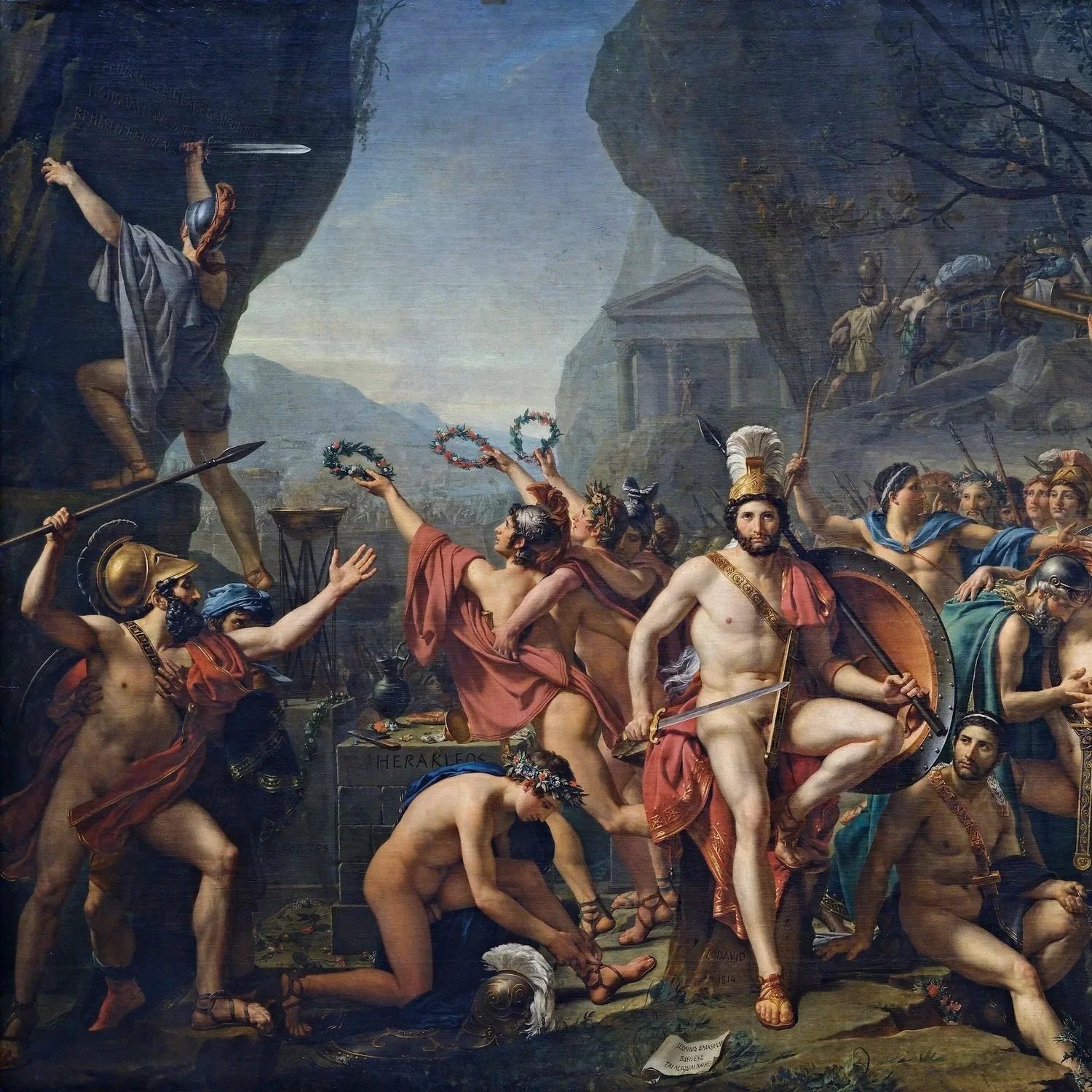
Loading summary
Transcript442 lines
- [00:00]
A.J. Hannenberg
Foreign.
- [00:08]
Graham Donaldson
Hi, and welcome to Classical stuff you should know. A podcast about classical education, old books, old ideas, how to read literature, and how to cultivate an intellectual life.
- [00:20]
A.J. Hannenberg
Yeah.
- [00:22]
Graham Donaldson
My name is Graham Donaldson, and I am here with my two friends in learning, A.J. hannenberg, that's me, and my. And Thomas Fletcher Magby.
- [00:30]
A.J. Hannenberg
Hello.
- [00:31]
Graham Donaldson
Now, gentlemen, there's a problem. And that is we live. We have a pretty, pretty good life. Simple. We read books, we go to our jobs. We love our families and loved ones. But I've heard a rumor that a massive army is on the move.
- [00:46]
Thomas Fletcher Magby
Wow.
- [00:47]
Graham Donaldson
And it is marching towards our bucolic little existence. But don't worry, I've got a plan. If they're going to get to us. There's a tiny mountain pass that they need to walk through, the renowned Texas mountain pass to get to Austin. There is this little hill country pass
- [01:04]
A.J. Hannenberg
that they have to walk through, and
- [01:06]
Graham Donaldson
we can make our famous last ditch stand in that mountain pass. And there are. No.
- [01:14]
A.J. Hannenberg
I wouldn't.
- [01:14]
Graham Donaldson
There's nobody I would rather die shoulder to shoulder with.
- [01:17]
A.J. Hannenberg
There it is.
- [01:18]
Graham Donaldson
Than A.J. hanneberg and Thomas Magby.
- [01:21]
Thomas Fletcher Magby
Absolutely.
- [01:22]
Graham Donaldson
Grease ourselves up, boys.
- [01:23]
A.J. Hannenberg
Let's get to work.
- [01:24]
Thomas Fletcher Magby
I mean, we've been training for this since we were, what, like six?
- [01:27]
A.J. Hannenberg
That's right. Yeah, absolutely.
- [01:28]
Thomas Fletcher Magby
We got Stealing from neighbors.
- [01:29]
A.J. Hannenberg
Yes.
- [01:30]
Graham Donaldson
Yep. I've.
- [01:31]
Thomas Fletcher Magby
Stay in limber.
- [01:32]
Graham Donaldson
Stay in limber.
- [01:33]
A.J. Hannenberg
I would have also accepted an Alamo reference for the opening.
- [01:36]
Graham Donaldson
Okay.
- [01:36]
A.J. Hannenberg
I mean, I feel like this might be in our. In our blood. Right?
- [01:40]
Graham Donaldson
Okay.
- [01:42]
A.J. Hannenberg
So this is going to be episode
- [01:44]
Graham Donaldson
300, by the way.
- [01:44]
A.J. Hannenberg
Episode 300.
- [01:45]
Graham Donaldson
Episode 300.
- [01:46]
Thomas Fletcher Magby
It's a big day.
- [01:46]
A.J. Hannenberg
We're going to talk about the battle of the 300. The 300 Spartans.
- [01:49]
Graham Donaldson
So good.
- [01:50]
A.J. Hannenberg
We. So I think this is fairly straightforward. But just to state it, this is going to be part four of the Herodotus series on book seven of Herodotus. I don't think there's anything confusing about that. Okay. Awesome.
- [02:01]
Graham Donaldson
But this does imply that every episode that came before this is a soldier that the Persians have slaughtered.
- [02:07]
A.J. Hannenberg
Wow. Only 299. We got a lot to go then. There are millions of them, according to Herodotus. That's tough.
- [02:14]
Graham Donaldson
We got some work cut out for us, so.
- [02:16]
A.J. Hannenberg
Yeah. Talking about do people. So I was in high school when the movie 300 came out. This was like, a very important moment for me. Do people still watch that movie?
- [02:25]
Graham Donaldson
I don't know. Was that Zack Snyder? Is that who did it?
- [02:27]
A.J. Hannenberg
Yes. Zack Snyder. Yeah.
- [02:28]
Thomas Fletcher Magby
I don't think so.
- [02:29]
A.J. Hannenberg
I don't think People watch this anymore.
- [02:31]
Thomas Fletcher Magby
I think there's still occasional references like the this is Sparta meme or whatever, but I think it's less and less these days.
- [02:36]
Graham Donaldson
That was back when you had this, like, weird genre of movie where they were adapting comic books that Zack Schneider was doing. And they did 300. They did sin City. They did.
- [02:46]
Thomas Fletcher Magby
They looked pretty good.
- [02:47]
Graham Donaldson
They were just so different. They were like these things and have it.
- [02:51]
Thomas Fletcher Magby
Do they not look good?
- [02:52]
Graham Donaldson
They do not hold up.
- [02:52]
A.J. Hannenberg
Cause I was watching clips and the digital effects, really, you can tell the difference. It's 20 years ago, right? I think it was 2006. So it doesn't exactly hold up. But I remember there was probably no movie I was more pumped for. Right. Just it's comic books, it's action. It's kind of historical. Yeah, it's very exciting.
- [03:09]
Thomas Fletcher Magby
It was fun. Yeah. I don't think kids watch it now. I think.
- [03:12]
A.J. Hannenberg
Fair enough. They might watch it in Bad Movie Club if they're going to. I don't know if it's too over the top. So we made some references here. So there's this Battle of Thermopylae, which is where we're gonna get to, but there's a lot of lead up to get there. So there are a few kind of primary historical sources, and we've referenced a few of them. So one of them is Herodotus. It's book seven of the histories. It's been years, but we have done episodes on books one, two, and three, I believe, of the histories. So this will be the fourth one of them.
- [03:42]
Graham Donaldson
I don't know anything about this. I get all of my historical information from popular movies and television, which we
- [03:48]
A.J. Hannenberg
did talk in our AMA.
- [03:50]
Graham Donaldson
And I've watched the 300 musical, wherein I get all of my.
- [03:55]
A.J. Hannenberg
I think There is a 300 musical, though. Is there really?
- [03:57]
Graham Donaldson
Isn't there?
- [03:57]
A.J. Hannenberg
Actually, I thought a listener told us about that. Maybe I'm misremembering. So there are two other primary sources.
- [04:03]
Graham Donaldson
Hopefully you're well versed in that, Thomas.
- [04:05]
A.J. Hannenberg
Well, thank you. As one should be. So, yes, those two other primary sources are from Zacharias Snyderos and the other is from Frankos Milredis.
- [04:13]
Graham Donaldson
Greeks.
- [04:14]
A.J. Hannenberg
No, it's Zack Snyder and Frank Miller are the. Sorry. So Zack Snyder made a movie about this. It's based on a comic book that
- [04:20]
Graham Donaldson
was too highbrow for.
- [04:21]
A.J. Hannenberg
Thank you. We are not actually going to talk about that. We're going to talk about the Herodotus stuff. So you've made reference to the battle, but I guess just to we'll jump in and go from there. So what is this histories about? What is Herodotus histories about? So Herodotus is kind of tracing the buildup to this war, this war between the Greeks and the Persians. So conveniently the Greco Persian war. And starting in book seven, we're actually kind of like at the height of the Greco Persian war. So I've skipped over one through three. We're kind of building up to it. We're getting a series of kings. There's a famous battle at Marathon which we're not going to cover. That's in book six. So it's right before this. But book seven opens with news that the Persians are having a bad time at Marathon. And so they've been rebuffed in their attempt to invade Greece and to kind of take over the Greek people.
- [05:17]
Graham Donaldson
Is that where they whip the ocean?
- [05:19]
A.J. Hannenberg
That's actually today that we're going to hear about that story. So the king at the time for Persia is Darius. And Darius gets news of this defeat. He's bummed about it. There's this back and forth of Darius is starting to get old and they have to figure out who is going to take over, who will be the king who will lead Persia after Darius dies. And do you all remember who that king is? We talked about this right before. But who is the king who will take over?
- [05:49]
Graham Donaldson
It is King Xerxes.
- [05:50]
A.J. Hannenberg
It is Xerxes, indeed. So Xerxes is not the oldest son of Darius and Darius has many, many sons, many children. But Xerxes is able to kind of make this work because if I'm remembering correctly, he's the first son born after Darius becomes king. So he kind of like claims that he's closest to the like the king lineage as opposed to an older son who is kind of closer.
- [06:17]
Graham Donaldson
Is he the dopest kid? Like, I feel like at some point you just need to pick your awesomest child.
- [06:21]
A.J. Hannenberg
Darius kind of weighs the scales. Like, he kind of. He wants Xerxes. Like, and Darius is coaching Xerxes on how to make the best argument that he, Xerxes, should be king.
- [06:32]
Graham Donaldson
Like, don't give me primogenitor. Like I want to be able to pick my coolest kid.
- [06:35]
A.J. Hannenberg
And that's. But it's. We're going to hear about Xerxes this whole time. And so I'm not now maybe we'll see the failings of Xerxes. I don't know if the other sons would have been worse and there's a chance that they wouldn't have done this battle in the first place. But the way it's set up, it's kind of like outside of Xerxes control that this whole military campaign is going to happen. So Xerxes is determined to be king. And Darius had started this war. And Xerxes wanted to figure out whether the war should continue. So he calls together all the people of the court and has everyone share their opinions. So he kind of lays it out to them. Hey, we're in this battle. Want to get everyone's thoughts on what we should do and what is the first opinion that's offered.
- [07:18]
Graham Donaldson
We shouldn't do this. Let's just like cut our losses and go home.
- [07:21]
A.J. Hannenberg
That's the second guy. I thought the first one's like the suck up. The first one's like, whatever you think is best. Oh, wise King Xerxes. Like your father was very wise. You are very wise. We ought to. We are the greatest of warriors. We have the greatest number of warriors. We have nothing to fear from any other army. We have nothing to fear. Therefore, we should go and conquer. In fact, it's our birthright to go and do this, right? And Xerxes hears that and is kind of like nodding. He's like, yeah, we are awesome. Like, we should. We are entitled to this land. This should all be ours. So then a second person comes up and this is. I think it's Xerxes uncle. But it's a relation of his, which I only bring up because it's the reason he's not killed, like, immediately after doing this, right? But he gets up and he's like, we don't have to do this. We have just lost a battle. We can cut our losses now. Just like you're saying, we don't need to invade, double down. We can just stay home. We can be happy and we don't have to push for war. There are these stories about the. So Herodotus is a Greek, right? So he'll fit these things in. And I'll point to a few as we go.
- [08:31]
Graham Donaldson
The Greeks are so cool.
- [08:32]
A.J. Hannenberg
They're so strong and so powerful and like, no, I've heard tale that no one can defeat them. And so this uncle kind of lays that out and there's silence. People are, like, mortified that he would stand up and do something like this. And Xerxes is like, if you were not my relation, if you were not a family member, I'd kill you on the spot. Like, completely unacceptable. This is not. Obviously, we're going to go to war. This is what we're going to do. But then Xerxes goes home and he's like, I think I made the wrong call. I think I'm leading us to our deaths. This could be a huge mistake. And you know what? What's that good on him? Second guess, second order thinking, let's do it. Yeah. Has some thoughts about it. And he is like, you know what? Tomorrow I'm gonna call everyone up and I'm gonna cancel this whole thing. Like, we're not going to war. We're not gonna do this. He goes to bed and he has a dream.
- [09:30]
Thomas Fletcher Magby
Oh, oh, no.
- [09:31]
A.J. Hannenberg
And in this dream he has like
- [09:33]
Graham Donaldson
an eagle is eating a snake and there's like a sunbeam and there's like a dying Spartan or something.
- [09:39]
A.J. Hannenberg
Yeah. This one's like, it's a person who comes to him. I don't think it is clarified in Herodotus, but in there's a play called the Persians where it's Darius who comes in a dream to him and is like, hey, you need to go do this battle.
- [09:52]
Graham Donaldson
He's dead.
- [09:52]
A.J. Hannenberg
Yeah, like again, that's a different source than this one. But it's like a phantom is how it's translated. Here comes to him and is like, you must do this battle. This is completely necessary. This is very important. You need to go and do this. He wakes up and he's terrified because he wants to. Xerxes wants to back out. He's had this vision that he actually needs to go to war. And so he calls that uncle who had told him not to go to war. And Xerxes says, hey, I just had this horrifying vision, but I'm worried that it's not real. Like, I'm worried that I'm kind of like second guessing myself that the dream, the prophecy isn't real. And they actually have this interesting back and forth where the family member he's talking to acknowledges that most. The quote is, most of the visions visiting our dreams tend to be what one is thinking about during the day. Isn't that interesting?
- [10:51]
Graham Donaldson
What a baller. So as you are reading this, I'm realizing how much paralyzed Paradise Lost references.
- [10:57]
A.J. Hannenberg
Oh, is that coming from this?
- [10:58]
Graham Donaldson
So there's like the council of what to do.
- [11:00]
A.J. Hannenberg
Yeah, the.
- [11:02]
Graham Donaldson
That dream where someone says, like, you know what, the only reason you dream that is because you were thinking about that the day before.
- [11:06]
A.J. Hannenberg
Yeah.
- [11:06]
Graham Donaldson
Adam says this to Eve when she has a dream about eating the fruit.
- [11:09]
A.J. Hannenberg
Really?
- [11:09]
Graham Donaldson
But it's actually Satan whispering in her ear. And Adam's like, don't even Worry about it. Sometimes we just think crazy things. And he's like, okay. But it was like Satan trying to put in her mind the bad idea to go do. Interesting.
- [11:21]
A.J. Hannenberg
So, yeah, at least at some point comes from. It's almost word for word what I've been saying. And I don't know if this happens next in Paradise Lost, but Xerxes is like, hey, I think it's Astobanos is the uncle. Hey, can you uncle, dress up in my clothes, sit on my throne and then go sleep in my bed? Because if this is really a vision, you're going to have the same vision. We're going to trick the spirit into showing up to you. And then that'll prove that this is actually.
- [11:52]
Graham Donaldson
They fall for it every time.
- [11:53]
Thomas Fletcher Magby
Spirits have notoriously bad eyesight.
- [11:55]
Graham Donaldson
Yeah, they're not good at it.
- [11:55]
Thomas Fletcher Magby
Well, that's what the alphabana dislikes most, spirits.
- [11:58]
A.J. Hannenberg
Yeah. The guy comes back, he's like. The uncle is like, that's really dumb. Obviously spirits are not tricked by these things. Like, you're better than this king. You know better. But Xerxes like insists on it.
- [12:08]
Graham Donaldson
I got the crown.
- [12:10]
A.J. Hannenberg
Xerxes is like, you're going to do it because I said to. So he. He does it. He dresses up like Xerxes. He sits on the throne. He goes and sleeps in Xerxes bed. And the vision appears to Astabanos, it appears to the other guy. And the vision shows up and the spirit says to the uncle, are you the one who has been so forcefully dissuading Xerxes from marching against Hellas as though you are so worried about him? Well, neither in the immediate present nor in the future will you escape punishment for trying to avert what is destined to happen.
- [12:45]
Graham Donaldson
So the spirit knows it's not Xerxes.
- [12:47]
A.J. Hannenberg
Correct.
- [12:47]
Thomas Fletcher Magby
Not fooled.
- [12:48]
A.J. Hannenberg
But he does get the vision. As for Xerxes, he has already been enlightened as to what he must suffer if he refuses to obey.
- [12:53]
Graham Donaldson
Dang, he gets killed. So he basically says, like, you are going to. We're gonna like mess you up if
- [12:58]
A.J. Hannenberg
you don't get in line. Like, this is happening. I spirit have told him what to do. Like, back off, buddy. And wow.
- [13:06]
Graham Donaldson
What's the guy's name? Estebanos.
- [13:07]
A.J. Hannenberg
I think I've mixed an R with an S. It's Artabanos.
- [13:10]
Graham Donaldson
Artabanos is like, all right.
- [13:11]
A.J. Hannenberg
Well, goes to Xerxes and is like, we're doing what you said. We're doing this battle. This is happening.
- [13:17]
Thomas Fletcher Magby
Wow.
- [13:18]
A.J. Hannenberg
So that's intense. Xerxes has tried to back out, but ultimately decides to do this. But there's a problem, and I'm not very good with geography. I assume you all will know more about this region than I do because you all, like, teach books that kind of occur around this area, I guess, probably AJ Specifically. So they are in what is today Turkey. So kind of like western and northwestern Turkey. They want to get to Greece and also conquer everything in between. But naturally. Naturally, why? If we're there, if you're gonna be there, why not if we're there? Are there any issues with that path that you can think of off the bat?
- [13:52]
Thomas Fletcher Magby
I do not know.
- [13:53]
Graham Donaldson
Mountains.
- [13:53]
A.J. Hannenberg
Mountains are a big problem. And that's where the Battle of Thermopylae comes from. Like, if they want to go as far as they want to, they need to pass through some mountains, which are a problem. The other is that there's water in between each of these places. So there are a bunch of very nice plains along the coast which is easy to march through. But you have to get there first. And from Turkey into kind of this span of land. Yeah. There's water that they have to cross. And so they have to figure out a way to get from Turkey into the mainland of where they want to go. Do you all know how they solve this? Is this something you have heard about before?
- [14:33]
Graham Donaldson
No, I think. Wouldn't it just be, like, build boats?
- [14:42]
A.J. Hannenberg
Kind of.
- [14:42]
Graham Donaldson
The Persians are always pretty good at, like, using. Figuring out how to, like, manipulate water for military advantages. Like, Cyrus re diverted the river. He punished Euphrates to invade Babylon.
- [14:58]
A.J. Hannenberg
Yes. There's another one where he punished a river where the river. I think it killed a horse of his. This is book two or three. So the river kills one of his horses, and so they build all these little, like, streams off of the river and they spread the river out.
- [15:13]
Graham Donaldson
Yeah.
- [15:14]
A.J. Hannenberg
So the river, like, loses its power. Exactly. But he calls it punishing the.
- [15:18]
Graham Donaldson
In that river too.
- [15:19]
A.J. Hannenberg
Yes, yes. That would also do it for sure.
- [15:21]
Graham Donaldson
I don't know what that camera would they do.
- [15:23]
A.J. Hannenberg
So here it's what you. So it's about a mile from.
- [15:26]
Graham Donaldson
Oh, then they build a big bridge. Big pontoon.
- [15:28]
A.J. Hannenberg
They do so upon.
- [15:31]
Graham Donaldson
Or like a big floating. A big floating dock.
- [15:33]
A.J. Hannenberg
Is that what this is that I'm showing you a picture.
- [15:34]
Graham Donaldson
Oh, that's like a bridge of boats.
- [15:36]
A.J. Hannenberg
Yes. What they do. So what they. What they do to get over the. Is that a. I don't know.
- [15:40]
Graham Donaldson
I think that's like a pontoon bridge, right?
- [15:42]
Thomas Fletcher Magby
Yeah, kind of.
- [15:42]
Graham Donaldson
Yeah.
- [15:43]
A.J. Hannenberg
So that. What they build. Our listeners are like, what are you talking about? So what the Persians do is they get a bunch of boats, they toss an anchor down, they put them right next to each other, and they put wood over all these boats and they build a bridge. They build a bridge with all of their ships and they. There's all this stuff about how they're worried about the animals not making it across and them freaking out and running into the river. And so they actually lay dirt along this path as well, and they put walls up on either side to trick their animals into thinking that it's just a regular path. So they. It takes them years. I think it's four years, but takes them a long time to get this put together. But they do it and they cross what's called the hellespont. That's that 1 mile gap between Turkey and the mainland.
- [16:33]
Thomas Fletcher Magby
Now help me out. Why not just use the boats?
- [16:35]
A.J. Hannenberg
Yeah, it would take too long to
- [16:38]
Thomas Fletcher Magby
get people back across, especially with animals, I guess.
- [16:40]
A.J. Hannenberg
And according to Herodotus, there are. The first number he gives is 1.7 million people. And he later revises that number to say 5 million people.
- [16:51]
Graham Donaldson
That's a big revision.
- [16:53]
A.J. Hannenberg
So the 1.7, I think, is just the infantry. It's like the 5 includes the 1.7. And then he adds some more. But the first number he throws out is this 1.7. Now, there were very likely not actually 1.7 million Persians or 5 million Persians coming as a part of this.
- [17:10]
Graham Donaldson
So this is. Bronson is doing his best.
- [17:14]
Thomas Fletcher Magby
Who are you? Question the numbers.
- [17:15]
A.J. Hannenberg
Thank you. He was there. I did. I think I meant mentioned before. Herodotus has two titles. One is the father of history, the other is the father of lies. And so there are things that enter into the stories that you look at and you're like, I don't think that's correct. Before it was the. Was it hippos look like horses, something like that.
- [17:36]
Thomas Fletcher Magby
Wait, how do you know that's not. Is it like in your notes on the book, or do you look up to everything afterwards?
- [17:42]
A.J. Hannenberg
So historians put the number at somewhere between 50 and 300,000. So a much smaller number. And what people point to is where he gets the 5 million is that there's this way of counting. They're called myriads. So, like, where we get the word myriad to say, hey, there are lots of them. A myriad is a unit of a number of people. I think it's 10,000 people, but please don't roast me in the comments. And so basically, it's like there are 50 myriads, but not every myriad is necessarily full, if that makes sense. So it is actually 50 myriads. There are 50 groups of people, but they're not actually the full 10,000 people at each grouping. Does that make sense? So, like. Yeah, okay, so that's the theory.
- [18:26]
Graham Donaldson
So a myriad at Most could be 10,000. Yeah, but if you had like 800 numbers, you could still be in your myriad.
- [18:32]
A.J. Hannenberg
And that's. And like, you're not really sitting there counting all 10,000 people in each group. That's the whole point of this thing, is to like simplify counting by just saying how many of these groups are there?
- [18:42]
Graham Donaldson
Gotcha.
- [18:43]
A.J. Hannenberg
They're not all full. They don't all have the 10,000 people or whatever.
- [18:46]
Graham Donaldson
Regiments.
- [18:46]
A.J. Hannenberg
Yes.
- [18:46]
Thomas Fletcher Magby
It's like I split my kids into groups and then the next week some are absent and like one. You know, there's not the right class number. And so like one group has two. One's got like one kid left because there's two are on a track meet.
- [18:56]
A.J. Hannenberg
I thought you were going to say it's like a fire drill. And you're like, ah, I missed a couple.
- [18:58]
Graham Donaldson
But you're on like the Europe trip and all right, groups show up.
- [19:02]
A.J. Hannenberg
All right, we got three groups. We're good. Yeah. Close enough.
- [19:04]
Thomas Fletcher Magby
It's enough.
- [19:05]
A.J. Hannenberg
Close enough. So during this building of the bridge is where Xerxes gets mad at the water. They're building the water. A violent storm descends upon it. And there are people that die on the bridge because they're building it as the storm shows up. Xerxes was infuriated when he learned this. He ordered that the Hellespont was to receive 300 lashes under the whip and that a pair of shackles was to be dropped into the sea. And I've also heard that he sent others to brand the Hellespont. So, like to heat up a burning into the water.
- [19:40]
Graham Donaldson
So they beat the water.
- [19:42]
A.J. Hannenberg
Yes. They toss and shackles.
- [19:44]
Graham Donaldson
Toss some shackles in there. And they branded it.
- [19:45]
A.J. Hannenberg
Yes.
- [19:46]
Graham Donaldson
Did weather issues not come up in the plenary sessions?
- [19:49]
A.J. Hannenberg
They should have thought about this. Weather is a recurring issue for the Persians, which I think Herodotus sets up as like they are against nature or like they're doing something so wrong that the. The earth is these spirits, though, that
- [20:05]
Graham Donaldson
said, you got to go do this thing or they have to do it because they don't want them to lose.
- [20:08]
A.J. Hannenberg
Well, that's mine of like, we don't.
- [20:11]
Thomas Fletcher Magby
They never question the motivation of the
- [20:12]
A.J. Hannenberg
spirits because in the way they tell it Also, I think the spirit has wings and just like flies off at some point. We don't know if that is a Persian spirit or Greek or like, we don't know their motivation. So I think it's a little ambiguous. It is a uap.
- [20:29]
Thomas Fletcher Magby
I'm wondering how those guys felt that were actually doing the whipping. Like, what is my job?
- [20:33]
A.J. Hannenberg
And so those assigned to this joyless office went to work on it while other engineers were building new bridges. So I think they're.
- [20:40]
Graham Donaldson
I don't know, man. That's a pretty easy day.
- [20:43]
Thomas Fletcher Magby
If it's that or build a bridge. I'll give lashes. I'll drop the shackles into the water if you want.
- [20:47]
A.J. Hannenberg
Well, this is one of the famous stories, right. Of whipping the water. There's like a. Just a little note at the end of that. So I told you the punishment to the Hellespont. So thus he ordered that the sea was to be punished and also that the supervisors of the bridge over the Hellespont were to be beheaded. Oh. So there's a little more going on there, too. Little bummed that that doesn't get the front and center treatment. Okay.
- [21:10]
Graham Donaldson
So it's a tough day of work.
- [21:12]
A.J. Hannenberg
Tough, tough time. Not ideal. So they. But they cross over this body of water and they're starting to make it into Europe. They're getting into Greece eventually. So there's a long section where they just. It describes the size of the army. There are tons of people. It's terrifying. And no one should go against it. But also, Xerxes has with him a former king of Sparta. So this. It's in book six. He got sold out by his people. It was like a petty political squabble. But he gets kicked out of Sparta, gets captured by the Persians, and he's with Xerxes as they're going in. So Demeritus, I believe, is how you'd say his name. So Demeritus is with.
- [22:01]
Graham Donaldson
I feel like he got in trouble at school.
- [22:03]
A.J. Hannenberg
Demerit, right? Yeah, it's like right there in the name. And so Xerxes asks him, like, hey, like, what do I need to know going into this. This place? And Demeritus, every Greek is awesome. Well, that is what he says. And
- [22:20]
Graham Donaldson
they're so strong, they never die.
- [22:23]
A.J. Hannenberg
Yeah. And they're super strong. But also, I'll pose it to you all again, this being something you've thought about, like, what motivates them to fight? Like, why are they going to defend against Xerxes?
- [22:38]
Graham Donaldson
It's their home.
- [22:38]
A.J. Hannenberg
Yeah.
- [22:39]
Graham Donaldson
Where they're from.
- [22:40]
A.J. Hannenberg
Yeah.
- [22:40]
Graham Donaldson
They've got, like, sheep and kids.
- [22:44]
Thomas Fletcher Magby
And because the Spartans love it, say more like, they are a militant society. They are trained for military when they are young. I mean, if we're talking about the Spartans.
- [22:54]
A.J. Hannenberg
Yes.
- [22:55]
Thomas Fletcher Magby
They are flipping built for it.
- [22:58]
A.J. Hannenberg
Yes.
- [22:58]
Thomas Fletcher Magby
That's what they love.
- [22:59]
Graham Donaldson
They train their kids to do it. It's their raison d'. Etre. If they don't have someone to fight, they don't have no reason to be alive.
- [23:08]
A.J. Hannenberg
There's also this interesting what Demeritus says. And again, tell me if this kind of doesn't match with what you all would think about the Spartans is that they fear breaking law more than they fear death. That there is something higher that they are pointed to, dedicated to working on other than. So the Persians come in, and I don't remember if it's Demeritus who says this. It's a quote at some point about the Persians. That they have many men but few soldiers. Isn't that good? And it's. It's mostly a slave army. They are forced to be there. And they're there because Xerxes will kill them if they don't accomplish this and do what they're told to do. While the Spartans, all those guys are
- [23:53]
Thomas Fletcher Magby
looking for chances to just run off.
- [23:54]
A.J. Hannenberg
That's. Yes, that's exactly.
- [23:56]
Thomas Fletcher Magby
Like, if I can run off and not get caught, I'm gonna run off.
- [23:58]
A.J. Hannenberg
Which actually does contribute to that 5 million versus 200,000 thing, is that a lot of those people missing from their myriad fled. Like, they don't want to be in this battle. So they cross over into Greece and then they bolt because they don't want to be there.
- [24:11]
Graham Donaldson
Or if your boss says, like, push harder, boys. You're like, only if you're watching me.
- [24:15]
A.J. Hannenberg
Yeah, it's like, why would I. Yeah, because this isn't.
- [24:17]
Thomas Fletcher Magby
Because you are, like, just threatening me to get it done.
- [24:20]
A.J. Hannenberg
Yes.
- [24:20]
Graham Donaldson
Yeah. So you're not.
- [24:21]
A.J. Hannenberg
That's not.
- [24:21]
Graham Donaldson
That's no way to lead an army. Whereas maybe the Spartans, they, like, they all want to be there.
- [24:26]
A.J. Hannenberg
Yes.
- [24:26]
Graham Donaldson
They all signed up for this, and
- [24:28]
Thomas Fletcher Magby
they have to do it because, like, they have to defend their families, their homes.
- [24:30]
Graham Donaldson
Yeah.
- [24:31]
A.J. Hannenberg
Yeah, we'll get there. Because later, it's like, if the Spartans don't stand up, the Persians will march into Greece. And then everything they. Everything, Their families, their possessions, everything is destroyed. So there's no reason.
- [24:44]
Thomas Fletcher Magby
Their culture and whole way of life.
- [24:46]
A.J. Hannenberg
So they have to do this.
- [24:47]
Graham Donaldson
This is, like, so true of hockey teams.
- [24:49]
A.J. Hannenberg
Stop. Say more.
- [24:51]
Graham Donaldson
Oh, it's just like, the teams that win in the playoffs are the teams that are, like, kind of crazy. They love each other. They're all in this thing together and they are willing to like, skate through a wall for one another.
- [25:07]
A.J. Hannenberg
Yeah.
- [25:08]
Graham Donaldson
Whereas then there are some teams that are like, the playoffs are gravy. It's kind of nice to have. We're, we're professionals. We're going to kind of do what the coach says. But, like, I'm not really going to go the extra mile because I don't want to get hurt because I got a career to think about. And like, these are my teammates, but they're not my brothers. But when you have a team that, like, they all want to die for each other and they want to die for their head coach, like, you've got. That is a team that can make it through four rounds of a best of seven physical series.
- [25:44]
A.J. Hannenberg
Yes.
- [25:44]
Graham Donaldson
That's why, like, Tampa's one. That's why Florida's won. That's why Toronto won't win. That's why the Oilers aren't going to win this year. That's why Vegas isn't going to win anyway.
- [25:54]
Thomas Fletcher Magby
Do you think that the USA team in the Olympics this year had it? Because, like, that's right. That kid got his teeth knocked out and he was still on the ice.
- [26:00]
Graham Donaldson
Team Canada, they were like the best technical team. They played really strong and I mean, it was really close, but there was just something where the US Team had. They. You could just tell that they had this magic of believing in each other. Whereas the, the Canadian team was like, these are the best assortments of all of the best players in the world. But they just didn't have the sort of like, swagger. They just lacked a little bit of
- [26:29]
Thomas Fletcher Magby
this, that same hunger of this.
- [26:31]
Graham Donaldson
Like, Like, I know that the cool, the awesome line is coming up with the arrows in the air and the Spartans say they're cool thing. Like Team Team USA had that like, like, yeah, I'm gonna be spitting my teeth out like Chiclets and I'm gonna be scoring the. Scoring the game winning goal. Whereas, like, yeah, like, I'm gonna throw
- [26:49]
Thomas Fletcher Magby
the teeth in the garbage and then get back.
- [26:50]
Graham Donaldson
Team Canada was like, if we just keep executing our automated route set routines of passing, we will eventually score, you know, and then you just didn't have the heart.
- [27:00]
Thomas Fletcher Magby
Yeah.
- [27:00]
Graham Donaldson
Yeah.
- [27:01]
Thomas Fletcher Magby
So anyway, that's fun.
- [27:02]
A.J. Hannenberg
Yeah, I'll just. This is from the conversation with Demeritus and with Xerxes. So again, Xerxes is trying to understand, like, basically he's like, how much am I going to win this battle? Like, how much are the Persians going to destroy the Greeks? And Demeritus is like, hold your horses. This is toward the end of it. The Lacedaemonians. So the Spartans, right, are in fact no worse than any other men when they fight individually. But when they unite and fight together, they are the best warriors of all. For though they are free, they are not free in all respects. For they are actually ruled by a lord and master. Law is their master. And it is the law that they inwardly fear. Much more so than your men fear you. They do whatever it commands, which is always the same. It forbids them to flee from battle. And no matter how many men they are fighting, it orders them to remain in their rank and either prevail or perish. Man, isn't that good?
- [27:57]
Graham Donaldson
I feel like we need to have like the Last of the Mohican soundtrack in the background.
- [28:00]
A.J. Hannenberg
Yeah.
- [28:07]
Thomas Fletcher Magby
I play that when we read some of the Iliad battles like Achilles versus Hector. It's so good. That one in the Skyrim soundtrack.
- [28:19]
Graham Donaldson
Skyrim.
- [28:26]
Thomas Fletcher Magby
Like it's. They're both very good.
- [28:28]
A.J. Hannenberg
Yeah. So from here I'm gonna skip a bunch because it's super boring. Don't tell. Oh, I would listen Halo 2. It's the Halo 2 load music, right.
- [28:37]
Thomas Fletcher Magby
Halo's a little too slow for like a hand to hand combat battle.
- [28:40]
A.J. Hannenberg
Oh, fair. Okay. Halo one. Halo three. All two.
- [28:43]
Thomas Fletcher Magby
Did I just say two? Yeah, the Halo soundtrack just across all of the. Halo. Halo is a little slow.
- [28:49]
A.J. Hannenberg
So a bunch of stuff happens in the middle. It's like again, I think I mentioned it's the tour of the armies and there are a bunch of not interesting battles where Xerxes just like he goes to a town. What he does. Whatever. I'll say what he does is he sends out envoys to a bunch of different towns. He asks them for dirt and for a gift and it's like them pledging loyalty to him. And basically everyone does it. He doesn't send these to Athens or to Sparta because he doesn't want to be. He doesn't want to get disrespected. So he doesn't even give them a chance to reject him. Which presumably because he knows they're going
- [29:24]
Graham Donaldson
to be like, you suck.
- [29:26]
Thomas Fletcher Magby
Here's dirt with poop in it.
- [29:27]
A.J. Hannenberg
Yeah. And his whole plan is to real spat in it. Yes. And so since that's where he's going, he likes knows that he's going to have to fight them anyway. And so he doesn't even Bother. But he goes through a bunch of easy to walk to towns. They all throw feasts for him. The Persians apparently only eat one meal a day. And all of the towns are very thankful for that because if they had two meals a day, they'd all be bankrupt and lose everything.
- [29:50]
Graham Donaldson
That was something that Cyrus instilled back in the day. He thought that like, you have to. You should work before you eat, that no one should have breakfast and you should only have one meal a day. Cyrus was like the OG Intermittent fasting.
- [30:03]
A.J. Hannenberg
I like it. But there's like a Greek comedian who's like, good thing they don't eat two meals a day. Am I right? Anyway, so there's a guy in the middle who does that. What's the deal?
- [30:11]
Graham Donaldson
It's the Persians. Perfect.
- [30:14]
A.J. Hannenberg
It's really good. Seinfeldius. Yeah, my favorite. So all this is the Persian army is moving along the coast essentially. And then they want to get to Athens and to Sparta. So a thing I had trouble with, and again, maybe you all know this is that Greece has a bunch of mountains. You all know this. And so to get to where Persia were. No.
- [30:35]
Graham Donaldson
What's the name of the mountains?
- [30:36]
A.J. Hannenberg
You tell me, man.
- [30:38]
Graham Donaldson
I can't remember.
- [30:38]
A.J. Hannenberg
Okay.
- [30:39]
Graham Donaldson
We're gonna get roasted in the comments.
- [30:40]
A.J. Hannenberg
Is it a.
- [30:40]
Graham Donaldson
Don't even know the mountains in Greece.
- [30:42]
A.J. Hannenberg
Google it. Are those the great. They're. They're great Pyrenees. Right. I don't know what they are.
- [30:46]
Thomas Fletcher Magby
I will. I will Google, gentlemen.
- [30:48]
A.J. Hannenberg
I'm gun shy to say it be wrong. It's okay. Say something wrong right now.
- [30:52]
Graham Donaldson
I suck.
- [30:53]
A.J. Hannenberg
Thank you. So to get to where the Persians want to go, they have to cross through a bunch of mountains to get. Are you really proud of that one? Graham is losing it. I'm GLAD we have YouTube to look at the video. So to get 5 million, probably not that many. To get hundreds of thousands of people to Athens and Sparta, you need an easy way to get there or else you're not going to climb mountains to get to these cities to attack them.
- [31:19]
Thomas Fletcher Magby
Is it the Pindus Mountains?
- [31:20]
A.J. Hannenberg
You tell me, man. I don't know.
- [31:22]
Thomas Fletcher Magby
That's what. That's what Google. A quick Google is saying.
- [31:24]
A.J. Hannenberg
That's Graham's answer. If you hate that on the Pyrenees, don't. Don't at me, bro. Is that do people. Okay, no one says that anymore. No one says that anymore.
- [31:33]
Graham Donaldson
I did like five years ago.
- [31:34]
A.J. Hannenberg
Cool. I'm really hip, so I'd love to say some more things. So six, seven.
- [31:38]
Graham Donaldson
Joke while you're at it.
- [31:39]
A.J. Hannenberg
My children have been exposed to six, seven. But they don't know what it means.
- [31:42]
Graham Donaldson
No one does.
- [31:43]
Thomas Fletcher Magby
Spain. Pyrenees are in Spain.
- [31:45]
A.J. Hannenberg
Spain not the same. So Persians are getting that way. They need a path to go through. And so there are a couple different options. And the Greeks, they go to one pass, but the Persians don't end up going there. The pass that the Persians want to go through and that the Greeks will defend is at Thermopylae. So Thermopylae, it's just a way to get through the mountains. And Thermopylae literally means hot gates. And they're like thermal springs. And these gates are like. Well, it's just like a narrow spot where people can. You have to get down to a narrow aisle of people to get through this path.
- [32:25]
Thomas Fletcher Magby
It's like, go through the path and have a soak.
- [32:26]
A.J. Hannenberg
Yes. It sounds like a great time. I would love to go to Greece. So they have to go this way is. What is the point? In the background, there's all this other stuff, the most important of which is that. So I'm talking about the land path that the Persians are following. There's also. They have ships that are also following along the coast. So you have a land army on the. This is my obvious statement of the day. On the land side of the coast. And then you have the Navy ships on the side. Hold on, hold on. On the water side of the coast. So was that clear? Was that good?
- [32:59]
Thomas Fletcher Magby
Shoreward?
- [32:59]
A.J. Hannenberg
I can do it one more time. And so they're following together, but land and water. But there's a big, big storm.
- [33:07]
Graham Donaldson
Which ones?
- [33:08]
A.J. Hannenberg
Yeah, sorry. I know. Sorry. I'm confusing them, too. Well, actually, the Persians get it mixed up, too, because the Navy gets caught in a storm. But there are too many of these ships and they don't have a place to dock them. So they try to dock in the middle of the ocean, and they all bump into each other and they lose 400 ships.
- [33:26]
Graham Donaldson
That's not great.
- [33:26]
A.J. Hannenberg
And this is not like the. The Greeks doing something incredible. This is just like the weather, a bad storm.
- [33:33]
Thomas Fletcher Magby
That is a huge number of ships to lose.
- [33:35]
A.J. Hannenberg
Yes. And a huge number they have in the first place. Right, but.
- [33:38]
Graham Donaldson
And I bet Herodotus got exactly right.
- [33:41]
Thomas Fletcher Magby
They counted them as.
- [33:41]
A.J. Hannenberg
I have no reason to question this number. Yeah, this is like.
- [33:44]
Thomas Fletcher Magby
Had to yell out his number as he, like, went down with it.
- [33:46]
Graham Donaldson
1 6.
- [33:48]
A.J. Hannenberg
He just kind of just like that. So Herodotus is. I had this thought also. It's like Herodotus is writing basically 50 years after the stuff is happening 50 to 100 depending on the event, obviously. So it's not that far away from when the thing is happening, which is just interesting. It's as close to contemporary.
- [34:07]
Graham Donaldson
Old timers in the bar fought there. They're talking about it.
- [34:10]
A.J. Hannenberg
Yes. And that's how he's able to get this information. So all that is happening and then that brings us to Thermopylae. So, you know, again, because I'm steeped in mid 2000s comic book movies, I was expecting there to be only 300 people as a part of this battle. There are actually a bunch of different groups that are there. There are 300 Spartans. There are 300. Is it hoplites. Is this a term you all are familiar with? What is a hoplite?
- [34:37]
Graham Donaldson
A light foot soldier.
- [34:38]
A.J. Hannenberg
Yeah. So it's like, I think it's named after the shield that they hold, but
- [34:41]
Graham Donaldson
like, I thought it was a spear, but maybe it's a shield.
- [34:43]
Thomas Fletcher Magby
It's the shield because you can do a phalanx, right?
- [34:44]
A.J. Hannenberg
Yeah, that's exactly. And so.
- [34:46]
Thomas Fletcher Magby
And which was like brand new military technology.
- [34:48]
A.J. Hannenberg
And so. And that's to that point from before of when they. When they work together, they're unstoppable. Right, so here are the groups. This is book seven. So the Hellenes who were waiting for the Persians in the region were 300 Spartan hoplites, a thousand men from Tegyeh and manathea, each providing 500, 120 from Orkomenos and Arcadia, and 1,000 from the rest of Arcadia. There were all the troops that came from Arcadia. From Corinth, there were 400 hoplites. From Phleios, 200. There were also 80 Mycenaeans. Those then were the troops who had come from the Peloponnese. And then there. There's a list of a few others as well. So it's not only the 300. There are like a bunch of different people who were there as well. So it's a few thousand that we get up to, but it's still a few thousand against potentially hundreds of thousands of Persians that are coming their way.
- [35:38]
Thomas Fletcher Magby
And we're the 300. Like, hey, you guys stand back.
- [35:40]
A.J. Hannenberg
We're gonna get there. So there are multiple days of combat, and at first they're feeling pretty good, Right. Like you cannot get past them without going through this mountain pass. And so it's a meat grinder. You just stand. Now you're just tag out. And then, yeah, you're gonna get tired. But there's also like the other side. It gets Too dark. And they literally can't attack you anymore. Right. So there's kind of a built in pause.
- [36:05]
Graham Donaldson
Do you do a clear out every now and then of all the bodies?
- [36:07]
A.J. Hannenberg
You have to. Right. Or do you just.
- [36:09]
Thomas Fletcher Magby
I mean, like, I assume the attacking people are the ones who have to clear out the bodies. Because if I'm defending, I'm just gonna
- [36:13]
A.J. Hannenberg
leave them there, make a wall, climb over.
- [36:14]
Thomas Fletcher Magby
Yeah.
- [36:15]
A.J. Hannenberg
And so they try. The Persians try all kinds of different things. They have, again, there are like hundreds of different like people groups that make up the Persian army. They throw a bunch of them at the Greeks. Nothing is working right. They have this. I completely skipped over this. There's this elite group within the Persians called the Immortals. The Immortals are a group of 10,000.
- [36:37]
Thomas Fletcher Magby
Well, that's in the movie, isn't it?
- [36:38]
A.J. Hannenberg
Yes. Now in the movie, they are like supernatural creatures that have sweet masks that they wear. The Immortals are the real ones. Are the warriors in the Persian army called the Immortals? Not anyone. So they are distinguished for their. The way they dress. They put on a lot of gold and like they look fancier than the other soldiers. And they're also like hand picked out of the entire army.
- [37:04]
Graham Donaldson
You gotta pay for those skins though.
- [37:06]
A.J. Hannenberg
Yes, you do. Yeah, it's pay to win in the Persian army. Is that the problem? Yeah, you gotta buy your V bucks to get your loot boxes. Yeah. And then Apple takes their cut. It's just really unfortunate. And what Herodotus says is why they're called the Immortals is there's a set group of 10,000. First off, it's a cool name. Just want to be clear on that. Second is that there are exactly 10,000 of them.
- [37:28]
Graham Donaldson
So when one dies, like someone gets promoted.
- [37:30]
A.J. Hannenberg
Yes.
- [37:30]
Graham Donaldson
You get a new one, pretend like no one died.
- [37:33]
A.J. Hannenberg
It's like the group is immortal. Right. Because like you always maintain that 10,000. But they're, they're the elite. They are like the top warriors in the Persian army.
- [37:41]
Graham Donaldson
They war so cool.
- [37:44]
Thomas Fletcher Magby
No, maybe with 10,000 of them. Like that's a pretty big number. Like now again, this is our elite crew.
- [37:50]
A.J. Hannenberg
By 10,000, I guarantee you it means a myriad. Oh, and so it's like 30 guys. Yeah, sure. And so you should discount basically every number I say except for the Greek one, because it has to be 300. Because this is episode 300 and if that's not right, we got a problem. It'd be weirder if I had.
- [38:07]
Graham Donaldson
You've done a myriad of episodes, certainly.
- [38:09]
A.J. Hannenberg
Yeah. Some of our listeners feel that way. For sure. So Nothing is working for the Persians. They are not able to get through. And even Xerxes is threatened a few times. He has to jump out of the way of. It's not arrows, but it's like spears or like. Like he's threatened by this, this combat.
- [38:30]
Graham Donaldson
So you know that all the guys that are like hucking spears as Xerxes, they're like putting bets on it and like, hey, man, watch this, watch this,
- [38:36]
A.J. Hannenberg
watch this, watch this.
- [38:38]
Graham Donaldson
So.
- [38:45]
A.J. Hannenberg
Why can't you just do summaries of all these books? So some punk in the back now this is. They're at an impasse. And this is a matter of days we're talking about. So they've not been fighting for long. But Xerxes has many problems. But among his problems is that even if it's only hundreds of thousands of people, he needs water and food. And like, he expected a quick battle, that he would sweep in, conquer everything, and then get out of there.
- [39:18]
Thomas Fletcher Magby
But he's got to feed people.
- [39:19]
A.J. Hannenberg
Yes. And so he can't be there for a long time. That's not going to work for his army.
- [39:23]
Graham Donaldson
He's got a burn rate.
- [39:24]
A.J. Hannenberg
He has a burn rate and he has to kind of get in enough resources to make up for it. So that's a problem. And also he is like losing lots of people. And so his grand army, that's helping
- [39:36]
Graham Donaldson
with the burn rate, I guess.
- [39:37]
A.J. Hannenberg
Yeah. Yes. But it kind of puts at risk to Daryl's food. Yeah, right. Puts at risk the rest of the battle. So ultimately, there is a local person, Ephialtus, who came to speak with Xerxes, expecting to win some great reward for telling the king of the path that led through the mountain to Thermopylae. By so doing, he caused the destruction of the Hellenes stationed there. This man later fled to Thessaly in fear of the Lacedaemonians. Yeah, they do not like you. And during his exile, a price was set on his head by a group during a meeting of another group. After a while, he went back to where he was from where he died at the hands of Athanates, a man of Trachis. This Athanates killed Ephialtus for another reason, which I shall explain in a later section of my story. Okay. I went to the footnote. Would you like to know where he discusses this?
- [40:30]
Graham Donaldson
Yes.
- [40:31]
A.J. Hannenberg
It's never discussed again. He doesn't tell us why he was killed. He's killed for an unrelated thing that Herodotus doesn't tell us in the in between. Thank you. I'm just so annoyed by that. So. But he gets killed because this guy sucks. Right.
- [40:44]
Thomas Fletcher Magby
I feel like I've done that so many times in my ninth graders. Like, I will talk about it Tuesday.
- [40:47]
A.J. Hannenberg
We never revisit. He's got a lot of content here, so I can understand him getting a little distracted. So a local, a Greek, reveals a path to Xerxes that is going to get around the. I'm gonna say the Spartans, but like the Greeks, the warriors fighting there. And then it's just gonna be an issue of getting flanked on both sides. Right. So now you have combat on both sides, and your small army is not going to be able to survive that. So the Persian army goes through this mountain pass, makes it to the other side, and everyone fighting understands what's about to happen. They understand that they had an advantage, that they're losing very quickly, and they don't. They eventually will see the guy. Yes. And it's just not going to. Not gonna work out.
- [41:38]
Graham Donaldson
You're all gonna die.
- [41:40]
A.J. Hannenberg
So they have a choice. Because if you're gonna die, like, you could just leave. Right? Like, what, do you take your chances? Yeah. So those are your. You either take your chances and you could defeat them, but, like, it's not gonna happen.
- [41:52]
Graham Donaldson
What are you gonna tell your wife when you get home? What are you gonna look at you tell your kids when you get home?
- [41:57]
A.J. Hannenberg
Because that's the earlier. It's this law that is ruling the Spartans. Right. And so they have something higher they report to, and their life is not that thing. So saving their life is not a win for them if they have to dishonor themselves. That's right. There are two people who will. At least two people who I'm remembering offhand. I'm getting very nervous about the comments right now. I need to stop that. Who survived this battle. And one of them is basically told to go and report back to the Spartans, like, hey, this is what happened. And he is exiled for the rest of his life and ultimately will take his own life out of shame for having survived this battle.
- [42:40]
Graham Donaldson
Is the Spartan, even though they told
- [42:42]
Thomas Fletcher Magby
him to go back and to give the news.
- [42:43]
A.J. Hannenberg
Yes.
- [42:44]
Graham Donaldson
Is the Spartan where they'll, like, either come home with your shield or on it. Is that the.
- [42:48]
A.J. Hannenberg
It's not in here, but basically that's kind of sentiment, and that's certainly like, the law they are responding to is
- [42:53]
Graham Donaldson
that whenever I have kids who have to leave my class early for, like, volleyball or soccer, I will always say that. I'll say, either come home with your shield or on it. And none of them know what it means. But I keep saying it until one day some kid's gonna figure it out and be like, Mr. Donaldson just basically said, I need to go die for Veritas or be victorious.
- [43:10]
A.J. Hannenberg
Well, if they're gonna miss classes, if
- [43:13]
Graham Donaldson
you're missing my class, you better come home with your shielder on it.
- [43:15]
A.J. Hannenberg
Yeah. It was also said that another of these 300 men was sent away as a messenger to Thessaly, and that he survived. His name was Panitas. And when he returned to Sparta, he suffered such dishonor that he hanged himself. Man. So dang. Yeah, it's.
- [43:30]
Thomas Fletcher Magby
That feels a little unfair, but, you
- [43:32]
A.J. Hannenberg
know, it does if they send you
- [43:35]
Thomas Fletcher Magby
out to give the news so that nobody else dies.
- [43:37]
A.J. Hannenberg
Yeah, they. And they. They flag that in the footnote. But it's almost like your duty is to be dishonored. I don't know. I don't even know how to think through that.
- [43:46]
Thomas Fletcher Magby
But you're supposed to take the dishonor
- [43:48]
A.J. Hannenberg
to say, die with your bros. Because he does. I mean, he gets to be in the story and not all the 300 do. So, like, there is that. But maybe it's that they were the
- [43:57]
Thomas Fletcher Magby
worst of the warriors. So everybody else that's really good is like, hey, pick Daniel to go because he sucks at it. And maybe that's why they're so dishonored, is because they were the ones chosen from the whole group.
- [44:08]
A.J. Hannenberg
It certainly could be.
- [44:09]
Thomas Fletcher Magby
Yeah.
- [44:10]
A.J. Hannenberg
So they can stay or they can leave. And included in this group. And I haven't really gone into this. Is. So there are these 300 Spartans. Right. But one of them is. So Sparta has two kings. Right. And so one of the two kings of Sparta at the time is Leonidas. And so if he stays, that's a king of this city. State of this area is going to.
- [44:33]
Graham Donaldson
He's the one with the Scottish accent.
- [44:34]
A.J. Hannenberg
He's the one, yeah. Gerard Butler is Leonidas. That's right. He has a Scottish accent in the movie.
- [44:39]
Graham Donaldson
He does.
- [44:40]
A.J. Hannenberg
The movie is really weird. I went to watch clips yesterday. It's weird.
- [44:44]
Graham Donaldson
We are. We are from Sparda.
- [44:47]
A.J. Hannenberg
Yeah, that's exactly. It's like he doesn't try to hide it. Like, he just uses. Anyway, it's very strange, very growly. So it is also said that Leonidas himself sent most of them away as he was worried that all of them might otherwise be killed. In this earlier, there's this. It's a strange line, but it's like a foreshadowing of this. Is that When Leonidas picked his 300. They all have sons. He made that choice, going in knowing, presumably, and it will clarify that now that these men were not going to come back and to ensure that their household would continue. These were all men who had a boy. Yes. To continue on their line. Cool.
- [45:26]
Graham Donaldson
So good.
- [45:27]
A.J. Hannenberg
So he sent away most of them as he was worried they'd be killed. But he felt that for himself and the Spartans with him it would not be decent to leave the post they had originally come to guard. I myself, so Herodotus, am most inclined to this opinion and think that when Leonidas perceived the allies lack of zeal and their reluctance to share with him in the danger ahead he ordered them to leave. He perceived that it would be ignoble for him to leave the pass and that if he were to remain, he would secure lasting glory and assure that the prosperity of Sparta would not be obliterated. That last one, you might think, I don't know if that's true. Because, like, they get killed. Yeah, because, like, once they die, Persians are marching down, Right? So for the Sparta. So for he justifies this in the next sentence. For the Spartans had consulted the oracle about the war at its very outset. So we get like a flashback. I don't know this Herodotus guy. He writes a good story. And the Pythia had told them that either Lacedaemon. So that's Sparta, right. Would be depopulated by the barbarians or their king would die. She answered them in these verses. As for you who dwell in the vast land of Sparta either your city of glory will perish, sacked by the Perseids, by the Persians or else the boundary of Lacedaemon will grieve for the death of a king born of Heracles since neither bulls nor lions have enough might to oppose him. For the power of Zeus is his possession and he, I declare, will not be restrained until one or the other is torn apart.
- [46:55]
Thomas Fletcher Magby
Wait, so who the power of Zeus is in Leonidas?
- [46:57]
A.J. Hannenberg
He's a descendant. He's a descendant of the. How could you leave your post? You gotta do it.
- [47:01]
Thomas Fletcher Magby
If the oracle was like, you are Zeus and you're have to die for your country, I'd be like, yeah, let's go.
- [47:06]
Graham Donaldson
If you don't, every schoolboy whoever reads this for the next 2000 years is
- [47:10]
A.J. Hannenberg
gonna be like, bruh, yeah. So bearing in mind this oracle and wanting to gain future glory for the Spartans alone.
- [47:16]
Thomas Fletcher Magby
Wow.
- [47:16]
A.J. Hannenberg
Leonidas sent the allies away rather than having them leave. This is why they left, rather than because of a Difference of opinion. So Leonidas sends them off to save their lives, but also like they'd be a liability. Yeah, but the Spartans are the real ones. He doesn't want these other slackers to be there with him getting in the
- [47:31]
Thomas Fletcher Magby
way of all this and getting themselves killed and causing problems and fighting like this.
- [47:35]
A.J. Hannenberg
Yes. So closed hand man, do you not know? Now I do want to say. And this is going to prompt an apology from Graham, I think. So there are two groups of people that stay here. It's the Spartans and it's the Thespians. And Graham, you've had some words against Thespians recently. So I just want you to. Those Hamilton singing actors are the reason we have Western. Are the reason we have western civilization. Would you like to apologize right now to the Hamilton lovers in the crowd?
- [48:06]
Graham Donaldson
Tell me more about these Thesp was
- [48:07]
Thomas Fletcher Magby
acting like a thing in their country.
- [48:08]
A.J. Hannenberg
No, it's worth Thespis. Like it's not actually these people.
- [48:12]
Thomas Fletcher Magby
But I wonder why we call actors Thespians.
- [48:15]
A.J. Hannenberg
The first guy, the first person who likes. So gather round. So there used to be the chorus, right? You know, so like the chorus is like the group of people who say stuff and they're like, like fill in the gaps. But the first person to step out of the chorus and have a part was Thespis. And so actors ever since have been Thespians after that dude being.
- [48:37]
Thomas Fletcher Magby
So the chorus was always just like singing this thing. And then there was like, ooh, he popped out. And all of a sudden you got like dialogue.
- [48:42]
A.J. Hannenberg
Because it's like innovation in theater was like, hey, what if we had characters? So though the Lacedaemonians and the Thespians alike proved themselves to be brave in the battle, it is said that the Spartan.
- [48:54]
Graham Donaldson
Yeah, but who do we remember?
- [48:55]
A.J. Hannenberg
The Spartans. No, you're right. It's okay. And there are a couple savage super cool things that happened. So one is the Spartans realize they're gonna die. And so just think about that. It's the day before your death. Your king has said, we are staying because that's what we as Spartans do. And also we are going to save our town by dying. Like that's the oracle, is that you need this death of a king and then his. His crew with him to secure safety for Sparta. So like you're going to die tomorrow. What is your. What do you do the day before? Like, what are you. How are you preparing for that next day? Give me like anything. Give me a couple.
- [49:38]
Graham Donaldson
You gotta have a good meal. You gotta eat something.
- [49:40]
Thomas Fletcher Magby
Yeah, I'm gonna eat a lot of beef. And that's the thing is like now, now I don't have to worry about health. Right?
- [49:44]
A.J. Hannenberg
That's a good point.
- [49:45]
Graham Donaldson
Yeah.
- [49:45]
Thomas Fletcher Magby
I'm gonna smoke a cigarette.
- [49:46]
A.J. Hannenberg
Yeah.
- [49:47]
Thomas Fletcher Magby
I'll tell you that. Like, I'm gonna smoke a. I'm gonna smoke like a couple cigarettes. I'm gonna do my thing. I'm gonna have a really good meal right now. Honestly, it'd be my pot roast.
- [49:55]
A.J. Hannenberg
Really?
- [49:56]
Thomas Fletcher Magby
I make a mad pot roast.
- [49:57]
Graham Donaldson
Your last meal. We should talk about where our last meal.
- [50:01]
Thomas Fletcher Magby
Yeah. Okay. Well, as of right now, that's what I'm thinking. But it might change when. If we actually like.
- [50:08]
Graham Donaldson
I mean, I know the answer to this.
- [50:10]
A.J. Hannenberg
We were just talking about this. So what, there's a. There's a Persian scout who comes and like looks at the. The Spartans is trying to see what they're up to in preparation for battle.
- [50:21]
Graham Donaldson
Hoping they're crying.
- [50:22]
A.J. Hannenberg
Yeah. Like freaking out. Like they're facing death the next day. And what they're doing is they are fixing their hair. They're like making themselves look good to win glory for themselves the next day. They didn't go down as punks, they didn't go down crying. They went down, they faced it and they were ready for it.
- [50:40]
Thomas Fletcher Magby
Well, that's the thing. If I know I'm gonna die, you better believe I'm taking as many of those Persian fools with me. 100%. I am gonna go.
- [50:47]
Graham Donaldson
Because I get that coif on. You got to feel good.
- [50:49]
Thomas Fletcher Magby
Because if you are going to die, like you're like, I know I'm gonna die. The question is, how many can I take out beforehand? Like I will risk. You can risk everything. You no longer really worried about protecting yourself.
- [50:59]
Graham Donaldson
Gotta go in eyebrows on fleek.
- [51:01]
Thomas Fletcher Magby
Yep.
- [51:03]
A.J. Hannenberg
I don't like that.
- [51:05]
Graham Donaldson
I haven't thought about that since 2015.
- [51:06]
Thomas Fletcher Magby
Nobody has used fleek.
- [51:08]
Graham Donaldson
It was a short lived. But do you gotta go in feeling good?
- [51:13]
Thomas Fletcher Magby
Shine those boots up. Yeah, I would want to sing songs with my brothers. Like sing a few songs of glory. Like have my last meal, smoke a cigarette, sing some songs of glory. And then like look at the stars a little bit. Sleep good.
- [51:27]
A.J. Hannenberg
I like this. So the. So he. So that's what they see. So they're, you know, getting themselves ready and I might be. I'm trying to make sure I'm not out of order on this. Anyway, so they. Yeah, getting themselves looking. All right. They might have been. Well, anyway, so then the. So then the battle happens. Right. So then they, they go to fight The Spartans. I'm sorry, The Spartans and the Persians fight. And this is another. This is. I was just about to read in this section, so I'll just read the story. So I just mentioned. The Spartans and the Thespians alike proved themselves. It's said that the Spartan Dianiches proved himself to be the most valiant man of all. It is reported that before the Hellenes engaged the Medes in battle, one of the Trachinians said that there were so many barbarians that whenever they shot their arrows the sun was blocked by their number. Dianikes was not alarmed to hear this, but rather in total disregard for the vast number of Medes and that what his Trachinian friend had reported was in fact good news, since it meant that while the Medes were blocking the sun, they would fight them in the shade. Such a great line, such a good line. What a baller. This saying and others like it have been left as a memorial of Dianiches the Lacedaemonian. Isn't that so good?
- [52:44]
Graham Donaldson
It is still the motto of the Greek army today. It's on there, the Greek army crest.
- [52:49]
Thomas Fletcher Magby
What is it?
- [52:49]
Graham Donaldson
We shall fight in the shade.
- [52:51]
A.J. Hannenberg
So even in this, like overwhelming odds, you are not going to fight this. It's like it's gallows humor, right? Like they're just like making the best of it right then. And the battle's not over just because of.
- [53:01]
Thomas Fletcher Magby
Because, like, what do you say? Like, if that will suck, we will certainly die. That'll be horrible arrows. You know, it's coming anyway.
- [53:09]
A.J. Hannenberg
So then they fight and as you say, the Greeks do as much damage as they can, the Spartans do as much damage as they can. They are fighting because they will die at the end of this. They take out a bunch of the Persians, but ultimately everyone is killed. So Leonidas dies, I think early in the. Fairly early in the battle, all things considered. So actually what happens is I believe Leonidas is killed and then there's a scuffle over his body. But that motivates the Spartans to fight more to get his body, pull it back. But eventually everyone is killed.
- [53:48]
Thomas Fletcher Magby
Does it have numbers for how many they killed before dying?
- [53:51]
Graham Donaldson
Millions?
- [53:52]
A.J. Hannenberg
It probably would say that. It doesn't. It goes straight from that story I just read. It lists a few other heroes but doesn't really say what they did and then goes into. They were buried just where they had fallen. And for these men as well as for those who had met their end, before Leonidas could send them away, an inscription was erected which says he uses the 3 million number but 3 million foes were once fought right here by 4000 men from the Peloponnese. That inscription applied to them all. But the Spartans have one of their own. Tell this passer by to the Lacedaemonians. It is here that we lie. Their commands we obey.
- [54:31]
Thomas Fletcher Magby
Wait, so did Xerxes set up all of those things?
- [54:34]
A.J. Hannenberg
No, in Greece, later on. Later on, it doesn't say Greece.
- [54:36]
Thomas Fletcher Magby
I was gonna say that seems like a pretty nice thing to do as.
- [54:39]
Graham Donaldson
You gotta respect. You gotta respect him.
- [54:41]
A.J. Hannenberg
I hope he does at the end of all that.
- [54:42]
Thomas Fletcher Magby
Makes sense that they were buried right there. Just because you can't have, like, stinky bodies around while your whole, like, armies passing through, that's not gonna be good.
- [54:48]
A.J. Hannenberg
So that is true.
- [54:49]
Thomas Fletcher Magby
But now it means that if you travel to that spot, you can, like, walk over the. The space where those guys are, you know, were buried.
- [54:56]
A.J. Hannenberg
Yeah, it's pretty intense. So this.
- [54:58]
Graham Donaldson
What happens to Xerxes?
- [55:00]
A.J. Hannenberg
He keeps going. Well, so we're almost exactly at the end of book seven, and it doesn't actually finish the story of Xerxes. So is he gonna win? No. So the. I mean, we'll do book eight eventually, but the Persians will lose a battle fairly soon after this. So this battle, the story rules. Just want to be clear. But it is a loss, right? Like, it is a loss for the Greeks, and it does then allow the Persians to move south. There are kind of different thoughts of, like, what this accomplishes. This is like a rallying cry in the same way that the Alamo becomes for Texas. It's like a rallying cry of, like, if the Spartans are willing to do this, a king is willing to die. Like, we also have to kind of rise up and fight these Persians. It buys time for the Greeks to get this army together. And it also, like I said, causes issues for Xerxes because he can't stall his plan. Like, people will die from hunger. People will die from thirst. There are stories in Herodotus, so take it with a grain of salt of the Persians emptying rivers when they drink, right? Like, there are so many of them that rivers are reduced to nothing as they pass through. So they have to keep moving. But ultimately the Greeks will be successful. They will fend off the Persians. There's kind of like a few big wins that the Greeks have. And then there are some small losses that occur after that. And there's a small loss on the Greek side, but it's enough damage to the Persians that the whole thing fizzles out. And then Persians Go back home. Greeks stay where they are. And, you know, Greece stays to this day. Right. So that is. Let me make sure I got everything. I've read the inscription. I don't know if this. The translation I just read kind of conveys it. So it is here that we lie. They are commands we obey. Others will point will bring in that law concept even more strictly. So this is a public domain one go tell the Spartan stranger passing by that here obedient to their laws, we lie.
- [57:09]
Graham Donaldson
Cool.
- [57:10]
A.J. Hannenberg
So the thing that they attest to is that higher law that they fall under and ultimately were willing to give their lives to. And that is book seven of Herodotus.
- [57:23]
Graham Donaldson
So good.
- [57:23]
Thomas Fletcher Magby
That was awesome.
- [57:24]
A.J. Hannenberg
All right, let's do an in between. Let's talk about. There's some smaller characters. I left out a few other stories, so let's go through that.
- [57:31]
Graham Donaldson
All right, well, this has been classical stuff you should know with Graham, AJ and Thomas, three of the 300.
- [57:39]
A.J. Hannenberg
No, I hope not cool enough for that.
- [57:42]
Graham Donaldson
You can email us at the guys@classical stuff.net. you can patronize it at classical stuff with Patreon. You can tweet at us at classical stuff spelled wrong. You can find us on classical stuff.net
- [57:57]
Thomas Fletcher Magby
and email us at the guys.
- [57:59]
Graham Donaldson
I said that.
- [58:00]
Thomas Fletcher Magby
Yep.
- [58:00]
Graham Donaldson
And thanks for listening. Thanks for listening. If you've hit if you've read I'm sorry. If you listened to all 300 episodes, why don't you just drop a comment in the. In whatever you're listening to? Listening to, saying, like, I've listened to all 300 and you too can part be part of the 300 Club, and we'll all march off to death together.
- [58:20]
A.J. Hannenberg
Wow. It's got really weird.
- [58:25]
Thomas Fletcher Magby
Maybe I don't want to comment. Like, maybe not.
- [58:27]
A.J. Hannenberg
Fine, Fine.
- [58:28]
Graham Donaldson
Mention. If you've listened to all 300 episodes, you can say, I've listened to all 300 episodes and you can tell us what the meal you're gonna eat the night before being slaughtered by the Persians.
- [58:36]
Thomas Fletcher Magby
I do want to know that.
- [58:37]
Graham Donaldson
Yeah, that would be cool. We want to hear your final meal. And thanks for listening. Yep.
- [58:42]
Thomas Fletcher Magby
Thanks for listening.
- [58:42]
Graham Donaldson
Bye. By.
- [58:56]
A.J. Hannenberg
Sa.