Podcast
Comical Opinions: Comics Reviews for Image, Dynamite, Zenescope, And More
Hosted by Comic Book Reviews, News, and Opinions · EN
Your regular update on Comic Book reviews, the latest news about the Comics Industry, and honest opinions.
comicalopinions.substack.com
comicalopinions.substack.com
61episodes
Episodes
Newest firstAll episodes
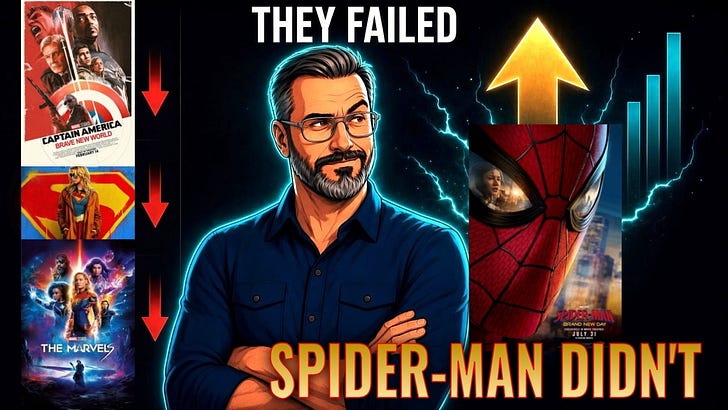
Why Spider-Man Won Gen Z When Every Other Superhero Movie Lost Them
3d ago00:12:43Tap to summarizeGen Z just gave Spider-Man: Brand New Day a record-breaking opening, and the reason isn't the story. It's something the Big 2 comic publishers can't buy: safe, approachable star power.In this Pattern Deep Dive, I break down the box office data, the Gen Z demographic skew, and why comparable films with "safe" casting (The Marvels, Captain America: Brave New World, Supergirl) still failed. Then the ruling: what this pattern means for Marvel and DC's struggle to bring younger readers into comics.If you want the pattern-based breakdowns before they hit the mainstream trades, hit subscribe and consider becoming a Comic Shop Survivor member for early access and deeper cuts. Link: https://www.youtube.com/channel/UCMXGnS8aCd_WXackzDVJpHA/join⏱️ TIMESTAMPS0:00 – The Verdict Nobody Expected0:30 – Why This Actually Matters for Comics1:50 – The Evidence: Box Office, Demographics & Cast Draw7:05 – The Counter-Cases: Where "Safe Casting" Failed Before8:33 – Forward Judgment: What Marvel & DC Do Next10:16 – Final Thoughts#SpiderManBrandNewDay #TomHolland #Zendaya #MarvelComics #DCComics #ComicBookIndustry #BoxOfficeBreakdown #GenZ #ComicShopSurvivor #ComicalOpinions #MCU #AbsoluteBatman #ComicBookNews This is a public episode. If you would like to discuss this with other subscribers or get access to bonus episodes, visit comicalopinions.substack.com
Transcribe →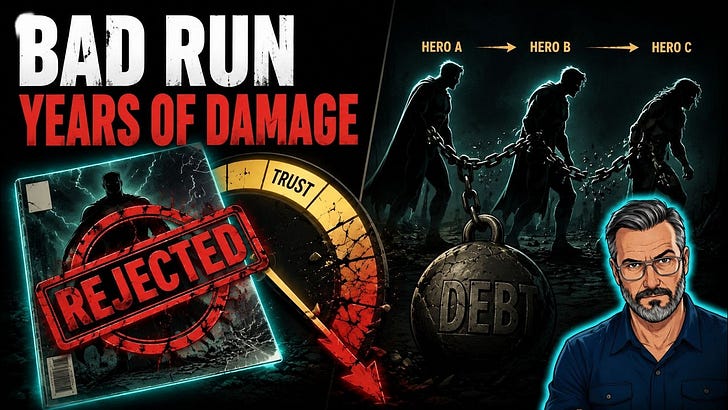
Why One Bad Comic Run Can Damage a Character for Years
1w ago00:12:46Tap to summarizeEvery time a new creative team is announced on a damaged character, the fandom reacts the same way before a single page leaks: skepticism. That's not random. It's a repeating industry pattern called Reputational Debt, and once you see it, you'll spot it in every "fresh start" solicitation from here on out.In this Pattern Deep Dive, I break down how a single poorly received comic run doesn't just hurt sales during publication, it changes how readers perceive a character for years afterward, forcing every future creative team to spend their first year rebuilding trust instead of telling new stories. We trace the pattern through Spider-Man, Nightwing, Captain Marvel, and Jon Kent, then scale it up to entire publishing eras like the New 52.If you've ever wondered why comic book character reputation damage lasts longer than the story that caused it, why publishers keep marketing "the real version returns" instead of just launching something new, or how to spot a superhero relaunch trust rebuild before it's announced... this one's for you.⏱️ TIMESTAMPS0:00 — The Pattern Nobody's Naming0:41 — Why This Costs Readers and Collectors1:42 — The Judgment + Evidence: Breaking Down the Reputational Debt Cycle8:36 — Nuance & Counterpoints: When a Controversial Run Isn't Debt10:12 — Forward Implication: How to Spot the Next One Coming11:17 — Final Thoughts👉 Join Comic Shop Survivor membership for deeper breakdowns and early access to Pattern Deep Dives. Link: https://www.youtube.com/channel/UCMXGnS8aCd_WXackzDVJpHA/join💬 Your turn: What's a character you think is still paying off reputational debt from a run years ago? Drop it below — I read every comment, and it might be the next video.#ComicBooks #ComicBookIndustry #ComicBookAnalysis #SpiderMan #Nightwing #CaptainMarvel #Superman #ComicRelaunch #ComicMarket #JonKent This is a public episode. If you would like to discuss this with other subscribers or get access to bonus episodes, visit comicalopinions.substack.com
Transcribe →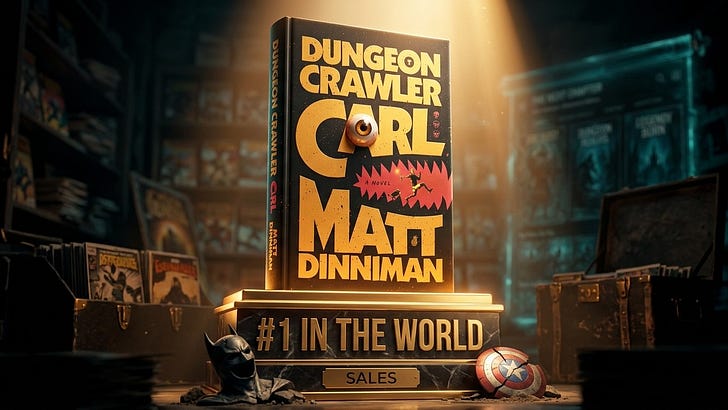
This Comic Is Outselling Marvel and DC
1w ago00:06:20Tap to summarizeDungeon Crawler Carl just outsold Marvel and DC in the graphic novel charts, BUT it's not for the reason most comic coverage is giving it credit for. I break down the actual ICv2 point-of-sale data behind why Dungeon Crawler Carl is outselling Marvel & DC Comics right now, what the numbers really say about the direct market's shifting graphic novel sales trends in 2026, and why calling this a straightforward "creator owned comics vs marvel and dc" win misses the real mechanism driving it.We'll look at the exact units and dollars from the May and June 2026 top selling graphic novels charts, how Vault Comics' Dungeon Crawler Carl sales performance stacks up against Absolute DC and Marvel's collected editions, and why a webtoon to print comic adaptation with a pre-built audience is succeeding where from-scratch pitches usually stall. Then I'll lay out what this pattern means for Vault Comics' upcoming Dungeon Crawler Carl Vol. 2 release and what to watch for next.Timestamps:0:00 – A book most readers have never heard of just beat Marvel and DC0:21– Why this matters to your shelf and your wallet0:58 – The raw sales numbers (May & June 2026)1:44 – The structural market share shift behind it2:24 – Why THIS book — the pre-validated audience factor3:03 – Nuance: is this actually "creator-owned"?3:57 – What comes next for Volume 2 and the wider market4:53 – The verdictDo you think Dungeon Crawler Carl Vol. 2 holds a top-three spot in October, or was this a two-month ceiling? Drop your prediction below.🟢Support the channel: For the price of one floppy, you can help us keep making more quality videos just like this one. Join today: https://www.youtube.com/channel/UCMXGnS8aCd_WXackzDVJpHA/join This is a public episode. If you would like to discuss this with other subscribers or get access to bonus episodes, visit comicalopinions.substack.com
Transcribe →
The Direct Market Survived Diamond's Collapse.
2w ago00:08:46Tap to summarizeComic shops just had one of the best years in the history of the direct market: $2.2 billion in sales, record foot traffic, and a wave of new readers. Everyone in this industry is calling it a comeback story.I don't think that story is finished.Based on the patterns in how Lunar, Penguin Random House, and Universal rebuilt the comic book direct market after the Diamond Comic Distributors bankruptcy, I think the industry didn't actually solve the concentration risk that caused the original collapse — it just redistributed it across fewer, better-funded players. In this Forward Judgment, I'm ruling on where the next distribution shock is most likely to come from, what retailers and readers should actually watch for over the next twelve months, and why record sales numbers don't mean the underlying system is stable.⏱️ TIMESTAMPS0:00 – The Ruling: Why "it survived" isn't the whole story0:38 – Why This Matters Right Now For Retailers and Readers1:17 – The Diamond Collapse Recap2:26 – Fragmentation Without Decentralization3:41 – Retailer Leverage Moving The Wrong Way4:39 – Why Sales Are Actually Up5:24 – What Could Change This Ruling6:19 – Forward Implication: What To Watch Next7:23 – Final Thoughts💬 Tell me in the comments: Do you think Penguin Random House becomes the next single point of failure, or is the real risk somewhere else? I read every comment and may rule on the best counterargument in a future video.🟢Support the channel: For the price of one floppy, you can help us keep making more quality videos just like this one. Join today: https://www.youtube.com/channel/UCMXGnS8aCd_WXackzDVJpHA/join This is a public episode. If you would like to discuss this with other subscribers or get access to bonus episodes, visit comicalopinions.substack.com
Transcribe →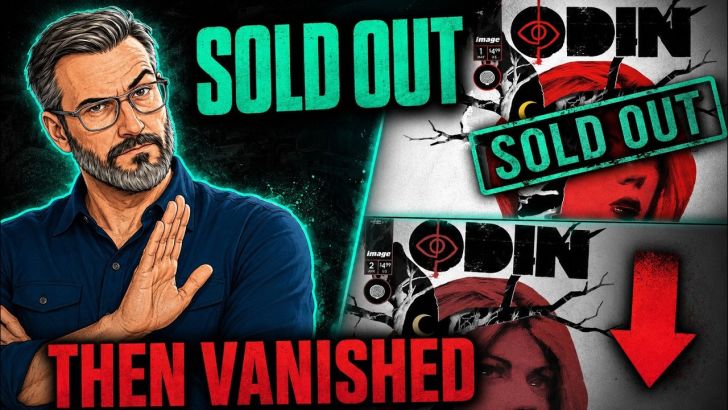
Odin Comic: When Sales Charts Miss The Whole Point
2w ago00:08:23Tap to summarizeOdin #1 sold out at the distributor and went back to print within a month. Odin #2 didn't even chart. Same creative team, same publisher, same imprint. So, what actually happened between issue one and issue two?In this ruling, I break down the sales data, the print history, and three months of critical reviews to show why James Tynion IV and Marguerite Bennett's neo-Nazi horror maxiseries spiked hard on debut and then dropped off the industry's top 50 almost entirely... and what that gap actually tells us about who was buying issue #1 in the first place.This isn't a hit piece. The reviews are still mostly positive. But the chart data tells a very specific story about hype versus commitment, and it's a pattern worth understanding before you drop money on the next high-concept #1 with a wall of variant covers behind it.**⏱ TIMESTAMPS**0:00 – The Contradiction: Sold Out, Then Gone0:43 – Why This Matters to Your Pull List1:43 – Reason #1: The Chart Data2:34 – Reason #2: The Variant Cover Structure3:16 – Reason #3: What the Reviews Actually Say, In Order4:31 – Fair Counterpoint: What the Data Doesn't Prove5:27 – What This Means for Issue #3 Onward6:24 – Final Thoughts**📊 SOURCING NOTE:**Sales rankings referenced are from ICv2's Top 50 Comics charts (May/June 2026), a point-of-sale sample from ~225 comic shops; not full industry totals. Reprint and reception data sourced from Image Comics press releases, ComicsBeat, and aggregate review data via League of Comic Geeks. Full sourcing breakdown in the pinned comment.👨⚖️ New Judge Cycle rulings drop weekly. If you want the breakdown behind why comics succeed or fail — not just hot takes — subscribe and ring the bell.🟢Support the channel: For the price of one floppy, you can help us keep making more quality videos just like this one. Join today: https://www.youtube.com/channel/UCMXGnS8aCd_WXackzDVJpHA/join💬 Drop your prediction below: does Odin pull its audience back by issue #5, or does this keep sliding to the finale?#ComicBooks #JamesTynionIV #Odin #ImageComics #ComicBookSales #IndieComics #ComicIndustry #comicalopinions This is a public episode. If you would like to discuss this with other subscribers or get access to bonus episodes, visit comicalopinions.substack.com
Transcribe →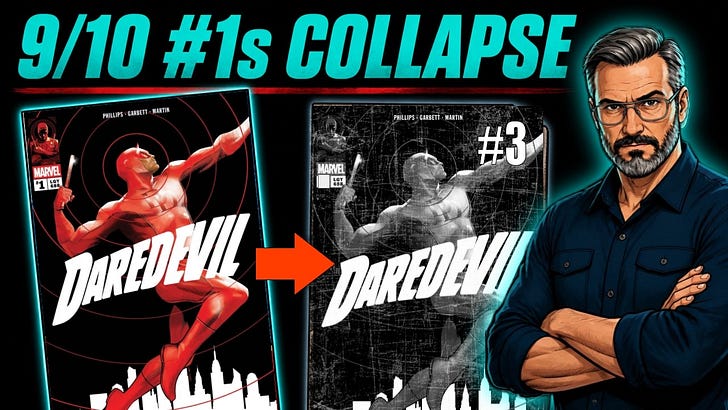
New Comic #1s: Why They Never Last Past Issue 3
3w ago00:09:10Tap to summarizeNine out of ten #1 issues you pre-order this year will lose more than half their readers within two issues, and it's not because the story got bad. There's a mechanical process baked into how publishers and retailers handle a relaunch, and it's been running the same way for fifteen years. This is the Relaunch Tax: how comic book sales drop after issue 1, why the crash always happens in that #1-to-#3 window, and why it's less about readers losing interest and more about how comic shops order stock after a #1 launch.I'm using DC's New 52 as the case study — the clearest example of new 52 sales numbers by issue anywhere in modern comics history — then walking the same collapse curve through this year's charts, including why Star Wars Shadow of the Maul sales dropped issue to issue and the Planet of the Apes vs Fantastic Four issue 2 sales crash. Then I get into the actual mechanism: why direct market retailers order fewer copies of issue 2 and 3, and why that correction gets misread as a "readers hated it" story when it's really a supply-chain reflex.I also cover the one book that broke the pattern — the reason Ultimate Spider-Man sales stayed steady instead of crashing after launch — and why that matters more than any single sales number on this chart.Then we go forward: Marvel's Midnight Universe October 2026 release date lands three #1s on the same day, and I'm making a prediction on-camera for issue #2 and #3 before the numbers come in. Comment if you want the follow-up ruling when Q1 2027 data drops.⏱️ TIMESTAMPS0:00 – The Relaunch Tax, explained in one sentence 0:36 – Why this affects your wallet as a collector, not just the sales charts 1:30 – How the two-sided feedback loop actually works 2:00 – The New 52 case file: Firestorm, Blue Beetle, Hawk & Dove sales decline breakdown 3:21 – 2026 proof: this year's #1-to-#3 collapse pattern 4:10 – The retailer ordering mechanism nobody talks about 5:14 – The exception: why Ultimate Spider-Man didn't follow the curve 6:12 – Forward prediction: Marvel Midnight Universe #2 and #3 7:15 – Final thoughts🔗 SUPPORT THE CHANNEL Join Comic Shop Survivor for early rulings and back-catalog breakdowns: https://www.youtube.com/channel/UCMXGnS8aCd_WXackzDVJpHA/join#ComicBooks #DirectMarket #Marvel #DC #ComicBookIndustry #NewComicBookDay #ComicRelaunch #IndustryFixer This is a public episode. If you would like to discuss this with other subscribers or get access to bonus episodes, visit comicalopinions.substack.com
Transcribe →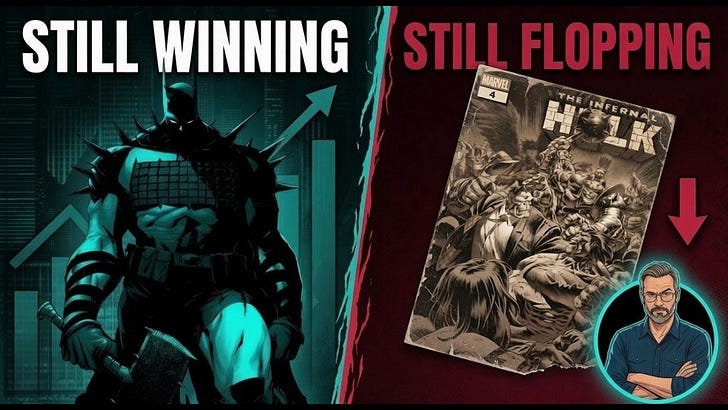
Why Absolute Batman Keeps Winning
3w ago00:07:44Tap to summarizeAbsolute Batman isn't winning because the story's better — it's winning because of a supply strategy Marvel refuses to copy. In this ruling, I break down the print-discipline mechanism keeping Absolute Batman on shelves and dominating the ICv2 charts, why Marvel's cancel-and-relaunch playbook keeps collapsing books by issue four, and what the Q1 2026 market share numbers actually reveal about where this industry is headed.If you're a collector wondering whether the book in your hands is still going to be findable in six months, or a retailer trying to get your reorder math right, this is the video that explains the difference between a publisher treating a hit like infrastructure — and one treating it like fireworks.🔔 Subscribe for weekly data-backed rulings on the comic industry — new verdicts every week.💬 Join Comic Shop Survivor membership for early access and extended data breakdowns: https://www.youtube.com/channel/UCMXGnS8aCd_WXackzDVJpHA/join⏱️ Timestamps0:00 – Absolute Batman Isn't Luck0:36 – Why This Matters For Your Wallet1:10 – The Evidence: Supply Discipline vs. The Gamble4:18 – The Fair Counterpoint (Variant Cover Caveat)5:11 – What To Watch Next: Green Arrow, Catwoman & Midnight Universe6:20 – Final Ruling + Your Verdict#AbsoluteBatman #Marvel #DCComics #ComicBookIndustry #DirectMarket #ComicShopSurvivor #ScottSnyder #ComicBookCollecting #IndustryFixer #ComicBookNews #comicalopinions This is a public episode. If you would like to discuss this with other subscribers or get access to bonus episodes, visit comicalopinions.substack.com
Transcribe →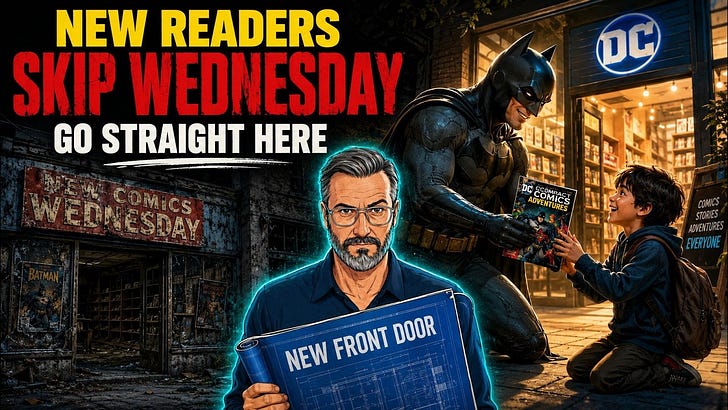
Comic Books No Longer Expect New Readers on Wednesdays
Jul 1000:08:34Tap to summarizeDC just quietly changed who a comic reader is supposed to be. The new Compact Comics Adventures line — part of DC's Spring 2027 kids' publishing strategy — isn't just a new format. It's proof that publishers no longer expect new comic readers to start on a Wednesday, at a comic shop, with a monthly issue. In this video I break down why the comic book industry's front door quietly moved to bookstores, libraries, and school book fairs — and what that means for the future of comic shops, the Direct Market, and the readers who grew up on a pull list.If you've ever wondered why comic shops are losing new readers, why DC keeps expanding into kids' graphic novels, or whether monthly comics can survive without the next generation walking through their door — this one's for you.👊 Subscribe for weekly comic industry breakdowns that go past the headlines and into the business decisions actually shaping the medium.🔥 Join "Comic Shop Survivor" for early access, extended cuts, and community discussion: https://www.youtube.com/channel/UCMXGnS8aCd_WXackzDVJpHA/joinTimestamps00:00 – The kid who never walked into a comic shop00:34 – DC's Compact Comics Adventures announcement01:25 – Two readers, two very different front doors02:19 – Why this hits different if you grew up on Wednesdays03:10 – The bigger diagnosis: the front door moved04:12 – The evidence: what the data and the community are saying05:25 – Who this conversation isn't for05:45 – The fix: building a bridge, not a wall06:31 – The question you should be asking instead07:19 – Final thoughts#ComicBooks #DCComics #CompactComicsAdventures #ComicShops #GraphicNovels #NewComicReaders #DirectMarket #ComicBookIndustry #ComicCollecting #Batman #DCSpring2027 #ComicBookNews #ComicBookAnalysis This is a public episode. If you would like to discuss this with other subscribers or get access to bonus episodes, visit comicalopinions.substack.com
Transcribe →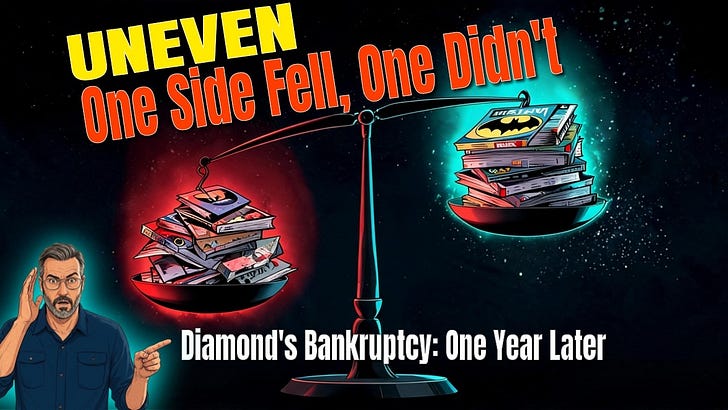
Why Diamond's Collapse Proves the Comic Book Industry Is Broken
Jul 700:09:34Tap to summarizeDiamond Comic Distributors collapsed — and somehow Marvel and DC walked away without a scratch. The industry called it a "crisis." For the smallest comic book publishers, it still is. Today I'm breaking down the actual market share data, the fallout retailers won't say out loud, and who's really been left to die in the wreckage of the direct market's biggest distribution collapse.If you've noticed your favorite small press comics quietly vanishing from shelves while Marvel and DC keep posting record numbers, this is why — and it's not the story the trade press told you.⏱️ TIMESTAMPS:0:00 – No Crisis for Everyone0:39 – Watching Small Publishers Disappear2:29 – What Actually Broke3:05 – One Pipe, Two Outcomes4:43 – DC, Marvel & the Market Share Data6:27 – The Fix Nobody's Doing8:02 – Final Thoughts + Debate QuestionDiamond's bankruptcy hit every publisher on paper — but Marvel and DC had the corporate muscle to reroute around it in months. Small publishers didn't have that option. Some are still owed money. Some still can't reliably get books to comic shops. This video walks through the ⚠️ NEWS-SOURCED market share numbers, why "recovery" only ever meant recovery for the Big Two, and what retailers and publishers can actually do to stop the small press from getting erased from the direct market.💬 THE DEBATEIs it fair to call this a "recovery" if it only worked for two companies? Drop your take in the comments.🎟️ COMIC SHOP SURVIVOR MEMBERSHIPIf you want the uncensored deep dives, early script access, and Comic Shop Survivor badges that the algorithm won't let me show publicly, join the $4.99 tier — link: https://www.youtube.com/channel/UCMXGnS8aCd_WXackzDVJpHA/join#ComicBookIndustry #DiamondComics #MarvelVsDC #ComicBookNews #DirectMarket #SmallPressComics #ComicShops #IndieComics #ComicBookBusiness #DCComics #MarvelComics This is a public episode. If you would like to discuss this with other subscribers or get access to bonus episodes, visit comicalopinions.substack.com
Transcribe →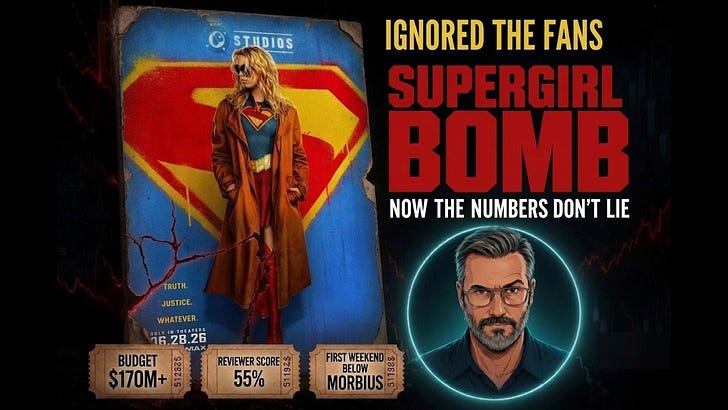
Supergirl's Failure Proved Comic Readers Right All Along
Jul 200:09:01Tap to summarizeSupergirl just became the latest box office bomb nobody in Hollywood saw coming — except comic readers, who predicted it years ago. This isn't a marketing failure. It's what happens when a studio spends a decade telling its most engaged audience they don't matter, then acts shocked when that audience doesn't show up.In this video, I break down exactly how Hollywood gaslighting turned "toxic gatekeeper" into a punchline the box office is now delivering back — and why comic readers predicted this collapse long before opening weekend. We're diagnosing the real structural mechanism behind the flop, walking through the numbers, and laying out the fix DC Studios still refuses to make.If you've felt like an ignored fan every time an executive dismissed continuity as "baggage" — this one's for you.In this video:🔴Why the Woman of Tomorrow comic run set up expectations the film couldn't meet🔴The structural mechanism connecting legacy fan buy-in to casual audience turnout🔴Full breakdown of the opening weekend numbers vs. Superman (2025)🔴The two-item playbook DC Studios and the trade press both need to hear⚠️ Box office figures sourced from public reporting (TheWrap, Deadline, Box Office Mojo) as of publish date and subject to revision. Industry pattern claims reflect editorial analysis, not confirmed studio statements.TIMESTAMPS:0:00 — They Saw This Coming0:20 — We Told You. You Laughed.2:01 — From Rage to Receipts2:31 — The Reinvention Trap3:59 — The Numbers Don't Lie5:55 — The Fix Nobody Wants7:28 — Final Thoughts💬 Was Supergirl's bomb about the marketing, or about gutting the source material? Drop your answer below.🔔 Subscribe for the next diagnosis — I roast the industry lie that deserves it most.🏅 Want the uncensored deep dives, early script access, and Comic Shop Survivor badges the algorithm won't let me show publicly? Join the $4.99 tier — link: https://www.youtube.com/channel/UCMXGnS8aCd_WXackzDVJpHA/join#Supergirl #DCStudios #BoxOfficeBomb #ComicBooks #WomanOfTomorrow #DCComics #SupermanMovie #ComicBookMovies #JamesGunn #DCU This is a public episode. If you would like to discuss this with other subscribers or get access to bonus episodes, visit comicalopinions.substack.com
Transcribe →