Podcast
Conversations By The Sea
Hosted by Ellen Forster · EN
Ellen Forster and Craig Boyle of Content By The Sea discuss how to stay sane while running a creative business.
ellenforster.substack.com
ellenforster.substack.com
10episodes
Episodes
Newest firstAll episodes
For when you feel powerless
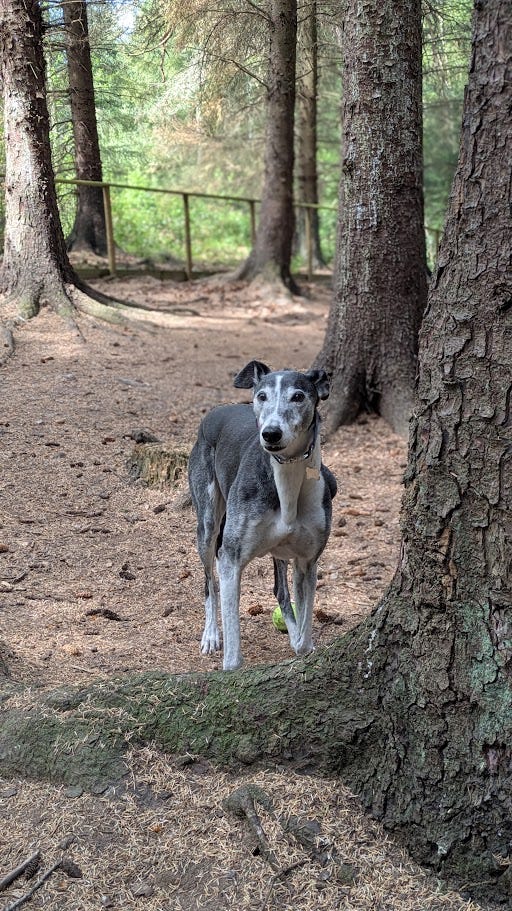
May 15, 202500:08:00Tap to summarizeContent warnings: This piece contains talk about the genocide in Gaza, I’m back after a week off. Unfortunately, not even the iron gates of Center Parcs could protect me from the ✨state of things✨.I thought a lot about what I wanted to write about this year and how this newsletter could continue to serve as a personal journal while also proving useful to the growing subscriber base. One thing I keep coming back to is how hopeless I feel. If you live in the UK, then you’ll know that this week’s news cycle was dominated by Prime Minister Keir Starmer’s Enoch Powell impression, which damned immigrants in a poor attempt to pander to the Labour Party's voters lost to Reform.A couple of weeks ago, we had a local council election. It was the first time in my voting life that I struggled to choose a candidate. For context, I live in the North East. We vote Labour. Our grandparents lost their jobs thanks to Thatcher’s neoliberalist tirade in the late 1970s and early 1980s. We are descendants of shipbuilders, miners, and steelworkers. We will always vote for the party that prioritises workers’ rights, including trade unions, affordable housing, and pensions. But Starmer’s time in office has proven that this is no longer what the party stands for. Add that to his vocal support of the Supreme Court bill to deny the rights of trans women as women… and you’ve got yourself a tricky time to be on the left wing of politics. Since many people obviously had the same dilemma as I, likely resulting in a split vote for Greens and Lib Dems on the left, we saw Nigel Farage’s far-right party, Reform, win a significant number of council seats.This might be a battle of local issues, but the ideological war is far, far biggerI wrote a few weeks ago about the return of politics to music and how Irish rap group Kneecap has been facing attempts to silence and censor their vocal support of the Free Palestine movement. Just this week, a screening of Kneecap’s film was axed from a Cheshire cinema following local councillors' pressure. So, it wouldn’t be unfair to say that we, the left, are failing. Even our right to vote as citizens is difficult to exercise when the choices on the ballot don't align with our views. The Overton Window is a political theory that refers to the range of views that are considered politically acceptable within a mainstream society. We are living in a huge window shift. Protesting is becoming dangerous, meaning standing up for what you believe could risk your career or family. So, what can we actually do? As individuals? This thought has been circling in my head all week while I jogged the steep hills of Whinfell Forest and cycled to the swimming pool for a daily dip with my husband and toddler. I decided to dedicate this newsletter to listing some things we (and you specifically) can do right now to feel like you are impacting people’s lives and your own.Here are some of the big problems floating around in my mind, and the easiest way you could make a real difference today:1. People are hungry, and the cost of living is through the roof.The UK government estimates around 11 million people are living in food poverty. In 2024, The Trussell Trust distributed 3.1 million emergency food parcels from its community food banks – the most parcels ever distributed in a year and nearly double the number compared to five years ago. In the same period, more than 655,000 people used a Trussell Trust food bank for the first time.How can you help?Pick up extra food and toiletries on your next supermarket shop and drop them in the food bank collection box at the end. This is a very easy and affordable way to make a tangible difference. If you can afford it, set up a monthly direct debit to The Trussell Trust. You can do this from your business as long as you don’t claim gift aid, and it will help reduce your tax liability. 2. Hygiene poverty is worse than everThe Hygiene Bank found that 4.2 million people are living in hygiene poverty in the UK. While tragic, this stat is unsurprising given that 600,000 more people fell into absolute poverty in the year between 2022-23.Hygiene poverty disproportionately affects disabled people, unemployed people, people in lower-income households and those from ethnic minority backgrounds.How can you help?Find your local Hygiene Bank on their website. Here in the North East, we have The Hygiene Bank Newcastle, which welcomes donations of both financial and product items. Many food banks also take donations of toiletries. 3. Trans people are fighting for their rights (and losing)Following the Supreme Court’s ruling against the recognition of trans women as women (even with Gender Recognition Certificates), many of us allies have felt truly powerless in our mission to fight back.How can you help?Firstly, listen to trans people. Arlen Pettitt hosted an anonymous transman on his newsletter a few weeks ago, where the writer explains the specific struggles he faces, and how this ruling and other political ideology impacts his daily life. I highly recommend reading that piece here: You can also support trans people by joining a protest, if you are able to. What The Trans has a list of protests on this weekend, as well as dates of trans pride events in June. If you work in a position of power, or have the ability to speak in front of a board or council, you can use your influence to testify for trans rights. Take a look at this guide from Advocates For Trans Equality to learn how to do this in a practical and safe way.4. People are dying in GazaThis final point is one that I have been struggling with the most. The feeling of powerlessness knowing that people, including babies and children, are dying without food and aid, due a genocidal war—that is not only not condemned by our government but enabled due to the UK’s sale of arms to Israel, is as much, much bigger issue than any of us can control.Knowing that very little food or aid is being allowed into the territory right now, we are unable to make an easy donation to any single organisation, knowing that it will definitely put food in a baby’s mouth.That being said, there are some ways you can try to make a difference…How can you help?It has been more than 70 days since aid reached the people of Gaza. This means that while I strongly encourage you to donate to human rights organisations, it doesn’t necessarily mean that money will get to the right people. A few organisations are working on the ground in Palestine, including the Palestine Red Crescent Society, which is part of the International Red Cross and also recognised as an independent Palestinian National Society. You can donate to the Red Cross Gaza appeal, or directly to the Red Crescent Society. Even by supporting these organisations, we, as individuals, cannot end the war. However, we can take civil action, like writing to our local MPs about the humanitarian crisis in Gaza. Instructions on how to do this are here. Other than that, we can continue to be voices for the voiceless and keep the topic of Gaza at the forefront of the zeitgeist every single day. Like Kneecap’s manager Daniel Lambert said in a recent interview with RTÉ: “Children are starving to death, and we're spending six or seven days talking about Kneecap.”Do not let the media dictate what matters to us. Be critical of what you read.Question their motives.Don’t sacrifice your morals. As individuals, we might feel powerless. But together we could be strong. As I mentioned earlier, we’re back from a short week at Center Parcs, one of my favourite places to go (and not that pricey during term time!).Here’s a photo of Potter enjoying the off-lead area:Here are some things I've enjoyed over the last week:📚<a target="_blank" href="https://uk.bookshop.org/p/books/ordinary-saints-an-arre...
Transcribe →
The Bonnie Blue problem
May 1, 202500:05:50Tap to summarizeContent warnings: This piece contains talk of adult content and revenge porn.I keep watching videos about Bonnie Blue.About her. Not her actual content, obviously.For those who are less chronically online than I (and therefore probably happier in general), Bonnie Blue is an adult content creator who makes a significant living from OnlyFans subscriptions. If that were all there was to it, then I wouldn’t care.What’s problematic about Bonnie is that she specifically targets young men (aged 18/19) for her content. She travels the world on the hunt for ‘schoolies’ (short for school leavers) who are happy to sleep with her, for free, in exchange for starring in her content, which she then profits from.Bonnie, who claims to be around 25, has made headlines recently for a whole host of reasons, not just her ‘love’ of barely legal men, but that’s the part I am focusing on today.Let’s do an exercise…I wonder if you can recall what you were like when you were 18 or 19.Where did you live? Were you dating anyone? What do you feel when you think about those couple of years when you were, technically, an adult, but still, in some respects, a child?I suspect, there are things you did that you regret. And some of those things you’ll never want to think about again…But what about if what you did at 18 or 19 was immortalised on the internet… forever?Former adult star Mia Khalifa has spoken extensively about her regret in entering the adult film industry in her early 20s. Khalifa gained fame after an adult video of her wearing a hijab went viral. She was 21 years old at the time.While Mia did go on to make a small sum creating adult content, she missed out on significantly more— an estimated $500,000 from her videos on free streaming sites, which can still be accessed today.After only three months working in the adult industry, Mia became one of the most famous stars in the world. She has expressed significant regret about the decisions she made in her early 20s, she tweeted:“Please, please, please think about this if you are considering the sex industry,”“They make it impossible to rectify your regrets should you have them in the future.”It’s amazing to be youngYou’ve probably heard that the prefrontal cortex of the brain is not fully developed until 25. This is actually a lot more complicated than people think, and some scientists even consider it a myth. All of our brains develop differently, and there is also a difference between development and maturation. The ease with which we make decisions and assess risks is impacted by more than just our age. A person with ADHD, for example, is more likely to make impulsive decisions at any age, but it’s fair to assume they might be less likely to have developed coping mechanisms in their teens and early 20s. I don’t think many people reading this will defend the actions of Bonnie Blue, for example. I expect the legal system will catch up with her eventually. There are already several petitions in parliament regarding the raising of the minimum age to create adult content to 25.However, it does spark a broader discussion about how we, as a society, are caring for young people during their most vulnerable times. Writer and content creator Jess Davies was interviewed in the Guardian this week about being the victim of revenge porn at 15, then reclaiming her sexuality by becoming a glamour model at 18. On the leak of a naked photo of her at just 15, Jess said:“I was the one shamed.”“I was the first person I knew of that this had happened to, so there was no blueprint to follow. I was mortified. My response was: ‘OK, this is it. I have to try to own this as it’s not going away.’”Jess spent several years working as a glamour model before turning her back on the entire industry and becoming a campaigner for opening up conversations about consent, revenge porn and bodily autonomy. She believes that what happened at 15 truly changed the trajectory of her life forever, hinting that she would not have entered the adult industry had her image not been stolen from her as a child:“Every time I was taken advantage of, I kind of accepted it,” “I thought: ‘Oh well, you’ve opened yourself up to this. What did you expect?’ Part of me believed that this is just how the world is, and this was all I was worth.”As Jess suggests, consent is a tricky beast— especially when you are young and, potentially, already a victim. I wonder how this aligns with Bonnie Blue’s targets, especially among school leavers and university freshers who may make decisions influenced by peer pressure or other factors. This might seem like an odd topic for me to write about, but it’s really not. I position this newsletter as being about mental health for the chronically online, and you don’t have to be as chronically online as I am to know the discussion about consent is murkier than ever. In interviews, Bonnie regularly quotes the age of consent and basically infers that if it’s legal, then it’s okay. But legal is not synonymous with ethical. People do change, and we should be allowed to change. The decisions we make as teenagers will likely not reflect the adults we become, but in a digital world where nothing is ever entirely deleted, escaping our past seems increasingly impossible.RECAP: April’s newslettersIf you’re a new subscriber or just want to catch up, here are all the newsletters I sent last month:* What do you want to be when you grow up?* Small things like these* ChatGPTrash* Saving faces* Is music finally political again?What I’ve been readingHere are some excellent reads from the last week or so:I’m just back from a few nights in Barcelona— a place of mixed emotions for me. I will write about it one day, but this visit was canny despite the power cut. We even made it to the beach:Here are some things I've enjoyed over the last week:📚Bodies by Christine Anne Foley - Loved this fast-paced novel about a young girl’s turbulent love life with a dark twist. 🎧 A Complicated Woman by Self Esteem - Rebecca’s new album is fantastic, so glad I got tickets to see her later in the year! That’s all from me,See you next week,Ellen x💌 About this emailI’m Ellen, and I write about mental health for the chronically online. I am a freelance copywriter, strategist and web designer, and I work from home with my husband, Craig, at Content By The Sea. We have two rescue greyhounds, Potter and Harmony, and a toddler.I started this newsletter in March 2020 and have sent over 200(!) emails; currently, I have over 1,300 subscribers. I write about a wide variety of topics, including diet culture, my love of running, jealousy, my life falling apart, mam guilt, and this dystopian world we all live in.💛 How you can support meIf you like reading my weekly emails, you can give me a kickback in one or more of the following ways:📨 Share this post📬 Subscribe for free (if you haven’t already!)💬 Leave a comment on this newsletter Get full access to Conversations By The Sea at ellenforster.substack.com/subscribe
Transcribe →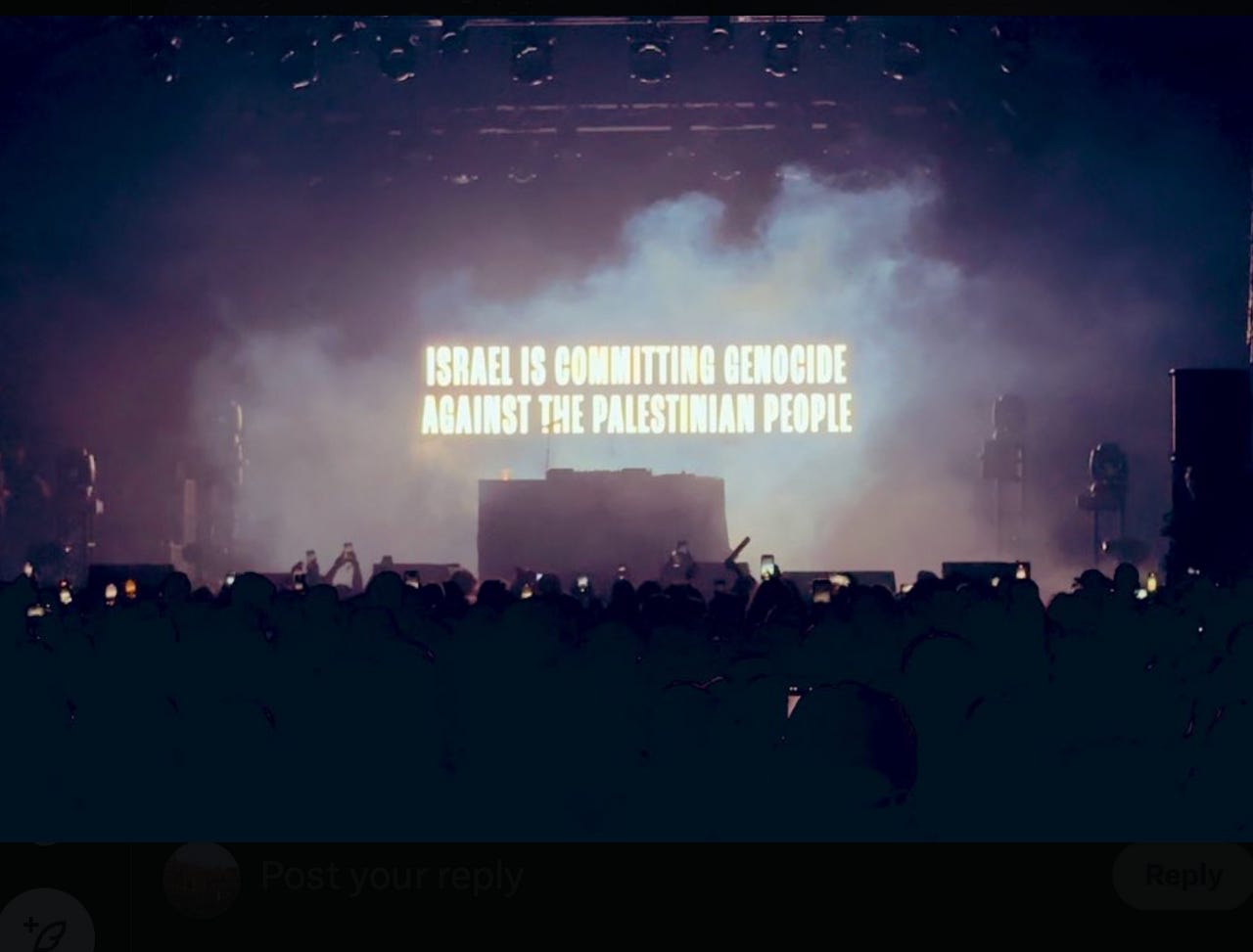
Is music finally political again?
Apr 24, 202500:09:41Tap to summarizeCoachella is finally over. It now takes place over two weekends, where acts play the same sets to the largest number of people possible. Groundhog Day in the desert is well-known for attracting one of the shittest crowds of any festival - throwback to Blur’s Damon Albarn shouting: “You’re never seeing us again, so you might as well f*****g sing it,” to a particularly lethargic crowd back in 2024.It’s essentially a fashion show for influencers and celebrities against the backdrop of a music fest. But this year, things were a little different.Aged rockers Green Day, who have always been very vocal, made their political stance clear when Billie Joe Armstrong sang an updated version of their 2004 anti-Bush banger, American Idiot, which featured the lyrics: “I’m not a part of a MAGA agenda.”Meanwhile, on the smaller stage, Irish rappers Kneecap continued their usual antics with a “Free Palestine” chant, bringing to attention the US government’s support of the state of Israel. The West Belfast lads also led the audience in their favourite anti-Thatcher chant, which went down very well indeed when I saw them live here in Newcastle back in December. “Stick to the music”When bands and even celebrities share political messages on their social media feeds, you'll often see this comment time and time again.But have musicians ever really just ‘stuck to the music’?Music has always been political. Woody Guthrie sang about the dangers of capitalism, and then Joan Baez stood side by side with Martin Luther King in the Civil Rights movement. But what about even earlier? In researching this piece, I found dozens of examples of musicians taking political stances in the 20th century, but it seems the marriage of politics and music goes way, way back. Opera, for example, has always been highly political. Mozart’s Le nozze di Figaro, a comedy about class struggle and the rise of the proletariat, soundtracked the French Revolution.Even further back, the following quote is often attributed to ancient Greek philosopher Plato, around 400 BC:Music is a moral law. It gives a soul to the universe, wings to the mind, flight to the imagination, a charm to sadness, and life to everything. It is the essence of order, and leads to all that is good, just and beautiful, of which it is the invisible, but nevertheless dazzling, passionate, and eternal form.Political or anti-establishment?But I would say this is the first time in many years, arguably since Green Day’s American Idiot era, that the anti-establishment sentiment has been so strong. In fact, this Roar News piece from 2024 posits that recent years have seen a significant decline in overtly political messaging in music. Angela Alberti writes:Nevertheless, the majority of pop hits seem overwhelmingly apolitical. To find more political music, one must mostly look outside of top-charting songs and artists.This perhaps goes to show that political music is no longer popular or well-received. However, I believe we are in desperate need of revolutionary music today.Perhaps Alberti is right in the sense that the mainstream, more often than not, fails to take a stance. However, that doesn’t mean those fighting for political change aren’t being heard or making headlines. Sharon Osbourne made her weekly attempts at relevancy in response to Kneecap’s pro-Palestine tirade, calling for the US government to revoke their work visas ahead of their US tour. Sharon, who is obviously married to Black Sabbath’s Ozzy Osbourne, is also the daughter of an Irish mother and Jewish father, so perhaps her opinion is less unexpected than it may initially seem. On the topic of Black Sabbath, Ozzy himself is no stranger to taking a political stance, having forbidden Trump from using any of his music in his presidential campaign back in 2019. I don’t think it’s any coincidence that in times of growing conservative values, people look to musicians for solidarity in their struggles. Back in the late 1970s and early 1980s, Thatcher and US President Ronald Reagan collaborated on a shared mission to promote neoliberalism, a political ideology that prioritises privatisation and minimises trade barriers—essentially, making the rich richer and the poor poorer.The UK and US governments sought to send industry abroad to reap the benefits of cheaper labour, thus resulting in the closure of steel mills, mines, shipbuilders, and more. At this time, musicians were angry, too.New Jersey’s Bruce Springsteen sang about the impact of Reagan’s policies on his home state and the wider US in his 1982 album, Nebraska. Springsteen’s Johnny 99 tells the story of a lad who was laid off from his job at a car manufacturing plant under Reagan:Well they closed down the auto plant in Mahwah late that monthRalph went out lookin' for a job but he couldn't find noneHe came home too drunk from mixin' Tanqueray and wineHe got a gun, shot a night clerk, now they call him Johnny 99Over the pond, ska band The Specials dominated the radio with their haunting hit Ghost Town (which weirdly really sets off my brother’s greyhound, it must be the woo-woos, or perhaps he is just howling in solidarity.)This town, is coming like a ghost townWhy must the youth fight against themselves?Government leaving the youth on the shelfThis place, is coming like a ghost townNo job to be found in this countryCan't go on no moreThe people getting angryDon’t get me wrong, not all musicians are anti-establishment.Nicola Muthurangu-Hall wrote about Gwen Stefani’s 21st-century political key change in this piece:What’s also notable is how much more public Stefani‘s apparent politics are following her marriage to Shelton. We know that typically people get more conservative as they get older. We also have access, and feel more entitled, to know more about our favourite celebrities’ personal politics. Perhaps this is what has made Gwen feel more emboldened about putting her religious beliefs out there or maybe it’s because society demands it?Stefani, who is problematic at the best of times, has supposedly gone full-send MAGA supporter in recent years, having spoken out in support of conservative commentator Tucker Carlson on her X feed.I can’t really write a piece about musicians and their politics without touching on Kanye West, who is also friendly with Trump, and has controversial opinions on just about everything in the political spectrum. Whether Kanye truly believes what he preaches remains to be seen, given his tendency to shift his stance to whatever garners him the most headlines. He lacks integrity, and I don’t think that’s a hot take. However, there are a few musicians who actively use their platforms to protect the most vulnerable in society from the consequences of politicians' decisions made behind closed doors. And, in 2025, those voices are louder than they’ve been for years. Why now?You’ll never see a separation of music and politics, but the bond between the two is definitely stronger than I have seen since my teenage years.The likes of Michael Stipe, Rage Against the Machine, and System of a Down have all been very, very angry for decades… but the last few years, I think we’ve really seen a significant return of musical artists standing up for what they believe, even if that means negative press.This week in the UK, we saw the Supreme Court rule against the recognition of trans women as women in the Equality Act. The ruling was devastating for the trans community and its allies, and thousands of people have taken to the streets across the UK, particularly in Edinburgh, to let it be known that this is not how all of us feel. Prime Minister and Labour Party Leader <a target="_blank" href="https://www.bbc.co.uk/news/articles/crldey0...
Transcribe →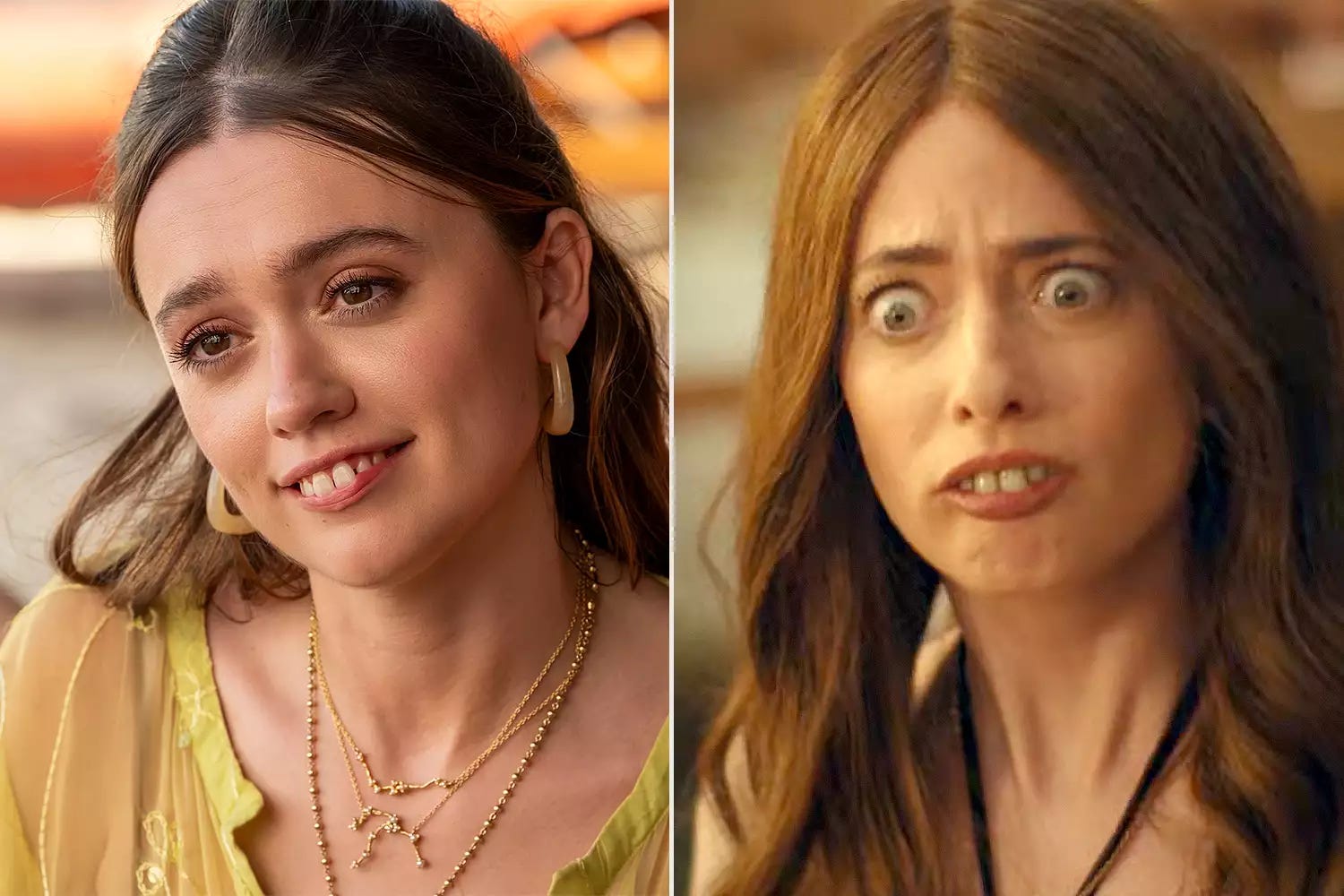
Saving faces
Apr 17, 202500:06:55Tap to summarizeYour favourite celebrity reporter is back.Joking, obviously, but two things are happening this week in the world of pop culture… and they have a lot in common.Firstly, White Lotus star Aimee Lou Wood was parodied in an SNL skit over the weekend. Personally, I don’t think SNL has been funny for decades, but I digress.The skit takes a low blow at Aimee’s teeth, the most iconic part of her appearance. Throughout the airing of the most recent season of Mike White’s epic show, Aimee’s teeth have repeatedly made headlines… because they are, well, different. Or at least that’s what the media wants us to think.They are not different from the teeth you see in daily life, really. This might seem groundbreaking to the media, but in real life, people’s faces (and teeth) come in all different shapes and sizes.Aimee’s teeth are part of her charm, but you can tell she is still self-conscious of them following her rise to fame across the pond. In an interview, Aimee recalls how Mike White had to fight for her to be cast:“It was honestly from the nicest place, but my little head goes: ‘HBO didn’t want me. And I know why HBO didn’t want me, it’s because I’m ugly,'” she said.“Mike had to say, ‘Please let me have the ugly girl!'”Aimee has spoken out herself about the skit, calling it “mean and unfunny” on her Instagram stories.This, as a standalone story, isn’t groundbreaking. People on the internet (and apparently also on TV) are mean. So what?Well, this other story caught my eye.This week also marked the return of HBO’s adaptation of The Last Of Us, starring Pedro Pascal and Bella Ramsey. The latter of whom seems to attract more online scorn than anyone I have ever seen in recent yearsBella, who recently came out as autistic, is a non-binary actor who plays Ellie, the female co-lead in the show. They do not look much like the game version of their character, but neither does Pedro.And yet, the comments sections about the new series are filled with hate towards Bella. Why? I guess because they aren’t conventionally attractive. It's a bit troubling that people are concerned with the physical appearance of a 19-year-old character, but that’s besides the point.Commenters justify their dislike of Bella claiming it’s just “terrible casting”, but what does that even mean? Bella is cast in the role of a character from a video game. They embody that character's core personality traits exceptionally well, and have proven to be a fantastic actor from a very young age, having made their GoT debut at just 13.I won’t go too far into the Bella stuff because, quite honestly, I don’t want to be attacked. The LoU fandom seems vicious. I’ve said my piece. I’ll move on.I wrote this newsletter and then couldn’t help but think I needed to mention the elephant in the room: men. It goes without saying that this issue is a very female-coded one. Men in the limelight are allowed to have unusual facial features; in fact, it’s often what makes them attractive in the first place. Aimee’s White Lotus co-star Walton Goggins has had his ‘moment’ recently. I can’t open Instagram without seeing a Walton thirst trap, most of which fail to mention his receding hairline, which is actually a core characteristic of his appearance. I take no issue with Walton’s hairline; I actually think it’s really cool to see a male actor owning it, but it’s interesting that SNL didn’t parody it like they did Aimee’s teeth.The rise of Instagram faceBoth Aimee and Bella are British, white, and slim. And even then, they can’t win in the court of public opinion. Are we not used to seeing a variety of faces on TV anymore? Why is that?Instagram face is a term used to describe the ‘sameness’ of faces seen on the social media app. These faces are typically female and use the same filters, perhaps even similar cosmetic procedures. Think white but tanned, feature symmetry, poreless skin, slick back hair. In an article in the New Yorker, celebrity makeup artist Colby Smith said:“People are absolutely getting prettier,” he said. “The world is so visual right now, and it’s only getting more visual, and people want to upgrade the way they relate to it.”But is pretty synonymous with sameness?It isn’t to me.There are two issues at play here:What people actually look like (sans filters, angles and make-up)and what people expect other people to look like (in TV, films and on social media.)The former is on our doorstep; it’s happening to us. If we let it.Editing photos is nothing new, but it’s more accessible than ever. I hesitate to ask: What lessons are we teaching young people if we are so concerned about how we actually look that we have to manipulate even the most mundane of selfies?That leads us to the second point…It’s not really our fault.Monkey see, monkey doComment sections are divided, but it doesn’t take an internet sleuth to see that there is really no winning for people like Aimee and Bella. What’s the alternative? They get work done… what happens then?It isn’t a stretch to imagine being someone with imperfect teeth and seeing the SNL skit or clicking in the social media comments section and starting a journey of ‘fixing’ said gnashers.If you use social media, you might have seen posts by cosmetic surgeons describing what they’d do to certain celebrity faces to ‘improve’ their natural features. I’ve sacrificed my algorithm to dig out this video from cosmetic surgeon Dr Daniel Barrett, guessing the ages of Love Island stars.I specifically remember when last year’s Love Island hit our screens. People were shocked at the real ages of some of the female contestants. In the video above, Dr Barrett is happy to highlight that this premature ageing is a result of ‘incorrectly done’ fillers and botox… therefore inferring that his work couldn’t possibly have this effect.So these women are to blame for the way their faces look? Because they went to the wrong people for the work? Funny that reminds me of the diet industry, which is very quick to blame the individual when their miracle weight loss programmes don’t work, or how the Law of Attraction dummies love to point the finger when what you manifested didn’t come true because you simply ‘wanted it too much’.As always, I encourage you to ask the question: who wins?It’s certainly not women and non-binary people. It’s the social media platforms that benefit from our extra dwell time spent scrolling and replying to contentious comments. And it’s people like Dr. Barrett who administer the procedures.It’s never us.Personally, I think it would be really boring if everyone looked the same. And I think most people would agree, but the echo chamber of online comment sections might make you think differently. Variety is the spice of life. It’s a cliché for a reason.My training for the Edinburgh Half Marathon is in full swing now, so all I have been doing is running, parenting, and working. Here’s a picture of some cute lambs at Gibside. Don’t eat them. Here are some things I've enjoyed over the last week:📺 The Last Of Us (Season 2) - Obviously.📚Deep Cuts by Holly Brickley - Love me a troubled musician and songwriter relationship.Ellen x💌 About this emailI’m Ellen, and I write about mental health for the chronically online. I am a freelance copywriter, strategist and web designer, and I work from home with my husband, Craig, at Content By The Sea. We have two rescue greyhounds, Potter and Harmony, and a toddler.I started this newsletter in March 2020 and have sent over 200(!) emails; currently, I have over 1,300 subscribers. I write about a wide variety of topics, including diet culture, my love of running, jealousy, my life falling apart, mam guilt, and this dystopian world we all live in.💛 How you can support meIf you like reading my weekly emails, you can give me a kickback in one or more of the following ways:📨 Share this post📬 Subscribe for free (if you haven’t already!)💬 Leave a comment on this newsletter Get full access to Conversations By The Sea at ellenforster.substack.com/subscribe
Transcribe →
Small things like these
Apr 10, 202500:05:00Tap to summarizeI think there’s a common misconception that goals are achieved through greatness.But, to me, it’s the opposite.The greatest progress is made in the mundane moments.Initially, I was thinking about this in the context of parenting. What does it mean to be a good parent? It’s about reliability, care, and love. You can only do this by being consistent. One big day out will not make you a good parent. It might make a great day, which is always nice… but being a good parent is more than just great days. It’s about being there for your child. All the time. Feeding them. Holding them. Listening to them.And often we are led to believe that these moments are all just happening in the mundanity of our daily lives, where the big summer holidays and days out are the ones to look forward to.But I recently had a revelation that while I enjoy every day out, holiday, and surprise gift I give my daughter, it’s actually the culmination of all of the tiny things that make her happy and keep her safe and secure. And that is good parenting. Making her favourite tea, even though she had it last night. Washing her clothes and bedding. Keeping the house running. And while these are the boring parts of parenting, I’d go as far as to say they are the most important. There’s a reason why absent parents will appear once in a blue moon with a lovebomb day out… but never show up when the kid is sick or in need of a random cuddle. That’s because the small things are the hardest.You can apply this to so many aspects of our lives. I’ve written before about the life lessons I’ve learned from running, and how the act of training for a half marathon is far, far more difficult than the race. That is exactly like how showing up for your child, every single day, is always going to be hard… but it is also that which gets you to where you want to go:I will say that the journey to my half marathon PB was far, far more brutal than the race. If anything, the race was kind of… easy? I only noticed aches and pains in the last mile or two, and for the majority of the race, I was in Zone 3, which is a relatively relaxed heart rate zone. I didn’t push myself to go faster until the very last mile, because I had 100% faith in my training.- Absolutely not born to run (May 2024)Part of why I find this philosophy so comforting is that it also allows you to give yourself some grace when things go wrong. A bad run won’t ruin a race. Just like one bad day won’t make you a bad parent. We all get frustrated or forget something and because those things are just small, they can be fixed. Forgetting my daughter’s water bottle won’t ruin her day, I’ll just buy her a drink. Giving her the same tea for two nights in a row won’t make her sick. It’s no big deal. Being mindful about the small things allows you to appreciate what works, and let what doesn’t just slide by.Holding that thought in your mind will allow you to ease the pressure on yourself and, ultimately, make you a kinder person to yourself and others. It’s easy to become stressed by domestic tasks, especially when there’s also pressure at work, from family and friends… but really it’s about working out which spinning plates will smash, and which will bounce. The answer to that might not be what you think.The concept of this post shouldn’t be a controversial one, but it does feel like a capitalist society doesn’t want us to think like this. We are led to believe that we can only achieve our goals if we buy something, or that a big, expensive holiday will make the best memories. That’s simply not true. My daughter is just as happy at Center Parcs as she is playing in her own local park. Food tastes the same if you don’t take a photo of it for the ‘gram. Our entire wedding cost the same price as a typical wedding dress, and the memories will last a lifetime. So much of what we do is performative. And this is where you lose the spark. I am not here to shame anyone who does splash out on any of the above (I am a Center Parcs stan for life, obviously) but this isn’t where the happiness comes from. It’s not about the grand gestures. It’s the little things that get you to where you want to be. And as soon as you realise that, you can start enjoying the journey. We took a half-day off and went to Lilidorei at Alnwick Garden because they had a full-day ticket for £2! Our daughter is finally getting braver at the park, and she really loved exploring the structure. This place is a must-see if you live in the North East.Here are some things I've enjoyed over the last week:📺 This City Is Ours (BBC) - This scouse crime family drama has us hooked📚Saving Five: A Memoir of Hope by Amanda Nguyen - Amazing memoir by the astronaut and activist who fights for survivors’ rights at the highest level.📽️ Memories of Murder (Prime Rental) - We watched this Bong Joon-Ho classic at the weekend and it was a wild ride. Ellen x💌 About this emailI’m Ellen, and I write about mental health for the chronically online. I am a freelance copywriter, strategist and web designer, and I work from home with my husband, Craig, at Content By The Sea. We have two rescue greyhounds, Potter and Harmony, and a toddler.I started this newsletter in March 2020 and have sent over 200(!) emails; currently, I have over 1,300 subscribers. I write about a wide variety of topics, including diet culture, my love of running, jealousy, my life falling apart, mam guilt, and this dystopian world we all live in.💛 How you can support meIf you like reading my weekly emails, you can give me a kickback in one or more of the following ways:📨 Share this post📬 Subscribe for free (if you haven’t already!)💬 Leave a comment on this newsletter Get full access to Conversations By The Sea at ellenforster.substack.com/subscribe
Transcribe →
What do you want to be when you grow up?
Apr 3, 202500:06:38Tap to summarizeI was never really that sure about what I wanted to be when I grew up. Although I do remember mentioning that I really enjoyed writing during the interview for a part-time role at McDonald’s in my teens. The store manager chuckled and asked: “What do you write?” but I decided mentioning my burgeoning collection of obscure French film reviews would be unlikely to help me in my mission to get a job serving Extra Value Meals.I ended up working at McDonald’s for 10 months, but that’s a newsletter for another time.I envied those people who had a fixed future in their minds: vet, doctor, teacher, etc. Some people just know what they want to do. I, however, followed what I enjoyed, and hoped everything would fall into place. I was very fortunate to have parents who never pushed me in any direction, they were happy if I was happy… and studying French, watching Futurama with the directors’ commentary, and writing my inane thoughts on LiveJournal was what made me happy.When it came to choosing subjects for GCSE and A Levels, I was pretty good at everything, but absolutely hated Maths and Science. So, I opted for arts subjects, and even then, I would struggle if there was no creative freedom in essay structure or exam answers.I have been reminiscing this week about my love of writing, as I vividly remember finding flow in a GCSE English Language exam where creative writing was encouraged, allowing for a broad answer. I wrote about The Beatles’ early career, in particular the films A Hard Day’s Night and Help!, and what this meant to me. Another time, we were tasked with writing a review of a French film (in English), and I was accused of stealing mine from the internet by the teacher. I take that as a compliment to this very day.Even though I went on to study French and Spanish at university, writing was always my favourite part of any task. I never considered writing could be my future until a uni careers advisor told me that many languages graduates went on to work in marketing due to transferable skills.The youth to YouTuber pipelineThe reason I am writing about childhood ambition is that I recently came across a subset of influencer content online where children are imitating popular video formats, from unboxing to morning routines and even skincare hauls.A commonly quoted 2019 study found that nearly a third of children cited YouTuber as their dream career. In the six years since that survey, we’ve seen the rise of TikTok, a platform with significant earning potential… but only for those who are willing to give it their everything. I don’t want to share any examples, for privacy reasons, but I am sure you have all seen videos of teenage boys claiming to be millionaires and similarly aged girls describing their 10-stage Drunk Elephant skincare routine.I often cringe at what could have happened if I had access to an HD video camera and YouTube back in my teenage years. Fortunately, my embarrassing internet footprint remains hidden in the depths of Tumblr and LiveJournal.Is it really a bad thing if young people are inspired by what they see online? In some ways, you could argue that video content creation is a career like any other, and one that any entrepreneurial youngster would be stupid not to try their hand at…But what is the end goal? Fame, fortune… and a complete lack of privacy?To be clear, I am not talking about those who use the medium of video to explore their creativity. It’s more specific than that. It’s the children in the bedrooms who get up at 4 am and record an unrealistic morning routine, or unpack a haul of hundreds of pounds worth of items they will never use.And I guess that brings me to the crux of the matter.It’s insincere. It’s all about the why.For children and teenagers dabbling in content creation, what is driving them? Is it creativity or the act of seeking validation from others?I would also be concerned about who is really benefiting should these children start earning a significant amount of money online? We’re already seeing the aftermath of the family vlogging generation as children like Shari Franke speak up about their lives growing up in front of the camera. If an adult is pulling the strings, then this is undoubtedly unethical to me. I guess what is most likely is that these youngsters will move on eventually, and get ‘real’ jobs… but their digital footprint will last forever. Overall, I’m in two minds about Gen Alpha’s digital ambitions. On one hand, I feel like a grumpy old person who doesn’t understand the new world… but on the other, I am concerned about what it means for an entire generation of young people who are growing up with the sole ambition of becoming famous.Especially when this fame and fortune are so manufactured. One of the most famous morning routine videos is that of influencer Ashton Hall, who claims to get up at 3 am to journal, listen to prayer videos, dunk his face in ice water, and workout. It’s so insane you’d think it was parody, but it’s not? This would not be his routine if he weren’t recording this for content. It shows nothing of the camera setup or lighting… the behind-the-scenes of what creates the morning routine is invisible, the woman who makes his food is just a pair of disembodied hands. At one point, he even drops a bottle of water on the floor and it smashes… but a camera is positioned to capture it! Is anything real online anymore? I suspect not.Children and young people see influencers like Ashton and believe they could make a living exactly how he does. Not to mention that this kind of content leads young men and boys down an alt-right pipeline quite easily, when entrepreneurship turns to toxic masculinity and Jordan Peterson worship.There’s nothing wrong with having aspirations, but knowing what you enjoy vs what you want people to see you doing is the real lesson we should be teaching kids. More hobbies without an end goal, and fewer ‘likes' for validation would go a long way. I’d love to know what you wanted to be when you grew up, and what you ended up becoming, in the comments below.Mother’s Day is a tough one for me, so we didn't do a lot on Sunday, but I did take our daughter to my mam's favourite National Trust site on Monday and we enjoyed a quiet day out (without having to look at all the other people with their mams!)Here are some things I've enjoyed over the last week:🎥Bring Them Down (MUBI) - This gritty Irish revenge thriller had us gripped.📺 The Change (Season 2 - Channel 4) - Loved the first season of this, and the second is continuing in the same vein. 📺 What We Do In The Shadows (Season 6 - Disney+) - It’s over!Ellen x💌 About this emailI’m Ellen, and I write about mental health for the chronically online. I am a freelance copywriter, strategist and web designer, and I work from home with my husband, Craig, at Content By The Sea. We have two rescue greyhounds, Potter and Harmony, and a toddler.I started this newsletter in March 2020 and have sent over 200(!) emails; currently, I have over 1,300 subscribers. I write about a wide variety of topics, including diet culture, my love of running, jealousy, my life falling apart, mam guilt, and this dystopian world we all live in.💛 How you can support meIf you like reading my weekly emails, you can give me a kickback in one or more of the following ways:📨 Share this post📬 Subscribe for free (if you haven’t already!)💬 Leave a comment on this newsletter Get full access to Conversations By The Sea at ellenforster.substack.com/subscribe
Transcribe →
"He probably has a little crush"
Mar 20, 202500:09:07Tap to summarizeThe topic of toxic masculinity in young boys has been sitting in my drafts for months. I have felt intimidated by even starting to explore the subject matter… but then a new show forced this into the limelight. So, here it goes…Everyone is watching Adolescence on Netflix. The four-part one-shot drama was written by Stephen Graham and Jack Thorne, and tells the story of a 13-year-old boy who is accused of murdering a female classmate. The show is far more than a murder mystery (that’s answered in the first episode). Instead, it’s a deep exploration of masculinity, parenting, internet culture, and the manosphere.My experienceWhen I was the same age as our protagonist Jamie, I had a few experiences with male peers that have stuck with me. I struggled to fit in, especially with the girls, so I often gravitated towards the lads who shared my love of nerd culture, like Doctor Who and early internet memes. If you are Gen Z reading this, then the following section might not make any sense. We did not have smartphones. So, all communication would occur in person, and then later in the evening via the ✨family computer✨. This sprouted a very rudimentary version of cyberbullying, which included things like adding everyone you know to a MSN Messenger chat and then blaming someone else, or asking out a crush to then counter rejection with “sorry that was my friend.”I faced some very low-level cyberbullying that must have bothered me at the time, but it’s laughable looking back. One lad, whom I considered a friend, would edit Wikipedia articles to include my personal information, my parents’ names, my address, etc. Obviously, the edits wouldn’t last long, as even then the Wikipedia editors were pretty efficient, but I didn’t like it. I also didn’t really understand why he was doing this, because I was one of the only people who was nice to him, and definitely the only girl.Eventually, my mam must have contacted the school to say it was upsetting me (see this earlier issue about her being my advocate), as I was pulled into the Head of Year’s office to discuss the behaviour. He told me, "Sometimes when girls talk to boys like him, they might miscontrue it as attention. He is probably acting this way because he has a crush on you. It would be best to just back off from being his friend.”Right, so somehow it was my fault?There was another situation which I won’t detail too much, but it involved a very young lad threatening suicide when I rejected his advances on MSN. I know most women reading this will have examples of these situations. Ones in which they have rejected a man, or boy, and faced the consequences. Fortunately for me, this never got violent or even remotely dangerous, but that’s the exact scenario that played out in Netflix’s Adolescence.Spoilers for the show coming now…In the third episode, we learn that Jamie, our 13-year-old lead, was rejected by his victim. We understand that Jamie was not popular with girls, but he saw an opportunity to ask Katie out after she was the victim of revenge porn. He figured her self-esteem would be low, and she might feel flattered by his attention. This part is integral to the teachings of manosphere leader Andrew Tate. In the War Room, Tate’s boys club, they teach desperate men how to create a power imbalance that makes their female targets more vulnerable to advances. This isn’t just about dating; it goes as far as manipulating women into subservience and even sex work. Older viewers might be shocked that Jamie has access to this media at such a young age, but I was not. Nor was I shocked that his parents had absolutely no idea what he was doing online. They didn’t even know his phone passcode.Back in the early 00s, there were still acts of abusive behaviour, albeit less frequently, via the internet. Early web cams made revenge porn possible, and chatrooms like Omegle and Chat Roulette allowed us children to speak to adults all over the world.The chicken or the egg?At uni, the childish behaviour stopped, but the misogyny did not. I was groped in clubs, stalked by a ‘friend’ and generally made to feel like I was always responsible for how men were behaving.Determining the origin of this behaviour isn’t easy. It would be easy to blame Andrew Tate, who is obviously scum. But I have seen aggression and violence towards women and girls from rejected men for years, and I am sure this dates back generations. While watching Adolescence, I couldn’t help but notice the nuance of male relationships. Jamie’s Dad, Eddie, is a hard-working business owner. He was on-call the night of the murder, and was shocked to hear his son had any part in such a violent act.However, we do learn from Jamie himself that Eddie, likely through no fault of his own, perhaps failed his son in a few subtle ways. I am in no way saying that Eddie could have prevented the murder. It’s less straightforward than that. One line in episode three really struck a chord with me. Jamie’s psychologist asks him, “Is your dad loving?” Without missing a beat, he responds with, “That would be weird.”So, while all viewers can probably agree that Eddie is a good dad who tries his best, he still lacks something which I think many young lads are missing in their formative years: the ability to show vulnerability and, therefore, genuine affection to his son.I am sure, like many men in their early 50s and beyond, Eddie shows Jamie he loves him in myriad different ways. But if young boys do not see their male elders being vulnerable, how will they ever know to ask for help? Like that male teacher who told me my friend’s behaviour was probably a little crush… he was essentially saying: “Boys will be boys.”When I first became a parent, I thought that phrase had died out. In reality, I still hear it all the time. The boisterous boys in the soft play who neglect to notice my daughter playing, or the little lad who snatches from her in the library. It is not their fault. But by stating: “boys will be boys,” we allow boys and men to excuse their behaviour, while also giving very little room for those boys who do not fit this mould. But that’s a topic for another time.Nostalgia for better timesOne of the chief motivators for men and boys to ‘take the Red Pill’ is the idea of ‘resetting the balance’.In a 2023 study entitled Swallowing and spitting out the red pill: young men, vulnerability, and radicalization pathways in the manosphere, researchers looked at the experiences of men who entered the manosphere and have since been deradicalised. One participant states he still has an “inner struggle where he is repelled by [the red pill’s] misogynist ideology, yet he ‘cannot but help’ to believe in it anyway.” Thus leading the researchers to pose the idea that: “redpillers share a nostalgia over an idealized time before feminism and the sexual revolution and a fear of change in gender relations. “There is a famous unattributed quote that goes something like… “when you're accustomed to privilege, equality feels like oppression.”The idea that the men of my generation were likely raised by men who lived entirely different lives is integral to the understanding of this concept. Only two generations ago, men were able to earn a salary that would take care of a whole family. Their efforts directly impacted the family, and they likely spent much longer outside of the family home. Therefore, they were not there for the illnesses, the accidents, the emotional outbursts after school… women were responsible for all emotional support, which meant these men grew up never seeing a vulnerable man.Why does vulnerability matter so much?It goes without saying, vulnerability is not the same as weakness; if anything, it’s the opposite. By showing vulnerability, you are able to demonstrate that you understand you are fallible. All men (all people!) are fallible, and knowing this allows us to be responsible for our actions. It helps men see women as real human beings and, perhaps most importantly here, not blame others for their behaviour.Jamie does not commit a murder because he is rejected. He kills Katie because of the way the rejection makes him feel. He is vulnerable. He has lost the power over her that he gained in seeing her topless photo. Perhaps if we show boys and young men that it’s okay to be vulnerable and that rejection is part of life, then we can create more well-rounded individuals who help raise their peers up, not knock them down. Spring is trying its very best to make an appearance here in the North East, so I’ve been enjoying getting outside with my daughter whenever possible.Here are some things I've enjoyed over the last week:🎥 Sing Sing (Prime) - Incredible film about a theatre arts programme at Sing Sing prison. I wish this had picked up more awards. 🎧The Giver by Chappell Roan - She’s back and it’s incred.🎧People Watching by Sam Fender - Excellent album that’s been accompanying me on my Edinburgh Half training. That’s all from m...
Transcribe →
I've been writing for five years
Mar 13, 202500:05:49Tap to summarizeThis newsletter is five years old!I started writing this weekly email as a creative outlet but also a cathartic one, as it was the start of the first lockdown, and I had so many things I wanted to write about… but nowhere to put them.I sent my first email on 18th March 2020 to 10 subscribers. It was about the ethical dilemma of continuing to market your business during a global pandemic and how to do so without feeling icky.Conversations By The Sea started out as more of an industry commentary piece, but it became so much more. Looking back, I cringe a bit at my emails since no one was even reading them. But I soon learned that it didn’t matter if anyone read them… and then, slowly, people did start to read them. And subscribe. And comment. And even recommend the newsletter on their own platforms.A lot has changed in the last five years. I now write less about work, and more about mental health for the chronically online… as well as some personal essays about my own experiences with motherhood, grief, anxiety and more. I also found out I am autistic, which is probably unsurprising to many of you who know me personally, and that plays a huge role in my insistence on keeping up this weekly writing habit.I know not all of my subscribers are writers, but many of you are. So, I figured I would share some cool stats from the last five years, and maybe this will inspire you to start your own regular writing practice.Here is my subscriber growth chart over time:In 2022, Substack launched its recommendations feature, which meant writers could recommend other newsletters to their audience. As you can see, this made a massive difference for me, as I picked up subscribers from other fantastic writers (and I hope I have managed to do the same for others).These are my all-time top sources of traffic - My emails have been read 87,000 times!And my most opened email ever was, ironically, the guest post written by my husband Craig about his ADHD:Here are some more interesting numbers…* 28 Substacks are currently recommending this newsletter* I’ve published 215 emails in 260 weeks - I did have a baby in 2022, so I will let those breaks slide.* Thursday is my most popular day for new subscribers - not surprising since that’s the day I send the email.Here are some less interesting thoughts about writing (nearly) every week for five years…I don’t plan anythingI have tried scheduling, planning topics in advance and other organisation tactics, but they don’t work for me here. This newsletter is driven purely by my gut feeling, so I typically write it on a Wednesday or, more often than not, on a Thursday morning and then immediately press send.There is a lot of discourse in the marketing community about the importance of planning and scheduling content. And, while I agree this can be helpful, I don’t think it’s always the best approach. In my opinion, it’s better to post when you have an idea and not give yourself time to doubt. If I left any more time between writing and publishing, I am certain some of my most popular emails would have never gone out.I don’t think about it that muchAs an extension of the last point, it’s really not that deep. I am a firm believer that perfectionism is the enemy of creativity. If you obsess for too long, you risk never actually putting anything out. I would rather send something imperfect, than nothing at all. I don’t promote it very muchI probably should shout about this email more, but I am not that bothered about acquiring thousands of subscribers. I would rather have the ones I do have read and engage every week, than loads of strangers come and judge me for my chaotic rants.It has grown with meWhen I first started this newsletter, I wrote about work culture… and then I soon realised that was just one spoke of the wheel that interested me. I don’t restrict myself to one specific genre or subject matter. I just write about whatever is on my mind that week. One of the things that I was most nervous about was how my newsletter would change when I found out I was autistic. I was worried about alienating my audience. But then I realised I had always been autistic; I just knew about it now. So the writing never really changed. I don’t know what’s nextI have no big plans for this newsletter. I don’t really care about hitting any massive goals, although 2,000 subs would be nice in the next year or so. If you want to keep reading what I write, then please subscribe or drop a comment below to let me know you’re out there.I’ll be back next week with something less self-congratulatory!I have started my training for the Edinburgh Half Marathon in May, which means lots of running and even managed to get out for a jog with the buggy earlier in the week. This definitely used to be easier when she was smaller…Here are some things I've enjoyed over the last two weeks:📺 A Thousand Blows (Disney+) - Historical drama from Peaky Blinders’ Steven Knight starring Stephen Graham based on a true story about boxing rivalries in Victorian London. We loved this, watched the whole season in a week. 🎥 Mickey 17 - We went to see Bong Joon-Ho’s new sci-fi flick at the cinema and absolutely loved it, so chaotic and hilarious. Highly recommend if you enjoyed his other films,That’s all from me, see you next week,Ellen x💌 About this emailI’m Ellen, and I write about mental health for the chronically online. I am a freelance copywriter, strategist and web designer, and I work from home with my husband, Craig, at Content By The Sea. We have two rescue greyhounds, Potter and Harmony, and a toddler.I started this newsletter in March 2020 and have sent over 200(!) emails; currently, I have over 1,300 subscribers. I write about a wide variety of topics, including diet culture, my love of running, jealousy, my life falling apart, mam guilt, and this dystopian world we all live in.💛 How you can support meIf you like reading my weekly emails, you can give me a kickback in one or more of the following ways:📨 Share this post📬 Subscribe for free (if you haven’t already!)💬 Leave a comment on this newsletter Get full access to Conversations By The Sea at ellenforster.substack.com/subscribe
Transcribe →
Fighting my corner
Mar 6, 202500:06:37Tap to summarizeI took an impromptu week off last week as I was in Bucharest on a long weekend— more on that in Touching Grass. This week’s newsletter talks of my mam’s passing, so this is a trigger warning for parental death and cancer. “I wanted to say sorry about the other day; I didn’t mean to hurt your feelings.”My year 9 art teacher said to me after pulling me out of my maths class to talk in the corridor.A few days earlier, she had torn apart my collage because she thought I could “do better than this” and didn’t like how I had arranged all of the components on the cardboard backdrop. Seething with justice sensitivity, I refrained from storming down the corridor to the D-block loos and instead held it in until I got home, and it spilt over at the dining table to my mam. The thing about my mam is that she was a ride or die. She would fight our corners until the very end, and she did so on multiple occasions for my brother and me. In the above instance, she rang the school and explained how upset I was at how I was treated, leading the teacher to apologise to me. I was, obviously, mortified, as was my eternal state at the age of 13, but looking back (and now I am a mother myself), I can now see why she did this.The weekend before I went to Bucharest, I was solo parenting as Craig was away. I woke up in the night with a really bad pain in my side. Believe me, when I say a pain is bad, it is bad. One of the few benefits of my autism is that I have a pretty high pain threshold. For context, I had an assisted birth on just gas and air, which went on for well over 24 hours. So, yeah… I don’t feel pain that often, but I felt this.I obviously had no means of getting help, as I was parenting my daughter and two dogs by myself. I probably could have asked for help from extended family, but instead, I did what I usually do, and I got on with it.I popped a couple of paracetamol and hobbled around the soft play with Arlen Pettitt (and our children, not just Arlen), then crashed into bed after the tea, bath and bed routine. The next morning, I went to the GP (with much encouragement) and explained that I had a bad pain in my side and that I have a high pain threshold, so this is probably quite bad. A few squeezes of my tummy and the GP confirmed what I had suspected… I probably had gallstones. She was both amused and confused by how I had run around after a 2.5-year-old for two days in agony. But those of you who know me well probably aren’t surprised. I didn’t want to ask for help. Even going to the doctor required a rehearsal in my head of what I would say.What do these two stories have in common?Well, in the first, my mam is advocating for me. She is fighting my corner. In the latter, I am not advocating for myself at all. I didn’t take any steps towards asking for help, and I only went to the doctor when I was forced. Although there were only a few months between my mam’s first hospitalisation and her passing from pancreatic cancer in 2019, I am pretty convinced she had been ill for months. Possibly a year. Craig and I left to travel to Southeast Asia and Australia in the summer of 2019 after living with my parents for three months beforehand to save up for the trip. In those three months, my mam was agitated. She was self-medicating with co-codamol and alcohol, she didn’t eat much, and she fell asleep on the sofa every night before 8 pm. My mam was also a highly qualified nurse who spent her days fighting for her patients, who had Multiple Sclerosis (MS). She was only one of two nurses covering the whole region supporting people with MS. Part of what made her so great at her job was her ability to advocate for people who couldn’t do so for themselves… so why is it that, when the time came to fight her own corner, she couldn’t?Why is it so easy to advocate for others?And how can we channel that into advocating for ourselves?As usual, I don’t have the answers. But as I sat staring at the ceiling getting my gall bladder scan this week, I couldn't help but think about what my mam would have been doing if she’d been there. Of course, she’d have been furious about paying for hospital parking. But beyond that, she would have asked the questions I was too nervous to ask (like when do I get the results???) and made sure I was comfortable.As my daughter grows up, I will, of course, channel my inner mam to ensure I always fight her corner. But, more importantly, I want to raise her to see that, sometimes, you have to advocate for yourself— especially when no one else is there to do it. I suppose I can do this through leading by example, as difficult as that may be. If she doesn’t see me asking for help, how can she know it’s okay to do so? I never saw my own mam ask for help, and I can see the effects of that in my own behaviours. I can do things myself. But that doesn’t mean I always have to.I just got back from a trip to Romania with Michelle | Specky Scribbler, we went to Therme, Europe’s largest spa and wellness centre. It was really fun, although not quite as relaxing as we expected (classic us). The people-watching was top-tier, though. Here are some things I've enjoyed over the last two weeks:🎥Dahomey (MUBI) - This understated documentary depicts the return of 26 artefacts from a museum in Paris to their rightful home in Benin, Africa. The items were taken by French colonisers and have been on display in Musée du Quai Branly – Jacques Chirac for many, many years. But now they are home.🎥 Conclave (Prime Rental) - OMG, this is absolutely wild. What a journey. Highly rec. 📚Gliff by Ali Smith - Everything Smith writes is great, but this is a new favourite for me. She tells of two children who, for a mysterious reason, are essentially living on the run as they are deemed ‘unverifiable’ by the powers-that-be. It’s one of those five-minutes-in-the-future, subtle dystopian novels similar to I Who Have Never Known Men by Jacqueline Harpman. 📚Love in Exile by Shon Faye - This was as excellent as is to be expected from her. I’d read Shon’s shopping list, tbh.📚Disappoint Me by Nicola Dinan - Dinan’s second book after her debut Bellies did not ‘disppoint’. I listened to this while travelling and really enjoyed it. See you next week,Ellen x💌 About this emailI’m Ellen, and I write about mental health for the chronically online. I am a freelance copywriter, strategist and web designer, and I work from home with my husband, Craig, at Content By The Sea. We have two rescue greyhounds, Potter and Harmony, and a toddler.I started this newsletter in March 2020 and have sent over 200(!) emails; currently, I have over 1,300 subscribers. I write about a wide variety of topics, including diet culture, my love of running, jealousy, my life falling apart, mam guilt, and this dystopian world we all live in.💛 How you can support meIf you like reading my weekly emails, you can give me a kickback in one or more of the following ways:📨 Share this post📬 Subscribe for free (if you haven’t already!)💬 Leave a comment on this newsletter Get full access to Conversations By The Sea at ellenforster.substack.com/subscribe
Transcribe →
She's lost control again
Feb 20, 202500:04:52Tap to summarizeCONTROL FREAK noun [ C ] - informal disapproving - someone who is determined to make things happen in exactly the way they want and who tries to make other people do what they want (Cambridge Dictionary)Many times in my life, I’ve been called a ‘control freak.’ Understandably, I’ve always found this quite upsetting, as it’s an inherently negative label. But is it really my fault?The more I think about it, the more I realise this ‘control freakery’ probably started in childhood. My own mother was queen of the control freaks and really struggled with anything outside of her normal routine. She wanted to control everything in our home… but why?Chaos creates control freaksThe clear answer is that she had a traumatic childhood, one filled with chaos. As the eldest sibling of three, she was the most aware of hopping about to different homes, a sudden shift in status upon her mother leaving her abusive father to return to the North East, where they had nothing… but they did have love. So, when she started her own family, she became obsessed with creating security for our family. To the point where she could incessantly save every penny, very rarely treating herself to anything nice, and eventually passing away having never fulfilled her dream of owning a campervan and travelling the UK.For me, these memories are conflicted. Back then, I felt upset by being controlled. I wasn’t allowed to cook in the kitchen lest I make a mess, I had to be home hours before my friends, I would be scolded for leaving a single cup by my bedside. But equally, by keeping a tight hold of the reins, my mam was able to offer me a childhood she could only dream of — a fixed family home, cars, whatever clothes and food we needed… so, by being a control freak, she ensured everything stayed on track, even if it meant also creating a restrictive place to grow up.My own ‘control freakery’ is different entirely, as I am trying very hard to break the intergenerational trauma (a topic for another time), but I do seek to control my own environment, likely out of fear, so I don’t experience overstimulation or even meltdowns.For example, I don’t like being a passenger in a car. I always want to be the driver. Not because I don’t trust other people to drive, but more due to the fact I know I get car sickness, and I am embarrassed by what this might entail, so it’s better if I just drive.Are all control freaks women?As I write this, I have realised that I think being called a control freak is an inherently female thing. You’ll have to let me know in the comments, but I can’t imagine a male control freak. Other than an abusive antagonist from a Colleen Hoover novel. Is this because society doesn’t want women to take control? So, it belittles us with terms like ‘control freak’ to make us feel like we are doing something wrong by simply asserting our boundaries. The other reason why women probably seek to control situations is that we simply have so much on our plates, without some semblance of control, everything will fall apart. Even though millennial women are working hard to rise above society’s gender roles, it’s still very much impossible to fight against the system. The Gender Pay Gap still exists, and it widens at the typical age when women start a family. Add that to the poor maternity provisions, especially for the self-employed and those on zero-hours contracts, and you’ve got yourself a very stressed woman. The physical brutality of carrying and birthing a baby, combined with the stress of financial pressures, the mental load of being the go-to person for household tasks, and the general impact of being a woman in the Western world, is enough to create the worst control freaks.There is so much we can’t control, so, of course, we seek to control other things as a coping mechanism for the uncertainty of our daily lives. It’s the control freaks who get the washing done, make sure there’s bread for toast in the morning, craft World Book Day costumes, and keep track of bills and savings…The control freaks often have to control things, because without them, everything will fall apart— that was certainly the case for my own mam. I say: long live the control freak.I can’t stop thinking about Potter turning 12 in May and have decided I will be hosting a birthday party for him. Here he is on a walk around the local pond, still full of life despite slowing down in recent years:Here are some things I've enjoyed this week:📺Big Boys - Season 3 (Channel 4) - Final season of this amazing sitcom, I am not ready for it to be over.📺 Silo (Apple TV) - We are hooked.📚Nesting by Roisin O'Donnell - Incredible novel about a woman escaping an abusive marriage with her children.See you next week,Ellen xI co-founded a conferenceMichelle | Specky Scribbler and I have been working away on our event, so here’s another shout-out for it. Access:Given is a one-day digital accessibility conference in Newcastle Upon Tyne on Wednesday 10th September 2025.Sign up on our website to be the first to hear about tickets, speakers, and more.💌 About this emailI’m Ellen, and I write about mental health for the chronically online. I am a freelance copywriter, strategist and web designer, and I work from home with my husband, Craig, at Content By The Sea. We have two rescue greyhounds, Potter and Harmony, and a toddler.I started this newsletter in March 2020 and have sent over 200(!) emails; currently, I have over 1,300 subscribers. I write about a wide variety of topics, including diet culture, my love of running, jealousy, my life falling apart, mam guilt, and this dystopian world we all live in.💛 How you can support meIf you like reading my weekly emails, you can give me a kickback in one or more of the following ways:📨 Share this post📬 Subscribe for free (if you haven’t already!)💬 Leave a comment on this newsletter Get full access to Conversations By The Sea at ellenforster.substack.com/subscribe
Transcribe →