Podcast
Crossing Faiths
Hosted by John Pinna and Elliot Toman · EN
Crossing Faiths is a podcast where people from diverse religious backgrounds openly discuss everything you're NOT supposed to discuss at the dinner table. Join hosts Jt Pinna, a career national security, international affairs, and D.C. insider, and Elliot Toman, a former media director in the Evangelical church, as they engage in lively conversations about the impact of faith on current events. Crossing Faiths also welcomes guests from various religious and experiential backgrounds to share their insights. The podcast was initially developed in collaboration with Matt Hawkins, a former policy director for the Southern Baptist Convention. Their conversations are built on a decade of collaboration, advocating in Washington, D.C., for religious freedom domestically and globally. The two developed the podcast to share conversations that model friendship and cooperation despite profound differences in religion and background. The podcast has reached almost 3 million multi-faith listeners, 83% millennials.
23episodes
Episodes
Newest firstAll episodes
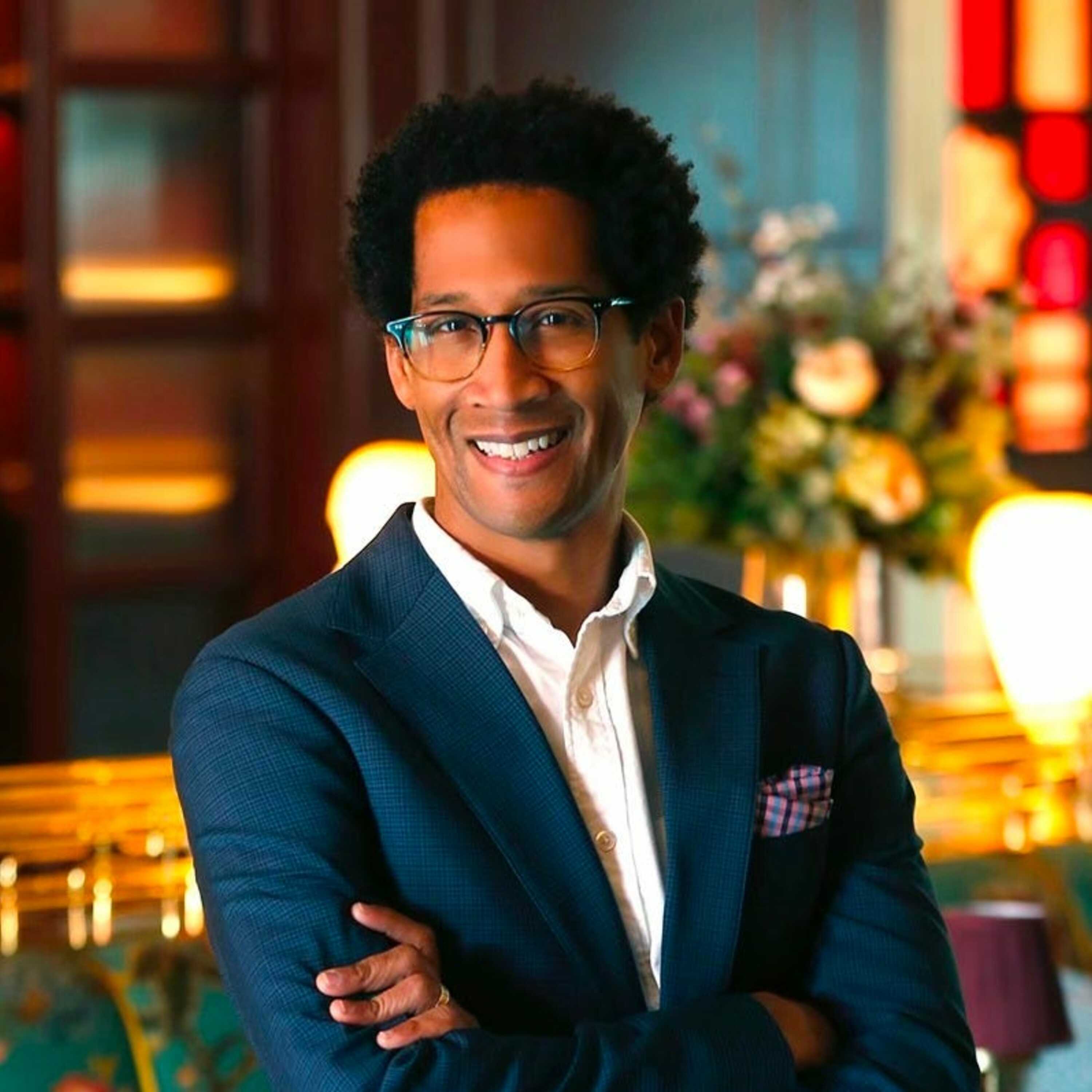
190 - Shaka Mitchell
Dec 2200:46:57Tap to summarizeIn this episode of Crossing Faiths, John Pinna speaks with Shaka Mitchell, founder of the Come Together Music Project, about utilizing music as a tool to deepen relationships and foster vulnerability across cultural and political divides. They discuss the origins of Mitchell's podcast, which invites guests to share songs based on specific prompts, leading to unexpected and humanizing conversations—such as a dialogue between strangers regarding their differing perspectives on safety and isolation during the COVID-19 pandemic. The pair also explores the intersection of faith and community, touching on the nuances of celebrating Christmas in diverse households, the communal nature of holiday traditions like caroling, and the parallels between church bells and the recently approved broadcast of the Islamic call to prayer in New York City. Ultimately, the interview highlights how music serves as a universal language that can lower defenses and allow individuals from opposing backgrounds to find common ground. Shaka Mitchell Substack: https://substack.com/@shakamitchell Come Together Podcast: https://open.spotify.com/show/13xN302EaRVizFTrsDZVRq https://podcasts.apple.com/sn/podcast/come-together-podcast/id1691123150Support Crossing Faiths
Transcribe →
189 - Laura Van Ham, Eco-Chaplain
Dec 1500:39:37Tap to summarizeIn this episode of Crossing Faiths, John Pinna speaks with Lauren Van Ham, an interfaith minister and the Earth Restoration Coordinator for the United Religions Initiative (URI), about the vital intersection of spirituality and environmental stewardship. Van Ham details her journey to becoming an "Eco-Chaplain," a role dedicated to caring for the Earth as our collective home, and explains how her multi-faith background informs her approach to climate action. The discussion explores the necessity of moving beyond symbolic gestures like Earth Day toward cultivating a daily, intimate relationship with the natural world, while also examining how diverse religious traditions provide theological frameworks for protecting the planet. They further discuss URI’s "Peacebuilding through Earth Restoration" program, which fosters grassroots interfaith cooperation to address issues like land degradation and resource scarcity, ultimately arguing for a shift away from anthropocentrism to recognizing humanity's deep interdependence with nature. URI: https://www.uri.org/ About Lauren: https://www.uri.org/lauren-van-hamSupport Crossing Faiths
Transcribe →
188: Shugen Arnold
Dec 800:54:03Tap to summarizeIn this episode of Crossing Faiths, John Pinna speaks with Geoffrey Shugen Arnold, the Abbot of the Zen Mountain Monastery, about the intersection of traditional Buddhist practice and modern American life. Shugen elucidates the role of an Abbot as both a spiritual teacher and administrator before diving into core Buddhist concepts, explaining how the suffering caused by clinging to a permanent sense of self can be alleviated through the "Middle Way" and non-attachment. The conversation explores Shugen’s personal journey, from his upbringing in Atlanta during the Civil Rights movement—where the societal silence regarding segregation prompted his deep questioning of culture and history—to his transition from a budding career in mathematics and music to a disciplined monastic life in the Hudson Valley. They conclude by discussing the delicate balance between maintaining a cloistered environment for deep meditation and fulfilling the Bodhisattva vow of service, highlighting the monastery's efforts to engage with the wider community through social justice initiatives and anti-bias training. Geoffrey Shugen Arnold, Roshi is the Head of the Mountains and Rivers Order and Abbot of Zen Mountain Monastery. Shugen entered full-time residential training in 1986 after studying mathematics and receiving a degree in classical music. He received dharma transmission from John Daido Loori, Roshi in 1997. His teachings on Zen, social justice and environmental stewardship have appeared in various Buddhist journals, and The Best Buddhist Writing 2009 (Shambhala Publications). His book of poetry, O, Beautiful End, a collection of Zen memorial poems, was published in 2012. https://zmm.org/Support Crossing Faiths
Transcribe →