
Podcast
Daily Readings by Wild at Heart
Hosted by John Eldredge · EN
Daily Readings are a daily excerpt from books and teachings from John and Stasi Eldredge and Morgan Snyder.
163episodes
Episodes
Newest firstAll episodes
Echoes from the Past
Jul 1000:01:56Tap to summarizeAren't there times in your life that if you could, you would love to return to? I grew up in Los Angeles but spent my boyhood summers in Oregon where both my mother and father's parents lived. There was a beauty and innocence and excitement to those days. Woods to explore, rivers to fish, grandparents to fuss over me. My parents were young and in love and the days were full of adventures I did not have to create or pay for but only live in and enjoy. Rafting and swimming in the Rogue River. Playing in the park. Huckleberry pie at Becky's along the road to Crater Lake. We all have places in our past when life, if only for a moment, seemed to be coming together in the way we knew in our hearts it was always meant to be.There was a time when meadow, grove, and stream, The earth, and every common sight, To me did seem Appareled in celestial light, The glory and the freshness of a dream.Heaven lies about us in our infancy; Shades of the prison-house begin to close Upon the growing boy, But he beholds the light, and whence it flows. He sees it in his joy;At length the man perceives it die away, And fade into the light of common day.Wordsworth caught a glimpse of the secret in his childhood, saw in it hints from the realm unknown. We simply must learn the lesson of these moments or we will not be able to bring our hearts along in our life's journey. For if these moments pass, never to be recovered again, then the life we prize is always fading from view, and our hearts with it. Want more? Order your copy of The Journey of Desire today
Transcribe →Three Interwoven Parts
Jul 900:02:10Tap to summarizeWe human beings are made up of three interwoven parts. As Paul says, “May God himself ... sanctify you through and through. May your whole spirit, soul and body be kept blameless at the coming of our Lord Jesus Christ” (1 Thess. 5:23). We are body, soul, and spirit. Each part affects the others in a mysterious interplay of life. By seeking healing through counseling, God was addressing my soul. God’s provision of antidepressants was a tremendous help to my body. I made real progress. But it was not enough. God wanted me to engage my spirit. A foul spirit of depression had its bloody claws in my life. It often works like that—the Enemy knows our weaknesses, and he preys upon them. Demons smell human brokenness like sharks smell blood in the water, and they move in to take advantage of the weakened soul. Paul warns about this in Ephesians when, writing to Christians, he warns us not to “give the devil a foothold” in our lives through unhealed and mishandled emotions (4:26–27). God had me begin to stand against it. James and Peter both exhort us to resist our Enemy (James 4:7; 1 Peter 5:8–9). Jesus said he has given us his authority to overcome the spiritual attacks against us (Luke 10:18–19). I prayed. John, as my husband, my head, prayed as well. We commanded this foul spirit to leave me by the authority given to believers in Jesus Christ. Deliverance came. Victory. Release. Healing. Restoration. It was the final key. I needed to address all three aspects — my body, soul, and spirit — in order to come more fully into healing. Far too many women will focus only on one or two aspects and not engage in the spiritual warfare that is swirling around us. But if we would be free, we must. Want more? Order your copy of Captivating today
Transcribe →Know Yourself
Jul 800:01:15Tap to summarizeThe book “Killing Lions” is a conversation between John and Sam Eldredge about the trials young men face. [John] The more you know yourself, the more this will prove an immensely helpful category. (And please, as Socrates urged, do not live an unexamined life; know yourself.) What are you historically prone to do when it comes to making decisions? If yours is a story filled with indecision, that “confusion” might have nothing to do with clarity and everything to do with fear, or shame, or a wounded heart. A young man afflicted with relational paralysis (he just couldn’t commit to the girl he was dating) came to my friend Craig for counsel. They discovered his indecision was rooted in a childhood wound. As a boy he loved music, but his father shamed him for it. He killed his dream and his desire, and for years afterward he could not discover “what to do with his life.” It had nothing to do with clarity; what was needed was healing. Are you typically driven by a desire to please others? You don’t want to choose a grad school, a career, or even a spouse just to make someone else happy. Are you ruled by insecurity? You don’t want your false self committing you to a profession simply because it’s “safe.” Don’t give your false self the keys to the car. Want more? Order your copy of Killing Lions today
Transcribe →Embracing Recovery
Jul 700:04:11Tap to summarizeAthletes will tell you that working out is not the most important part of training. Recovery is. The number one cause of athletic injuries is the lack of recovery time between training sessions.Let me repeat this because it’s so counterintuitive — recovery is more important to athletic performance than training is. Your body needs to rest and repair between periods of exertion. “By not letting each of the muscle groups rest, a person will reduce their ability to repair. Insufficient rest also slows fitness progression and increases the risk of injury.” (Jayne Leonard, How to Build Muscle with Exercise)That’s very orienting. It’s a physical expression of a reality that applies to your heart and soul as well. We could probably predict who’s going to burn out and who’s not by looking at their recovery practices.But most people don’t take their recovery seriously. They’re simply shocked and heartbroken when their soul suddenly gives out, like a camel who has walked a thousand miles and drops. How will you build recovery into your life? What’s your plan?*Healing from trauma involves naming what the trauma was, and what its effects upon us have been. This is the “story work” every good therapist helps their client through: What happened? What was it like? Tell me the story. (This “narrative approach” helps process trauma and rewires the brain.)You can’t heal trauma without grieving it. This is why the mad rush to grab some joy and the global denial insisting that “things are getting back to normal” are cruel to the soul. It’s a shared attempt to sweep it all under the rug, but the problem is a good part of your soul goes right along with it. Under the rug.I want to suggest two things:First, look back to name what these years have been like for you. Name the losses, the fears, the sources of your anger and frustration. Imagine I’m your therapist and I’ve just asked you: What’s it been like for you? What’s been hard? What made you mad? What do you wish had never happened?Put it all out there. Honor it. Grieve it.Second, pay attention in the current moment. It’s far better to do this in real time — name what the current moment feels like, what it’s demanding of you, how it’s impacting your soul. Stay current with the cost of living in an hour like this. When you have a heart for humanity, when you share Jesus’ compassion for people, communities, and creation, you’re going to experience a lot of heartache in an hour like this one. Care for your soul by putting words to what it’s like. Don’t just pretend everything is fine.By the way, this is exactly what is modeled for us in the Psalms — David and the other writers cry out to God with deeply raw descriptions of what is happening all around them, and how it makes them feel. Read Psalms 6, 13, and 42 for examples. Let them be your guide to emotional health. Want more? Order your copy of Resilient today
Transcribe →The Very Best Invitation
Jul 600:02:36Tap to summarizeWatch Jesus with "the rich young ruler":"One thing you lack," he said. "Go, sell everything you have and give to the poor, and you will have treasure in heaven. Then come, follow me." At this the man's face fell. He went away sad, because he had great wealth. (vv. 21–22)"Oh—one more thing..." The young man has an idol he is clutching in his heart. It must have been his secret love; we know from his reaction. Jesus knew by looking into his heart. In typical religious spirit posturing, the church in ages past seized this passage and made poverty a requisite for following Christ. But that misses the point entirely. Jesus had wealthy men and women among his disciples, such as Joseph of Arimathea and the women who supported the ministry. God warned the Jews many times against idolatry, that if any one set up an idol in their heart, God would set himself against them. But oh, how hard it is to topple a cherished idol.Here is Jesus at his very best—he yanks this man off balance, sets his entire world reeling, and in the same moment extends his hand to catch him: "Let this go. Then come, join me. I want you to join me." What an invitation.But the thought of giving his precious treasure away—his life-source, his security and status—it is too much for the earnest young man. He walks away, head cast down in sorrow. Exposed, but also captive to his false god. Again, wealth is not the point. The idol is the point. It might be anything—the attention of men, as with the woman at the well. Or self-righteousness, as with the religious. It might be position, power, family, even church. We craft idols faster than you can surf the Internet.Want more? Order your copy of Beautiful Outlaw today.
Transcribe →Bursting With Longing
Jul 500:01:52Tap to summarizeOh! Ephraim is my dear, dear son, my child in whom I take pleasure!Every time I mention his name,my heart bursts with longing for him!Everything in me cries out for him.Softly and tenderly I wait for him. (Jer. 31:20 The Message) Put your own name in this verse, in the place of “Ephraim” (a name for God’s people, and that includes you). Imagine that God’s heart bursts with longing for you. This is the message of Jesus: there is a good and loving Father who cares so deeply and passionately for you. He yearns to be your Father now. He will draw near, if you’ll let him. No matter how old we are, our true Father wants us to experience being his beloved sons, and all the joys of boyhood that go with it. But it requires opening our hearts, which will take us back into some of our deepest wounds, and the cynicism and resignation that shut our hearts down a long time ago. God does this so that he might bring his love and healing to the fatherless boy within us, the boy that still needs to know he is the beloved son. And so, to begin with, you might ask yourself, “Did I have a father with whom I felt safe?” and, “Did I know I was prized by my father?” “Was I invited to be a boy, did I get to live a boy’s life as it was meant to be?” You might even want to write out your answers to those questions, especially the follow-up question, “Why...or why not?” Tell your story, at least to yourself, and to God. Want more? Order your copy of Fathered by God today
Transcribe →Why Adventure?
Jul 100:02:39Tap to summarizeAdventure, with all its requisite danger and wildness, is a deeply spiritual longing written into the soul of man. The masculine heart needs a place where nothing is prefabricated, modular, nonfat, ziplock, franchised, on-line, microwavable. Where there are no deadlines, cell phones, or committee meetings. Where there is room for the soul. Where, finally, the geography around us corresponds to the geography of our heart. Look at the heroes of the biblical text: Moses does not encounter the living God at the mall. He finds him (or is found by him) somewhere out in the deserts of Sinai, a long way from the comforts of Egypt. The same is true of Jacob, who has his wrestling match with God not on the living room sofa but in a wadi somewhere east of the Jabbok, in Mesopotamia. Where did the great prophet Elijah go to recover his strength? To the wild. As did John the Baptist, and his cousin, Jesus, who is led by the Spirit into the wilderness. Whatever else those explorers were after, they were also searching for themselves. Deep in a man’s heart are some fundamental questions that simply cannot be answered at the kitchen table. Who am I? What am I made of? What am I destined for? It is fear that keeps a man at home where things are neat and orderly and under his control. But the answers to his deepest questions are not to be found on television or in the refrigerator. Out there on the burning desert sands, lost in a trackless waste, Moses received his life’s mission and purpose. He is called out, called up into something much bigger than he ever imagined, much more serious than CEO or “prince of Egypt.” Under foreign stars, in the dead of night, Jacob received a new name, his real name. No longer is he a shrewd business negotiator, but now he is one who wrestles with God. The wilderness trial of Christ is, at its core, a test of his identity. “If you are who you think you are ...” If a man is ever to find out who he is and what he’s here for, he has got to take that journey for himself. He has got to get his heart back. Want more? Order your copy of Wild at Heart today
Transcribe →
You Must Fight for Your Life
Jun 3000:01:58Tap to summarizeUntil we come to terms with war as the context of our days, we will not understand life. We will misinterpret 90 percent of what is happening around us and to us. It will be very hard to believe that God’s intentions toward us are life abundant; it will be even harder not to feel that somehow we are just blowing it. Worse, we will begin to accept some really awful things about God. That four-year-old little girl being molested by her daddy— that is “God’s will ”? That ugly divorce that tore your family apart—God wanted that to happen too? And that plane crash that took the lives of so many—that was ordained by God? Most people get stuck at some point because God appears to have abandoned them. He is not coming through. Speaking about her life with a mixture of disappointment and cynicism, a young woman recently said to me, “God is rather silent right now.” Yes, it’s been awful. I don’t discount that for a moment. She is unloved; she is unemployed; she is under a lot. But her attitude strikes me as deeply naive, on the level of someone caught in a cross fire who asks, rather shocked and with a sense of betrayal, “God, why won’t you make them stop firing at me?” I’m sorry, but that’s not where we are right now. It’s not where we are in the Story. That day is coming, later, when the lion shall lie down with the lamb and we’ll beat swords into plowshares. For now, it’s bloody battle.It sure explains a whole heckuva lot. You won’t understand your life, you won’t see clearly what has happened to you or how to live forward from here, unless you see it as battle. A war against your heart.Want more? Order your copy of Waking the Dead today.
Transcribe →
The Humanity of Jesus
Jun 2900:02:17Tap to summarizeSomething has crept into our assumptions about Jesus that makes it almost impossible to relate to him, not to mention love him. I say "crept" because it has not been a conscious decision; few of the things that shape our actual convictions are. I think much of the creep has happened, ironically, as a result of our attempts to love and revere Christ. But crept in this notion has, and it has done great damage to our perceptions of him, our experience of him.It's the notion that Jesus was really "pretending" when he presented himself as a man.We who worship Jesus Christ hold fast to the belief that he was God. "Very God of very God," as the Nicene Creed states. The heroic actions and miraculous powers of Jesus' life attest to it. So, when we read what we would call the more human moments, we feel that Jesus was sort of ... cheating. With a nod and a wink we know that what's really happening is that Einstein has dropped in to take the first-grade math quiz. Mozart is playing a measure in the kindergarten song flute choir. After all, we're talking about Jesus here. The guy walked on water, raised Lazarus from the dead. He never broke a sweat, right?But then, what do you make of that terrible sweat in Gethsemane? Deeply distressed.Overwhelmed with sorrow.Anguished.This doesn't sound like somebody cheating to me. He begs his Father, with tears, that this awful cup might be taken from him. Please, let there be some other way. He doesn't want to do it. Sweat like blood pouring from his tormented brow. He pleads with his Father, and then he pleads a second time, and then a third. Does this sound like Einstein adding two and two?He was human. Really.Want more? Order your copy of Beautiful Outlaw today.
Transcribe →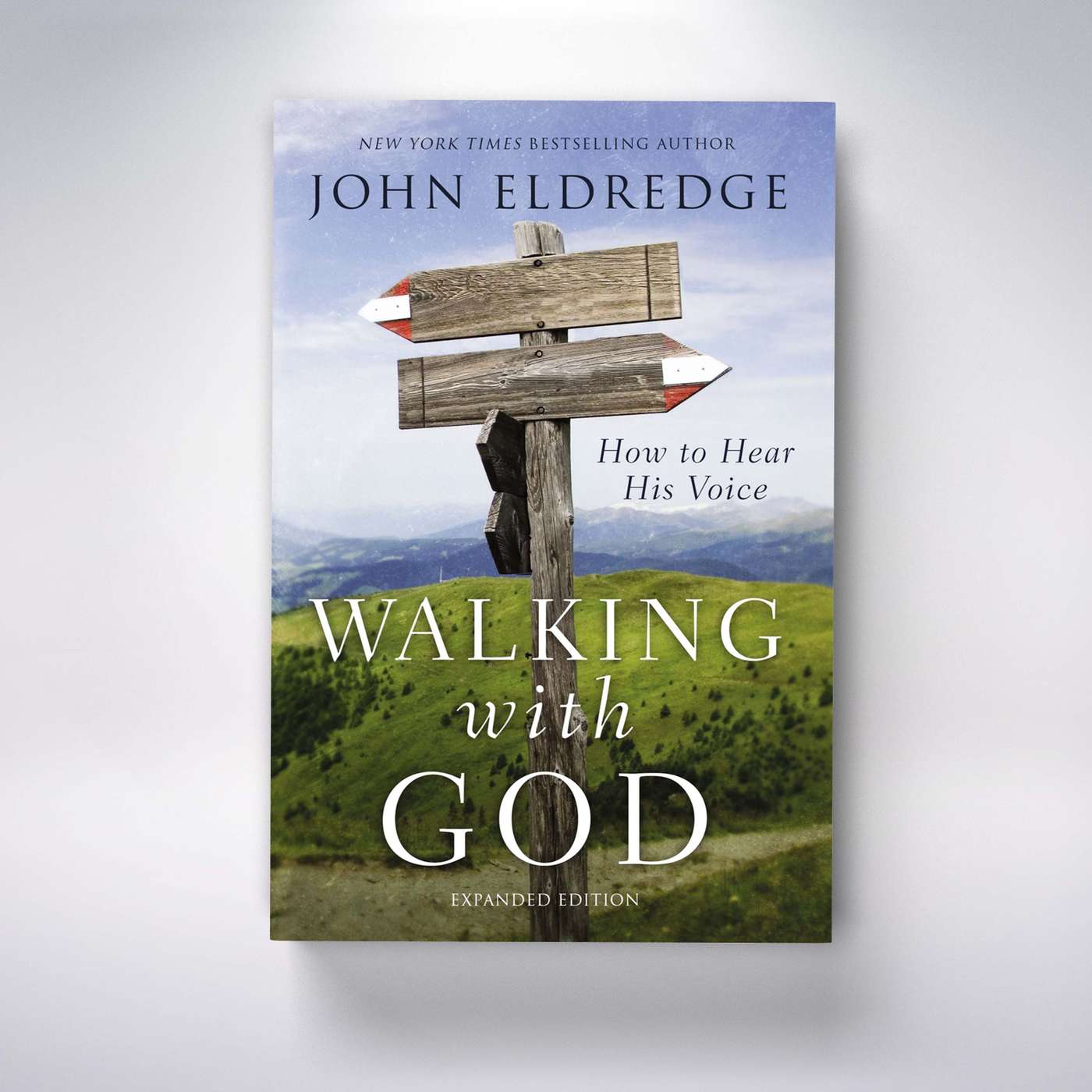
Humanity Restored
Jun 2800:02:38Tap to summarizeJesus says that as our Good Shepherd, he is leading us. What an encouraging thought. Jesus is leading you, and he is leading me. He is shepherding us. I can feel something in my heart loosening even now as I consider this. Okay. I don’t have to make life happen on my own. Now, if Christ takes it upon himself to lead, then our part is to follow. And you’ll find that it helps a great deal in your following if you know what God is up to. True, we may not know exactly what God is up to in this or that event in our lives. “Why didn’t I get the job?” “How come she won’t return my calls?” “Why haven’t my prayers healed this cancer?” I don’t know. Sometimes we can get clarity, and sometimes we can’t.But whatever else is going on, we can know this: God is always up to our transformation.God knew what he was doing from the very beginning. He decided from the outset to shape the lives of those who love him along the same lines as the life of his Son. The Son stands first in the line of humanity he restored. We see the original and intended shape of our lives there in him. After God made that decision of what his children should be like, he followed it up by calling people by name. After he called them by name, he set them on a solid basis with himself. And then, after getting them established, he stayed with them to the end, gloriously completing what he had begun. (Romans 8:29–30 msg)God has something in mind. He is deeply and personally committed to restoring humanity. Restoring you. He had a specific man or woman in mind when he made you. By bringing you back to himself through the work of Jesus Christ, he has established relationship with you. And now, what he is up to is restoring you. He does that by shaping your life “along the same lines as the life of his Son.” By shaping you into the image of Jesus. You can be confident of this. It’s a given. Whatever else might be going on in your life, God always has his eye on your transformation.Want more? Order your copy of Walking with God today.
Transcribe →