Podcast
Design Notes
Hosted by Liam Spradlin · EN
Design Notes is a podcast about creative work and what it teaches us. Hosted by Liam Spradlin, a Senior UX Designer at Google focused on the philosophy of the user interface, the show features conversations with people from unique creative fields, uncovering what inspires and unites us in our practice. Tune in to learn how UX design connects to creative work across disciplines and around the world.
Find episodes on your favorite platform at design-notes.show
11episodes
Episodes
Newest firstAll episodes
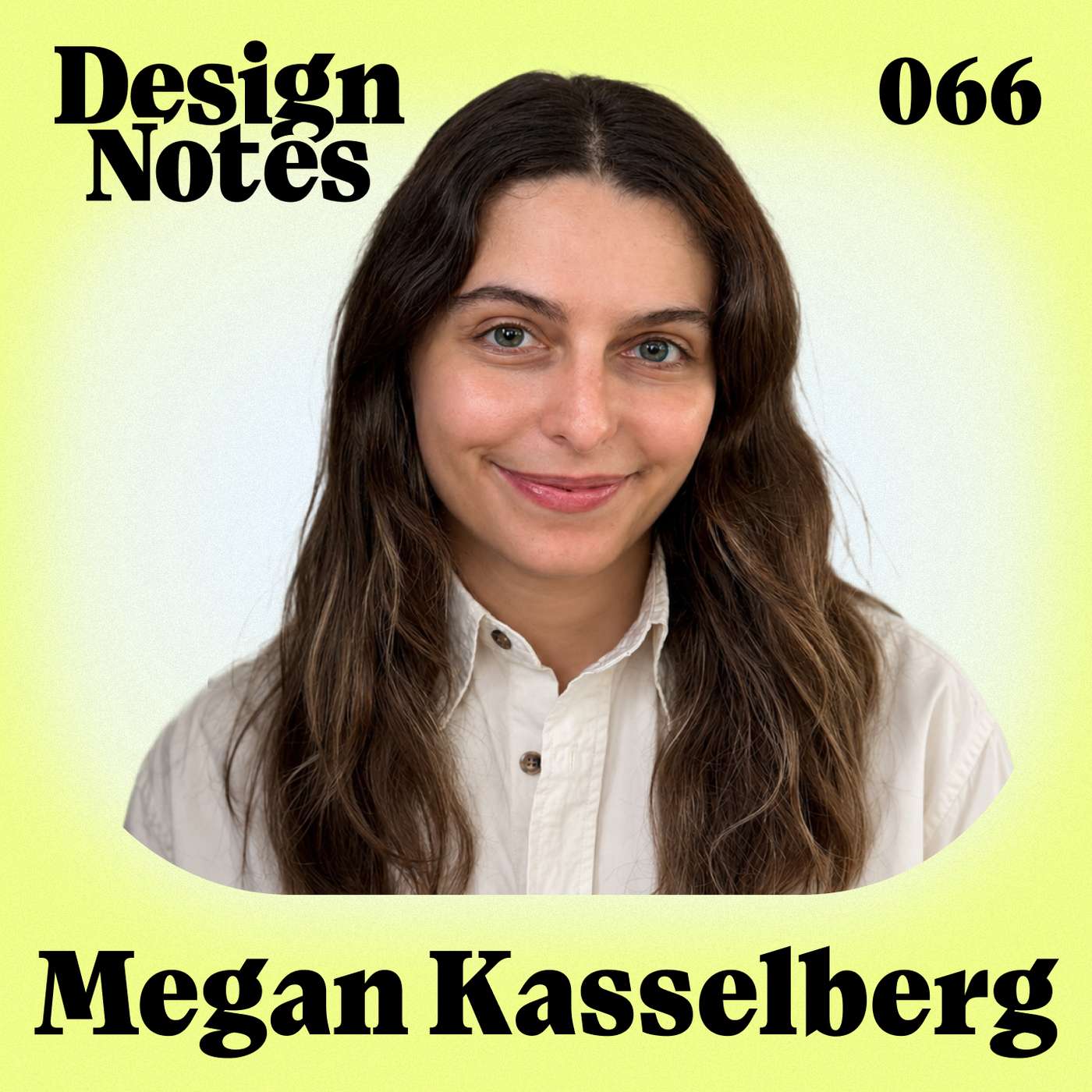
There Is No Neutral Design: Megan Kasselberg, Senior UX Writer and Content Designer, Material Design
2w ago00:37:29Tap to summarizeThis episode, I talked with my coworker Megan Kasselberg, whose work as a senior UX writer and content designer touches billions of users through the Material Design system. In our conversation, Megan and I dug into the storytelling and strategy that goes into a design system as vast as Material, including the language of guidelines assets, the effect of earnest expression, and how UX writing is changing in an age of AI.Read a full transcript at interfacecafe.com.In the episode, Megan mentions psychologist and behavioral economist Daniel Kahneman, plus a shoutout to our colleagues Rux and Andrew whose work on color has reshaped how software at Google feels. (00:00) - Introduction (01:52) - UX Writing and Behavioral Science (02:57) - Documenting Material Design (06:45) - Internal vs. External System Guidance (09:59) - Tooling and Constraints in Figma (11:15) - Collaborating with Designers (13:00) - Illustrations and Expressive Design (17:18) - The Controversial Baseline Color (22:48) - Voice, Tone, and AI in UX Writing (35:56) - Advice for Designers (36:50) - Outro
Transcribe →
Beyond the Text Field: Louise Macfadyen, Author of Designing AI Interfaces
Feb 1700:39:47Tap to summarizeThis episode, I got to sit down with my friend, podcast cohost on Away from Keyboard, and former coworker Louise Macfadyen as she prepares to launch her new book Designing AI Interfaces with Oreilly this Spring.We had a lot to talk about, from managing the conceptual distance between what AI actually does and what people imagine it can do, to the new skills designers, engineers, and PMs need to work with models, the potential harms of new technology, and some of the patterns designers can use to keep ethics and safety in the loop.Designing AI Interfaces is available from O'Reilly Media April 21st, 2026.
Transcribe →
The Era of the Generalist: Rachel Been, SVP of Design for Expedia Group
Nov 2500:43:17Tap to summarizeIn this episode, Liam speaks with Rachel Been, SVP of Design for Expedia Group, about her journey from photography to design leadership and why she believes this is "the era of the generalist." The conversation unpacks the recent launch of Expedia's new app on ChatGPT and what it means to design for "non-deterministic flows" and "infinite inputs." Rachel explains how AI is breaking old, linear design paradigms and why, in an age of potential "design slop," deep curiosity and human-centered craft are more important than ever.Read a transcript and check out more from me at interfacecafe.comEpisode Chapters:00:00 Introduction 01:34 The Generalist Designer 11:22 Launching the Expedia App for ChatGPT 16:00 Beyond the Search Bar 25:44 Designing for Infinity 34:03 The Sandwich Theory 39:41 Avoiding Design Slop: Advice on Craft
Transcribe →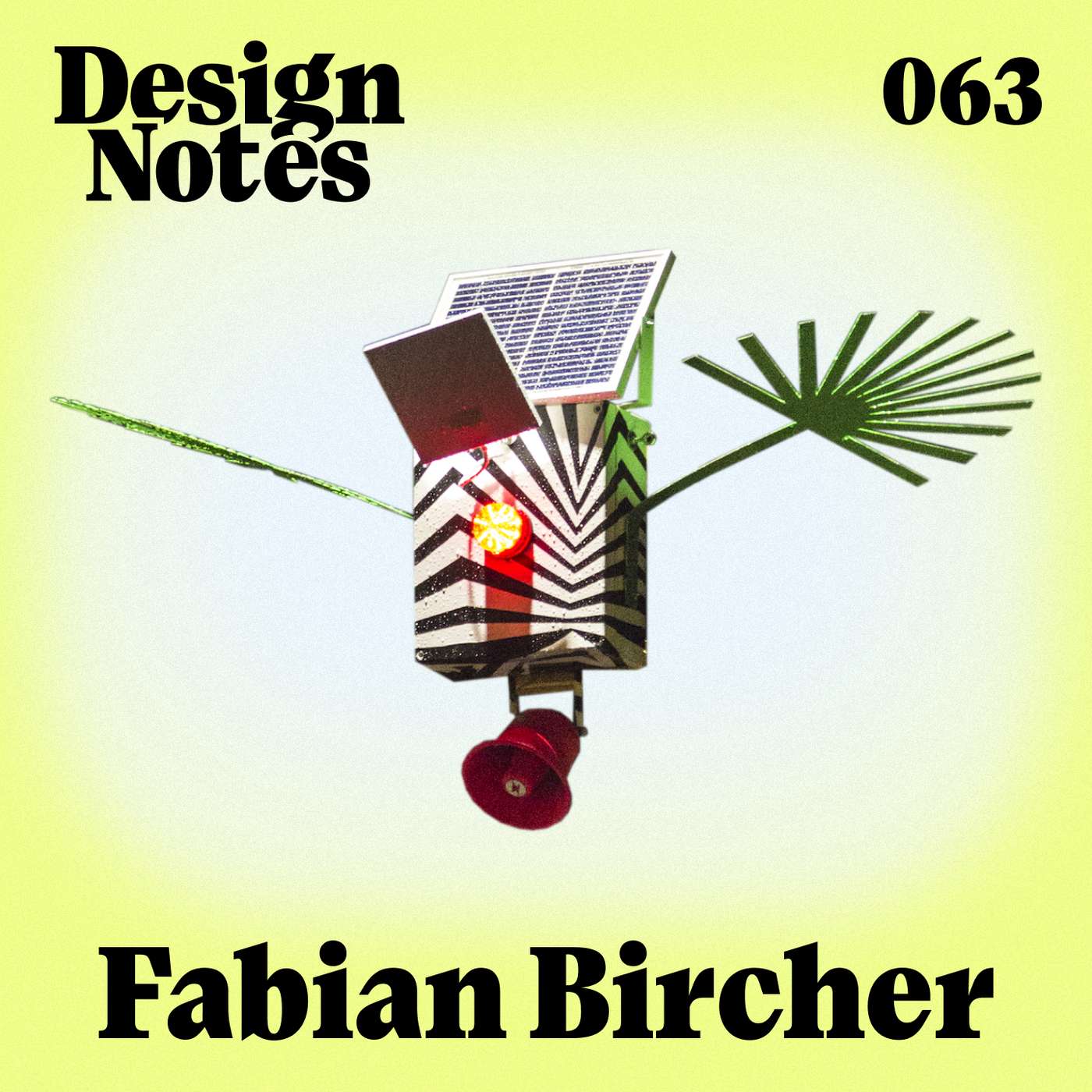
Other Than Expected: Fabian Bircher on Combining Art, Architecture, and Code
Oct 1400:38:19Tap to summarizeIn this episode, Liam speaks with Zürich-based architect and artist Fabian Bircher, whose work spans buildings, custom lighting, and interactive installations. Fabian discusses his unique creative process, where inspiration flows from both artistic concepts and the discovery of new technological possibilities. The conversation explores the materiality of light through his Buoy lamps and dichroic foil installations, the process of revealing hidden digital systems with his "Reporting Device," and the unexpected role of randomness in creating kinetic art.Find a full transcript and more at interfacecafe.com, and subscribe so you don't miss an episode.Episode Chapters:01:16 Intro and Background03:52 The Exchange Between Tech and Creativity06:04 Breaking Into the Unknown07:52 Buoy Lamps and the Vermicelleria12:58 The Materiality of Light16:12 Bringing Light to a Brutalist Schoolhouse 19:15 The Reporting Device24:02 Revealing the Unseen25:49 Anthropomorphic Architecture29:54 The Role of Randomness31:54 Does it All Make Sense?34:34 What Should We Be Focused On?37:40 Outro
Transcribe →
Design Can't Rely on Logic: Troy Leinster on Type Design and Human Perception
Sep 900:45:07Tap to summarizeIn this episode, I reconnect with my former instructor, type designer and design coach Troy Leinster. Troy shares his journey from graphic design to type design, and explains why learning to make letters makes you a better designer. We also dig into the importance of trusting the human eye over geometry, the productive friction of sketching by hand, and how understanding calligraphy builds a stronger perspective on type design. Troy discusses why, in the age of AI, the most important thing a designer can do is put their personal touch on the work.
Transcribe →
The User Brings the Confetti: Rob Giampietro on Scaling a Human-Centered Brand
Aug 500:43:13Tap to summarizeRob Giampietro, Head of Creative at Notion and former Design Director at MoMA, returns to the show to unpack the story behind Notion Faces, the popular tool that allows users to create their own illustrated avatar. Rob details the project's journey from a beloved internal tradition to a major public launch, including the pivotal decision to scale with human illustrators instead of AI to maintain the brand's unique, handcrafted quality. The conversation explores how the team shifted its focus from "likeness" to "expression," the power of modularity in design systems, and the research process that made the project a success. 📋 Read a transcript 📡 Subscribe
Transcribe →
True is Better Than New: David Reinfurt on Evolving Graphic Design Education
Jul 1, 202500:45:02Tap to summarizeIn this episode, designer, educator, and author David Reinfurt returns to the show to discuss his latest book, A *Co-* Program for Graphic Design. Born from a series of lectures delivered remotely, online, and together with collaborators and cooperators, the new book builds on his earlier "spoken" book, exploring some unexpected and intuitive overlaps between design and the rest of the world around us. In conversation, Liam and David cover the power of hands-on learning, the importance of going against expectations as a designer, and the positionality of design—its closeness to everyday life, how it affects those that encounter it, and how it's taught—and how individual perspective is the real driver of design as a practice. Read a full transcript. Episode Chapters: 00:00 Introduction and Background 08:53 Teaching as Performance 14:34 The Role of Collaboration in Design 18:26 Diverse Perspectives in Design Education 21:55 Exploring Design Space and Topology 26:34 Hands-On Learning in Design Education 30:13 Art and Design 32:34 Creating Space for Reflection in Design 36:34 The Evolution of Design Conventions 39:38 The Bait and Switch 42:04 Individual Perspectives in Design
Transcribe →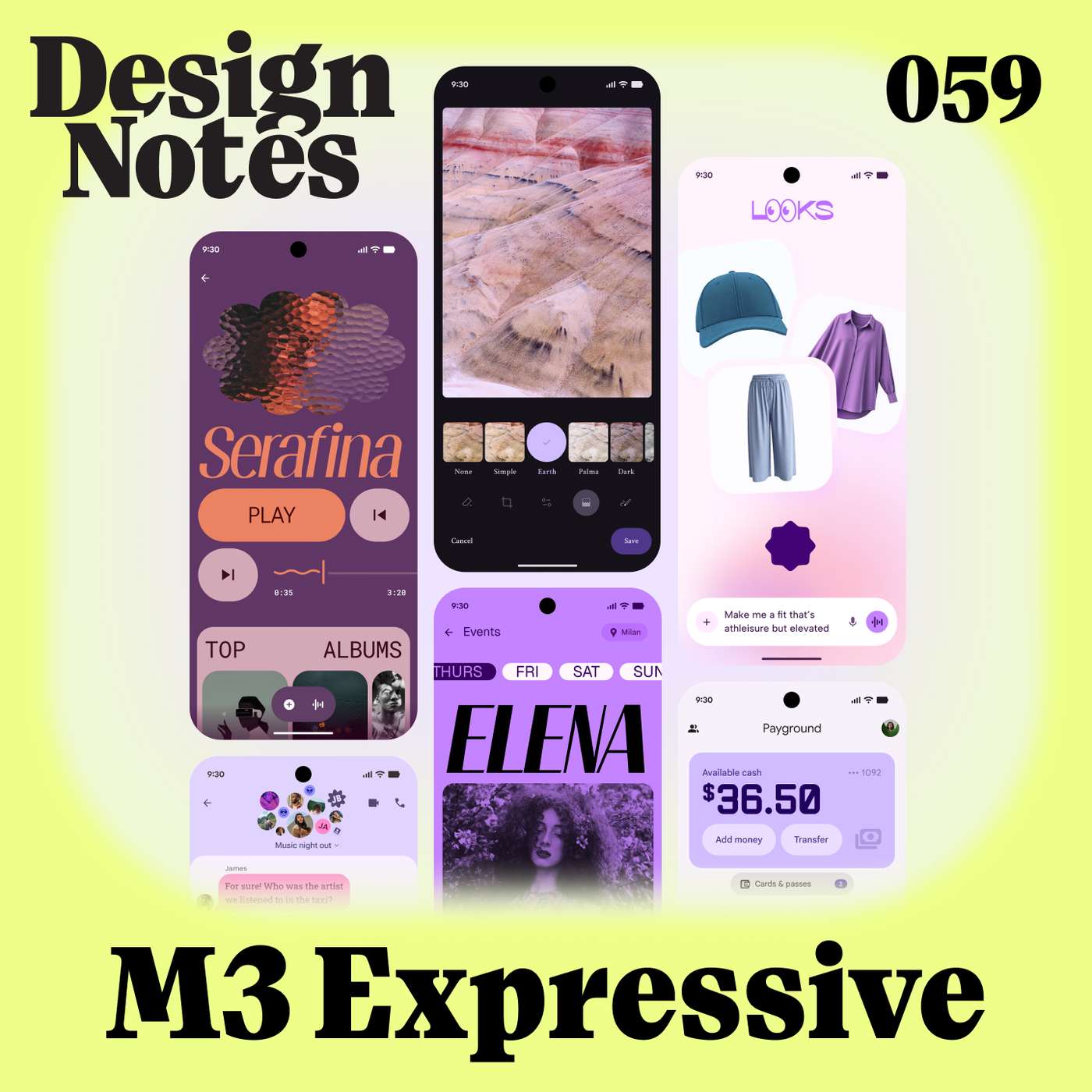
Material Design Gets Expressive: Inside Google's Emotion-Driven UX Update
Jun 10, 202500:55:26Tap to summarizeThis special episode digs into the latest evolution of Google's design system: Material 3 Expressive. Liam talks with Material Design's Android Product Manager Aneesha Kommineni, UX Researcher Michael Gilbert, and Creative Director Andy Stewart about the team's latest emotion-driven UX update. They reveal how this system is grounded in user research and how it offers both developers and users more flexibility. The group also chats about making design more than objective, connecting to users' emotional landscapes, and driving business outcomes — all while considering tooling, usability, accessibility, and more. Stay tuned for upcoming episodes featuring guests like O-R-G's David Reinfurt, type designer Troy Leinster, and more! Read a full transcript.
Transcribe →
Beauty Across the Board: Rich Fulcher on Making Beauty a UX Priority at Google
Jan 14, 202500:52:07Tap to summarizeThis season's special series celebrating ten years since the launch of Material Design closes out with Rich Fulcher, former Google UX director and Material design lead. Fulcher remembers the career-defining journey of creating Material, what it was like to make beauty a UX priority, how to pressure test a system, and what he's learned about world-building across disciplines. Today, he's creating board games, continuing to apply the design-thinking and problem-solving skills developed during his time at Google. Leave us a rating, and subscribe so you don't miss new episodes with creative practitioners across disciplines. 📻 (00:45) - Intro (07:02) - What's a Designer? (09:37) - Design as a Mindset (10:17) - Google Before Material (15:21) - Beauty as a Priority (17:24) - Mission Statement as a Design Challenge (18:29) - What is Beauty? (22:47) - Design System Worldbuilding (25:19) - Pressure Testing (40:04) - "Yeah, Get a Design System" (41:19) - The Stakeholder Onion (46:58) - The Influence of Game Design (50:51) - Outro
Transcribe →
Breaking Silos (and Metaphors): A 'Roving Engineer' on Design & Engineering Collaboration
Dec 9, 202400:53:43Tap to summarizeThis season's special series celebrating ten years since the launch of Material Design continues with Adrian Secord, who describes himself as a "roving engineer." Adrian has over a decade of experience building systems and tools that transform design into robust product engineering at scale. Plus, a PhD in Computer Graphics. Here, he reflects on the evolution of Material Design and the (potentially) exciting possibilities for AI-driven UI. He shares insights on the complexities of large-scale design systems and highlights the need for designers and engineers to find common ground.
Transcribe →