
Podcast
Dialectic
Hosted by UCLA Law Review · EN
We explore current legal issues through the critical lens of the UCLA Law Review.
13episodes
Episodes
Newest firstAll episodes
Episode 11.1 - Voice Actors and Content Creators in the Age of Platform Capitalism with Tim Friedlander and Avi Gandhi
May 1800:34:06Tap to summarizeIn this episode, we're joined by two trailblazers at the intersection of creativity and advocacy. Tim Friedlander is an award-winning voice actor and the President and Co-Founder of the National Association of Voice Actors. Avi Gandhi is the Founder of Creator Logic, a content creator, and a pioneer in the field of creator representation.Tim and Avi discuss how the rise of social media platforms and AI is reshaping entrepreneurship for voice actors and content creators alike, and what it means for the future of their crafts.
Transcribe →Episode 10.2 - The Autocratic Legal Playbook with Professor Scott Cummings
Apr 200:47:09Tap to summarizeIn this episode we are joined by Professor Scott Cummings, Professor of Law and the Robert Henigson Professor of Legal Ethics at UCLA School of Law to discuss his forthcoming article "The Autocratic Legal Playbook" that outlines the blueprint autocrats have used throughout history to dismantle democracy through seemingly lawful procedures.
Transcribe →Episode 10.1 - Fascist Government Speech with Professor Alex Sinha
Apr 200:42:10Tap to summarizeIn this episode we are joined by Professor Alex Sinha, Professor of Law and Associate Dean for Faculty Research and Development at the Maurice A. Deane School of Law at Hofstra University to discuss his recently published article "Fascist Government Speech," the history of protected speech, and the Trump administration.
Transcribe →Episode 9.3 - Shielding the Police with Joanna Schwartz
Jan 27, 202500:58:19Tap to summarizeIn this episode we are joined by Joanna Schwartz, Professor of Law and Faculty Direct of the David J. Epstein Program in Public Interest Law and Policy at UCLA School of Law to discuss her book Shielded, which explores the various ways in which the police are protected from accountability for misconduct.
Transcribe →Episode 9.2 - Reproducing Inequality with Thalia González & Paige Joki
Oct 10, 202401:00:02Tap to summarizeIn this episode, we are joined by Professor Thalia González of UC San Francisco School of Law and Paige Joki, Staff Attorney at the Education Law Center-PA (ELC) and the Leader of the ELC's Black Girls Education Justice Initiative, to discuss their recently published article "Reproducing Inequality: Racial Capitalism and the Cost of Public Education," which is the first-of-its-kind exploration of school-based fines and fees in United States public schools. Link to the article: https://papers.ssrn.com/sol3/papers.cfm?abstract_id=4547446 Education Law Center Publications: https://edlawcenter.org/publications/ chrome-extension://efaidnbmnnnibpcajpcglclefindmkaj/https://www.elc-pa.org/wp-content/uploads/2023/05/FINAL-Supportive-Spaces-for-web.pdf Link to the UCLA Law Review Dialectic page: https://www.uclalawreview.org/episode-9-2-reproducing-inequality-with-thalia-gonzalez-paige-joki/
Transcribe →Episode 9.1: Race, Professionalism, and White Supremacy with Leah Goodridge
Mar 20, 202400:44:41Tap to summarizeWelcome to the inaugural episode of Dialectic volume 72! In this episode, host Kyler McVoy and guest Leah Goodridge discuss the racial dynamics of professionalism and its origins in settler-colonial and white supremacist ideologies, expanding on Leah's recently published essay: Professionalism as a Racial Construct. Professionalism as a Racial Construct: https://www.uclalawreview.org/professionalism-as-a-racial-construct/ More from Leah Goodrige: X: @leahfrombklyn Linkedin: https://www.linkedin.com/in/leah-goodridge/ SXSW Panel: Forecasting Workplace: The Changing Landscape of DEI https://schedule.sxsw.com/2024/events/PP146069
Transcribe →Episode 8.2: Professor Sanford Williams: Friends, Family, and the FCC
Jan 16, 202400:21:22Tap to summarizeGo behind the scenes with UCLA Law lecturer and telecoms expert Sanford S. Williams, who has worked at the FCC since 1999 and is currently Special Adviser to the FCC Chairwoman and a Deputy Managing Director of the FCC. Episode transcripts are available on our website.
Transcribe →Episode 8.1: Desert Flower: Bibi Barba, Aboriginal Art Theft, and the IGC
Apr 24, 202300:17:59Tap to summarizeIn 2012, Australian Aboriginal artist Bibi Barba Googled herself. She found an entire boutique hotel designed in her image. Episode transcripts are available on our website. Music by Podington Bear and the Free Music Archive.
Transcribe →
Episode 7.5: Tribal Sovereignty, Decolonization, and Abolition with Grace Carson
Dec 28, 202200:56:04Tap to summarizeIn this episode, Grace Carson discusses the intersections of abolition theory and decolonization theory, and how Tribes should reconsider systems of punishment and instead create systems of care and liberation as outlined in her article, Tribal Sovereignty, Decolonization, and Abolition: Why Tribes Should Reconsider Punishment, which will be punished in December 2022.
Transcribe →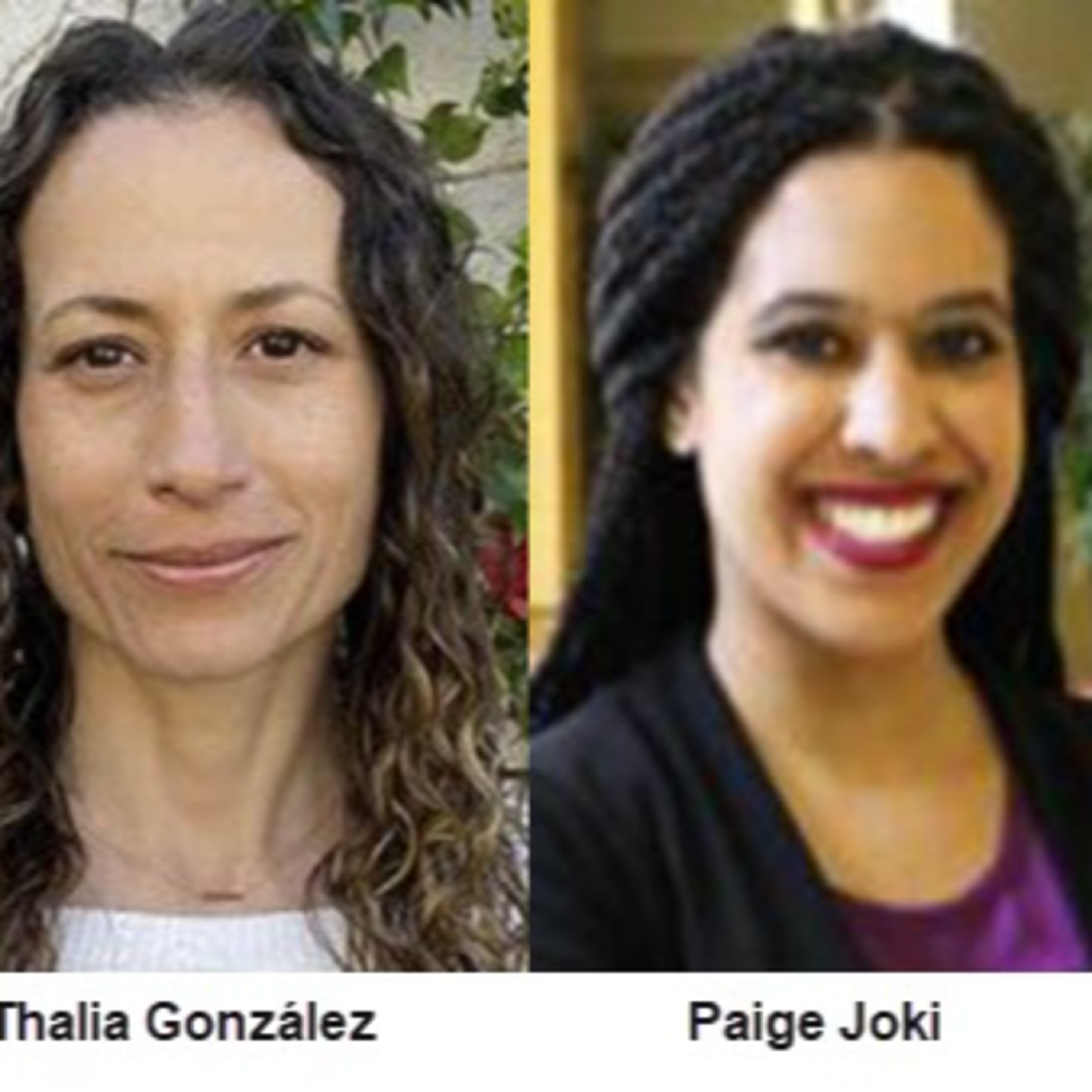
Episode 7.4: Beyond the Schoolhouse Doors: Anti-Black Racism and the Exclusion of Black Caregivers with Paige Joki and Thalia Gonzalez
Dec 6, 202201:09:41Tap to summarizeThis work, calls upon the civil rights and education justice communities to expand their vision of school discipline law and policy reform to include the often ignored, yet deeply impacted lives of parents, caregivers, and families. Deploying what critical race theorists define as storytelling or counter-narratives, the authors share Nyla’s story to bring forward an all too common deployment of education laws—flown under a banner of safety, order, maintenance, and well- being of school communities—that reinforce anti-Black racism.
Transcribe →