
Podcast
Different, Not Broken
Hosted by Lauren "L2" Howard · EN
You’ve spent your whole life feeling like something’s wrong with you. Here’s a radical thought: what if you’re not broken - just different?
Welcome to Different, Not Broken, the no-filter, emotionally intelligent, occasionally sweary podcast that challenges the idea that we all have to fit inside neat little boxes to be acceptable. Hosted by L2 (aka Lauren Howard), this show dives into the real, raw and ridiculous sides of being neurodivergent, introverted, chronically underestimated - and still completely worthy.
Expect deeply honest conversations about identity, neurodivergence, gender, work, grief, anxiety and everything in between.
There’ll be tears, dead dad jokes, side quests, and a whole lot of swearing.
If you are tired of pretending to be someone you’re not, this space is for you.
Come for the chaos.
Stay for the catharsis.
Linger for the dead Dad jokes.
42episodes
Episodes
Newest firstAll episodes

I recognized him instantly. (My Reality TV → Real Life Nightmare)
Jan 2800:21:55Tap to summarizeI recognised him instantly.I’d never met him before.Hi, I’m Lauren Howard. You can call me L2. Like other people do.In this episode of Different, Not Broken, I tell the story of going to a startup funding event in Miami and unexpectedly sitting down next to someone I knew far too much about… despite never having spoken to him in my life.It turns out reality TV, social conditioning, and a neurodivergent brain make for a very specific kind of social experience.This episode is about what it’s like to hold a straight face while your brain is doing cartwheels, why masking often looks like politeness, and how much effort goes into pretending you don’t know what you know.You’ll hear:Why recognition doesn’t always come from real relationshipsWhat masking actually looks like in everyday social situationsWhy being “polite” is often a survival skillHow neurodivergent brains process people and patterns differentlyWhy explaining yourself gets exhausting fastOnce you’ve been inspired to brag, here’s where you can do it!https://differentnotbrokenpodcast.com/voicemailUseful stuffStuff that helps you become awesome even if you’re different: https://stan.store/elletwoMy grown up job: https://lbeehealth.com/Chapters / Timestamps00:00 – I recognized him instantly01:12 – Reality TV, hate watching, and accidental expertise04:06 – Going to an event alone (never again)06:48 – Sitting down next to someone I shouldn’t know09:02 – Knowing too much and saying nothing12:31 – Masking as politeness15:18 – Why pretending not to know is exhausting18:44 – Listener brag: feeling hopeful about 202620:02 – A very important question for sleep scientists23:10 – Small Talk Listener Question: communicating needs without feeling difficultMentioned in this episode:Brag on yourselfWanna brag on yourself for something you've done which you're proud of? https://differentnotbrokenpodcast.com/voicemailJoin QuirkyWanna sponsor this podcasthttp://differentnotbrokenpodcast.com/sponsorsSponsor Different Not BrokenBuild Your Better courseBuild your better course - https://stan.store/elletwo/p/build-your-better
Transcribe →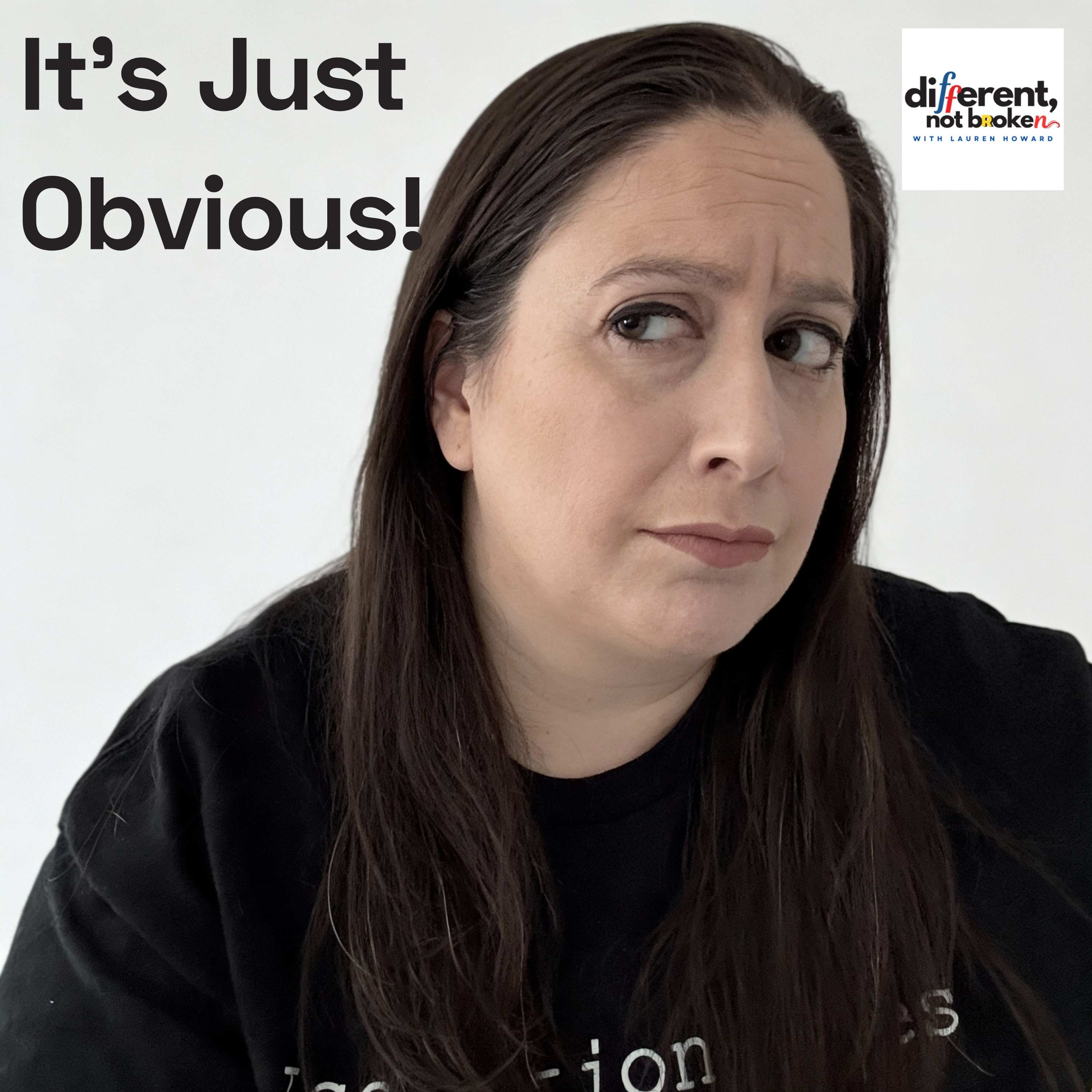
Simplify My Soda: A Crispy Coke RTO Love Story
Jan 2100:25:37Tap to summarizeI have a habit of saying the obvious things most workplaces avoid.Hi, I’m Lauren Howard. You can call me L2. Like other people do.In this episode of Different, Not Broken, I break down why basic human standards at work get treated like radical ideas, why return to office policies are deeply ableist, and why so much “innovative leadership” is really just common sense wrapped in better language.This episode is about simplifying what’s been overcomplicated for years.You’ll hear:Why psychological safety isn’t a perkHow bad management hides behind complexityThe real reason companies are pushing return to officeWhy clarity often gets mistaken for controversyWhat actually changes when you treat people like humansOnce you’ve been inspired to brag, here’s where you can do it!https://differentnotbrokenpodcast.com/voicemailUseful stuffStuff that helps you become awesome even if you’re different: https://stan.store/elletwoMy grown up job: https://lbeehealth.com/Chapters / Timestamps00:00 – Why saying the obvious sounds “radical”02:08 – The bare minimum we’ve stopped expecting at work03:47 – Psychological safety isn’t a perk04:38 – Why return to office is deeply ableist06:36 – The real reason companies want people back in offices07:46 – Bad management disguised as productivity09:05 – Treat people like humans and they quit less10:36 – Listener brag: feeling on top of life11:15 – Why I hate “love languages”11:49 – The science and art of a crispy Coke13:49 – Big bubbles, bad Coke, and betrayal15:31 – Freestyle machines are not acceptable17:59 – Small Talk Listener Question: grieving a late neurodivergent diagnosisMentioned in this episode:Join QuirkyBrag on yourselfWanna brag on yourself for something you've done which you're proud of? https://differentnotbrokenpodcast.com/voicemailWanna sponsor this podcasthttp://differentnotbrokenpodcast.com/sponsorsSponsor Different Not Broken
Transcribe →We've Been Programmed By the Boomers to be Secretive
Sep 1000:22:03Tap to summarizeBoomers love secrets!I said it. Maybe you flinched reading that—maybe you’re nodding along, feeling it deep in your bones, the way “don’t tell anyone” was as common in your house as “finish your peas.” This episode is for every person who grew up in a family where “put on a smile” was mandatory, pain was packed neatly away, and no news—good or bad—ever left the front door until it was passé.I’m Lauren Howard (L2). Here’s the deal: I was raised by a Greatest Generation dad and a very boomer mom. Our home? “Curated” was not an Instagram aesthetic, it was a lifestyle. Major life events? Hush-hush. Fights? Don’t you dare let the neighbors know. Moving across the country? Tell no one—not even the kids, until a for-sale sign is basically in your face.Fast forward to adulthood, and I’m the one who “shouldn’t tell,” but thirty seconds later I’m blasting my life out to the internet. It’s a push-pull dance between inherited silence and radical honesty—a lifelong project of untangling which secrets keep us safe and which just keep us isolated.WHY LISTEN?If you're part of the cycle of "boomer secrets" and want to break the shame around pain and joy.If generational expectations shape your willingness to be open about your struggles, and you want to over come them.If embracing your whole self, not just the curated parts would improve your life.Click play. Let’s un-curate, together.
Transcribe →Neurodivergent friends - the relationship trauma nobody talks about
Sep 300:28:30Tap to summarizeBreakups Aren’t Just for Lovers: Why Losing Neurodivergent Friends Hurts So Damn MuchWe don’t talk enough about the heartbreak of losing neurodivergent friends. For many of us, those friendships feel deeper than family. And when they end, the grief can be worse than any romantic breakup. This Different Not Broken episode dives into the messy, under-discussed reality of neurodivergent friendships: why they click so intensely, why they sometimes vanish without warning, and why the grief lingers for years.I'm doin' it. I'm getting real and raw, sharing my own story of losing a best friend—the late-night phone calls that suddenly stopped, the milestones missed, the ache that outlasted every past relationship breakup. Why listen?If you’ve ever lost a neurodivergent friend and felt like no one understood how deep it cut.If you’ve wondered why friendship grief can feel sharper than heartbreak.If you’re tired of being told to “get over it.”Or if you just want to feel seen.Because friendship breakups aren’t just side notes—they’re real grief. And for neurodivergent friends, that loss can shake your world.Hit play for a necessary, validating reminder: you’re not broken for hurting this bad.Mentioned in this episode:Build Your Better courseBuild your better course - https://stan.store/elletwo/p/build-your-better
Transcribe →Nine Years Without My Dad: The Story Behind LBee Day and Finding Strength in Grief
Aug 2700:24:24Tap to summarizeNine years.That’s how long it’s been since my dad died. Nine years of breathing around a space that never refills. Nine years of being a parent without my favorite example of maternal energy. Nine years of mothering, leading, starting a business, and still, on some days, needing to remind myself that “different” is just that—different, not broken.Welcome to an episode that will mess with your pause button. It’s about love, loss, empathy, and the complicated math of moving forward when someone who powered your entire operating system just isn’t here anymore. (Spoiler alert: Siri has nothing on my dad’s emotional support iPhone.)This is the story I didn’t know if I’d ever share with a mic. I’ve written about this. I’ve skirted around it in essays, offered tiny slices in speeches, and let it simmer in my private thoughts. But speaking it out loud? That’s a whole other layer of irreverence and vulnerability.Qualities my dad basically trademarked.Mentioned in this episode:Build Your Better courseBuild your better course - https://stan.store/elletwo/p/build-your-better
Transcribe →Hanging Upside Down Helped Me See Straight
Aug 2000:20:13Tap to summarizeI've never been able to tell left from right.There! I said it. I’ll probably say it again at least fourteen times before breakfast tomorrow. My brain has never clocked the absolute 'well, obviously' of which direction is which. But... plot twist... that’s not a problem. It’s just different. And that difference taught me a hell of a lot more about myself, my family, and resilience than any workbook, life hack, or well-meaning suggestion of a trick to try and solve it.If you’ve ever felt that friction of being handed a supposedly 'easy' trick (“just write it on your hands, Lauren!”) only to realize it helps exactly zero, or if you have a kid whose way of being in the world defies every sharp-edged box marked “normal,” you’ll want to tune in.This week on Different, not Broken, I'm unpacking how difference (not “defect”) steered my entire trajectory: in school, on the playground, behind the wheel (left? right? Eh…), even into how I parent my own kids. This episode has it all - weird brains, unlabeled hands, toppling off monkey bars, and the rest: welcome to the soft, shameless, science-y, supportive corner of the internet. Listen in, bring your questions, and, if you figure out which way is left, DM me. Or don’t. Because my brain still won't see it.Hit play. Let's celebrate our 'different'.
Transcribe →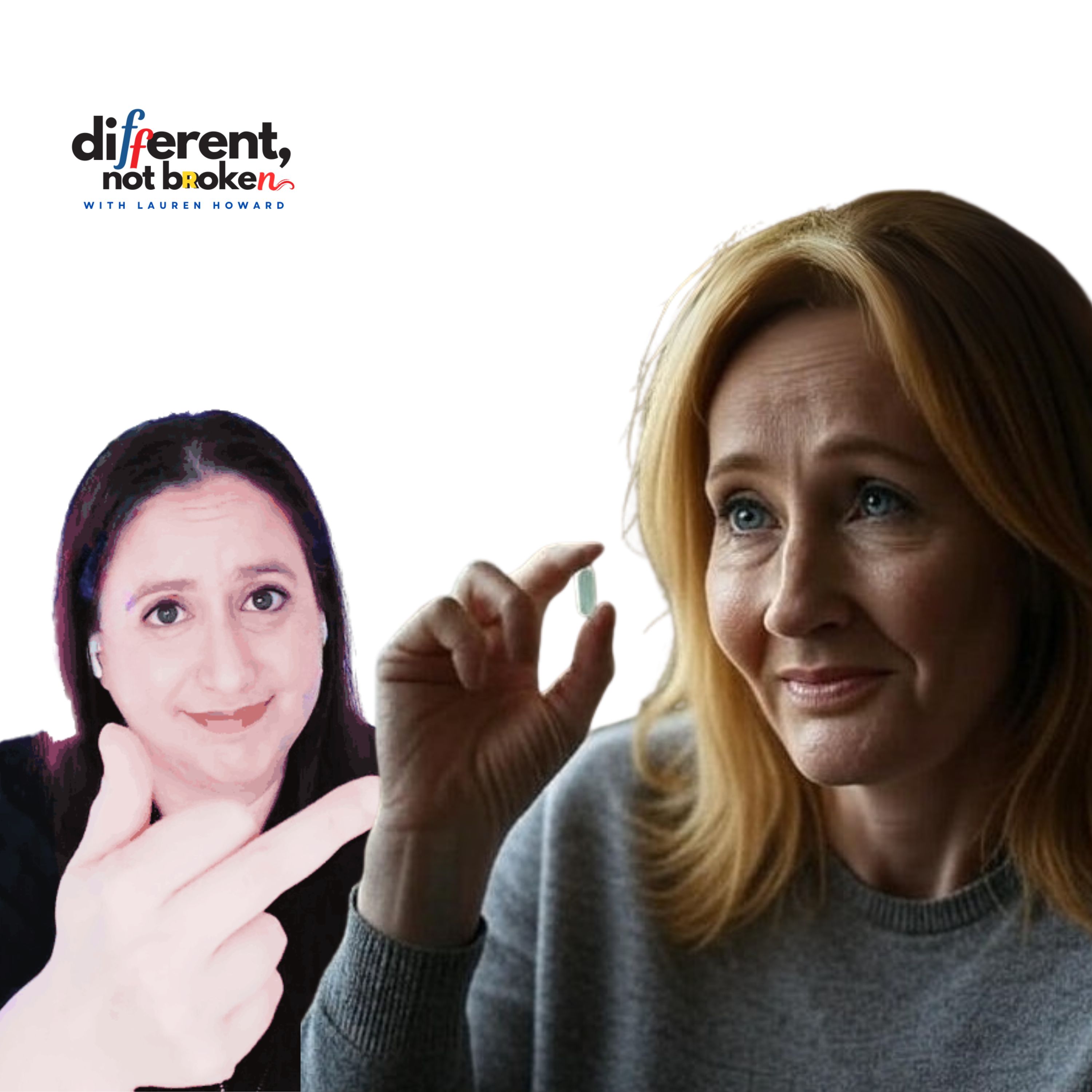
Why you deserve help NOW, BEFORE the Gray sets in. Also, fu*k J.K. Rowling!
Aug 13, 202500:17:49Tap to summarizeOne pill a day. That’s all it takes, apparently, to give the world its color back. You’d think adding a little routine to your morning... a pill, a glass of water... wouldn’t be the hill your mental health dies on, but here we are. In this week’s episode of Different, Not Broken, I'm letting you in on the strange, subtle shape that anxiety and depression can take. And why you don’t need a five-alarm fire in your life to justify asking for help.This episode peels back the curtain on what 'not broken' really means, especially when you’ve been high-functioning, hyper-responsible, and the go-to for getting stuff done. I'm talking candidly about the quiet ways depression and anxiety can erode joy from your life without ever stopping you from making payroll or packing school lunches. Timestamps00:00 "Unexpected Gray Days Cure"03:50 Pandemic Stress and Anxiety Diagnosis06:22 Realizing Deeper Issues Beyond Anxiety12:33 Seeking Support Without Crisis14:26 Avoiding Direct Support for AuthorMentioned in this episode:Build Your Better courseBuild your better course - https://stan.store/elletwo/p/build-your-better
Transcribe →Surviving Challenges with a Pinterest Mom By Your Side
Aug 6, 202500:25:08Tap to summarizeHere's why we all need to marry a Pinterest mom!This is your cue to send a bouquet of apology flowers to every postal worker you’ve ever rolled your eyes at. In this week’s episode, I, Lauren Howard (aka L2, thanks for asking), spiral into the surprisingly convoluted topics of marriage, US mailing discounts and business-unit-only windows that might or might not be open. Turns out, love isn’t always roses and chocolate.If you’re one of those people who’s ever panicked because the 'simple' task on your list involves fifteen sub-tasks, or you’ve ever desperately wished someone would just handle it when executive function leaves you high and dry, then this episode is for you. Thinking of skipping this one? Don’t. If you’ve ever felt steamrolled by a 'basic' task or exhausted by the endless loop of family birthdays, this is your safe space. If you’re looking for tactical life hacks, zero judgment, and a side of dead dad jokes, you’ll want to hit play and stay awhile.Different is not broken, and you’re not alone in the chaos.Subscribe/follow, listen, and prepare to eye those Four-for-$5 glitter globes at Five Below with brand new appreciation. Loveyameanit.Mentioned in this episode:Wanna learn to write like me?Here's how you can!Writing Course
Transcribe →Who told you THAT and gave you imposter syndrome?
Jul 30, 202500:14:25Tap to summarizeWho told you you weren’t good enough?No really, who actually said it? Because I checked, and 9 times out of 10, it’s just you playing that broken record in your head.I show up to urgent care in pajamas, basically grunting in pain, and still get asked for telehealth advice. That’s right. People think I know what I’m doing. Meanwhile, I am absolutely carrying a full set of imposter syndrome luggage.Four businesses. Programs built from scratch. Surrounded by credentialed pros. And yet my inner monologue is: “Am I allowed to be here? Is someone going to figure out I have no idea what I’m doing?”Listen to this episode, because it features a neat trick you can do next time your brain starts farting out its “You Have Zero Business Here” speech.
Transcribe →Dismantling 'Normal': Why Different is Not Broken
Jul 16, 202500:23:45Tap to summarizeWhat is “normal,” and why does everyone want it so damn bad?No, really. When did we start treating “normal” like the holy grail instead of the steaming pile of… well, I’ll let you fill in the blank. On this episode of Different, Not Broken, I—Lauren Howard, your host, also known as L2—am pulling normal out of its gilded cage, shaking it around, and tossing it straight into the trash where it belongs.If you’ve ever felt like you missed the memo on how to be “normal”… if you’re tired of feeling broken just because your flavors of weird don’t match up with someone else’s, this is the episode you didn’t know you needed. I’m laying down the law (and maybe some four-letter words) about why chasing normal is a one-way ticket to nowhere—and why different isn’t just okay, it’s inevitable.We’ll dig into the origin story of “normal” as a concept, how it creeps into our vocabularies starting in childhood, and why it’s a constant refrain for people going through autism and ADHD assessments. (Plot twist: not fitting the mold isn’t a sign that you’re broken—it’s evidence that the mold is, frankly, garbage.)But here’s where it gets interesting: even medicine doesn’t actually believe in a single flavor of normal! And we'll get into that...If that’s not a reason to click “play,” I don’t know what is.Love you, mean it. –L2Useful linksJoin our Patreon community - https://differentnotbrokenpodcast.com/patreonSign up for our updates - http://differentnotbrokenpodcast.com/newsletterTimestamped summary00:00 "What is Normal?"03:09 Redefining 'Normal' in Childhood06:37 Interpreting Lab Reference Ranges10:32 "Comfy Sandals and Dog Dilemma"15:55 "Embrace Your Own Normal"17:29 Tense Meal and Nonsense Talk20:27 "Questioning Nike Collection Value"Mentioned in this episode:Wanna learn to write like me?Here's how you can!Writing Course
Transcribe →