← Dive Club 🤿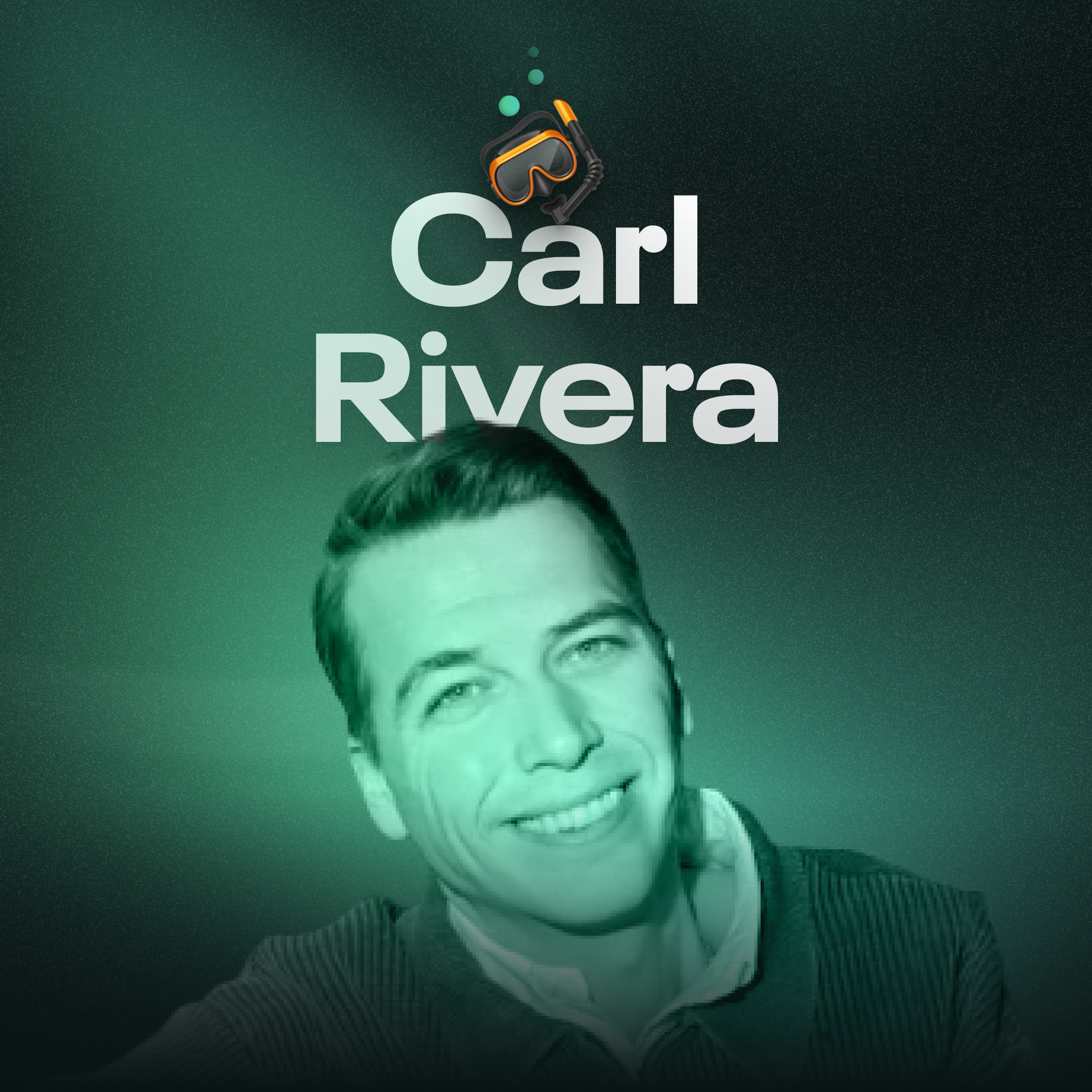
Loading summary
Transcript68 lines
- [00:00]
Carl Rivera
Basically, like, exercise the right that we were hired for our taste for our point of view, and we get to say, we get to decide what good looks like.
- [00:09]
Host
What are some of the rituals or practices that you have to put in place in order to keep pushing that bar for craft higher?
- [00:16]
Carl Rivera
With AI all of these, like, different experiences, like how we interact with software, what an interface is supposed to look like kind of needs to be reimagined from scratch.
- [00:27]
Host
What have been some of the behaviors or responses that you've seen from designers at Shopify that you'd like to see more of?
- [00:33]
Carl Rivera
At the end of the day, if the craft isn't good, it's not going to work.
- [00:37]
Tommy
Welcome to Dive Club. My name is Tommy, and this is where designers go to never stop learning. Today we're talking to Carl Rivera, the chief design officer of Shopify. So we're diving deep into his vision to turn Shopify into the place where the best designers go to produce their life's work. Today we're talking about embracing AI tools, restructuring the design. Org, and a lot more. But first, I want to hear why Shopify acquired the design studio. Molly.
- [01:05]
Carl Rivera
So I think it's interesting to think about this moment in time when many people are sort of taking the position like, we don't need the signers anymore. AI will do everything to think about the fact that Shopify takes this moment to reintroduce the CDO title and to really kind of, like, make sure that, like, design has the most elevated platform to stand on inside of the company. And the reason, right, is that when Shopify first started in 2006, the thing that actually made Shopify win, like, the thing that made Shopify the Shopify we know today was design. It was literally like, the one thing that set it apart from all of its competitors. It was the first E commerce platform that was easy to use. And back then, Tobi had a co founder, Daniel Wayne, and he was the original chief design officer of Shopify. And then over the years, this sort of design advantage, like, put us in pole position, and it allowed all of these different capabilities that Shopify built to start become like differentiators, the thing that people came for. And today, it's insane to think about what Shopify is in the market. One number that I keep coming back to, and even though I've heard it so many times, it still kind of blows my mind, is that Shopify is over 10% of US commerce, $10 out of 100. It's probably like the single company that has done the most to bend the curve of entrepreneurship like that have really like shifted behaviors at a societal level. But, but in this journey and kind of getting to this point of this enormous global impact, I personally feel that we kind of like lost the sign as a key differentiator of what we have to offer. Now. When you use Shopify, it's an incredibly easy and good platform to use, but it's not the thing that leaves a mark. It's not an experience that you remember for its design yet. And now with AI, all of these different experiences, like how we interact with software, what an interface is supposed to look like kind of needs to be reimagined from scratch. Like what would Shopify look like if we started it today? And that's the sort of like opportunity that I was offered to lead to reimagine Shopify from a blank canvas. From first principles of in this sort of AI era of commerce, if design is allowed to lead the way, what does the perfect E commerce platform look like? That's sort of like the mission that we're embarking on with design at Shopify. And this is super exciting. Like it's just limitless in what we can do and achieve.
- [03:48]
Host
No small feat here to reimagine 10% of commerce from first principles. What does that even look like? You know? So talk to me a little bit about your strategy. Where do you even start for something that ambitious?
- [04:02]
Carl Rivera
Well, so I think this is actually the reason that you want to go through this exercise. Using the sign as the tool design has this incredible capability to let people imagine the future together. We can as a company write an endless number of documents, just briefs on briefs on briefs, explaining the things that are important to us. We can create KPIs that describe the goals that we're trying to get to. But we're all going to have different ideas in our minds of what that actually translates to in terms of an experience, in terms of tactics, in terms of the thing that our users gets to hold. What design allows us to do is to imagine the future together. Because we've all been in this situation right when we've gone into a room and we talked about the things that we want to create and we left that room having completely different ideas of what that meant. But once you produce a North Star of where a company is meant to go, something visual, something that people can click around in and experience, now all of a sudden the debate becomes rich. It's like a high fidelity conversation where you can say, oh, that's not how I thought about how AI is going to show up to our customers in this context. And so really we're thinking about design as just a tool and a strategy to drive the right conversations throughout the company to help describe the future that we're heading towards. And when you're doing this, of course you're trying to think about all of the obvious things like AI, but going beyond the kind of like layered implementation that most of us end up in today, where it's sort of like, oh, we had already built all of the capabilities and all of the tools, let's smack some AI on top of it and hopefully they mesh. But instead start to think of like, what are truly native AI experiences? How does interfaces change when they're built, knowing that these capabilities exist from ground up?
- [05:53]
Sponsor/Guest Speaker
Real quick message and then we can.
- [05:55]
Host
Jump back into it.
- [05:55]
Sponsor/Guest Speaker
By now you probably know how much I love Granola, so I'm going to toss it to one of my favorite designers, James McDonald, to share his experience. He says granola is one of the best AI tools out there and the fact that it takes notes during calls and meetings and stores them for later is genuinely life changing.
- [06:14]
Host
And I couldn't agree more.
- [06:16]
Sponsor/Guest Speaker
I simply cannot imagine life without granola at this point. So if you're a designer, you shouldn't be having a conversation about your work without running granola. And they're offering three months free for you and anyone on your team. All you have to do is go to Dive Club Granola. I didn't see this coming, but I'm all in on using voice as the primary way that I interact with my computer, especially when prototyping with AI. And it's way faster than typing and perfect for brain dumping context. But I used to have to use a separate tool, except now voice mode is built directly into Lovable. So building your ideas is as simple as having a conversation. It's just another, another reason why Lovable is my first choice for AI prototyping. So head to Dive Club Lovable to try it today.
- [07:10]
Host
Okay, now onto the episode. I've seen a lot of experimentation coming from Shopify, just random demos floating around Twitter. And I think it kind of makes sense now where it's very clear, even top down there is this emphasis on no, no, we're going to actually try to invent the future. We're not going to play it safe here even with the existing market share 100%.
- [07:28]
Carl Rivera
And the thing that we're trying to embrace is just like a very generative spaghetti on wall process. Right? Like we're not trying to be Precious here. We're not trying to say, okay, we're going to go off to a chamber, spend a number of months and come up, come out with an answer. That's not how anything is going to work. And if you try to do this, you're for sure going to, like, drive off a road and fail. And by the way, that also makes it clear that this is not an exercise where designers are going to disappear from the rest of the org and try to figure this out alone. It's just that designers can hold the tools that, through collaboration with the rest of the teams, can drive rapid conversations and iterations towards this sort of ambiguous goal that we're trying to get towards.
- [08:12]
Host
So then why acquire Molly Studio? How does that fit into the vision?
- [08:17]
Carl Rivera
When I took on this role, I said to myself that I have three goals that I'm going after, and the three goals is that I want to create a company where the world's best designers choose to work, where they can produce the best work of their careers, defining the future interaction patterns of AI. So what I want to do is really then to think about how can we push up the talent density of the company and how can we create an org that better supports this type of vision work? And for me, what that is a flatter org. It's a much more fluid org, and it's an org that has much more centralization. And what I mean by that is that I want to basically try to unravel the very calcified team structures that most companies end up in, where you get hired, you get attached to a team, you sit in that team for the rest of your life, working on a surface that gradually gets better. And instead, I kind of want to have a number of area leaders, but they have a bunch of really talented ICs, and they can assemble those into sort of like teams at a moment's notice to go after our biggest problems that can work across multiple surfaces and really own entire user journeys, rather than, like, single surfaces. And I felt that, like, bringing a team like Molly on board would be a great kind of example of this way of working a team of just, like, super strategic ICs, like crafters that can think both about, like, what is the product, what is the strategy, what is the thing we're trying to achieve, not just hold the pixels, but hold the problem, and then work not on a surface, but across a user journey, kind of owning an experience end to end. I'm using Molly as a way to both, of course, increase the talent density of the company. But also to showcase a working model of more centralization, but also more. A higher level of fluidity where we're less attached to different areas of the company, to different teams, and where designers cannot just participate in the conversation, but kind of lead the way. And so the way that they're going to integrate now is that we'll have this sort of like, they'll continue to be an agency internally. They'll continue to be this team of seven that is sort of like a full stack team with motion designers, developers, UI designers, but they'll couple with all of the different people inside of Shopify to kind of like augment those existing teams that we have to come in and allow teams to kind of go faster, think bigger and explore a bigger space and hopefully kind of like begin to establish this working model together with me.
- [10:59]
Host
I think for years there's been so much discourse around designers trying to justify their own existence and worth and trying to quantify the impact of design and why we deserve a seat at the table. It's so cool to see a company in the position that Shopify is in, very clearly put, you know, money where the mouth is. Right. It's like, no, no, we, we are prioritizing this. There's a cdo we're bringing in Molly. Design is going to lead a lot of these different experimen and it's just inspiring. I'm grateful for the impact that you all are having in the broader capital D industry.
- [11:37]
Carl Rivera
That's awesome. Yeah. I couldn't agree with you more. And this has been like, kind of a pet peeve of mine where I started my career in design, but then I went off to start a startup that Shopify eventually acquired. And then I came into Shopify and I led product for a number of years. A lot of the times when designers would show up to those conversations, they would not talk about the design and the experience and how incredible it is and how honed the interactions were and the kind of like, attention to detail that they had spent on trying to really, like, create something that was delightful and memorable. They would focus the conversation on this. Design drove this amount of impact.
- [12:16]
Host
Yeah, and.
- [12:17]
Carl Rivera
And I'm like, yeah, that's awesome. Like, we should all be driving impact and we'll all, like, be hitting our business goals together. But for me, it signals this enormous lack of confidence in the craft when we're trying to justify good design by measurements of business impact. Like, you can have very shitty design and have a great business impact too. Of course we're all going to Start trying to drive towards goals and, you know, help users achieve what they're trying to do on the platform. But I'm trying to create an environment in Shopify right now where the most valuable measurement is our own, where we are allowed to fully trust our instincts and basically, like, exercise the right that we were hired for our taste for our point of view. And we get to say, we get to decide what good looks like. And that is the bar that we're going to hold ourselves to. Is this something that feels incredible? Is this something that, you know is going to be memorable, that people will want to come back to? And that might be hard to measure in conversion rates or increase of GMV or whatever it might be, but I feel sure enough that if you build an experience where end to end, you have these, like, moments of delight, thoughtful interactions that create a bond with, with the user, then eventually that's going to show up, eventually that's going to benefit the company in some number of ways. And that's enough for me.
- [13:45]
Host
What are some of the rituals or practices that you have to put in place in order to keep pushing that bar for craft hire?
- [13:53]
Carl Rivera
Yeah, I love that you asked that, because I find it amusing how badly companies want to come up with rituals and how badly they try to come up with a way in which they're organized. Every kind of two or three years, companies will be like, here's the new way we're organized. We have five different teams that have 14 different squads and they meet every three weeks and they have 16 different goals that they evaluate them, some, whatever, everyone feel good. And it was like, we did management, hurrah. But, but the reality is that if you're a company that's bigger than like 10 people, you're not going to have a structure that's the right structure for all. And I actually think that the job of management is not trying to impose that structure. Then we have these rituals and teams and all of the things, and you have a set of people that you just squeeze into it. It's actually to do the other thing, to understand, okay, what are some of the problems I'm trying to solve and what are the people that I have here that I work with and who are the best people to solve this particular problem? And based on this, the maturity of that problem, the stage of that problem, the time that we have to solve it, this set of people and their specific skill sets, what's the right process that we should employ here? And I actually think that, like, that is the job of management. To be able to have that thoughtful approach where on an ad hoc basis, you create the right rituals, structures, processes for the right problem per people fit. And so I think of this as a very, very active motion and not one that we can apply wholesale to the company.
- [15:27]
Host
You bring in the most talented people and you tell them to do their best work and you inevitably get a little bit of their DNA. You know, there's some fingerprints left on the work in a way that does lead to maybe a little bit less standardization, but that's where that ceiling exists for craft.
- [15:41]
Carl Rivera
And then that rubs off and it leads to more great work. Because, you know, when you create that environment where great people come in and they're allowed to be the best that they can be, and other people see that and see what's possible, it pushes them and it raises the bar and people start producing better work. And then that rubs off and it becomes this sort of like self fulfilling prophecy of greatness, where, you know, great ambition that gets ambition. We're all kind of like increasing our expectations on each other.
- [16:12]
Host
I want to talk about the ambition piece for a second because something that you said recently that really stood out to me was you talked about how designers are too often undershooting the opportunity by focusing on constraints. So I'd love it if you could share a little bit of your thinking there.
- [16:26]
Carl Rivera
Whenever you're trying to size a project to the scope that it was assigned, you're basically going to undershoot and you'll create all of these different self imposed restrictions that only allow you to consider a space that's, you know, this big, like much smaller. And so I generally think that whenever you approach new work, you should do it in an unrestricted way. You should consider all of the possibilities on any timeline and build out the sort of like North Star idea of what a thing can become. Because from that it's much easier to start to reason about scope. But you then have like a full picture of all of the different opportunities that will exist for you today and in the future to choose from. And you will discover that some of the things that you had kind of anticipated would happen much, much later, in fact, are available to you today. And it actually creates a much richer conversation with all of the other stakeholders as well, with product and engineering and data of basically coming into a room and saying, here's the full story. Just imagine what this could be. Now let's start to talk about what we can bring into existence today, in the next week, in the next two weeks, what this means for Me is that most product organizations in the world today get time frames completely wrong. Most of us, when we approach new problems, we approach them considering the medium term, the kind of like six, seven months to a year or so. And I think it's the least useful time horizon because it's the one that you can control the least. Most of us, when we think about the very long term future, I think we have some idea of where the world is going. It's actually somehow easier to imagine the world 20 years from now than it is to imagine the world two years from now. The trends become more about the macro than the specific things that are going to get us there. And it's also, like, very easy for us to imagine the world two weeks from now or four weeks from now. And so what I'm basically pushing our design teams to do is to consider the very, very long term. Like, where is this thing going? What's the North Star of this project? And the very, very short term, what are the things that we can bring to life today? And just fully cut out the middle.
- [18:43]
Host
What makes for a compelling North Star at Shopify? Like, what could a designer do to put a North Star out into the world where people are like, wow, yeah, that makes a lot of sense. Like, that actually is something that we should orient around.
- [18:55]
Carl Rivera
Are you trying to bring to life a North Star with the expectation that it's going to turn into a plan, or are you trying to sort of reason about a category that you don't yet understand and you have different versions of this? Right? When you're trying to kind of create a North Star for a product that you actually want to bring to life, let's say we want to consider what the Shop app is going to feel like, you know, a year and a half from now, two years from now. Then I think it's important that it's grounded in today, that the seed of the imagination of where you're gonna go is grounded in the realities of today. That it's pulling from the same, perhaps, aesthetic, or that it's pulling from some of the existing features and utilities. When you're just trying to understand a new category, maybe you're trying to learn something new. Maybe we decided one day Shopify wakes up and we say, you know, we want to go beyond being an OS for commerce, and we want to also start to imagine what it would look like if there were a bunch of Shopify retail stores all around the world. Then something like that can be much more like a concept car. Like, where you're really kind of, you're ignoring all of your design systems, all of the constraints of anything that is a seed of reality. And you're really just trying to create an artifact that will only ever be meant to be a piece of conversation that will most surely then be thrown out. And then eventually when you're ready for it, you're going to restart from a blank canvas and not even look at that original North Star that sort of helped guide the conversation and outline the business opportunity.
- [20:31]
Host
Such a small percentage of work I've done in my own career has been that type of North Star work. I'm almost curious how you pull it out of the org, especially when you are placing this emphasis on we want to be at the forefront of these new interaction patterns for AI AI. And it reminds me of another quote you had where you talked about how you want Shopify's user experience to feel almost sci fi in the future. What does it take at a cultural level to get a design org shooting that far into the future and really pushing past the short and even medium term constraints?
- [21:10]
Carl Rivera
I think, you know, it starts with permission. It starts with the company saying, go like hell, like go crazy. Like, you know, we want you to explore, we're expecting you to come back with ideas. And then it comes down to creating space for those ideas to be grown, developed. And then it comes down to recognition that like, as some of these, like the seeds of new ideas are beginning to flourish and bloom, that you pick those things up and you talk about them internally and ideally externally. And we try to do a lot of work on this, where we both really celebrate work, even if it's exploratory work internally. But we also, more and more are trying to push our work in progress and invite people into Shopify behind the scenes by oftentimes sharing internal documents, as you well know, onto our social profiles and give people a glimpse of what work at Shopify looks like. And then, you know, ultimately it also just comes down to what team you have. A lot of the things that we give other explanations to, like we say it's the process or the rituals or the feedback or the brief almost always just also comes down to. No, it's just actually just the people. Like, yeah, you need to bring together a team of designers that are strategic thinkers, that are curious by nature, that are ready to embrace all of these new tools and that want to put them to use to kind of explore the edges of what's possible. In some cases, people that were great performers, that did amazing in the previous sort of chapter of work and the previous expectations of what was required no longer keep up. Like they don't want to go on this next journey together with us. And I think it's important for all companies to be really aware of this, that you need to create an orgasm that is really like focused on performance, that is capable of creating beautiful experiences, that is capable of keeping up with ever evolving expectations in the market, and that is ready for change. And if you don't have that, then you need to change the composition or you can't expect the work to come out great on the other side.
- [23:25]
Host
Let's talk a little bit about the change piece then, because it's only still been a few months roughly since Toby's AI memo went pretty viral. So what have been some of the behaviors or responses that you've seen from designers at Shopify that you'd like to see more of as you continue to push into this next era of design at Shopify?
- [23:47]
Carl Rivera
It's crazy how cool it is how Shopify has turned itself as an organization around AI. Like, I think we are doing some of the best work actually on the, on the actual user side in terms of how deeply integrated our AI products are with, with the Shopify core platform. But what's remarkable is how we have used AI tooling internally to completely change our workflows and allow us to build these cutting edge experiences. We had one example we published very recently where we connected all of the sources we have for customer interactions, everything from like sales calls to their internal usage of the Shopify platform, to any interactions they've had with our support systems. Like every customer interaction is recorded in some database somewhere, but these are all living in separate systems. And we built this tool internally called Scout, that basically communicates with all of these different services and allows you to do customer research in this sort of chat like interface where you can be like, hey, I want to learn more about what kind of issues merchants are facing around shipping. And it will pull from this enormous data set real conversations with real merchants to allow you to interrogate this AI about exactly what the pain points are for which types of merchants and come up with solutions. So you have things from customer research through the development process all the way into build, that just gives all of us superpowers in how we can approach work and allows us to skip steps such that we can spend more time really honing the experience.
- [25:26]
Host
I love that because you don't have to be dependent on others or processes or this checkpoint in like a weekly schedule or anything. Like you can Kind of just make it happen as a designer. And so I'm so excited to hear different orgs operating this way because it feels like, yeah, you can go as far as your own agency allows you to go. You know, just make it happen, just blaze your own trail. And we're seeing this divergence in workflows that didn't really exist five years ago. You know, I mean, the vast majority of the market was doing things mostly the same way in figma. And now all of a sudden there are so many different ways to arrive.
- [26:04]
Sponsor/Guest Speaker
At so many different types of artifacts.
- [26:06]
Host
That it's kind of just fascinating to watch.
- [26:08]
Carl Rivera
I totally agree. One thing that's really cool, I think, is that we have actually embraced this to such an extent that devop, which is our kind of developer onboarding program, is now also part of designer onboarding. So every designer that comes through onboarding now goes through fully onboards to a development environment. And it's expected that each of them will have made two pull requests into production by the time that they're done with this devop onboarding. And the goal here isn't that designers are going to vibe code product experiences inside of Shopify. I don't think today that the quality of that code will be on par with what we expect it to be, but you should be able to make some aesthetic changes and be able to solve the sort of nitpicks, the pets peeves that we all experience in the products that we use day to day. The things that like an engineering team will never get to because it's such a small change. And even getting an end team organized around trying to address it feels like too much of a burden. And now we just create this much nimbler Org where we can kind of self serve these small fixes. But then it also allows us to build these like really rich end to end prototypes using real production data, using actual Shopify, like bringing our admin into a different shape, creating a new product inside of it that we can touch and hold and play around with. And sure, the design fidelity is not quite what it would be if you hand draw the experience inside of Figma, but it's much richer in how dynamic it is and how connected it is. And it kind of turns the workflows upside down in this really interesting way where before you would kind of like start inside of Figma and then you would move it into like, you know, code and in the code you try to finesse the last few interactions that you hadn't really sketched out and now it's kind of the other way around. Like you'll build like a 70, 80% vibe coded prototype and it's not that like a 10 out of 10, like design fidelity. It gives you a full end to end story and the interaction patterns are all there. And once you've dialed that in, which is much faster, you can bring it out into Figma. Whichever design tool you use to really hone in the details and like polish the pixels. And I find this fascinating that like the order in which we use the tools sort of flipped in a way.
- [28:30]
Host
I want to double click on that and go a little bit deeper because there is this sentiment that I've seen that's almost birthed out of frustration, where you have designers who are feeling some pressure to adopt these tools and they get really frustrated with the inability to close that fidelity gap and they feel like, you know, I'm spending hours trying to just fix everything that is a little bit off and it's unclear why. The format itself has value. And, you know, they might be thinking, I'm fast in figma, why do I even need this? You know?
- [29:04]
Sponsor/Guest Speaker
So what is the role that this.
- [29:07]
Host
More interactive format plays internally in Shopify? When thinking about how ideas are presented, how things get greenlit, like, why is this valuable to the new design process internally?
- [29:20]
Carl Rivera
I think every time that you get a little closer to what's real, things get better. Like abstraction layers disappear, the fake photo we use for a placeholder, the lorem Ipsum goes away. Things are closer to reality. It actually becomes a more fair representation of what the experience is going to be and for the good parts and also like the messy middle, like the things that aren't quite exactly how we want them to be, but it's just the reality of dealing with real customers and real merchants and real workflows. And so I'm just generally for removing abstraction layers in every step of the process whenever you can do it. In fact, I have a rule that I've established with my teams that you're never allowed to bring a presentation into any meeting with me. We're never going to do a pre read and I don't want any preambles. Like, when we look at the work, we're going to look at the work in the tool in which it was built. So if we're going to look at the science, we're going to open up the figma, we're going to work through the designs inside of the figma. If it's inside of a prototype, we can look at the prototype. If we're going to look at numbers to discuss how it's actually performing, we're going to go into Looker Studio, like our BI tool, and actually look in the dashboards there. Because I think that whenever people are allowed to use like storytelling or other kind of veils to steer how we experience a product, we come away with an experience that no real customer is ever going to have. Like, no real customer ever going to have the perfect circumstance where they got the pre read right before and they fully understood the intent and all of the things. Like they get the messy reality of just being thrown into an interface and like needing to figure it out and deal with it. So I think just getting us closer to that is always good and helpful. While this set of tools allows us to get closer to that, I'm also entirely sure that the way we are working inside of Shopify and I think that we are sort of at the cutting edge is also absolutely wrong. I know for a fact that like five years from now we're going to look back at this time and be like, lol, like why did you. And so all I know is that the previous way we did things isn't how we're going to be doing things. What we're doing now isn't how we're going to be doing things. And I'm just waiting for this point in time when the capabilities of the models allow the tools to begin to converge. I find it sort of weird how I have to decide at the start of a design journey if I'm going to do freehand or if I'm going to vibe code and it will take me down two completely separate paths.
- [31:54]
Host
Completely different. Yep.
- [31:56]
Carl Rivera
And maybe there's some bridges and there's like a Figma MCP or something like this, but it's not quite working right. Like it's not doing what it's supposed to. And eventually the tools need to merge and you need to be able to shift between modalities in a much more fluid way. And I think that's what we're going to be tracking to and I'm not sure who's going to solve it in what way, but. But that seems clear to me that that's the future that we're gunning for.
- [32:19]
Host
Let me throw your time frame theory back at you then. So when you zoom out and think about the North Star for what the practice of design at Shopify could look like beyond the one to two year time frame, what are some of the things that you imagine or hope for?
- [32:38]
Carl Rivera
Company environments will have completely blurred lines. I have this thing that I keep coming back to that like, what AI mostly does for everyone is that it makes you a 7 out of 10 at every job. I'm not a lawyer, but if you really need one, I can probably be yours at this point. Like, I'm not an engineer, but I'm like writing code and like I'm coding experiences that I can actually use, right? So I'm like, I'm a 7 out of 10 engineer. I'm a 7 out of 10 lawyer. It also means that like everyone that works at Shopify are 7 out of 10 designers. And in this sort of 7 out of 10 world, you will have like all of these lines begin to blur and it will mean that you will start to like compose teams in completely different ways and organize yourselves around problems in completely different ways. I believe that there are many teams inside of Shopify that aren't going to need a designer because perhaps the experience isn't part of the hot path for most of our users. Perhaps it's about like bringing a little bit of better interaction patterns to some settings screen as part of some shipping setup that you're doing. I'm completely content with a PM or an engineer vibe, designing their way into that experience in this future and kind of creating a 7 out of 10 customer product. What that means then for designers is that one, if you're a 7 out of 10 designer, you might be in trouble, right? If you're 7 out of 10, you're not really raising the bar of your craft. So then you should probably either really try to think, how do I push myself upwards? Or how can I use the fact that the lines are blurring for me as well to start to do things that span beyond the thing you're hired to do and start to bring together product thinking and engineering and data and design to position yourself as someone that can pull the nodes together. For the designs that we have on staff. I think that what we need to do is to go up and down in the stack. And what I mean by that is that I want us to double down on design systems. If we are going to rely on AI to do much more of the design outputs, then the demand on the inputs have never been higher. And so at Shopify, we have our design system that's called Polaris. I want that to become like one of the most important things that we work on, that one of the things that we spend the most time on, the most effort on at any given time. Because Polaris is the thing that's going to make the design that a product leader or an engineering leader produces go from being 7 out of 10 to being 8 out of 10 or 9 out of 10. Yeah, because the components that built that up were phenomenal. And that's the point of going down in the stack. The other thing that I think we should do as designers is to go up in the stack and it's to focus on the hot paths, the experiences that define a product that leaves an impression, a mark, the thing that you remember and give ourselves permission to really, like, draw outside of the lines for those to really juice them up and make them feel not just like utilities that are there to do the thing that they did, but then kind of disappear, but things that are like really, really dialed in in such a way that it's something that you want to come back to over and over again. Because the assumption I have is that in this future that's far out into the future that we're imagining right now, software is going to be free, Right. Like, we can already kind of touch this world where, like, if I want to create a to do app, I can go in and I can vibe code a to do app in like five minutes, and I have now a custom built to do app and I can start to like, make that be purpose built for me such that the to DOS for Wednesdays look different than the to DOS I have on Thursdays or whatever my need is. So you're going to live in this world where you have infinite generated software. What does that mean for a software provider? Well, it means that your software needs to differentiate and be software that builds a relationship to its users such that the more you use it, the better it becomes. You need to create software that people want to come back to instead of trying to reproduce on their own. And I think you do this by kind of going up in the stack in the way that I described and pushing the experiences from the baseline that anyone will be able to get to to something that when you see it.
- [36:48]
Host
You'Re like, wow, I love that line. Creating something that people want to keep coming back to rather than reproduce on their own. That's like the new measuring stick for SaaS in the long run. Because I already feel that with certain tools where I'm like, man, I could just make this. Like, if I just had a little bit more time, I could just make this and I would make it just for me. And so that is where design is the differentiator, right? Where you're just like, oh, I have no Interest in trying to better this. This is the 10 out of 10 experience. I think that's probably why designers are so valuable.
- [37:20]
Carl Rivera
And you know what's shocking to me, man, is that I look at software right now and I never see that. Like, it's incredibly crazy for me that when I consider all of the tools that I use, I'm hard struck to give you an example of a product that has a 10 out of 10 experience today. Because I think we as an industry have been taught for so long to move fast and break things, to be lean, to do an mvp, to like really figure out how you make the slice be more narrow and smaller. And it served us well because by creating something you already are kind of creating an advantage and you're moving ahead. But what happens when that disappears? It's no longer a strategic advantage to just have. Just built something. Yeah, what happens when the strategic advantage is to have built something that lasts, something that leaves an impression. I think that there's this huge opportunity right now, or almost a requirement right now for companies to really start to look at their experiences and be like, hey, what's stopping anyone from just vibe coding this over a weekend? What about our product is going to be better than the thing that anyone can produce over six Red Bulls and a day off? And of course there are other things like network effect and like having deeply integrated workflows and stuff like this. But at the experience layer, what is the thing that sets a premium software apart from infinitely generated software? And it's design, it's the experience. And this also leads me down to like this other thesis I have right now about the market, which is that design is still so enormously undervalued. We have this, it's sort of fun to look at from the outside, like bringing out the popcorn, the AI wars for talent. And you have like these, you know, AI researchers that are being paid well past NBA contracts, NBA players, right?
- [39:15]
Host
Yeah.
- [39:15]
Carl Rivera
And it's very much happening on the sort of like AI labs, West Coast, San Francisco based. That's where this like hype cycle is unfolding. But most of us, like most of the companies in the world, we're actually building on the same models. We have access to the same foundation models and we're building different experiences on the same foundation. For us, the thing that differentiates won't be the AI researcher because we've kind of outsourced that, John. It's going to be the experience we turn that foundation model into and how we interpret that into an interface that that is differentiated that is unique and that's the job of designers. And so my take is that second to AI researchers, the most important craft in this transformation that's happening in the marketplace is design. And designers are the ones that are going to set companies apart from the software that we just go out and we build for ourselves over a weekend, to the things that we decide to pay for.
- [40:13]
Sponsor/Guest Speaker
I'm a big believer in the power of video to explain my thinking as a designer. So when it's time to get feedback, I'll drop a loom link in Slack and another link to a Figma prototype and feedback will be scattered everywhere. And I mean, it's a mess. So I'm building the product that I've always wanted to exist and it's called Inflight. You can kind of think of it like an Async crit. It's an easy way to share a video walkthrough along with an interactive prototype or whatever you're designing. And then AI interviews the people on your team to get you the feedback that you need and organizes everything for you in a beautiful insights page. So right now I'm only giving access to Dive Club listeners. So if you want to be one of the first to use Inflight, head to Dive Club, slash Inflight to claim your spot.
- [40:59]
Host
What are some of the qualities that you would look for in these big time hires that you believe would allow Shopify to differentiate with design?
- [41:08]
Carl Rivera
So what I'm trying to do with the org right now is to just remove as many layers of management as I can and instead have these really empowered crafters that don't just hold surfaces, but that can consider entire customer journeys. They're blurring the lines, the output, the polish is wonderful. But they're thinking strategically and are reasoning about the product experience much like we would expect a PM to do. They're curious, they're embracing new tools and new workflows, trying new things, and they're very generative. I believe that no one quite knows exactly what the right solution is anymore. And so we just need to like try quicker and it's cheaper than ever to try many things in a short period of time. It's people that don't get too attached to any one thing, but that really fall in love with the problem more than anything else.
- [42:05]
Host
What are some of the signals that you might see in either a portfolio or how someone carries or talks about their work in a portfolio presentation process? Like anywhere in this pre joining journey? What are the signals that matter that a designer could then use to think about how do I even get a chance to land a role at a company like this if they're inspired and want to join the vision.
- [42:30]
Carl Rivera
One thing that's really important for me is that when we talk about these things, I emphasize the new things, like ability to reason about the strategy, to go beyond the surface, to think about a customer journey. But at the end of the day, if the craft isn't good, it's not going to work. That is sort of the first thing. I want people that can produce beautiful things, aesthetically pleasing things, measured by a completely subjective point of view. Like, my point of view. Like, I think this looks pretty. Because at the end of the day, I'm not looking for Shopify to have, like, the most innovative process, being at the cutting edge of which tools we employ, but produce work that, when you look at it, it's just not pretty. It doesn't look like an experience that you're proud of.
- [43:16]
Host
Yeah.
- [43:16]
Carl Rivera
So the first thing I look for is just like, hey, is this someone who's a great designer who can produce beautiful work that I think is emotive and interesting? And that's the sort of, you know, you go through a portfolio review and you look at the examples and all of this stuff. And then I think that the other part you kind of can suss out through just conversation. Because even if they haven't really been able to employ that way of thinking or that way of working in a previous work environment, if they are genuinely curious person who has thoughts about where the future is going, who is willing to reason about a problem or debate a problem without getting fixed in a position, then I know that we can work with that. Even if it's not something that they have had the chance to exercise in the past, really, in the hiring process, we're still very focused on the traditional craft of design. And then it's more of a personality thing of like, hey, do we think they have the raw horsepower to embark on this next chapter together with us?
- [44:23]
Host
I love horsepower. I'm gonna put on my design Twitter skeptic hat here for a second, and I'm gonna push back on one thing that you said, and I'm curious what your response is. And it's this craft and visual piece, because I think it is a polarizing topic right now, because what you're saying I hear a lot of, and yet I get quite a few comments from people being like, what the heck? You know? And the specific pushback that I want to use is, well, you know, you're also talking about the importance of design systems and equipping people with these beautiful components. And most designers are just reaching for the box of legos that have been preassembled for them and thinking more strategically and they don't have to think about pixel level problems. And yet we're hearing this trend where visual fundamentals are almost the first thing that leaders are looking for. And the question is basically why? Why does that matter? Why is that something that I have to dedicate time to when I feel.
- [45:18]
Sponsor/Guest Speaker
Like I have to invest in all.
- [45:20]
Host
Other areas simultaneously to be attractive to some of these top tier companies?
- [45:25]
Carl Rivera
I want designers to focus an extreme amount of time honing the design systems and components. But really the job of that is to enable people that are not designers to be able to interesting output experiences that like meet a baseline at a much more rapid rate. Now of course we are also going to use all of those same components, but then comes the point of moving up in a stack where when you're hired to lead design or to be a designer shopify, I'm giving you permission to also draw outside of the lines and break some of those same systems that we help build together to create experiences that you can't quite get to by just assembling Lego blocks, but where the LEGO blocks kind of give you the foundation to stand on. But then you can start to take a step back and say, well, actually, even though I missed this LEGO piece or this LEGO piece, I'm allowed to pick up my pencil and my scalpel and start to reshape these building blocks to be really purpose built experiences. And that's the permission you get that becomes the difference between designing as a designer and putting design to use as someone else. And then I want to be really, really opinionated about which customer journeys matter. And I talk about these as hot paths. But for me the hot paths is really just a different way of saying the journeys that leave an impression, that make a mark that defines an experience. We usually, when we have a product, we know a set of workflows that are the most common workflows that kind of define the day to day for most of the users. Most of the time I want those to be outstanding. And I'm okay with us not spending the same amount of time on some of the other things because I much prefer an experience where certain things are just easy to do, but not much else. It's like we made it possible, we didn't make it incredible. As long as some of the things that you keep coming back to have been perfected to A point that when you hold it, you know that it's quality software, you know that it's premium software. And I find that too often we end up doing the other thing where we just peanut butter our efforts across the whole thing. And I think it's a result of how we're organized because as companies we have had this idea that context is really important and that people should kind of be hired to a role such that they can go really deep. But the only thing that happens with that is that you have gone really deep on a surface that you could have literally onboarded onto in like a day or a day and a half. And instead you, you wasted a year of your career just trying to make that surface incrementally better. This is like one of those, like controversial truths that I hold. But like, I basically think context is largely overrated, that like people and specifically designers can actually onboard to new problems really, really fast. You know, like you come into a new team, a new environment, a new setting, you talk to a couple of users, you look at some of the history of the product and its evolution. You talk your peers, your product leader or engineering partner, you're ready to roll. The thing that you're going to bring is like fresh perspective, new insights. You're going to bring curiosity and naivete. The point of not actually understanding all of the priors and being allowed to think outside of the box, that's what.
- [48:48]
Host
Makes agencies so special. You know, like, I would imagine that's part of your hope for the Molly DNA rubbing off. Because I look at some of the designers who have spent six years in an agency and I'm like, man, your ability spin up on radically different industries and surface areas is very impressive.
- [49:05]
Carl Rivera
I love the agency model. I started my career designing in agencies and the ability to very quickly context switch, to ramp up, to embrace a new design or a new way of thinking about the problem being super generative because you have to be able to produce like 10 different pitches in a very short period of time. Like it's such a valuable skill. And so I actually think we're entering this environment or market where people that have had good agency runs are going to be really sought after because of the experience they've had of being super generative in their approach, perhaps more sought after, which is sort of like flipping what's been valued in the market than someone that's worked at a fan company for five years, but having been limited to a very small or narrow problem.
- [49:54]
Host
Well, Carl, thank you for coming on and taking the time and sharing a little bit about your vision with Shopify, all of the ways that you're pushing things forward. And I just have such an appreciation after this conversation of if there's got to be this temptation for a company that size to just be comfortable, you know, market leader, let other people figure it out. We'll just adapt to what we already see works. But you really are pushing design as a discipline forward. And thank you for coming on and just sharing everything that's on your mind and the different ways that these this practice is evolving at Shopify and I'm excited to continue to follow along with the journey.
- [50:30]
Carl Rivera
Yeah, thank you so much for inviting me and letting me rant a little bit. It's been a super fun conversation and yeah, looking forward to everything that's ahead.
- [50:39]
Sponsor/Guest Speaker
Before I let you go, I want to take just one minute to run you through my favorite products because I'm constantly asked what what's in my stack. Framer is how I build websites. Genway is how I do research. Granola is how I take notes during crit. Jitter is how I animate my designs. Lovable is how I build my ideas in code. Mobbing is how I find design inspiration. Paper is how I design like a creative and Raycast is my shortcut every.
- [51:08]
Host
Step of the way.
- [51:09]
Sponsor/Guest Speaker
Now I've hand selected these companies so that I can do these episodes full time. So by far the number one way to support the show is to check them out. You can find the full list at Dive Club Partners.